
NIL
Why Tennessee winning too much could be a problem for Danny White in era of paying players

 AI-assisted summaryTennessee’s success across all sports creates a challenge in the new era of revenue sharing with athletes.The university must decide how to allocate funds among its successful football, men’s and women’s basketball, and baseball programs.NIL deals will continue to play a significant role in recruiting and retaining athletes, supplementing revenue-sharing payments.The University of Tennessee has cultivated a well-earned identity as the “everything school” in athletics because it’s won at a high level in every sport in recent years.
Most visibly, the Vols made the College Football Playoff, won a baseball national title and reached the Elite Eight in men’s basketball in the past year. And Lady Vols softball is a national title contender.
All 20 Tennessee programs reached the NCAA postseason or a bowl game in 2023-24, and many are still ranked in the top 10. UT has won the SEC All-Sports Trophy three straight times.
But as challenging as it was to earn that “everything school” reputation, it’s about to become more difficult to uphold it in the revenue sharing era.
It’s not a competitive issue on the field or court. It’s a potential player payroll problem.

Beginning July 1, schools will pay athletes directly by sharing revenue, pending approval of the House settlement in a conglomerate of federal antitrust lawsuits against the NCAA and power conferences.
Schools will pay athletes under a cap estimated at $20.5 million with percentages of revenue assigned to revenue-generating sports like football, basketball and baseball. That’s in addition to income players earn from name, image and likeness deals from third parties.
But in direct school-to-player pay, there will be different strategies. One school will overpay men’s basketball players on a Final Four contender and offset the cost by underpaying players in a losing baseball program. Another will take a few bucks off the football players’ payroll and redirect it to women’s basketball players.If a program struggles, its players could be underpaid. If a program wins consistently, its players could be overpaid.UT’s blessing and curse is that it’s good in virtually every sport. That means tough decisions lie ahead, and the demand grows for extra money in NIL.How Tennessee could pay players aside from NILUT has not disclosed its approach to revenue sharing. But it appears UT, like most SEC schools, will distribute the money to athletes according to revenue their sports produce.A model was prescribed in the preliminary House settlement based on the national averages of per-sport revenue:75% to football players15% to men’s basketball5% to women’s basketball5% to other sports (including baseball)Those percentages likely will be calculated in an $18 million budget, instead of $20.5 million, because $2.5 million will count toward new scholarships with increased roster limits.The SEC could mandate member schools to follow this plan exactly, and that uniformity would benefit schools like UT that win in everything.If the SEC doesn’t mandate a plan, a few schools could tweak their percentages to gain an edge in recruiting and roster building in a specific sport to the detriment of another sport. Schools in other conferences will make the same adjustments for a competitive advantage in select sports.That’s where UT runs into a dilemma. Among its major revenue-generating sports, it doesn’t have a weak program.Tennessee wins too much to short-change any sport

Imagine UT athletics director Danny White trying to trim the player payroll of a specific sport.
He can’t do that in football. That’s where about three-fourths of UT’s sports-specific revenue is generated. And in the SEC, football determines success or failure.
Could White short-change men’s basketball? Not when Rick Barnes is knocking on the door of the Final Four.
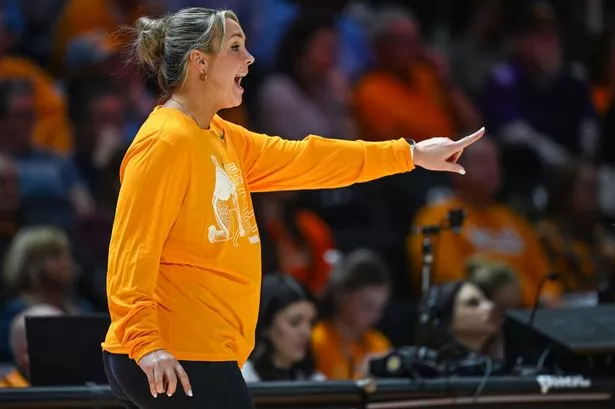
What about Lady Vols basketball? White hired Kim Caldwell a year ago to rebuild the historically premier brand in the sport, and he’s not backing off now.
Baseball can’t go cheap. Tony Vitello guided the Vols to a national title, and the high-priced suites and seats in a renovated Lindsey Nelson Stadium won’t be filled if the program slumps.
Until NIL is under control, it still impacts winning
The solution to this payroll strain is traditional NIL, which is third-party money paid to athletes by businesses and booster collectives separate from the university.
Schools are allowed to pay a maximum of $20.5 million per year to athletes. But, in theory, there is no cap to third-party NIL pay.
In the revenue sharing system, a new NIL clearinghouse will vet deals to determine if they’re legitimate fair market agreements. But there’s skepticism of its effectiveness.
The richest schools will continue to top off revenue sharing money to players with NIL pay. Revenue sharing plus NIL will equal the total payroll for the highest paying schools.
That means NIL could still determine which programs gain an edge, even in the revenue sharing era.
Let’s say UT baseball has $1 million to spend on its roster because the Lady Vols must pay competitive revenues. But a rival school allocates $1.2 million to baseball because it has a weak women’s basketball program. The margin in baseball must be made up in NIL money.
Swap those UT programs, and the challenge is the same. The Vols want to remain at the top, but it gets crowded up there when player pay is a major factor.
UT payroll strategy must make every dollar count
UT was an industry leader when NIL began in 2021. It partnered with Spyre Sports, the collective that pays UT athletes for their NIL rights.
During that same period, revenues skyrocketed for UT athletics under White’s direction. But a share of that revenue going to athletes is only part of the equation, and NIL must be a difference-maker.
The good news is that UT’s leadership remains as it heads into the revenue sharing era. The bad news is that UT has more mouths to feed than most schools in terms of elite programs.
UT has enjoyed the most successful stretch in its history across all sports, in part, because White made sure those programs were well-resourced and followed focused plans.
But player payroll should have a more direct impact on winning than renovated stadiums, state-of-the-art training facilities and robust recruiting budgets. And because UT wants to maintain a championship level in so many sports, every dollar must be maximized.
That’s why it will require more money going to players and a savvy spending strategy to keep UT’s hot streak going.
Adam Sparks is the Tennessee football beat reporter. Emailadam.sparks@knoxnews.com. X, formerly known as Twitter@AdamSparks. Support strong local journalism by subscribing at knoxnews.com/subscribe.
Get the latest news and insight on SEC football by subscribing to the SEC Unfiltered newsletter, delivered straight to your inbox.


Boston College finished the 2025 season 2–10 (1–7 ACC) in what was a down year for the program under former NFL head coach Bill O’Brien.
The Eagles had gone 7–6 in back-to-back seasons, including O’Brien’s first year in 2024 after arriving from Ohio State, where he served as the Buckeyes’ offensive coordinator and quarterbacks coach.
However, the 2025 campaign marked Boston College’s worst season since 2012.
Despite the disappointing results, athletic director Blake James announced that Boston College will retain O’Brien for a third season and increase its financial investment in the football program ahead of 2026.
Still, with both the offense and defense struggling to produce consistent results throughout the year, a wave of players elected to seek new opportunities via the transfer portal, including redshirt-junior wide receiver Ismael Zamor, who announced his decision to enter the portal on January 6.
Zamor, listed at 6-foot, 193 pounds, enrolled at Boston College in 2022 out of Everett (Mass.) High School, where he was rated a three-star prospect and the No. 129 wide receiver nationally in the 247Sports Composite rankings.
He chose the Eagles over nearly a dozen other scholarship offers, including Michigan, Syracuse, Temple, Buffalo, and UMass.
Despite being viewed as an intriguing developmental prospect coming out of high school, Zamor primarily contributed on special teams during his time at Boston College, appearing in limited games and failing to record a reception across four seasons with the program.
He now enters the transfer portal as a redshirt junior.
Aside from Zamor, who saw limited action during his time in Chestnut Hill, Boston College has now seen 29 players depart via the transfer portal, including several notable contributors.
That group includes wide receiver Reed Harris (committed to Arizona State), running back Turbo Richard (committed to Indiana), tight end Ty Lockwood (committed to Arkansas), tight end Stevie Amar Jr. (committed to UCLA), and safety Omarion Davis (committed to Penn State), among others.
Richard was the Eagles’ leading rusher in 2025, totaling 749 rushing yards and nine touchdowns on 145 carries (5.2 yards per carry), while also adding 213 receiving yards and two receiving scores.
Harris, meanwhile, finished as the team’s second-leading receiver, recording 673 yards and a team-high five touchdowns on 39 receptions (17.3 yards per catch).

This level of turnover following a 2–10 season is significant for two primary reasons.
First, it strips Boston College of experienced contributors across multiple position groups, most notably at the skill positions, tight end, and throughout portions of the defensive front seven and secondary.
Second, it signals a program reset of sorts, as more than two dozen players are effectively voting with their feet in search of better fits, greater stability, or clearer paths to playing time.
Read More at College Football HQ
- First-team All-conference player announces transfer portal decision
- No. 1 transfer portal player visits fourth college football program
- Son of NFL Pro Bowl QB announces transfer portal commitment
- $1.8 million QB set to visit fourth college football program in transfer portal

Getty
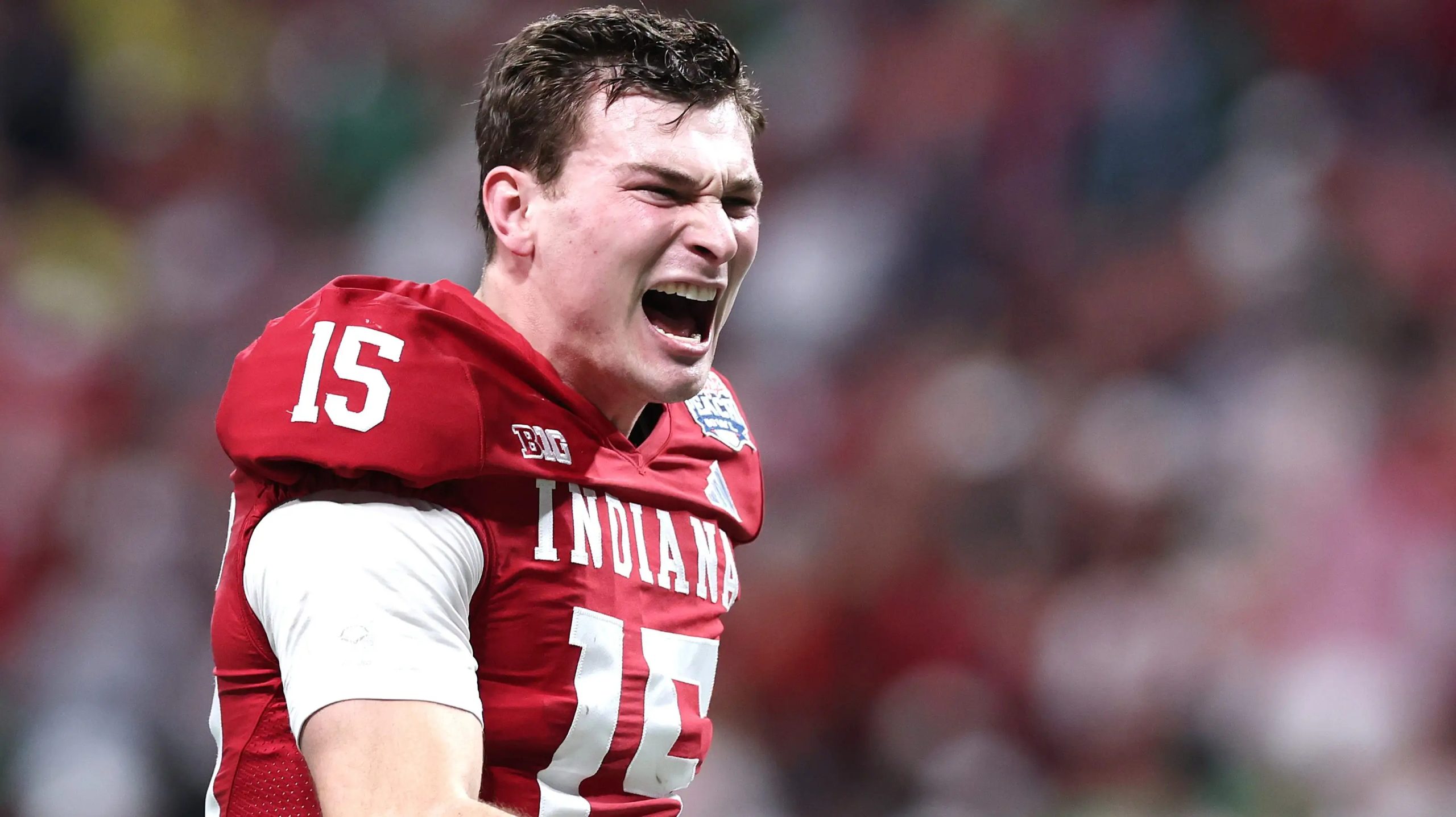
Fernando Mendoza turned down major NIL offer from Miami to join Indiana.
Fernando Mendoza has become the top quarterback in college football. The Indiana Hoosiers star captured the Heisman Trophy and is now one win away from leading Indiana to its first national championship in program history.
Indiana will meet the Miami Hurricanes at Hard Rock Stadium in Miami Gardens on January 19, a matchup that adds an extra layer of intrigue.
Not only is the national championship game being played in Miami’s home stadium, it also represents a homecoming for Mendoza. He attended Christopher Columbus High School in Miami, where he won a state championship — the same school Hurricanes head coach Mario Cristobal attended.
Mendoza’s father was teammates with Cristobal at Christopher Columbus, while his mother played college tennis at the University of Miami. Mendoza grew up just a mile from the university’s campus.
That background raises a natural question: How did Mendoza end up at Indiana instead of Miami — and now find himself facing the Hurricanes in the biggest game of his career?
More Indiana football on Heavy: Indiana Football Accused of Cheating as Wild Social Media Rumor Spreads
Fernando Mendoza Wasn’t Offered by Miami
Coming out of high school, Mendoza was a three-star prospect, ranked as the No. 135 quarterback in the country and the No. 250 overall player in Florida, according to 247Sports. Despite his local ties, the only Power Four program to offer him a scholarship was California Golden Bears, where he ultimately committed.
At the time, then-Miami head coach Manny Diaz and his staff never extended an offer and were even hesitant to bring Mendoza on as a walk-on, according to The Athletic’s Dane Brugler.
Mendoza entered the transfer portal last December, and many believed he could land with his hometown team, which was searching for a replacement for Cam Ward. That scenario never materialized, even though Miami eventually made an offer.
Miami Was Turned Down by Fernando Mendoza
Miami was desperate to replace its Heisman Trophy finalist from the 2024 season and reportedly made Mendoza a lucrative NIL offer, according to Newsweek’s Ben Dogra.
“Mendoza made $2.3 million from Indiana, but he only made $100,000 at Cal,” Dogra said. “But he was offered more by the University of Miami and turned it down. That’s why they got Carson Beck.”
So why didn’t Mendoza choose Miami? Dogra said the decision had everything to do with development, despite the Hurricanes’ larger offer.
“Let’s just say Indiana was a better fit,” Dogra said. “If you’ve got a kid from Florida that goes to Cal broke for three years and then transfers to Indiana, and his NIL money is going significantly up — let’s say $2 million-plus — but he was offered $3 million-plus at Miami, his hometown, there’s a reason he didn’t take it.
“The reason he didn’t take it is because he had a better chance to become a more successful quarterback and grow to get ready for the next level. And that’s exactly what happened. So that’s coaching.”
Mendoza is now widely viewed as the projected No. 1 overall pick in the NFL draft, a selection currently held by the Las Vegas Raiders.
Before the draft becomes the focus, Mendoza has one more goal: leading Indiana to its first national championship. At this point, he is already considered a Hoosiers legend. If he delivers a title in his hometown — against the team that once passed on him — that legacy will only grow larger.
Shane Shoemaker Shane Shoemaker is a sports journalist covering college football and the NFL for Heavy.com. His work has also appeared in The Sporting News, Athlon Sports, USA TODAY, and ClutchPoints, along with high school sports coverage for the Marion Tribune. More about Shane Shoemaker
More Heavy on Indiana
Loading more stories

Nearly 5,000 Division I college football players have officially entered the NCAA transfer portal since it opened for business on January 2. The numbers are vast, but the cream of the crop always rises to the top.
There are a few positions that aren’t as deep on the open market this year, including offensive tackle and linebacker. The top players at those spots are becoming increasingly coveted by teams looking to flip their rosters ahead of the 2026 season.
MORE: 3,500-yard college football transfer QB announces commitment after All-American season
In a recruitment that has provided plenty of twists and turns, one of the most desired defenders in the portal continues to explore his options.

According to CBS Sports’ Matt Zenitz, Pittsburgh junior linebacker transfer Rasheem Biles is expected to visit Miami on Sunday, the final day before a dead period. Biles previously took trips to Texas, Michigan, and Colorado. He also cancelled a visit to Florida State.
The Hurricanes are gearing up for a national championship appearance against the Indiana Hoosiers next week, but are pulling double duty in the portal. Miami is a known spender in the NIL era, while the Longhorns and Wolverines have plenty of funds as well.
A big payday appears to be exactly what Biles is searching for, going into his final season of eligibility. There’s a good chance he’ll be able to cash in, considering his production at Pittsburgh over the last three years. Biles is ranked No. 1 among linebackers in the transfer portal, per On3.
MORE: Big 10 starter eyeing three major programs in college football transfer portal
In just ten games this past season, Biles totaled a career-high 101 tackles, 17 tackles for loss, 4.5 sacks, 2 forced fumbles, 1 fumble recovery, 4 pass deflections, 2 interceptions, and three defensive touchdowns. He tied for the most pick-sixes in the country, earning a second-team All-ACC selection. Biles ranked in the top five in the conference in total tackles and tackles for loss.
Biles broke onto the scene in 2024, recording 82 tackles, 14.5 tackles for loss, 5.5 sacks, 1 forced fumble, 1 fumble recovery, 9 pass deflections, and 1 interception that he returned for a touchdown.
The Ohio native tied the Pittsburgh record for blocked kicks in a single season during his true freshman campaign. He blocked three punts, getting his hands on a kick against West Virginia, North Carolina, and Florida State.
Biles stands at 6-foot-1, 215-pounds. He will have one season of eligibility remaining.
Read more on College Football HQ
• College Football Playoff team loses key starter to NCAA transfer portal
• Top 3 transfer portal landing spots for UNLV QB Anthony Colandrea
• Bowl game star leaving team to enter college football transfer portal
• College football team set to be without nearly 20 players for upcoming bowl game

As Curt Cignetti and Indiana put together a storybook run to the national championship game, Mark Cuban watched closely. He has made multiple donations to his alma mater’s football program, including one ahead of this year’s transfer portal cycle.
Cuban graduated from Indiana in 1981 before becoming an entrepreneur and owner of the Dallas Mavericks. Over the last two years, since Cignetti arrived in Bloomington, he has contributed to the school amid the Hoosiers’ historic turnaround.
SUBSCRIBE to the On3 NIL and Sports Business Newsletter
But when Cuban cuts checks for IU, he told SiriusXM College Sports Radio he doesn’t ask for much in return. Simply, he just wants one thing: to win.
“I just say the same thing all the time. … I just say, ‘Win, motherf—ers,’” Cuban said ahead of Friday’s Peach Bowl. “That’s it.”
Indiana has certainly done that this year. The Hoosiers improved to 15-0 with the Peach Bowl win over Oregon, which they dominated from the start. IU forced three turnovers from Dante Moore, including a pick-six on the first play of the game, en route to the 56-22 victory at Mercedes-Benz Stadium. That sent Indiana to the national title game, where Miami will await Jan. 19.
Mark Cuban: ‘I’m the luckiest dude in the world’
Prior to Curt Cignetti’s arrival, Indiana was the losingest program in college football history and had never won 10 or more games in a season. But over the last two years, the Hoosiers are 26-2 with two College Football Playoff appearances – and they still have one more game to go.
For Mark Cuban and other alumni, it’s an opportunity to show out and support. The IU faithful seemingly took over Mercedes-Benz Stadium for Friday’s game, proving the power of having the largest alumni base in the country.
“Look, I’m the luckiest dude in the world,” Cuban said. “To be able to be in this situation – and I know they’ll be good to me and all that kind of stuff. I get the nice suite. I have to pay for it, but at least I get first crack at it. The reward is, when we win, every Hoosier fan everywhere – my buddies, my boys. I played rugby at IU, so all my teammates, a bunch of them are here. They flew in from all over.
“All my buddies that I grew up with, went to IU with, lived with in Dallas. They’re all here. They all flew down. Come on, now. You don’t live forever. These are the moments.”

The NCAA transfer portal is now in its final week for college football players to enter their names in search of a new school for the 2026 season. The portal officially opened on Jan. 2 and will close on Jan. 16.
More than 4,000 players from all different areas of the college football world have decided to transfer to new programs next season in the weeks after the 2025 season’s end. Much of the shuffling on the Power Four level involves the search for better NIL compensation or quicker paths to playing time.
One significant Power Four name on the move is former Missouri defensive end Damon Wilson II. He will have two seasons of eligibility remaining at his third school.

The 6-foot-4, 250-pounder began his college football journey with Kirby Smart at Georgia in 2023. Wilson used his redshirt that season, making two tackles to go with half a sack in the Bulldogs’ games against Florida and Ole Miss.
The Bulldogs featured Wilson in 12 of their 14 games in the 2024 season. He made 22 total tackles along with three sacks and a pair of forced fumbles, assisting Georgia in a run that featured an SEC Championship victory and College Football Playoff appearance.
Wilson transferred to Missouri in the 2025 offseason. In 12 games with the Tigers, he made 23 tackles and compiled a team-high nine sacks, a fumble recovery, two pass breakups and an interception.
247Sports and On3 consider Wilson a top 10 prospect and the consensus No. 2 defensive end in the 2026 portal cycle. Pete Nakos of On3 reported four different linkages between Wilson and Power Four schools on Saturday.
LSU
Lane Kiffin has established a reputation as one of the biggest users of the transfer portal in college football. So far, LSU has 18 commitments in Kiffin’s first portal class.
LSU has already made two acquisitions at defensive end from the SEC ranks in the portal cycle. Wilson would be the most proven addition to that position group should he commit to the Tigers out of the portal.
Miami

One of the most important tasks for the Hurricanes this offseason will be replacing a pair of dominant defensive ends, Reuben Bain Jr. and Akheem Mesidor. The run to the 2025 College Football Playoff national championship has reduced much of Miami’s portal activity to visits in the first week of the portal’s window.
If proximity to the hometown is important, Miami is the closest of the four schools to Wilson’s hometown of Venice, Florida. Though Venice and Miami are on different coasts of Florida, the drive takes a little more than 3 hours.
Ohio State
The Buckeyes are another College Football Playoff team seeking defensive end talent for its 2026 roster. With Caden Curry running out of eligibility and Beau Atkinson likely to head to the NFL draft, Ohio State is working the portal to find new options.
CJ Hicks is heading for USF, and Kenyatta Jackson Jr. will likely remain at Ohio State another season. The Buckeyes have yet to add a defensive end from the portal, despite adding players at other positions.
Texas Tech

The Red Raiders began scouring the NCAA transfer portal for talent the moment it opened. Some notable acquisitions include quarterback Brendan Sorsby (Cincinnati), defensive lineman Mateen Ibirogba (Wake Forest) and linebacker Austin Romaine (Kansas State).
If NIL compensation is a driving factor in Wilson’s decision, Texas Tech is a strong fit. However, the Red Raiders have already acquired defensive ends Adam Trick (Miami, OH), Amarie Fleming (Allen) and Trey White (San Diego State), so playing time could be more sparse for Wilson there.
Two of the biggest programs are college football got some transfer portal bad news as one of the top players in the portal reportedly made his commitment on Saturday. Neither Ohio State nor LSU will lack for talented football players in 2026, but one player each school had reportedly coveted is moving on.
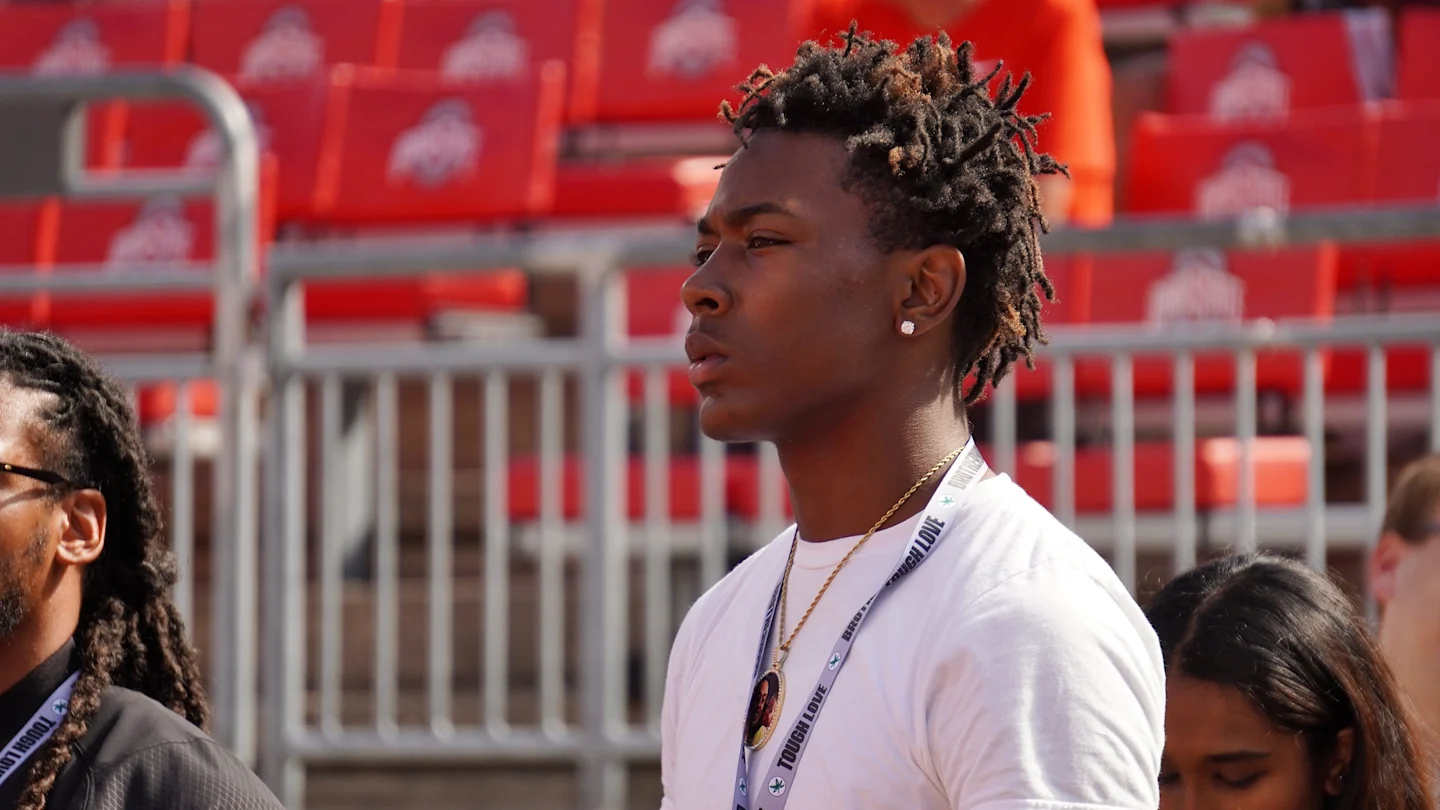
Penn State transfer Chaz Coleman has reportedly made his commitment to Tennessee on Saturday morning. Coleman, who had been ranked as the No. 3 player in the portal by On3sports and the No. 5 player by 247sports, had long been linked to Ohio State as a recruiting favorite. On the other hand, LSU had received a recent visit from Coleman. But neither school was able to land him away from the Volunteers.
Coleman was a four-star recruit out of Ohio in the class of 2025. He took official visits to Kentucky, Penn State, and then Ohio State in the final days before the early signing period, but chose to sign with Penn State. The 6’4″ EDGE has bulked up to near 250 pounds, but saw little action in his season at Penn State, making eight tackles in nine games. He’ll have three years of remaining eligibility.
Favorites Come up Empty on Coleman
Ohio State had long been considered the favorite to sign Coleman. Pete Nakos of On3 tied Coleman to Ohio State early in the portal process. Coleman visited Ohio State last week and the vast majority of On3 prediction were for the Buckeyes.
LSU, on the other hand, was thought to be more of a last-minute option for Coleman. He visited Lane Kiffin and the Tigers first, before heading to Tennessee and OSU, and many thought LSU had positioned itself as a switch-over option from the Buckeyes.
Tennessee, on the other hand, has several former Penn State defensive coaching now on staff, with former coordinator Jim Knowles and co-coordinator Anthony Poindexter joining the Vol staff. Tennessee is clearly making good use of this connection, as Coleman is the third Penn State transfer that the Vols have snagged, with linebacker Amare Campbell and lineman Xavier Gilliam also on board.
The remaining EDGE market
The EDGE market is narrowing with the early commitment of John Henry Daley to Michigan and Coleman heading to Tennessee. LSU and Ohio State might move on to Missouri transfer Damon Wilson II. Oklahoma State’s Wendell Gregory could be another option there, although many are linking Gregory to Missouri at this time. The market on top EDGE talent is thinning out and two surprising teams came up empty on Chaz Coleman.

Prep Volleyball: Pewitt’s Thomas, Linden-Kildare’s Birmingham named all-state

College football team loses 29 players to transfer portal

Red Flash Men’s Volleyball Comes Up Empty Handed In Utah

American Communications Construction, Aloha Beauty Lounge Renew Sponsorship with Tony Schumacher Through 2032

Patriots Drop Season Opener to Catawba in Five Sets

Native Youth Olympics preparations under way | Sports

NDSU handles business against Omaha WBB in blowout fashion | Sports

Fernando Mendoza Spurned Miami’s $3 Million Offer To Join Indiana

Staten Island youth sports notebook: Two basketball teams from borough play at Barclays Center

La Habra girls basketball team captures decisive home league victory over Pacifica –

No. 1 transfer portal defender set to visit fourth college football program

Intramurals | Calvin University

Mark Cuban reveals message to Indiana after donating to football program

Building their future, one brick at a time | News, Sports, Jobs

Men’s Volleyball vs UBCO on 1/9/2026 – Box Score

#11 Volleyball Practices, Then Meets Media Prior to #2 Kentucky Match

Stempien to seek opening for Branch County Circuit Court Judge | WTVB | 1590 AM · 95.5 FM

Ross Brawn to receive Autosport Gold Medal Award at 2026 Autosport Awards, Honouring a Lifetime Shaping Modern F1

Maine wraps up Fall Semester with a win in Black Bear Invitational

Nascar legal saga ends as 23XI, Front Row secure settlement

Princeton Area Community Foundation awards more than $1.3 million to 40 local nonprofits ⋆ Princeton, NJ local news %

Downtown Athletic Club of Hawaiʻi gives $300K to Boost the ’Bows NIL fund

Sunoco to sponsor No. 8 Ganassi Honda IndyCar in multi-year deal

WNBA’s Caitlin Clark, Angel Reese and Paige Bueckers in NC, making debut for national team at USA camp at Duke

Badgers news: Wisconsin lands 2nd commitment from transfer portal

Nike Signs 10 LSU Athletes to NIL deals

Five Youth Sports Trends We’re Watching in 2026

Three Clarkson Volleyball Players Named to CSC Academic All-District List

Beach Volleyball Unveils 2026 Spring Schedule – University of South Carolina Athletics

Kentucky AD explains NIL, JMI partnership and cap rules





-
 Sports3 weeks ago
Badgers news: Wisconsin lands 2nd commitment from transfer portal
-
 Rec Sports1 week ago
Five Youth Sports Trends We’re Watching in 2026
-
 Sports2 weeks ago
Kentucky VB adds an All-American honorable mention, loses Brooke Bultema to portal
-

 Motorsports3 weeks ago
Dr. Patrick Staropoli Lands Full-Time O’Reilly Ride with Big Machine Racing
-
 Sports2 weeks ago
2025 Volleyball Player of the Year: Witherow makes big impact on Central program | Nvdaily
-

 Motorsports2 weeks ago
BangShift.com IHRA Acquires Historic Memphis Motorsports Park In Millington Tennessee. Big Race Weekend’s Planned For 2026!
-
 Sports2 weeks ago
Colorado volleyball poised to repeat success
-

 Sports2 weeks ago
Texas A&M volleyball’s sweep of Kentucky attracts record viewership
-

 NIL3 weeks ago
Insider Reveals Biggest Reason Behind Colorado’s Transfer Portal Mass Exodus
-
NIL2 weeks ago
Fifty years after IU’s undefeated champs … a Rose Bowl