Connect with us
https://yoursportsnation.com/wp-content/uploads/2025/07/call-to-1.png

NIL

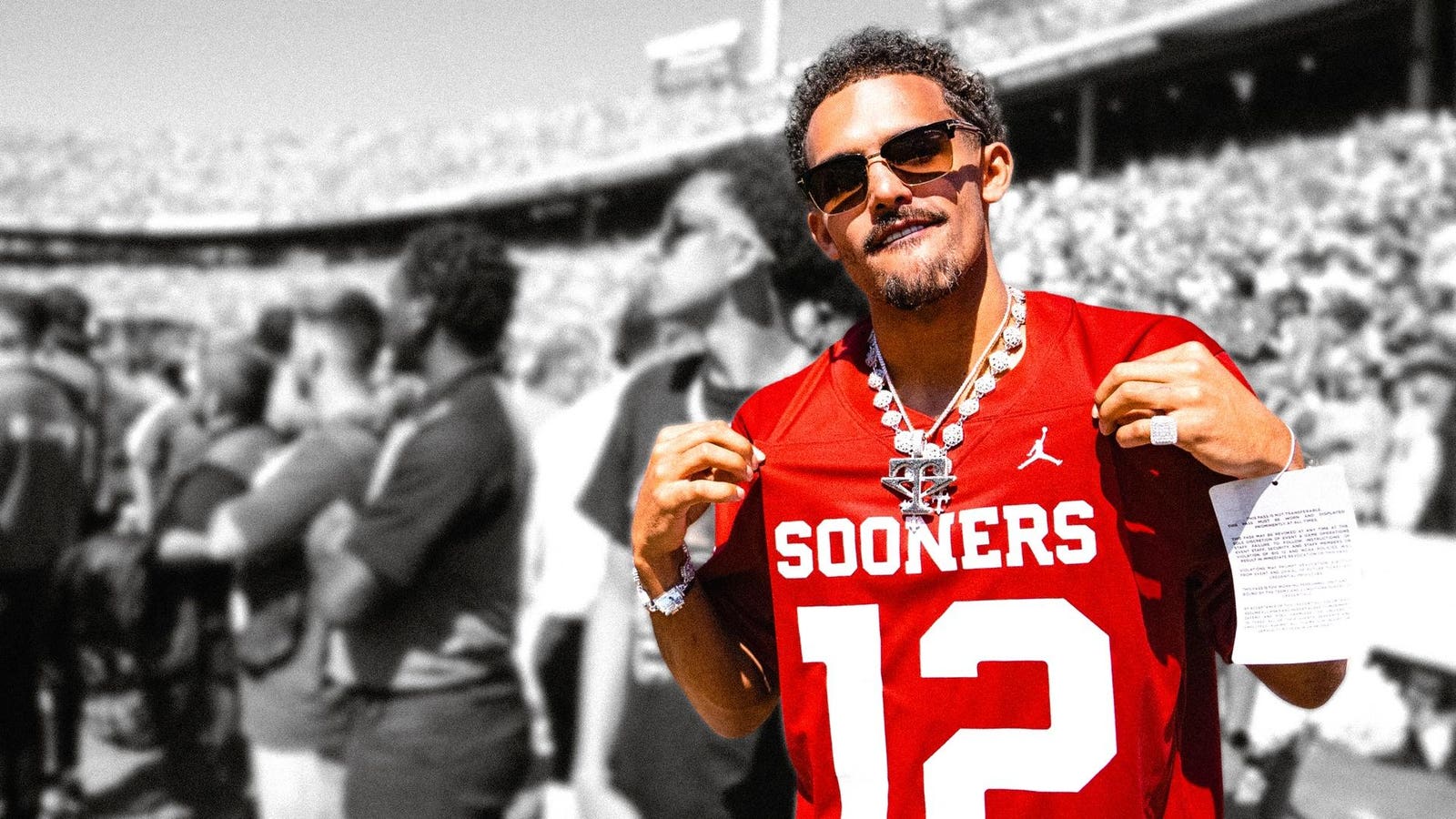
Why The NIL Gold Rush Is Sending Trae Young And Steph Curry Back To School

Published

on


Amid the NIL gold rush, college sports programs seeking an edge with top talent are reuniting with star alumni—and sending them out on the recruiting trail.


Last month, as the NBA regular season was barreling toward its conclusion, Atlanta Hawks guard Terance Mann had more on his mind than his team’s push for a playoff spot. The basketball program at his alma mater, Florida State University, had won only 17 games and failed to qualify for the NCAA tournament, and Mann wanted to help. So he chipped in with recruiting, connecting the team with guard Martin Somerville—a transfer prospect from the University of Massachusetts whom he knew from off-season workouts—and eventually steering Somerville to Tallahassee.

“Martin Somerville is going to play a lot for us next year,” says Luke Loucks, who was hired as Florida State’s coach in March. “Without Terance, we had no shot at getting him, and we beat out some really big schools that were willing to pay way more in NIL to get him.”

In the four years since the NCAA begrudgingly began to allow its athletes to profit off their name, image and likeness, big-time college sports have quickly become a bidding war for top players. In addition to the branded social media posts and local television commercials that rulesmakers might have envisioned when they opened the doors to commercial deals for athletes on campus, boosters have pooled their resources and formed collectives to funnel money to recruits—nominally for marketing services but in practice often a thinly veiled form of pay-for-play.

Three antitrust lawsuits—House v. NCAA, Hubbard v. NCAA and Carter v. NCAA—are currently awaiting court approval for a settlement that would inject even more money into the system, enabling universities to directly pay athletes a share of their media, ticket and sponsorship revenue and effectively ending college sports’ commitment to amateurism. For example, according to the Houston Chronicle, the University of Texas plans to spend $35 million to $40 million on its football roster next season between its NIL payouts and the revenue-sharing payments, which are expected to be capped initially at $20.5 million. Already, however, programs’ price tags are eye-popping. Last July, Ohio State’s athletic director told the Columbus Dispatch that the school’s football players had received roughly $20 million in NIL deals over the previous year through a variety of third parties.

Naturally, not every university has the wherewithal to keep up, and even the ones that do are fighting for a competitive edge. A handful of institutions believe they have found an answer that goes beyond dollars and cents—all-star alumni like Mann, a six-year NBA veteran who played for the Seminoles from 2015 to 2019.

In April, Mann officially rejoined Florida State as assistant general manager of the men’s basketball program. He will not be an FSU employee or be paid for his role, but he will be expected to play a part in player development as well as recruiting.

“It’s a great idea,” says Mann, 28. “As long as the landscape stays this way, colleges should find somebody that will help them recruit, raise money and be an ambassador all in one, and I think eventually we’re going to see most of them doing it.”

A month before Mann started his new side hustle, Golden State Warriors superstar Stephen Curry paved the way by becoming the assistant general manager for the men’s and women’s basketball teams at his alma mater, Davidson College—billed as the first time an active athlete from a major North American sports league had accepted an administrative role with an NCAA program. Three weeks later, Trae Young, Mann’s teammate on the NBA’s Hawks, went back to the University of Oklahoma in a similar role, and Las Vegas Raiders defensive end Maxx Crosby followed in April by taking a position with Eastern Michigan University’s football program. (And this doesn’t even include former Indianapolis Colts quarterback Andrew Luck, who became Stanford football’s general manager in November, five years after retiring from the NFL.)

It’s hardly the first time schools have leaned on famous alumni for a boost. Former players of Duke University’s basketball program routinely show up to games at Cameron Indoor Stadium, Loucks notes, and the Blue Devils’ “Brotherhood” has long been a selling point to prospective recruits. But the new trend is a more formal relationship, and it comes with one additional advantage: Official members of a program can contact recruits, whereas alumni and boosters are generally prohibited under NCAA bylaws from calling them directly and are limited to certain types of interaction on campus.

The reinforcements give colleges a new tool to build—and preserve—their rosters in an era complicated by not only NIL money but also laxer transfer rules, which allow athletes to seek better compensation from rival schools without having to sit out seasons if they switch programs. The offers can be enticing: According to NIL deal marketplace Opendorse, the top 100 earners in men’s college sports bring in more than $1 million on average, and the corresponding figure for women’s athletes is around $250,000. There is even big money to be found in smaller sports, such as softball, which saw ace pitcher NiJaree Canady jump from Stanford to Texas Tech last year with a guarantee of more than $1 million for a single year’s commitment.

Across NCAA Division I men’s basketball, more than 2,500 players entered the transfer portal in 2025, according to college basketball recruitment website VerbalCommits.com, nearly triple the 957 that did so in 2019, a year after the new transfer system was introduced.

“Because players can leave and go to other schools, how do you keep them happy?” says Mark Conrad, director of the sports business program at Fordham University. “You can’t sign them to long-term contracts, yet you want them to stay.”

One strategy might be to keep around a professional athlete like Young, a four-time NBA All-Star who was the league’s fifth overall draft pick in 2018. He could help Oklahoma identify talent, mentor young players and balance the egos that come with uneven compensation in a locker room, Conrad contends. Young could also assist with creating a culture of retaining athletes—even if that might be a bit ironic for a player who spent a single season in college, in 2017-18, before turning pro.

Young says college sports’ emerging obstacles are exactly what drew him back to his alma mater. After Oklahoma lost its first-round NCAA tournament matchup against the University of Connecticut this year, he was moved when he heard Sooners coach Porter Moser say that winning in April and May—a key time for transfers and recruiting in college basketball—translates to winning in March Madness.

“It hit home,” Young says. “I definitely am always rooting for my school.”

Since leaving college life in Norman, Young has maintained close ties with the university and says he spent years talking with athletic director Joe Castiglione about how he could get involved. The idea to step in as an assistant general manager materialized shortly before the school made the announcement in March. (Mann says that when Young struck his deal, a “light bulb went off” for him, too, and he got a call from Loucks the same day.)

Young, whose Hawks ended up losing their two play-in games and missing the NBA playoffs, has already begun talking to athletic department donors as well as recruits and transfers, although he declined to name anyone. His most impactful move thus far, however, was a $1 million commitment he made to Oklahoma as part of his deal to join the program. Castiglione did not offer specifics on how the money would be deployed but says it will be used in “areas that help the basketball program,” which could include NIL funding. (Oklahoma also declined to reveal the amount of NIL money its athletes receive.)

Young hasn’t ruled out making additional donations in the future—and he could certainly afford to. In addition to his $43 million NBA playing salary this season, Forbes estimates he earned $3 million off the court over the past 12 months from endorsements, appearances, licensing income and other business endeavors. Mann, meanwhile, collected more than $12 million in total earnings (before taxes and agent fees) and made an undisclosed donation to Florida State. And Curry—who pulled in an estimated $156 million over the past 12 months, ranking second among the world’s highest-paid athletes—is contributing to a new eight-figure fund for Davidson athletes.

It remains to be seen exactly how much time these celebrities will dedicate to their schools since none are planning to give up their day jobs anytime soon. Young, who just finished building a house in Norman, says there will be weeks or months when he’s more involved and others when he’s less engaged, depending on the ebbs and flows of the NBA season. The same goes for Mann, who plans to make a few trips to Tallahassee this summer and has already joined the Florida State coaches’ group chat.

“I don’t think it’s just an ambassador thing where we show up, smile, shake hands and post on our social medias about it,” Mann says. “I think me and [Young] are very much involved in our colleges, and we are hands-on. We both don’t want to see anything on our name not be good. We’re both competitors.”

Young is also thinking in competitive terms.

“I need myself a ring,” he says. “I only had one chance at it, and I didn’t do really well in my tournament experience—we lost in the first round.

“You need four, five, six, seven guys that can win you a championship, so I’m going to go get them and bring me and this university our first championship.”

More From Forbes

ForbesCavinder Twins, Stars On TikTok And Basketball Court, Are Nearing $2 Million In NIL Deals, With More AheadForbesCollege Sports’ ‘King Of NIL’ Is Racking Up Endorsement Deals At A Small HBCUForbes30 Under 30 Sports 2025: These Athletes And Executives Are Breaking BarriersForbesThe World’s 10 Highest-Paid Athletes 2025


Link

Continue Reading
Click to comment

Leave a Reply

Your email address will not be published. Required fields are marked *

NIL

Florida wide receiver Naeshaun Montgomery plans to enter NCAA Transfer Portal

Published

on


Florida wide receiver Naeshaun Montgomery is planning to enter the NCAA Transfer Portal, On3 has learned. He caught three passes for 26 yards in 2025.

Montgomery played high school football at Miami Central (West Palm Beach, FL), where he was a four-star prospect. He was the No. 262 overall recruit in the 2025 cycle, according to the Rivals Industry Ranking, a weighted algorithm that complies all major recruiting media services.

He had a bunch of different premier programs interested in his services as a recruit. We’ll see who comes calling this time around for the wide receiver.

To keep up with the latest players on the move, check out On3’s Transfer Portal wire. The On3 Transfer Portal Instagram account and Twitter account are excellent resources to stay up to date with the latest moves.

More on Naeshaun Montgomery, NCAA Transfer Portal

Meanwhile, the NCAA Division I Administrative Committee passed dates for the one-time-only college football transfer portal back earlier in October. As it stands, the 2025-26 college football transfer portal will last 15 days. It’ll span Jan. 2 to Jan. 16, the NCAA announced.

Moving forward, the entire Division I football notification of transfer windows is slated for Jan 2-16. As has been the previous standard, athletes on College Football Playoff teams still playing would have 5 days beginning the day after their team’s final game to enter the transfer portal.

Additionally, players have 15 days to enter the portal, but they’re not under a deadline to commit when they enter. Traditionally, the deadline for committing is how late a school can enroll a player through admissions.

One caveat is that if a head coach is fired, the transfer portal will not open for players immediately. The NCAA revealed that moving forward, players will only have 15 days to enter the portal after a coaching change, instead of the former allocation of 30 days. Players will also have to wait five days after a new coach is hired or announced. 

Finally, graduate transfers also cannot enter the transfer portal until Jan. 2 with the new one-time-only portal window. All these new guidelines are bound to shake things up, but the transfer portal will still remain as interesting and entertaining as ever.


Link

Continue Reading

NIL

6 Tennessee players who increased their NIL value, including DeSean Bishop

Published

on


Dec. 22, 2025, 5:00 a.m. ET


Link

Continue Reading

NIL

Miami WR Malachi Toney Announces Career News Amid College Football Season

Published

on


The No. 10 seed Miami Hurricanes defeated the No. 7 Texas A&M Aggies 10-3 in the first round of the College Football Playoff. It was a defensive battle, ultimately decided by a late fourth-quarter score and red-zone interception by Miami.

With the score tied at 3 and 1 minute, 44 seconds left in the game, Hurricanes wide receiver Malachi Toney scored on an 11-yard touchdown pass thrown by quarterback Carson Beck.

Advertisement

Up next for the Hurricanes is a Goodyear Cotton Bowl Classic matchup against the No. 2 Ohio State Buckeyes. It’s an uphill battle, as ESPN’s matchup predictor gives the Hurricanes a 29.5% chance of winning.

Miami Hurricanes wide receiver Malachi Toney (10).© Robert Myers-Imagn Images

Miami Hurricanes wide receiver Malachi Toney (10).© Robert Myers-Imagn Images

Before his heroic performance, though, the wide receiver revealed an exciting Name, Image and Likeness (NIL) update. In a joint Instagram post, Toney revealed a new NIL partnership with Hellstar, a popular clothing brand that has a sports training component.

Advertisement

“We are so proud to announce our first Hellstar Sports College Athlete NIL signing – Malachi Toney🌟.,” the post caption read. “We had the privilege to coach @malitoney10 while he was apart of our high school 7 on 7 program, so now seeing him shine on the collegiate level we couldn’t be more proud.”


Link

Continue Reading

NIL

What Colorado’s Athletic Department Valuation Says About Buffaloes’ Growth

Published

on


In the growing landscape of college athletics, Name, Image, and Likeness (NIL) deals play a vital role in sports. Some programs are set up better than others based on a program’s valuation. Programs with higher valuations can help some of the top-performing teams stay successful.

CNBC released its valuation rankings for the country’s athletic departments, showing their growth from the 2024 fiscal year. The Colorado Buffaloes are ranked No. 47 in the nation, a rise from No. 55 in 2024.

Colorado Buffaloes valuation NIL transfer portal Deion Sanders Coach Prime Big 12 College Football Basketball Folsom Field

Nov 25, 2023; Salt Lake City, Utah, USA; Colorado Buffaloes head coach Deion ‘Coach Prime’ Sanders on the field against the Utah Utes at Rice-Eccles Stadium. Mandatory Credit: Christopher Creveling-Imagn Images | Christopher Creveling-Imagn Images

Breaking Down Colorado Buffaloes’ Valuation Ranking

Colorado’s 2025 valuation is $574 million, with a year-over-year value change of 22 percent. The program’s 2024 revenue is set at $147 million, with a 16 percent year-over-year revenue change.

A program’s valuation determines its monetary worth, and it is important to look at the growth, which shows that Colorado is trending in the right direction. It is also important to note that the valuation rankings are based on all of the athletics, not just the football program.

Where Colorado Ranks In The Big 12

Colorado Buffaloes valuation NIL transfer portal Deion Sanders Coach Prime Big 12 College Football Basketball Folsom Field

Sep 20, 2025; Boulder, Colorado, USA; Colorado Buffaloes head coach Deion Sanders before the game against the Wyoming Cowboys at Folsom Field. Mandatory Credit: Ron Chenoy-Imagn Images | Ron Chenoy-Imagn Images

When focusing on the Big 12 conference, several of the programs are in the same vicinity with their valuation ranking.

  • No. 39 Kansas: $620M
  • No. 41 Oklahoma State: $600M
  • No. 42 Baylor: $585M
  • No. 46 Iowa State: $575M
  • No. 47 Colorado: $574M
  • No. 49 Texas Tech: $570M
  • No. 50 TCU: $568M
  • No. 55 Arizona: $529M
  • No. 57 BYU: $500M
  • No. 58 West Virginia: $481M
  • No. 60 Utah: $451M
  • No. 62 Kansas State: $435M
  • No. 63 Arizona State: $430M
  • No. 68 Cincinnati: $280M
  • No. 70 UCF: $262M
  • No. 73 Houston: $222M

MORE: Colorado Gets Hit With Biggest Transfer Portal Loss Yet

MORE: Michael Irvin Gets Real On Blame Surrounding Shedeur Sanders

MORE: Deion Sanders Faces Recruiting Problem After Omarion Miller Transfer News 

SIGN UP FOR OUR NEWSLETTER HERE

While from the top valuation of Kansas to the bottom, which is Houston is a significant difference in the Big 12, the conference teams are still in a similar vicinity overall. With it having to do with all athletics, the programs that have consistently strong teams, such as Kansas’ basketball team, make sense to have a higher valuation.

Colorado Buffaloes valuation NIL transfer portal Deion Sanders Coach Prime Big 12 College Football Basketball Folsom Field

Nov 23, 2024; Kansas City, Missouri, USA; Colorado head coach Deion Sanders watches his players warmup prior to the game between the Kansas Jayhawks and the Colorado Buffaloes at GEHA Field at Arrowhead Stadium. Mandatory Credit: Nick Tre. Smith-Imagn Images | Nick Tre. Smith-Imagn Images

Looking at the Big 12 as a whole shows that the Colorado Buffaloes are in the top five for their valuation and trending upward. 

Calling Back To Deion Sanders’ Comments On Fairness

While valuation is not the same as revenue, seeing the difference in the conferences does call back to Colorado coach Deion Sanders’ comments on the fairness between programs. The schools in the top five for their valuation are either in the Big Ten or the SEC, and all are in the billions. 

“You talk about equality,” Sanders said during the Big 12 media day. “All you have to do is look at the playoffs and see what those teams spent, and you understand darn near why they’re in the playoffs. It’s kind of hard to compete with somebody who’s giving $25, $30 million to a darn freshman class.”

Colorado Buffaloes valuation NIL transfer portal Deion Sanders Coach Prime Big 12 College Football Basketball Folsom Field

Colorado football coach Deion Sanders looks on against Texas Tech in a Big 12 football game Saturday, Nov. 9, 2024, at Jones AT&T Stadium. | Stephen Garcia/Avalanche-Journal / USA TODAY NETWORK via Imagn Images

Although the valuation is on the programs’ overall athletics, Sanders has been outspoken about money when it comes to building the football program. With the Buffaloes facing a mass exodus through the transfer portal, Sanders has highlighted that several players are leaving because of money.

The positive side is that the Buffaloes’ valuation is growing with a 22 percent increase. This shows that the school’s athletics overall are being valued higher, and will help lead to more money poured into the program. With more money, the Buffaloes can put more of an emphasis on NIL as they look to build their roster and compete in the Big 12.

RECOMMENDED ARTICLES


Link

Continue Reading

NIL

Insider Reveals Biggest Reason Behind Colorado’s Transfer Portal Mass Exodus

Published

on


From a player retention standpoint, the first few weeks of the offseason haven’t been kind to the Colorado Buffaloes.

Several key Buffs have announced their intentions to enter the college football transfer portal when it opens next month, including wide receiver Omarion Miller, safety Tawfiq Byard and freshman defensive end Alexander McPherson. While every situation is unique, one Colorado insider believes money has been a common denominator among players’ reasons for leaving Boulder.

Insider Reasons Colorado Transfer Portal Exodus Buffaloes NIL Deion Sanders Alexander McPherson Tawfiq Byard Omarion Miller

Oct 25, 2025; Salt Lake City, Utah, USA; Colorado Buffaloes wide receiver Omarion Miller (4) is tackled by Utah Utes defensive back JC Hart (14) during the second half at Rice-Eccles Stadium. Mandatory Credit: Rob Gray-Imagn Images | Rob Gray-Imagn Images

“The super majority of those people, I’m talking 95 percent, are going to be leaving for a bigger bag,” Thee Pregame Show’s Uncle Neely said on his YouTube channel. “This ain’t transferring in 1990. This ain’t transferring in the year 2000. This is 2025. This is business now. This isn’t, ‘Oh, I don’t like the coach. Oh, I don’t want to be treated the way they treat me.’

“This doesn’t mean something is wrong. These are business decisions now. But what we like to do is run with the narrative that woe is me, something must be wrong, something must be going on. How are all these people leaving?”

Insider Reasons Colorado Transfer Portal Exodus Buffaloes NIL Deion Sanders Alexander McPherson Tawfiq Byard Omarion Miller

Nov 22, 2025; Boulder, Colorado, USA; Colorado Buffaloes head coach Deion Sanders on the sidelines in the first quarter against the Arizona State Sun Devils at Folsom Field. Mandatory Credit: Ron Chenoy-Imagn Images | Ron Chenoy-Imagn Images

The NIL (name, image and likeness) era has rocked college football, and the depressing truth is that schools with more money will ultimately land the best players. In the Big 12, no school better exemplifies that trend than new conference champion Texas Tech.

Who’s Leaving Colorado?

Insider Reasons Colorado Transfer Portal Exodus Buffaloes NIL Deion Sanders Alexander McPherson Tawfiq Byard Omarion Miller

Nov 22, 2025; Boulder, Colorado, USA; Colorado Buffaloes defensive back Tawfiq Byard (7) reacts in the first quarter against the Arizona State Sun Devils at Folsom Field. Mandatory Credit: Ron Chenoy-Imagn Images | Ron Chenoy-Imagn Images

As of Sunday, 16 Colorado players will enter the transfer portal next month. That group includes 12 defensive players, six members of the Buffs’ 2025 high school signing class and a few other Buffs who spent only one season in Boulder.

Below is an updated list of Colorado players who plan on entering the transfer portal:

  • Safety TJ Branch
  • Defensive lineman Jehiem Oatis
  • Cornerback Noah King
  • Cornerback Teon Parks
  • Linebacker Mantrez Walker
  • Safety Terrance Love
  • Safety Tawfiq Byard
  • Wide receiver Omarion Miller
  • Defensive tackle Brandon Davis-Swain
  • Offensive lineman Carde Smith
  • Defensive end Alexander McPherson
  • Offensive lineman Tyler Brown
  • Defensive tackle Gavriel Lightfoot
  • Defensive tackle Christian Hudson
  • Defensive tackle Tawfiq Thomas
  • Wide receiver Dre’lon Miller

Insider Reasons Colorado Transfer Portal Exodus Buffaloes NIL Deion Sanders Alexander McPherson Tawfiq Byard Omarion Miller

Nov 8, 2025; Morgantown, West Virginia, USA; Colorado Buffaloes wide receiver Dre’Lon Miller (6) runs the ball during the second quarter against the West Virginia Mountaineers at Milan Puskar Stadium. Mandatory Credit: Ben Queen-Imagn Images | Ben Queen-Imagn Images

Uncle Neely shared his take that Colorado’s losses should be replaceable via the transfer portal.

“Have you ever stopped to say, what am I actually losing by those people leaving?” Uncle Neely said. “Have you ever looked at the numbers production-wise of who has announced that they’re getting up out of here and what you’re actually losing by them leaving?… Is it replaceable via the portal? And in this business in college football, is it replaceable cheaper? I would wager to say the answer is yes in all regards.”

MORE: Colorado Gets Hit With Biggest Transfer Portal Loss Yet

MORE: Michael Irvin Gets Real On Blame Surrounding Shedeur Sanders

MORE: Deion Sanders Faces Recruiting Problem After Omarion Miller Transfer News 

SIGN UP FOR OUR NEWSLETTER HERE

Insider Reasons Colorado Transfer Portal Exodus Buffaloes NIL Deion Sanders Alexander McPherson Tawfiq Byard Omarion Miller

Oct 25, 2025; Salt Lake City, Utah, USA; Utah Utes tight end JJ Buchanan (81) catches a pass against Colorado Buffaloes defensive back Teon Parks (3) during the second quarter at Rice-Eccles Stadium. Mandatory Credit: Rob Gray-Imagn Images | Rob Gray-Imagn Images

The college football transfer portal will open on Jan. 2 and close Jan. 16. Colorado coach Deion Sanders and his staff can begin adding players from the portal at the start of that period.


Link

Continue Reading

NIL

Report: LSU finalizes deal to hire Ole Miss’ Kevin Smith, puts him among highest paid RBs coaches

Published

on


Lane Kiffin is bringing another Ole Miss assistant with him to LSU. According to Matt Zenitz of CBS Sports, the Tigers have finalized a deal to hire Rebels running backs coach Kevin Smith for the same role.

Smith is reported to have a salary of close to $1 million, which would make him one of the highest-paid running backs coaches in the country. He is the sixth Ole Miss assistant to follow Kiffin to Baton Rouge.

The other coaches joining Kiffin at LSU are offensive coordinator Charlie Weis Jr., tight ends coach Joe Cox, receivers coach Joe McDonald, inside receivers coach Sawyer Jordan and quarterbacks coach Dane Stevens. So far no defensive assistants from the Rebels have made the jump to Baton Rouge.

Smith worked with Kiffin as a running backs coach at Florida Atlantic form 2017-19 and joined his very first staff at Ole Miss in 2020. He stayed for the next two seasons in Oxford before leaving to take the running backs coach position at Miami in 2022.

Smith’s stint with the Hurricanes was a short-lived one as he returned to Ole Miss in 2023 and stayed through this season. Now he’ll look to continue the success he has enjoyed with Kiffin while building up the running backs room at LSU.

Smith helped to develop running backs such as Quinshon Judkins and Kewan Lacy during his time in Oxford. This past season, Ole Miss ranked fifth in the SEC with 185.6 rushing yards per game as Lacy led the conference with 21 rushing touchdowns and ranked second with 1,366 yards.

Ole Miss had its best season in program history this year to reach the College Football Playoff for the first time. However, Kiffin was not granted permission from the school to finish out the season with the Rebels after he accepted the LSU job.

Other assistants, including offensive coordinator Charlie Weis Jr., were allowed to complete the playoff run with Ole Miss. The Rebels defeated Tulane in the first round and will face No. 3 Georgia, which they lost to earlier this season, in the quarterfinals.

As of right now, it looks like most of the Ole Miss offensive staff will follow Kiffin to Baton Rouge. The defensive side keep defensive coordinator Blake Baker, who has been on staff at LSU since 2024.


Link

Continue Reading

Most Viewed Posts

Trending