
College Sports
With college sports in limbo and key issues coming to a head, the spotlight is on the SEC: ‘It’s going to get heated’


MIRAMAR BEACH, Fla. — This used to be more of a vacation.
For four decades now, each Memorial Day weekend, university presidents, athletic administrators and football and basketball coaches from the SEC escape to this jewel. From the Sandestin Hilton, along the white sandy beaches of the Florida panhandle, they gather here for their annual spring meetings.
Advertisement
Back in the day, this thing was four days of mostly monotonous legislative meetings. Lots of golf. Plenty of poolside cocktails. And bunches of beach time.
Through the years, the list of items tackled here are fairly trivial compared to today’s ills. Remember the controversy around football satellite camps? How about the uproar over alcohol sales at conference games?
Heck, even the heated, NIL-fueled squabble a couple years ago between Nick Saban and Jimbo Fisher pales in comparison to what now stands before the most powerful college football brand in America.
Nowadays, SEC meetings are three days of intense policy-making discussions oozing with heavy subject matter. There is little to no golf. Few cocktails. And an absence of beach time.
Advertisement
SEC leaders begin meetings here this week in the midst of a proverbial battle over the future of college athletics: its football (and basketball) postseason championships; the NCAA’s governance role; and the inception, for the first time ever, of direct revenue sharing with athletes.
The SEC’s spring meetings in Destin, Florida, could have a major impact on several key issues facing college sports. (David J. Griffin/Getty Images)
(Icon Sportswire via Getty Images)
SEC old-timers believe it to be the most consequential gathering in the history of the conference.
Their decision on the future format of the College Football Playoff, if one comes at all, stands not only to remake the sport’s postseason but, perhaps, reshape the college sports landscape in perpetuity.
Their idea on the future of NCAA governance could be the next step in a long-predicted breakaway from the association.
Advertisement
And their path on confronting the growing dissension among the league’s own schools to abide by the new NIL clearinghouse and enforcement arm could make or break this impending revenue-sharing model.
“It’s going to get heated,” quipped one SEC school administrator.
State of college sports
The college sports ecosystem is in a state of rapid change and financial stress unlike any in its history.
Conflict is everywhere. There is a fight for more control around every corner, a drive for more money around each bend.
Much of it is rooted in the newest monetary pressure point: the impending onset of direct revenue sharing with athletes — a concept that will alter college sports and grow the schism between the NCAA’s richest members and everyone else until, most believe, it ruptures completely.
Advertisement
“The way the economic forces in college sports are going it’s going to exacerbate the gaps between the haves and have-nots,” says Jay Hartzell, the former Texas president who helped bring the Longhorns into the SEC before leaving for SMU. “I do worry about schools below a certain threshold and I do worry about how they are going to keep up and keep competing.”
Schools, searching to find millions of previously unbudgeted dollars to pay players, are expected to distribute, at the power conference level, around $20 million each to their athletes next academic year — new money flooding into the hands of mostly 18-22-year-old football and basketball players.
This is college football’s seminal moment. It is, begrudgingly, shedding its decades-old amateurism facade, forced through court rulings and state laws, to morph into what it truly is: professional football tethered to higher education.
The true, chaotic and unstable state of the industry can be summed up in one stunning fact. College executives avoided sharing their wealth directly with athletes for so long that they are now in an uncomfortable place: awaiting a decision from a 75-year-old California judge to learn how exactly to move forward.
SEC commissioner Greg Sankey is considered by many to be the most powerful person in college sports these days. (Tim Warner/Getty Images)
(Tim Warner via Getty Images)
Less than 40 days before Division I athletic departments are scheduled to begin paying out what will be more than $1 billion to athletes next academic year, there is no decision in a consolidated antitrust settlement (House) that is supposed to usher in this revenue-sharing era. The formal establishment of the new enforcement entity, the College Sports Commission, remains on hold.
Advertisement
And this billion-dollar industry — the engine that educates the youth of America and develops our next great Olympians — remains in limbo.
Speaking last month at the World Congress of Sports event in Nashville, SEC commissioner Greg Sankey, often viewed as the most powerful person in college sports, suggested that people who refer to the industry’s “chaotic system” forget how it arrived here: state laws that, while granting athletes compensation, are made to offer schools advantages and cripple the NCAA’s national regulation system.
“Chaotic system,” he said. “That’s way too simple a definition.”
CFP format controversy
Disagreement over the future format of football’s postseason — an annual $1.3 billion enterprise — has turned into something much more serious.
Advertisement
Discord and distrust lingers among the four power conferences as the two most valuable leagues, the SEC and Big Ten, assert their authority over the CFP format. The Big Ten and SEC — two leagues that have financially and intentionally separated themselves from the others — are supporting a 16-team playoff format that grants each four automatic qualifiers, twice as many as reserved for the ACC and Big 12 (two each).
A year-long simmer of format negotiations has reached its boiling point. There exists serious pushback in the proposed format from not only the ACC and Big 12 but from Notre Dame and some of the other FBS Group of Six conferences.
In this street brawl, it is two (SEC and Big Ten) against at least four other conferences, plus Notre Dame, the most valuable and independent college football program in America.
During their meetings last week in Los Angeles, Big Ten administrators solidified their support for the so-called “4-4-2-2-1” format: SEC (4 AQs), Big Ten (4), ACC (2), Big 12 (2), Group of 6 (1), plus three at-large spots. This week, the SEC has a chance to do the same.
Advertisement
And what if they do?
“I guess we’re going to war,” said one Big 12 athletic director.
At the center of this brewing battle is a memorandum of understanding that the 11-member CFP governing board — the 10 FBS conferences and Notre Dame — authorized last spring. The document grants format decision-making powers starting in 2026 to the SEC and Big Ten — a move to keep the two goliaths from separating to form their own playoff.
According to most who have viewed the memorandum, the agreement grants the Big Ten and SEC control over the format but directs them to have “meaningful consultation” and collect “input” from the other conferences and TV partner, ESPN.
Advertisement
Have they satisfied the agreement’s language to hold “meaningful consultation?” Some do not believe so and have sought legal counsel over the validity of the document.
The SEC’s decision on format is a pivotal step that may ignite a chain of moves within the conference itself. With four guaranteed spots in the postseason, SEC administrators are more willing to (1) add a ninth conference football game, (2) eventually strike a scheduling agreement with the Big Ten and (3) remake conference championship weekend with on-campus play-in games pitting their third, fourth, fifth and sixth-place finishers against one another for the final two CFP automatic qualifying spots.
What will the College Football Playoff look like in the future? (Amy Monks/Yahoo Sports)
All of these moves match up more big brands in additional games for — no surprise here — more money at this financially stressful time.
Advertisement
But there are other playoff formats in consideration, including a 16-team bracket with a single qualifier for each power conference champion and the best Group of Six champion, plus 11 at-large bids — a concept supported by the Big 12 and ACC and one that Sankey has kept in the conversation.
There is one problem with that format.
“It doesn’t allow us to do the play-in games,” said one SEC school administrator, “and I’m not sure we’d have the votes for a ninth conference game either.”
The flip side: With the 4-4-2-2-1 format, there is a risk of alienating a large swath of college football fan bases, triggering unwanted intervention from congressional lawmakers and adversely impacting relationships with the two other conferences.
Advertisement
“I think you should earn your way into any playoff,” Pitt coach Pat Narduzzi said earlier this month. “It comes down to the image of the Big Ten and SEC. There’s a lack of respect for the ACC. I don’t like it.”
NCAA governance
The long-discussed breakaway from the NCAA feels closer than ever.
The discord that exists among the power conferences over playoff format is not unlike the growing dissension between the four and the other 28 Division I leagues over future governance.
The NCAA is remaking its governance model to align with the July 1 implementation of the athlete revenue-sharing era. The proposal, socialized with member schools over the last two weeks, grants the power conferences as much as 65% in weighted voting power within rule-making committees. These groups make key decisions on topics such as when to hold the football transfer portal, who to assign to the basketball tournament selection committee, how to remake the football calendar and, perhaps most notably given recent lawsuits against it, a player’s collegiate athletic eligibility.
Advertisement
In Destin this week, SEC administrators are expected to examine the governance proposal and the possibility of separating football completely out from under the NCAA. During its spring meetings last week, the Big Ten swung its support for doing just that — bifurcating football governance.
In an unreported and little-known fact, SEC presidents in March quietly authorized their commissioner, Sankey, to split from the NCAA if he deems that the right move.
There are gripes over the NCAA’s new governance proposal from both the power leagues (believing that 65% is not enough) and many of the other 28 Division I conferences (believing that 65% is too much).
At least three commissioners of non-FBS conferences have publicly criticized the model, at least one of them fearing that the Big Ten, SEC, Big 12 and ACC will use their voting bloc to restructure the men’s basketball tournament — the NCAA’s only real money-maker — by impacting automatic qualifiers and revenue payouts for the lower leagues.
Advertisement
“Absolute power corrupts absolutely,” says Big Sky Conference commissioner Tom Wistrcill. “There’s going to be no checks and balances for them. There’s going to be no limit to what the Power Two can do if you give them any more.”
The power conferences have their own issues with the model. At 65%, all four of the leagues must vote the same way to pass an issue — a potential impediment to legislation given the growing schism between the big two (Big Ten and SEC) and the other two (ACC and Big 12).
The divide among the four power leagues is more evident than ever.
The latest example was a recent clandestine call that several ACC and Big 12 school presidents and high-ranking athletic administrators held with leaders of a private-equity backed super league. The call, earlier this month, was had without the involvement of ACC and Big 12 commissioners and was the second such Big 12-ACC joint meeting since December with those from Smash Capital, a venture capital firm proposing a super league model that features a $9 billion promise of cash infusion to college sports.
Advertisement
The ACC and Big 12 schools are not alone in their foray into this world.
While they are against these super league ideas, both the SEC and the Big Ten are exploring a private equity or private capital infusion. Big Ten administrators received presentations last week at their spring meetings from four firms jockeying to purchase a piece of the conference.
SEC officials are using Goldman Sachs, a multinational investment bank and financial services company, to further examine the concept.
Even the richest need financial help.
House settlement
The lack of trust among major college athletic departments can now be measured in a formal document.
Advertisement
As part of the sport’s new enforcement entity to police revenue sharing, schools in the power conferences — and others opting into the settlement — are required to sign an “affiliation agreement” binding them to rules and waiving their right to sue over those rules.
The gist: You don’t sign, you don’t play.
The document itself, while understandable, is an indictment on an industry of stakeholders that, because of competitive reasons, are constantly scrambling to bend, break and shatter rules to gain even the slightest edge. This festering, decades-old problem — booster and board influence — is at its peak, most athletic administrators claim.
Under pressure from state lawmakers, the NCAA lifted its prohibition on NIL rules in July of 2021, cracking the door for boosters.
Advertisement
They’ve since kicked it in — with help from their schools, at that.
“I identified to our membership what we were losing is shared values,” Sankey said last month. “So I can put people in a room and we can all agree we want regulation, we want oversight. And then when they leave the room, things happen.”
During a speech before the Knight Commission in 2023, Damon Evans, the former Georgia and Maryland athletic director now presiding over SMU, identified those things that happen.
“A lot of times, administrators and presidents go in with the right intentions and then we have trustees that get involved, which are donors, boosters and alums. And then somehow, magically, we change the direction we want to go in,” Evans said. “We say we want to do one thing, but we allow donors and boosters to get control. It becomes a decision about your own job security.”
Advertisement
The House settlement-related enforcement arm is a test for major college football and basketball. Can schools follow the rules? The biggest of which is for universities to remain under the new quasi-salary cap. The cap is a way to legislate competitive equity. In many ways, it handcuffs college football’s biggest brands with the richest donor bases, like Texas, Ohio State, Texas A&M, Tennessee, Oregon and Miami — six of the top spenders in the NIL era.
Will these programs remain under the cap? Or will they support their booster collectives in flooding the new Deloitte-run NIL clearinghouse with multi-million dollar deals for their athletes as a way to circumvent the cap?
And what happens when those are rejected? More lawsuits?
“We have to decide if we want to be governed,” Illinois athletic director Josh Whitman said.
Advertisement
One year ago, even before the settlement was formally adopted by NCAA members, several booster collectives in the SEC, specifically, began making plans to evolve from their current form into marketing-type agencies with intent to specifically circumvent the cap and continue supplying athletes with millions of dollars. Meanwhile, university athletic departments plan to use multimedia rights partners, apparel companies and corporate sponsors to fuel rosters with above-the-cap NIL deals.
Will the clearinghouse stop these agreements or will it, like many suspect, be sued into oblivion?
“That is the 100 million-dollar question,” Baylor athletic director Mack Rhoades said. “I’ll say this, it has to work. For this to be a good settlement, that component has to work and I think it is the most important.”
Many college leaders struck the settlement to (1) limit the role of booster collectives and third-party influences; and (2) avoid future litigation. It’s clear now that neither is expected to happen — a reason that so many within college athletics privately believe the settlement, though a necessary step to potential collective bargaining or employment, is a farce.
Advertisement
“But isn’t college sports worth saving?” rebutted one SEC athletic director.
Saving? Many would call this capitalism — athletes finally earning their cash, even if many of these deals are phony payments for recruiting purposes.
Does the sport really need saving?
Yes, Sankey says.
“There’s a reason the professional leagues are 30 and 32 [franchises], because you can fund those. They are not 70. We’re at 360 in Division I,” Sankey said in April. “If what’s happening now just continues for years and years, you will quickly see a diminishment of the number of sports offered. That’s why there needs to be national standards, because its impacts are geopolitical.”
Advertisement
Without it, experts contend, college sports is on the path to full professionalism — a concept that may put in jeopardy an athletic department’s broad-based, Olympic sports structure and eventually sever major college football from a university completely.
That day, most believe, isn’t far off.
“We are approaching an irreconcilable position between the academy and college athletics,” former Duke and Notre Dame athletic director Kevin White has said in the past. “That is frightening.”
Here at the Sandestin Hilton, golf, cocktails and beach are mostly replaced by heavy, consequential and, perhaps even, historic decisions.
There is serious business at hand for an entity that, more than ever, is exactly that — a business.


Rome High School has been known for academic progress for many years, so much so that when it came to have a college fair on campus recently, more than 50 colleges and universities showed up to recruit, including some schools that were more than 2,500 miles away.

The College fair was hosted in Rome High’s main gym and was full of tables from each college at the event. The colleges set up posters, brochures, and flags to display their mascots and information about their college.
Juniors and seniors came at different times. The seniors showed up first, followed by the juniors. Both groups stayed about 45 minutes. During their time, students walked around the gym, observing the tables set up, talking to the college representatives, and taking pamphlets the colleges offered.
Senior Jayden Perez said he hopes to major in nursing at Emory University, but is also looking at several other state schools, and enjoyed the college fair experience.
“This has given me an opportunity to get excited about college,” he said. “It also is a great opportunity to speak with real college professionals one-on-one.”
Andrew Hunsinger from the University of Vermont said he hopes to broaden the students’ horizons to schools in the Northeast and let them know about their possibilities outside of Rome.
“The main thing I want to bring to a place like Rome High School is to let students know that the Northeast is an option for them,” Hunsinger said. “Especially in Atlanta, a lot of people from the northeast are moving to the south, and we are trying to let students in places like Rome know about the opportunities that are available at universities like Vermont.”
While the students marveled at the number of schools in attendance, what they didn’t see was all the preparation behind the scenes to make the fair happen.
“I have been planning the college fair since June. I wrote a lot of emails and made phone contacts with a lot of these colleges,” Rome High School Counselor Melissa Holland said. “I am also able to reach out via SCOIR (the SCOIR College Network), and there is a way to invite colleges through the site, and I got a lot of interest that way.”
Junior Genesis Uzcategui said something she finds appealing about a college is if they are far from home, so she can go out and see the world for herself while studying ultrasound-radiology, her major.
¨I’ve looked at Warren Wilson, Toccoa Falls, Eckerd, and Florida Southern,” Uzcategui said.
Lilly Blanchard said she is a big Oregon football fan, so that college coming to Rome caught her attention. Some of the colleges that visited Rome really surprised these students.
“I’ve been on a tour at UAB (University of Alabama at Birmingham) and I’m applying early to Duke for neuroscience,” she said. She discussed wanting a college with a diverse, inclusive community. She is looking for a college with good education, good sports, and a good vibe.
The fair was a perfect place for many students to get an opportunity to learn about a lot of different schools.
“I don’t know exactly what college I want to go to, but I am interested in UGA or Emory,” Janna Nyguen, a junior, said. “I want to major in Premed. I want to go into the healthcare field.”
While the college fair afforded lots of options for students, Holland said it also aligns with Rome High School’s mission statement. For many students, this was a first-time experience to the exposure of different colleges and the idea of possible majors they can choose.
“The college fair is an extension of our mission statement, which is to make sure students graduate from Rome High School prepared for college or work,” she said. “I want the students to have an open mind and to be able to find out the opportunities that are out there and available to them. Some students may have in mind that they want to go to work, but through this they may see they want to go to college. An event like this offers them the chance to open their minds to other opportunities.”
Written by: Brighton Turner and Selah Marshall





-

Greg Wyshynski
ARLINGTON, Va. — Attending the NHLPA rookie showcase puts into sharp relief how truly young these prospects are, especially within the context of hockey history.
Like when you hear Montreal Canadiens prospect David Reinbacher talk about modeling his game after Brock Faber, the Minnesota Wild defenseman who was runner-up for NHL rookie of the year in 2024. Or when Matthew Schaefer, the first overall pick in this year’s draft by the New York Islanders, talks about his coach Patrick Roy’s playing career like … well, like someone born four years (September 2007) after the Hockey Hall of Fame goaltender played his last game, in April 2003.
“Yeah, I mean, I heard he loves to win,” Schaefer said of Roy, who won four Stanley Cups, three playoff MVP awards and 551 games, which is third all time. “I heard he was really good back in the day. Everyone loves talking about him.”
Indeed.
Schaefer recalled going to the offices of Upper Deck, the collectible company that co-hosted the rookie showcase this week, and seeing glimpses of his new coach’s former life as a generational goaltender.
“There was just stuff of him all over. Seeing all the things. Seeing his goalie pads. That’s what really stuck out to me,” he said.
Roy is entering his third season coaching the Islanders and sixth season overall as an NHL coach. Schaefer said he has enjoyed their conversations in the offseason but is ready to see the training camp side of his new coach. “I think he’ll be on the ice doing a lot of drills and pushing us. So, I can’t wait to get pushed,” he said.
Schaefer was selected by the Islanders first overall after 73 games with the OHL Erie Otters over the past two seasons, where he proved to be an elite puck rusher and passer. He signed his NHL entry-level deal in August.
The Islanders haven’t been shy about marketing around Schaefer, including a ticket sales deal that incorporated his No. 48. But he isn’t taking anything for granted, whether it’s making the roster or playing down the lineup in his rookie season.
“You don’t just get stuff given to you, right? You’ve got to earn it. You’ve got to earn your spot. I still have to get my spot on the team and that’s what I’m going into camp to do,” he said.
If he makes the cut, Schaefer would easily be the youngest player on an Islanders roster that features over a dozen players over the age of 30. But Schaefer is comfortable with that age disparity. He has a brother who’s nine years older than him, which he said helps with the communication. But he also won’t hesitate to seek his older teammates’ guidance.
“I think it’s good for me to have an older group where they can help me along the way,” he said. “A lot of guys have been in the league for so long where any sort of advice they give me, I’m going to take it right away.”
That said, he knows there are some expectations for a player his age from his older teammates.
“Maybe I have to babysit [their kids] or something,” he said with a laugh. “I mean, I wouldn’t mind it.”
NCAA eligibility rules a ‘game changer’
Karsen Dorwart admits he’s a little jealous.
The Philadelphia Flyers prospect was signed as an NCAA free agent after playing three years at Michigan State. He grew up in Oregon, and was a huge fan of the Western Hockey League’s Portland Winterhawks.
“I always wanted to play in Portland. Growing up, watching those guys. It was just kind of decided it wasn’t the right path for me,” he said. “But if I was able to do both, I’m sure I would’ve.”
For decades, that opportunity wasn’t available to young players like Dorwart. The NCAA deemed anyone who played in the Canadian Hockey League ineligible for college hockey, because those junior leagues have players who have signed professional contracts with NHL teams, and because CHL players earned a monthly stipend.
That all changed last November when the NCAA Division I council voted to make CHL players eligible for NCAA Division I hockey starting this season. The council ruled players can compete in the CHL — comprising the WHL, Ontario Hockey League and Quebec Maritimes Junior Hockey League — without jeopardizing their NCAA Division I hockey eligibility, provided they aren’t “paid more than actual and necessary expenses as part of that participation.”
Players like Dorwart no longer had the binary choice of Canadian junior hockey or NCAA hockey. That has already led to one landscape-shifting moment in college hockey as Gavin McKenna — the consensus choice for first overall pick in the 2026 NHL draft — left the WHL Medicine Hat Tigers after three seasons to sign with Penn State University on an NIL deal “in the ballpark” of $700,000, a source told ESPN.
1:08
Top NHL prospect Gavin McKenna announces PSU commitment
Gavin McKenna joins “SportsCenter” to announce his official commitment to Penn State University.
“A guy like Gavin McKenna making that jump to go play college is a big step,” said Minnesota Wild defenseman Zeev Buium, who played at the University of Denver. “I think everyone gets better. You’re getting guys from everywhere and you can get anybody you want now. I just think it makes all of college hockey better.”
Toronto Maple Leafs defensive prospect Ben Danford said the NCAA’s eligibility ruling “changed the game for sure” for both college hockey and the CHL, where he played for the Oshawa Generals. “We’ll have to see what happens. I feel like maybe the OHL is going to become a bit younger,” he said.
Overall, the NHL prospects were most intrigued by the migration of players from Canadian juniors to the NCAA.
“I think NCAA is a hard league. It’s a physical league. So I’m really excited to see how those guys can adapt to it,” said St. Louis Blues forward Jimmy Snuggerud, who attended the University of Minnesota.
Dorwart thinks the eligibility rule change is great for NCAA hockey — even if for him it might have meant more time as a Winterhawk in Portland than as a Spartan at Michigan State.
“You’re getting all the best players in college now. I’ve got to meet some of the new CHL guys at Michigan State, and they’re super pumped and it’s just going to be great for everyone’s development,” he said. “But it’s something I’m jealous of. I think it would’ve been fun to play in my hometown growing up.”
The AHL ’19-year-old’ rule
Another significant change to player development is on the horizon — if the NHL and CHL can agree to it.
In the new NHL and NHLPA collective bargaining agreement, there is a provision for teams to loan one 19-year-old player to their AHL farm team without the requirement of offering that player back to their Canadian junior team first.
The current rules state that a player drafted from the CHL must be at least 20 years old or have played at least four full seasons in the CHL to be eligible for the AHL.
The new CBA kicks in next September. While other rule changes were fast-tracked for this season, the earliest the “19-year-old” rule would be implemented is the 2026-27 season, according to an NHL source. Again, that’s pending the NHL and CHL agreeing to amend the “mandatory return rule” for players.
“Honestly, I’ve been really curious about that rule,” said Berkly Catton, a 19-year-old center prospect for the Seattle Kraken who played for the WHL’s Spokane Chiefs. “Honestly, as of right now, all I can really do is go to camp, have a good camp and kind of force their hand. But that AHL rule would be really cool.”
Zayne Parekh of the Calgary Flames is happy that the AHL rule hasn’t been fast-tracked for this season.
Parekh, 19, is considered the Flames’ top prospect, and one of the better offensive defensemen on the rise in the NHL. He made his NHL debut at the end of last season, scoring a goal in his only game. The way he sees it, having the “mandatory return rule” puts a pressure point on Calgary to add him to this season’s roster.
“I think it’s nice not having it because they’re really going to give me a good look to make the NHL team,” he said. “Maybe it benefits me, maybe it doesn’t, but it all depends on my camp. The opportunity is there. It’s just about taking advantage of it.”
Parekh is exactly the kind of prospect the NHL is considering when seeking to change the “mandatory return rule.” He had 107 points in 61 games for the Saginaw Spirit last season, posting back-to-back 33-goal campaigns. Even if the Flames believe he’s not ready for a regular role in the NHL, having him dominate another season in juniors wouldn’t benefit him as much as playing against professional talent in the AHL.
“Sometimes you’ve done what you’re supposed to do in junior. That kind of middle ground could be nice if you need to develop a little bit more,” Catton said.
The Seattle prospect was reminded of the significant leap in competition when he attended Kraken training camp last season, which was one reason he focused on strength training in the offseason.
“These guys are men. It’s not a 16-year-old kid going into a puck battle. It’s a guy with kids and stuff, but you got to come out with the puck somehow,” Catton said.
NHL fit check
Every year, the NHLPA rookie showcase offers a first glimpse at NHL uniform redesigns for the upcoming season.
Fit checks at the @NHLPA and @UpperDeckSports rookie showcase:
Jimmy Snuggerud rocks the new @StLouisBlues jersey, Tij Iginla in new @utahmammoth gear and Zayne Parekh in a fake mustache. (The @NHLFlames have a beauty here btw.) pic.twitter.com/wA4xuVg0Ot
— Greg Wyshynski (@wyshynski) September 3, 2025
Snuggerud wore the new St. Louis Blues uniform, which brings back the original color scheme from their 1967 sweaters.
“They’re very blue,” Snuggerud said.
(Well, they are the Blues.)
Meanwhile, Tij Iginla was decked out in the rechristened Utah Mammoth’s new home uniform sporting their official team colors: Rock Black, Mountain Blue and Salt White. Iginla said he’s fond of the former Utah Hockey Club’s new logo, which combines a local mountain range, a mammoth head and U-shaped tusks.
“I really like it. I think it’s a super kind of fierce logo. One of the coolest ones in the league,” said Iginla, who was drafted sixth overall in 2024. “So super, super cool to be wearing it for the first time.”
Iginla followed the branding drama for his team over the past year, including when everyone around the NHL believed the team would be called the Utah Yeti.
“I thought Yeti would’ve been cool, but I like them both. I don’t think they could have went wrong,” he said. “I’m happy with the Mammoth.”
Designer Duck
Beckett Sennecke, 19, was drafted third overall by the Anaheim Ducks in 2024. The winger played last season for the OHL’s Oshawa Generals, tallying 86 points in 56 games.
He’s on track to become an NHL player. Perhaps then he’ll be the one who gets recognized at the airport instead of his mother.
Sennecke is the son of Candice Olson. In 1994, after playing for the Canadian national volleyball team, Olson began her own interior design firm in Toronto. Seven years later, she joined the booming home improvement television movement with her show “Divine Design,” which aired on the W Network in Canada and HGTV in the U.S. She would go on to host other shows and serve as a judge on HGTV’s reality competition show “Design Star” through 2011.
“She had a TV show back in the day called ‘Candice Tells All’ or something. She went in and redid the interior of houses and then made a TV show about it. I guess it was pretty popular back in the day,” Sennecke said.
Her fame as an HGTV star predated Sennecke’s formative years. Hence, his friends weren’t really cognizant that he had a celebrity mom.
“No, it was an older show. It was more like people at the airport coming up to her and are like, ‘Oh, it’s Candice!’ She gets that probably once or twice a year now,” he said.
Sennecke said he couldn’t help but have an aesthetically pleasing house while growing up: His father is an architect.
“It’s like a double whammy. If I don’t have a nice house … I don’t know,” he said. “But yeah, they did a good job for sure.”
So along with the pressure of making the NHL one day, there’s the added pressure of eventually buying his first house as the son of an architect and a former “Design Star” judge.
“I’m sure my mom will be all over the interior and stuff,” he said. “Especially the lighting. That’s her biggest thing. Whenever there’s bad lightning, she’s always disgusted with it.”

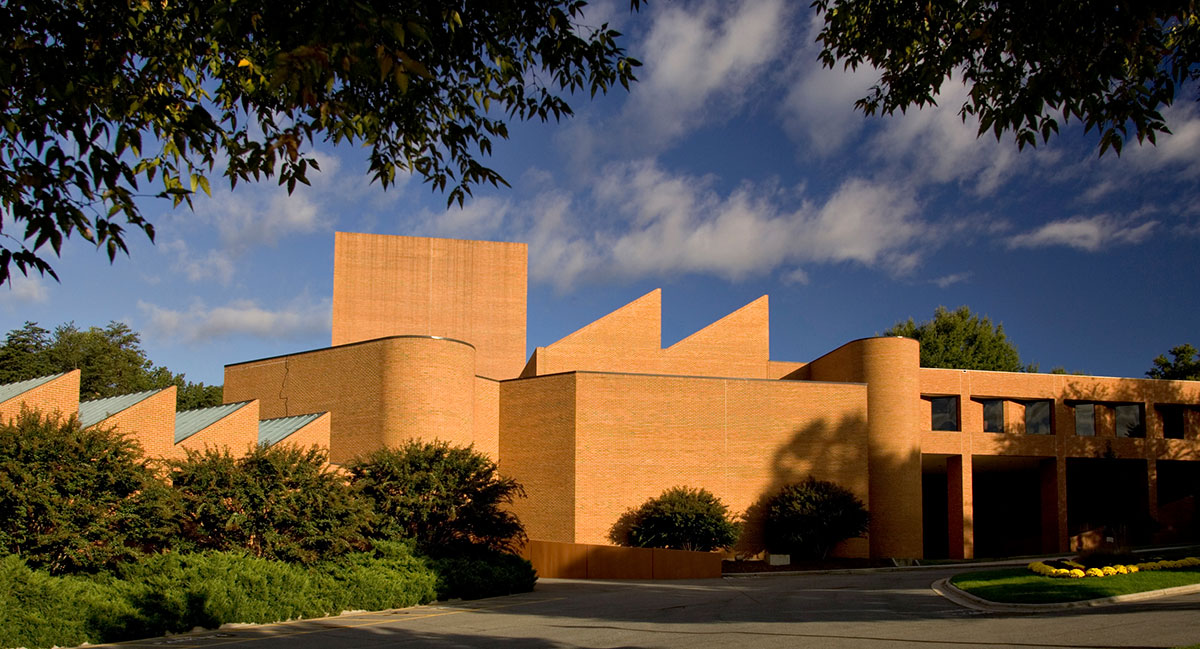

WINSTON-SALEM, N.C. – Looking to continue its unbeaten start to the 2025 campaign, the No. 7-ranked Wake Forest men’s soccer team is set to host Lipscomb at Spry Stadium Friday evening.
The match against the Bisons is slated for 7 p.m. and will be streamed live on ACC Network Extra with live stats available here.
Fan Information
Parking is encouraged in lots A, B, Q, W1 & W2. A complete parking map of campus is here.
Gates open one hour prior to kickoff for all home matches.
Season Ticket Information
2025 Wake Forest soccer season and single game tickets are on-sale now giving fans the opportunity to witness The Best Fan Experience In North Carolina from a number of unique seating options!
Adult season tickets start as low as $70 for general admission and $50 for youth while reserved chairbacks are $130 for fans and $110 for Wake Forest University faculty and staff.
Accessibility Information
Wake Forest Athletics strives to provide content at games, social media and on GoDeacs.com that is accessible to all people. In the continued effort to improve accessibility of the technology and digital content at tomorrow’s game, fans can access closed captions here for the public address announcer and in-venue content.
Wake Forest Athletics is always open to learning about new ideas and ways we can improve. Please report accessibility challenges, identify content you find inaccessible, or give us general feedback at pantagw@wfu.edu.
Quick Notes
- Wake Forest has only allowed one goal this campaign, which is tied for the fewest goals allowed through three games in the Muuss-era.
- Goalkeeper Jonah Mednard has conceded just once in his career with 287 total minutes in goal with two clean sheets. He holds a .889 save percentage and a .32 goals-against average.
- Wake Forest will look to start unbeaten through four matches for the sixth time under Muuss and for the first time since 2023.
- This will be the first-ever meeting between the two programs.
- The Demon Deacons enter the contest unbeaten in their last 15 matches at Spry Stadium with wins in seven of the last eight.
- The Deacs hold a 11-0-4 home record dating back to Aug. 25 of last year.
- Additionally, the Demon Deacons have yet to trail this season as they have led for 93 minutes.
- All four of the Deacs’ goals to open the season have come from four different players as Ryan Belal, Jeffrey White, Jose Perez and Tate Lorentz have all opened their accounts on the year.
- Earlier this week, the Demon Deacons landed No. 7 in the United Soccer Coaches’ preseason poll while also holding No. 6 spot in the TopDrawerSoccer College Soccer News polls.
- Wake Forest was picked to finish second in the ACC preseason poll and held the most first-place votes (5).
Scouting the Bisons
- Lipscomb is coming off of its first win of the campaign as it took down Mercer, 2-0, at home on Sunday and currently holds a 1-1-1 record headed into Sunday.
- Redshirt junior midfielder Levi Jones came off the bench and scored in the 68th and 75th minutes to defeat the Bears.
- Jones leads the team with five points as he also notched an assist on the 77th-minute equalizer against Memphis in the opener.
- The Bisons only bring back 18 percent (4-of-22) of their goal production from last season that saw Lipscomb post a 3-8-5 (1-4-2 ASUN) record.
- Only one returning player, Tyler Stinnett, scored multiple goals last season (two).
- The squad is made up of 13 newcomers to the squad with eight freshmen.
- The Bisons were picked to finish fifth in the ASUN Preseason Coaches Poll and received one first place vote.
- One of the newcomers is starting goalkeeper Alex Kara, who transferred in after two seasons with Indiana.
- He made six saves against Memphis and five against USF before earning his first-career clean sheet last time out against Mercer.
Last Time Out (vs. St. John’s)
- The No. 5 Wake Forest men’s soccer team remained unbeaten in 2025 as it battled St. John’s to a 0-0 draw Sunday evening at Spry Stadium.
- Wake Forest came out dominating play throughout the opening stages of the match and held possession for 65 percent of the first half. However, the two sides went into the halftime break knotted at 0-0 without either team able to score by the final whistle.
- In the 75th minute, it looked as if the Demon Deacons had taken a 1-0 lead off a Jeffrey White goal following a set piece just outside of the 18, but the decision was overruled by VAR.
- In goal, redshirt sophomore goalkeeper Jonah Mednard recorded his second-consecutive clean sheet. Despite only tallying one save, he snuffed out multiple potential chances for the visitors and limited the danger.
- For the third-consecutive match, Wake Forest went with a starting backline of junior Travis Smith, Jr., sophomores Mason Sullivan and Amoni Thomas, and graduate captain Cristian Escribano. The Demon Deacon defense excelled in limiting opportunities for the visitors and only allowed one shot on goal over the 90 minutes.
- This marked the second-straight contest in which the Deacs allowed just one shot on frame as Wake Forest has outshot opponents 42-to-30 through the first three matches of the season.
- Additionally, this marks the first time since Oct. 1-12 (four matches) of last year that the Demon Deacons recorded consecutive clean sheets.
- With the draw, the Demon Deacons are now unbeaten in their last 15 matches at Spry Stadium. Overall, the Deacs hold a 11-0-4 home record dating back to Aug. 25 of last year.
Battle Tested
- The Demon Deacons face one of the toughest schedules in the nation this season due to the strength of the ACC.
- Wake Forest has six opponents on the schedule that are currently ranked inside the top 20, including No. 1 Stanford, No. 3 Clemson and No. 10 Pitt.
- Of note, the ACC holds six spots in the top 10 of the United Soccer Coaches poll and seven in the top 15.
National Leader In Wins
- Named the fourth head coach in program history prior to the start of the 2015 season, Bobby Muuss‘ Demon Deacon squads have built on the longstanding and rich 45-year history of the program.
- Since 2015, Wake Forest’s 154 total wins ranks No. 1 nationally, seven more than any program and 11 more than any other ACC program. During that span, Wake Forest is also joined only by Indiana as the only Division I programs to have won at least 10 matches every season.
- Additionally, Wake Forest and Indiana are the only two programs of the 211 programs nationally to hold double-digit NCAA Tournament appearance streaks.
- Wake Forest also leads the nation in wins over the last quarter-century (359), 10 more than second-most Maryland.
Total Wins Since 2015
| Rank | Team | Total Wins Since ’15 |
| 1. | Wake Forest | 154 |
| 2. | Indiana | 148 |
| 3. | Clemson | 143 |
| 4. | Georgetown | 134 |
| 5. | Stanford | 130 |
Consecutive Seasons With 10+ Victories
| Rank | Team | Consecutive seasons with 10+ wins |
| 1. | Wake Forest | 13 |
| 2. | Indiana | 11 |
| 3. | Georgetown | 8 |
| T4. | Clemson, Missouri State, Marshall | 6 |
| 7. | Denver, Duke | 4 |
The Spry Advantage
- Since Muuss’ arrival in 2015, Wake Forest ranks No. 1 nationally in home wins (113), 17 more than any other program nationally.
- Over the last 10 seasons, the Deacs have won at least eight of their matches at Spry Stadium including a double-digit win total seven of those seasons.
- Wake Forest’s home winning percentage of 82.41 percent since 2015 also ranks third nationally, behind only Indiana and Denver.
Home Wins Since 2015
| Rank | Team | Total Home Wins Since ’15 |
| 1. | Wake Forest | 113 |
| T2. | Clemson | 96 |
| T2. | Indiana | 96 |
| 4. | Virginia | 89 |
| 5. | Georgetown | 85 |
Home Winning Percentage Since 2015
| Rank | Team | Home Winning Percentage Since ’15 |
| 1. | Indiana | 84.00% |
| 2. | Denver | 82.99% |
| 3. | Wake Forest | 82.41% |
| 4. | Clemson | 79.92% |
| 5. | Missouri State | 79.89% |
Consistent Threat In The Toughest Conference In The Country
- Recognized annually as the toughest soccer conference in the country from top to bottom, the ACC has placed the most teams in the NCAA Tournament each of the last 12 seasons and has had at least five teams earn a bid 24-straight seasons.
- During the 2024 NCAA Tournament, the ACC earned nine bids including seven national seeds.
- Wake Forest has received an NCAA Tournament bid 14-straight seasons, eight years more than any other ACC program.
| Rank | Team | Consecutive NCAA Tournament Appearances |
| 1. | Wake Forest | 14 |
| T2. | Clemson & Pitt | 6 |
| 4. | North Carolina | 5 |
| 5. | Duke | 4 |
| T6. | Virginia, Stanford & SMU | 3 |
Looking Ahead
- After Friday night’s match, Wake Forest will return to Spry Stadium for the last of its five-match home stand to open the season as it takes on Campbell on Tuesday night.
- The Demon Deacons will open conference play on the road at North Carolina on Friday, Sept. 12.
- The match against the Camels is slated for 6 p.m. and will stream live on ACCNX.
- This will mark the fifth-ever meeting between the two programs with the Demon Deacons leading the series, 4-0-0.

ESPN has not ruled out future deals like the arrangement it recently struck with the NFL, but they would have to “make business sense,” network chairman Jimmy Pitaro said at an event Thursday.
Speaking at the BofA 2025 Media, Communications and Entertainment Conference, Pitaro said that ESPN’s deal with the NFL to acquire NFL Network and other assets in exchange for an equity stake was “unique” and occurred “at a unique moment in time.”
“Whether we would ever try to replicate this, I would say it’d have to make business sense … we’re always interested in ways to advance the business and, just as importantly, ways to serve the sports fan,” Pitaro said, “and so if someone comes to us and presents a compelling opportunity, we’re of course going to listen.”
Although the NFL would be a stakeholder in ESPN, the league is keeping its equity interests separate from how it thinks about distribution or the utilization of its rights. NFL EVP/media distribution Hans Schroeder said this week that the league will maintain “an arm’s length” in such negotiations. “It’s going to be fascinating to see what the NFL does with their opt out,” Pitaro said. “I think you know this, but in 2029, they have an opt out, and a year later, they have an opt out with us, so we’ll see how that plays out.”
Pitaro touted the network’s portfolio as the best in its history, but said it is never satisfied and will look at what makes sense for the business. When asked about a potential NFL international package, he said the network is “always interested in growing our business” and would “be interested in having the conversation.”
Beyond the NFL, ESPN and Major League Baseball were reported by The Wall Street Journal to be “closing in” on a three-year agreement worth $1.65 billion that would grant the company rights to include MLB.TV within the ESPN DTC streaming service, along with some local, in-market rights and a national package of games. Pitaro did not announce the completion of an agreement, but said he expects that the deals will “close relatively soon.” ESPN and MLB had agreed to a mutual opt out of their existing seven-year contract before the season, and the two entities have had conversations that Pitaro described as “healthy” and “positive.”
Over the last several years, ESPN has inked various media rights deals that have reportedly resulted in augmented fees being paid to sports leagues. The agreement with the NBA marks an increase of 75% in the annual media rights fee, moving to a reported $2.45 billion from $1.4 billion per year. The network also reached an extension of its media rights agreement with the College Football Playoff, signed a 10-year deal to broadcast SEC college football and men’s basketball games and reached a new eight-year agreement for NCAA championships.
“You’ve seen significant increases over the past several years,” Pitaro said. “I don’t have a crystal ball. I don’t know how sustainable this type of growth is. Again, you’re seeing big tech operate with discipline, which I think even a few years ago, a lot of people did not expect. I think a lot of people expected the big tech players to spend more aggressively, bid more aggressively than they have. But I’m not sure how we’re going to continue to see significant increases when there’s not a lot on the marketplace.”

In this countdown, we look back at the fastest recorded tennis serves of all time.
Service speed remains a dominant feature in the modern game and can become a player’s trump card out on the court.
With players getting stronger and cutting-edge technology in tennis racquets making leaps and bounds, serves today are faster than ever.
We take a look at the fastest serves ever recorded by men and women out on the tennis court.
Men’s fastest tennis serve
Sam Groth – 263.4kph (163.7mph.)
Australian Sam Groth has the honour of having the fastest recorded tennis serve of all time.
The 6ft 4 Australian set the record during an ATP Open Challenger match in Busan, South Korea, in 2012 against Belarusian tennis player Uladzimir Ignatik.
Groths serve clocks in at a staggering 263.4kph (163.7mph).
Honorable mentions
Second Fastest Recorded Serve in Tennis
Albano Olivetti – 257.5 kph (160mph)
Frenchman Albano Olivetti holds the record for the second-fastest serve ever recorded. The French tennis pro also remains the second person to break the 160mph serve speed barrier.
Olivetti’s serve came in 2012 at the challenger level during the Internazionali Trofeo Lame Perrel–Faip.
Albano Olivetti holds the second-fastest record serve on the tour.
Third Fastest Recorded Serve in Tennis
John Isner – 253 kph (157.2 mph).
It would be hard not to include the American giant John Isner in this list. The 6ft 10 American is known best for his monster serves, which are delivered consistently throughout.
His monstrous serve is thanks in part to his stature. Isner clocks in as the third-tallest tennis player on the ATP behind the Croatian giant Ivo Karlovic and American young gun Reilly Opelka (both 6ft 11 inches). Ivo Karlovic currently holds the record for the fourth fastest recorded tennis serve.
Isner currently holds the third fastest serve in tennis. The Americans serve, clocking in at 253 kph (157.2 mph) during a 2016 Davis Cup tie against Bernard Tomic.
John Isner also holds the record for playing the longest match in Grand Slam history against Nicolas Mahut. During Wimbledon 2010, Isner beat Mahut in 5 sets: 6–4, 3–6, 6–7, 7–6, 70–68. The match lasted 11 hours and 5 minutes.
Isner’s serve is the fastest recorded serve in tennis, recognised by the ATP.
Fastest Tennis Serve Female
Georgina García Pérez – 220kph (136.7 mph)
Spaniard Georgina Garcia Perez holds the record for the fastest recorded tennis serve by a woman.
Perez clocked a serve of 200kph (136.7 mph) during the Hungarian Ladies Open in 2018.
Georgina Garcia Perez holds the record for the fastest serve by a female.
Why is it nearly impossible to hit a 160 mph tennis serve?
A considered calculation of stature, technique, coaching, mechanics and good old practice is said to make the perfect concoction for a fast serve.
A direct correlation has been proven between the height of a player and power during a serve. Therefore, it is no coincidence that the top servers of the game are all giants by nature.
The trajectory of a serve remains ever important. Players who are 6ft 7 or above have the ability to hit the ball with a downward trajectory, whereas those who are under that height are unable to do so.
Modern technology has also greatly aided in the incremental increase of server power over time. The changeover from wooden rackets to today’s modern racket is a huge factor in determining serve power. Advancements in string technology and racket materials also play a huge part in determining a fast serve.
Other mitigating factors include court conditions. Faster serves are much more likely to happen on a hard court and during hotter temperatures, where there is less resistance to air density, translating to faster speeds.
When you compare the fastest tennis serve with other sports, you can see how fast it is.
Fastest Football shot – 114 mph by David Hirst in 1996
Fastest Baseball pitch – 105.1 mph by Aroldis Chapman in 2010
Fastest Cricket Bowling speed – 100.2 mph by Shoaib Akhtar in 2003
What is the average tennis serve speed?
The average tennis serve speed differs between both men and women, as well as between pros and amateurs. Data shows us that for professional male tennis players, the average tennis serve speed is approximately 114 mph (on their first serve) and 93 mph (on their second serve).
For women, the average tennis serve speed clocks in at 98 mph (on their first serve) and 82 mph (on their second serve).
This data was recorded between 2002-2013, so bear in mind the average speeds have likely increased by a few miles per hour in the modern era, as racquet technology and athletes continue to evolve and adapt within the sport.
Check out Wired’s video, which covers the topic more in-depth.
Fancy writing for us: Apply to become a Sports Writer at the Sporting Ferret
If you liked this article, then why not check out:


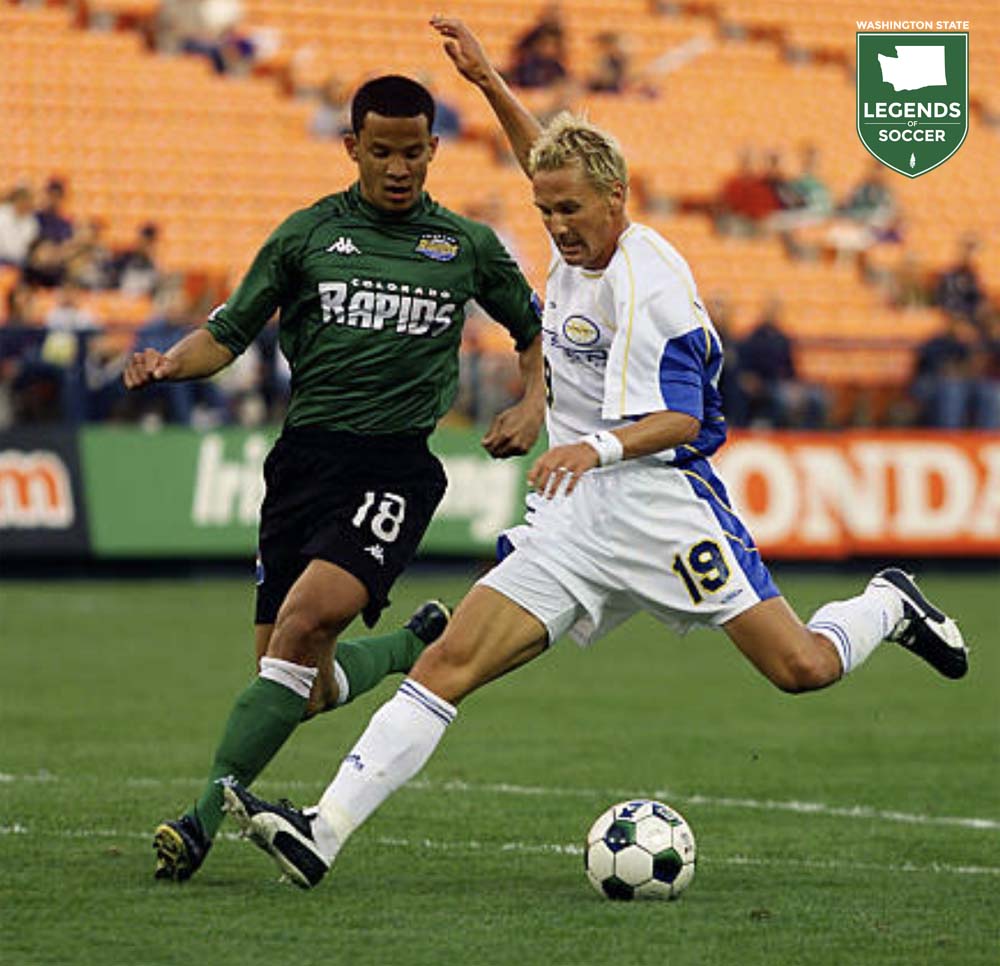
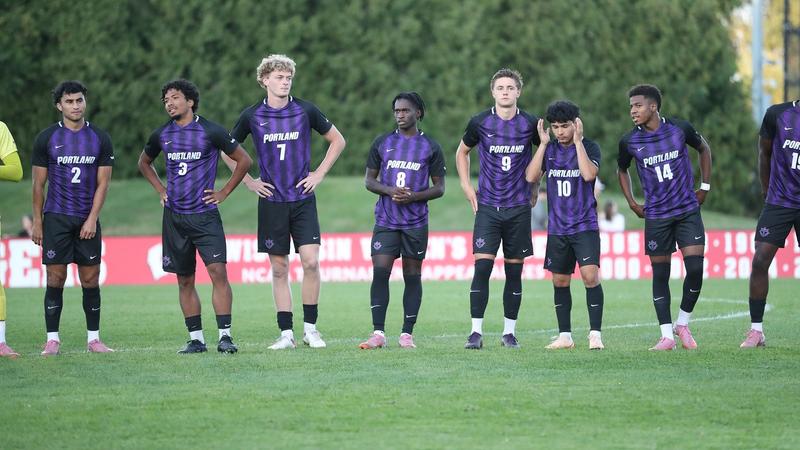
PORTLAND, Ore. – Portland Pilots Men’s Soccer, ranked 24th in the nation, is ready for their first ranked matchup of the season against the Kansas City Roos. The two teams are set to play on Friday, Sept. 5 at 7 p.m. here at Merlo Field.
Tickets for Friday’s game are available at PortlandPilots.com/Tickets. A live stream is also available on ESPN+. Check PortlandPilots.com for links to the live stream and live stats.
MATCH INFORMATION
Opponent: #17/19/RV Kansas City Roos (2-0-2, 0-0-0 Summit)
Day: Friday
Date: Sept. 5, 2025
Time: 7 PM
Place: Portland, Ore.
Pitch: Merlo Field
Video: ESPN+
Stats: PortlandPilots.com
POR vs. UMKC
Overall Series: 0-0-0
H: 0-0-0 • A: 0-0-0 • N: 0-0-0
Last: N/A
PEEK INTO THE PORT
- The Pilots are a perfect 4-0 on the year, outscoring opponents 17-0 in these first four games. They are now ranked 24th nationally.
- They most recently earned a road win over the Wisconsin Badgers 1-0, their eighth win over a Big Ten team and 18th against a Power Four team since Nick Carlin-Voigt took over as head coach in 2016. They also beat the Siena Saints last week 4-0.
- David Ajagbe scored the game-winning goal for the Pilots against the Badgers. Highfield scored two goals against the Saints and Waggoner added another.
- The Pilots lead the nation in 10 different categories, including goals (17), assists (21), points (55), goals-against average (.000), shutout percentage (1.000), save percentage (1.000), points per game (13.75), goal differential (17) and assists per game (5.25)
- Several players are near the top of the nation statistically.
- Diego Rosas is tied with 10 players for first in the nation in assists at four. He posted two assists against Siena on Friday.
- David Ajagbe and Nicholas Dunbar also sit at second in the conference and 13th nationally in assists at three. Ajagbe’s seven points rank second in the WCC and 18th nationally.
- Joe Highfield is one of the top scorers in the nation, sitting at third in points (11), fifth in goals (four) and 11th in assists (three).
- Miguel-Angel Hernandez has yet to allow a goal in his three starts for Portland. He’s one of 14 players to not allow a goal.
- Portland is one of five teams to have started the season 4-0-0 and are the only team in the nation to have started 4-0-0 with four straight shutouts.
- Portland’s 4-0 start is the first time since 1988. It’s also the first time they’ve posted four straight shutouts to start a season since that year.
- The Pilots hold a 14-game unbeaten streak that stretches back to last season.
- This year, they were picked to finish third in the 2025 West Coast Conference Preseason Poll, with forward Joe Highfield and midfielder Efetobo Aror each making the preseason team.
- Highfield was the first Pilot to make the All-WCC First Team and the All-WCC Freshman Team in the same season since Benji Michel in 2016, scoring seven goals and adding three assists. His four goals and three assists against WCC opponents were the second most in the conference.
- Aror was drafted in the first round of the 2025 MLS SuperDraft this past year by the Colorado Rapids but chose to return. The WCC Freshman of the Year in 2023, he played in 10 matches with six starts, recording a goal and assist.
- Aror, along with Pilot newcomer David Ajagbe, was also named to the TopDrawerSoccer Top 100 players in the preseason, slotting in at 52nd. Ajagbe ranks 99th on the list.
- Ajagbe scored seven goals and added two assists with the Ohio State Buckeyes last season, who earned the top overall seed in the NCAA Tournament last year. Ajagbe made the All-Big Ten Freshman team and the TopDrawerSoccer Freshman Best XI Second Team.
- Last season, the Pilots were a dynamic offensive team, ranking second in the WCC in goals per game (1.78), total assists (44), total points (108), points per game (6.00) and assists per game (2.44). Their 2.44 assists per game ranked ninth nationally while their assist total ranked 14th.
- The Pilots also were in the top 50 nationally in points per game, (21st), total points (27th), goals per game (44th) and total goals (32, 46th).
- The Pilots return 16 players from last year’s roster while welcoming 16 newcomers. The incoming class ranks fifth nationally on TopDrawerSoccer.
- Of the 16 returners, Portland returns three players who earned All-WCC honors: Highfield, Miguel-Angel Hernandez (Second Team) and Diego Rosas (Honorable Mention).
- Hernandez played in seven matches last year, posting shutouts in three of those matches.
- Rosas led the Pilots in assists in his second season with the Pilots, posting eight assists. He was the third Pilot since 2017 to post at least three assists in a game, doing so against the LMU Lions.
- Nick Carlin-Voigt enters his 10th year as head coach of the Pilots. He has posted a 92-46-21 record during his tenure, having led Portland to the NCAA Tournament five times during that span.
- Carlin-Voigt was at the helm when the Pilots advanced to the Elite Eight in 2022, their first appearance that deep in the tournament since 1995.
ABOUT THE ROOS
- The Kansas City Roos are 2-0-2 on the year, most recently tying the Saint Mary’s Gaels 1-1 and beating the Northern Illinois Huskies 2-1.
- They are currently receiving votes in the latest Top 25 poll from United Soccer Coaches. They are 17th in the College Soccer News Poll and 19th in TopDrawerSoccer’s poll.
- The Roos were 14-5-3 overall and 5-2-1 in Summit league play. They won the Summit League Championship over the Denver Pioneers and then advanced to the Elite Eight of the NCAA Tournament.
- The Roos were picked second in the Summit League Preseason Poll, with Bryson Gosch and Jeremy Francou making the preseason team.
- Gosch tallied 1,776 minutes last year, earning honorable mention as well as All-Tournament honors. He scored the equalizing goal in the Summit League Championship against Denver.
- Francou scored four goals last year for Kansas City, including a goal in their first-round tournament game against the Saint Louis Bilikens.
- Ryan Pore is in his sixth year at the helm of the Roos. He is 35-33-22 in his six seasons with Kansas City.
Get Your Tickets Now!
Secure your spot now for any upcoming Portland Pilots ticketed home event by visiting PortlandPilots.com/Tickets or by downloading the Portland Pilots App. For group and fan experience package information, email pilotsboxoffice@up.edu.
Donate Today
Fans interested in making a contribution to University of Portland Athletics can do so by clicking here. Your gift helps our over 300 student-athletes compete at the highest level – on and off the field – in the rapidly changing world of intercollegiate athletics. All gifts to Pilot Athletics are 100% tax deductible.
Follow Along With the Action
Get the latest news and information about your favorite University of Portland athletic programs by visiting PortlandPilots.com. You can also follow along for the most dynamic coverage and team-centric content by following us on Twitter, liking us on Facebook, and following us on Instagram.
When does Wisconsin volleyball play again? NCAA tournament next match

Rece Davis names former Pac-12 coach who should be top candidate for Michigan head coaching job

Cignetti, Mendoza, Smith, Ponds earn awards, recognition during ESPN’s college football awards show – The Daily Hoosier

Trump ‘willing to put the federal government behind’ changes to NIL

UAA signs trio of Alaska prep stars

UGOLINI NAMED TO ALL-ECAC SECOND TEAM

Here’s what Trump has to say about NIL in college sports

No. 1 seed Texas hosts No. 4 seed Indiana in the Sweet 16

Nebraska Volleyball sweeps Kansas; advances to NCAA Regional Final

Husker Volleyball dominates Kansas, advances to Elite 8

Bailey, Rodriguez garner Walter Camp All-America honors

Hillsborough Democrats announce 2026 committee slate

Concord sports memorabilia dealer admits to fraud after selling phony Willie Mays items

Allan Mark Moses – Concord Monitor

Long Beach Poly Earns First Win in League Opener vs. Millikan – The562.org

First Tee Winter Registration is open

Fargo girl, 13, dies after collapsing during school basketball game – Grand Forks Herald

CPG Brands Like Allegra Are Betting on F1 for the First Time

Volleyball Recaps – November 18

F1 Las Vegas: Verstappen win, Norris and Piastri DQ tighten 2025 title fight

Two Pro Volleyball Leagues Serve Up Plans for Minnesota Teams

Sycamores unveil 2026 track and field schedule

Utah State Announces 2025-26 Indoor Track & Field Schedule

Redemption Means First Pro Stock World Championship for Dallas Glenn

Jo Shimoda Undergoes Back Surgery

Robert “Bobby” Lewis Hardin, 56

Texas volleyball vs Kentucky game score: Live SEC tournament updates

How this startup (and a KC sports icon) turned young players into card-carrying legends overnight

Bowl Projections: ESPN predicts 12-team College Football Playoff bracket, full bowl slate after Week 14
Wisconsin volleyball sweeps Minnesota with ease in ranked rivalry win

 NBA Legend Michael Jordan to Join NBC Sports as Special Contributor
 Why a rising mid-major power with an NCAA Tournament team opted out of revenue-sharing — and advertised it
 Falcons mailbag
 Portal Update – Basketball and Gymnastics Take Hits
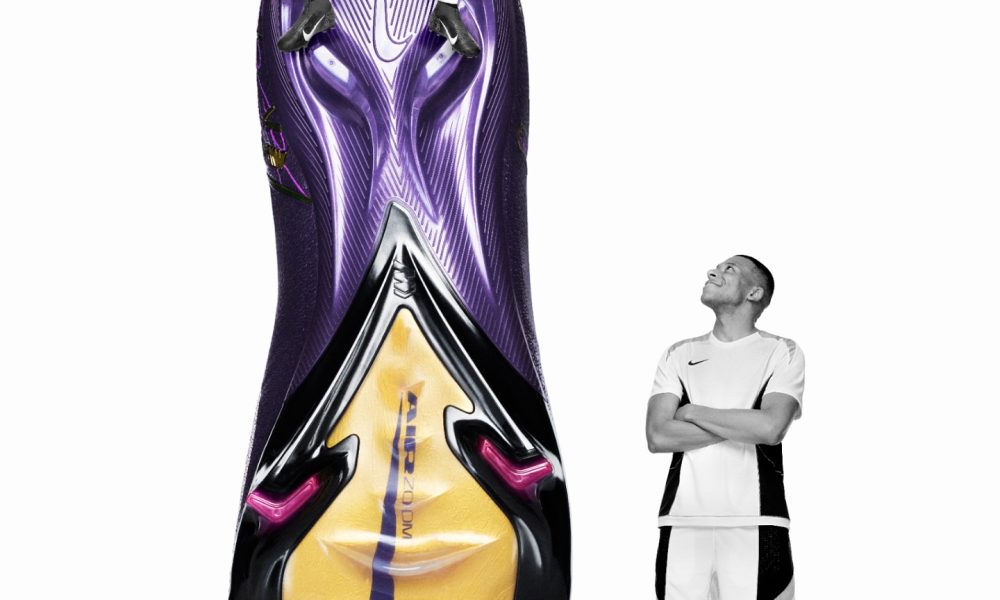 has always dreamed in Mercurial. Now his initials are on the boots.
The new Kyl…
has always dreamed in Mercurial. Now his initials are on the boots.
The new Kyl…
-
 Rec Sports3 weeks ago
First Tee Winter Registration is open
-
 Rec Sports2 weeks ago
Fargo girl, 13, dies after collapsing during school basketball game – Grand Forks Herald
-
 Motorsports3 weeks ago
CPG Brands Like Allegra Are Betting on F1 for the First Time
-
 Motorsports3 weeks ago
F1 Las Vegas: Verstappen win, Norris and Piastri DQ tighten 2025 title fight
-
 Sports3 weeks ago
Two Pro Volleyball Leagues Serve Up Plans for Minnesota Teams
-
 Sports3 weeks ago
Sycamores unveil 2026 track and field schedule
-
 Sports3 weeks ago
Utah State Announces 2025-26 Indoor Track & Field Schedule
-
 Motorsports2 weeks ago
Jo Shimoda Undergoes Back Surgery
-
 Motorsports2 weeks ago
Redemption Means First Pro Stock World Championship for Dallas Glenn
-
 Rec Sports2 weeks ago
Robert “Bobby” Lewis Hardin, 56