
Connect with us
https://yoursportsnation.com/wp-content/uploads/2025/07/call-to-1.png

Rec Sports

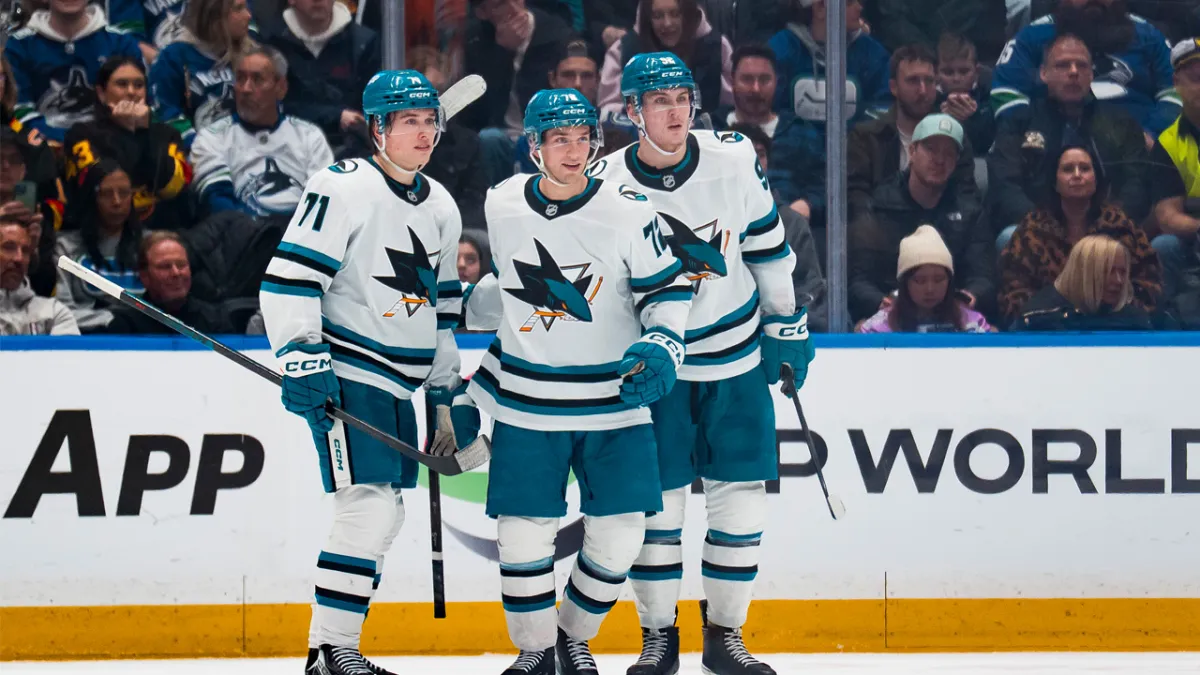
Young Sharks continue to display maturity in win vs. Canucks – NBC Sports Bay Area & California

Published

on


Editor’s note: Sheng Peng is a regular contributor to NBC Sports California’s Sharks coverage. You can read more of his coverage on San Jose Hockey Now, listen to him on the San Jose Hockey Now Podcast, and follow him on Twitter at @Sheng_Peng.

VANCOUVER — This wasn’t a must-win for the San Jose Sharks, but it certainly felt like a more important regular-season game than usual.

Macklin Celebrini admitted, after the Sharks went into the holiday break bombed by the Vegas Golden Knights 7-2, that the team needed to respond. San Jose did just that, doubling the Vancouver Canucks up 6-3 on Saturday night, in their first post-Christmas tilt.

“It’s awesome, especially with how we ended [before] break. I think we all wanted this one pretty bad,” Celebrini said, about the team’s bounceback and his first win in hometown Vancouver. “It’s cool to win here.”

This victory also put the 18-17-3 Sharks back into the last wild card berth.

I’ve been on record many times saying that I don’t believe San Jose will make the playoffs. Of course, I’m not changing that belief because of one win, though I stress that I hope they prove me wrong.

But three things stood out Saturday that will help the Sharks in their quest to qualify for the postseason.

Download and follow the San Jose Hockey Now podcast


Link

Continue Reading
Click to comment

Leave a Reply

Your email address will not be published. Required fields are marked *

Rec Sports

#UnitedBy building bridges – Lindsey Kittredge

Published

on


The programme has grown exponentially since its launch, and Kittredge has no plans to let it slow down. In fact, she and her husband have big ideas and goals that they’re aiming to set into motion within the next 12 months.“As for what’s next, right now we’re working on a huge, strategic five-year plan,” she says. “We really feel that in a year, our programme in Rwanda will be completely sustainable with local talent. Our entire coaching staff is Rwandan, and we’re in the process of hiring our first Rwandan in-country programme director. So we’re not only empowering women and men, but we’re also providing a pathway to employment. We are proud to use the power of sport to significantly affect their lives with not only health education, but also a job that helps them support their family. We’re looking to get a lot more institutional funding so we can continue to grow domestically here, in Boston, and take our international model throughout Rwanda, or maybe even to another country.”


Link

Continue Reading

Rec Sports

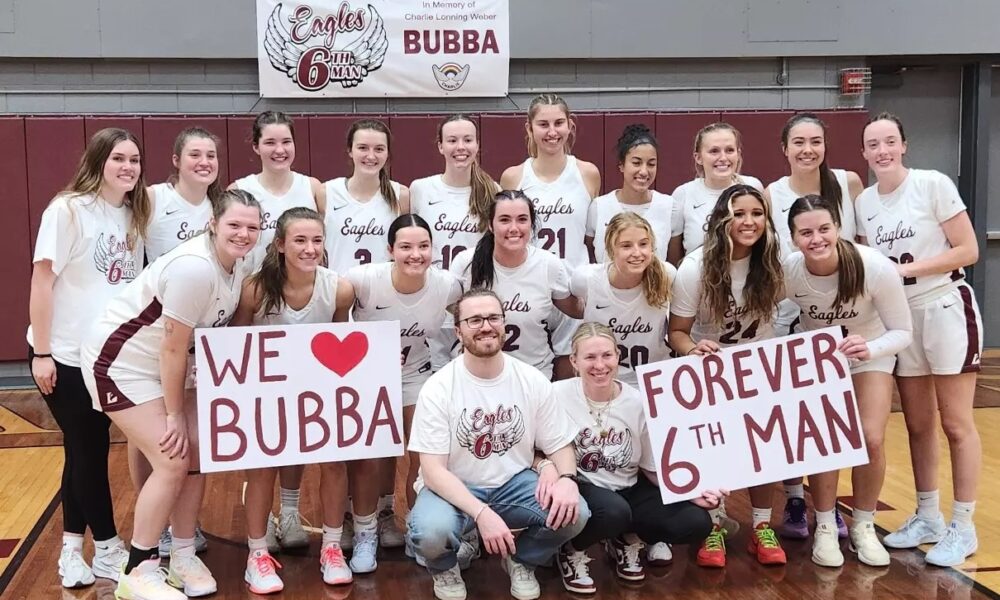
UW-La Crosse aims to break attendance record Saturday during Bubba’s Youth Day honoring coach Moran Lonning’s son

Published

on


UW-La Crosse is inviting the community to Mitchell Hall on Saturday for a day of play and remembrance, dedicated to the legacy of Charlie “Bubba” Lonning Weber.

The festivities kick off at from noon-2:45 p.m. with the Charlie’s Kids fest, and lead into the UW-L women’s basketball game after that, where attendance is free and they hope to break the WIAC single-game attendance record of 2,112 fans.

The game will also feature a deeply personal tribute, as the Eagles take the court in special jerseys. Each jersey will be inscribed with the names of 19 infants who have passed away, serving as a visual memorial to raise awareness for pregnancy and infant loss.

Know before you go: Bubba’s Youth Day & Charlie’s Kids fest

If you are planning to help “Fill Mitchell Hall” Saturday, here is the schedule and what you need to know:

  • Charlie’s Kids fest (Noon–2:45 p.m.): The pre-game party takes place in the Mitchell Hall Fieldhouse. It features inflatables, obstacle courses, and activity stations for kids (preschool through 8th grade).
  • The Big Game (3 p.m.): Stick around as UW-La Crosse Women’s Basketball takes on UW-Platteville. This is the official push to break the WIAC attendance record of 2,112 fans.
  • Admission is FREE: Both the fest and the basketball game are free for fans of all ages.
  • Registration & Waivers: While the event is free, children participating in the fest must be accompanied by an adult. You can save time by signing the required waiver online before you arrive.
  • The Cause: The event is hosted by Bubba’s Fund, which supports the Charlie’s Kids Foundation. Their mission is to provide SIDS education and “sleep safe” resources to new parents, a mission that has already significantly impacted childcare safety in the La Crosse area.

While the record is a target, organizers say the primary goal is to “Fill Mitchell Hall” with support for a cause that has already transformed local childcare safety.

Alex Weber (left), Moran Lonning and Charlie “Bubba” Lonning Weber (PHOTO: bubbasfund.org)

The event supports Bubba’s Fund, established by UW-L women’s basketball coach Moran Lonning and her husband, Alex Weber, after their son Charlie passed away in 2024 at just three months old.

Since then, the fund has reached a major milestone in successfully providing automated external defibrillators (AEDs) to every state-licensed childcare facility in La Crosse.

Saturday’s events will help sustain that momentum and support “Rising Athletes,” a nonprofit that removes financial barriers for local youth sports.

Charlie’s Kids Fest at Mitchell Hall Fieldhouse is free for children (preschool through 8th grade) and features inflatables, obstacle courses, plus a chance to play alongside UW-L student-athletes.

Parents are encouraged to sign a participation waiver in advance at bubbasfund.org.

Moran was a guest on La Crosse Talk on Thursday morning with Sean Dwyer.

La Crosse Talk airs weekdays at 6-8 a.m. Listen on the WIZM app, online here, or on 92.3 FM / 1410 AM / 106.7 FM (north of Onalaska). Find the show on Apple Podcast, Spotify or here.


Link

Continue Reading

Rec Sports

Long Beach Poly Holds Off Millikan For Scoreless Draw – The562.org

Published

on


The562’s high school soccer coverage for the 2025-26 season is sponsored by Long Beach Poly soccer alum Kennedy Justin.

The562’s coverage of Long Beach Poly Athletics for the 2025-26 school year is sponsored by Former Jackrabbits Wendell “WoWo” Moe, Jr. & Tyson Ruffins.

The562’s coverage of Millikan Athletics for the 2025-26 school year is sponsored by Brian Ramsey and TLD Law.

It was an odd feeling for both Millikan and Long Beach Poly as they walked off the field after their Moore League boys’ soccer matchup Wednesday night.

For Millikan, the Rams were left disappointed in their inability to take advantage of opportunities at the goal, a familiar feeling after a season-opening draw against Wilson last week. On the other end, a night of injuries plagued what was otherwise a huge defensive effort for Long Beach Poly at home.

Ultimately, the Jackrabbits were able to walk away at ease, minimizing any damage from a potent Millikan offense by holding off the Rams to earn a scoreless draw.

“We always want the win, but at the end of the day this is the Moore League, and every game is going to be like this,” said Poly coach Carlos Casillas. “We know what to expect in these league matchups. As much as we wanted the win, we’ll take the 0-0 draw, move on, and try to build on it.”

The visitors heavily outshot the Jackrabbits for the match and had four corner kicks to just one for Poly. Millikan was by far the more physical team, doubling the Jackrabbits in fouls, but none of those advantages turned into goals for the Rams.

“I thought we had significantly more opportunities, but that’s the way it goes,” said Millikan head coach Jeff Schofield. “It’s the second straight game where we’ve had more chances and haven’t been able to put them away. That part is a little bit frustrating, but it’s also a positive that we’ve been able to create chances—so you can look at it one of two ways.”

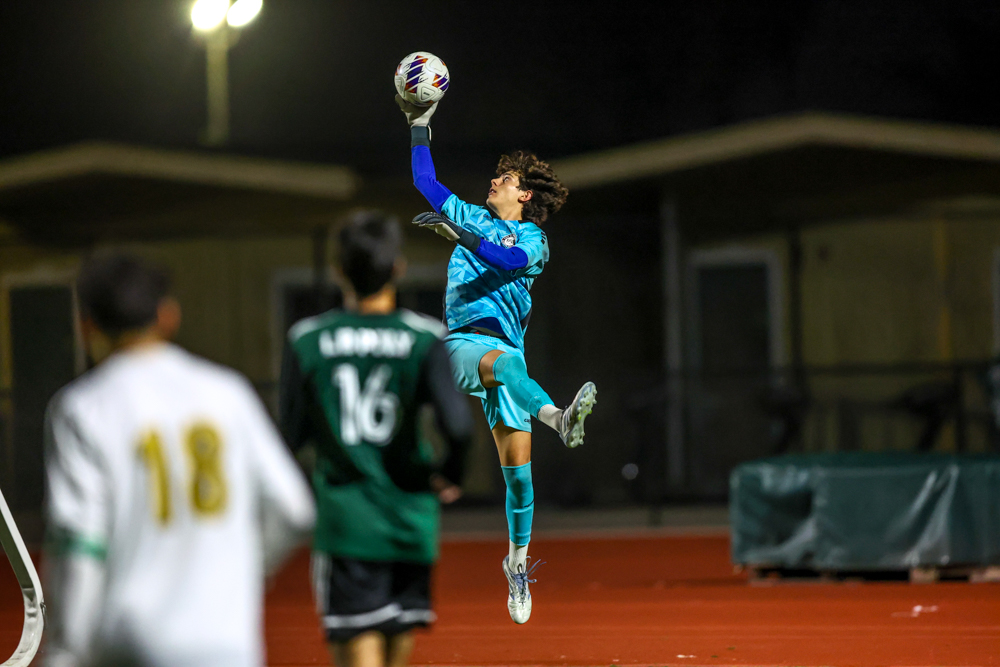
Credit can go to Poly goalkeeper Mekiah Twal, who was kept busy all night against Millikan’s attack. The junior kept a clean sheet while racking up a half dozen saves and swallowed up a handful of shots and corner kicks in the final 20 minutes to help secure the draw for his team.

“First off, I just have to give some praise to my defense,” Twal said. “It’s just confidence as a team to come out and be ready for anything that is coming our way. Millikan wasn’t playing for a tie and neither were we, so I just had to stay on my toes.”

Millikan found its opportunities early and often, including a pair of first-half shots from both Vonnae Ocegueda and Ivan Cervantes Vega. Vega had a quality look down the middle in the 17th minute, followed by another close opportunity off Millikan’s only corner kick of the half. The Rams then had a shot split wide off the head of Grant Johnson in the 31st minute.

The Rams had two of their three second-half corner kicks in the final minutes of the game, including one from Pablo Lica that sailed off the head of a Poly defender. Lica had another corner kick just moments later, which ricocheted to the feet of Jesse Torres for a shot from 10 yards out, but Poly was able to get a foot on it to avoid any damage.

Regarding those scoring opportunities, Schofield said it’s up to his team to work through the frustration that comes with a lack of production, noting that he’s seen enough on the field to know they’re more than capable of finding a rhythm on offense.

“If you’re not creating chances then you have to do something different, but our two guys up front scored a bunch of goals earlier in the year,” he said. “We know they have the ability to do that, and we just have to keep training it and building confidence. It’s one of those things where once the first one goes in, we’ll get some momentum going.”

Poly’s handful of chances at breaking the scoreboard came around the midway point of the game, but the Jackrabbits were forced to play shorthanded after having a pair of players carted off the field with injury.

“Unfortunately, those injuries took a couple of our players off the field that bring a little extra to the team, so we had to play it a little more defensively,” Casillas said. “We got a little bit healthier towards the end, which helped a little bit, but honestly we just need to get healthy. It’s been big injuries that we’ve been dealing with, and it’s made a difference.”

In the meantime, guys like Twal have assured the team that it’ll be a collective effort on both sides of the ball.

“We’re a team and we’re a family, and if our offense isn’t producing then that means our defense will step up until they can,” Twal said. “We’re one unit and we play together.”

The Jackrabbits will be back in action at Wilson on Friday, while Millikan will be hosting Jordan.


Link

Continue Reading

Rec Sports

Women’s Basketball: Macalester Battles Saint Benedict in 72-57 Loss

Published

on


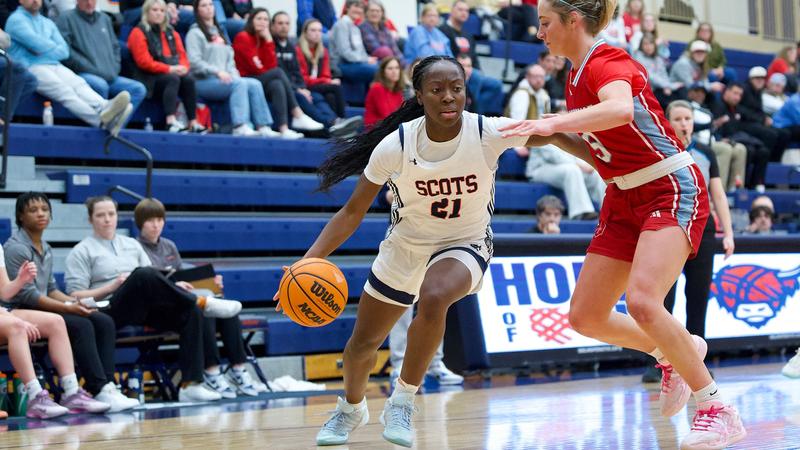
ST. PAUL, Minn. – The Macalester College women’s basketball team gave Saint Benedict all it could handle for three quarters before falling, 72-57 in a MIAC game Wednesday evening in the Leonard Center. The Scots are now 1-10 overall and 0-5 in the conference, while the Bennies improve to 9-3, 4-1 MIAC.

Five different players scored Macalester’s first five baskets in building a 10-3 lead. After Saint Benedict responded with five straight points, a three-pointer by junior guard Sydnee Smith (Gainesville, Va./Patriot) started a 6-0 run that put the Scots on top, 16-8 with 3:31 left in the first quarter. A Bennies’ basket in the final seconds of the quarter made the score 16-10 heading into the second quarter. Macalester shot 58.3 percent from the field in the quarter while holding Saint Benedict to 3-of-21 (14.3 percent) shooting.

After Saint Benedict reduced Macalester’s lead to one early in the quarter, a layup by sophomore guard Emma Karlin (Rockville, Md./Richard Montgomery), a free throw from first year guard Faith Accardo (Thousand Oaks, Calif./Oaks Christian) and a conventional three-point play by junior guard Mary Daley (Cumberland, R.I./Bishop Feehan) put the Scots on top, 22-15 with 4:50 remaining in the half. But a 12-2 run gave the Bennies their first lead of the game, 27-24 before taking a 32-29 edge at the half.

In the third quarter Saint Benedict pushed the lead up to eight, 44-36 with 3:32 on the clock before Macalester responded with four points from Daley and a three by junior guard Kendall Bernbaum (Dallad, Texas/Shelton School) to make it a one-point game, 44-43. Four points by Kira Young to close out the quarter gave the Bennies a 48-43 advantage heading into the final quarter.

Saint Ben’s broke open the close game by scoring eight points in the first 50 seconds of the fourth quarter to lead, 56-43. Again the Scots answered with one last push, getting seven straight points from Smith to bring Macalester to within six, 56-50 with 6:40 remaining. But the Bennies tallied the next nine points, and the Scots never came closer than 11 points the rest of the way. Saint Benedict shot 60 percent in the fourth quarter to finish the game with a 30.7 shooting percentage compared to 46.0 percent for Macalester.

Ten Scots scored at least two points in the game. Smith and Daley each tallied 12 points to lead Macalester, with Daley grabbing 10 rebounds for her first double-double of the season. Daley also dished out four assists, while Smith recorded three blocks. Karlin had seven rebounds to go with four points, and senior forward Ellie Corbett (Austin, Texas/James Bowie) blocked two shots. Megan Morgan led the Bennies with 19 points.

Macalester plays another conference game on Saturday, Jan. 10 at Augsburg University. The game begins at 1:00 p.m. in Minneapolis, Minn.


Link

Continue Reading

Rec Sports

Why I Shoot JPEG for Youth Sports (And Don’t Miss Raw)

Published

on


By the time I pack up my monopod and walk off the field on a Saturday, my memory cards are loaded with a thousand frames. By Sunday morning, parents are already texting to ask when the gallery goes up. That’s the job: move fast, stay consistent, and tell the story of the game without spending the rest of the week dragging sliders. That’s why I shoot JPEG—on purpose, not by accident, not because I don’t know what Raw can do, but because the work I do doesn’t require me to excavate shadows five stops deep. It requires timing, clear color, and a fast delivery.

This isn’t a manifesto against Raw. Raw is wonderful for the right work: fashion, commercial, studio, high-end composites, or those once-in-a-lifetime artistic projects where you’ll live inside a file for hours. My reality is different. I’m sideline-to-sideline, shooting youth football, baseball, and school events, where the pictures live on phones, in yearbooks, and as prints no bigger than a poster. I need clean color, crisp detail, and quick turnaround. JPEG gives me all three with fewer steps and fewer surprises.

The Speed That Matters When Everything Is Moving

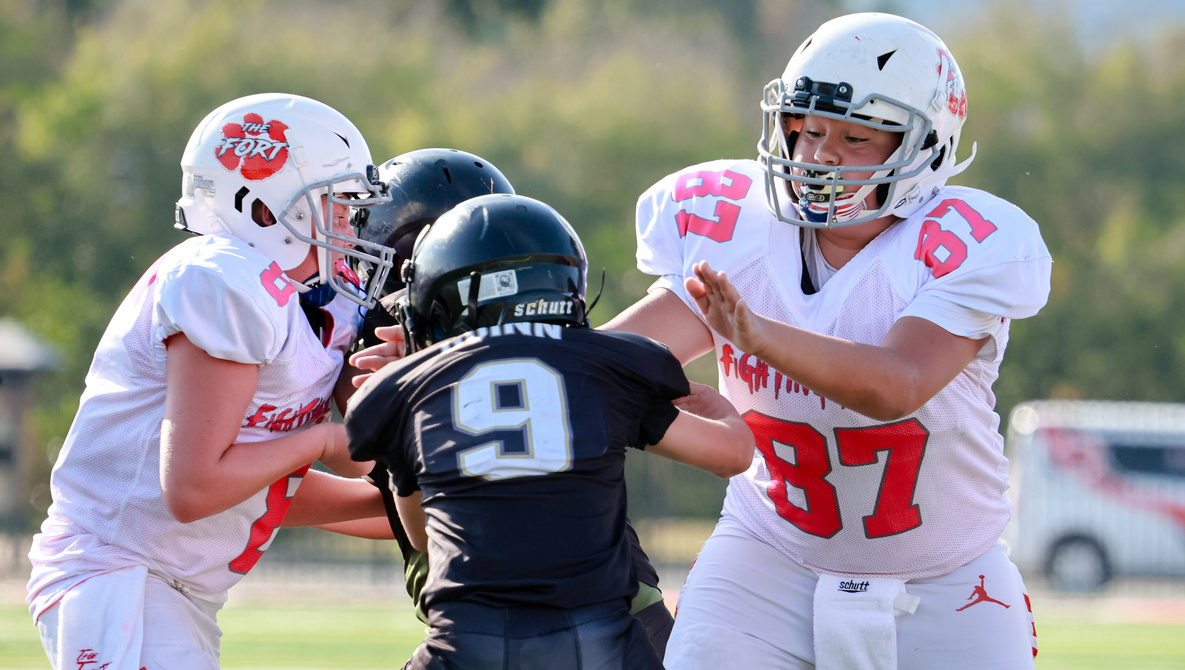
A football drive can flip in seconds. If your camera chokes because the buffer is stuffed with giant Raw files, you’ll feel it. JPEG’s smaller file size lets the camera write to the card faster and keeps the buffer clearing. I can stay on the action without babysitting the top plate to see if I’ve outrun my camera. That matters on third-and-short when the quarterback sneaks, the pile surges, and the ball pops loose to the weak side where nobody expected it.

Speed isn’t just at capture; it’s at the desk. Importing a thousand Raw files is like asking every photo to show up with a lawyer. JPEGs slide in, render previews fast, and let me start culling immediately. If I’m editing around a hundred keepers per game, every second shaved off each step adds up to hours saved across a season. That’s time I can spend at another game, with my family, or actually sleeping.

Color I Like Straight Out of the Camera

This is the part raw shooters never want to hear, but it’s the truth: modern cameras make really good JPEGs. Skin tones look right. Team colors pop without turning radioactive. With a little care up front—consistent white balance, a tuned picture profile, sensible in-camera sharpening—I get files that are eighty-five to ninety-five percent of the way there before I ever open the computer.

My routine is simple. Before kickoff I take thirty seconds to set a custom white balance off a gray card or a neutral surface near the field. If the light is stable, that one habit keeps a whole game’s worth of frames consistent. I keep contrast modest in-camera so helmets and jerseys don’t clip, and I set sharpening to a middle value that holds edges without chewing them. The result is a file that wants only the lightest finishing: a crop, a tiny nudge to exposure, maybe a touch of clarity for turf texture or eyes under a facemask. That’s it.

The Right Constraints Make Better Pictures

Shooting JPEG makes me more careful at the moment of exposure. I protect my highlights. I watch my histogram. I’ll underexpose by a third on harsh noon games to save the whites on helmets and shoulder pads. I set a fast floor for shutter speed so I don’t get greedy with ISO. Those constraints aren’t handcuffs; they’re a discipline. The pictures are cleaner because I made them right at the field instead of trusting future-me to fix my laziness.

There’s also something freeing about not chasing infinite latitude. If I’m not trying to make a 10 p.m. stadium look like golden hour, I’m less tempted to turn a documentary assignment into a digital special-effects project. Sports are about tempo and truth. JPEG encourages me to honor both.

Culling a Thousand, Delivering a Hundred

Anyone who shoots youth sports knows the real grind begins after the whistle. A typical game leaves me with somewhere between eight hundred and twelve hundred frames. JPEG lets me move through them like a film editor scanning for scenes. In Photo Mechanic or Lightroom, I can play the sequence almost like a flip book: pre-snap, push, contact, burst, celebration. Because the previews render on the fly, I’m not waiting for every file to build. I star the keepers, color-tag the stories I want to highlight—rivalry moments, a coach’s sideline talk, the joy after a goal—and move on.

Editing those hundred selects is intentionally light. Crops for composition and emphasis. A consistent exposure trim so the set feels like one game, not ten different shoots. A little local adjustment to brighten eyes under face masks if I need it, and a subtle curve to keep the whites clean. That’s it. If I’m doing my job on the field, ninety percent of my time is culling and sequencing, not rescuing.

The Deliverables Decide the Format

Who is this work for? Parents, coaches, yearbook editors, local papers, booster clubs. They need images that look great on phones, on social, in slideshows, and in print at sane sizes. A high-quality JPEG is perfect for that. If a photo graduates from “game gallery” to “hero print”—a banner for the gym, a large canvas for the senior banquet—I have two solutions: I either shot Raw+JPEG for that sequence, or I re-shoot it next time with that destination in mind. Ninety-nine times out of a hundred, the JPEG I delivered was already the right answer.

Storage, Backup, and Sanity

There’s a hidden economy to shooting JPEG. Smaller files mean faster offloads to SSD, quicker cloud backups, and less storage rented from a service every month. On a busy fall schedule, that isn’t a rounding error; that’s real money and fewer spinning beach balls. It also means my laptop fan isn’t auditioning for takeoff while I’m trying to edit at the kitchen table.

What About Dynamic Range and “Insurance”?

Raw shines when the light is ugly or the stakes are unusual. Inside a dim, mixed-light gym? Raw can be a lifesaver. Sunset games with a sideline in deep shadow and the field still bright? Raw gives you headroom. If your client is a brand or a publication that wants the option to radically re-grade later, shoot Raw. I’m not allergic to it. I just don’t need it for the majority of what I deliver, and it would absolutely slow me down on the jobs that pay my bills.

There’s a myth that shooting Raw is professional and shooting JPEG is amateur. The truth is professional means choosing the right tool for the assignment. I’d rather give a team a finished gallery tonight than promise wizardry and send it next week. For my work, speed and consistency are a feature, not a compromise.

Practical Setup That Works for Me

Here’s the setup that keeps me honest and fast:

  • I shoot manual exposure with a fixed shutter speed—usually 1/1600 to 1/2000 for football—and an aperture around f/2.8 to f/4 depending on the lens and distance.
  • I let Auto ISO roam within a ceiling I trust for my camera, and I ride exposure compensation when the light changes.
  • I keep highlight alert on and use the histogram after each new lighting situation, not after every play.
  • Before the game I dial in a custom white balance and a picture style that treats skin kindly and keeps bright uniforms from clipping.

If your camera offers highlight tone priority or similar settings, test them in daylight to see if they protect whites without muddying midtones. I keep in-camera noise reduction on low at high ISO and avoid the strong setting because it trades detail for smoothness I don’t want. The whole point is to make a file that holds together with a light touch.

A Real Example From the Sideline

Middle of September. Heat coming off the field. I’m on the visitor sideline because the sun is at my back there, and the end zone I want is opening into clean light. Kickoff return comes straight at me. I’m already at 1/2000, f/4, Auto ISO capped at 6400. I track the returner, grab a five-frame burst at the cutback, and immediately swing to catch the blocks sealing the lane. A linebacker’s hand outstretched; I get the moment his fingers grab the jersey and the runner slips away. The whole sequence is sharp, exposed cleanly, and color-true. I cull that series in seconds, crop two frames, add a tiny exposure bump to one, and move on.

Could I have wrung more micro-contrast or feathered a luminance mask on a Raw file? Maybe. Would any parent notice, or would the story be better? No. What they notice is their kid’s face, the hole that opened because the left tackle did his job, and the fact that the gallery is live before dinner.

When I Still Flip the Raw Switch

I keep my raw lever available for margin cases. Playoff night with mixed stadium lighting I’ve never seen? Raw+JPEG. Senior portraits on the fifty with the sun kissing the bleachers? Raw because I want maximum latitude for skin and sky. Team banner composites where I know I’ll be masking hair and decals? Raw, gladly. But I’m not dragging that workflow into every Saturday because I don’t need to, and neither do most working sports shooters covering youth and schools.

JPEG Is a Creative Choice, Not a Shortcut

What I love about this workflow is that it forces intention. JPEG rewards you for reading light, for exposing with care, for trusting color at capture rather than repainting it later. It frees your week without cheapening your work. It’s not lesser; it’s lean. And in a season where you might shoot eight to ten games, lean is exactly what keeps you hungry and able to say yes to the next assignment.

If you’re on the fence, try it for a month. Set your camera to make the best JPEGs it can and give yourself permission to edit like a photojournalist, not a VFX artist. Protect highlights, choose a stable white balance, and let the pictures breathe. You might find what I did: that your clients are happier, your galleries arrive sooner, and your love for the work grows because you’re spending your time on the field, not in a war with a histogram.

Color Consistency Without the Headache

One of the hidden taxes of Raw is color management. Every camera sensor has its own secret sauce, and every converter interprets that sauce a little differently. If your week takes you from a Saturday game to a Tuesday pep rally in a different gym with different lights, your Raws can wander in hue and tint unless you’re vigilant with profiles and camera matching. My JPEG workflow cuts that drift down to almost nothing because the camera bakes in its own profile—the one I’ve tested against jerseys, skin, grass, and the painted lines. I’m choosing the look up front, at the scene, instead of chasing it later.

This doesn’t mean I accept whatever the camera gives me. I built my own picture style starting from a neutral base to avoid crunchy contrast, nudged saturation so red jerseys don’t scream, and set the sharpening where helmets hold detail without ringing. Once it’s dialed, it’s repeatable. My September games look like my October games, which is exactly what a season recap or a team poster needs.

Night Games and Noise

Night football tempts every shooter to go spelunking for detail that isn’t there. Raw can tease out a bit more shadow information, sure, but the trade-off is time, and sometimes a waxy look after heavy noise reduction. With JPEG I accept the physics: I keep shutter speed honest for motion, brace my stance, and trust my camera’s high-ISO behavior. I set in-camera high-ISO noise reduction to low or standard—never strong—because I’d rather have a little grain-like noise than smeared detail. In post I’ll add only the gentlest detail work. The reward is a file that still looks like a photograph, not a plastic doll.

Buffer Behavior and Card Strategy

If you shoot older bodies—or even some current ones with modest buffers—file size isn’t a theory, it’s the difference between catching the second effort at the goal line and staring at a blinking BUSY. I run fast cards, keep them freshly formatted in-camera, and avoid mixing raw+JPEG unless I know I’ll need raw for a specific sequence. For long drives I’ll occasionally feather my cadence—short bursts with half-second breaths—to help the buffer clear while the play develops. JPEG makes that whole dance easier.

A Word on “Fix It Later” Culture

Somewhere along the way we convinced ourselves that the real photograph happens on a computer. I love editing when the job calls for it, but youth sports is journalism with whistles. The best frames are made with footwork, anticipation, and timing. JPEG rewards those habits. It puts the emphasis back on the craft you do with your eyes and hands, not the brush pack you buy after.

File Integrity and Revisions

Clients sometimes ask whether a JPEG locks them into a look forever. The answer is that a high-quality JPEG stands up to sensible edits just fine: exposure trims, white balance tweaks within a reasonable range, gentle curves, selective dodging and burning. What I avoid are the extreme rescues—hauling a file up two or three stops, rebuilding skies, or color-swapping uniforms. That kind of surgery belongs to Raw and advertising. For youth sports storytelling, the JPEG’s print-ready nature is a feature.

Two Games, Two Timelines

Here’s what my weekend looks like in real numbers. Saturday noon kickoff, 1,100 frames, daylight with some clouds. JPEG import and cull: about forty-five minutes. Edits on 120 selects: another sixty to seventy-five minutes. Gallery up before dinner. The following week, a 7 p.m. game under uneven lights: 950 frames. Slightly slower cull because I’m checking for motion blur a little more carefully: fifty-five minutes. Edits on 100 selects: eighty to ninety minutes because I’ll touch local contrast and eyes under masks a bit more. Still live that night. Could I spend longer massaging Raw files? Of course. Would anyone prefer a slower gallery to microscopic improvements? In this space, no.

Prints and Real-World Output

I sell prints from these JPEGs every season—8×10s, 11×14s, and the occasional poster. They hold up because the exposure is right, focus is solid, and the color is honest. I soft-proof for the lab, keep an eye on saturation clipping in reds and greens, and let the file go. Nobody has ever brought a print back because it wasn’t shot Raw. They come back because they want more.

What You Gain When You Let Go

The biggest gift JPEG has given me is attention. I watch the game more. I learn tendencies, notice light pockets, and place myself a step earlier. I spend my energy where photographs are born, not where they’re rescued. That shift has made my work better—and my life outside of it saner.

The Bottom Line

Raw is a powerful negative. JPEG is a finished print you can still refine. In youth sports and school coverage, the finished print wins. I’m not here to win an internet argument; I’m here to make pictures families will keep—and to deliver them while the grass stains are still fresh.

All photos belong to the author, Steven Van Worth.


Link

Continue Reading

Rec Sports

What Makes an Athlete Successful? Don’t Forget About Luck

Published

on


Chief among the burdens weighing upon the weary sports parent—worse than the endless commutes, the exorbitant fees, the obnoxious parents on the other team—is the sense that your every decision has the power to make or break your child’s future. Should your 11-year-old show up to her elementary-school holiday concert, even if it means missing a practice with the elite soccer team to which you’ve pledged 100 percent attendance? What if this turns out to be the fork in the road that consigns her to the athletic scrap heap?

These are heavy decisions—at least they are for me, a soccer dad who happens to have spent years writing about the science of athletic success. Making it to the pros, the conventional wisdom says, is a consequence of talent and hard work. Best-selling books have bickered over the precise ratio—whether, say, 10,000 hours of practice trumps having the so-called sports gene. But the bottom line is that you need a sufficient combination of both. If you’re talented enough and do the work, you’ll make it. If not—well, decisions (and holiday concerts) have consequences.

Rationally, stressing out over missing a single practice is ridiculous. Believing that it matters, though, can be strangely reassuring, because of the suggestion that the future is under your control. Forecasting athletic careers is an imperfect science: Not every top draft pick pans out; not every star was a top draft pick. Unexpected injuries aside, the imprecision of our predictions is usually seen as a measurement problem. If we could only figure out which factors mattered most—how to quantify talent, which types of practice best develop it—we would be able to plot athletic trajectories with confidence.

Unless, of course, this tidy relationship between cause and effect is an illusion. What if the real prerequisite for athletic stardom is that you have to get lucky?

Joseph Baker, a scientist at the University of Toronto’s Sport Insight Lab, thinks that the way talent development is usually framed leaves out this crucial ingredient. Baker is a prominent figure in the academic world of “optimal human development,” who moonlights as a consultant for organizations such as the Texas Rangers. He’s also a longtime skeptic of the usual stories we tell ourselves about athletic talent. The most prominent is that early performance is the best predictor of later performance. In reality,  many cases of early success just mean an athlete was born in the first months of the year, went through puberty at a young age, or had rich and highly enthusiastic parents.

This critique of talent is not entirely new. It’s been almost two decades since Malcolm Gladwell’s Outliers spurred a cohort of hyper-ambitious soon-to-be parents to begin plotting January birth dates (or at least to tell people they were considering it). Over time, the debate about what factors actually matter has devolved into a game of whack-a-mole. If physical development isn’t the best predictor of long-term success, then it must be reaction time, or visual acuity, or hours of deliberate practice. The default assumption is that there must be something that reveals the presence of future athletic greatness.

Baker’s perspective changed, he told me, when he read Success and Luck, a 2016 book by the former Cornell University economics professor Robert H. Frank. Frank describes a hypothetical sports tournament whose outcome depends 49 percent on talent, 49 percent on effort, and 2 percent on luck. In mathematical simulations where as many as 100,000 competitors are randomly assigned values for each of these traits, it turns out that the winner is rarely the person with the highest combination of talent and effort. Instead, it will be someone who ranks relatively highly on those measures and also gets lucky.

This turns out to be something like a law of nature: It has been replicated and extended by others since Frank’s book came out. Among the most influential models is “Talent Versus Luck,” created by the Italian theoretical physicist Andrea Rapisarda and his colleagues, which simulates career trajectories over dozens of years and reaches the same conclusion. This model earned a 2022 Ig Nobel Prize “for explaining, mathematically, why success most often goes not to the most talented people, but instead to the luckiest.”

To Baker, these models suggest that it’s not just hard to reliably predict athletic futures; it’s impossible. He cites examples including a youth-soccer player for Northampton Town who missed a text message from the team’s manager telling him that he’d been dropped from the roster for an upcoming game. He showed up for the bus, went along for the ride, subbed in when another player got injured, impressed the manager, earned a spot for the rest of the season, and went on to play in the Premier League. Luck takes many forms, such as genetics, family resources, and what sports happen to be popular at a given place at a given time. But sometimes, it’s simply random chance: a gust of wind or an errant bounce or a missed text.

It’s easy to see how luck shapes individual moments in sport—how it changes the course of a game, a series, even an entire season. But what’s harder to accept is that luck might also play a role in longer arcs—not just what happens in games but who appears on the court in the first place. The more you reckon with this, the more disorienting it can be, as things start to feel ever more arbitrary and unfair. As Michael Mauboussin, an investor who writes about luck in his 2012 book, The Success Equation, put it to me: “Talking about luck really quickly spills into the philosophical stuff.”

You might think that the growing professionalization of youth sports offers an escape from this randomness—that by driving to this many practices and paying for that many coaches, you’re ensuring the cream will rise to the top. But the opposite is actually true, according to Mauboussin. In The Success Equation, he describes what he calls the “paradox of skill.” Now that every soccer hopeful is exhaustively trained from a young age, an army of relatively homogeneous talent is vying for the same prizes. “Everyone’s so good that luck becomes more important in determining outcomes,” Mauboussin said.

Baker and one of his colleagues at the University of Toronto, Kathryn Johnston, recently published a paper on the role of luck in athletic development in the journal Sports Medicine–Open. I felt a curious sense of relief when I read it. My daughters, who are 9 and 11, both play competitive soccer on teams requiring a level of commitment that I had naively thought went out of style with the fall of the Soviet Union. Seeing the evidence that future athletic success is not entirely predictable felt like a license for parents to loosen up a bit—to choose the holiday concert over the soccer practice without worrying about the long-term ramifications.

Linda Flanagan, the author of the 2022 book Take Back the Game and a frequent critic of today’s youth-sports culture, doesn’t share my optimism. She has no trouble believing that luck is involved with athletic success, but she doesn’t think that acknowledging this fact will change parental behavior. “Hell, they might double down on the investment in time and money, thinking that they need to give their child more chances to get lucky and impress the right coach,” she told me.

But that sort of luck—getting a job on your hundredth interview because the interviewer went to the same high school as you did, say—arguably is more about hustle than it is about serendipity. So is showing up to every soccer practice. Mauboussin’s definition of luck is narrower: It’s the factors you can’t control. No matter how much luck you try to “create” for yourself or your kids, some irreducible randomness might still make or break you.

To Baker, the takeaways from recognizing the role of luck are less about individual parents and more about how sports are organized. His advice to teams and governing bodies: “If there’s any way possible for you to avoid a selection, don’t select.” Keep as many athletes as you can in the system for as long as you can, and don’t allocate all of your resources to a chosen (and presumably lucky) few. When real-world constraints eventually and inevitably do require you to select—when you’re anointing these lucky few as your future stars, and casting out those who perhaps sang in one too many holiday concerts—try to leave the door open for future decisions and revisions. After all, Baker says, no matter how carefully you’ve weighed your predictions, “you’re probably wrong.”


Link

Continue Reading
Motorsports4 weeks ago

SoundGear Named Entitlement Sponsor of Spears CARS Tour Southwest Opener

NIL4 weeks ago

DeSantis Talks College Football, Calls for Reforms to NIL and Transfer Portal · The Floridian

Sports4 weeks ago

#11 Volleyball Practices, Then Meets Media Prior to #2 Kentucky Match

Rec Sports3 weeks ago

Stempien to seek opening for Branch County Circuit Court Judge | WTVB | 1590 AM · 95.5 FM

Motorsports4 weeks ago

Nascar legal saga ends as 23XI, Front Row secure settlement

Sports4 weeks ago

Maine wraps up Fall Semester with a win in Black Bear Invitational

Motorsports3 weeks ago

Ross Brawn to receive Autosport Gold Medal Award at 2026 Autosport Awards, Honouring a Lifetime Shaping Modern F1

Rec Sports3 weeks ago

Princeton Area Community Foundation awards more than $1.3 million to 40 local nonprofits ⋆ Princeton, NJ local news %

NIL3 weeks ago

Downtown Athletic Club of Hawaiʻi gives $300K to Boost the ’Bows NIL fund

Motorsports4 weeks ago

Sunoco to sponsor No. 8 Ganassi Honda IndyCar in multi-year deal

Rec Sports4 weeks ago

WNBA’s Caitlin Clark, Angel Reese and Paige Bueckers in NC, making debut for national team at USA camp at Duke

Motorsports4 weeks ago

North Florida Motorsports Park led by Indy 500 Champion and motorsports legend Bobby Rahal Nassau County, FL

Motorsports4 weeks ago

NASCAR, 23XI Racing, Front Row Motorsports announce settlement of US monopoly suit | MLex

Sports4 weeks ago

Woods, Ogunribido Named CCIW Women’s Indoor Track & Field Student-Athletes of the Week

Sports4 weeks ago

Hope College Tops MIAA Commissioner’s Cup Fall Update

Most Viewed Posts

Trending