
Rec Sports
Youth soccer: a debate about coaching methods in Key Biscayne

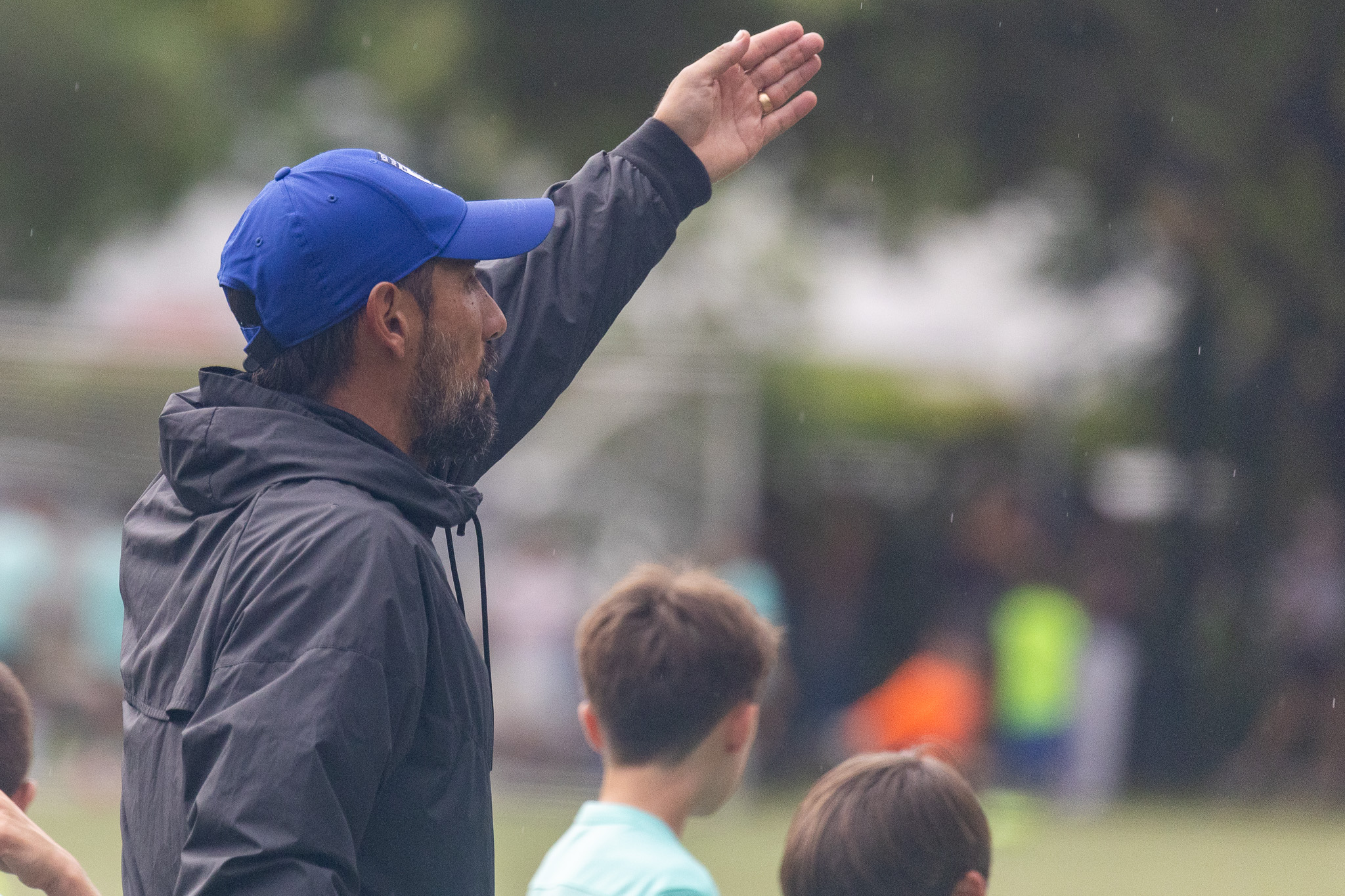
Nuria de la Fuente and her husband, David Rodriguez, say they were heartbroken when, a year ago, they watched their 7-year-old son’s Key Biscayne soccer coach make him take off his jersey and hand it to another player, who was then sent into the game.
Their son was left on the bench humiliated, they said. Soon, de la Fuente said she saw the toll on her son. “We saw that (he) was being more sensitive,” she said. “He would end up crying at the end of practice.”
The incident lies at the core of Rodriguez’s complaint against the management of the soccer program. The accusations have touched off a battle royale — with many parents defending the program, but other parents saying changes need to take place.
And there’s disagreement about whether the shirt incident is even objectionable at all.
Key Biscayne Soccer Club President Marcelo Radice says kids forget their gear all the time and that it’s not unusual to swap jerseys and shin guards. He says Rodriguez is on a campaign of defamation against the league.
“I think the jersey incident is completely overblown,” Radice said. “The father saw it across the field and freaked out.”

Rodriguez’s claims have reached the Florida Youth Soccer Association, which is investigating the coach, Hernan Acosta. Yet the question of when a coach’s disciplinary style crosses the line is often in the eye of the beholder — not only among parents but also among experts who have looked at the long-lasting effects of coaching in youth sports.
Tom Ferraro, a sports performance psychologist in Williston Park, N.Y., said being benched can wear down a young child’s psyche. “They feel they can’t do anything about it. They have to sit in shame, internalize the anger, and it’s not a good picture. It has a big impact on their sense of identity,” he said.
Radice says the league is sensitive to that concern. “We understand we have to have age-specific coaching,” he said. “These kids in the early years, their brains are still in development, just like their bodies.”
The Village Green was once home to Benjamin Cremaschi, who, at the age of Rodriguez’s son, wasn’t known as the greatest player in the league but later would play alongside superstar Lionel Messi with Inter Miami and now Parma in Italy’s Premier League. Many – but not all — Key Biscayne parents hunger for that competition to see if their child stacks up to the best.
But can it be too much?
There have been accusations against the club before. In 2018, the Key Biscayne Soccer Club was sued after a player broke his arm during practice.
According to the lawsuit, the coach at a practice in November 2015 told a 13-year-old boy to stand in the goal while he shot balls at him from a distance of 12 yards away. One shot from the coach broke the boy’s wrist when the teen tried to block it, the suit alleged.
The coach, according to the lawsuit, failed to immediately call an ambulance or inform the player’s parents – or render first aid. He allegedly told other players on the team to say it was another child who kicked the ball at the goal.
Key Biscayne Soccer and other defendants, in court documents, said that the parents assumed the liability of risk when they signed up their child for the sport and that the accident was unforeseen. They also said the parents were partially to blame for their child’s injury.
Radice said the league discovered the coach’s cover-up. “When we found out, we fired him immediately,” he said. “That is the only incident we had in 15 years.”
The lawsuit was settled in March 2020 for $25,000, Radice said.

Rodriguez maintains the ultra-competitive nature of his son’s team under Acosta violated the Club’s policy. The Club’s mission statement reads, in part, that it is committed to “providing a safe, well-organized environment to teach the values of discipline, teamwork, sportsmanship, and general wellness.”
Radice said Key Biscayne Soccer is a victim of its own success. Its players keep getting poached by academies affiliated with pro teams like Inter Miami. As a result, the pressure is on to compete with the academies when it comes to its A-League teams.
And that’s exactly what many parents want.
“I want my kid to be an athlete, and I want them to compete, and I want them to learn how to lose, how to win. You know, to be respectful, to be committed,” said Karla Umpierre Cantalapiedra, a team parent for Acosta’s U11 team, at the athletic advisory board meeting Sept. 25 “What’s the problem?,” she asked.
Board Member Kenneth Coto added, “I think what Marcelo and the club have done is to take every year another little step forward. Now the teams are at the academy level.”
When it comes to Acosta, Coto put it this way: “I see this coach as perhaps intense, perhaps, maybe, focuses on discipline, all these things, but these are all great qualities for our young men to have, young men and women.”
Richard Weissbourd is a child therapist who runs the Making Caring Common project at Harvard University. His research has found that children playing sports make discoveries about themselves and how to operate in the real world.
However, if a coach denigrates, leaves out players or makes competition too central, then those lessons are lost. “Sports can be harmful to kids in these conditions,” Weissbourd has said.
Acosta declined to comment to the Independent but has retained a lawyer.
Rodriguez said in November, after the shirt incident, his son went to Crandon Park to play flag football — and found Acosta in a private soccer training session with most of his teammates. “David was confused and visibly hurt,” he said.
The league, working with the Village, did institute new policies to address Rodriguez’s complaints.
Part of the new policy, Radice said, includes no private coaching sessions within the team; coaches must agree to playing time rotations, and all players must play 50% of all games. The policy sets out evaluations mid-season and at the end of the season with player improvement plans; and a parent review committee will be established.
Radice noted the league embraces kids of all skill levels with three different teams – A, B and C. “The C teams are typically a developmental team,” Radice said. “Those are the kids who just want to play and be active and play some competitive soccer. They are just doing it for the love of the sport.”

Key Biscayne soccer has built-in challenges. There is limited field space and a residency rule that mandates 70% of the players live on the island.
Radice’s former colleague, Jackie Gross Kellogg, bid against him for the soccer contract last year. She says the Village would be better off having the league run by a not-for-profit whose board members would be chosen by parents. A director of coaching would report to the board, she suggested.
READ MORE: Key Biscayne soccer contract ensnared in bidding drama
“I believe this would make our community stakeholders and participants in a sport that I think at least 80% of kids here on the island play,” she said. “I think it would also be healthy for our community to do this exercise of transparency and consensus decision-making.”
Radice said the league has grown from 200 kids to 1,050 kids in 15 years and that he is open to exploring what Gross Kellogg suggests.
“We are part of the community.”

Reporter at Miami Fourth Estate
ALLISON DUBROW is a reporter-intern for the Key Biscayne Independent and Liberty City Independent. She is pursuing a master’s degree at the Craig Newmark Graduate School of Journalism, focused on local accountability reporting. She has worked for the NYCity News Service. She is driven by a passion for breaking news and in-depth storytelling.

JOHN PACENTI is a correspondent of the Key Biscayne Independent. John has worked for The Associated Press, the Palm Beach Post, Daily Business Review, and WPTV-TV.

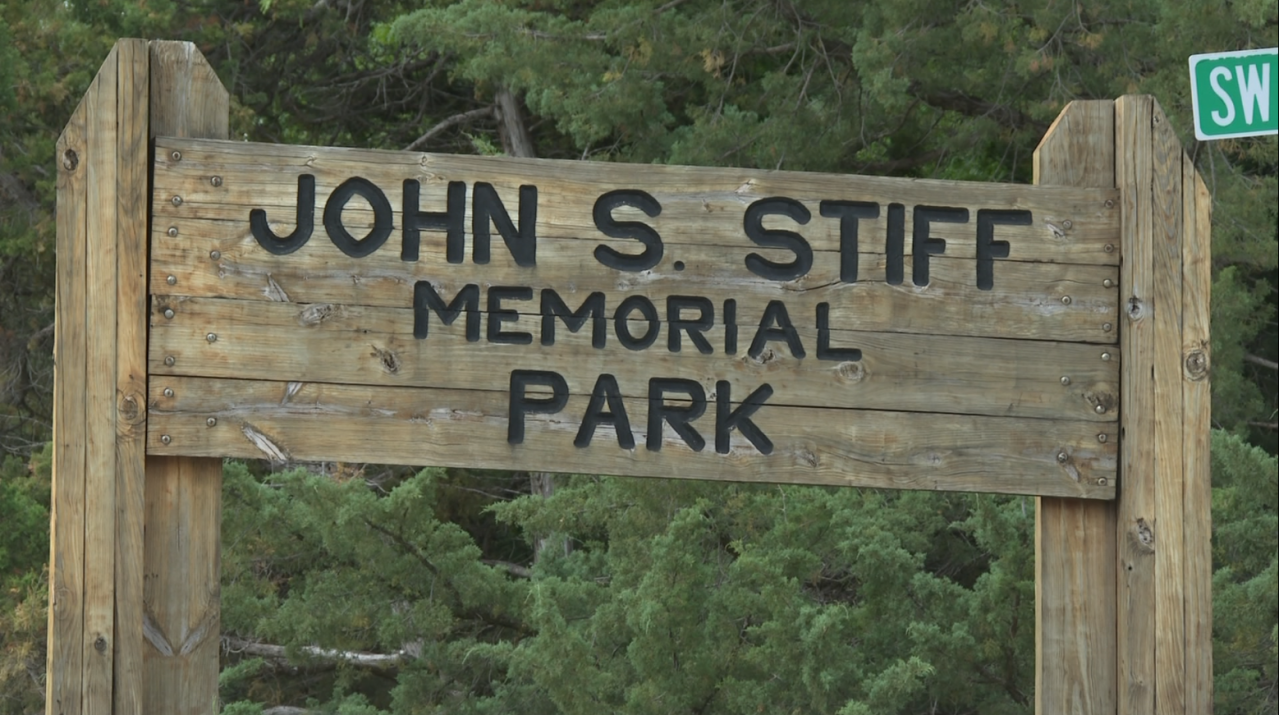
AMARILLO, Texas (KAMR/KCIT) — City officials are providing more details about a proposed development plan for John Stiff Memorial Park, addressing questions about the possible hotel and how the park would coexist with a youth sports facility currently under construction.
The plan was discussed by the Amarillo City Council earlier this month, outlining long-term options for part of the park and providing that future development could help fund park improvements.
Amarillo Parks and Recreation Director Michael Kashuba said a hotel is one of several potential uses being considered as part of a broader mix of development.
“One of those potential allowable uses is a boutique hotel. With no existing hotels in Southwest Amarillo, a small-scale hotel could fill a market gap while enhancing the destination appeal of the development,” said Kashuba. “A small, boutique hotel would accommodate the many visitors coming to Amarillo to attend recreational sports tournaments or to visit family members. A hotel would also support large community special events and generate additional economic development for the community.”
Kashuba said the hotel would be part of a wider set of amenities intended to support park users and visitors.
“The recommended commercial program features diverse dining and food options scaled to serve different community needs,” he said. “A thoughtfully diverse mix including food and beverage establishments, small-format retail, and experiential concepts creates synergistic benefits through shared foot traffic.”
Questions have also focused on youth sports usage at the park and whether the new Kids Inc. sports complex under construction could affect attendance.
“Youth sports is just one of many activities that occur in John Stiff Park,” Kashuba said. “The park is actively used daily by walkers, disc-golfers, skateboarders, tennis, pickleball, padel players, adult softball leagues and youth sports.”
Kashbua said large youth sports tournaments typically rely on multiple facilities across Amarillo.
“When the large youth sports tournaments come to town, it is common for all the fields in Amarillo to be used for the youth tournaments,” he said.
According to Kashuba, the Kids Inc. sports complex could create additional opportunities at John Stiff Park by shifting some activities elsewhere.
“When Kids Inc. moves its activities to its facility, it will allow the city to expand the adult softball leagues and tournaments and provide the fields to other user groups, which are actively looking for a place to call home,” Kashuba said.
City officials said the development plan is a long-term concept meant to guide future planning. Any proposed project would require additional financial review, public input and approval from the city council before moving forward.
For the latest Amarillo news and regional updates, check with MyHighPlains.com and tune in to KAMR Local 4 News at 5:00, 6:00, and 10:00 p.m. and Fox 14 News at 9:00 p.m. CST.

Lorena Llamas’ teenage son is obsessed with football. In Nevada, that means suffering through practices in direct sunlight and on scalding-hot turf.
“The heat is killer,” said Llamas, a mom of two in North Las Vegas. Her son, a high school senior, has seen teammates throw up during some practices. “He’ll always say, ‘Mom, my feet feel like they’re on fire.’”
Parents and experts told The Indy that heat is just one reason that Nevada consistently ranks last nationwide for participation in youth sports. High costs and complicated scheduling issues also play a big part.
Nevada has had the lowest or second-lowest rate of children on sports teams every year since 2017 except 2019, according to data collected through the National Survey of Children’s Health (NSCH), a project of the Census Bureau, and analyzed by researchers at Johns Hopkins University.
Although standalone data for 2024 is not yet available, new data shared with The Nevada Independent on the last two years combined again shows Nevada coming last in sports participation, even as its rate ticked up slightly.
Nationwide, in 2023-2024 nearly 57 percent of children between the ages of 6 and 17 were part of a sports team or club. In Nevada, it was just 46 percent.
“Nevada was always a state that was never thought of for sports,” said Llamas. She attributed the lack of a robust sports culture to Nevada’s heat and smaller number of higher education institutions or major sports teams. Llamas has noticed more young people getting excited about playing football since the Raiders came to Las Vegas in 2020.
“Our players do not get enough attention here,” she said. “There is so much talent in Nevada.”
Below, we dive into some of the factors that contribute to Nevada’s lagging sports participation and break down the data.
Increasing costs
Most states, including Nevada, have seen sports participation rise since the COVID-19 pandemic, when most schools canceled programming for at least a season.
But even before the pandemic, Nevada’s participation rate was consistently lower than the nation’s.
Data from the National Federation of State High School Associations shows the number of student-athletes in Nevada high schools has been relatively stable, going from approximately 45,200 student-athletes in 2015-2016 to approximately 44,800 in 2024-2025. During the same period, Nevada’s high schools added more than 16,000 students.
Richard Rosenkranz, a UNLV professor who studies interventions to boost nutrition and exercise, attributed Nevada’s low participation rates to high costs.
In 2022, his family moved from Kansas City to Las Vegas, where his son enrolled in a public school and joined the school’s cross-country team.
Rosenkranz said he and his wife were “shocked” by the team’s sticker price. They had to pay almost $500 for their son to run cross-country, a one-season sport. Sports were free at his son’s public school in Kansas.
“Immediately, a lot of Nevada families just cannot afford that,” he told The Nevada Independent.
Sports costs are rising fast nationwide. Project Play, an initiative of the Aspen Institute think tank, found American families spent an average of $1,000 on their child’s primary sport in 2024, a jump of 46 percent, or about $300, since 2019.

Llamas estimated her family spends about $500 each football season, mostly on required expenses for the team and for traveling to games.
She said her family was lucky they could afford these costs.
Statewide, there are wide income disparities in sports participation. According to the national survey’s data, from 2022 to 2023 nearly three times as many students from high-income families (at or above 400 percent of the federal poverty line) played sports than students from low-income families (at or below the poverty level).
Nevada does not waive sports fees for low-income students, as a handful of states do. California outright bans fees for all students.
Rosenkranz blames rising expenses on cultural shifts, which have transformed youth sports from a more casual form of fun into a high-pressure industry oriented toward college recruitment.
“We’ve essentially professionalized a lot of sports,” he said. To remain competitive, Rosenkranz said, academic and extracurricular sports programs need to hire full-time coaches, upgrade facilities and equipment, and travel to tournaments.
Programs pass some of those costs onto families, or families find themselves spending more in private lessons or new gear.
In its 2024 report, Project Play also blamed the post-pandemic shift to kids focusing on single sports, making competition even more intense and expensive.
Unique “burden” in Nevada
Experts say Nevada’s reliance on shift work and shorter-term labor further complicates access to sports.
“It poses more of a financial burden in a state where … so many parents have multiple jobs in the service industry, where kids have higher shares of parents who can’t afford it,” said Rosenkranz.
Many parents work in the state’s 24/7 hospitality industry, where work shifts are longer or later than other jobs and where families cycle in and out of the state more often. Census data also shows that Nevada has a higher share of households where every parent works, at 59 percent in 2024.
That makes it harder for parents to bring kids to practice, Rosenkranz said, especially in a state with limited public transportation.
“Obviously, Vegas is a very transient town where people work all kinds of jobs. It’s a 24 hour city,” said Scott Blackford, director of programs at Nevada Youth Sports (NYS), an organization that runs recreational and club sports in Southern Nevada and manages charter schools’ sports leagues.
To accommodate scheduling issues, “We try to offer different programs, whether recreational leagues or competitive leagues, or camps, clinics, all the different programs you can offer, to fit individual families,” he said.
Although NYS usually doesn’t work in traditional public schools, he said the group has run some pilot programs so that “a child can stay after for an hourlong practice, in case mom and dad couldn’t take them to practice that night.”
NYS also offers shorter-term programs where families commit to sports only for eight weeks. Programs such as these expand the group’s demographic reach, Blackford said, even as costs rise.
“We pride ourselves on trying to not raise prices,” Blackford explained. “But, you know, everything is going up across the world.”
Other factors
Nevada’s intense heat creates further problems.
Synthetic turf fields are increasingly popular for field-based sports due to their lower maintenance costs than grass. But research has shown such fields can be 50 degrees hotter than grass.
“The shade infrastructure is horrible; the weather is hot all summer. There’s an immediate lack of enjoyment,” said Rosenkranz.
But Blackford said Nevada’s temperatures could be a plus by enabling yearlong sports programming.
“Summer is going to be a little tough, but if you’re born and raised in Arizona or Nevada, you’re kind of used to it. … We’re fortunate to have four seasons of sports a year,” Blackford said, while admitting that finding air-conditioned facilities can be a struggle.
Rosenkranz said Nevada’s low sports participation reflects the state’s generally poor mental and physical health outcomes.
Earlier this year, a bill mandating daily recess in Nevada’s public and charter schools — which is required in only 13 states — failed in the Legislature.
“Are there places where they can play before school? Or in the classroom, at recess, at physical education — all of the activities that happen during the school day?” Rosenkranz asked. “Or are we just asking kids to sit quietly in a lunch room?”
In 2024, only 9.1 percent of Nevada’s 12-through-17-year-olds were physically active for an hour every day. The nationwide rate was 14.9 percent.
Nevada also reports higher rates of depression, suicide and substance use disorder among youth. It ranked last among states in the 2025 and 2024 surveys of youth mental health by the nonprofit Mental Health America.
Boosting sports participation could help address these issues, Rosenkranz said, adding that sports lower the risk of chronic disease and improve mental health by giving kids a chance to socialize, resolve disagreements and challenge themselves.
“Also, sports are fun,” he said. “And people should be having fun.”
Published: Dec 28, 2025 7:00 am
From repeat championship performances to individual success stories, 2025 had it all in the world of Newtown athletics. The Annual C.H. Booth Library Turkey Trot drew a record 1,700-plus participants. There were awards earned by coaches, an athletic director, and athletes. Here is a look at what unfolded in 2025:
*It was a trifecta for the Newtown High School cheerleading team, which won South-West Conference, State, and New England Championships.
*The NHS boys’ golf team made it a three-peat, winning its third straight SWC Championship in the fall.
*NHS boys’ golf set a new standard with a program-best score of 141 in a match against Stratford at Rock Ridge Country Club.
*Newtown High School’s dance team won a State Championship.
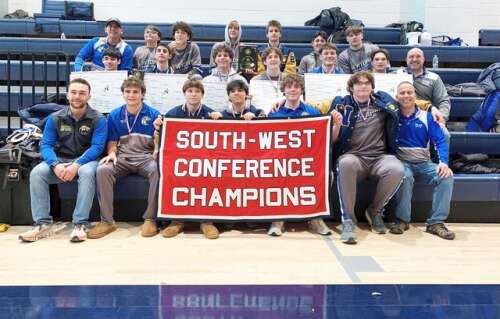
*NHS wrestling won the South-West Conference title with six individual champs, nine finalists, and 13 place-winners.
*Wrestler Marc Maurath became Newtown High School’s winningest grappler when he earned his 161st victory on the mats (he finished with 188). Maurath also reached an impressive milestone with his 100th career pinfall victory.
*NHS wrestler Kenna Gioffre (second all time with 171 wins) won a State Open Championship in his weight class.
*NHS Wrestling Coach Chris Bray earned his 100th dual meet victory. The wrestling milestones continued as Kenna Gioffre and Marc Maurath joined the 150-win club, Gioffre also earned his 100th pin, and Charlie Dunn, Antonio Arguello, and Jake Maddox all earned their 100th career victories on the mats.
*The NHS indoor girls’ track team made it back-to-back SWC Championships in the winter, then made it three consecutive spring outdoor track and field SWC Championships.
*Newtown’s boys’ runners got in on title success as the cross country team raced to the conference crown this fall.
*Grade 6 girls’ and grade 5 boys’ basketball teams claimed New England tourney titles.
*The U10 Hawks baseball team won its second straight state title and reached the Elite Eight at the Cal Ripken World Series.
*Newtown’s 11-year-old baseball team won a New England Regional Championship.
*Newtown Youth Basketball Association President and Coach Tom Martinez was named the Newtown Bee Sportsman of the Year.
*Newtown Youth Wrestling captured several champs and place-winners at the USA Wrestling Connecticut State Championships.
*The NHS Athletics Department received the Michael’s Jewelers Achievement Cup, as well as the Fred Balsamo Award For Sportsmanship.
*NHS Athletic Director Matt Memoli was selected as the Unified Sports Paul Mengold AD of the Year.
*Youth wrestler Camron Veneziano captured a National Wrestling Championship.
*Matthew Dos Santos signed a professional soccer contract with Red Bulls II.
*NHS track and field standouts Aashni Shetty (long jump) and Elias Brady (triple jump) won State titles. Shetty broke multiple school jumping records during her senior year.
*Tristan Rosenschein was named to the 15U National Lacrosse Team.
*Sandy Hook’s Mackie Samoskevich brought the Stanley Cup back to town after his Florida Panthers won the game’s biggest trophy.
*50 in 50: Bruce Goulart accomplished his goal of running a marathon in all 50 states.
*NHS Lacrosse Coach Maura Fletcher earned the SWC’s Outstanding Coach Award.
*Stephen Kopcik won the NAPA Sports Sizzler at Stafford Motor Speedway.
*NHS football player Travis Rekos earned the first Bob Zito Coach’s Award.
*Among the notable passes of the baton this past year was Debi Modzelewski retiring and Stacey Nasser taking over as assistant to the athletic director at NHS.
*On the coaching front, Tricia Harrity took over the NHS gymnastics team, and David Warren is the new head coach with NHS track.
There is sure to be much more excitement in store as we flip the calendar to 2026. See you at the games!
Sports Editor Andy Hutchison can be reached at andyh@thebee.com.
The NHS wrestling team won the SWC Championship. —photo courtesy Daryl Maurath
Aashni Shetty set multiple jumping records at NHS. —Bee file photo
Bruce Goulart completed his quest of running a marathon in every state with a 26.2 mile effort in Illinois on July 15. The road race enthusiast is far from done. He is approaching the finish line of Run 169 Towns Society, a group that completes a race in each of Connecticut’s towns/cities. —photo courtesy Jan Brown-Goulart
Newtown High’s boys golf team won its third straight SWC Championship, scoring 307 at Fairchild Wheeler Golf Course in Fairfield on October 14. Pictured are, from left: Coach Shawn Tierney, Will Lokey, Quinn Kull, Nate Pickard, Jack Wishneski, and Aidan Andreotta. —photo courtesy Shawn Tierney

Everyone has different methods, but staying active is key
It’s always easier to get outside and be active in the sunshine when there is plenty of daylight, unlike now, unfortunately.
As a professional athlete, staying active all year long is a must. While many people take the winter months to recoup, mellow out, or even hibernate a little, most cyclists in the professional scene train throughout the coldest months. It’s not always easy to do, and it certainly requires some flexibility and creativity, especially living in a snowy place like Durango.
When the competitive off-road race season wraps up in October, many of my competitors (myself included) make plans for what is generally called “the off-season,” or as my coach likes to call it, the “out of competition season.”
This is typically a period of 2-4 weeks during the fall in which cyclists take a break from training and racing. Lots of folks use this time to travel, sit on the beach, see family, or just have a more “normal” day-to-day that isn’t centered around a training schedule.
Personally, I use this time to catch up with friends and spend time baking! If the weather is still pleasant for mountain biking, I use the off-season to ride more recreationally, going slower, stopping frequently for snacks, or only riding when I feel like it.
Since being a professional requires following a slightly more stricter schedule (prescribed time and intensity) when it comes to rides, it’s always nice to have more freedom in the off-season. Additionally, many athletes will use this time to build in some new activities like running, gym work, or, like me, pickle ball.
Ironically, many professionals start training again just as the weather turns to winter. Living in Durango, it’s always a gamble on whether the snow will fly early or if there will be an extended fall, which is where creativity and flexibility come in when you start riding again.
This fall and early winter, for example, have been great for the Durango professional cyclists and recreational riders alike, but not so much for the skiers! As the winter progresses, many athletes have a choice to make: stay home and figure out how to train through the snowy months or travel to a warmer location for training. I love doing a bit of both!
Some people do other activities or sports after their competitive season; through the winter, many cyclists keep up with these activities as cross-training.
I love having running and gym work on my training plan as I start to build more hours on the bike. This way, if there are a few snowy days, it’s easy to have a productive training day while mixing in other activities.
A typical winter training day for me could start with a morning run with my dog, followed by an afternoon session on the indoor trainer bike. However, it could also look like a very bundled-up 4-hour ride with friends!
Since the weather is so variable, it’s important to have some options. Many coaches will provide key bike workouts to be done inside, while leaving wiggle room for more aerobic, long endurance activities outside.
The winter months are generally a time for cyclists to build back their fitness, beginning with what is called base training. Typically, this is when professionals will log a large volume of time on the bike to train the body to burn fat and be ready to build on their fitness for more intense efforts later in the spring. I usually aim to ride 14-22 hours per week throughout the winter training months.
When riding is not possible due to snow or wet roads, I turn to other endurance sports like Nordic skiing and running. Since this phase of training requires so much time on the bike, many cyclists will opt for a trip to warmer locations to make it easier to get hours in.
While it isn’t always easy to get out the door with many layers on or while it’s snowy and cold out, I actually enjoy the change of pace and the challenge of getting my training done during the winter. I love mixing up the different ways I push my body and, I like to believe that it builds perseverance. Plus, spending more time at home is always an added bonus because I travel so much during the racing season.
My advice to anyone who is looking to stay active in the winter or wants to build some fitness towards a spring goal is to stay consistent and keep it fun! Big hours on the bike are not a requirement, but moving your body frequently is certainly a key to success.
Whether it’s hiking in the snow with family, going to the rec center to swim or work out, or staying home on the treadmill, keep it fun! As winter gets going, you might be seeing more cyclists on the road training, and it’s a good reminder to use that as inspiration.
P.S. If you don’t ride bikes or don’t ride in the winter, but you see us bundled up out on the roads, we know we look silly! But, for some of us, it’s our job, and it can be quite fun!
A year of building big
Published 11:45 am Saturday, December 27, 2025
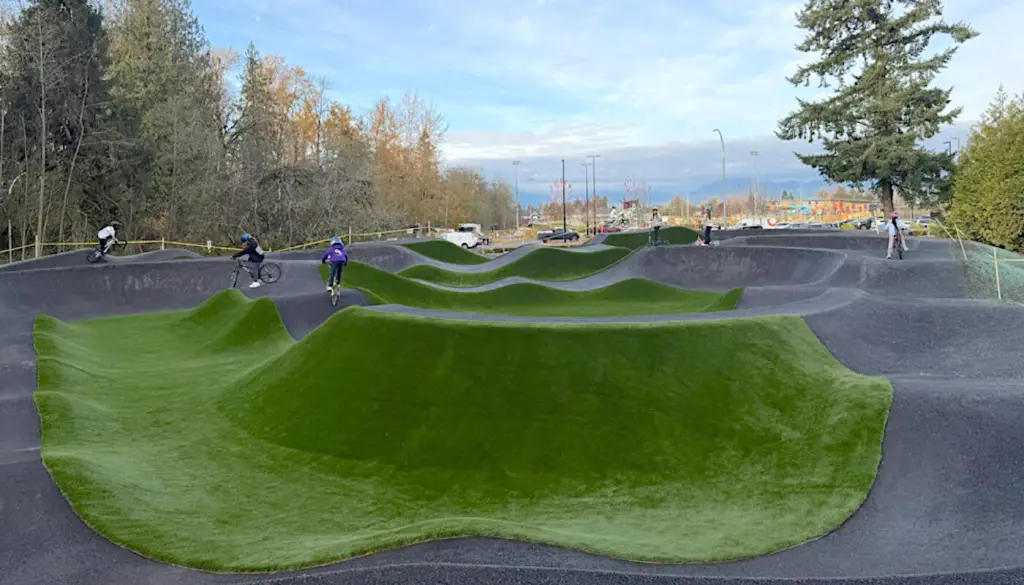
Dustin Worrall, president of Langley BMX, was delighted with the new pump track that officially opened on Nov. 20 in Yorkson Community Park.
“It’s huge, actually,” Worrall responded when asked how significant the facility is.
“What was there before was like a dirt jump kind of track, which was never used,” Worrall told the Langley Advance Times.
“I don’t know if you’ve seen how many kids are out at the pump track now, but especially for a growing area right there with all the condos going up, it’s huge. It’s heavily used. It’s good to have kids on bikes and outdoors rather than sitting behind video games.”
Pump track racing is a sport where riders traverse rollers, banked turns, and other features designed to be riden by “pumping” a bike with up and down body movements.
Like a lot of growing sports, it’s been struggling to find space.
Until the new Township track opened, there were two such facilities in the Langley area to accommodate pump track racers, one at Penzer park in Langley City, and a “very small one” at the Langley BMX track near George Preston Recreation Centre, Worall said.
A new pump track isn’t the only upgrade to Yorkson, which has also added a new spray park, washrooms, parking, a rugby field for Yorkson Middle School, 200 new trees, and what Mayor Eric Woodward describes as “the best playground the Township of Langley has ever built.”
Next year, more washrooms, picnic areas, Yorkson Creek Trail, and a half-kilometre walking track around the existing fields are in the works – depending on public consultation.
It’s just one of several ambitious projects in the Township, part of a sports building boom to provide more room for sports struggling to find space, especially those with younger athletes.
Woodward has noted Langley has the highest per capita youth population in Metro Vancouver, nearly triple that of Vancouver.
Kid need places to play, and the Township has been busy building those spaces.
Biggest is the $149-million expansion of the Langley Events Centre, set to open in September 2026, with three more ice sheets, two year-round dry floors, a 1,200-seat main arena, 380 underground stalls, a new restaurant, and outdoor plaza.
Local youth sports leagues are champing at the bit.
And there is the second phase of Smith Athletic Park in 2026, adding new soccer fields, including one indoors and a host of other improvements, on the way to becoming an education and youth soccer athletic campus.
Further down the road, a proposed new Willoughby Community Centre will include a 37.5-metre lap pool, which is expected to help reduce waits for kids swim lessons.
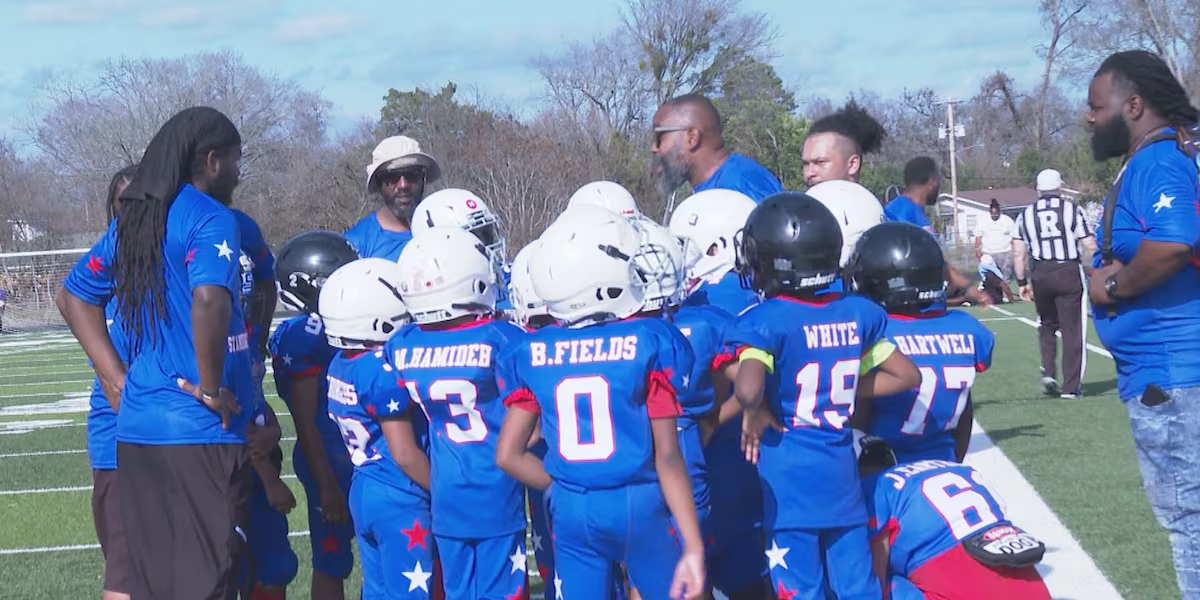
ALEXANDRIA, La. (KALB) – Youth football teams competed for a $500 cash prize during the first-ever Cenla New Year’s Classic this weekend.
Event organizer Kelvin Franklin brought together 8-U, 10-U and 12-U football teams for the tournament at Peabody High School.
“This is truly a high competitive environment and it’s all what this area needs. It starts with the youth. It starts with the youth all the way,” Franklin said.
Franklin said the tournament addressed a need in Central Louisiana.
“I had to make it happen. I wanted to make it happen. We’ve never had a tournament here at all, ever,” Franklin said. “Places in Texas and Georgia, Florida, California, stuff like that, they get to do these type of things and it’s big. Why can’t we do it right here.”
Franklin said he used his platform in youth sports to create the showcase for local athletes.
“It kind of brings a tear to my eyes a little bit, you know, because the support of the city and the support of other people around me and my great crew, great staff, and also Peabody for letting me host this here,” Franklin said.
Local teams competed throughout the weekend, giving young athletes a chance to showcase their skills close to home. Franklin said youth sports teaches lessons beyond the scoreboard.
“It’s great to start them at a young age, you know, because you want to build,” Franklin said. “Football brings great welders, great teachers, great janitors, great everybody. Football just builds everybody even when you’re not playing in college or the NFL as well.”
Franklin plans to make the tournament an annual tradition.
“We’re going to do it every year and this year was the first year, and this next year is going to be way bigger,” said Franklin. ”It’s going to get bigger every year. We have national teams here right now, and there’s going to be some other guys from other places, from other states and stuff that’s going to be here as well.”
Click here to report a typo. Please provide the title of the article in your email.
Copyright 2025 KALB. All rights reserved.

December 28 – Kelly Sheffield was hired to coach UW-Madison’s Volleyball team

How women in Jayhawk Motorsports are challenging barriers in engineering | Sports

$5.3 million QB explains career decision to return to college football

2026 Dakar Rally: A Tough Endurance Challenge
No. 4: Development Series Continues To Blossom in 2025

Officials explain hotel, youth sports plans tied to John Stiff Park

How Kyle Whittingham has previously attacked the transfer portal

Nevada youth rank last in sports participation. Will rising costs make it worse?

Championships And Individual Honors In Newtown Sports – The Newtown Bee

Winter training and staying active in the “off-season.”

Daytona Duels and Their New Name Explained

Potsdam’s Sophia Layer earns SUNY Potsdam volleyball accolade

Bowl game star leaving team to enter college football transfer portal

Major college football program surges as candidate for 4,000-yard QB
Jacksonville All-First Coast team, FHSAA girls volleyball

SoundGear Named Entitlement Sponsor of Spears CARS Tour Southwest Opener

Black Bear Revises Recording Policies After Rulebook Language Surfaces via Lever

Jo Shimoda Undergoes Back Surgery

Donny Schatz finds new home for 2026, inks full-time deal with CJB Motorsports – InForum

Bowl Projections: ESPN predicts 12-team College Football Playoff bracket, full bowl slate after Week 14

Robert “Bobby” Lewis Hardin, 56

How this startup (and a KC sports icon) turned young players into card-carrying legends overnight

David Blitzer, Harris Blitzer Sports & Entertainment

How Donald Trump became FIFA’s ‘soccer president’ long before World Cup draw

Men’s and Women’s Track and Field Release 2026 Indoor Schedule with Opener Slated for December 6 at Home
Wisconsin volleyball sweeps Minnesota with ease in ranked rivalry win

Michael Jordan’s fight against NASCAR heads to court, could shake up motorsports

Pohlman admits ‘there might be some spats’ as he pushes to get Kyle Busch winning again

JR Motorsports Confirms Death Of NASCAR Veteran Michael Annett At Age 39

Increased Purses, 19 Different Tracks Highlight 2026 Great Lakes Super Sprints Schedule – Speedway Digest





-
 Motorsports3 weeks ago
SoundGear Named Entitlement Sponsor of Spears CARS Tour Southwest Opener
-
 Motorsports3 weeks ago
Donny Schatz finds new home for 2026, inks full-time deal with CJB Motorsports – InForum
-
 Rec Sports3 weeks ago
David Blitzer, Harris Blitzer Sports & Entertainment
-

 NIL3 weeks ago
DeSantis Talks College Football, Calls for Reforms to NIL and Transfer Portal · The Floridian
-

 Motorsports3 weeks ago
Rick Ware Racing switching to Chevrolet for 2026
-
 Sports2 weeks ago
#11 Volleyball Practices, Then Meets Media Prior to #2 Kentucky Match
-

 Motorsports2 weeks ago
Sunoco to sponsor No. 8 Ganassi Honda IndyCar in multi-year deal
-

 Motorsports3 weeks ago
NASCAR owes $364.7M to teams in antitrust case
-
 Motorsports2 weeks ago
Nascar legal saga ends as 23XI, Front Row secure settlement
-

 Rec Sports3 weeks ago
Why the Texas Sport for Healing Fund Should Return – The Daily Texan