• The M&A Avalanche: Private equity poured billions into youth sports with landmark deals including KKR’s $4.8B Varsity Brands acquisition, marking the formal institutionalization of the sector as an asset class
• AI Goes Mainstream: Automated production technology processed 1.5 million games while AI-powered coaching, registration, and content creation became standard operating infrastructure
• Brands Discover Youth Sports: Corporate America expanded beyond traditional sports apparel with telecoms, insurance, automotive, and CPG brands investing millions in partnerships targeting engaged families
• The Affordability Crisis Reaches Congress: Federal lawmakers held hearings on youth sports access as family costs hit $1,016 per child annually, up 46% since 2019
• Women’s Sports Investment Surge: Michele Kang’s $55M commitment, Title IX’s impact reaching 3M+ additional opportunities, and girls flag football’s Olympic pathway reshaped participation
• Safety Becomes Federal Priority: Proposed concussion legislation, MLB’s Amateur Recovery Period, and NFL youth protocols signal regulatory intervention in player health
• Infrastructure Boom Continues: Communities invested hundreds of millions in facilities from Davis County’s $70M complex to Fort Worth’s $82M build-out plan
This year-end analysis draws from YSBR’s coverage of more than 750 stories published throughout 2025, spanning M&A transactions, technology launches, policy developments, facility openings, partnership announcements, and industry trends. We reviewed every major story we covered to identify recurring themes, tracked the biggest deals and announcements, and synthesized patterns that defined the year.
We also incorporated external research including the Aspen Institute’s State of Play 2025 report, congressional testimony on youth sports access, and industry analysis from Sportico and Stout. The result is a comprehensive view of how youth sports evolved from a fragmented, passion-driven sector into a recognized industry with institutional backing, federal scrutiny, and professional infrastructure
2025 was the year youth sports transitioned from fragmented local operations to a recognized, investable industry with institutional backing, federal scrutiny, and professional infrastructure. What Sportico correctly identified as “2025’s Breakout M&A Theme” represented something larger: the entire ecosystem maturing simultaneously across technology, finance, policy, safety, and access.
The numbers tell the story. Participation recovered to 55.4%, the highest rate since pre-COVID. But that growth came with a 46% cost increase since 2019, creating a two-tier system where affluent families spend $3,000+ annually while working-class participation drops. Private equity deployed billions. Technology automated production at scale. Congress held hearings. The contradictions were impossible to ignore.
Private Equity’s Billion-Dollar Bet: M&A Reaches Critical Mass
The deal volume in 2025 validated what insiders had suspected for years: youth sports had become too big, too profitable, and too scalable for institutional capital to ignore.
The Landmark Transactions:
KKR acquired Varsity Brands for $4.8 billion, marking the company’s fourth private equity transition since 2010. CEO Adam Blumenfeld, who survived all four ownership changes, told us the company would likely go public “within the next few years” as it outgrows private market buyers. With $3B in annual revenue and $400M EBITDA serving 55 million youth athletes, Varsity’s scale demonstrated how consolidation creates platforms too large for even the largest PE buyers.
But the M&A activity extended far beyond Varsity. Scorability acquired Ryzer, combining recruiting technology with the largest camp management platform serving 4,000+ college programs. Hudl acquired SportContract to strengthen its hockey ecosystem. Volo Sports merged with ZogSports to create the largest recreational sports network. PlayHQ was acquired by Alpine Software Group, bringing Australian sports technology into a U.S.-based PE portfolio.
The pattern was unmistakable: fragmented, locally-operated businesses were being rolled up into national platforms with professional management, technology infrastructure, and growth capital.
Growth Equity Validates Independent Players:
Not every deal involved acquisition. Sprocket Sports raised a Series A from Frontier Growth while maintaining founder control, positioning itself as “the only independent, founder-led modern club management software provider” as competitors sold to larger platforms. TeamLinkt raised $8.3M CAD to scale its free platform model across North America, challenging subscription-based competitors.
These investments signaled that multiple business models could attract institutional capital, not just roll-up consolidation strategies.
via Sportico
Why Now?
A $40B+ market, extreme fragmentation, resilient parent spending amplified by NIL psychology, new monetizable products (streaming, AI analytics, recruiting platforms), and, critically, the entrance of respected investors who validated the category.
Josh Harris and David Blitzer’s creation of Unrivaled Sports, featured in The New York Times in July, served as the watershed moment. When billionaire pro-team owners publicly commit to youth sports, it signals to other institutional investors that the opportunity is real, the market is maturing, and the timing is right.
As one PE partner told Sportico: “If we didn’t see the potential to at least double to triple the size of this business, then the investment would not have been for us.” That’s the language of institutional capital entering a growth stage. And 2025 was the year it happened at scale.
Technology Becomes Infrastructure: AI, Automation, and the Production Revolution
Technology in youth sports moved beyond pilot programs and early adopter experiments in 2025. It became essential operating infrastructure.
Automated Production Reaches Industrial Scale:
Pixellot processed 1.5 million games in 2025 across 14 sports, streaming live events with AI-powered cameras that required minimal human intervention. The company raised $35M as new CEO Doron Gerstel described a shift to “AI as a Service” models where Pixellot aligns revenue directly with partners’ success rather than selling traditional software licenses.
In our conversation with Pixellot’s Rob DeSlavo, he explained the competitive advantage of scale: processing 150,000+ monthly events creates a learning loop where the AI gets smarter with every game. That’s not just technology. That’s a sustainable moat.
GameChanger partnered with Pixellot to bring fixed AI cameras to recreational baseball and softball fields, doubling viewership across 32 leagues in pilot testing. Parents and coaches scan QR codes to activate cameras, which automatically start streams and alert team followers. The integration eliminates phone-based streaming while maintaining GameChanger’s ecosystem.
Professional-quality production that once cost thousands per game now runs automatically at fields serving house leagues and travel teams.
AI Becomes Operational Standard:
TeamLinkt launched Emi, an AI assistant that creates registration forms, schedules, rosters, automated communications, and web content. Sprocket Sports, Scorability, and other platforms integrated AI-powered features that reduce administrative burden on volunteer-run organizations.
The shift wasn’t about adding AI as a feature. It was about using AI to make essential operations (registration, scheduling, communication) faster, cheaper, and more accessible to organizations without professional staff.
The Technology Stack Consolidates:
Hudl’s acquisition of SportContract demonstrated how leading platforms are building complete ecosystems. Rather than point solutions for video or statistics, the industry is moving toward integrated platforms that handle capture, analysis, sharing, recruiting, and communication in unified systems.
For brands, this consolidation creates new advertising opportunities. Our analysis of Hudl’s partnership with T-Mobile showed how brands can reach millions of engaged families through homepage placements (+195% CTR) and livestream integrations (12x benchmark performance).
Technology enables content at scale, content attracts audience, audience attracts brands, brand revenue funds more technology.
Brands Discover Youth Sports: From Telecoms to Hydration
Corporate America dramatically expanded its presence in youth sports in 2025, moving beyond traditional sports apparel companies to include telecoms, insurance providers, automotive manufacturers, and consumer packaged goods brands.
Technology and Telecommunications Lead Investment:
T-Mobile partnered with Hudl to expand their Friday Night 5G Lights initiative to twice as many markets, transforming traditional sponsorship into a cultural movement celebrating high school football in small-town America. The partnership leveraged real-time content creation, community activation, and livestream innovation to showcase T-Mobile’s 5G network while targeting a 32% increase in school participation across underserved rural markets.
The approach delivered measurable results through Hudl’s platform. Homepage placements achieved +195% click-through rates, while livestream video placements performed 12x above benchmark averages. The partnership demonstrated how brands could reach millions of engaged families through youth sports technology infrastructure rather than traditional media buys.
Financial Services and Insurance Enter the Space:
New York Life served as presenting sponsor of the Little League Community Heroes program for the second consecutive year while expanding soccer partnerships through the USWNT’s SheBelieves Cup and presenting sponsorship of the US Youth Soccer Championships. The insurance company’s multi-sport approach focused on community recognition and youth development.
Bank of America committed to youth sports through multiple initiatives including “Golf with Us” (partnering with Youth on Course) and “Soccer with Us” programs. As FIFA’s first global banking sponsor, Bank of America positioned youth sports access as core to their community impact strategy.
Automotive Manufacturers Fund Scholarships:
Toyota invested in more than 300,000 NFL FLAG youth football scholarships through a network of 700+ dealers who donate $3 million annually to cover player registration fees, provide jerseys and equipment, throw kickoff celebrations, and provide sideline tents. The company hosted the Toyota Glow Up Classic flag football event featuring players in glowing jerseys under blacklights, with proceeds funding permanent field lighting for youth facilities.
Military Recruitment Through Grassroots Basketball:
Army National Guard partnered with MADE Hoops, one of the world’s largest grassroots basketball organizations serving over 85,000 athletes. The collaboration provided custom touchpoints across onsite events, bespoke social content, and new intellectual property while launching the inaugural LDRSHIP Award recognizing high school players who exemplify commitment to philanthropy and community impact.
Consumer Brands Target Family Decision Makers:
Downy Rinse partnered with NFL FLAG as the official laundry partner of the youth flag football league serving athletes ages 5-17, positioning its odor-fighting fabric rinse as the solution for youth sports uniforms and gear.
Dairy MAX renewed its Hudl partnership through 2026, expanding the Built w/Chocolate Milk campaign targeting Gen Z athletes in the western U.S. through display ads, rich media, livestream video, and athlete highlight placements across Hudl’s platform reaching 5 million athletes and 100 million fans.
Traditional Sports Brands Expand Youth Focus:
Nike continued its Community Impact Fund investments ($149 million in FY22) focusing on women, girls, and the Black Community Commitment with partnerships across 100+ community organizations. The company’s Phenom America camp series and support for youth leagues demonstrated sustained commitment beyond professional athlete endorsements.
Gatorade maintained its youth sports presence through the Player of the Year program, Youth Partnerships providing product donations, and campaigns like #SistersinSweat focused on keeping girls in sports longer. The brand positioned itself as a partner in the athletic journey rather than just a sponsor of events.
DICK’S Sporting Goods continued its Sports Matter program providing grants to youth sports programs facing financial challenges while partnering with Youth on Course to expand access nationwide through $5 simulator rentals at 110+ Golf Galaxy locations and DICK’S House of Sport venues.
Under Armour’s “More Than Just a Game” initiative aimed to create opportunities for millions of young athletes by 2030, sponsoring the All-America Game showcasing top high school football players while providing uniforms, footwear, and training gear.
Adidas maintained its Little League World Series partnership (since 2019), providing uniforms, footwear, and equipment to participating teams while promoting values of teamwork, sportsmanship, and perseverance.
Emerging Brand Categories:
Target committed $14 million to youth soccer through an $8 million local soccer grant program and $6 million partnership with the U.S. Soccer Foundation.
Dove partnered with Nike for the #KeepHerConfident initiative addressing body confidence issues that contribute to girls dropping out of sports.
GEICO, Amazon, Pizza Hut all activate at the City of Palms Classic Basketball Tournament.
The Strategic Shift:
The brand investment wave reflected recognition that youth sports provide access to highly engaged families making household purchasing decisions. According to research, youth sports sponsorships drove 3x higher engagement among 18-34 year-olds compared to older demographics, with 75% of Gen Z consumers saying they’re more likely to support brands aligned with their values.
For brands, youth sports offered something professional sports couldn’t: direct community connection, authentic grassroots engagement, and association with positive youth development rather than entertainment. The shift from logo placement to integrated partnerships demonstrated maturation in how corporate America approaches the space.
The Affordability Crisis Goes to Washington: Access, Equity, and Federal Intervention
While participation hit record highs, the cost crisis reached a breaking point that attracted Congressional attention.
The Numbers Behind the Crisis:
The Aspen Institute’s State of Play 2025 report documented what families already knew: youth sports costs increased 46% since 2019 to average $1,016 per child annually for their primary sport. But averages mask the reality. Families spending $3,000+ annually on elite programs exist alongside families completely priced out of participation.
The gap is widening. Youth from families earning $100K+ participate at 65%, while those from families earning under $25K participate at just 37%. That 28-point gap represents millions of kids for whom sports remain inaccessible despite the documented benefits for academic achievement, leadership development, and long-term economic outcomes.
Congress Examines the Crisis:
In December, the House Early Childhood, Elementary, and Secondary Education Subcommittee held a hearing titled “Benched: The Crisis in American Youth Sports and Its Cost to Our Future.” Chairman Kevin Kiley and witnesses from USA Climbing, PHIT America, and the Aspen Institute’s Project Play testified about declining participation among low-income families.
Senator Chris Murphy highlighted private equity’s role in rising costs, specifically citing PE-owned hockey rinks that charge families streaming fees. “I was told if I livestreamed my child’s hockey game, my kid’s team will be penalized,” Murphy said, pointing to policies that prioritize facility revenue over family access.
Representative Josh Gottheimer introduced the PLAY Act, proposing $2,000 tax credits for youth sports expenses. The bill represents federal acknowledgment that youth sports costs have become a barrier to participation that requires policy intervention.
Private Funding Steps In:
While federal solutions moved slowly, private capital addressed gaps directly. LA84 Foundation distributed $1.78M to 19 Southern California programs serving 4,400+ youth, specifically eliminating barriers like registration fees, transportation costs, and equipment expenses.
Canada Basketball’s UNIFIED Assist Program distributed $500K+ to 40+ organizations since 2023, prioritizing programs serving girls and women in underserved regions.
Michele Kang committed $55M to women’s sports research and youth programs, including the first nationwide study on female athlete needs and the creation of the Kang Women’s Institute with U.S. Soccer.
GoFundMe reported $250M raised for sports since 2010, including $37M for youth programs. The platform’s partnership with YSBR to launch The Inaugural Youth Sports Awards awards and Feel Good Friday series demonstrated how crowdfunding fills gaps that traditional funding sources miss.
Corporate Partnerships Create Access:
Golf Galaxy and DICK’S House of Sport partnered with Youth on Course to expand access nationwide. Following a 25-store pilot that generated 2,000+ simulator rental hours, the partnership rolled out to all 110+ Golf Galaxy locations and the expanding DICK’S House of Sport network (projected at 35 locations).
Youth on Course members now receive $5 simulator rentals (down from standard rates), one complimentary lesson from PGA Teaching Professionals, and access to special in-store events. Members create DICK’S Scorecard accounts and book through Game Time Booking to redeem benefits.
“By providing access to instruction and indoor facilities, we’re removing another barrier and ensuring that every young person, regardless of background, can continue building their skills,” said Michael Lowe, Head of Impact at Youth on Course.
The partnership addresses year-round access challenges, particularly in regions where weather limits outdoor play. It represents a corporate infrastructure solution to affordability by using existing retail footprints to subsidize youth access rather than building new facilities.
The pattern was consistent: where public systems and market forces fail to provide access, philanthropic capital, grassroots fundraising, and corporate partnerships step in. But the scale of need far exceeds the available resources.
2025 marked a turning point for women’s sports investment, driven by both equity imperatives and market opportunity.
The Investment Thesis:
The Women’s Sports Foundation released data showing that 71% of women who played youth sports later achieved leadership positions as managers, directors, or executives. The ROI case was clear: youth sports participation translates directly to workforce leadership.
But coaching opportunities for women declined even as participation surged. Female coaches held 90% of women’s collegiate coaching positions in 1971. By 2025, that figure dropped to 42%. The pipeline for women in sports leadership was broken despite growing athlete participation.
Major Capital Commitments:
Michele Kang’s $55M investment represented the largest private commitment specifically targeting female athlete research and development. The initiative included $30M for youth programs, launching the Kang Women’s Institute with U.S. Soccer to conduct the first nationwide study on female athlete needs, particularly around the critical age-12 dropout point when girls leave sports at alarming rates during puberty.
USWNT coach Emma Hayes framed the challenge: “It’s not as simple as just going to the field with an extra tampon… How might we support them when body image plays such an important part in their own self-confidence?”
Only 6% of global sports science research focuses on women. Kang’s investment aims to change that by developing evidence-based frameworks for coaching, health protocols, and retention strategies.
Participation Trends:
Girls flag football emerged as the fastest-growing high school sport, growing 14% while baseball declined 19%. The sport’s addition to the 2028 LA Olympics created both visibility and legitimacy.
Oakley expanded its Icon Alliance tournament to 16 teams with games at NFL facilities and broadcast coverage. The brand’s VP Corey Hill told us youth engagement with Oakley increased double digits over three years, with measurable sales growth in flag-specific products.
Volleyball participation dwarfed other sports. Marcus Spears, ESPN NFL analyst, noted you can find 6,000 girls at volleyball tournaments versus 800 at comparable basketball events. That 7.5x participation gap explains why pro athletes’ daughters increasingly choose volleyball. Carter Booth (Calvin Booth), Riley Curry (Steph Curry), Zhuri James (LeBron James) all play volleyball rather than their fathers’ sports.
League One Volleyball (LOVB) announced its ninth franchise in San Francisco with a women-led ownership group of 20+ Olympic medalists, entrepreneurs, and Bay Area executives. The league’s youth-first model spans 92+ clubs with 30,000+ athletes, creating a pipeline from grassroots to professional competition.
Safety Becomes Federal Priority: From Concussions to Coaching Standards
Player safety moved from organizational best practices to proposed federal mandates in 2025.
Concussion Legislation:
Senators Dick Durbin and Representative Mark DeSaulnier introduced the Protecting Student Athletes from Concussions Act, requiring states to adopt “when in doubt, sit it out” policies. The bill would prohibit same-day return to play for any athlete suspected of concussion, requiring medical clearance before resuming participation.
The timing reflected growing concern over youth concussion rates. The National Federation of State High School Associations reported 254,126 students sustained concussions across nine high school sports in 2023-24 alone.
The legislation received unprecedented support from all major professional leagues (NFL, NBA, MLB, NHL, NWSL, PWHL, WNBA, U.S. Soccer), the NCAA, medical associations, and youth organizations. This coalition demonstrated industry-wide consensus around concussion protocols.
Research Validates Policy:
New research presented at the American Academy of Orthopaedic Surgeons meeting showed a 25.6% relative risk reduction in soccer-related concussions following the U.S. Soccer Federation’s header restriction policy. The study validated the effectiveness of age-appropriate restrictions while highlighting persistent gender disparities. Female players experienced 9.6% concussion rates compared to 6.2% for males.
MLB Creates Amateur Recovery Period:
Major League Baseball prohibited professional scouting of amateur players during designated rest periods, creating a mandatory Amateur Recovery Period of three months for high school players (October-January) and two months for college players.
Dr. Gary Green, MLB Medical Director, explained the rationale: “Young pitchers are foregoing periods of rest and recovery in order to ‘max-out’ at showcase events.” The policy removes evaluation pressure during peak rest months, directly addressing dramatic increases in pitcher injuries from year-round showcase culture.
Coaching Standards Consolidate:
Pop Warner and USA Football extended their partnership, requiring all Pop Warner tackle and flag coaches to complete USA Football’s Youth Coach Course. With 1.3M+ course completions since 2012, the standardized curriculum now satisfies Coach Safely Act requirements in Alabama and Arkansas.
The partnership demonstrates how two influential organizations are aligning standards rather than competing frameworks, creating consistency for coaches working across different leagues and levels.
Infrastructure Investment Accelerates: Facilities as Economic Development
Communities invested hundreds of millions in youth sports facilities in 2025, viewing them as economic development tools rather than recreational amenities.
Major Projects:
Davis County, Utah opened the $70M Western Sports Park, transforming a former Olympics venue into a 55-acre complex with six soccer fields and 120,000 square feet of indoor space. Tourism tax dollars funded the project, targeting traveling tournament teams with strategic Wasatch Front location and airport proximity.
Fort Worth proposed an $82M investment over 12 years, including a new baseball/softball complex with 8+ fields eyed for 2030 bond funding. City officials acknowledged the capacity problem: the Cowtown Classic tournament draws 300+ teams but turns away more due to field shortages. Youth play soccer at one-third the rate of neighboring Frisco (5% vs 15%).
Multiple communities followed similar patterns: Gig Harbor ($90-120M facility), Hillsborough County (indoor facility design funded by BP settlement), Kuna (facility planning), and dozens of others. The common thread was positioning facilities as regional hubs that capture sports tourism dollars rather than just serving local recreation needs.
The Economic Argument:
The 2022 youth-centered sports tourism market was valued at $91B nationally. When families travel for tournaments, they spend on hotels, restaurants, fuel, retail, and entertainment. Communities increasingly view facility investment as a strategy to capture these dollars locally rather than watching them flow to neighboring jurisdictions with better infrastructure.
Ken Hagan, Hillsborough County Commissioner, noted the personal impact: “After nine years of my daughter playing travel softball, I felt it in the pocketbook.” Keeping those dollars local through facility development represents significant economic opportunity.
Funding Creativity:
Communities demonstrated creativity in financing: hospital benefit zones (Gig Harbor), oil spill settlements (Hillsborough), tourism development taxes (multiple projects), and corporate sponsorships (expected to fund most of True Gritt Sports’ $90-120M project).
LakePoint Sports announced a five-year soccer growth initiative timed around the 2026 FIFA World Cup, leveraging its 1,300-acre campus with 11 outdoor soccer fields and 12 indoor futsal courts. The timing reflects strategic alignment with major events to drive programming and facility utilization.
The Academy Model Gets an NGB Partner:
Masters Academy International (MAI) announced plans for an $83.8 million redevelopment of an 82-acre campus in Stow, Massachusetts. The site, formerly Bose Corporation’s headquarters, will become a private sports academy serving 600+ student-athletes. Designed to rival IMG Academy, the project secured $2.85 million in state tax credits and will create 190 jobs.
But the real story broke when USA Fencing signed a multi-year deal making MAI the home of its Olympic and Paralympic national teams. This first-of-its-kind partnership between a youth sports academy and National Governing Body includes a $350,000 annual minimum guarantee, office space, athlete housing, year-round training facilities, and a national fencing academy with scholarship opportunities.
The revenue-sharing structure and NGB integration marks a new model: academies aren’t just competing with IMG anymore, they’re partnering with governing bodies to create official development pipelines. Rich Odell, former head of school at IMG Academy, leads MAI’s effort to position New England as a national hub for athlete development.
Industry Standards
Quality Standards Emerge:
The Aspen Institute released its Play Equity Framework, moving beyond “patchwork programs” to address root systemic barriers through coordinated action. The framework identifies five systemic barriers and six operational strategies targeting interconnected systems (education, economics, culture).
Rather than expanding programs, the framework emphasizes systems transformation: changing how education, economics, and culture intersect to create or remove barriers to participation.
Partnerships Reshape the Landscape: Collaboration Over Competition
Strategic partnerships proliferated in 2025 as organizations recognized they could achieve more through collaboration than competition.
Governing Body Partnerships:
MLS GO partnered with NRPA (National Recreation and Park Association) and RCX Sports to leverage 60,000 existing park and recreation agencies across all 50 states. Rather than building new infrastructure, the partnership activated existing community assets with programming expertise and $100,000 in grant funding through the MLS GO PLAY FUND.
RCX Sports holds official partnerships with NFL, NBA, WNBA, NHL, MLS, MLB, and USTA, creating unified youth sports experiences rather than fragmented, competing programs.
NBA and YMCA announced a year-long partnership for NBA World Basketball Day, expanding programming globally through existing YMCA infrastructure. The partnership demonstrates how professional leagues increasingly work through established community organizations rather than building parallel systems.
Media and Content Partnerships:
ESPN partnered with Academy Award winners Brian Grazer and Ron Howard’s Imagine Documentaries for Little League coverage, applying Hollywood production values to youth baseball. DICK’S Sporting Goods launched a dedicated production studio for youth sports storytelling.
The pattern was clear: premium content creation requires collaboration between media companies, brands, and content specialists. No single organization has all the capabilities needed to create compelling youth sports content at scale.
Looking Ahead: 2026 and Beyond
Three questions from the Sportico article frame the outlook:
1. Are there enough scaled assets?
The biggest constraint remains the lack of scaled properties. Many clubs, events, and platforms remain sub-$5M EBITDA businesses. The industry needs more $10M+ EBITDA assets to sustain institutional deal momentum.
However, technology platforms like Pixellot, GameChanger, Sprocket, and TeamLinkt are building scaled businesses through software and services rather than physical operations. These platforms may provide the scaled assets that traditional clubs and facilities cannot.
2. Will robust valuations continue?
2025 saw elevated multiples driven partly by first-time PE entrants competing for assets. Sustainability depends on supply/demand imbalances for quality companies, successful integration of completed deals, and overall economic factors including interest rates and debt costs.
The Varsity Brands trajectory (from $184M to $4.8B in 14 years) suggests valuations can sustain when companies demonstrate consistent growth and professionalization. But not every deal will show similar returns.
3. Which sectors will attract the most investment?
Facilities, events, video streaming, and software (particularly for performance and training) appear best positioned. But e-commerce, equipment, and apparel could emerge as opportunities if operators can demonstrate scalable business models.
The wild card is technology. AI-powered platforms that reduce operational costs while improving outcomes may attract the most capital because they scale more efficiently than physical facilities or events.
The Bottom Line
2025 was the year youth sports grew up. The industry attracted billions in investment, faced Congressional scrutiny, embraced technology at scale, addressed safety through proposed legislation, invested hundreds of millions in facilities, launched recognition programs, and built collaborative partnerships.
But growth revealed contradictions. Participation hit records while costs priced out working families. Technology democratized access to production while private equity-owned facilities charged streaming fees. Investment poured in while Congress questioned the industry’s sustainability.
These tensions won’t resolve quickly. But 2025 established youth sports as a recognized industry with institutional backing, professional infrastructure, and public scrutiny. The fragmented, passion-driven corner of the sports economy matured into something bigger: an ecosystem that generates $40B+ annually, serves 27M+ participants, and attracts both capital and controversy.
The question for 2026 isn’t whether growth continues. Structural drivers remain intact. The question is whether the industry can deliver on its mission to make youth sports better, more accessible, and more sustainable while navigating the pressures that come with institutionalization.
YSBR provides this content on an “as is” basis without any warranties, express or implied. We do not assume responsibility for the accuracy, completeness, legality, reliability, or use of the information, including any images, videos, or licenses associated with this article. For any concerns, including copyright issues or complaints, please contact YSBR directly.
About Youth Sports Business Report
Youth Sports Business Report is the largest and most trusted source for youth sports industry news, insights, and analysis covering the $54 billion youth sports market. Trusted by over 50,000 followers including industry executives, investors, youth sports parents and sports business professionals, we are the premier destination for comprehensive youth sports business intelligence.
Our core mission: Make Youth Sports Better. As the leading authority in youth sports business reporting, we deliver unparalleled coverage of sports business trends, youth athletics, and emerging opportunities across the youth sports ecosystem.
Our expert editorial team provides authoritative, in-depth reporting on key youth sports industry verticals including:
Sports sponsorship and institutional capital (Private Equity, Venture Capital)
Youth Sports events and tournament management
NIL (Name, Image, Likeness) developments and compliance
Youth sports coaching and sports recruitment strategies
Sports technology and data analytics innovation
Youth sports facilities development and management
Sports content creation and digital media monetization
Whether you’re a sports industry executive, institutional investor, youth sports parent, coach, or sports business enthusiast, Youth Sports Business Report is your most reliable source for the actionable sports business insights you need to stay ahead of youth athletics trends and make informed decisions in the rapidly evolving youth sports landscape.
Join our growing community of 50,000+ industry leaders who depend on our trusted youth sports business analysis to drive success in the youth sports industry.
Stay connected with the pulse of the youth sports business – where industry expertise meets actionable intelligence.
Sign up for the biggest newsletter in Youth Sports – Youth Sports HQ – The best youth sports newsletter in the industry
Follow us on LinkedIn
Follow Youth Sports Business Report Founder Cameron Korab on LinkedIn
Are you a brand looking to tap into the world’s most passionate fanbase… youth sports?
Introducing Play Up Partners, a leading youth sports marketing agency connecting brands with the power of youth sports. We specialize in youth sports sponsorships, partnerships, and activations that drive measurable results.
About Play Up Partners
Play Up Partners is a leading youth sports marketing agency connecting brands with the power of youth sports. We specialize in youth sports sponsorships, partnerships, and activations that drive measurable results.
Why Sponsor Youth Sports?
Youth sports represents one of the most engaged and passionate audiences in sports marketing. With over 70 million young athletes and their families participating annually, the youth sports industry offers brands unparalleled access to motivated communities with strong purchasing power and loyalty.
What Does Play Up Partners Do?
We’ve done the heavy lifting to untangle the complex youth sports landscape so our brand partners can engage with clarity, confidence, and impact. Our vetted network of accredited youth sports organizations (from local leagues to national tournaments and operators) allows us to create flexible, scalable programs that evolve with the market.
Our Approach
Every partnership we build is rooted in authenticity and value creation. We don’t just broker deals. We craft youth sports marketing strategies that:
Deliver measurable ROI for brand partners
Create meaningful experiences for athletes and families
Elevate the youth sports ecosystem
Our Vision
We’re positioning youth sports as the most desirable and effective platform in sports marketing. Our mission is simple: MAKE YOUTH SPORTS BETTER for athletes, families, organizations, and brand partners.
Common Questions About Youth Sports Marketing
Where can I sponsor youth sports?How do I activate in youth sports?What is the ROI of youth sports marketing?How much does youth sports sponsorship cost?
We have answers. Reach out to info@playuppartners.com to learn how Play Up Partners can help your brand navigate the youth sports landscape.
Youth sports organizations: Interested in partnership opportunities? Reach out to learn about our accreditation process.
Want to learn about the variety of exciting sports available to Cambridge girls in Kindergarten – 5th grade? Join us at Cambridge Girls in Sports Night on Tuesday, January 20 at the War Memorial Field House (1640 Cambridge St., Door 15) from 5 –7 p.m.!
Research shows that girls who play sports are more likely to get better grades; have higher levels of confidence and self-esteem; develop critical skills necessary for success in the workplace; and build a larger community of friends.
At Cambridge Girls in Sports Night, attendees can:
Explore new sports and discover local Cambridge teams
Meet representatives from hockey, ultimate frisbee, lacrosse, soccer, flag football, cheerleading, softball, and more!
Participate in hands-on demonstrations
Sign up on the spot for athletic leagues
Enjoy games, pizza, and more!
The event, presented by the Cambridge Women’s Commission and Cambridge Recreation, is open to anyone in grades K – 5 who identifies as a girl or with girlhood.
Registration is required to attend. Register Here!
After the event, stay to cheer on the CRLS Girls Varsity Basketball Team at 7 p.m.! (Attending the game is free!)
Questions? Contact Adam Corbeil, Director of Cambridge Recreation, at acorbeil@cambridgema.gov.
In the summer of 2024, you couldn’t pin Khloe Ison down. But her parents, Akilah Crowner and Keemie Ison, did the best they could to keep up.
While Baltimore basketball prodigy Ison was traveling with Team Durant — NBA star Kevin Durant’s Nike-sponsored Elite Youth Basketball League team — her parents were paying and coordinating their own way to get to her games and tournaments.
First were the round-trip rental car trips to Albany, New York, for a warmup tournament and Hampton, Virginia, for the first EYBL event, arriving on Thursdays and back home on Sundays. Then it was a round-trip flight to Iowa for the next EYBL long weekend, followed by a quick run down the road for another three-day tournament in Philly.
Next up was Winston-Salem, North Carolina, for a Team USA event. The third stop on the Nike tour was Lexington, Kentucky. With the EYBL finals in Chicago that very next week, they chose to stay in Lexington a few extra days before flying to the Windy City on a Thursday and heading back to Baltimore on Sunday at the end of July.
The next weekend was the Blue Star Camp in Indianapolis, an invite-only affair for the country’s best seventh and eighth graders.
It was an exhausting — and expensive — schedule.
The average American household, according to a recent Aspen Institute study, spends $1,016 per year on their child’s primary sport. But that number pales in comparison to what’s spent on the most elite kids who have realistic dreams of college and pro stardom.
Over the past two years alone, Ison’s parents conservatively estimate they’ve spent over $20,000 on their daughter’s basketball pursuits, factoring in line items such as gas and car repairs from running up and down the road for practices and games, healthier grocery shopping lists, rental car fees, airline tickets, individual training sessions, massages, cryotherapy, and dining out on the road, among other expenses.
Because of her stature as a top national prospect, all of Ison’s airfare, lodging, equipment, shoes, apparel, meal stipends, and tournament entry fees are bankrolled by Team Durant’s Nike sponsorship.
But even with Nike’s largesse, which also covers Crowner and Keemie’s hotel fees when the team plays out of town, they’re on their own for airfare, ground transportation, meals, and other ancillary expenses to occupy their other kids while on the road.
Those numbers add up quickly.
Factoring in everything over the last six years starting from that very first travel tournament, way before that Nike EYBL money kicked in, they’re looking at a tab that easily runs into six figures.
“Vacations?” said Crowner, a technology systems engineer. “We’ll do something while we’re on the road to make it feel like a vacation.”
And for the tens of thousands of other kids that are not in that elite Nike EYBL stratosphere, playing on a plethora of less heralded youth teams and circuits all over the country hoping against the greatest of odds to be noticed by a college coach, all of those fees come out of their parents’ own pockets.
“We’ve sacrificed and put everything to the side,” said Keemie, who teaches physical education at Collington Square Elementary. “Her mom goes to all of the tournaments. And if she can’t go, I go.”
But it’s worth it. For Ison, the St. Frances Academy freshman phenom, it’s the path to greatness. In the prep basketball world, the preternaturally gifted point guard is among the country’s top ranked players in the Class of 2029.
Khloe Ison in the St. Francis basketball court. Credit: Faith Spicer
When she was finally back home after the summer season, it was time to rest. But Ison was still working out with trainers and refining her skills. About to enter eighth grade, she was already facing a dizzying array of high school tours and recruitment visits throughout Maryland, DC, and Northern Virginia.
And the recruiting wasn’t simply limited to the prep level. That summer, a full year before graduating from middle school, she received full scholarship offers from the University of Wisconsin, University of Maryland, and George Mason. Georgetown, Providence, and other colleges have since been added to that list, which will likely grow exponentially over the next few years.
As her family weighed their options on where she’d attend high school, their trip to IMG Academy, the private Florida boarding school where Maria Sharapova, Carlos Alcaraz, and Serena and Venus Williams honed their adolescent tennis skills, was especially memorable.
The scenery was tempting, with a lushly manicured 600-acre campus, practice facilities that put some NBA franchises to shame, and a promise that Ison would start on the varsity squad as an eighth grader. But her parents couldn’t quite fathom heading back to Maryland without their 13-year-old daughter.
“The visit was amazing, but she was just too young for us to consider leaving her there to attend IMG in the eighth grade,” said Crowner. “Then the tropical storm hit. Every flight out from Sunday to Tuesday was cancelled. We had to pay to stay three extra days. I couldn’t take another night sitting in that hotel room, we had to get out of there.”
So Crowner and Keemie rented a car, during Hurricane Debby, and drove 14 hours back to Maryland.
They eventually settled on attending St. Frances, the country’s oldest continually operating predominantly African-American Catholic high school, which has produced two of the greatest players ever from Baltimore: Angel McCoughtry and Angel Reese.
The transition has been seamless.
“Khloe’s personality reminds me of Angel Reese, who I coached here for four years. She will challenge anyone, including the coaches, going over every play and wanting to know what she can do better. She’s a natural born leader,” said St. Frances Associate head coach and Dean of Student Engagement Nyteria Burrell.
“It’s great to have a boisterous point guard that will not back down to anyone, no matter how young she is. We’re not asking her to come in and find her way, we’re asking her to take over, ”
And Ison has proven up to the task thus far.
“She’s calling me at 6:00 a.m. to open the gym for her, and she’s bringing her teammates with her,” Burrell continued. “She’s the best player on our team right now, her talent is unmatched. Last year, the bus rides were quiet. Now they’re laughing, singing, dancing and being playful. Sometimes I have to say, ‘Chill out! Be quiet!’”
That exuberance and joy was evident from the earliest days of Ison’s sports journey, which started with dance and gymnastics at age four. And from the outset, she was conspicuously different.
“She would watch the older kids for a few minutes, then replicate everything they were doing without any practice,” said Crowner. “We’d be watching her like, ‘Wait, did you just see that?’”
Her hoops journey began similarly. Without any prior training other than shooting around for fun, she tore up a local co-ed basketball league as if she’d been playing for years.
Two-year-old Khloe working on her handle. Credit: Keemie Ison
“She was six years old, playing with boys and scoring whenever she wanted to,” said Keemie.
“Her instincts were different from the other kids,” said Crowner. “It was weird. She already had this advanced basketball IQ. I’d be asking myself, ‘How did she know how to do that?’ Her father and I agreed that we needed to figure out what to do with her.”
As a fourth grader playing against top-rated sixth-grade boys, she stood out. The summer prior to starting fifth grade, at the Battle of the Bull youth tournament in Indian Trail, North Carolina, she and Keemie bopped into the expansive Carolina Courts complex when an unfamiliar man walked past them, stopped dead in his tracks, and yelled, “Khloe!”
Keemie was taken aback. He eyed the stranger skeptically and asked, “How do you know my daughter?”
“I was coaching a boys team in Maryland two years ago and she absolutely killed us,” Caesar Harris, the founder of Triple Threat, a boys team in Howard County, explained. “I’ve been looking for her ever since!”
Harris told Keemie about a new girls squad he was putting together called Lady Threat.
“I’d never seen a kid that young, male or female, who played with that level of skills, intensity, and energy from start to finish,” Harris said, recalling his first glimpse of Ison as a third grader. “I couldn’t stop thinking about her. She was living in my brain.”
The inner hunger is natural, latent in Ison’s DNA. It’s an heirloom of sorts, passed down from the difficult circumstances her parents endured.
Keemie was raised in West Baltimore’s Garrison Boulevard corridor, nurtured by a grandmother who held it down while his father was incarcerated and his mother struggled to maintain her footing. He showed promise as a raw, athletic player at Douglass High School. But he was more interested in the drug game at the time.
From 2000-2001, he resided in the city jail, which ironically sits ominously across the street from where Ison now attends school at St. Frances. Locked in his cell 22 hours a day, he had the dual gifts of desperation and time.
Upon his release, he worked days sweeping streets for the Downtown Partnership. But on nights and weekends, he was putting in real work against some of the city’s top ballers at the rugged, legendary playground on Dukeland Street known as The Cage. He was offered an invitation to play junior college ball in Kansas solely based on his playground exploits and eventually earned a Division I scholarship to Robert Morris University.
“Getting that scholarship, I had tears in my eyes,” said Keemie. “I was in a place where I didn’t have to watch my back in college. As I was getting a new chance at life, my boys back home were getting murdered. I had to run back and forth for at least five funerals.”
After one year at Robert Morris, he transferred to play his final college season at Hawaii Pacific University in idyllic Honolulu. Prior to leaving for Hawaii, the debonair college man was at a lounge on Guilford Street when he met a beauty who’d recently graduated from Morgan State. Her friends called her Kiki.
Akilah Crowner also grew up on the west side, with her own hardscrabble story. Her family dynamics fractured when she was nine and placed in foster care. Yet she thrived in school, dedicating her time equally between academics, the xylophone and flute, winning oratorical contests, and excelling in sports.
“I lived in 14 foster homes, seven group homes, and one homeless shelter before I eventually found a foster family in high school that I consider a real mother and father who put their whole soul into me,” said Crowner.
A volleyball, basketball, and track star at Milford Mill High School, Crowner played hoops as a freshman at Essex Community College before transferring to Morgan. The demands of being a teenage mom along with majoring in engineering dashed her college sports dream. She worked full-time as a database engineer to pay for school while also juggling a full undergraduate course load.
Starting her career in the Information Technology field while Keemie went back to school, the two stayed in touch and connected again a few years later. Ison was born in 2011.
Ison’s parents drive her ambition — when she was a sixth grader playing against high school freshmen, Ison and her father would often be seen doing sunrise conditioning at Lake Montebello, running hills and doing ab work, lunges, push-ups, plyometrics, and calisthenics.
Khloe Ison sitting down on bleachers in the St. Francis basketball court. Credit: Faith Spicer
“Even as the competition got better, she was always one of the best players out there,” said Keemie. “You could see she was special.”
Despite her accolades and burgeoning national profile, Ison is still a young girl, adjusting to the realities of life on the road and away from her family.
When her mom informed her that she wouldn’t be in attendance to watch her national high school debut in Las Vegas in early October, Ison stood momentarily frozen.
“I told her I was going to her brother’s final homecoming football game at Merrimack College in Massachusetts,” Crowner said. “Khloe didn’t know how to respond.”
The initial shock turned to disbelief. Then denial.
“Wait, what? Nobody’s coming?” Ison asked through soft sobs.
“I just assumed my mom was going,” Ison later said. “I was upset. Then I thought about my brother, and realized my mom couldn’t be in two places at once. But for the longest time, I guess I thought she could.”
When Akilah called Keemie, they shared a laugh about their daughter’s mini-meltdown.
“The funny thing is, when we go to her tournaments, she pays us absolutely no mind, like we’re not even there,” said Keemie.
St. Frances went undefeated in Las Vegas at the Border League in early October. Ison played well despite struggling with a cold, locking down on defense, distributing the ball, and attacking the hoop when a crucial bucket was needed.
She got over the initial shock of not having her parents physically present, FaceTiming them throughout.
“Sometimes you have to remind yourself that she’s still a young kid who’s gonna do freshman stuff,” said Burrell. “She was missing her parents, being a little clingy, falling asleep in my room before waking up and going back to her own room.”
“She obviously still has a lot to work on but if she continues on this path, she’ll eventually be the #1 player in the country before her high school career is over.”
Ison’s thinking extends slightly further ahead.
“When I’m finished here, I want to be in the St. Frances Hall of Fame, make an impact on my school and my community, and be the next one to come out of Baltimore and make it far.”
Lindsey Rector added up the costs as she waited for her son to finish his baseball lesson.
That was $60 a week right there. A new bat: $500. His club baseball team in Boynton Beach, Florida, and its three practices a week were $3,000 a year. Out-of-town tournaments cost extra. Last summer, the team traveled to Pigeon Forge, Tennessee. This summer, it will be Cooperstown, New York. She figures she spends at least $8,000 a year on baseball for her 12-year-old son, Cruz Thorpe.
She knows he loves the game. She’s less certain she can afford it.
“You’re just trying to do everything you can to make these dreams come true for your child,” Rector said. “But it’s just so money-driven.”
She even tried a GoFundMe campaign to raise some of the $4,000 she’ll need to reach Cooperstown Dreams Park, where preteen baseball teams from across the country flock each summer for weekly tournaments. A single mom working for an online education platform, she felt a little guilty asking for help. But she’s not alone: GoFundMe said “competition travel” was the top sports fundraising cause in 2025.
Youth sports has transformed over the past two decades, shifting from low-cost grassroots programs run mostly by local groups toward a high-priced industry filled with club teams, specialized training and travel tournaments staged at gleaming youth sports complexes – changes fueled, in part, by private equity and venture capital investment.
It’s a supercharged “pay to play” model that promises better opportunities and college recruitment, with little evidence to support it. But parents find it hard to resist, despite the sticker shock.
Many parents are struggling to keep up, according to a survey conducted by the Aspen Institute’s Sports and Society Program in partnership with Utah State University and Louisiana Tech University. Family spending on youth sports jumped 46 percent from 2019 to 2024, the survey found, reaching an estimated $40 billion a year. That’s more than the annual revenues of the NFL and NBA combined.
The impact on a family’s pocketbook varies, with costs rising for older kids and those participating in activities such as ice hockey or gymnastics. The Aspen Institute found families spent an average of $1,016 a year for one child’s primary sport, while other surveys have reported that the average youth club activity costs $3,000 to $5,000 a year.
A New York Life survey in 2025 found 20 percent of parents said money worries had led them to reduce or drop their child’s participation in youth sports, and nearly 60 percent of parents in a 2022 Lending Tree survey described youth sports as a financial strain. A 2019 Harris poll for TD Ameritrade showed that even wealthier parents – those with more than $25,000 to invest – who had kids in a club sport were stressed, with 1 in 3 taking fewer vacations and 1 in 5 finding a second job to afford it.
“Nobody is all that happy with the current system,” said Tom Farrey, executive director of the Aspen Institute sports program. “It’s broken at best.”
The costs of youth sports go far beyond paying for teams. Parents now have to pay fees for their kids just to try out for teams – $50 is not unusual – or even to watch them play.
“BIGGEST SCAM EVER,” said a mother online about being charged an admission fee to a club volleyball tournament she was already paying for her child to play in.
Some youth sports companies have been sued over the sky-high fees they charge, with the competitive cheerleading company Varsity Brands reaching a $82.5 million settlement in 2024 after a group of parents alleged it used anticompetitive tactics to raise costs for its competitions, camps and apparel.
And parents sometimes are banned from live-streaming their own child’s matches because the game rights have been sold.
That’s what happened last year to Sen. Chris Murphy, a Democrat from Connecticut, who was told to stop using his phone to live-stream his youngest son’s ice hockey game or “my kid’s team will be penalized and lose a place in the standings,” he recalled during a speech on corporate concentration that was noted in a report by online news site the Lever.
“You can’t videotape your child’s hockey game to show to their grandparents!” Murphy said.
Black Bear Sports Group, the nation’s largest owner-operator of hockey rinks, said in a statement its policy applies only to parents broadcasting games on their phones, which it calls a “significant safety risk” without the consent of the other players. Its streaming service charges $14.99 to watch a single hockey game.
While “pay to play” has been a concern in youth sports since at least the early 1990s, it has taken on new dimensions in recent years.
“It’s wildly out of control,” said Jeremi Duru, an American University law professor who directs the school’s Sport and Society Initiative. “It’s sad. I feel like the joy of youth sports has been corroded.”
John Engh, executive director of the National Alliance for Youth Sports, a nonprofit focused on recreational sports, said youth sports has flipped from being run mostly by local rec programs to being dominated by club teams.
Farrey of the Aspen Institute said club sports start to peel off players from low-cost community teams in the second grade. By the fifth grade, he said, parents often feel they have no choice but to make the switch, too, as their child’s friends leave and the number of players dwindles.
Katherine Van Dyck, a senior legal fellow at the left-leaning American Economic Liberties Project, told House members during a recent hearing on the cost of youth sports that local and state parks and recreation budgets were slashed after the 2008 financial crisis. She said private equity investors, which tend to be driven by profit, filled the void by bankrolling club teams and travel tournaments.
A market report from business consultants Red Chalk Group in April said youth sports has become “a magnet for investment activity” as firms look “to capitalize on this growing demand.”
Outside the hearing, Farrey said many of the problems with youth sports existed before private equity, “but it’s gotten a lot worse since then.”
Rector grew up in an era when sports mostly meant local rec teams with volunteer coaches.
She recalled playing low-stakes softball and basketball as a child. It cost something like $80 a season, and she just had to turn up on Saturdays. She also did competitive cheerleading, which required some fundraising and travel to regional tournaments. But the scale was different: She and her friends got by with car washes and “canning” – standing in the street and asking drivers for spare change.
“It just wasn’t as intensive,” she said.
Investors have poured money into youth sports leagues as well as megaplexes where teams can compete on the road.
Washington Commanders owner Josh Harris and his private-equity business partner David Blitzer in 2024 launched Unrivaled Sports, buying nearly 200 youth flag football leagues, along with the baseball tournament operations of Cooperstown All Star Village and Ripken Baseball. Unrivaled declined to comment. The company does not share revenue numbers, but Dick’s Sporting Goods paid $120 million for a minority stake in Unrivaled in May.
Another private equity-backed firm, 3STEP Sports, has rolled up more than 1,000 youth sports clubs and leagues across the country in recent years. The company, which is also private and does not publicly disclose its revenues, did not respond to a request for comment.
Later this year, a youth sports megaplex is set to open in Springfield, Illinois, boasting the world’s largest air-supported dome, with room for more than 12 volleyball courts, six basketball courts and two softball fields.
“I don’t know of one community that isn’t thinking about optimizing their parks and recreation assets,” said Jason Clement, CEO of the Sports Facilities Companies, which operates roughly 50 properties focused on youth sports tourism. Those facilities can host tournaments 50 weekends a year – a big boost to local sales tax and hotel tax revenue.
But it’s not clear that these pricey new options make kids into better athletes, especially since club sports often come with year-round commitments requiring a focus on a single sport from an early age. Experts say that can backfire, citing studies that show specialization, especially before the teenage years, hurts performance in most cases.
“There’s a huge industry that sells parents on the idea of what develops kids and gets them ready to be elite athletes, but it doesn’t bear out in the evidence,” said Eric Post, manager of sports medicine research at the U.S. Olympic & Paralympic Committee.
Joseph Guettler, an orthopedic sports surgeon in Bingham Farms, Michigan, who treats kids with overuse injuries, said even he “drank the Kool-Aid” and started his four kids in club sports early.
Parents want the best for their kids, he said, “but maybe we’re not pushing them necessarily in the best way.”
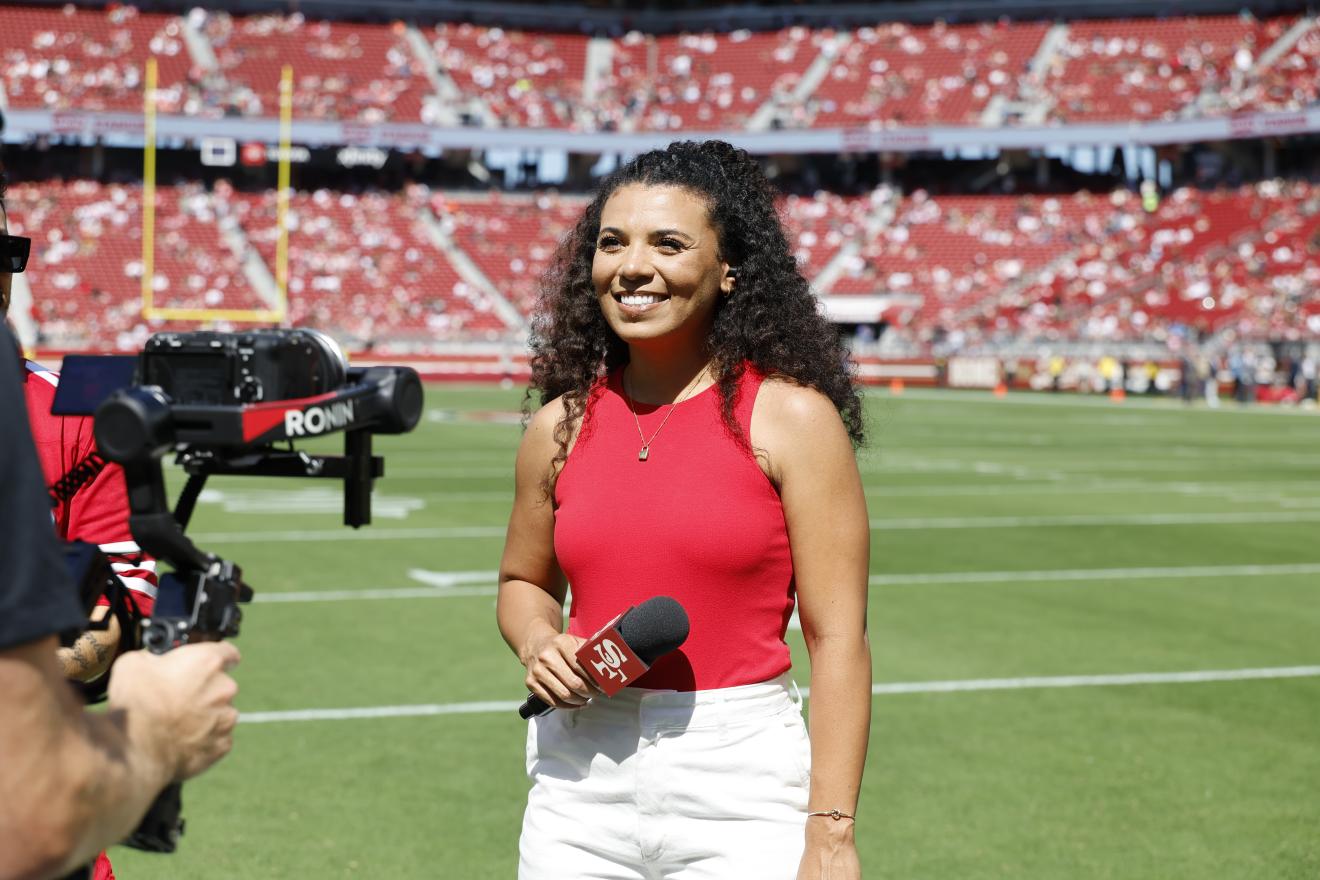
If you’ve been to a San Francisco 49ers home game in recent years, Aubrie Tolliver (SSU ‘16) is a familiar face. Sometimes described as “the voice of Levi’s Stadium,” since 2022 Tolliver has been the in-game host, leading fan contests, on-field promotions, and segments to entertain and inform the in-stadium audiences. Her objective: Engage and energize the crowd to gain home-field advantage for the 49ers.
Tolliver hails from Sunnyvale, California and went to Wilcox High School in Santa Clara, not far from today’s Levi’s Stadium. She comes from a family of 49ers superfans who have been season ticket holders for 50-plus years, making her current game-day role a natural fit. The video below shows Tolliver’s 49ers game-day routine.
Video file:
A self-described “travel ball softball kid,” Tolliver was drawn to Sonoma State by the opportunity to play at the collegiate level. She went on to captain the team as its catcher. While at Sonoma State, she also wrote for the Sonoma Star and developed a passion for sports journalism.
It was in one of her SSU Communication Studies classes, however, that she found her specific professional inspiration.
“I wanted to be Amy G,” Tolliver said, referring to Amy Gutierrez, the Emmy Award-winning producer and reporter well-known for her work covering the San Francisco Giants. “She came to speak to one of my classes, and I remember thinking, ‘She has exactly the job that I want.’”
Tolliver recalls staying after class to ask Gutierrez, now a lecturer at Sonoma State, what she might do after graduation in order to set herself on a similar path. The advice Gutierrez gave inspired Tolliver to apply to Syracuse University’sS.I. Newhouse School of Public Communications, where she got her Master of Science degree in broadcast and digital journalism.
Tolliver returned to the Bay Area after completing her master’s and went to work as a co-producer and co-anchor of the 49ers’ “Cal-Hi Sports,” a weekly hour-long broadcast covering high school sports across the Bay Area.
When she is not hyping Levi’s Stadium crowds, she can be found shooting, writing, producing, and editing news and feature stories about youth sports competitions, athletes, and their coaches. Over her eight-year tenure she has produced more than 500 stories for “Cal-Hi Sports.”
During the spring and summer – NFL offseason – does she have time to slow down? Not exactly.
Since 2024, Tolliver has also been a game-day host for the Oakland Ballers, the popular independent baseball team across the Bay that plays in the Pioneer League.
“It was really exciting to get involved in this way in the team’s first season, as it taps into my early love of baseball,” Tolliver said.
Learn more about Tolliver’s professional journey in sports broadcasting when she joins SSU alumni for an Industry Insights webinar on February 10.
On January 13, 2026 the Supreme Court will hear oral arguments in two cases—West Virginia v. B.P.J. and Little v. Hecox—about the freedom of transgender youth to participate in school sports and to learn the life lessons those sports teach. We know this topic can fuel heated debates and spark strong opinions.
That’s why talking about this can feel tricky—but the Lambda Legal Trans Youth in Sports Conversation Guide is here to help. Whether that’s with loved ones or coworkers, this guide gives ideas for how to answer hard questions, ask thoughtful questions in return, and use these moments to build connection rather than division.
Our advice: it’s not about finding the “perfect” thing to say. It’s about saying something that helps people see and celebrate trans youth for exactly who they are. These policies aren’t just about who gets to play soccer or run track—they’re about who belongs, and who gets left out. We won’t stop fighting until every transgender kid feels seen, celebrated, and loved for exactly who they are.
The City of Arkadelphia’s Parks and Recreation Department has adjusted the start of its winter youth basketball season by one week.
The season will now begin on January 17 instead of January 10 and will conclude on March 7.
This adjustment is due to team jerseys not yet arriving because of shipping delays related to the holiday season.
Parks and Recreation expects the season to begin as scheduled on Saturday, January 17. Any changes will be communicated through the City’s social media channels at @arkadelphiaar.
YOU MIGHT ALSO LIKE
Discover more from
Subscribe to get the latest posts sent to your email.