
Rec Sports
Youth Summit lacrosse tournament returns to Lake Placid | News, Sports, Jobs


A Heat Lacrosse Black player shields the ball away from a SOUL 2028 player during a Lake Placid Summit Youth Classic game on July 8. (News photo — Parker O’Brien)
LAKE PLACID — The annual Lake Placid Summit Youth Classic was held from July 7 to 9 at the North Elba Show Grounds.
The event, which originally began in 2016, featured boys lacrosse teams, aged 8 and under up to 16 and under, competing in five different divisions. There are about 46 teams this year, which is a bit higher than normal, according to event director Kevin Leveille.
“Usually we get up to around 46 and then we lose like four or so, but they’ve held it on, so it’s a good amount,” he said. “(There are) a couple of teams bigger than normal, but it fits right in here nicely, and we’ve got a good mix of teams.”
Leveille noted that some of the teams traveled from Canada, Connecticut, Massachusetts, Maryland and even New Jersey.
“Then a lot of upstate teams and some from Long Island,” he said. There are also a couple of North Country-based teams — The NoCo Ripperz and Tru North.
For Leveille, who has been in charge of this tournament since its inception, said it’s great to be in Lake Placid for lacrosse.
“You get north of, you know, Saratoga or Watertown, and you can just smell the difference in the Adirondack air,” he said. “And it’s kind of like your whole mentality changes, and I think that’s kind of how everybody feels coming up here.”
Leveille said that about half of these squads are new to this tournament, so a lot of people are getting to experience Lake Placid for the first time. He said, so far, the reception has been super positive, and people were excited to enjoy the town.
“I know people were at the beach yesterday, and that was really a good thing all around. I’ve heard of people going to Experience Outdoors, over to the Olympic sites and I think people were going to the flum today. So, people are hitting the spots. I’ve heard a lot about good food, the local restaurants and it’s nice to know half the people and then have new people here, essentially introduce to the area.”
Following the LPSYC, Summit Lacrosse will host the 36th Lake Placid Summit Classic from July 28 to Aug. 3.
The Summit Classic showcases two tournaments over the course of a week, starting with the scholastic tournament — consisting of youth, high school and college-age players — followed by the adult tournament, which includes a 65 and older age group.
The Summit Lacrosse Society hosted tournaments in Albany, Saratoga, Denver and in California earlier in the year.
For Leveille, whose father, George, founded the Summit Classic here in 1990, the tournaments here are special to him.
“It’s a different vibe; generally, tournaments are like over two days and you go sit in a field at a high school and there’s not much to do,” he said. “But because we’re over three days and people are on vacation, it’s not chewing up a weekend, people are just in a better mood. They’re making the most of like the time outside of the fields and kind of setting up and just having little hangouts with snacks during the day.”



The City of Watsonville, in partnership with Santa Cruz METRO and MidPen Housing, has been awarded a $39 million state grant to help build a new affordable housing and transit-centered development in downtown Watsonville.
The funding, awarded through the state’s Affordable Housing and Sustainable Communities (AHSC) Program, will support the Watsonville Metro Project, which will redevelop the Watsonville Transit Center at 475 Rodriguez St. into a multi-story, mixed-use development that combines housing, transit and commercial space.
The project was one of just 21 selected statewide in this funding round, and the only one on the Central Coast.
Plans for the site call for 79 new affordable housing units, with a mix of one-, two- and three-bedroom apartments, along with upgraded transit facilities, a new bike hub and bike lanes, ground-floor commercial space and an outdoor forecourt.
City officials said the redesigned site is intended to serve as a pedestrian-friendly, transit-connected hub that improves regional mobility while supporting nearby businesses.
“The AHSC award is a major investment in the future of our downtown and in the residents who rely on accessible, affordable housing and transportation,” said Assistant Community Development Director Justin Meek. “We are grateful for the collaboration with Santa Cruz METRO and MidPen Housing that made this competitive award possible.”
The project builds on the city’s 2023 Downtown Watsonville Specific Plan, which outlines a long-term vision for revitalizing the downtown core through new housing, mixed-use development and expanded commercial activity.
City staff said the Watsonville Metro Project aligns with the plan’s goals of creating a walkable, inclusive and active downtown.
The AHSC Program, administered by the California Strategic Growth Council, funds developments that aim to reduce greenhouse gas emissions by integrating affordable housing with public transit and active transportation infrastructure. Eligible projects are designed to reduce vehicle miles traveled while expanding access to transit, biking and walking.
Construction timelines and next steps for the project have not yet been announced.

Prior to Brøndby, Che played for FC Dallas in MLS from 2020 to 2023. Che joined FC Dallas in 2020 as a homegrown, and during that season he played with North Texas SC, Dallas’s USL League One affiliate. He made 16 appearances for North Texas, where he tallied one assist and earned USL League One All-League honors. The defender went on loan with Bayern Munich II in 2021, where he made eight appearances and returned to FC Dallas on June 15, 2021. He then made 15 appearances for FC Dallas, where he tallied three assists for the club. Che recorded his first career MLS assist in a 4-0 win over Los Angeles Galaxy on July 24, 2021. He then went on loan to TSG Hoffenheim in 2022, where he made two appearances for their first team and also featured for TSG Hoffenheim II, where he made 24 appearances and recorded one goal and one assist.
The Richardson, Texas native has represented the United States at the youth national team level, which includes appearances with the U-16’s and U-20’s. Che made 10 appearances for the U-20’s. He participated in the 2023 U-20 World Cup, where he helped the U.S. reach the quarterfinals and scored a goal in their Round of 16 win against New Zealand U-20’s.

PHOENIX — An Arizona lawmaker wants to let students who use ESAs compete alongside their public school peers in sports and other interscholastic activities if they pay their share.
Republican state Sen. John Kavanagh introduced SB 1004 as a way to expand opportunities students who receive ESA (Empowerment Scholarship Account) school vouchers.
“I believe that extracurricular activities, be it the chess club or the football team, are an important part of student development and learning. And I don’t think that students should be excluded from public educational opportunities just because they’re on an ESA,” he said.
Why can’t ESA students participate in public school sports?
The ESA program lets families use taxpayer education dollars for alternative learning options such as private school tuition or homeschooling supplies.
Currently, students outside the public school system who don’t receive ESA funding are allowed to participate in interscholastic activities if their school does not offer the programs. But the same does not apply to ESA students because of funding concerns.
All households pay taxes that fund local school districts, and therefore fund sports programs. But when a parent receives those tax dollars back through the ESA program, they are no longer paying for the activities.
The solution to this, according to Kavanagh’s proposal, is for ESA parents to pay for their share of the activities.
“Under this version the bill, the student could still be charged whatever fee the district students have to pay for the activity. And in addition, the parent would have to pay that share of the parent’s ESA amount that is equal to … the amount the school pays for the program as a percentage of their total revenue.”
Additionally, ESA students would have to prove they are meeting the educational standards for public school athletes, including submitting their class grades.
Kavanagh introduced a similar bill last year, but it did not pass. He said he added details about parents paying schools for the sports programs, which he hopes will push it through.
He believes those who oppose his plan see private schools and homeschooling as a threat to public schools.
“I think a lot of opponents of school choice, meaning people getting vouchers or just not sending their kids without a voucher to a private school or homeschooling, believe that that’s competition for district schools, and they don’t want to help the competition,” he said.
Mesa ESA family having hard time finding opportunities for son
Sara Johnson, a mom of three kids using ESAs in Mesa, said that one of her children is interested in participating in some programs at Westwood High School.
“Our son would like to participate in marching band and potentially basketball. So, we have a call into them, but they haven’t returned it yet about what that looks like to get him registered,” she said.
Johnson went on to explain there are enrichment programs through the Mesa Public Schools that offer elective classes, but once students reach high school it becomes harder to find those opportunities.
“We have seen a collapse of intermural sports for kids over the age of 13, especially if they are not wanting to participate in sports in a way that has a goal of college scholarship,” she said, explaining that groups like Little League end at high school.
Johnson said she would be interested in paying so her son could play if Kavanagh’s bill passes.
Rural students have few options outside public school sports
Another Arizona mom in the Eagar area said her three children would like to participate in interscholastic activities, with little to no other sports options in in rural communities like hers.
The woman, who prefers to remain anonymous, wrote a letter to the local school board earlier this year requesting that the ESA contract be counted as an affidavit to allow her kids to play.
“Opening school sports programs to homeschooled ESA students would not only provide these students with opportunities, but could also allow the district to charge fees for sports participation, generating additional income that could be utilized to support the district’s sports programs, which often face significant funding challenges,” she wrote in the letter.
Funding for this journalism is made possible by the Arizona Local News Foundation.


Today, the Subcommittee on Early Childhood, Elementary, and Secondary Education held a hearing to examine this crisis.

Subcommittee Chairman Kevin Kiley (R-CA) started the hearing by highlighting the economic and health costs of lower youth sports participation.
“Inactive youth feel negatively about themselves at nearly double the rate of youth who are active. The broader consequences of declining participation are stark. Today, one in three youth ages 10 to 17 are overweight or obese. Medical expenses associated with obesity alone cost taxpayers $173 billion a year, with lifetime costs for today’s obese youth projected to exceed a trillion dollars,” he said.

Witnesses discussed how hyper-commercialization of youth sports has lowered participation for children across all income levels—preventing children from learning critical life skills like perseverance, discipline, and teamwork.
“In many middle and upper middle-income communities, children are pushed to specialize far too early. They play too many refereed games at ages when they’re taught that outcomes matter more than athletic development or learning…I can tell you we are losing an entire population of children who simply need time to catch up physically with their peers. The other world looks very different. In many low-income communities, children have almost no access to sports at all…Cost, transportation, and the absence of neighborhood based opportunities stand in the way,” explained Mr. Steve Boyle, Co-Founder & Executive Director of 2-4-1 Sports.

Rep. James Moylan (R-GU) discussed with witnesses the long-term benefits of youth sports. “Physically active kids are one tenth less likely to be obese, they are more likely to stay in school…more likely to be active parents and more likely to have active kids,” said Mr. Tom Farrey, Executive Director of the Sports & Society Program at the Aspen Institute. “So, this incredibly virtuous cycle can be unlocked if we can simply get kids off the couch without running them into the ground through overuse injuries,” he concluded.
Good coaching is also a key ingredient to increasing youth sports participation. Rep. Burgess Owens (R-UT) asked Mr. John O’Sullivan, Chief Executive Officer at the Changing the Game Project, about programs that connect veterans with youth sports coaching jobs. “We know that when we have trained coaches, kids stay in sports longer…[there are non-profits that] are taking these men and women who have served our country and that we have spent millions of dollars training on leadership, discipline, and physical fitness…and [training them to] become a coach [so they] can give back to [local communities and] all those kids,” Mr. O’Sullivan explained.

Bottom line: Committee Republicans are shining a national spotlight on youth sports, the critical role they play in America’s future, and how increasing participation can save billions in health care costs and improve millions of lives.
Carleen Wild, Enterprise staff
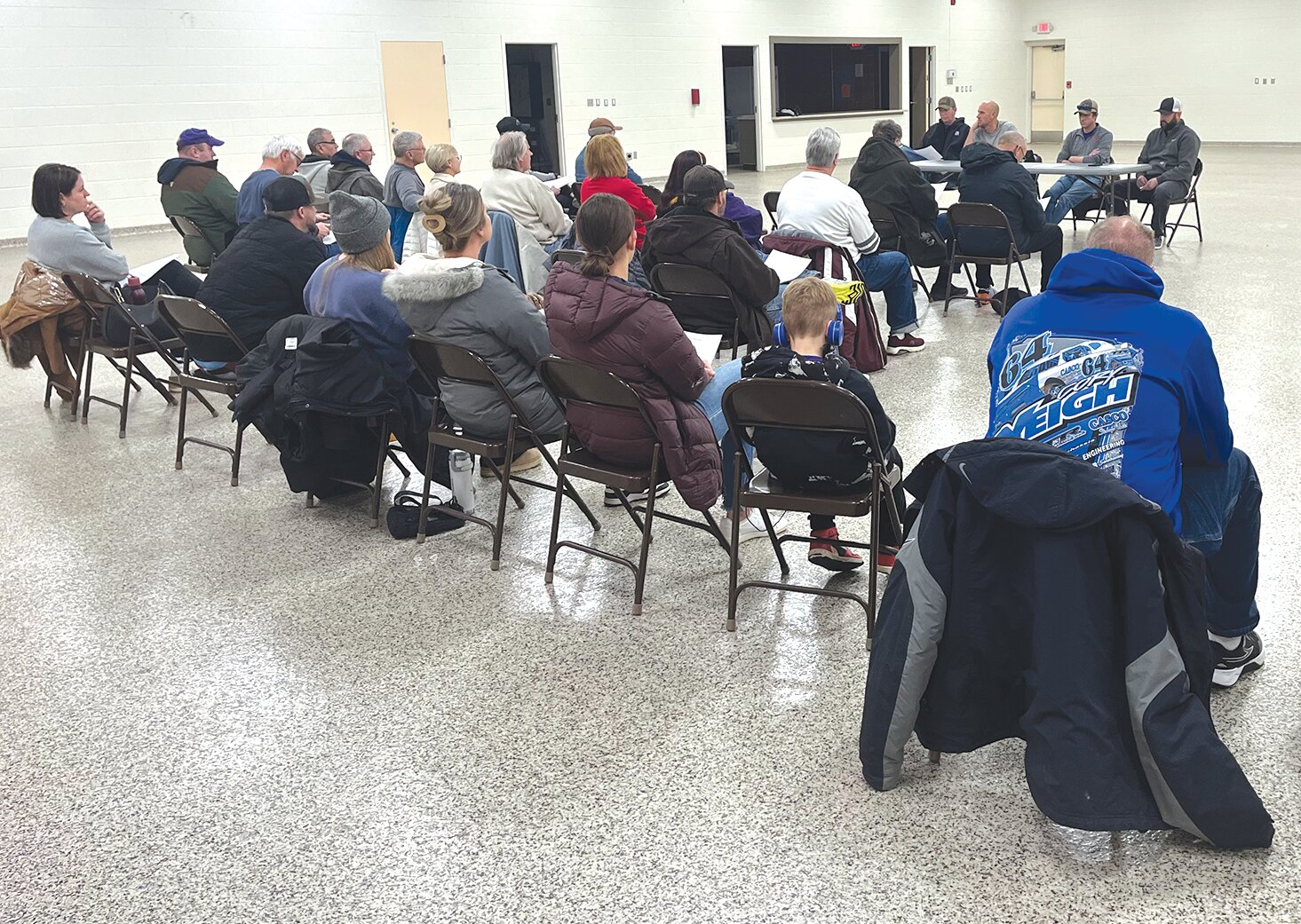
The crowd wasn’t quite as big as organizers had hoped for this past Sunday night. They know there are plenty of young families eager for updates on The Warehouse — especially those already wondering when the new indoor rec facility might open and how soon they can start scheduling turf time for baseball and softball teams.
But a full weekend of tournaments, holiday programs, and winter travel likely had most parents simply trying to catch their breath before another big week, plus the cold weather added into the mix.
What was interesting — was who did show up.
Rather than the youth-sports crowd, most of those in attendance this past Sunday evening were older adults — community members who’ve been craving a place close to home where they can work out year-round. Tad and Kathy Jacobs were among those seated in the front row, asking about potential programming for older adults and how they might access the new gym and weight room.
Marc Burggraff, Bret Severtson, Eric Beltman, and Chris Wiese walked through construction updates, anticipated timelines, volunteer efforts, and the funding still needed to complete the large-scale, volunteer-driven facility.
How access will likely work: Organizers said they are leaning toward an app-based system used by several other neighboring community-style gyms. The app would handle scheduling, payments, and serve as a digital key card.
The phone just needs to be within a foot or two of the door, Severtson explained — something that works well because most people carry their phones everywhere anyway.
Construction is running about a month to six weeks behind schedule. Organizers had hoped for a March or April opening, but early May may now be more realistic. That timing may actually help, they said, giving the team a little breathing room to work out inevitable start-up kinks before heavy demand hits.
Walls for the fitness center are expected to go up this week, one of the elements drawing the most excitement from locals who’ve been driving to neighboring communities for gym access.
“The thing that most excites me is I literally think there will be a benefit for a five year old and a 95-year-old in there and everywhere in-between. I think that’s the biggest positive…” Severtson said.
At roughly $650,000 raised so far in both financial and in-kind donations, organizers said they’ve secured many positive commitments — with more meetings planned, including discussions around potential naming rights for certain areas of the building.
They estimate the full turnkey figure — equipment, flooring, basketball hoops, batting cages, and all interior components — at about $900,000.
“That’s quite a bit more than we’ve had on it the entire time. We were asked if that included our interior equipment and everything else and yes, that would be a turnkey figure. It has all of your equipment, flooring, basketball hoops, cages, and everything else inside. Just that we had to get engineers and architects involved due to our square footage. That’s where our price kind of got elevated over these last couple of months.”
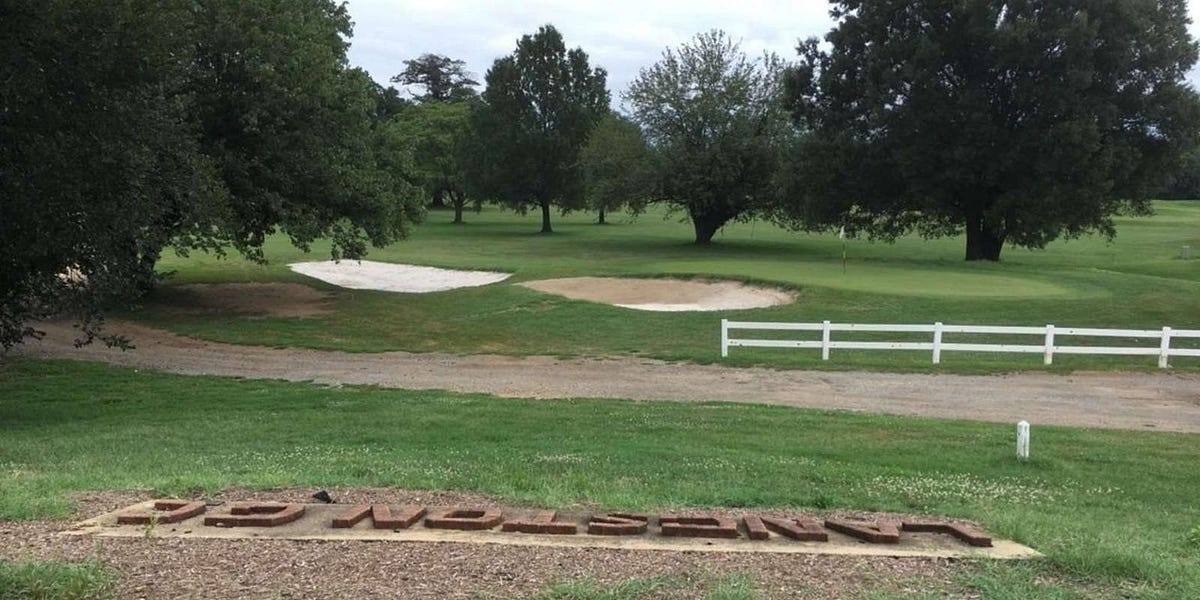
Imagine as the sun rises higher, you know it is almost time. You head to the putting green and sink a few practice putts, listening to the quiet rhythm of the golf course waking up. When it is time to start your round, you pick up your clubs and walk to the first hole, your club heads softly clanking with each step. Dry leaves crunch under your feet. You finally reach the tee box and take in the course waiting for you, trees decorated in orange, red, yellow, and brown, contrasting with the bright-green fairway. You tee up your ball, take a breath, and hit one of the purest shots you have hit in a while. You put your club away and begin the long walk forward, surrounded by a peaceful, comfortable, and calming environment.
This is how I feel every time I play golf. This is my happy place.
What makes this moment meaningful is not just the game itself, it is where I play. I grew up playing golf on public courses in Washington, D.C., operated by the National Links Trust. These courses were my introduction to a sport that has long been seen as exclusive, elite, and overwhelmingly white. Here, I learned my first swing, played my first full round, and began to understand that golf could belong to people like me, too—Black players, young players, and players without generational access or private club memberships.

That is why Donald Trump’s recent efforts to take control of the public golf courses in D.C.—East Potomac, Langston and Rock Creek golf courses—feel so personal. This is not just a fight over land management or branding. It is about power, access, and who gets to claim ownership of a sport that is struggling to outgrow its deeply racialized past. Under an administration widely criticized for its hostility toward Black communities, diversity initiatives, and public institutions, the attempt to wrest control from the National Links Trust, an organization dedicated to accessibility and inclusion, is alarming. These courses are not just fairways and greens, they are rare entry points into a sport that has historically shut people like me out.
Trump’s political record makes it even worse. His administration’s policies and rhetoric disproportionately harm Black communities, whether through the rollback of civil rights protections, open hostility toward diversity initiatives, or framing public resources as commodities to be privatized rather than preserved for the communities they serve. When viewed through that lens, the attempt to take over these public golf courses feel less like a neutral administrative decision and more like part of a familiar pattern, stripping control from institutions that prioritize access and placing it in the hands of private interests aligned with wealth, exclusivity, and power.
The National Links Trust nonprofit was created in 2019 to protect public golf courses and ensure that they remain affordable, accessible, and rooted in the local community. It holds a 50-year lease signed in 2020 with the National Park Service to manage the courses. In Washington, D.C., where Black residents have historically fought to maintain control over public spaces during gentrification and political disenfranchisement, that mission matters. These courses are not just recreational facilities, they are community anchors. They provide young people with exposure to a sport that serves as a gateway to scholarships, careers, and professional networks, opportunities that Black golfers have long been denied.
The courses in D.C. had been managed by the National Park Service (NPS) not as commercial spaces but as places meant to serve the community while honoring their historical significance. Langston, founded in 1939, was created specifically to provide Black golfers access to the game when they were banned from white-only courses throughout the city. That made federal oversight especially important. National Links is specifically equipped to manage golf while maintaining that same public mission.
Because golf’s history in this country can’t be separated from race, Trump alleged intent to prioritize private interests over public access is especially concerning. For decades, Black players were explicitly banned from courses, tournaments, and professional organizations. Even after formal barriers were removed, the cost of entry, equipment, lessons, and private memberships kept the sport inaccessible. Public courses became rare spaces where Black golfers could learn, play, and belong without facing the same financial and cultural exclusion. I am a product of that access. Without these courses, I likely would not have found my way into the sport at all.
That is why the prospect of these courses being taken over by an administration that has shown little regard for racial equity feels so threatening. It suggests a future in which public land becomes a branding opportunity, profit and power outweigh community impact, and inclusion is treated as optional rather than essential. When leadership consistently dismisses conversations about systemic racism, it becomes difficult to trust that decisions about public spaces, especially those with meaning for Black communities, will be made with fairness or care.
There is also a symbolic weight to this moment. Golf is in the middle of a slow, ongoing effort to shed its “white man’s sport” image. Professional tours have invested in diversity programs, youth outreach, and public-private partnerships designed to increase participation. Taking public courses from an organization that actively supports those goals sends the opposite message. It reinforces the idea that golf’s progress is fragile, conditional, and easily reversed when power shifts.
For me, this issue is not hard. It is about preserving the spaces where I learned confidence, discipline, and patience, where I discovered that I belonged in a sport that never seemed designed for people who look like me. Losing these courses or seeing them transformed into something unrecognizable would be closing a door that generations before me struggled to pry open.
My dad signed me up for First Tee classes. Early one Saturday morning, we drove to Langston Golf Course. I walked onto the course with my First Tee class, holding a second-hand but very real putter, and hit my first real golf ball on a real course.
I remember telling my dad after that class that I loved it and could not wait to go back the next week. The rest was history.
Every time I returned to Langston or East Potomac, I was met with smiles, greetings, and conversations that never made me feel out of place as a young, Black, amateur golfer. I was welcomed. I was encouraged. I was seen. Those moments mattered more than I realized at the time. They taught me that golf could be a space where I belonged, where I was supported, and where my presence was not an exception.
That is what is at stake now. These courses are not just patches of green in the nation’s capital, they are entry points, lifelines, and sanctuaries for metropolitan youth who might never otherwise see themselves reflected in this sport. To allow an administration with a documented disregard for racial equity to threaten that access is to risk undoing years of quiet progress. It is to tell young Black golfers that their place in this game is conditional.
Golf cannot claim to be evolving while the spaces that foster inclusion are stripped of their purpose. I am here because Langston and East Potomac existed as public, welcoming courses, because organizations like the National Links Trust believe that golf should belong to everyone. No child should be denied the chance to fall in love with this game. For me, golf began on public land, with borrowed clubs and open arms. That experience shaped who I am. Protecting these courses means protecting the possibility that the next young Black golfer will step onto the tee box, feel that same sense of belonging, and know without question that this game is for them, too.

Chase Elliott scheme with NASCAR backer undergoes big change – Motorsport – Sports

Watsonville awarded $39 million grant for new METRO transit center | The Pajaronian
A year in, Kristen Kelsay believes in the direction of MSU volleyball

Red Bull New York Completes Transfer of Defender Justin Che from Brøndby IF

NE10 Men’s Indoor Track & Field Report: Week 2

Prime Video Returns to Chase Elliott For Three-Race Sponsorship in 2026

Should ESAs prevent kids from playing public school sports?
Volleyball Has Four CSC Academic All-District Selections

Ex-Crankbrothers CEO leads group to acquire suspension company EXT

Hearing Recap: “Benched: The Crisis in American Youth Sports and Its Cost to Our Future”

NASCAR Cup Series star has simple response to nepotism claims he faces – Motorsport – Sports

Young People Are Driving a Surge in Triathlon Sign-Ups

Ohio State QB Julian Sayin makes NIL announcement before College Football Playoff

Warehouse update draws unexpected audience

Volleyball Adds Ocampo to 2026 Roster

First Tee Winter Registration is open

Fargo girl, 13, dies after collapsing during school basketball game – Grand Forks Herald

CPG Brands Like Allegra Are Betting on F1 for the First Time

F1 Las Vegas: Verstappen win, Norris and Piastri DQ tighten 2025 title fight

Volleyball Recaps – November 18

Two Pro Volleyball Leagues Serve Up Plans for Minnesota Teams

Utah State Announces 2025-26 Indoor Track & Field Schedule

Sycamores unveil 2026 track and field schedule

Redemption Means First Pro Stock World Championship for Dallas Glenn

Texas volleyball vs Kentucky game score: Live SEC tournament updates

Jo Shimoda Undergoes Back Surgery

Bowl Projections: ESPN predicts 12-team College Football Playoff bracket, full bowl slate after Week 14

How this startup (and a KC sports icon) turned young players into card-carrying legends overnight

SoundGear Named Entitlement Sponsor of Spears CARS Tour Southwest Opener

Robert “Bobby” Lewis Hardin, 56

 NBA Legend Michael Jordan to Join NBC Sports as Special Contributor
 Why a rising mid-major power with an NCAA Tournament team opted out of revenue-sharing — and advertised it
 Falcons mailbag
 Portal Update – Basketball and Gymnastics Take Hits
 has always dreamed in Mercurial. Now his initials are on the boots.
The new Kyl…
has always dreamed in Mercurial. Now his initials are on the boots.
The new Kyl…
-
 Rec Sports3 weeks ago
Fargo girl, 13, dies after collapsing during school basketball game – Grand Forks Herald
-
 Motorsports3 weeks ago
Redemption Means First Pro Stock World Championship for Dallas Glenn
-
 Motorsports2 weeks ago
Jo Shimoda Undergoes Back Surgery
-
 NIL2 weeks ago
Bowl Projections: ESPN predicts 12-team College Football Playoff bracket, full bowl slate after Week 14
-
 Rec Sports3 weeks ago
How this startup (and a KC sports icon) turned young players into card-carrying legends overnight
-
 Motorsports6 days ago
SoundGear Named Entitlement Sponsor of Spears CARS Tour Southwest Opener
-
 Rec Sports2 weeks ago
Robert “Bobby” Lewis Hardin, 56
-

 NIL3 weeks ago
Indiana’s rapid ascent and its impact across college football
-

 Motorsports3 weeks ago
Pohlman admits ‘there might be some spats’ as he pushes to get Kyle Busch winning again
-
Sports2 weeks ago
Wisconsin volleyball sweeps Minnesota with ease in ranked rivalry win