
Sports
2025 MLB Farm System Midseason Talent Rankings



Now that the trade deadline is complete and we’ve updated our Top 100 Prospects list as well as each and every team’s Top 30 Prospects rankings, we’re now also taking a look at how farm system talent compares for all 30 MLB organizations.
It is important to note that these rankings represent a snapshot in time. The Brewers rank No. 1, but if Jacob Misiorowski had graduated by now, they would likely slide a couple of spots. The Red Sox, who checked in at No. 1 entering this season, have slid down because Roman Anthony and others have graduated.
Our farm system rankings are weighted toward top-tier prospects. A player like Brewers shortstop Jesús Made, for example, is worth significantly more in a trade than a bundle of five prospects from the very back of the Top 100. While depth can vary dramatically team to team, once you get a tier or two removed from the Top 100 rankings, studies have shown those caliber players matters less in determining how an organization will produce long term (or be able to trade to acquire MLB talent) than elite prospects.
Below, you can find our complete midseason farm system rankings featuring Top 100 prospects, strengths and weaknesses for all 30 organizations.
1. Milwaukee Brewers
Top 100 Prospects (6): No. 3 Jesús Made, SS; No. 4 Jacob Misiorowski, RHP; No. 16 Luis Peña, 2B; No. 47 Cooper Pratt, SS; No. 69 Jeferson Quero, C; No. 97 Logan Henderson, RHP
System Summary: Just having two of the top five prospects in baseball and another top 20 prospect would have put the Brewers in the top five. Three more Top 100 Prospects pushes them into the top spot.
System Strengths: Infielders. Made is one of the game’s best prospects, and Peña is right there with him. Pratt, Luke Adams, Andrew Fischer, Brady Ebel and Brock Wilken are all worth watching, as well.
System Weaknesses: Power. The Brewers’ farm system, like the big league club, is focused more on athletic, defensively versatile position players than hulking sluggers. Fischer’s addition in the draft helps add some pop, though.
2. Pittsburgh Pirates
Top 100 Prospects (4): No. 1 Konnor Griffin, SS; No. 15 Bubba Chandler, RHP; No. 27 Seth Hernandez, RHP; No. 98 Edward Florentino, OF
System Summary: There may be hitting help on the way, with Konnor Griffin edging towards a late-2026 ETA.
System Strengths: Power pitching. The Pirates have had successes and setbacks among their pitching prospects this year, but few teams can boast a top tier to compete with the Chandler/Hernandez combo.
System Weaknesses: Home-grown hitting. As encouraging as Griffin and Florentino’s developments have been, the system still has a lot of position prospects who seem destined to struggle to be everyday players.
3. Detroit Tigers
Top 100 Prospects (5): No. 2 Kevin McGonigle, SS; No. 9 Max Clark, OF; No. 25 Bryce Rainer, SS; No. 54 Josue Briceño, C; No. 71 Thayron Liranzo, C
System Summary: If the top of the system is this good, who needs depth?
System Strengths: Sweet-swinging hitters. McGonigle is one of the game’s best hitting prospects, and Clark and Briceno aren’t too far behind him. Briceño has had an excellent season, as well, and Max Anderson has provided a bounce-back year behind them.
System Weaknesses: Healthy arms. The recently-graduated Jackson Jobe, Ty Madden, Jaden Hamm, Tyler Owens, Owen Hall, Ethan Schiefelbein and Michael Massey are among the pitchers who have been sidelined at times this year.
4. Minnesota Twins
Top 100 Prospects (5): No. 12 Walker Jenkins, OF; No. 29 Luke Keaschall, 2B; No. 49 Emmanuel Rodriguez, OF; No. 52 Eduardo Tait, C; No. 80 Kaelen Culpepper, SS
System Summary: Deadline trades provided a big boost to what was already a very solid system.
System Strengths: Up-the-middle bats. The addition of Tait filled a need at catcher for a system that has Keaschall in the majors, Rodriguez in Triple-A and Jenkins and Culpepper at Double-A. All of these prospects can play an up-the-middle position, even if Jenkins most likely will move to right field in the long term.
System Weaknesses: Catching. Tait carries question marks about whether he can stay behind the plate long term. Eduardo Jimenez is far away, and Khadim Diaw’s season has been hindered by injuries. There’s no obvious internal answer to fill the spot likely to come open when Christian Vazquez hits free agency this offseason.
5. Boston Red Sox
Top 100 Prospects (5): No. 10 Marcelo Mayer, SS; No. 41 Payton Tolle, LHP; No. 51 Franklin Arias, SS; No. 65 Kyson Witherspoon, RHP; No. 79 Jhostynxon Garcia, OF
System Summary: Even after plenty of graduations, this remains an enviable farm system.
System Strengths: Power pitching. Tolle, Witherspoon, Connelly Early, Brandon Clarke, Luis Perales, David Sandlin are among a seemingly endless array of hard-throwing pitchers who can miss bats.
System Weaknesses: Upper-level bats. Mayer technically remains a prospect, but he’s a big leaguer on the injured list. Jhostynxon Garcia is close to being MLB-ready, but after graduating Roman Anthony, Kristian Campbell and Carlos Narvaez, the system is understandably not as full of big league hitters.
6. Seattle Mariners
Top 100 Prospects (8): No. 13 Colt Emerson, SS; No. 32 Kade Anderson, LHP; No. 37 Lazaro Montes, OF; No. 38 Jonny Farmelo, OF; No. 59 Michael Arroyo, 2B; No. 67 Ryan Sloan, RHP; No. 77 Harry Ford, C; No. 92 Jurrangelo Cijntje, LHP/RHP
System Summary: This is one of the best top 10s in the game, but don’t ask about the back half of the Top 30.
System Strengths: Seattle is a respected pitching factory, yes, but bats like Emerson, Montes, Farmelo and Ford have helped balance what is the most extensive crop of Top 100 talent in the game.
System Weaknesses: Depth. The trades to bring in Eugenio Suarez and Josh Naylor have erased what was already a thin second-tier of prospects.
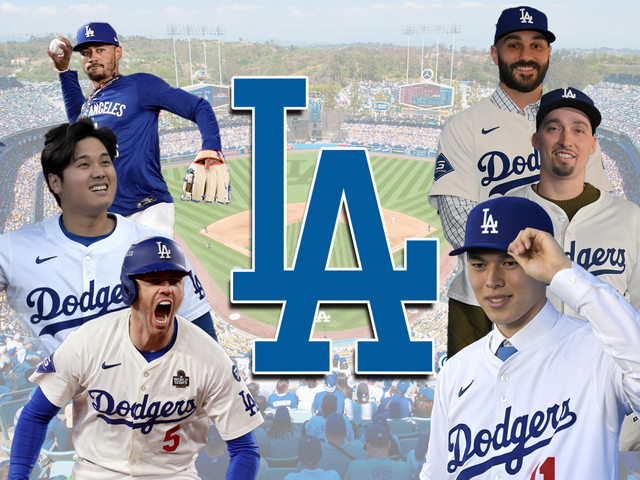
7. Los Angeles Dodgers
Top 100 Prospects (7): No. 18 Dalton Rushing, C; No. 19 Josue De Paula, OF; No. 22 Zyhir Hope, OF; No. 36 Roki Sasaki, RHP; No. 47 Mike Sirota, OF; No. 55 Alex Freeland, SS; No. 58 Eduardo Quintero, OF
System Summary: A group of high-upside outfielders leads a system that is still among baseball’s top tier.
System Strengths: Although Josue De Paula and Mike Sirota are both on the injured list, the Dodgers’ system is still rich in outfield prospects. Beyond the two on the IL, the team also boasts Top 100 prospects Zyhir Hope and Eduardo Quintero along with Ching-Hsien Ko.
System Weaknesses: Los Angeles’ pitching is a little bit light at the moment. Patrick Copen has been a system highlight, and they just imported talented lefty Adam Serwinowski, but some of their other arms have been ineffective or injured for most of the year.
8. Athletics
Top 100 Prospects (3): No. 6 Leo De Vries, SS; No. 60 Gage Jump, LHP; No. 61 Jamie Arnold, LHP
System Summary: A solid system gets a big boost from a deadline deal.
System Strengths: Pitching. Five of the team’s top six prospects are pitchers. And while Jack Perkins, Luis Morales and Braden Nett aren’t currently Top 100 Prospects, they are viewed in the same tier as the back of the Top 100.
System Weaknesses: MLB-ready hitters. The A’s have seen Jack Wilson and Nick Kurtz blossom as rookies, and Lawrence Butler was the game’s best defensive center fielder from his first game on the field. There’s no shame in not having another wave right behind them, but the team seems more likely to push pitchers to the majors than hitters over the next year.
9. New York Mets
Top 100 Prospects (5): No. 33 Carson Benge, OF; No. 40 Nolan McLean, RHP; No. 43 Jonah Tong, RHP; No. 53 Jett Williams, SS; No. 99 Brandon Sproat, RHP
System Summary: Despite deadline deals of Jesus Baez, Blade Tidwell and other Top 30 Prospects, the top of Mets’ system remains largely intact, including its top five overall.
System Strengths: Proximity. The Mets’ top five prospects—Carson Benge, Nolan McLean, Jonah Tong, Jett Williams and Brandon Sproat—all play at Triple-A, while the system’s top 12 prospects all play at Double-A or higher.
System Weaknesses: The Mets have prospects ranked in the 30s and 40s on the Top 100 but none at the absolute top tier. They traded seven Top 30 Prospects at the deadline, and the 2025 draft class will have to over-perform expectations to help fill the void. New York had the second-lowest draft bonus pool this year.
10. Cincinnati Reds
Top 100 Prospects (4): No. 8 Chase Burns, RHP; No. 62 Alfredo Duno, C; No. 70 Rhett Lowder, RHP; No. 87 Sal Stewart, 3B
System Summary: While unpopular with many Reds fans at the time, the pick of Chase Burns looks like an excellent one.
System Strengths: This is a well-rounded system with potential big leaguers at almost every spot. Duno is the system’s catcher of the future, while Sal Stewart and Cam Collier give the team corner infielders. Tyson Lewis, Steele Hall and Edwin Arroyo are useful middle infield prospects, and outfielder Hector Rodriguez keeps hitting at every stop through the minors. Burns, Rhett Lowder and Chase Petty are starting pitchers with MLB experience and Luis Mey and Zach Maxwell are intriguing power relievers.
System Weaknesses: Power-hitting outfielders. The Reds haven’t been able to find a corner outfielder who can fill a dire need, and Rece Hinds’ strikeout issues may keep him from filling that role.
11. Baltimore Orioles
Top 100 Prospects (4): No. 7 Samuel Basallo, C; No. 81 Nate George, OF; No. 83 Dylan Beavers, OF; No. 95 Esteban Mejia, RHP
System Summary: There have actually been some positive developments for the Orioles this year, and that’s true even without focusing on the 2025 draft.
System Strengths: Depth. Trades at the deadline plus a massive draft haul has revitalized a system that was thinning out. Baltimore have a number of intriguing back-of-the-rotation/relief pitching prospects, and the system is now deep in catching prospects.
System Weaknesses: Front-of-rotation pitching. Chayce McDermott’s control struggles wiped out the team’s best chance for an MLB-ready power arm. That now shifts to Esteban Mejia, but he’s far away and carries plenty of risk thanks to his long arm action.
12. Arizona Diamondbacks
Top 100 Prospects (3): No. 17 Jordan Lawlar, SS; No. 90 Kayson Cunningham, SS; No. 100 Slade Caldwell, OF
System Summary: Is this a rebuild or a reload?
System Strengths: Infield prospects. Lawlar can’t seem to stay healthy long enough to graduate, but between him, Cunningham, the injured Demetrio Crisantes, Gino Groover, Tyler Locklear and Tommy Troy, the D-backs have a number of hitters who can play in the dirt.
System Weaknesses: Pitching. Christian Mena is the only pitcher in the D-backs’ top 10. Even after acquiring Kohl Drake, Mitch Bratt, David Hagamann and Ashton Izzi, this is a system with few starting pitching prospects.
13. Miami Marlins
Top 100 Prospects (4): No. 21 Thomas White, LHP; No. 32 Aiva Arquette, SS; No. 42 Robby Snelling, LHP; No. 45 Joe Mack, C
System Summary: This system is now impressively deep.
System Strengths: The Marlins’ “quantity over top-end quality” approach last year at the trade deadline brought much-needed competition and talent all across the farm system, while its recent international signing classes are showing early promise. Now, a young group of prospects in the lowest-levels of the minors could blossom in 2026 and 2027.
System Weaknesses: This is not a team that has produced many big bats since the heyday of Giancarlo Stanton/Christian Yelich/Marcel Ozuna. Arquette could change that, but this is a team with more athleticism and defense than future batting or home run champs.
14. St. Louis Cardinals
Top 100 Prospects (2): No. 5 JJ Wetherholt, SS; No. 65 Liam Doyle, LHP
System Summary: High-end talent up top with plenty of depth to follow.
System Strengths: Lefthanded pitching is a clear strength for the Cardinals as they have seven lefthanded pitchers ranked within their Top 30. A year after the emergence of Quinn Mathews, the Cardinals landed Liam Doyle with the fifth-overall pick in this year’s draft, giving them a strong foundation at the top of the depth chart. Beyond their stash of lefties, the organization has good depth throughout their positional ranks with a deep group of catchers and outfielders.
System Weaknesses: There’s a lack of righthanded pitching with starter traits, accentuated by Tink Hence and Tekoah Roby’s continued health woes. It’s a group that has dealt with injuries, and the Cardinals made a point to find reinforcements in the draft (Tanner Franklin) and trade market (Nate Dohm and Frank Elissalt).
15. Cleveland Guardians
Top 100 Prospects (4): No. 26 Travis Bazzana, 2B; No. 46 Angel Genao, SS; No. 48 Chase DeLauter, OF; No. 51 C.J. Kayfus, 1B
System Summary: The bats are here, but where are the starting pitchers the Guardians used to churn out year after year?
System Strengths: This team always has hitters who can make a pitcher mad with their ability to grind out at-bats and make contact. It’s still true.
System Weaknesses: Health. Bazzana’s back after missing multiple months, but DeLauter’s rise to the majors has been slowed by injuries. Jaison Chourio’s shoulder injury slowed him this year, and Daniel Espino is in danger of becoming an answer to the question of “Who was the best pitching prospects to never reach the majors because of injuries?”
16. San Francisco Giants
Top 100 Prospects (3): No. 20 Bryce Eldridge, 1B; No. 85 Josuar Gonzalez, SS; No. 88 Bo Davidson, OF
System Summary: The Giants have a big bopper at the top buttressed by a strong group of high-upside players who dominated at the lowest levels of the minor leagues.
System Strengths: While some of their former top prospects have run into struggles in the big leagues, a new wave is on the way. Shortstop Jhonny Level was the best player in the Arizona Complex League, and a handful of pitchers from Low-A on down have jolted life into the system.
System Weaknesses: It’s gotten a little bit better after the trade deadline, but the upper levels of the system are a bit thin beyond Eldridge and Davidson. If position players like Level, Gavin Kilen, Dakota Jordan and pitchers Argenis Cayama, Keyner Martinez and Luis De La Torre take the next steps in the coming years, this system could jump by leaps and bounds.
17. New York Yankees
Top 100 Prospects (3): No. 23 George Lombard Jr., SS; No. 93 Cam Schlittler, RHP; No. 94 Spencer Jones, OF
System Summary: George Lombard Jr. and a group of high-impact pitchers at the top heads a system that has thinned dramatically after a trade deadline saw the big league team go for broke.
System Strengths: The vast majority of New York’s best arms are clustered at the upper levels, putting them on the precipice of contributing in the big leagues. The list includes players acquired from the draft (Ben Hess), via trade (Elmer Rodriguez-Cruz) and through the international market (Carlos Lagrange).
System Weaknesses: Depth. The trade deadline saw the Yankees lose 10 players from their Top 30, as well as a few others who were on the fringe. Understandably, those moves left the system thinner than it’s been in many years.
18. Chicago White Sox
Top 100 Prospects (5): No. 30 Noah Schultz, LHP; No. 35 Kyle Teel, C; No. 74 Caleb Bonemer, SS; No. 78 Billy Carlson, SS; No. 82 Braden Montgomery, OF
System Summary: A couple of setbacks, but also a couple of steps forward.
System Strengths: Shortstops. Colson Montgomery has righted the ship and is hitting for power in the majors. Caleb Bonemer looks like a potential future top 50 prospect, and Billy Carlson was a very nice addition in the draft. The White Sox also added Kyle Lodise as a potential fast-moving middle infielder.
System Weaknesses: Pitching control. Noah Schultz, Hagen Smith, Winkelman Gonzalez and Jairo Iriarte all fit into a group of promising White Sox pitchers who need to find the strike zone more consistently.
19. Philadelphia Phillies
Top 100 Prospects (3): No. 14 Andrew Painter, RHP; No. 39 Aidan Miller, SS; No. 86 Justin Crawford, OF
System Summary: Despite dealing from the system’s upper tier, the Phillies still have a few jewels left in reserve.
System Strengths: Andrew Painter gives Philadelphia one of the game’s finest pitching prospects, and he’s backed by an outstanding supporting cast that includes shortstop Aidan Miller, outfielder Justin Crawford and infielder Aroon Escobar. Everybody besides Escobar can be found in the upper levels of the minor leagues.
System Weaknesses: Understandably, the trade deadline has cost the Phillies some of their better prospects, including catcher Eduardo Tait, up-arrow outfielder Hendry Mendez and talented DSL prospect Geremy Viloria. Those moves left the back of the group a bit light.
20. Tampa Bay Rays
Top 100 Prospects (1): No. 75 Carson Williams, SS
System Summary: This has been a year to forget, as injuries and ineffectiveness have struck numerous hitting prospects.
System Strengths: Competition. The difference between the No. 5 and No. 25 prospect in the Rays system right now is relatively miniscule. Despite the lack of Top 100 Prospects, few teams have as many potential big leaguers as Tampa Bay. They just need some of them to emerge as elite prospects rather than possible big leaguers.
System Weaknesses: Upper-level production. This was supposed to be the year that Xavier Isaac, Tre’ Morgan, Carson Williams and Brayden Taylor all pushed for big league promotions. Instead, all four seem to need more seasoning that may stretch into 2026.
21. Washington Nationals
Top 100 Prospects (3): No. 31 Eli Willits, SS; No. 68 Jarlin Susana, RHP; No. 96 Travis Sykora, RHP
System Summary: The graduations of Dylan Crews, Brady House, Daylen Lile and others have taken a bite out of the top of the system, but a high-risk, high-reward 2025 draft class could soon begin to fill in the gaps.
System Strengths: From Jarlin Susana, Alex Clemmey, Travis Sykora and Cade Cavalli to 2025 draft picks Landon Harmon and Miguel Sime Jr. to trade deadline acquisitions Sean Paul Liñan and Eriq Swan, the Nationals are cultivating a crop of young power pitchers. Half of Washington’s Top 30 are pitchers.
System Weaknesses: The Nationals’ system would benefit from one of its young position players stepping forward to blue-chip status. Candidates include the four shortstops ranked inside the top 10: Eli Willits, Luke Dickerson, Coy James and Seaver King.
22. Chicago Cubs
Top 100 Prospects (3): No. 34 Moises Ballesteros, C; No. 57 Owen Caissie, OF; No. 91 Jefferson Rojas, SS
System Summary: This group has mastered Triple-A. Now, can they get a shot at the big leagues?
System Strengths: Close-to-majors prospects. Ballesteros, Caissie, Jonathon Long, Kevin Alcantara and James Triantos have all had plenty of upper-level minor league experience, but they are also all having a tough time finding room in Chicago.
System Weaknesses: Prospects growing stale. As Baltimore found in some instances, once a prospect repeats Triple-A multiple times, it’s hard to keep improving, and sometimes those prospects start to lose some luster in other teams’ eyes. Caissie, for instance, has nearly 1,000 Triple-A plate appearances.
23. Toronto Blue Jays
Top 100 Prospects (3): No. 44 Arjun Nimmala, SS; No. 56 Trey Yesavage, RHP; No. 72 JoJo Parker, SS
System Summary: The system has taken two steps forward, and one of those steps was spent at the deadline.
System Strengths: Improved depth. The trades of Khal Stephen, Juaron Watts-Brown and Alan Roden dipped into that depth, but this is a significantly better overall farm system than it was a year or two ago. The breakout season by Johnny King has helped bolster an impressive group of pitching prospects.
System Weaknesses: The Blue Jays positional group is light on star power and isn’t particularly deep. That could certainly change in 2026 with the emergence of 2025 draftees JoJo Parker, Tim Piasentin, Blaine Bullard and top DSL player Juan Sanchez. For now, multiple players with BA Grades below 50/High rank in the back end of the top 10.
24. Kansas City Royals
Top 100 Prospects (1): No. 89 Carter Jensen, C
System Summary: The system is getting better, even if the Top 100 doesn’t show it.
System Strengths: Catching depth. Salvador Perez may be ageless, but even after trading away Freddy Fermin, the Royals have Carter Jensen, Blake Mitchell and Ramon Ramirez as viable candidates to compliment and eventually replace Perez.
System Weaknesses: Close-to-majors infield depth. It’s a good thing that Bobby Witt Jr. and Maikel Perez are young and established in Kansas City, as the best prospects who could eventually be MLB regulars in the infield are all years away (Yandel Ricardo, Sean Gamble and Josh Hammond).
25. Los Angeles Angels
Top 100 Prospects (2): No. 73 Christian Moore, 2B; No. 76 Tyler Bremner, RHP
System Summary: Better, but still a lot of work to do.
System Strengths: Righthanded pitching. The addition of Bremner and Trey Gregory-Alford’s solid season in the Arizona Complex League helps a lot, while Ryan Johnson has been excellent in his return to the minors.
System Weaknesses: Position players who project as regulars. Christian Moore counts as a prospect for now, and he’s in the majors. But after him, the best hopes for long-term MLB regulars are Nelson Rada, who needs to get stronger, and Gabriel Davalillo, who has yet to play full-season ball.
26. Texas Rangers
Top 100 Prospects (1): No. 11 Sebastian Walcott, SS
System Summary: Injuries and an aggressive trade deadline has left Texas’ system lacking outside of five-tool jewel Sebastian Walcott.
System Strengths: The Rangers have an enviable shortstop cache headed by Walcott and backed by first-round draft pick Gavin Fien and 2024 international signee Yolfran Castillo.
System Weaknesses: Health and depth. Alejandro Rosario, Emiliano Teodo and Winston Santos have been injured for most of the year, robbing the Rangers of a trio of upper-level arms that could have contributed in the big leagues. Underperformance from 2024 draft picks Malcolm Moore and Dylan Drieling has also stung.
27. Colorado Rockies
Top 100 Prospects (2): No. 24 Ethan Holliday, SS; No. 84 Charlie Condon, OF
System Summary: There are bats, but not too many pitchers to count on.
System Strengths: The top-ranked bats in the system carry significant offensive upside — from power hitters poised to challenge for a big-league roster spot next season to promising young talents in the lower levels who may need additional development before reaching their full potential.
System Weaknesses: Despite adding some arms at the trade deadline, the system still lacks a true power presence on the mound. Most of the promising pitching prospects are concentrated in the lower levels. A few of the more intriguing arms are currently sidelined recovering from Tommy John surgery, delaying their development timelines.
28. Houston Astros
Top 100 Prospects: None
System Summary: Some glimpses of hope in a vast wasteland of a system.
System Strengths: The Astros’ biggest bright spot is their pair of teenage sluggers in Xavier Neyens and Kevin Alvarez. Both players have big upside with a chance to develop into impact hitters. Each player presents a significant amount of risk, though, and would likely rank much lower in most systems.
System Weaknesses: The system lacks impact players overall after years of trading away talent and drafting at the back of the first round. These are the types of problems teams are happy to deal with, however, as they continue to feed their competitive window. The last few drafts have yielded some good players, particularly in the later rounds, but there are still few no-doubt prospects in the system.
29. Atlanta Braves
Top 100 Prospects: None
System Summary: Despite the lack of a Top 100 Prospect, this is a system trending upward. The 2025 draft added much-needed position prospects.
System Strengths: Starting Pitching. There are a significant number of future MLB pitchers in their top 10, and the Braves have shown they can help pitchers develop.
System Weaknesses: Outfielders. Even after this year’s draft focused on adding hitters, the Braves still don’t have any outfield prospects who are safe bets to be big leaguers.
30. San Diego Padres
Top 100 Prospects (1): No. 63 Ethan Salas, C
System Summary: Everyone is a potential trade chip, and this is a system that manages to find new trade chips year after year.
System Strengths: Power pitching. Kruz Schoolcraft, Kash Mayfield and Miguel Mendez give the Padres a trio of high-ceiling pitching prospects.
System Weaknesses: This is the thinnest system in the game because of trades. The bottom two-thirds of this Top 30 would not crack the top 30 of the game’s deepest systems.

Sports
Former Illini basketball sharpshooter Luke Goode engaged to Illinois volleyball star Kayla Burbage
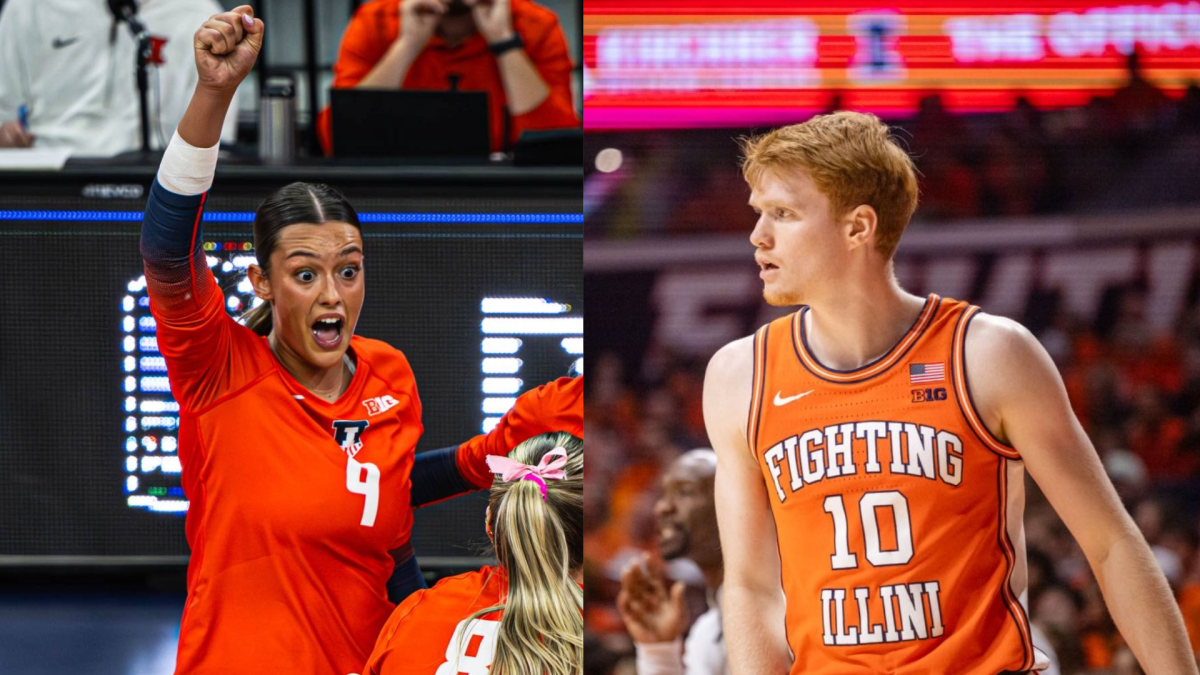
Love is in the air for two of Champaign’s top athletes in recent years. Former Illini men’s basketball wing Luke Goode popped the question to Illinois volleyball middle blocker Kayla Burbage, the couple shared via Instagram on Wednesday.
“Proverbs 18:22: ‘He who finds a wife finds a good thing, and obtains favor from the Lord,’” Goode wrote. “Going into the New Years as future Mr. and Mrs. Goode!”
Goode spent the first three years of his college career in Champaign, graduating from the Gies School of Business in 2024 with a bachelor’s degree in finance. After his sophomore season was cut short due to a foot injury, Goode bounced back as a junior, playing in all 38 games for the 2024 Elite Eight team. That season, the 6-foot-7 sharpshooter averaged 5.7 points and shot 38.9% from three on just over four attempts per game.
Last season, Goode spent his final year of eligibility playing for his home state Indiana Hoosiers before turning pro. He is currently suiting up for the South Bay Lakers in the NBA G League. In 11 games so far as a rookie, Goode is putting up 7.6 points and 3.0 rebounds in just above 20 minutes per game.
Burbage just finished up her final season of college volleyball. After spending her freshman campaign at Missouri, Burbage decided to make the move to Champaign. As a sophomore and junior, Burbage played in every match on Illinois’ schedule: 60 total. A shoulder injury sidelined the 6-foot-4 North Carolina native for her senior season, but she returned for a graduate year in 2025. In her final season at Huff Hall, Burbage ranked second in total blocks (82.0) for the Illini and had the fifth-most kills on the team (98).
@sahil_mittal24
[email protected]
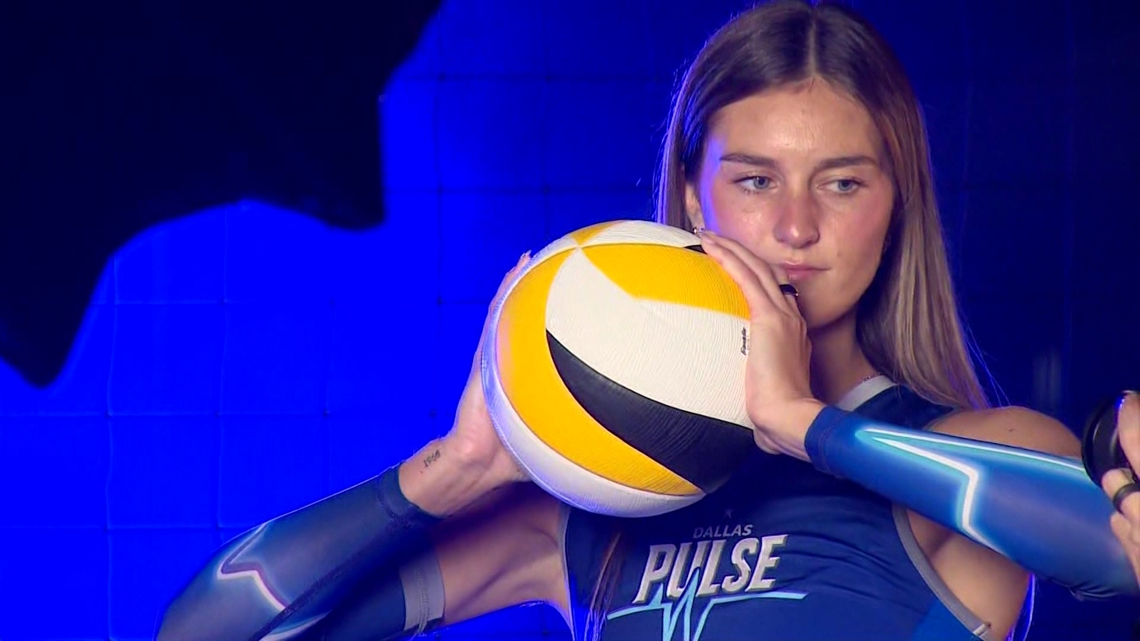
North Texas’ first women’s professional volleyball team will officially launch its inaugural season on Saturday, Jan. 10.
DALLAS — For North Texas volleyball fans, Saturday’s season opener represents more than just a first serve, it’s the beginning of something the region has been waiting for.
The Dallas Pulse, the region’s first women’s professional volleyball team, will open its inaugural season Saturday, Jan. 10, hosting the Indiana franchise at Comerica Center in Frisco.
The matchup marks the first Major League Volleyball game played by a Dallas-based team and is a milestone moment for the metroplex.
The Pulse will play 14 home matches during the 2026 Major League Volleyball season, giving local fans a consistent opportunity to support a women’s pro team built in their own backyard.
- Saturday, Jan. 10 – Indy
- Thursday, Jan. 15 – San Diego
- Thursday, Feb. 5 – Omaha
- Sunday, Feb. 8 – Grand Rapids
- Thursday, Feb. 19 – Indy
- Sunday, Feb. 22 – Grand Rapids
- Friday, Feb. 27 – Orlando
- Friday, March 13 – Columbus
- Sunday, March 15 – Atlanta
- Saturday, March 21 – San Diego
- Thursday, March 26 – Atlanta
- Friday, April 17 – Columbus
- Friday, May 1 – Omaha
- Sunday, May 3 – Orlando
Leading the team into its first season is head coach Shannon Winzer, who was named to the role in September. The January debut places Dallas at the center of the league’s early growth as women’s professional volleyball continues to gain momentum nationwide.
The timing feels right for North Texas. The region has long been a volleyball hotbed, producing elite athletes through nationally recognized club programs, championship high school teams and top-tier collegiate programs. Until now, many of those players, and the fans who followed them, had no local professional team to rally behind.
Dallas Pulse leadership told WFAA that they hope to change that.
Season ticket deposits are currently open, and the Pulse holds the No. 1 overall pick in the Major League Volleyball Draft scheduled for Nov. 24, giving the team a chance to add a cornerstone player ahead of its debut season.
Major League Volleyball is also preparing for future growth, announcing plans to add expansion teams in Washington, D.C. and Northern California in 2027.

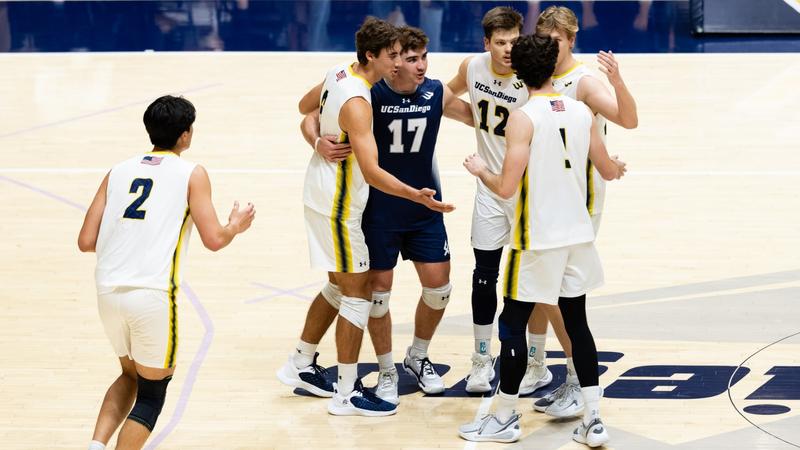
LONG BEACH, Calif. — UC San Diego men’s volleyball will prepare for the upcoming season with four exhibitions this weekend as part of the North American Challenge. The event will be hosted by Long Beach State on Friday and Sunday at the LBS Financial Credit Union Pyramid.
The Tritons will play two Canadian sides, Alberta and Calagry. They will play each team once on both days of the challenge.
SCHEDULE
Friday, Jan. 2
- 2 PM – vs Calgary
- 4:30 PM – vs Alberta
Sunday, Jan. 4
- 12:30 PM – vs Alberta
- 3 PM – vs Calgary
Live stats for all four matches will be available HERE. Fans interested in attending matches can purchase tickets through Long Beach State HERE.
UP NEXT
The Tritons open the 2026 season at home next Tuesday, Jan. 6. Jessup will visit LionTree Arena for a match that begins at 7 PM.
About UC San Diego Athletics
After two decades as one of the most successful programs in NCAA Division II, the UC San Diego intercollegiate athletics program has begun a new era as a member of The Big West in NCAA Division I. The 24-sport Tritons earned 30 team and nearly 150 individual national championships during its time in Divisions II and III and helped guide 1,400 scholar-athletes to All-America honors. A total of 83 Tritons have earned Academic All-America honors, while 39 have garnered prestigious NCAA Post Graduate Scholarships. UC San Diego scholar-athletes exemplify the academic ideals of one of the world’s preeminent institutions, graduating at an average rate of 90 percent, the highest rate among public institutions in NCAA Division I or II. For more information on the Tritons, visit UCSDtritons.com or follow UC San Diego Athletics on social media @UCSDtritons.
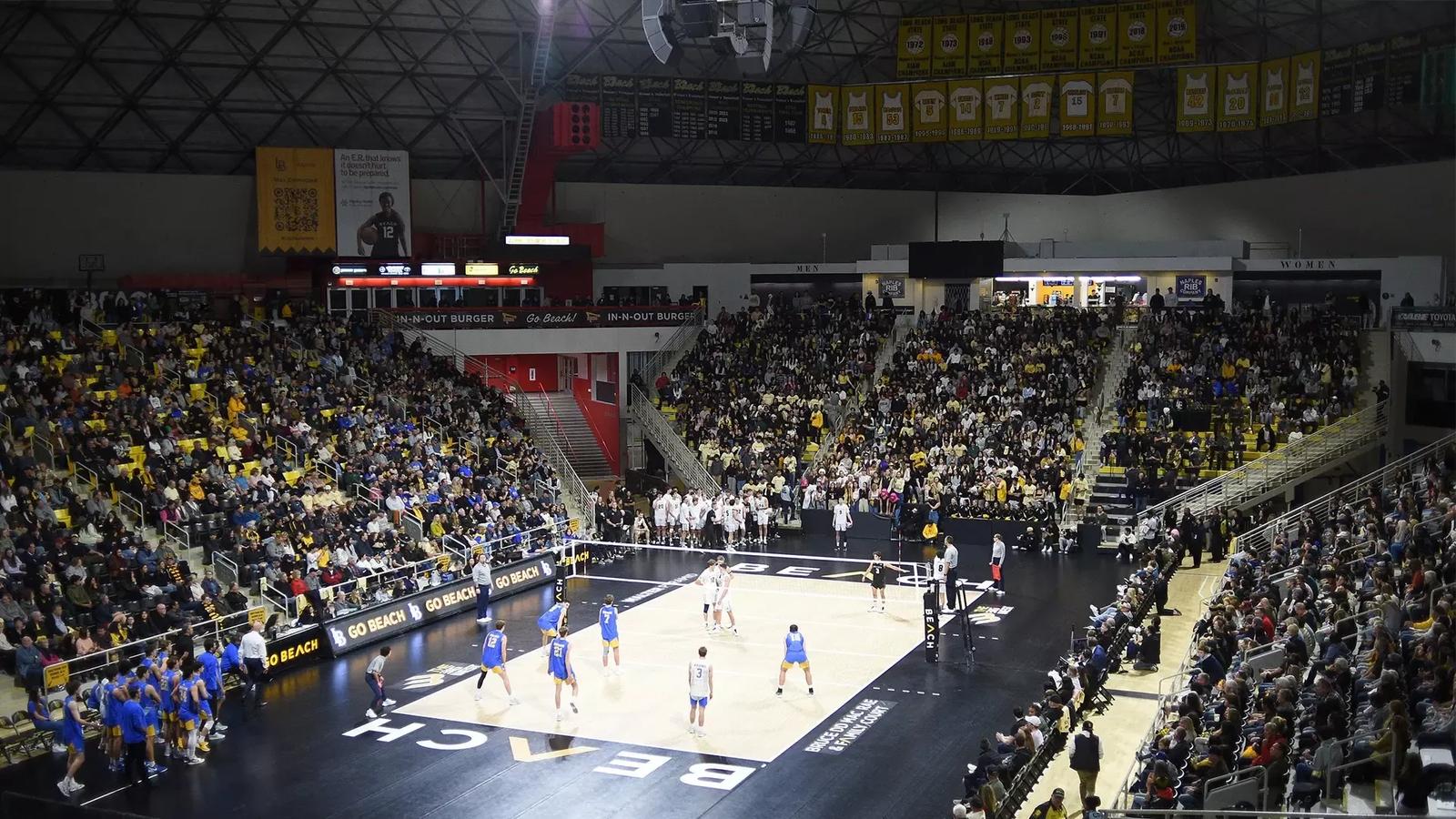
LONG BEACH, Calif. – With the season just around the corner, the Long Beach State Men’s Volleyball team will host the North American Challenge, a preseason exhibition tournament featuring four teams from the United States and Canada. The two-day event will take place Friday, January 2, and Sunday, January 4, with matches held at the LBS Financial Credit Union Pyramid.
Joining the Beach in the tournament are UC San Diego, Calgary, and Alberta, bringing together a competitive mix of NCAA and U SPORTS programs for early-season action. The tournament will feature eight total matches across the two days, providing fans with a full slate of high-level volleyball.
Schedule
Friday, January 2
| Time | Matchup (Home vs. Away) |
|---|---|
| 11:30 AM | Long Beach State vs. Alberta |
| 2:00 PM | UC San Diego vs. Calgary |
| 4:30 PM | UC San Diego vs. Alberta |
| 7:00 PM | Long Beach State vs. Calgary |
Sunday, January 4
| Time | Matchup (Home vs. Away) |
|---|---|
| 10:00 AM | Long Beach State vs. Calgary |
| 12:30 PM | UC San Diego vs. Alberta |
| 3:00 PM | UC San Diego vs. Calgary |
| 5:30 PM | Long Beach State vs. Alberta |
Following each match, a Player of the Match from each team will be recognized. At the conclusion of the tournament, an All-Tournament Team will be selected.
Tickets can be purchased HERE.
Live statistics for all matches will be available via BeachLiveStats.StatBroadcast.com.

NASCAR legend set strict rule before daughter’s Tulsa Shootout debut – Motorsport – Sports

Former Illini basketball sharpshooter Luke Goode engaged to Illinois volleyball star Kayla Burbage

Watkins Glen International Statement on the Passing of Michael Printup – Speedway Digest

Hawkeyes Knock Down Nebraska – Iowa Hawkeyes Athletics

Player pay and transfer portal put college sports in new territory

No. 4 Tech falls to No. 5 Oregon in the Orange Bowl

NASCAR predicted to have paid big to end antitrust lawsuit – Motorsport – Sports

Dallas Pulse set to make history in season opener at Comerica Center

Looking back at top local sports moments of 2025

Two unexpected college football teams emerge as contenders for $2 million QB

Iola outside hitter takes top honor on Texas 2A all-state volleyball team | APG State News

Joey Logano sends touching message to Denny Hamlin after NASCAR tragedy – Motorsport – Sports

Ty Gregorak on the state of college football + MSU heading to national championship – Skyline Sports

Kenny Wallace sends plea to NASCAR boss over growing issue – Motorsport – Sports

Tritons Set for Preseason North American Challenge

SoundGear Named Entitlement Sponsor of Spears CARS Tour Southwest Opener

Donny Schatz finds new home for 2026, inks full-time deal with CJB Motorsports – InForum

Black Bear Revises Recording Policies After Rulebook Language Surfaces via Lever

David Blitzer, Harris Blitzer Sports & Entertainment

How Donald Trump became FIFA’s ‘soccer president’ long before World Cup draw

DeSantis Talks College Football, Calls for Reforms to NIL and Transfer Portal · The Floridian
Elliot and Thuotte Highlight Men’s Indoor Track and Field Season Opener

Rick Ware Racing switching to Chevrolet for 2026

JR Motorsports Confirms Death Of NASCAR Veteran Michael Annett At Age 39

#11 Volleyball Practices, Then Meets Media Prior to #2 Kentucky Match

Colleges ponying up in support of football coaches, programs

Nascar legal saga ends as 23XI, Front Row secure settlement
West Fargo volleyball coach Kelsey Titus resigns after four seasons – InForum

Temple Begins Indoor Track & Field Season at UPenn This Weekend

Sunoco to sponsor No. 8 Ganassi Honda IndyCar in multi-year deal






-
 Sports3 weeks ago
Maine wraps up Fall Semester with a win in Black Bear Invitational
-

 Motorsports2 weeks ago
Ross Brawn to receive Autosport Gold Medal Award at 2026 Autosport Awards, Honouring a Lifetime Shaping Modern F1
-

 NIL3 weeks ago
Nike Signs 10 LSU Athletes to NIL deals
-
NIL3 weeks ago
Georgia football’s Dontrell Glover, Bo Walker arrested for shoplifting
-

 Rec Sports2 weeks ago
Stempien to seek opening for Branch County Circuit Court Judge | WTVB | 1590 AM · 95.5 FM
-

 NIL3 weeks ago
Meet The Two Oregon Freshmen Ready To Make Ducks History Under Dan Lanning
-

 Rec Sports2 weeks ago
Princeton Area Community Foundation awards more than $1.3 million to 40 local nonprofits ⋆ Princeton, NJ local news %
-

 Rec Sports3 weeks ago
Hillsborough Democrats announce 2026 committee slate
-
 Sports2 weeks ago
Three Clarkson Volleyball Players Named to CSC Academic All-District List
-

 NIL3 weeks ago
Here’s what Trump has to say about NIL in college sports