Now that the trade deadline is complete and we’ve updated our Top 100 Prospects list as well as each and every team’s Top 30 Prospects rankings, we’re now also taking a look at how farm system talent compares for all 30 MLB organizations.
It is important to note that these rankings represent a snapshot in time. The Brewers rank No. 1, but if Jacob Misiorowski had graduated by now, they would likely slide a couple of spots. The Red Sox, who checked in at No. 1 entering this season, have slid down because Roman Anthony and others have graduated.
Our farm system rankings are weighted toward top-tier prospects. A player like Brewers shortstop Jesús Made, for example, is worth significantly more in a trade than a bundle of five prospects from the very back of the Top 100. While depth can vary dramatically team to team, once you get a tier or two removed from the Top 100 rankings, studies have shown those caliber players matters less in determining how an organization will produce long term (or be able to trade to acquire MLB talent) than elite prospects.
Below, you can find our complete midseason farm system rankings featuring Top 100 prospects, strengths and weaknesses for all 30 organizations.
System Summary: Just having two of the top five prospects in baseball and another top 20 prospect would have put the Brewers in the top five. Three more Top 100 Prospects pushes them into the top spot.
System Strengths: Infielders. Made is one of the game’s best prospects, and Peña is right there with him. Pratt, Luke Adams, Andrew Fischer, Brady Ebel and Brock Wilken are all worth watching, as well.
System Weaknesses: Power. The Brewers’ farm system, like the big league club, is focused more on athletic, defensively versatile position players than hulking sluggers. Fischer’s addition in the draft helps add some pop, though.
System Summary:There may be hitting help on the way, with Konnor Griffin edging towards a late-2026 ETA.
System Strengths: Power pitching. The Pirates have had successes and setbacks among their pitching prospects this year, but few teams can boast a top tier to compete with the Chandler/Hernandez combo.
System Weaknesses: Home-grown hitting. As encouraging as Griffin and Florentino’s developments have been, the system still has a lot of position prospects who seem destined to struggle to be everyday players.
System Summary: If the top of the system is this good, who needs depth?
System Strengths: Sweet-swinging hitters. McGonigle is one of the game’s best hitting prospects, and Clark and Briceno aren’t too far behind him. Briceño has had an excellent season, as well, and Max Anderson has provided a bounce-back year behind them.
System Weaknesses: Healthy arms. The recently-graduated Jackson Jobe, Ty Madden, Jaden Hamm, Tyler Owens, Owen Hall, Ethan Schiefelbein and Michael Massey are among the pitchers who have been sidelined at times this year.
System Summary: Deadline trades provided a big boost to what was already a very solid system.
System Strengths: Up-the-middle bats. The addition of Tait filled a need at catcher for a system that has Keaschall in the majors, Rodriguez in Triple-A and Jenkins and Culpepper at Double-A. All of these prospects can play an up-the-middle position, even if Jenkins most likely will move to right field in the long term.
System Weaknesses: Catching. Tait carries question marks about whether he can stay behind the plate long term. Eduardo Jimenez is far away, and Khadim Diaw’s season has been hindered by injuries. There’s no obvious internal answer to fill the spot likely to come open when Christian Vazquez hits free agency this offseason.
System Summary: Even after plenty of graduations, this remains an enviable farm system.
System Strengths: Power pitching. Tolle, Witherspoon, Connelly Early, Brandon Clarke, Luis Perales, David Sandlin are among a seemingly endless array of hard-throwing pitchers who can miss bats.
System Weaknesses: Upper-level bats. Mayer technically remains a prospect, but he’s a big leaguer on the injured list. Jhostynxon Garcia is close to being MLB-ready, but after graduating Roman Anthony, Kristian Campbell and Carlos Narvaez, the system is understandably not as full of big league hitters.
System Summary: This is one of the best top 10s in the game, but don’t ask about the back half of the Top 30.
System Strengths: Seattle is a respected pitching factory, yes, but bats like Emerson, Montes, Farmelo and Ford have helped balance what is the most extensive crop of Top 100 talent in the game.
System Weaknesses: Depth. The trades to bring in Eugenio Suarez and Josh Naylor have erased what was already a thin second-tier of prospects.
System Summary: A group of high-upside outfielders leads a system that is still among baseball’s top tier.
System Strengths: Although Josue De Paula and Mike Sirota are both on the injured list, the Dodgers’ system is still rich in outfield prospects. Beyond the two on the IL, the team also boasts Top 100 prospects Zyhir Hope and Eduardo Quintero along with Ching-Hsien Ko.
System Weaknesses: Los Angeles’ pitching is a little bit light at the moment. Patrick Copen has been a system highlight, and they just imported talented lefty Adam Serwinowski, but some of their other arms have been ineffective or injured for most of the year.
System Summary: A solid system gets a big boost from a deadline deal.
System Strengths: Pitching. Five of the team’s top six prospects are pitchers. And while Jack Perkins, Luis Morales and Braden Nett aren’t currently Top 100 Prospects, they are viewed in the same tier as the back of the Top 100.
System Weaknesses: MLB-ready hitters. The A’s have seen Jack Wilson and Nick Kurtz blossom as rookies, and Lawrence Butler was the game’s best defensive center fielder from his first game on the field. There’s no shame in not having another wave right behind them, but the team seems more likely to push pitchers to the majors than hitters over the next year.
System Summary: Despite deadline deals of Jesus Baez, Blade Tidwell and other Top 30 Prospects, the top of Mets’ system remains largely intact, including its top five overall.
System Strengths: Proximity. The Mets’ top five prospects—Carson Benge, Nolan McLean, Jonah Tong, Jett Williams and Brandon Sproat—all play at Triple-A, while the system’s top 12 prospects all play at Double-A or higher.
System Weaknesses: The Mets have prospects ranked in the 30s and 40s on the Top 100 but none at the absolute top tier. They traded seven Top 30 Prospects at the deadline, and the 2025 draft class will have to over-perform expectations to help fill the void. New York had the second-lowest draft bonus pool this year.
System Summary: While unpopular with many Reds fans at the time, the pick of Chase Burns looks like an excellent one.
System Strengths: This is a well-rounded system with potential big leaguers at almost every spot. Duno is the system’s catcher of the future, while Sal Stewart and Cam Collier give the team corner infielders. Tyson Lewis, Steele Hall and Edwin Arroyo are useful middle infield prospects, and outfielder Hector Rodriguez keeps hitting at every stop through the minors. Burns, Rhett Lowder and Chase Petty are starting pitchers with MLB experience and Luis Mey and Zach Maxwell are intriguing power relievers.
System Weaknesses: Power-hitting outfielders. The Reds haven’t been able to find a corner outfielder who can fill a dire need, and Rece Hinds’ strikeout issues may keep him from filling that role.
System Summary: There have actually been some positive developments for the Orioles this year, and that’s true even without focusing on the 2025 draft.
System Strengths: Depth. Trades at the deadline plus a massive draft haul has revitalized a system that was thinning out. Baltimore have a number of intriguing back-of-the-rotation/relief pitching prospects, and the system is now deep in catching prospects.
System Weaknesses: Front-of-rotation pitching. Chayce McDermott’s control struggles wiped out the team’s best chance for an MLB-ready power arm. That now shifts to Esteban Mejia, but he’s far away and carries plenty of risk thanks to his long arm action.
System Strengths: Infield prospects. Lawlar can’t seem to stay healthy long enough to graduate, but between him, Cunningham, the injured Demetrio Crisantes, Gino Groover, Tyler Locklear and Tommy Troy, the D-backs have a number of hitters who can play in the dirt.
System Weaknesses: Pitching. Christian Mena is the only pitcher in the D-backs’ top 10. Even after acquiring Kohl Drake, Mitch Bratt, David Hagamann and Ashton Izzi, this is a system with few starting pitching prospects.
System Summary: This system is now impressively deep.
System Strengths: The Marlins’ “quantity over top-end quality” approach last year at the trade deadline brought much-needed competition and talent all across the farm system, while its recent international signing classes are showing early promise. Now, a young group of prospects in the lowest-levels of the minors could blossom in 2026 and 2027.
System Weaknesses: This is not a team that has produced many big bats since the heyday of Giancarlo Stanton/Christian Yelich/Marcel Ozuna. Arquette could change that, but this is a team with more athleticism and defense than future batting or home run champs.
System Summary:High-end talent up top with plenty of depth to follow.
System Strengths: Lefthanded pitching is a clear strength for the Cardinals as they have seven lefthanded pitchers ranked within their Top 30. A year after the emergence of Quinn Mathews, the Cardinals landed Liam Doyle with the fifth-overall pick in this year’s draft, giving them a strong foundation at the top of the depth chart. Beyond their stash of lefties, the organization has good depth throughout their positional ranks with a deep group of catchers and outfielders.
System Weaknesses: There’s a lack of righthanded pitching with starter traits, accentuated by Tink Hence and Tekoah Roby’s continued health woes. It’s a group that has dealt with injuries, and the Cardinals made a point to find reinforcements in the draft (Tanner Franklin) and trade market (Nate Dohm and Frank Elissalt).
System Summary: The bats are here, but where are the starting pitchers the Guardians used to churn out year after year?
System Strengths: This team always has hitters who can make a pitcher mad with their ability to grind out at-bats and make contact. It’s still true.
System Weaknesses: Health. Bazzana’s back after missing multiple months, but DeLauter’s rise to the majors has been slowed by injuries. Jaison Chourio’s shoulder injury slowed him this year, and Daniel Espino is in danger of becoming an answer to the question of “Who was the best pitching prospects to never reach the majors because of injuries?”
System Summary:The Giants have a big bopper at the top buttressed by a strong group of high-upside players who dominated at the lowest levels of the minor leagues.
System Strengths: While some of their former top prospects have run into struggles in the big leagues, a new wave is on the way. Shortstop Jhonny Level was the best player in the Arizona Complex League, and a handful of pitchers from Low-A on down have jolted life into the system.
System Weaknesses: It’s gotten a little bit better after the trade deadline, but the upper levels of the system are a bit thin beyond Eldridge and Davidson. If position players like Level, Gavin Kilen, Dakota Jordan and pitchers Argenis Cayama, Keyner Martinez and Luis De La Torre take the next steps in the coming years, this system could jump by leaps and bounds.
System Summary: George Lombard Jr. and a group of high-impact pitchers at the top heads a system that has thinned dramatically after a trade deadline saw the big league team go for broke.
System Strengths: The vast majority of New York’s best arms are clustered at the upper levels, putting them on the precipice of contributing in the big leagues. The list includes players acquired from the draft (Ben Hess), via trade (Elmer Rodriguez-Cruz) and through the international market (Carlos Lagrange).
System Weaknesses: Depth. The trade deadline saw the Yankees lose 10 players from their Top 30, as well as a few others who were on the fringe. Understandably, those moves left the system thinner than it’s been in many years.
System Summary: A couple of setbacks, but also a couple of steps forward.
System Strengths: Shortstops. Colson Montgomery has righted the ship and is hitting for power in the majors. Caleb Bonemer looks like a potential future top 50 prospect, and Billy Carlson was a very nice addition in the draft. The White Sox also added Kyle Lodise as a potential fast-moving middle infielder.
System Weaknesses: Pitching control. Noah Schultz, Hagen Smith, Winkelman Gonzalez and Jairo Iriarte all fit into a group of promising White Sox pitchers who need to find the strike zone more consistently.
System Summary: Despite dealing from the system’s upper tier, the Phillies still have a few jewels left in reserve.
System Strengths: Andrew Painter gives Philadelphia one of the game’s finest pitching prospects, and he’s backed by an outstanding supporting cast that includes shortstop Aidan Miller, outfielder Justin Crawford and infielder Aroon Escobar. Everybody besides Escobar can be found in the upper levels of the minor leagues.
System Weaknesses: Understandably, the trade deadline has cost the Phillies some of their better prospects, including catcher Eduardo Tait, up-arrow outfielder Hendry Mendez and talented DSL prospect Geremy Viloria. Those moves left the back of the group a bit light.
System Summary: This has been a year to forget, as injuries and ineffectiveness have struck numerous hitting prospects.
System Strengths: Competition. The difference between the No. 5 and No. 25 prospect in the Rays system right now is relatively miniscule. Despite the lack of Top 100 Prospects, few teams have as many potential big leaguers as Tampa Bay. They just need some of them to emerge as elite prospects rather than possible big leaguers.
System Weaknesses: Upper-level production. This was supposed to be the year that Xavier Isaac, Tre’ Morgan, Carson Williams and Brayden Taylor all pushed for big league promotions. Instead, all four seem to need more seasoning that may stretch into 2026.
System Summary: The graduations of Dylan Crews, Brady House, Daylen Lile and others have taken a bite out of the top of the system, but a high-risk, high-reward 2025 draft class could soon begin to fill in the gaps.
System Strengths: From Jarlin Susana, Alex Clemmey, Travis Sykora and Cade Cavalli to 2025 draft picks Landon Harmon and Miguel Sime Jr. to trade deadline acquisitions Sean Paul Liñan and Eriq Swan, the Nationals are cultivating a crop of young power pitchers. Half of Washington’s Top 30 are pitchers.
System Weaknesses: The Nationals’ system would benefit from one of its young position players stepping forward to blue-chip status. Candidates include the four shortstops ranked inside the top 10: Eli Willits, Luke Dickerson, Coy James and Seaver King.
System Summary: This group has mastered Triple-A. Now, can they get a shot at the big leagues?
System Strengths: Close-to-majors prospects. Ballesteros, Caissie, Jonathon Long, Kevin Alcantara and James Triantos have all had plenty of upper-level minor league experience, but they are also all having a tough time finding room in Chicago.
System Weaknesses: Prospects growing stale. As Baltimore found in some instances, once a prospect repeats Triple-A multiple times, it’s hard to keep improving, and sometimes those prospects start to lose some luster in other teams’ eyes. Caissie, for instance, has nearly 1,000 Triple-A plate appearances.
System Summary: The system has taken two steps forward, and one of those steps was spent at the deadline.
System Strengths: Improved depth. The trades of Khal Stephen, Juaron Watts-Brown and Alan Roden dipped into that depth, but this is a significantly better overall farm system than it was a year or two ago. The breakout season by Johnny King has helped bolster an impressive group of pitching prospects.
System Weaknesses: The Blue Jays positional group is light on star power and isn’t particularly deep. That could certainly change in 2026 with the emergence of 2025 draftees JoJo Parker, Tim Piasentin, Blaine Bullard and top DSL player Juan Sanchez. For now, multiple players with BA Grades below 50/High rank in the back end of the top 10.
System Summary: The system is getting better, even if the Top 100 doesn’t show it.
System Strengths: Catching depth. Salvador Perez may be ageless, but even after trading away Freddy Fermin, the Royals have Carter Jensen, Blake Mitchell and Ramon Ramirez as viable candidates to compliment and eventually replace Perez.
System Weaknesses: Close-to-majors infield depth. It’s a good thing that Bobby Witt Jr. and Maikel Perez are young and established in Kansas City, as the best prospects who could eventually be MLB regulars in the infield are all years away (Yandel Ricardo, Sean Gamble and Josh Hammond).
System Summary: Better, but still a lot of work to do.
System Strengths: Righthanded pitching. The addition of Bremner and Trey Gregory-Alford’s solid season in the Arizona Complex League helps a lot, while Ryan Johnson has been excellent in his return to the minors.
System Weaknesses: Position players who project as regulars. Christian Moore counts as a prospect for now, and he’s in the majors. But after him, the best hopes for long-term MLB regulars are Nelson Rada, who needs to get stronger, and Gabriel Davalillo, who has yet to play full-season ball.
System Summary:Injuries and an aggressive trade deadline has left Texas’ system lacking outside of five-tool jewel Sebastian Walcott.
System Strengths: The Rangers have an enviable shortstop cache headed by Walcott and backed by first-round draft pick Gavin Fien and 2024 international signee Yolfran Castillo.
System Weaknesses: Health and depth. Alejandro Rosario, Emiliano Teodo and Winston Santos have been injured for most of the year, robbing the Rangers of a trio of upper-level arms that could have contributed in the big leagues. Underperformance from 2024 draft picks Malcolm Moore and Dylan Drieling has also stung.
System Summary: There are bats, but not too many pitchers to count on.
System Strengths: The top-ranked bats in the system carry significant offensive upside — from power hitters poised to challenge for a big-league roster spot next season to promising young talents in the lower levels who may need additional development before reaching their full potential.
System Weaknesses: Despite adding some arms at the trade deadline, the system still lacks a true power presence on the mound. Most of the promising pitching prospects are concentrated in the lower levels. A few of the more intriguing arms are currently sidelined recovering from Tommy John surgery, delaying their development timelines.
28. Houston Astros
Top 100 Prospects: None
System Summary:Some glimpses of hope in a vast wasteland of a system.
System Strengths: The Astros’ biggest bright spot is their pair of teenage sluggers in Xavier Neyens and Kevin Alvarez. Both players have big upside with a chance to develop into impact hitters. Each player presents a significant amount of risk, though, and would likely rank much lower in most systems.
System Weaknesses: The system lacks impact players overall after years of trading away talent and drafting at the back of the first round. These are the types of problems teams are happy to deal with, however, as they continue to feed their competitive window. The last few drafts have yielded some good players, particularly in the later rounds, but there are still few no-doubt prospects in the system.
29. Atlanta Braves
Top 100 Prospects: None
System Summary: Despite the lack of a Top 100 Prospect, this is a system trending upward. The 2025 draft added much-needed position prospects.
System Strengths: Starting Pitching. There are a significant number of future MLB pitchers in their top 10, and the Braves have shown they can help pitchers develop.
System Weaknesses: Outfielders. Even after this year’s draft focused on adding hitters, the Braves still don’t have any outfield prospects who are safe bets to be big leaguers.
System Summary: Everyone is a potential trade chip, and this is a system that manages to find new trade chips year after year.
System Strengths: Power pitching. Kruz Schoolcraft, Kash Mayfield and Miguel Mendez give the Padres a trio of high-ceiling pitching prospects.
System Weaknesses: This is the thinnest system in the game because of trades. The bottom two-thirds of this Top 30 would not crack the top 30 of the game’s deepest systems.
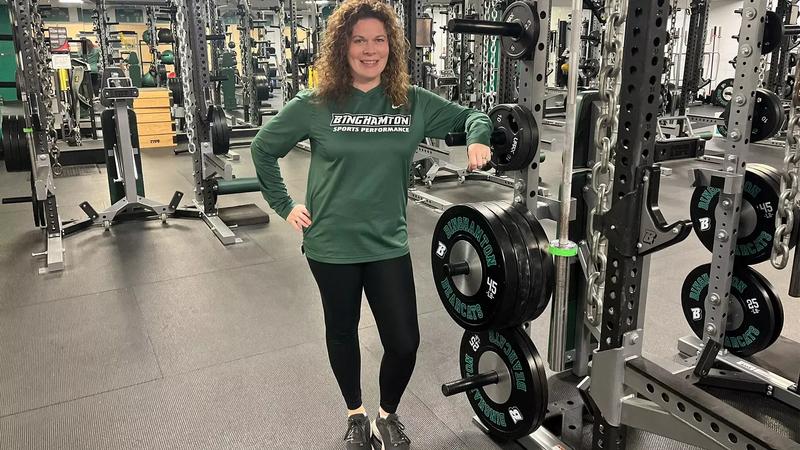
VESTAL, N.Y. – The Binghamton Division of Athletics has announced that Lori Gleason has been named its new Head Sports Performance Coach. Having served as an assistant and associate sport performance coach on the staff since 2006, she was promoted to the head job effective Jan. 2.
Gleason will oversee the sports performance programming for all 21 Bearcat athletic programs. In this role, she will lead two assistant sports performance coaches and collaborate closely with team coaches and student-athletes to establish and uphold training programs and performance standards that support continued growth and development of student-athletes.
“Lori has a long-standing reputation as a leader and mentor whose impact extends well beyond the weight room,” Senior Associate Director of Athletics, Sports Medicine & Performance Kara Gorgos said. “Her elevation to Head Sports Performance Coach is a testament to her dedication to Binghamton Athletics and her proven ability to continue raising the performance standards of our student-athletes. We are excited for the continued evolution and advancement of our sports performance program under Lori’s leadership.”
“I would like to thank Binghamton University, Director of Athletics Eugene Marshall Jr, the search committee, and my supervisor Kara Gorgos for this incredible opportunity to move into the role of Head Sports Performance Coach,” Gleason said. “Also, for the continuous support I have been given, I would like to thank my family and coworkers/coaching staff. I am very excited and look forward to growing our area, as well as collaborating with our staff as we all work together to achieve what is most important for our student athletes to be successful in their sport and performance.”
Since being hired as an Assistant Sports Performance Coach in 2006, Gleason has worked directly with seven of the Bearcat athletic programs, six of which have captured America East team championships during her tenure. In addition, Gleason has worked with a track & field program that has produced one NCAA champion as well as seven other All-Americans during that same span.
In 2024, Gleason was elevated to Senior Assistant Sports Performance Coach. Her additional duties included collaborating on the Bearcat teams’ performance programs and injury prevention tactics, establishing a 15+ week Preventive Exercise Plan specifically for ACL injuries and providing mentorship for the Sports Performance interns. In addition, Gleason served as an Athletic Department staff liaison for the Student-Athlete Mental Health Committee.
A 2002 graduate of SUNY Cortland, Gleason went on to earn her Master’s Degree in Applied Exercise Science from Springfield College in 2006. She served as both an intern and graduate assistant strength coach during her years at Springfield.
TRANSACTION
Binghamton University – Lori Gleason named Head Sports Performance Coach
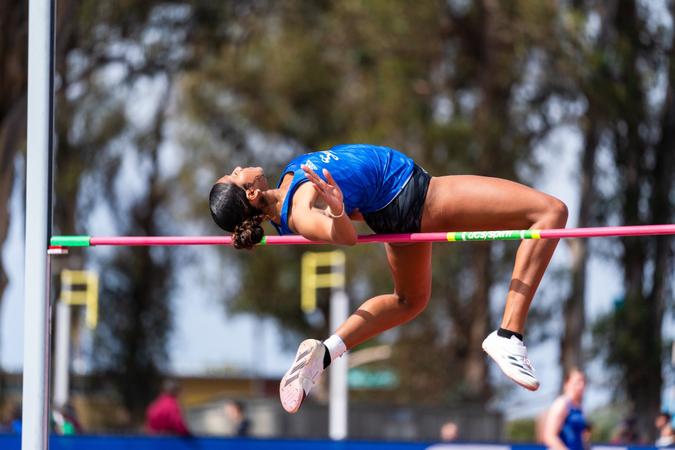
SANTA BARBARA, Calif. – UC Santa Barbara has officially announced their meet schedule for the upcoming 2026 outdoor season. The calendar features 14 regular-season meets during the spring, 13 of which will be held across California, featuring three home meets. Following the regular season, the Gauchos will compete at the Big West Championships and the postseason continues into June with the NCAA West Preliminary Round and the NCAA Outdoor Track & Field Championships.
The season will kick off with two home meets on Pauley Track, featuring the two-day Sam Adams Combined Events on March 5 and 6, followed by the Gaucho Relays on March 7.
The Gauchos will compete in two more meets for the remainder of March, including the Westmont Dual on March 13 to the neighboring Westmont College. Their next stop will be at the Jim Bush Legends Meet, hosted by UCLA on March 28.
On the first weekend of April, UCSB will compete in three separate meets, featuring the Stanford Invite and Mike Fanelli Distance Carnival in the Bay Area, as well as the Triton Invite in San Diego. Each meet will be two days, held on April 3 and 4.
Up next, the UCSB heptathletes and decathletes will take to the track at the Bryan Clay Multi April 9 and 10, overlapping with the Challenge Cup on April 10.
Santa Barbara will be featured in three different meets the following weekend, marking their return to Azusa Pacific from April 16 to 18 for the Bryan Clay Invite. The Guachos will also be seen in action at the Long Beach Invite hosted by Long Beach State April 17 and 18, as well as at the renowned Mt. Sac Relays at Hilmer Lodge Stadium April 16 to 18.
The Gauchos will take to their home track one last time before entering the postseason at the UCSB Invite, the two-day meet being hosted from April 24 to 25. The following weekend, Santa Barbara will travel to the Northeast, where they will compete at the prestigious Penn Relays hosted by the University of Pennsylvania.
UC Santa Barbara’s postseason opens up with the Big West Multi Championships held on May 8 to 9 at Anteater Stadium in Irvine, Calif., then the remainder of the championships meet schedule will fill up two action-packed days of competition May 15 and 16 at Long Beach State.
Based on their performance throughout the postseason, the Gauchos have the chance to move on to the NCAA West Prelims hosted by the University of Arkansas, May 27 through 30. The NCAA National Championships will be held June 10 through 13 in Eugene, Ore.
Three El Paso high school volleyball players have been named to the Texas Sports Writers Association All-State volleyball team for the recently completed 2025 season.
Chapin junior outside hitter Zoeh Cereceres was named Honorable Mention All-State in Class 5A. This past season, she had 501 kills, 43 aces, 35 blocks and 191 digs. Cereceres helped Chapin to the District 1-5A title and one playoff victory.
Eastlake senior middle blocker Mia Carrasco was named Honorable Mention All-State in Class 6A. Carrasco finished the 2025 season with 240 kills and 115 blocks. Carrasco helped the Falcons to a District 1-6A title and two playoff wins.
Eastlake freshman outside hitter Giselle Gandara was named Honorable Mention All-State in Class 6A. Gandara finished the season with 427 kills, 378 digs and 58 blocks. Gandara was also named a Freshman All-American in Class 6A by MaxPreps after the recently completed season.
Felix F. Chavez can be reached@fchavez@elpasotimes.com; @Fchavezeptimes on X
Columbia, SC. – The Wildcats will participate in their second indoor meet of the season as they begin 2026 at the Gamecock Opener. The meet takes place on Saturday, January 10 at the Carolina Indoor Track & Field Complex.
Bethune-Cookman completed their first indoor meet of the season at the Birmingham Indoor Icebreaker as five Wildcat participants finished in the top ten of their respective events.
Freshman Carlos Moore had the highest finish, picking up third in the men’s triple jump with a 45-11.25. Moore also finished eight in the men’s long jump with a 22-00.75
Sophomore Nyidjah Ives picked up ninth place in the women’s 800m run with a time of 2:28.37.
Sophomore Tyler Washington finished seventh in the men’s shot put with 13.97m.
Fellow Sophomore Ashton Matthews was tenth in the men’s high jump with a 6-02.75
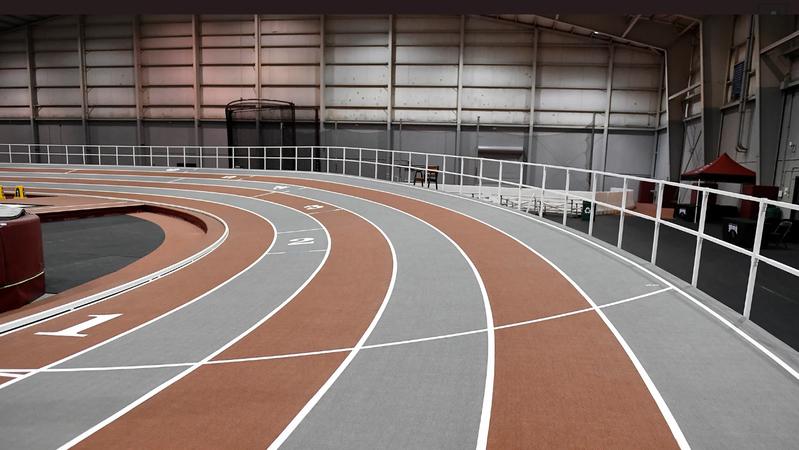
South Carolina hosts the event at the Carolina Track & Field Complex. The venue features a banked six-lane 200m Mondo track, a separate throws area, two pole vault areas, two jumps runways, and two high jump areas along with an eight-lane 60m straight track on the infield.
Saturday’s meet is set to begin at 10 a.m., with men’s high jump and women’s pole vault.
Running events will begin at 11 a.m. and run through 7:10 p.m., concluding with 4 x 400s.
The full schedule can be found here.
Follow Bethune-Cookman Track & Field Cross Country on Twitter (@BCUTrackXC) and Instagram (BCUXCTF) for all of the latest news and updates. For all Bethune-Cookman Athletics news, follow us on Twitter (@BCUAthletics), Instagram (@BCU_Athletics) and www.bcuathletics.com.
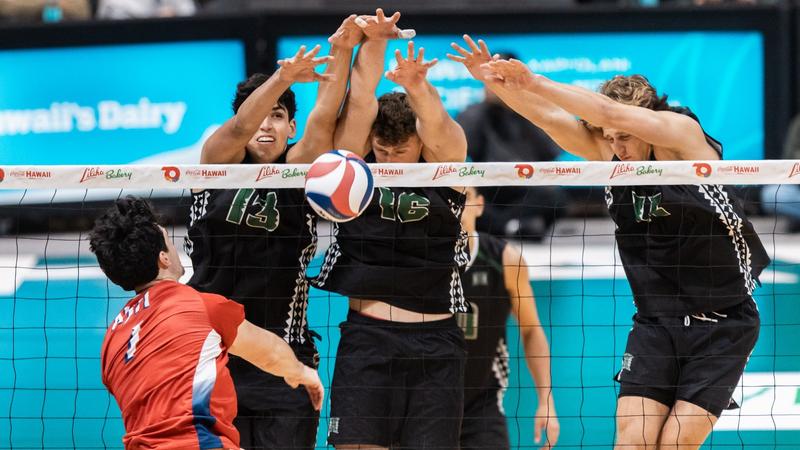
HONOLULU – The No. 2 University of Hawai’i men’s volleyball team continues its eight-match, season-opening homestand with a pair of matches against No. 7 Loyola Chicago, Thursday, Jan. 8 and Friday, Jan. 9 at Bankoh Arena at Stan Sheriff Center. Both matches begin at 7:00 p.m. The Rainbow Warriors (2-0) are coming off a two-match series sweep of NJIT while the Ramblers (0-0) will make their 2026 season debut.
PROMOTIONS & GIVEAWAYS: Thursday, January 8 – Hawai‘i Heroes Night
It’s Hawai’i Heroes night! Brought to you by First Hawaiian Bank. In recognition of National Law Enforcement Appreciation Day (January 9), join us as we pay tribute to our brave first responders throughout the match.
Ticket Promotion:
First responders receive 50% off select adult tickets. Tickets are limited and in special sections.
How to Get Tickets:
· Online at etickethawaii.com (bring your valid first responder ID for ticket pickup)
· In person at the Stan Sheriff Center Box Office – valid first responder ID required at time of purchase
Friday, January 9 – Alumni Appreciation Night
Hawaii Pacific Health is sponsoring “Alumni Appreciation Night,” featuring exciting giveaways including rainbow fans and amazing prizes. It’s Aloha Friday and fans are encouraged to come in their finest Aloha apparel. Prior to the match, former UH volleyball legends return to the court for a nostalgic showdown in the annual UH Alumni vs. Alumni match at 4:00 p.m
Ticket Promotion:
UH Alumni Appreciation Discount
All University of Hawai’i Alumni will receive 30% off upper level adult tickets (maximum of eight). Tickets are in special sections. Supplies are limited and other restrictions may apply. Get your alumni tickets to select UH events at https://hawaiiathletics.evenue.net/promotions/UHALUM2526
Overall: UH leads 13-3 In Honolulu: UH leads 12-3 In Chicago: UH leads 1-0 Neutral: None Postseason: None Last Meeting: Jan. 5, 2024; LUC, 3-2 Streak: LUC, 1
FIRST SERVE
UH leads the all-time series 13-3, including a 12-3 advantage in Honolulu.
The teams split a pair of matches in a season-opening series in 2024 with UH winning the opener in straight sets and the Ramblers taking the rematch in five. The teams also opened the 2022 season in Honolulu with UH winning both matches — the opener in straight sets and the rematch in four.
UH setter Tread Rosenthal made his collegiate debut against LUC in 2024 and finished the two-match series with 90 assists, six aces, four kills, 13 digs, and three blocks. His 58 assists in a five-set loss remains his career-high.
Head coach Charlie Wade has a 4-1 record versus LUC.
LUC captured its first MIVA title since 2015 last season in Shane Davis’ return as head coach. The Ramblers finished 25-4 and advanced to the NCAA Championship quarterfinals.
Davis has a 290-92 all-time record in his 13th season at LUC, which includes a pair of national titles in 2014 and ’15. He spent eight years as head coach of Northwestern’s women’s team (2016-23).
Loyola Chicago assistant coach Dalton Solbrig was a four-year letterman for the Rainbow Warriors (2016-19) and member of two NCAA Tournament teams, including the national runner-up squad in 2019.
UH has a 73-13 combined record against current members of the MIVA. Quincy is the only current MIVA team which UH has not played.
Hawai’i is coming off a dominant two-match series sweep of NJIT last week in Honolulu. The Warriors hit a combined .517 with 23 team blocks and 11 aces.
UH has a 14-match win streak in the month of January dating back to 2024 with its last loss to Loyola Chicago.
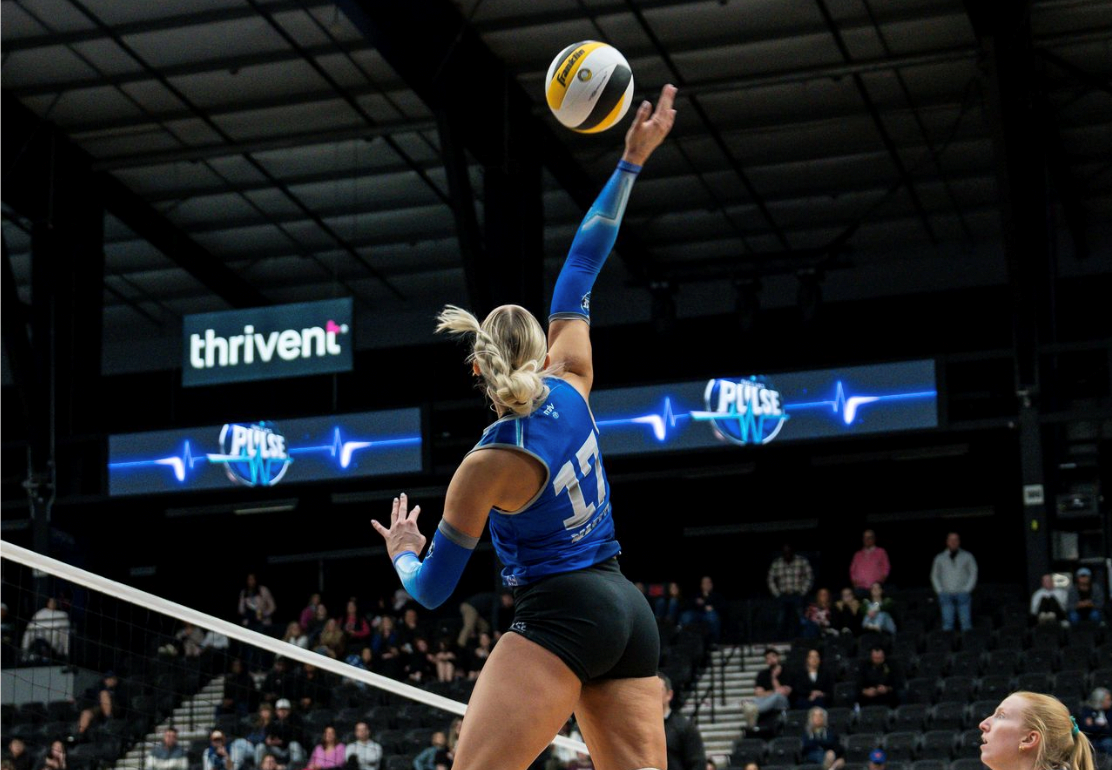
North Texas is getting a new heartbeat, and it’s fast, electric and ready to soar. Meet Dallas Pulse, the region’s first professional women’s volleyball team, set to make its debut on Jan. 10, 2026, at Comerica Center in Frisco.
Formerly MLV Dallas, the team has a fresh name, a new look and a bold mission: to bring world-class volleyball and hometown pride together under one roof.
North Texas: A Volleyball Powerhouse
Volleyball isn’t new to North Texas. Championship high school programs, nationally recognized club teams and top-tier college squads have produced elite athletes for decades. Now, fans finally have a professional team to rally behind.
Under coach Shannon Winzer and with players like Mimi Colyer and Kelsie Payne, Dallas Pulse promises high-octane matches full of speed, precision and heart that aim to inspire the next generation of local athletes.
Building Something From Scratch
The name Pulse reflects both the fast-paced rhythm of volleyball and the energetic spirit of North Texas. For Grady Raskin, president and CEO of Dallas Pulse, building the franchise from the ground up meant balancing that energy with a clear vision for the team’s culture.
“Clearly, there is a lot that goes into building a professional women’s volleyball franchise from scratch,” Raskin told Local Profile. “That said, the vision for the Dallas Pulse is clear: to compete at the highest level and represent Dallas with passion, integrity and electricity.”
Photo: Dallas Pulse
When assembling the roster, Raskin emphasized that talent alone wasn’t enough — character, work ethic and a team-first mindset were just as important. And while winning matters, Raskin explained that the bigger picture is long-term growth.
“We want to be an organization that youth volleyball participants look up to and general sports fans fall in love with,” he said.” The power and precision of this game will hopefully make that easier.”
First Impressions Of A Promising Roster
From the very first days of training, the team showed remarkable intensity. Even as a newly assembled group, the players quickly bonded, embraced Winzer’s expectations and pushed one another while supporting each other, a combination that immediately highlighted the roster’s potential.
“Competition was high, but so was the support they showed for one another, and I believe it is that combination that makes this roster exciting,” Raskin said.
Home Court Advantage At Comerica Center
Fans will have 14 home matches to experience the thrill, playing teams such as the Omaha Supernovas, Grand Rapids Rise, Indy Ignite and more.
Photo: Dallas Pulse
“The home opener is about more than the match. It’s a first look at what Dallas Pulse volleyball represents,” Raskin said. “We want the experience to be fast-paced, interactive and family-friendly, and we’ll continue refining it with each game.”
Part of a Growing Movement In Women’s Sports
Women’s professional leagues are booming, with global revenue expected to top $2 billion by 2026. Dallas Pulse plans to ride — and push — that momentum. The ownership group, anchored by North Texas business leaders, many of them women, is committed to elevating opportunities for female athletes and expanding the reach of professional women’s sports in the area.
“The Dallas Pulse isn’t just happy with riding the wave,” said Raskin. “We hope to push it forward by growing the game locally while contributing to the national evolution of women’s professional sports.”
As the countdown to January 10 begins, North Texas fans have a new team to cheer for, a high-energy sport to watch and a franchise that reflects the region’s talent, ambition and electric spirit.
“Dallas Pulse reflects our fast, competitive and electric spirit,” Raskin said. “We want fans to feel that energy not only on match days but through our community involvement and how we show up across North Texas.”
Don’t miss anything Local. Sign up for our free newsletter.








 | #HawaiiMVB #WarriorBall26 | @HawaiiMVB
  | Facebook