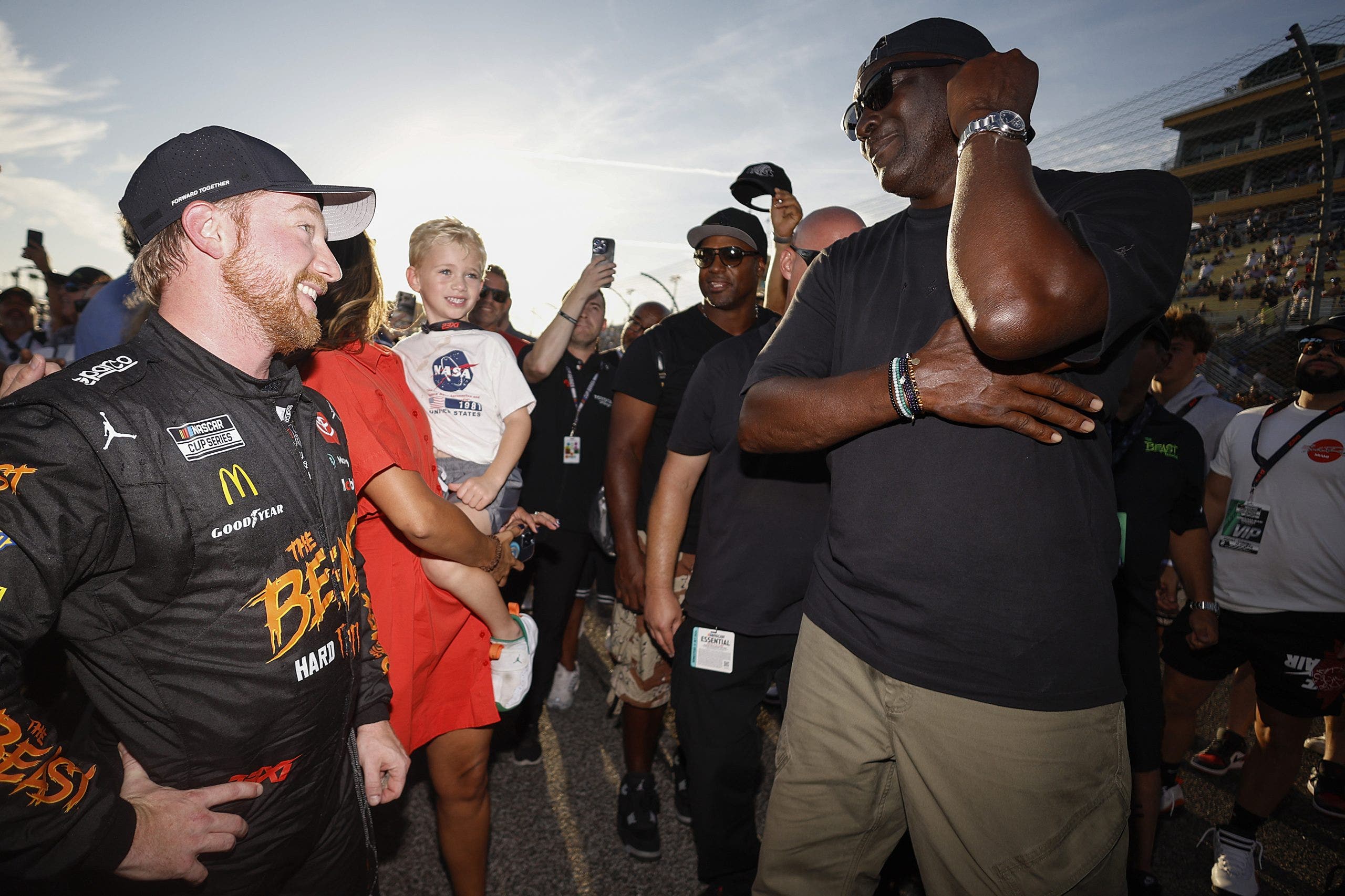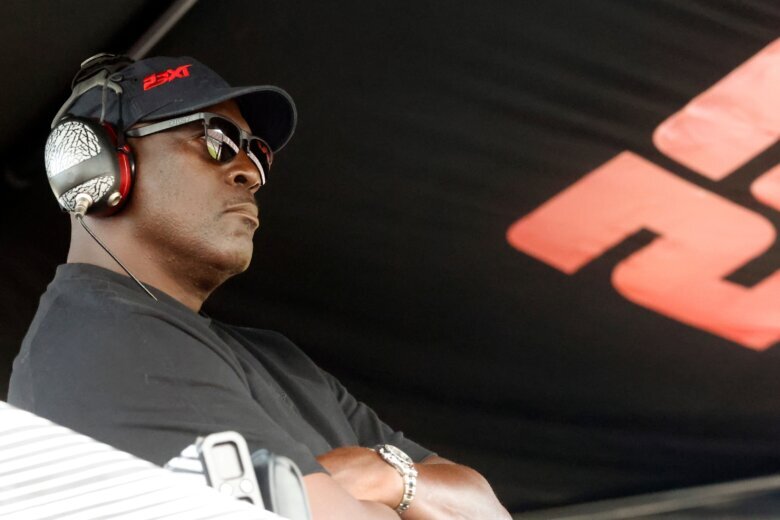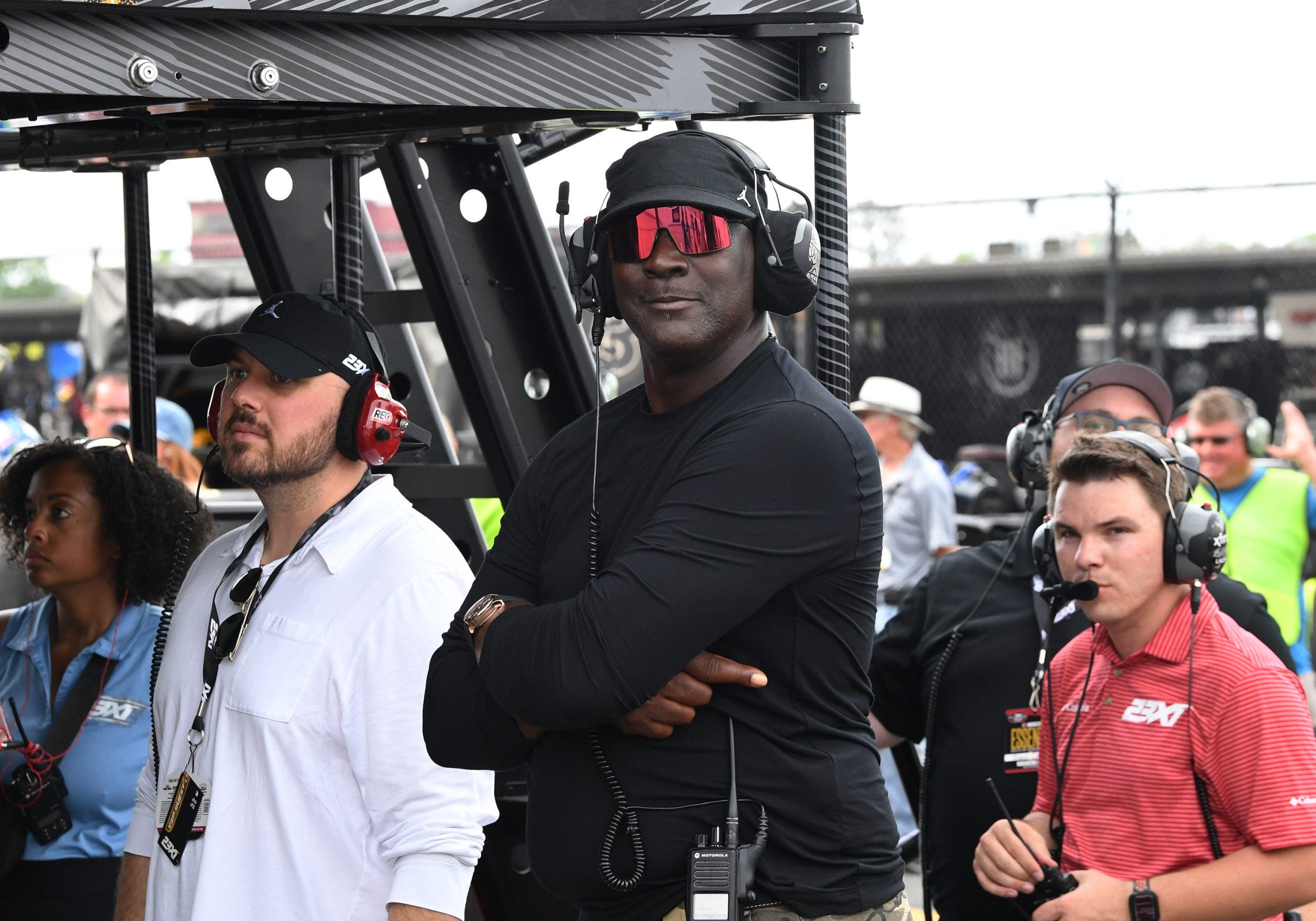
Michael Jordan and 23XI Racing are pleased with their settlement with NASCAR.

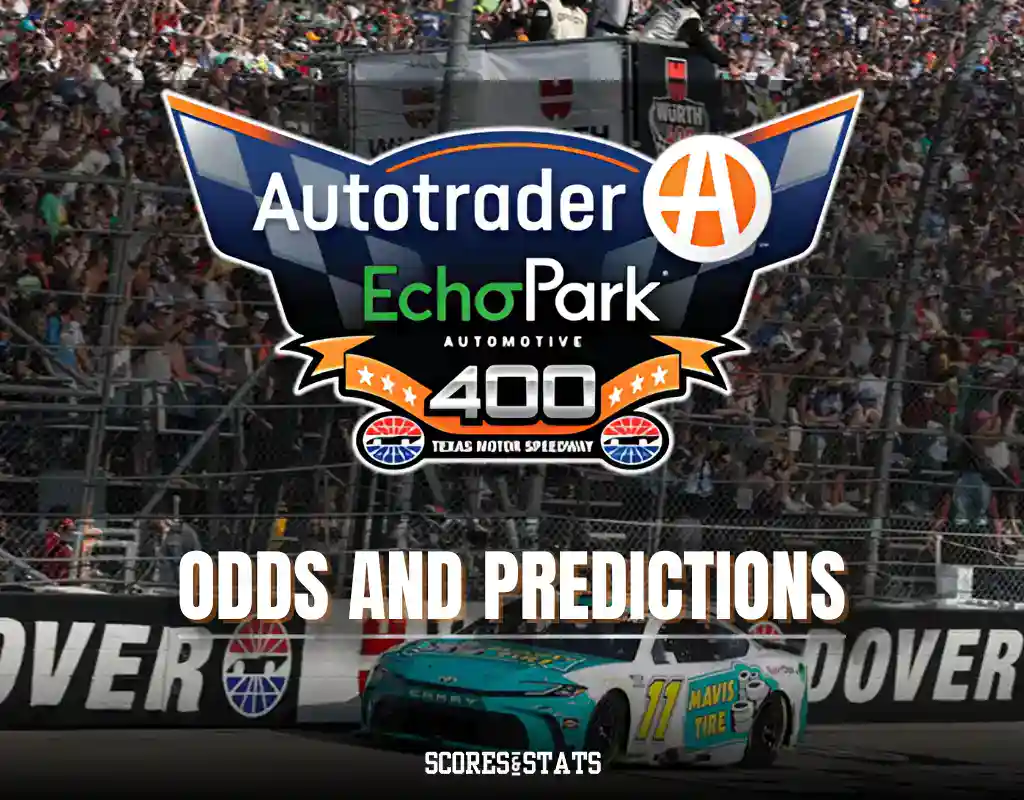
On Sunday, July 20, the NASCAR Cup Series heads to Dover Motor Speedway for the Autotrader EchoPark Automotive 400. This event marks the 21st race of the season and the fourth round of the In-Season Challenge.
More commonly known as “The Monster Mile,” Dover is an intermediate track that has similar characteristics of a short track. This venue has been a part of NASCAR since 1969, when Richard Petty won the first race here.
Last weekend, Shane van Gisbergen won another road race as he dominated the Toyota Save Mart 350 at Sonoma. It was his third win in the last five races. All three wins were on road courses.
This weekend, Denny Hamlin comes in as the odds-on favorite to win the NASCAR Dover race. He’s followed by Kyle Larson, Ryan Blaney, William Byron, and Chase Elliott. SVG is a massive +30000 longshot on the concrete mile.
In addition to the field trying to win this race, the In-Season Challenge will see the final four drivers battle it out for the right to race in the finals next week.
With that said, let’s take a look at the latest NASCAR Dover odds, courtesy of the top sports betting sites, and make our Autotrader EchoPark Automotive 400 predictions for this weekend’s NASCAR Cup Series event at Dover Motor Speedway.
Dover Motor Speedway (DMS) was formerly known as Dover International Speedway up until a few years ago. So, you might still see sources calling it by that name.
The track broke ground in October 1967, and held it’s first Cup Series race in July 1969. “The King” Richard Petty won the first two races and three of the first four at this track.
Dover used to hold two annual races each season. However, the second event was taken off in 2021, and given to Nashville.
DMS is a one-mile, oval-shaped track with a concrete surface (1995). It features four turns with high banking of 24 degrees and two straights with nine-degree banking.
Sunday’s Autotrader EchoPark Automotive 400 breaks down as follows:
The Autotrader EchoPark Automotive 400 will begin at 2pm ET live on TNT and MAX.
The great Jimmie Johnson holds the record for the most wins at Dover with 11. Hendrick Motorsports, Johnson’s old team, has the record for the most victories at Dover with 22. Kyle Busch leads all active drivers with three wins at DMS.
The following is a list of the most recent winners:
In regards to this specific Dover race, Johnson holds the record with six wins. Bobby Allison sits in second with five victories. Hendrick Motorsports has won this Dover event 12 times. Hamlin and Busch are the only active drivers with multiple wins in this Dover race.
Check out the latest Autotrader EchoPark Automotive 400 odds:
| NASCAR Odds | NASCAR Odds |
|---|---|
| Denny Hamlin +375 | Kyle Larson +500 |
| Ryan Blaney +700 | William Byron +700 |
| Chase Elliott +900 | Ross Chastain +1200 |
| Christopher Bell +1200 | Tyler Reddick +1600 |
| Chase Briscoe +1600 | Alex Bowman +1800 |
| Kyle Busch +2000 | Ty Gibbs +2500 |
| Carson Hocevar +2500 | Brad Keselowski +3000 |
| Chris Buescher +3000 | Joey Logano +3000 |
| Josh Berry +3500 | Ryan Preece +4000 |
| Bubba Wallace +6000 | Austin Cindric +6000 |
Denny Hamlin is the clear-cut odds-on favorite to win this race. He’s the defending race winner and has multiple Dover wins in his career. However, drivers like Larson, Blaney, Byron, and Elliott are right on his rear bumper.
Continue reading below to see my breakdown of the betting favorites along with provided some value plays and a longshot driver. You can also compare my picks with the best handicappers.

Lap the Competition
Gain the Inside Edge with Expert NASCAR Picks
The following drivers are considered by oddsmakers to be the odds-on favorites to win the Autotrader EchoPark Automotive 400:
For the second time in his last three races, Denny Hamlin has finished 20th or worse. It led him to slip from fourth to fifth in the standings.
However, Hamlin heads to Dover where he’s had plenty of success at over the years. In 34 DMS starts, Hamlin has two wins, eight Top 5s, 16 Top 10s, and a 15.6 average finish.
Hamlin won last year’s race, has two Top 5 results in a row, and has three Top 7s in the last four races which he’s led laps in, as well.
The #11 car absolutely dominated the race last year as he led 136 of the 400 laps. That was nearly 70 more laps led than Truex Jr., who had led the second most laps.
I think Hamlin is a Top 10 car with a race-winning ceiling. However, I don’t think his odds offer any value from winning the race through a Top 10 result. It’s a risky bet with Hamlin considering other drivers offer more value and have better average finishes.
Kyle Larson is one of the drivers that offer better value than Hamlin. In 16 DMS starts, Larson has one win, eight Top 5s, 12 Top 10s and leads the field with an 8.2 average finish.
Larson finished runner up last year to Hamlin and has five Top 6 finishes in the last six races at Dover. He has four Top 3s over that span and won at DMS in the fall of 2019.
I prefer the value with Larson over Hamlin and think he has just as good of a chance at winning this race on Sunday.
Ryan Blaney is another favorite that I am fading his race-winning odds this weekend. The #12 car has two Top 7s in a row, but only one Top 5 and four Top 10s in 14 overall DMS starts. His 17.4 average finish is well below other favorites and he seems to be slightly below drivers like Larson, Hamlin, Elliott and others.
I wouldn’t touch Blaney this weekend unless it’s in a driver matchup where you are picking him to lose. Sure, he could finish in the Top 5, but his Dover resume suggests more of a 12-17 range.
William Byron’s lead in the driver standings has shrunk to just 14 points over his teammate Chase Elliott. And, he comes into Dover with just one Top 10 in the last four races. In fact, he has two crashes in the last three races and three finishes of 27th or worse in the last four events.
This is definitely a driver in a slump. And, his Dover resume doesn’t give us confidence either. In 10 DMS starts, Byron has three Top 5s, four Top 10s and a 14.9 average finish. He crashed out of last year’s race and has two finishes of 22nd or worse in his last three Dover starts.
Byron is capable of sneaking into the Top 5 this weekend, but I wouldn’t bet on it. He’s highly overvalued this weekend like Blaney is. I would skip the #24 altogether on Sunday.
Unlike Blaney and Byron, I’m high on Chase Elliott this weekend in Dover. In fact, he’s one of my top plays this weekend.
In 14 DMS starts, Elliott has two wins, 10 Top 5s, 10 Top 10s, and a 9.5 average finish which is the second best among the field.
Elliott has a win and three Top 5s in the last four Dover races. In fact, outside of two DNFs (crash and blown engine), Elliott has 12 Top 12s.
I believe Elliott is a Top 10 driver with a race winning ceiling on Sunday. And I love his value for a Top 5 finish which I will go into more detail further below.
Ross Chastain sits inside the Top 10 of the driver standings. However, I think he’s also slightly overvalued this week. Chastain has just two Top 5s and two Top 10s in 10 DMS starts. Those results came in the last three DMS races.
Chastain was 12th last year, but 2nd in 2023, and 3rd in 2022. He also led laps in those two races where he finished in the Top 3.
With that said, Chastain has just one Top 10 in the last five Cup Series races, which was two weeks ago in Chicago. He finished 24th last weekend. Prior to the two road course races, Chastain was 26th at Pocono and 33rd in Atlanta.
I really don’t feel confident in Chastain finishing higher than the 8 to 13 range.
The following drivers are my NASCAR picks for the best betting value in the Autotrader EchoPark Automotive 400 based on their previous success at the Dover International Speedway:
In six Dover starts, Reddick has two Top 10s and a 14.5 average finish. He’s completed every start, which is more than we can say about half of the field. Reddick has a 9.0 average finish in the last two DMS races.
Of the Top 9 drivers in the standings, Reddick is the only one without a win. However, he’s heating up on the season. Reddick has three straight Top 6 finishes from Atlanta to Chicago to Sonoma. These are three very different races, as well.
Another reason why I like Reddick this weekend is due to his chance of advancing to the final round of the In-Season Challenge. The #45 car is the top driver left in the field. Yet, he will battle Ty Gibbs who is my other value bet this weekend.
I think both of these drivers have a chance at finishing in the Top 10 on Sunday. With that said, I am leaning towards Reddick to score a higher finish, but barely.
Like Reddick, Ty Gibbs is coming on strong over the last two months. In his last six Cup races, Gibbs has two Top 5s, three Top 10s, and six Top 14s. He was 7th at Sonoma last weekend and runner up at Chicago two weeks ago.
In two Dover races, Gibbs has an 11.5 average finish as he was 13th in 2023, and 10th last year. He edged out Reddick by one spot last year.
This weekend, I think Reddick gets the better by one. However, I do like Gibbs Top 10 odds of +140. There’s value here and it’s a safer play than his race-winning odds.
The most risk I would take for Gibbs is his Top 5 odds of +400. That’s also better than Reddick’s at +275. However, I feel more comfortable with the duo finishing in the 6-11 range than cracking the Top 5. Yet, with a chance for advancing in the tournament, anything can happen.
Joey Logano +3000 is my top longshot pick for the second week in a row. I stated to skips his race-winning odds and jump on the reigning Cup Series Champ for a Top 10 pick at Sonoma. And, Logano came through with a 9th place result.
Although his Top 10 odds aren’t as high as last weekend, he still has a +160 line to finish in the Top 10. Logano has three Top 10s in the last six Dover races and five in the last nine. He sports 15 Top 10s in 28 DMS starts, which is a 53.6% Top 10 finishing rate.
Logano has averaged a 10.0 finish in the last two Cup Series races. Take a flier on a second consecutive Top 10 result.
Will the real Kyle Larson please stand up. One of the top drivers in the Cup Series has not finished better than 7th in the last five races. He hasn’t won since Kansas, which was nine races and nearly three months ago.
With that said, I think we’re going to see the dominant Larson return this weekend. And, with a field of drivers that aren’t any better than the #5 car at Dover, over the last few years, you have to like his chances.
Larson has five Top 6 finishes in the last six DMS races. He was runner up last year to Hamlin and also won in 2019. A poor car in 2023, is the one blemish on his record since 2016. If u ignore that result, then Larson has five Top 5s, eight Top 10s, and nine Top 12s in the nine other races since then.
The only other drivers I feel confident in contending for the checkered flag are Elliott, Hamlin and the surprise pick of Alex Bowman, who I will break down in more detail below. I’m taking Larson to win in Dover and regain some much-needed momentum for the Playoffs in six weeks.
Check out the following NASCAR prop bets for the Autotrader EchoPark Automotive 400:
I really like these two Hendrick Motorsports teammates. In fact, if you add Larson, then I’m super high on three of Hendrick’s four drivers. I’m not as confident in William Byron this weekend.
Elliott and Bowman have combined to finish in the Top 3 in two of the last four Dover races. They’ve also won two of the last four DMS events.
Bet: Bowman or Elliott (+150)
Chase Elliott (+160) has the best Top 5 finishing rate at 71.4%. He’s tallied 10 Top 5s in 14 starts, which includes three in the last four races. Over that span, Elliott has a 5.0 average finish. The #9 car was 5th last year, 11th in 2023, won the race in 2022, and finished third in 2021.
Bet: Chase Elliott (+160)
Alex Bowman (+300) is a sneaky play this weekend, and I love the value that he provides for a Top 10 finish. Bowman has one win, five Top 5s, and six Top 10s in 13 starts.
However, the #48 car tallied all of that success in the last seven DMS races. Bowman finished in the Top 3 for both races in 2019. He has four Top 8s in the last four races, which includes winning the 2021 edition of this event.
You would be hard pressed to find a better Top 10 pick that combines success and results like Bowman does.
Ford has just one win in the last nine Dover races. Toyota has four over that span, as does Chevy. However, Toyota has won the last two editions of this race.
With that said, I am still taking Chevy to win. The manufacturer has been on a tear as of late. I love the chances of Larson, Bowman, and Elliott this weekend. Let’s also not forget that Kyle Busch drives a chevy and he has three wins at Dover.
Let’s hedge our bets here. I have rolled with Hendrick Motorsports for most of the prop bets and the race winning prediction. But I am going to hedge this approach with Joe Gibbs Racing for this prop bet. Hamlin is the odds-on favorite to win this race. JGR has won the last two editions of this race, as well.
I think Ty Gibbs offers value, and I will never count out a driver like Christopher Bell who has two Top 6s in the last three DMS races.
Bet: Joe Gibbs Racing (+190)
Since we’re not on road courses, and don’t have SVG as a contender this weekend, we can get back to the basics and that means siding with the top drivers in the Cup Series like Hamlin, Elliott and Larson.
All three drivers are Under 12.5 and are some of the favorites to win this race. With this option, we also have drivers like Blaney, Chastain, Busch, Cindric, and Keselowski.
Over the last 11 Dover races, there have been seven different winners. Of those seven winners, two are retired in Truex and Harvick. Of the five remaining winners, four of them are Under 12.5.
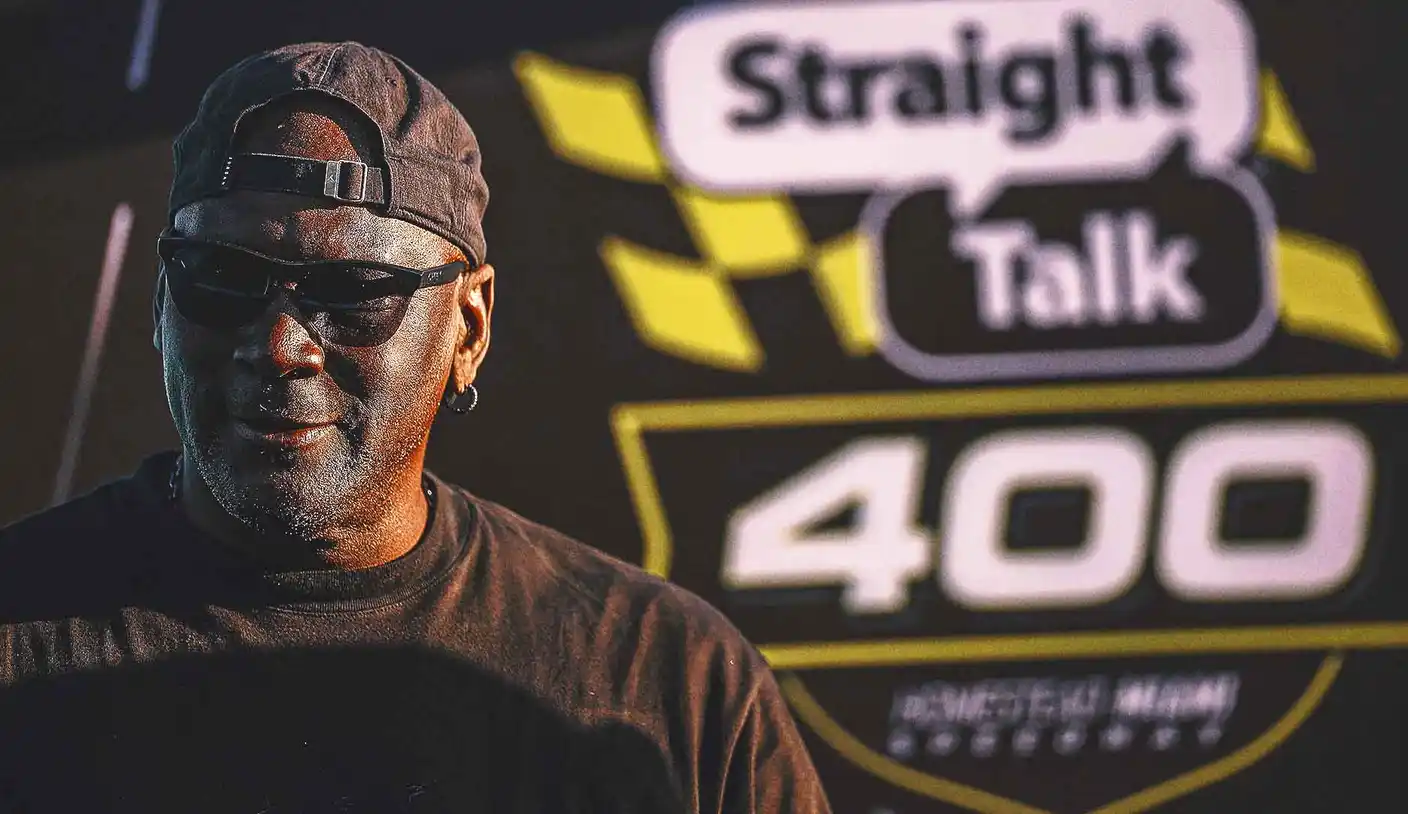
CHARLOTTE, N.C. — Michael Jordan’s race team will continue to compete in NASCAR.
With uncertainty of what would happen to Jordan’s 23XI Racing as well as Front Row Motorsports as they sued NASCAR on antitrust grounds, the two sides settled Thursday after a brutal 15-plus months of sparring in court, especially in the eight days of trial.
The settlement awards charters to 23XI Racing and Front Row Motorsports — both had relinquished their charters when they didn’t sign the 2025-31 agreement to pursue the lawsuit — as well as an amendment to the agreement for all teams with a form of “evergreen” charters, subject to mutual agreement.
Financial terms of the settlement were not disclosed.
“Both parties feel like it’s worth it — because we understand we had to work together,” Jordan said outside the courthouse. “Compromise in every negotiation is one of the toughest things that you can do.
“And I think that you can say that we both compromised on both of our agendas, and I think we both come to the conclusion that it’s better for the sport.”
Michael Jordan and 23XI Racing are pleased with their settlement with NASCAR.
Jordan said they were like “two competitors” in getting the settlement done.
“The fans have always been the best solution to this, over us here, to the sport itself — the only way that, and I’ve said this from Day 1, the only way this sport is going to grow is we have to find some synergy between the two entities,” Jordan said.
“And I think we’ve gotten to that point. Unfortunately, it took 16 months to get here. But I think level heads have got us to this point to where we can actually work together and really grow this sport. I’m very proud about that.”
NASCAR Chairman Jim France stood beside Jordan outside the courthouse.
“I feel the same,” France said. “We can get back to a focus on what we really love, and that’s racing. … We made a very good decision here together. We have a good opportunity here to grow the sport.”
France had just finished testifying Wednesday — Jordan testified the previous Friday — and there were at least two days of witnesses scheduled. But testimony never resumed Thursday as the judge waited two hours for the sides to hash out the settlement.
“I grew up watching [Jim’s] father build this sport,” Jordan said. “I didn’t want to have to tear it down. I don’t think he wanted it to be tore down. But I think in the calmer circumstances, we actually voiced what our interest may have been, collectively, and at the end of the day, we reached some type of compromise.
“And to me, that’s in every negotiation. That’s in every agreement, I’m very happy we stand on this step to move forward, as opposed to moving separate.”
As they waited for the final signatures, NASCAR attorneys shook hands and chatted with Jordan, and NASCAR President Steve O’Donnell talked with the basketball icon after the settlement.
Jordan is the majority owner of 23XI Racing, while star driver Denny Hamlin owns 40 percent. While Jordan has been the national face of the lawsuit, Hamlin has been the face inside the racing industry as his competitor obligations require him to speak to the media prior to every race.
“Everything within the settlement is going to grow the sport,” Hamlin said. “It’s going to be better for everyone. There’s no doubt about it.”
Hamlin seemed confident in the case leading up to the trial as the teams claimed that NASCAR didn’t provide them with an economically viable business model through the charter agreement. The judge had already ruled the teams had a monopoly as NASCAR sanctions the races, owns more than half the tracks and sets a base price for its race cars because of the required use of single-source suppliers for parts and pieces. Exclusivity clauses in the track sanction agreements and the charter agreements with the teams, along with the inability to use the Next Gen car at other events, keep a competitor from forming, the teams alleged.
If the jury determined NASCAR had utilized anticompetitive acts to retain the monopoly, it could have awarded 23XI and FRM combined damages of more than $300 million — and the judge could have tripled that amount.
The judge also could have forced NASCAR to sell its tracks or alter the exclusivity provisions or even get rid of the charter system — a system that guarantees teams a spot in each race and a fixed base of revenue.
The agreement that 13 of the 15 Cup teams signed in September 2024 awards the teams $12-13 million annually, while 23XI and FRM contended that they need $20 million annually. The agreement also ends in 2031 with a potential seven-year extension through 2038 — without the guarantee of any increase in payouts to the teams.
23XI Racing will continue to compete in NASCAR as a result of Thursday’s decision.
In the charter negotiations, teams had lobbied for permanent charters, and that the “evergreen” language for all teams will be added is considered the biggest victory in the lawsuit.
There was no guarantee the teams would win the trial, and the teams faced the prospect of likely going out of business if they remained without charters, as a team without charters likely would make less than $5 million from NASCAR during the season. The teams didn’t sign the charter agreement because of a provision that they could not sue NASCAR, and filed the antitrust lawsuit instead.
“Level heads [won],” Jordan said. “When you get to the finish line, sometimes you have to think not just for yourself, but you got to think about the sport as a whole.
“And I think both parties got to that point, and we realized that we can have an opportunity to settle this, and we dove in, and we actually did it. Unfortunately, it took us that long, but we got here and that’s all that matters.”
NASCAR had contended all along that this was negotiation through litigation. And while the lawsuit is over, bitter feelings could continue.
Several texts and emails of NASCAR executives making disparaging comments about drivers, as well as long-time owner Richard Childress, won’t be forgotten.
The teams also aren’t unscathed as their financial information (just like NASCAR’s) is now public.
The 23XI Racing internal squabbles also were brought to light — Jordan’s own business executives complained about Hamlin and his excessive spending.
“It’s a marriage — if I didn’t have people having checks and balances on me, I’d do everything I could to win races,” Hamlin said. “You always need people within a company [to see] that the business is running properly.
“And that’s essentially what we were trying to protect with this lawsuit – that this team is here for the long run.”
Bob Pockrass covers NASCAR and INDYCAR for FOX Sports. He has spent decades covering motorsports, including over 30 Daytona 500s, with stints at ESPN, Sporting News, NASCAR Scene magazine and The (Daytona Beach) News-Journal. Follow him on Twitter @bobpockrass.
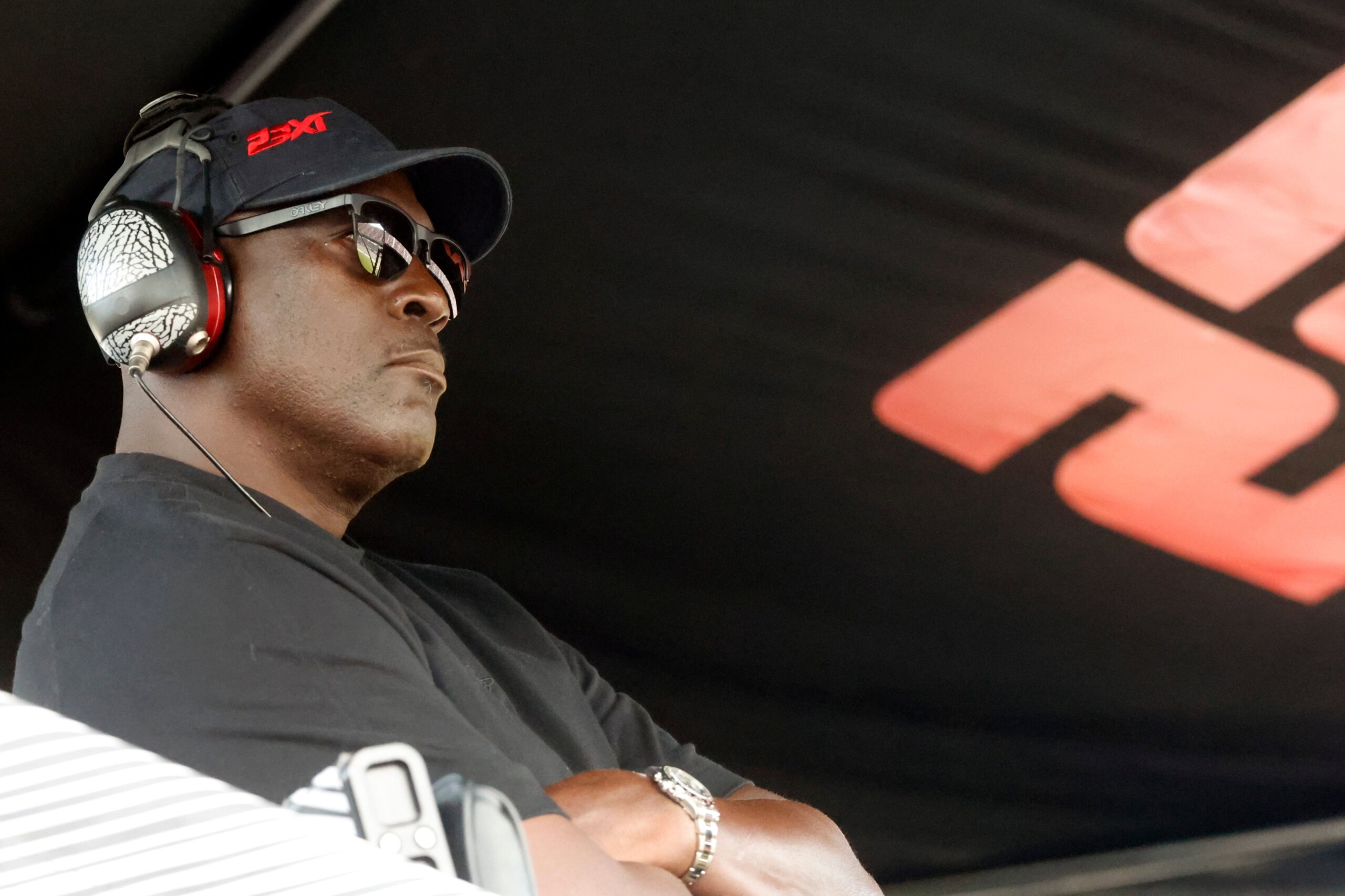
NASCAR has reached a settlement of the bruising antitrust lawsuit filed against it by two of its race teams, including one co-owned by NBA great Michael Jordan.
CHARLOTTE, N.C. (AP) — Michael Jordan and NASCAR chairman Jim France stood side-by-side on the steps of a federal courthouse as if they were old friends following a stunning settlement Thursday of a bruising antitrust case in which the Basketball Hall of Famer was the lead plaintiff in a lawsuit accusing the top racing series in the United States of being a monopolistic bully.
The duo was flanked by three-time Daytona 500 Denny Hamlin and Curtis Polk, who co-own 23XI Racing with Jordan, Front Row Motorsports owner Bob Jenkins and over a dozen lawyers as they celebrated the end to an eight-day trial that ultimately led NASCAR to cave and grant all its teams the permanent charters they wanted.
“Like two competitors, obviously we tried to get as much done in each other’s favor,” Jordan said, towering over the 81-year-old France. “I’ve said this from Day 1: the only way this sport is going to grow is we have to find some synergy between the two entities. I think we’ve gotten to that point, unfortunately it took 16 months to get here, but I think level heads have gotten us to this point where we can actually work together and grow this sport. I am very proud about that and I think Jim feels the same.”
France concurred.
“I do feel the same and we can get back to focusing on what we really love, and that’s racing, and we spent a lot of time not really focused on that so much as we needed to be,” France said. “I feel like we made a very good decision here together and we have a big opportunity to continue growing the sport.”
A charter is the equivalent of the franchise model used in other sports and in NASCAR it guarantees 36 teams a spot in every top-level Cup Series race and a fixed portion of the revenue stream. The system was implemented in 2016 and teams have argued for over two years that the charters needed to be made permanent — they had been revokable by NASCAR — and the revenue sharing had to change.
NASCAR, founded and privately owned by the Florida-based France family, never considered making the charters permanent. Instead, after two-plus years of bitter negotiations, NASCAR in September 2024 presented a “take-it-or leave-it” final offer that gave teams until end of that day to sign the 112-page document.
23XI and Front Row refused and sued, while 13 other organizations signed but testimony in court revealed many did so “with a gun to our head” because the threat of losing the charters would have put them out of business.
Jordan testified early in the trial that as a new team owner to NASCAR — 23XI launched in 2021 — he felt he had the strength to challenge NASCAR. Eight days of testimony went badly for NASCAR, which when it began to present its case seemed focused more on mitigating damages than it did on proving it did not violate antitrust laws.
Although terms of the settlement were not released — NASCAR was in the process of scheduling a Thursday afternoon call with all teams to discuss the revenue-sharing model moving forward — both Jordan and NASCAR said that charters will now be permanent for all teams. 23XI and Front Row will receive their combined six charters back for 2026.
An economist has previously testified that NASCAR owes 23XI and Front Row $364.7 million in damages, and that NASCAR shorted 36 chartered teams $1.06 billion from 2021-24.
“Today’s a good day,” Jordan said from the front-row seat he’s occupied since the trial began Dec. 1 as he waited for the settlement announcement.
U.S. District Judge Kenneth Bell, who had presided over two days of failed settlement talks before the trial began, echoed the sentiment. Bell told the jury that sometimes parties at trial have to see how the evidence unfolds to come to the wisdom of a settlement.
“I wish we could’ve done this a few months ago,” Bell said in court. “I believe this is great for NASCAR. Great for the future of NASCAR. Great for the entity of NASCAR. Great for the teams and ultimately great for the fans.”
The settlement came after two days of France testimony and the Wednesday night public release of a letter from Bass Pro Shops founder Johnny Morris calling for NASCAR Commissioner Steve Phelps to be removed.
The discovery process revealed internal NASCAR communications in which Phelps called Hall of Fame team owner Richard Childress a “redneck” and other derogatory names; Bass Pro sponsors Childress’ teams, as well as some others, and Morris is an ardent NASCAR supporter.
Childress gave fiery testimony earlier this week over his reluctance to sign the charter agreement because it was so unfair to the teams, which have been bleeding money and begged NASCAR for concessions. Letters from Hall of Fame team owners Joe Gibbs, Rick Hendrick, Jack Roush and Roger Penske were introduced in which they pleaded with France for charters to become permanent; France testified he was not moved by the men he considers good friends.
Hendrick and Penske, who were both scheduled to testify Friday, expressed gratitude that a settlement had been reached. Penske called it “tremendous news” and cleared the way to continue growing the series.
“Millions of loyal NASCAR fans and thousands of hardworking people rely on our industry, and today’s resolution allows all of us to focus on what truly matters – the future of our sport,” Hendrick said. “This moment presents an important opportunity to strengthen our relationships and recommit ourselves to building a collaborative and prosperous future for all stakeholders. I’m incredibly optimistic about what’s ahead.”
The settlement came abruptly on the ninth day of the trial. Bell opened expecting to hear motions but both sides asked for a private conference in chambers. When they emerged, Bell ordered an hour-long break for the two sides to confer. That turned into two hours, all parties returned to the courtroom and Kessler announced an agreement had been reached.
“What all parties have always agreed on is a deep love for the sport and a desire to see it fulfill its full potential,” NASCAR and the plaintiffs said in a joint statement. “This is a landmark moment, one that ensures NASCAR’s foundation is stronger, its future is brighter and its possibilities are greater.”
___
AP auto racing: https://apnews.com/hub/auto-racing
Copyright
© 2025 The Associated Press. All rights reserved. This material may not be published, broadcast, written or redistributed.
CHARLOTTE, N.C. — NASCAR and the two organizations suing it, Front Row Motorsports and the Michael Jordan-owned 23XI Racing, reached a settlement agreement, an attorney said in court Thursday, ending the antitrust case the race teams brought against the league and its chairman and CEO, Jim France.
“I’m pleased to say the parties have positively settled this matter in a way that will benefit the industry going forward,” Jeffrey Kessler, attorney for the teams, said.
After a 14-month legal battle and eight days of sparring in court that threatened to dramatically reshape the most popular form of motorsport in the United States, the sides reached a deal over the contentious charter negotiations that culminated in 2024, leaving 23XI and Front Row accusing NASCAR of monopolistic practices.
Full terms of the settlement were not yet known, but The Athletic confirmed the teams got back their three charters each, previously lost during the litigation. The teams will also get some form of “evergreen” charters, which was one of the plaintiffs’ chief desires in their lawsuit filed in October 2024. The latest deal to extend the charters — which operate like franchises in other sports and guarantee teams certain revenues — was most recently renegotiated in 2024. Thirteen of 15 teams signed the new agreement; the two holdouts were 23XI and Front Row, who then filed the lawsuit.
A call between NASCAR and the teams was expected Thursday afternoon.
“I’ve said this from Day 1: Only way this sport is going to grow is we have to find some synergy between the two entities, and I think we’ve gotten to that point,” Jordan said outside the courthouse. “Unfortunately, it took 16 months to get here, but I think, level heads got us to this point to where we can actually work together and grow this sport. I’m very proud about that. And I think (France) feels the same.”
France, speaking right after Jordan, agreed.
“We can get back to focusing on what we really love, and that’s racing,” France said. “We spent a lot of time not really focused on that as much as we need to be. So I feel like we’ve made a very good decision here together, and we have a big opportunity to continue growing the sport.”
Bob Jenkins, owner of Front Row, told The Athletic, “We’re ready to go racing.”
The presiding judge, Kenneth D. Bell, told the parties it was “the right thing to do” and congratulated both sides.
“This is going to be great for the entity NASCAR, the industry NASCAR, the teams, the drivers, and as you have so often said yourselves, ultimately the fans,” Bell said, adding that he was “very happy” with the settlement agreement.
Afterward, there was a big scene in the courtroom with handshakes and even hugs between all the participants on both sides. Even Denny Hamlin, 23XI’s co-owner, and France hugged.
The jury trial began last week, with a host of prominent NASCAR figures called to the witness stand, including 23XI’s Jordan and Hamlin and top NASCAR executives Steve O’Donnell, Steve Phelps and France.

Denny Hamlin and Michael Jordan, co-owners of 23XI Racing. (Chris Graythen / Getty Images)
In the lawsuit, 23XI and Front Row alleged NASCAR and France used “anticompetitive and exclusionary practices” to “enrich themselves at the expense of the premier stock car racing teams.”
The suit came a month after 13 charter-holding teams signed what was effectively a take-it-or-leave-it offer from NASCAR. Some of the teams felt they had to sign or risk NASCAR discontinuing the charter system.
Front Row and 23XI were the only teams that opted not to sign the extension. And since then, the teams and the league have often traded public barbs while also acquiring high-profile attorneys who are experts in antitrust cases, with Chris Yates representing NASCAR and Kessler representing 23XI/Front Row.
Holding one of 36 available charters is akin to owning a franchise in most stick-and-ball leagues, with the benefits including certain financial guarantees and entry into all 36 points races in NASCAR’s premier Cup Series. Charter values have skyrocketed in recent years, going from as low as $2 million to the most recent sale this summer, which went for $45 million. The money associated with owning a charter, and the expected continued growth in value, further complicated settlement negotiations.
The settlement is likely to be welcome across the industry. The lawsuit has cast a big shadow over the sport for the past 12 months and was a dominant storyline heading into NASCAR’s Cup Series championship race earlier this month in Phoenix, where Hamlin was one of the four finalists vying for NASCAR’s top prize.
The discovery process and trial also revealed a great deal of bad blood. Phelps was revealed in text messages to have called Hall of Fame owner Richard Childress a “stupid redneck” who should be “taken out back and flogged.” Hamlin gave a fiery testimony during the trial’s opening days, saying, “We want to be made whole for what you guys did to us,” regarding the charter agreements.
Meanwhile, France maintained in testimony that he was not willing to budge on allowing permanent charters.
“I don’t know how you can set anything in this changing world we’re in as permanent,” France said. “I’m just not comfortable making agreements that go on forever.”
The stakes of the trial were high, and Judge Kenneth D. Bell had warned that the consequences would be disastrous.
If the teams had prevailed, Bell indicated he could force NASCAR to sell its racetracks or the France family to cede control of the sport. If NASCAR had prevailed, two teams would be without charters and likely out of business — including one owned by an NBA legend and one of the planet’s most famous athletes, who would likely then be out of the sport.
The settlement comes a few weeks after high-ranking NASCAR executives and the ownership for both teams participated in a two-day settlement conference. The first day of those talks was considered encouraging, while the second day was less so. Following these discussions, NASCAR was determined to settle in advance of the championship weekend, though it was unsuccessful.
Now, after months of litigation, with attorney fees for each side mounting to eight figures, and with the sport facing a potentially cataclysmic outcome no matter who prevailed, the sides have reached the checkered flag.

Fans entering the 2025–26 NASCAR season are navigating a sponsorship landscape that runs on three different playbooks. O’Reilly Auto Parts Series and CRAFTSMAN continue enforcing old-school category protection through the Viceroy Rule, limiting which brands can appear on cars and pit walls. Meanwhile, the Cup Series uses a premier partner model that comfortably allows competing brands to coexist on Sundays. Fuel suppliers remain locked into exclusivity across all national series, explaining why some companies appear freely while others are nowhere to be found. Understanding these rules helps fans make sense of the sponsorship puzzles they notice every race weekend.
For fans, sponsorship rules matter because they directly shape what becomes visible on cars, pit walls, graphics, and broadcasts. The contrast between O’Reilly Auto Parts Series and CRAFTSMAN’s category-protected world and the Cup Series’ open premier partner environment becomes obvious every time the camera slows for pit stops. Old-school boundaries in two series and flexible overlap in the third create a fragmented advertising picture that fans decode subconsciously while watching. This blend of exclusivity and openness forms a sponsorship universe where some brands thrive, and others cannot appear, leading fans to try to understand why certain logos dominate while others never surface.
The Viceroy Rule controls which companies can take over the most valuable real estate on O’Reilly Auto Parts Series and Truck Series vehicles. It blocks direct rivals to the entitlement of sponsor from securing primary positions even if those brands want to invest heavily. Fans watching qualifying or the grid notice certain telecom or tool competitors are missing, not because they lack interest, but because category protection stops them at the door. This legacy rule ensures that O’Reilly Auto Parts Series and CRAFTSMAN maintain top billing, shaping the broadcast’s visual identity by preventing direct challengers from securing hood takeovers or full-vehicle branding.
The O’Reilly Auto Parts Series Series, backed by Comcast’s O’Reilly Auto Parts Series brand since 2015, features consistent visibility on broadcasts and throughout race weekends. Even in 2025–26, category protection continues steering which brands appear on the hood. Rivals to O’Reilly Auto Parts Series’s core business cannot purchase primary sponsorship positions, creating a visual field dominated by non-competitive brands. Associate partners may show up in small decals, but the main panels remain free from direct telecom adversaries. This ensures O’Reilly Auto Parts Series preserves unmistakable prominence while viewers see controlled sponsor diversity designed to uphold the entitlement brand’s category rights across every camera angle.
The CRAFTSMAN Truck Series mirrors this structure within the tools category. CRAFTSMAN’s return as title sponsor produced heavy integrations: logos on pit boxes, visible equipment, uniforms and official signage. Direct tool competitors cannot take primary sponsorship roles because the Viceroy Rule protects CRAFTSMAN’s status. Fans watching pit stops notice that tool chests, wall signage and crew gear all align with the entitlement sponsor. Even if rival tool companies appear in NASCAR more broadly, the Truck Series protects CRAFTSMAN’s dominance, keeping primary positions unavailable to competitors and preserving a unified visual identity throughout the season.
The Cup Series breaks from tradition with a premier partner model, featuring Busch, Coca-Cola, GEICO, O’Reilly Auto Parts Series and new additions like Freeway Insurance in 2026. Without strict category blocking, Cup broadcasts present a diverse sponsor environment where competing beverage companies, insurers or telecom brands might appear simultaneously. Fans often see one premier partner highlighted in race graphics while another company in the same broad space appears on a car moments later. The format spreads exposure across multiple partners, giving the Cup broadcast a more crowded advertising ecosystem compared with the comparatively restricted O’Reilly Auto Parts Series and Truck Series.
Fuel is not the only category with strict protection. Tires and several competition-critical equipment categories also remain exclusive, giving certain brands permanent visibility. CRAFTSMAN’s Truck Series presence extends to tools and equipment, while NASCAR’s tire provider stays constant across the board. Fans who notice limited variety in these categories are witnessing deliberate exclusivity, not a lack of interest from outside brands. Teams may still work with technology or lifestyle partners, but these protected segments create the consistent visual backdrops that define every race weekend.
Broadcast-side advertising operates under entirely different constraints. Fans in states with legal online betting might see digital overlays or commercial breaks promoting welcome offers. This advertising layer contrasts sharply with on-car rules. Although betting companies cannot place logos on race vehicles due to category limitations and regulatory considerations, viewers may still encounter promotions split by geographic targeting. This is where a FanDuel promo code might appear on screen even when no betting brand appears on the hood, highlighting the divide between NASCAR’s sponsorship framework and its broadcast advertising landscape.
Fan confusion often starts with comparing visuals across series. One brand appears on a Cup car yet is absent in O’Reilly Auto Parts Series or Trucks. The explanation typically lies in whether a brand fits into a protected category. Cup’s system tolerates overlap, while O’Reilly Auto Parts Series and CRAFTSMAN enforce strict rival exclusion. Once fans understand the category boundaries and series-specific rules, those debates about sponsor fairness begin making more sense, revealing a sponsorship map shaped by entitlement deals rather than random visibility.
Sponsorship rules define the visual experience of NASCAR more than most fans realize. O’Reilly Auto Parts Series and CRAFTSMAN maintain old-school category protection that keeps direct rivals away from primary panels, while Cup embraces a competitive marketplace. Fuel and tires remain permanently exclusive. Understanding these structures allows fans to interpret why certain brands dominate Saturdays and Trucks, why Cup feels more crowded, and why some ads appear only on TV. As NASCAR adjusts partnerships in future seasons, fans will continue reading sponsorship signals that shape how every race looks, feels and is commercially constructed.
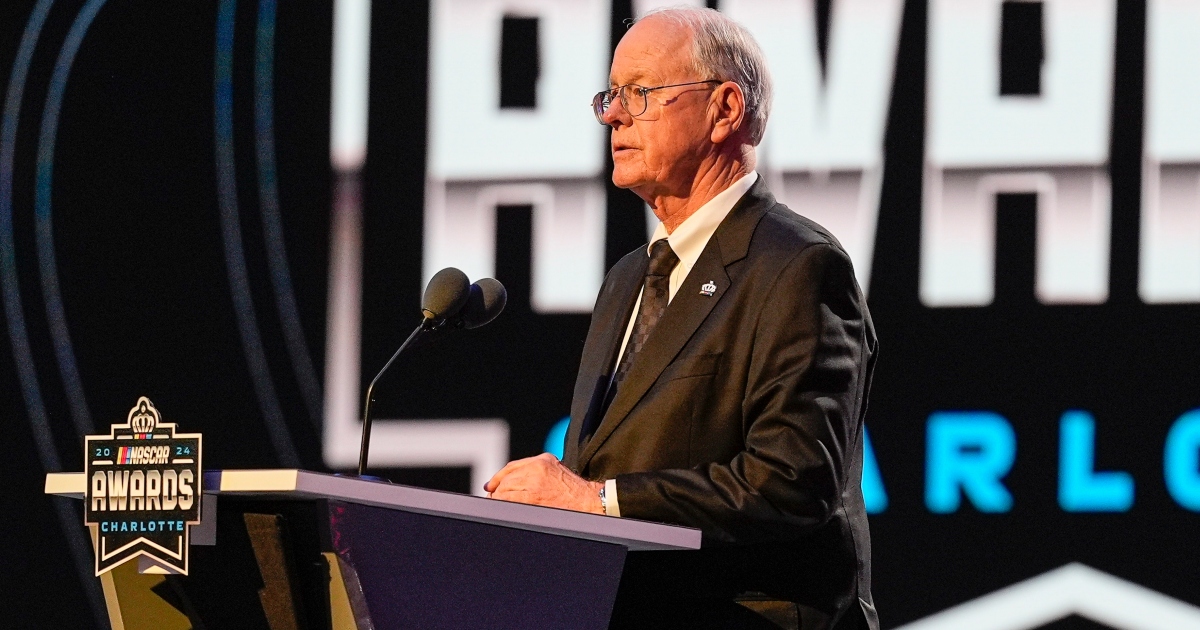
Today’s settlement in the NASCAR antitrust lawsuit has the racing world abuzz. Jim France released an official statement afterward. It appears that both sides have been able to come to an agreement, and that means substantial changes in the sport. 23XI Racing and Front Row earned their charters back and evergreen, permanent charters for all teams.
The teams were unable to negotiate for permanent charters in the 2025 Charter Agreement. Many owners, if not all, have expressed a desire to see charters become permanent and fully establish a franchise system like in other American sports leagues.
With the charters becoming permanent, Jim France has given in on one of his biggest sticking points. Months of litigation and eight days of a trial were all it took!
“The outcome gives all parties the flexibility and confidence to continue delivering unforgettable racing moments for our fans, which has always been our highest priority since the sport was founded in 1948,” France said. “We worked closely with race teams to create the NASCAR charter system in 2016, and it has proven invaluable to their operations and to the quality of racing across the Cup Series.
“Today’s agreement reaffirms our commitment to preserving and enhancing that value, ensuring our fans continue to enjoy the very best of stock car racing for generations to come. We are excited to return the collective focus of our sport, teams and racetracks toward an incredible 78th season that begins with the Daytona 500 on Sunday, Feb. 15, 2026.”
Jim France and Denny Hamlin reportedly hugged after the settlement was announced. Both sides were able to come together, shake hands, and celebrate this outcome. Now, what’s next?
It is so frustrating to see this outcome in many ways. The permanent charters disagreement was always simple. NASCAR and Jim France should have adopted permanent charters in the 2025 Charter Agreement to begin with. However, they let almost a year and a half of litigation and a trial happen before giving it up.
Permanent charters are going to be good for NASCAR. Having a franchise system that has stability and a future beyond the media rights agreement is good. The value of those teams is going to go up. It will also help make NASCAR look and feel like a modern professional sports league.
Jim France is a proud man, and he should be. There are times when pride can get in the way of common sense. Still, it is a good thing that we are here. A jury deciding this case and then a judge deciding the future of NASCAR would have been tumultuous. The best time to do permanent charters was 2024, the next best time was as soon as possible. I guess this was the as soon as possible.

CHARLOTTE, N.C. — NASCAR has reached a settlement of the bruising antitrust lawsuit filed against it by two of its race teams, including one co-owned by NBA great Michael Jordan.
The Thursday settlement was announced following a lengthy delay on the ninth day of the trial in federal court. Details were not immediately released.
Advertisement
U.S. District Judge Kenneth Bell opened the day preparing the hear motions but called an hour-long sidebar. Jeffrey Kessler, attorney for 23XI Racing and Front Row Motorsports, emerged from a conference room at the end of the hour to inform a court clerk “we’re ready.” Kessler then led Jordan and 23XI co-owner Denny Hamlin, as well as Front Row owner Bob Jenkins, out of the courtroom to another room for more talks.
23XI and Front Row filed suit last year after refusing to sign agreements on the new charter offers NASCAR presented to teams in September 2024. Teams had until end of day to sign the 112-page document and 13 of 15 organizations reluctantly agreed. Jordan and Jenkins sued instead and raced the bulk of 2025 uncharted.


 Why a rising mid-major power with an NCAA Tournament team opted out of revenue-sharing — and advertised it
 NBA Legend Michael Jordan to Join NBC Sports as Special Contributor
 Falcons mailbag
 Portal Update – Basketball and Gymnastics Take Hits
 has always dreamed in Mercurial. Now his initials are on the boots.
The new Kyl…
has always dreamed in Mercurial. Now his initials are on the boots.
The new Kyl…
First Tee Winter Registration is open
Fargo girl, 13, dies after collapsing during school basketball game – Grand Forks Herald

CPG Brands Like Allegra Are Betting on F1 for the First Time

F1 Las Vegas: Verstappen win, Norris and Piastri DQ tighten 2025 title fight
Two Pro Volleyball Leagues Serve Up Plans for Minnesota Teams

Utah State Announces 2025-26 Indoor Track & Field Schedule
Sycamores unveil 2026 track and field schedule
Redemption Means First Pro Stock World Championship for Dallas Glenn
Jo Shimoda Undergoes Back Surgery

Texas volleyball vs Kentucky game score: Live SEC tournament updates