
NIL
2025 Sun Belt Conference college football projections, preview

-

Bill Connelly
James Madison has won 28 games in three seasons, while South Alabama has won 24. Louisiana has four 10-win seasons in the past six years, Troy has five in the past nine, and Appalachian State has five in the past 10. Hell, even with a recent stumble, Coastal Carolina has two in the past five.
Texas State is coming off its two best FBS seasons. Georgia Southern is coming off its best season in four years, Arkansas State and Louisiana-Monroe their best in five and Marshall its best in nine. Even Georgia State has five winning seasons in the past eight years.
Nearly everyone in the Sun Belt has reached solid to great heights of late. Considering the immutable fact that someone has to lose every football game, that’s an awfully impressive sign of parity and general conference health.
At the moment, though, there’s a bit of a leadership void: Troy lost its head coach after winning the 2022 and 2023 Sun Belt titles and fell off last fall, and damned if Marshall doesn’t look primed to do exactly the same after last season’s title run. Does that mean it’s James Madison’s turn? The Dukes dropped the baton in 2024, falling out of contention thanks to a pair of maddening two-point losses. If they stumble again, will that leave the door open for Louisiana? Texas State? South Alabama? Another team?
Someone has to come out on top. Let’s preview the Sun Belt!
Every week through the summer, Bill Connelly will preview another FBS conference, ultimately including all 136 FBS teams. The previews will include 2024 breakdowns, 2025 previews and team-by-team capsules.
Earlier previews: MAC | Conference USA | Mountain West

2024 recap
Last season, the best teams on paper weren’t the best in close games, and that made the Sun Belt race an awfully surprising one. James Madison and Texas State both finished in the SP+ top 50, but they each went 1-2 in one-score Sun Belt finishes, and late defensive stumbles left them on the outside of the conference race. South Alabama hinted at major upside but couldn’t close games out either.
Louisiana was next up on the SP+ hierarchy and used a six-game winning streak to earn a spot in the Sun Belt championship game, but a pair of late-season QB injuries rendered its offense incompetent in the title game. And while everyone else was stumbling late, Marshall peaked: The Thundering Herd ranked 82nd in SP+ with just a 5-3 record heading into Week 11 but won their last five games by an average of 35-19 and grabbed the title, all while an evidently contentious school/coach relationship was pushing Charles Huff out the door. (He landed at Southern Miss.)
It was an odd season, in other words. And if I have any say in the matter, 2025 will be just as odd.
Continuity table
The continuity table looks at each team’s returning production levels (offense, defense and overall), the number of 2024 FBS starts from both returning and incoming players, and the approximate number of redshirt freshmen on the roster heading into 2025. (Why “approximate”? Because schools sometimes make it very difficult to ascertain who redshirted and who didn’t.) Continuity is an increasingly difficult art in roster management, but some teams pull it off better than others.
We’re quickly growing accustomed to a new head coach bringing some of his old players with him. But we’ve got an extreme example of that going on at Southern Miss in 2025: When USM hired Huff the day after Marshall’s Sun Belt championship win, so many Marshall players entered the transfer portal that the school had to opt out of its Independence Bowl berth.
When the dust settled, 50 Marshall players had entered the portal in the winter and spring windows, and 21 of them had landed at Southern Miss. About one-fourth of the Golden Eagles’ roster played in Huntington last year. And despite new Herd head coach Tony Gibson bringing in 55 transfers of his own, Marshall heads toward the 2025 season with the lowest returning production averages in the country. The Herd officially return three starters from last year’s champ, while Southern Miss, which went 1-11 last season, returns five. Mind-blowing stuff.
Other interesting continuity notes: Despite losing star running back Ahmad Hardy to Missouri, ULM’s production numbers are good after a refreshing 5-7 campaign in Bryant Vincent’s first season at the helm; Georgia Southern hit the 60% mark as well; and at the other end, App State is starting over: After suffering their first losing season at the FBS level, the Mountaineers will have a new head coach (Dowell Loggains) and approximately 17 new starters.
2025 projections
SP+ basically declares JMU the favorite, then shrugs. The Dukes were frustrating but frequently awesome in 2024, and they return exciting dual-threat quarterback Alonza Barnett III — assuming full health after a late-season injury, anyway — plus a loaded running back room and, despite losing star defensive end Eric O’Neill to Rutgers, maybe the conference’s most proven set of defensive personnel. They deserve the top spot, and if they stumble again, I have absolutely no idea who should be next on the list.
Meanwhile, the projections for Marshall and Southern Miss serve as a reminder that, despite making lots of adjustments to how I go about creating SP+ projections, it’s really hard to get a statistical read on what either the Herd or Golden Eagles might be capable of in 2025. I would expect Southern Miss to be a prime overachievement candidate, while Marshall really might struggle to even rank 87th.
East divisionTEAMCONF. WCONF. TITLE %11+ WINS %6+ WINS %James Madison6.020.8%7.0%98.6%Ga. Southern5.010.6%1.1%88.3%Coastal Caro.4.17.0%0.1%62.6%App. St.4.06.4%0.2%67.4%Marshall3.45.6%0.0%54.0%Old Dominion3.65.1%0.0%32.2%Georgia St.2.42.8%0.0%10.2%West divisionTEAMCONF. WCONF. TITLE %11+ WINS %6+ WINS %S. Alabama5.210.0%1.1%87.0%Louisiana4.99.3%1.3%91.0%Troy4.87.9%0.2%76.1%Texas St.4.16.1%0.1%64.8%Arkansas St.3.64.4%0.0%43.6%UL-Monroe2.82.5%0.0%23.2%So. Miss2.11.5%0.0%8.8%Indeed, after JMU up top, SP+ gives nine teams between a 5% and 11% chance of winning the conference title. As with last year, whoever wins its close games and peaks in November will have an excellent chance.Five best games of 2025Here’s where I typically share the five conference games that feature (a) the highest combined SP+ ratings for both teams and (b) a projected scoring margin under 10 points. But since all the top games (and the top nonconference game) feature James Madison — the Dukes have quite the road slate ahead — I tweaked the approach a bit. Here are five big games, if not the five best as defined above.James Madison at Liberty (Sept. 20). For all we know, this one might have College Football Playoff implications. JMU and Liberty have been two of the more steadily strong Group of 5 programs over the last two or three years, and both stumbled at inopportune times in 2024.Editor’s Picks2 RelatedJMU’s schedule is a road-heavy delight, from top to bottom. The Dukes visit Louisville and Liberty in September, then visit Texas State, Marshall and Coastal Carolina over the back half of the season. Throw in home games against Georgia Southern and Louisiana and a late November visit from Washington State, and you’ve got one unique slate.Georgia Southern at James Madison (Sept. 27). SP+ is optimistic about Georgia Southern’s chances of becoming a contender in 2025, and this game will be a pretty solid prove-it opportunity in that regard.South Alabama at Troy (Oct. 4). South Alabama might have lost more talent than anyone else in FBS in the spring portal window, but the Jaguars still return quite a bit, and Troy’s continuity levels are solid after a setback season. Depending on how well Texas State handles roster turnover, the winner of this one could become Louisiana’s biggest competitor in the West Division. (That’s right: The Sun Belt still has divisions! And makes actual geographic sense!)Louisiana at James Madison (Oct. 11) and Louisiana at South Alabama (Nov. 1). Like JMU, Michael Desormeaux’s Ragin’ Cajuns will need to be road warriors to fulfill their potential.Conference title (and, therefore, CFP) contenders Head coach: Bob Chesney (second year, 9-4 overall)2025 projection: 49th in SP+, 8.5 average wins (6.0 in the Sun Belt)Georgia Southern, Appalachian State, Coastal Carolina, Liberty, Jacksonville State, Sam Houston … we’ve seen plenty of excellent FCS-to-FBS transitions through the years. But JMU might turn out to be the gold standard in this regard. The Dukes began FBS life with five straight wins and an AP poll appearance, and it was a genuine surprise that they didn’t play for the Sun Belt title in their first season eligible last year. The next time they finish outside of the SP+ top 50 will be the first, and they aren’t projected to do so in 2025.
With George Pettaway leading the way, James Madison has one of the best running back groups in the country. AP Photo/Lynne SladkyIt would be even brighter, potentially, if we knew Alonza Barnett III would be 100%. The junior QB combined 2,598 passing yards (and a 26-to-4 TD-to-INT ratio) with 669 non-sack rushing yards last year before injuring his leg against Marshall. He was cleared only for non-contact drills this spring, and his status remains unclear. Heading into his second season after succeeding Curt Cignetti, Chesney took no chances, bringing in two QB transfers: Richmond’s Camden Coleman and Matthew Sluka;. Sluka is known primarily for his NIL-related opt-out at UNLV last season, but before that he was a star for Chesney at Holy Cross, leaving as the Crusaders’ No. 2 career rusher and No. 5 career passer and a two-time Walter Payton Award finalist (top player in FCS). Chesney and offensive coordinator Dean Kennedy love a nice, durable dual-threat QB, and both Sluka and Coleman (to a degree) qualify if Barnett isn’t ready.
The RB corps might be one of the best in the FBS. George Pettaway and backups Wayne Knight and Jobi Malary combined to average 22 carries per game and 6.0 yards per carry, and Ayo Adeyi, injured for most of 2024, was a 1,000-yard rusher at North Texas in 2023. The line in front of them does have to replace three starters, but right tackle Pat McMurtrie is the only returning player on the first-team All-Sun Belt list, three other returning veterans have starting experience, and Chesney brought in former North Carolina center Zach Greenberg and all-Patriot League selection Cam McNair (Holy Cross), among four transfers. He also dipped heavily into the portal to find pass catchers: Sure-handed slot man Yamir Knight will be joined by both former power conference reserves in Braeden Wisloski (Maryland) and 6-foot-4 Isaiah Alston (Iowa State) and FCS starters Landon Ellis (Richmond), Nick DeGennaro (Richmond) and Jaylan Sanchez (Villanova).
Chesney also was pretty aggressive on defense, adding 13 transfers to a lineup that boasts some proven pieces — 315-pound tackle Immanuel Bush, linebacker Trent Hendrick, safety Jacob Thomas, nickel DJ Barksdale — but returns only seven of the 19 players who saw at least 200 snaps in 2024. Again, he dipped heavily into the FCS ranks, bringing in stars such as defensive end Xavier Holmes (12.5 TFLs at Maine), tackle Andrew Taddeo (7.5 TFLs at Colgate), linebacker JT Kouame-Yao (11.5 TFLs at Shepherd), safety Curtis Harris-Lopez (9.5 TFLs and nine passes defended at Holy Cross) and corner TJ McGill (six passes defended as a freshman at William & Mary), plus former blue-chip defensive end Aiden Gobaira (Notre Dame).
There are enough new pieces here that success isn’t guaranteed, but the combination of proven talent and proven smaller-school playmakers — especially at a school that has more than proven that FCS stars can become FBS stalwarts — makes JMU the preseason conference favorite. It’s up to the Dukes to close the deal this time.

Head coach: Major Applewhite (second year, 7-6 overall)
2025 projection: 76th in SP+, 7.3 average wins (5.2 in the Sun Belt)
As a redshirt freshman, Gio Lopez ranked seventh among G5 quarterbacks in Total QBR. He’s a North Carolina Tar Heel now. As a true freshman, Fluff Bothwell was a bolt of lightning, gaining 924 yards in just 124 combined rushes and receptions and scoring 13 times. He’s now a Mississippi State Bulldog. Right tackle Malachi Carney (Georgia Tech) … edge rusher Aakil Washington (SMU) … cornerbacks Lardarius Webb Jr. (Wake Forest) and Amarion Fortenberry (Kansas State) … injured cornerback Ricky Fletcher (Ole Miss) … nickel back Jordan Scruggs (West Virginia) … even kicker Laith Marjan (Kansas). A whole bunch of South Alabama players flashed major potential, then got plucked away in the transfer portal. Offensive coordinator Rob Izell (Wake Forest) basically did too.
Players moving up and down the ladder with lightning speed is a symptom of the portal era, and few schools had more players move up than Major Applewhite’s USA. If you look solely at who they don’t have, in fact, it’s hard to envision the Jags playing a major role in the Sun Belt race in 2025.
If you look at who they do have, however, they might still have a chance:
• Quarterbacks Bishop Davenport and Zach Pyron (Georgia Tech) both have starting experience and have flashed dual-threat capabilities.
• Veteran running back Kentrel Bullock had 984 rushing and receiving yards (5.9 per touch) despite sharing touches with Bothwell.
• Left tackle Jordan Davis is an all-conference contender and one of three returning starters up front. Applewhite managed to hold on to most of last year’s two-deep, in fact, and added six O-line transfers.
• Defensive tackle Ed Smith IV made 7.0 tackles at or behind the line last year and has strong pass rushing chops for his size, and 334-pound Stephen Johnson (McNeese State) is one of four defensive line transfers.
• Linebacker Blayne Myrick is among the most proven run stoppers in the league.
Few of Applewhite’s defensive transfers have a disruptive track record like JMU’s — defensive end IBK Mafe (St. Thomas) and corner Jayvon Henderson (East Tennessee State) are the most promising in that regard — but most of them are higher-upside youngsters who might develop into solid pieces. (Of course, that also might mean they get plucked away.) If either Davenport or Pyron are ready to shine and an unproven receiving corps provides some semblance of value, it sure seems like there’s enough talent here to at least continue a three-year run of bowl eligibility. Sun Belt contention will require quite a few newcomers and youngsters to break through. Considering how many did last year, there’s a chance.

Head coach: Clay Helton (fourth year, 20-19 overall)
2025 projection: 78th in SP+, 7.3 average wins (5.0 in the Sun Belt)
Clay Helton served as an early model of how portal life can work when he arrived at Georgia Southern in 2022, immediately reset the Eagles’ entire identity with a batch of key transfers and still managed to upset Nebraska and double their win total. I don’t want to overstate his success — he’s basically .500 through three years — but in an increasingly volatile G5 environment, he’s produced stable results. And despite offensive inconsistency, last year was his best yet: Georgia Southern inched up to 76th in SP+ and won eight games.
In 2025, Helton and the Eagles boast a promising combination of proven pieces and intriguing new ones. Quarterback JC French threw too many interceptions last year (11) and must improve in that regard, but in slot receivers Dalen Cobb and Josh Dallas (combined: 1,213 yards and 10 TDs), tight end River Helms (Western Kentucky) and returning third-down back OJ Arnold, the Eagles have the components of an efficient attack. That’s doubly true when you see that they have the most proven interior line in the league: Both guards, Pichon Wimbley and Caleb Cook, are all-conference contenders. A little big-play boost would be great — Dallas did average 13.4 yards per catch, and incoming transfer Dylan Gary (West Georgia) averaged 16.9 in FCS — but there are proven commodities here for coordinator Ryan Aplin.
The defense was too bend-don’t-break for my taste, but it was also the most competent defense yet for Helton and coordinator Brandon Bailey: The Eagles’ No. 91 defensive SP+ ranking was their best since 2020. Helton was evidently confident enough in what he’s returning that he mostly aimed young in the portal, bringing in five redshirt freshmen or sophomores (all former high-three or four-star recruits) among eight transfers. Senior linebacker Brendan Harrington (Appalachian State) should provide stability, but this year’s success will be driven primarily by returnees like 340-pounder Latrell Bullard up front and nickel Ayden Jackson and corners Tracy Hill Jr. and Chance Gamble in the back.
The upside here isn’t enormous, but big-play prevention and an efficient offense should drive another bowl season at worst. And if JMU indeed falters again, the Eagles’ high floor and solid veterans might make them the most likely team to take advantage in the East division. We’ll know what we need to know pretty early on: Their rough nonconference schedule (at Fresno State, at USC, Jacksonville State) will either beat them down or properly prepare them for a Sun Belt slate that begins with a trip to JMU.

Head coach: Michael Desormeaux (fourth year, 23-18 overall)
2025 projection: 74th in SP+, 7.5 average wins (4.9 in the Sun Belt)
After going 34-5 with three consecutive SP+ top-50 finishes from 2019 to 2021, Louisiana took a brief step backward in transitioning from Florida-bound Billy Napier to Michael Desormeaux. But after back-to-back six-win seasons, Desormeaux’s Ragin’ Cajuns were ready to roll again last fall. At least, they were until QB injuries wrecked their plans. They survived one injury (to Ben Wooldridge) while starting 10-2 and rising as high as 34th in SP+, but a second one (to Chandler Fields) spelled doom; in their last two games, the Ragin’ Cajuns were outscored by a combined 65-6 against Marshall and TCU.
It was a sign of confidence from Desormeaux that he didn’t load up on transfers despite losing about eight offensive and seven defensive starters. In that regard, a lot of Louisiana’s fate will be determined by players who were also in a Louisiana uniform last season. Running backs Bill Davis and Zylan Perry (combined: 1,491 rushing yards and 13 TDs), right guard Jax Harrington (6-foot-4, 327 pounds), disruptive defensive lineman Jordan Lawson (5.5 sacks at 293 pounds) and edge rusher Cameron Whitfield (11.5 TFLs) are all all-Sun Belt contenders. But the Cajuns are mostly starting over in both the receiving corps (which lost six of last year’s top seven) and the secondary (which lost last year’s top four). Sophomore safety Kody Jackson seems like a keeper, but transfers might tell the tale in both the passing game and pass defense.
Among the seven transfers Desormeaux brought in are three former blue-chippers in quarterback Walker Howard (Ole Miss), receiver Shelton Sampson Jr. (LSU) and cornerback Curley Reed III (Washington). Howard was a top-50 prospect in the 2022 class, Sampson was top-75 in 2023, and both looked good in the spring. If they’re difference-makers, and both Reed and Richmond transfer Trae Tomlinson are solid at corner, Louisiana immediately becomes the West division favorite again. But if they aren’t, I’m not sure they have what they need.
Then again, maybe that’s just me overreacting to last year’s late offensive collapse. Like Napier, Desormeaux has proven himself in the recruiting department, and the Cajuns are all but guaranteed to have some of the highest levels of athleticism and physicality in the conference. The offense has ranked 50th or better in offensive SP+ five times in six years, and while the defense has slipped recently, it still has three top-50 finishes in five seasons. The bar here is high, and the combination of depth and blue-chip additions might give them a chance to clear it.
A couple of breaks away from a run

Head coach: Gerad Parker (second year, 4-8 overall)
2025 projection: 86th in SP+, 6.6 average wins (4.8 in the Sun Belt)
With a combination of deep and experienced line play and big-play potential, Troy won back-to-back Sun Belt titles in 2022 and 2023; the Trojans ranked in the defensive SP+ top 30 in both seasons and rose to 26th overall in 2023. In two seasons, Jon Sumrall proved that, with the right set of hands in charge, this chip-on-shoulder program can absolutely shine.
Gerad Parker could still prove himself, but he had very little chance in 2024. Virtually every proven playmaker was gone, as were most of both lines. The offense remained efficient thanks primarily to quarterback Matthew Caldwell, receiver Devonte Ross and running back Damien Taylor, but the Trojans stopped making big plays and started allowing a ton of them, and almost nothing worked during a 1-7 start.
The offense clicked late as Troy won three of its last four, but Caldwell (Texas), Ross (Penn State) and Taylor (Ole Miss) all departed for big-time schools. The Trojans have solid experience and excellent size in the trenches: Left guard Eli Russ (6-foot-4, 313 pounds) will anchor the offensive line, tackle Julian Peterson (eight TFLs at 310 pounds) leads the defensive front, and Parker added five power-conference transfers on the two lines. They will look the part physically, and veteran quarterback Goose Crowder, who began 2024 as the starter, should be decent. But the skill corps is drastically unproven. Three receiver transfers — Rara Thomas (Georgia), Tray Taylor (Coastal Carolina) and Kristian Tate (Delta State) — will need to click, and former blue-chipper (and 2024 transfer) Mojo Dortch will need to provide more than the two catches and minus-2 yards he managed last season. The running back corps, meanwhile, is almost completely devoid of known quantities.
Between Peterson, linebacker Jordan Stringer and safety Justin Powe, the spine of the defense should be solid, and the run defense should be disruptive. But even with Powe and a delightful nickel in Devin Lafayette, Troy ranked just 112th in yards allowed per dropback and 126th in completion rate allowed last season. As with the receiving corps, transfers — corners Kaleno Levine (Missouri State) and Jaquez White (Washburn), safeties Steven Sannieniola (Vanderbilt) and David Daniel-Sisavanh (Georgia) — will play a big role in propping up the pass defense and telling Troy’s tale in 2025.

Head coach: G.J. Kinne (third year, 16-10 overall)
2025 projection: 93rd in SP+, 6.1 average wins (4.1 in the Sun Belt)
It’s weird that we’ve gotten this far and haven’t yet brought up the team that finished 48th in SP+ and nearly beat CFP-bound Arizona State last year, right? That probably tells you how much of last year’s Texas State team is no longer in San Marcos. G.J. Kinne both inherited and defied perennially low expectations at TXST in each of the last two years, and he’ll have a chance to do so again after losing his offensive coordinator (Mack Leftwich), starting quarterback (Jordan McCloud), leading rusher (Ismail Mahdi), top three receivers, three offensive line starters and 14 of the 18 defenders with at least 250 snaps last season.
Kinne is a fearless transfer portal aficionado. He brought in another 36 transfers this season, including three quarterbacks (Pitt’s Nate Yarnell, SMU’s Keldric Luster and former Auburn blue-chipper Holden Geriner), eight skill corps guys and 19 defenders. This year’s transfer haul is a mix of semi-proven G5 or smaller-school guys — running back Greg Burrell (UNLV), slot receiver Tiaquelin Mims (Southern Miss), linebackers Ayden Jones (Prairie View A&M) and Cole Nilles (Bryant), corners Jaden Rios (East Texas A&M) and Malik Willis (Campbell), safety Javis Mynatt (Wofford) — and young and unproven power-conference transfers. There are some former blue-chippers like Geriner, receiver Mavin Anderson (Cal), defensive tackle Bryce Carter (Virginia) and linebacker Terrence Cooks (TCU) in the mix as well.
Kinne has quickly grown accustomed to asking members of a transient roster for immediate contributions, but when it came time to replace the Texas Tech-bound Leftwich, he went with a familiar face: Landon Keopple is a former small-school coordinator who joined up with Kinne about five years ago and understands Kinne’s modern spread as well as anyone.
A Kinne team is going to score points, but defensive improvement was a key piece of last year’s first-ever top-50 finish. Coordinator Dexter McCoil returns star end Kalil Alexander (11 run stops, 6.5 sacks), and corner Trez Moore and safeties Ryan Nolan and Darius Jackson were decent rotation pieces last year, but most of the 2025 lineup will be new. That’s an opportunity for improvement or regression. My guess is that the Bobcats defy projections once again, but if the defense falls off, that will be difficult.

Head coach: Tim Beck (third year, 14-12 overall)
2025 projection: 95th in SP+, 6.0 average wins (4.1 in the Sun Belt)
The Coastal Carolina of the last couple of years — with Tim Beck replacing Liberty-bound Jamey Chadwell in 2023 — has reminded me a lot of the first couple of Louisiana teams after Billy Napier: fine but distinctly underwhelming. After slipping to 74th in SP+ in Chadwell’s final season, the Chanticleers held steady at 68th in 2023 but last season slipped to an injury-plagued 99th, with both the offense and defense regressing. Lineup stability was a huge impediment: Only four players started all 13 games.

With iconic stories, hit Originals and live sports, there’s something for everyone on Disney+, Hulu and ESPN+. Get all three for a price you’ll love.
Nothing feels definitively wrong with the Chants, but you could see the talent coming together at Louisiana, and the Cajuns’ offense was consistently solid even during the two-year lull. Things appear a little less proven at Coastal: Neither unit has been consistent, quarterback Ethan Vasko (Liberty) and running back Braydon Bennett (Virginia Tech) transferred, and of 24 defenders who started at least one game (again: serious lineup instability here) only six return.
But I love what Beck did in the portal this offseason, especially on defense. He landed five players who made at least five TFLs at their last school — ends Noah Arinze (New Mexico State) and Jordan Mack (Seton Hill), linebackers Luke Murphy (Eastern Michigan) and Dontae Lunan (Albany) and safety Jacob Robinson (Emory & Henry) — and added four former blue-chippers as well: end Darrion Henry-Young (Kentucky), safety DeAndre Boykins (North Carolina) and corners Ja’Marion Wayne (Missouri) and Robby Washington (Miami). Throw in decent holdovers in tackle Sawyer Goram-Welch, linebacker Shane Bruce and big safety Xamarion Gordon, and it feels like there’s a lot to work with here.
I’m less blown away by the additions on offense, though each of two quarterbacks, Emmett Brown (San Jose State) and MJ Morris (Maryland), seems to have decent potential. But quantity could create quality: Among three veteran wideouts (Jameson Tucker, Cameron Wright and Bryson Graves), Ball State transfer Malcolm Gillie and three FCS transfers who combined for 2,151 yards last year (Western Illinois’ Eli Aragon, West Georgia’s Karmello English and Furman’s Colton Hinton), a strong receiving corps should come together. And up front, some combination of six linemen with starting experience, four transfers and a JUCO should create a solid two-deep. Breakthrough coming? I can’t promise that, but it does feel like the ingredients have added up.

Head coach: Dowell Loggains (first year)
2025 projection: 98th in SP+, 6.2 average wins (4.0 in the Sun Belt)
Appalachian State doesn’t do “losing seasons.” Before 2024, the Mountaineers’ last sub-.500 season came in 2013, when they stumbled to 4-8 in their final FCS campaign and their first year after the legendary Jerry Moore’s retirement. The time before that? 1993! But things fell apart for Shawn Clark last fall, and App State looked like far more of an also-ran than we’re used to.
In an existential moment, schools often look within for the answer, asking someone with deep ties to rally the program and save the day. App State went in the other direction. Dowell Loggains spent the first 16 years of his coaching career in the NFL before moving to the college ranks in 2021. In 2023-24, he served as South Carolina’s offensive coordinator. In the year before his arrival, the Gamecocks ranked 25th in offensive SP+; in his two seasons there, they were 58th and 35th, respectively.
He can recruit, though. Loggains’ first App State roster lost more than 40 players to the transfer portal, but among the more than 30 incoming transfers are a number of former high-three or four-star recruits: quarterbacks AJ Swann (LSU) and JJ Kohl (Iowa State), running backs Rashod Dubinion (Arkansas) and Khalifa Keith (Tennessee), receiver Davion Dozier (Arkansas), tight end Izayah Cummings (Louisville), linebacker Brayshawn Littlejohn (Missouri), corner Emory Floyd (South Carolina), nickel Ja’Den McBurrows (Michigan) and others. Loggains also dipped into the FCS well to land a few transfers, including 1,000-yard receiver Jaden Barnes (Austin Peay) and defensive end Joseph Bakhole (East Tennessee).
Few on the roster have actually proven themselves at the FBS level. Offensive guards Jayden Ramsey and Griffin Scroggs and defensive ends Thomas Davis and Shawn Collins are good, and the secondary is experienced if nothing else. Swann, Kohl and freshman Noah Gillon evidently all had solid moments in spring practice — funny how everyone’s always good in spring ball, huh? — and no one’s going to doubt the athletic potential of this roster. The potential seems to give the Mountaineers a pretty high ceiling, and the drastically unproven roster gives them a scary-low floor. This school doesn’t know how to handle losing because it hasn’t had to; that makes this just about the most interesting team in the conference in 2025.

Head coach: Butch Jones (fifth year, 19-31 overall)
2025 projection: 100th in SP+, 5.3 average wins (3.6 in the Sun Belt)
There was a time when Arkansas State openly talked about becoming the Boise State of the South. Hell, back in 2012, as the Red Wolves were finishing up a second straight 10-win season, attendance was topping 31,000, nearly BSU-esque levels. The Red Wolves averaged 9.3 wins while hiring three straight single-year up-and-comers (Hugh Freeze, Gus Malzahn, Bryan Harsin), then settled into a 7.3-win average in seven seasons under Blake Anderson. When he stumbled, ASU chose someone on the other side of the age-and-ambition line: former Tennessee head coach Butch Jones, who has averaged 4.8 wins. Attendance has perked up as the win total has improved, but it was still 28% lower last year than it had been a decade earlier.
That makes capitalizing on last year’s eight-win campaign pretty important. Fans were treated to five home wins, all in dramatic fashion; it was the kind of season that can rekindle interest. It was also almost impossible to replicate. SP+ basically saw a four-win team that accidentally won eight games, and then that team lost about 17 starters. Jones has to stare up at a much higher bar while rebuilding his roster again.
ASU’s offense is generally perky under coordinator Keith Heckendorf, and that shouldn’t change with quarterback Jaylen Raynor, 1,000-yard receiver Corey Rucker and running back Ja’Quez Cross joined by fun newcomers like receiver Jaylen Bonelli (Wagner).
But the defense is completely starting over. Just one starter returns (plus another from 2023), and Jones had to find a lot of portal answers. I do think he found some good ones: End Demarcus Hendricks (Texas A&M-Kingsville) and tackle Cody Sigler (West Alabama) were double-digit TFL guys, and cornerback Joedrick Lewis (SE Missouri State) had a huge season in 2023. The two primary returning pieces — end Bryan Whitehead and linebacker Javante Mackey — are disruptive too, and players like tackle Gavin Ransaw (Coastal) and safety AG McGhee (Marshall) should be useful. ASU hasn’t ranked in the double digits in defensive SP+ since 2018, but there’s some talent here. Still, if last year’s good fortune turns, it’s going to be awfully hard for ASU to approach eight wins.

Head coach: Ricky Rahne (fifth year, 20-30 overall)
2025 projection: 103rd in SP+, 4.8 average wins (3.6 in the Sun Belt)
Be it Bobby Wilder (2014-19) or Ricky Rahne (2021-present) leading the way, Old Dominion seems to have found its level.
Wilder: 31-42 (.425 win percentage), 106.5 average SP+ ranking
Rahne: 20-30 (.400 win percentage), 103.5 average SP+ ranking
Rahne’s results have been more consistent, for better (no 1-11 seasons like Wilder) or worse (exactly seven losses in three of four years), but on average the product has remained the same.
If you squint just right, however, you might see hints of progress. ODU’s No. 95 SP+ ranking last year was its best since 2016, and six of seven losses were by a touchdown or less (including a season-opening 23-19 defeat to South Carolina). The Monarchs are in the top half of the conference in returning production too. The offense improved despite having to start three different quarterbacks, and redshirt freshman Colton Joseph looked promising there in eight starts. The offensive line is experienced and physical, and thanks to the return of all-world tackling machine Jason Henderson — see chart below — after a 2024 injury, the defensive front six returns four guys capable of double-digit TFLs: linebackers Henderson, Koa Naotala and Mario Thompson and defensive end Kris Trinidad.
TruMediaThe Monarchs have quite a few proven entities, but progress in 2025 will be determined by the success of two rebuilds: those of the skill corps and secondary.Last season, eight ODU RBs and WRs touched the ball at least 20 times; seven are gone. Running back Devin Roche is now the grizzly veteran of the skill corps despite a) being a sophomore and b) producing just 326 yards from scrimmage in 2024. Rahne brought in a pair of transfers (former Utah/Tulane WR Sidney Mbanasor and former Florida TE Dawson Johnson), but he’s hoping he struck gold in the overlooked JUCO ranks, where he grabbed one running back, four WRs and a tight end.
It’s a similar story in the secondary. Seven of last year’s top eight are gone, leaving part-time starting safety Mario Easterly and a pair of potentially promising former reserves in Jeremy Mack Jr. and Daevon Iles. Rahne again brought in a pair of four-year transfers and a big load of five JUCOs (including onetime TCU signee Kollin Collier).

Head coach: Tony Gibson (first year)
2025 projection: 99th in SP+, 5.7 average wins (3.4 in the Sun Belt)
The balance of power doesn’t usually change much in college football, but it can shift in a heartbeat in the Sun Belt. Both the 2021 (Louisiana) and 2023 champions (Troy) lost their head coaches and won seven fewer games as defending champs. And now the 2024 champion is starting over like almost no one ever has.
With Charles Huff’s departure and the player exodus that followed, Marshall is looking at the following:
• No passer on the roster threw for a yard last season.
• No returnee rushed for a yard.
• Two returnees caught passes.
• Those responsible for 49 of 65 O-line starts are gone.
• One of eight defensive linemen with at least 50 snaps returns.
• The total linebacker snaps returning is three.
• Two of 13 DBs with at least 30 snaps return.
This is mind-boggling turnover. In response, Marshall elected to lean heavily into its West Virginia roots. Glenville State graduate Tony Gibson, former defensive coordinator at NC State and West Virginia (and, back at the turn of the century, West Virginia Tech), leads the way. Glenville State grad Rod Smith, former protege of current and former WVU head coach Rich Rodriguez, is the offensive coordinator. Marshall graduate (and three-time former Marshall assistant) Shannon Morrison is the defensive coordinator. I guess if your roster has no roots whatsoever in the area, you should find coaches who do.
Gibson & Co. did their best to find experience where they could. In Zion Turner (UConn/Jacksonville State) and Carlos Del Rio-Wilson (Florida/Syracuse), they grabbed QBs with a combined 2,039 career passing yards. Running backs Jo’shon Barbie (McNeese State) and Tony Mathis Jr. (WVU/Houston) each have more than 1,000 career rushing yards. Among 10 receiver transfers, Adrian Norton (Akron) and Ben Turner (West Liberty) each had more than 800 yards last year. Three offensive linemen and nine defenders saw heavy smaller-school action, and a few — 6-foot-9 offensive lineman Tyler McDuffie (Hampton), 320-pound defensive tackle Naquan Crowder (California-PA), linebacker Jalen Marshall (Wofford), corners Boogie Trotter (Tennessee State) and Louikenzy Jules (Charleston), safety Cam Smith (Jackson State) — played at a particularly high level.
You can find talent on this roster, but almost none of it suited up in Kelly green and white last year. That makes the Thundering Herd almost impossible to project.
Just looking for a path to 6-6

Head coach: Bryant Vincent (second year, 5-7 overall)
2025 projection: 116th in SP+, 4.4 average wins (2.8 in the Sun Belt)
In the new House settlement, schools will be allowed to share up to $20.5 million in revenue with its athletes in a given year. Louisiana-Monroe reports total revenue of around $20 million in a given year. This school is wonderfully bull-headed in its insistence on playing FBS ball, which makes the rewards for doing so both rare and wonderful. The Warhawks’ 2012 season, in which they beat a top-10 Arkansas team on the way to eight wins, is one of my favorite underdog campaigns of the 21st century. They haven’t bowled since.
Going 5-7 last year was a genuine victory, though it came with the disappointment of a 5-1 start and an 0-6 finish. Bryant Vincent helped to resurrect the UAB program and brings serious underdog bona fides to the table; he found relative success with a combination of a run-heavy offense and the school’s best defense in six years.
The defense returns 11 of the 17 players with at least 200 snaps, including stars in end Kevontay Wells, OLB Billy Pullen and corner David Godsey Jr. Vincent added eight transfers and six JUCOs as well, so depth should be solid. On offense, sophomore quarterback Aidan Armenta returns, but that only means so much because ULM is going to run the ball as much as it’s allowed to.
Ahmad Hardy transferred after rushing for 1,351 yards as a freshman, but his success drew in four running back transfers — including Richmond 1,300-yard rusher Zach Palmer-Smith — and freshman D’Shaun Ford, one of the most highly touted recruits ULM has seen. Three of six regular linemen return, in addition to one transfer and three JUCOs. Last year’s rushing-and-D formula will be this year’s rushing-and-D formula.

Head coach: Dell McGee (second year, 3-9 overall)
2025 projection: 114th in SP+, 3.7 average wins (2.4 in the Sun Belt)
All things considered, Dell McGee did one hell of a job last season. Hired after spring practice had already begun in February 2024, he navigated through massive post-spring turnover, then crafted a team capable of upsetting Vanderbilt in September and Texas State in November. His Panthers weren’t good — between those upsets were seven straight losses — but they were occasionally spicy, and things ended up merely bad, not apocalyptic.
McGee is still searching for stability in Year 2. He needed two tries to land a defensive coordinator — he went with Travis Pearson when Deron Wilson left for Florida after two weeks — and he lost nearly 40 more transfers. Depth could be an issue, but there’s upside. Quarterback Christian Veilleux and explosive receiver Ted Hurst both return, and McGee added a stable of exciting RB transfers, led by Jordon Simmons (6.0 yards per carry at Akron) and former blue-chippers Branson Robinson (Georgia) and Djay Braswell (South Carolina). The offensive line returns only one starter but welcomes six transfers and two JUCOs.
Thanks to Hurst and a solid secondary, GSU created bigger big plays than its opponents. But safety D-Icey Hopkins is the only regular defensive back returning, and McGee signed an almost conservative three transfers and two JUCOs. There’s experience in the front six, but last year’s best unit is starting over.
McGee had to know what he was getting himself into when taking the job, and while he’s still navigating through bumpy waters, his team should flash some upside if it can survive a rough early stretch — among their first five games are trips to Ole Miss and Vandy and visits from Memphis and JMU — with morale intact.

Head coach: Charles Huff (first year)
2025 projection: 128th in SP+, 3.4 average wins (2.1 in the Sun Belt)
What happens when you graft one-quarter of last year’s Sun Belt championship roster onto the worst roster in the conference? We’re going to find out! Two years after a semi-promising 7-6 campaign, everything fell apart for Will Hall at Southern Miss last season as the Golden Eagles plummeted to 1-11 and 133rd in SP+. That Charles Huff so quickly fled Marshall for USM might speak to the strange relationship he had with his former employer, but that’s Southern Miss’ gain. After signing more than 50 transfers in addition to the normal freshman/JUCO signing class, Huff has almost completely flipped the roster in six months. The only returning starters: receiver Davis Dalton, right tackle Greg Nunnery and defensive tackle Brodarius Lewis. Hell, they’re almost the only returnees from the two-deep.
Former Marshall players — especially quarterback Braylon Braxton, receivers Chuck Montgomery and Carl Chester and defensive backs Josh Moten, Ahmere Foster and Ian Foster — will be key to early success, such as it exists. Offensive coordinator Blake Anderson brought some players from his recent Utah State head coaching stint, too, most notably receiver Grant Page and guard Aloali’i Maui. SP+ is setting the bar low because things like “recent history” still tend to matter more often than not. But as with Marshall, this is a total, unprojectable roster reset.
After winning between six and nine games every year from 1994 to 2010, Southern Miss has been dramatically unstable for nearly 15 years. Even if Huff steadies the ship, it’s probably going to take him a bit. But if nothing else, the Eagles should enjoy a bit more upside in 2025.

Updated Jan. 6, 2026, 8:27 p.m. ET
- Tennessee athletic director Danny White sarcastically responded on social media to fans who criticized the football team’s lack of transfer portal moves.
- Fans connected the team’s perceived lack of NIL funds to White’s focus on the planned Neyland Entertainment District.
- White’s social media clapback drew mixed reactions, with some fans calling it inappropriate and others defending his wit.
Tennessee athletic director Danny White appeared to take exception to fans blaming him for the football team’s relative inactivity in the transfer portal, and he responded with sarcasm.
Some UT fans didn’t believe this was funny or appropriate for an athletic director. Other fans applauded White’s wit in the face of criticism. It all transpired Jan. 6 on social media.
“I’ve been thinking that the Neyland Entertainment District could win us a national championship. Man, I’ve been thinking about this all wrong. Thank you for your insight!” White posted on X, responding to a UT fan about a touchy topic that requires context.
So let’s explain.
Why Danny White’s Neyland Entertainment District was targeted
It all started when White was tagged in a post on X that criticized Tennessee football’s work in the transfer portal. The Vols have added only two players since the portal opened Jan. 2, second-fewest in the SEC.
Some frustrated fans believe that UT doesn’t have enough NIL money to outspend competitors for the top transfers. They blame White, who raised football ticket prices in the 2025 season with a 10% talent fee to help UT’s portion of NIL pay for players.
White actually can’t increase UT’s NIL budget, which is capped by the College Sports Commission, an independent regulatory body established by the power conferences. Nevertheless, fans targeted his latest facility project in their criticism.
“For all the good he has done @AD_DannyWhite needs to throw some money at the portal and give up on turning Neyland into a night club,” @johnboy7501, who identifies as a UT fan, posted on X.
Another UT fan, @Irish_Hammer_71, then replied on X: “100% – we need to go after top tier talent in the portal. Not names to fill a roster spot. Entertainment districts don’t win national championships. That is still the goal, right?”
Those UT fans were referring to the Neyland Entertainment District, an ambitious project in the planning stages to be built adjacent to Neyland Stadium. The mixed-use sports entertainment district would include a hybrid condo-hotel overlooking the stadium, a rooftop bar, restaurants, shops, event space and fan experiences.
The project was initially estimated to cost $167 million, not including the G10 garage reconstruction and a stadium gate ramp reconfiguration to align with the district. The preliminary schedule projected completion in late 2028, but a lot of factors could determine that.
White has proudly promoted the development of the Neyland Entertainment District since it was first announced in 2023. So the UT fans appeared to have struck a nerve.

How Tennessee fans responded to White’s social media post
The fact that White responded to Tennessee fans in that way raised eyebrows. Most athletic directors don’t respond directly to fans’ criticism, especially on social media.
That’s why UT fans fired back on X. Here’s just a sampling.
@BoRansom: “Being a sarcastic prick will really endear you to us. Big brain decision there.”
@jgrider98: “This is embarrassing.”
@DoubleJBranum: “You should’ve just texted a buddy! Can’t clap at a fan on Twitter. Be better!”
@SomeRndmGuyUT: “This is a bad look Danny. The original post wasn’t even directed at you. Seriously man, don’t go looking for fights.”
@VOLndator: “You think that you have it all figured out and you don’t Danny. Read the room.”
Others UT fans defended White for responding to what they thought was a misguided gripe, blaming a future facility project for a perceived lack of NIL money to pay transfers.
@BarstoolTenn: “Don’t fall for the rage baiters danny”
@garrickledford: “Thank you, Danny. Please continue to dunk on the curmudgeons. GBO.”
@Wesley_Hayes99: “Entertainment district will be a revenue source for the university, and in turn will help us compete for championships. Chess, not checkers kids.”
Why Danny White can’t increase Tennessee’s NIL budget
Putting the social media kerfuffle aside, White had a valid point, albeit expressed in an ill-advised way.
Funding for a university facility project is unrelated to NIL money paid to players. Specifically, the Neyland Entertainment District is being developed through a public-private partnership. And it will generate revenue for the university from condo sales, hotel room and event space rentals, food and beverage sales, retail, sponsorships and more.
Meanwhile, NIL money is a fixed line item on the athletic department budget.
Four hours after his original social media post, White explained.
“It is being built, and funded, by private developers. It’s a public-private-partnership, similar to the residence halls we are building,” White posted on X. “There are no funds associated with this project that could be used, in any way, for NIL. There could however, be NIL opportunities for our athletes once the project is complete and open for business.”
Since July 1, colleges have been allowed to pay student-athletes directly for use of their name, image and likeness. But that money is capped at $20.5 million per year for all schools. No matter how much money White wants to dedicate to bolstering the football roster, his hands are tied by those NIL restrictions for direct school-to-player pay.
Student-athletes can earn additional NIL money from third parties like NIL collectives, university partners, boosters and business owners. And that third-party money, which often comes from wealthy donors, creates the gap between the richest football programs and the second-tier programs.
Granted, UT works with NIL partners and collectives to generate third-party money for its athletes. But that third-party NIL money is outside the purview of the university and athletic director. And by rule, university employees aren’t allowed to guarantee third-party NIL money to recruits and transfer prospects.
Adam Sparks is the Tennessee football beat reporter. Emailadam.sparks@knoxnews.com. X, formerly known as Twitter@AdamSparks. Support strong local journalism by subscribing at knoxnews.com/subscribe.
Get the latest news and insight on SEC football by subscribing to the SEC Unfiltered newsletter, delivered straight to your inbox.
The 2026 NCAA transfer portal has opened for all college football players seeking different surroundings. The portal opened on Friday and will remain so until Jan. 16.
Over 3,000 college football players have chosen to transfer to new programs for the 2026 season. While the headlines have focused on quarterbacks in the 2026 transfer portal cycle, many important offensive skill players are also on the move across the college football landscape.
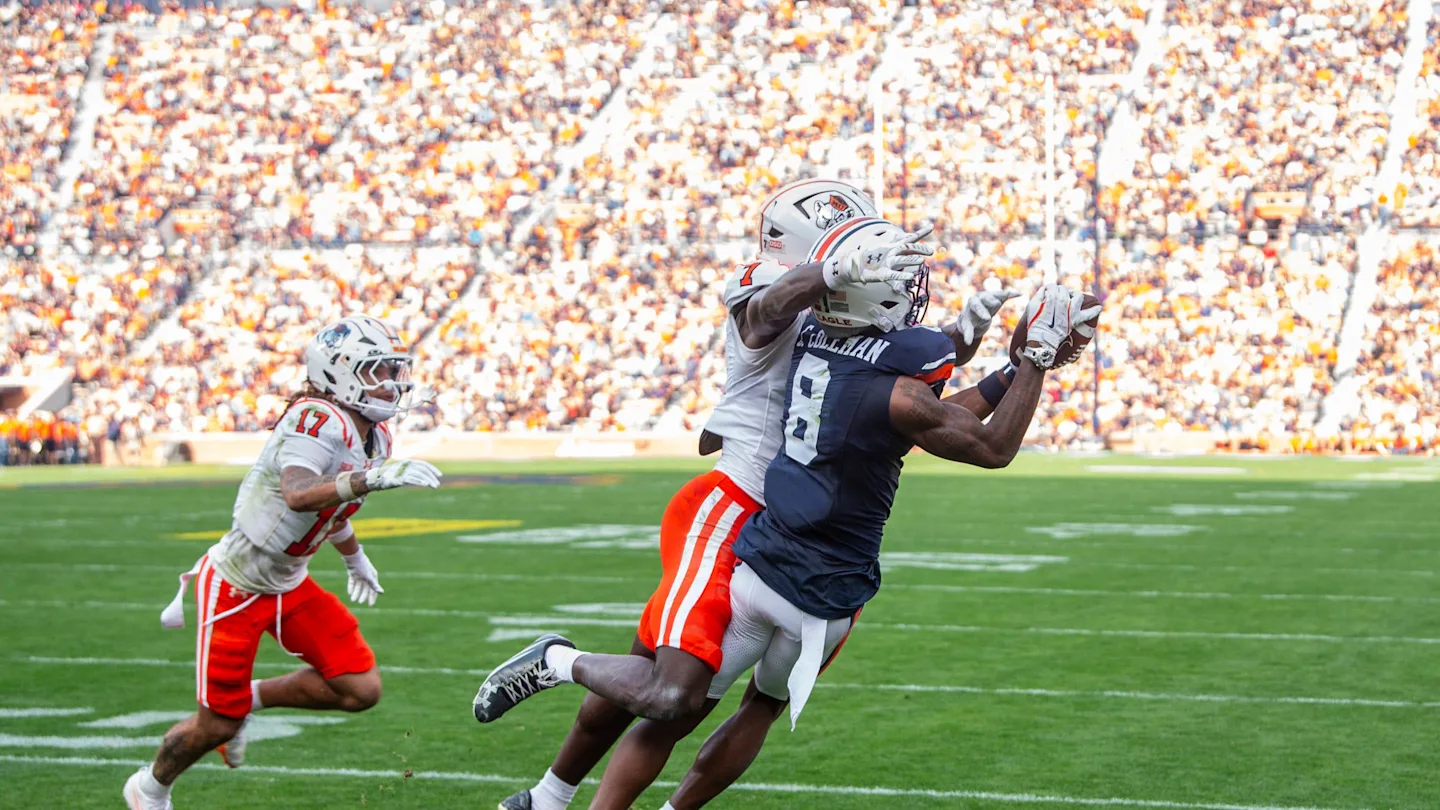
The most important of these offensive skill players in the transfer portal is former Auburn wide receiver Cam Coleman. He will have two seasons of eligibility remaining at his second school.
The 6-foot-3, 201-pounder was recruited by Hugh Freeze to Auburn in the Tigers’ 2024 recruiting class. Coleman appeared in 10 games during his freshman season, grabbing 37 receptions for 598 yards and eight touchdowns. He was voted to the SEC All-Freshman Team by his coaches that season.
Coleman saw an increase in production with the Tigers in the 2025 season. He made 56 catches for a team-high 708 yards and five touchdowns. Auburn finished the season 5-7, and Freeze was let go following the Tigers’ home loss to Kentucky.

Auburn hired former USF head coach Alex Golesh as its next head coach in late November. Coleman is one of a bevy of players from Auburn’s 2025 roster who have entered the transfer portal following Golesh’s hiring.
Coleman was a consensus five-star prospect in his initial recruitment to Auburn, ranking as the No. 2 receiver in the class of 2024. As a transfer, Coleman has the No. 1 overall ranking of receivers in the 2026 portal cycle.
While Coleman has been linked to several major programs in college football and will likely receive considerable compensation at his next stop, NIL packages are not among his top priorities in the portal. Pete Nakos of On3 reported that Coleman is visiting a handful of Power Four programs but is not likely to make a decision solely based on monetary value.
“There is confidence in multiple camps that they can offer the best opportunity for Coleman,” Nakos said. “Money is not going to be the deciding factor in this recruitment, even though sources have said his deal could be in the $2 million range.”
Texas A&M was the first of a trio of visits Coleman had set in the portal. He was committed to the Aggies for four months before flipping to Auburn on Early Signing Day in the 2024 recruitment cycle. Additional visits include stops at Texas Tech and USC, a pair of programs looking to stock up on wide receivers after losses in the offseason.
The NCAA transfer portal and the allowance of players to be paid for their name, image, and likeness (NIL) are undoubtedly the biggest driving forces behind the changes in college football.
The era of players waiting their turn at one school to play, or certain programs building dynasties off of being the best at paying players under the table, is no more. Now, programs that can get donors to scrounge together the most cash are in prime position to contend, which has led to new-age powerhouses like Indiana, Texas Tech and Ole Miss emerging.
With the NCAA transfer portal opening on Jan. 2, there have already been over 4,000 entries, but not every player will be getting the big bucks. The caliber at the top of the portal is as high as we have ever seen it, and some of college football’s most valuable players have found, or are in the process of looking for a new landing spot.
That said, let’s take a look at the players in the NCAA transfer portal with some of the highest NIL valuations, according to On3.
Byrum Brown (Auburn via USF)

To the surprise of no one, Byrum Brown followed his head coach, Alex Golesh, to Auburn. The 6-foot-3 dual-threat quarterback threw for 3,158 yards with 28 touchdowns, while also rushing for 1,008 yards and 14 more scores en route to leading the Bulls to a 9-3 regular season record.
NIL Valuation: $1.6 million
Beau Pribula (Missouri), Cam Coleman (Auburn), Cutter Boley (ASU via Kentucky)

The Missouri Tigers lost their star quarterback, who led them to a 6-1 start to the season, in what was really his first chance to start. Unfortunately an injury derailed his season and their momentum, but Pribula is still viewed as a high-end starter in college football.
As for Cam Coleman, the now-former Auburn wide receiver is due for a massive payday. Some reports have revealed he could earn as much as $2 million. He is ranked as the No. 1 overall player in the transfer portal, and very well could move up this list.
A Kentucky native, Boley impressed as the starting quarterback for the Kentucky Wildcats this season. He replaced Zach Calzada as the starter after two games, throwing for 2,160 yards with 15 touchdowns and 12 interceptions, while completing 65.8% of his passes. While there was obvious room for improvement, he steps into an Arizona State situation where he will be throwing to Colorado wide receiver transfer Omarion Miller and playing for one of the best offensive minds in the country, Kenny Dillingham.
NIL Valuation: $1.8
Dylan Raiola (Nebraska), DJ Lagway (Florida), Josh Hoover (Indiana via TCU)

Dylan Raiola was tabbed as the quarterback who would bring Nebraska back to prominence, but instead, his season was ended early due to an injury, and the writing was on the wall that he was leaving. Matt Rhule fired his uncle from the coaching staff, and his younger brother, who is a 2026 quarterback recruit, backed off his pledge. Raiola may not be an elite-tier quarterback, but he has a big arm and some creativity that could make him an intriguing add.
Similar to Raiola, who was also a five-star with plenty of hype, injuries plagued DJ Lagway at Florida. In his first full year as the starter, Lagway threw for 2,264 yards with 16 touchdowns and a brutal 14 picks. His spring camp saw him throwing at a limited capacity, and he also dealt with various other knicks along the way.
Josh Hoover will enter the 2026 season as college football’s leading returning passer, accumulating 9,629 yards at TCU. He will look to keep the hype train going at Indiana, as he is set to replace projected No. 1 overall pick, Fernando Mendoza.
NIL Valuation: $2 million
Drew Mestemaker (OK State via UNT)

If you love an underdog story, you’ll love Drew Mestemaker’s journey. He went from not starting a varsity game at quarterback in high school to leading college football in passing yards with 4,379. While he likely could have gone to any school he wanted, he decided to follow North Texas coach Eric Morris to Oklahoma State.
NIL Valuation: $2.3 million
Sam Leavitt (Arizona State)

The biggest domino that has yet to fall in the transfer portal is Leavitt, who is expected to command a massive payday in the portal. His numbers weren’t as eye-popping as 2024 when he led the Sun Devils to the College Football Playoff, but his dual-threat ability and elite ceiling has some of the biggest programs in the country knocking on his door.
NIL Valuation: $3.1 million
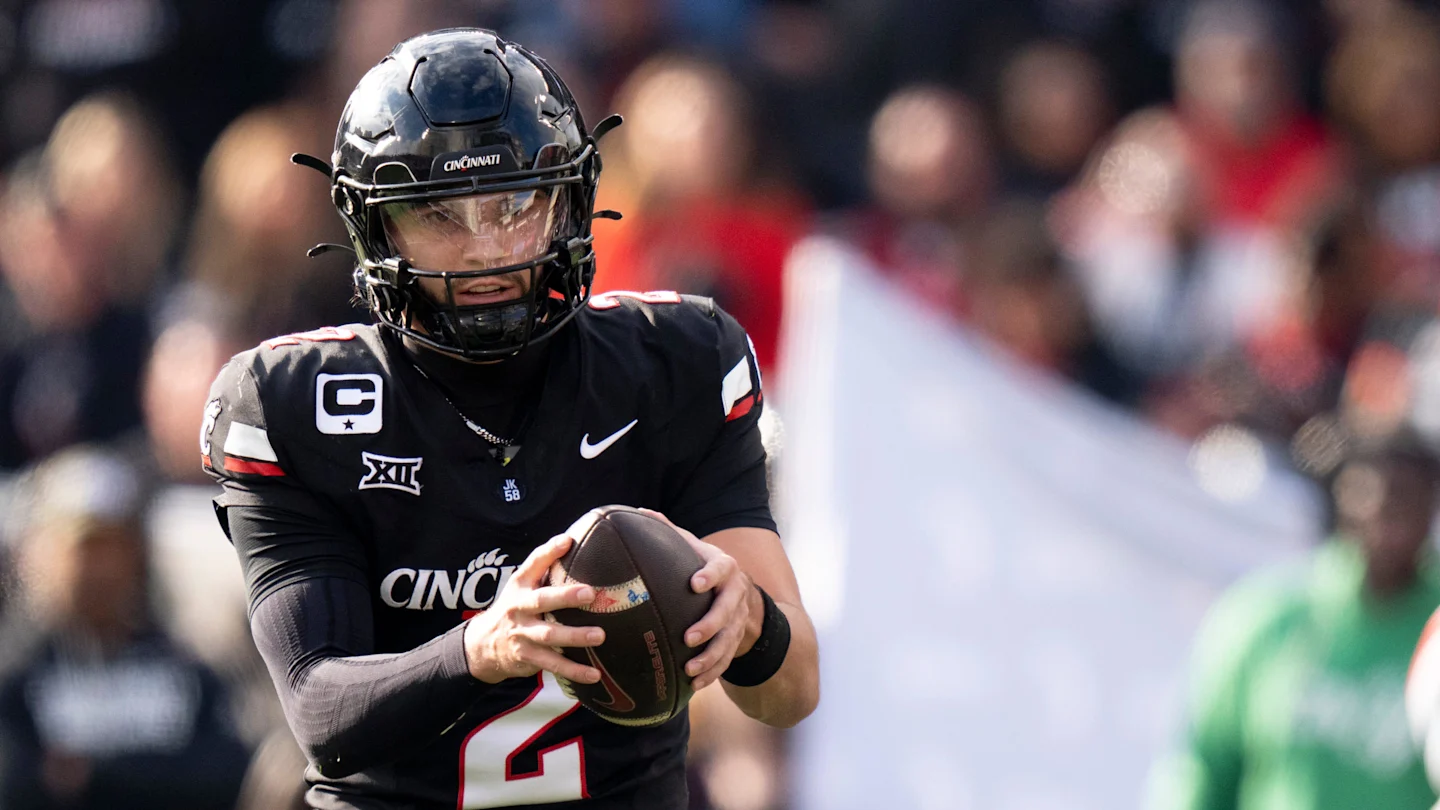
Brendan Sorsby (Texas Tech via Cincinnati)

Brendan Sorsby changed the trajectory of his career with the season he had in 2025. The former Indiana quarterback threw for 2,800 yards and 27 touchdowns, while throwing just five picks. He also added nine more touchdowns on the ground, and is an early contender for the top spot in next year’s draft. Going to Texas Tech not only put him on a title contender, but earned him what reports are calling a $5 million payday.
NIL Valuation $3.3 million
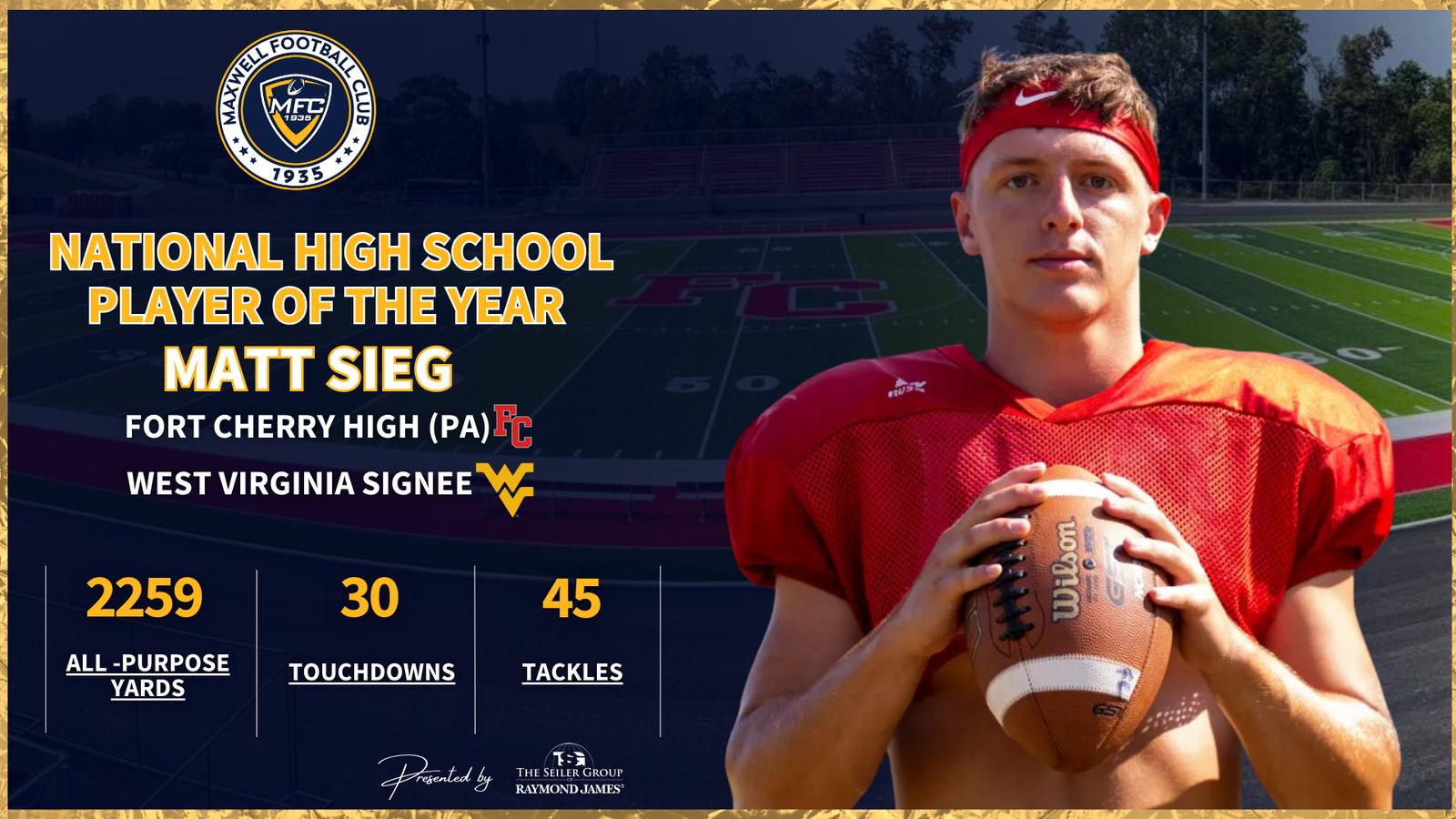
Sieg is the first WVU signee to earn the Maxwell Football Club’s High School Player of the Year Award and it marks the first time a Mountaineer football recruit won a national high school player of the year award since Robert
Alexander was named Parade Magazine Back of the Year in 1976.
Sieg also was named a High School All-American by the Maxwell Football Club. He was a three-time Pennsylvania Football Writers’ Class 1A All-State First Team honoree, the all-time leading rusher in Fort Cherry High School
history and the WPIAL 1A Player of the Year.
Sieg authored one of the most historic careers in WPIAL history, finishing with a 49–7 record, two WPIAL championships (2023, 2024) and league records in total offense (12,592 yards) and touchdowns (139). A generational dual-threat, he became just the second player in WPIAL history to surpass 4,000 rushing and 4,000 passing yards in a career, while also setting league marks as the first player to reach 5,000 rushing yards and 3,000 passing yards and to rush and pass for 1,000 yards in three consecutive seasons.
As a senior, he totaled 2,259 all-purpose yards and 30 touchdowns while adding 45 tackles and four interceptions on defense, leading Fort Cherry to a 12–1 record and a WPIAL 1A semifinal appearance. The four-time Black Hills Conference Offensive MVP ranks No. 2 in WPIAL career rushing (7,941 yards) and stands as Fort Cherry’s all-time leading rusher and passer, earning consensus four-star status and national rankings from ESPN, 247Sports\ and Rivals.
The formal presentation of the National High School Player of the Year Award will be held on Saturday, March 14, 2026, at the Coca-Cola Roxy Theatre in Atlanta, Georgia. The Maxwell Football Club will also be presenting its other national awards from college through the professional ranks at the event.
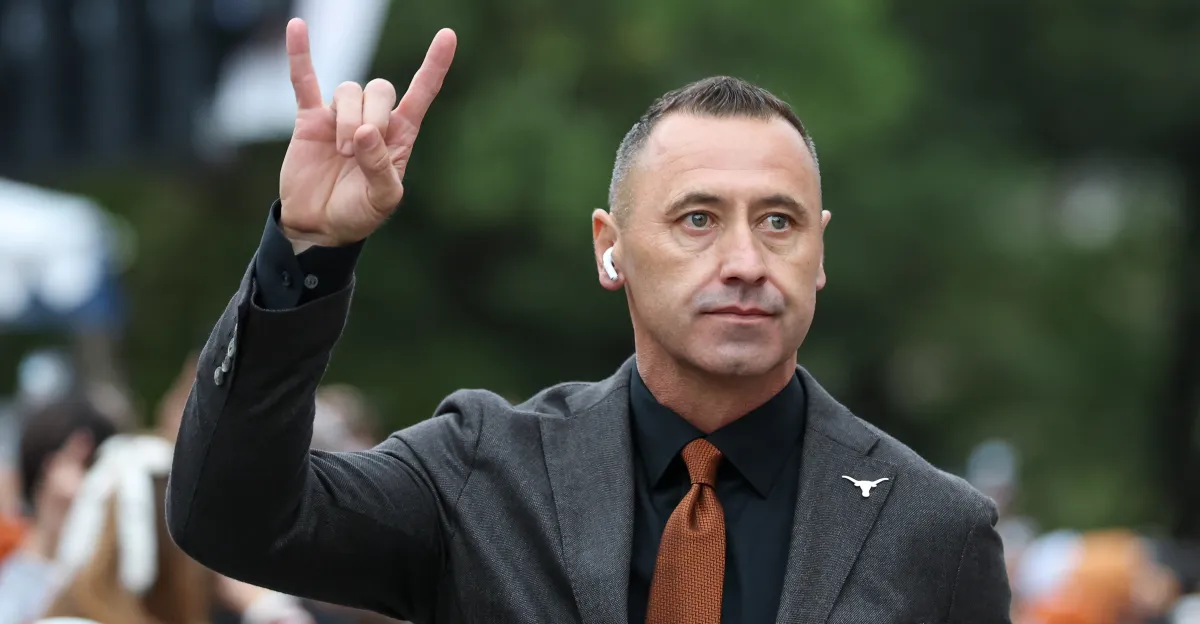
The website Sports Casting recently published data that pointed to Texas as the program with the nation’s biggest purse strings related to name, image, and likeness incentives for this year’s transfer portal, ahead of in-state juggernauts such as Texas A&M, Texas Tech, and others. Texas has $23 million in NIL funding, in fact, according to a graph Sports Casting published earlier today.
WHAT THEY’RE SAYING ABOUT THE LONGHORNS
247Sports: With Michael Masunas’ commitment, veteran Texas tight ends are under the spotlight in a crowded room
Inside Texas: Inside Texas Portal Intel: Cam Coleman, RB dominoes, and OL plans
ICYMI IN BURNT ORANGE NATION
247Sports: Texas Football Transfer Portal Tracker: All the Texas scoop, rumors, comings & goings as Longhorns fill roster
247Sports: Notes and nuggets from check-in day at the Navy All-American Bowl
247Sports: HoopHall West: New Year’s resolutions for every top-50 prospect
247Sports: Transfer Portal Intel: Latest updates on top players, led by team to watch for Sam Leavitt, as dominoes fall
247Sports: Arizona State’s Raleek Brown trending to Texas: How does he compare to outgoing RB Tre Wisner?
247Sports: Elite 2027 CB Duvay Williams’ visits come into focus at 2026 Navy All-American Bowl
Inside Texas: Texas Longhorns Portal Recruiting Intel: Latest from numerous Horns targets, coaches on road
Inside Texas: Texas’ early portal additions are creating a firm foundation
Inside Texas: How did Texas’ 2025 portal class fare this past season?
Inside Texas: Transfer Portal Reality Check: It’s okay to be frustrated, just don’t panic
Rocky Top Talk: LSU offensive tackle Ory Williams commits to Tennessee
A Sea Of Blue: Kentucky flips 4-star recruit Andre Clarke Jr. from Michigan
SB Nation: Baltimore Ravens’ 5 best head coaching options after John Harbaugh firing
SB Nation: The Panthers aren’t NFL’s worst playoff team ever, because this team is
SB Nation: TGL: Atlanta Drive GC stays undefeated in title defense with 7-4 win over The Bay
NEWS ACROSS LONGHORN NATION AND BEYOND
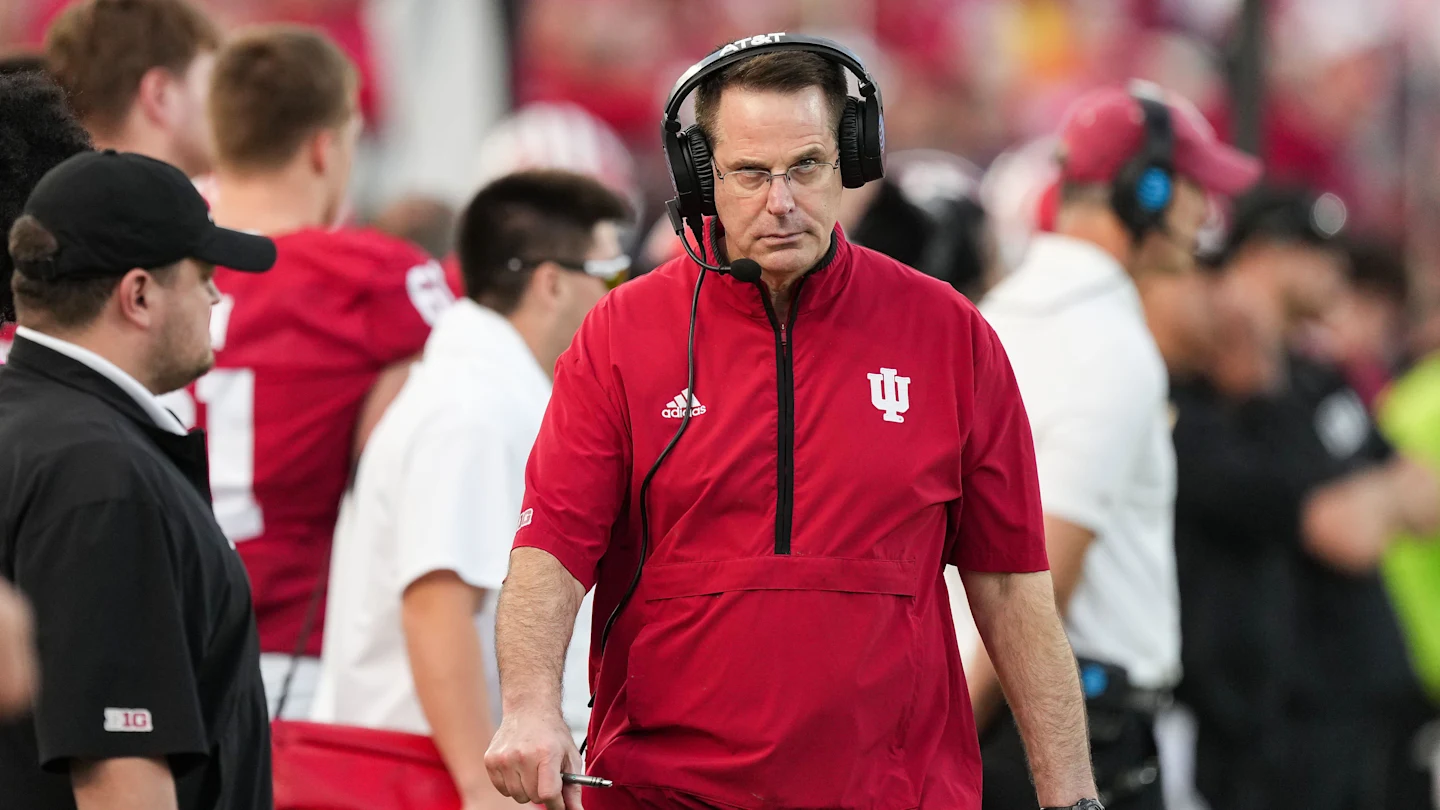
Indiana posted a major day in the early January transfer portal window, adding multiple experienced transfers on Sunday, including TCU quarterback Josh Hoover, Michigan State wide receiver Nick Marsh, and Boston College running back Turbo (Hanovii) Richard.
Hoover is a redshirt junior with a high-volume TCU resume, throwing for 9,629 career yards and 71 touchdowns with a 65.2% completion rate.
He set the Horned Frogs’ single-season passing record in 2024 with 3,949 yards (27 TDs, 11 INTs) and followed it up with another productive campaign in 2025, totaling 3,472 yards with 29 touchdowns and 13 interceptions.
Hoover is expected to enroll in January and is the projected heir apparent if Heisman winner Fernando Mendoza departs for the NFL.
Marsh is a 6-foot-3 receiver who led Michigan State in receptions and receiving yards in consecutive seasons, posting 41 catches for 649 yards and three touchdowns in 2024, followed by 59 receptions for 662 yards and six scores in 2025.
Richard entered the portal after a breakout 2025 season, rushing for 749 yards and nine touchdowns on 145 carries (5.2 yards per carry) across 11 games, while also contributing in the passing game with 30 catches for 213 yards and two receiving touchdowns.
Safeties Preston Zachman (Wisconsin) and Jiquan Sanks (Cincinnati), edge prospects like Tobi Osunsanmi (Kansas State) and Joshua Burnham (Notre Dame), and Chiddi Obiazor (Kansas State) have all reportedly transferred to Indiana as well.
On Sunday, Josh Pate described Indiana’s portal approach as “swinging wildly” and landing most of those swings, a shorthand for the Hoosiers’ aggressive, high-volume pursuit of established starters during the opening days of the transfer window.
“Indiana is swinging wildly, and it will probably shock approximately none of you to learn that they are landing every punch that they swing with,” Pate said.
“Josh Hoover, TCU quarterback, that’s who Curt Cignetti has circled, and so he is next in line to be a future Heisman finalist in Indiana… Nick Marsh, who I was really high on this past year, and then Michigan State was terrible, he’s headed to Indiana too… So Indiana is making some big moves here.”

Indiana completed a historic run in 2025, winning the Big Ten and advancing through the College Football Playoff, including a 38–3 win over No. 9 Alabama in the Rose Bowl (CFP quarterfinal) to enter the CFP semifinals as the No. 1 seed (14–0 at that point).
Head coach Curt Cignetti’s roster rebuild has relied heavily on the portal since his arrival, bringing in high-impact portal QBs such as Kurtis Rourke (Ohio) and then Fernando Mendoza (Cal), both of whom started and helped accelerate the program’s turnaround.
By landing established contributors, especially a high-volume quarterback and proven skill-position players, Indiana changes the odds for 2026 by signaling to recruits and opponents that the program is built to last rather than flash.
Read More at College Football HQ
- No. 1 transfer portal QB earns $5 million NIL deal after interest from major college football programs
- College football’s leading rusher linked to two college football programs in transfer portal
- College football programs loses 28 players to transfer portal
- College Football Playoff team loses 23 players to transfer portal
Danny White pokes Tennessee football fans on transfer portal NIL criticism

Abel switches from IndyCar to IMSA for LMP2 endurance ride with Era

Major NIL deal reportedly not ‘deciding factor’ for No. 1 transfer portal player

Washington State PAC Pushes for Trans Sports Ban With Genital Inspections

New Floral Shop Aspen and Willow Brings Vibrant Arrangements to Green River

College football transfers with the highest NIL valuations

Grand Forks County Commission discuss new position and funding sources for Youth Assessment Center – Grand Forks Herald

CK wins thriller in consolation championship | Sports
Joe Perry Little, Jr. Obituary

North Charleston plans youth development park with community partners

Sieg Named National High School Player of the Year by Maxwell Football Club

How Florida Became a Hockey Hotbed
performance-driven gaming monitors : gaming monitor

Longhorns Daily News: Texas has highest NIL transfer portal budget, data says

Demi Wagdy – Women’s Beach Volleyball

SoundGear Named Entitlement Sponsor of Spears CARS Tour Southwest Opener

Donny Schatz finds new home for 2026, inks full-time deal with CJB Motorsports – InForum

David Blitzer, Harris Blitzer Sports & Entertainment

DeSantis Talks College Football, Calls for Reforms to NIL and Transfer Portal · The Floridian

#11 Volleyball Practices, Then Meets Media Prior to #2 Kentucky Match

Rick Ware Racing switching to Chevrolet for 2026

Maine wraps up Fall Semester with a win in Black Bear Invitational

Stempien to seek opening for Branch County Circuit Court Judge | WTVB | 1590 AM · 95.5 FM

Ross Brawn to receive Autosport Gold Medal Award at 2026 Autosport Awards, Honouring a Lifetime Shaping Modern F1

Nascar legal saga ends as 23XI, Front Row secure settlement

Sunoco to sponsor No. 8 Ganassi Honda IndyCar in multi-year deal

Princeton Area Community Foundation awards more than $1.3 million to 40 local nonprofits ⋆ Princeton, NJ local news %

Downtown Athletic Club of Hawaiʻi gives $300K to Boost the ’Bows NIL fund

WNBA’s Caitlin Clark, Angel Reese and Paige Bueckers in NC, making debut for national team at USA camp at Duke

North Florida Motorsports Park led by Indy 500 Champion and motorsports legend Bobby Rahal Nassau County, FL





-
 Rec Sports3 weeks ago
Princeton Area Community Foundation awards more than $1.3 million to 40 local nonprofits ⋆ Princeton, NJ local news %
-

 Sports3 weeks ago
Beach Volleyball Unveils 2026 Spring Schedule – University of South Carolina Athletics
-

 Sports2 weeks ago
Badgers news: Wisconsin lands 2nd commitment from transfer portal
-
 Sports3 weeks ago
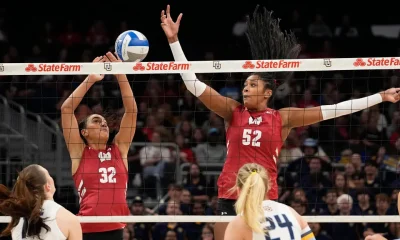
Badgers news: Final Four Game Thread vs. No. 1 Kentucky Wildcats
-

 Rec Sports5 days ago
Five Youth Sports Trends We’re Watching in 2026
-

 Sports2 weeks ago
Is women’s volleyball the SEC’s next big sport? How Kentucky, Texas A&M broke through
-
 Sports3 weeks ago
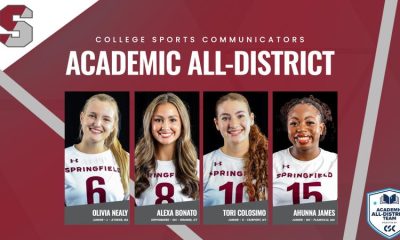
Four From Women’s Volleyball Named to College Sports Communicators Academic All-District Team
-
 Rec Sports3 weeks ago
Refugee-Focused Youth Sport Initiatives : Moving for Change
-
 Rec Sports3 weeks ago
Youth Sports Business in 2025: The Year the Industry Grew Up
-
Rec Sports3 weeks ago
Inside the NWSL’s first combine: Can the league create a more robust pathway for American talent development?