
NIL
2026 College football recruiting early signing day takeaways


College football’s early signing period opened Wednesday with much of the 2026 recruiting class committed. That added some extra drama for those teams chasing last-minute additions and flips.
Coaching changes weighed heavily on the end of this cycle. Virginia Tech saw its class skyrocket with new coach James Franklin bringing 11 former Penn State commits to his new school. Meanwhile Lane Kiffin and LSU’s class are a bit on hold. Lamar Brown, the No. 1 overall player, has delayed his signing to wait on further LSU staff anouncements.
As some College Football Playoff regulars reloaded their rosters, there are a few up-and-comers and CFP hopefuls whose 2026 classes became big storylines of the cycle.
Here’s a look at the winners, the programs that missed out Wednesday and the questions that still loom over the 2026 cycle:
Jump to: Franklin’s big moves | Parity arrives | Texas’ haul
CFP boost | Who has overachieved | Impact QBs

Penn State’s class crushed at the hands of Virginia Tech
Still without a head coach after missing out on BYU’s Kalani Sitake, Penn State fans watched the program’s tattered 2026 recruiting class limp to the finish line Tuesday.
The commitment of four-star quarterback Peyton Falzone, who had previously flipped from the Nittany Lions to Auburn Tigers, was a bright spot. The signature of defensive end Jackson Ford — the last man standing from a class that ranked 17th nationally in mid-October — marked another admirable win. But there’s no getting around it: the Nittany Lions’ two-man signing class, the result of 24 decommitments since Oct. 12, is disastrous for whomever gets the Penn State job.
Worse yet for the folks in Happy Valley, the primary beneficiary of the Nittany Lions’ mass exodus was none other than James Franklin. Fired after 12 seasons at Penn State, Franklin took over at Virginia Tech on Nov. 17 and rapidly pulled 11 former Nittany Lions commits with him into the Hokies’ 2026 class. Included in that group: five ESPN 300 prospects between quarterback Troy Huhn, skill position talents Davion Brown, Messiah Mickens and Pierce Petersohn and offensive guard Benjamin Eziuka.
Fueled by ex-Penn State pledges, perhaps no program in the country rolled stronger into the early signing period than Virginia Tech, which closed Wednesday with ESPN’s No. 23 class nationally. The Hokies’ late flips of Nittany Lions defenders Terry Wiggins and Amauri Polydor on Wednesday, as Penn State spent the first day of the early signing period effectively dormant, arrived as the final bits of salt in the wound.
The fall of 2025 began with Franklin poised to lead Penn State to the mountain top. It ended with him on a campus 366 miles away signing nearly 50% of what was supposed to be the Nittany Lions’ 2026 class. — Eli Lederman
Parity has come to recruiting (at least this year)
Perhaps parity hasn’t fully overtaken college football in the NIL/transfer portal era. But we’re seeing it flow through the College Football Playoff field for yet another fall in 2025. And it’s certainly shown up in the spread of elite talent in the 2026 cycle.
In the end, the story of the Class of 2026 was defined as much by the sport’s bluebloods as it was by historically overlooked rosters climbing up the recruiting food chain.
The first day of the early signing period on Wednesday saw relative football minnows Houston (Keisean Henderson) and Vanderbilt (Jared Curtis) sign the nation’s top two quarterbacks. BYU landed the No. 5 overall passer in the cycle, securing Ryder Lyons as the highest-ranked signee in program history and the cornerstone of the class with more ESPN 300 pledges — three — than the Cougars have ever signed before. SMU set a school record of its own with six top-300 signees, headlined by its first-ever top 100 commit Sam Utu, who was Alabama-bound until last week. In four-star offensive tackle Micah Smith (No. 81 overall), Illinois landed its highest-ranked pledge since 2007.
All told, eight of ESPN’s top 10 prospects wound up spread across eight schools. The cycle’s 25 five-star prospects landed with 17 different programs, a group that includes Houston, Maryland and Vanderbilt. Texas Tech, powered by the dollars of billionaire booster Cody Campbell, might not feel like an underdog, but even the Red Raiders made a bit of program history in 2026, landing two five-stars in the same cycle for the first time.
ESPN’s class rankings are still being dominated by the perennial powers from the Big Ten and SEC. But more and more, rising programs across the country are flexing their muscles, not only going toe-to-toe with, but beating top schools on the recruiting trail. — Lederman
Texas’ five-star haul is impressive

A few teams landed multiple five-star prospects, but none has more than the Longhorns. The class fills needs but also has extremely talented players at impact positions.
On defense, linebacker Tyler Atkinson (No. 17 overall) has a combination of skills and production that can’t be ignored. He recorded 550 tackles in his prep career and had three double-digit sack seasons. He’s a versatile and explosive defender whether he’s rushing off the edge or in coverage. He is joined by defensive end Richard Wesley, No. 8 overall. After the Longhorns leaned some on the transfer portal this past offseason to retool their defensive line, Wesley will be a key player who projects to be versatile within their front, with the strength and heavy hands to set the edge and the ability to slide inside and expose mismatches with his quickness.
Offensively, QB Dia Bell, the sixth overall prospect, might be the most well-rounded, having been a multiyear starter and consistently playing at a high level of competition. While he is not a true dual threat, he can create second chances and be effective when asked to run. As a passer, his basketball background has helped develop his pocket movement and he has good touch on his deep ball. In running back Derrek Cooper, Texas has its future replacement for Quintrevion Wisner. Cooper’s initial impact could be limited but he brings similar attributes, with the ability to be a 1,000-yard rushing threat and rank among UT’s most productive pass catchers. Again, Texas has set itself up to replace a productive player with a prospect with arguably even greater impact ability. — Craig Haubert
Which teams improved their CFP chances?
USC Trojans

35 commitments
ESPN 300 commits: 18, two five-stars
USC is getting close and just lost a game at Oregon that would have likely thrust it into the CFP in 2025. The class is loaded top to bottom, even including juco prospects. To take the next step, though, the Trojans must continue to beef up the trenches. They pulled four-star defensive tackle Jaimeon Winfield out of Texas, landed in-state defensive end Simote Katoanga and traveled to Utah to snag offensive lineman Esun Tafa. To further bolster the offensive line, the Trojans landed Keenyi Pepe out of IMG Academy. He has great size at 6-foot-7 and 320 pounds but is light on his feet as well as physical and can become a standout tackle. Five-star cornerback Elbert Hill headlines the skill-position players. Hill possesses elite speed, having been measured at over 22 mph in game play.
Michigan Wolverines

25 commitments
ESPN 300 commits: 12, one five-star
Michigan has quietly put together a very successful season, winning five games in a row prior to a loss to Ohio State despite multiple offensive injuries at running back and a true freshman QB in Bryce Underwood. This class features six players who rank in the top 10 at their respective position. Michigan bolstered its backfield by landing No. 2 running back Savion Hiter, a runner with a nice blend of size (6 feet, 200 pounds), power and speed who can also catch the ball out of the backfield. After losing two defensive linemen in the first round of the NFL draft, Michigan added several to this class, including four-stars Titan Davis, McHale Blade and Tariq Boney. Michigan has also received a commitment from five-star Carter Meadows, a rangy edge defender who can affect the QB. — Tom Luginbill
Which teams have overachieved?
Houston Cougars

18 commitments: one five-star, 17 three-stars
Coach Willie Fritz has made huge strides in his second season at Houston and recruiting has picked up as a result.
The class has been headlined for several months by five-star quarterback Keisean Henderson, the No. 1 dual-threat QB in the country. Henderson could become a program-defining prospect that thrusts the Cougars into Big 12 championship contenders for years to come. Henderson has also been a loyal commitment throughout the process despite obvious overtures by other bigger programs to flip him. He’s dynamic as a runner and a gamer as a passer.
UH’s class also features the sixth-ranked tight end in the country in Jaivion Martin. The 250-pounder is a well-rounded blocker and receiver who can play as an inline in the run game. He also competes in track and field. The Cougars have also nabbed a top-25 athlete in Paris Melvin, who could project at cornerback or wide receiver and is a dangerous return man who ran a 10.86 100m in the spring of 2025. One of the more underrated running back prospects in the class is John Hebert, a Ryan Switzer-type scatback/utility weapon. He ran a 4.54 40-yard laser timed in the spring and has posted a max speed of 21.3 mph.
This class is full of high-end three-star prospects, and perhaps no coach in the country has a better track record of developing prospects than Fritz.
SMU Mustangs

21 commitments: six four-stars
SMU is now running with the big dogs not only on the field, but in recruiting circles as well. The Mustangs have added several offensive linemen, no bigger than Sam Utu, an ESPN 300 player with tackle athleticism and guard power. The Mustangs also picked up Evan Goodwin, a massive presence at 6-7 and 320 pounds, and in-state guard Drew Evers, a thickly built and strong blocker who can latch on and control defenders. Rhett Lashley knows the trenches are what’s going to elevate the program.
Capitalizing on the rich talent base in Texas, SMU has added several in-state prospects, including SC Next 300 back Christian Rhodes. Rhodes, an explosive runner who has been recorded hitting better than 21 mph max speed in game play, also brings a physical running style at 6-1, 200 pounds. High three-star Aljour Miles II, a lengthy receiver who has good quickness and body control, is another nice in-state addition. Another receiving target with big-play potential, Jakai Anderson, was pulled out of Louisiana. Not quite as big a target, he brings a good blend of speed and elusiveness and could also be productive in the return game.
On defense, defensive end Hudson Woods shows some savvy as a pass rusher, with active hands and good bend. Linebacker Kenneth Goodwin out of California is a versatile, physical defender who can rush the passer.
Auburn Tigers

12 commitments: six ESPN 300 prospects, eight total four-stars
Despite the firing of coach Hugh Freeze and some late defectors, this class still has major talent upgrades committed, particularly on defense. The class is not large, but it is stacked with overall top-end talent. There are four players ranked within the top 11 players in the country at their respective position and two within the top three.
Adam Balogoun-Ali is the country’s No. 1 inside linebacker and also happens to have significant growth upside with his lengthy frame. He can play inside and on the outside as an edge rusher and excels in space due to his speed and agility. The Tigers also have a commitment from the No. 3 inside linebacker in the class, Shadarius Toodle. Toodle is just a step behind Balogoun-Ali in terms of overall speed and is a downhill gap plugger in the middle of the field.
New head coach Alex Golesh has a good foundation to head into the dead period with and attack the transfer portal in January for more additions. — Luginbill
Welcome to the Family, @ryderly0ns 🤙 pic.twitter.com/PfJ0xsGx0o
— BYU FOOTBALL (@BYUfootball) December 3, 2025
These 2026 QBs could start early

Jake Fette, Arizona State Sun Devils: Assuming Sam Leavitt goes in the portal, Fette, the No. 4-ranked dual threat, brings a lot of great traits to the Sun Devils offense. He’s super athletic and mobile, with the field vision to keep his eyes downfield while on the move. Fette is very similar to Leavitt in stressing defenses with his arms and legs. Fette also has good touch and anticipation on short to midrange throws. Coach Kenny Dillingham will challenge defenses schematically with a lot of shifts, motions and backfield action that will maximize Fette’s dynamic skill set in and outside the pocket.

Oscar Rios, Arizona Wildcats: Rios is the Wildcats’ highest-rated pocket passer signee in the ESPN 300 era. How immediate the impact depends on whether Noah Fifita returns for the 2026 season. If Fifita chooses to return, Rios could redshirt as a true freshman and be the favorite to become the starter in 2027. Rios’ quick release and great arm strength should lead to big numbers under coordinator Seth Doege in Tucson. — Billy Tucker

Jan. 9, 2026, 1:23 p.m. ET
- Chris Wash has resigned from his position as UCF basketball’s general manager.
- The resignation is effective immediately and was made to prioritize pressing family health matters.
- Wash joined the UCF staff in June 2025 after working as a talent evaluator and NIL agent.
Chris Wash has resigned from his role as UCF basketball’s general manager and special assistant to head coach Johnny Dawkins, effective immediately, according to a press release from OG6 Sports Management.
Wash, who joined the staff in June 2025, made the decision prior to the team’s Jan. 6 game at Oklahoma State in order to “prioritize pressing family matters, including a recent health diagnosis within his immediate family that requires his time, focus and presence.”
Per the statement, Wash is “grateful for the opportunity to have been part of the UCF basketball program and appreciates the understanding and professionalism shown throughout this process. He looks forward to returning to the sport in the future when circumstances allow.”
A former national talent evaluator, Wash previously served as an NIL agent for college football and basketball athletes. He worked for more than a decade as a loan officer prior to entering the college athletics space.
UCF, currently ranked No. 25 in the AP poll, has a 12-2 record on the season and will host Cincinnati at 5 p.m. Sunday, Jan. 11.
Jan. 9, 2026, 3:31 p.m. ET
GLENDALE, AZ — There was some strange symmetry to it all, a torch passing no one saw coming.
Miami, everyone, is built and playing like an SEC team.
The SEC, meanwhile, just polished off a postseason where it lost a conference-record eight games against other conferences.
“We line up, and we want to punish you on offense and defense,” said Miami defensive end Akheem Mesidor. “You’re going to have to play your absolute best game to beat us.”
Well, well. Now who does that sound like?
Here’s a hint: the bully on the block that has fallen, and can’t seem to figure out why or how to get back up.

From dominating college football with 14 national titles since 2003, to the fateful irony of the SEC brought back to the pack by its own greed.
The SEC wanted Texas and Oklahoma, wanted to drastically change the conference footprint of the sport, and then sat and watched while the Big Ten panicked and did the same, while the Pac-12 was eaten and eliminated (it ain’t the same now, people), and while the Big 12 and ACC were relegated to second citizens.
The SEC, along with the Big Ten, then grabbed control of the postseason and threatened to take their ball and go home unless everyone fell in line. They want more access to the postseason, and they’ll surely receive the lion’s share of revenue from what could be a near $2 billion annually expanded College Football Playoff. Like it or not.
They wanted unregulated NIL and free player movement, or at the very least, did next to nothing to stop it. They, along with every other FBS university, knew for 16 months that states of California and Florida had passed bills that would become law in June of 2021 — and did nothing about it.
They punted, and begged Congress for help. Imagine that, two self-interested and wildly dysfunctional entities trying to figure out a massively complex financial and structural problem.
What could go wrong?
The bigger question is, what did they think the rest of college football would do? Certainly not sit and take it.
There are millionaires and billionaires who love their universities and are obsessive about winning. Throw open the doors to NIL and free player movement — and legalized big booster involvement — and watch how quickly the SEC looks like the ACC.
Watch how quickly Alabama comes back to the pack, and Georgia can’t get out of the quarterfinals in the CFP. How quickly LSU and Florida and Texas A&M spend hundreds of millions of dollars to fire coaches and start over.
More to the point, watch how quickly the deep-pocket Cody Campbells of the world begin to simply play by the rules laid out by the SEC and Big Ten ― and build teams that look and play like SEC teams of the past.
Want to know why Texas Tech won the Big 12 for the first time in school history, and won a school-record 12 games? It had one of the best defensive lines in the nation, and a Top 5 scoring defense.
Want to know how Miami has finally found itself again after more than two decades of stumbling around like NC State? The Canes have the best defensive line in the nation, with two edge rushers who will be Top 15 NFL Draft picks.
Remember all of those nasty and dominating defensive lines at Alabama and Georgia, all of those NFL draft picks? Nothing defined SEC dominance, SEC national titles, quite like physical, game-changing defensive linemen.
Now they’re leaving high school and/or the transfer portal for the highest bidder. The idea of playing for the SEC, while certainly tempting, is quickly trumped by another zero at the end of a paycheck.
“More options for players, that’s the big thing,” said Miami safety Keionte Scott. “If it’s not working for whatever reason at another place, there are options.”
It wasn’t working for Scott at Auburn, which hasn’t found an answer since firing Gus Malzahn after the 2020 season. So Scott became one of six transfer starters on Miami’s defense — including the entire secondary — and is now a game away from a national championship.
Meanwhile, the SEC hasn’t looked further away from winning it all ― having gone three straight seasons without playing in the national championship game for the first time since 2000-2002.
Go ahead and expand the CFP to 16 or 20 or 24 teams. Go ahead and continue to declare players don’t want to be employees, and avoid the one thing that could deliver some semblance of control to a player procurement process with no guardrails — just because you don’t want to share more money when collectively bargaining.
And Indiana, with the largest alumni base in college football, will continue to spend its way out of the NCAA cellar. Will beat Georgia to sign Heisman Trophy-winning quarterback Fernando Mendoza.
Miami, with its deep pocket boosters begging for a return to glory, will do the same.
So will Texas Tech and Utah and BYU and SMU and … see where this is headed?
Right to the end of SEC dominance.
Matt Hayes is the senior national college football writer for USA TODAY Sports Network. Follow him on X at @MattHayesCFB.
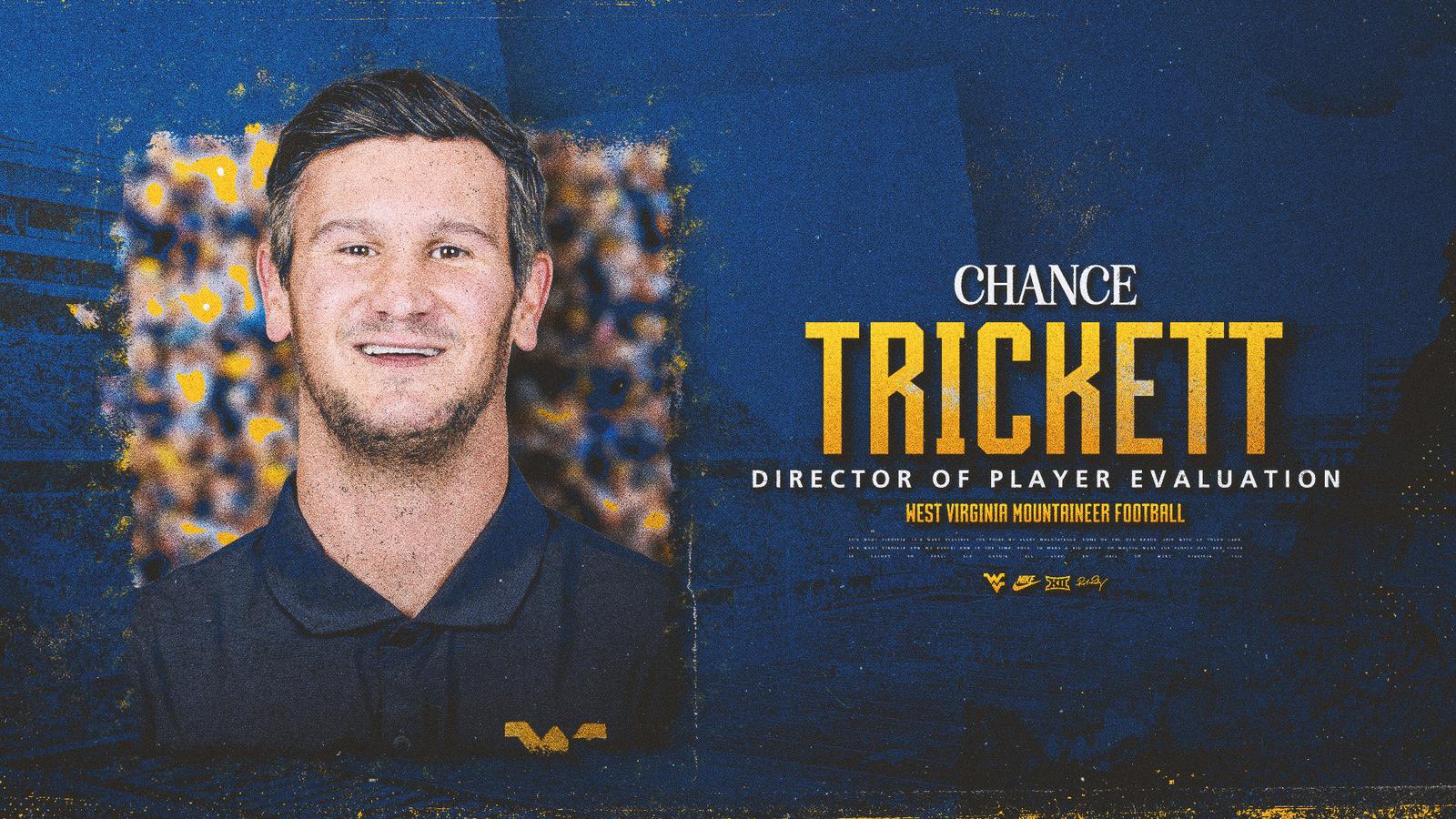
“Chance has built an outstanding resume of scouting, evaluating and recruiting experience at the FBS, Power Four and NFL levels,” Rodriguez said “His wide-spread experience and knowledge in these areas, along with being a West Virginia football legacy, will make an immediate impact in our program.”
Throughout his career, Trickett has experience leading player evaluation, roster construction and long-term talent strategy at the college and NFL levels. He has proven his ability to build multi-year roster plans, aligning evaluation with financial strategy, integrating and leveraging analytics and networks to identify top prospects and cultural long-term fits. He has a strong network across high school, college, financial and agency circles with a track record of identifying undervalued talent and maximizing roster efficiency.
Trickett joins the WVU football staff after spending almost 10 years as a college area scout in the Los Angeles Rams organization. He served one year as the director of football recruiting at Louisiana Tech and was at Florida State for two years as a recruiting assistant.
While with the Rams, he led comprehensive player evaluations integrating film, analytics, verified measurables and psychological/cognitive components to support draft board construction and roster strategy decisions. He also produced in-depth positional value assessments and roster impact reports for multi-year draft planning and contract strategy. He developed internal valuation reports and roster strategy that models and mirrors current NIL/college market structures. He also integrated advanced scouting technology to enhance accuracy in player projection and long-term roster planning.
Trickett was awarded the BART List Award for scouting excellence in 2025 and given the “inside the league” scout/agent organization’s Best Draft Award in 2024.
A native of Morgantown, he earned his bachelor’s degree from Florida State in 2011.
Trickett, and his wife, Ashley, have two children, Tristan and Matthew.

The decision to head to the NFL instead of returning to college can be a complicated choice. Massive NIL payouts, potential NFL landing spots, and the solidity of a returning team are several factors that go into the stay-or-go calculus.
But with the 2026 NFL Draft QB class looking a bit thin already, some are second-guessing one QB’s plan to return to school.
Ole Miss QB Trinidad Chambliss is in the middle of requesting another year of college eligibility from the NCAA. Chambliss is claiming that he missed the 2022 season due to respiratory health issues and is thus seeking one more year to play. His NIL value is likely to end up at several times the $665,000 estimate from On3sports.
ESPN broadcaster Chase Daniel second-guessed Chambliss’s decision to return to school. “Trinidad Chambliss should absolutely think abotu entering the draft after the way he’s played in the #CFBPlayoff,” Daniel Tweeted. “Light QB draft,” he also noted.
The 2026 NFL Draft class is highlighted by Indiana’s Fernando Mendoza and, should he enter, Oregon’s Dante Moore. Many are projecting both of those quarterbacks at or near the top of the Draft. But after Mendoza and Moore, things get increasingly cloudy.
Alabama’s Ty Simpson has indicated his plan to enter the Draft. Other veteran QBs like Carson Beck and Cade Klubnik figure to be in the picture. But it’s entirely plausible that NFL teams could view Chambliss as the No. 3 or No. 4 QB prospect in the 2026 NFL Draft class.

Chambliss rose to prominence seemingly from nowhere in 2025. He sat for two years at Division II Ferris State and then played mostly as a reserve in 2023. In 2024, though, he passed for 2,901 yards and 26 scores while rushing for 1,019 yards and 25 scores on the ground while leading Ferris State to the national title.
He began 2025 as the backup for Ole Miss’s Austin Simmons. But an ankle injury in Week 2 gave Chambliss a chance to play and he didn’t relinquish the job. Chambliss wound up passing for 3,937 yards and 22 touchdowns against just three interceptions. He ran for an additional 527 yards and eight touchdowns.
Of course, an adverse NCAA ruling might leave Chambliss with no real choice but to go pro. He has inked a tentative NIL deal with Ole Miss based on the premise that he will be given eligibility. That deal has been indicated as likely worth several million dollars. But Daniel thinks even better NFL money could be in Chambliss’s future… if he seeks it.
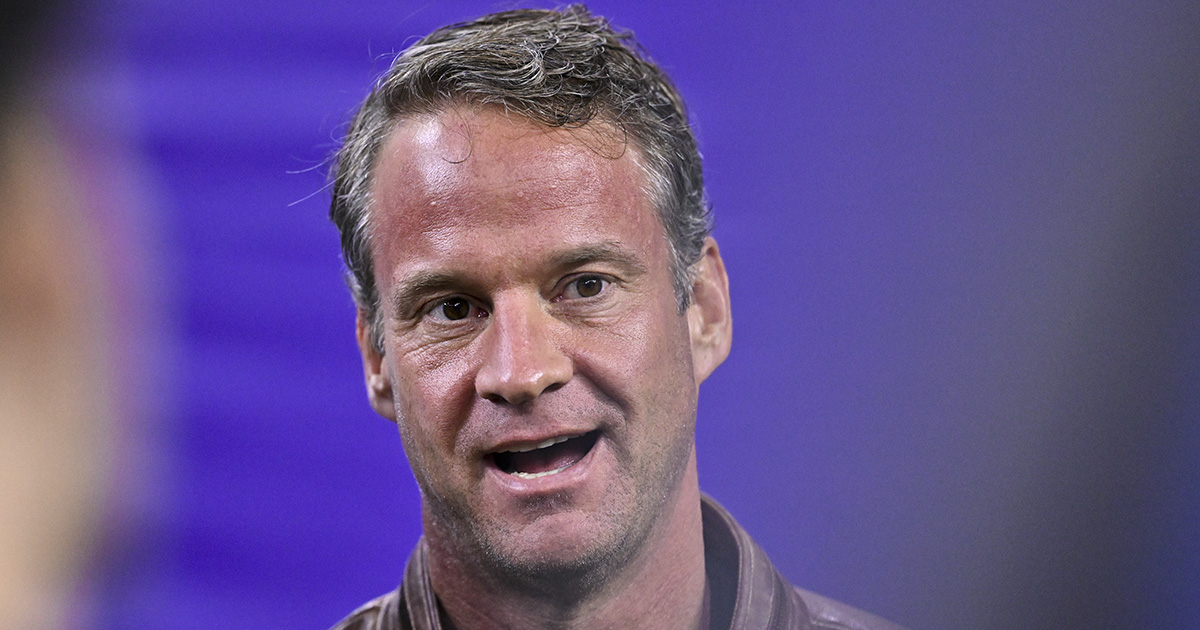
Thursday night, Ole Miss’ run in the College Football Playoff came to an end. The Rebels fell to Miami in the final seconds of the Fiesta Bowl.
With the loss, Lane Kiffin will officially receive a $500,000 payout from LSU within 30 days of the end of Ole Miss’ campaign. That was the amount he was due from Ole Miss, per the terms of his contract, and LSU said it would honor it in his deal with the Tigers. The school included “ancillary benefits” in Kiffin’s agreement after his high-profile departure from Ole Miss.
Ole Miss’ advancement in the College Football Playoff bracket increased Kiffin’s payout, which LSU is due to pay 30 days after the Rebels’ postseason run ends. It would have gone up even more if Ole Miss won the title. Here is how the structure is written out in his deal at LSU.
- Ole Miss first-round game participation: $150,000
- Ole Miss quarterfinal appearance: $250,000
- Ole Miss semifinal appearance: $500,000
- Ole Miss CFP national championship appearance: $750,000
- Ole Miss CFP national championship win: $1 million
With Thursday’s loss, Ole Miss’ season ended in the College Football Playoff semifinal. As a result, Kiffin is due $500,000. If the Rebels pulled off a win, that figure would have grown to $750,000.
“Coach will be entitled to receive a payment in an amount equal to the amount Coach would have been entitled to receive had he remained Head Coach at Coach’s immediate prior employer and coached the prior employer’s football team through the 2025-26 CFP,” Lane Kiffin’s contract at LSU reads. “… If applicable, the payment under this section may be paid from affiliated foundation funds and shall be paid within 30 days following the prior employer’s team being eliminated from the 2025-26 CFP.”
Miami holds on to beat Ole Miss in Fiesta Bowl
Ole Miss trailed Miami 17-13 at halftime of the College Football Playoff semifinal at the Fiesta Bowl, but mounted a charge in the fourth quarter. The Rebels were able to capitalize on multiple Hurricanes miscues and took their first lead of the game, 19-17, with seven minutes to play.
Miami responded with a touchdown from Malachi Toney, but Ole Miss punched back. After a pass interference penalty extended the drive, Trinidad Chambliss hit Dae’Quan Wright for a touchdown and got the two-point conversion to make it a 27-24 Rebels lead with 3:13 to go.
The Hurricanes didn’t go down easily, though. Carson Beck ran in the go-ahead touchdown with 18 seconds left to make it a 31-27 Miami lead, giving Ole Miss one more shot. But Chambliss’ final Hail Mary fell short, sealing the Hurricanes’ victory and sending the program to the national title game.
However, Miami won’t have to go far for the championship game. The game will be at Hard Rock Stadium Jan. 19. The Hurricanes now wait to find out if they will play Oregon or Indiana.
A quarterback reportedly reneging on a lucrative deal to hit the transfer portal, only to return to his original school. Another starting QB, this one in the College Football Playoff, awaiting approval from the NCAA to play next season, an expensive NIL deal apparently hanging in the balance. A defensive star, sued by his former school after transferring, filing a lawsuit of his own.
“It gets crazier and crazier. It really, really does,” said Sam Ehrlich, a Boise State legal studies professor who tracks litigation against the NCAA. He said he might have to add a new section for litigation against the NCAA stemming just from transfer portal issues.
“I think a guy signing a contract and then immediately deciding he wants to go to another school, that’s a kind of a new thing,” he said. “Not new kind of historically when you think about all the contract jumping that was going on in the ’60s and ’70s with the NBA. But it’s a new thing for college sports, that’s for sure.”
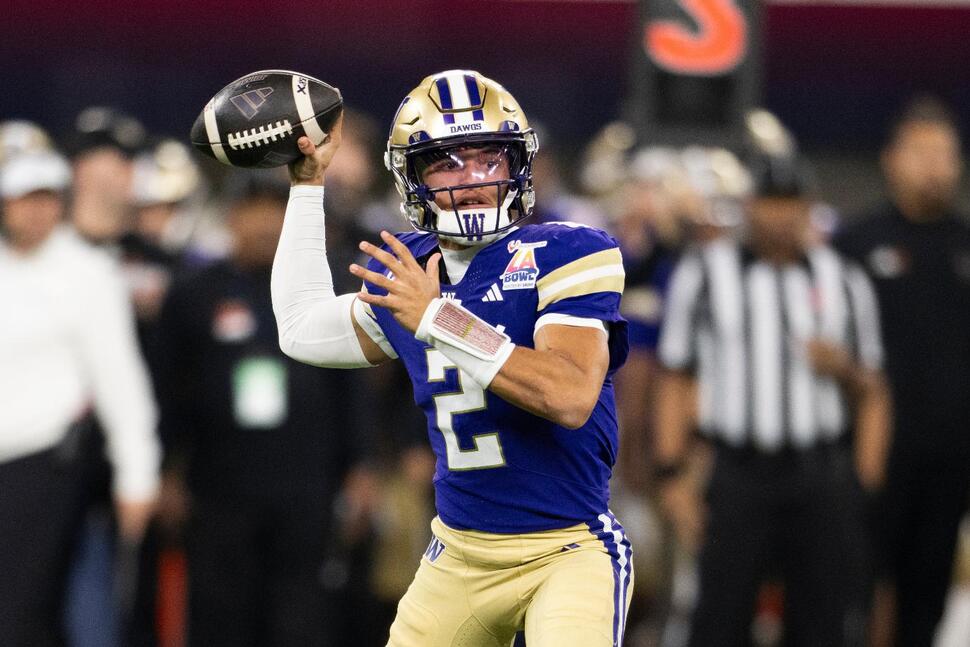
Washington quarterback Demond Williams Jr. said late Thursday he will return to school for the 2026 season rather than enter the transfer portal, avoiding a potentially messy dispute amid reports the Huskers were prepared to pursue legal options to enforce Williams’ name, image and likeness contract.
Edge rusher Damon Wilson is looking to transfer after one season at Missouri, having been sued for damages by Georgia over his decision to leave the Bulldogs. He has countersued.
Then there is Ole Miss quarterback Trinidad Chambliss, who reportedly has a new NIL deal signed but is awaiting an NCAA waiver allowing him to play another season as he and the Rebels played Thursday night’s Collge Football Playoff semifinal against Miami. On the Hurricanes roster: Defensive back Xavier Lucas, whose transfer from Wisconsin led to a lawsuit against the Hurricanes last year with the Badgers claiming he was improperly lured by NIL money. Lucas has played all season for Miami. The case is pending.
Court rulings have favored athletes of late, winning them not just millions in compensation but the ability to play immediately after transferring rather than have to sit out a year as once was the case. They can also discuss specific NIL compensation with schools and boosters before enrolling and current court battles include players seeking to play longer without lower-college seasons counting against their eligibility and ability to land NIL money while doing it.
Ehrlich compared the situation to the labor upheaval professional leagues went through before finally settling on collective bargaining, which has been looked at as a potential solution by some in college sports over the past year. Athletes.org, a players association for college athletes, recently offered a 38-page proposal of what a labor deal could look like.
“I think NCAA is concerned, and rightfully so, that anything they try to do to tamp down this on their end is going to get shut down,” Ehrlich said. “Which is why really the only two solutions at this point are an act of Congress, which feels like an act of God at this point, or potentially collective bargaining, which has its own major, major challenges and roadblocks.”
The NCAA has been lobbying for years for limited antitrust protection to keep some kind of control over the new landscape — and to avoid more crippling lawsuits — but bills have gone nowhere in Congress.
Collective bargaining is complicated and universities have long balked at the idea that their athletes are employees in some way. Schools would become responsible for paying wages, benefits, and workers’ compensation. And while private institutions fall under the National Labor Relations Board, public universities must follow labor laws that vary from state to state; virtually every state in the South has “right to work” laws that present challenges for unions.
Ehrlich noted the short careers for college athletes and wondered whether a union for collective bargaining is even possible.
A harder look at contracts
To sports attorney Mit Winter, employment contracts may be the simplest solution.
“This isn’t something that’s novel to college sports,” said Winter, a former college basketball player who is now a sports attorney with Kennyhertz Perry. “Employment contracts are a huge part of college sports, it’s just novel for the athletes.”
Employment contracts for players could be written like those for coaches, he suggested, which would offer buyouts and prevent players from using the portal as a revolving door.
“The contracts that schools are entering into with athletes now, they can be enforced, but they cannot keep an athlete out of school because they’re not signing employment contracts where the school is getting the right to have the athlete play football for their school or basketball or whatever sport it is,” Winter said. “They’re just acquiring the right to be able to use the athlete’s NIL rights in various ways. So, a NIL agreement is not going to stop an athlete from transferring or going to play whatever sport it is that he or she plays at another school.”
There are challenges here, too, of course: Should all college athletes be treated as employees or just those in revenue-producing sports? Can all injured athletes seek workers’ compensation and insurance protection? Could states start taxing athlete NIL earnings?
“What’s going on in college athletics now is trying to create this new novel system where the athletes are basically treated like employees, look like employees, but we don’t want to call them employees,” Winter said. “We want to call them something else and say they’re not being paid for athletic services. They’re being paid for use of their NIL. So, then it creates new legal issues that have to be hashed out and addressed, which results in a bumpy and chaotic system when you’re trying to kind of create it from scratch.”
Employment contracts would not necessarily allow for uniform rules with an athlete able to go to transfer when terms have been met. Collective bargaining could include those guidelines.
“If the goal is to keep someone at a school for a certain defined period of time, it’s got to be employment contracts,” Winter said.
Copyright 2026 The Associated Press. All rights reserved. This material may not be published, broadcast, rewritten or redistributed.
Photos You Should See – December 2025


SSU alum goes from student-athlete to the voice of Levi’s Stadium
Trans Youth in Sports Conversation Guide
UCF Knights basketball general manager Chris Wash resigns

Mountaineers Gear Up for UNC Asheville Collegiate Opener at Tryon International

Demons get five named to Academic All-Southland volleyball team

What is the IHRA’s vision after track acquisition spree?

Track & Field Heads Down to Columbia for Gamecock Opener

12 RedHawks Recognized as Academic All-MAC

ESPN presents LOVB’s 2026 professional volleyball season

Youth basketball season postponed a week due to delays in team jersey shipping –

Track & Field Opens Indoor Season Saturday at Leonard Hilton Memorial Invitational

Four from Lion Volleyball named to SLC Volleyball All-Academic team
NIL, transfer portal has evened playing field and SEC can’t keep up

Golden State Sports Academy, Powered By Rakuten, Announces 2026 Spring Camp Schedule

Bulldogs Host UNC Asheville Collegiate Opener at Tryon International

DeSantis Talks College Football, Calls for Reforms to NIL and Transfer Portal · The Floridian

#11 Volleyball Practices, Then Meets Media Prior to #2 Kentucky Match

Stempien to seek opening for Branch County Circuit Court Judge | WTVB | 1590 AM · 95.5 FM

Ross Brawn to receive Autosport Gold Medal Award at 2026 Autosport Awards, Honouring a Lifetime Shaping Modern F1

Maine wraps up Fall Semester with a win in Black Bear Invitational

Nascar legal saga ends as 23XI, Front Row secure settlement

Princeton Area Community Foundation awards more than $1.3 million to 40 local nonprofits ⋆ Princeton, NJ local news %

Downtown Athletic Club of Hawaiʻi gives $300K to Boost the ’Bows NIL fund

Sunoco to sponsor No. 8 Ganassi Honda IndyCar in multi-year deal
NASCAR, 23XI Racing, Front Row Motorsports announce settlement of US monopoly suit | MLex

WNBA’s Caitlin Clark, Angel Reese and Paige Bueckers in NC, making debut for national team at USA camp at Duke

Hope College Tops MIAA Commissioner’s Cup Fall Update

Nike Signs 10 LSU Athletes to NIL deals

Badgers news: Wisconsin lands 2nd commitment from transfer portal

Rock sending small group to Akron Friday night





-
 Sports2 weeks ago
Badgers news: Wisconsin lands 2nd commitment from transfer portal
-

 Rec Sports1 week ago
Five Youth Sports Trends We’re Watching in 2026
-

 Sports3 weeks ago
Is women’s volleyball the SEC’s next big sport? How Kentucky, Texas A&M broke through
-
 Sports2 weeks ago
Kentucky VB adds an All-American honorable mention, loses Brooke Bultema to portal
-

 Motorsports2 weeks ago
Dr. Patrick Staropoli Lands Full-Time O’Reilly Ride with Big Machine Racing
-

 Rec Sports3 weeks ago
NBA, Global Basketball Community Unite for World Basketball Day Celebration
-

 Motorsports3 weeks ago
NASCAR, IndyCar, and F1 Share These Race Days in 2026
-

 Sports2 weeks ago
Texas A&M volleyball’s sweep of Kentucky attracts record viewership
-

 Motorsports2 weeks ago
BangShift.com IHRA Acquires Historic Memphis Motorsports Park In Millington Tennessee. Big Race Weekend’s Planned For 2026!
-

 Motorsports2 weeks ago
Kyle Larson opens door to 24 Hours of Daytona comeback – Motorsport – Sports