
NIL
NCAA Commission will watch how NIL money gets used


MIRAMAR BEACH, Fla. — On the one hand, what this new version of cash-infused college sports needs are rules that everybody follows.
On the other, they need to be able to enforce those rules without getting sued into oblivion.
Enter the College Sports Commission, a newly created operation that will be in charge of counting the money, deciding what a “fair market” deal for players looks like and, if things go well, helping everyone in the system avoid trips to court whenever a decision comes down that someone doesn’t like.
With name, image, likeness payments taking over in college, this group will essentially become what the NCAA committee on infractions used to be — the college sports police, only with the promise of being faster, maybe fairer and maybe more transparent.
In a signal of what the CSC’s most serious mission might be, the schools from the four biggest conferences are being asked to sign a document pledging not to rely on state laws – some of which are more permissive of payments to players — to work around the rules the commission is making.
“We need to get out of this situation where something happens, and we run to our attorney general and file suit,” said Trev Alberts of Texas A&M, one of 10 athletic directors who are part of another group, the Settlement Implementation Committee, that is helping oversee the transition. “That chaos isn’t sustainable. You’re looking for a durable system that actually has some stability and ultimate fairness.”
Number crunching to figure out what’s fair
In this new landsacpe, two different companies will be in charge of two kinds of number crunching.
The first, and presumably more straightforward, is data being compiled by LBi Software, which will track how much schools are spending on every athlete, up to the $20.5 million cap each is allowed to distribute in the first year of the new arrangement expected to begin July 1.
This sounds easy but comes with the assumption that universities – which, for decades, have sought to eke out every edge they can, rulebook or no – will provide accurate data.
“Over history, boosters have looked for ways to give their schools an advantage,” said Gabe Feldman, a sports law professor at Tulane. “I think that will continue even with the settlement.”
Adding some level of transparency to the process, along with the CSC’s ability to deliver sanctions if it identifies cheaters, will be key to the new venture’s success.
“There’s legal risk that prohibits you from doing that,” Alberts said. “But we want to start as transparent as we can be, because we think it engenders trust.”
Good intentions aside, Alberts concedes, “I don’t think it’s illogical to think that, at first, it’s probably going to be a little wonky.”
How much should an endorsement deal be worth?
Some of the wonkiest bookkeeping figures to come from the second category of number crunching, and that involves third-party NIL deals. The CSC hired Deloitte to run a so-called clearinghouse called “NIL Go,” which will be in charge of evaluating third-party deals worth $600 or more.
Because these deals aren’t allowed to pay players simply for playing – that’s still technically forbidden in college sports — but instead for some service they provide (an endorsement, a social media shoutout and so forth), every deal needs to be evaluated to show it is worth a fair price for what the player is doing.
In a sobering revelation, Deloitte shared with sports leaders earlier this month that around 70% of third-party deals given to players since NIL became allowable in 2021 would have been denied by the new clearinghouse.
All these valuations, of course, are subject to interpretation. It’s much easier to set the price of a stock, or a bicycle, than the value of an athlete’s endorsement deal. This is where things figure to get dicey. Though the committee has an appeals process, then an arbitration process, ultimately, some of these cases are destined to be challenged in court.
“You’re just waiting to see, what is a ‘valid business purpose’ (for an NIL deal), and what are the guidelines around that?” said Rob Lang, a business litigation partner at Thompson Coburn who deals with sports cases. “You can see all the lawyer fights coming out of that.”
Avoiding court, coordinating state laws are new priorities
In fact, elements of all this are ripe to be challenged in court, which might explain why the power conferences drafted the document pledging fealty to the new rules in the first place.
For instance, Feldman called a law recently enacted in Tennessee viewed by many as the most athlete-friendly statute in the country “the next step in the evolution” of state efforts to bar the NCAA from limiting NIL compensation for athletes with an eye on winning battles for recruits and retaining roster talent.
“What we’ve seen over the last few years is states trying to one-up each other to make their institutions more attractive places for people to go,” he said. “This is the next iteration of that. It may set up a showdown between the schools, the NCAA and the states.”
Greg Sankey, the commissioner of the Southeastern Conference, said a league spanning 12 states cannot operate well if all those states have different rules about how and when it is legal to pay players.
The SEC has been drafting legislation for states to pass to unify the rules across the conference. Ultimately, Sankey and a lot of other people would love to see a national law passed by Congress that does that for all states and all conferences.
That will take months, if not years, which is why the new committee drafted the document for the schools to sign.
“We are all defendant schools and conferences and you inherently agree to this,” Alberts said of the document. “I sat in the room with all of our football coaches, ‘Do you want to be governed?’ The answer is ‘yes.’”

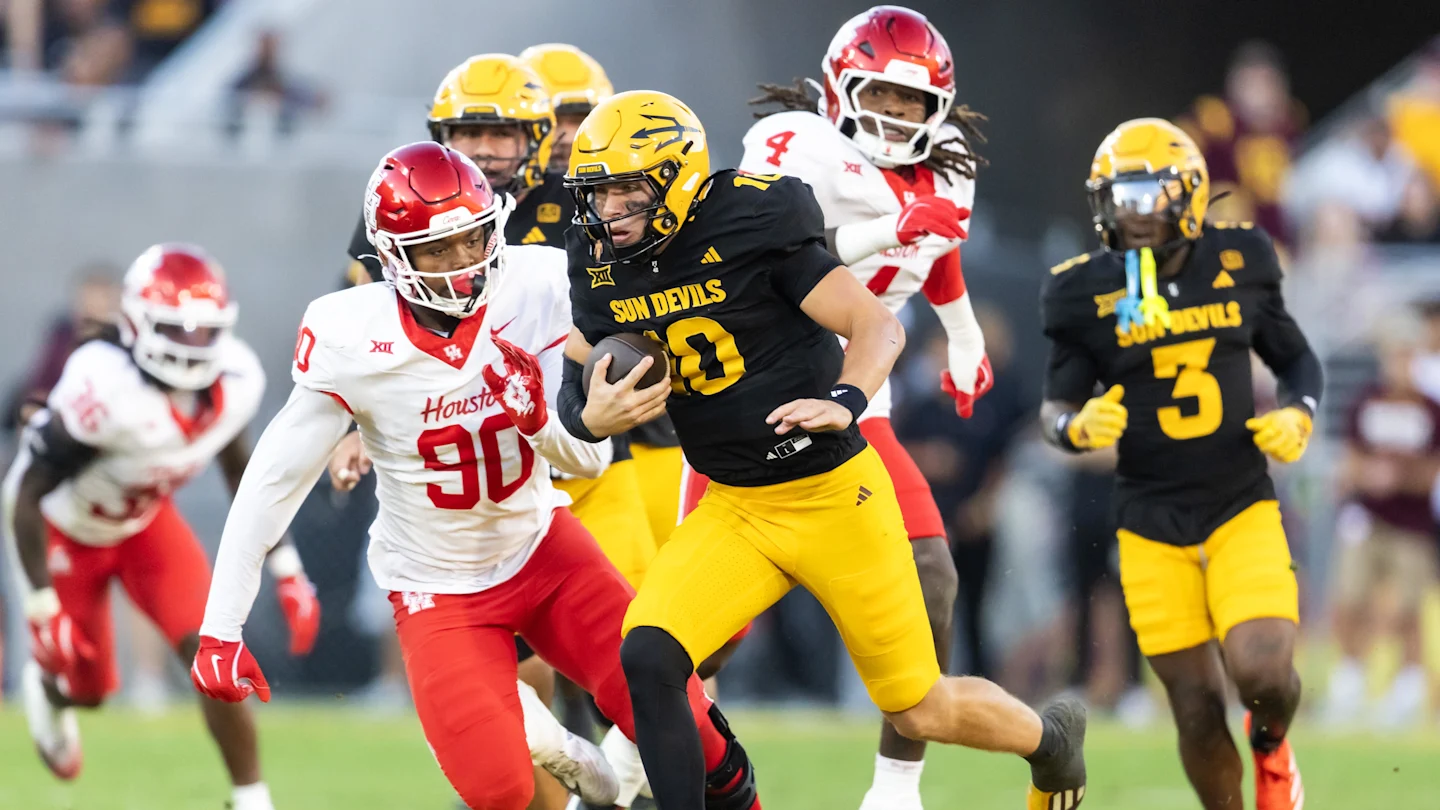
Bevies of college football players have made the decision to enter the NCAA transfer portal in the 2026 offseason.
In the weeks leading up to the portal’s opening, quarterbacks have dominated the headlines surrounding the entrants in the 2026 offseason. DJ Lagway, Brendan Sorsby, Dylan Raiola and Josh Hoover are among the most recent entries into the portal at quarterback.
The first well-known entry into the portal at quarterback was Sam Leavitt of Arizona State. Leavitt is entering the portal with two seasons of eligibility left.
The next school Leavitt transfers to will be his third in his college football journey. The 6-foot-3, 225-pounder began his collegiate career at Michigan State for his redshirt freshman season in 2023.
He has passed for 4,652 yards, 36 touchdowns and 11 interceptions while rushing for 810 yards and 10 touchdowns in three seasons. He earned Second Team All-Big 12 distinction and Big 12 Offensive Freshman of the Year in 2024.
While the portal has not officially opened, three schools have begun to separate themselves in the race for Sam Leavitt. Below is a look at the three schools that appear to be the final choices for Leavitt in the coming weeks.
LSU

Only two of the four quarterbacks to start for Lane Kiffin at Ole Miss were recruited by the Rebels out of high school. Both Jaxson Dart (USC) and Trinidad Chambliss (Ferris State) arrived in Oxford via the transfer portal.
LSU also has a strong track record with quarterbacks transferring in over the last decade, as both Joe Burrow and Jayden Daniels won Heisman Trophies two years after transferring in. As it relates to Leavitt, Daniels came to Baton Rouge by way of Arizona State in the 2022 offseason.
Oregon
Oregon has established itself as a destination for quarterbacks out of the transfer portal. Anthony Brown (Boston College), Bo Nix (Auburn), Dillon Gabriel (Oklahoma), and Dante Moore (UCLA) have all transferred to the Ducks and have each won 10 or more games in each season.
Adding to Leavitt’s interest in Oregon is its proximity to his hometown. He is from West Linn, Oregon, a suburb located just south of Portland.
Indiana

Indiana is the final school Leavitt is eyeing. The transfer portal has been crucial to Indiana fielding successful quarterbacks under Curt Cignetti.
The Hoosiers grabbed Kurtis Rourke from Ohio in the 2024 offseason and immediately went to a College Football Playoff the following season. California transfer Fernando Mendoza immediately won a Big Ten Championship and a Heisman Trophy and clinched the No. 1 seed in the 2025 College Football Playoff.
NIL
Missouri DE Damon Wilson II countersues Georgia, setting up a potentially major NIL legal battle
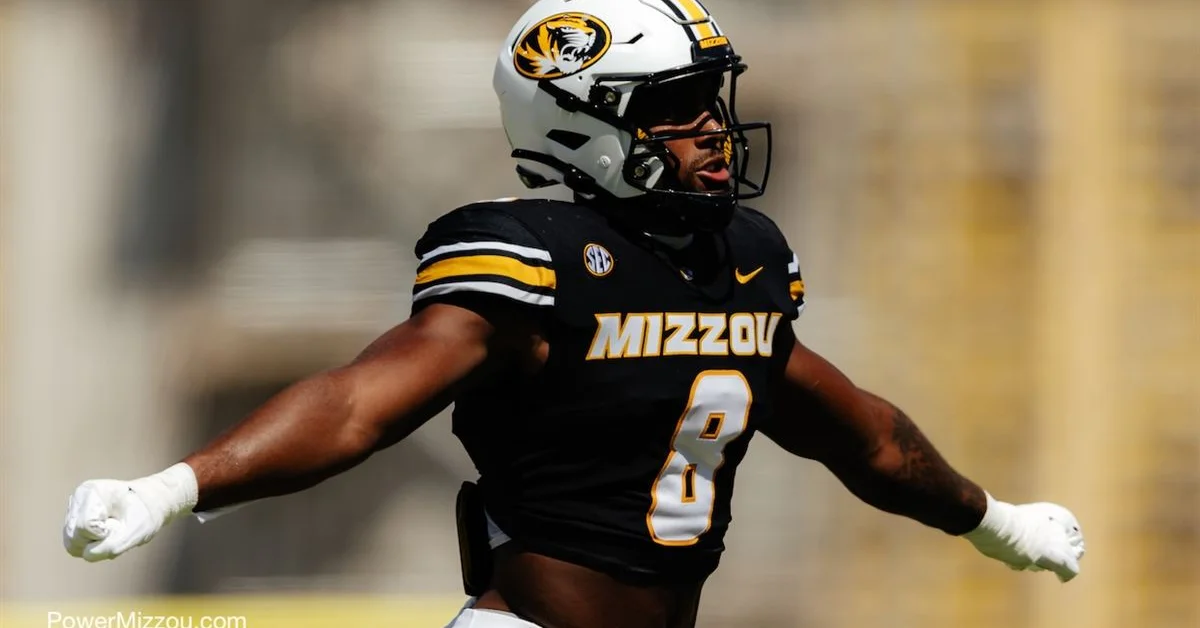
A messy player-school NIL dispute just got messier.
Less than a month after Georgia sued Damon Wilson II for transfer damages, Missouri’s star pass rusher filed a countersuit against Georgia, setting up a potentially precedent-setting NIL legal battle between an athlete and school.
“Recent court decisions have changed the landscape of college football and paved the way for NIL payments,” Bogdan Susan, one of Wilson’s attorneys, told PowerMizzou.com. “What has not changed is that college football players still have only four years of competition to realize their potential and try to achieve their dreams of playing in the NFL. A lot of trust is put into the colleges and coaching staffs. Coaches are not limited to four years of competition. The University of Georgia has been playing football for over 133 years. Damon has four years to play and he spent half of that time at Georgia. Decisions to transfer are not always about money. Stopping a young man from pursuing his dreams by forcing him to pay money that he has not received is just wrong.”
Wilson filed a 42-page complaint in Boone County, Mo. on Tuesday morning, an action first reported by The Athletic, alleging a civil conspiracy involving Georgia and its collective for trying to “penalize Wilson for his decision to transfer.” The defendants named in the suit are the University of Georgia Athletic Association, the Classic City Collective and former Classic City CEO’s Matt Hibbs and Taylor Potts.
The suit alleges Georgia didn’t immediately put Wilson’s name in the transfer portal last January and also lied about his buyout, telling multiple unnamed Power 4 programs that they’d owe Georgia $1.2 million if Wilson transferred to their school.
“UGAA’s actions signal that it is stuck in its old ways. The era of universities exerting total control over the career trajectories and rights of their student-athletes has been dead for nearly half a decade. Nonetheless, UGAA has demonstrated that, left to its own devices, it will attempt to exploit every loophole to deprive student-athletes like Wilson of the ability to reap the benefits of full and fair competition for their NIL rights. 23. No longer willing to endure UGAA’s harassment campaign and ready to hold UGAA and CCC accountable for their tortious interference with his business expectations when he entered the portal and chose to transfer, their breach of the Term Sheet’s Confidentiality Agreement, and UGAA’s efforts to tarnish his reputation as he pursues his lifelong dream of playing in the NFL, Wilson brings this action.”
Wilson’s claim hinges largely on the document signed by the player, the Classic City Collective and Hibbs and Potts. The involved parties signed a term sheet. Wilson’s suit claims the term sheet is not binding.
“The Term Sheet stated that it ‘preced[es]’ a ‘full License and Option Agreement,’ and specifically provided: ‘In the event the parties agree to this Term Sheet, then they shall work cooperatively to set forth these terms in a full legal contract including all the standard provisions of NIL licensing agreements.’ The Term Sheet further stated that Wilson ‘should seek legal counsel before finalizing the full License and Option Agreement.'”
The suit claims that Wilson, as part of a group of Georgia players, “without counsel present and with UGAA employees telling him that time was of the essence.” The suit alleges not only that Wilson signed the term sheet under pressure, but that the full binding contract was never presented, much less signed.
“The parties thus never executed a legally binding agreement containing any of the provisions in the Term Sheet,” the suit states.
The suit further claims that UGAA and the Classic City Collective violated the term sheet’s confidentiality agreement “by disclosing one or more of the Term Sheet’s provisions to sympathetic news outlets and affiliates to tarnish Wilson’s reputation.”
This is believed to be the first time a school and an athlete have taken each other to court over an NIL issue. The resolution could depend on whether or not Wilson’s NIL agreement with Georgia’s collective was a binding contract.
The UGAA lawsuit against Wilson recently filed seeks liquidated damages of $390,000. Wilson’s countersuit claims those funds are not liquidated damages, but instead penalties for transferring from Georgia.
“A penalty provision masquerading as a “liquidated damages” provision is unenforceable,” the filing reads. “It makes no effort to reasonably quantify damages that are difficult to ascertain, and it serves only to penalize Wilson for his decision to enter the transfer portal.”
Wilson’s suit also alleges defamation against UGAA, referencing a statement from Chief Marketing Officer Steven Drummond made to ESPN: “When the University of Georgia Athletic Association enters binding agreements with student-athletes, we honor our commitments and expect student-athletes to do the same.”
The suit clams “UGAA’s statement implies that Wilson is dishonest in his business dealings and his profession, impairing his ability to enter into future NIL agreements, and harms his reputation.”
Wilson was one of the top edge defenders in the SEC in 2025, recording 9 sacks, tied for third-most in the SEC, and 49 total pressures, second-most in the SEC. He is currently expected to play for Missouri in the Taxslayer Gator Bowl on Saturday. He has not declared his intent for next season. He has until January 14 to enter his name into the NFL Draft as an underclassman.
This story will be updated as more information becomes available.
Cody Goodwin covers the Missouri Tigers for PowerMizzou and 247Sports. Follow him on Twitter/X at @codygoodwin.
PowerMizzou.com publisher Gabe DeArmond contributed to this report.
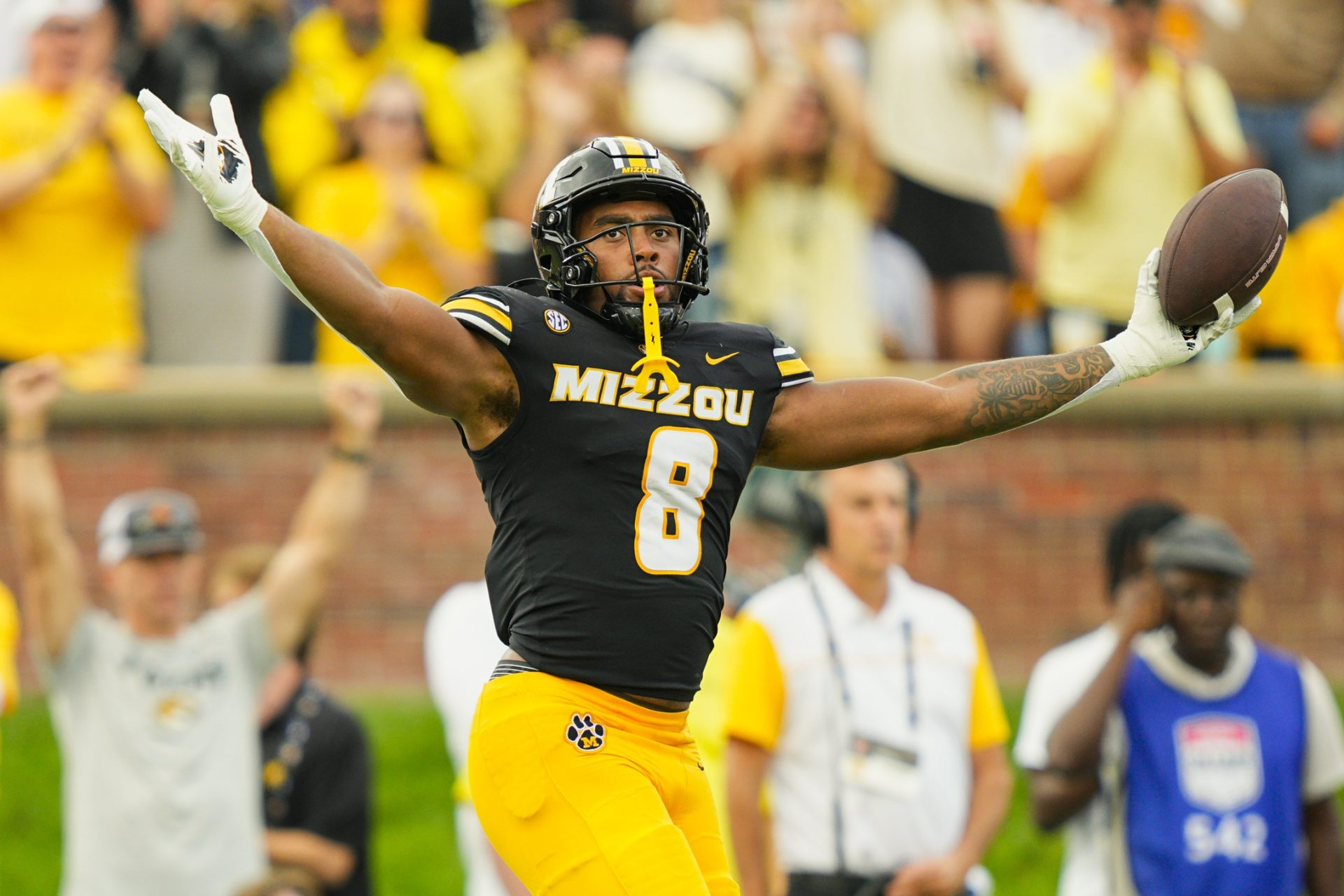

Missouri linebacker Damon Wilson II is suing the University of Georgia’s athletic association and its Classic City Collective, which he says is attempting to “punish” him through a “coordinated campaign” for his decision to transfer. Earlier this month, Georgia sought $390,000 in damages citing a clause in Wilson’s NIL contract after his departure to another SEC program.
The lawsuit initiated what appears to be a landmark case in college football, which now includes the plaintiff fighting back with his own legal documents. Highlighting a 42-page complaint filed Dec. 23 in Boone County, Missouri, Wilson’s attorneys claim Georgia tried to sabotage their client’s potential destinations after employees “falsely” told “at least three programs that — if Wilson left Georgia and joined their programs — Wilson would be subject to a $1.2 million buyout.”
The complaint claims Georgia “continued to assert similar demands in an effort to harass Wilson and impair his on-field performance for a conference rival” throughout the 2025 regular season.
Wilson signed a new deal with Georgia’s NIL collective in December 2024 during the College Football Playoff, but entered the transfer portal and moved to Missouri weeks later. While documents show Georgia paid Wilson $30,000 under the terms of the new deal before his departure, the athletic department states Wilson owed a $390,000 lump sum within 30 days of his exit.
The contract was a 14-month agreement worth $500,000, which was set to be paid in monthly $30,000 increments. Georgia would have also paid Wilson two $40,000 retention bonuses at the end of the NCAA transfer portal windows. The exit clause states that Wilson would owe a lump-sum payment worth the total he would have received if he remained with the program through the duration of the contract.
“The era of universities exerting total control over the career trajectories and rights of their student-athletes has been dead for nearly half a decade,” Wilson’s complaint said. “Nonetheless, UGAA has demonstrated that, left to its own devices, it will attempt to exploit every loophole to deprive student-athletes like Wilson of the ability to reap the benefits of full and fair competition for their NIL rights.”
The previous term sheet signed by Wilson, his representation argues, was not a “legally binding document” as Georgia states.
“CCC failed even to present Wilson what it promised in the Term Sheet — a “full License and Option Agreement,” the lawsuit said. “The parties thus never executed a legally binding agreement containing any of the provisions in the Term Sheet.”
Wilson appeared in 26 games at Georgia from during the 2023 and 2024 seasons and projected to be an impact starter prior to his decision to leave the program.
Georgia’s NIL collective’s two now-former CEOs — Matt Hibbs and Tanner Potts — were named in the lawsuit. Wilson seeks a “fair and reasonable amount of damages” for “financial and reputational harm he has suffered” in the aftermath of playing at Missouri this season.

A University of Missouri athlete countersued his former university on Tuesday.
Mizzou Football’s defensive end, Damon Wilson II, is countersuing the University of Georgia for damages regarding Name, Image and Likeness (NIL) money.
The lawsuit comes after the University of Georgia Athletic Association (UGAA) sued Wilson for allegedly violating a Term Sheet that he had signed in December 2024 during the College Football Playoffs.
The paperwork was presented to him by the Classic City Collective, Inc. (CCC), a supporter-funded platform used by UGAA to license student-athletes’ NIL rights, according to court records.
Wilson’s legal counsel argued that the signed Term Sheet was never a legally binding contract, as the documentation included the line, “In the event the parties agree to this Term Sheet, then they shall work cooperatively to set forth these terms in a full legal contract, including all the standard provisions of NIL licensing agreements.”
His attorney further noted that the CCC never presented him with what was promised in the Term Sheet or used it as a base to create a full legal License and Option Agreement contract.
Court documents reported that four days after Wilson signed the Term Sheet, and no legally binding contract was created, finalized or signed, CCC sent him $30,000 on Christmas Day.
Approximately one week later, Georgia’s season ended in a loss and the defensive end entered the transfer portal, eventually deciding to transfer to the University of Missouri to expand his opportunities of getting exposed to the NFL.
Less than three weeks later, CCC issued a termination notice to Wilson following his transfer announcement, which included a claim that would have required him to pay “all remaining License Fees that would have otherwise been payable under” the Term Sheet, which was a total of $390,000.
The lawsuit accused UGAA of violating the confidentiality agreement by publicly disclosing the full, signed Term Sheet to news outlets, on the public docket and by contacting at least three major college football programs to falsely claim that if Wilson left Georgia, then he would be subject to a 1.2 million buyout.
“UGAA’s actions signal that it is stuck in its old ways. The era of universities exerting total control over the career trajectories and rights of their student-athletes has been dead for nearly half a decade,” read the lawsuit. “Nonetheless, UGAA has demonstrated that, left to its own devices, it will attempt to exploit every loophole to deprive student-athletes like Wilson of the ability to reap the benefits of full and fair competition for their NIL rights.”
The petition stated that Wilson will not endure harassment from the UGAA and hold them accountable for interfering with his “business expectations when he entered the portal and chose to transfer, their breach of the Term Sheet’s Confidentiality Agreement and UGAA’s efforts to tarnish his reputation as he pursues his lifelong dream of playing in the NFL.”

Turns out, the rivalry between Notre Dame and USC was close to being saved earlier this season. According to Ryan Kartje of The Los Angeles Times, the two programs almost announced a 2026 game had been scheduled. However, the agreement Notre Dame put together with the College Football Playoff changed things for the Trojans.
“USC and Notre Dame were close to announcing a continuation of their rivalry earlier this season, a source told @latimes,” Kartje said via X. “USC was ready to compromise and play the ’26 game in November But then USC learned of ND’s agreement w/ the CFP to have a guaranteed spot if in the top 12.
“In light of Notre Dame’s agreement re: CFP, which USC hadn’t been aware of, USC reversed course on its plan to compromise and insisted that the ND game be played in Week Zero in 2026. A source said they felt ND’s agreement was ‘a material advantage’ that could disadvantage USC.”
Notre Dame athletic director Pete Bevacqua revealed this agreement, also called an MOU, with the CFP after this past Selection Sunday. If the Irish are placed inside the top-12 moving forward, they are guaranteed a spot in the field. The same is true if the CFP expands to 14 teams, as Notre Dame would need to be ranked inside the top 13.
If the MOU were in effect this season, Notre Dame would have gotten into the field over Miami despite being ranked lower. Miami also held the head-to-head matchup, jumping Notre Dame at the last possible moment. This scenario playing out against USC was apparently a concern for administration in Los Angeles.
“Had Notre Dame had its new agreement with the CFP committee in place in 2025, the Irish would’ve gotten in over Miami, who beat them earlier in the season,” Kartje said via X. “That scenario was a concern to USC.”
Now, for just the second time since World War II, there will not be a game between Notre Dame and USC. It’s one of the more storied rivalries in college football despite the two never sharing a conference. We are not too far away from 100 games between them, sitting at 93 after the 2025 edition took place in South Bend.
Notre Dame already has a game on the ’26 and ’27 schedule to replace USC. A home-and-home series will take place with BYU, a team they could have played in the Pop-Tarts Bowl in a few days.

Sign-ups open for LaFayette Parks and Recreation baseball, softball — The LaFayette Sun

24 Hour Vigil Walk Represents a Service Mainstay Within the Kean Track & Field/Cross Country Family

Aggies Sign All-American Natalie Ring to 2026 Class – Texas A&M Athletics

$2.4 million transfer QB reportedly down to three college football programs

Dutch runner Feldmann chases down two big goals

Flavia Siqueira Named FIU Volleyball Head Coach

BYU hires Rob Neilson as new head women’s volleyball coach – BYU Athletics – Official Athletics Website

Hurlock gets first ever Salvation Army red kettle | Latest News

Former Penn State Women’s Volleyball Setter Izzy Starck Transfers To Pitt

Spire Motorsports opens full-time dirt racing team for 2026

Missouri DE Damon Wilson II countersues Georgia, setting up a potentially major NIL legal battle
Wisconsin Badgers volleyball 2025 transfer portal tracker

Badgers news: Wisconsin lands 2nd commitment from transfer portal

Former Penn State star Izzy Starck commits to Pitt volleyball

How sports betting lures teenagers into risky arenas

First Tee Winter Registration is open

Fargo girl, 13, dies after collapsing during school basketball game – Grand Forks Herald

CPG Brands Like Allegra Are Betting on F1 for the First Time

F1 Las Vegas: Verstappen win, Norris and Piastri DQ tighten 2025 title fight

Sycamores unveil 2026 track and field schedule

Utah State Announces 2025-26 Indoor Track & Field Schedule

Two Pro Volleyball Leagues Serve Up Plans for Minnesota Teams

SoundGear Named Entitlement Sponsor of Spears CARS Tour Southwest Opener

Jo Shimoda Undergoes Back Surgery

Redemption Means First Pro Stock World Championship for Dallas Glenn

Texas volleyball vs Kentucky game score: Live SEC tournament updates

Bowl Projections: ESPN predicts 12-team College Football Playoff bracket, full bowl slate after Week 14

Black Bear Revises Recording Policies After Rulebook Language Surfaces via Lever

How this startup (and a KC sports icon) turned young players into card-carrying legends overnight

Robert “Bobby” Lewis Hardin, 56





-
 Motorsports2 weeks ago
SoundGear Named Entitlement Sponsor of Spears CARS Tour Southwest Opener
-
 Rec Sports3 weeks ago
Black Bear Revises Recording Policies After Rulebook Language Surfaces via Lever
-

 Motorsports2 weeks ago
Donny Schatz finds new home for 2026, inks full-time deal with CJB Motorsports – InForum
-
 Rec Sports3 weeks ago
How Donald Trump became FIFA’s ‘soccer president’ long before World Cup draw
-
 Rec Sports2 weeks ago
David Blitzer, Harris Blitzer Sports & Entertainment
-

 Motorsports2 weeks ago
JR Motorsports Confirms Death Of NASCAR Veteran Michael Annett At Age 39
-
Sports2 weeks ago
Elliot and Thuotte Highlight Men’s Indoor Track and Field Season Opener
-

 Motorsports2 weeks ago
Rick Ware Racing switching to Chevrolet for 2026
-
Sports2 weeks ago
West Fargo volleyball coach Kelsey Titus resigns after four seasons – InForum
-
 Sports2 weeks ago
#11 Volleyball Practices, Then Meets Media Prior to #2 Kentucky Match