
NIL
How NIL has changed college sports and what changes could still come

S1: Hey , San Diego , it’s Andrew Bracken in for Jade Hindman. Today we hear about the state of nil and its impact on college sports. This is KPBS Midday Edition. Connecting our communities through conversation. Should college athletes be paid ? Are they students or professionals ? These are questions that have been debated for decades before lawsuits led to Nil deals for many college sports stars. That’s name , image and likeness. And it’s at the heart of a transformation in college athletics in recent years. But universities , athletes and fans are awaiting a final ruling to a long running lawsuit that could change the rules for college sports. Kim Massey is the executive director of athletics at the University of San Diego. He spoke to KPBS Midday Edition host Jade Hyneman last week. Here’s that interview.
S2:
S3: No , no , it’s a really good question. I appreciate you having me on to talk about it. It’s really important that the general public understands what this is , where we’ve been , where we’re headed. You know , nil now has been around almost four years , and it’s really changed the landscape of college athletics. And it’s been a long time coming in terms of allowing the athletes to profit off their name , image and likeness the way any student has been able to for many years. And , you know , I think many of us in the industry saw a lot of different rabbit holes and where this could go and how it has gone has been a little bit exactly like we thought. And it’s gone a little bit , frankly , off the rails. We live in the West Coast and it is the true wild , wild West. And in some ways it’s a complete mess. That being said , there are some values. There are some good things about it that I’m sure we’ll talk about.
S2:
S3: Um , now they can do a camp. You know , they can make a public appearance and be paid for it. They can , um , be a part of a social media campaign and promote a business or an organization and be paid for their , for their time and efforts. In the past , that was not the case yet. A student who was a great piano player could be paid to go to downtown San Diego and play at an event and be paid $500 for their three hours of playing. You know that that was not the case for an athlete. And now we’re in a situation whether it’s equitable , whether now they can do things that other students could do for years , but it’s really gone off the rails in terms of the pay for play side of things that we’re unfortunately seeing. Right.
S2: Right. So , you know , to make a playing college , athletes are now able to get paid for their work. Um , and it’s more equitable.
S3: Essentially , they’re being recruited out of high school , recruited from one school to the next. There’s a there’s some guardrails , but probably a lack of a real structure. In every year you’re seeing specifically in men’s basketball rosters , turnover by half or more because As athletes have , you know , feel like they have value to go somewhere else and get paid more money. And it’s really challenging to control this. And I think there’s a lack of structure in terms of how do we manage the expectations of the athletes. But also there’s , I would say a lot of bad actors out there who are not really helping the athletes in terms of being consultants and guides and agents , and it’s really gotten to a point where it becomes this bartering zone of one school to a next school , trying to have a roster , but also still still get the right kids at the right institution who want to get a degree , feels like that’s that’s where I say going off the rails. Yeah.
S2: Yeah. So so right now it’s equitable for athletes. Not so much for colleges. Yeah.
S3: Yeah. It’s just really hard , you know , when you are building something special on your roster and you’re trying to build chemistry. And ultimately we want all our athletes to get degrees. And many of them now are looking at a one year scenario where maybe they go somewhere for a year and they play really well , which is great. And now they’re more marketable and now they’re heading to the next institution. So , you know , I think we’re trying to figure out how do we still keep the higher ed principles , because we are working for institutions of higher education still in place , while really negotiating a scenario where it’s very much like a professional sports organization and it’s a business. And what’s that juxtaposition between the two , and how do we still keep it , keep the integrity of what we’re trying to accomplish with 18 to 23 year olds ? Hmm.
S2: You know , one piece you touched on there is the ability for athletes to to move to a different school , when in the past they were kind of tied to to a school , right. I mean , how do you find a balance there ? Yeah.
S3: You know , it’s a tough balance. Um , you know , I think a lot of high school athletes , right , came to school for they wanted to get a business degree. They wanted to play for a certain coach. They want to be geographically close to where their family is , and they can see them play. And I feel like a lot of that now is a little bit gone by the wayside. It’s okay , I’m going to go to this place because I can get playing time and increase my value. And again , I do want to say this. This is not the norm. I mean , there’s a certain percentage of athletes in this case , the vast majority are still coming to school for the right reasons. They want to get a great degree. They want to have a good college experience. They are coming to have that collegial opportunity to win championships. But there is a subsection of athletes that where it’s really hard to really find that true identity of why they’re coming to the institution , and how do we build that identity with that within that team. Okay.
S2: Okay. Well , all of that leads to this settlement that’s currently being finalized.
S3: Essentially , this settlement is the culmination of multiple lawsuits , mostly hinging around the fact that athletes for years did not profit off their name , image and likeness. And , you know , looking at the culmination of what the lawsuits might lead to in terms of both dollars and time. You know , plaintiffs decided along with the NCAA , let’s let’s do a settlement that’s going to allow something to have come in place where there’s some back pay for for former athletes up to a certain number of years , but also moving forward , it does allow institutions to essentially do revenue sharing with the current athletes. So it’s twofold. In addition to that , probably the most controversial piece of this settlement is that there are now going to be roster limits in place for each team in each program , so that typically outside of for most sports has not been the case. So now there’s going to be a roster limit. Essentially we can share revenue with athletes. And then there’s going to be a back pay for athletes for who did not profit out their name , image and likeness. So that’s in a nutshell. Uh , this settlement would be in place for ten years. And that’s what we are sort of trying to navigate what this actually looks like as we move forward. Mm.
S2: Mm. So one question a lot of people have is , you know. How did we get here with college athletics ? What was the spirit behind this push for Nil deals in college sports ? Yeah.
S3: You know , it’s a great question. You know I think this has been a long time coming. And I think if you look back at the early 2000 , you saw a proliferation of coaches salaries , administrator salaries. You saw a lot more money being tied into the conferences in terms of multimedia rights. Conferences started to profit from TV deals. And that filtered down , of course , to the institutions. And , you know , it came a point in time where I think a lot of the athletes and others said , wait a second. You know , these institutions are profiting off of us and making millions of dollars in some cases , and we’re not getting paid anything , although they were on scholarship and getting paid through , you know , with , with food and things of that nature. But through a culmination of many years , I think there was a groundswell , really , that probably became untenable to the point where we get to where we are now , where , you know , in 2021 , this , this nil became in play. And this has been a probably 15 to 20 years , if not more in the making , though , because there is such a proliferation of money , uh , being involved. And it did feel like you were becoming a little bit more professionalized , specifically in a few sports. And the question is , why are we not sharing this with the athletes ? So that’s sort of why we came to where we are. I , you know , being someone who’s been in college athletics 24 years , I wish earlier on the process , years and years ago , there was some kind of revenue sharing. There was the ability for the athletes to profit off their name , image and likeness. And I don’t think we’d be where we are. It’s just it’s a it’s a runaway train. And I think we could have maybe started this as slowly and built it and put some guardrails around it. But here we are and we have to figure it out. Yeah.
S2: Yeah. I mean , yeah , but I you know , I recall hearing a story about , um , a college athlete who had his name and image and likeness and all of that on jerseys and all kinds of things. Um , but couldn’t afford to even buy a jersey for himself. So. Yeah. Um , you know , I mean , how much. So let’s talk about. I mean , how much were you ? Our university’s making off of these athletes and teams.
S3: You know , it really depends on institution. You know , there’s a lot of different types of institutions. I think that’s another one of the challenges in Division one. You know , there’s 360 plus different institutions. And they range from budgets that are 5 or 6 million up to , you know , the Texas and Ohio states of the world who are well over 200 million. And they’re literally all in the same division with the same amount of same rules. So it really depends also on the conference. You know , some conferences specifically what we call the power for now , the SEC , the big 12 , the ACC in the in the Big Ten are at a level that’s just much higher. And even within that for the SEC and Big Ten are at a different level than the other two. So many of these institutions are getting a significant amount of funds on multimedia rights that come to their institution every single year. And , you know , we’ve gone. We’ve just gone through a cycle of some of those conference distributions changing , and you’ll see another one coming up here in 2028 to 29 , 2030. Um , so the shifting is is underfoot and it’s happening rapidly , but in some cases it’s very significant in other cases. It’s not a big distribution. You know , there isn’t maybe a large market or perhaps they don’t have a football program that brings in a lot of money or a basketball program that does. So it’s quite a significant gap between many schools that are still in the same division , if that makes sense. Mhm.
S2: Mhm. How much are players making right now. How big are these NFL deals. Yeah.
S3: Yeah. You know the vast majority are actually not that big. You’re talking several maybe a couple hundred bucks. That’s the vast majority. But you do have cases now where you have certain quarterbacks or point guards or centers and people like that and making literally in the millions. And , you know , you might have a few other student athletes who might not be as successful on the court or on the field , but their social media influencers , and they’re doing really very well. I think about Libby Dunn , who is a gymnast at LSU , and Angel Reese , who played basketball there. You know , there’s some good examples of people who’ve used their social media influence in a really creative , entrepreneurial way and made a ton of money. And then you have the cases with some of the men’s basketball and football players and a few of the women’s basketball players as well , who , based on their on court , on field exploits , have had valuations in the millions as well. So it’s again , that’s probably the 1 or 2% , the vast majority. Much , much less. And frankly , there’s probably , you know , a high percentage of athletes not engaging in all activities at all. It takes time , it takes energy , it takes and creative spirit. And some are very , very busy with their studies and being a college athlete as it is. So I think the narrative from the media a lot of times is that everybody’s earning hundreds of thousands or millions of dollars. That is very far from the truth.
S2:
S3: A little bit more parity. You don’t see someone just three or 4 or 5 schools that are just way better than everybody else. I think you’re seeing institutions that have had , frankly , large budgets , and they’re able to pay athletes better than others , and that’s going to help them. But also , you see athletes who maybe started at a large institution that’s a high profile school , and they didn’t get playing time , and they’re good players , but now they’re transferring down a level to a school. That’s still Division one , but maybe it’s what we call a mid-major or or smaller institution. And you find that players are staying in school even longer. And we got through Covid and they had an extra year there. And some athletes who are not draft prospects , instead of trying to declare for a draft , they say , well , I can actually make more money in college now I’m staying in college. So you’re seeing rosters get older. You’re seeing more individual athletes who’ve had more experience. So you’re seeing a little bit more parity , I think. And like in the college basketball and maybe football to an extent than you did before , which is not bad for the game. Um , so I think we’ll see over time. It’s only been a few years , but it’s been really interesting to see some of the talent actually being leveled out in certain ways on different rosters at different sized schools.
S2:
S3: You know , I think there are quite a few sports where there’s been very , very little impact. You’re starting to see it creep into other sports like baseball , volleyball for sure , a little bit softball. You know , you have softball player for Texas Tech. She’s reportedly making a million plus a year. Sometimes you don’t know what’s true and what’s not true , but a lot of the quote unquote Olympic sports have been less impacted. Um , and I think part of that is due to what is deemed market value ? And they’re non-revenue sports. But occasionally you will see the athlete who again is very good on social media. They’re influencers. They’re really good at selling their name , image and likeness and utilizing that skill set an entrepreneurial way. But you are seeing some impacts and some other sports that you didn’t see probably 2 or 3 years ago.
S2: What role does the NCAA play in all this ? Yeah.
S3: They’re involved. I mean , they’re part of the settlement , you know , and I think they’ve come to the decision. And I’m not going to speak for their their president of the NCAA or their director. But you know , they’ve been a part of this House settlement. And they feel like there is still a little bit of protections here for amateurism , but also over the next ten years , potentially maybe less lawsuits. I don’t know if that’s the case. I would probably beg to differ. But , you know , I think there frankly , in some ways , you know , working with the plaintiffs on this and trying to determine what’s the best possible path forward that still retains the integrity of what collegiate sport is. And again , we are in institutions of higher ed , yet allowing some flexibility for athletes to profit and sort of , again move towards a professional model , but not truly as an employee. So there’s this fine line and balance. But yes , they’ve been very much at the table for all these discussions.
S2:
S3: And honestly to you know , as a private school , I think we do have some advantages at times because we can really help enrollment in a private school the way maybe a public institution is a little bit different. Um , you know , we are in a , in a place at a very stable conference , the West Coast Conference. And , you know , we have to be who we are. We’re not the same as a lot of power for schools , and we’re not going to have that kind of budget or revenue that to share. If we don’t have a football program that’s selling out on Saturdays , um , providing 70% of the revenue like some of those institutions do. So I think we have to temper expectations , but also be transparent about what our revenue sharing looks like and how we can compete. And I think part of us being where we’re at is understanding culturally how we can still bring in the right student athletes to the institution who can still get a degree at are academically rigorous school , a school that’s a faith based institution , but also in a large city that has a great marketplace for sports. You know , I do think optimistically , we can be extremely successful and very competitive , even with schools that are larger than us and have larger budgets. But I do think we have to be more careful and more considerate of funding the right fit for our athletes here in the midst of of all the chaos that’s going on around us.
S2: I’ve been speaking with Kim Yamasaki. He is the executive director of athletics at the University of San Diego. Kim , thank you so much for joining us.
S3: Of course , anytime. I appreciate you having me.
S1: That’s our show for today. I’m Andrew Bracken. KPBS Midday Edition airs on KPBS FM weekdays at noon , again at 8 p.m.. You can find past episodes at KPBS or wherever you listen. Thanks again for listening. Have a great day.


As Indiana prepares to host its first-ever College Football Playoff game as the No. 1 seed, the Hoosiers are quietly already planning for 2026.
Fernando Mendoza, a redshirt junior transfer who led the Hoosiers to a 13-0 regular season, won the 2025 Heisman Trophy after throwing 2,980 yards and a national-best 33 passing TDs and is widely seen as an early NFL first-round prospect.
Should Mendoza depart for the draft, Indiana would be tasked with replacing an elite, NFL-caliber starter, which explains why numerous quarterbacks expected to enter the transfer portal have been linked to the Hoosiers.
On a December 20 episode of “Hoosiers Football Tailgate,” host Coach Griff specifically named TCU quarterback Josh Hoover, who announced he will enter the transfer portal and skip the Alamo Bowl, as a name Indiana should watch.
“I like this guy as a definite target for Indiana,” Griff said. “So, Josh Hoover, keep an eye on him as a potential target… The one I think they’ll really try to get is Hoover.”

Hoover was a three-star recruit out of Rockwall-Heath (Texas) and initially committed to Indiana in 2021 before flipping to TCU after the school extended an offer.
He then redshirted in 2022 and became the starter in 2023, producing breakout numbers in 2024 with 3,949 passing yards, 27 passing touchdowns, and 11 interceptions with a 66.5% completion rate.
In 2025, Hoover threw for 3,472 yards and 29 TDs, with 13 INTs, and projects among the most productive returning QBs in 2026 on career totals of 9,629 passing yards, 80 total TDs, and a career passer rating of 147.8.
On3’s NIL valuations list also shows Hoover ranking among the most marketable college quarterbacks, with a valuation in the neighborhood of $2.1 million.
Hoover is an intriguing option for Indiana due to his proven production and Power Five experience, positioning him as a potential one-year, plug-and-play solution as Curt Cignetti prioritizes continuity.
There is also a “full-circle” aspect to his recruitment, as Hoover originally committed to Indiana before flipping to TCU in 2021.
Read More at College Football HQ
- Major college football program loses 15 players to transfer portal
- College Football Playoff team has ‘significant interest’ in 4,000-yard QB
- College football quarterback enters transfer portal after 4,000-yard season
- No. 1 ranked transfer portal player predicted to join College Football Playoff team
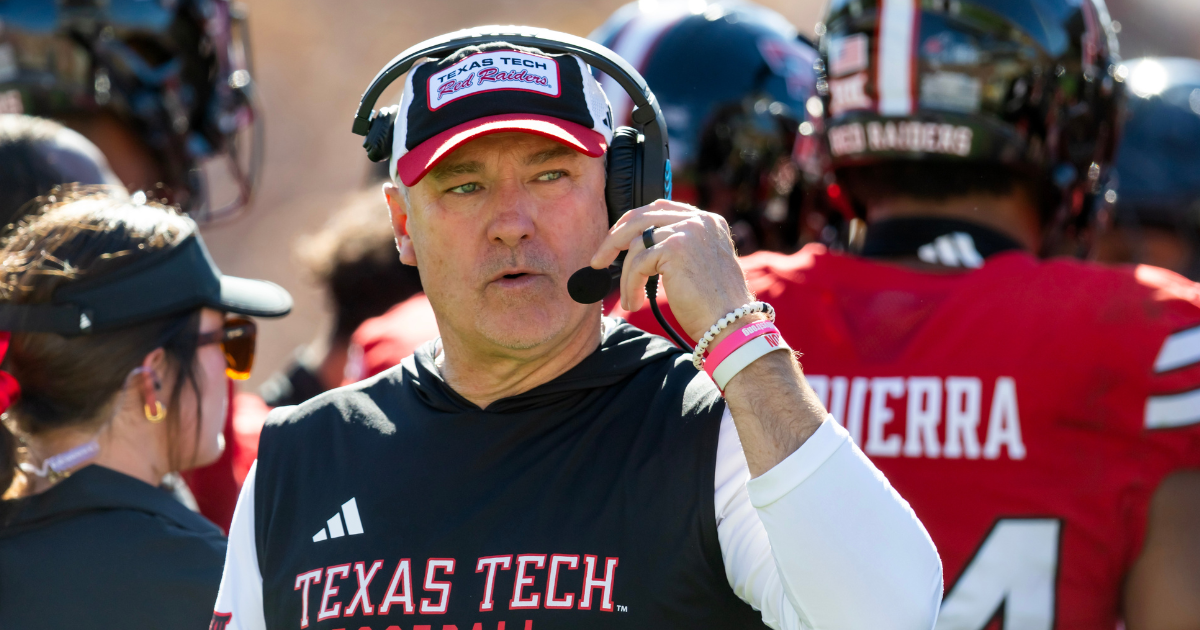
Two teams that have really embraced the NIL era are set to meet on New Year’s Day. Oregon‘s win over James Madison advanced them to the College Football Playoff quarterfinals, where Texas Tech was waiting on the other side. Now, it’s Dan Lanning vs. Joey McGuire in the Orange Bowl with a lot of resources put into rosters.
Oregon has been at the forefront of NIL since its inception, especially under Lanning. Texas Tech could be considered the new kid on the block after major investment from a few donors. Even so, McGuire sees some similarities between the two when it comes to winning at whatever cost.
SUBSCRIBE to the On3 NIL and Sports Business Newsletter
“They’ve got a great booster in Phil Knight that really said, ‘We’re going to go win at the highest level and there’s no excuse when it comes to finance.’ You turn around and I think that we’re showing that we’re doing that. I think we’re really comparable,” McGuire said.
“We’ve got guys that have stepped up and done a great job. I kind of call them the ‘Big Five’ whenever you talk about Cody and John, Mike, Dusty, and Gary. Those guys have, along with everybody else in Red Raider Nation, but those guys have really led the charge. So, we’re kind of comparable on and off the field in this team. They’ve just done it for a little bit longer. That’s what we’re trying to do.”
As he said, McGuire is looking to put together a run similar to Oregon. All four years since hiring Lanning have been a resounding success, finishing with double-digit wins in all of them. This is the program’s second College Football Playoff appearance in the 12-team format, just missing out in 2023 due to a Pac-12 Championship loss.
Oregon won the Big Ten in its inaugural season inside the conference. Texas Tech can check that box already though, winning the Big 12 for the first time in school history. Advancing in the CFP would be a sweet bonus.
No matter the result on Jan. 1, Texas Tech is positioning itself to be successful moving forward. The 2026 recruiting class ranked 20th in the country but No. 1 in the Big 12 per the Rivals Industry Team Rankings. This is all before raiding the NCAA transfer portal, something McGuire and his staff did so well with last offseason.

In the weeks leading up to the opening of the NCAA transfer portal, hundreds of college football players have announced their decisions to leave the schools they played for in 2025 for new horizons next season.
Some cases involve players transferring up from Group of Five or FCS programs to broaden their exposure. Others feature players following their coaches from one school to another due to the coaching carousel. In occasional instances, players are searching for the highest bidder on the portal.
Former Arizona State quarterback Sam Leavitt is a portal entry drawing the attention of high-bidding college football programs. He will enter the portal with two seasons of eligibility remaining.
On3 ranks Leavitt as the top available quarterback in the transfer portal. Chris Hummer of CBS Sports reported that schools are expected to offer Leavitt around $3 million.

“Sam Leavitt on the open market is going to command a significant amount of money,” Hummer said. “We’re talking $3 million plus most likely. Although, in all fairness, I think teams really do have questions about Sam Leavitt’s injury and what that means moving forward. It’s kind of like the Carson Beck situation a year ago.”
The 6-foot-2, 205-pounder began his college football career with Mel Tucker at Michigan State in 2023. He played in a maximum of four games that season to maintain his redshirt, throwing for 139 yards, two touchdowns, and a pair of interceptions.
Leavitt transferred to Arizona State in the 2024 offseason. The Sun Devils were 10-2 in the regular season and defeated Iowa State (45-19) en route to the program’s first-ever College Football Playoff appearance. Leavitt passed for 2,885 yards, 24 touchdowns and six interceptions and rushed for another 443 yards and five touchdowns.
Postseason honors for Leavitt included Big 12 Offensive Freshman of the Year and Second Team All-Big 12. His 2,885 passing yards are the most by a freshman quarterback in Arizona State history.
Leavitt’s season was cut short after the Sun Devils’ game against Houston due to a Lisfranc injury. He threw for 1,628 yards, 10 touchdowns and three interceptions while he ran for 306 yards and five touchdowns in seven games.
Arizona State will not start Leavitt in its bowl game. The Sun Devils (8-4, 6-3) will play ACC champion Duke (8-5, 6-2) in the Sun Bowl in El Paso, Texas (3 p.m. EST, CBS).
The NCAA transfer portal officially opens on Jan. 2, 2026, the final day of bowl games across the FBS ranks. It will remain open for the following two weeks.
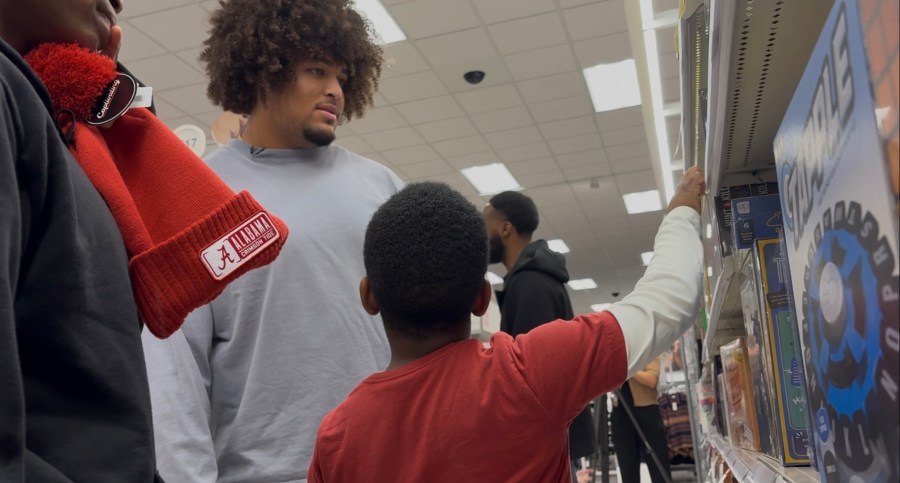

TUSCALOOSA, Ala (WIAT) – University of Alabama offensive lineman Parker Brailsford’s childhood experiences inspire him to help Tuscaloosa’s underserved youth.
Brailsford is an Arizona native, who has made a name for himself in the world of college football. But when he takes off the helmet and pads, his focus shifts to something else.
Advertisement
“Being able to give back to kids that don’t have – that’s something that fulfills me,” Brailsford said. “It’s my purpose.”
Brailsford took 10 children and their families from the Boys and Girls Club Christmas shopping on Monday.

Each child received a $100 Target gift card. All together it was $1,000 of NIL money.
Alabama moves up to No. 14, Auburn falls out of AP men’s college basketball rankings
“He just gave her a turkey for Thanksgiving, and now he’s taking her Christmas shopping,” Toniko Bryant said. “I’m very thankful because he doesn’t have to do that.”
Brailsford understands he doesn’t have to – but he wants to.
Advertisement
“As a kid, we didn’t have a lot but we had enough,” Brailsford said.
During Brailsford’s infancy years he was adopted.
“I never was in the foster care system, but one of my friends was,” Brailsford said.
Brailsford’s formative years were a stark contrast to what he saw other children experience. His parents gave him support and stability, while other children moved from home to home.
At the same time, his mother took him to homeless shelters and food pantries to volunteer. There he saw how poverty affects anyone of all ages, races, and gender.
“Sometimes you get caught in the what you’re living in right now – you think there’s not a place for you,” Brailsford said.
Advertisement
Brailsford found his place on the field, but his purpose is to help children find theirs.

“This is something God put on his heart,” John Nero said. “I appreciate every bit of it, not just for Oshae but for all the other kids.”
Brailsford relates to many of the children he serves. Whether it’s adoption, financial hardships, or empathizing with experiences his friend encountered years ago.
While Brailsford’s success in football gives him the financial resources and name recognition to coordinate outreach events, this is just the beginning even if his football career comes to an end.
“I’m working on my social work degree right now because I really want to be able to help kids, anyway I can,” Brailsford said.
Advertisement
Copyright 2025 Nexstar Media, Inc. All rights reserved. This material may not be published, broadcast, rewritten, or redistributed.
For the latest news, weather, sports, and streaming video, head to CBS 42.
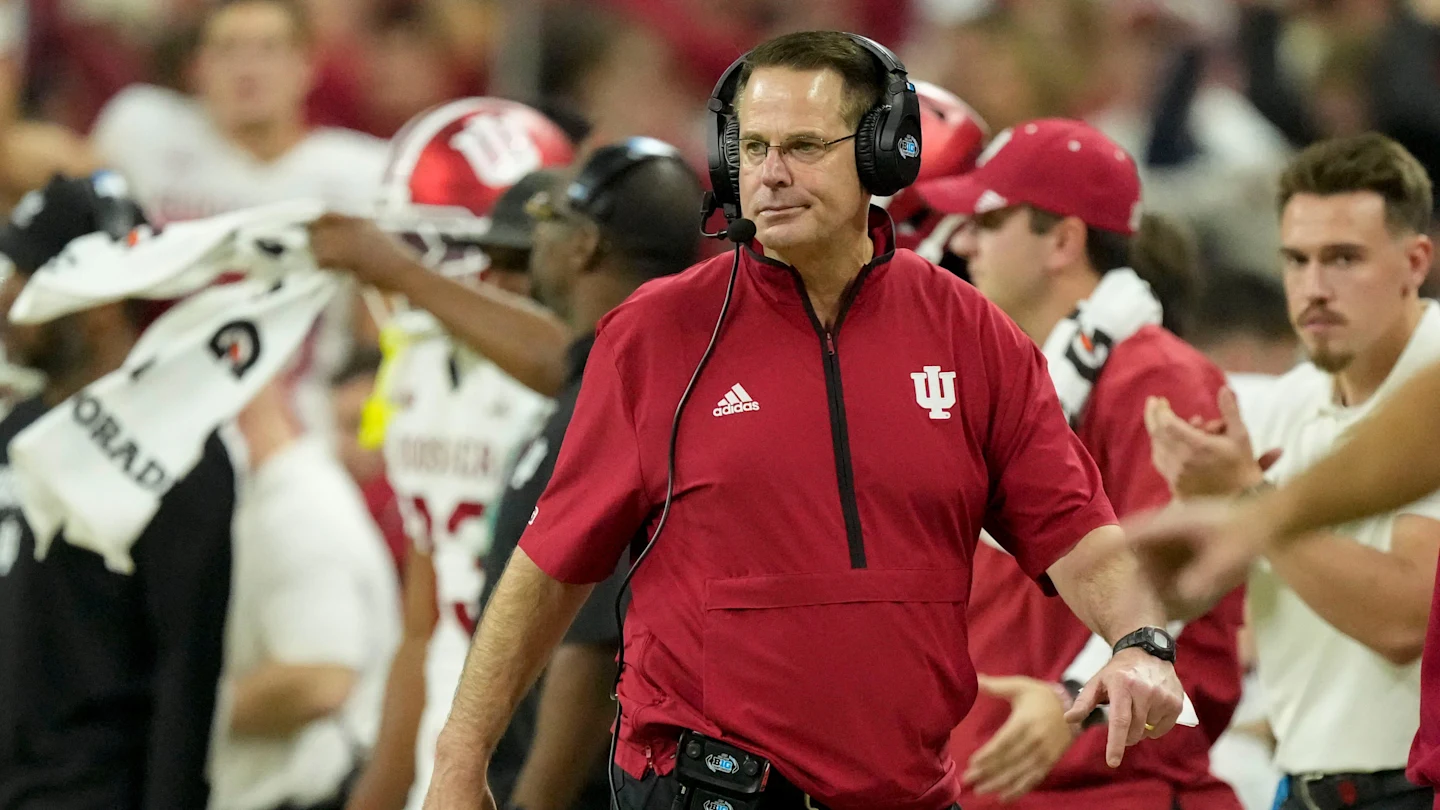
Indiana’s meteoric ascent to the top of college football has transformed the Hoosiers into a prime destination for transfer quarterbacks, and for a brief moment, that attention turned toward a familiar face.
Cincinnati signal-caller Brendan Sorsby, who spent his first two seasons at Indiana before moving on, formally entered the transfer portal on December 15 after a productive 2025 campaign with the Bearcats.
In 2025, Sorsby produced 2,800 passing yards, 27 touchdown passes, and five interceptions, plus 580 rushing yards and nine rushing scores.
Across his collegiate career, he has totaled 7,208 passing yards, 60 passing touchdowns, 1,305 rushing yards, and 22 rushing touchdowns, positioning him as one of the top dual-threat quarterbacks currently available in the transfer portal.
He is also one of the market’s most valuable quarterback assets, with an estimated NIL valuation of approximately $2.4 million and reports indicating that suitors have discussed packages exceeding $4 million.
Recent reports have tied Sorsby to several Power-5 suitors, notably Texas Tech and, in initial rumor threads, a potential reunion with the Hoosiers.
However, “Hoosier Tailgate” host Shannon “Coach Griff” Griffith pushed back on the speculation during a December 20 episode, suggesting that Indiana would not view Sorsby as a realistic target.
“I do not think Sorsby is anybody that Indiana would have any interest in,” Griff said. “I don’t necessarily think Sorsby is better than, other than playing, Alberto (Mendoza). I just don’t think that’s something that I can see them getting back in. He’s kind of linked to Texas Tech.”

The Hoosiers finished the 2025 campaign undefeated, captured the Big Ten title, and entered the College Football Playoff as the No. 1 seed.
Their offense was driven by Fernando Mendoza (2,980 yards, 33 TDs, six INTs), who swept national awards (Davey O’Brien, Maxwell, and the Heisman) and is widely discussed as a top prospect for the 2026 NFL Draft.
Head coach Curt Cignetti’s program has proven adept at integrating transfer quarterbacks, with both Fernando Mendoza (Cal) and Kurtis Rourke (Ohio) finding success after joining the Hoosiers.
For Sorsby, the portal still offers multiple paths, including a high-value college package or an NFL evaluation, but commentary from influential IU voices, such as Griff, has effectively taken a straightforward reunion scenario off the table.
Read More at College Football HQ
- Major college football program loses 15 players to transfer portal
- College Football Playoff team has ‘significant interest’ in 4,000-yard QB
- College football quarterback enters transfer portal after 4,000-yard season
- No. 1 ranked transfer portal player predicted to join College Football Playoff team

TUSCALOOSA, Ala (WIAT) – University of Alabama offensive lineman Parker Brailsford’s childhood experiences inspire him to help Tuscaloosa’s underserved youth.
Brailsford is an Arizona native, who has made a name for himself in the world of college football. But when he takes off the helmet and pads, his focus shifts to something else.
“Being able to give back to kids that don’t have – that’s something that fulfills me,” Brailsford said. “It’s my purpose.”
Brailsford took 10 children and their families from the Boys and Girls Club Christmas shopping on Monday.

Each child received a $100 Target gift card. All together it was $1,000 of NIL money.
“He just gave her a turkey for Thanksgiving, and now he’s taking her Christmas shopping,” Toniko Bryant said. “I’m very thankful because he doesn’t have to do that.”
Brailsford understands he doesn’t have to – but he wants to.
“As a kid, we didn’t have a lot but we had enough,” Brailsford said.
During Brailsford’s infancy years he was adopted.
“I never was in the foster care system, but one of my friends was,” Brailsford said.
Brailsford’s formative years were a stark contrast to what he saw other children experience. His parents gave him support and stability, while other children moved from home to home.
At the same time, his mother took him to homeless shelters and food pantries to volunteer. There he saw how poverty affects anyone of all ages, races, and gender.
“Sometimes you get caught in the what you’re living in right now – you think there’s not a place for you,” Brailsford said.
Brailsford found his place on the field, but his purpose is to help children find theirs.

“This is something God put on his heart,” John Nero said. “I appreciate every bit of it, not just for Oshae but for all the other kids.”
Brailsford relates to many of the children he serves. Whether it’s adoption, financial hardships, or empathizing with experiences his friend encountered years ago.
While Brailsford’s success in football gives him the financial resources and name recognition to coordinate outreach events, this is just the beginning even if his football career comes to an end.
“I’m working on my social work degree right now because I really want to be able to help kids, anyway I can,” Brailsford said.
From Virtual Racing to Luxury Travel: Explore Abu Dhabi as the First Middle East Host of Gran Turismo World Series 2026
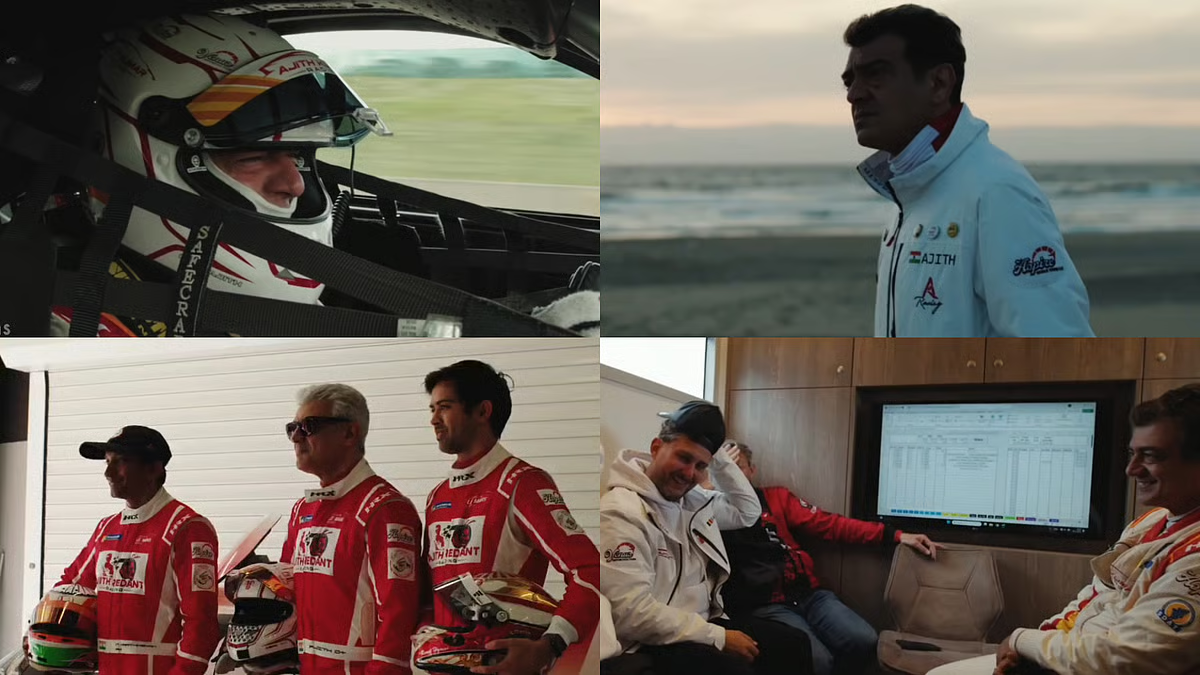
Ajith Kumar documentary trailer showcases actor’s grit and love for motorsports

No. 1 college football team predicted to sign $2.1 million transfer QB
Wisconsin 2026 auto racing topics for fans to ponder over offseason

Nebraska finishes No. 3 in final AVCA Coaches Poll

Shanghai Rolls out New Policy to Boost Esports
Best Athens-area high school volleyball players for the 2025 season

‘Batter Up!’ Dos Pueblos Little League Calling for Youth Baseball Umpires | Sports
Vote now for the Freep Buffalo Wild Wings Boys Athlete of the Week

Joey McGuire sees NIL similarities between Oregon, Texas Tech

KSR Today: Volleyball Ends, Basketball Rolls On

South Dakota earns three Summit League Academic All-League selections

No. 1 college football transfer portal QB predicted to draw $3 million offer

Prattville Fire’s Battalion Chief Travis Rodie Retires After 26 Years Of Service

Gregory Dean Craig, 62, Otwell

First Tee Winter Registration is open

Fargo girl, 13, dies after collapsing during school basketball game – Grand Forks Herald

CPG Brands Like Allegra Are Betting on F1 for the First Time

F1 Las Vegas: Verstappen win, Norris and Piastri DQ tighten 2025 title fight

Sycamores unveil 2026 track and field schedule

Utah State Announces 2025-26 Indoor Track & Field Schedule

Two Pro Volleyball Leagues Serve Up Plans for Minnesota Teams

SoundGear Named Entitlement Sponsor of Spears CARS Tour Southwest Opener

Jo Shimoda Undergoes Back Surgery

Redemption Means First Pro Stock World Championship for Dallas Glenn

Bowl Projections: ESPN predicts 12-team College Football Playoff bracket, full bowl slate after Week 14

Texas volleyball vs Kentucky game score: Live SEC tournament updates

Black Bear Revises Recording Policies After Rulebook Language Surfaces via Lever

How this startup (and a KC sports icon) turned young players into card-carrying legends overnight

Robert “Bobby” Lewis Hardin, 56





-
 Motorsports2 weeks ago
SoundGear Named Entitlement Sponsor of Spears CARS Tour Southwest Opener
-
 Rec Sports3 weeks ago
Black Bear Revises Recording Policies After Rulebook Language Surfaces via Lever
-
 Motorsports2 weeks ago
Donny Schatz finds new home for 2026, inks full-time deal with CJB Motorsports – InForum
-
 Rec Sports3 weeks ago
How Donald Trump became FIFA’s ‘soccer president’ long before World Cup draw
-
 Rec Sports2 weeks ago
David Blitzer, Harris Blitzer Sports & Entertainment
-
 Motorsports2 weeks ago
JR Motorsports Confirms Death Of NASCAR Veteran Michael Annett At Age 39
-
Sports2 weeks ago
Elliot and Thuotte Highlight Men’s Indoor Track and Field Season Opener
-
 Motorsports2 weeks ago
Rick Ware Racing switching to Chevrolet for 2026
-
Sports2 weeks ago
West Fargo volleyball coach Kelsey Titus resigns after four seasons – InForum
-
 Sports1 week ago
#11 Volleyball Practices, Then Meets Media Prior to #2 Kentucky Match