










NIL
The Story of How Gatorade Was Invented


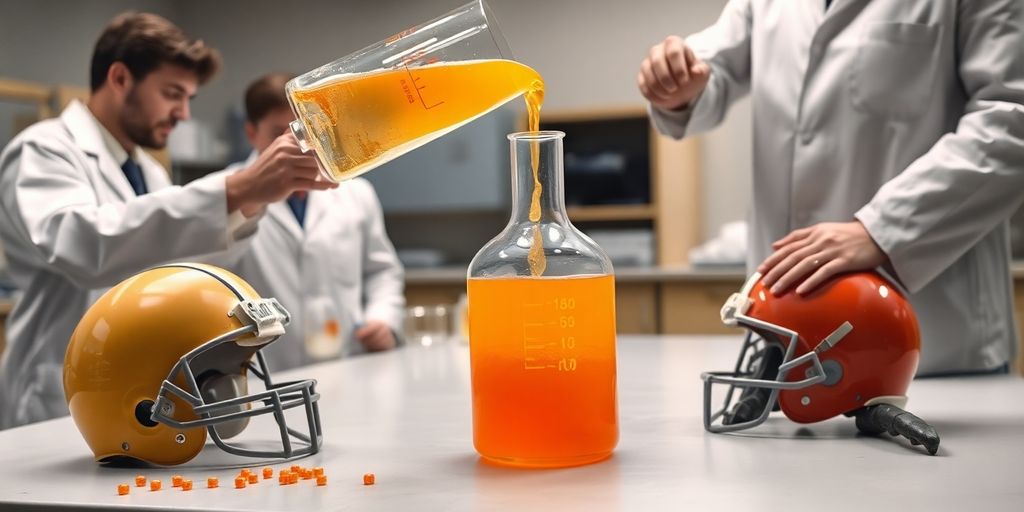
In 1967, the Florida Gators football team was struggling in the heat, losing more fluid than they could replace. Dr. Robert Cade and his colleagues mixed water, sugar, and salts to help the players recover. The initial blend tasted terrible until lemon flavor made it drinkable. They called it Gatorade, and early field tests showed real benefit. A deal with a food company then brought Gatorade to the masses, paving the way for its rise as a top sports drink backed by its own research institute.
Key Takeaways
- Gatorade began as a quick fix to stop the Florida Gators from wilting during 1967 practice.
- Dr. Cade’s first recipe of water, sugar, and salts needed lemon to mask its off-putting taste.
- Researchers measured fluid loss and salt balance to set guidelines on how much Gatorade athletes should drink.
- A partnership with Stokely Van Camp secured bottling rights and put Gatorade in stadiums and stores.
- Launching a sports science institute and signing pro teams helped Gatorade grow into a leading global brand.
Gatorade’s origin in a desperate hydration challenge
The story of Gatorade begins with a very real problem: football players in Florida were struggling immensely in the sweltering heat. Coaches needed a solution, and fast. The existing methods weren’t cutting it, and the players’ performance was suffering. This led to a collaboration that would change sports drinks forever.
Wilting football players in the Florida heat
Back in the summer of ’65, the Florida Gators were facing a serious issue. The intense heat and humidity were causing players to become severely dehydrated and, as some described it, “wilting” on the field. It wasn’t just about thirst; it was about the players’ physical ability to perform. The coaches recognized that something needed to be done to combat this, leading them to seek help from the university’s medical researchers. The situation was dire, and the need for a solution was urgent. The team’s performance was directly linked to their ability to stay hydrated and maintain their electrolyte balance. This electrolyte-carbohydrate drink was a game changer.
Dr. Robert Cade’s electrolyte formula breakthrough
Dr. Robert Cade, a kidney specialist at the University of Florida, took on the challenge. He and his team began investigating what exactly the players were losing during games. They discovered that the athletes were losing significant amounts of fluids and electrolytes, crucial for muscle function and overall performance. Cade developed a formula that aimed to replace these lost nutrients, a mix of water, carbohydrates (for energy), and electrolytes like sodium and potassium. This wasn’t just about quenching thirst; it was about replenishing what the body was losing. This innovative approach marked a turning point in sports science and hydration.
Players’ initial reactions to taste and recovery
The initial version of Dr. Cade’s concoction wasn’t exactly a hit with the players. In fact, many found the taste to be quite unpleasant, even describing it as “putrid.” Despite the taste, the players noticed a significant difference in their recovery and performance. They felt more energized and less fatigued during and after games. The positive effects on their physical condition outweighed the initial dislike for the taste. This led to further refinements of the formula, including the addition of flavoring to make it more palatable. The team’s success on the field, fueled by this new drink, quickly turned it into a professional thirst quencher and a legend in the making.
Gatorade’s flavor tweak and naming journey
Adding lemon to mask the potion’s putrid note
The initial version of Gatorade, concocted by Dr. Robert Cade, wasn’t exactly a culinary masterpiece. Players described the taste as, well, “putrid.” Imagine trying to convince athletes to drink something that tastes awful, even if it promises better performance. It was a tough sell. Thankfully, Dr. Cade’s wife stepped in with a simple, yet brilliant, suggestion: add lemon. This tweak proved to be a game-changer. The lemon flavoring masked the unpleasant taste, making the drink palatable enough for the players to actually consume it. It’s a testament to how a small adjustment can make a huge difference, turning a scientific formula into something athletes could tolerate, and even enjoy.
Settling on a name tied to Florida Gators
With a drink that was now (somewhat) tasty, the next step was branding. What to call this magical potion designed to keep the Florida Gators from wilting? The answer, it turned out, was staring them right in the face. The researchers formulated a balanced electrolyte-carbohydrate drink that would replace the key nutrients players were losing on the field. They settled on “Gatorade” as the most appropriate name for the drink, as it was specially designed for the Florida Gators football team. The name “Gatorade” was a natural fit, instantly connecting the drink to its origin and purpose. It was a stroke of marketing genius, even if unintentional at the time. It clearly communicated who the drink was for and where it came from, building an immediate association with the team and the university.
Team acceptance and early field testing
Getting the Florida Gators on board was crucial. After all, they were the target audience and the test subjects. The team’s acceptance wasn’t immediate, but as they experienced the benefits of [Gatorade thirst quencher], their skepticism waned. Early field testing involved tracking fluid loss and electrolyte balance during practices and games. The results were promising: players who consumed Gatorade experienced improved hydration and performance. This real-world validation was essential in building confidence in the product. The 1967 Orange Bowl win further solidified Gatorade’s reputation. Other teams began to wonder if Gatorade was the secret weapon, adding to the drink’s mystique and appeal. It was a combination of science, storytelling, and a bit of legend-making that propelled Gatorade into the spotlight.
Gatorade’s early experiments in performance science
Tracking fluid loss and electrolyte balance
Gatorade’s journey wasn’t just about quenching thirst; it quickly evolved into a quest to understand the science behind athletic performance. Early on, researchers focused on meticulously tracking electrolyte balance and fluid loss in athletes during intense activity. This involved measuring sweat rates, analyzing electrolyte concentrations, and observing how these factors impacted the body’s ability to function optimally. The goal was to pinpoint exactly what athletes were losing and how Gatorade could effectively replenish those vital components.
Marathon trials and subjective runner feedback
To validate their findings, Gatorade scientists conducted trials with marathon runners. These experiments involved comparing runners who consumed Gatorade with those who didn’t, carefully monitoring their physiological responses. One early study had runners doing different runs—one run where they didn’t drink at all and one where they were drinking a lot. However, it wasn’t always smooth sailing. One runner involved in these early studies said that when they were giving him this water it was something like every few minutes, he was just miserable. His stomach felt terrible, he felt like he had an ocean rumbling around in his stomach, and he felt horrible. Despite the data showing positive physiological changes, some runners reported feeling bloated and uncomfortable from drinking so much fluid. This highlighted the importance of considering subjective feedback alongside objective measurements.
Translating data into hydration guidelines
Based on the data collected, Gatorade began developing specific hydration guidelines for athletes. These recommendations aimed to optimize fluid intake and electrolyte replacement during exercise. Gatorade scientists ignored what the runner felt like and just focused on those changes in his body. And based on that, they came up with advice for how much liquid athletes should be drinking while they work out. At one point they’re advising people to take as much as—I think I calculated that it would be if you ran a three-hour marathon, which is actually quite fast, that you would end up drinking the fluid equivalent of, like, a six-pack of soda. These guidelines weren’t just about drinking more; they emphasized the importance of professional thirst quencher at the right times and in the right amounts to maximize performance and minimize discomfort. The company invested in their own scientific research to prove this.
Gatorade’s partnership with a food company to scale up
Stokely Van Camp agreement for bottling rights
Initially, Gatorade was a local phenomenon, mixed in labs and tested on the University of Florida football team. But to reach a wider audience, a partnership was needed. Stokely Van Camp, known for its baked beans, stepped in to handle bottling and distribution. This agreement marked a turning point, transforming Gatorade from a sideline experiment into a commercially available product.
Overcoming manufacturing and distribution hurdles
Scaling up production wasn’t easy. Stokely Van Camp faced challenges in maintaining the drink’s original formula while producing it on a large scale. Distribution was another hurdle. Getting Gatorade mainstream required establishing supply chains to reach stores and sports venues across the country. This involved:
- Perfecting the manufacturing process to ensure consistent quality.
- Building a distribution network to reach retailers nationwide.
- Marketing the product to create consumer demand.
Bringing Gatorade to stadiums and local stores
The partnership with Stokely Van Camp allowed Gatorade to move beyond the university campus and into the broader market. Gatorade started appearing in stadiums, quenching the thirst of athletes and fans alike. It also made its way into local stores, becoming accessible to everyday consumers. This expansion was crucial in establishing Gatorade as the professional thirst quencher and a household name.
Gatorade’s identity as the professional thirst quencher
Crafting memorable slogans and professional tone
Gatorade didn’t just want to be another drink; it wanted to be the drink for athletes. The company understood that branding was key. It focused on creating a professional image, setting itself apart from sugary sodas and simple bottled water. This involved:
- Developing slogans that resonated with athletes’ aspirations.
- Using language that conveyed scientific backing and performance enhancement.
- Associating the brand with dedication and hard work.
Differentiating from juices, sodas, and bottled water
From the start, Gatorade was positioned as more than just a beverage. It was a scientifically formulated solution to a specific problem: dehydration and electrolyte loss during intense physical activity. This distinction was crucial in setting it apart from other drinks on the market. Gatorade emphasized:
- Its unique blend of electrolytes and carbohydrates.
- The scientific research supporting its effectiveness.
- Its focus on performance enhancement rather than just refreshment. The company’s initial slogan was “Gatorade thirst quencher: the professional thirst quencher.”
Earning trust through athlete endorsements
To solidify its image as the professional’s choice, Gatorade strategically partnered with high-profile athletes. These endorsements provided credibility and visibility, showcasing the drink’s effectiveness in real-world athletic settings. Some key strategies included:
- Selecting athletes known for their dedication and success.
- Featuring athletes in advertising campaigns that highlighted the drink’s benefits.
- Building long-term relationships with athletes to foster brand loyalty. Iconic sports drink slogans have helped shape consumer perceptions of the brand.
Gatorade’s creation of a dedicated science institute
Gatorade’s success wasn’t just about quenching thirst; it was about understanding the science behind athletic performance. To solidify its position as more than just a beverage, Gatorade invested heavily in research and development. This commitment led to the establishment of a dedicated science institute, a move that would further legitimize the brand and shape the field of sports nutrition.
Funding new studies on hydration and performance
Gatorade recognized the need for concrete data to support its claims. The company began funding numerous studies focused on hydration, electrolyte balance, and the impact of these factors on athletic performance. These studies aimed to move beyond anecdotal evidence and provide a scientific basis for Gatorade’s benefits. One early study had runners doing different runs—one run where they didn’t drink at all and one where they were drinking a lot. This dedication to research helped Gatorade dominate the sports-drink market.
Collaborations with universities and medical experts
To ensure the credibility and rigor of its research, Gatorade actively sought collaborations with leading universities and medical experts. These partnerships allowed Gatorade to tap into a wealth of knowledge and expertise, ensuring that its research was conducted to the highest standards. By working with established institutions, Gatorade gained access to cutting-edge facilities and a network of researchers, further strengthening its scientific foundation. This collaborative approach helped to refine their balanced electrolyte-carbohydrate drink.
Publishing findings to support sports nutrition claims
Gatorade didn’t keep its research findings under wraps. Instead, the company actively published its studies in peer-reviewed journals and presented them at scientific conferences. This transparency helped to build trust among athletes, coaches, and healthcare professionals. By sharing its data with the wider scientific community, Gatorade contributed to the growing body of knowledge on sports nutrition and solidified its position as a leader in the field. This also helped differentiate Gatorade from juices, sodas, and bottled water.
Gatorade’s rise to market dominance among sports drinks

Gatorade didn’t just stumble into success; it strategically carved its path to becoming the king of sports drinks. It’s a story of smart partnerships, memorable faces, and a constant push to stay ahead of the game. Gatorade’s journey to the top is a masterclass in branding and market penetration.
Strategic alliances with professional teams
Gatorade’s rise wasn’t just about taste; it was about visibility. Securing deals to be the official sports drink of major leagues like the NFL, NBA, and MLB gave Gatorade unparalleled exposure. These alliances did more than just put the Gatorade brand on the sidelines; they made it synonymous with athletic performance at the highest level. It’s a simple equation: elite athletes drink Gatorade, so aspiring athletes should too.
Iconic athlete partnerships over the decades
Gatorade’s marketing strategy has always been about associating with winners. Think Michael Jordan. These weren’t just endorsements; they were partnerships that helped define Gatorade’s image. Here’s how they did it:
- Credibility: Partnering with top athletes gave Gatorade instant credibility.
- Aspiration: Seeing their heroes drink Gatorade made fans want to emulate them.
- Memorability: Iconic ads featuring these athletes cemented Gatorade’s place in pop culture.
Expanding flavor lines and low-calorie options
Staying on top means evolving. Gatorade understood this and continually expanded its flavor offerings to cater to different tastes. Recognizing the growing health consciousness, they also introduced low-calorie options, ensuring they appealed to a broader audience. This adaptability has been key to maintaining their market share and fending off competitors. It’s not just about quenching thirst; it’s about offering choices.
Gatorade’s role in shaping sports marketing culture
Gatorade didn’t just quench thirst; it reshaped how sports were marketed. The brand understood that connecting with athletes and fans on an emotional level was as important as the science behind its drink. This led to some truly memorable campaigns that transcended the world of sports.
Iconic ad campaigns on television and in print
Gatorade’s advertising wasn’t just about showing athletes drinking the beverage. It was about crafting stories. Think about the famous “Be Like Mike” campaign featuring Michael Jordan. It wasn’t just an ad; it was an aspiration. The campaign tapped into the desire to emulate greatness, associating Gatorade with peak performance. These ads weren’t just selling a drink; they were selling a dream.
Catchy taglines that became household staples
“Is it in you?” became more than just a question; it was a challenge. Gatorade’s taglines weren’t just catchy; they were motivational. They became part of the cultural lexicon, used by athletes and everyday people alike. The brand understood the power of a simple, memorable phrase to connect with its audience. Consider these examples:
- “Gatorade is thirst aid for that deep down body thirst!”
- “Life is a sport, drink it up!”
- “Power to Win!”
References in movies, music, and fan rituals
Gatorade’s influence extended beyond traditional advertising. It became ingrained in popular culture. You’d see it in movies, music videos, and even fan celebrations. Remember the Gatorade shower, where winning teams drench their coach with Gatorade buckets? It became a symbol of victory, further solidifying the brand’s association with success. This organic integration into culture was something money couldn’t buy; it was earned through consistent messaging and genuine connections with the sports world.
Gatorade’s response to dehydration myths and criticism
Gatorade’s rise wasn’t without its share of debates and challenges. As the brand became synonymous with athletic performance, questions arose about the science behind hydration recommendations and whether they were always in athletes’ best interests. It’s a complex area, balancing the need for fluid replacement with the potential risks of overhydration.
Debating overhydration versus performance gain
There’s a fine line between optimal hydration and overdoing it. Early Gatorade studies sometimes pushed athletes to consume excessive amounts of fluid, leading to discomfort and raising concerns about hyponatremia (low sodium levels). It became clear that a one-size-fits-all approach wasn’t ideal, and individual needs varied greatly. It’s interesting to consider that:
- Some athletes felt miserable drinking so much, even if lab results looked “better.”
- The focus was often on measurable changes in body temperature, sometimes ignoring the athlete’s subjective experience.
- Recommendations at one point suggested drinking the equivalent of a six-pack of soda during a three-hour marathon!
Reconciling lab metrics with athlete comfort
Gatorade’s initial approach heavily relied on scientific data, sometimes at the expense of athlete comfort. Scientists would track fluid loss and electrolyte balance, but the athletes themselves weren’t always feeling great. This disconnect highlighted the importance of considering both objective measurements and subjective feedback. It’s a reminder that:
- The body has built-in protection mechanisms against mild dehydration.
- Ultra-marathon runners can often perform well without excessive hydration.
- The relationship between salts in the blood and fluid levels is crucial.
Evolving recommendations in light of new research
Over time, Gatorade adapted its hydration guidelines based on new research and a better understanding of individual needs. The company invested in the Gatorade Sports Science Institute to further explore the complexities of hydration and performance. This evolution reflects a commitment to:
- Acknowledging the potential risks of overhydration.
- Tailoring recommendations to specific sports and environmental conditions.
- Promoting a more nuanced understanding of fluid balance and electrolyte replacement.
Gatorade’s global expansion and future outlook
Gatorade’s journey from a sideline solution to a global phenomenon is quite remarkable. But what does the future hold for this iconic sports drink? Let’s take a look.
Moving beyond American fields into international markets
Gatorade’s expansion beyond the U.S. wasn’t always a slam dunk. Getting into new markets meant figuring out different cultures, tastes, and regulations. One key move was partnering with iconic athletes like Michael Jordan, which gave them instant credibility in countries unfamiliar with sports drinks. It wasn’t just about selling a product; it was about selling a lifestyle. The global electrolyte drinks market is constantly evolving, and Gatorade needs to adapt to stay ahead.
Addressing health concerns over sugar and additives
Consumers are increasingly aware of what they’re putting into their bodies. This means Gatorade faces pressure to offer healthier options.
Here are some challenges:
- Reducing sugar content without sacrificing taste.
- Finding natural alternatives to artificial additives.
- Being transparent about ingredients and their effects.
It’s a balancing act between performance, taste, and health. Can Gatorade maintain its edge while catering to health-conscious consumers?
Looking ahead to new formulations and sustainable packaging
The future of Gatorade isn’t just about what’s inside the bottle, but also the bottle itself.
Here are some areas of focus:
- Developing new formulations that cater to specific athletic needs.
- Exploring sustainable packaging options to reduce environmental impact.
- Using technology to personalize hydration recommendations for athletes.
It’s about staying relevant in a world that’s constantly changing. The brand needs to keep innovating to remain a leader in the sports drink industry.
NIL
When it comes to college football recruiting, Black mothers might just determine the future of the sport
It’s early December and ‘tis the season for college recruiters to lay their football mack all the way down.
The NCAA early signing period, when many high school athletes commit to where they’ll play at the next level, ends today, and it’ll soon be followed by a contact period. That’s when college coaches and staff can reach out directly to athletes and their families urging, cajoling, perhaps even promising riches to young prospects, trying to convince them to bring their ball-playing talents to their college or university.
And to win at that game, recruiters often single one person out for concentrated attention: Black mothers.
It’s a tacitly understood feature of student-athlete recruitment that’s crucial to the process but rarely acknowledged, studied or celebrated publicly. While the role of every mom in recruitment decisions is intuitively important, it’s Black mothers specifically who the entire game of football might just hinge on, said Tracie Canada, whose book Tackling the Everyday: Race and Nation in Big-Time College Football has a chapter that examines the centrality of Black mothers to the sport.
“I think plenty of people write about coaches. I think plenty of people write about fathers. I think plenty of people write about the men that surround football because that is the expectation,” said Canada, a professor of cultural anthropology, gender and sexuality, and feminist studies at Duke University.
“And so I also think that it is important to say that it is not only men that are allowing this sport to continue. Mothers not only give bodies to the sport, they’re giving birth to these players. They are also caring for them in a way that is different from the other people around them.”
Black mothers perform a type of specialized labor when it comes to their football-playing sons, giving them outsized influence on decisions about football and life. That labor involves care and kinship around “their holistic lives rather than just their lives as football players,” Canada said. It includes helping them navigate a world beyond the football field in large Black and brown bodies that are often reflexively feared and historically politicized.
Upwards of 40 percent of all NCAA college football players are Black, so the numbers alone make Black women at least partial gatekeepers of the sport. And from concerns about CTE (chronic traumatic encephalopathy) to NIL (name, image, and likeness) to the backlashes over DEI (diversity, equity, and inclusion), Black moms are taking notes.
For the third installment of our Recruiting While Black series, Canada spoke with Andscape about the centrality of Black mothers in football recruitment and their broader impact on the sport.
This interview has been edited for length and clarity.
In Tackling the Everyday, you’ve said your chapter on Black mothers has really found an audience and resonated deeply with people. Talk about what led you to that chapter and that line of inquiry.
The fact that this is the chapter in my book that people ask me about the most, to me, is a sign I’m picking up on something that people are so aware of, but they don’t often see it. It’s not in literature. It’s not usually given space. I’m specifically interested in Black football players, and the players themselves are consistently referencing their moms, when there’s no reason to talk about them. This is referencing how outsized they are in their lives, just how big these figures are to them in the decisions that they’re making in their daily behaviors, in their interactions with people around them, and it has always been clear to me that mothers are an important part of this story.
Because I’m a Black woman anthropologist, and an ethnographer doing this work, and because I am a Black feminist, I’m attuned to particular relationships. I’m attuned thinking about Black women and how their care and kinship align in a particular space, and these aren’t usually the analytics that we think about in football.
So in what specific or outsized ways did you notice that care showing up?
If you go to a football game, you can always tell whose kid belongs to who because the moms are very loud, they’re supportive of their son in a particular way, even if they’re supportive of the entire team. There might be a nickname that they yell out. They might be saying, “That’s my son!” They’re the ones that are wearing the T-shirts that might have his face on it, that might have his number on it. They bring the signs, they have the cowbells in college. They’re the ones who organize who’s going to the game this week. They’re the ones doing that labor.
Then as I’m spending time with these Black players, their moms were always brought up, and this was not something that I was asking about. There were players who called their mom every day. There was a player who was super proud that his mom bought all of his clothes because she knew what he liked to wear, but also knew where she could shop for him, given his size. In my book, the chapter title, “The Year My Mom Was Born,” came from an offhand comment that somebody made about his jersey number making him feel close to his mom. So I’m seeing this physical presence in their son’s lives alongside a constant reference from players.
The other thing that I think is relevant is that people assume that the players I was spending time with were from single-parent homes. These are mothers who have been married for a long time, often to the fathers of their children and I always have to say, “These are not single moms that have to do everything on their own.” These sons have very present fathers in their lives, too. But I was noticing there’s a different relationship that comes from moms of football players than fathers of football players. Fathers seemed to be very invested in the football player himself — of how well he did, of how he can improve, of what’s physically going on during a game. Players will often reference their dads as the reason that they started playing in the first place.
The relationship to football often comes through their dads, but I think that they are sustained by their moms. The moms are the ones who are doing a certain type of labor so that the player feels supported. And the moms also seem to be invested in them as people. There’s something in how they are asking about their holistic lives rather than just their lives as football players.
I think that that’s important across the board. But the reason why the focus is specifically on Black moms is because demographically Black players are overrepresented in football. Especially if we look at a college campus versus a college football team, Black men are severely overrepresented. So for a lot of these guys, the women that are around are going to be Black women.
You referenced the quote,”If 10 percent of mothers in this country would begin to perceive football as a dangerous sport, that is the end of football,” attributed to an unnamed NFL doctor in response to the work of Dr. Bennet Omalu (a forensic pathologist whose discovery of Chronic Traumatic Encephalopathy caused wholesale changes in concussion protocols).
How should we think of that quote in terms of the ways Black women guide and care for their football-playing sons?
The way that I write about it, if I’m taking that quote seriously, is that if moms didn’t buy into the sport, the sport would go away. So that means Black women are playing a significant and really important role here.
There are the ones who say, “I will not allow my son to play at this school, to play for this coach, to be in this division if I don’t feel OK with where he is. Even if he wants to. If I don’t feel it, you cannot go there. I will not allow that to happen.” And I think that these moms recognize something about how important it is that these are young Black men who live in particular bodies. It’s a body that’s usually big and strong, visibly so, in a way that is transgressive and is often outside of the norm. And so these moms are also [thinking]: My son is in danger on this field, but my son is also in danger in the real world outside of it because of the body that he lives in, given this anti-Black world that we exist in.
The way that I analyze it is that moms are the ones that clock all of these angles for their Black sons in a way that doesn’t seem to be taken into account as obviously by other people.
Have football programs, institutions and administrations responded to or shown that they recognize the role of mothers and Black mothers, specifically? And if so, what are some examples of that?
I remember one of the first, very early on conversations I had with one of the coaches. It was camp time, the semester hadn’t started yet, and one of the things he said was about how they recruit moms, and how if they recruit a player, the mom can be a great spokesperson for the program. She can attract other moms to get on board, and they can use networks of moms to attract players.
At the time I was doing research, all of these NFL safety clinics were also happening, and these were different NFL teams inviting moms of young players. Not college, high school and lower. It wasn’t a parents’ clinic, it wasn’t even just an NFL clinic, it was specifically the NFL Moms Safety Clinic. What happens in football, but probably across sports, is that the professional league is making certain decisions and things usually trickle down to the lower levels. The NFL affects college, which is going to affect high school, which is going to affect Pee Wee, so I thought it was really interesting that the NFL was specifically marketing to moms and kind of putting its brand name behind the importance of this particular group of people.
These weren’t small events. For the two that I went to, you’ve got like 200 moms there and most of them are Black women.
So my question is, with all the structural changes going on in college football, like NIL and divisive political issues facing the nation, do you think we’ll see a significant recruiting impact from Black mothers’ advice and influence and if so, when?
Sports as an arena is notorious for attempting to claim that it is not political. Fans come from all different backgrounds and all different walks of life, but they come together to support a team. The assumption is the same for the players and the coaches. It’s this idea that the team, and what we’re doing here, is the most important thing right now, and we don’t care about all the other stuff that’s going on. That the playing field is completely divorced from the real world outside of it. As I’m sure you can tell, I don’t agree with that. I’m someone who talks about how race actually matters in this space.
One part of me would say 2025 is actually not all that different because these concerns have always been there for Black people. We are seeing things that are familiar because these things happen over and over again. What does it mean to walk through the world in a particular body? What does it mean to be an athlete who is stereotyped as someone who is only useful for what their body can do. These things are happening now, but they have also happened before, and will probably happen in the future.
If you’re talking about recruiting, what I imagine might be going on in this particular moment is probably part of the conversation that families are having. When you’re playing the sport of football, there is always calculus, an algorithm that is not specified, but there are a lot of factors at play here and how am I going to make the best educated, safe, hope-for-success decision, right? Football is already a dangerous sport, so part of the risk assessment is like should I play or should I not? What is my risk if I do it and what is my risk if I don’t? Do I play in this state? Do I play for this coach? Do I push for this position?
Part of that conversation could be that this state as a whole is doing X, Y, and Z [politically], but I have a good chance of going pro if I’m with this coach, at this university, with these other people there. Or it might be that because of the state that this university is located in, is it actually riskier for me to be there because of who I am, and because my options outside of sport are much more limited?
I’m very curious about how this moment is going to play out over the next five years, given everything that has happened politically, socially, culturally in this country in the past five years. The landscape of college sports has changed dramatically in the last five years when coaches and institutions thought it was important to take [performative] stands on issues. Taking a stand is always a recruiting and retention tactic to convince players to stay, to convince players to come.
What are Black mothers talking about in terms of their sons’ safety, on and off the field, and how do you think the impact of these conversations will be felt, especially on the rosters of schools in states where college football is most revered?
I’m spending time with high school moms right now, so it is interesting to see that what they are saying is not much different than all the things college moms had top of mind. It is about injuries. It’s about is my kid going to be taken care of? It’s about what kind of man is that coach and what kind of man is he going to encourage my son to be, right?
Black mothers are still going to be central to those decisions. Black moms are still paying attention. They’re taking notes. They are remembering these offhand comments that were made. They’re watching the news. They’re aware, but they’re also aware of what’s happening at their kids’ high school. They’re aware of what’s happening at the colleges that they’re looking at. They’re aware of what’s happening with the coaches at both of these places and what’s happening in the states where these schools are located, and how far away their kids are going to be away from them. These dynamics are always being taken into account by moms as they’re supporting their sons as they make these decisions about their future.
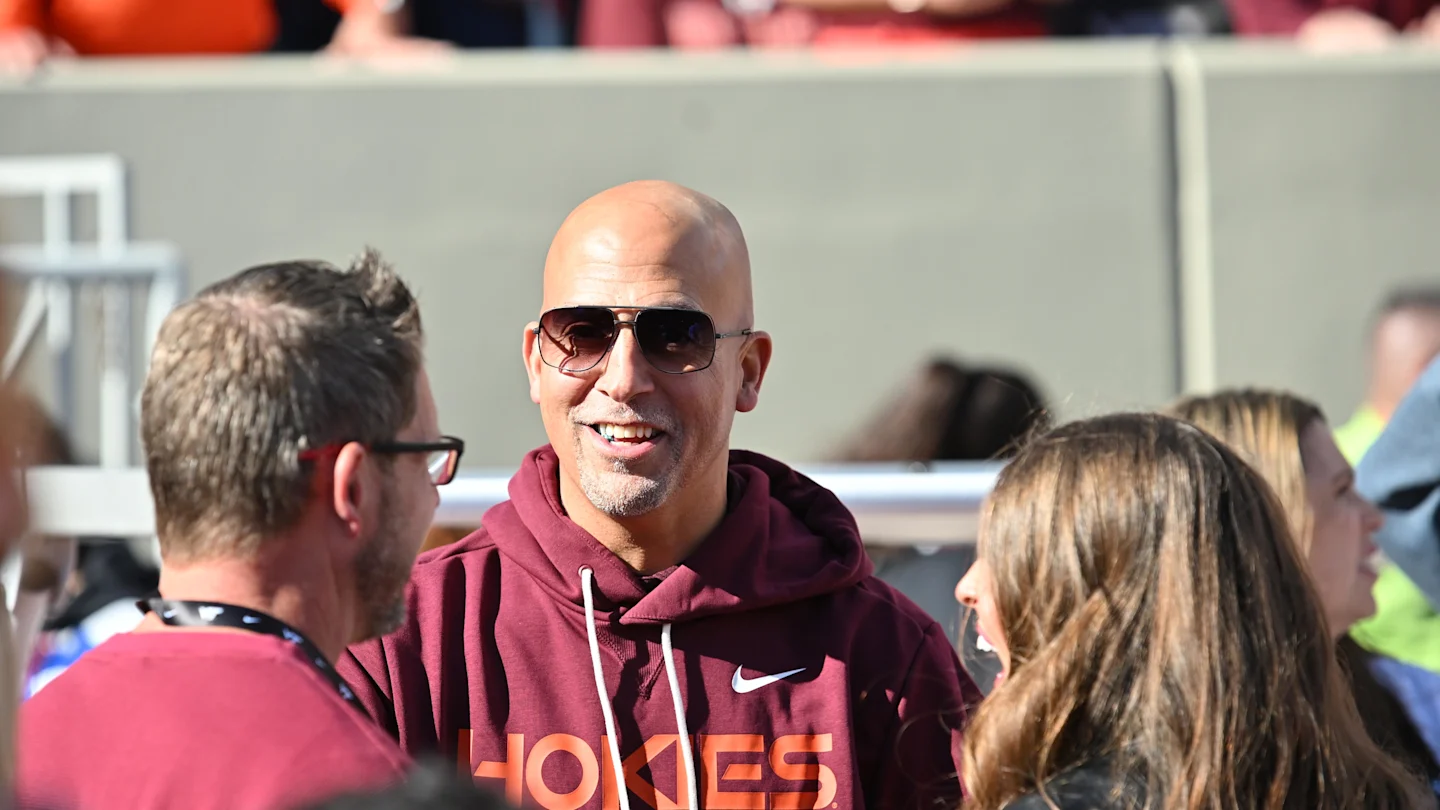
Blacksburg’s recruiting thermometer spiked within days of James Franklin’s arrival.
The former Penn State coach was introduced by Virginia Tech on November 17 after a 12-season run with the Nittany Lions that saw him win a Big Ten title, appear in the 2024 College Football Playoff semifinal, and leave with a 128-60 overall record.
In just over two weeks since taking the Hokies job, Franklin has already translated relationships and urgency into rapid sign-and-flip activity that dramatically improved the program’s industry rankings.
Industry trackers pegged Virginia Tech outside the top 100 (No. 121) on November 25; by Tuesday, the program had climbed up 96 spots to No. 25 after a string of commitments and flips, several of them former Penn State pledges.
Over a short window, Franklin and his staff flipped multiple four-star prospects, adding playmakers on both lines and at skill positions.
Some of the biggest moves include flipping six four-star recruits — LB Terry Wiggins, QB Troy Huhn, TE Pierce Petersohn, WR Davion Brown, OT Marlen Bright, and RB Messiah Mickens — all of whom decommitted from Penn State after Franklin’s firing.
That volume, not just a single headline recruit, is what pushed the Hokies up industry leaderboards.

Franklin’s early, unceremonious exit at 3-3 hasn’t disrupted his recruiting relationships.
For Virginia Tech, after a 3-9 season and a mid-season coaching change, the immediate priority was reestablishing connections and winning back recruits.
Franklin’s staff accomplished that quickly, which gives athletic directors, donors, and fans visible proof the program can compete for top regional talent again.
Virginia Tech’s 2026 schedule features home games against VMI, Old Dominion, and James Madison, along with a road test at Maryland before an ACC slate that features Clemson, Miami, NC State, Georgia Tech, Pittsburgh, Boston College, California, and Virginia.
If victories don’t come early, the recruiting spike risks fading before Franklin’s rebuild fully takes shape.
Read More at College Football HQ
- Nick Saban sends strong message on major SEC college football coach after taking new job
- $11.2 million college football coach signs extension amid departure rumors
- $29.6 million college football coach reportedly retires after seven seasons
- Major college football program set to make 29th straight bowl game appearance
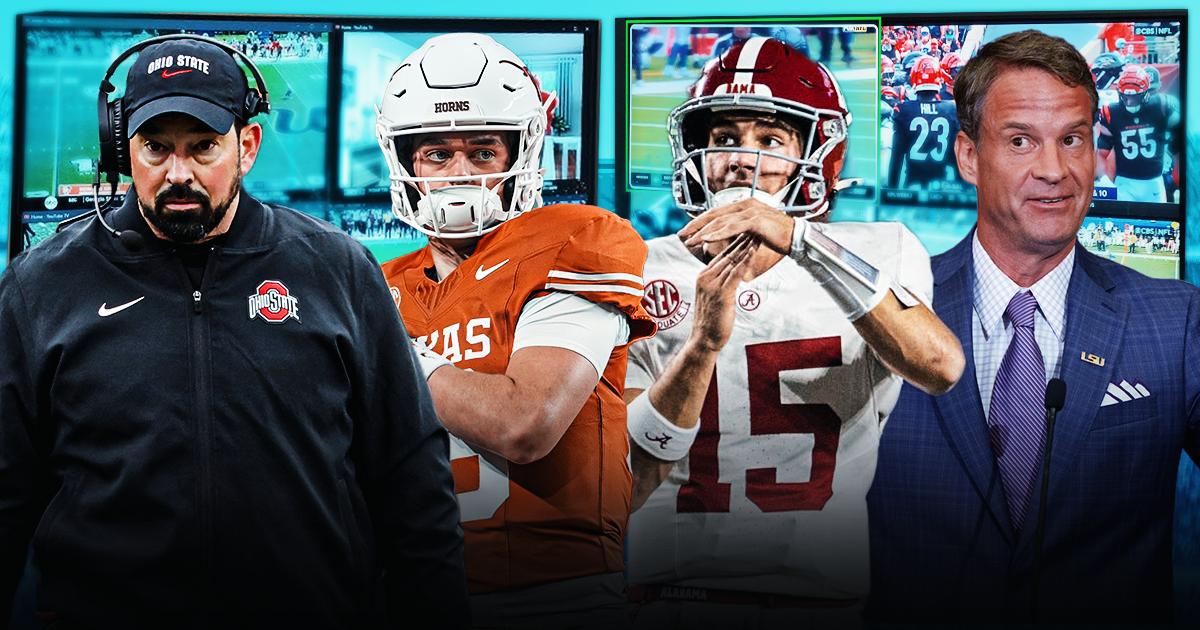
The final week of the regular season delivered plenty of rivalry flare. It was also an opportunity for networks to score more TV ratings wins to close out the college football campaign, and On3 is breaking down the most-watched games of Week 14.
The Week 14 slate began on Thanksgiving with Navy vs. Memphis before a jam-packed Black Friday slate of SEC rivalry games. From there, Saturday had more marquee matchups, headlined by Michigan vs. Ohio State in the early window, which became the most-watched college football game of the 2025 season.
SUBSCRIBE to the On3 NIL and Sports Business Newsletter
On3 obtained Nielsen Big Data + Panel ratings data for the most-watched rivalry games of Week 14. Here is the full breakdown of the week’s college football TV ratings.
Note: SEC Network, ACC Network and CBS Sports Network do not pay for Nielsen to measure viewership.
Michigan vs. Ohio State
Date/Time: Nov. 29, Noon ET
Channel: FOX
Viewers: 18.4 million
The Game was once again a big draw in Week 14 and became the most-watched game of the season. Ohio State’s victory over Michigan averaged 18.4 million viewers on FOX to lead the charge as the Buckeyes ended their losing streak against the Wolverines.
Texas vs. Texas A&M
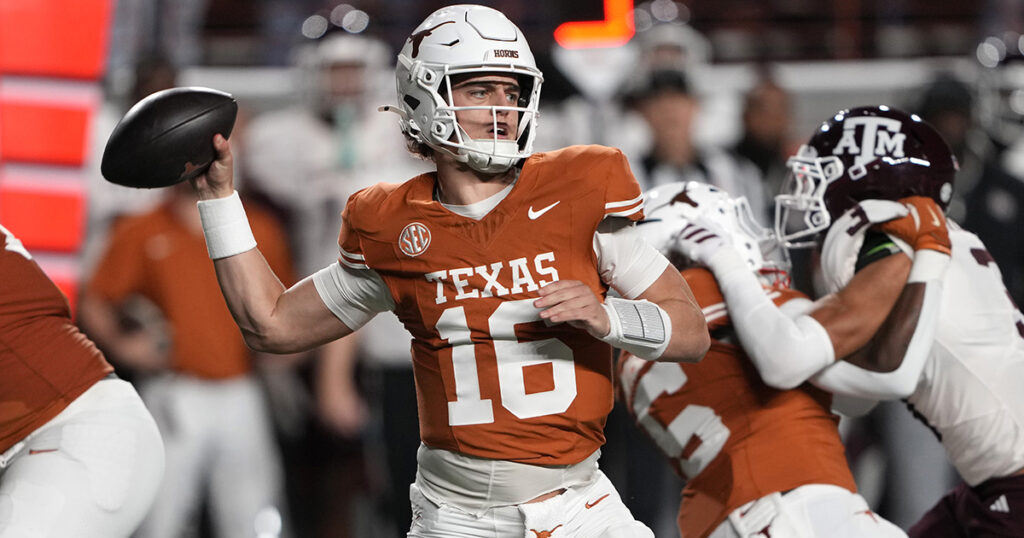
Date/Time: Nov. 28, 7:30 p.m. ET
Channel: ABC
Viewers: 13.0 million
The Lone Star Showdown had plenty at stake as Texas A&M headed to Texas. The Longhorns came away victorious, though, pulling off the upset in primetime on Black Friday in front of 13 million viewers on ABC.
Alabama vs. Auburn
Date/Time: Nov. 29, 7:30 p.m. ET
Channel: ABC
Viewers: 11.3 million
One of college football’s most storied rivalries returned to Jordan-Hare Stadium and it lived up to the billing. Alabama nearly saw a commanding lead disappear before eventually fighting off Auburn in the Iron Bowl, which drew 11.3 million viewers for ABC’s Saturday night game.
Georgia vs. Georgia Tech
Date/Time: Nov. 28, 3:30 p.m. ET
Channel: ABC
Viewers: 8.7 million
The Clean, Old Fashioned Hate game saw two top teams in their respective conferences square off. Ultimately, Georgia rose to the occasion in a big way, handling Georgia Tech with ease at Mercedes-Benz Stadium in the rivalry affair.
LSU vs. Oklahoma
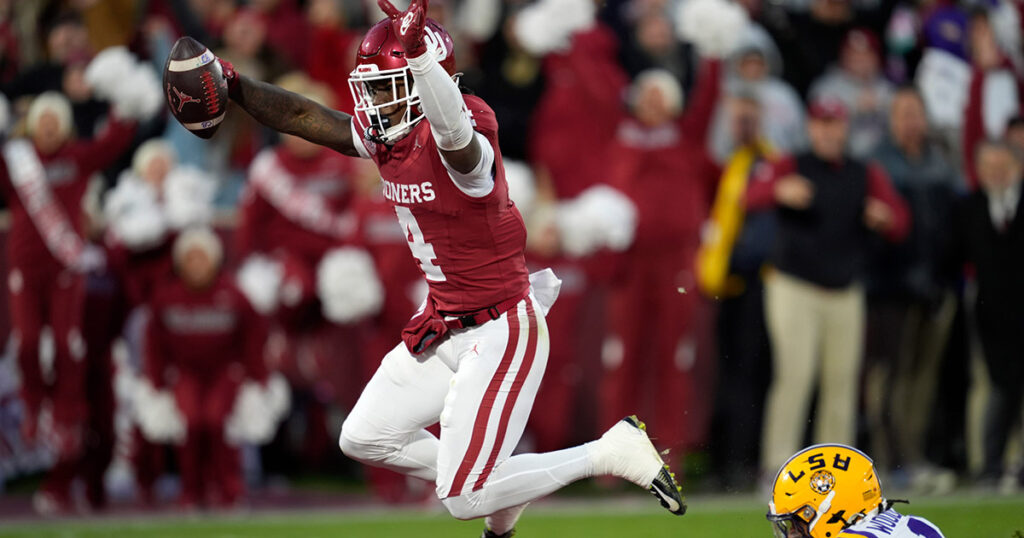
Date/Time: Nov. 29, 3:30 p.m. ET
Channel: ABC
Viewers: 6.4 million
Needing a win to continue its quest for a College Football Playoff berth, Oklahoma did just that in the late-afternoon window in Week 14. The Sooners took down LSU in Norman to put themselves in strong position in the 12-team bracket.
Ole Miss vs. Mississippi State
Date/Time: Nov. 28, Noon ET
Channel: ABC
Viewers: 5.2 million
All eyes were on the Egg Bowl as the Black Friday slate began as Ole Miss took down Mississippi State. It turned out to be the last game for Lane Kiffin as the Rebels’ head coach, and 5.2 million viewers were dialed in to watch.
Oregon vs. Washington
Date/Time: Nov. 29, 3:30 p.m. ET
Channel: CBS
Viewers: 4.3 million
In an old Pac-12 showdown, Oregon headed to Seattle for a late-afternoon matchup against Washington. The Ducks continued their strong season, taking down the Huskies in CBS’ Big Ten game – and the regular-season finale for analyst Gary Danielson.
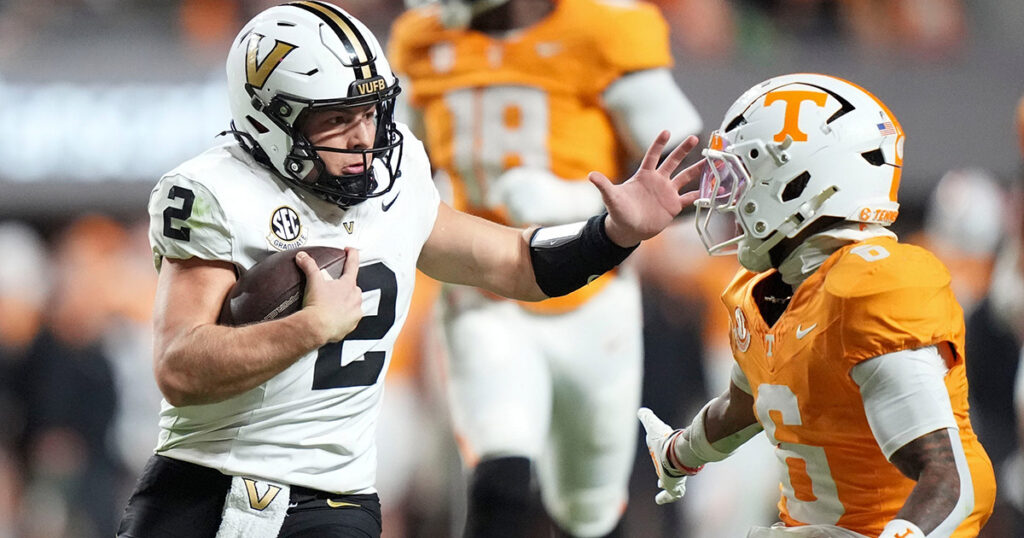
Vanderbilt vs. Tennessee
Date/Time: Nov. 29, 3:30 p.m. ET
Channel: ESPN
Viewers: 4.0 million
The Diego Pavia Show arrived on Rocky Top as Vanderbilt took down Tennessee. The electrifying Commodores quarterback continued to make his case for the Heisman Trophy and did so on the big stage with 4.0 million people tuned to ESPN.
Iowa vs. Nebraska
Date/Time: Nov. 28, 3:30 p.m. ET
Channel: CBS
Viewers: 3.8 million
A top Big Ten rivalry looked a bit different this year as both Iowa and Nebraska’s offenses showed out early. But the Hawkeyes kept their foot to the floor, taking down the Huskers 40-16 in one of the Top 10 most-watched games of Week 14.
Cincinnati vs. TCU
Date/Time: Nov. 29, 3:30 p.m. ET
Channel: FOX
Viewers: 2.74 million
Immediately following Michigan-Ohio State, TCU vs. Cincinnati also drew strong numbers for FOX. The Horned Frogs handed the Bearcats a fourth straight loss to end the season and get to the 8-win mark for the 2025 season.
- Indiana vs. Purdue (Nov. 28, 7:30 p.m. ET, NBC) – 2.69 million
- USC vs. UCLA (Nov. 29, 7:30 p.m. ET, NBC) – 2.2 million
With 11 games topping 10 million viewers this year, college football put together a huge year for TV ratings. Three of the Top 10 most-watched games of the regular season came in Week 14, and it’s now on to conference championships.
NIL
SEC Commissioner Greg Sankey calls for changes to college football calendar after Lane Kiffin split with Ole Miss for LSU
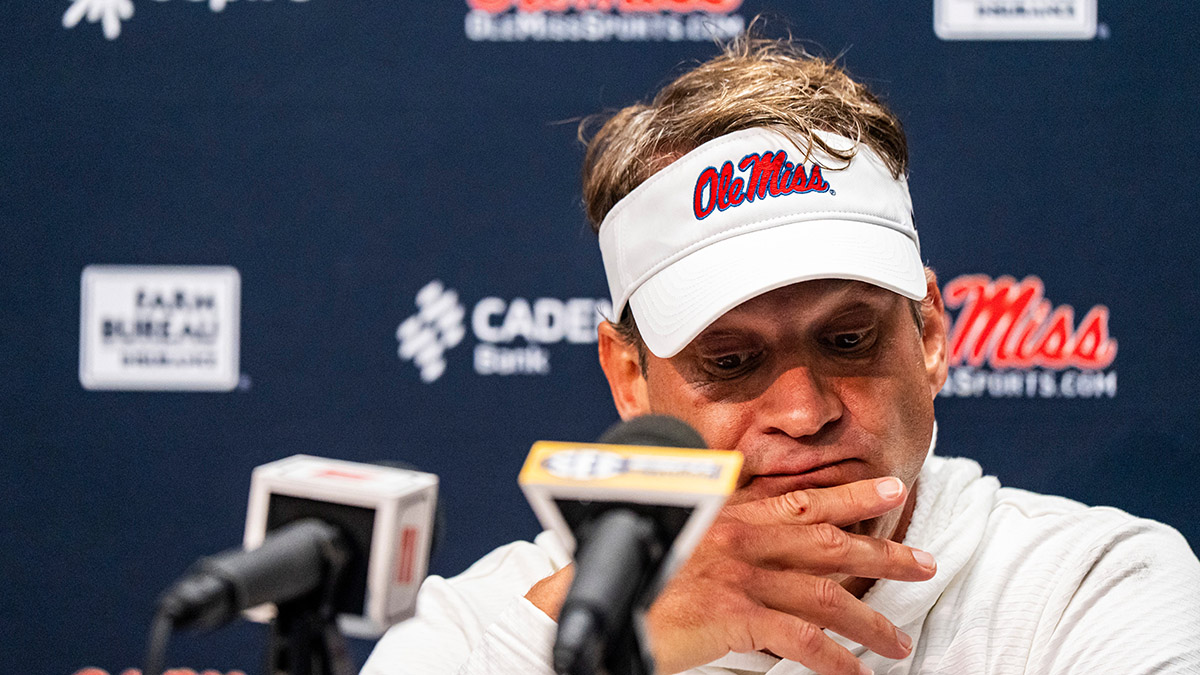
If the Lane Kiffin to LSU saga exposed one thing, it was that the current college football calendar is really not conducive to major coaching changes. There are simply too many variables involved.
SEC commissioner Greg Sankey was asked if the league could put into place some kind of rule that would prevent one program from pulling another program’s coach before the end of a season. Realistically, it cannot.
“You have to go back a number of years, we had a rule about responsibility for outreach if you were going to contact another coach,” Sankey explained. “Our outside legal counsel suggested for anti-trust reasons that it be eliminated, which it was years and years ago. I think that’s an example of the difficulty just legislating at a conference level.”
In fact, Sankey essentially predicted some of the chaos that unfolded with the Lane Kiffin saga. He knew having so many things packed into one area of the calendar was going to create some unintended consequences.
“You can go find my quotes where I warned that an early signing period added in December would change the calendar and the timing of coach changes,” Sankey said. “I think now there are more factors involved. But, in fact, going back to the moment where we added the December signing period, you saw earlier terminations of coaches during the season, and then the need to rapidly hire a coach in late November and early December.”
That’s exactly what happened this offseason. Both Florida and LSU fired their coaches to go with weeks remaining in the season, kicking off the Lane Kiffin sweepstakes.
LSU eventually got the upper hand, but even then, the hiring was messy. There were reportedly ultimatums given to staffers looking to join Kiffin, though those claims were later disputed. All of this in the middle of a playoff run for Ole Miss.
Regardless, the Lane Kiffin ordeal clarified for many people that change is needed. Sankey offered a few avenues.
“There are opportunities for adjustments to the calendar that, at least in my view, probably won’t solve everything but could provide a healthier environment,” he said. “And where there are solutions, so that you’re not disrupting a team’s season, I think those should be pursued.
“Unfortunately the environment we’re in doesn’t allow and hasn’t resulted in some of the changes that even the basic change like removing that early signing period from kind of compelling people to make change rapidly has taken place. Can changes be made? Absolutely. Is it just the recruiting calendar? Likely not.”
What other solutions could there be? How can a Lane Kiffin 2.0 be averted?
“Perhaps it’s the competitive calendar that can be explored,” Sankey said. “But those are multi-level issues where people have different opinions. We’ve added a transfer portal on top of that signing period that adds to the complexity.
“But I think everyone would agree, and forget particular circumstances, you take a step back and whether it’s a roster or a coaching staff, looking at something other than maybe a medical emergency, we should be able to have competition through the year with those rosters and coaching staffs intact. And we ought to figure out how we can adjust collectively on a national basis to make that happen.”

In partnership with

Good morning, and thanks for spending part of your day with Extra Points.
Save up to $100 on Qi35 This Holiday Season
The holiday season is here and TaylorMade is making it ridiculously easy to score something everyone on your list will actually love.
The Qi35 lineup is built for players who want more speed, more forgiveness, and a whole lot more fun on the course. Right now you can save $100 on Qi35 drivers and $50 on Qi35 fairway woods and rescue clubs.
Whether you’re upgrading your own bag or surprising the golfer in your life, this is the kind of gift that pays off round after round.
The trouble with trying to plan an editorial calendar in advance is stuff just keeps happening. I had a different story planned for today, but recent events have caused me to want to speak from the heart about something else.
Friends, I’d like to talk about the Cookie Man
As most of you know, BYU is owned and operated by the Church of Jesus Christ of Latter-day Saints, colloquially known as the Mormons. Devout Mormons do not drink alcohol, do not smoke, do not consume THC beverages or edibles, do not view pornography, do not gamble and generally do not participate in many of American society’s socially acceptable vices. Shoot, they don’t even drink coffee.
So what do you do when you need to temporarily dull the pain of being alive but are theologically prohibited from doing what everybody else does? You eat junk food. Utah County loves it some fancy soda pop and 1,500-calorie cookies.
Which is why it’s so funny that perhaps the most visible booster during the Kalani Sitake will-he-or-won’t-he-go-to-Penn-State storyline was Jason McGowan, the CEO of Crumbl Cookies. According to the Extra Points style guide, McGowan will henceforth be referred to as either “Big Cookie” or “the Cookie Man” in this publication.
It’s not every day that the public-facing booster of a fan base produces something so deeply aligned with that market. It’d be like if the biggest Wisconsin bag man were a cheese magnate, the biggest Idaho donor were the CEO of All the Potatoes, or the biggest Rutgers booster working in, uh, waste management.
As poet laureate and sports economist Lil Wayne once remarked, “real G’s move in silence like lasagna.” The boosters you hear about on Twitter — the people who are constantly talking to message-board owners — aren’t usually the ones throwing the biggest checks around. Those deep-pocketed boosters also typically don’t come from fun industries. There are exceptions, but across most schools, the biggest athletic boosters are folks involved in law, tech, high finance and, occasionally, agriculture.
I’ve talked to a few folks connected to BYU over the past few days, and I’m quite confident that was also the case here. It’s very funny to write “BIG COOKIE DEFEATS PENN STATE” or “COOKIE MAN OUTBIDS BIG TEN BLUEBLOOD” or something, but that isn’t actually what happened. The Cookie Man helped BYU keep Sitake, but if we’re interested in being Accurate Serious Professionals, it’s worth noting that Penn State’s contract offer was still more money than what BYU ultimately paid the coach, and that money didn’t all come from the Cookie Man.
It would be very funny if that money came from other LDS-adjacent industries (BIG MINIVAN! BIG UNFASHIONABLY MODEST FORMAL DRESSES! BIG FOLDING CHAIR!), but I imagine its sources were boring stuff like “executives at Goldman” or “various Silicon Slopes tech companies.” That’s more common, but it doesn’t make a good tweet.
Also, speaking of BYU and money …
Part of what makes this storyline so interesting to me, specifically, as a national college sports writer and also a guy who was a Mormon for a really long time, is how unlikely it would have seemed even just a few years ago.
BYU — and, for that matter, LDS institutions generally — has a reputation for not really paying top dollar anywhere. If you’re a professor, a baseball coach, a computer programmer or a construction manager, chances are, you can make more money doing what you do somewhere else. Part of that is a reflection of Utah’s labor market, but part of it is also ideological. BYU doesn’t want people attached to the institution by golden handcuffs. They want folks who want to be there. Do I always agree with that thinking? No, but I understand it.
By paying a football coach in the neighborhood of $9 million (as reported here and here), coupled with the investment in the men’s basketball program, it’s clear that BYU is prepared to spend competitively in the market. Whether that attitude changes elsewhere within church employment is interesting to me, but likely outside the scope of this newsletter.
I do think it’s worth noting where that money is coming from. BYU is a private school, and as such isn’t obligated to share contracts, MFRS reports or financial info at all, no matter how many times I ask very nicely. So I don’t have specific receipts.
But I do know that LDS church officials are very sensitive to the idea that specific church funds would be used for athletic payrolls, coach or athlete. Devout Latter-day Saints also pay a 10 percent tithe on their income to the church, money that is used to pay for educational, charitable and ecclesiastical operations around the globe. The idea that some widow’s mite in northern Brazil was used to pay LJ Martin would be a scandal … if not to the world, then certainly to most of the church community.
I’ve been told increased athletic investments are driven primarily by donors, rather than existing operational funds. And while I’d love to actually look at the books myself, I legitimately do believe that.
I’ll be curious, as senior church leadership becomes more global, or as public frustration with the status quo of college sports grows, whether there will be internal pushback on the optics of paying this kind of money. But maybe not! As the last 100-plus years have shown us, fans and the academy might get upset about rising expenses or ideological shifts … but they hate losing even more.
FWIW, I think Sitake is a very good football coach and worth locking up for BYU, especially given the paucity of other experienced LDS football coaching candidates. Will Penn State’s hire work out? Or any of these other hires? I have no idea. Can’t-miss hires fail all the time, and fourth choice candidates sometimes turn out to be the right ones.
A few quick back-of-the-notebook thoughts:
-
It looks like the SCORE Act, the Republican-driven college sports legislation that would have codified much of the House settlement terms, is dead … for now. Democratic leadership whipped against the vote, and just enough Republicans defected to keep the thing from passing. My read on the situation is that the defeat of SCORE shouldn’t be read as a bipartisan rejection of the idea that Congress shouldn’t get involved in these issues. In fact, at least one GOP rep, Chip Roy (TX), is saying that Congress should be more involved. I look at this more as a reminder that issues that have nothing to do with college sports can impact the legislative calendar, and the path to getting anything passed right now is razor-thin.
-
Anyway, I think this about sums it up:
Here’s what else we’ve been working on:
-
On Monday, I laid out the good, bad and ugly of the Extra Points business. We’re growing, our future is bright, but we need to be built less around ME. All of the details, and a 15 percent off discount code (sale ends this evening!) are here.
We want to finish the year strong, and we have some original reporting, special projects and plenty of FOIAing in the hopper the rest of the month. You can read everything we write by making sure you’ve upgraded to a premium subscription. These subscriptions pay our bills, from FOIA fees to bowl game sponsorships to travel and more.
And hey, as a parting gift, we finished a big update to Who’s That Football Team. We now have a daily Puzzle challenge. The game is totally free! Today’s clue comes from the FCS ranks, but who knows who will by our mystery program tomorrow….

Sports51 seconds ago
Long Beach State Men’s Volleyball Announces 2025 Wall of Honor Class

Motorsports2 minutes ago
Denny Hamlin was advised by his lawyers not to tweet; He did anyway

Motorsports3 minutes ago
Michael Jordan and Joe Gibbs’ daughter-in-law expected to testify Friday in NASCAR antitrust case
Rec Sports5 minutes ago
NIL in prep sports another threat to childhood

Rec Sports13 minutes ago
New Martinsville Christmas in the Ville Returns | News, Sports, Jobs

Sports16 minutes ago
UT Arlington Track & Field Announces 2026 Indoor Schedule

Sports17 minutes ago
Assistant Soccer Coach (Goalkeepers) in Lake Charles, LA for McNeese State University

Motorsports18 minutes ago
Jeff Rudolf, Jim Halsey Walk Away From Top-End Crash at Snowbird Outlaw Nationals

Rec Sports22 minutes ago
How Donald Trump became FIFA’s ‘soccer president’ long before World Cup draw
Rec Sports29 minutes ago
Woman, ex-boyfriend sentenced for defrauding state unemployment office

Sports33 minutes ago
The top indoor track and field meets to watch in 2026

Sports34 minutes ago
Graduate Assistant Coach of Track & Field and Cross Country in Winchester, VA for Shenandoah University Athletics

Motorsports35 minutes ago
PRI Paddock Is Set To Debut at the 2025 PRI Show
Rec Sports37 minutes ago
Jordan Love surprised with Man of Year honor by wife, mom in video

Rec Sports45 minutes ago
Comparative effects of French Contrast Method vs. Complex Training on explosive power and its endurance in youth badminton athletes

Rec Sports2 weeks ago
First Tee Winter Registration is open

Rec Sports1 week ago
Fargo girl, 13, dies after collapsing during school basketball game – Grand Forks Herald

Motorsports1 week ago
CPG Brands Like Allegra Are Betting on F1 for the First Time

Sports2 weeks ago
Volleyball Recaps – November 18

Motorsports2 weeks ago
F1 Las Vegas: Verstappen win, Norris and Piastri DQ tighten 2025 title fight

Sports1 week ago
Two Pro Volleyball Leagues Serve Up Plans for Minnesota Teams

Sports1 week ago
Utah State Announces 2025-26 Indoor Track & Field Schedule

Sports1 week ago
Sycamores unveil 2026 track and field schedule

Sports1 week ago
Texas volleyball vs Kentucky game score: Live SEC tournament updates

NIL5 days ago
Bowl Projections: ESPN predicts 12-team College Football Playoff bracket, full bowl slate after Week 14

Motorsports1 week ago
Redemption Means First Pro Stock World Championship for Dallas Glenn

Motorsports7 days ago
Pohlman admits ‘there might be some spats’ as he pushes to get Kyle Busch winning again

NIL1 week ago
Indiana’s rapid ascent and its impact across college football

Rec Sports7 days ago
How this startup (and a KC sports icon) turned young players into card-carrying legends overnight

Rec Sports2 weeks ago
Troy Football Need to Know; Gameday at The Vet — Georgia State Game

 Why a rising mid-major power with an NCAA Tournament team opted out of revenue-sharing — and advertised it
 NBA Legend Michael Jordan to Join NBC Sports as Special Contributor
 Falcons mailbag
 Portal Update – Basketball and Gymnastics Take Hits
 has always dreamed in Mercurial. Now his initials are on the boots.
The new Kyl…
has always dreamed in Mercurial. Now his initials are on the boots.
The new Kyl…
-
 Rec Sports2 weeks ago
First Tee Winter Registration is open
-
 Rec Sports1 week ago
Fargo girl, 13, dies after collapsing during school basketball game – Grand Forks Herald
-
 Motorsports1 week ago
CPG Brands Like Allegra Are Betting on F1 for the First Time
-
 Sports2 weeks ago
Volleyball Recaps – November 18
-
 Motorsports2 weeks ago
F1 Las Vegas: Verstappen win, Norris and Piastri DQ tighten 2025 title fight
-
 Sports1 week ago
Two Pro Volleyball Leagues Serve Up Plans for Minnesota Teams
-
 Sports1 week ago
Sycamores unveil 2026 track and field schedule
-
 Sports1 week ago
Utah State Announces 2025-26 Indoor Track & Field Schedule
-
 Sports1 week ago
Texas volleyball vs Kentucky game score: Live SEC tournament updates
-
 NIL5 days ago
Bowl Projections: ESPN predicts 12-team College Football Playoff bracket, full bowl slate after Week 14