
NIL
The contrarian case for the Pac-12 sticking with eight FB members

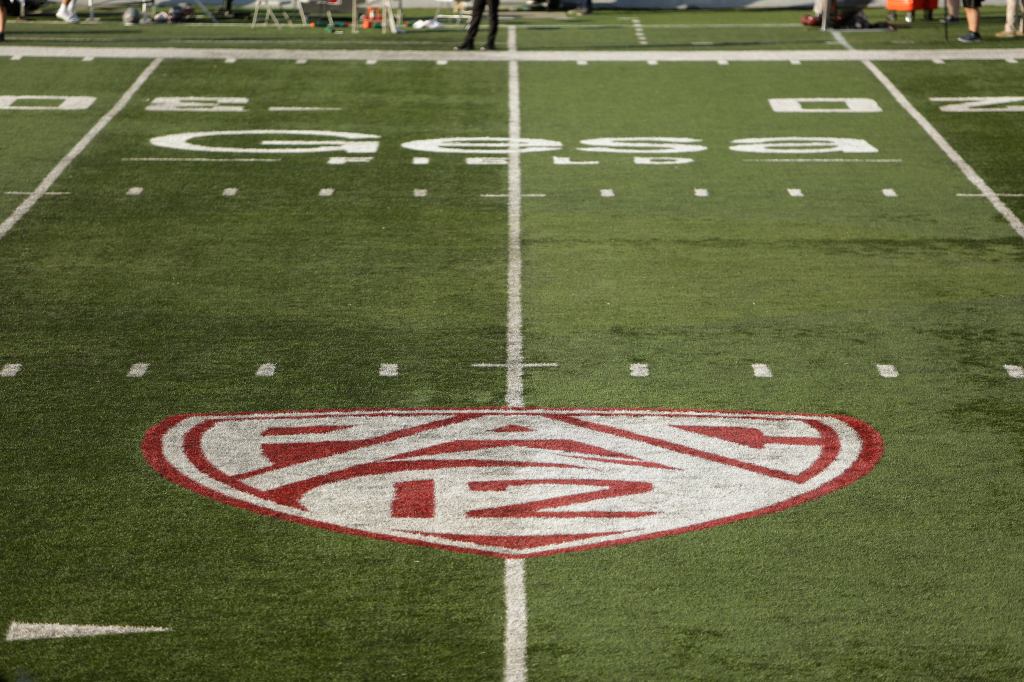
The Hotline mailbag publishes weekly. Send questions to wilnerhotline@bayareanewsgroup.com and include ‘mailbag’ in the subject line. Or hit me on the social media platform X: @WilnerHotline
Some questions have been edited for clarity and brevity.
The Pac-12 wants multiple media partners. But with only eight football members, that’s just four games per week for the majority of the season. How would that work? Doesn’t seem like enough inventory to go around. — @NateJones2009
It depends on how creative the conference, and its partners, are willing to be.
For instance, nothing would prevent the Pac-12 from signing deals with four media partners and placing one game on each network per week during conference play (unless teams are idle).
Yes, that’s an extreme example. But applying conventional programming strategies to an unconventional situation is the wrong approach.
The Pac-12’s football-playing schools decided months ago on the minimum number of games that their media adviser, Octagon, could take to market.
The package assuredly included a scenario in which the Pac-12 implemented an eight-game conference schedule attained by:
— Expanding to nine members, or
— Creating home-and-home series, with each team playing one of the others twice. (Washington State and Oregon State are doing exactly that in 2025.)
But we suspect the conference has carved out the option to play a seven-game round-robin schedule, as well. As one industry source (unaffiliated with the Pac-12) told the Hotline recently: “A seven-game schedule could end up being a plus.”
That’s the contrarian view, to be sure. The cost of buying enough Group of Five opponents to fill out a schedule with five non-conference openings could be significant — and is the primary reason most observers believe the Pac-12 will play at least eight league games.
But as the source noted, flexibility is vital in a chaotic landscape. Adding a ninth football-playing member that doesn’t work competitively or financially makes less sense than sticking with eight.
With eight schools, the Pac-12 would have the option to play seven conference games or eight (by using the home-and-home approach).
Under what circumstances would a seven-game conference schedule prove beneficial?
What happens if the Big Ten and SEC create an annual crossover series, which has been discussed?
What if the SEC adds a ninth conference game, which is under serious consideration?
In either case, and certainly if both scenarios happen, SEC and Big Ten schools could look to adjust their lineups by cancelling series against Big 12 and ACC opponents.
Arizona State athletic director Graham Rossini said exactly that, telling the Hotline last week: “If the SEC goes to nine, my hunch is they’ll want out of our games.” (The Sun Devils have home-and-home series under contract with LSU, Florida, Texas and Texas A&M.)
SEC and Big Ten teams are scheduled to face dozens of Big 12 and ACC opponents in the next six or eight years. If a slew of those are cancelled, Arizona State and others could turn to the Pac-12 for help filling out their schedules.
In that case, the flexibility to play five non-conference games could morph into an advantage.
Bottom line: We don’t know what will happen, but the terrain is fragile enough that the Pac-12 should consider options that provide maximum schedule flexibility, regardless of how unconventional they might seem.
What exactly is the potential of Texas State? — @CelestialMosh
At the top of the outcome range, the Bobcats could dominate the new Pac-12 the way Boise State has dominated the current Mountain West, with frequent 11-win regular seasons.
Success is all about resource allocation and talent acquisition which, of course, go hand-in-hand.
Texas State is located in one of the nation’s most fertile recruiting areas, president Kelly Damphousse appears committed to winning, coach G.J. Kinne is a proven developer of talent and, crucially, the university has the financial wherewithal to support football at a high level relative to other programs outside the power conferences.
We were struck by a recent report by the website On3 about the “top 10 biggest spenders” in college football in 2025 as defined (presumably) by the cost of the roster using revenue sharing and NIL.
Three of the top five were from the Lone Star State: Texas, Texas Tech and Texas A&M.
Granted, Texas State is nowhere near those schools when it comes to tradition, success, fan passion or resource potential. But it doesn’t need to be. The relevant comparison — the Bobcats’ peer group, in other words — is the Pac-12.
And compared to most football programs in the rebuilt conference, they have inherent advantages in both recruiting and resources thanks, largely, to their location in a football-crazed state.
Will they execute?
We should have clarity in two or three years. But it’s not difficult to envision a scenario in which Texas State, like Boise State, is an annual contender for the Pac-12 title and a playoff bid.
Should the Pac‑12 lean into its role as a developmental league for the Power Four — embrace a ‘farm system’ identity — or fight to reclaim major conference status in a marketplace that may no longer have room for five? — @CurtisBlack
Any acknowledgement of a “farm system” approach could damage the Pac-12 brand, and we see no chance (none, zero, zip) of Gonzaga approving the strategy in basketball.
On this topic, the conference has a narrow path forward. It won’t be considered the equal of the ACC, Big 12, Big Ten or SEC and shouldn’t bother making the attempt. But positioning itself as the best of the remaining conferences — as the clear No. 5 — is entirely reasonable from a marketing standpoint.
And that’s exactly what you hear from commissioner Teresa Gould and others: They use the phrase “top five” to describe the Pac-12’s competitive position.
It will take a few years of success for the conference to cement its status as neither Power Four or Group of Five, but on a tier of its own making.
The rebuilt conference might not get there — maybe the American grabs that mantle; maybe nobody does — but the underlying strategy seems sound.
I see hardly any mention of San Jose State as a prospective member of the Pac-12. Why is that? Being in the biggest city in a large market that the Pac-12 lost, I would think they would be a good addition. — Alec S
First, let’s address a frequent misconception: Presence in a major market does not necessarily mean that school receives credit for the full media value of the market.
The Spartans are an afterthought on the Bay Area sporting scene; they don’t move the ratings needle one iota. No media company (linear or streaming) would view SJSU as delivering the nation’s 10th-largest market regardless of the conference affiliation.
Beyond that, there are serious concerns over the university’s commitment to athletic success, especially in football. Just look at the recent remodel of CEFCU Stadium: The eastern side has no stands. It’s a 100-yard patch of grass that creates terribly poor optics on TV.
If you’re the Pac-12, why trust any university — the decision was not made by the athletic department — that would show so little commitment to football?
The remodel lowered capacity to 18,265, and the Spartans didn’t even sell out for the home date against UNLV when the nine-win Rebels paid a visit last season. (By comparison, Texas State’s stadium capacity is 30,000.)
It’s an unfortunate situation at SJSU. College football in the Bay Area would be vastly more interesting if the Spartans were relevant. Generally, we believe the athletic department makes the most of the hand it has been dealt. The issue is largely with central campus.
Are college athletics administrators submitting these NIL collective deals really caught off guard? Or is this just faux outrage to fuel their narrative? I thought it was clear the standard collective deal of the past three years was dying with the settlement? — @GoodSirHamlet
You certainly are not alone. Many are confused by the, err, confusion.
The intent of the House vs. NCAA settlement and subsequent formation of the College Sports Commission was to root out the pay-for-play that has dominated the NIL era. Deloitte’s technology platform, NIL Go, is designed to reject deals that are not for “valid business purposes.”
The question is whether deals arranged by NIL collectives can, in fact, be considered legitimate. The CSC doesn’t think so. The collectives disagree.
Everyone knew there would be potholes in the first year of the CSC, but this could metastasize into a sinkhole.
If the collectives are permitted to continue with business as usual — or anything close to usual — then the enforcement component could collapse and the college sports industry is back where it started before the settlement.
Any idea how much is being spent on lawyers in the Pac-12 lawsuit against the Mountain West? — @coleltaylor
Take your best guess at the hourly rate for top-end attorneys, multiply that times a bajillion hours and you have the answer.
In other words: The Hotline cannot begin to offer a reasonable estimate for the legal cost of the poaching penalty lawsuit, which is headed back to court after mediation failed to produce a resolution.
Here’s what we know:
— The firm representing the Pac-12 in the case is the same outfit, Keker, Van Nest & Peters, that took the lead in the lawsuit filed by Washington State and Oregon State against the 10 outbound schools back in 2023.
(According to a source with no affiliation to the Pac-12 or the firm itself, Keker has an excellent reputation.)
— The Pac-12 spent approximately $12 million on legal fees in the 2023-24 fiscal year, according to financial documents obtained by the Hotline.
Granted, FY2024 included the lawsuit over control of the conference. But there were other legal issues — many other legal issues — unfolding during that time, including the Comcast overpayment fiasco.
And there are other legal issues now, with the House lawsuit atop the list. (The Pac-12 was a named defendant in the case.)
It’s not unreasonable to think the conference once again will spend many millions on legal fees. Exactly how much can be pinned on the poaching penalty lawsuit specifically, we cannot say.
Wouldn’t a football scheduling agreement with Sacramento State in 2026 make a ton of sense? The Pac-12 probably wouldn’t have to pay the Hornets and would buy time to add more football schools later. — @brycetacoma
On the surface, yes: An agreement with Sacramento State for four, five or six games seems like sound strategy for a conference that could need non-conference matchups.
That said, FBS schools only receive credit (toward bowl eligibility) for one victory over an FCS opponent per season, and many teams in the rebuilt Pac-12 have their FCS opponent locked in for ’26.
For example, Oregon State is scheduled to play Montana, while Washington State is facing Duquesne, and San Diego State has Portland State.
Adding Sacramento State makes no sense for those programs because the game wouldn’t count toward the six wins needed for a postseason bid.
And there’s one more matter to consider: Matchups with FCS opponents offer little in the way of TV value. Any dates with Sacramento State would be streamed, and that’s not the Pac-12’s preference for its media inventory.
The Pac-12 will reportedly sponsor men’s tennis, but only four schools play it, so affiliate members are needed. The other western conferences all sponsor it, as well. How will that work? — @cougsguy06
Tennis is one of eight men’s sports the rebuilt conference plans to sponsor, in addition to at least 10 on the women’s side. (The FBS minimum is 16.)
And yes, only four of the nine members have men’s tennis. The conference is working through the sponsorship piece and will undoubtedly identify affiliates — not only in men’s tennis but a slew of sports.
That’s not unusual. Little Rock (Arkansas) has been an affiliate member of the Pac-12 in wrestling for years, just as Cal’s field hockey team was a member of the America East before the Bears joined the ACC.
We suspect that most, if not all Olympic sports eventually will realign in conferences that make geographic sense.
The sooner the better for the athletes.
Do the new schools entering the Pac-12 get an equity stake in Pac-12 Enterprises, or is that going to be owned completely by Oregon State and Washington State? — @Brian_Wood45
The Pac-12 Enterprises is not mentioned in the grant-of-rights agreement that begins next summer, and our hunch is the conference wants to closely protect any matters involving equity — just as it did for years with the Pac-12 Networks and the legacy schools.
But the incoming members view Pac-12 Enterprises as a significant asset on multiple fronts: Not only will the production unit allow for the promotion and visibility of Pac-12 teams, but Enterprises can generate revenue through third-party agreements. (Last fall, for instance, it handled production for a Golden State Warriors game on NBC Bay Area.)
Any profit from Enterprises will be funneled to WSU, OSU and the new schools alike as part of their annual distributions.
*** Send suggestions, comments and tips (confidentiality guaranteed) to wilnerhotline@bayareanewsgroup.com or call 408-920-5716
*** Follow me on the social media platform X: @WilnerHotline
Originally Published:

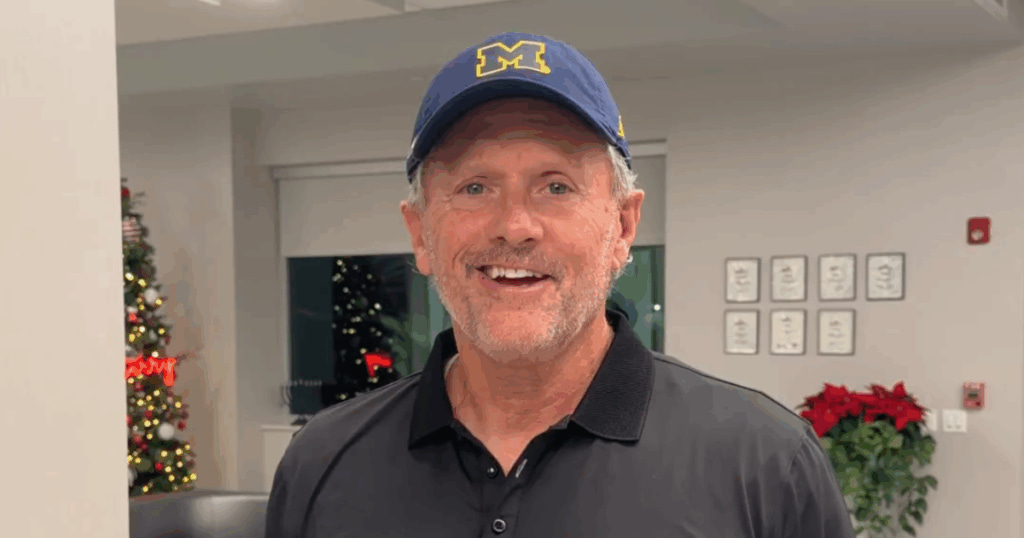
The coaching search is over, but the work is just beginning. Michigan Wolverines football has a new leader in Kyle Whittingham, the 22nd head coach in program history, and he’s already hard at work in Orlando as the Maize and Blue prepare for the Dec. 31 Citrus Bowl against Texas.
Michigan’s official NIL collective, Champions Circle, has launched its ‘Membership 2.0,’ an opportunity for fans to receive “new benefits, new opportunities to engage with players and coaches and new ways to support those who wear the Maize and Blue.”
Advertisement
“As Coach Whittingham takes the helm to lead the next chapter in Michigan football history, one thing is clear: success in today’s college football landscape requires support from each and every fan,” the collective shared in a press release.
By becoming a Champions Circle member, Michigan fans are “directly supporting NIL opportunities that help:
• Empower our new coach to establish the next great era of Michigan Football
• Build championship-level depth at every position
• Prevent rivals from poaching our top talent
The First 100 New Yearly Victors & Valiant Members will receive a football signed by Whittingham and freshman quarterback Bryce Underwood AND an invitation to a first-of-its-kind “Meet Coach Whittingham” webinar in 2026.
Advertisement
Here are details on membership tiers for Champions Circle:

The 66-year-old Whittingham is already in Orlando connecting with Michigan staff, players and their families. The Wolverines have one game remaining but are also focused on next season.
Whittingham was introduced to Michigan fans on social media Saturday evening and will hold his introductory press conference Sunday morning at 11 o’clock from the team hotel.
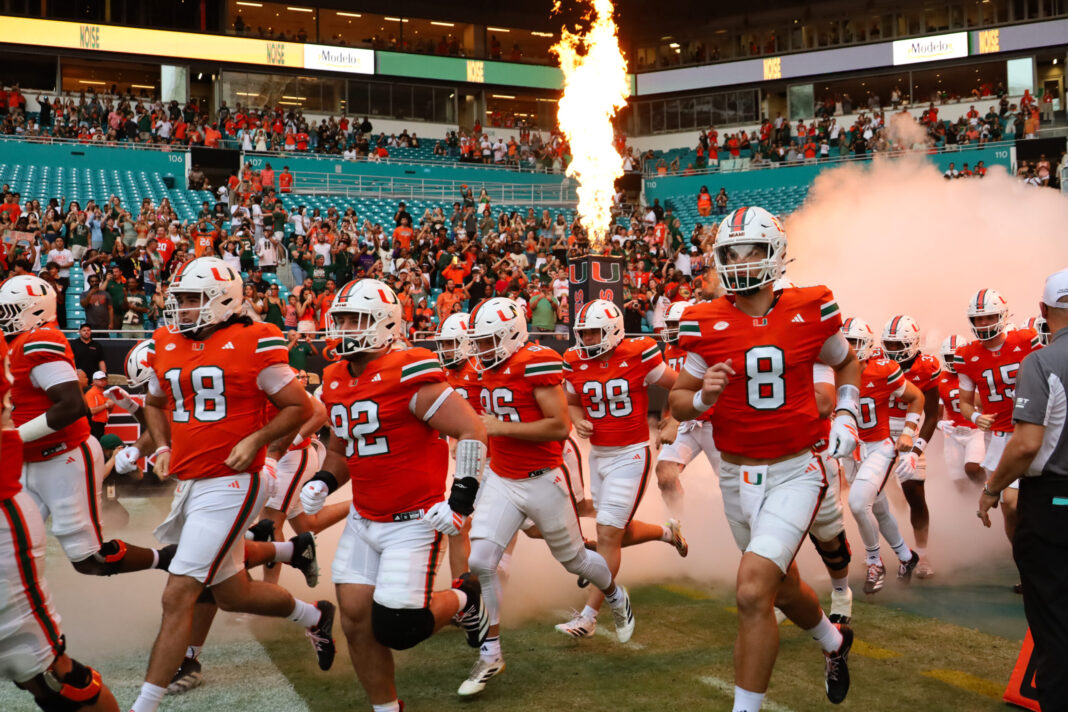
The dawn of NIL has forced a realignment of college conferences, putting pressure on the structure of conference championships. When you look at the Power Four football conferences (ACC, Big 10, Big 12, and SEC), each have expanded somewhere between 16 and 18 members.
The past two seasons have demonstrated that the current conference championship format is not equipped to corral the super-sized power conferences. Deciding the top teams in the country is left to too many qualitative metrics (strength of schedule, head to head, and common opponents).
Something needs to change.
Texas A&M’s path to CFP
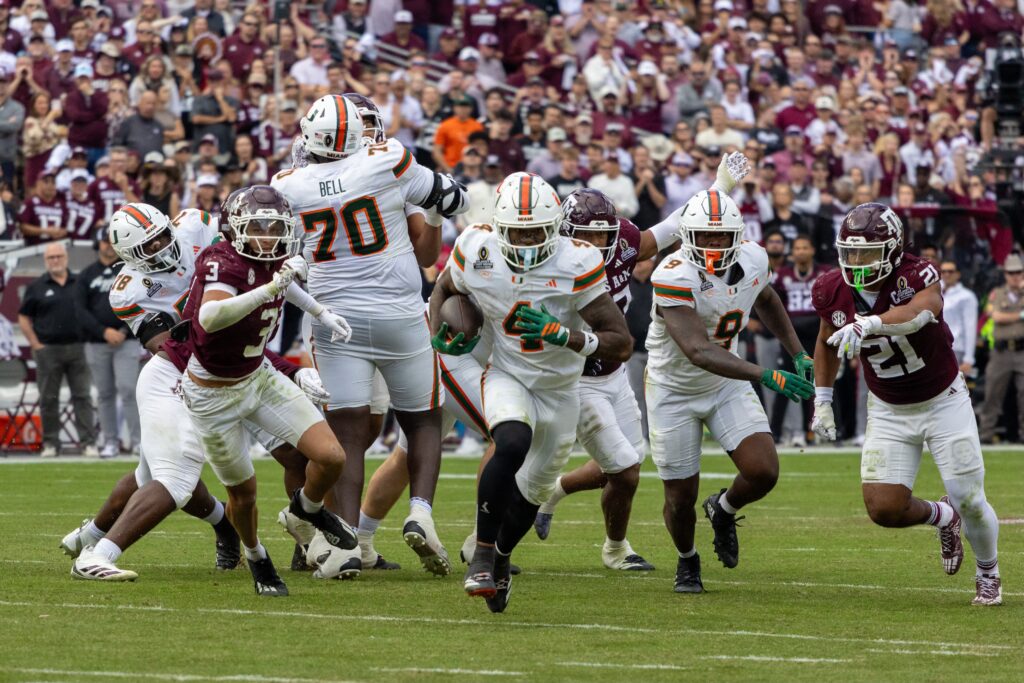
Looking at the SEC, Texas A&M had a historic 11-1 regular season, good for one of the best records in the nation. However it featured in-conference wins against seven out of the nine worst teams in the SEC; and every team they beat had a conference win percentage of .500 or worse.
The Aggies season would end in disappointing fashion as they lost twice in a row, against in-state rival the Texas Longhorns 27-17 and in the first round of the College Football Playoff against the Miami Hurricanes 10-3.
A&M arguably only faced three impressive teams all season (Miami, Notre Dame, Texas), and its only win of the three came in the form of a controversial one-point victory over ND in Week 2.
TAMU is one of multiple glaring examples of how massive conferences allow teams to waltz unscathed through their conferences thanks to scheduling issues.
Is a return to Divisions the solution?
It would seem creating divisions within the conferences should be closely considered. This would stoke more fierce rivalries among inter-division opponents, ensuring more even matchups and a clearer cut conference championship.
Looking to the past, all of the Power Four conferences had divisions but were eliminated across the last decade — a division format made less sense with smaller membership.
In 2024, the Big 12 (with 16 members) had a four-way tie at the top of the conference between Arizona State, Iowa State, BYU, and Colorado, who all finished with a 7-2 record. By the end Arizona State and Iowa State faced off due to tiebreakers, but many thought that BYU was more deserving than Iowa State.
This season in the ACC (with 17 members), Virginia guaranteed their spot after a 7-1 conference record, but there was a 5-way tie for second place between Duke, Miami, Georgia Tech, SMU, and Pitt. As Miami fans well know, the unranked 7-5 Duke Blue Devils were awarded the second spot over a 10-2 Miami team ranked No. 12 in the country at the time.
Applying the Divisions to the ACC
When looking at the ACC, the conference has 17 members, which forces teams to play more or less games than one another. All of this would be solved if another team joined the conference.
But let’s concentrate on how the current structure of the ACC would address this issue. There would be three main things taken into consideration: rivalries, location, and talent. It might look something like this:
ACC North: Syracuse, BC, Pitt, Louisville, VT, Virginia, Clemson and Georgia Tech
ACC South: Miami, FSU, SMU, Cal, Stanford, Duke, UNC, NC State and Wake Forest
For the divisions, it would be fair to re-evaluate every five years whether the two divisions are evenly split. Currently the competition would be tight; each division would be well balanced.
The proposed system would also allow scheduling and travel to be much simpler; every division team plays one another, the north would have 7 conference games while the south would have 8. At the end of the season, the two representatives from each division would face-off for the championship.
As some guidelines here are the five hypothetical tiebreaker rules:
1 – Conference Record
Conference records always take importance over every guideline but would have more weight as every team faces each other.
2 – Head to Head
Due to everyone facing off this should solve for tiebreakers except for three (or more) way ties.
3 – Overall Record
In the case of Miami – Duke the tiebreaker was Win Percentage of Conference opponents. In the context of a 7-5 record, the overall record should have more weight.
4 – National Ranking (AP poll / CFP)
Ideally the conference championship should be settled by this point but if it goes this far National Ranking should be considered in ensuring that the best teams compete for the conference championship.
Will realignment fix everything?
Fans want more entertaining matches and teams want ease of scheduling and travel.
The answer is simple — either return to smaller conferences or implement divisions to make conferences matter.
In the end, no matter the solution, it won’t be perfect. Sports fanatics will always say that there will be a better format, but the least we can do is learn from past mistakes.
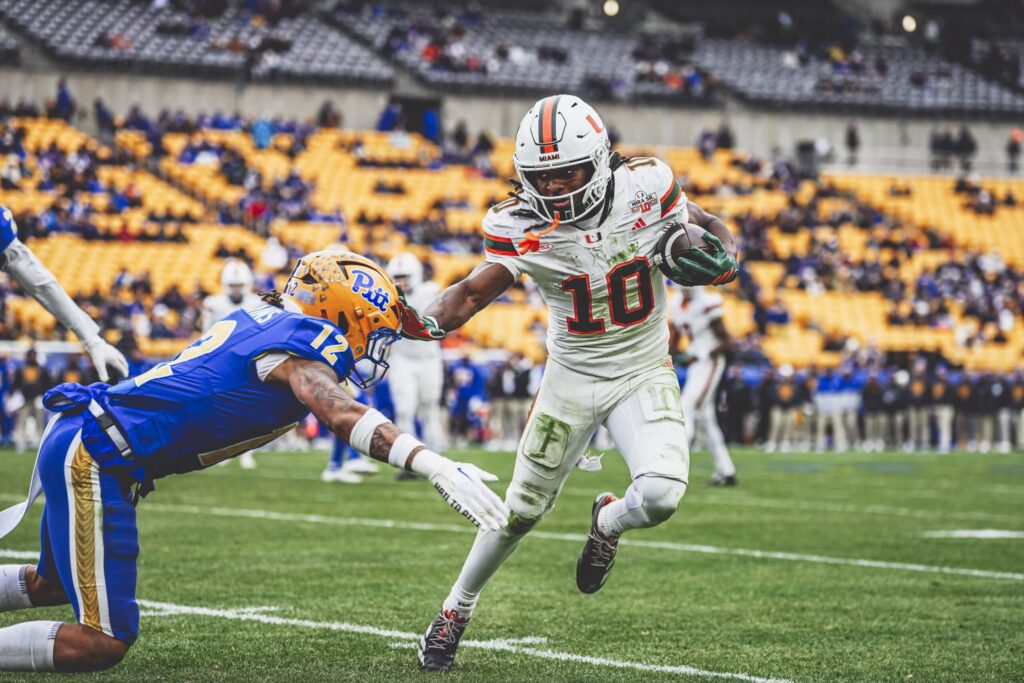

North Texas capped a program-best 12–2 season with a New Mexico Bowl win, but quickly faced major roster turnover as quarterback Drew Mestemaker, running back Caleb Hawkins, and wide receiver Wyatt Young all entered the NCAA transfer portal.
Mestemaker broke out as a redshirt freshman in 2025, leading the FBS with 4,379 passing yards and 34 touchdowns following Saturday’s 49–47 victory over San Diego State.
He began his North Texas career as a walk-on and earned conference offensive honors and national attention before deciding to test the portal.
Hawkins, the Mean Green’s freshman back, finished 2025 as one of the nation’s most productive rushers, totaling 1,434 rushing yards and leading the FBS with 25 rushing touchdowns, highlighted by a 198-yard, three-touchdown bowl performance to cap the year.
Young, meanwhile, paced UNT’s receiving corps with 1,264 yards and 10 touchdowns (ranking among the top three nationally) and earned first-team All-American and All-Conference honors.
Losing the nation’s top passer, the FBS’s most productive freshman runner, and a top-three WR in one offseason represents an immediate top-to-bottom offensive reset for North Texas.

For the transfer market, all three are premium, high-demand assets — Mestemaker as a starting QB target for Power-Five teams, Hawkins as a feature back with breakout tape, and Young as a proven perimeter threat.
Mestemaker has already been linked to Oklahoma State (connection via coach Eric Morris), Indiana, Texas Tech, and Oregon, while Hawkins and Young are expected to draw attention from both Group-of-Five and Power-Five programs.
Hawkins, a three-star recruit from North Rock Creek High School (Shawnee, Oklahoma) in the 2025 class, also held offers from Emporia State and Central Oklahoma before committing to North Texas in September 2024.
Young, a three-star prospect from Katy Tompkins High School (Katy, Texas) in the 2024 class, signed with the Mean Green over offers from Rice, Arizona, Memphis, Air Force, and others.
Three top underclass producers hitting the transfer portal at once underscores how quickly the transfer era can reshape a program, leaving Group of Five teams that develop stars grappling with retention issues and the financial pressures of NIL.
Read More at College Football HQ
- No. 1 college football team linked to 1,700-yard RB in transfer portal
- Top 3 transfer portal landing spots for 4,000-yard quarterback Drew Mestemaker
- College football team loses starting QB to NCAA transfer portal
- Major college football program surges as candidate for 4,000-yard QB
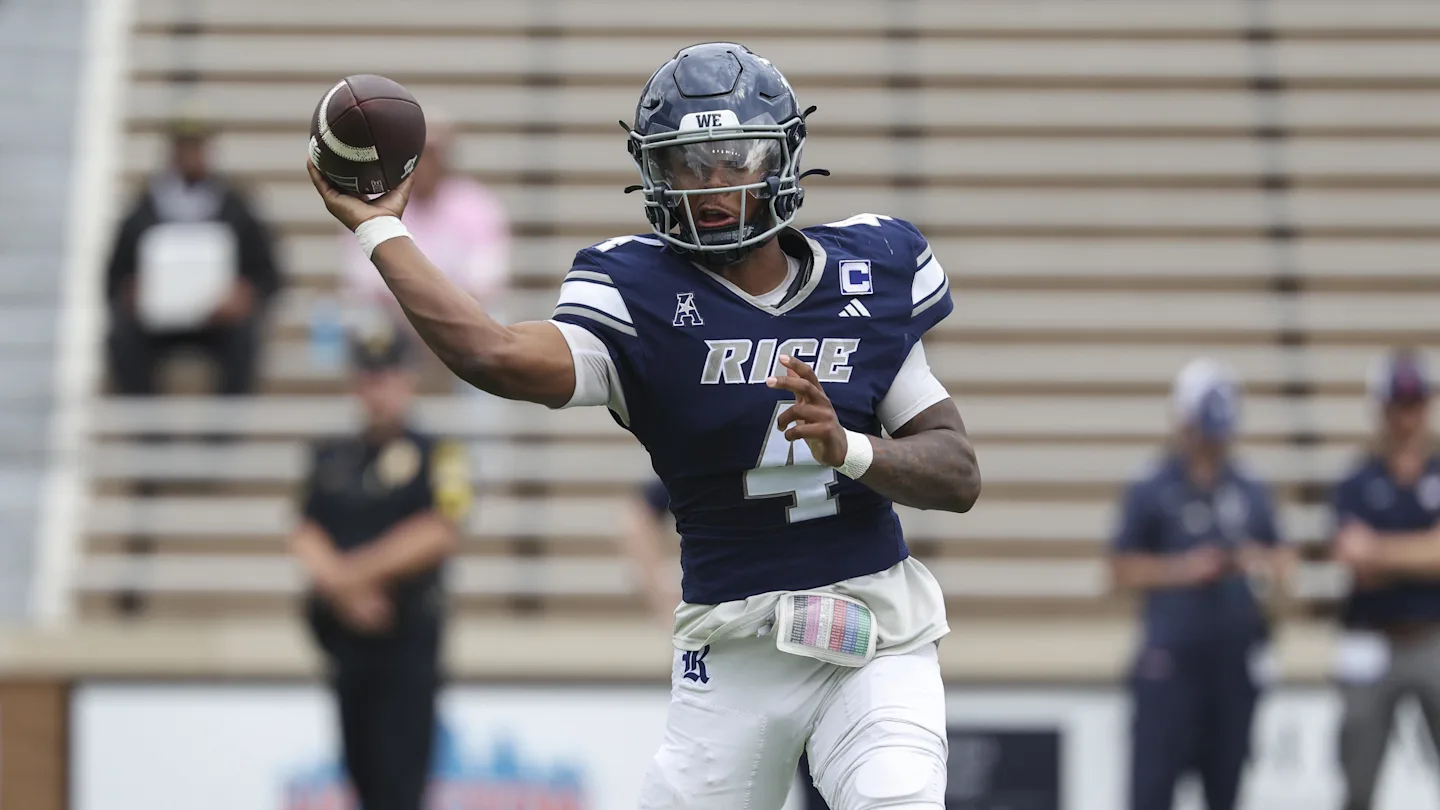
In its first year under head coach Scott Abell, Rice finished the 2025 season 5–7 overall (2–6 in the American Conference) but still earned an Armed Forces Bowl invite, where it will face Texas State (6–6) on January 2 in Fort Worth, Texas.
Across 12 games in 2025, Jenkins completed 119 of 172 passes (69.2%) for 1,025 yards with nine touchdowns against two interceptions, while also carrying the ball 151 times for 531 yards and five scores.
That momentum may be short-lived, however, as Rivals’ Hayes Fawcett reported on Saturday that Jenkins plans to enter the NCAA transfer portal, adding another domino to an already loaded quarterback transfer market.
A Houston, Texas product who signed with Rice in February 2023, Jenkins worked his way into the program as a multi-role quarterback/athlete, appearing in limited action early in his career before being named the 2025 starter.
In his first full year as the starting quarterback, Jenkins earned American Conference All-Academic recognition.
Prior to signing with Rice, he starred at Alief Taylor (Houston), where he threw for 4,735 yards and 46 touchdowns against just six interceptions in 22 varsity games and earned All-District 23-6A honors as a junior.
Jenkins was 247Sports’ No. 93 quarterback in the 2023 class, committing to Rice over offers from Alcorn State, East Texas A&M, Jackson State, and Lamar.

With a 69.1% career completion rate and proven mobility, Jenkins profiles as a strong fit for spread-option or run-oriented Group-of-Five offenses that prioritize efficiency and quarterback movement.
He could appeal to programs seeking an experienced starter while also offering value as depth at the Power-Five level, with his Texas roots strengthening his regional appeal.
Some notable programs that have reportedly shown interest in adding a quarterback through the transfer portal include Florida State, Clemson, North Texas, TCU, Virginia Tech, and Cincinnati.
Read More at College Football HQ
- $2.4 million QB emerges as transfer portal candidate for SEC program
- Major college football program ‘expected to hire’ 66-year-old head coach
- College Football Playoff team loses player to transfer portal
- College Football Playoff team loses starting QB to transfer portal

Cincinnati closed the 2025 season at 7–5 (5–4 Big 12) and will face Navy in the AutoZone Liberty Bowl on January 2, marking the Bearcats’ first bowl appearance since joining the Big 12 and since head coach Scott Satterfield took over in 2023.
Cincinnati rattled off seven straight wins midseason but dropped its final four games to close the regular slate before receiving the bowl invitation.
Quarterback Brendan Sorsby started 12 games for Cincinnati in 2025 and finished with 2,800 passing yards, 27 passing TDs, and five interceptions (61.6% completion, 155.15 passer rating), adding 100 carries for 580 rushing yards and nine rushing touchdowns.
A Denton/Lake Dallas (Texas) product, Sorsby was a three-star recruit who signed with Indiana (redshirted 2022, started in 2023) before transferring to Cincinnati in 2024.
However, Sorsby notified Cincinnati and publicly confirmed on December 15 that he will test the transfer portal while awaiting an NFL draft grade.
Since then, multiple programs have reportedly shown interest, with some NIL offers rumored to approach $5 million, a figure that would rank among the highest in college football.
On3’s NIL tracker currently values Sorsby at approximately $2.4 million, placing him among the higher-valued quarterbacks in the college game.
On Friday, Fox Sports’ Laken Litman included Oregon among the programs expected to pursue a quarterback through the transfer portal and identified Sorsby as a “top quarterback from the portal,” along with Texas Tech, Indiana, and Oklahoma.

Oregon’s starter, Dante Moore, is widely regarded as a likely high NFL Draft selection and has not publicly committed to returning, stating that he has yet to make a final decision.
With a young and largely unproven group of quarterbacks behind him on the depth chart, speculation has been that Dan Lanning and his staff could pursue a transfer portal quarterback should Moore declare.
If Moore declares for the draft, Oregon would likely seek an experienced, pro-ready signal-caller capable of operating a tempo-based offense while sustaining recruiting and NIL momentum.
Sorsby’s size (6’3″, 235 pounds), proven starter experience, marketplace value, and dual-threat rushing ability, a trait Oregon has used successfully, would make him an immediate candidate.
Read More at College Football HQ
- No. 1 college football team linked to 1,700-yard RB in transfer portal
- Top 3 transfer portal landing spots for 4,000-yard quarterback Drew Mestemaker
- College football team loses starting QB to NCAA transfer portal
- Major college football program surges as candidate for 4,000-yard QB
Updated Dec. 28, 2025, 1:33 p.m. ET
Former Georgia football defensive end Damon Wilson is asking an Athens-Clarke County Superior Court judge to deny Georgia athletics’ attempt to go to arbitration on what it contends is Wilson breaking an NIL contract when he entered the transfer portal.
Georgia sued Wilson, seeking $390,000 in liquidated damages after he agreed to an NIL deal with Classic City Collective and transferred weeks later. He played this season at Missouri where he was second-team All-SEC.

Michigan NIL collective Champions Circle hits ground running after Kyle Whittingham hire

Texas A&M star Ifenna Cos‑Okpalla signs with League One Volleyball

Super-sized conferences are breaking college football

Deaf volleyball coach speaks volumes (video)

Cos-Okpalla Inks Professional Contract with LOVB Salt Lake – Texas A&M Athletics

College football team loses three All-Americans to transfer portal

College football team loses starting QB to NCAA transfer portal

Spring sports registration opens Jan. 1

Young Sharks continue to display maturity in win vs. Canucks – NBC Sports Bay Area & California

No. 11 Long Beach Poly’s Ki’ele Ho-Ching Wins Gold with USA Softball – The562.org

$2.4 million QB connected to major college football program in transfer portal

South Carolina Gamecocks Defensive Back Plans to Enter the Transfer Portal

Staten Island’s Finest AAU Travel Basketball Organization hosts 4th Annual Holiday Classic (90 action-packed photos)

In Austin and across Texas, youth boxing thrives out of the spotlight

Kyle Larson nervous about dramatic entrance to deliver record prize – Motorsport – Sports

SoundGear Named Entitlement Sponsor of Spears CARS Tour Southwest Opener

Donny Schatz finds new home for 2026, inks full-time deal with CJB Motorsports – InForum

Black Bear Revises Recording Policies After Rulebook Language Surfaces via Lever

Jo Shimoda Undergoes Back Surgery

Bowl Projections: ESPN predicts 12-team College Football Playoff bracket, full bowl slate after Week 14

Robert “Bobby” Lewis Hardin, 56

How this startup (and a KC sports icon) turned young players into card-carrying legends overnight

Men’s and Women’s Track and Field Release 2026 Indoor Schedule with Opener Slated for December 6 at Home

David Blitzer, Harris Blitzer Sports & Entertainment

How Donald Trump became FIFA’s ‘soccer president’ long before World Cup draw

Michael Jordan’s fight against NASCAR heads to court, could shake up motorsports
Wisconsin volleyball sweeps Minnesota with ease in ranked rivalry win

JR Motorsports Confirms Death Of NASCAR Veteran Michael Annett At Age 39

Increased Purses, 19 Different Tracks Highlight 2026 Great Lakes Super Sprints Schedule – Speedway Digest
Elliot and Thuotte Highlight Men’s Indoor Track and Field Season Opener






-
 Motorsports3 weeks ago
SoundGear Named Entitlement Sponsor of Spears CARS Tour Southwest Opener
-
 Motorsports3 weeks ago
Donny Schatz finds new home for 2026, inks full-time deal with CJB Motorsports – InForum
-
 Motorsports3 weeks ago
Rick Ware Racing switching to Chevrolet for 2026
-

 NIL3 weeks ago
DeSantis Talks College Football, Calls for Reforms to NIL and Transfer Portal · The Floridian
-
 Sports2 weeks ago
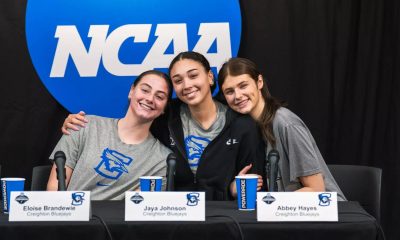
#11 Volleyball Practices, Then Meets Media Prior to #2 Kentucky Match
-

 Motorsports2 weeks ago
Sunoco to sponsor No. 8 Ganassi Honda IndyCar in multi-year deal
-
 Motorsports3 weeks ago
NASCAR owes $364.7M to teams in antitrust case
-
 Motorsports2 weeks ago
Nascar legal saga ends as 23XI, Front Row secure settlement
-

 Rec Sports3 weeks ago
Why the Texas Sport for Healing Fund Should Return – The Daily Texan
-
 Sports2 weeks ago
Maine wraps up Fall Semester with a win in Black Bear Invitational