
NIL
Trump signs order to clarify college athletes' employment status amid NIL chaos


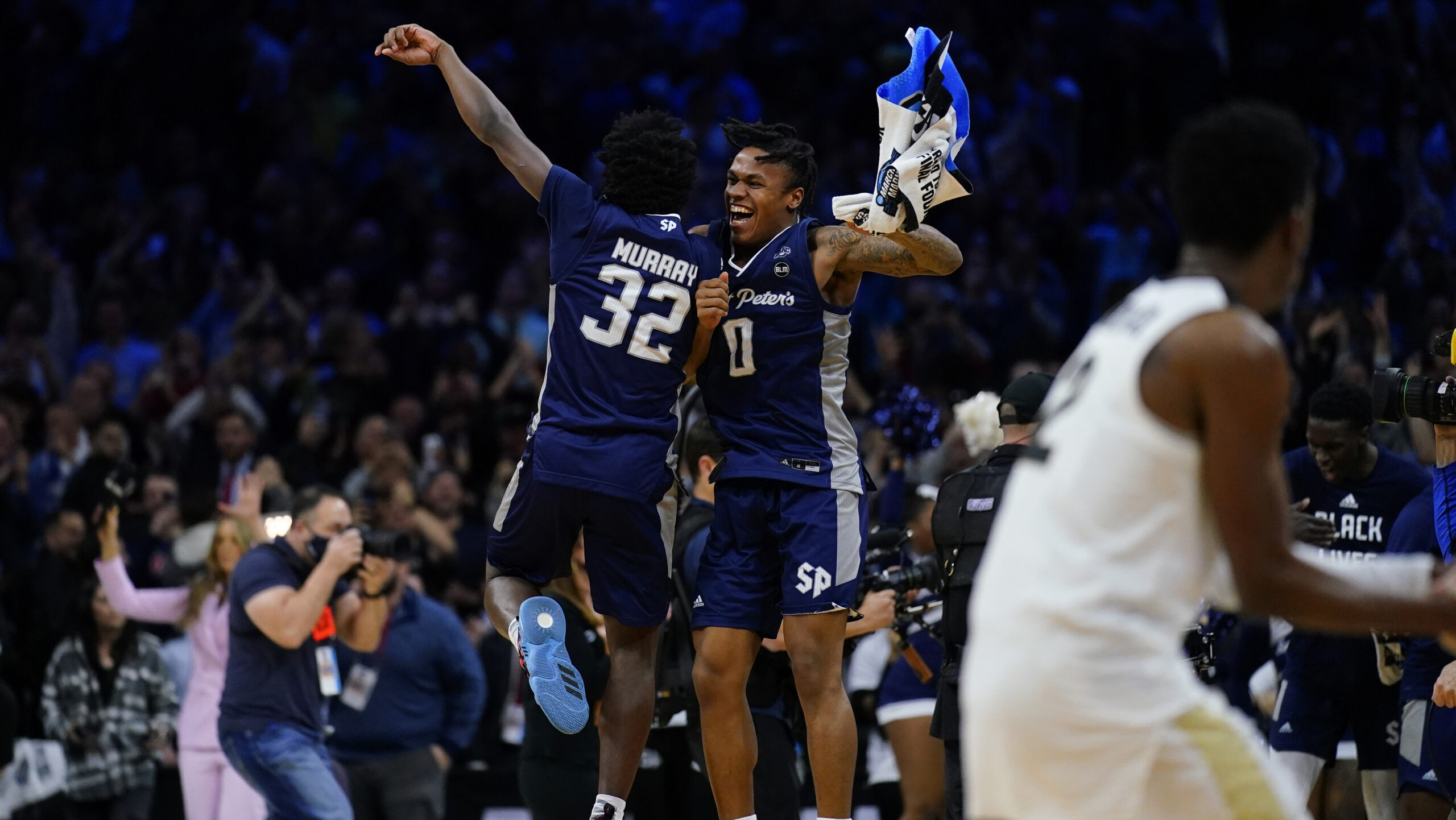

WASHINGTON (AP) — President Donald Trump on Thursday signed an executive order mandating that federal authorities clarify whether college athletes can be considered employees of the schools they play for in an attempt to create clearer national standards in the NCAA’s name, image and likeness era.
Trump directed the secretary of labor and the National Labor Relations Board to clarify the status of collegiate athletes through guidance or rules “that will maximize the educational benefits and opportunities provided by higher education institutions through athletics.” The order does not provide or suggest specifics on the controversial topic of college athlete employment.
The move comes after months of speculation about whether Trump will establish a college sports commission to tackle some of the thorny issues facing what is now a multibillion-dollar industry. He instead issued an order intended to add some controls to “an out-of-control, rudderless system in which competing university donors engage in bidding wars for the best players, who can change teams each season.”
“Absent guardrails to stop the madness and ensure a reasonable, balanced use of resources across collegiate athletic programs that preserves their educational and developmental benefits, many college sports will soon cease to exist,” Trump’s order says. “It is common sense that college sports are not, and should not be, professional sports, and my administration will take action accordingly.”
There has been a dramatic increase in money flowing into and around college athletics and a sense of chaos. Key court victories won by athletes angry that they were barred for decades from earning income based on their celebrity and from sharing in the billions of revenue they helped generate have gutted the amateurism model long at the heart of college sports.
Facing a growing number of state laws undercutting its authority, the NCAA in July 2021 cleared the way for athletes to cash in with NIL deals with brands and sponsors — deals now worth millions. That came mere days after a 9-0 decision from the Supreme Court that found the NCAA cannot impose caps on education-related benefits schools provide to their athletes because such limits violate antitrust law.
The NCAA’s embrace of NIL deals set the stage for another massive change that took effect July 1: The ability of schools to begin paying millions of dollars to their own athletes, up to $20.5 million per school over the next year. The $2.8 billion House settlement shifts even more power to athletes, who have also won the ability to transfer from school to school without waiting to play.
At Big Ten Conference football media days in Las Vegas, Purdue coach Barry Odom was asked about the Trump order.
“We’ve gotten to the point where government is involved. Obviously, there’s belief it needs to be involved,” he said. “We’ll get it all worked out. The game’s been around for a hundred years and it’s going to be around 100 more.”
The NCAA has been lobbying for several years for limited antitrust protection to keep some kind of control over this new landscape — and avoid more crippling lawsuits — but a handful of bills have gone nowhere in Congress. Trump’s order makes no mention of that, nor does it refer to any of the current bills in Congress aimed at addressing issues in college sports.
NCAA President Charlie Baker and the nation’s largest conferences both issued statements saying there is a clear need for federal legislation.
“The association appreciates the Trump administration’s focus on the life-changing opportunities college sports provides millions of young people and we look forward to working with student-athletes, a bipartisan coalition in Congress and the Trump administration,” said Baker, while the conferences said it was important to pass a law with national standards for athletes’ NIL rights as soon as possible.
The 1,100 universities that comprise the NCAA have insisted for decades that athletes are students who cannot be considered anything like a school employee. Still, some coaches have recently suggested collective bargaining as a potential solution to the chaos they see.
It is a complicated topic: Universities would become responsible for paying wages, benefits, and workers’ compensation and schools and conferences have insisted they will fight any such move in court. While private institutions fall under the National Labor Relations Board, public universities must follow labor laws that vary from state to state and it’s worth noting that virtually every state in the South has “right to work” laws that present challenges for unions.
Trump’s order also:
— Calls for adding or at least preserving athletic scholarships and roster spots for non-revenue sports, which are those outside football and basketball. The House settlement allows for unlimited scholarships but does impose roster limits, leading to a complicated set of decisions for each program at each school that include potential concerns about Title IX equity rules. Trump said “opportunities for scholarships and collegiate athletic competition in women’s and non-revenue sports must be preserved and, where possible, expanded.”
— Asks the Justice Department and Federal Trade Commission to “preserve college athletics through litigation” and other actions to protect the rights and interests of athletes — a stance that could influence ongoing lawsuits filed by athletes over eligibility and other issues.
— Directs White House staff to work with the U.S. Olympic and Paralympic Committee to protect the collegiate pipeline feeding Team USA. College sports programs produce around three-quarters of U.S. Olympians at a typical Summer Games, but some are on uncertain footing as schools begin sharing revenue with athletes and the lion’s share going to football and basketball.
___
AP National Writer Eddie Pells contributed.
___
AP college sports: https://apnews.com/hub/college-sports
Copyright 2025 The Associated Press. All rights reserved. This material may not be published, broadcast, rewritten or redistributed without permission.



Duke’s Peyton Jones runs the ball during the second half of the Blue Devils’ 45-17 win over Elon on Thursday, Aug. 28, 2025, at Wallace Wade Stadium in Durham, N.C.
The News & Observer
With roster management and player retention a big part of coaches’ jobs, Duke’s Manny Diaz had some good news to share at Christmastime: Quarterback Darian Mensah and wide receiver Cooper Barkate are both returning for the 2026 football season.
Mensah, a redshirt sophomore this season and the ACC’s leading passer, had talked with Diaz and others about his NFL possibilities. But the former Tulane transfer decided to come back for a second year with the Blue Devils, where he again is expected to receive one of the top NIL packages in college football.
Barkate, who transferred to Duke from Harvard before last season, had 68 catches for 1,069 yards for the 2025 ACC champions, averaging 15.7 yards a grab, and scored six touchdowns.
The Blue Devils, who face Arizona State in the Dec. 31 Sun Bowl in El Paso, Texas, had just three players miss bowl practices, according to Diaz. One was offensive tackle Brian Parker II, who announced he would leave Duke early to enter the NFL Draft. Cornerback Chandler Rivers and defensive end Vincent Anthony Jr., also are preparing for the 2026 draft.
Duke also has another departure: running backs coach Chris Foster, who has joined the Florida staff after one year on the Diaz staff.
“The situation is always fluid, but I expect our retention rate to be very good, again,” Diaz said. Here’s a look at who the Devils will have leaving when the NCAA transfer portal opens Jan. 2:
Entering the portal
RB Peyton Jones: Became something of a forgotten man in the offense in 2025 with the emergence of Nate Sheppard and power running of transfer Anderson Castle. Played in four games after being Star Thomas’ backup in 2024 and rushing for 317 yards.
TE Vance Bolyard: The redshirt sophomore from Greensboro was used primarily on special teams in 2025. Played in 10 games in 2024.
OL Jack Small: A redshirt freshman this year, the 6-6, 300-pounder was used in just two games.
S Kenzy Paul: Redshirt junior saw little action in the secondary this season, playing in one game, the win over Clemson.
S Maliki Wright: Did not play as a freshman this past season.
CB Kyren Condoll: The California native played in one game in 2024 and again saw little action this season.
CB Vontae Floyd: Limited to three games because of injury in 2025, the sophomore played in 11 games in 2024 and was one of four true freshmen to letter for Devils.
DT Terry Simmons Jr.: The redshirt sophomore, a 6-2, 305-pounder, played nine games in 2025 as a backup defensive tackle and was at Duke for three seasons.

Chip Alexander
The News & Observer
In more than 40 years at The N&O, Chip Alexander has covered the N.C. State, UNC, Duke and East Carolina beats, and now is in his 15th season on the Carolina Hurricanes beat. Alexander, who has won numerous writing awards at the state and national level, covered the Hurricanes’ move to North Carolina in 1997 and was a part of The N&O’s coverage of the Canes’ 2006 Stanley Cup run.
Dec. 26, 2025, 5:40 a.m. CT
NORMAN – For University of Oklahoma defensive lineman Danny Okoye, his current spot – as the face of a social media campaign seeking to spread awareness of a life-saving drug for those who have overdosed on opioids – was a case of fortuitous timing.
Okoye is the first of a series of OU student-athletes who will participate in an NIL (name, image and likeness) deal with the nonprofit HarborPath of Charlotte, North Carolina, to promote Narcan, the brand name under which the generic drug naloxone is distributed.
Dec. 26, 2025, 5:03 a.m. ET
- Tennessee Sen. Marsha Blackburn has proposed the HUSTLE Act to create tax-deferred savings accounts for college athletes’ NIL income.
- The need for congressional intervention is questionable, given that other wealthy groups, like NFL players, do not receive similar legislative protection.
If the hollowness of the bowl season or the irrationality of the playoff system has you saddened by the state of college football, it could always be worse. Congress could get involved.
It’s already bad enough that NCAA apologists want Congress to grant college athletics an antitrust exemption. Now Tennessee Senator (and gubernatorial candidate) Marsha Blackburn, in a timely act of pandering, wants to give college athletes special tax-advantaged savings accounts – “for their own protection.”
Blackburn’s comically named “Helping Undergraduate Students Thrive with Long Term Earnings (HUSTLE Act) would allow certain college athletes to create tax-deferred accounts for their Name Image and Likeness (NIL) income.
Don’t get me wrong; I’m a big fan of saving and investing, especially in a tax-deferred vehicle. But the aim of this act ‒ somehow protecting young people from squandering their NIL riches ‒ raises an obvious question: Where exactly is the constitutional mandate (or even suggestion) for Congress to pass laws discouraging 19-year-old millionaires from buying expensive cars and jewelry?
If Blackburn is genuinely concerned about young, wealthy athletes squandering their money, why didn’t she start with the NFL? A widely cited 2009 Sports Illustrated article claimed that 78% of NFL players “face financial stress or bankruptcy” within two years of retirement. This figure was likely exaggerated, but a statistically sound study by the National Bureau of Economic Research found that 15.7% of NFL players file for bankruptcy within 12 years of retiring. Yet this hasn’t prompted any urgent Congressional push to save professional athletes from themselves.
If age is really the determining factor in financial responsibility, why is the fastest growing demographic of bankruptcy filers over 65? Why is the median age of someone filing for bankruptcy 49 and not 29?

Blackburn could, of course, propose legislation allowing college athletes to participate in the existing tax-deferred retirement accounts at their respective universities, but that would concede that the players are employees ‒ something universities want to avoid at practically all costs.
Not to be outdone by the Senate, the House of Representatives proposed the SCORE Act, which would grant NCAA institutions exemptions from antitrust laws – essentially codifying the illegal wage collusion the schools practiced for decades ‒ while also legally declaring that players are not employees of the universities that pay for their athletic services. Too many old timers simply can’t accept the end of decades of illegal (and in my opinion, immoral) athletic department business practices, so they are begging Congress to protect them.
Even if you concede the premise that 20-year-olds are incapable of making wise financial decisions and require assistance, why would Congress be the entity to turn to for financial wisdom?

David Moon, president of Moon Capital Management, may be reached atdavid@mooncap.com.


stl.pony said:
Feel like it’s largely being paid for by sales tax the new stadium development will generate.
Not in finance, so someone should absolutely check my math/analysis on this.
State of Kansas has an 8.25% sales tax. For the sales tax to generate 3 billion, the total sales would need to be about 36 billion. According to this article the Royals stadium and Arrowhead stadium collectively generate 55 million a year in tax revenue. (Don’t know what the analysis is to produce that; admit it could be wrong.) If you round it up to 60 million a year, the break even point is 600+ years.
If you take the numbers the Chiefs put out, 1 billion in economic impact for the region and 29 million in tax revenue per year. The break even point from tax revenue would be 1800 years?
I don’t know what is considered the region for the economic impact evaluation and how that changes based on if the stadium is on the Missouri side or the Kansas side of Kansas City. I also remember reading a report about the state fair of Texas that claimed that events like the state fair and sporting events don’t necessarily generate additional economic activity in a region, it just concentrates it into the event rather the wider community. (Admittedly, that could mean more tax revenue for one city in the region over another.) In my layperson’s opinion, a sports stadium deal like this doesn’t seem to be as smart of a decision as offering economic incentives to a Toyota or other non-entertainment business to move to your city.
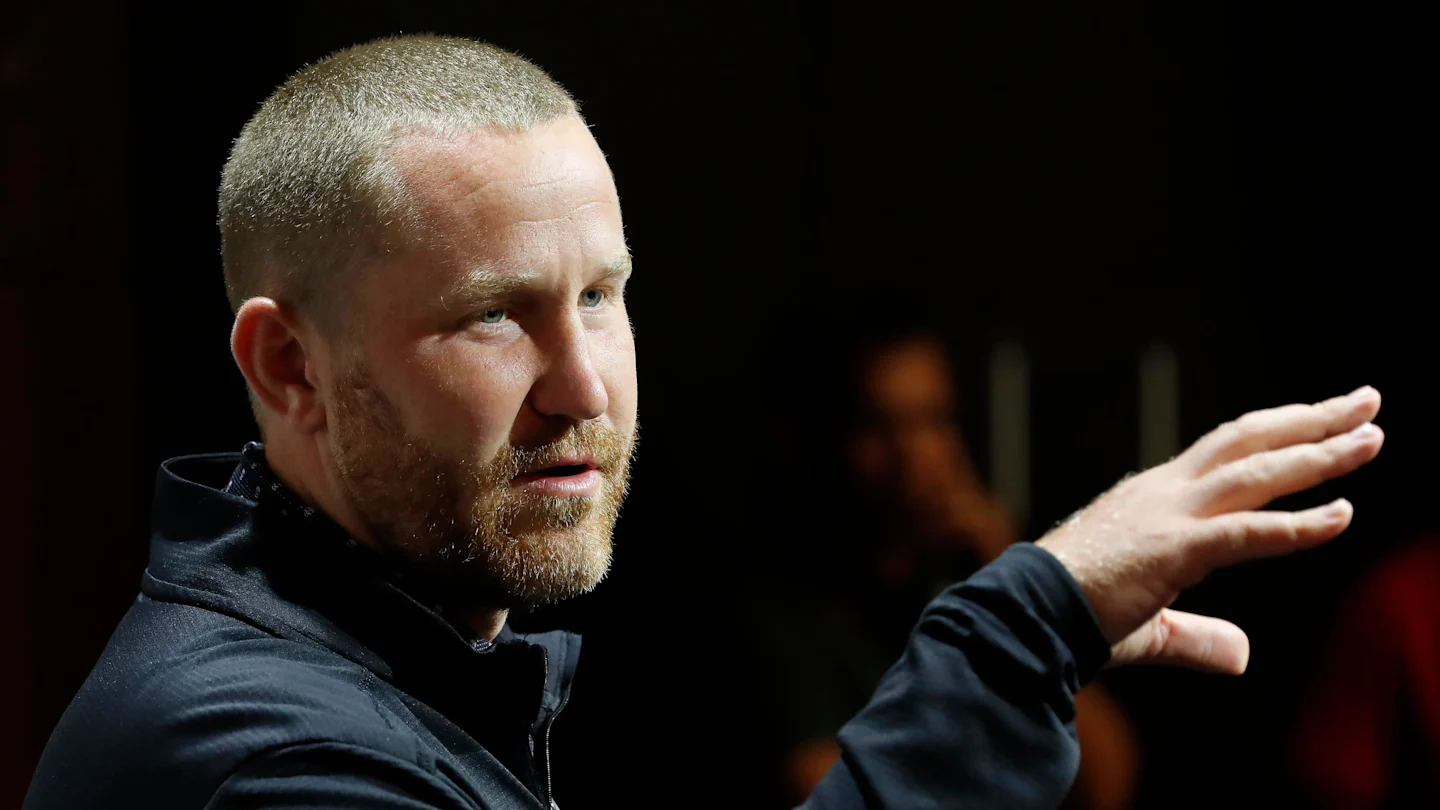
As Michigan’s coaching search drags on, some overlooked possibilities could be floating back to the forefront. After apparently striking out on established head coaches like Kenny Dillingham and Kalen DeBoer, one SEC coordinator is exactly such a possibility for the Wolverines.
In a recent episode of Andy and Ari On3, Andy Staples and Ari Wasserman pointed out that the current coaching carousel has been virtually obsessed with established head coaches. Kentucky hired Oregon offensive coordinator Will Stein as its next coach, but otherwise, schools have passed on coordinators in favor of coaches with head coaching experience.
Both Staples and Wasserman singled out Georgia defensive coordinator Glenn Schumann as a strong coaching possibility who Michigan should consider. “Why hasn’t he been in the conversation,” asked Wasserman. “He’s been intereviewed by schools, they just haven’t hired him,” noted Staples. “Normally, multiple coordinators would have either gotten these jobs or been finalists for these jobs.”
“If I were Michigan, I would hire Schumann over all the others,” said Wasserman. “I feel like if you’re Michigan, you want to get the guy that reshapes how you do things. It’s not that Jedd Fisch wouldn’t or Jeff Brohm wouldn’t….Don’t you want to go get the younger coordinator from Georgia who recruits his ass off and has been around big builds and has he defense playing like this at the right time and try to build you program around that?”

Schumann is only 35 years old, but has spent the last 17 seasons with either the Alabama or Georgia programs. He went to Alabama to be a student assistant coach under Nick Saban, then moved up to graduate assistant and then to Director of Football Operations.
When Kirby Smart left Alabama to take the Georgia head coaching job, Schumann went with him. First, he was the inside linebacker coach. In 2019, he added co-defensive coordinator to his responsibilities and ahead of 2024, he became the sole defensive coordinator
Georgia has historically been a very aggressive big-play-oriented defense, but Schumann has helped remake them on the fly. In 2025, the Bulldogs have held opponents to 15.9 points per game, second in the SEC, despite being near the bottom of the conference standings in sacks (tied for last), tackles for loss (next to last), and turnovers forced (13th).
Schumann was considered in 2023 for the Philadelphia Eagles defensive coordinator role, but hasn’t been significantly linked with another collegiate job. Despite his relative youth, his experience inside two of the foremost college football dynasties of recent vintage makes him an intriguing possibility, should Michigan decide to take a chance.

BangShift.com IHRA Acquires Historic Memphis Motorsports Park In Millington Tennessee. Big Race Weekend’s Planned For 2026!

Remembering Those the NASCAR Community Lost in 2025

Celebrating 100 Division One Basketball games at the Sanford Pentagon

Brennan’s Pub to Close Permanently After Decades, Hosts Final Turtle Race on Saturday

Maserati Sets Its Sights On A Bigger 2026 Racing Season

Presidents Bowl Basketball Classic returns to Sanford Pentagon – Sioux Falls Live

Who’s leaving Duke football as transfer portal opens Jan. 2

Growth, maturation and health profiles of youth triathletes; Associati

Dale Earnhardt broke down in tears after special gift to mom – Motorsport – Sports

Best of Bethesda 2026 Readers’ Picks: Kids & Schools
OU lineman Danny Okoye face of NIL deal to tout life-saving Narcan

All-Area Volleyball First Team | Winchester Star

Honda Newly Launches “Discover Honda” Content Curation Media Platform — TradingView News
Best Gainesville-area Big School Volleyball Player for the 2025 season

‘Christmas tradition’ welcomes more than 170 area children | News, Sports, Jobs

Fargo girl, 13, dies after collapsing during school basketball game – Grand Forks Herald

SoundGear Named Entitlement Sponsor of Spears CARS Tour Southwest Opener

Jo Shimoda Undergoes Back Surgery

Redemption Means First Pro Stock World Championship for Dallas Glenn

Black Bear Revises Recording Policies After Rulebook Language Surfaces via Lever

Bowl Projections: ESPN predicts 12-team College Football Playoff bracket, full bowl slate after Week 14

Donny Schatz finds new home for 2026, inks full-time deal with CJB Motorsports – InForum

Robert “Bobby” Lewis Hardin, 56

How this startup (and a KC sports icon) turned young players into card-carrying legends overnight

How Donald Trump became FIFA’s ‘soccer president’ long before World Cup draw

Men’s and Women’s Track and Field Release 2026 Indoor Schedule with Opener Slated for December 6 at Home

David Blitzer, Harris Blitzer Sports & Entertainment

Indiana’s rapid ascent and its impact across college football
Wisconsin volleyball sweeps Minnesota with ease in ranked rivalry win

Michael Jordan’s fight against NASCAR heads to court, could shake up motorsports





-
 Motorsports2 weeks ago
SoundGear Named Entitlement Sponsor of Spears CARS Tour Southwest Opener
-
 Motorsports2 weeks ago
Donny Schatz finds new home for 2026, inks full-time deal with CJB Motorsports – InForum
-
 Rec Sports3 weeks ago
David Blitzer, Harris Blitzer Sports & Entertainment
-
 Motorsports3 weeks ago
JR Motorsports Confirms Death Of NASCAR Veteran Michael Annett At Age 39
-
Sports3 weeks ago
Elliot and Thuotte Highlight Men’s Indoor Track and Field Season Opener
-
Sports3 weeks ago
West Fargo volleyball coach Kelsey Titus resigns after four seasons – InForum
-
 NIL3 weeks ago
Colleges ponying up in support of football coaches, programs
-
 Motorsports2 weeks ago
Rick Ware Racing switching to Chevrolet for 2026
-

 NIL2 weeks ago
DeSantis Talks College Football, Calls for Reforms to NIL and Transfer Portal · The Floridian
-
 Sports3 weeks ago
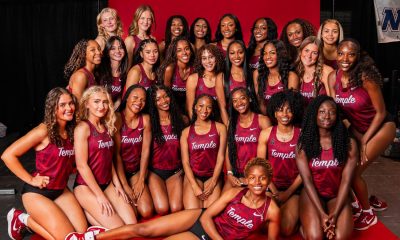
Temple Begins Indoor Track & Field Season at UPenn This Weekend