
Rec Sports
What football helmet should you buy? It’s not as simple as you think.


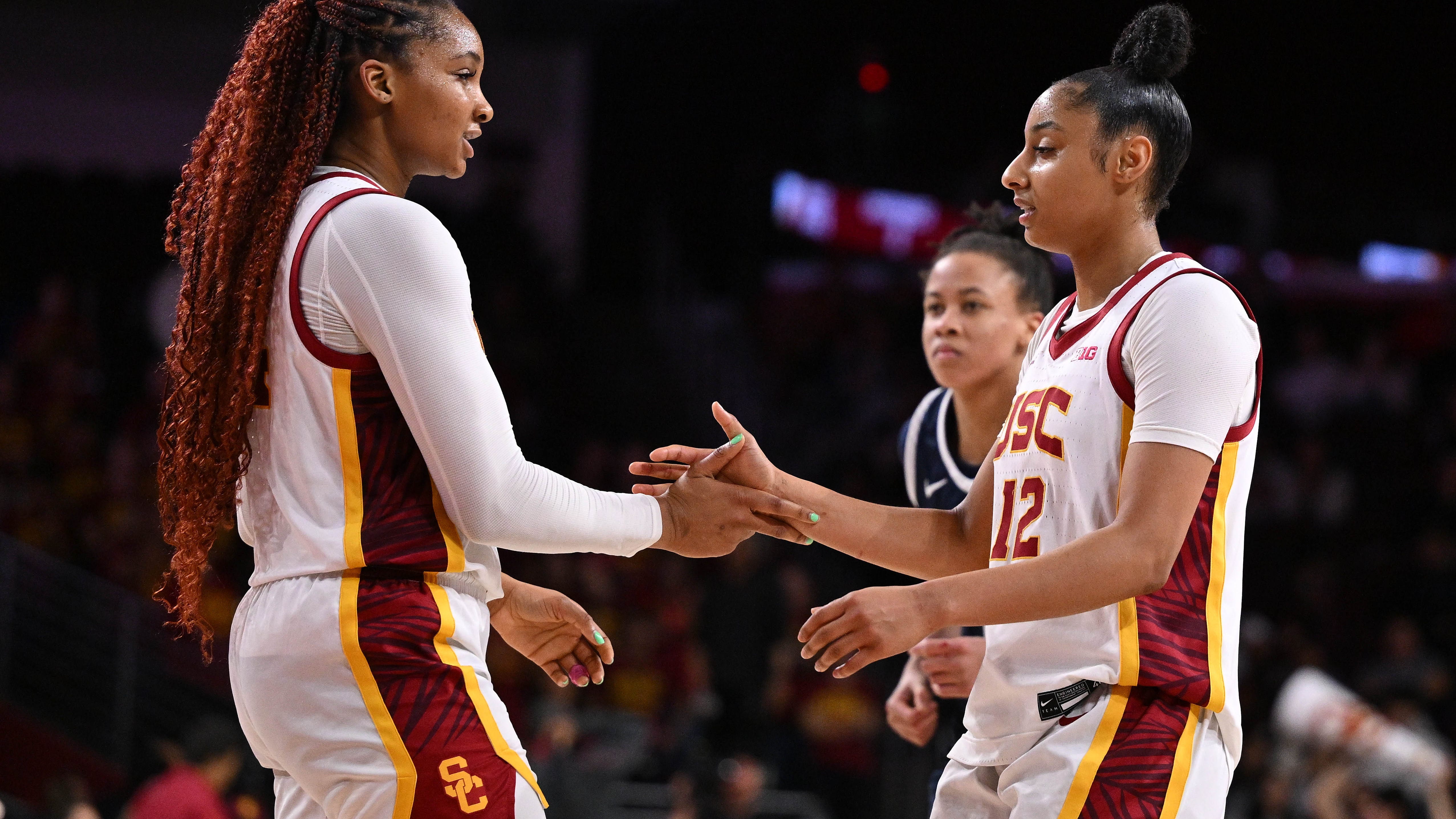

Kiki Iriafen believes in USC basketball and JuJu Watkins next season
Former Trojan Kiki Iriafen believes in her former collegiate team to dominate next season with star JuJu Watkins coming off an injury.
Sports Seriously
Which football helmets should I buy?
It’s what a Virginia Tech athletics equipment manager asked Stefan Duma, a faculty member at the university’s department of Biomedical Engineering and Mechanics, in 2009.
Duma’s team had been working to better understand what causes brain injury. It had placed sensors in Hokies players helmets. It had simulated car crashes.
The question seemed simple enough, until Duma and his colleagues delved deeper into it.
“We said, ‘We don’t know.’ We can buy helmets and test because there’s really no information available in what was good and what wasn’t,” says Steve Rowson, who, as a graduate student, joined this little-known football helmet project that was about to take off.
Duma’s group simulated hits with a guillotine-like device that plunged a dummy headform down cables onto an anvil.
“We bought the helmets, and we saw huge differences,” Rowson tells USA TODAY Sports. “But we also felt like everyone should have that information, so we developed the Virginia Tech helmet ratings based on that. And it was like the first independent, objective way of evaluating helmets.”
The investigation that started in Duma’s basement lab sparked a wave of discussion that would define standards used by youth, high school and college teams and expand to other sports.
“It wasn’t like a pass/fail scale,” Rowson tells USA TODAY Sports. “It was, ‘Here are the best performers. Here are the next best. Here are the not so good performers,’ and that really resonated with consumers. It was a little disruptive to the football helmet manufacturing industry.”
Rowson is now director of Virginia Tech’s Helmet Lab that has reached national acclaim for its testing and studies. It published the first independent safety ratings for varsity football helmets in 2011 and continues to ramp up the standard for what constitutes a five-star helmet.
Just recently, it updated its rating system with new thresholds for those used in varsity and youth football and by bicyclists.
“The best helmets back in 2011 would be the very worst helmets today,” Rowson says.
Have you ever wondered about the force of a hit to the head your kid sees in practice and in games, and how their helmets are tested to protect from them?
Or how helmet recommendations are determined for various sports and age groups?
We spoke with Rowson about the history of his lab, the methods and evolution behind Virginia Tech’s STAR testing system and how it can help keep your athlete safe.
What is the Virginia Tech Helmet Lab and how does it replicate impact?
The lab is a collection of about 25 Virginia Tech faculty, staff, graduate and undergraduate students who study the forces that cause injuries all over the body and look for ways to prevent them from occurring.
They consider over a million head impacts to develop football readings. As they learn more, they add test conditions or change methods.
Sometimes, it’s a complete overhaul.
Their first varsity football helmet ratings were based on Duma’s drop test.
“We were only considering linear acceleration in the head, and it’s because there weren’t really good methods to evaluate rotation of the head,” Rowson says. “We didn’t know how rotational acceleration related to brain injury really well at the time, but we knew enough about linear acceleration that it had a correlation to concussion risk.
“However, a few years later, we had new data to tell us how rotational acceleration related to brain injury, and we upgraded the football method to include both linear and rotational acceleration. We have a pendulum impactor, which pretty much looks like a big upside down hammer that swings down and then it hits a dummy headform that has a helmet on it. Think of a crash test dummy. That dummy headform has sensors inside it.”
Helmet manufacturing has advanced, Rowson says, as the lab has.
“The amount of change that we’ve seen in helmet design over the last decade is probably more than we saw in the previous 30 years combined,” he says.
Understanding the impact and distribution of hits
I asked Rowson, who has a master’s and Ph. D in Biomedical Engineering from Virginia Tech, if he could come up with an analogy for the greatest impact a helmet sustains on a field. He did some math and got back to me with the following scenario:
Head accelerations associated with concussion are comparable in magnitude to those experienced in unbelted car crashes at approximately 17 mph for college-level players and 10 mph for youth-level players.
However, damage from concussions can be cumulative. The lab tests helmets with the hardest hits as well as what Rowson calls “everyday impact” players see on the field.
“They probably see that impact multiple times, and then, with our highest impact condition, not every player might see it,” he says. “The ones who do are at risk of injury. The helmet influences how much force is transferred to the head during all those impacts. So if a helmet’s too soft and too thin, it might not do great under higher impact energy or if it’s optimized for high energy hits, it might do poorly at the low energy hits. So we have a comprehensive evaluation of it where you can’t overdesign for really hard hit impacts or everyday impact.”
No helmet is concussion-proof, the lab states on its website, and any athlete can sustain a head injury. It identifies the helmets that best reduce your chances.
The Summation of Tests for the Analysis of Risk (STAR) score is calculated based on a helmet’s performance in a series of impact tests that are sports-specific. Tests are weighted based on how often people experience similar impacts.
The lower the score, the better the protection. Scores are assigned a number of stars between 1-5, with 5 stars being the best.
“Our ratings are representative of the average,” Rowson says. “There is gonna be some in that (data) distribution who get hurt at really low head accelerations, and there’s gonna be other people who don’t seem to ever get hurt, even at high head accelerations, and that comes down to biological variance. Everyone has their own tolerance to head impact, everyone’s material properties and their brain tissue’s different.
“So it’s kind of a predicted number of injuries for a given number of head impacts that we would expect to see on average, amongst a lot of people. We identify helmets that systematically reduce head acceleration and thus risk.”
Coach Steve: Lessons to learn after suffering a concussion
What’s the difference between a four-and five star helmet? (Hint: They’re both good.)
Rowson says just about every varsity and youth football helmet they recently rated earned five stars.
“But that starts to dilute what a five star meaning is,” he says. “The five star rating is intended to identify what the very best available protection is. And if every helmet that’s being rated is five stars, it takes a little meaning away from that.”
The ratings update rescales those areas to make the five-star winners truly standout performers. The new thresholds reduced the number of five-star helmets from 167 to 38 (bicycle), 33 to 11 (varsity football) and youth football (26 to 6).
The lab still recommends any four or five star helmets.
“It’s not just like everything got good,” Rowson says, “it’s they got good, but to different extents where we could identify meaningful differences.”
Watch contact in practice: Understanding helmet differences and unique risks
According to Virginia Tech, varsity football helmets used to have corresponding youth versions, but there were often few differences between them. There was little data describing how risk differed for youth players.
Today, the lab model for “youth” football simulates a 10-to-12-year-old boy, the varsity model an18-to-24 year old male.
“A kid isn’t necessarily just a scaled down adult,” Rowson says. “Their head is bigger relative to their body than we see in a full grown male, their brain’s still developing, and there’s differences in kind of how they respond to a head impact.
“Every impact scenario we recreate in a lab is weighted based on how often a player is gonna see (it) on the field. We saw in our youth studies they don’t hit their heads as frequently (and) when they fall to the ground, they have a heavier head and a weaker neck, and the helmet’s pretty heavy relative to their body mass compared to an adult. So their helmet’s more likely to follow through and strike the ground. So we see more side and back impacts in youth football than we do in varsity football.”
As part of a groundbreaking 2012 study funded by the National Highway Traffic Safety Administration, Virginia Tech researchers put sensors inside the helmets of seven players aged 7–8 years old for a season and measured their impacts.
They found that 76% of the ones greater than 40 g (40 times the acceleration of gravity) and 100% of impacts greater than 80 g occurred during practices.
“It was first data measuring head impacts in youth football players,” Rowson says.
Following the study, Pop Warner youth football outlawed drills that involved full-speed, head-on-blocking and tackling that starts with players lined up more than three yards apart, as well as head-to-head contact.
According to The New York Times, Pop Warner officials said they were persuaded by data from the youth study that indicated the level of severity of some hits were similar to some of the more severe impacts college players experience.
“We’re like, ‘Wow, all our hardest hit impacts are coming from this one (Oklahoma) drill,’ ” Rowson says. “And out of all the games we collected, we didn’t see that kind of impact happen a single time. We’re like, ‘We don’t think you should be doing this,’ and the coach was really receptive. It was just a local youth football team, and it was a dad coaching who had that drill in there, because that’s what he did when he was a kid.”
A follow-up study of football teams comprised of players aged 9–12 suggested head impact exposure could reduce significantly by limiting contact in practices to levels below those experienced in games.
Coach Steve: Why are boys sports declining? Former NBA star looks for solutions
How helmet ratings differ by sport
Their helmet research always starts in the real world, Rowson likes to say. They learn how people are getting hurt and they match those conditions – the speed at which they’re hitting their head, where they’re hitting their head, their acceleration profile – in the lab.
With cycling, the researchers look at a fraction of the head impacts as football.
They don’t put a sensor on everyone because cycling is an individual sport and crashes are rare. Instead, Rowson says, they identify riders involved in crashes and collect their helmets.
They buy the same helmet and start hitting it until they match the damage profile, then back calculate the location and velocity at which they hit their head.
For snow sport, researchers have traveled to big events on mountains and set up cameras from various angles.
Through video tracking, they calculated their head impact speed into the ground.
The lab now has nine helmet ratings: Varsity football, youth football, flag football, hockey, bicycle, equestrian, soccer, snow sport, whitewater and polo.
They’ll be announcing rating programs for baseball and softball soon.
“Essentially, we’re trying to cover all sports,” Rowson says. “The ultimate goal is for us to be able to provide data to everyone on what’s available.”
The lab doesn’t formally advise any leagues, but often, the leagues come to them. A full time faculty member is assigned to direct outreach, host tours, run STEM activities for kids and answer questions.
The questions, it seems, come every day.
“Sometimes they’re very technical, sometimes they’re more general: What does this mean and how do we use it?” Rowson says.
We know now from Duma, the Virginia Tech professor of engineering whom its football team sought out in 2009, how a seemingly innocent one can lead to a scientific explosion.
Steve Borelli, aka Coach Steve, has been an editor and writer with USA TODAY since 1999. He spent 10 years coaching his two sons’ baseball and basketball teams. He and his wife, Colleen, are now sports parents for two high schoolers. His column is posted weekly. For his past columns, click here.
Got a question for Coach Steve you want answered in a column? Email him at sborelli@usatoday.com


Pine Bluff, Ark. (KATV) — Life lessons in youth athletics tend to stick with kids for years, and even a lifetime.
Past memories of competition typically remain with the majority of those who live to still share accounts of those days to anyone willing to listen.
Lucas Armstrong, a key community figure in the city of Pine Bluff, has remained steadfast in his effort to assure those times that shaped countless young people never go in vain through athletics, mentorship, and community service.
Through the Youth Basketball Association, those stories continue to echo today amongst those who were under his tutelage.
“So when I took over the team, they were the Merrel Center Tarheels,” said Armstrong.
“Jacqueline Robinson, over the Merrill Center, she is the one who was dealing with kids, trying to keep them off the street. I just came in and gave them basketball structure.”
During discussions with Robinson, Armstrong navigated through coaching opportunities until getting his first coaching opportunity under YBA in 2016.
“As that was happening, we had Parks and Recreation basketball league [Pine Bluff Parks and Recreation] starting, and that’s when we started the Tarheels,” said Robinson.
One player, out of the original 75 who received an opportunity to suit up and compete did not take the opportunity for granted.
Lakeith Smith expressed gratitude for Robinson and Armstrong’s effort in giving young people an outlet, even if it meant meeting them where they are to help see them strive.
“She is really like the foundation. As long as we stayed out of trouble, she wanted to be a part of it, said Smith.
“She had a summer school program, and he [Lucas Armstrong] used to come up there and I guess he saw us play one day and wanted to start a team.”
Smith later went on to become the first recipient of a scholarship award worth $500 under YBL.
After one team started up in 2016, even more began to sprout under the league. The league name was titled “Youth Basketball Association”, until Armstrong’s arrival.
“I grew up in it,” said Armstrong, on his early experiences in YBA.
The Pine Bluff native later returned with a new approach that prioritizes community, looking to help strengthen the league.
“When I looked at it the first year, it had gone down. We didn’t have that many kids. When we took it over that first year, and we brought it back up instantly. I brought the community in, and that’s how we started to build the league back up.”
Under Armstrong, the league leaned more into community and displayed acts of gratitude to those who may or may not even support.
Outreach efforts, as well as additional acts of kindness started to spread across Pine Bluff as the league continued to grow.
“We started doing back-to-school events, honor programs where we recognize those who came before us,” said Armstrong.
Since 2017, under his leadership, YBL has remained a basketball hub for youth who have went on to continue playing after their time is up.
Watson Chapel junior Maranda Emerson shares her journey to scoring 1,000 career points
As Amstrong’s time with YBA/YBL reaches a decade, he desires to introduce a new tool that millions of people across the U.S. can access and launch their own youth sports league.
Structured as an immersive, innovative resource for an aspiring coach or league owner, the Playbook Academy has a slew of information offered in a layout for users to learn at their own pace.
“My goal is to go around the United States speaking and helping build communities through the youth sports industry.”
Launched in November of 2025, the Community Playbook Academy offers online courses that youth sports organizations of all sizes can benefit from.
It is subscription based, priced at $65 a month.
Aside from the modules, online lessons will be provided every week on how to build a sports organization.
“It covers everything I’ve done over the last 10 years. There are people out there who aspire to help kids through sports, but don’t know how just like I didn’t know at one point,” said Armstrong.
YBL’s impact on athletes have carried over to those who also feel the need to provide tools and guidance — a new generation of individuals aiming to push youth athletics to greater heights in Pine Bluff.
“It’s basically showing you step by step how to create your organization, how to get it under a non-profit, and really show you how important it is to develop the talent within the league,” said Ryan Hayes, a mentee under Armstrong.
“In order for you to put a product out, and for people to be receptive to that product, you have to sacrifice and give time which is what we do now to train these kids.”
Hayes, through the mentorship of Armstrong, started his own training organization for youth, called the Dribble Academy.
When asked what’s the best approach to help push youth development in sports, Hayes emphasized engagement.
“You have to be hands on with it, which requires sacrificing a lot of your time. So with me being alongside him when he was creating the playbook, I’m actually seeing what is on paper, but what’s actually in reality as well.”


Guy Dossi, Sports Editor
Dear Santa,
Well, it’s that time of year again – the time when hundreds of thousands of young children, and one 37-year-old sports editor, sit down to write you their annual letter. I know you’re busy fielding Christmas present requests, but I was hoping that maybe this year you could find it in your heart to make one or two of my wishes come true.
First, as the father of a 2-and-a-half-year-old and a 6-month-old, I want the same thing every parent in my situation wants: sleep. To say I haven’t had a good night’s sleep in a while would be an understatement.
I remember when we were a one-child family. Back then, I got plenty of sleep. When the baby cried, he needed to eat – a request only the lovely Mrs. Dossi could fulfill – so I simply rolled over and went back to sleep.
With just one child, if one parent needed a little extra R&R, the other could be on baby duty while the tired one caught some Zs. With two, that’s no longer the case. Sleep schedules are completely different, with one awake while the other is sleeping. There aren’t many time slots that allow Mama and Dada to get caught up on our slumber.
And there’s nothing quite like getting only a handful of hours of sleep before being woken up with a foot in my face or seeing a little boy’s smile just inches from my nose saying, “Hi, Dada.”
Speaking of my little boy, Santa, is there any chance you – or maybe even Mrs. Claus – could potty train him? I know that eventually he’ll be out of diapers. He can’t be going to the prom with his Huggies sticking out from his tuxedo trousers. But getting him to simply sit on the potty has been a battle we are just not winning.
Our little boy has become quite the talker and has an impressive vocabulary. But there’s nothing more demoralizing than changing his smelly, rancid diaper while he lies on his back saying, “That’s disgusting. That’s gross, Dada,” as I’m knuckles-deep in baby poo. I’m well aware it’s disgusting and gross. I don’t need the reminder.
We’ve tried potty training a couple of times, and each attempt has ended with the diaper going back on. At this point, I’d settle for him feeling comfortable using the cat’s litter box. At least it would be a step in the right direction.
Another thing I’d like for Christmas is for my little girl to stay this little. I won’t lie – the first few months of her life, she was not an easy baby. Her brother was the reason we wanted a second child, and she may be the reason there won’t be a third.
Then, one day, she went from being the worst baby imaginable to the sweetest, cuddliest, cutest baby I’ve ever seen. She just sits there, smiling and cooing, melting every heart in the room. Because she was so difficult early on, I’m really enjoying this stage and savoring just how adorable she is.
I know she’s going to grow, and those little coos will turn into words. While I’m excited for the day she says, “I love you, Dada,” I’m not looking forward to her discovering the dreaded word every parent fears: no.
So if there’s any way she could stay like this – at least until next Christmas – that would be great.
As for the lovely Mrs. Dossi, what do you get the woman who already has everything? She has two beautiful children and a husband who is constantly funny, never insensitive and just happens to be right about everything. You don’t need to bring her anything this year. Being married to me must feel like Christmas morning 365 days a year.
As you can see, Santa, my list isn’t very long this year. I would ask for the Dodgers to have a losing season, but I’m pretty sure you’re also on their payroll, so I’ll stick with realistic requests.
I look forward to a full night’s sleep, no longer changing poopy diapers, and being greeted every morning by the smile of my beautiful wife – not the cry of a little boy who doesn’t want to eat his pancake because the fork he was given was green instead of blue.
And even if none of my Christmas wishes come true, I’m still a pretty lucky Guy.
Merry Christmas, Santa.
Rec Sports
PROFILE | Red Star’s Damien Durand – from youth activity leader at 25 to Ligue 2 top-scorer at 30

“When your passion finally becomes your job, it’s an incredible feeling,” Damien Durand says in a recent interview. “At the age of 25, working as a youth activity leader, you tell yourself your chances are very limited.”
At 30 years-old, Durand is not meant to be here. At least, not according to the usual pathways. There was no academy conveyor belt, no early professional contract, no carefully managed ascent. Instead, there were years spent in the amateur divisions, balancing football with work as a youth activity leader in Morangis, playing for pleasure as much as ambition.
Advertisement
And yet, midway through this season, Durand finds himself co-leading the Ligue 2 scoring charts and spearheading Red Star FC’s push at the top end of the table.
The Frenchman signed his first professional contract at 26, an age when many forwards are already peaking. Rather than trying to compress a career into fast-forward, he had to embrace each step. Discovered late by former Red Star manager Vincent Bordot while playing for Sainte-Geneviève-des-Bois in the fourth tier, Durand stood out not through polish, but through honesty. “In terrible conditions, on a muddy pitch, I saw someone who didn’t hide,” Bordot recalled to Le Parisien. “He showed the simple pleasure of making runs, dribbling, playing football.” That simplicity has never left him.
Durand – an ever-present in Red Star’s rise
At Red Star, he became Mr Reliable. A number 7 whose qualities are deceptively effective. Compact, explosive over distance and difficult to read in one-on-ones, Durand thrives on timing rather than brute force.
Advertisement
When current Rennes manager Habib Beye arrived in 2021 to steer a Red Star side to safety in the third tier, Durand was the main creative source. When Beye earned promotion to Ligue 2 with Red Star, the Frenchman was named in the Championnat National team of the season. When Grégory Poirier took the helm at the club and steered Les Audoniens to safety, it was Durand who had scored several key goals to keep the club in the second tier. At every step of evolution for Red Star comes the stepping up of their winger, nicknamed ‘DD7’ by his teammates and the club’s supporters.
Yet this season, the Frenchman, along with the rest of Poirier’s dressing room, have found yet another level. Eight goals in 16 Ligue 2 appearances have put him level with Saint-Étienne’s Zuriko Davitashvili and Troyes’ Tawfik Bentayeb. Sometimes confidence comes from experience, reliability, and the simple fact of taking pleasure in doing what you love.
GFFN | George Boxall

Public Defender Melanie Sellers announces 2026 candidacy for Public Defender
Published 10:00 am Wednesday, December 24, 2025
District Public Defender Melanie Sellers has officially announced her candidacy for the 2026 Republican Primary and General Election. With the strong recommendation and support of retiring District Public Defender Jeff Kelly, Gov. Bill Lee appointed Sellers to the office of First Judicial District Public Defender effective March 1, 2025. Sellers will appear on the 2026 Republican primary ballot in Carter, Johnson, Unicoi and Washington counties to fill the remainder of Mr. Kelly’s unexpired term. Sellers is a seasoned attorney and a respected leader with more than 28 years of experience in law and public service.
“My leadership as District Public Defender is guided by a deep respect for the people we serve and the fundamental rights that ensure fairness in our justice system. I believe that careful, compassionate legal advocacy can secure those rights while also changing the course of a person’s life, strengthening families and improving communities. I strive to lead an office that values preparation, professionalism and empathy, where attorneys and staff are supported in providing meaningful, effective representation grounded in the Constitution. Justice is best served when every person is heard, their rights are fully protected, and each case is approached with care, integrity and a commitment to fairness.”
Sellers’ platform for District Public Defender centers on:
- Protecting constitutional rights and ensuring fairness in every case
- Treating every client with dignity and respect, regardless of charge
- Promoting professionalism, sound judgment and ethical practice
- Strengthening public trust in the justice system through consistency and integrity
- Mentoring and supporting attorneys and staff to do their best work
- Addressing barriers to client success before disposition
- Allocating resources to provide a meaningful opportunity for client communication
A longtime Carter County resident, Sellers is an honors graduate of East Tennessee State University and the University of Tennessee College of Law with a concentration in trial advocacy. Since bar licensure in 1997, Sellers has dedicated her career to criminal law, with more than 12 years as an assistant district attorney and more than 14 years as an assistant public defender. Sellers is particularly passionate about advocating for individuals facing challenges such as substance use disorder, mental illness or intellectual disability. She is a charter member of both the First Judicial District Felony Recovery Court and Northeast Tennessee Residential Recovery Court teams, which currently serve more than 130 individuals to support long-term recovery from substance use disorder and to reduce criminal recidivism.
Outside of her professional endeavors, Sellers is married to her husband, Rob, and is the proud parent of two sons, Bailey and Clay Gwinn. She has long been involved in youth sports, previously serving on the boards of several local organizations, including the former Carter County National League, the Cyclone Touchdown Club and the Cyclone Wrestling Booster Club. Additionally, Melanie served for five years as a commissioner on the Elizabethton Regional Planning Commission.
The First Judicial District Public Defender’s Office represents individuals who cannot afford an attorney in the General Sessions and Criminal Courts of Carter, Johnson, Unicoi and Washington counties. The office is currently averaging more than 5,700 cases per year.
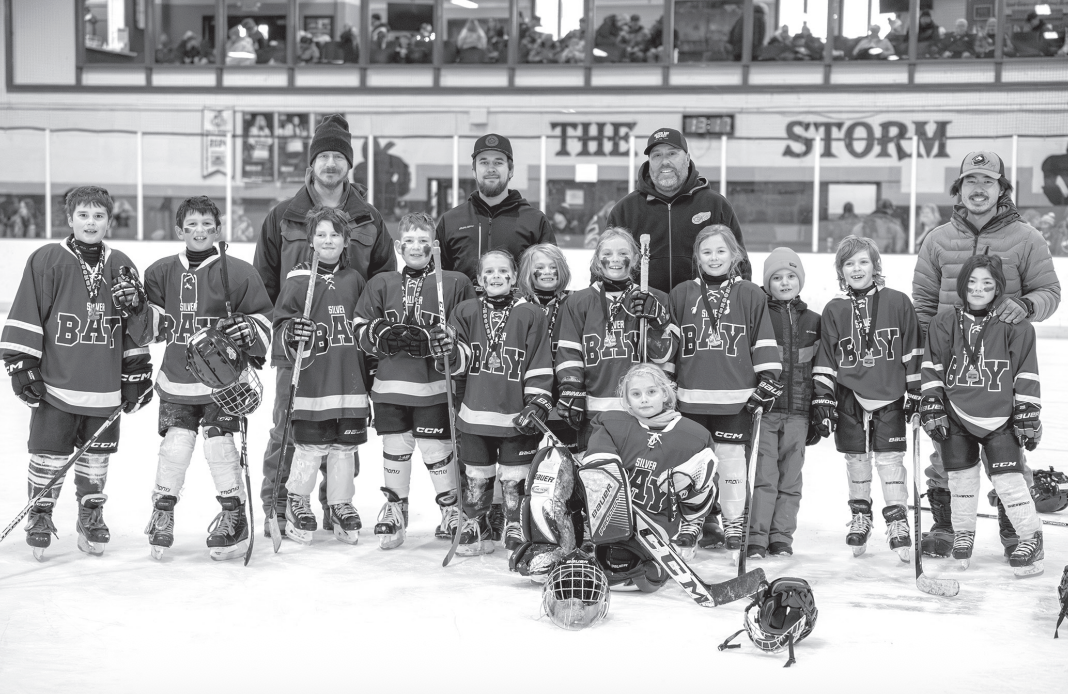
SILVER BAY – The local hockey community gathered in force this past weekend as the “Ruk,” or more formally known as Rukavina Arena, transformed into a hub of competitive spirit and youth athleticism. On December 20 and 21, the arena hosted the 2025 Rocky Taconite Mite 1 and 2 Jamboree, marking the largest and most anticipated event on the program’s annual calendar.
The scale of this year’s jamboree was astounding, featuring a massive lineup of over 20 teams divided between the Mite 1 and Mite 2 levels. The event drew hundreds of families to Silver Bay, with young athletes traveling from throughout the Duluth area, as well as from Two Harbors, Hermantown, and Esko.
Silver Bay was well-represented on the ice, fielding a team at each level. For many of these local players, the weekend was the culmination of eight weeks of rigorous preparation. Since the season began two months ago, the Mites have been hitting the ice for early morning and evening practices, focusing on the fundamentals of skating, puck handling, and teamwork.
The hard work clearly paid off. Coaches reported being deeply impressed by the strides the players have made since their first practices in October. Beyond the goals and assists, team leaders emphasized that the athletes represented the Silver Bay program with exceptional sportsmanship and grit. “The kids have been working very hard in practice these last two months in preparation for this weekend,” shared Gus Engstrom, President of the Silver Bay Blue Line Club. “Needless to say, they represented themselves and our program very well. All of the coaches are impressed with the strides they have made so far this season.”
Executing an event of this magnitude required a coordinated effort from the entire community. Organizers were quick to credit the “behindthe-scenes” heroes who kept the tournament on schedule. High praise was directed toward the dedicated arena staff, whose maintenance of the ice and facilities at the Ruk ensured a professional environment for the visiting teams.
The jamboree’s success also hinged on a small army of parent volunteers. These community members filled vital roles, from staffing the bustling concession stands and greeting visitors at the welcome table to meticulously tracking game play in the scorekeepers’ box.
“There are a great number of people that helped make the jamboree run smoothly,” said Engstrom, expressing deep gratitude for the volunteers who handled the “various odds and ends” that come with hosting dozens of teams.
As the 2025 Rocky Taconite Jamboree concluded, the focus remained on the mentorship of the players. Organizers closed the event with a final thank you to the coaching staff, whose countless hours of volunteer time provide the foundation for the area’s youth hockey success. With the largest jamboree of the year now in the books, the Silver Bay Mite program looks forward to continuing its momentum through the remainder of the hockey season.
To stay updated on local schedules or to support youth sports, visit the Silver Bay youth hockey website at www.silverbayhockey.com.
Photo submitted by Gus Engstrom

NASHVILLE, Tenn. (WSMV) – Nashville is getting five new salt trucks to help prepare for winter weather, and some of them will be covered with artwork from some of Nashville’s youngest artists.
This is through a partnership between the Nashville Department of Transportation and Multimodal Infrastructure (NDOT) and Metro Nashville Public Schools. Elementary schools from across Davidson County submitted artwork to get their pieces chosen to cover the new salt trucks, but only five made the final cut.

“The kids loved it. We had a ton of pics to go through to get to the final five,” said Phillip Jones, the deputy director for NDOT. “Hopefully, we’re going to kind of deploy these five trucks in the area where these schools are, so hopefully these kids will be able to see their artwork.”
Metro Nashville leaders say they will reveal the full designs and their new names in January.
Copyright 2025 WSMV. All rights reserved.

Kyle Larson Addresses Possibility of Racing Rolex 24 Again

New ‘Community Playbook Academy’ to revolutionize youth sports leagues in the U.S.

Texas Outside Hitter Whitney Lauenstein Transfers To Penn State Women’s Volleyball

FIA greenlights pure genius Mercedes 2026 F1 engine

College football: Four key Gophers coming back in unique NIL campaign
Marquette volleyball All-American Natalie Ring transfers to Texas A&M

Three Mizzou staffers following Kirby Moore to Washington State
Izzy Starck transfers to Pitt volleyball from Penn State
Missouri Damon Wilson files countersuit against Georgia in NIL case

Texas A&M volleyball’s sweep of Kentucky attracts record viewership

K-State Hires Jeremiah Johnson to Serve as Defensive Backs Coach

Texas A&M Volleyball adds another productive player from the portal

The News-Gazette’s 44th All-State volleyball team: Player of the Year Burgdorf a dominant force for St. Charles North | Sports

College Football Playoff team loses key starter to NCAA transfer portal

Wisconsin volleyball flips Isabelle Hoppe from Penn State

Fargo girl, 13, dies after collapsing during school basketball game – Grand Forks Herald

CPG Brands Like Allegra Are Betting on F1 for the First Time

Sycamores unveil 2026 track and field schedule

Two Pro Volleyball Leagues Serve Up Plans for Minnesota Teams

Utah State Announces 2025-26 Indoor Track & Field Schedule

SoundGear Named Entitlement Sponsor of Spears CARS Tour Southwest Opener

Jo Shimoda Undergoes Back Surgery

Redemption Means First Pro Stock World Championship for Dallas Glenn

Bowl Projections: ESPN predicts 12-team College Football Playoff bracket, full bowl slate after Week 14

Black Bear Revises Recording Policies After Rulebook Language Surfaces via Lever

Texas volleyball vs Kentucky game score: Live SEC tournament updates

Robert “Bobby” Lewis Hardin, 56

Donny Schatz finds new home for 2026, inks full-time deal with CJB Motorsports – InForum

How this startup (and a KC sports icon) turned young players into card-carrying legends overnight

How Donald Trump became FIFA’s ‘soccer president’ long before World Cup draw





-
 Motorsports2 weeks ago
SoundGear Named Entitlement Sponsor of Spears CARS Tour Southwest Opener
-
 Motorsports2 weeks ago
Donny Schatz finds new home for 2026, inks full-time deal with CJB Motorsports – InForum
-
 Rec Sports3 weeks ago
How Donald Trump became FIFA’s ‘soccer president’ long before World Cup draw
-
 Rec Sports2 weeks ago
David Blitzer, Harris Blitzer Sports & Entertainment
-
 Motorsports3 weeks ago
JR Motorsports Confirms Death Of NASCAR Veteran Michael Annett At Age 39
-
Sports3 weeks ago
Elliot and Thuotte Highlight Men’s Indoor Track and Field Season Opener
-
Sports3 weeks ago
West Fargo volleyball coach Kelsey Titus resigns after four seasons – InForum
-
 Motorsports2 weeks ago
Rick Ware Racing switching to Chevrolet for 2026
-
 Sports3 weeks ago
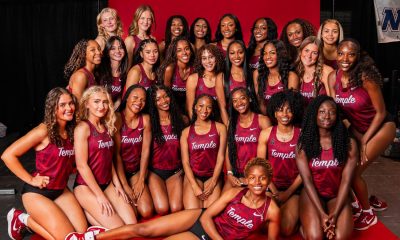
Temple Begins Indoor Track & Field Season at UPenn This Weekend
-
 Sports2 weeks ago
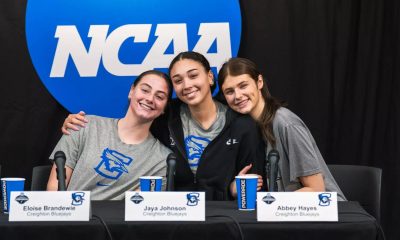
#11 Volleyball Practices, Then Meets Media Prior to #2 Kentucky Match