
Sports
The End of Niche College Sports


A few sports at a few U.S. universities generate billions of dollars in total. The rest hemorrhage money. For decades, this was an easy circle for schools to square: The money from football and basketball was spent on sports such as squash, water polo, rowing, tennis, golf, and field hockey.
But this system was monumentally unfair. The football and basketball players, disproportionately Black and poor, entranced millions of TV viewers and enriched their universities. Rather than compensating them, administrators turned around and spent much of the money subsidizing teams that go largely unwatched.
Recent court cases have produced major policy changes: Star athletes can now be paid by advertisers, fans, and as of this summer, their schools. This has spooked those on the other side of the equation, whose sports are getting cut to free up money to pay the football players. “That’s not fair, you know?” Cochise Wanzer, the father of twin collegiate divers, told The Washington Post, after both of his sons lost their roster spots because of budget reductions.
Yet allowing colleges to pay revenue-generating athletes is long overdue. If that means cutting the diving team because athletic budgets are finite, so be it.
In the struggle of subsidized squash against the powerful forces of the free market, President Donald Trump has sided with the former. In an executive order signed late last month, he declared that “opportunities for scholarships and collegiate athletic competition in women’s and non-revenue sports must be preserved and, where possible, expanded.” (Whether he has the legal authority to enforce these requirements is, to put it lightly, unclear.)
Protecting women’s access to college sports is a matter of settled federal law—Title IX is interpreted to require equitable athletic opportunities for men and women. But blanket protection for nonrevenue sports, which Trump’s order calls “the backbone of intercollegiate athletics,” would help preserve an arbitrary status quo. If you’re an excellent high-school-squash player, you might be admitted to a school that you would otherwise not get into, and that might pay for your tuition, even if your parents could have afforded it. (Student athletes come from disproportionately wealthy backgrounds, and many nonrevenue sports are distinctly upscale pastimes.) When you arrive, you’ll be treated to expensive travel, fancy merch, and a get-out-of-class-free card. If you’re equally good at chess or violin or oil painting, however, none of this is an option.
Where does the money for nonrevenue sports come from? Revenue-generating sports put up some of the cost; the student body (or tuition-paying parents) tends to cover the rest. James Madison University, for example, is unusually transparent about this nonconsensual sponsorship agreement: Each student pays a mandatory $2,362 a year to support the university’s athletics.
In the race to secure applicants and alumni donations, colleges see this as money worth spending—and charging students for. But the usual rationales for most intercollegiate sports don’t add up. If the goal is to promote school spirit, why does almost nobody go to the games? If the goal is to promote fitness, why not do so directly, rather than count on the tennis and lacrosse teams to set a good example? If the goal is teaching teamwork and resilience, why recruit and admit a special group of students to hoard these learning opportunities? From an academic standpoint, the traditional athletics program is a negative: According to NCAA figures, athletes typically spend 30 hours a week on their sports.
Originally, college athletics were cheap and nonintensive. Some stronger-than-average Yale and Harvard students rode a train to New Hampshire in 1852 to face off in a rowing race, the first-ever intercollegiate sporting event. For a while, that system of athletic amateurism continued. Even today, a version of this system exists, known as club sports. As an undergrad, I played club soccer and club table tennis against teams from other colleges. We paid dues to help fund our modest operating costs—we had no coaches—and offered financial aid to students who couldn’t afford those dues.
Over the past 75 years, NCAA sports has become ever more professionalized. Football and men’s basketball began to generate eye-watering sums of money, incentivizing colleges to invest more resources in them. Revenue generated by those teams subsidized the school’s less popular teams. The roster of sports continued to expand as more and more women enrolled in higher education and schools added teams to comply with Title IX.
To protect the “amateur” status of the athletes, a rigid policing structure was created to make sure they never earned any money off their sports, no matter how much they generated for their universities. Not only could colleges not pay them, but the players couldn’t accept any money or gifts as a reward for their athletic achievement. They couldn’t charge to sign autographs or even accept complimentary meals from local restaurants when their 250-pound bodies got hungry.
In the mid-2000s, the running back Reggie Bush was the best player on a football team that generated tens of millions of dollars for the University of Southern California. His Heisman Trophy and the team’s national championship were stripped after the NCAA found out that marketing agents had bought him a $13,000 car, let his parents stay in an empty investment property, and paid for their airfare so they could watch him play. (His Heisman was reinstated last year.) Ohio State players were suspended for multiple games for, among other things, accepting discounts on tattoos. Reggie Bush went on to the NFL, but not every college sports star can go pro. The most egregiously unfair cases regarded the football players who were crucial to their juggernaut teams, never got paid for their work, and just barely missed out on a professional career.
By contract, about 50 percent of NFL and NBA revenue goes to the players. At that rate, according to a 2020 National Bureau of Economic Research paper, college football players at the top 65 schools would have been paid about $360,000 a year, and basketball players about $500,000. Instead, for decades, they got nothing.
This began to change in 2021. In National Collegiate Athletic Association v. Alston, the Supreme Court unanimously held that certain rules against athlete compensation violated federal antitrust law. Shortly thereafter, the NCAA allowed players to receive pay for the use of their name, image, and likeness. This dramatically shifted the economics of big-time college sports. Top players at major programs can now make millions of dollars in endorsement deals. “Donors” eager to attract talent to their favorite team provide compensation to many other players, nominally in exchange for showing up at some events.
A legal settlement approved in June gave athletes another way to cash in: Universities are now allowed to directly pay athletes, up to a total of $20.5 million a year per school. Because some schools will compensate revenue-generating athletes in order to attract top talent, other athletes fear they’ll make room in the budget by cutting the teams that don’t generate any revenue at all. This fear has been especially pronounced about women’s sports, which typically generate less money, but Title IX ensures that any cut would affect men and women equally. In practice, universities that continue to field teams in their most lucrative men’s sports would also maintain their most popular women’s teams. Not every school will necessarily keep football and men’s basketball in perpetuity—at many schools, even those sports have little following.
Supporters of the existing system fear that the country will lose out if universities drop niche sports. In comments earlier this month, Trump noted that college sports are the primary training ground for American Olympians. But a negligible fraction of college athletes will ever compete in the Olympics, and many Olympic sports aren’t played at the intercollegiate level anyway.
Cuts to nonrevenue sports might be a good thing. Instead of giving admissions, scholarships, and resources to the best cross-country runners, for example, colleges could accept the most qualified applicants, spend money to provide them the best education, and offer financial aid to as many needy students as they can.
Students would remain free to pursue hobbies, including sports. They just wouldn’t be rewarded with scholarships and other benefits for doing so. Trump’s order purportedly seeks to “maximize the educational benefits and opportunities provided by higher education institutions through athletics.” Awarding scarce benefits and opportunities on the basis of talent in niche sports is one way to run an educational system, but it’s not one worth preserving.

Continue Reading
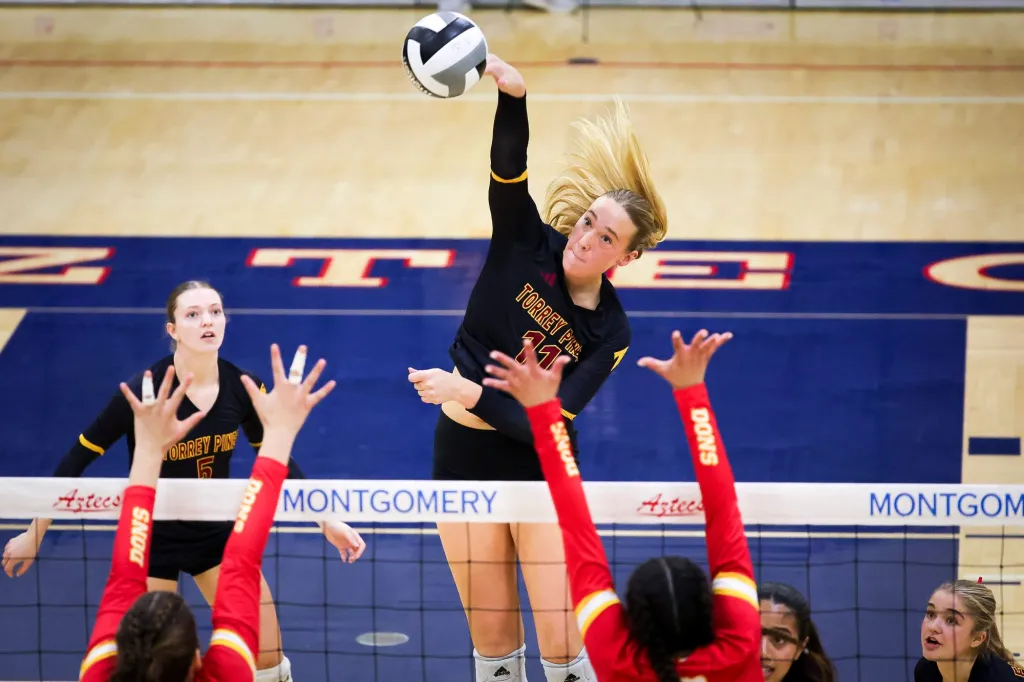
2025 All-CIF Girls Volleyball Teams
Player of the Year: Finley Krystkowiak, Torrey Pines
A senior outside hitter, Krystkowiak finished the season with 328 kills, including 20 against Manhattan Beach Mira Costa in the Falcons’ CIF San Diego Section Open Division championship win. She also had 251 digs, 30 blocks and 56 service aces. Torrey Pinse finished the season 38-5, ranked No. 3 in the state and No. 9 in the nation, losing to Santa Ana Mater Dei in the Southern California Regionals. The 6-foot-3 Krystowiak has signed to play at Penn State.
Libero of the Year: Lilia Green Torrey Pines
Coach of the Year: Roni Greenwood-Harper, Scripps Ranch
First team
Name, School, Year
Finley Krystowiak, Torrey Pines, Sr.
Jaycee Mack, Torrey Pines, Jr.
Ashlynn Proctor, Coronado, So.
Madyson McCarthy, Cathedral Catholic, Sr.
Alison Dzieciuch, Cathedral Catholic, Sr.
Bryce Leatherwood, Scripps Ranch, Sr.
Cam Holcomb, San Marcos, Sr.
Alice Burgett, La Jolla Country Day, Jr.
Myah Koster, Bishop’s, Jr.
Second team
Name, School, Year
Emery Gonzales, Torrey Pines, Sr.
Danica Nordlicht, Torrey Pines, Sr.
Jojo Wilson, Cathedral Catholic, Jr.
Nariah Johnson, Santa Fe Christian, Fr.
Avalon Haro, Coronado, Sr.
Max Pheasant, Christian, Sr.
Vivian Roberts, Westview, Sr.
Caitlin Prior, Our Lady of Peace, Sr.
Tatum Epstein, La Jolla Country Day, So.
Havani Embry, Carlsbad, Sr.
Note: Teams selected by Coaches Advisory Committee.
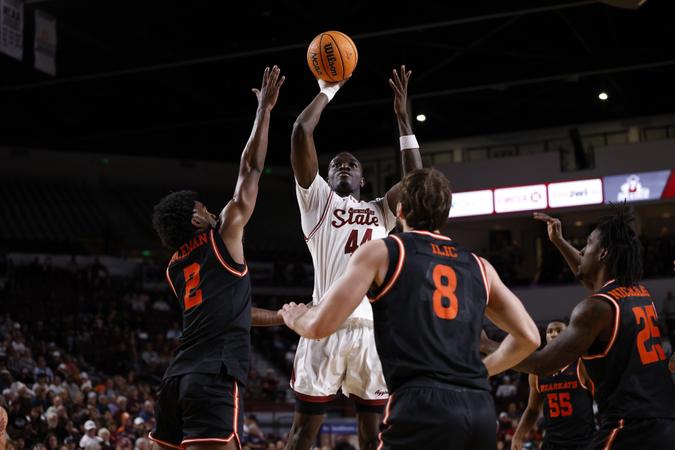
What: Game Eleven
Who: NM State (7-3, 1-0 CUSA) vs University of the Southwest (4-9, 1-6 RRAC)
When: Sunday, Dec. 28, 2:00 p.m. MT
Where: Las Cruces, N.M. – Pan American Center (12,200)
THE OPENING TIP
• Coming off an impressive home victory last Sunday to open Conference USA play against Sam Houston, NM State turns its attention to its final non-conference matchup of the season as it welcomes the University of the Southwest to the Pan American Center on Sunday, Dec. 28, at 2 p.m.
• Sunday’s contest marks just the third all-time meeting between the two programs, with the Aggies holding a 2–0 series advantage. The teams last met a year ago on the same date in Las Cruces, where NM State pulled away for an 85–52 victory.
PERIMETER LOCKDOWN
• NM State is one of just five Division I programs to hold opponents under 30.0 percent shooting from three-point range last season and has continued that defensive standard into the current campaign. The Aggies join Tennessee, Montana, Dartmouth and Appalachian State as the only teams in the nation to accomplish the feat in both seasons. NM State currently ranks 50th nationally in three-point percentage defense, limiting opponents to 29.8% from beyond the arc.
BOOST FROM THE BENCH
• NM State’s depth once again proved to be a difference-maker, as Elijah Elliott and Jayland Randall delivered impactful performances off the bench to help lift the Aggies in their Conference USA opener against Sam Houston.
• Elliott matched his season high with 18 points to lead NM State in scoring, marking the second time this season he has finished as the Aggies’ top scorer while coming off the bench. Randall wasn’t far behind, pouring in 16 points for his second-highest total of the season as the duo combined to provide a major spark for the Crimson & White.
• This marked the second time this season that Elliott and Randall have finished as NM State’s top two scorers while coming off the bench, highlighting the Aggies’ ability to lean on their reserve unit.
• NM State’s bench overwhelmed Sam Houston, outscoring the Bearkats 46–17. The 46 bench points marked the Aggies’ second-highest reserve output of the season, trailing only their 49-point bench performance against South Alabama.
PUNCH FROM THE POST
• Julius Mims delivered strong performances in the last outing against Sam Houston. Mims has been a steady presence all season, averaging 9.3 points and a team-high 7.0 rebounds per game which is also ranked eighth in CUSA. Against the Sam Houston, he flirted with double-double finishing the night with nine points while also leading NM State with nine rebounds. Mims has now led the Aggies in rebounding in six of ten games this season.
IN THE PAN AM
• NM State has thrived in front of its home crowd this season, posting a perfect 5-0 record inside the Pan American Center.
• In home games, the Aggies own a +10.6 scoring margin, shooting 47.5% from the field while holding opponents to just 38.8% shooting.
• A few Aggies have elevated their play at home, led by Jones, who is averaging 16.6 points per game in the Pan Am. Julius Mims is averaging 11.5 points and 9.0 rebounds while shooting an impressive 67% from the field, and Anthony Wrzeszcz is contributing 10.8 points per game while knocking down shots from beyond the arc at a 48% clip.
HISTORIC START
• The Aggies’ 6-0 opening this season marked their best start in more than 50 years. The last NM State team to begin a season this fast was the 1969–70 Final Four team, linking this year’s group to one of the most storied runs in program history.
SCOUTING THE MUSTANGS
• University of the Southwest enters Sunday’s matchup with a 4–9 record and arrives in Las Cruces following a 90–66 road loss to Texas A&M–Texarkana.
• The Mustangs are led by first-year head coach Steven Barker and feature a pair of key contributors in EJ Scroggins and Donovan Holcombe.
• Scroggins leads the team in both scoring and rebounding, averaging 18.5 points and 6.8 rebounds per game, while Holcombe provides additional production at 11.3 points and 5.7 rebounds per contest.
For complete coverage of the 2025-26 season NM State Men’s Basketball, visit NMStateSports.com – the official home of Aggie athletics – and follow us on Twitter (@NMStateMBB), Instagram (@NMStateMBB), and like us on Facebook (NMStateMBB).
++NM State++

EDINBURG, Texas (ValleyCentral) — The University of Texas Rio Grande Valley’s 2025 volleyball season was filled with record-setting moments and unforgettable performances on the court.
The Vaqueros’ 22-8 regular season and 15-1 Southland Conference record secured a tie of the regular season title, topped with three individuals earning all-conference awards.
Looking back at this season, Head Coach Todd Lowery said, “Nine new faces in the program and just how quickly they came together and how quickly they cared for each other was really fun to be a part of. Of course, all the success on top of that, I think it was really the environment they had and that we had this past season was what was special about this group.”
October 2 marked the turning point of the season. Following a loss to Stephen F. Austin in Nacogdoches, UTRGV went on to win a program-record 16 straight matches. To put the team’s dominance into perspective, only two times UTRGV was pushed to five sets.
“We had the mindset that we were going toward the same direction, and that just made everything easier,” Junior setter Isabella Costantini said. “I feel like after our preseason tournaments, we kind of made that click, that instant switch, of building that chemistry and connection and that made us play the way we did this past season.”
Freshman outside hitter Dimitra Nanou added, “We realized that did not want to be in last place in the conference. We can give some more. We have super talented players on our team, and I was so excited to work more and more every day.”
In the midst of the win-streak, Lowery also reached a milestone: win number 600.
On Nov. 6, UTRGV defeated the University of Incarnate Word, three sets to one, at UTRGV Fieldhouse to clinch to historic win in Lowery’s career.
“Anytime you get to reach a milestone, it’s awesome,” Lowery said. “To reach it with a special group kind of made it more special for me just because even that night, they got the win and everything, but the girls on the team made that night about me, and it should never be about me.”
While Lowery did not want the spotlight on him following the win, his team made sure to give him his flowers.
Sophomore outside hitter Martina Franco said, “Coach literally changed my life when he recruited me to come here, so I’m so happy that he accomplished that with me and the team, you know, just be a part of one of his memories, this important season and his big accomplishment.”
Lowery was also named the Katrinka Jo Crawford SLC Coach of the Year in 2025.
As for outstanding performances, Costantini, Franco and Nanou all shined on the floor, earning Southland Conference awards.
Costantini was named Southland Conference Setter of the Year for the second consecutive time.
She said, “I feel like after my sophomore season where I was recognized as the setter of the year, it was good to get that back, you know, that feeling of all my hard work paid off.”
Franco was named Newcomer of the year.
Franco said, “I was not expecting that at all, but I think when I watch it, I was happy to have something to remember because it was a good season for me and I had a lot of fun and I loved it, so I don’t know. It was a blast to enjoy the season that I have.”
As for Nanou, she was named Southland Conference Freshman of the Year.
“I’m more excited about what we got out of the tournament instead of my award,” Nanou said. “I’m really grateful that I can help my team and receive that award because it’s like a gift from God.”
Despite the historic season for the volleyball program, the team’s final loss to the Ladyjacks in the Southland Conference Tournament Championship Game left a bad taste in the program’s mouth.
The loss fueled them to exceed their performance on the court this season heading into 2026.
Lowery said, “That loss in the conference championship game will drive this team forward. I think just the sentiment. At first, they were sad and then by a week or two later and at this point, they’re angry.”
“The last game we played with the final of the tournament motivates us to push more,” Nanou said. “We can give more. We saw that we can give more, and personally I think everyone is going to put more work in this year.”
By Randy Lefko randy@claytodayonline.com
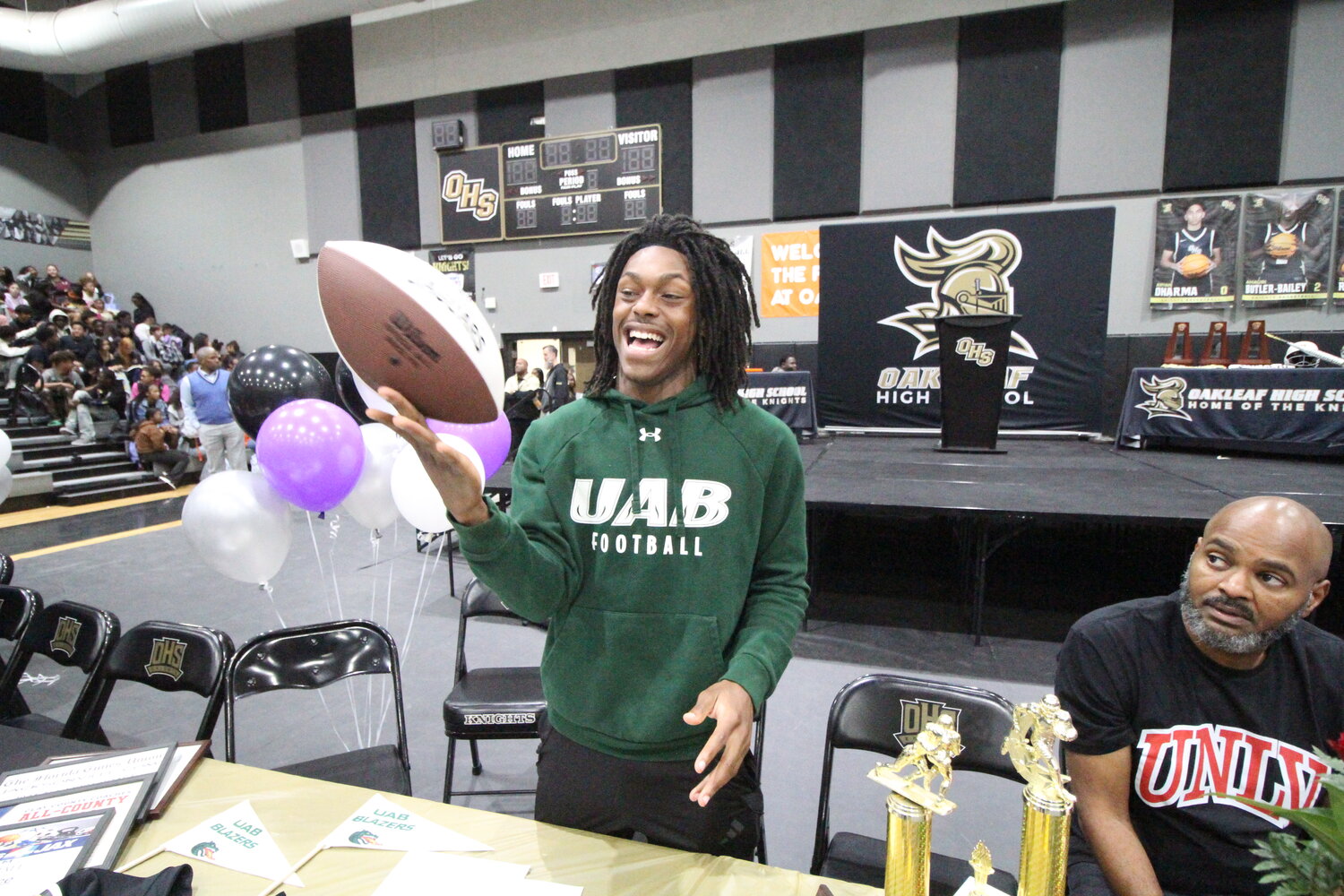
OAKLEAF – Oakleaf High had one of the largest early signing classes last week with nine signees and it was volleyball that stole the show with five athletes putting signatures to paper for one of the largest signing classes for the sport.
“This is largest graduation class for volleyball athletes that are signing for college scholarships for Oakleaf,” said Oakleaf coach Jamie Reed. “Softball has been a big part of the signing athletes in the past here at Oakleaf and the sports has grown to also be one of the all year sports at the school. I try to give them the tools to get here.”
For Reed, who finished at 12-13 for the 2025 season with a hard fought (3-2) district semifinal loss to Tocoi Creek ending the season. “They did all the hard work.”
Joining Reed’s troops on the stage for the early signing day were football standouts Trace Burney and Jordin Price, softball’s Aubrie Jordan and track state medalist Rayna Lawson. Also signed but not present was soccer standout Cole Perez.
Reed’s five signees were April Townsend and Jiyanna Rivera; both to NCAA Div. II Middle Georgia State University; Morgan Ansley, NCAA Div. II Fort Valley State University (25-5 last year); Kelsey Joshua, NCAA Div. II Benedict College (SC) (18-10) and Gabrielle Humbles, NCAA Div. II St. Francis Marion University (SC) (21-10 last year).
“We have all six seniors; one more, that is working on a signing for February,” said Reed, who gave credit to her recruiting coordinator at JJVA (Jacksonville Junior Volleyball Association). “This is my biggest class in 10 years of coaching; five as head coach.”
Reed noted that Joshua got herself signed with little help.
“She did all the work to self recruit,” said Reed. “Kelsey would ask about emails, how to talk to coaches and got herself completely signed on her own.”
Stats wise, Humbles was top scorer with 222 kills and a team leading 49 service aces with Ansley second with 165. Rivera was top record setting assist player with 523 assists for the year and 1570 for her career. Joshua was top dig defender with 215 leading the team.
For football, with the Knights getting to the region quarterfinals and finished at 8-3, Burney was a game breaking wide receiver with 40 catches and six touchdowns and heading to James Madison University while Price was a lock down defensive back; 32 tackles, two interceptions and 10 pass defenses and wide receiver on offense with 18 catches with four touchdowns heading to University of Alabama-Birmingham.
For Burney, who spent his first three years at Fleming Island, the transition to the Oakleaf game was not a far stretch as he opened his senior season with six catches and two scores in game two win over Fleming Island, then eight catches in game three win over eventual three time Rural state champion Hawthorne.
James Madison (12-1) just won the Sun Belt title with a win over Troy, 31-14, to earn a spot in the spot in the College Football Playoffs. James Madison, ranked 12th is reported to be playing No. 5 Oregon on December 19.
Price was a mainstay on both sides of the ball with equal success as a wide receiver and as a defensive back with Price always matching up with opposing team’s best pass catcher.
On the UAB football website, Price’s description is as a three-star defensive back by 247Sports, 121 tackles in four seasons at Oakleaf, six interceptions with a picksix, with 1243 receiving yards and 15 pass touchdowns. UAB finished at 4-8 this year.
Lawson, a track ace for her entire four year career, exploded in her senior season with a third place thrilling finish in a near dead tie with an 11.96 split that had to go to the hundredths of a second to determine second and third. The gold medal was won in 11.75 in one of the closest finishes at the Clas 4A track and field championships.
In the 200 final, Lawson finished ninth at 24.59.
Lawson signed to continue her track at the University of Nevada-Las Vegas. UNLV had nine NCAA region qualifiers and one NCAA championship athlete in the field events.
“UNLV has been with me for a long time,” said Lawson. “Head coach Carmelita Jennings, the Olympic champion (2012 London Games USA Gold 4 x 100 relay, silver in 100, bronze in
200) kept in touch through her senior season. They might put me in the 400, too.”
Oakleaf’s lone softball athlete, Jordan, headed to Florida State College-Jacksonville, had a handful of championship rings with her from club ball action in her career.
Perez, a lead scorer for the Knights soccer team, is headed to University of Akron. Akron lost in the NCAA tournament last year with a 3-2 game against Saint Louis The Zips are currently 13-5-1.
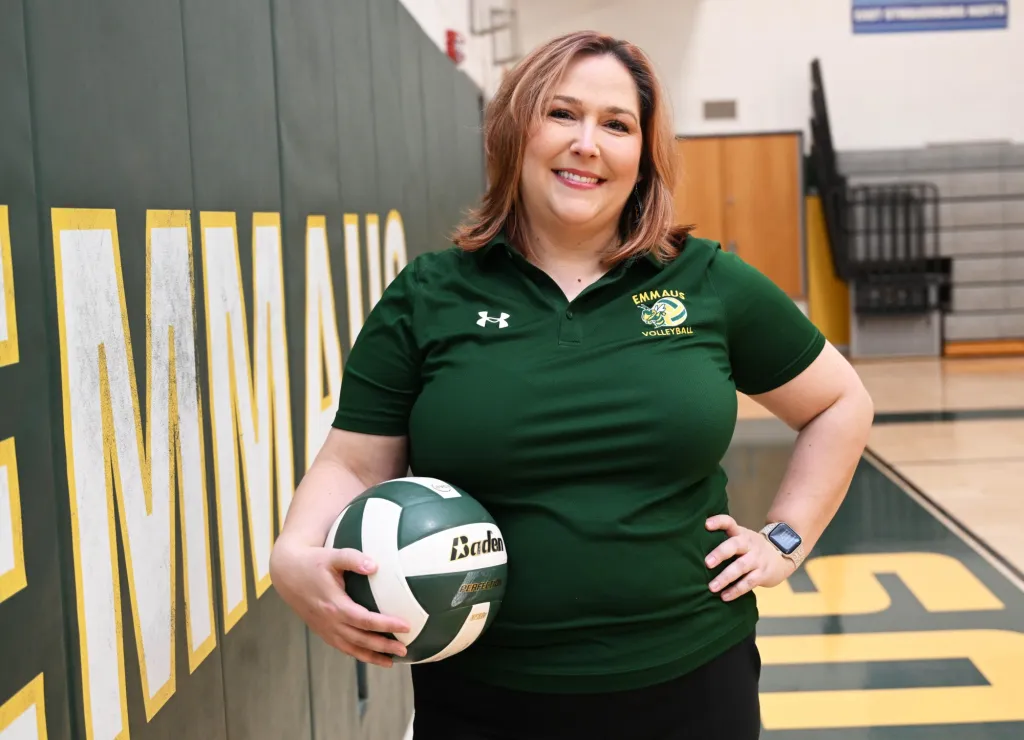
Jessica Olang and her sister, Lindsay, fondly remember growing up with the Emmaus girls volleyball program when their mother, Susan Arndt, was the Green Hornets head coach for nine seasons from 1991-99.
“Back then, we were at Eyer Middle School a lot of the time, and I remember my mom yelling at me to get off the court,” Lindsay Olang said. “I would get hit in the head with a lot of volleyballs. But you know what, it was a lot of fun. I wouldn’t exchange my childhood for anything. I love this community and being around this environment. For us to be back here has been amazing … it has come full circle.”
And that circle now includes a league championship.
Thirty years after Arndt’s 1995 Emmaus team won the program’s first and only District 11 championship, Arndt and her two daughters were on the coaching staff that led the Green Hornets to their first and only league championship.
With a thrilling 23-25, 24-26, 25-23, 25-22, 15-13 come-from-behind win over Bethlehem Catholic on Oct. 16 at Liberty, Emmaus became Eastern Pennsylvania Conference champs for the first time.
The team followed it up by reaching the District 11 6A championship match, where it lost to Parkland in four sets, but the Green Hornets rebounded to beat District 2 champ Delaware Valley in the first round of the state tournament.
While the Hornets fell to Spring-Ford in the PIAA quarterfinals, their memorable 21-5 season made Jessica Olang The Morning Call’s girls volleyball coach of the year; an honor she happily shares with her coaching staff, which includes her mother, her sister, and close friends Emily Elek and Kelsey Nilsen.
Olang and the staff, affectionately called the Fab 5 by Elek, took Emmaus to great heights in just their second season together.
Making their league title all the more unexpected was that the team lost two of its best players — Maleya Hinds and Andraya Flowers — to season-ending injuries before the playoffs began.
But Olang and the assistants preached a “next girl up” philosophy, made some lineup adjustments, and kept the team motivated through a 14-2 EPC regular season.
“Going back to our open gyms last winter, we talked about our outcomes coming from the work we’re putting in now,” Jessica Olang, a 2003 Catasauqua High graduate, said. “If you want good outcomes, you’ve got to put the work in now. We don’t want to be three, four, or five months from now wishing we had done more. So we kept instilling in them that the process is important. Every touch on the ball matters; everything we do in the gym matters. The outcomes will come from what we do in the gym, and we never talked about becoming league or district champs. We just talked about what we need to do in the gym today to get ourselves prepared to be the best we can be, and the results will come. In that insane moment when we became a league champ, and to see the culmination of everything we’ve worked for over two years was just amazing. There may never be another moment like that again.”
Olang said even before the championship match against an undefeated Bethlehem Catholic team, the focus wasn’t on becoming a champion.
“It wasn’t on my radar,” she said. “I wasn’t thinking ‘tonight, we’re bringing home the first EPC championship in school history.’ We emphasized to the girls that they get to go play volleyball today. That’s a great day. Go out and work hard and have fun, and stay together. Bring everything you can and let the chips fall where they may.”
The chips weren’t falling Emmaus’ way early as the Green Hornets got behind two sets to none.

“The third set was really close, and there were like 19 ties, and you got the sense it could go either way,” Olang said. “It was at the end of the third set that Claudia Walls and Rosie Landino had incredible three-stuffed blocks in a row, and that shifted the tide. That’s what’s so fun, it’s a momentum sport. You get a couple of great plays like that, and everything can shift.”
Olang was a talented player in her own high school days.
At Catasauqua, where her mother began the program, she was a four-year varsity setter and a three-year captain. She was named first-team all-District 11 three times and was a two-time all-state honorable mention selection.
She then went on to play for Roberts Wesleyan College near Rochester, New York, where she was a four-year starting setter and an all-conference player. After college, she coached at Dieruff, where she eventually became head coach before marrying and moving to upstate New York, where she and her husband began a family and a business.
But she came back to the Lehigh Valley and settled in Emmaus, where she has four children, ranging in ages from 13 to 6.
“Even when we lived in upstate New York, I was still coaching volleyball with my mom, assisting at Velocity, and Crosscourt, just trying to keep my toes in the water as much as I could,” Olang said. “But when you’re raising a family, you have to step back from leading. When we came back to the area, it was just like the right timing for me to get more involved in coaching again. This position opened, and it was the perfect storm of being ready for it. I am so appreciative of this opportunity, and to have the coaching staff I have is unbelievable. You can have a vision, but if people aren’t there to share that vision, it’s very hard to move that vision along.”
Olang said that the staff is remarkably united.
“We’re of one mind, one focus, one vision, one mentality,” she said. “We’re determined to take this program where we want it to go.”
Arndt, who has had success wherever she has been over the last 35 years in volleyball, is proud of her daughter and says, “She makes sure to keep me in line.”
She was a member of Parkland’s football staff for a few years, working directly as an interpreter with player Alex Ocasio, who was deaf.
“Coach [Tim] Moncman runs a well-oiled ship, just as we pride ourselves on being here,” Arndt said. “He made me realize that while there are a lot of moving parts, it all comes together as a whole. There are a lot of coaches on a football staff, but it comes down to where we all fit in, where do the puzzle pieces connect. I won a coach of the year award as a boys coach at Northampton, but I am so much happier for Jess. You never want the spotlight to shine on yourself. That’s how she is. You want to give back to others … the other coaches and the kids. This puts a stamp on who she is and what she has created, and what the kids have created.”
Elek, who graduated from Emmaus in 2009 and played Division I college volleyball at Canisius, said, “Being an Emmaus alum, it was an especially awesome season. The girls were super great. It was also so exciting. The past two years we’ve been here, we’ve done a lot with the girls, and we let them know that it’s OK to make mistakes. You just have to learn from them. As a coaching staff, we all do different things, but it all comes together as a well-oiled machine.”
Emmaus will graduate two first-team all-EPC selections in Amanda Rivera and Alyssa Heffner, but has several outstanding players returning.
“Our seniors were phenomenal this year, but I look ahead to what will still be here and what’s coming up, and we’re as excited as we’ve ever been,” Olang said. “We’ve got Fiona Answini back as an outside hitter and Emma Nesfeder back who ended up playing middle for us this year when she’s actually a setter. We’ve got great seniors coming up. The talent pool remains strong and we’re excited to see what they can accomplish.”
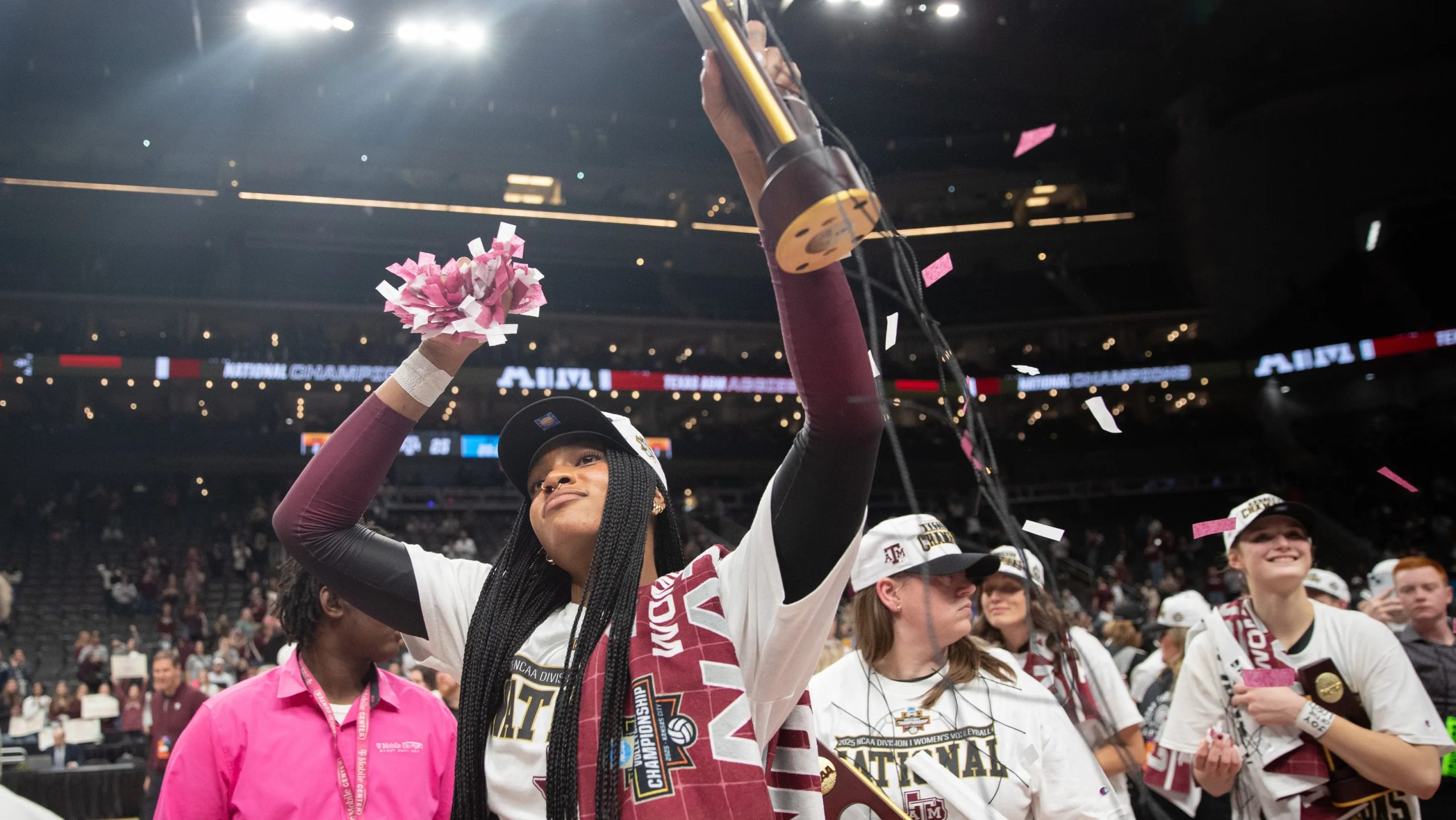
Dec. 26, 2025, 2:07 p.m. CT
It’s finally starting to sink in for several Texas A&M volleyball players that they have actually won a national title and made history.
For the nine seniors on the team, it was a storybook ending to their college careers, and for many of them, it marked the conclusion of their playing journeys. However, in an interview, coach Jamie Morrison alluded to a few of the girls receiving calls about opportunities to play professionally.
While he didn’t mention specific names, the two most obvious candidates would be standout outside hitter Logan Lednicky and dominant middle blocker Ifenna Cos-Okpalla. We got a notable nugget on social media when a fan posted that Cos-Okpalla has signed with former NBA veteran Jermaine O’Neal’s sports agency, Valor Sports Agency (VSA). The official VSA Instagram account appeared to confirm the news with an announcement on their page, which you can see below:
Cos-Okpalla was a crucial contributor throughout the NCAA Tournament run, whether it was delivering blocks, putting down kills, or firing ace serves. It was only fitting that she recorded the final kill of the NCAA championship match to secure the first-ever NCAA title for the Texas A&M volleyball program.
Even though she might not possess the prototypical height for a professional middle blocker, her elite athleticism and high-level volleyball IQ set her apart. With her collegiate career complete, we are excited to see what’s in store next for the future Aggie legend.
Ifenna Cos-Okpalla Career stats:
Kills: 637 / 1.70 per set
Hitting %: .372
Blocks: 565 / 1.6 per set
Aces: 41 / .12 per set
Ifenna Cos-Okpalla Career Records:
- All-time career blocks leader: 566 total blocks (surpassed the previous record of 562 during the 2025 season).
- Single-season blocks leader: 199 total blocks.
- Single-season hitting percentage leader: .422 (as a middle blocker).
- Most total blocks in a three-set match: 14 (set vs. Utah State in 2023; also tied the SEC record for a three-set match).
- Most blocks in a three-set match: 10 (program record).Tied program record for most blocks in a match: 13 (vs. Georgia in 2024).
- Most blocks in a five-set postseason match (rally-scoring era): 10 (vs. Wisconsin in 2025 NCAA Tournament).
Ifenna Cos-Okpalla Career Accolades:
- 2X All-SEC Team
- 4X SEC Player of the Week
- 10X SEC Defensive Player of the Week
- AVCA All-America First Team
- 2X AVCA All-Southwest Region Team
- NCAA Championship All-Tournament Team
- NCAA Champion

Contact/Follow us @AggiesWire on X and like our page on Facebook to follow ongoing coverage of Texas A&M news, notes, and opinions. Follow Jarrett Johnson on X: @whosnextsports1.

Rec Sports9 minutes ago
How the issue of dual participation created a rift in Alaska’s youth hockey community

Sports12 minutes ago
Torrey Pines’ Finley Krystkowiak highlights All-CIF girls volleyball team

Sports28 minutes ago
Aggies Wrap Up Nonconference Slate Sunday Against Southwest

NIL37 minutes ago
Diego Pavia, JUCO Plaintiffs Seek Another Year of College Football

Sports45 minutes ago
A record-breaking season for UTRGV volleyball

Motorsports46 minutes ago
NASCAR world rocked by deaths of 3 drivers. Here’s what we know

Sports1 hour ago
Knights volleyball puts five in college

Motorsports1 hour ago
Kyle Larson’s protégé puts NASCAR on notice in Australia – Motorsport – Sports

Sports1 hour ago
Emmaus coach Jessica Olang is the Lehigh Valley volleyball coach of year

Motorsports1 hour ago
Tennessee drag racing park set for comeback after IHRA move – Motorsport – Sports

NIL1 hour ago
Curt Cignetti expresses frustration with college football calendar amid playoff schedule

Sports2 hours ago
A&M middle blocker Ifenna Cos‑Okpalla signs with Valor Sports Agency

Sports2 hours ago
Bear Lake, Malad each place four on all-state volleyball teams | Sports

NIL2 hours ago
Houston’s most legendary QBs detest this element of modern football

Rec Sports3 hours ago
Meet Long Beach’s newest sports powerhouse: SATO’s Drone Soccer program

Motorsports2 weeks ago
SoundGear Named Entitlement Sponsor of Spears CARS Tour Southwest Opener

Motorsports4 weeks ago
Jo Shimoda Undergoes Back Surgery

Rec Sports3 weeks ago
Black Bear Revises Recording Policies After Rulebook Language Surfaces via Lever

Motorsports3 weeks ago
Donny Schatz finds new home for 2026, inks full-time deal with CJB Motorsports – InForum

NIL4 weeks ago
Bowl Projections: ESPN predicts 12-team College Football Playoff bracket, full bowl slate after Week 14

Rec Sports4 weeks ago
Robert “Bobby” Lewis Hardin, 56

Rec Sports4 weeks ago
How this startup (and a KC sports icon) turned young players into card-carrying legends overnight

Rec Sports3 weeks ago
How Donald Trump became FIFA’s ‘soccer president’ long before World Cup draw

Sports4 weeks ago
Men’s and Women’s Track and Field Release 2026 Indoor Schedule with Opener Slated for December 6 at Home

Rec Sports3 weeks ago
David Blitzer, Harris Blitzer Sports & Entertainment

NIL4 weeks ago
Indiana’s rapid ascent and its impact across college football

Motorsports4 weeks ago
Michael Jordan’s fight against NASCAR heads to court, could shake up motorsports
Sports4 weeks ago
Wisconsin volleyball sweeps Minnesota with ease in ranked rivalry win

Motorsports4 weeks ago
Pohlman admits ‘there might be some spats’ as he pushes to get Kyle Busch winning again

Motorsports3 weeks ago
JR Motorsports Confirms Death Of NASCAR Veteran Michael Annett At Age 39






-
 Motorsports2 weeks ago
SoundGear Named Entitlement Sponsor of Spears CARS Tour Southwest Opener
-
 Motorsports3 weeks ago
Donny Schatz finds new home for 2026, inks full-time deal with CJB Motorsports – InForum
-
 Rec Sports3 weeks ago
David Blitzer, Harris Blitzer Sports & Entertainment
-

 NIL2 weeks ago
DeSantis Talks College Football, Calls for Reforms to NIL and Transfer Portal · The Floridian
-
 Motorsports3 weeks ago
Rick Ware Racing switching to Chevrolet for 2026
-
 Sports2 weeks ago
#11 Volleyball Practices, Then Meets Media Prior to #2 Kentucky Match
-

 Technology3 weeks ago
Wearable Gaming Accessories Market Growth Outlook
-
 Motorsports2 weeks ago
Sunoco to sponsor No. 8 Ganassi Honda IndyCar in multi-year deal
-
 Motorsports3 weeks ago
NASCAR owes $364.7M to teams in antitrust case
-
 Rec Sports3 weeks ago
Why the Texas Sport for Healing Fund Should Return – The Daily Texan