Connect with us
https://yoursportsnation.com/wp-content/uploads/2025/07/call-to-1.png

Sports

The End of Niche College Sports

Published

on


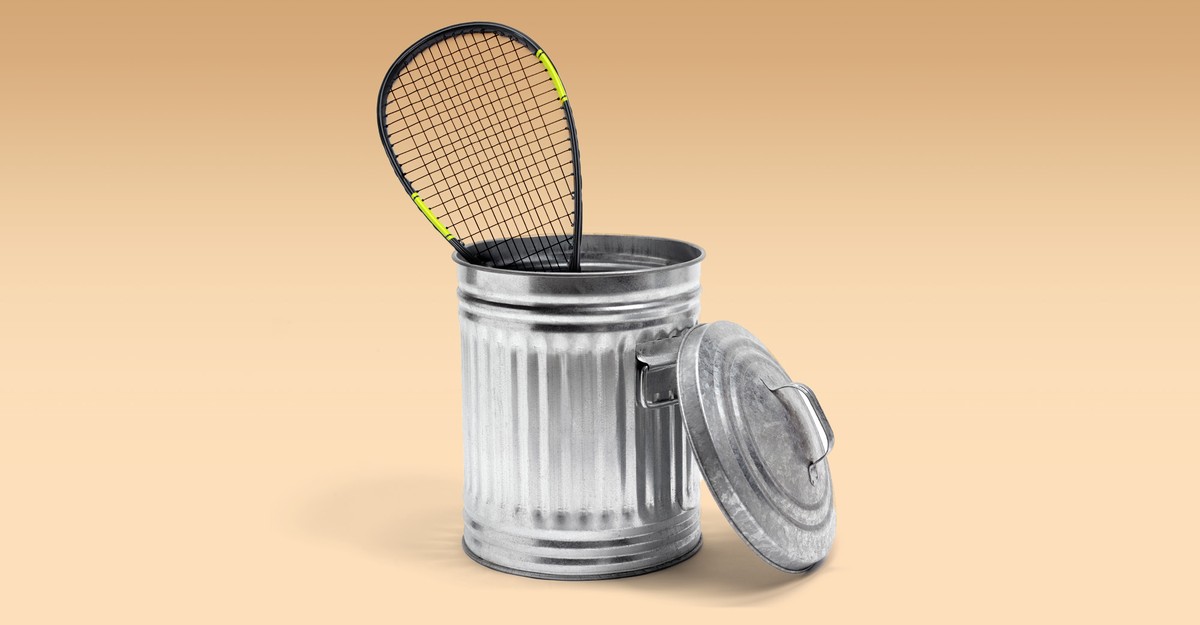
A few sports at a few U.S. universities generate billions of dollars in total. The rest hemorrhage money. For decades, this was an easy circle for schools to square: The money from football and basketball was spent on sports such as squash, water polo, rowing, tennis, golf, and field hockey.

But this system was monumentally unfair. The football and basketball players, disproportionately Black and poor, entranced millions of TV viewers and enriched their universities. Rather than compensating them, administrators turned around and spent much of the money subsidizing teams that go largely unwatched.

Recent court cases have produced major policy changes: Star athletes can now be paid by advertisers, fans, and as of this summer, their schools. This has spooked those on the other side of the equation, whose sports are getting cut to free up money to pay the football players. “That’s not fair, you know?” Cochise Wanzer, the father of twin collegiate divers, told The Washington Post, after both of his sons lost their roster spots because of budget reductions.

Yet allowing colleges to pay revenue-generating athletes is long overdue. If that means cutting the diving team because athletic budgets are finite, so be it.

In the struggle of subsidized squash against the powerful forces of the free market, President Donald Trump has sided with the former. In an executive order signed late last month, he declared that “opportunities for scholarships and collegiate athletic competition in women’s and non-revenue sports must be preserved and, where possible, expanded.” (Whether he has the legal authority to enforce these requirements is, to put it lightly, unclear.)

Protecting women’s access to college sports is a matter of settled federal law—Title IX is interpreted to require equitable athletic opportunities for men and women. But blanket protection for nonrevenue sports, which Trump’s order calls “the backbone of intercollegiate athletics,” would help preserve an arbitrary status quo. If you’re an excellent high-school-squash player, you might be admitted to a school that you would otherwise not get into, and that might pay for your tuition, even if your parents could have afforded it. (Student athletes come from disproportionately wealthy backgrounds, and many nonrevenue sports are distinctly upscale pastimes.) When you arrive, you’ll be treated to expensive travel, fancy merch, and a get-out-of-class-free card. If you’re equally good at chess or violin or oil painting, however, none of this is an option.

Where does the money for nonrevenue sports come from? Revenue-generating sports put up some of the cost; the student body (or tuition-paying parents) tends to cover the rest. James Madison University, for example, is unusually transparent about this nonconsensual sponsorship agreement: Each student pays a mandatory $2,362 a year to support the university’s athletics.

In the race to secure applicants and alumni donations, colleges see this as money worth spending—and charging students for. But the usual rationales for most intercollegiate sports don’t add up. If the goal is to promote school spirit, why does almost nobody go to the games? If the goal is to promote fitness, why not do so directly, rather than count on the tennis and lacrosse teams to set a good example? If the goal is teaching teamwork and resilience, why recruit and admit a special group of students to hoard these learning opportunities? From an academic standpoint, the traditional athletics program is a negative: According to NCAA figures, athletes typically spend 30 hours a week on their sports.

Originally, college athletics were cheap and nonintensive. Some stronger-than-average Yale and Harvard students rode a train to New Hampshire in 1852 to face off in a rowing race, the first-ever intercollegiate sporting event. For a while, that system of athletic amateurism continued. Even today, a version of this system exists, known as club sports. As an undergrad, I played club soccer and club table tennis against teams from other colleges. We paid dues to help fund our modest operating costs—we had no coaches—and offered financial aid to students who couldn’t afford those dues.

Over the past 75 years, NCAA sports has become ever more professionalized. Football and men’s basketball began to generate eye-watering sums of money, incentivizing colleges to invest more resources in them. Revenue generated by those teams subsidized the school’s less popular teams. The roster of sports continued to expand as more and more women enrolled in higher education and schools added teams to comply with Title IX.

To protect the “amateur” status of the athletes, a rigid policing structure was created to make sure they never earned any money off their sports, no matter how much they generated for their universities. Not only could colleges not pay them, but the players couldn’t accept any money or gifts as a reward for their athletic achievement. They couldn’t charge to sign autographs or even accept complimentary meals from local restaurants when their 250-pound bodies got hungry.

In the mid-2000s, the running back Reggie Bush was the best player on a football team that generated tens of millions of dollars for the University of Southern California. His Heisman Trophy and the team’s national championship were stripped after the NCAA found out that marketing agents had bought him a $13,000 car, let his parents stay in an empty investment property, and paid for their airfare so they could watch him play. (His Heisman was reinstated last year.) Ohio State players were suspended for multiple games for, among other things, accepting discounts on tattoos. Reggie Bush went on to the NFL, but not every college sports star can go pro. The most egregiously unfair cases regarded the football players who were crucial to their juggernaut teams, never got paid for their work, and just barely missed out on a professional career.

By contract, about 50 percent of NFL and NBA revenue goes to the players. At that rate, according to a 2020 National Bureau of Economic Research paper, college football players at the top 65 schools would have been paid about $360,000 a year, and basketball players about $500,000. Instead, for decades, they got nothing.

This began to change in 2021. In National Collegiate Athletic Association v. Alston, the Supreme Court unanimously held that certain rules against athlete compensation violated federal antitrust law. Shortly thereafter, the NCAA allowed players to receive pay for the use of their name, image, and likeness. This dramatically shifted the economics of big-time college sports. Top players at major programs can now make millions of dollars in endorsement deals. “Donors” eager to attract talent to their favorite team provide compensation to many other players, nominally in exchange for showing up at some events.

A legal settlement approved in June gave athletes another way to cash in: Universities are now allowed to directly pay athletes, up to a total of $20.5 million a year per school. Because some schools will compensate revenue-generating athletes in order to attract top talent, other athletes fear they’ll make room in the budget by cutting the teams that don’t generate any revenue at all. This fear has been especially pronounced about women’s sports, which typically generate less money, but Title IX ensures that any cut would affect men and women equally. In practice, universities that continue to field teams in their most lucrative men’s sports would also maintain their most popular women’s teams. Not every school will necessarily keep football and men’s basketball in perpetuity—at many schools, even those sports have little following.

Supporters of the existing system fear that the country will lose out if universities drop niche sports. In comments earlier this month, Trump noted that college sports are the primary training ground for American Olympians. But a negligible fraction of college athletes will ever compete in the Olympics, and many Olympic sports aren’t played at the intercollegiate level anyway.

Cuts to nonrevenue sports might be a good thing. Instead of giving admissions, scholarships, and resources to the best cross-country runners, for example, colleges could accept the most qualified applicants, spend money to provide them the best education, and offer financial aid to as many needy students as they can.

Students would remain free to pursue hobbies, including sports. They just wouldn’t be rewarded with scholarships and other benefits for doing so. Trump’s order purportedly seeks to “maximize the educational benefits and opportunities provided by higher education institutions through athletics.” Awarding scarce benefits and opportunities on the basis of talent in niche sports is one way to run an educational system, but it’s not one worth preserving.



Link

Continue Reading
Click to comment

Leave a Reply

Your email address will not be published. Required fields are marked *

Sports

No. 2 Warriors volleyball team rolls by NJIT again

Published

on


George F. Lee / glee@staradvertiser.com
                                Hawaii’s Kristian Titriyski, left, Trevell Jordan and Louis Sakanoko rose up for a block against NJIT Highlanders’ Harrison Girard during Friday’s match.

George F. Lee / glee@staradvertiser.com

Hawaii’s Kristian Titriyski, left, Trevell Jordan and Louis Sakanoko rose up for a block against NJIT Highlanders’ Harrison Girard during Friday’s match.

Hawaii sophomore opposite Kristian Titriyski put down a match-high 11 kills and the No. 2 Rainbow Warrior men’s volleyball team rolled New Jersey Institute of Technology once again, 25-17, 25-16, 25-17 this evening at Bankoh Arena at Stan Sheriff Center.

A crowd of 5.267 watched a similar match play out to Friday’s season-opening win for the Rainbow Warriors (2-0), who improved to 21-0 all-time against teams from the EIVA other than Penn State.

Adrien Roure had nine kills and hit .615 and Louis Sakanoko, playing in only two sets, had six kills on seven swings with three digs and three blocks.

Hawaii hit .517 in the match.

UH was presented with its Big West championships rings after the match. Hawaii won the conference last season defeating eventual national champion Long Beach State in four sets in the final.

Freshman setter Magnus Hettervik, who is from Stavanger, Norway, made his UH debut as a serving sub in the second set and had an ace. He came in to finish off Hawaii’s final four points in the third.

Andre Aleixo had nine kills to lead NJIT (0-2), which has lost all 15 sets in five meetings against UH.

Hawaii returns to the arena on Thursday for the first of back-to-back matches on consecutive nights against No. 7 Loyola Chicago.


Link

Continue Reading

Sports

The 2025 Taunton Daily Gazette Girls Volleyball All-Scholastics

Published

on


The 2025 Taunton Daily Gazette Girls Volleyball All-Scholastics


Link

Continue Reading

Sports

Coastal Bend volleyball standouts named to TSWA all-state team

Published

on


Jan. 5, 2026, 4:05 a.m. CT

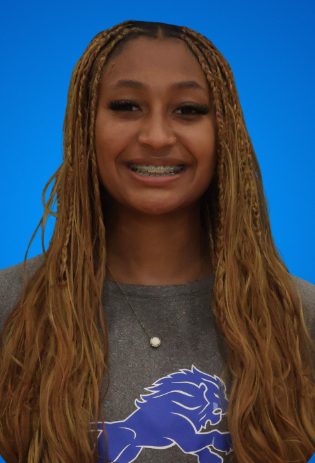
Three Coastal Bend high school volleyball players were named to the 2025 Class 4A-3A Blue Bell Texas Sports Writers Association All-State volleyball team after putting together strong campaigns during the fall season.

The honorees were London setter Myah Lichtenberger, Calallen setter Grace Martinez and Calallen middle blocker Jadyn Lindgren.

Martinez and Lindgren helped lead Calallen to a district championship and a 36-8 record. The pair also played a vital role in the Lady Cats’ run to the Class 4A Division I regional final.

Lichtenberger helped lead the Lady Pirates to their best season in program history after the team advanced to the Class 3A Division I regional final with a 25-6 record.

Voting was conducted by TSWA members based on nominations from coaches and media members from around the state.


Link

Continue Reading

Sports

Tritons Complete North American Challenge

Published

on


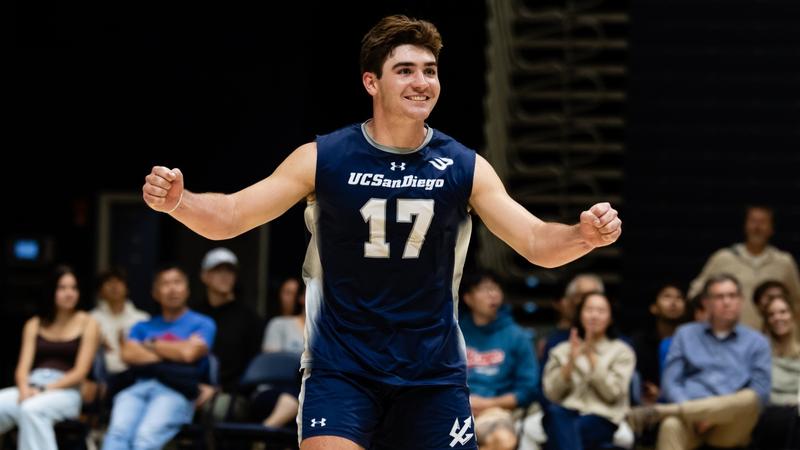
LONG BEACH, Calif. — UC San Diego men’s volleyball completed its preseason on Sunday with day two of the North American Challenge. The Tritons once again beat Canadian sides Alberta and Calgary in exhibition matches after doing the same on Friday.
 
The Tritons beat Alberta 3-0 before turning around and playing Calgary, winning 3-1. Head coach Brad Rostratter repeated his previous approach of largely using two separate lineups for the two matches. Only four of the 14 Tritons who got playing time on Sunday appeared in both contests.
 
The challenge was hosted by fellow Big West side Long Beach State. On Friday, the Tritons also swept Alberta after beating Calgary 3-2.
 
HOW IT HAPPENED – ALBERTA
The Tritons cruised through the first match of the day, winning 25-16, 25-21, 25-15. They hit .333 while holding Alberta to a .200 clip. The Tritons also had 11 service aces.
 
A balanced offense saw four Tritons finish with seven or more kills. Luke Chandler and Leo Wiemelt had a match-high nine kills, with Wiemelt hitting .667 in the process. Setter Cameron Wurl had 24 assists.
 
HOW IT HAPPENED – CALGARY
Calgary won set one 25-23 before UC San Diego won the next three 25-17, 25-21, 25-21. The Triton offense hit .431, while Calgary converted at a rate of .247.
 
Four Tritons had multiple blocks on the defensive side of the net. Offensively, Josh Ewert and Leo Pravednikov both hit .406. Ewert led the match with 20 kills, while Pravednikov added 17. Setter John Luers had 42 assists.
 
QUOTABLE
“I loved the volleyball we were playing throughout our four matches this weekend,” Rostratter said. “Using four different lineups and finding connections and success in different phases of the game highlighted the depth we have within our team. These were quality opportunities to learn more about what our team has and where we are headed this season. I am excited for the home matches this week on Tuesday, Friday and Sunday!”
 
UP NEXT
The 2026 regular season begins this Tuesday as the Tritons host Jessup at 7:00 p.m. at LionTree Arena. UC San Diego will also have home matches versus Daemen and Rockhurst on Friday and Sunday this week.
 
About UC San Diego Athletics
After two decades as one of the most successful programs in NCAA Division II, the UC San Diego intercollegiate athletics program has begun a new era as a member of The Big West in NCAA Division I. The 24-sport Tritons earned 30 team and nearly 150 individual national championships during its time in Divisions II and III and helped guide 1,400 scholar-athletes to All-America honors. A total of 83 Tritons have earned Academic All-America honors, while 39 have garnered prestigious NCAA Post Graduate Scholarships. UC San Diego scholar-athletes exemplify the academic ideals of one of the world’s preeminent institutions, graduating at an average rate of 90 percent, the highest rate among public institutions in NCAA Division I or II. For more information on the Tritons, visit UCSDtritons.com or follow UC San Diego Athletics on social media @UCSDtritons.


Link

Continue Reading

Sports

Tyler’s McLean, Hallsville’s Farrell earn Class 5A all-state third-team volleyball honors

Published

on


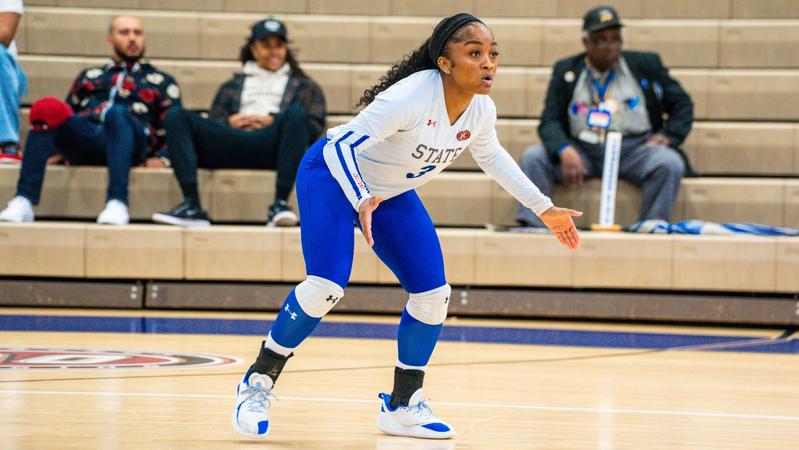
LONGVIEW — Tyler middle blocker Kaelyn McLean and Hallsville outside hitter Kaycin Farrell earned third-team honors on the Blue Bell/Texas Sports Writers Association Class 5A All-State Volleyball Team, the organization announced on Sunday.

Lady Lion outside hitter Ja’lee Flores was voted honorable mention.

Lufkin middle blocker  Chesney McCullough was named a first-team middle blocker.

Area honorable mention players were middle blockers Knlee Smith of Marshall, Kylee Fernandez of Hallsville, and Taryn Stiger of Texas High; outside hitters Lily Holzbauer of Whitehouse, and Akira Smallwood of Lufkin; and setter Aleciara Smallwood of Lufkin.

McLean had 489 kills, 215 digs, 111 blocks and eight aces, while Farrell, the District 15-5A Most Valuable Player, had 402 kills, .371 hitting percentage, 302 digs, 68 aces, 50 blocks and 29 assists.

Class 5A Division II champion Cedar Park earned both top superlatives with the release of the Joy Udoye, who has signed to play for Stanford, was named Player of the Year.  Udoye had eye-popping stats of 581 kills, 364 digs, 34 aces and 30 blocks as Cedar Park finished 39-12 overall.

Lori McLaughlin was voted Coach of the Year.

Voting was conducted by TSWA members based on nominations from coaches and media members from around the state.

Blue Bell/Texas Sports Writers Association

Class 5A All-State Volleyball Team

COACH OF THE YEAR: Lori McLaughlin, Cedar Park

PLAYER OF THE YEAR: Joy Udoye, Cedar Park

FIRST TEAM

Middle blockers: Brooklyn Bailey, Highland Park; Sienna Benavides, Cedar Park; Chesney McCullough, Lufkin

Outside hitters: Joy Udoye, Cedar Park; Kaitlyn Hutchins, Lake Belton; Harper Korenek, A&M Consolidated

Setter: Blair Thiebaud, College Station

Libero/Defensive Specialist: Ann Kruz, Cedar Park

SECOND TEAM

Middle Blockers: Rihanna Bryant, Pflugerville Weiss; Aliah Earls, Red Oak; Zandria Johnson, Brownsville Rivera

Outside hitters: Nadiya Shelby, Friendswood; Sarah Floyd, Highland Park; Mya Cheatum, Cedar Park

Setter: Katelyn Hughes, Cedar Park

Libero/Defensive Specialist: Gigi Whann, Highland Park

THIRD TEAM

Middle Blockers: Jacey Owen, Smithson Valley; Kendall Kruesler, New Braunfels; Kaelyn McLean, Tyler

Outside hitters: Kaycin Farrell, Hallsville; Lexi Anderson, Frisco Centennial; Alexis Elsey, Argyle

Setter: Kingsley Minus, New Braunfels

Libero/Defensive Specialist: Berkeley Bates, Smithson Valley

HONORABLE MENTION

Middle Blockers: Ava Wood, Lake Belton; Knlee Smith, Marshall; Haddie Mock, Abilene Wiley; Kylee Fernandez, Hallsville; Emersyn Fink, Frisco Liberty; Taryn Stiger, Texas High; Kaitlyn McCracken, Belton

Outside hitters: Alyssa Todd, Aledo; Ja’lee Flores, Tyler; Lily Holzbauer, Whitehouse; Shaylie Schaefer, New Braunfels; Akira Smallwood, Lufkin; Hannah Baker, Argyle; Danielle Whittier, Prosper Walnut Grove; Kaelee Berkley, Aledo; Jaiden Harris, Frisco Liberty; Zoeh Cereceres, El Paso Chapin

Setter: Madison Bingham, Lake Belton; Aleciara Smallwood, Lufkin; Jill Vinal, A&M Consolidated; Ava Jackson, Pflugerville Weiss; Kyndal Newton, A&M Consolidated; Madison Victoriano, Frisco Centennial; Amelia Albright, Georgetown

Libero/Defensive Specialist: Hayden Jeffers, New Braunfels; Teagan Barnett, Argyle; Haley Nash, College Station; Haley Patton, Friendswood; Ashley Go, Pflugerville Weiss


Link

Continue Reading

Sports

Blugolds Downed by #6 Roanoke 26-15

Published

on


SALEM, Va. — The University of Wisconsin-Eau Claire narrowly fell to #6 Roanoke College with a final team score of 26-15. 

Sloan Welch delivered a commanding performance at 285 pounds, securing a fall over Nicholas Cook in 3:59. This decisive victory contributed six points to the team’s score.

Preston Carlisle was instrumental in maintaining momentum for the Blugolds, securing decisions in both the 165 and 174-pound weight classes. He overcame Cade Parent 7-4 and later defeated Xavier Preston 10-5. Zak McPhee contributed with a 6-0 decision against Vincenzo Corvetto at 184 pounds. Looking ahead, the team will aim to carry this momentum into their upcoming competitions.

Blugold wrestling’s next competition is the Budd Whitehill Duals on Friday, January 9th and Saturday, January 10th in Williamsport, PA.

Follow the Blugolds all season long at Blugolds.com or on our app, Blugold Sports, and on social media on Twitter, Instagram, and Facebook. 


Link

Continue Reading

Most Viewed Posts

Trending