Rutgers University Athletic Director Keli Zinn has now been on the job for 26 days and is already hard to work, as she is working towards building her team to help take the Scarlet Knights to the next level.
On Monday afternoon, Zinn met with several of the local media to discuss the latest on name, image & likeness, revenue sharing, facilities and much more. Check out the full Q&A with Zinn below!
Q: You have a lot of roles to fill on your staff, where are you as far as doing that since you’ve begun?
ZINN: “Yeah it’s been a focal point the past couple of week. Obviously coming in and you all kind of heard me say that there is opportunity to identify and attract a certain type of team. The first order of business was to see who we had. What areas were they working in? Were there things that I thought we were doing really well? And were there some areas where we were deficient, right? I feel like I’ve gotten a good grasp on both of those. And so, right now, I’m actively in the midst of working with HR and the General Counsel’s office to address all things personnel.
You’ll probably see at least one or two jobs post here in the near future. And structurally, I know where I’m headed. I’m going to hold for just a moment today on exactly what that looks like because there are still some pieces coming together. But my goal was always, within the first month, to be locked up on that structure and if I didn’t physically have everyone here at that time, to get them here shortly thereafter.”
Q: Are you looking at people you’ve worked with in the past of these roles?
ZINN: “Yeah, you’ll rarely see me go put any job out there where I don’t have some level of recruitment.
Whether it’s through myself or my staff, certainly. Even when it’s an open search, there’s so much talent out there. And one of the things that I’ve tried to pride myself on over the years is making really good hires.
And so in that regard, everything that is open right now, I do have at least one person that has or will get a phone call on that job. And then for those that need to be posted, you’ll see likely some talent come to the table. I’ve been really pleased with the number of people who have reached out to me that candidly weren’t on my radar.
But have said, hey, we see what you’re doing there. They’re thrilled with the hire in President Tate. And seems like it’s getting some pretty good attention of the two of us coming together and what we’re capable of and I’ll look at a few of those as well, just based up on what they bring to the table.”
Q: Is there an area that you’re prioritizing in term of the department?
ZINN: “Yeah, the two main areas live in our revenue space and then more specifically to name, image and likeness opportunities. And so a chief revenue officer, which we have not had technically within that type of role, is one area.
And then the other piece, again, the third party NIL, which will be likely baked in somewhat of a chief strategy type officer position. Understanding that that person not only is going to be a big focal point, particularly initially and early on, on NIL opportunities and working with SAMCO (Scarlet Asset Management Company) and some of our corporate side of the house, but also our brand advancement. And so the reality is for us, and you see this in some of our contractual agreements right now, I think we actually have a really good brand.
And when you look at the fact that we’re in the Big Ten alone, there’s value in that. Pair it within the market and all that, you have some real opportunity there. Our strategy on our brand and how that relates to all the areas that are both revenue driven and even to a certain degree non-revenue driven, is going to be really important moving forward.”
Q: Do you have a grasp on facilities? I know there’s a master plan that was made up a couple of years ago. Do you have an idea of where things are headed? Have you had any thoughts on how you want to make your imprint on that strategy?
ZINN: “Yeah, that too, obviously a big piece. And again, a lot of opportunity.
I’ve had the opportunity to review the whole master plan. Certainly there’s a lot of attention and I’ve spent some time on Jersey Mike’s arena in particular. I will say one of the things that’s been really encouraging are the pieces that we have here, that from an infrastructure standpoint are truly elite when you look at where we’re at across the country.
Take the practice facilities for men’s and women’s basketball, wrestling and gymnastics. That facility alone is on par with the best in the country and exceeds what a number of people have from brick and mortar. You then pair that with an arena that’s also on par with where things are from what we can be competitive in, the fan experience and all that.
You’ve got something really, really special over there relative to those programs. And then here, you’re sitting in a building where obviously our support for men’s and women’s soccer and men’s and women’s lacrosse. I’m really impressed there and what I see.
Football has an incredible outdoor as you all have been able to visit and be a part of. The health center, I was pleasantly surprised as to the depth and extent of that building. Our recovery area is on par with what I’ve seen across the country is the best.
And you’ve got everything that you need there from a development and what usually exists within a performance center. Would it be great if it were a little bigger? Of course it would. Do we need a couple of the amenities that young men are attracted to in today’s world? They’re on par with where they need to be headed.
There’s a couple of things that particularly if we could pick up some real estate would be great for football. Our premium over at SHI Stadium, right, that’s going to be a focal point because one, there’s revenue in that and fans and donors deserve an experience there that’s more on par with a Big Ten institution. But the other one that’s going to be a focal point as well is an indoor practice facility for football.
I think when folks hear that, you know, out the gate, you can have some parties who say, right, football, football, football. When in reality here, it actually helps a lot of our other programs. There’s just way too much congestion, particularly within that bubble.
We need to be in a place if we’re going to recruit the best talent for them to not have interruptions in their training and development. And right now there’s just so much that goes into that bubble that getting an indoor practice facility for football would help all of them. So a lot of brick and mortar, right, which takes lots of money, but you can accomplish anything with time and money.
So that’s what we’re going to do. It’s easy for me to spend my time on it because that’s completely within my control as it relates to the financial piece. I’ve had, you know, great conversations with so many donors up to this point, thrilled with the amount of passion that they’ve shown for the future of Rutgers athletics and we’re going to get after it with one order of business being, and as I noted for you, to get a chief revenue officer in here.”
Q: Just a quick follow up on the RAC. Is the priority renovating Jersey Mike’s Arena or like your predecessor had the idea of a new arena?
ZINN: “Is that a possibility? Yeah, I think they’re both a possibility, right? We need to spend a little bit of time on that.
And there are, you know, two plans there, admittedly and very quickly. Now we’ll see if I shift in my opinion as I get more information on what would be a private developer and some of those things that you’re seeing across the country, which certainly is an incredible opportunity. But to go there, you’ve got some movement in our other programs, which again, you’ve got an investment piece.
And personally, when I looked at Jersey Mike’s, you have some great opportunity there just based up on that footprint. A lot of times schools will bail out of a renovation because they’re landlocked and there’s only so much you can do there. That’s really promising because of just the land that exists around it.
The way the current structure of the building is, as you guys know, you could phase in some things there and very quickly make a big difference in it and do so in a way where you start bringing online, you know, the revenue and the cost standpoint without having to go all in with, you know, 300 million dollars plus out the gate that would start to probably cause, you know, some folks to have some discomfort. So so I like right now and admittedly probably preferential towards what would be a renovation on that building. But we need to gain a real clear understanding of what it looks like and some of the guts, if you will, that exists there.
I’m told that the HVAC is in a really good place and plumbing and all those things that you want to avoid in a renovation, dumping a bunch of money into that nobody ever sees or gets to feel the luxuries of. But but it sounds like initially they’ve done some really good work over there to get a good deep dive into it. Now it’s making a decision on where we’re headed. Because otherwise we’re just going to spin our wheels looking at two different plans versus making some movement to bring them to closure.”
Q: Do you feel like you have a good grasp now after a couple of weeks in? I mean, you’ve done the listening, you’ve done the tours, you’ve done everything where you’re able to say, here’s where my plan meets reality.
ZINN: “I do. Yeah. I feel like and I try to be intentional on giving my time in a way to get a really broad based understanding.
And so if you were to have looked at my schedule, you would have seen a focal point on our senior team and executive administration, coupled with our coaches and then time with in our student athlete community as much as I can be with not all of them being here, certainly. And then the donor side of the house as well. Obviously, some some good conversations and really constructive conversations with our university administration.
And the folks who are on that side of the house, again, with the intention that we’re going to be collaborative and work together on a lot of these things. And so it’s been a really good balance of those all of those focal points to come together to get a good understanding of it.”
Q: Keli, there’s really been no secret here at Rutgers that Greg Schiano hasn’t really felt like he’s had a partner in this job. I’m curious how your conversations have gone with him to start with. And what have you heard from him about what he’s doing?
ZINN: “I would say our relationship could not be better right now. Very quickly and having the opportunity to sit down with him one on one, we established just a really good chemistry.
Obviously, I came into it impressed with what he had done here from a historical standpoint. But then getting an understanding of what’s transpired since he’s been back and how he’s worked through things. Coach had to do a lot on his own.
And and I think he fought incredibly hard to put that program in the best place it possibly could. But it’s my job and my team’s job to be supportive of that and to work with him and to help take some of that burden off of he and his support staff. And he was thrilled, you know, with the vision that very quickly, you know, he and I worked through and laid out.
And I think he saw really quickly in me someone who was going to be super supportive of him, but not just being supportive and hoping that they win, but instead rolling up my sleeves and getting it out, getting after it with he and his team in order to get them the resources that they need in order to be successful. And so. So, yeah, I can’t say enough good things about him.
Candidly, with what I’ve seen that he had and what he was working with based up on what he’s accomplished competitively, I think he’s exceeded a lot of the expectations because I think he’s done a lot with less and now having the capability to give him more, which is what he needs and deserves. I think his potential here is pretty incredible.”
Q: What’s your vision for that program? What would Rutgers football success mean?
ZINN: “Yeah, well, I said it at my press conference, right? Competing for championships.
And I recognize we’re in a league where you’ve got some real powerhouse programs, but that’s the beauty of sports, right? When you take young men and have people around them who have so much pride, energy and passion and ability to punch above their weight. And you just need to beat those programs once, right? That’s it. And so have your best day when you’re in front of them, whether it’s here or their home.
And me being in a position, seeing what I’ve seen, I believe we have a ton of capability to move the needle in that program. Because, again, you’ve got some really good pieces and a lot of what they need is completely within our control. Oh, by the way, within our control, if we have people who love and support Rutgers, right? And so take our corporate relationships.
That’s the biggest thing right now that’s likely to move the needle on that program and not just that one, right? You’ve got some of the others as well who will benefit from those. If this community can get behind me and my team and these coaches and these athletes, we can accomplish success that’s beyond anything that probably many thought we were able to achieve.”
Q: How do you break through? Because this is such a unique place because you’ve already got Philly, you’ve got so many pro sports teams. It’s just always, Rutgers has always struggled to kind of break through that crowded marketplace. I guess how do you kind of, what’s your vision?
ZINN: “Yeah, well, the first one is getting the right people in the right spots to be able to go out there and cultivate those relationships, right? Because that’s where it starts. But I also think having a really clear plan of what we’re capable of and having people react to that in a way where they believe we can get there is most important.
I don’t know that we’ve done a great job of telling that story up to this point. And you’re looking at someone who genuinely believes in it, right? Again, and we’ve all talked about it before, I recognize the history here. But the history is not going to be a determining factor of our future.
It’s just not. It’s not the way I’m wired. It’s not the way President Tate’s wired.
And now I’ve had the opportunity to spend the past couple weeks and recognize that it’s not the way a lot of our people are wired. And so I feel really good about how folks are coming together on it. But we’ve got to get out there.
We’ve got to be really aggressive in our community. We’ve got to capitalize locally and regionally as much as we possibly can and do so in a way where people start investing and then they start seeing a return. And therein lies some of the strategy.
The reality is, and we’re no different from anyone else, but certain programs here have the likelihood of being successful as compared to the others. And we need to lean into those programs and have a strategy to support them in a way where people can feel good about their investment.”
Q: In your conversations with coaches, I’m not sure how many you’ve been able to meet with extensively, but in those conversations, is there a common thread that you’re hearing from them and what they’re looking for from you or even the rest of the department in general?
ZINN: “Yes and the common thread is they’re seeking decision-making, decisiveness. They’re seeking awareness of what’s going on across the country. And they’re seeking support.
I’ve asked very clear questions from them of what is it that you need to move your program from where you’re at now to that next juncture. And I’m trying not to set unrealistic expectations on them. They’ve heard me say I came here to win.
Well, they came here to win, too. It’s now how do we continue to, every year, move them forward in a way where our rankings get better, our talent gets better, and then with time, you find yourself in a really solid place. But they’re all saying similar things.
But something that I’ve also been pleased about is I’m taking an approach right now where it’s a lot of individual meetings as early as next month. They’re going to start coming together as a group because oftentimes some of the things that are a problem for one can be a problem for many. And I think there’s something to be said when you have a lot of head coaches pulling for one another, working together, same thing with the assistants and on down and so we’re going to be intentional in that. And they’re excited for it.”
Q: As AD, it’s inevitable you’re going to have to make a coaching change at some point.What does your process for evaluating these coaches kind of look like?
ZINN: “Yeah, I take a look at the historicals. Usually the past three to four years are the biggest focal point. But then also looking at where they were and are as compared to the competitors and within the conference.
I’ll look a lot within the conference for our rankings. I take a look at compensation. I’m a big believer that where you’re compensated, you should be performing at that.
And if you’re below it, that’s a real problem. And if you’re really below in compensation, but you’re performing better, then I also need to make sure we’re not in a position to lose someone based upon the fact that they’re probably attractive to someone else. So there’s a number of things that go into that.
There are various benchmarks. Again, the good thing is when it comes to statistics and win-loss records and all that, Hasim and his team will be among those who draw the short straw to where they have to give me a whole lot of information and work through that. But I’ve also already and having the opportunity to visit with our sport administrators in some cases individually, but also as a group now twice, I’ve shared with them that that’s going to be a big expectation for them too.
As a sport administrator, you should have a really, really strong pulse on that program from everything from recruiting to current student athlete experience. And then, of course, where you’re at as far as your competitors, both across the country within the league. And so their awareness to what’s going on with those programs when I’m evaluating them is going to be important in that relationship.”
Q: You were asked about geography between New York and Philadelphia. How heavily are you going to lean into the New York angle? Because you often times heard Rutgers as New York’s Big Ten team. But I mean Wall Street, how much are you going to look into that connection and further that? Or is that not attractive to you?
ZINN: “Yeah, it is attractive and I’ve already been communicating with a couple of folks, particularly within the city, not so much Philadelphia. And we’ve got some guys there from a potential donor perspective that have the capability to be helpful. And as they said, you know, I’m going to be supportive of you.
What do you need from me? It’s not just what they can do for me. But as I’ve said to all of them, it’s their network and who they can open me up to. Right.
And so so we’ll continue to do that. I’ll admit when I came in, you know, in my mind, I kept going New York, New York and that market and capitalize on it and all that. That’s certainly still going to be kind of one of those things that we look at from a strategy standpoint.
But I’ve probably started to take more of a focal point of local and here within the state. I think as we look at and again, being the the state institution of New Jersey, there’s some opportunity to capitalize on that and and probably secure some of those areas more quickly. Right.
Until we start to then branch out more. But you’ll see a focal point on both right now, the state of New Jersey and getting everybody here really passionate and supportive for it.”
Q: You look at it like a hundred day plan or some people do that. But for your first hundred days to be successful, what will happen?
ZINN: “Yeah, that’s a good question. To be honest with you right now, I’m kind of in a week to week. I joked with my dad last week I was built for an 80 hour work week as he was checking in to make sure I was eating and sleeping at night. And there’s so much to be done right now that I’m literally looking at it and saying, what do we need to see happen to win the week? Right.
And then it’ll move to what do we need to see happen in order to win that month? And then it’s going to be season year. Right. Totality.
But the first hundred days of one, I’ve got to have my staff here and locked up and everybody knowing who they’re going to work with and what those expectations are. We need to be in a situation where we have a really solid infrastructure on third party name, image and likeness. And so that people can see that, feel that, know exactly what’s going to happen.
Our athletes need to know what they can expect in that space. And also importantly, recruits need to be able to hear it. And so when they’re on campus, that’s got to be a focal point as to how that’s going to work.
The other area surrounds the house settlement and our revenue share and our scholarship expectations. We’ve got to have that plan locked up and ready to go for them within the next hundred days. I think one of the things that may have been a little bit challenging for them this past year is some of that.
Again, those decisions being made a little later in the game, certainly when you’re dealing with attrition and not having an AD present, that can create some challenges. But that’s not the case anymore. And so I’ve made a commitment to our coaches, knowing that recruiting is up on us for the upcoming year, that they will know where they’re at and know what they have to work with so that they can be most effective in recruiting and closing out the first semester here in a really good place for what that future looks like.”
Q: Safe assumption, you guys are going to go 100 percent on the 20 and a half mil for rev sharing. And would you be open to telling us what the percentages are? I know some ADs have, some haven’t.
ZINN: “Yeah, we’re going to hold on those and right now, just based upon how we’re working through that and some of the strategy, I’m not going to share the percentages. What I will tell you is that you’re going to see us push, and I expect this to happen as early as next year, to where some of our programs who have an opportunity to be competitive beyond football and basketball find themselves in a place where they get some of that. And the way to do that most effectively is by having third party NIL opportunities that are above that 20 and a half million.
Right now, I think we went into the settlement and the new model in a way where the goal was to get to 20.5 mill. Day one, that goal shifted and so I’ve both challenged and empowered some of our sales team to really get out there. And already we’re working through that. And so the third party NIL piece is really important.
But then the other piece are the extra scholarships. Right. And so at a time when there’s unlimited opportunities and scholarship support, true donor dollars and those who are driven more by the philanthropic support of a university and young men and women and the opportunity that they can bring to them, that piece is going to be critical.
So we’ve established an initial goal to go above that 20.5 mill, both in third party revenue and scholarship support. And that’s only going to grow every single year.”
Q: Just follow up on that. How do you make those decisions? Have you already made the decisions about which programs are in the best position to succeed?
ZINN: “I do have an initial opinion, but I’m two weeks on the job. So, as I’ve said to many of them, you’re going to hear my opinion. But I expect those who are here and have really good historical knowledge or can recognize some blind spots that it may be just looking at when loss records and the past three or four years of history. Don’t tell me.
And so I’ve told them, you know, be be very honest if you say, I don’t know about that one. Right. Which already I’ve been really impressed with the internal conversations.
But to your to your question and specifically, I’ve already established a team of folks that’s made up of a number of sport administrators and those who sit in a position where they’re most closely connected to the performance side of it and the investment piece. And we’ve gotten around this table a couple of times already to start looking at that and saying, okay here’s where we were for 2025, 2026. Where are we going to be for twenty six, twenty seven? And and as Hasim can attest to from the first meeting to the second meeting, it shifted a little bit.
But I think it shifted in a good way. It’ll probably continue to again over the next month or so. But we’ve got to make a decision here within the next month or two is to exactly where we are there so that we can effectively turn them loose for the next recruiting cycle.
And then what the coaches have already heard me say and will continue to. The great thing about that revenue share in the house settlement is every year the pot’s going to grow probably by that four percent. As you all know, then there’s a period of time to look at it and potentially completely reset it.
But from the scholarship and third party piece, it’s within our control to go out and make those numbers better. And so if a program, say, for example, is showing some real promise and we happen to miss it in one year, we’re not going to miss it the following year. And now we’ve got to work to get them what they need to so they can capitalize on that.”
Q: It sounds like setting priorities is any place but here.
ZINN: “Well, and it’s also, you know, having coaches understand that there’s a new day that you can be really successful in. And so, for example, you know, we had one of our Olympic programs who had an absolute stud recruit in here last week.
And they asked me to visit with that young lady. And I’m looking at all the full scholarship, you know, opportunities that she had and going, wow, this kid’s a stud. And so the night before I sat down with her, I called the coach and I said, what do you offer her beyond a full scholarship? And she said, well, I don’t have anything else to offer.
And I said, well, what would it take? And she gave me a figure that candidly, if I can’t come up with that money, President Tate needs to send me back to the Bayou tomorrow. And I said, that’s easy, right? And she said, well, we were told that we weren’t going to be able to do that. And I said, you are now, right, because the young lady’s not coming in for another two years.
And we now have a plan to be able to put something, you know, in that program to go do that. And so that’s how it happens that quickly. And so here you’ve got a coach with a premier elite talent who has decided to come here and visit.
And she got to leave that visit now with something that was beyond what maybe some of our big competitors was offering her. Now, are they now going to go back after she says Rutgers was able to give me X, Y, and Z? And then they’ll go, well, then we’re going to, and therein lies your war among recruiting and coaches. But that’s where we have to be, right? We have to be in a spot.
And I’m not going to get sick of a coach knocking on my door and saying, well, here’s what happened, right? He or she has gone back. And now here’s the number. Or now here’s what’s being offered.
What a great spot to be in. Whereas my concern up to this point is they’ve just done the best that they possibly could with what they had, but didn’t really have a mechanism to seek a little bit more to be able to go get that kid.”
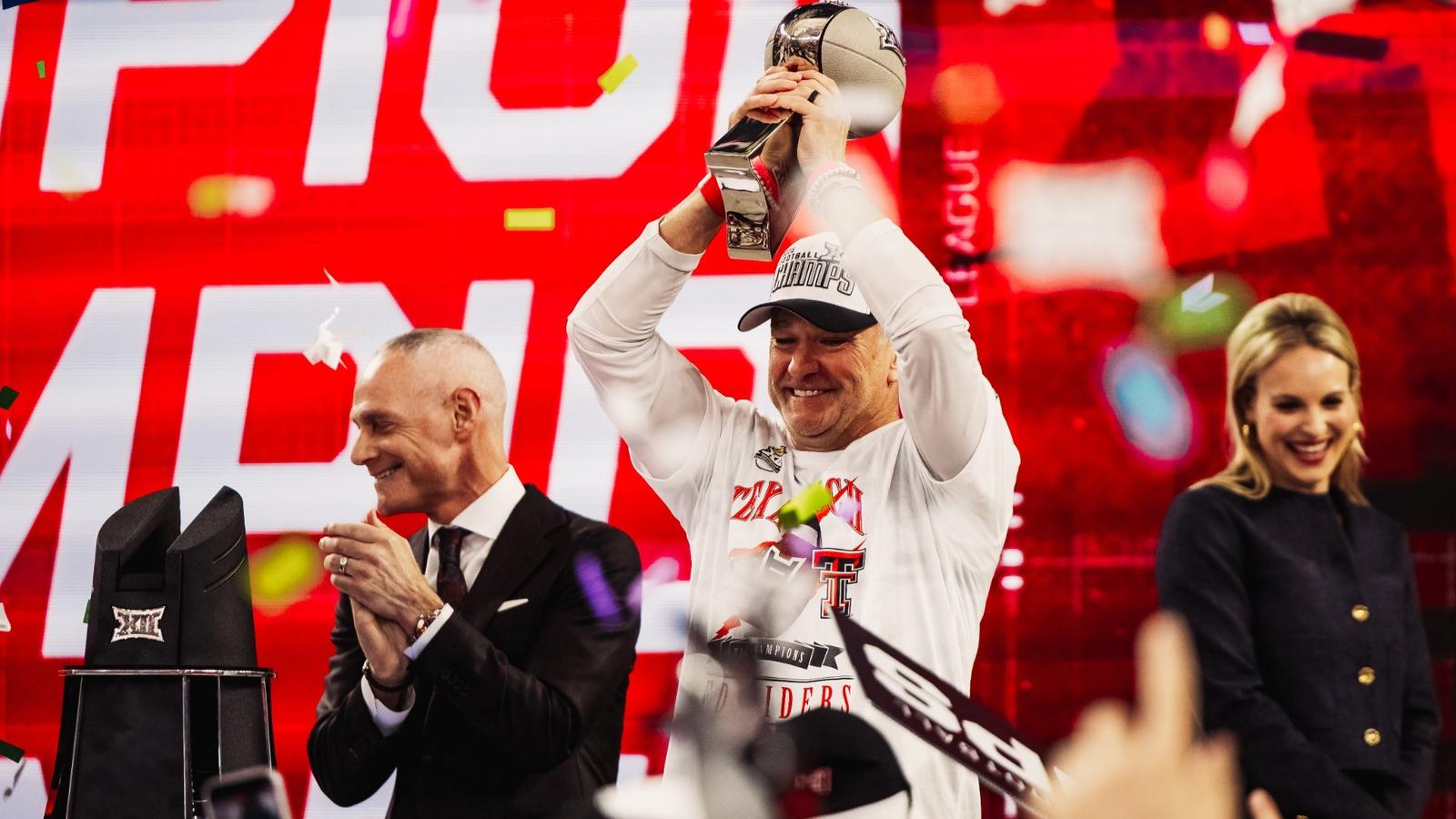
LUBBOCK, Texas – Texas Tech head coach Joey McGuire was named one of eight finalists Wednesday for the Paul “Bear” Bryant Coach of the Year Award after leading the Red Raiders to their first Big 12 Conference title and an appearance in the College Football Playoff.
The award, now in its 40th year, is given annually to the college football coach for contributions that make the sport better for athletes and fans alike by demonstrating grit, integrity and a winning approach to coaching and life – both on and off the field. McGuire was joined as a finalist by Indiana’s Curt Cignetti, James Madison’s Bob Chesney, Miami’s Mario Cristobal, Texas A&M’s Mike Elko, Virginia’s Tony Elliott, Oregon’s Dan Lanning and Vanderbilt’s Clark Lea.
The Bear Bryant Award is the only college football coaching honor given after the National Champion has been determined. It will be presented Jan. 21 during an awards ceremony hosted at the Post Oak Hotel in Houston. The event will be broadcast by CBS Sports Network on a tape-delayed basis beginning at 12:30 a.m. on Jan. 22.
In addition to being named a finalist for the Bear Bryant National Coach of the Year Award, McGuire was also named Wednesday the Big 12 Conference Coach of the Year by the organization. The finalists and Coach of the Year recipient are voted on by members of the National Sports Media Association, the Bryant Awards’ executive leadership team and the Bryant family.
This is the fourth national coaching award to name McGuire as a finalist this season as he was previously one of the final candidates for the George Munger College Coach of the Year Award, the Eddie Robinson Award and the Dodd Trophy. It is the first time in his career McGuire has been a finalist for any of the national coaching awards.
The Red Raiders reached new heights this past season under McGuire, who pushed Texas Tech to a school-record 12 wins and its first Big 12 title. McGuire led the Red Raiders to their first College Football Playoff appearance at the Capital One Orange Bowl after downing BYU, 34-7, in the Edward Jones Big 12 Championship, securing Texas Tech’s first outright conference crown since 1955.
Texas Tech proved to be one of the most-dominant teams in recent history on its way to a 12-2 record, with all 12 wins coming by at least 20 points. The Red Raiders are joined by Alabama in 2018 as the only teams in the Associated Press era (since 1936) to record 12 or more wins by 20-plus points prior to a bowl game. Texas Tech is just the fifth FBS team with 12 wins by 20-plus points in a season period during that span.
Despite a loss to No. 5 Oregon in the Orange Bowl, Texas Tech will likely end its season ranked in the top 10 of both the Associated Press and USA Today Coaches’ polls for the first time in history behind one of the most-balanced rosters in college football. Texas Tech currently ranks in the top-11 of several statistical categories, namely rushing defense (1st), scoring defense (3rd), total defense (4th), scoring offense (7th) and total offense (11th).
The Red Raiders have been the winningest Big 12 program under McGuire as Texas Tech has won 25 conference games in his four seasons, the most for any league school during that span. The Red Raiders are 35-18 overall under McGuire, which is the most wins by a Texas Tech head coach through 53 games since Jim Carlen was 35-17-1 midway through his final season of his five-year tenure from 1970-74.
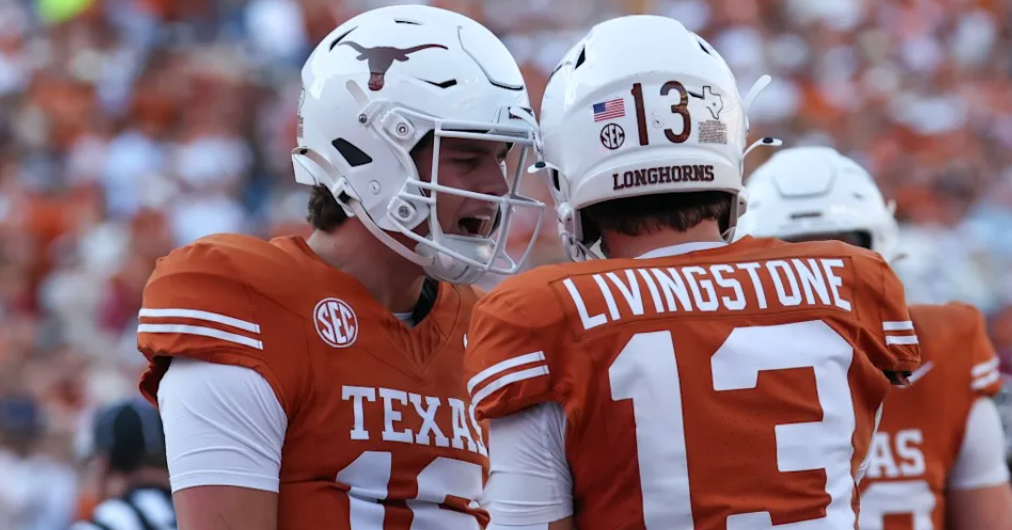
Former Texas wide receiver Parker Livingstonecrossed a Red River Rivalry line this week, committing to Oklahoma via the 2026 college football transfer portal. Livingstone, who roomed with quarterback Arch Manning and became one of his favorite targets during the 2025 season, ranked No. 3 on the Longhorns with 516 receiving yards and No. 2 with six touchdown receptions.
247Sports college football and transfer portal analysts Chris Hummer and Cooper Petagna provided insights into the breakup between Manning and Livingstone, detailing how NIL money and agent involvement played a significant role in the decision.
“It’s a surprising situation,” Hummer said Wednesday on CBSSports HQ.
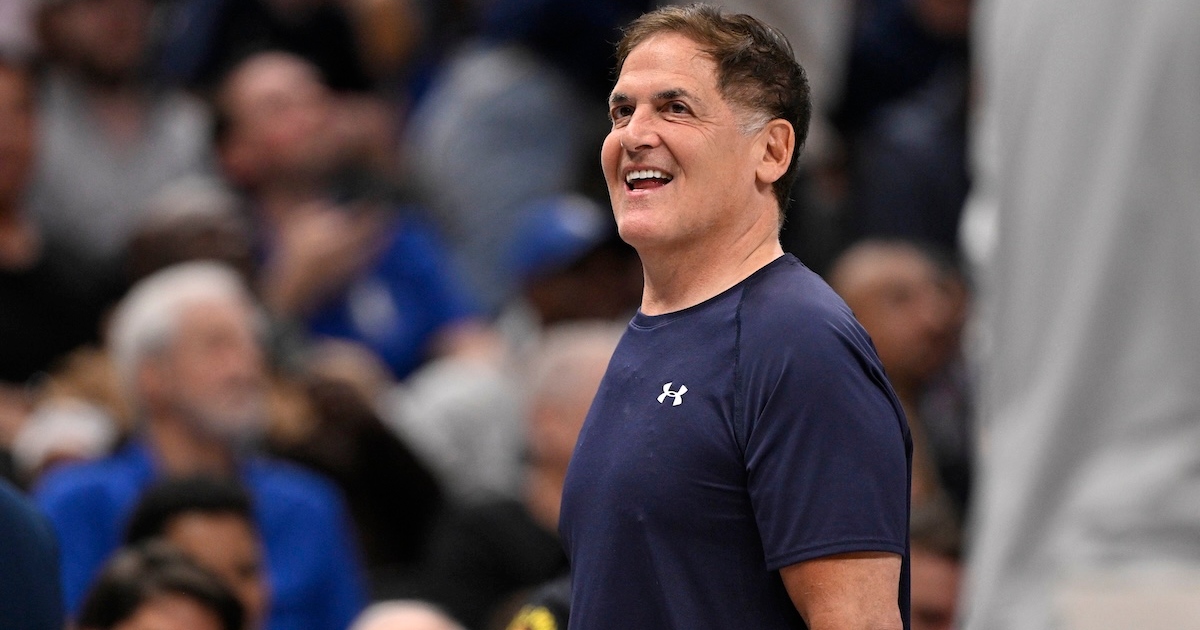
Mark Cuban reportedly made a donation to Indiana football for the 2026 transfer portal cycle, according to Alex Schiffer of Front Office Sports. The billionaire most known for his time as the majority owner of the Dallas Mavericks is a 1981 graduate of the school.
“Already committed for this portal,” Cuban wrote to FOS in an email. “Let’s just say they are happier this year than last year.”
SUBSCRIBE to the On3 NIL and Sports Business Newsletter
Indiana already made splashes in the transfer portal, such as TCU QB Josh Hoover committing for the 2026 season. They also landed Michigan State WR Nick Marsh and Boston College RB Turbo Richard. That’s only the tip of the iceberg and Indiana is still playing in the College Football Playoff!
Cuban reportedly gave a “big number” to the Indiana athletic department in the past, as he told CBS Sports in October. He cited his connection with head coach Curt Cignetti as the biggest factor.
Cuban is also no stranger to donating to his alma mater. In 2015, he gave the school around $5 million for a sports media center and gave $6 million to fund Indiana’s rugby club.
But first thing’s first, Cuban will be watching Indiana play Oregon in the Peach Bowl in the CFP semifinals. It’s all about what’s in front of them and nothing’s changed for Cignetti and IU.
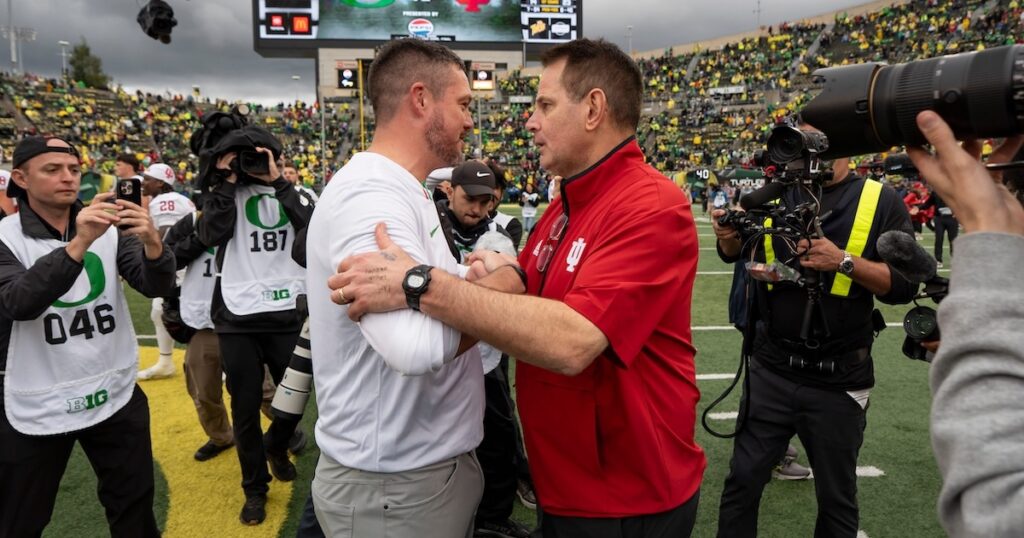
“Yeah, excited to be a part of the Peach Bowl,” Cignetti said. “Playing a great opponent in Oregon, Coach Lanning. Like I said so before we played earlier in the year, one of the young superstars you know in the coaching profession. I think they’re 26-2 the last two years.
“And, you know, really an excellent football team, offense, defense, and special teams. Do a great job of coaching. Be a big challenge. We were fortunate, you know, to win the game out in Eugene. It’s hard to beat a great team twice. You know, very difficult. So, edge to Oregon there. But tough to be a great team twice. Looking forward to the challenge.”
Indiana and Oregon are set to square off Friday night in the Peach Bowl. Kickoff is set for 7:30 p.m. ET and the winner will play for the College Football Playoff National Championship.
ESPN predicted the outcomes of both College Football Playoff semifinal games coming Thursday and Friday. Now down to the final four teams, we are that much closer to crowning this year’s national champion.
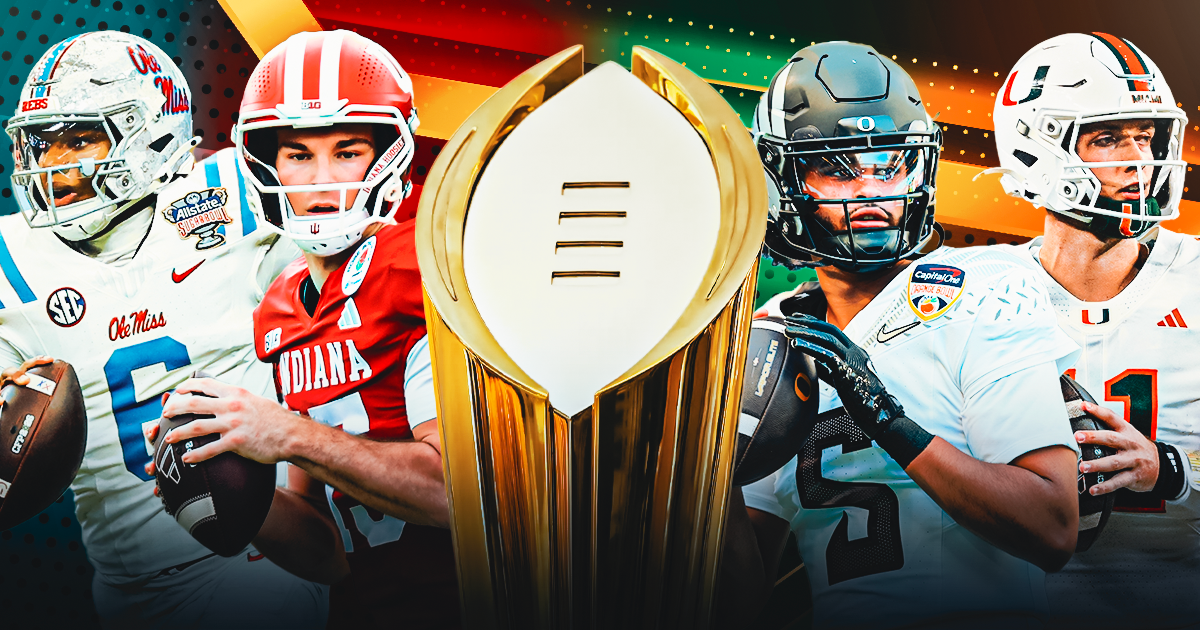
Miami, Ole Miss,Indiana and Oregon are the last teams standing following two rounds of competitive and dominant football. But what do ESPN’s metrics say, specifically their SP+ projections?
Putting player rankings, strength of schedule, game projection and everything else under the sun together, ESPN put out its College Football Playoff predictions for the semifinals. Let’s start at the Fiesta Bowl.
No. 6 Ole Miss vs. No. 10 Miami (Fiesta Bowl)
Jerome Miron-Imagn Images/Lauren Witte/Clarion Ledger / USA TODAY NETWORK via Imagn Images
SP+ Projection: Ole Miss 28.1, Miami 25.2
Ole Miss seemingly has the quarterback advantage with Trinidad Chambliss over Carson Beck in this one. He’s played at a different level over the last two weeks and found a new gear in the upset over Georgia. With Kewan Lacy helping the cause at running back, Ole Miss has a dynamic offense to deal with.
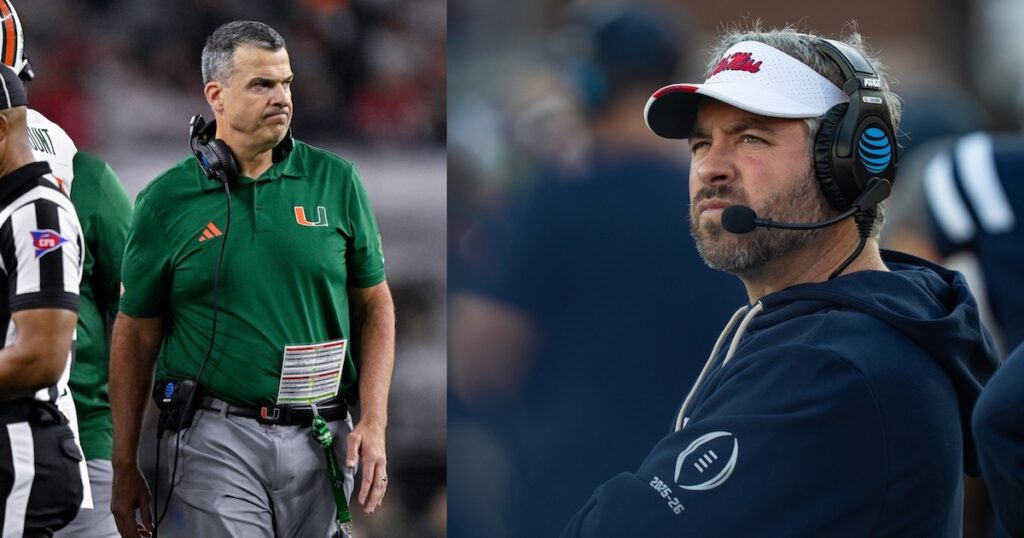
But defense wins championships, right? At least that is what Miami hopes for in this College Football Playoff. They stifled explosive offenses in Texas A&M and Ohio State to get to this point. Mario Cristobal will look for his team to grind it out. But ESPN projects Pete Golding and crew to get to the national title game.
No. 1 Indiana vs. No. 5 Oregon (Peach Bowl)
Ben Lonergan/The Register-Guard / USA TODAY NETWORK via Imagn Images
SP+ Projection: Indiana 26.7, Oregon 23.7
Indiana keeps winning, make sure you Google it. Curt Cignetti and crew learned from last year’s College Football Playoff mistakes and dominated Alabama in the Rose Bowl, 38-3. The Hoosiers are two wins away from the program’s first national title and have a Heisman QB in Fernando Mendoza to boot. On paper, especially with a win over the Ducks already, Indiana is rightly favored.
But Oregon is coming in guns blazing. Dan Lanning, like Cignetti, preaches toughness and grittiness. That’s exactly what Oregon is going to do and it has a pretty darn good quarterback, too, in Dante Moore. Which Nick Saban disciple is going to end up on top? The metrics say Indiana, again, by a hair.
Based on ESPN’s SP+ projections, No. 1 Indiana and No. 6 Ole Miss will square off for the College Football Playoff national championship. The game is scheduled for January 19th in Miami.
The annual NHL Winter Classic game is a favorite of hockey fans.
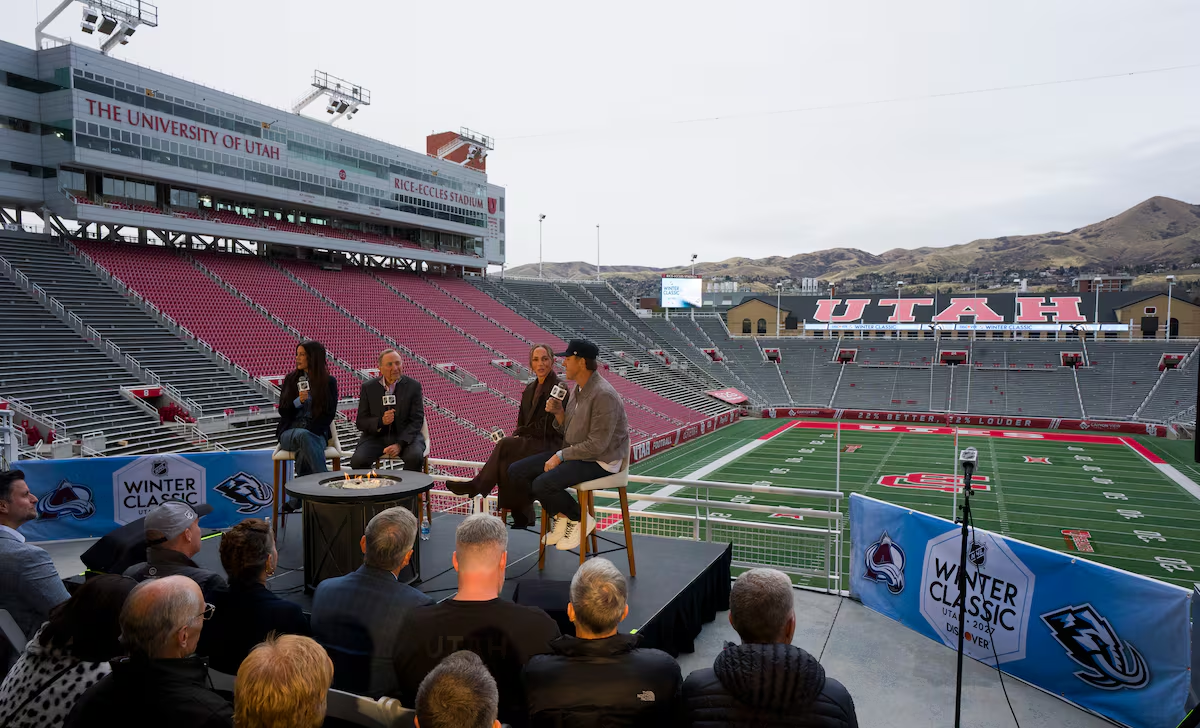
(Bethany Baker | The Salt Lake Tribune) From left, reporter Jackie Redmond, Gary Bettman, the NHL Commissioner, and Ashley and Ryan Smith, both co-founders of Smith Entertainment Group and owners of Utah Mammoth, hold a news conference to announce the location of the 2027 NHL Winter Classic as Rice-Eccles Stadium at the University of Utah in Salt Lake City, seen here on Wednesday, Jan. 7, 2026.
The marquee game of the NHL’s regular season is coming to Salt Lake City next year.
NHL commissioner Gary Bettman joined Utah Mammoth owners Ryan and Ashley Smith on Wednesday in announcing that the 2027 Winter Classic will be held outdoors at Rice-Eccles Stadium. The Mammoth will play the current NHL leaders, the Colorado Avalanche. The game will take place at the beginning of next January.
“I think this venue is going to be incredible,” Ryan Smith said. “This is a dream.”
The NHL selected Rice-Eccles Stadium as the venue over competition from BYU’s Lavell Edwards Stadium in Provo and several other markets around the NHL that wanted to host the event.
“I wanted it here in Salt Lake. This is right,” Smith, a BYU alum, said. “I mean, I do enough down there. This is my NIL donation here. It’s a good one.”
And unlike at University of Utah football games, the stadium will sell alcohol for the event, university director of auxiliary services Collin Simmons told reporters. “We’re able to sell beer and seltzer for all private events,” he explained. “This is a private event.”
(Bethany Baker | The Salt Lake Tribune) Ryan Smith, right, and Ashley Smith, both co-founders of Smith Entertainment Group and owners of Utah Mammoth, answer questions during a news conference to announce the location of the 2027 NHL Winter Classic as Rice-Eccles Stadium at the University of Utah in Salt Lake City, seen here on Wednesday, Jan. 7, 2026.
The exact date for the event has yet to be selected, as the NHL experiments with different dates at the beginning of January that conflict least with the NFL and college football. The game has traditionally taken place on either Jan. 1 or Jan 2.
The Winter Classic began in 2008, as the NHL sought to bring new fans to its games by returning to its roots in outdoor pond hockey. Since then, Winter Classic games have occurred annually with limited exceptions and have proven to be extremely popular with fans and players alike. Fans also enjoy that teams typically wear special-edition uniforms for the event, which Bettman said have not yet been designed.
The 2025 edition of the game took place at Wrigley Field between the Chicago Blackhawks and the St. Louis Blues. This year, the game moved to sunny Miami, Florida, as the Panthers played the Rangers in a matchup that drew significant criticism from hockey fans. Choosing Salt Lake City as the 2027 hosts reflects a league return to a cold-weather site.
League officials toured Rice-Eccles Stadium in recent months to determine its suitability for the game. It will be the fourth time the Winter Classic has been held at a college football stadium, with Michigan Stadium (2014), Notre Dame Stadium (2019), and the Cotton Bowl (2020) the previous three hosts.
(Bethany Baker | The Salt Lake Tribune) Ryan Smith, right, and Ashley Smith, both co-founders of Smith Entertainment Group and owners of Utah Mammoth, sit on stage during a news conference to announce the location of the 2027 NHL Winter Classic as Rice-Eccles Stadium at the University of Utah in Salt Lake City, seen here on Wednesday, Jan. 7, 2026.
“This stadium sets up very well. From a sightline perspective, there’s an intimacy here. We expect to have 50,000 plus here. We’re not anticipating any problems,” NHL commissioner Bettman said. “And the Governor” — Spencer Cox, who attended Wednesday’s announcement — “has promised me that the weather will be perfect.”
The Avalanche should prove formidable opposition to the Mammoth; through 42 games this season, they have suffered just four regulation losses against 31 wins. Team stars Nathan MacKinnon and Cale Makar have pushed the Avs to one of the greatest starts to a regular season in NHL history this season, and should provide additional juice to the matchup.
The Mammoth, meanwhile, are led by team captain Clayton Keller and newly-extended Logan Cooley, who provided a player’s perspective at the announcement.
“Being outside, it’s a whole different experience,” Cooley said, while noting the last time he played outdoors was when he was 4 or 5 years old. “That whole experience will be a challenge. And as players, as competitors, we like those.”
“Just being outside, you see the mountains in the background. As a player, I hope it’s pretty cold and there’s a lot of snow,” he said.