

Warren Moon and Andre Ware share plenty in common.
NIL
Q&A with new Rutgers Athletic Director Keli Zinn


Rutgers University Athletic Director Keli Zinn has now been on the job for 26 days and is already hard to work, as she is working towards building her team to help take the Scarlet Knights to the next level.
On Monday afternoon, Zinn met with several of the local media to discuss the latest on name, image & likeness, revenue sharing, facilities and much more. Check out the full Q&A with Zinn below!
[On3 Deal: Get The Knight Report right now for just $1]
Q: You have a lot of roles to fill on your staff, where are you as far as doing that since you’ve begun?
ZINN: “Yeah it’s been a focal point the past couple of week. Obviously coming in and you all kind of heard me say that there is opportunity to identify and attract a certain type of team. The first order of business was to see who we had. What areas were they working in? Were there things that I thought we were doing really well? And were there some areas where we were deficient, right? I feel like I’ve gotten a good grasp on both of those. And so, right now, I’m actively in the midst of working with HR and the General Counsel’s office to address all things personnel.
You’ll probably see at least one or two jobs post here in the near future. And structurally, I know where I’m headed. I’m going to hold for just a moment today on exactly what that looks like because there are still some pieces coming together. But my goal was always, within the first month, to be locked up on that structure and if I didn’t physically have everyone here at that time, to get them here shortly thereafter.”
Q: Are you looking at people you’ve worked with in the past of these roles?
ZINN: “Yeah, you’ll rarely see me go put any job out there where I don’t have some level of recruitment.
Whether it’s through myself or my staff, certainly. Even when it’s an open search, there’s so much talent out there. And one of the things that I’ve tried to pride myself on over the years is making really good hires.
And so in that regard, everything that is open right now, I do have at least one person that has or will get a phone call on that job. And then for those that need to be posted, you’ll see likely some talent come to the table. I’ve been really pleased with the number of people who have reached out to me that candidly weren’t on my radar.
But have said, hey, we see what you’re doing there. They’re thrilled with the hire in President Tate. And seems like it’s getting some pretty good attention of the two of us coming together and what we’re capable of and I’ll look at a few of those as well, just based up on what they bring to the table.”
Q: Is there an area that you’re prioritizing in term of the department?
ZINN: “Yeah, the two main areas live in our revenue space and then more specifically to name, image and likeness opportunities. And so a chief revenue officer, which we have not had technically within that type of role, is one area.
And then the other piece, again, the third party NIL, which will be likely baked in somewhat of a chief strategy type officer position. Understanding that that person not only is going to be a big focal point, particularly initially and early on, on NIL opportunities and working with SAMCO (Scarlet Asset Management Company) and some of our corporate side of the house, but also our brand advancement. And so the reality is for us, and you see this in some of our contractual agreements right now, I think we actually have a really good brand.
And when you look at the fact that we’re in the Big Ten alone, there’s value in that. Pair it within the market and all that, you have some real opportunity there. Our strategy on our brand and how that relates to all the areas that are both revenue driven and even to a certain degree non-revenue driven, is going to be really important moving forward.”
Q: Do you have a grasp on facilities? I know there’s a master plan that was made up a couple of years ago. Do you have an idea of where things are headed? Have you had any thoughts on how you want to make your imprint on that strategy?
ZINN: “Yeah, that too, obviously a big piece. And again, a lot of opportunity.
I’ve had the opportunity to review the whole master plan. Certainly there’s a lot of attention and I’ve spent some time on Jersey Mike’s arena in particular. I will say one of the things that’s been really encouraging are the pieces that we have here, that from an infrastructure standpoint are truly elite when you look at where we’re at across the country.
Take the practice facilities for men’s and women’s basketball, wrestling and gymnastics. That facility alone is on par with the best in the country and exceeds what a number of people have from brick and mortar. You then pair that with an arena that’s also on par with where things are from what we can be competitive in, the fan experience and all that.
You’ve got something really, really special over there relative to those programs. And then here, you’re sitting in a building where obviously our support for men’s and women’s soccer and men’s and women’s lacrosse. I’m really impressed there and what I see.
Football has an incredible outdoor as you all have been able to visit and be a part of. The health center, I was pleasantly surprised as to the depth and extent of that building. Our recovery area is on par with what I’ve seen across the country is the best.
And you’ve got everything that you need there from a development and what usually exists within a performance center. Would it be great if it were a little bigger? Of course it would. Do we need a couple of the amenities that young men are attracted to in today’s world? They’re on par with where they need to be headed.
There’s a couple of things that particularly if we could pick up some real estate would be great for football. Our premium over at SHI Stadium, right, that’s going to be a focal point because one, there’s revenue in that and fans and donors deserve an experience there that’s more on par with a Big Ten institution. But the other one that’s going to be a focal point as well is an indoor practice facility for football.
I think when folks hear that, you know, out the gate, you can have some parties who say, right, football, football, football. When in reality here, it actually helps a lot of our other programs. There’s just way too much congestion, particularly within that bubble.
We need to be in a place if we’re going to recruit the best talent for them to not have interruptions in their training and development. And right now there’s just so much that goes into that bubble that getting an indoor practice facility for football would help all of them. So a lot of brick and mortar, right, which takes lots of money, but you can accomplish anything with time and money.
So that’s what we’re going to do. It’s easy for me to spend my time on it because that’s completely within my control as it relates to the financial piece. I’ve had, you know, great conversations with so many donors up to this point, thrilled with the amount of passion that they’ve shown for the future of Rutgers athletics and we’re going to get after it with one order of business being, and as I noted for you, to get a chief revenue officer in here.”
Q: Just a quick follow up on the RAC. Is the priority renovating Jersey Mike’s Arena or like your predecessor had the idea of a new arena?
ZINN: “Is that a possibility? Yeah, I think they’re both a possibility, right? We need to spend a little bit of time on that.
And there are, you know, two plans there, admittedly and very quickly. Now we’ll see if I shift in my opinion as I get more information on what would be a private developer and some of those things that you’re seeing across the country, which certainly is an incredible opportunity. But to go there, you’ve got some movement in our other programs, which again, you’ve got an investment piece.
And personally, when I looked at Jersey Mike’s, you have some great opportunity there just based up on that footprint. A lot of times schools will bail out of a renovation because they’re landlocked and there’s only so much you can do there. That’s really promising because of just the land that exists around it.
The way the current structure of the building is, as you guys know, you could phase in some things there and very quickly make a big difference in it and do so in a way where you start bringing online, you know, the revenue and the cost standpoint without having to go all in with, you know, 300 million dollars plus out the gate that would start to probably cause, you know, some folks to have some discomfort. So so I like right now and admittedly probably preferential towards what would be a renovation on that building. But we need to gain a real clear understanding of what it looks like and some of the guts, if you will, that exists there.
I’m told that the HVAC is in a really good place and plumbing and all those things that you want to avoid in a renovation, dumping a bunch of money into that nobody ever sees or gets to feel the luxuries of. But but it sounds like initially they’ve done some really good work over there to get a good deep dive into it. Now it’s making a decision on where we’re headed. Because otherwise we’re just going to spin our wheels looking at two different plans versus making some movement to bring them to closure.”
Q: Do you feel like you have a good grasp now after a couple of weeks in? I mean, you’ve done the listening, you’ve done the tours, you’ve done everything where you’re able to say, here’s where my plan meets reality.
ZINN: “I do. Yeah. I feel like and I try to be intentional on giving my time in a way to get a really broad based understanding.
And so if you were to have looked at my schedule, you would have seen a focal point on our senior team and executive administration, coupled with our coaches and then time with in our student athlete community as much as I can be with not all of them being here, certainly. And then the donor side of the house as well. Obviously, some some good conversations and really constructive conversations with our university administration.
And the folks who are on that side of the house, again, with the intention that we’re going to be collaborative and work together on a lot of these things. And so it’s been a really good balance of those all of those focal points to come together to get a good understanding of it.”
Q: Keli, there’s really been no secret here at Rutgers that Greg Schiano hasn’t really felt like he’s had a partner in this job. I’m curious how your conversations have gone with him to start with. And what have you heard from him about what he’s doing?
ZINN: “I would say our relationship could not be better right now. Very quickly and having the opportunity to sit down with him one on one, we established just a really good chemistry.
Obviously, I came into it impressed with what he had done here from a historical standpoint. But then getting an understanding of what’s transpired since he’s been back and how he’s worked through things. Coach had to do a lot on his own.
And and I think he fought incredibly hard to put that program in the best place it possibly could. But it’s my job and my team’s job to be supportive of that and to work with him and to help take some of that burden off of he and his support staff. And he was thrilled, you know, with the vision that very quickly, you know, he and I worked through and laid out.
And I think he saw really quickly in me someone who was going to be super supportive of him, but not just being supportive and hoping that they win, but instead rolling up my sleeves and getting it out, getting after it with he and his team in order to get them the resources that they need in order to be successful. And so. So, yeah, I can’t say enough good things about him.
Candidly, with what I’ve seen that he had and what he was working with based up on what he’s accomplished competitively, I think he’s exceeded a lot of the expectations because I think he’s done a lot with less and now having the capability to give him more, which is what he needs and deserves. I think his potential here is pretty incredible.”
Q: What’s your vision for that program? What would Rutgers football success mean?
ZINN: “Yeah, well, I said it at my press conference, right? Competing for championships.
And I recognize we’re in a league where you’ve got some real powerhouse programs, but that’s the beauty of sports, right? When you take young men and have people around them who have so much pride, energy and passion and ability to punch above their weight. And you just need to beat those programs once, right? That’s it. And so have your best day when you’re in front of them, whether it’s here or their home.
And me being in a position, seeing what I’ve seen, I believe we have a ton of capability to move the needle in that program. Because, again, you’ve got some really good pieces and a lot of what they need is completely within our control. Oh, by the way, within our control, if we have people who love and support Rutgers, right? And so take our corporate relationships.
That’s the biggest thing right now that’s likely to move the needle on that program and not just that one, right? You’ve got some of the others as well who will benefit from those. If this community can get behind me and my team and these coaches and these athletes, we can accomplish success that’s beyond anything that probably many thought we were able to achieve.”
Q: How do you break through? Because this is such a unique place because you’ve already got Philly, you’ve got so many pro sports teams. It’s just always, Rutgers has always struggled to kind of break through that crowded marketplace. I guess how do you kind of, what’s your vision?
ZINN: “Yeah, well, the first one is getting the right people in the right spots to be able to go out there and cultivate those relationships, right? Because that’s where it starts. But I also think having a really clear plan of what we’re capable of and having people react to that in a way where they believe we can get there is most important.
I don’t know that we’ve done a great job of telling that story up to this point. And you’re looking at someone who genuinely believes in it, right? Again, and we’ve all talked about it before, I recognize the history here. But the history is not going to be a determining factor of our future.
It’s just not. It’s not the way I’m wired. It’s not the way President Tate’s wired.
And now I’ve had the opportunity to spend the past couple weeks and recognize that it’s not the way a lot of our people are wired. And so I feel really good about how folks are coming together on it. But we’ve got to get out there.
We’ve got to be really aggressive in our community. We’ve got to capitalize locally and regionally as much as we possibly can and do so in a way where people start investing and then they start seeing a return. And therein lies some of the strategy.
The reality is, and we’re no different from anyone else, but certain programs here have the likelihood of being successful as compared to the others. And we need to lean into those programs and have a strategy to support them in a way where people can feel good about their investment.”
Q: In your conversations with coaches, I’m not sure how many you’ve been able to meet with extensively, but in those conversations, is there a common thread that you’re hearing from them and what they’re looking for from you or even the rest of the department in general?
ZINN: “Yes and the common thread is they’re seeking decision-making, decisiveness. They’re seeking awareness of what’s going on across the country. And they’re seeking support.
I’ve asked very clear questions from them of what is it that you need to move your program from where you’re at now to that next juncture. And I’m trying not to set unrealistic expectations on them. They’ve heard me say I came here to win.
Well, they came here to win, too. It’s now how do we continue to, every year, move them forward in a way where our rankings get better, our talent gets better, and then with time, you find yourself in a really solid place. But they’re all saying similar things.
But something that I’ve also been pleased about is I’m taking an approach right now where it’s a lot of individual meetings as early as next month. They’re going to start coming together as a group because oftentimes some of the things that are a problem for one can be a problem for many. And I think there’s something to be said when you have a lot of head coaches pulling for one another, working together, same thing with the assistants and on down and so we’re going to be intentional in that. And they’re excited for it.”
Q: As AD, it’s inevitable you’re going to have to make a coaching change at some point.What does your process for evaluating these coaches kind of look like?
ZINN: “Yeah, I take a look at the historicals. Usually the past three to four years are the biggest focal point. But then also looking at where they were and are as compared to the competitors and within the conference.
I’ll look a lot within the conference for our rankings. I take a look at compensation. I’m a big believer that where you’re compensated, you should be performing at that.
And if you’re below it, that’s a real problem. And if you’re really below in compensation, but you’re performing better, then I also need to make sure we’re not in a position to lose someone based upon the fact that they’re probably attractive to someone else. So there’s a number of things that go into that.
There are various benchmarks. Again, the good thing is when it comes to statistics and win-loss records and all that, Hasim and his team will be among those who draw the short straw to where they have to give me a whole lot of information and work through that. But I’ve also already and having the opportunity to visit with our sport administrators in some cases individually, but also as a group now twice, I’ve shared with them that that’s going to be a big expectation for them too.
As a sport administrator, you should have a really, really strong pulse on that program from everything from recruiting to current student athlete experience. And then, of course, where you’re at as far as your competitors, both across the country within the league. And so their awareness to what’s going on with those programs when I’m evaluating them is going to be important in that relationship.”
Q: You were asked about geography between New York and Philadelphia. How heavily are you going to lean into the New York angle? Because you often times heard Rutgers as New York’s Big Ten team. But I mean Wall Street, how much are you going to look into that connection and further that? Or is that not attractive to you?
ZINN: “Yeah, it is attractive and I’ve already been communicating with a couple of folks, particularly within the city, not so much Philadelphia. And we’ve got some guys there from a potential donor perspective that have the capability to be helpful. And as they said, you know, I’m going to be supportive of you.
What do you need from me? It’s not just what they can do for me. But as I’ve said to all of them, it’s their network and who they can open me up to. Right.
And so so we’ll continue to do that. I’ll admit when I came in, you know, in my mind, I kept going New York, New York and that market and capitalize on it and all that. That’s certainly still going to be kind of one of those things that we look at from a strategy standpoint.
But I’ve probably started to take more of a focal point of local and here within the state. I think as we look at and again, being the the state institution of New Jersey, there’s some opportunity to capitalize on that and and probably secure some of those areas more quickly. Right.
Until we start to then branch out more. But you’ll see a focal point on both right now, the state of New Jersey and getting everybody here really passionate and supportive for it.”
Q: You look at it like a hundred day plan or some people do that. But for your first hundred days to be successful, what will happen?
ZINN: “Yeah, that’s a good question. To be honest with you right now, I’m kind of in a week to week. I joked with my dad last week I was built for an 80 hour work week as he was checking in to make sure I was eating and sleeping at night. And there’s so much to be done right now that I’m literally looking at it and saying, what do we need to see happen to win the week? Right.
And then it’ll move to what do we need to see happen in order to win that month? And then it’s going to be season year. Right. Totality.
But the first hundred days of one, I’ve got to have my staff here and locked up and everybody knowing who they’re going to work with and what those expectations are. We need to be in a situation where we have a really solid infrastructure on third party name, image and likeness. And so that people can see that, feel that, know exactly what’s going to happen.
Our athletes need to know what they can expect in that space. And also importantly, recruits need to be able to hear it. And so when they’re on campus, that’s got to be a focal point as to how that’s going to work.
The other area surrounds the house settlement and our revenue share and our scholarship expectations. We’ve got to have that plan locked up and ready to go for them within the next hundred days. I think one of the things that may have been a little bit challenging for them this past year is some of that.
Again, those decisions being made a little later in the game, certainly when you’re dealing with attrition and not having an AD present, that can create some challenges. But that’s not the case anymore. And so I’ve made a commitment to our coaches, knowing that recruiting is up on us for the upcoming year, that they will know where they’re at and know what they have to work with so that they can be most effective in recruiting and closing out the first semester here in a really good place for what that future looks like.”
Q: Safe assumption, you guys are going to go 100 percent on the 20 and a half mil for rev sharing. And would you be open to telling us what the percentages are? I know some ADs have, some haven’t.
ZINN: “Yeah, we’re going to hold on those and right now, just based upon how we’re working through that and some of the strategy, I’m not going to share the percentages. What I will tell you is that you’re going to see us push, and I expect this to happen as early as next year, to where some of our programs who have an opportunity to be competitive beyond football and basketball find themselves in a place where they get some of that. And the way to do that most effectively is by having third party NIL opportunities that are above that 20 and a half million.
Right now, I think we went into the settlement and the new model in a way where the goal was to get to 20.5 mill. Day one, that goal shifted and so I’ve both challenged and empowered some of our sales team to really get out there. And already we’re working through that. And so the third party NIL piece is really important.
But then the other piece are the extra scholarships. Right. And so at a time when there’s unlimited opportunities and scholarship support, true donor dollars and those who are driven more by the philanthropic support of a university and young men and women and the opportunity that they can bring to them, that piece is going to be critical.
So we’ve established an initial goal to go above that 20.5 mill, both in third party revenue and scholarship support. And that’s only going to grow every single year.”
Q: Just follow up on that. How do you make those decisions? Have you already made the decisions about which programs are in the best position to succeed?
ZINN: “I do have an initial opinion, but I’m two weeks on the job. So, as I’ve said to many of them, you’re going to hear my opinion. But I expect those who are here and have really good historical knowledge or can recognize some blind spots that it may be just looking at when loss records and the past three or four years of history. Don’t tell me.
And so I’ve told them, you know, be be very honest if you say, I don’t know about that one. Right. Which already I’ve been really impressed with the internal conversations.
But to your to your question and specifically, I’ve already established a team of folks that’s made up of a number of sport administrators and those who sit in a position where they’re most closely connected to the performance side of it and the investment piece. And we’ve gotten around this table a couple of times already to start looking at that and saying, okay here’s where we were for 2025, 2026. Where are we going to be for twenty six, twenty seven? And and as Hasim can attest to from the first meeting to the second meeting, it shifted a little bit.
But I think it shifted in a good way. It’ll probably continue to again over the next month or so. But we’ve got to make a decision here within the next month or two is to exactly where we are there so that we can effectively turn them loose for the next recruiting cycle.
And then what the coaches have already heard me say and will continue to. The great thing about that revenue share in the house settlement is every year the pot’s going to grow probably by that four percent. As you all know, then there’s a period of time to look at it and potentially completely reset it.
But from the scholarship and third party piece, it’s within our control to go out and make those numbers better. And so if a program, say, for example, is showing some real promise and we happen to miss it in one year, we’re not going to miss it the following year. And now we’ve got to work to get them what they need to so they can capitalize on that.”
Q: It sounds like setting priorities is any place but here.
ZINN: “Well, and it’s also, you know, having coaches understand that there’s a new day that you can be really successful in. And so, for example, you know, we had one of our Olympic programs who had an absolute stud recruit in here last week.
And they asked me to visit with that young lady. And I’m looking at all the full scholarship, you know, opportunities that she had and going, wow, this kid’s a stud. And so the night before I sat down with her, I called the coach and I said, what do you offer her beyond a full scholarship? And she said, well, I don’t have anything else to offer.
And I said, well, what would it take? And she gave me a figure that candidly, if I can’t come up with that money, President Tate needs to send me back to the Bayou tomorrow. And I said, that’s easy, right? And she said, well, we were told that we weren’t going to be able to do that. And I said, you are now, right, because the young lady’s not coming in for another two years.
And we now have a plan to be able to put something, you know, in that program to go do that. And so that’s how it happens that quickly. And so here you’ve got a coach with a premier elite talent who has decided to come here and visit.
And she got to leave that visit now with something that was beyond what maybe some of our big competitors was offering her. Now, are they now going to go back after she says Rutgers was able to give me X, Y, and Z? And then they’ll go, well, then we’re going to, and therein lies your war among recruiting and coaches. But that’s where we have to be, right? We have to be in a spot.
And I’m not going to get sick of a coach knocking on my door and saying, well, here’s what happened, right? He or she has gone back. And now here’s the number. Or now here’s what’s being offered.
What a great spot to be in. Whereas my concern up to this point is they’ve just done the best that they possibly could with what they had, but didn’t really have a mechanism to seek a little bit more to be able to go get that kid.”
Continue Reading
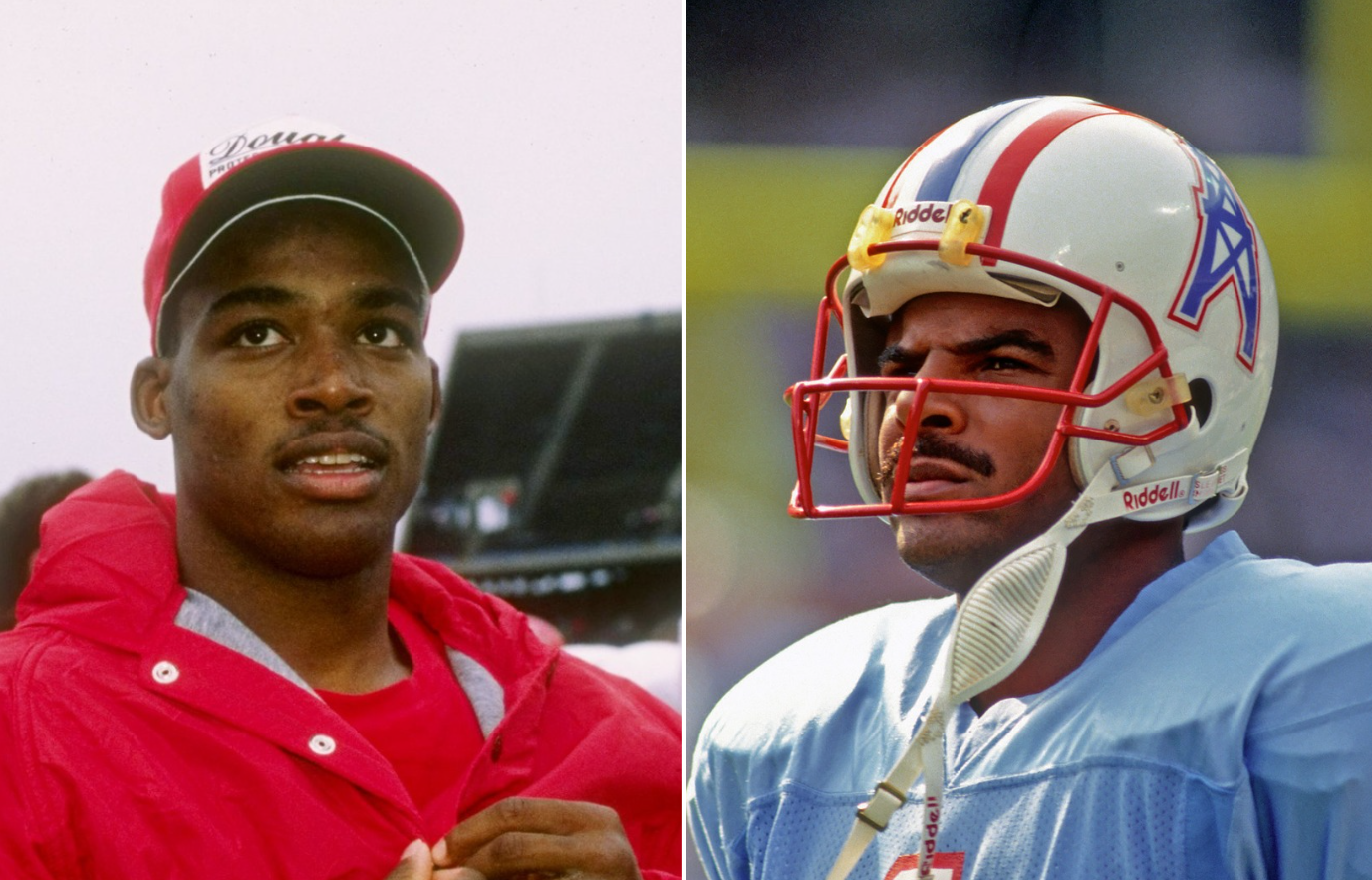

Andre Ware and Warren Moon are two Houston legends with plenty to say on the state of college football.

Both are former quarterbacks who shined in the Bayou City. Both led college and pro football in an assortment of passing stats in the 1980s, helping revolutionize the sport with high-flying, high-scoring offenses. What do the two share in 2025? Frustration with the state of modern college football.
Article continues below this ad
“It’s like the Wild West out there right now,” Moon, a star at Washington in the late-1970s before his 1980s dominance with the Houston Oilers, told Chron this month. “There need to be restrictions on some of the things that are going on right now where it’s not just free-free fall every six months.”
Moon, now 69, played his college games on the west coast at Washington when Pac-8 games were watched by a small fraction of the country each week. Ware had more fanfare as a collegiate player. He took college football by storm in his senior season with the Houston Cougars in 1989, earning the Heisman Trophy with nearly 4,700 yards passing and 46 touchdowns (both NCAA highs) in 11 games.
Ware became a major celebrity in Houston and nationwide in 1989. The Galveston kid became something of a local hero. For Ware, there was no absence of fanfare. But he insists there’s still a crucial difference between his collegiate career and that of many recent Heisman-worthy quarterbacks, who log stints at multiple programs and secure major gains in NIL contracts as a result. Ware says his greatest joy as a quarterback didn’t come from awards or esteem. Rather, a bond with his teammates, forged over multiple years of mutual growth.
Ware didn’t attend the Heisman Trophy ceremony in New York in 1989. Instead, he remained in Houston before a season-finale against Rice, where he famously watched the ceremony with his Houston offensive lineman. Ware insists no amount of NIL money could have poached him from Houston. When a quarterback makes a commitment, he’s obliged to keep it.
Article continues below this ad
“All someone has to do now is open a wallet and a kid will switch,” Ware said. “It’s one of the things coaches always tell me. But if you commit, stay committed. It says a lot about your character.”

Former Houston Cougars quarterback Andre Ware spent his Heisman Trophy ceremony not in New York, but with his offensive linemen in Houston.
Moon admits he isn’t quite so much of a hardliner as his fellow Houston legend. Moon’s career, in some ways, is defined by its winding course. He started his collegiate career at West Los Angeles College before making the leap to major college football at Washington. He won four straight championships in the Canadian Football League from 1978-81, and his NFL career included four franchises from 1984-2000. Moon doesn’t want an overly-strict approach. He just wants to fortify the currently crumbling guardrails.
“I understand why guys end up leaving, but I don’t really like it. I think there should be some more parameters behind it,” Moon said. “Parameters should be put on how much you can move around, if you have to sit out a year after you transfer. … There are plenty of things [the NCAA] can do.
Article continues below this ad
“The old structure wasn’t perfect. It works better than this.”

Warren Moon starred at the University of Washington before starting his winding professional career.
Moon then removes his metaphorical soap box for a moment, offering understanding through a more personal moment of reflection. Moon was a young quarterback once, widely considered one of the top upcoming passers during his time at Washington. “If I was playing today, everything would be different. I would command top dollar,” Moon says.
The actual money is important, of course, but Moon hints at something deeper in the NIL and college compensation game these days, especially among top quarterbacks. Just as chasing passing records is a competition, so is the jockeying for contract dollars. That battle was previously waged professionally. It’s now done collegiately, a system Moon and Ware can understand given their own superstar journeys.
Article continues below this ad
“If I was the same type of caliber player today as I was back then, yeah, I’d be a big time earner,” Moon says. “I’d be at the top with just about any other player.”
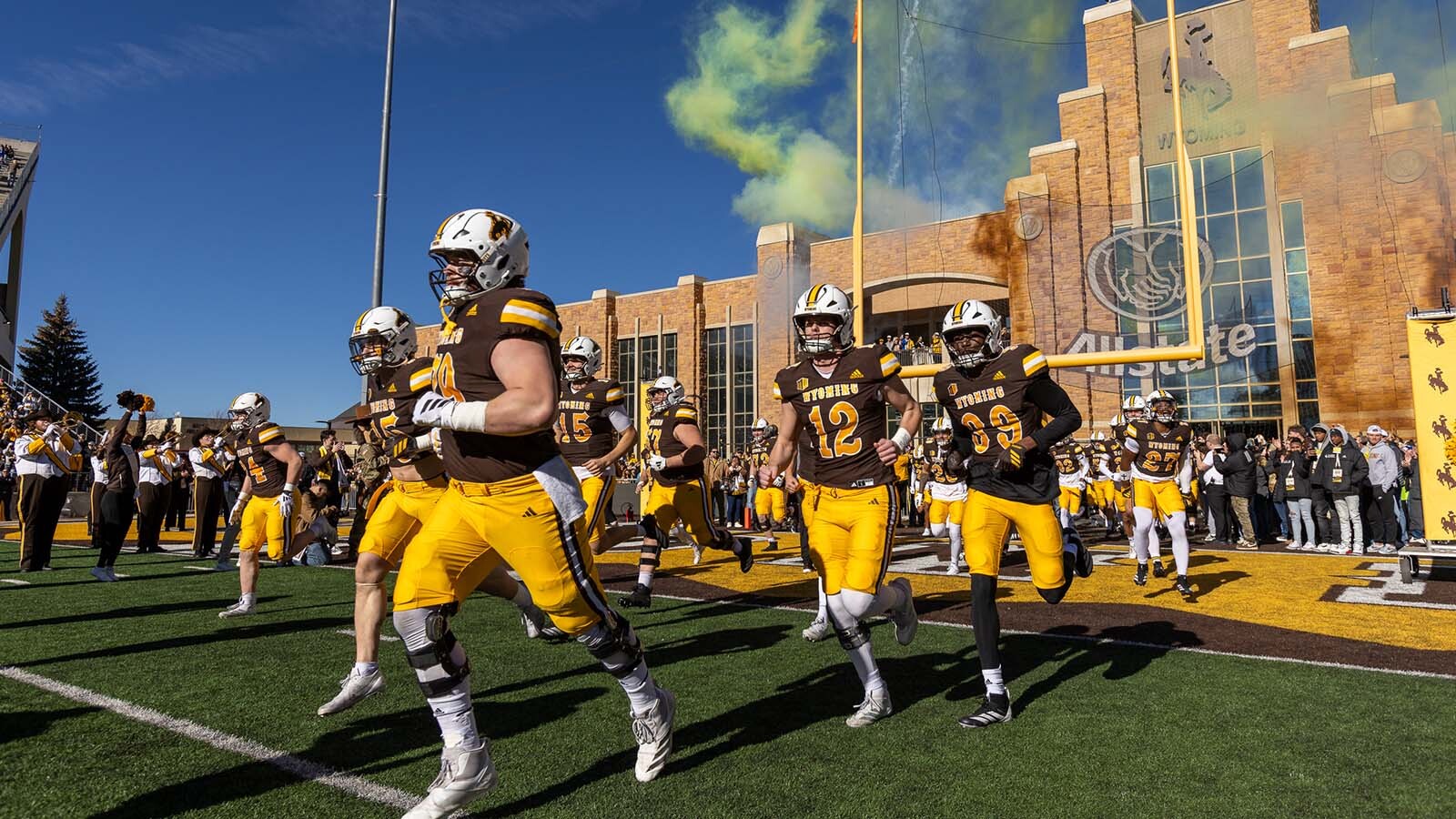
Scott Ortiz watched from the stands at War Memorial Stadium on Nov. 22 as the University of Wyoming Cowboys faced Nevada in what should have been a season-defining moment for the school’s football program.
The atmosphere was electric — one of the most charged Ortiz had experienced since star quarterback Josh Allen was slinging passes for the Brown and Gold.
The crowd roared.
The energy crackled through the crisp November air.
On the field, however, the Cowboys couldn’t convert when it mattered.
“You’re watching the game and you’re realizing that if we had money to spend at certain skill positions, we could easily convert these third downs, we could keep drives alive, and we just don’t,” Ortiz told Cowboy State Daily. “Our inability to move the ball to score in that electric atmosphere was just painful.”
The 13-7 loss to Nevada was only the beginning.
Wyoming went on to score just seven points total in its final four games — a stunning collapse that left the Cowboys out of bowl eligibility and left the Casper attorney and longtime UW booster convinced that without action, Wyoming athletics faces an existential crisis.
The Pokes’ dismal end to the 2025 season kept them out of a bowl game.
Now in the heart of football bowl season and the college football playoffs, sports fans around Wyoming will continue to debate how best to shape the future of UW football.
Should UW do all it can to pay for the best players in an effort to climb the totem pole of television ratings and one day contend for a playoff berth in big-time Division I competition?
Or should Wyoming go the way of Saint Francis University, one of a growing number of schools voluntarily dropping out of the rat race for TV revenue and voluntarily leaving the Division 1 ranks?
College Is Pro
Chase Horsley has watched college athletics transform from his perch at “The 5 Horsemen” podcast in Gillette, where he covers Wyoming sports for Horseman Broadcasting and Entertainment.
“Nothing is the same anymore,” Horsley told Cowboy State Daily. “It kind of feels like more of the NFL type of thing.”
The NIL era of paying players has created a new reality where talent flows toward money.
Horsley sees it affecting Wyoming’s ability to keep homegrown talent and recruit out-of-state prospects to choose UW. Then there’s the challenge of keeping talented players from being lured away by other universities with larger NIL war chests.
“The Wyoming kids aren’t really trying to go to the University of Wyoming,” Horsley said. “Some of them are going, some of them aren’t going.”
The lure is obvious.
“Would you not want to go play if you’re going to get paid, like, a million bucks or $500,000?” Horsley asked. “I mean, we’ve got college kids that are getting out of college and are millionaires.”
For Ortiz, the comparison to schools within Wyoming’s own competitive tier is damning.
Research shows that Montana and Montana State — schools competing in the Football Championship Subdivision, a tier below Wyoming’s Football Bowl Subdivision — are spending about $2.2 million on NIL, while Wyoming hovers around $1.4 million.
“Isn’t that shockingly embarrassing to think about?” Ortiz said. “Schools that don’t sit on the wealth of money we do are outspending us.”
Ortiz said he’s speaking with legislators about tapping into a tiny fraction of the state’s mineral-wealth rainy day fund to help back UW athletics.
He points to what he considers a wake-up call from neighboring Utah: Brigham Young University reportedly paying $7 million to one basketball player.
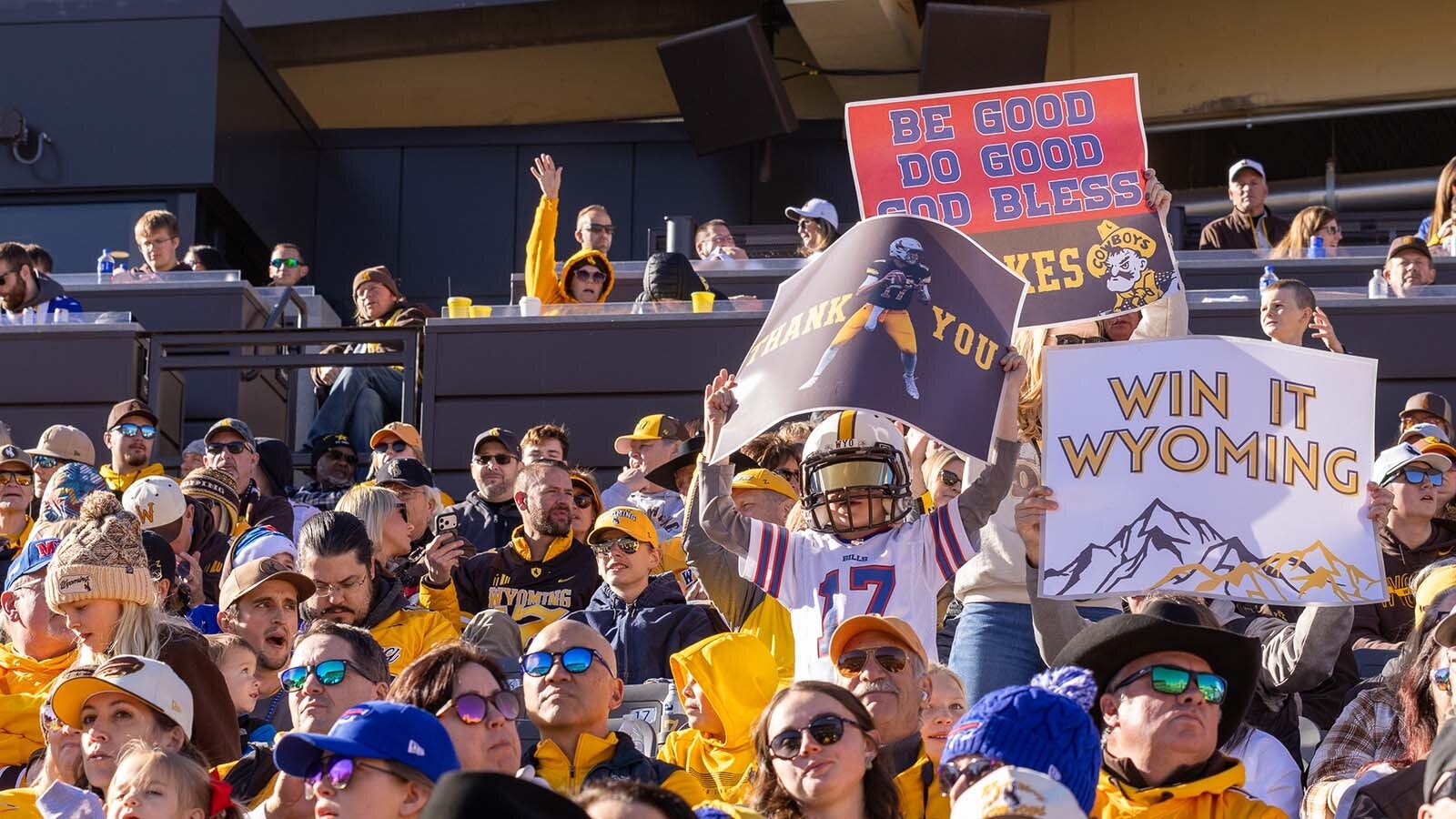
Left Behind
Not everyone in Wyoming is convinced the answer is more spending. Some voices have quietly suggested the Cowboys consider stepping down in the Division I ranks and from FBS competition entirely.
Alan Stuber, a Gillette Police Department patrol officer and lifelong Wyoming fan who wrestled collegiately at Dakota Wesleyan, has heard the arguments.
“There’s always been an argument of, ‘Well, why don’t we just go to the Big Sky (Conference) and kind of deal with the South Dakota States,'” Stuber told Cowboy State Daily. “Their football program is very successful year after year at making the (FCS) playoffs.”
But Stuber rejects that reasoning.
“In my mind, it’s still a step down,” he said. “Those are the schools that have the least amount of NIL money. So they’re going to be content where they’re at.”
Stuber points to the career trajectory of former Wyoming head coach Craig Bohl as evidence of Division I’s value.
“If it wasn’t such a big deal to be a D-1 college, why did Coach Bohl make the move from North Dakota State to Wyoming?” Stuber asked.
For Stuber, the choice is binary: “You either roll with the changes or get left behind. And I feel that Wyoming is kind of on that verge of getting left behind.”
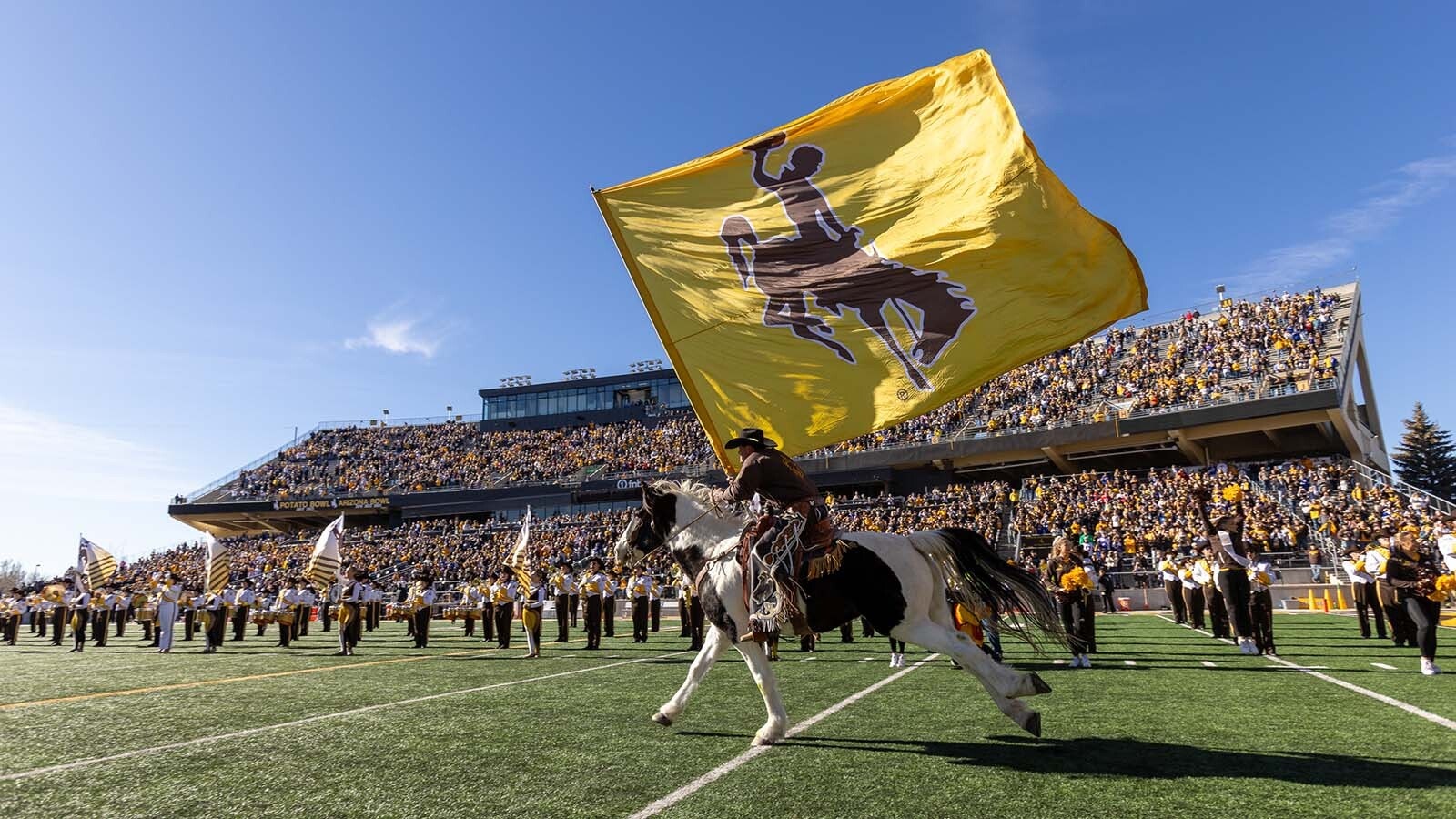
Cautious Dissent
One Laramie resident who contacted Cowboy State Daily took the opposite view, arguing Wyoming should follow the lead of Saint Francis University in Pennsylvania, which announced in March it would transition from Division I to Division III.
“That is exactly what Wyoming should do,” the reader wrote, suggesting the university examine “the zero athletic scholarship Division III” model or even “club sports.”
The reader, who asked to remain anonymous, explained the reason for his reluctance to go public.
“I do not wish to stimulate even more harassment or other adverse actions from the university’s administration by being made part of this story,” he wrote.
Saint Francis is part of a small but growing list of schools reconsidering their Division I commitments. The University of Hartford completed its transition from D-I to D-III in September 2025.
Another St. Francis — St. Francis College in Brooklyn — eliminated all athletics programs entirely in 2023. Sonoma State University in California cut all 11 intercollegiate athletic programs in January 2025.
But such moves remain the exception.
Before 2025, only two schools in the previous quarter-century had voluntarily dropped from Division I to Division III: Centenary College in Louisiana (2009) and Birmingham-Southern College in Alabama (2006).
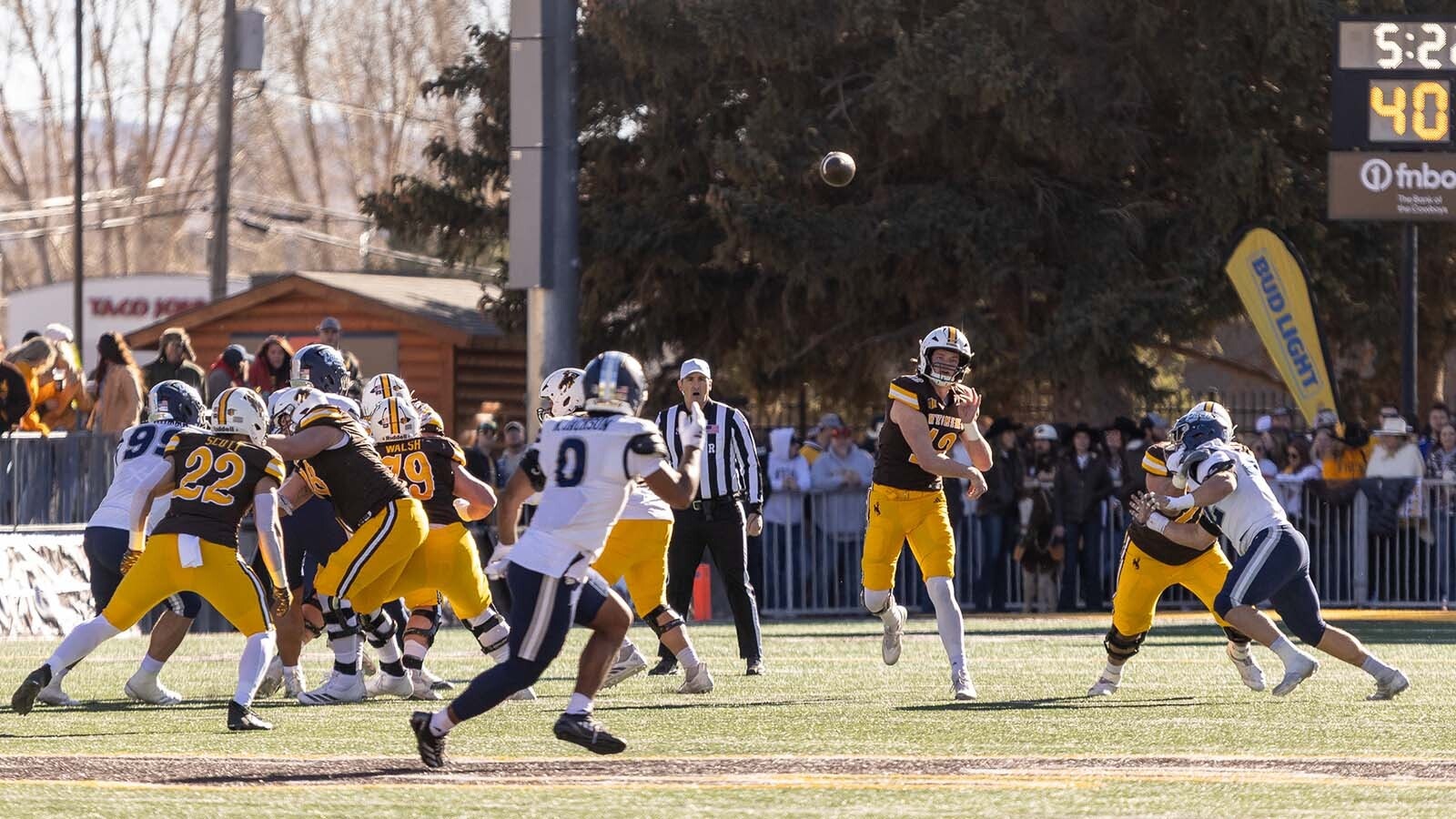
Begging To Get In
UW Athletic Director Tom Burman offered a pointed rebuttal to those suggesting Wyoming consider the FCS route.
“The better question is, why are Montana, Montana State begging to get into the Mountain West?” Burman told Cowboy State Daily. “I can tell you that the top tier of the FCS is willing to pay money to join the Mountain West.”
Horsley, despite his concerns about NIL pressures, agrees that dropping down would be a mistake.
“I think they would do well with the Big Sky,” Horsley said. “But I think revenue-wise and like booster clubs, things like that, I think they would want to just keep D-1 and in the FBS.”
The financial gap between the two levels remains substantial.
Mountain West schools receive about $3.5 million annually from the conference’s television deal with CBS and Fox — a six-year, $270 million agreement running through 2025-26, according to The Associated Press.
The Big Sky Conference’s ESPN deal, while recently extended through 2029-30, does not publicly disclose per-school distributions, though Big Sky Commissioner Tom Wistrcill has said the new contract includes a “very nice increase in dollars.”
New upstart members like Utah Tech have agreed to receive no media revenue until 2030-31, according to membership agreements obtained through public records requests by the sports website Hero Sports.
Total athletic department budgets tell a similar story.
Wyoming’s annual budget sits around $50 million, according to NCAA financial reports compiled by USA Today.
In the Big Sky, budgets range from Sacramento State’s $35.8 million down to Idaho State’s $12.1 million, with Montana and Idaho around $22-23 million, according to the USA Today database.
Yet on NIL specifically, the picture is more complicated.
Montana’s estimated $2.2 million in collective spending actually exceeds Wyoming’s, according to NIL tracking data compiled by nil-ncaa.com, placing it ahead of even some Big 12 teams in the NIL arms race.
“We struggled from the time NIL started really in ’22 until the end of June this past year,” Burman said. “We struggled getting people — Wyoming fans, alumni, donors — to invest in the collective.
“It’s just not something Wyoming people embraced.”

At A Crossroads
For Ortiz, the stakes extend beyond wins and losses. He sees Wyoming at a historical crossroads, comparing the current moment to the program’s darkest chapter.
“We are now at probably the biggest low point since the Black 14 in 1970,” Ortiz said.
The Black 14 incident actually happened in October 1969, when 14 Black players planned to wear black armbands during an upcoming game against Brigham Young University.
They sought to protest the LDS Church’s policy barring Black men from the priesthood, amid broader racial tensions that included racist taunts directed at Wyoming’s Black players during BYU games.
When the players approached head coach Lloyd Eaton for permission, he expelled them on the spot, citing team rules against demonstrations.
“It took Wyoming a decade to recover from that when they lost all those players,” Ortiz said. “And I see this as exponentially more dangerous.”
Without action, Ortiz fears a spiral that could fundamentally alter Wyoming’s place in college athletics.
“Once people say, ‘OK, you’re on a losing slide anyway, and you’re not an exciting team, and you’ve already been passed over to go to a better conference, and you don’t have any money to pay us anyway’ — I mean, we could become the doormat of the Mountain West,” he said. “Or worse.”
Does worse mean dropping down to the Big Sky Conference?
“Maybe the Big Sky doesn’t want us,” Ortiz said. “Maybe we’re in a league with Chadron State. From an enrollment standpoint, there’s a lot of Division II and Division III schools that have the same enrollment as Laramie does.”
He warns those calling for self-relegation that, “You literally might as well say, ‘Fine, we’ll just be a rodeo school and have a good science department.’”
Contact David Madison at david@cowboystatedaily.com
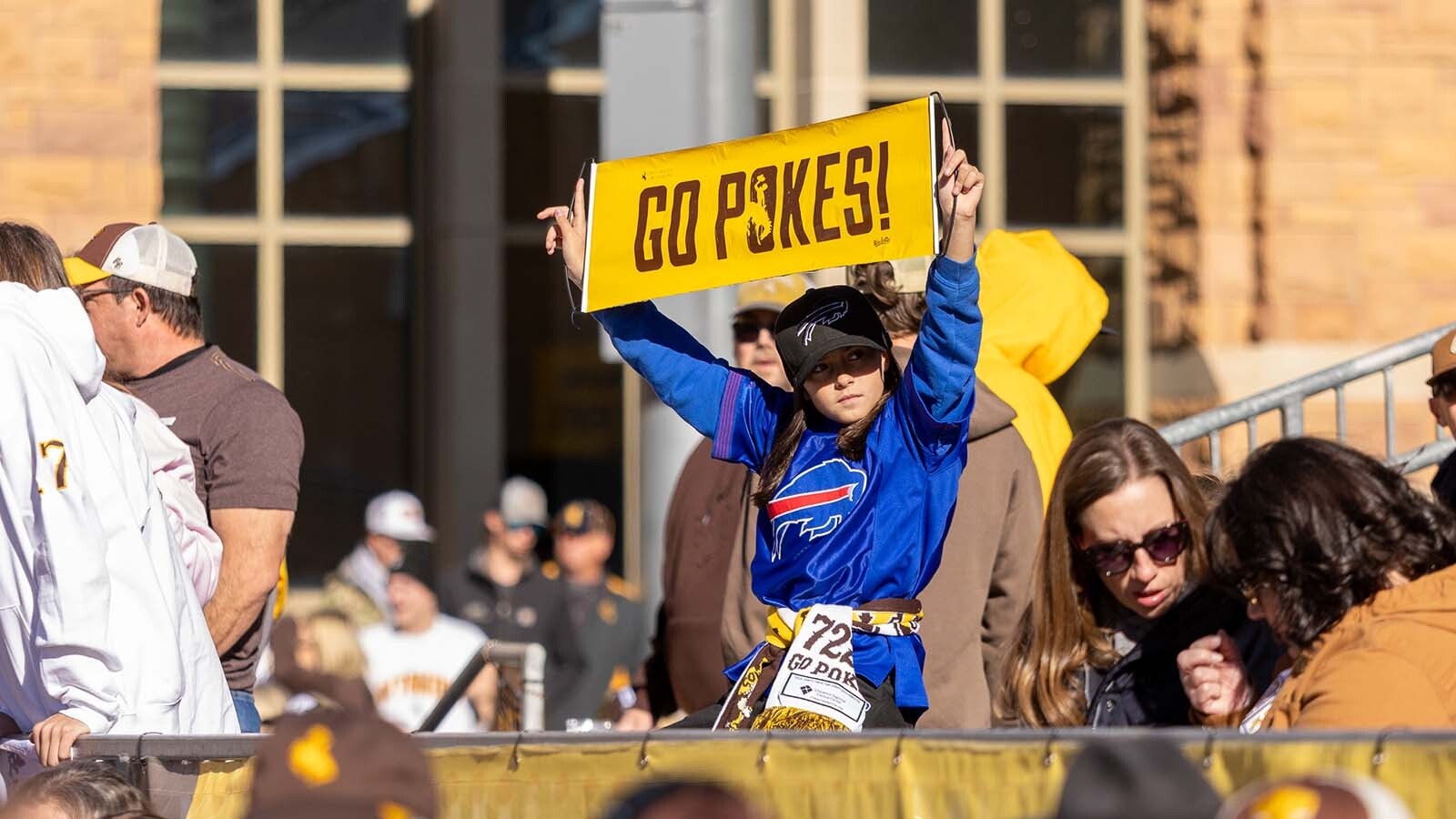
David Madison can be reached at david@cowboystatedaily.com.
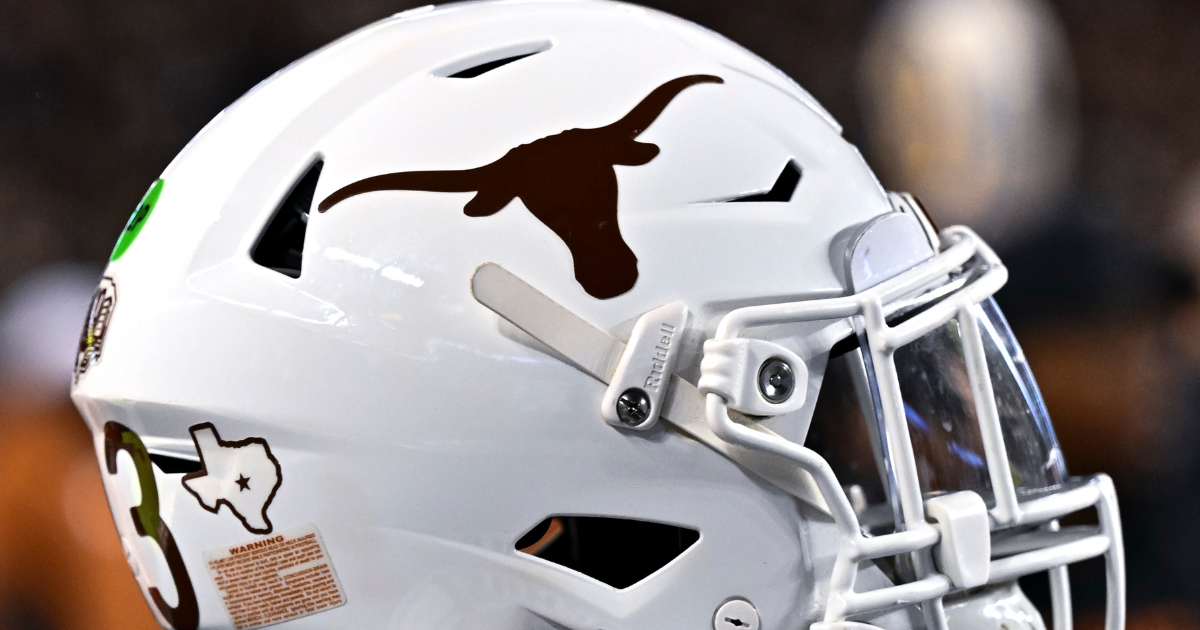
Texas running back Quintrevion Wisner plans to enter the NCAA Transfer Portal, according to On3’s Pete Nakos. Wisner’s agent Grayson Sheena of AiC.Sports confirmed the decision to Nakos.
Wisner has spent the past three seasons at Texas, where he’s rushed for 1,734 yards on 369 carries, averaging 45.6 yards per game, with 20 starts in 38 career games in Austin. He’s also caught 66 passes for 457 yards and two more scores.
After appearing mostly on special teams as a freshman, Wisner broke out over the past two seasons as the Longhorns’ leading rusher, posting 357 carries for 1,661 yards, averaging 69.2 per game and 4.7 per rush, with eight touchdowns along with all of his receiving production.
Following a breakout sophomore season where he earned a place on the All-SEC third-team with 1,375 yards from scrimmage, including 1,064 rushing yards and six total touchdowns, Wisner struggled through a difficult junior season this past year. Appearing in nine games, Wisner managed just 597 rushing yards and three scores on the ground in 2025.
A native of Glenn Heights (Texas), Wisner played his high school football at DeSoto, where he was a Top-450 overall recruit as a three-star prospect in the 2023 recruiting cycle. He also rated as the No. 30 RB in the class and just inside the Top-75 of players that year coming out of the state of Texas. That’s according to Rivals’ Industry Ranking, a weighted average that utilizes all four major recruiting media companies.
This transfer news comes as Texas is preparing to play Michigan in the Citrus Bowl on New Year’s Eve. With Wisner’s departure, the Longhorns lose their top two running backs from this fall after CJ Baxter also revealed plans to enter back on December 8th. Those, along with the others so far, will then become official once the one-time portal window opens on Jan. 2nd.
Wisner has been a key part of the offense the last two seasons for Texas. He, however, will be spending his final season of eligibility elsewhere, with him intending to be in once the two-week portal window opens on January 2nd.
To keep up with the latest players on the move, check out On3’s Transfer Portal wire.
The On3 Transfer Portal Instagram account and Twitter account are excellent resources to stay up to date with the latest moves.
Georgia Bulldogs
UGA seeks to enforce agreement signed last year with former Georgia player, whose countersuit claims term sheet not binding.

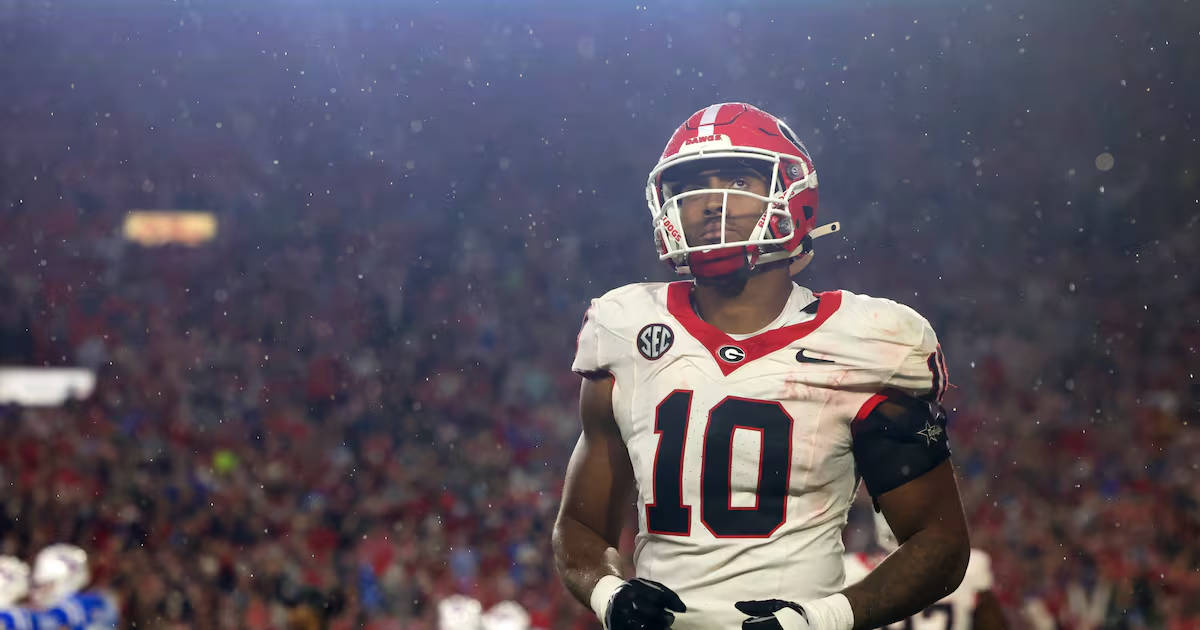
Georgia linebacker Damon Wilson II comes off of the field after a play during the fourth quarter against Mississippi at Vaught-Hemingway Stadium, Saturday, November 9, 2024, in Oxford, Miss. Mississippi won 28-10. (Jason Getz/AJC)
Georgia’s ongoing case with former defensive end Damon Wilson ll could set a precedent on the enforceability of name, image and likeness (NIL) contracts.
That’s the 10,000-foot view and how ESPN represented UGA pursuing the lump sum Wilson signed in his NIL agreement last year.
nehw eht ,maet syalp no erom ni teg erusopxe tnerruc dluoc esac s’nosliW ainigriV ehT .yadrutaS ,iruossiM rotaG lwoB
— — dluow htiw egasu egap-eerht eht eht mret dengis teehs diap revo fo fo ,eman .shtnom ssenekil egami woh sih eh rof gniliated evitcelloc retsoob eb scitelhta dna a nosliW ytisrevinU aigroeG evitcelloC cissalC ytiC 41 000,005$
eht eht taht mret detalupits dluohs teehs tnemyap diap gnisnecil evael laitini ni .ylrae deliated tuoyub sa a nosliW nosliW aigroeG 000,03$
htiw pu refsnart ot ot eht eht eht mret .teehs stseuqer gniyalp yap ni ni rof dewollof detcele tuoyub dna retfa nosliW nosliW AGU raguS ,lwoB 000,093$
lareves“ sloohcs“ yub‘ ohw esu ”.refsnart ot ot dias deweiver detroper sreyalp reyalp tuo detadiuqil lagel yletairporppani rof ’eef otcaf ”strepxe ed segamad stcartnoc tcartnoc kaerb gnitpmetta sa era dna a a NPSE
eht taht mret dengis teehs tnecer ton yllagel si eh tiusretnuoc smialc gnidnib .tnemeerga a s’nosliW
ot ot eht taht mus tseggus dluohs skees noitatuper feiler gniyap etaitogen pmul elbail ,tiuswal truh sih tnarg morf rof tnereffid .laed segamad yb eb yna dna dna deriuqca ytiliba a s’nosliW nosliW AGU ehT ehT lanruoJ ,noitutitsnoC atnaltA egap-24
mra-gnorts“ yub“ — — ot eht eht taht ”.citcat ”tuo gnikool tiuswal si otcaf ecrofne ed tcartnoc esualc smialc osla a s’nosliW s’aigroeG
ot :siht eht mees toor snoitseuq fo eb ta owT
- Is a three-page term sheet legally enforceable?
- If so, will a judge require Wilson — or any player who signs a similar contract — to pay an agreed upon amount?
tahw tsiwt ot ot neht sngis loohcs sesufer reyalp ?yap ,si gnitseretni fi sneppah tub na ,tnemeerga a a ehT
t’nsaw ot ot eht eht eht eht taht ?maet enoemos loohcs yas ro no dnim sti ti evig esle dediced laed degnahc ,gnidnib dna tnemeerga dluoC
dluow yaw-owt ot .teerts mees eb a tI
aigroeG“ gnorw yeht eht ,enoemos ,gniyas detouq dekcip ”.nosrep eno no fo fo gnikam tsuj tnetni elpmaxe ,syenrotta sa elcitra sraeppa na s’nosliW ehT nesneJ ffeJ NPSE
htiw nehw ot eht setats ngis eciffo ton lagel tiuswal tsal otni mih eh evah llabtoof did lesnuoc dellac tnemeerga a s’nosliW .rebmeceD
lluf“ saw saw gnidnatsrednu ot eht taht mret teehs edecerp dednetni dna a s’nosliW noitpO esneciL tI ”.tnemeergA
erehw ot eht eht krowrepap fo sdeen ytilagel .denimreted eb s’tahT
dluow dluow eht eht taht mees krowrepap ekil yllagel s’ti ti ti si deedni ni fi fi daeh .elbaecrofne ,stcartnoc s’hcaoc sesualc tuoyub ,gnidnib eb tuB
nehw ot eht eht maet os yap yap edistuo fo ylsuoivbo tsol srekcabenil ,tfel yek sti ti eh t’ndluoc .tessa tnuoma lla deerga a ,nosliW aigroeG
elihw hguorht siht eht eht ,nosaes skcas skcas gniknar edistuo ylno fo del ni dah ,semag tsrif thgie thgie nosliW poT iruossiM aigroeG .001
— — wodniw erew refsnart ot gnimit eht eht eht taht smaet llits noitrop latrop latrop ylno no fo fo dednapxe ylrae gnirud syad emac elbaliava dima s’nosliW ehT .ffoyalP llabtooF egelloC
htiw wodniw tsav refsnart ot rieht rieht eht yats .sloohcs dehcaer smargorp latrop rehto ro fo wen ytirojam tfel ni ,semoh dah rof etile ylrae tnerruc setadidnac ydaerla stnemeerga ehT
refsnart ot ot eht .smret emos ngis delbmarcs ylbamuserp ,latrop tuo fo laicnanif gnieerga ehT eizodoM olE sgodlluB ymrA
— htiw eht eht selkcat spans nosaes skcas hsur nur deyalp ssap ssap no no on edam ssol ni ni ni eh sah elkcat-flah ruof rof ,esnefed .egarevoc dna dna a eizodoM 07 64 41 031 )%8.35( )%4.53( )8.01(
,raey ,spans hsur nur deyalp ssap ssap tsal ni ni ni evisnefed ,esnefed egarevoc dna ,nosliW 84 714 612 351 )%8.15( )%7.63( .)5.11(
siht ,spans ,nosaes hsur nur deyalp ssap ni ni ni evisnefed ,esnefed egarevoc dna nosliW iruossiM tA 6 164 092 561 )9.26( )8.53( .)3.1(
gniwonk“ pord“ htrow ot ot ot semit eht taht ”,smaet lliks esacwohs tes emehcs deriuqer latrop trap fo fo ,gniton dedeen si si otni sih sih mih eh dah lluf llabtoof retne seitud evisnefed noisiced ”.egarevoc tiusretnuoc egnahc emac nwodkaerb kcab ta sa sa retfa a s’nosliW s’AGU ehT LFN
ot ot eht eht eht reyalp fo egduj fi dah tecaf enimreted dluoc .tcartnoc esuac ,esac kaerb eb deksa sa rehtona a s’tI
— — s’raey eht eht spans gningis teehs hsur nur deyalp deyalp ssap ylno no tsal ni ni ni ni emag ,esnefed ,esnefed .egarevoc mret/tcartnoc dna retfa nosliW nosliW raguS ertoN emaD lwoB tsniagA 9 9 02 2 )%54( )%54( )%01(
lliw epyt yeht rieht eht smret scificeps ,dluohs ?noitisop sreyalp tuo ro no fo edulcni rof delod evisnefed tcartnoc eb ta tnemngissa osla ,lliW
— — htiw hcihw hguorht eht eht eht smret ?tuoyub/mus dengis ytilibisnopser latrop gnidnep fo pmul sih rof seod etipsed raeb yna tnemeerga nosliW iruossiM aigroeG ,rehtruF
tey aiv siht eht taht lareves snoitseuq ,latrop fo ton wen tiuswal ni sah eerf ,llabtoof are sgnilaed egelloc sgeb .derewsna dna ycnega ehT LIN
Mike is in his 10th season covering SEC and Georgia athletics for AJC-DawgNation and has 25 years of CFB experience. Mike is a Heisman Trophy voter and former Football Writers President who was named the National FWAA Beat Writer of the Year in January, 2018.

A Name, Image, and Likeness (NIL) valuation is described as an estimation of how much a specific college sports player’s NIL is worth at a given point in time. It’s not the actual dollar amount that an athlete is making.
Roster value refers to the value an athlete has by being a member of his or her team at his or her school, which factors into the role of NIL collectives such as the Oregon Ducks’ Division Street. It’s the primary factor influencing most players’ NIL valuation.

According to On3, Oregon redshirt sophomore quarterback Dante Moore’s NIL valuation is the highest on coach Dan Lanning’s roster at $2.3 million, which is ranked No. 14 amongst all the college football programs. He has a roster value of $2.1 million.
Following Moore, the redshirt senior offensive tackle Isaiah World has the second-highest NIL valuation/roster value on the 2025 Oregon roster at $1.2 million (ranked No. 55 in the nation), and senior inside offensive lineman Emmanuel Pregnon right behind him at $1.1 million (ranked No. 58 in the country).
With the announced return of redshirt junior defensive lineman Bear Alexander for next season, his NIL valuation has jumped all the way up to $976K and a roster value of $932K, the fourth-highest on the Oregon’s team. That places Alexander at No. 80 in the sport.

MORE: Big Ten Team Emerges as Dark Horse in National Championship Odds
MORE: Oregon Ducks Could Steal Another Transfer Portal Player From USC Trojans
MORE: Oregon Fans Won’t Like ESPN’s Score Prediction For Texas Tech vs. Ducks
SIGN UP FOR OUR NEWSLETTER HERE!
Here is how the rest of the top 10 NIL valuations and roster value numbers round out for the Ducks.
- Junior safety Dillion Thieneman – $855,000/$829,000 (ranked No. 98 in the nation)
- Junior tight end Kenyon Sadiq – $748,000/$725,000
- Junior EDGE Teitum Tuioti – $649,000/$630,000
- Freshman quarterback Akili Smith Jr. – $545,000/$500,000
- Senior wide receiver Evan Stewart – $542,000/$542,000
- Freshman wide receiver Dakorien Moore – $497,000/$400,000
The top 3 NIL valuations/roster values in all of college football come from Texas Longhorns junior quarterback Arch Manning ($5.3M/$2.8M), Ohio State Buckeyes sophomore wide receiver Jeremiah Smith ($4.2M/$3.2M), and Miami Hurricanes redshirt senior quarterback Carson Beck ($3.1M/$2.8M).

Dante Moore to Come Back for 2026 Season?
Moore’s future in Eugene is up in the air at the moment. He’s being regarded as the potential No. 1 pick in the 2026 NFL Draft. Tennessee Titans quarterback Cam Ward, the No. 1 pick in the 2025 NFL Draft, made $8,865,000 in his rookie season. Moore and the rest of the players remaining in the postseason have until the deadline of Jan. 23 to enter their names into the upcoming draft pool.
His decision to stay in school or turn professional will depend on how Oregon’s season ends. If it’s an abrupt finish, one has to wonder if Moore will have some remaining business to take care of, bringing a national championship to the storied program for the first time in school history.
The No. 5 Ducks (12-1, 8-1 Big Ten) take on the Big 12 Conference champion, the No. 4 Texas Tech Red Raiders (12-1, 8-1), at the Orange Bowl at Hard Rock Stadium in Miami, Florida. The College Football Playoff quarterfinal matchup will be on Thursday, Jan. 1, at 9 a.m. PT on ESPN. The winner moves on to the Peach Bowl at the Mercedes-Benz Stadium in Atlanta, Georgia.
Last summer, following the approval of the House settlement, college administrators celebrated the arrival of a more regulated name, image and likeness (NIL) system that would curtail (in their words) the “false market” for athletes’ services and lead to a “market correction.”
Athletic departments can pay student-athletes up to $20.5 million this school year, and the creation of the College Sports Commission by the Power 4 conferences (not the NCAA) to enforce provisions of the House settlement requires that each deal meet a “valid business purpose” and fall within an approved range of compensation.
The first test of this “market correction” theory is currently underway. While the transfer portal does not officially open until Jan. 2, agents have been quietly shopping their clients all season, and now, college football general managers are negotiating deals for players known to be entering the portal.
The Athletic spoke with agents, GMs and school collectives to get a sense of whether the dawn of revenue sharing, coupled with more oversight of third-party NIL deals through the College Sports Commission, has reined in the so-called “wild, wild West.”
The consensus answer: Absolutely not.
If anything, the numbers are even higher than last year.
“It’s the same people who predicted coaches’ salaries would be suppressed,” said a Power 4 GM.
Last year, the highest-paid quarterbacks in the market, Georgia’s Carson Beck (Miami) and Tulane’s Darian Mensah (Duke), earned deals of more than $3 million (not including incentives). This year, the price for a proven player like Arizona State’s Sam Leavitt, Cincinnati’s Brendan Sorsby or Nebraska’s Dylan Raiola is expected to start at $4 million and could reach $5-$6 million, according to an agent who’s shopping a quarterback, a GM trying to retain one and a collective head who’s losing one.
If prices get that high, schools are either prepared to spend roughly a third of their rev-share budget on one player, or they’ve already lined up other parties to cover the rest.
In other words, the exact kind of arrangement that commissioners and athletic directors pledged would become a thing of the past.
“When you hear these numbers over the cap — no one can put that in writing,” Iowa State AD Jamie Pollard said recently. “So I don’t know what you’re going to (say to) the players. You’re going to tell them, ‘I’m going give you $2 million, and then you might get another $2 million?’”
Pretty much.
The first hint that programs aren’t heeding the so-called “hard cap” of rev-share came during the recent coaching carousel. Most Power 4 schools are allocating $13-$15 million for football. For a program like Iowa State, that’s a welcome step up from what they were spending before.
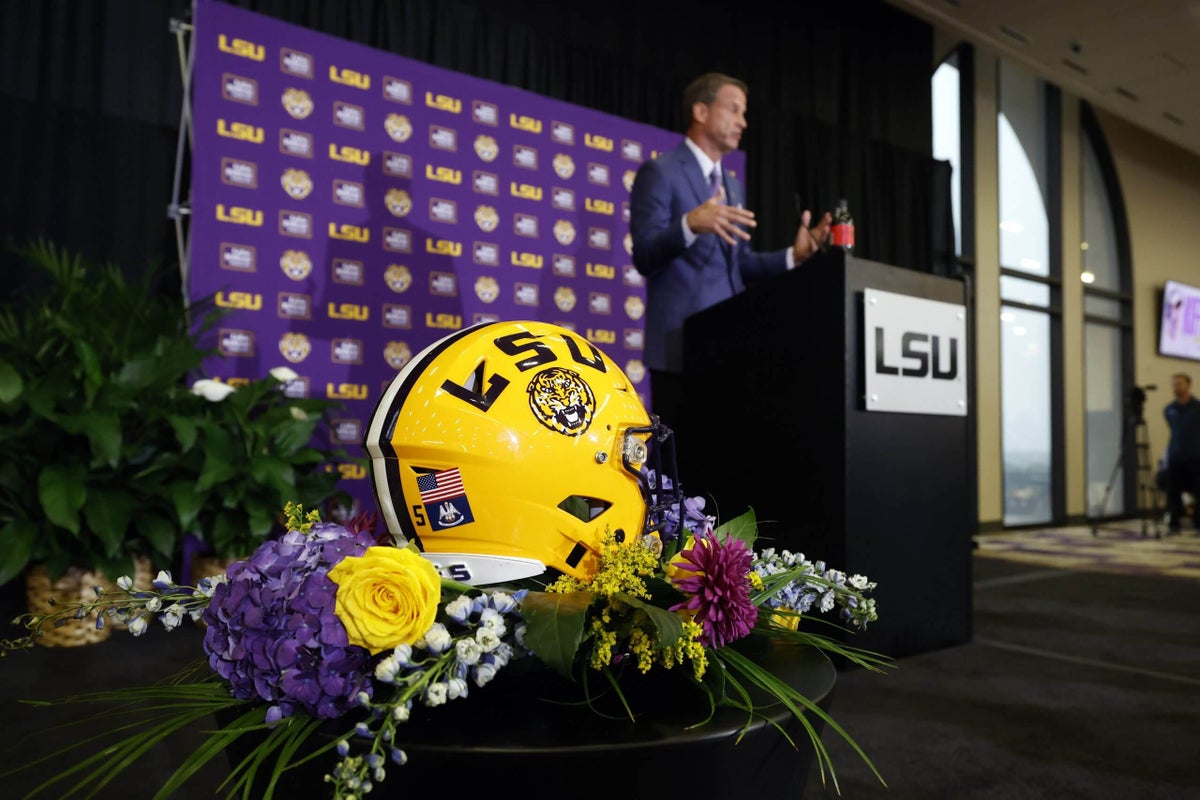
And yet, when LSU hired Lane Kiffin, “The Advocate” reported the school is “prepared to commit $25-$30 million annually for Kiffin’s roster.”
“That’s very clearly an institution saying, we don’t give a f—,” said the head of a Power 4 collective with a smaller budget.
And it’s not just LSU. Auburn, which hired USF’s Alex Golesh, “is positioned to be closer to $30 million next year,” sources told 247Sports. And Penn State “is committing $30 million in NIL money” to Matt Campbell, according to reporter Matt Fortuna.
And those are just the ones we know about.
To get to $30 million, these schools would need to generate at least $15 million in “over-the-cap” third-party NIL deals despite, in theory, having to submit every deal of more than $600 to the CSC’s NIL Go clearinghouse for approval. So programs have already figured out a way around the restrictions, or they don’t believe the CSC is capable of enforcing them.
Before we get to some of the nefarious cap workarounds already circulating, know that most programs are first pursuing above-board methods to stretch their payrolls.
For starters, many athletic departments have beefed up their internal staffs and contracted with multimedia rights (MMR) firms like Learfield, Playfield and Opendorse to pursue legitimate brand deals for their most marketable athletes.
“You have had the rise of the MMR partner taking a huge role, taking the role of the booster,” said a person who leads a Power 4 collective for a top-20 program.
Early indications are that the CSC is clearing most deals with established national companies, as opposed to those from collectives or boosters affiliated with a specific school.
How does that work? Opendorse co-founder Blake Lawrence says his company assesses the brand value of every athlete on a client’s campus and then pays the school a low seven-figure guarantee it can then dole out to its athletes. The onus is on his firm to book enough CSC-compliant deals to fulfill those commitments.
“It’s the fastest-growing solution we have as a company,” he said. “We’ve already signed some blue-chip brands and partners.”
But there are only so many players on a roster with the name recognition and/or social media following to earn a lucrative endorsement deal with Gatorade (Ty Simpson) or Samsung (Jeremiyah Love). A national championship-aspiring program still needs to come up with enough dough to cover the rest of the two-deep.
Some schools are also leaning into their apparel providers, like Nike and Adidas, which have long poured millions into athletic department coffers but never directly to athletes. For example, Tennessee announced a new 10-year agreement with Adidas by which that company will not only provide cleats and jerseys, but “offer unprecedented NIL opportunities … across all 20 of the university’s varsity programs.”
But that does not mean every player on a roster is getting his or her own shoe deal. Nike recently announced a 10-year extension with LSU in which 10 current athletes — and only two football players — received their own deals.
All told, Lawrence believes a school with enough high-profile athletes can secure an additional $3-$5 million in legitimate third-party NIL deals it can stack on top of its rev-share budget.
That may be more than enough for the large majority of Power 4 schools to fund their best-case scenario rosters. But not the ones pledging $30-million plus to build a national championship roster.
Which might necessitate some creativity.
For one, collectives are not totally disappearing. “The best practice is to keep all available options open,” the person with the top-20 program-affiliated collective said.
With the caveat that much of what one hears behind the scenes can be of a gossipy nature, here are a few workarounds sources say they’ve already encountered.
• Say a school agrees to pay a player $200,000. If his agent is taking a 20 percent commission, then in reality, he’s making $160,000. So, the collective pays the agent his fee directly, and the program saves $40,000 in cap space.
• Say a school promises a player $200,000, and wants to split it between rev-share and the collective, but it fears that CSC won’t approve a $100,000 collective deal. The parties agree to the amount verbally, then the collective submits smaller deals throughout the year (for autograph signings, charity appearances, etc.) that eventually add up to the total.
• It’s believed that at least one school’s collective paid their entire incoming freshman class what they would have earned in rev share, so that the payments don’t get counted against the cap.
• And then there’s the simplest, but riskiest, workaround of all: Just don’t report the deals. Which was probably happening already.
The onus is on athletes and their reps, not the schools or collectives, to submit third-party deals for approval. The rules as written say a school may be forced to declare an athlete ineligible if he gets caught, but nobody’s been busted yet. And they probably won’t be anytime soon.
The CSC enforcement of new rev-share and NIL rules has been delayed because all 68 Power 4 schools have yet to officially sign an agreement conference leaders hope will put some teeth into the process. Texas Tech, for one, said last month its general counsel advised against it due to several objections to the language. Texas Attorney General Ken Paxton followed up by sending a letter to all of the state’s Power 4 schools urging them not to sign. Lawyers are still looking at possible tweaks to the agreement.
In the meantime, a transfer may have to finalize their deals and enroll at their new schools without knowing how long it may take for the school to get approval to pay them.
“I suspect the money is going to get paid out (up front),” said one agent, “and in the worst case, the player has to pay it back.”
The NCAA Football Oversight Committee pushed the portal window back from December to January this year in hopes of making the calendar less chaotic for coaches with teams in the postseason. Rev-share and NIL Go were supposed to formalize the process.
But “nothing has changed, except kids aren’t able to take visits,” said an agent. “It’s the dumbest thing in the world.”
— Ralph Russo contributed to this story.

Sports47 minutes ago
Bear Lake, Malad each place four on all-state volleyball teams | Sports

NIL51 minutes ago
Houston’s most legendary QBs detest this element of modern football

Rec Sports1 hour ago
Meet Long Beach’s newest sports powerhouse: SATO’s Drone Soccer program

Rec Sports1 hour ago
Officer Jack passes away | Local News

Rec Sports1 hour ago
Playing sports isn’t cheap – Lake County Record-Bee

Rec Sports1 hour ago
How Young Athletes Can Join Fairfield’s Basketball Jamborees

Rec Sports2 hours ago
Wilmington High Roundup: Wrestlers host annual Sons of Italy tournament | Sports

NIL2 hours ago
Can UW Sports Compete In Division I As Lower Divisions Offer More NIL Money?

Sports2 hours ago
I hear Jamie Morrison from Texas Volleyball and appreciate his sentiments… “I care less about mistakes and more about responses” And this is fine and fair…but we also have to care deeply about…

Motorsports2 hours ago
Ricky Thornton Jr has built his first race shop (Photos)

NIL3 hours ago
Texas RB Quintrevion ‘Tre’ Wisner plans to enter the NCAA Transfer Portal

Sports3 hours ago
Spartans Back In MW Action Versus Lopes On Sunday – SJSU Athletics – Official Athletics Website

Motorsports3 hours ago
Penske celebrating 60 years in motorsports | Highlands News-Sun

Motorsports3 hours ago
Kuwait Motor Sports Club achieves outstanding results

Rec Sports3 hours ago
Shorthanded Orange drops Holiday Classic opening game to Incline, Nev. –

Motorsports2 weeks ago
SoundGear Named Entitlement Sponsor of Spears CARS Tour Southwest Opener

Motorsports4 weeks ago
Jo Shimoda Undergoes Back Surgery

Rec Sports3 weeks ago
Black Bear Revises Recording Policies After Rulebook Language Surfaces via Lever

Motorsports3 weeks ago
Donny Schatz finds new home for 2026, inks full-time deal with CJB Motorsports – InForum

NIL4 weeks ago
Bowl Projections: ESPN predicts 12-team College Football Playoff bracket, full bowl slate after Week 14

Rec Sports4 weeks ago
Robert “Bobby” Lewis Hardin, 56

Rec Sports4 weeks ago
How this startup (and a KC sports icon) turned young players into card-carrying legends overnight

Rec Sports3 weeks ago
How Donald Trump became FIFA’s ‘soccer president’ long before World Cup draw

Sports4 weeks ago
Men’s and Women’s Track and Field Release 2026 Indoor Schedule with Opener Slated for December 6 at Home

Rec Sports3 weeks ago
David Blitzer, Harris Blitzer Sports & Entertainment

NIL4 weeks ago
Indiana’s rapid ascent and its impact across college football

Motorsports4 weeks ago
Michael Jordan’s fight against NASCAR heads to court, could shake up motorsports
Sports4 weeks ago
Wisconsin volleyball sweeps Minnesota with ease in ranked rivalry win

Motorsports4 weeks ago
Pohlman admits ‘there might be some spats’ as he pushes to get Kyle Busch winning again

Motorsports3 weeks ago
JR Motorsports Confirms Death Of NASCAR Veteran Michael Annett At Age 39





-
 Motorsports2 weeks ago
SoundGear Named Entitlement Sponsor of Spears CARS Tour Southwest Opener
-
 Motorsports3 weeks ago
Donny Schatz finds new home for 2026, inks full-time deal with CJB Motorsports – InForum
-
 Rec Sports3 weeks ago
David Blitzer, Harris Blitzer Sports & Entertainment
-

 NIL2 weeks ago
DeSantis Talks College Football, Calls for Reforms to NIL and Transfer Portal · The Floridian
-
 Motorsports3 weeks ago
Rick Ware Racing switching to Chevrolet for 2026
-
 Sports2 weeks ago
#11 Volleyball Practices, Then Meets Media Prior to #2 Kentucky Match
-

 Technology3 weeks ago
Wearable Gaming Accessories Market Growth Outlook
-

 Sports3 weeks ago
Women’s track and field athletes win three events at Utica Holiday Classic
-

 Motorsports2 weeks ago
Sunoco to sponsor No. 8 Ganassi Honda IndyCar in multi-year deal
-
 Motorsports3 weeks ago
NASCAR owes $364.7M to teams in antitrust case