If you are or have been a Little League parent, you can relate to this story.
A young kid strikes the ball. It rises over an outfielder’s head. He starts running from home plate.
But he is so fast – and so excited – he threatens to pass the other baserunners.
“No, no, go back, go back, go back!” parents implore.
“Why am I going back?” he thinks to himself. “I just hit a home run.”
When did the boy, Curtis Pride, start dreaming about playing in the major leagues?
“After I hit a home run my first at-bat,” he tells USA TODAY Sports.
It’s a thought many of us have as youths, but for Pride, it seemed impossible. He would need to become the first deaf player to make it to the majors since Dick Sipek in 1945.
“It’s a tricky business, being deaf in a hearing world,” Pride writes in “I Felt the Cheers: The Remarkable Silent Life of Curtis Pride,” his memoir that was released this year about his life and big league career that spanned 11 seasons. “I have never tried to portray myself as someone who can hear, nor would I ever try to hide the fact that I cannot. It is mere fact, and it brings neither pride nor shame. It’s just who I am.”
As Pride has found, often it’s the self-imposed obstacles – or those imposed by others – that are harder to clear than the actual barriers in the way of your goal.
Players mocked him from Little League to the minors, sometimes right to his face. People overlooked him.
But he had the support of his parents, and he found the right group of friends, coaches and teammates to give him ground support. It’s what every kid needs.
“Curtis’s story of becoming Major League Baseball’s first full season deaf player of the modern era is unique but it’s also universal,” Doug Ward, Pride’s co-author, tells USA TODAY Sports. “Everyone has a dream, so everyone can relate to Curtis and appreciate the hurdles he overcame to make his dream come true. At book signing events, Curtis handwrites the inscription, ‘Anything is possible.’ I think that summarizes the widespread appeal of Curtis’s singular story.”
Pride, 56, played for 23 professional teams over 26 seasons. He’s now a father and has been a coach of youth and college baseball players. We asked him how his experiences can give young athletes and parents perspective on their games:
As parents, and as coaches, our job is to bring out the best in kids, regardless of their skill level
John and Sallie Pride never made Curtis feel like a burden. Sallie, their son says, never even felt she was making a sacrifice.
“We have no time to feel sorry for ourselves or for Curt if he’s going to have a decent life,” John recalled his wife telling him, right after their son was born, for a Washington Post story in 1993. “We have to start reading and learn how to help him.”
Like many of us, Pride’s parents felt he needed to play sports in order to be a kid.
What are sports, but a place that can help us associate with others, and maybe even find our niche in life, at least in early life.
“We have a lost cause,” Curtis Pride writes about how he was presented by the Wheaton, Maryland, Boys Club, to his first T-ball coach, Don Stein, in the mid-1970s. “A player with two strikes against him: He is deaf, and he is Black. His father is making a fuss, so somebody has got to take him. Will you do it?”
Curtis remembers his dad being worried, spending a lot of time with the coach, relaying to his son what the coach was saying to the team.
We all hope we meet someone like Stein, who not only makes you feel comfortable and welcome, but plays to your strengths.
Curtis could speak and read lips. Stein worked with John Pride to figure out how the players could communicate, especially in catching popups or fly balls.
“Anytime I called for the ball, it’s my ball all the way, so that there’s no misunderstanding,” Curtis Pride told USA TODAY Sports in our video interview. “So if I don’t say anything, if the guys wave me off, I know that it’s (their) ball. I don’t remember ever having a collision or anything like that.”
Youth coaches, including myself at times in the past, tend to play the most polished kids a lot more than the ones who are slower to develop.
Over time, we realize our broader purpose. Be the coach who gives everyone a chance. You never know what you might find.
“It wasn’t so much that Don made me a better player, which he did,” Pride writes, “but it was more a case of him allowing me to believe I could be a good player. … Don was the first person outside of my family to open a major door for me and, in doing so, he began a butterfly effect that altered my life’s course for the better.”
If you work with someone’s deficit – or failure – he or she can before a source of strength
About 30 years ago, I was beginning my career as a part-time sportswriter for The Washington Post when I came across a story angle about a juggernaut volleyball team at Gallaudet University.
Gallaudet is a school for deaf and hard of hearing students that competes athletically against schools that have students who hear. It’s where Pride coached baseball after his playing career, and where he would tell his players that if they wanted others to view them differently, they needed to see themselves differently.
“I never viewed the deaf kids in my program any differently than the major leaguers I played alongside,” Pride writes.
Peg Worthington, who compiled a 615-305 record at the school, told me in 1995 she devised a plan where each player stuck to a specific area of the volleyball court. They gained comfort in performing through practice and repetition.
It’s a similar message Braves manager Bobby Cox would one day impress upon his players, including Pride a few years later: Know your role, adapt to it, perfect it.
Although Worthington said sometimes her players got “burned” because they couldn’t cover the entire court or hear when a teammate tipped a ball at the net, they brimmed with confidence.
“They never take their eye off the ball,” Penny Fall, then the coach of Washington College, a regional school that played Gallaudet, told me. “I’ve considered putting earplugs on my kids to make them focus that well. I’m tired of being wiped up and down the court (by Gallaudet), but I’m also happy for them.”
It’s your job as a coach to find out what’s inside every kid and unlock it.
Giving Pride the freedom to use his speed and chase down balls gave him confidence. His teammates, dismissive at first, accepted him as he practiced and showed them he could hit.
“I don’t like (not) knowing my role,” he told me in our interview. “The role can always progress as maybe you have a little bit more responsibility during the game, where you get better, and then, you start a game.”
You have to fail in order to get better
Pride’s parents let him get into basketball, gymnastics, track, wrestling and football. When he reached high school, he was the kid who changed from his baseball to soccer uniform as his father drove across Montgomery County, Maryland, and back.
“Make a point for kids at a young age to learn how to deal with failure,” Curtis Pride says. “That’s why my parents have always encouraged me to play different things, to try different things, even though failure was possible, but because you never know what you can do until you try.”
Just last month, Phillies pitcher Orion Kerkering, with the National League Division Series on the line, struggled to field a two-out comebacker to him. He appeared to panic and quickly threw wildly home when he may have had a chance to extend the game and get the out at first base.
“We’re not perfect, we’re human beings,” Pride says. “We all feel bad for him. But it’s not his fault that the team lost. They had so many other opportunities to win the game. And they should never put that on him. Because of what he had to deal with at the moment, it’s gonna make him stronger.
“I’ve seen a lot of parents trying to protect their kids but they’re not helping them (when) they get older, when they do fail. But now, they’ve never had the experience of already having to deal with failure. So they become lost.”
Pride was 23, and in his seventh minor league season, at Class AA Binghamton (New York). He saw his teammates make fun of him across the locker room, he felt the hurt of his first girlfriend broke up with him. He couldn’t seem to hit.
He stuck out the season – as his father insisted – and returned to Maryland with the intention to quit. It was time, so it seemed, to pursue his degree in finance from William & Mary, which he earned congruently with his early minor league career with the Mets (another requirement of his father).
First he worked at his former high school as a teacher’s aide who served kids with disabilities.
“They didn’t know I played professional baseball until the teacher told them about my background,” Pride says. “And these kids were shocked” ‘How can you play professional baseball, you’re deaf?’
“I was talking to the kids. We all have different disabilities, but that shouldn’t stop us from pursuing our dreams and goals. We know what our capabilities are and we shouldn’t allow other people to place limitations on us. After I had that conversation with my class, I went home, and I talked to my mom, and these kids totally inspired me. What kind of message would I be sending to them if I quit pursuing my goal, the dream? So I felt I owed it to them.”
YOUTH SPORTS SURVIVAL GUIDE: Pre-order Coach Steve’s upcoming book for young athletes and their parents
‘We’re never alone’ in the pursuit of our goals
Steve Swisher, Pride’s manager at Binghamton who had worked tirelessly with him in the batting cage, had told him that if he starts quitting now, it will become easy, and he’ll quit other things in his life.
Pride learned to thrive with the help and advice of others. He credits his neighbor, Randy Hurowitz, who played goalie for him every day as Curtis took shot after shot against him, with helping him reach the U-16 national soccer team.
Players on the basketball team at William & Mary, where Pride played point guard, would give him a nudge into a double switch on defense. He developed a sixth sense, he feels, fueled by the confidence of those who believed in him, to make up for his lack of hearing.
When he signed with the Montreal Expos in 1993, his manager in Class AA Harrisburg was Jim Tracy, who made him feel like his sole purpose in life was to make Pride a better person and player.
“We all go through struggles, but we can rely on other people to help us get through,” Pride says. “We’re never alone. It’s just always about being positive.”
Always remember to smile
When he returned to baseball, Pride met his future wife, Lisa, a reporter who interviewed him at spring training. Colten and Noelle, who are now college students, became his favorite players, as our kids do, as he watched him.
Getting married and having children were two of his goals on a list he began keeping as a kid.
Pride recommends writing down goals – big and small, team and individual – as he did, to help push you forward.
Even if you don’t achieve all of them, they are a reminder to be relentless in your pursuit.
When he rapped a double to left center field for the Expos on Sept. 17, 1993, Pride was determined, in his words, to prove he was not just a charity case. As he was standing on second base, he could see more than 45,000 people standing and cheering. He thought they were cheering for the team, which was coming back to win.
They knew Pride was deaf and, as third base coach Jerry Manuel took it in, he realized they were doing everything they could to try to make him hear them.
As the Phillies changed pitchers, Manuel called his player over and told him it was for him. Pride tried to keep a straight face, wanting them to know he was no one-hit wonder, but tipped his cap, as his coach suggested.
Second-base umpire Gary Darling walked over. “Smile,” he told Pride. “Smile!”
It was a good reminder for all of us, and our kids, when they’re playing sports.
“I remember, at a young age, I always wanted to please the coach,” Pride says. “But I lost focus on myself. … I’m not doing this for the coaches, I’m not doing this for my parents. I’m doing this for myself because I love the game.”
Steve Borelli, aka Coach Steve, has been an editor and writer with USA TODAY since 1999. He spent 10 years coaching his two sons’ baseball and basketball teams. He and his wife, Colleen, are now sports parents for two high schoolers. His column is posted weekly. For his past columns, click here.
Have a question for Coach Steve you want answered in a column? Email him at sborelli@usatoday.com
The LaLiga EA Sports Matchday 18 fixture kicks off at 16:15 CET on Saturday afternoon. Below you have a guide to help you follow the match from wherever you are in the world.
You can also follow the fixture, and keep up to date with everything Athletic related, through the official Athletic Club app, as well as on our website and social media accounts:
In addition to the kick-off times in different countries, we have compiled a list of broadcasters around the world with the rights to show LaLiga matches.
Unfortunately, there is no guarantee this particular fixture will be broadcast in your region, so please check with the relevant LaLiga TV operator as well.
If you want to join or set up an official Athletic Club fan club in your region, this is how to do it:
Global TV Guide
(SATURDAY, JANUARY 3)
The Americas
United States and Puerto Rico: San Francisco (07:15), Boise (08:15), Miami (10:15), San Juan (11:15)
ESPN
Canada: Vancouver (07:15), Toronto (10:15)
TSN or RDS
Mexico: Mexico City (09:15)
Canal 5, Izzi or Sky
Central America + Dominican Republic: San José (09:15), Panama City (10:15)
Sky
In Belize, also on: ESPN, Sports Max / Dominican Republic: Sports Max
Over the past two springs, the Diamondbacks have locked up some young players they feel are key for their future.
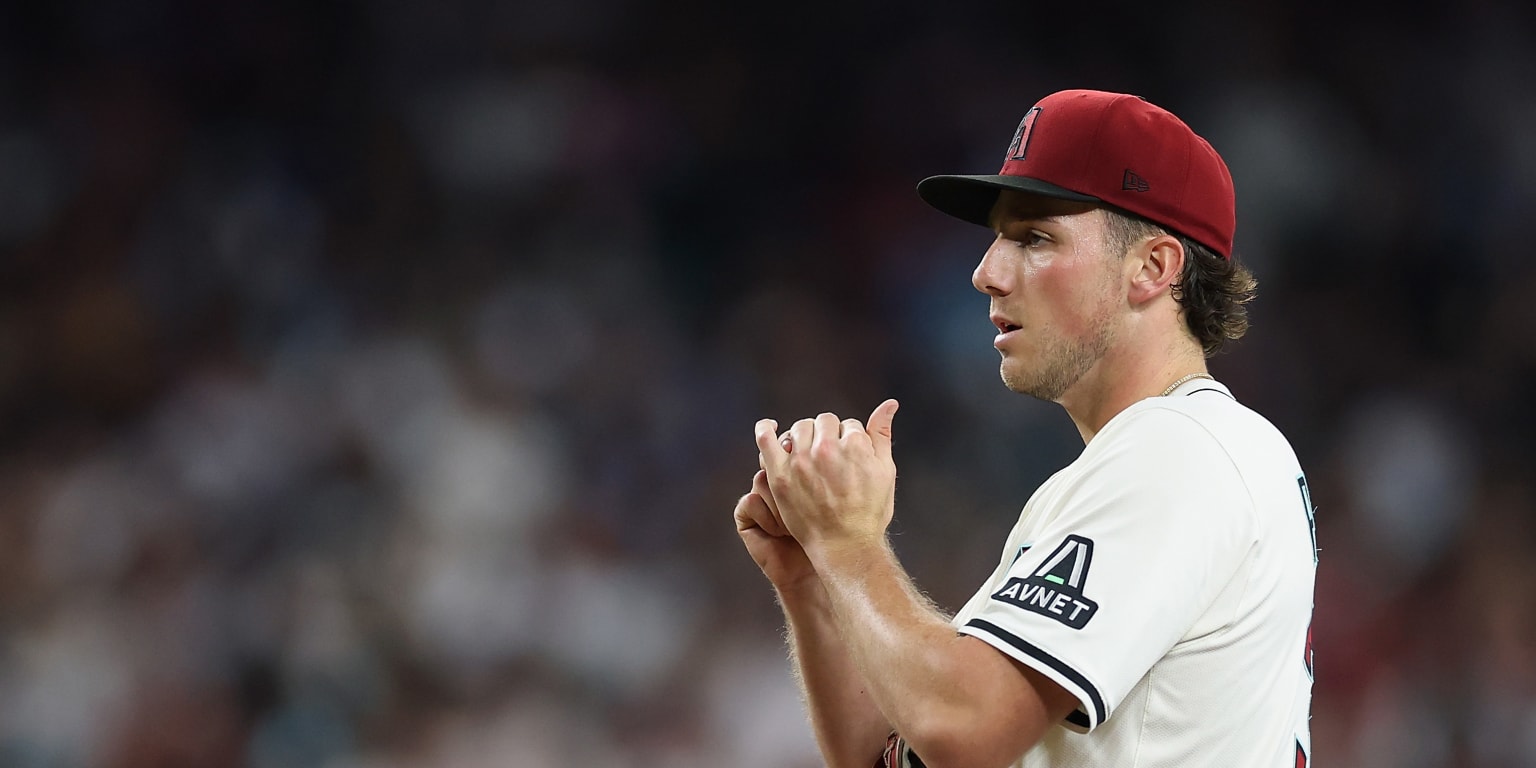
There was Corbin Carroll in the spring of 2024, and this past spring shortstop Geraldo Perdomo, closer Justin Martinez, and when it came to starting pitchers, they landed on Brandon Pfaadt.
The Diamondbacks gave the right-hander a five-year deal worth $45 million, which also includes a $21 million club option for 2031 and a $25 million mutual option for 2032, with a no-trade clause for 2030-32.
“Brandon falls very much in the group of players that we have that we feel like getting some certainty around what the future is going to look like. That is very important for us, in terms of building a roster and keeping this team together for as long as we can,” Arizona general manager Mike Hazen said at the time.
The Diamondbacks have loved Pfaadt’s work ethic since he was drafted in 2020 and have long believed in his character as well as his pitching ability.
And while he had a down season in 2025, the Diamondbacks have no regrets about the deal and little doubt that he will return to form in 2026.
“There’s ups and downs to young stages of Major League careers, especially as a starting pitcher,” Hazen said. “He’ll work with the coaches and figure out some of the inconsistencies that happened this year, and I think he’s going to be well situated to turn the page and move in a different direction.”
After his final start of the season, Pfaadt was already looking ahead to what he could do differently in 2026.
“Not exactly what I was looking for,” Pfaadt said of the season. “A lot of ups and down, but a lot to learn from and a lot to build off and come back stronger for next year.”
Pitching coaches Brian Kaplan and Owen Drew will return in 2026, the Diamondbacks are making an effort to beef up their pitching development program, as evidenced by the recent hiring of Jeremy Bleich, who had been the Pirates’ director of pitching development.
Bleich joins the Diamondbacks as an assistant general manager and will oversee Arizona’s pitching processes, acquisition and development.
The Diamondbacks’ confidence in Pfaadt bouncing back comes back to the reason they were so high on him while he was coming up through their system and why they signed him to an extension.
“He’s got good stuff,” Hazen said. “But it’s the makeup, work ethic and the dedication he brings to what he does that really makes you believe in what he’s going to be able to do.”
Part of the focus for Pfaadt this offseason and into the spring will be refining his sweeper as well as continuing to develop the cut fastball that he began throwing in 2025.
“I think the [sweeper] has kind of been hit or miss all year,” Pfaadt said after his final start. “I think tightening that up first will go a long way. That’s my best pitch and I felt like I didn’t have it for at least half of the year. So locking in on that, building off that and just executing more pitches.”
Noblesville Parks Department Looks Toward a Big 2026
Photographer / Matthew Doudt Photography & City of Noblesville
For Noblesville’s Parks & Recreation Director Savannah Wines, parks have always played a central role in her family’s life, shaping how she sees both her role and its impact.
“I get to look at parks through both a professional lens and a parent’s lens,” she explains. “I see the developmental value, the educational value, and the simple joy they bring to families every day.”
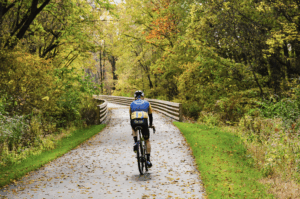
Today, she leads a department that offers just about everything for those who love the outdoors: youth sports, summer camps, fitness programs, concerts, golf, trails, playgrounds, nature programs and year-round community celebrations. The range is intentional. The goal is simple — to support residents at every stage of life.
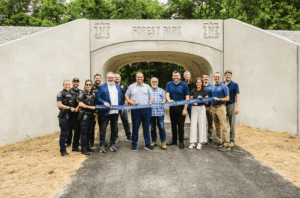
Noblesville Parks & Recreation has 876 acres of parkland, with seven developed parks to date and 130 miles of trails and greenways that connect neighborhoods, parks, schools and downtown Noblesville. Forest Park is one of Noblesville’s most iconic gathering places, home to the aquatic center, carousel and train. One of the city’s largest parks, Forest Park will celebrate its 100th anniversary in 2026.
Wines believes Noblesville Parks & Recreation is central to community life. The community can play, learn, exercise, enjoy nature and gather for major events. The annual Fourth of July Fireworks Festival draws thousands to celebrate and reconnect with friends and neighbors. The parks also offer rentals for private events, from weddings to corporate gatherings.
“Parks are where life happens,” she says. “That’s where kids learn to ride bikes, families celebrate milestones, neighbors meet, and people take time for their physical and mental health.”
Big Plans Ahead for 2026
The department is looking ahead to 2026 with exciting plans.
Construction will begin on the Dillon Park splash pad and playground renovation, with completion expected in late 2026 or early 2027. At Seminary Park, the playground will undergo updates designed to improve accessibility for children of all abilities, furthering the department’s commitment to inclusive play.
One of the most transformative projects will unfold at Finch Creek Park. After completing a conceptual master plan this year, the department is immersed in detailed planning and design while breaking ground on several Phase 2 amenities.
“The potential of that site is incredible,” Wines says. “Moving into construction is a huge next step.”
Families can also look forward to a brand-new holiday experience launching in 2026 — an event the department expects to become a seasonal tradition. Alongside the major capital projects, Noblesville Parks & Recreation will continue expanding youth, wellness and inclusive programming to keep pace with the community’s growth.
Looking further into the future, Wines hopes families will have even more options to enjoy as they continue the activities they love in beautifully maintained, accessible parks.
Purpose and People Make the Difference
Wines is proud of her team and the purpose that drives their work. She also credits the City of Noblesville for working together to ensure the parks succeed. Departments across Planning, Engineering, Streets, Public Safety, Economic Development and others play vital roles behind the scenes.
“Parks are where all of that work comes together for the public to experience,” she says. “An accomplishment for Parks & Rec is truly an accomplishment for the entire city.”
To people unfamiliar with the department, Wines describes it this way: “Noblesville Parks & Recreation is where community comes to life. We create spaces and programs that support wellness, play, connection and nature for people of all ages and abilities.”
And those experiences create memories for a lifetime.
To learn more about Noblesville Parks and Recreation and all it has to offer, visit them online at noblesville.in.gov/638/Parks-Recreation or call 317-776-6350.
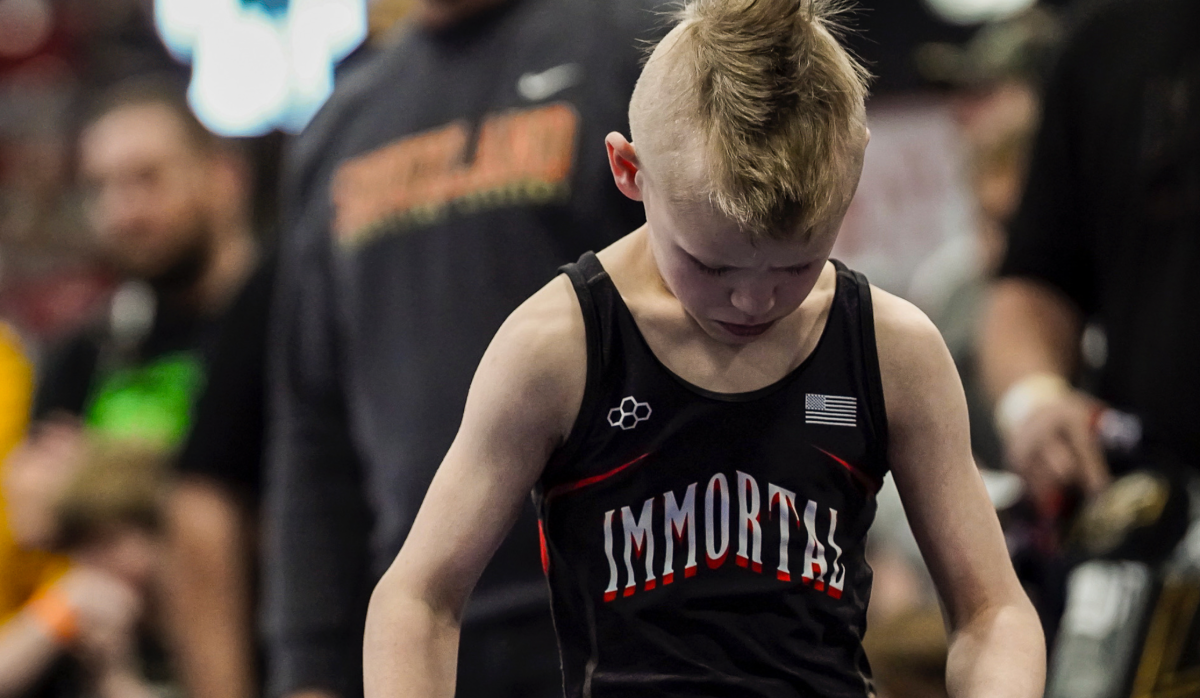
Wrestling is different from most youth sports. There’s no teammate to share the moment with, no lineup to blend into, no one else on the mat when the whistle blows. Every win and every loss belongs to the athlete alone.
Because of that, wrestling parents often feel results more deeply. When another child is winning matches and their own child isn’t, it’s easy to start comparing — and even easier to assume that struggling means it’s time to try a different sport.
But in wrestling, early results are one of the least reliable indicators of long-term success.
Wrestling Exposes Development Gaps Early
In team sports, size, speed, or early maturity can be masked by teammates. In wrestling, they can’t. A stronger or more physically mature child often has a huge advantage at young ages. That doesn’t mean they’re more talented — it means they’re further along in development.
Many wrestlers who struggle early simply haven’t hit their physical or emotional growth phase yet. Strength, coordination, confidence, and mat awareness all come at different times. Comparing two wrestlers at age 9 or 11 ignores the fact that they may be years apart developmentally.
Early Wins in Wrestling Can Be Misleading
It’s common to see youth wrestlers dominate early — often because they’re bigger, stronger, or more aggressive. But wrestling evolves quickly. As athletes grow, competition tightens, technique matters more, and effort alone isn’t enough.
Many early “stars” plateau when physical advantages disappear. Meanwhile, wrestlers who struggled early often surge once their bodies and minds catch up — if they’re still in the sport.
Wrestling rewards persistence more than early success.
Why Parents Misread Losing in Wrestling
Because wrestling is one-on-one, losing can feel like a personal failure instead of part of development. Parents see their child’s hand not being raised and assume:
They’re not good at wrestling
They’re falling behind others
Another sport might suit them better
But losing in wrestling often means a child is learning hard lessons: how to handle pressure, how to problem-solve mid-match, how to keep competing when things don’t go their way. Those lessons don’t show up on a bracket — but they shape better wrestlers long-term.
Switching Sports Because of Losses Sends the Wrong Message
Changing sports solely because a child isn’t winning in wrestling teaches an unintended lesson: that struggle means failure, and that success should come quickly.
Wrestling is supposed to be hard. It’s supposed to challenge kids mentally and physically. Avoiding that challenge doesn’t build confidence — working through it does.
When kids are allowed to stay, improve, and grow at their own pace, they develop resilience that carries far beyond the mat.
What Wrestling Kids Need From Parents
Wrestlers don’t need comparisons — they already feel enough pressure stepping on the mat alone.
They need:
Encouragement after losses
Praise for effort and improvement
Patience during long learning curves
Support regardless of the result
When parents shift the focus from wins to growth, kids stay engaged. And wrestlers who stay engaged almost always improve.
The Truth About Wrestling Success
Wrestling success is rarely immediate. It’s built through repetition, patience, and perseverance. Some of the best wrestlers were not youth standouts — they were kids who stayed in the room, stayed coachable, and trusted the process.
Before assuming your child should quit wrestling because others are winning, remember this:
In a one-on-one sport, development matters more than early results.
If a wrestler is showing up, working hard, and still willing to compete — they’re exactly where they should be.
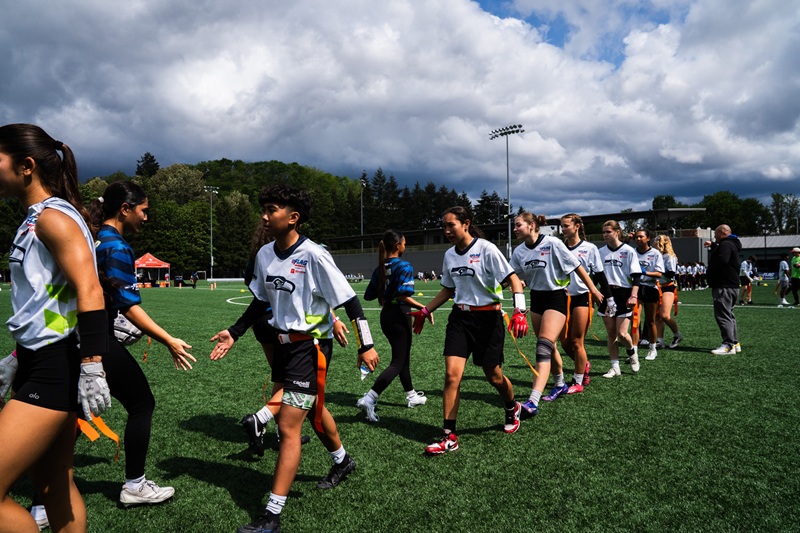
EVERETT, DEC. 29: The location for the 2026 Seahawks National Football League FLAG Regional Tournament has been awarded to Everett, the Snohomish County Sports Commission announced last week.
NFL FLAG is the official flag football program for the NFL and is the largest youth flag football league in the U.S. The regional tournament is scheduled for June 6, 2026, at Kasch Park in Everett.
Youth and high school flag football teams from across the western United States will have the opportunity to win their division and advance to the NFL FLAG Championships presented by Toyota. The championships are scheduled for July 2026.
YMCA and Pop Warner teams are eligible to participate in the regional tournament with scholastic entries available for high school teams. The tournament divisions are from ages 8 and under coed through high school girls.
The 14U boys and high school girls’ teams have the largest number of flag football teams participating in the tournament, a press release from Snohomish County Sports Commission said.
“Everett is the perfect host for the Seahawks NFL FLAG Regional Tournament,” Ramon Nunez, tournament manager at RCX Sports, said. “This event represents a critical pathway to the NFL FLAG Championships, and we’re excited to bring teams together from across the region in a community that’s deeply invested in youth sports.”
Registration is now open. For more information, visit the NFL FLAG 2026 Regionals page.
Based on a press release from Snohomish County Sports Commission
It’s that time again when many youth basketball players and teams hit the courts of the Starkville Sportsplex for the Starkville Park and Recreation Youth Leagues.
The season begins not long after the calendar flips on January 5 and the anticipation is for another exciting season.
Starkville Park and Recreation athletic coordinator Coben Parker said the response has been “fairly the same as last year” with it being altered a little.
“It’s a little bit smaller in numbers, but we’ve had to fix some divisions to change some of the things we had last year, which cut down on the numbers in a couple of spots,” Parker said.
Registration has been completed and preparation for the season has begun with scheduled practices taking place already at the Starkville Sportsplex.
Parker likes the feedback being received from players and coaches so far.
“I’ve had a few coaches that stay in touch regularly and have gotten some practices in,” Parker said. “It seems like the coaches this go around are taking it pretty serious.”
This is the first year that Parker has been involved in recreation in Starkville but is ready to see how the basketball league progresses.
“Basketball is kind of my favorite one,” Parker said.
SPRD adult basketball registration is now open with an early bird discount available through January 3.
For more information, contact SPRD at 662-323-2294 or visit www.starkvilleparks.org.






 “
“ Looking further into the future, Wines hopes families will have even more options to enjoy as they continue the activities they love in beautifully maintained, accessible parks.