If you are or have been a Little League parent, you can relate to this story.
A young kid strikes the ball. It rises over an outfielder’s head. He starts running from home plate.
But he is so fast – and so excited – he threatens to pass the other baserunners.
“No, no, go back, go back, go back!” parents implore.
“Why am I going back?” he thinks to himself. “I just hit a home run.”
When did the boy, Curtis Pride, start dreaming about playing in the major leagues?
“After I hit a home run my first at-bat,” he tells USA TODAY Sports.
It’s a thought many of us have as youths, but for Pride, it seemed impossible. He would need to become the first deaf player to make it to the majors since Dick Sipek in 1945.
“It’s a tricky business, being deaf in a hearing world,” Pride writes in “I Felt the Cheers: The Remarkable Silent Life of Curtis Pride,” his memoir that was released this year about his life and big league career that spanned 11 seasons. “I have never tried to portray myself as someone who can hear, nor would I ever try to hide the fact that I cannot. It is mere fact, and it brings neither pride nor shame. It’s just who I am.”
As Pride has found, often it’s the self-imposed obstacles – or those imposed by others – that are harder to clear than the actual barriers in the way of your goal.
Players mocked him from Little League to the minors, sometimes right to his face. People overlooked him.
But he had the support of his parents, and he found the right group of friends, coaches and teammates to give him ground support. It’s what every kid needs.
“Curtis’s story of becoming Major League Baseball’s first full season deaf player of the modern era is unique but it’s also universal,” Doug Ward, Pride’s co-author, tells USA TODAY Sports. “Everyone has a dream, so everyone can relate to Curtis and appreciate the hurdles he overcame to make his dream come true. At book signing events, Curtis handwrites the inscription, ‘Anything is possible.’ I think that summarizes the widespread appeal of Curtis’s singular story.”
Pride, 56, played for 23 professional teams over 26 seasons. He’s now a father and has been a coach of youth and college baseball players. We asked him how his experiences can give young athletes and parents perspective on their games:
As parents, and as coaches, our job is to bring out the best in kids, regardless of their skill level
John and Sallie Pride never made Curtis feel like a burden. Sallie, their son says, never even felt she was making a sacrifice.
“We have no time to feel sorry for ourselves or for Curt if he’s going to have a decent life,” John recalled his wife telling him, right after their son was born, for a Washington Post story in 1993. “We have to start reading and learn how to help him.”
Like many of us, Pride’s parents felt he needed to play sports in order to be a kid.
What are sports, but a place that can help us associate with others, and maybe even find our niche in life, at least in early life.
“We have a lost cause,” Curtis Pride writes about how he was presented by the Wheaton, Maryland, Boys Club, to his first T-ball coach, Don Stein, in the mid-1970s. “A player with two strikes against him: He is deaf, and he is Black. His father is making a fuss, so somebody has got to take him. Will you do it?”
Curtis remembers his dad being worried, spending a lot of time with the coach, relaying to his son what the coach was saying to the team.
We all hope we meet someone like Stein, who not only makes you feel comfortable and welcome, but plays to your strengths.
Curtis could speak and read lips. Stein worked with John Pride to figure out how the players could communicate, especially in catching popups or fly balls.
“Anytime I called for the ball, it’s my ball all the way, so that there’s no misunderstanding,” Curtis Pride told USA TODAY Sports in our video interview. “So if I don’t say anything, if the guys wave me off, I know that it’s (their) ball. I don’t remember ever having a collision or anything like that.”
Youth coaches, including myself at times in the past, tend to play the most polished kids a lot more than the ones who are slower to develop.
Over time, we realize our broader purpose. Be the coach who gives everyone a chance. You never know what you might find.
“It wasn’t so much that Don made me a better player, which he did,” Pride writes, “but it was more a case of him allowing me to believe I could be a good player. … Don was the first person outside of my family to open a major door for me and, in doing so, he began a butterfly effect that altered my life’s course for the better.”
If you work with someone’s deficit – or failure – he or she can before a source of strength
About 30 years ago, I was beginning my career as a part-time sportswriter for The Washington Post when I came across a story angle about a juggernaut volleyball team at Gallaudet University.
Gallaudet is a school for deaf and hard of hearing students that competes athletically against schools that have students who hear. It’s where Pride coached baseball after his playing career, and where he would tell his players that if they wanted others to view them differently, they needed to see themselves differently.
“I never viewed the deaf kids in my program any differently than the major leaguers I played alongside,” Pride writes.
Peg Worthington, who compiled a 615-305 record at the school, told me in 1995 she devised a plan where each player stuck to a specific area of the volleyball court. They gained comfort in performing through practice and repetition.
It’s a similar message Braves manager Bobby Cox would one day impress upon his players, including Pride a few years later: Know your role, adapt to it, perfect it.
Although Worthington said sometimes her players got “burned” because they couldn’t cover the entire court or hear when a teammate tipped a ball at the net, they brimmed with confidence.
“They never take their eye off the ball,” Penny Fall, then the coach of Washington College, a regional school that played Gallaudet, told me. “I’ve considered putting earplugs on my kids to make them focus that well. I’m tired of being wiped up and down the court (by Gallaudet), but I’m also happy for them.”
It’s your job as a coach to find out what’s inside every kid and unlock it.
Giving Pride the freedom to use his speed and chase down balls gave him confidence. His teammates, dismissive at first, accepted him as he practiced and showed them he could hit.
“I don’t like (not) knowing my role,” he told me in our interview. “The role can always progress as maybe you have a little bit more responsibility during the game, where you get better, and then, you start a game.”
You have to fail in order to get better
Pride’s parents let him get into basketball, gymnastics, track, wrestling and football. When he reached high school, he was the kid who changed from his baseball to soccer uniform as his father drove across Montgomery County, Maryland, and back.
“Make a point for kids at a young age to learn how to deal with failure,” Curtis Pride says. “That’s why my parents have always encouraged me to play different things, to try different things, even though failure was possible, but because you never know what you can do until you try.”
Just last month, Phillies pitcher Orion Kerkering, with the National League Division Series on the line, struggled to field a two-out comebacker to him. He appeared to panic and quickly threw wildly home when he may have had a chance to extend the game and get the out at first base.
“We’re not perfect, we’re human beings,” Pride says. “We all feel bad for him. But it’s not his fault that the team lost. They had so many other opportunities to win the game. And they should never put that on him. Because of what he had to deal with at the moment, it’s gonna make him stronger.
“I’ve seen a lot of parents trying to protect their kids but they’re not helping them (when) they get older, when they do fail. But now, they’ve never had the experience of already having to deal with failure. So they become lost.”
Pride was 23, and in his seventh minor league season, at Class AA Binghamton (New York). He saw his teammates make fun of him across the locker room, he felt the hurt of his first girlfriend broke up with him. He couldn’t seem to hit.
He stuck out the season – as his father insisted – and returned to Maryland with the intention to quit. It was time, so it seemed, to pursue his degree in finance from William & Mary, which he earned congruently with his early minor league career with the Mets (another requirement of his father).
First he worked at his former high school as a teacher’s aide who served kids with disabilities.
“They didn’t know I played professional baseball until the teacher told them about my background,” Pride says. “And these kids were shocked” ‘How can you play professional baseball, you’re deaf?’
“I was talking to the kids. We all have different disabilities, but that shouldn’t stop us from pursuing our dreams and goals. We know what our capabilities are and we shouldn’t allow other people to place limitations on us. After I had that conversation with my class, I went home, and I talked to my mom, and these kids totally inspired me. What kind of message would I be sending to them if I quit pursuing my goal, the dream? So I felt I owed it to them.”
YOUTH SPORTS SURVIVAL GUIDE: Pre-order Coach Steve’s upcoming book for young athletes and their parents
‘We’re never alone’ in the pursuit of our goals
Steve Swisher, Pride’s manager at Binghamton who had worked tirelessly with him in the batting cage, had told him that if he starts quitting now, it will become easy, and he’ll quit other things in his life.
Pride learned to thrive with the help and advice of others. He credits his neighbor, Randy Hurowitz, who played goalie for him every day as Curtis took shot after shot against him, with helping him reach the U-16 national soccer team.
Players on the basketball team at William & Mary, where Pride played point guard, would give him a nudge into a double switch on defense. He developed a sixth sense, he feels, fueled by the confidence of those who believed in him, to make up for his lack of hearing.
When he signed with the Montreal Expos in 1993, his manager in Class AA Harrisburg was Jim Tracy, who made him feel like his sole purpose in life was to make Pride a better person and player.
“We all go through struggles, but we can rely on other people to help us get through,” Pride says. “We’re never alone. It’s just always about being positive.”
Always remember to smile
When he returned to baseball, Pride met his future wife, Lisa, a reporter who interviewed him at spring training. Colten and Noelle, who are now college students, became his favorite players, as our kids do, as he watched him.
Getting married and having children were two of his goals on a list he began keeping as a kid.
Pride recommends writing down goals – big and small, team and individual – as he did, to help push you forward.
Even if you don’t achieve all of them, they are a reminder to be relentless in your pursuit.
When he rapped a double to left center field for the Expos on Sept. 17, 1993, Pride was determined, in his words, to prove he was not just a charity case. As he was standing on second base, he could see more than 45,000 people standing and cheering. He thought they were cheering for the team, which was coming back to win.
They knew Pride was deaf and, as third base coach Jerry Manuel took it in, he realized they were doing everything they could to try to make him hear them.
As the Phillies changed pitchers, Manuel called his player over and told him it was for him. Pride tried to keep a straight face, wanting them to know he was no one-hit wonder, but tipped his cap, as his coach suggested.
Second-base umpire Gary Darling walked over. “Smile,” he told Pride. “Smile!”
It was a good reminder for all of us, and our kids, when they’re playing sports.
“I remember, at a young age, I always wanted to please the coach,” Pride says. “But I lost focus on myself. … I’m not doing this for the coaches, I’m not doing this for my parents. I’m doing this for myself because I love the game.”
Steve Borelli, aka Coach Steve, has been an editor and writer with USA TODAY since 1999. He spent 10 years coaching his two sons’ baseball and basketball teams. He and his wife, Colleen, are now sports parents for two high schoolers. His column is posted weekly. For his past columns, click here.
Have a question for Coach Steve you want answered in a column? Email him at sborelli@usatoday.com
TEXARKANA, Texas — Last January, hundreds of kids packed into Pleasant Grove’s indoor athletic facilities, trading a cold Saturday morning for a shot to run drills with professionals, high school standouts and three siblings who grew up just down the road.
The Wacha Family All-Sports Camp is coming back to Texarkana on Jan. 10, and if last year’s turnout was any indication, this event has outgrown the label of just another fundraiser.
What started as a grassroots idea — three siblings offering a few hours of sports instruction to local youth — has grown into a major community effort. It now draws support from multiple school districts, professional athletes and a long list of volunteers who carve out time each winter to give something back.
Michael, Lucas and Brette Wacha, all former athletes at the college or professional level, lead the camp. Along with coaching support from schools like Texas High, Liberty-Eylau, Arkansas High, Pleasant Grove and others, the siblings will help kids rotate through stations in baseball, basketball, football, volleyball and soccer.
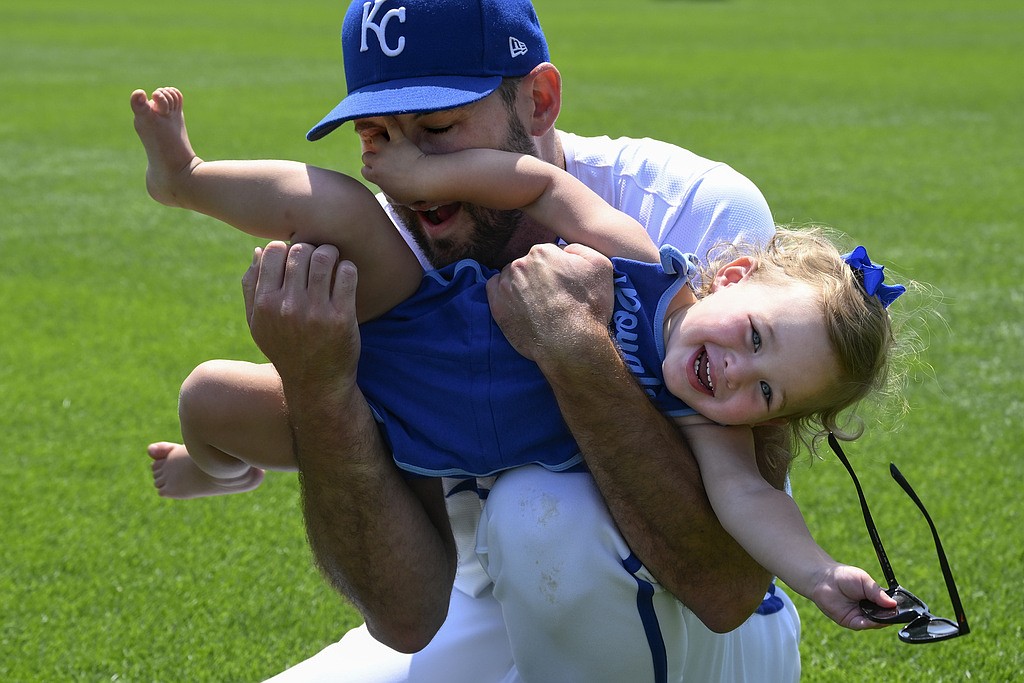
Last year’s event brought in more than 200 kids, despite freezing temperatures and widespread power outages across the region. The PG gym and indoor field stayed buzzing throughout the day, with Michael’s Kansas City Royals teammate and fellow pitcher Seth Lugo and former Liberty-Eylau and Boston Red Sox standout Will Middlebrooks among the guest coaches.
While the camp focuses on skills and fun, the bigger win is what happens off the field. Proceeds from the event go directly to the Salvation Army. In 2025, the camp and its banquet raised nearly $50,000, money that funds scholarships for those who can’t afford after-school care or summer programs.
According to the Salvation Army, the need is real. Most of the kids in the program rely on some form of financial assistance, and leaders say events like this help keep doors open and services running.
The camp’s impact also extends beyond youth athletics.
Last year, Texas A&M University-Texarkana joined as a partner, offering scholarships to students or returning adults who show a strong track record of community involvement. Two recipients shared their stories during the banquet, including one who had spent part of his childhood living in the local Salvation Army shelter.
The camp started as a way for the Wacha family to give back to their hometown. It’s grown each year with help from local coaches, athletes and volunteers, and organizers expect another strong turnout this January.
Wacha recognized for philanthropy
In June, Michael Wacha was named one of the 2025 season’s Most Valuable Philanthropists by the MLB Players Trust.
The award, given to six players throughout the season, honors those who showed a strong commitment to charitable work and positive social impact beyond the field. In recognition of Wacha’s efforts, the Players Trust awarded a $10,000 grant in his name to Make-A-Wish Missouri and Kansas.
Wacha has supported a range of charities during his career, with much of his focus on helping kids and families.
——
(This article is part of a continuing series that will spotlight the Wacha Family and Friends All-Sports Camp before it returns in January.)
After initially suspending the case due to lack of evidence, Petaluma police arrested a suspect who was allegedly caught on video surveillance tracing racial slurs and swastikas onto the dusty windows of local youth mentor and former Harlem Globetrotter William Bullard’s SUV.
As KRON4 reports, the Petaluma Police Department reviewed a week’s work of surveillance footage from early December, which was obtained from the garage where Bullard’s SUV was parked, and identified Corey Newman, 20, of Petaluma, allegedly defacing Bullard’s windows.
As SFist previously reported, the police department initially dropped the case before reviewing the footage, claiming there wasn’t sufficient evidence. The case has since been reopened, per the Chronicle, likely due to Bullard’s posts about the incident, shared to his large following — not to mention the subsequent media coverage.
“I’m doing this for awareness. I’m doing this to educate people, and I’m trying to let them know don’t be afraid to speak up for yourself if something happens like this,” he said, per KGO earlier this month. “Like, what’s the worst thing that can happen? It can be ignored by the police, OK, but at least you spoke up.”
“The Petaluma Police Department takes all hate-related incidents seriously and remains fully committed to conducting thorough and impartial investigations,” said the police department in a press release. “Crimes motivated by bias have a profound impact not only on those directly affected, but also on the sense of safety and well-being of the entire community.”
Police arrested Newman during a traffic stop on Christmas Eve. He was booked into the Sonoma County Jail for the commission of a hate crime and vandalism, per KRON4.
Image: NEW YORK, NY – DECEMBER 19: William ‘Bull’ Bullard of The Harlem Globetrotters Ring The NASDAQ Closing Bell at NASDAQ MarketSite on December 19, 2014 in New York City. (Photo by Steve Zak Photography/FilmMagic)
Previously:Hate on the Rise: Ex-Globetrotter’s SUV Defaced in Petaluma, San Jose Teens Form Human Swastika
Jewel Annette Devall Rodgers was born on September 29,1954 to Harman and Marcy Devall in Beeville, Tx. She entered Heaven’s gates on December 26, 2025, with her mother, sisters, and children by her side. She was 71 years old.
Jewel grew up in Pettus and attended school there, graduating in 1973. She married her High School Sweetheart, Robert Rodgers, on June 8, 1974. She, like both of her sisters, was an LVN, working in home health after years of working as an ER nurse. Jewel was also a licensed beautician. She took great pride in her family and loved staying involved in everything she could to spend time with her kids and grandkids. She was a fixture for years at her kids and later her grandkids’ sporting events, whether it be a youth sports organization, or her favorite team, the Pettus Eagles. She was a member of the First Baptist Church in Pettus.
She loved camping and often shared her cherished memories of times spent at the lake in Mathis or from her times on the Frio River. There were trips to Louisiana and Cancun she spoke of often. It was time she spent with her entire family, often sharing her RV or renting a cabin, enjoying time away from reality as she called it with those she loved the most in life. You could always count on a game of dominoes or Yahtzee at her campsite, clean up to the time everyone else at the table either started cheating or conspired to keep her from winning. If nothing else, she always was competitive, even after she retired.
Jewel was someone who loved and truly valued each of her many friends that she made over the years. She held each of them close to her heart. She would do anything for anyone and give anything she had to anyone in need. Whether she had it to spare or not. She spent countless hours listening to and sharing with anyone who’d listen along with her, her music from the 60’s. It was nothing to have her ask you to download a certain song because she had someone on her heart and that song reminded her of that person. Music and the joy it brought her accompanied every memory she had with every single person she encountered in life.
She was preceded in death by Maternal grandparents Ray and Francis Crepps. Paternal grandparents Harman Leavette and Jewel Devall. Her Father, Harman Devall, her husband, Robert Rodgers, a granddaughter, Victoria Lyssy, and two grandsons, Gavin Rodgers and Richard Gomez III.
Left to cherish her memory are her mother Marcella Devall of Pettus, sister Carman (Johnny) Gisler of Pettus, sister Fran (Bobby) Pargmann of Pettus, daughter Shannon (John) Hodge of Pettus, son Robert (Jena) Rodgers of Beeville, and son Michael (Misty) Rodgers of Mineral. Grandchildren John Robert Hodge, Marcella Hodge (Shonn), Chris (Kristen) Lyssy, Maddisyn Rodgers, Robert Rodgers, Darryn Rodgers, Savannah Rodgers, Stephen Perez, Brandy (Kiara) Perez, Dara Gomez, and Krystal Gomez. Great Grandchildren Patton Lyssy, Hayden Lyssy, Kinsley Gomez and Richard “Little Pops” Gomez. Many nieces, nephews, cousins and her many friends she loved like family.
Visitation will be held on Tuesday, December 30, 2025 from 10am until 11am at Eckols Funeral Home in Kenedy, Tx. A service will be held at the funeral home chapel beginning at 11am, with a graveside service to follow at the San Domingo Cemetery in Normanna. Pallbearers are John Robert Hodge, Robert Rodgers, Darryn Rodgers, Stephen Perez, Chris Lyssy, and Matt Helford.
will host youth swim lessons at various times Feb. 2-April 15, at the Bemidji State University pool in the Gillett Wellness Center, 1801 Birch Lane NE.
Lessons are scheduled for the following times:
Mondays/Wednesdays Feb. 2 – March 2
Level 1 swim classes will run from 6:15 to 6:50 p.m.
Level 2 swim classes will be held from 6:55 to 7:30 p.m.
There will be no class on Feb. 16 due to President’s Day.
Registration opens at 9 a.m. on Monday, Jan. 5.
Tuesdays/Thursdays Feb. 3 – Feb. 26
Level 3 swim classes are set for 6:15 to 6:50 p.m.
Level 4 and 5 swim classes will be held from 6:55 to 7:30 p.m.
Registration opens at 9 a.m. on Monday, Jan. 5.
Mondays/Wednesdays March 23 – April 15
Level 2 swim classes are set for 6:15 to 6:50 p.m.
Level 3 swim classes will be held 6:55 to 7:30 p.m.
Registration opens at 9 a.m. on Tuesday, March 3.
The cost is $72 for the series. Class sizes are small with two instructors. No more than 8-9 participants age 5 and up are allowed in each level.
To register and for additional detailed information regarding each level, visit
www.ci.bemidji.mn.us.
Our newsroom sometimes reports stories under the byline “Pioneer Staff Report.” This byline is used when reporters rewrite basic news briefs that originate from official sources, such as an email or press release that requires little or no reporting.
Other times, this byline is used when a news story includes numerous authors or when the story is formed by aggregating previously reported news from various sources. If outside sources are used, it is noted within the story.
For questions about a staff report, call (218) 333-9796 or email news@bemidjipioneer.com.
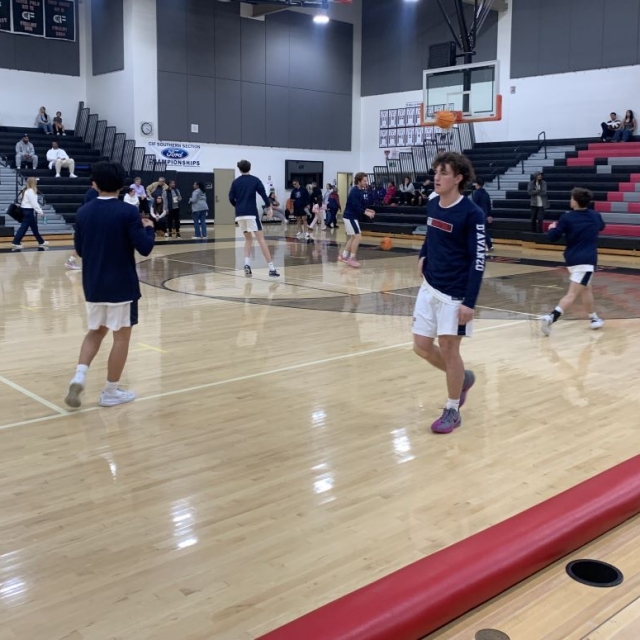
Tesoro Coach Steve Garrett and his players congratulate St. Anthony after the loss Saturday. (PHOTOS: TIm Burt, OC Sports Zone).
Tesoro’s boys basketball team has had a remarkable season so far with a 14-3 record.
But the Titans, coached by Steve Garrett, weren’t able to finish Saturday, losing to St. Anthony 64-55 in a second round game of the Ringo Bossenmeyer Holiday Classic at Tustin.
Tesoro had a six-game winning streak snapped.
To see additional photos, click on the first picture:
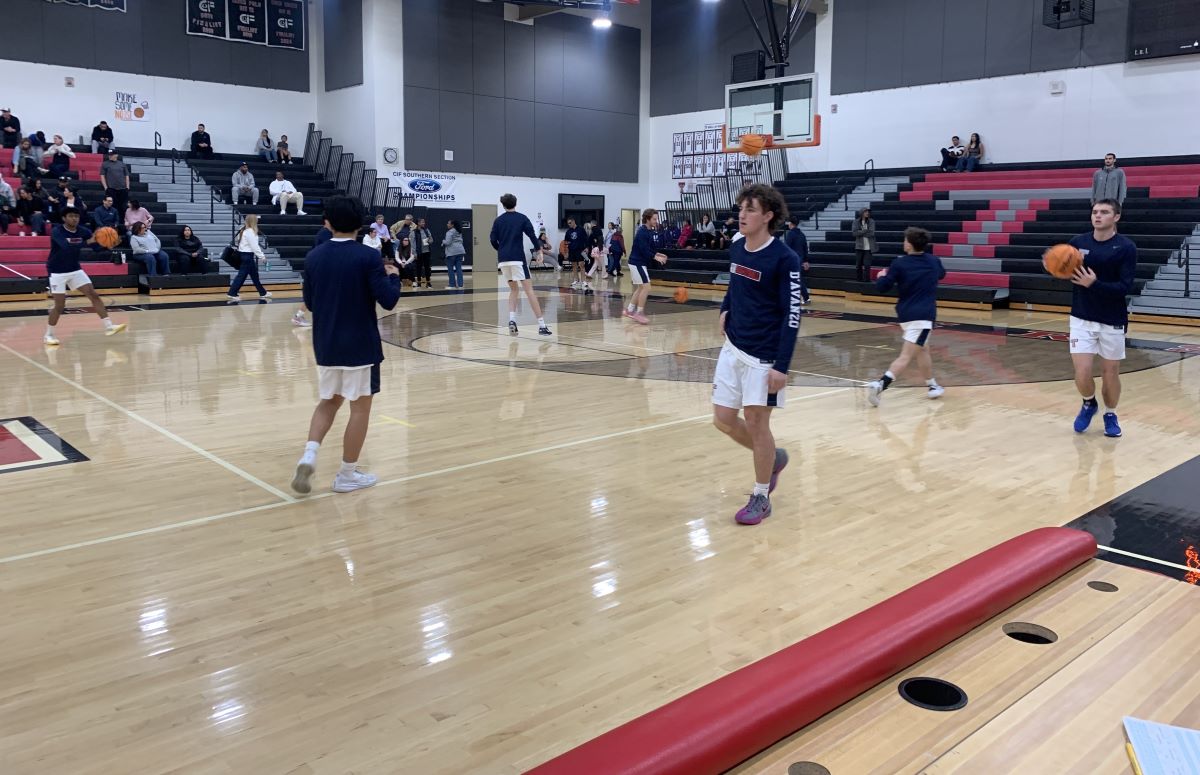
Tesoro players warm up before Saturday’s game.
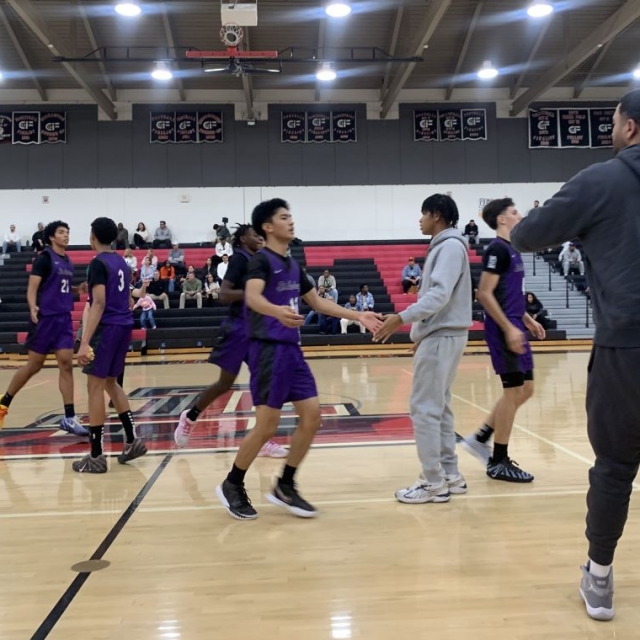
St. Anthony players head to the sidelines during a timeout after a big run.
St. Anthony (2-0 in Pool A) appears headed to the championship game of the eight team tournament Tuesday at 4:30 p.m. vs. Servite. Tesoro dropped to 1-1 in pool play.
“We weren’t consistent enough to earn a win tonight, that’s the main thing,” said Tesoro Coach Steve Garrett, now in his 25th year as head coach. “There were four or five defensive possessions in a row where we didn’t stick to our principles, four or five possessions where we had good drives to the lane and didn’t take it up strong, we didn’t earn the fouls, didn’t finish.
“We went away from the defense, we got to earn wins and I just didn’t think we were consistent enough.”
Tesoro was led by sophomore Owen Hatch, who had 17 points and his brother Carson Hatch, a senior, who had 12 points.
Jamil House led St. Anthony (6-5) with a game-high 24 points and seven rebounds. House, the only Saint in double figures, had 18 of his points in the first half to help the Saints move out to a 22-16 halftime lead.
St. Anthony led by five points after three quarters. Owen Hatch made a 3-point play with 5:26 remaining before the Saints regained control and finished with a win.
“There was a stretch where we were down two and we have five of our seven possessions at the rim and I just thought they weak takes,” Garrett said. “You got to put pressure on the refs with a strong drive and finish the play and then the couple we missed, we missed our free throws. We were seven of 17 from the line, we should have gotten to the foul line at least 25 times, not because of the refs, but because of us, that’s a big factor.”
Max Draper and Dean Mika added nine points each for Tesoro.
“The kids are great, all these guys have literally played together since fourth grade,” Garrett said. “They all know each other, they’re extremely close, they count on each other for their success. Tonight, I just know we could have been overall a little bit more consistent when we needed to.”
Tesoro plays another pool play game Monday vs Beckman at 1:30 p.m.
VANCOUVER, Wash. – Lawmakers from the 18th Legislative District are taking steps to protect children in youth sports programs with new legislation.
House Bill 2180, sponsored by Rep. John Ley (R-Vancouver) and endorsed by Rep. Stephanie McClintock (R-Vancouver), would require youth sports organizations to conduct background checks via the Washington State Patrol. It also prohibits hiring anyone with convictions for crimes against children.
It also instructs the Department of Children, Youth, and Families to create mandatory training on reporting child abuse specifically for youth sports coaches.
Ley emphasized the importance of these measures, stating that the bill was prompted by a concerning incident.
“This legislation was prompted after concerned parents encountered a convicted sex offender who failed to disclose his conviction while seeking to coach their children,” said Ley. “By requiring background checks — paid for by the individual or organization — we give parents and program administrators better tools to protect kids.”
McClintock expressed her dedication to child safety, stating her support for the bill.
“Protecting kids will always be a top priority for me,” said McClintock. “As a mom, this legislation closes dangerous loopholes and helps ensure youth sports remain a safe environment for kids and families.”
Ley also extended gratitude to the community member who raised the issue.
“I also want to thank the constituent that brought this matter to our attention,” said Ley.
The 2026 legislative session is set to begin on Monday, Jan. 12.






 Jewel Annette Devall Rodgers was born on September 29,1954 to Harman and Marcy Devall in Beeville, Tx. She entered Heaven’s gates on December 26, 2025, with her mother, sisters, and children by her side. She was 71 years old.