
NIL
Can NIL Buy a National Championship?

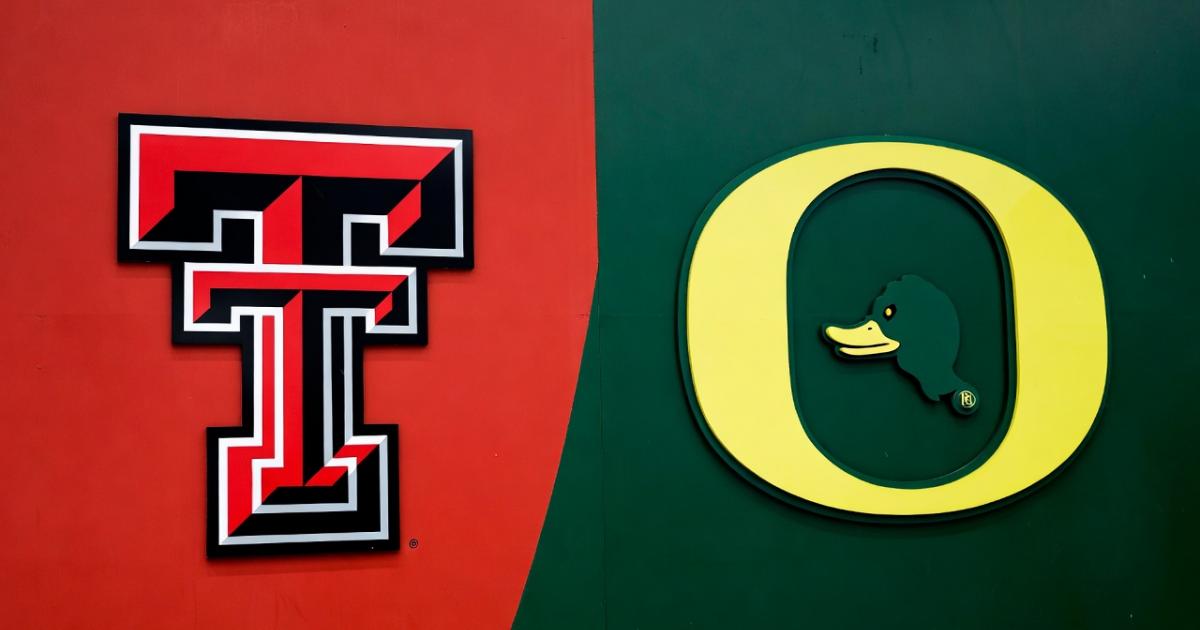
SAN ANGELO, TX — In the high-stakes world of college football, where talent is the ultimate currency, the introduction of Name, Image, and Likeness (NIL) deals in 2021 has transformed recruiting and roster-building into a financial arms race.
As the 2025 season winds down with the College Football Playoff (CFP) quarterfinals looming, one question echoes across the Lone Star State: Can pouring millions into NIL truly buy a national championship?
Texas (the entire state, not the university) provides a compelling case study, with four powerhouse programs—the University of Texas Longhorns (UT), Texas A&M Aggies (A&M), Texas Tech Red Raiders (TTU), and Southern Methodist University Mustangs (SMU)—each wielding significant NIL war chests but yielding varied results. From booster-fueled spending sprees to community-driven collectives, their approaches highlight the promise and pitfalls of this pay-to-play era.
As of today, the Texas Tech Red Raiders remain in contention for the national title, set to face the Oregon Ducks in the Orange Bowl CFB quarterfinals at 11 a.m. Central Time on January 1.
NIL is a Billion-Dollar Game Changer
Since the NCAA greenlit NIL, the market has exploded, projected to hit $1.7 billion for the 2024-2025 season, with over $1.1 billion funneled into football alone. Proponents argue it levels the playing field by compensating athletes fairly, while critics decry it as a system where deep-pocketed boosters “buy” rosters, eroding the amateur spirit.
Adding fuel to this evolution is NIL revenue sharing, stemming from the landmark House v. NCAA settlement approved in June 2025. Effective July 1, 2025, this system allows Division I schools to directly distribute a portion of their athletic department revenues—up to a cap of $20.5 million for the 2025-26 academic year—to student-athletes across sports. This cap is expected to increase by 4% annually, with potential exceptions, and is designed to compensate athletes more like professionals while maintaining some regulatory oversight through the new College Sports Commission.
Unlike traditional NIL deals, which involve third-party endorsements and sponsorships from brands or collectives, revenue sharing comes straight from school funds (e.g., ticket sales, media rights, and sponsorships), functioning more like a salary pool.
Schools opting in (most Power Four programs have) must report third-party NIL payments to ensure transparency, but the system coexists with NIL, allowing total athlete compensation to exceed the cap through combined efforts.
This has led to “payrolls” where revenue sharing covers base pay, and NIL handles bonuses or incentives, though critics argue it exacerbates inequities between resource-rich and smaller programs. In Texas, oil money and alumni networks have propelled programs to the forefront, yet success isn’t solely about the dollar amount—it’s about strategy, coaching, and execution.
Comparing the NIL Approach of Four Texas Teams
Texas’s college football landscape illustrates diverse strategies in blending revenue sharing with NIL. All four programs have opted into the settlement, leveraging the $20.5 million cap to boost recruiting and retention amid the expanded CFP.Team
This table compares the NIL approach of Texas athletic programs (it’s responsive, so use your mouse or finger to scroll right and left)
| Team | Revenue Sharing Cap Utilization | Key Approach Details | Integration with NIL | 2025 Impact Highlights |
|---|---|---|---|---|
| UT Longhorns | Full $20.5M, part of $35-40M total football payroll | Phasing out NIL collectives in favor of direct revenue sharing; focuses on structured contracts for efficiency. | Combined with Longhorn Sports Agency (launched June 2025) for brand deals and content creation; alumni/tech boosters fund extras. | Enabled 10-2 record and CFP berth; high-profile deals like Arch Manning’s $3.5M+ NIL boosted talent influx, though playoff exit showed limits. |
| A&M Aggies | Full $20.5M, with min. $2.5M to women’s sports; spread across six programs | Community-driven distribution tied to performance/academics; uses Teamworks for streamlined payments. | $39.1M in NIL support FY24-25 via Aggie NIL and Playfly; focuses on guaranteed contracts and retention. | Fueled 11-2 season and playoff spot; tripled NIL from prior year, but late losses highlighted distribution inefficiencies. |
| TTU Red Raiders | Full $20.5M integrated into $55M planned NIL + sharing for 2026 | Booster-led (e.g., Cody Campbell’s influence); one-year contracts for 97 football players; new corporate unit for growth. | Merged Matador Club into Red Raider Club; smashed NIL records with $28M football spend in 2025. | Powered 12-1 record, Big 12 title, and CFP quarterfinal; rapid escalation transformed program, though donor dependency raises sustainability questions. |
| SMU Mustangs | Full $20.5M via Student-Athlete Benefit Fund | Integrated revenue/NIL/brand unit; focuses on holistic athlete support and corporate partnerships. | Boulevard Collective and Mustang Partners (launched Dec. 2025) for deals; Scout platform streamlines earnings and education. | Boosted ACC debut with 10-2 record, playoff berth; historic revenue jumps (157% football tickets), portal success, but chaos concerns from NIL/portal dynamics. |
The Longhorns’ Corporate NIL Powerhouse
The Longhorns, now in their second SEC season, boast what many consider the nation’s top NIL budget: an estimated $35-40 million dedicated to their football roster for 2025.
Through the Texas One Fund and a partnership with Learfield’s Longhorn Sports Agency (launched in June 2025), UT has adopted a professionalized model, emphasizing brand-building, financial literacy, and high-profile endorsements. Star quarterback Arch Manning’s deals alone reportedly exceed $3.5 million annually, drawing transfers and blue-chip recruits.
This investment paid dividends with a 10-2 regular season, an SEC Championship Game appearance, and a CFP berth. However, playoff shortcomings—including a first-round exit—raise questions about ROI. A high-ranking UT source disputed the $35-40 million figure earlier this year, calling it “irresponsible reporting,” but insiders maintain it’s the benchmark for SEC elites.
“Texas is built for the long haul,” said one analyst. “NIL keeps them competitive, but championships require more than money—ask the Yankees in baseball.”
The Aggies’ “12th Man” Community Approach to NIL
About 100 miles east of Austin, in College Station, the Aggies have taken a more diversified tack via Texas Aggies United, amassing $51.4 million in total NIL revenue from July 2024 to June 2025—nearly tripling the previous year’s haul. An overwhelming 96% ($49-50 million) flowed to men’s sports, with football claiming the lion’s share through guaranteed contracts tied to performance and academics.
This “retain at all costs” philosophy, bolstered by alumni and corporate sponsors, has secured talents like quarterback Marcel Reed and wide receiver Mario Craver.
The result? An 11-2 campaign, a playoff spot, and early-season dominance, only to falter with late losses to rivals Texas and in the CFP first round.
Critics point to gender disparities (minimal funding for women’s sports) and question if the broad distribution dilutes football’s edge in the brutal SEC. Still, A&M’s model emphasizes sustainability, positioning them as a top-5 NIL spender nationally.
“It’s not just about the check—it’s about building a culture,” an Aggies booster noted, echoing the program’s “12th Man” ethos.
All of the Oil Money Funding Texas Tech’s NIL Program
In Lubbock, the Red Raiders represent the underdog story of NIL efficiency. Led by billionaire alum Cody Campbell’s $25 million donation to The Matador Club, TTU shelled out over $28 million on its football roster in 2025, with plans for $55 million in combined NIL and revenue sharing next year. This aggressive, booster-centric approach—often dubbed “buying the roster”—focused on portal acquisitions and defensive reinforcements, transforming a mid-tier Big 12 team into contenders.
The payoff was undeniable: a 12-1 record, Big 12 Championship dominance (34-7 over BYU), and a CFP quarterfinal berth against Oregon in the Orange Bowl on January 1. While detractors label it “money over culture” and warn of donor dependency, Tech’s rise suggests targeted spending can yield outsized results in a less stacked conference.
“We’ve proven NIL can accelerate success,” said head coach Joey McGuire post-title. “But it’s the relationships that seal it.”
With the Orange Bowl looming, TTU could prove NIL’s championship potential taking on another NIL powerhouse for a slot in the National Championships semi-finals in January.
Oregon Ducks: The Nike-Backed Contender
As Texas Tech prepares to clash with the Oregon Ducks in CFB Quarterfinal game at the Orange Bowl, it’s worth examining Oregon’s robust NIL framework, which has positioned them as a formidable CFP opponent. Backed by Nike co-founder Phil Knight, Oregon’s primary NIL collective, Division Street, was established in 2021 and has evolved into one of college football’s most efficient operations.
This booster-led model emphasizes innovative marketing and brand partnerships, leveraging Knight’s influence and Nike’s resources to attract top talent. In 2025, Oregon ranked fourth nationally in NIL spending for roster building, per an On3 survey of industry stakeholders, trailing only Texas, Texas Tech, and Ohio State.
Oregon has fully embraced revenue sharing under the House settlement, distributing the maximum $20.5 million cap while integrating third-party NIL deals to exceed it, potentially reaching $30 million or more in total athlete compensation.
Enhancements include adding a NIL partnerships manager and content producer in October 2025, partnering with Learfield Impact for technology and marketing support.
Key players like quarterback Dante Moore boast NIL valuations over $2.3 million, reflecting the program’s appeal.
This strategy has fueled Oregon’s undefeated regular season and top seeding in the CFP, but as offensive coordinator Will Stein noted, misconceptions about their NIL dominance overlook the program’s culture and coaching.
Facing TTU’s NIL-fueled surge, the Ducks’ approach tests whether corporate-backed innovation can outpace oil money in pursuit of a title.
SMU Mustangs: The Rising Contender Fueled by NIL
NIL has been a game-changer for the SMU Mustangs, particularly in their 2025 transition to the ACC after a strong Group of Five run. The program’s aggressive adoption—via the Boulevard Collective and new Mustang Partners initiative—has driven record revenues, with football season tickets doubling and overall income surging 157% in their inaugural ACC year. This financial boost enabled high-profile portal acquisitions and retention, contributing to a 10-2 record, ACC contention, and a CFP berth—their first as a Power Four member. Partnerships like Scout NIL provide tools for earnings management and life skills, empowering athletes beyond the field. However, NIL’s double-edged sword has sparked debates: While it fueled opportunity and structured pay via revenue sharing, it also introduced “chaos” through the transfer portal, with rapid roster turnover challenging team cohesion. Overall, NIL has elevated SMU from mid-major to contender, proving smaller programs can compete with strategic spending in the revenue-sharing era.
Does the Money Translate to Championships?
Comparing the quartet: UT’s $35-40 million bought SEC relevance but no hardware; A&M’s $51.4 million (heavily football-skewed) delivered consistency but exposed vulnerabilities; TTU’s $28 million-plus propelled them furthest, claiming a conference crown and deeper playoff run; SMU’s strategic NIL surge secured a playoff spot in their ACC debut. Halfway through 2025, fans throughout the state of Texas got their “money’s worth” with four in-state teams vying for glory, but NIL’s role sparks debate. As one Reddit user pondered in a hypothetical DIII scenario, “How much NIL would it take to build a champion?”—the answer seems: Enough to attract talent, but not without coaching alchemy.
NIL made college football mirror pro sports: Money helps, but doesn’t guarantee titles—look at MLB or the NBA. With the state of Texas’ new NIL rules looming for 2026 and the transfer portal opening January 2, the experiment continues. For now, NIL can buy contention, but championships? We’ll gain another clue on New Year’s Day at the #4 Texas Tech vs. #5 Oregon semi-final in the Orange Bowl at 11 a.m.


Sean Dengler.
College football is a mess. Talent is not worse, but something about the game feels off with where the sport is heading. The façade of being on scholarship was all which mattered did not make sense in comparison to when coaches started making lucrative salaries and athletic conferences began signing rich media rights deals. Being compensated for their time made sense, but the way they are being paid feels like the Wild West. With schools bidding on players, other athletes sitting out mid-season to transfer to a new team the next season, and athletes feeling like mercenaries, hopping from one team to the next.
NIL was supposed to have the athletes starring in a local car dealership advertisement. What has happened from the fan’s perspective is it feels like it has become easier to buy the best team. Using merit to succeed has fallen to the wayside while money solves the problems. This has left an unregulated, gross feeling hovering above college football. Change needs to come where athletes are paid their worth, but they also do not feel like mercenaries. The bond between players and fans from building a program instead of buying one is falling to the wayside.
The loss of regionalism in athletic conferences has also created friction. The Big Ten and the SEC started this trouble, but the ACC and Big 12 have also pushed to reach coast to coast while destroying a historic conference, PAC-12, in the process. If our grandparents’ generation found out the Hawkeyes were playing at Rutgers, and the Cyclones were playing at the University of Central Florida, they would roll over in their grave twofold.
This loss of regionalism and the mercenary aspect show the fractures Americans see in their society. Like the rest of society, and what has changed from the past is capital is king. College football has become about the bottom line. Athletes are quick to change their situation if met with a tiny bit of friction while universities sell out their fanbases to join conferences which make zero regional or numerical sense.
“Not falling behind” is the excuse given for why these decisions are being made. Change must happen because it is a different world. Society has seen this type of comment before in other parts of society. When it comes to agriculture, it was “go big or go home.” This has led to rural towns hollowing out, medical clinics closing, and churches and schools consolidating. This has all come in the name of “change was needed.” The only ones benefiting from the change are those hoarding the capital at the expense of the loss of the collectiveness everyone else enjoys from college football.
College football is also following the rest of the American economy where it forms a free market ensuring fair competition, minus athletes getting paid but this would work under the right conditions, to where a lot of markets like college football are less regulated and the one with the most capital has the best chance at succeeding. Whether having college football like this be the best for society does not matter because this is how the “market” is supposed to be. The big get bigger, the smaller get smaller, and those in the middle continue to hollow out.
Whether college sports, agriculture, or other parts of society, this is the current path. Until Americans decide to make markets about fair competition and not one decided by the few at the top, this problem will keep existing throughout society. The mess college football is in is a symptom of this bigger problem. To change, we all will need to fight for a better, more fair American society.
Sean Dengler is a writer, comedian, now-retired beginning farmer, and host of the Pandaring Talk podcast who grew up on a farm between Traer and Dysart. You can reach him at sean.h.dengler@gmail.com.
NIL
College football’s transfer portal officially opens Jan. 2. What to know about player movement :: WRAL.com

The college football season isn’t over yet and won’t be for several weeks, but the sport’s offseason, if you can even call it that, has been in full swing for quite some time — hirings, firings and players announcing they’re returning or leaving or heading to the NFL.
Many players already know where they’re headed, having worked out deals through agents with new schools. Everyone can begin making it official Jan. 2, the official start of college football’s transfer window.
Unlike in previous years, there is just one transfer window. Players will not have the opportunity to change teams later in the spring. The NCAA approved the change to a single window in October, hoping to bring a little more stability to the sport — if such a thing is possible in college football.
MORE: College football transfer portal tracker for Duke, North Carolina and North Carolina State
Although schools are limited to spending $20.5 million to directly pay athletes, the cost to lure and keep any individual player continues to rise, especially for quarterbacks. ESPN’s Pete Thamel reported that the market for top quarterbacks could reach $5 million.
Duke’s Darian Mensah was among the highest-paid quarterbacks this season, at a reported $4 million. Mensah, the ACC leader in passing yards and passing touchdowns in 2025, has said he would return to the Blue Devils for the 2026 season.
There are several high-profile quarterbacks who intend to transfer, including TCU’s Josh Hoover, Nebraska’s Dylan Raiola, Cincinnati’s Brendan Sorsby. NC State’s CJ Bailey could add to the list. High-profile programs like Indiana, Miami and LSU are in the market for quarterback transfers.
Despite the change to a single window, it’s not perfect. The portal is open from Jan. 2 to Jan. 16, while the College Football Playoff is happening. It closes before the national championship game. Players on those two teams can enter the portal from Jan. 20 through Jan. 24.
Players need only to enter the portal during the window. They don’t have to choose their school during that time. However, the school calendar plays a role if players want to participate in spring practice.
Players have been entering the portal – not a physical place, just a NCAA database — since the regular season wrapped up in late November.
More than a dozen North Carolina players, for example, plan to transfer from Bill Belichick’s program, including leading tackler Khmori House, standout defensive end Tyler Thompson and running back Davion Gause.
NC State running back Hollywood Smothers, an All-ACC first-team selection, skipped the team’s bowl victory over Memphis and plans to transfer or enter the NFL Draft.
Coaches signed new recruiting classes in early December without knowing exactly what spots they might need to fill.
“You take your high school class based on who you know is leaving the program, like we’ll do our seniors and things like that,” NC State coach Dave Doeren said in December. “That’s where the portal now has to supplement. You may have more attrition than you expected at a certain position and you didn’t sign as many high school players as you needed.”
Coaches led the push from the old system which had a transfer window in December (one of the busiest months of the calendar for coaches) and another in April after most programs completed spring ball. Some pushed for the single window to be in the spring, and the NCAA initially adopted a 10-day period, before extending it to 15 days.
“Every college coach would tell you that our calendar is just not in sync with the demands of what’s happening in our sport,” Doeren said. “We need to get our arms around that to make our jobs a little bit easier from a planning standpoint.”
The new single window does help with that. Rosters are locked in early in the year.
UNC made heavy use of the post-spring portal in 2025, after the mid-December 2024 hiring of head coach Bill Belichick, and lost several key players as well. Many programs have stopped holding traditional spring games, in part due to concerns that other coaches could scout those games and try to pluck players from their roster.
“The best thing about this year is that on Jan. 17, the portal will close and you’ll be able to build your team, knowing that when you go to spring ball, that is your team,” UNC general manager Michael Lombardi said. “Knowing that when you go through your offseason program, that is your team.”
NIL
Lane Kiffin receives $500,000 payout from LSU after Ole Miss advances to College Football Playoff semifinal
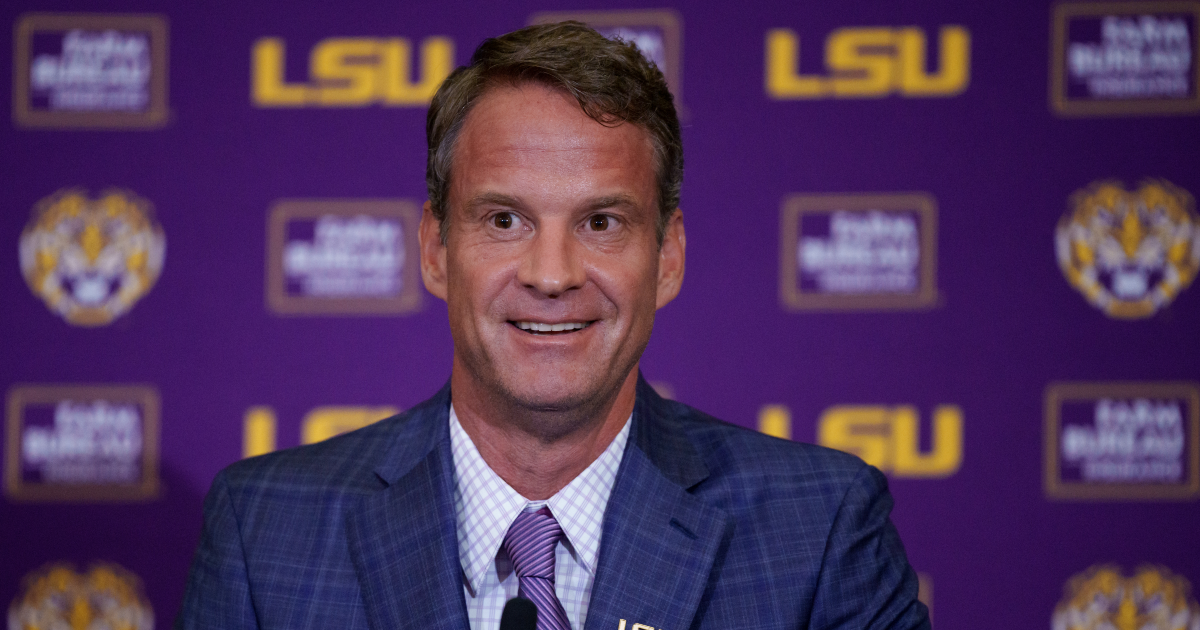
With Ole Miss’ Sugar Bowl victory over Georgia in the Sugar Bowl, Lane Kiffin will receive another bonus. Per the terms of his contract at LSU, he will get the $500,000 he would have gotten from the Rebels for advancing to the College Football Playoff semifinal.
Kiffin was already set to receive a payout as a result of Ole Miss’ first-round win over Tulane. That set him up for a $250,000 payday, which was the amount he would have received from the school if he was coaching in the game. Now, that figure will go up.
After Kiffin’s high-profile departure for LSU, Pete Golding took over as Ole Miss’ full-time head coach. But the Tigers said they would include “ancillary benefits” in Kiffin’s deal with the Rebels, and that means a $500,000 payout because his former program is advancing in the CFP.
Kiffin’s high-profile departure for LSU came after Ole Miss took down Mississippi State to complete the first 11-win regular season in program history. It also helped the Rebels virtually secure a spot in the College Football Playoff, and they hosted the first-round game on Saturday.
Per the terms of Kiffin’s contract at Ole Miss, there would be two more escalators if the Rebels keep going in the CFP. His payout would increase to $750,000 if they advance to the national championship and go up to $1 million if Ole Miss wins it all. LSU vowed to pay that same amount after Kiffin’s departure prior to the postseason.
“Coach will be entitled to receive a payment in an amount equal to the amount Coach would have been entitled to receive had he remained Head Coach at Coach’s immediate prior employer and coached the prior employer’s football team through the 2025-26 CFP,” Kiffin’s contract at LSU reads. “… If applicable, the payment under this section may be paid from affiliated foundation funds and shall be paid within 30 days following the prior employer’s team being eliminated from the 2025-26 CFP.”
Ole Miss takes down Georgia in thrilling Sugar Bowl
Ole Miss and Georgia square off in a thriller at the Sugar Bowl in New Orleans on Thursday. The two teams combined to score 30 points in the fourth quarter as the Rebels rallied to take down the Bulldogs, 39-34.
Trinidad Chambliss had a monster day, completing 30 of 46 passes for 362 yards and two touchdowns. Harrison Wallace III also had a career night, hauling in nine receptions for 156 yards and a touchdown. De’Zhaun Stribling also had a big performance with seven receptions for 122 yards.
For Golding, it marks a second straight victory as head coach after taking over for Lane Kiffin. Ole Miss will now get ready to take on Miami in the Fiesta Bowl.
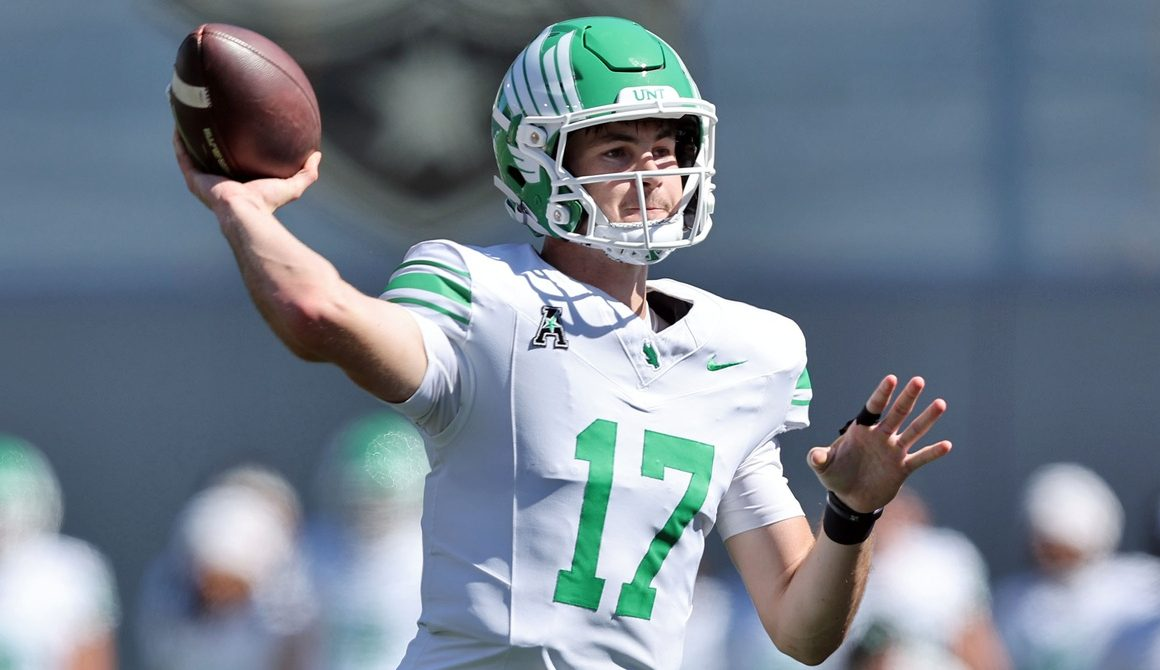
Jan. 1, 2026Updated Jan. 2, 2026, 12:20 a.m. ET
PASADENA, Ca. — The singing starts early in the fourth quarter of the Rose Bowl, where the clouds are rising above the San Gabriel Mountains and the No. 1 Indiana Hoosiers are just destroying No. 9 Alabama. This is a 2025 College Football Playoff quarterfinal, serious business, but the IU football crowd has been having a blast, and they know what to do when this stadium in Southern California starts playing Bloomington’s John Mellencamp over the loudspeakers.
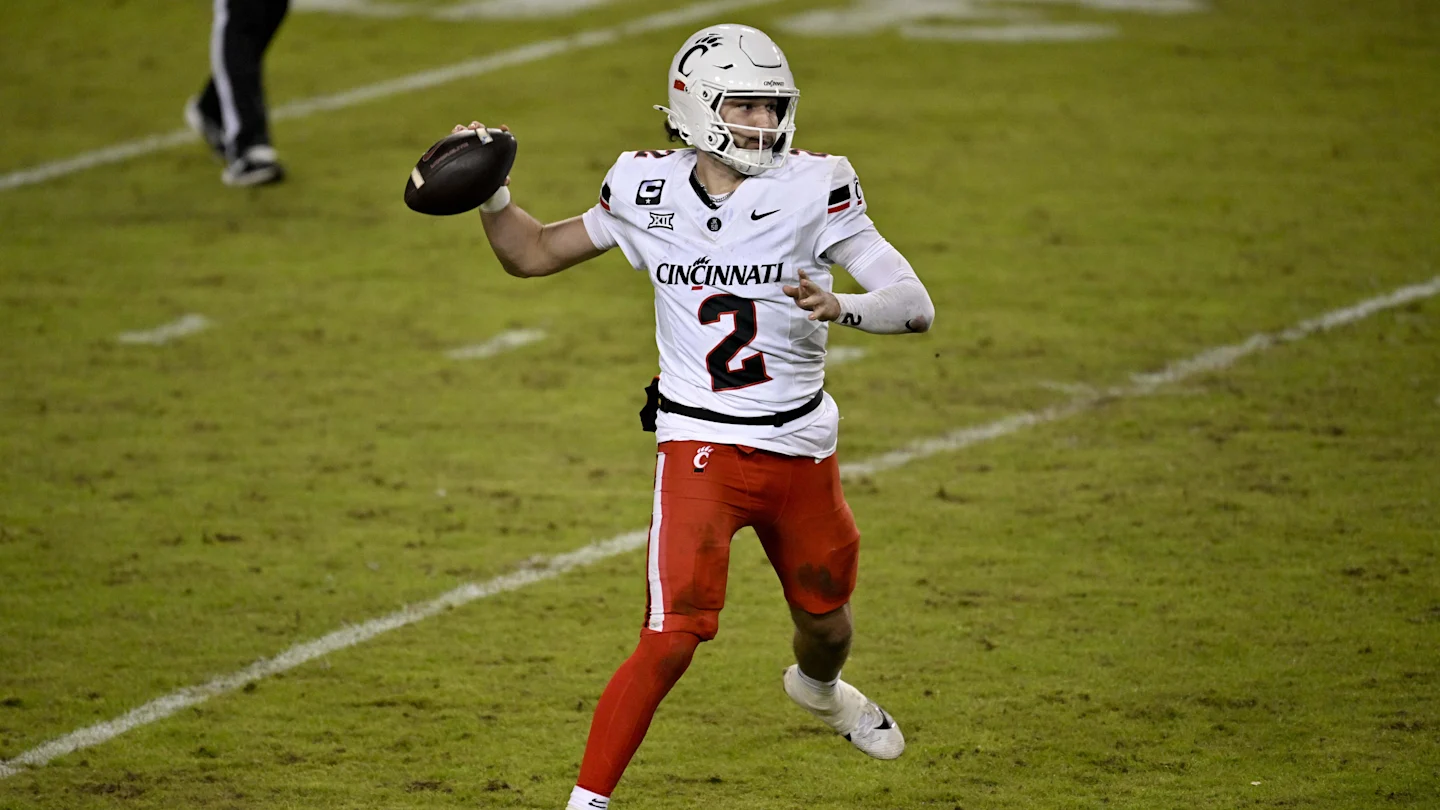
The Texas Tech Red Raiders are currently trailing Oregon 13-0 in the College Football Playoff quarterfinals, putting a loaded team on the brink of elimination. Given how bad the offense has looked for this team, the fanbase is already moving on to the offseason, as even with a comeback win in this game, Texas Tech isn’t good enough on offense to win the National Championship.
The biggest flaw with this offense seems to be the play of their quarterback, Behren Morton, who’s had a brutal day with 3 turnovers early in the 4th quarter. Given the fact that Behren Morton is out of eligibility, Texas Tech needs a new quarterback, and the fans are swinging for the fences.
Texas Tech fans are begging for Cody Campbell to pay Brendan Sorsby
On Friday, the Transfer Portal in college football will open, and Texas Tech fans are hoping that Cody Campbell and the Red Raiders spend big to continue building up this roster. The overwhelming biggest wish by the fanbase and outsiders is quarterback Brendan Sorsby.
The asking price from Brendan Sorsby to Texas Tech might be going up after that first half…
— Jordan Sigler (@JordanSig) January 1, 2026
While Oregon will advance if the score holds, everyone believes whichever quarterback Texas Tech ends up adding is the true big winner.
The Texas Tech NIL boosters are going to cut an unbelievable check for a QB upgrade this offseason, which makes someone like Brendan Sorsby an indirect winner of this Orange Bowl
— Waleed Khalid (@AnimalMan7) January 1, 2026
Texas Tech might add another zero to that NIL offer to QB Brendan Sorsby…
— Dane Brugler (@dpbrugler) January 1, 2026
The members of the media even seemingly believe that Brendan Sorsby is destined to be a Red Raider.
Overheard in the press box:
“Can they get Brendan Sorsby here by the fourth quarter?”
— Andy Staples (@AndyStaples) January 1, 2026
Cody Campbell specifically is being begged by the fans to go improve this team on offense, especially at quarterback.
Oh .@CodyC64 how much can you spend on an O-Line and Sorsby? #WreckEm
— Stacy G ❤️🖤👆🏻❤️💙 (@smgttu98) January 1, 2026
@CodyC64 please get us a QB 🙏🏽
— Alan Montoya (@alanj_montoya) January 1, 2026
Pay Sorsby any amount of money @CodyC64
— TTUMakesmesad (@TTUmakemesad) January 1, 2026
It’ll now become interesting to see where Texas Tech and Cody Campbell look to find their quarterback in the Transfer Portal. Backup QB Will Hammond showed a ton of promise, but his season ending injury may change the plans at quarterback.
Brendan Sorsby is ranked as the top quarterback in the Transfer Portal in our latest Transfer Portal Quarterback Rankings. Between his experience in the Big 12, his talent level, and the fact that his girlfriend now plays volleyball at Texas Tech, the pairing seems like a perfect fit, but both sides will need to lock the deal in.

RFK Racing and the Castrol Conundrum

Park Point 5-Miler and 2-Mile Walk 2026

Girard welcomes new faces to council, board of education | News, Sports, Jobs

Dengler Domain: College Football | News, Sports, Jobs
NASCAR News: RFK Racing and the Castrol Conundrum

Fuel the Drive Expands Youth Sports Access, Sets 2026 Growth Target
Vote for Sarasota, Manatee County 2025 Volleyball Player of the Year

The internet is killing sports

Hawaii men’s volleyball preview: Middle Blocker Trevell Jordan
Meet the 2025 Volleyball Team

College football’s transfer portal officially opens Jan. 2. What to know about player movement :: WRAL.com

Iola outside hitter takes top honor on Texas 2A all-state volleyball team | Associated Press
Who were the top high school girls volleyball players in Marion County in 2025?

Lane Kiffin receives $500,000 payout from LSU after Ole Miss advances to College Football Playoff semifinal

Wheeling Elks Announce 2025-26 Scholarship Winners | News, Sports, Jobs

SoundGear Named Entitlement Sponsor of Spears CARS Tour Southwest Opener

Donny Schatz finds new home for 2026, inks full-time deal with CJB Motorsports – InForum

Black Bear Revises Recording Policies After Rulebook Language Surfaces via Lever

David Blitzer, Harris Blitzer Sports & Entertainment

How Donald Trump became FIFA’s ‘soccer president’ long before World Cup draw

DeSantis Talks College Football, Calls for Reforms to NIL and Transfer Portal · The Floridian
Elliot and Thuotte Highlight Men’s Indoor Track and Field Season Opener

Rick Ware Racing switching to Chevrolet for 2026

JR Motorsports Confirms Death Of NASCAR Veteran Michael Annett At Age 39

#11 Volleyball Practices, Then Meets Media Prior to #2 Kentucky Match

Colleges ponying up in support of football coaches, programs

Nascar legal saga ends as 23XI, Front Row secure settlement
West Fargo volleyball coach Kelsey Titus resigns after four seasons – InForum

Maine wraps up Fall Semester with a win in Black Bear Invitational

Temple Begins Indoor Track & Field Season at UPenn This Weekend





-
 Sports3 weeks ago
Maine wraps up Fall Semester with a win in Black Bear Invitational
-

 Motorsports2 weeks ago
Ross Brawn to receive Autosport Gold Medal Award at 2026 Autosport Awards, Honouring a Lifetime Shaping Modern F1
-

 NIL3 weeks ago
Nike Signs 10 LSU Athletes to NIL deals
-

 Rec Sports2 weeks ago
Stempien to seek opening for Branch County Circuit Court Judge | WTVB | 1590 AM · 95.5 FM
-

 Rec Sports2 weeks ago
Princeton Area Community Foundation awards more than $1.3 million to 40 local nonprofits ⋆ Princeton, NJ local news %
-
 NIL2 weeks ago
Downtown Athletic Club of Hawaiʻi gives $300K to Boost the ’Bows NIL fund
-

 NIL3 weeks ago
Meet The Two Oregon Freshmen Ready To Make Ducks History Under Dan Lanning
-

 NIL2 weeks ago
Kentucky AD explains NIL, JMI partnership and cap rules
-
 NIL3 weeks ago
Rece Davis names former Pac-12 coach who should be top candidate for Michigan head coaching job
-

 Motorsports3 weeks ago
PRI Show revs through Indy, sets tone for 2026 racing season