Connect with us
https://yoursportsnation.com/wp-content/uploads/2025/07/call-to-1.png

NIL

Can NIL Buy a National Championship?

Published

on


SAN ANGELO, TX — In the high-stakes world of college football, where talent is the ultimate currency, the introduction of Name, Image, and Likeness (NIL) deals in 2021 has transformed recruiting and roster-building into a financial arms race. 

As the 2025 season winds down with the College Football Playoff (CFP) quarterfinals looming, one question echoes across the Lone Star State: Can pouring millions into NIL truly buy a national championship?

Texas (the entire state, not the university) provides a compelling case study, with four powerhouse programs—the University of Texas Longhorns (UT), Texas A&M Aggies (A&M), Texas Tech Red Raiders (TTU), and Southern Methodist University Mustangs (SMU)—each wielding significant NIL war chests but yielding varied results. From booster-fueled spending sprees to community-driven collectives, their approaches highlight the promise and pitfalls of this pay-to-play era.

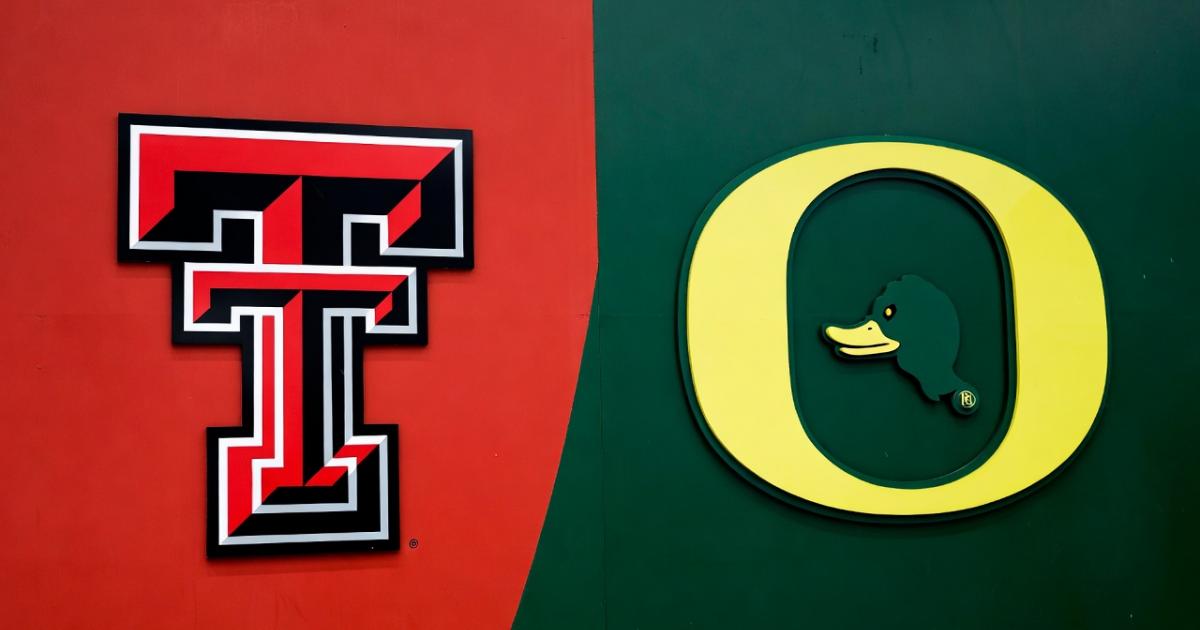
As of today, the Texas Tech Red Raiders remain in contention for the national title, set to face the Oregon Ducks in the Orange Bowl CFB quarterfinals at 11 a.m. Central Time on January 1.

NIL is a Billion-Dollar Game Changer

Since the NCAA greenlit NIL, the market has exploded, projected to hit $1.7 billion for the 2024-2025 season, with over $1.1 billion funneled into football alone. Proponents argue it levels the playing field by compensating athletes fairly, while critics decry it as a system where deep-pocketed boosters “buy” rosters, eroding the amateur spirit. 

Adding fuel to this evolution is NIL revenue sharing, stemming from the landmark House v. NCAA settlement approved in June 2025. Effective July 1, 2025, this system allows Division I schools to directly distribute a portion of their athletic department revenues—up to a cap of $20.5 million for the 2025-26 academic year—to student-athletes across sports. This cap is expected to increase by 4% annually, with potential exceptions, and is designed to compensate athletes more like professionals while maintaining some regulatory oversight through the new College Sports Commission. 

Unlike traditional NIL deals, which involve third-party endorsements and sponsorships from brands or collectives, revenue sharing comes straight from school funds (e.g., ticket sales, media rights, and sponsorships), functioning more like a salary pool. 

Schools opting in (most Power Four programs have) must report third-party NIL payments to ensure transparency, but the system coexists with NIL, allowing total athlete compensation to exceed the cap through combined efforts. 

This has led to “payrolls” where revenue sharing covers base pay, and NIL handles bonuses or incentives, though critics argue it exacerbates inequities between resource-rich and smaller programs. In Texas, oil money and alumni networks have propelled programs to the forefront, yet success isn’t solely about the dollar amount—it’s about strategy, coaching, and execution.

Comparing the NIL Approach of Four Texas Teams

Texas’s college football landscape illustrates diverse strategies in blending revenue sharing with NIL. All four programs have opted into the settlement, leveraging the $20.5 million cap to boost recruiting and retention amid the expanded CFP.Team

This table compares the NIL approach of Texas athletic programs (it’s responsive, so use your mouse or finger to scroll right and left)

Team Revenue Sharing Cap Utilization Key Approach Details Integration with NIL 2025 Impact Highlights
UT Longhorns Full $20.5M, part of $35-40M total football payroll Phasing out NIL collectives in favor of direct revenue sharing; focuses on structured contracts for efficiency. Combined with Longhorn Sports Agency (launched June 2025) for brand deals and content creation; alumni/tech boosters fund extras. Enabled 10-2 record and CFP berth; high-profile deals like Arch Manning’s $3.5M+ NIL boosted talent influx, though playoff exit showed limits.
A&M Aggies Full $20.5M, with min. $2.5M to women’s sports; spread across six programs Community-driven distribution tied to performance/academics; uses Teamworks for streamlined payments. $39.1M in NIL support FY24-25 via Aggie NIL and Playfly; focuses on guaranteed contracts and retention. Fueled 11-2 season and playoff spot; tripled NIL from prior year, but late losses highlighted distribution inefficiencies.
TTU Red Raiders Full $20.5M integrated into $55M planned NIL + sharing for 2026 Booster-led (e.g., Cody Campbell’s influence); one-year contracts for 97 football players; new corporate unit for growth. Merged Matador Club into Red Raider Club; smashed NIL records with $28M football spend in 2025. Powered 12-1 record, Big 12 title, and CFP quarterfinal; rapid escalation transformed program, though donor dependency raises sustainability questions.
SMU Mustangs Full $20.5M via Student-Athlete Benefit Fund Integrated revenue/NIL/brand unit; focuses on holistic athlete support and corporate partnerships. Boulevard Collective and Mustang Partners (launched Dec. 2025) for deals; Scout platform streamlines earnings and education. Boosted ACC debut with 10-2 record, playoff berth; historic revenue jumps (157% football tickets), portal success, but chaos concerns from NIL/portal dynamics.

The Longhorns’ Corporate NIL Powerhouse

The Longhorns, now in their second SEC season, boast what many consider the nation’s top NIL budget: an estimated $35-40 million dedicated to their football roster for 2025. 

Through the Texas One Fund and a partnership with Learfield’s Longhorn Sports Agency (launched in June 2025), UT has adopted a professionalized model, emphasizing brand-building, financial literacy, and high-profile endorsements. Star quarterback Arch Manning’s deals alone reportedly exceed $3.5 million annually, drawing transfers and blue-chip recruits.

This investment paid dividends with a 10-2 regular season, an SEC Championship Game appearance, and a CFP berth. However, playoff shortcomings—including a first-round exit—raise questions about ROI. A high-ranking UT source disputed the $35-40 million figure earlier this year, calling it “irresponsible reporting,” but insiders maintain it’s the benchmark for SEC elites. 

“Texas is built for the long haul,” said one analyst. “NIL keeps them competitive, but championships require more than money—ask the Yankees in baseball.”

The Aggies’ “12th Man” Community Approach to NIL

About 100 miles east of Austin, in College Station, the Aggies have taken a more diversified tack via Texas Aggies United, amassing $51.4 million in total NIL revenue from July 2024 to June 2025—nearly tripling the previous year’s haul. An overwhelming 96% ($49-50 million) flowed to men’s sports, with football claiming the lion’s share through guaranteed contracts tied to performance and academics.

This “retain at all costs” philosophy, bolstered by alumni and corporate sponsors, has secured talents like quarterback Marcel Reed and wide receiver Mario Craver.

The result? An 11-2 campaign, a playoff spot, and early-season dominance, only to falter with late losses to rivals Texas and in the CFP first round.

Critics point to gender disparities (minimal funding for women’s sports) and question if the broad distribution dilutes football’s edge in the brutal SEC. Still, A&M’s model emphasizes sustainability, positioning them as a top-5 NIL spender nationally.

“It’s not just about the check—it’s about building a culture,” an Aggies booster noted, echoing the program’s “12th Man” ethos.

All of the Oil Money Funding Texas Tech’s NIL Program

In Lubbock, the Red Raiders represent the underdog story of NIL efficiency. Led by billionaire alum Cody Campbell’s $25 million donation to The Matador Club, TTU shelled out over $28 million on its football roster in 2025, with plans for $55 million in combined NIL and revenue sharing next year. This aggressive, booster-centric approach—often dubbed “buying the roster”—focused on portal acquisitions and defensive reinforcements, transforming a mid-tier Big 12 team into contenders.

The payoff was undeniable: a 12-1 record, Big 12 Championship dominance (34-7 over BYU), and a CFP quarterfinal berth against Oregon in the Orange Bowl on January 1. While detractors label it “money over culture” and warn of donor dependency, Tech’s rise suggests targeted spending can yield outsized results in a less stacked conference.

“We’ve proven NIL can accelerate success,” said head coach Joey McGuire post-title. “But it’s the relationships that seal it.”

With the Orange Bowl looming, TTU could prove NIL’s championship potential taking on another NIL powerhouse for a slot in the National Championships semi-finals in January.

Oregon Ducks: The Nike-Backed Contender

As Texas Tech prepares to clash with the Oregon Ducks in CFB Quarterfinal game at the Orange Bowl, it’s worth examining Oregon’s robust NIL framework, which has positioned them as a formidable CFP opponent. Backed by Nike co-founder Phil Knight, Oregon’s primary NIL collective, Division Street, was established in 2021 and has evolved into one of college football’s most efficient operations. 

This booster-led model emphasizes innovative marketing and brand partnerships, leveraging Knight’s influence and Nike’s resources to attract top talent. In 2025, Oregon ranked fourth nationally in NIL spending for roster building, per an On3 survey of industry stakeholders, trailing only Texas, Texas Tech, and Ohio State. 

Oregon has fully embraced revenue sharing under the House settlement, distributing the maximum $20.5 million cap while integrating third-party NIL deals to exceed it, potentially reaching $30 million or more in total athlete compensation. 

Enhancements include adding a NIL partnerships manager and content producer in October 2025, partnering with Learfield Impact for technology and marketing support. 

Key players like quarterback Dante Moore boast NIL valuations over $2.3 million, reflecting the program’s appeal. 

This strategy has fueled Oregon’s undefeated regular season and top seeding in the CFP, but as offensive coordinator Will Stein noted, misconceptions about their NIL dominance overlook the program’s culture and coaching. 

Facing TTU’s NIL-fueled surge, the Ducks’ approach tests whether corporate-backed innovation can outpace oil money in pursuit of a title.

SMU Mustangs: The Rising Contender Fueled by NIL

NIL has been a game-changer for the SMU Mustangs, particularly in their 2025 transition to the ACC after a strong Group of Five run. The program’s aggressive adoption—via the Boulevard Collective and new Mustang Partners initiative—has driven record revenues, with football season tickets doubling and overall income surging 157% in their inaugural ACC year. This financial boost enabled high-profile portal acquisitions and retention, contributing to a 10-2 record, ACC contention, and a CFP berth—their first as a Power Four member. Partnerships like Scout NIL provide tools for earnings management and life skills, empowering athletes beyond the field. However, NIL’s double-edged sword has sparked debates: While it fueled opportunity and structured pay via revenue sharing, it also introduced “chaos” through the transfer portal, with rapid roster turnover challenging team cohesion. Overall, NIL has elevated SMU from mid-major to contender, proving smaller programs can compete with strategic spending in the revenue-sharing era.

Does the Money Translate to Championships?

Comparing the quartet: UT’s $35-40 million bought SEC relevance but no hardware; A&M’s $51.4 million (heavily football-skewed) delivered consistency but exposed vulnerabilities; TTU’s $28 million-plus propelled them furthest, claiming a conference crown and deeper playoff run; SMU’s strategic NIL surge secured a playoff spot in their ACC debut. Halfway through 2025, fans throughout the state of Texas got their “money’s worth” with four in-state teams vying for glory, but NIL’s role sparks debate. As one Reddit user pondered in a hypothetical DIII scenario, “How much NIL would it take to build a champion?”—the answer seems: Enough to attract talent, but not without coaching alchemy. 

NIL made college football mirror pro sports: Money helps, but doesn’t guarantee titles—look at MLB or the NBA. With the state of Texas’ new NIL rules looming for 2026 and the transfer portal opening January 2, the experiment continues. For now, NIL can buy contention, but championships? We’ll gain another clue on New Year’s Day at the #4 Texas Tech vs. #5 Oregon semi-final in the Orange Bowl at 11 a.m.



Link

Continue Reading
Click to comment

Leave a Reply

Your email address will not be published. Required fields are marked *

NIL

NCAA President Charlie Baker says players who sign NBA contracts will not be college eligible

Published

on


NCAA President Charlie Baker has drawn a line in the sand: if a player signs an NBA contract, they will not be granted any college eligibility.

This isn’t exactly a new rule, but it’s one that’s come into question after Baylor brought in James Nnaji to its current roster as a midseason addition. Nnaji was the 31st pick in the 2023 NBA Draft, but was granted four full years of eligibility by the NCAA last week and could play for the Bears as soon as this weekend. Reports from the likes of On3, CBS Sports, and ESPN have since come out saying that Trentyn Flowers, who has appeared in two NBA games this season, is looking at the possibility of playing in college.

But Baker released a statement on Tuesday firmly stating that any player who signs an NBA contract (including two-way deals) will not be granted any college eligibility.

“The NCAA has not and will not grant eligibility to any prospective or returning student-athletes who have signed an NBA contract (including a two-way contract),” Baker wrote on social media. “As schools are increasingly recruiting individuals with international league experience, the NCAA is exercising discretion in applying the actual and necessary expenses bylaw to ensure that prospective student-athletes with experience in American basketball leagues are not at a disadvantage compared to their international counterparts. Rules have long permitted schools to enroll and play individuals with no prior collegiate experience midyear.

“While the NCAA has prevailed on the vast majority of eligibility-related lawsuits, recent outlier decisions enjoining the NCAA on a nationwide basis from enforcing rules that have been on the books for decades — without even having a trial — are wildly destabilizing. I will be working with DI leaders in the weeks ahead to protect college basketball from these misguided attempts to destroy this American institution.

Nnaji’s (who never technically signed an NBA contract despite being drafted, although he did appear in the NBA Summer League) situation isn’t far off from what happens with international prospects that come over to play college basketball in the United States. The path to how he got there just looks different.

Kentucky’s Andrija Jelavić, for example, spent multiple years playing professionally in Serbia, but did not attend college in the US previously and has never signed an NBA contract, clearing the path for him to receive three years of eligibility at UK. A handful of former G League players who have not played in NBA games have been granted college eligibility in recent months.

Despite Baker’s strong statement, don’t be shocked if players/agents/coaches push for players with NBA experience to play in college anyway. But this was as clear-cut as we’ve heard the NCAA be on this situation so far.


Link

Continue Reading

NIL

2025 Year in Review: Top 10 biggest NIL, sports business storylines

Published

on


In 2025, college sports underwent another major transformation as revenue-sharing arrived. But that was just one of the top storylines in the NIL and sports business space.

The House v. NCAA settlement became the top story from this calendar year, but private equity is also sure to be part of the conversation into 2026. Those talks took place throughout 2025, with the Big Ten and Big 12 at the forefront.

SUBSCRIBE to the On3 NIL and Sports Business Newsletter

Of course, there was also a high-profile NIL dispute and a major step in the NCAA’s quest for federal legislation to help settle the landscape. Here is On3’s 2025 year in review, breaking down the Top 10 storylines in NIL and sports business.

House settlement ushers in rev-share era

After receiving preliminary approval in 2024, the quest for final approval of the House settlement ended in June 2025. That’s when Judge Claudia Wilken approved the landmark agreement, paving the way for schools to directly share up to $20.5 million with athletes. It also brought about the College Sports Commission as a new enforcement entity, led by CEO Bryan Seeley.

The CSC launched to enforce key terms of the 10-year settlement, including the NIL Go clearinghouse, which received a slew of criticism after its initial debut. NIL Go has cleared $87.5 million in deals as of the last update Nov. 6. However, the CSC’s participation agreements are also generating skepticism as 2025 winds down.

Private equity, capital talks swirl

As schools prepared for rev-share, the idea of private equity and private capital came about in college sports, with the Big Ten and Big 12 front-and-center. The Big Ten has explored a more than $2 billion private capital deal, but it generated pushback from some member schools.

Additionally, Ross Dellenger reported the Big 12 is nearing a private capital deal of its own which would infuse millions to member schools. A Big 12 school also announced a first-of-its-kind equity deal in December. Utah announced a deal with Otro Capital, which would infuse up to nine figures in cash and create a for-profit entity, Utah Brands and Entertainment.

Nico Iamaleava transfers amid NIL dispute

Late in the spring college football transfer portal window in 2025, On3’s Pete Nakos reported Tennessee and quarterback Nico Iamaleava were in active negotiations about a new deal. However, the situation took multiple turns, and Iamaleava later entered the portal.

Iamaleava missed a practice before the Vols’ spring game, Volquest reported, and Tennessee ultimately decided to move on from him. He later committed to UCLA, but the reaction poured in from across the college football world after the NIL dispute.

One of the biggest storylines of the 2025 college football season was the amount of money schools paid in coaching buyouts. Multiple high-profile firings led to more than $228 million in buyout money handed out, flying past the previous record of $132 set in 2023 – fueled by Jimbo Fisher’s $77 million figure.

LSU coach Brian Kelly received the highest buyout of the cycle at $53 million, and James Franklin’s $49 million buyout at Penn State dropped to $9 million after he took the Virginia Tech job and triggered his duty to mitigate clause. Kelly’s buyout is the second-largest in history behind Fisher’s, and Billy Napier received the third-largest from Florida at $21 million.

Wisconsin sues Miami after Xavier Lucas transfer

One of the biggest transfer stories of 2025 didn’t involve the portal at all. Wisconsin DB Xavier Lucas withdrew from the university and enrolled at Miami. The University of Wisconsin then sued the University of Miami and its NIL collective for alleged tortious interference.

The suit marked an unprecedented moment in college athletics as one university sued another over financial damages. Miami later filed a motion to dismiss the suit, On3’s Pete Nakos and Brett McMurphy reported, which is still being worked through.

ACC settles lawsuit with Florida State, Clemson

One of the ACC’s top priorities in 2025 was to settle lawsuits brought by Florida State and Clemson, challenging the conference’s grant of rights. Both boards approved settlement terms in March, ending the legal battles on all fronts.

As part of the agreement, the ACC will have a new exit fee structure and revenue distribution model. It will now be based on a five-year rolling average of TV ratings, with a majority share of the base media rights placed into a viewership pool for distribution.

Former NBA Draftee James Nnaji deemed eligible

Amid multiple eligibility questions the NCAA faced in 2025, one of the biggest decisions came in December. James Nnaji, a former NBA Draft pick, signed with Baylor after receiving four years of eligibility. That decision brought plenty of reaction across college basketball.

Though the Detroit Pistons drafted Nnaji – and his draft rights were part of the Karl-Anthony Towns trade to the New York Knicks – he never played in an NBA or NBA G-League game. Instead, he played professionally in Europe. The NCAA granted Nnaji four years of immediate eligibility, meaning he can join Baylor for the rest of the 2025-26 season.

NCAA’s quest for federal legislation stalls

Since the NIL era began, the NCAA has been searching for federal legislation to help settle the landscape. Those efforts ramped up in 2025, and the SCORE Act was on track for a vote on the floor of the U.S. House of Representatives at one point. However, the vote was removed from the schedule that day, and Senate Democrats criticized the legislation.

The SCORE Act was one of a handful of college sports-focused bills announced. The COACH Act was introduced in October to cap college football coaches’ salaries and buyouts, and the “Restore College Sports Act” was introduced in March. That bill would create an entity to replace the NCAA.

President Donald Trump wants to get involved

Amid the NCAA’s pursuit of a federal bill, President Donald J. Trump also made it clear he was willing to step in to help settle things down. He took multiple steps toward that goal, notably signing an executive order in July to crack down on pay-for-play, third-party NIL deals.

Trump was also putting together a presidential commission with Texas Tech booster Cody Campbell and former Alabama head coach Nick Saban as co-chairs. Plans for the commission were paused, but Trump remained vocal about NIL in college athletics.

Throughout the 2025 college football season, TV ratings surged. Regular-season viewership increased by 9% from a year ago, and ABC emerged as the biggest winner.

ABC aired 17 of the Top 20 most-watched games of the year, led by Texas vs. Texas A&M in their Week 14 rivalry game. FOX, however, had the top two games of the season: Ohio State’s Week 14 win over Michigan (18.4 million) and the Buckeyes’ Week 1 victory over Texas (16.6 million) led the way.

College athletics saw plenty of changes throughout 2025 as the NIL and rev-share eras are officially underway. Heading into 2026, though, there are still plenty more storylines to track in the ever-changing space.


Link

Continue Reading

NIL

Louisiana panel eyes agent changes for high school athletes | Local Politics

Published

on


With elite high school football and basketball traditions stretching from Shreveport to New Orleans, the new pay-the-players era that allows kids to profit from paid endorsements has led to big business in Louisiana, and some athletes are bringing home six-figure incomes before they even graduate.

But it’s also spawned a host of concerns around a lack of financial protections for young athletes, and who can claim a stake in the money they’re now allowed to earn.

Those concerns were a key focus this year of a 22-person legislative task force involving Louisiana lawmakers, lawyers, college athletic administrators, coaches and student athletes. The group was empaneled to study the effects of paid endorsements and salaries for the state’s high school and college players.

They began shortly after a landmark NCAA settlement in June, which allowed college athletes to begin collecting salaries directly from their universities this season. For the past four years, college athletes could earn money through outside endorsement deals but not directly from their schools.

Over the course of five meetings, the panel zeroed in on the so-called “NIL” era in high school sports, named for the money that athletes have been allowed to earn since 2021 through endorsements or other use of their name, image and likeness.

Under the task force’s recommendations, which will be forwarded to lawmakers in January, the state would require that anyone other than a parent who helps high schoolers negotiate endorsement contracts must register as an agent with the Louisiana Attorney General’s Office. That requirement is already in place for professional sports agents in Louisiana.

The agents would also be subject to background checks and required to complete training.

Lawmakers could craft the changes to allow high schoolers to recoup any money paid to an unlicensed agent, said Harry J. “Skip” Philips, Jr., assistant Chief Deputy Attorney General.

“You’d try to get back as best you can the ill-gotten gains, as it were, and give it to the student athlete,” Philips said during the task force’s December meeting.

“I’m not sure we’ve fixed this problem altogether,” Philips added, but the changes give authorities a mechanism for pursuing what Phillips called “renegaders,” or people posing as professional agents in order to reap the benefits.

The panel’s chair, Rep. Rashid Young, said in an interview that the recommendations are meant to be a starting point, and lawmakers are welcome to add revisions.

“This is sort of one of those building-a-plane-as-we-fly type of situations,” said Young, a Homer Democrat and former linebacker and strong safety at Grambling State. “We’ll see how it works. If we need to come back and adjust, I think everybody is open to doing that.”

The task force didn’t recommend any specific NIL-related changes to state law regarding college athletics, other than a resolution that would study the “funding structures of athletic departments” and “evaluate the financial implications of NIL activities.”

The panel did recommend a list of best practices for Louisiana college athletic departments, including educating athletes on “available mental health resources” and to “carefully consider Title IX implications” when deciding how to dole out college athlete salaries.

LSU has said 90% of the $18 million it has earmarked in salaries will go to football and men’s basketball players. The university — and all others in the state — have rejected public records requests to turn over salary data per individual athlete.

The task force turned its attention to high school agents after J.T. Curtis, football coach at John Curtis Christian School in River Ridge, told the panel of “rampant” problems among the state’s premier football schools.

Adults with no professional certifications or backgrounds in the law swoop in to secure representation from Louisiana’s top recruits, some as young as 12 or 13 years old, Curtis told the panel.

“Until we find a way to get outside influences out of the lives of our high school athletes, we’re going to continue struggling with this,” Curtis said during an August meeting.

In the task force’s final meeting in December, Curtis called the panel’s recommendations “a good beginning.”

Historically, Louisiana has one of the nation’s largest shares of high school football players who are recruited by Division I colleges.

In the upcoming 2026 class, eight football players from Louisiana high schools are ranked in the Top 200, according to 247 Sports. In 2025, it was nine.

For athletes under the age of 17, the task force recommended legislation requiring them to deposit a portion of their compensation into a trust account, which they’d have access to later as an adult.

The account could be drawn from “under specified conditions, such as educational expenses or milestone events, while maintaining safeguards to prevent misuse,” per the task force’s adopted language.

The task force also recommended the Louisiana High School Athletic Association adopt a formal set of NIL bylaws that it would police among the state’s members.

They include prohibiting athletes from endorsing products associated with alcohol, cannabis, tobacco, adult entertainment and gambling.

The rules would allow schools to prohibit students from NIL activities if they interfere with classes, practices, games or competitions.


Link

Continue Reading

NIL

Joey McGuire addresses narrative that Texas Tech bought its College Football Playoff spot

Published

on


Joey McGuire pushed back on the idea that Texas Tech is in the position it is due to NIL money. The Red Raiders made the College Football Playoff for the first time ever this season after winning the Big 12, but also paid a big price to get here.

According to On3’s Pete Nakos, a survey revealed Texas Tech spent the second-most money of any college football team on their roster this season. That has led to a lot of chatter from fans that the Red Raiders “bought” their success and spot in the CFP.

Although it’s certainly true that Texas Tech spent a lot of money, it isn’t exactly unique in that way with the current era of college sports. McGuire also believes that there was more than just the dollar figures that attracted players to Lubbock, citing the academic success of the team during his tenure.

“Texas Tech has been playing football for 100 years,” the coach said in an appearance on The Triple Option. “Since I’ve been here, we hold every single GPA record in the history of Texas Tech football. With all these guys that we brought in, they just set the all-time GPA record as a team for a fall semester. We have a 3.23 team GPA. So whenever you’re sitting there and taking about, ‘All these guys came in because of money,’ we have 33 graduates who will play in this playoff game and this team set the all-time GPA record.

“So that tells you right there what this building’s all about. How they hold each other accountable, how everything is important. Everything that we do, we do it at the highest standard. So I am really proud of that. I just think that shows that this team’s come here for one reason and one reason only. They came here to be better football players and better men.”

Texas Tech has five players ranked inside On3’s NIL Top 100 for college football. That includes edge rusher David Bailey, who led the Big 12 with 13.5 sacks, and quarterback Behren Morton.

Regardless, they aren’t the only players in this College Football Playoff who are receiving big pay days. Ohio State receiver Jeremiah Smith has an NIL valuation of $4.2 million, while Miami quarterback Carson Beck is making an estimated $3.1 million.

So as much talk as there has been about what Texas Tech players are being paid, it’s not against the rules anymore. This is the kind of team you can build in the NIL era, and at least the Red Raiders are also focusing on more than just the money. They take on Oregon in the Orange Bowl at 12 p.m. ET on New Year’s Day.


Link

Continue Reading

NIL

Frank Wilson reveals he told LSU he would ‘burn this building down’ if he was not allowed to finish the job

Published

on


There has been a tremendous amount of staff turnover around the SEC, but particularly between LSU and Ole Miss in recent weeks. That includes Frank Wilson, who has been the interim head coach for the Tigers since the firing of Brian Kelly and has since taken the running backs coach job at Ole Miss.

Wilson was hired by Ole Miss in the middle of December, during bowl prep. That was notable because LSU had hired Lane Kiffin to be its next head coach away from Ole Miss. Kiffin had publicly made it clear that he wanted to coach Ole Miss through the College Football Playoff, but wasn’t allowed to do so. It was a different situation for Wilson, though, who was allowed to coach LSU through the bowl game.

LSU would end up losing the Texas Bowl 38-35 to Houston. After the game, Wilson spoke passionately about why it mattered to him to be on the sidelines for this game.

“Very proud to get this team to the finish line,” Frank Wilson said. “And when we were in the midst of the transition, and I was asked about coaching in this game, I said to an administrator, ‘Yeah, I’m gonna finish with my boys. I’ll burn this building down if you don’t let me finish. I’m gonna finish with my boys.’”

Obviously, the Wilson and Kiffin situations are unique from one another. Wilson was an interim, and the Texas Bowl is not the College Football Playoff. Kiffin left for a rival, while Wilson may have needed to leave for a new job regardless. Still, in all of that, Wilson had that desire to finish what he started with players he loved.

“Because the love is unconditional,” Wilson said. “So, they go out and they compete today and we finished second against a quality opponent.”

Frank Wilson was in his second stint at LSU. This stint had been since 2022, with him taking on the duties of assistant head coach and running backs coach before his promotion to interim head coach. He finished that run with a record of 2-3.

Frank Wilson addresses decision to leave LSU for Ole Miss

Prior to the bowl, Frank Wilson opened up on his decision to leave LSU for Ole Miss. He also noted the role that Lane Kiffin played in that, helping for him to make it work.

“We talked about it. We talked about ways that it could work out. Coach Kiffin was absolutely awesome the entire time in wanting to try and find a way to work it out. We didn’t come to that resolution, and so there were other opportunities out there,” Wilson said.

Pete Golding is a guy who I’ve known for many years, from the time he concluded playing college football and was a young coach at Delta State Southeastern and then Southern Miss of course. Then, I had an opportunity to hire him back at UTSA. We’ve forged an even closer bond and mutual respect professional for one another, so when the opportunity came, he extended himself to me and I thought it was a great fit for myself and my family.”


Link

Continue Reading

NIL

Major college football program loses six defensive backs to transfer portal

Published

on


A major SEC football powerhouse is undergoing some notable unwelcome change on its roster as it brings on a new coaching regime in time for the 2026 season.

Jon Sumrall is poised to step onto the Florida Gators’ sideline starting next fall, but the transition from Billy Napier to his tenure has already resulted in key personnel losses on the field as players look for an exit via the college football transfer portal.

Exodus from the Swamp

Since the coaching change, the Gators have lost a reported total of 26 players from their roster through the portal, including a stunning six total defensive backs.

The latest was Aaron Gates, the redshirt sophomore secondary defender with plans to depart the Florida program and transfer to another school, according to On3 Sports.

That leaves Sumrall and the Gators without a half-dozen defensive backfield contributors, among the 22 total players who have exited the program already.

Included among that number are two starting safeties in Jordan Castell and Sharif Denson, alongside cornerbacks Teddy Foster, Josiah Davis, and Jameer Grimsley.

Defense is losing a lot

Ten of those outgoing Florida players are on the defensive side of the ball, including defensive linemen Tarvorise Brown and Michai Boireau, linebacker Grayson Howard, and edge rusher Jayden Woods.

High-profile players like quarterback DJ Lagway, a former five-star prospect, and one-time four-star wide receiver hopeful Eugene Wilson are also leaving Florida as transfers.

On the good side, the Gators are set to return corner Dijon Johnson and rising sophomore Lagonza Hayward, who took over Gates’ spot this past season after his injury.

Sumrall will dip into the portal

Sumrall is considered one of the most promising younger head coaches to emerge from the active 2025 coaching carousel, but he will have a tall task ahead of him replacing that outgoing talent.

It doesn’t sound like he’s averse to using the transfer portal to his own advantage.

“We will use the transfer portal. If you’ve studied my rosters the last couple years, I haven’t had the resources to keep very many of my good players. They all end up getting poached,” Sumrall said earlier this month.

“So I’ve had to embrace the transfer portal probably more than most, maybe even more than I’d like to at times, by necessity. But we will use the portal to enhance our team and to supplement where there may be holes or deficiencies.”

Where the Gators ranked defensively

Florida’s defense ranked 10th among the 16 SEC teams this past season against the pass, allowing almost 223 air yards per game on average.

And the Gators were just 12th in the SEC in scoring defense, allowing opponents to score 24 points per game each time out.

Nationally, Florida’s defense ranked 74th among the 136 FBS teams in passing defense, letting opposing quarterbacks complete nearly 64 percent of their pass attempts.

That figure included allowing 8.0 yards per pass attempt on average, although the Gators stiffened when in scoring position, ranking sixth nationally by surrendering just 13 passing touchdowns all year.

And they were top 20 in FBS when defending the red zone, allowing opponents to convert 75 percent of possessions into points.

How the college football transfer portal works

College football’s transfer portal officially opens on Jan. 2, but that hasn’t stopped a flurry of players from entering their names for consideration at a new school right now.

The new 15-day transfer portal window from Jan. 2-16 and the elimination of the spring transfer period has condensed the timeline for players and programs to make their moves.

The NCAA Transfer Portal is a private database that includes the names of student-athletes in every sport at the Division I, II, and III levels. The full list of names is not available to the public.

More college football from SI: Top 25 Rankings | Schedule | Teams

Follow College Football HQ: Bookmark | Rankings | Picks


Link

Continue Reading
Motorsports3 weeks ago

SoundGear Named Entitlement Sponsor of Spears CARS Tour Southwest Opener

Motorsports3 weeks ago

Donny Schatz finds new home for 2026, inks full-time deal with CJB Motorsports – InForum

Rec Sports4 weeks ago

Black Bear Revises Recording Policies After Rulebook Language Surfaces via Lever

Sports4 weeks ago

Men’s and Women’s Track and Field Release 2026 Indoor Schedule with Opener Slated for December 6 at Home

Rec Sports3 weeks ago

David Blitzer, Harris Blitzer Sports & Entertainment

Rec Sports4 weeks ago

How Donald Trump became FIFA’s ‘soccer president’ long before World Cup draw

NIL3 weeks ago

DeSantis Talks College Football, Calls for Reforms to NIL and Transfer Portal · The Floridian

Motorsports3 weeks ago

Rick Ware Racing switching to Chevrolet for 2026

Sports3 weeks ago

Elliot and Thuotte Highlight Men’s Indoor Track and Field Season Opener

Motorsports4 weeks ago

JR Motorsports Confirms Death Of NASCAR Veteran Michael Annett At Age 39

Sports3 weeks ago

#11 Volleyball Practices, Then Meets Media Prior to #2 Kentucky Match

Technology4 weeks ago

23 عاما من الفضائح السياسية والجنسية منذ انقلاب حمد بن خليفة.. استغلال الفتيات الصغيرات في الدعارة.. ضبط ابنة رئيس وزراء قطر خلال ممارستها لجنس الجماعي.. ملامح الحكم تتخبط بين المنفي وتدخلات النساء

NIL3 weeks ago

Colleges ponying up in support of football coaches, programs

Sports3 weeks ago

West Fargo volleyball coach Kelsey Titus resigns after four seasons – InForum

Technology4 weeks ago

23 عاما من الفضائح السياسية والجنسية منذ انقلاب حمد بن خليفة.. استغلال الفتيات الصغيرات في الدعارة.. ضبط ابنة رئيس وزراء قطر خلال ممارستها لجنس الجماعي.. ملامح الحكم تتخبط بين المنفي وتدخلات النساء

Most Viewed Posts

Trending