Connect with us
https://yoursportsnation.com/wp-content/uploads/2025/07/call-to-1.png

Sports

Inside The Mad Dash to Turn Division I Athletes Into Influencers

Published

on


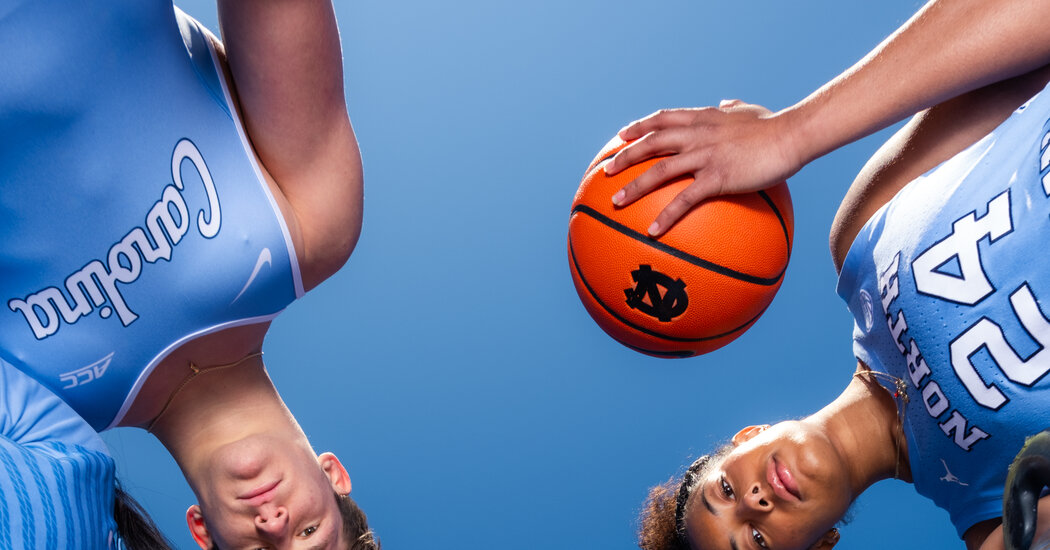
On a February afternoon at the University of North Carolina, a group of seven students on the diving team sat barefoot on the floor of the college’s muggy natatorium. They were staring expectantly at a petite blond woman in a black sweater perched on a concrete block.

Vickie Segar was there, with the blessing of the university’s athletic department, to pitch them on turning their TikTok and Instagram accounts into cash cows.

“Let’s talk about the money in the creator economy,” said Ms. Segar, after explaining that she was a graduate of the university who had run a top influencer marketing agency for a dozen years. “Does anybody follow Alix Earle?”

The students said yes, amid several chuckles, because asking a college student that question in 2025 is like asking if a millennial has ever heard of Beyoncé.

How much money, she continued, did they think that Ms. Earle, a TikTok megastar who rose to fame with confessional-style videos about beauty and college life, makes for promoting a brand across several posts on Instagram Stories? “$100,000?” one student guessed. “$70,000,” another tossed out.

Ms. Segar, whose firm has worked with Ms. Earle on brand deals, paused. She drew out her response: “$450,000 per Instagram Story.”

For a moment, there was just the hum of the pool and a single exclamation from one student: “Oh. My. God.”

Ms. Segar smiled and explained, “Our job is to help you guys bring in some of that money.”

U.N.C. doesn’t have a formal contract with Ms. Segar or her firm, Article 41. But the school has encouraged students and coaches to work with them. Later this year, the firm’s pitch will also be a part of orientation for freshman athletes at the school.

Welcome to the budding business of turning college athletes into social media stars. The world of intercollegiate sports has been upended in recent years by the National Collegiate Athletic Association’s rules that allow student-athletes to make money from their name, image and likeness — known as N.I.L. For the most part, it was viewed as a change that would reward stars in college basketball and football.

Now, Chapel Hill is at the forefront of the next stage of the N.I.L. era. The school is supporting Ms. Segar in her effort, which began last fall, to turn all 850 of its student-athletes into influencers.

The school doesn’t get a cut of their earnings. But “they want every athlete at the school to make as much money as possible because it will get better athletes,” Ms. Segar said.

This hoped-for, large-scale conversion of college athletes to influencers shows how N.I.L. deals “have grown exponentially in ways that nobody could have imagined or predicted,” said Michael H. LeRoy, a law professor at the University of Illinois. “This is another milestone in how this is evolving.”

And while many students are eager to make some extra cash, the efforts are alarming to some. “This saddens me,” Mr. LeRoy said. “Their bodies are being monetized on TikTok for the benefit of the school.”

The new N.I.L. rules have already minted a few unexpected stars in the last few years. There’s Olivia Dunne, the 22-year-old Louisiana State gymnast, who can now command hundreds of thousands of dollars for an advertorial TikTok post. And Haley and Hanna Cavinder, 24-year-old twins, who made N.I.L. deals valued at more than $1.5 million, according to Forbes, while playing basketball at the University of Miami.

Ms. Segar, 42, who graduated from North Carolina in 2005 and lives in Chapel Hill, believes those players are just the start. Uber, Athleta and State Farm are among companies that have already paid for posts that feature student-athletes showing off their game-day looks or routines. Only a few students will hit big numbers, but Ms. Segar reasons that many could eventually make at least a few thousand dollars per branded TikTok or Instagram post.

Article 41, which Ms. Segar founded in 2024 with her husband, Ben Gildin, a lawyer and former lacrosse player at Kenyon College, will take a 20 percent cut of the deals, which is typical among influencer management firms.

Other companies, including traditional Hollywood agencies and boutique firms, have been pouncing on N.I.L. influencer opportunities, too. Those efforts have largely been focused on top talent in basketball and football who might one day play professionally. Creative Artists Agency, one of Hollywood’s powerhouse firms, says it has worked with nearly 100 athletes on N.I.L. deals since 2021.

ESM, a sports management firm that historically worked with N.F.L. players, now represents a roster of current and former student-athletes, including the Cavinder twins, and is helping Clemson start an in-house agency.

But Ms. Segar’s firm is unique, so far, in its belief that every athlete — benchwarmer or not — can have a following.

Bubba Cunningham, the U.N.C. athletic director, works out of an office next door to the Dean E. Smith Center, where its famed men’s basketball team plays. From there, he oversees 28 varsity teams, many of them elite, like women’s soccer and field hockey.

Mr. Cunningham, whose given name is Lawrence, has been the college’s athletic director for more than a decade, which means he has watched the full-scale erosion of the long-held bargain between athletes and their universities: a free education in exchange for their on-field prowess. That meant, officially at least, no advertisements, gifts or cuts of merchandise sold by schools, even jerseys with their name on the back.

That model has all but imploded in recent years amid a series of antitrust cases. Based on the preliminary terms of a landmark settlement, schools like U.N.C. will offer student-athletes two potential forms of compensation beyond scholarships in the 2025-26 school year. The school is likely to have $20.5 million — calculated by taking 22 percent of the most recent annual revenue from four major college sports divisions generated from media and sponsorship rights and ticket sales — to pay athletes directly, through a revenue-sharing agreement. The settlement would resolve several antitrust lawsuits filed against the N.C.A.A. and the biggest conferences by former college athletes.

At U.N.C., that $20.5 million will go to men’s and women’s basketball, football and baseball, according to Mr. Cunningham. Many other schools are doing similar splits.

“Since this is about the commercial value of the sport, we’re going to attribute the money to the sport that earned it,” he said.

Making an arrangement with a firm like Ms. Segar’s offers him a solution for everyone else — especially female athletes.

“The most popular player on the most popular team is what I’ve always said will get the lion’s share of the money,” Mr. Cunningham said. “But the most entrepreneurial student that understands social media and understands how to create a social media presence can become an influencer.”

Bella Miller, a 22-year-old gymnast at U.N.C. with more than 27,000 followers on TikTok, said she wasn’t sure sports like hers would ever benefit from N.I.L., with so few athletes eventually competing professionally. Despite the success of someone like Ms. Dunne, most brands and agents “don’t want to focus their time and energy on sports like gymnastics, volleyball, swimming because they didn’t really see that potential,” she added.

Article 41’s pitch about becoming an influencer — complete with a 50-page training guide with tips like “no, you don’t have to dance” and “treat each TikTok as a bite-sized lesson” — is aimed at members of a cohort who have, in some cases, been using social media since before they were teenagers.

For many, the notion of becoming a creator is appealing. In a 2023 Morning Consult survey, three in five members of Generation Z said they would become influencers if given the opportunity. (And many of them might have the opportunity. There are 27 million paid creators in the United States, and 44 percent of them are doing it full time, according to a 2023 survey from the Keller Advisory Group, a consultancy.)

Alyssa Ustby, 23, a star player on the women’s basketball team, who is bespectacled and earnest off the court, is among the highest-paid U.N.C. student-athletes when it comes to N.I.L. deals.

She said she had around 1,000 Instagram followers before college: She’d post photos of friends, or senior prom. But when she entered U.N.C. in 2020, TikTok was ubiquitous.

“I was like, ‘OK, what’s the worst that could happen — that I stay where I am?’” Ms. Ustby said. She quickly became a hit with a TikTok series that showed her training with other U.N.C. athletes, poking fun at her form as she tried to do laps with the swim team and trying to catch a ball with the women’s lacrosse team.

Now, she has 132,000 followers on TikTok and 54,000 on Instagram and commands between $10,000 and $15,000 for branded posts. Sponsors have included Papa John’s (“Where’s the best place to eat an epic stuffed crust pizza?” she asks, eating one as a study snack and in the gym in a TikTok ad) and American Eagle Outfitters.

Ms. Ustby, who majored in advertising and public relations (and just signed a free-agent contract with the W.N.B.A.’s Los Angeles Sparks), said she saw her experience building a TikTok audience as akin to an internship. She earned more than $100,000 through brand deals last year and tracked them on a spreadsheet that is also monitored by her father, a wealth manager.

Jake Dailey, a 19-year-old freshman wrestler from Scranton, Pa., with moppy hair and a big smile, said that he was probably 10 years old when he started using social media. He started posting silly jokes and wrestling videos to TikTok as a high school freshman in 2021, which his mother encouraged, even though it earned some derision from his peers.

“I would say, yeah, it’s cringe-y,” but “it’s definitely going to pay off in the long run for me,” he said. Mr. Dailey said he had scored free products and a recent paid deal with an apparel company called the Mutt Dog.

Many of Mr. Dailey’s posts depict him shirtless, pointing his phone camera at himself in the mirror or flexing. In his view, physique is part of why student-athletes play well on social media. “Young, fit, attractive people definitely come from athletics,” he said.

Mr. Dailey, who has 90,000 TikTok followers and 32,000 on Instagram, said he would be thrilled to become a full-time influencer. Otherwise, he plans to become a dentist.

Bodies are, inevitably, part of what’s on display. When Ms. Segar and Mr. Gildin spoke to U.N.C.’s divers, they urged them to highlight their physical abilities. “I put diving at the top with gymnastics” with tricks that regular people can’t do, Ms. Segar told the group, using an expletive for emphasis. (She said she intentionally peppers her talks with curse words to put the students at ease.)

Women are often the audience that brands are trying to reach on TikTok and Instagram, and they’re more likely to post as creators on the platforms, Ms. Segar said. The success of athletes like Ms. Dunne and the Cavinder twins sometimes attracts a line of criticism about how much their looks matter.

Ms. Segar admitted that athlete-influencers in the very top tier are more likely to be conventionally attractive, but pushed back on the idea that the student-athletes she is pitching need to adopt what she called Mr. Dailey’s “thirst trap strategy.”

A breakout star probably has “something really special about them — they are either a top athlete or they are really beautiful or they are incredibly funny,” she said. “But we don’t need people to get eight million followers. We need them to get to 5,000, 10,000, 20,000 followers — that is where we start seeing revenue.”

Ms. Segar acknowledged that race can play a role in determining which athletes gain bigger social media followings, outside of sports like basketball and football. But she said she believed that was changing with the younger generation. And, she added, “there is more money going to diverse creators in the N.I.L. space than there is in the traditional influencer space that I’ve worked in for over a decade.”

Mr. LeRoy, the Illinois law professor, said he was concerned about the mental health ramifications as more athletes pushed to have big presences on social media.

Ms. Ustby, the basketball player, said a friend on the team who started building up her TikTok presence at the same time as her didn’t enjoy the same success.

“She was constantly putting in all this effort, making videos, and they would just never go viral,” she said. “She said it literally just felt like a popularity contest she was losing, and it sucks, and that was a really strenuous thing on our friendship because my stuff was kind of taking off.”

Mr. LeRoy said that it was worth remembering that “these are undergrads, many of whom are teenagers.”

“If part of your N.I.L. strategy as a school is to increase your student-athlete exposure to the social media ecosystem that is filled with irrationality and hate, you’re not helping the mental health of the athletes,” Mr. LeRoy said. “This is not a good atmosphere for them to be competing at a high level and then also competing in the social media sphere.”

Mark Gangloff, U.N.C.’s head coach of swimming and diving, said he was keeping an eye on how influencing fit into athletes’ “very full plates.”

“That is my only caution — how much is too many things for any one person to try and take on at one time?” he said.

(Article 41 and U.N.C.’s coaches have emphasized that the effort is entirely voluntary and that many student-athletes have opted to keep their social media profiles private.)

Ms. Segar and Mr. Gildin are self-funding Article 41, which has 13 full-time employees and 24 paid interns. (She sold her influencer agency, Village Marketing, to the ad giant WPP in 2022.) The couple are prepared to invest several million dollars into the firm, which they say has helped launch social profiles for more than 70 students and coaches who have signed agreements with the firm.

Article 41 is fielding requests for similar work from other colleges like the University of Michigan. It plans to seek compensation for its services from other institutions, though it is not asking for money from U.N.C., where Ms. Segar and Mr. Gildin are donors and Ms. Segar sits on a board for its athletic booster club.

The firm is intervening when brands send free products to athletes and insisting that they are paid for posting about them. It’s also trying to sweeten existing equipment deals between brands and teams by adding promises of social media posts to their deals to help teams earn revenue.

Athleta is among the brands that have already struck paid deals with Ryleigh Heck, a field hockey player, and Ms. Miller, the gymnast, but it does not officially outfit U.N.C. athletes otherwise. Michelle Goad, Athleta’s chief digital officer, said it was testing ads with the students in part to help “build a bridge to our next generation of consumers,” and to see if the exposure could eventually exceed that of traditional college sponsorships.

Anna Frey, a 17-year-old tennis star from Farmington, Utah, will be one of the biggest athlete-influencers on campus when she starts her freshman year at U.N.C. this fall, with 2.1 million TikTok followers who watch posts of her serving tennis balls, performing dances to popular TikTok sounds and going to school dances.

Her father, Tanner Frey, said there were some serious cons to that sort of presence.

“I feel like 90 percent of people are so nice in the comments and 5 percent are mean and 5 percent are perverts,” he said in an interview.

Mr. Frey said he had made a block list of “about probably 30 words” that Instagram and TikTok could use to censor offensive comments on his daughter’s posts. He said the “meanest, nastiest” comments came from gamblers who would berate his daughter in the comments if she lost a match.

Still, he said it was “the best time ever in the history of the world to be a female athlete,” in part because of the opportunities tied to brand deals and the new N.C.A.A. rules for payments.

“Four years ago, none of this was even possible,” he said. “If Anna wanted to go play college tennis, she’d have to make a really hard decision between that and accepting half a million dollars a year from these brands and going pro.”

He added, “It’s nice they can go and do both now.”

Audio produced by Sarah Diamond.


Link

Continue Reading
Click to comment

Leave a Reply

Your email address will not be published. Required fields are marked *

Sports

Two School Records Fall for Women’s Track & Field in VIrginia

Published

on


WINCHESTER, Va. – After a week in Florida leading into the spring semester, the Franklin & Marshall’s women’s track & field team competed at Shenandoah’s Kaye & JJ Smith Invitational. The Diplomats got the January portion of their schedule off to a great start with a pair of school records, with four other marks that rank in the top 10 in program history.

Tara Silverman broke the school record in the 3,000 meters that was formerly held by All-American and F&M Hall of Famer Sheena Crawley ’13. Silverman finished in a time of 10:19.87. Teammates Annalise Kauffman (11:01.19) and Georgeia Hodgson (11:36.98) finished second and sixth in that same event.

Lauren Dunnigan once again broke her own school record in the 60 meter dash as she finished with a time of 7.75 seconds during the finals of that event. That is currently the second-fastest time in the Centennial Conference this season. Dunnigan was also the individual champion in the 200 meter dash as her time of 26.56 seconds was the second-fastest in school history. Dunnigan capped her day with a time of 9.15 seconds to take first (her third event title of the day) in the 60 meter hurdles.

The Diplomats finished with five individual titles on Sunday as Jordyn Collie won the 400 meters with a time of 1:05.42. Her performance highlighted seven Diplomats in the top 10 of that event, as Avery Canady (1:06.33) and Abby Bachman (1:06.52) took the silver and bronze positions. Collie was also the team’s top finish in the 800 meters (2:33.68), with Bachman (2:44.52) and Sophia Bloom (2:53.15) each turning in top 10 individual finishes.

Amanda Imhauser and Hayden Adams both had busy days in their return to competition. Imhauser was third in the 60 meter hurdles (10.24) and long jump (4.84m), sixth in the high hump (1.35m) and shot put (9.30m), and seventh in the 200 meters (29.14). Adams took third in the pole vault as she cleared 3.20 meters to rank second in school history. She added a fifth-place showing in the high jump (1.38m). Max McCoy led the Diplomats in the both throwing events as she took third in the shot put (11.13m) and fourth in the weight throw (12.07m). Both of those marks were top 10 performances in school history.

Women’s track & field will return to competition this Saturday, January 17 when the team travels to Catholic’s Cardinal Classic.

Franklin & Marshall Event Winners / Top 10 Performances

60 Meters

1. Lauren Dunning (7.75) – school record

200 Meters

1. Lauren Dunnigan (26.56) – second in school history

3,000 Meters

1. Tara Silverman (10:19.87) – school record

Pole Vault

3. Hayden Adams (3.20m) – second in school history

Shot Put

3. Max McCoy (11.13m) – ninth in school history


Link

Continue Reading

Sports

Ball State Finishes Weekend Victorious Versus NJIT

Published

on


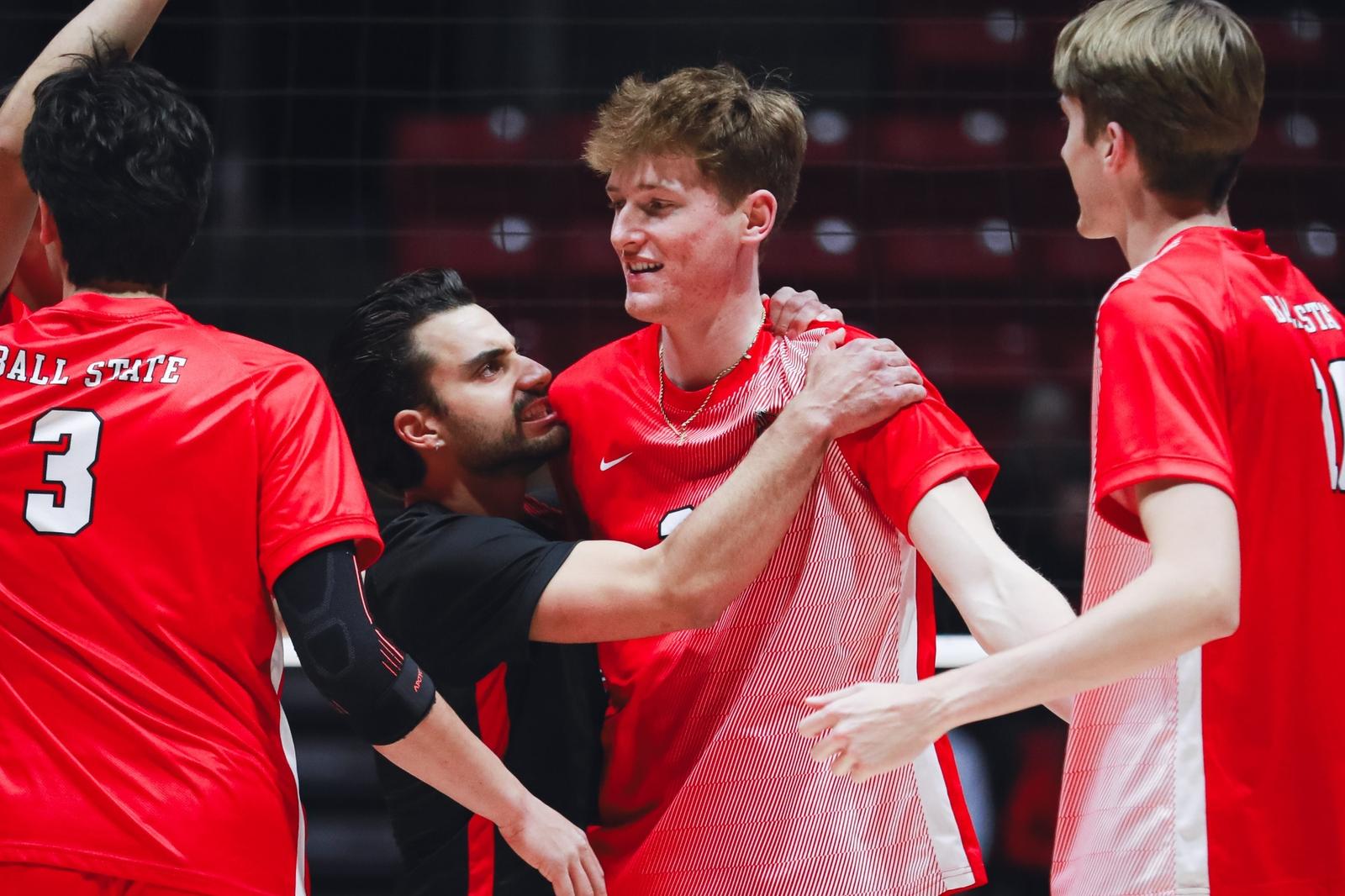
MUNCIE, Ind. – The Ball State men’s volleyball team completed a successful weekend at Worthen Arena, defeating NJIT in four sets (25-13, 21-25, 25-12, 25-15) Saturday evening.

The Cardinals (3-0, 0-0 MIVA) limited the Highlanders (0-4, 0-0 EIVA) to a 0.80 hitting clip while averaging .391 themselves, along with a team block total of 15.5 compared to NJIT’s 3. The evening saw just one lead change, three points into the fourth set, as NJIT recorded an attack error at the end of a Patrick Rogers serve.

Rogers led the way as he matched his kill total from the evening prior, tallying 16 while hitting .522, along with six digs, two assists and a team-leading three aces. Ryan Louis was credited with 11 kills on a .318 clip, two aces, four digs and a career-high seven block assists. Wil Basilio earned nine kills, three digs and four block assists.

Ball State’s defense halted the Highlanders at the net, aided by Jacob Surette who recorded a career-best nine block assists, Louis’ seven and Braydon Savitski-Lynde’s five. Savitski-Lynde also completed five kills while hitting .522. Freshman libero Adir Ben Shloosh led the men with eight digs.

Lucas Machado’s hustle was on full display throughout the match, dishing out 37 assists with three kills.  

The Cardinals led by as much as 14 in the opening set, highlighted by an 8-0 run which brought them to set-point. After three-straight points by the Highlanders, Rogers punched a kill to finish it, capping off a set that saw Ball State hit an efficient .688 clip.

Set two was a different story, as the score tied seven times until NJIT’s late momentum pushed them just enough to claim the set.

The men’s squad was unfazed, easily taking sets three and four. Rogers swatted nine kills between the two sets, and claimed two of his three aces in set four, with one of those bringing the Cardinals to match point. Surette’s four block assists were also instrumental, including back-to-back blocks assists by him and Basilio.

In his first career appearance with the Cardinals, sophomore Jason Harris put the exclamation point on the weekend with the final kill of the match, finishing with two.

The Ball State men’s volleyball program ride this momentum into next week when it travels to Phoenix, Ariz. for the First Point Collegiate Challenge Tournament at the Phoenix Convention Center. The men square off against No. 1 UCLA Jan. 17 at 7 p.m. ET, followed by No. 9 Stanford Jan. 18 at 4 p.m. ET.


Link

Continue Reading

Sports

Gauchos Down Harvard to Start Season 3-0

Published

on


SANTA BARBARA, Calif. – The UC Santa Barbara Men’s Volleyball team defeated Harvard 3-1 Saturday night to close out the final round of the 61st ASICS Invitational. The Gauchos open the 2026 season undefeated, having also beaten Kentucky State and Maryville earlier in the tournament. 

HOW IT HAPPENED

Harvard opened the gate with a first-set win, taking it 25-22.  The Gauchos hit just 0.074 in the first and were unable to collapse Harvard’s early lead. 

The Gauchos finally clicked during the second, bringing it home 25-18. Santa Barbara and Harvard stayed even through the second, with neither team managing to gain more than a three-point lead until the set’s finale. At 19-18, Santa Barbara went on a six-point scoring run that brought them directly to victory. 

Santa Barbara shone in the third, capturing a 25-14 success for their cleanest win of the match. The Gauchos made off with a 7-2 head start and stayed at least three points ahead at all times. Senior Owen Loncar sealed the set with a service ace.

Finally, the Gauchos closed out the match by winning the fourth and final set 25-19. They held a slight initial lead before springing multiple points ahead of the Crimson. 

Santa Barbara revived their hitting percentage after the grim first set, hitting 57% in the remaining three. As a team, they dug 42 digs and made ten aces.

George Bruening put on a hitting masterclass, annihilating 26 kills and hitting .455. He tied his career record in kills and made ten in the fourth set alone. Ben Pearson delivered the match’s second highest kill count with nine, while Riggs Guy lasered eight. Guy also placed a career-best six assists. 

Cole Schobel achieved all over the court, popping 42 assists,  five kills, and a block. He also led the match in service aces with four, hit .714, and tied Jason Walmer for the match-high dig count at nine. Joe Wallace followed with seven digs and freshman Dylan Pilkvist made a team leading 5 block assists


UP NEXT

The Gauchos will continue home play for their next match, hosting The Master’s University on Friday, Jan. 16 at 7:00 p.m. in the Thunderdome. 


Link

Continue Reading

Sports

Men’s volleyball tested in 3-1 season opener against Jessup – The UCSD Guardian

Published

on


UC San Diego men’s volleyball (1-0, 0-0 Big West) kicked off its 2026 campaign with a hard-fought 3-1 victory over Jessup (0-1, 0-0 MPSF) on Tuesday, Jan. 6, at LionTree Arena.

The key to the Tritons’ victory was the offensive firepower of junior outside hitter Josh Ewert, who racked up a game-high 17 kills, including the final point in two of the four sets. Junior outside hitter Leo Pravednikov added 15 kills of his own.

The first set showcased opening-game jitters with both sides committing a multitude of attacking errors. Ewert came to play from the first serve, racking up five kills in the opening set alone. However, Jessup had its own go-to guy — senior middle blocker Clement Osahon Jr. caused major issues for the Tritons early on. By the end of the set, UCSD shook off its early errors and created some separation. Fittingly, Ewert scored the set point, a kill that pushed his team over the line to clinch the first set with a score of 25-20.

The second set started sloppily, but a vicious kill from Triton junior middle blocker Leo Wiemelt ignited a spark. A sneaky dump set from senior setter John Luers extended the Tritons’ lead to six. Yet, UCSD was plagued by service errors following strong kills, allowing Jessup to remain on the Tritons’ heels.

“[The offense] is so potent at times, and then, at times, we struggled with the blockers and getting the ball in the court consistently,” head coach Brad Rostratter said in a postgame interview with The UCSD Guardian. “So, our strengths can be our weaknesses.”

Ewert led the Tritons to set point after a crafty tool of the Warriors’ block. Despite a final 3-point push from Jessup, a powerful kill from senior middle blocker Peter Selcho drove UCSD over the line 25-22.

Jessup refused to go quietly in the third. After a couple of early kills from Ewert, the Warriors found their momentum. UCSD responded with a block from Wiemelt and an emphatic kill and ace from junior outside hitter Sebastiano Sani. However, a solo 3-0 run from Jessup’s senior opposite hitter Carter Depue tied the game at 18. Late Triton errors ultimately allowed Jessup to build its lead and eventually take the set 25-22.

“Their middles did a really good job of committing, slowing down our middles, and touching and defending the middle of the court,” Rostratter said. “It’s something they did really, really well. And we struggled; it took a little bit of adjusting to their higher quick set.”

The Tritons decisively regained control in the fourth set, and Ewert set the tone with back-to-back service aces. UCSD went on an 8-2 run, which included a vicious kill from Selcho and another ace from Ewert. For the first time in the match, the Tritons had a comfortable lead at 18-11. Ewert sent one last back-row kill past the unresponsive Warriors to take the fourth set 25-20 for UCSD.

The Tritons stayed hot with a 3-1 home victory against Daemen on Friday, Jan. 9. UCSD will finish off its three-game homestand against Rockhurst on Sunday, Jan. 11, before heading to Utah to face BYU in a two-game road trip from Jan. 16-17.



Link

Continue Reading

Sports

Purdue Fort Wayne Bests (RV) NJIT in Five-Set Bout

Published

on


FORT WAYNE, Ind. – The Purdue Fort Wayne men’s volleyball team collected their first win of the season on Sunday night (Jan. 11), topping NJIT in the Mastodons’ second five set match of the season (25-20, 18-25, 25-22, 23-25, 15-12).

Owen Banner and Carlo Huisden led the ‘Dons offensively in the match, combining for 43 of the ‘Dons 67 kills. Banner finished with 21 kills, two aces, nine digs and three total blocks. Huisden tallied 22 kills on a .472 hitting percentage, along with seven digs.

Both teams battled early in the first set, until NJIT took the lead with a 5-1 run. Purdue Fort Wayne rallied back midway through the set with their own 6-1 run to claim a 16-13 lead. The Mastodons finished the set on a .481 hitting percentage to take the frame 25-20.

The Highlanders jumped out to an early second set lead, using a 6-2 run. NJIT added onto their lead with the help of another 6-1 run, sitting on top of a 16-9 score. Despite the ‘Dons boasting another high hitting percentage (.429), the Highlanders maintained the lead and finished out the set at 25-18. 

Purdue Fort Wayne rallied to begin the third set, shooting out on a 7-0 run. Banner earned nine of his kills and the Mastodons defense rejected four attacks during the frame. The ‘Dons took a 2-1 set lead after a 25-22 conclusion.

The fourth set was highly contested, neither side owned larger than a three point lead. Both teams were held to under .100 hitting percentage. NJIT forced a fifth set after taking the fourth 25-23.

Purdue Fort Wayne dropped the first two points of the final frame, but bounced back with a 6-1 run.  NJIT closed the gap to 9-11 after a 3-0 run of their own. The Mastodons managed to hold on to their lead and close out the contest at 15-12.

Hunter Hopkins finished with a near double-double of 53 assists and nine digs. Casey Lyons tied his career-high with eight block assists. Andrew Mayer dug out 11 attacks in the contest.

Purdue Fort Wayne moves to 1-1. NJIT falls to 0-5. The Mastodons will take on the Under Armour Challenge, hosted by Lindenwood, next weekend. The ‘Dons will face off against Menlo on Friday (Jan. 16) and No. 11 CSUN on Saturday (Jan. 17).

~ Feel the Rumble ~


Link

Continue Reading

Sports

SBU Sports: Men’s Track & Field returns to competition at TCNJ Invitational

Published

on


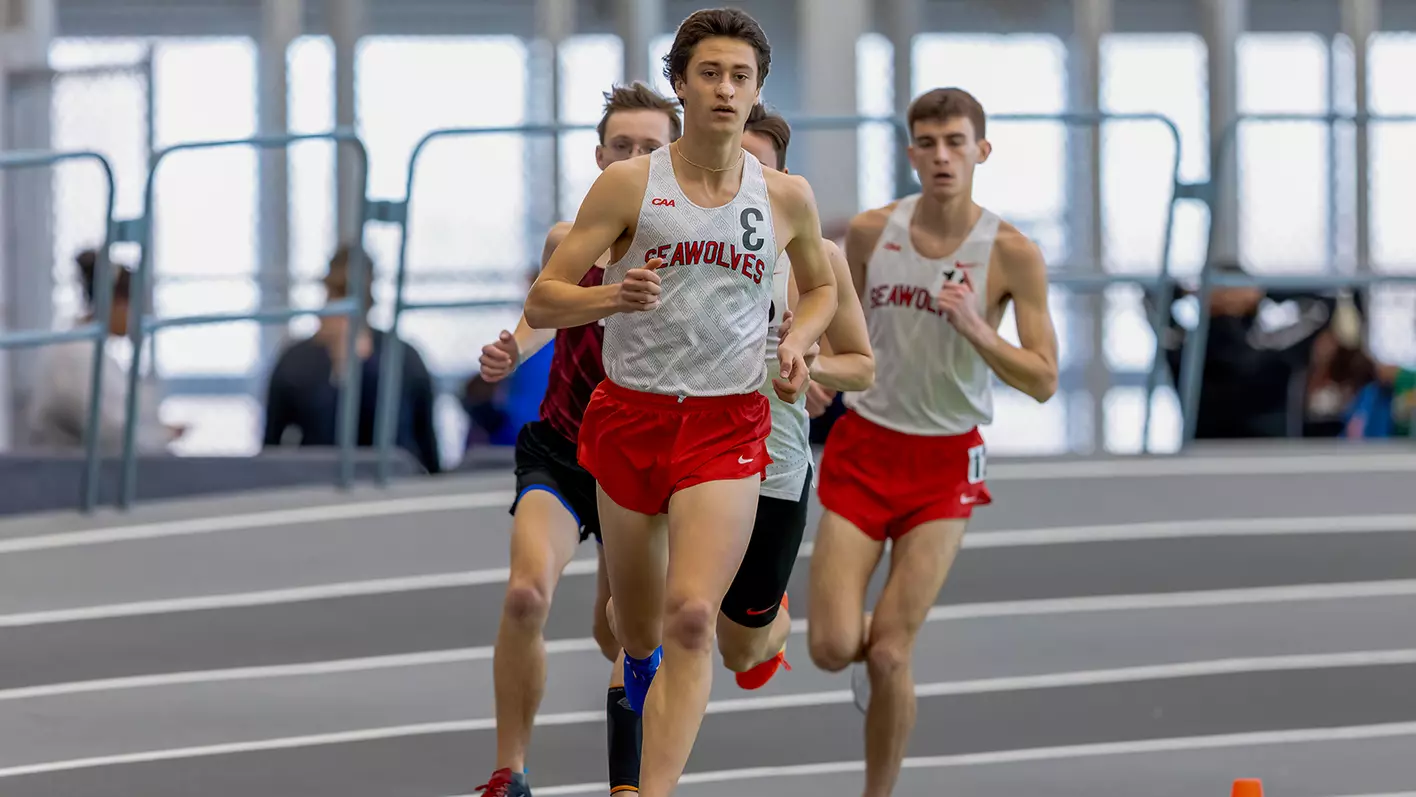
Brian Liebowitz during Jan. 10 race. Photo courtesy of Stony Brook Athletics

Stony Brook men’s track & field competed in its first meet of the New Year on Jan. 9 at the TCNJ Invitational from The Armory in New York City. As a team, the Seawolves recorded eight top-eight placements, including a first-place finish in the 3000m race by Brian Liebowitz.

HIGHLIGHTS

  • Liebowitz won the 3,000m, with a time of 8:33.52, setting a new PR.
  • Luca Maneri recorded a third-place finish in the mile run (4:23.26).
  • Freshman Jamal Joseph finished third in the 200m (22.41).
  • Cain Lawler placed fourth in the mile run (4:23.42).
  • Andrew Lawler posted a fifth-place finish in the mile run event, setting a new PR with a time of 4:23.65.
  • The team of Walesky Nowak, Andres Acosta Mondriguez, Jaden Medrano, and Matthew Brodsky finished fifth in the 4x400m relay (3:23.20).
  • Chris Tardugno recorded an eighth-place finish in the mile run, setting a new PR with a time of 4:27.64.
  • Brodsky finished eighth in the 500m and set a new PR in the event (1:06.37).

The team continues its busy January slate returning to The Armory for the Ramapo College Invitation on January 16, with action set to begin at 9:30 am.


Link

Continue Reading

Most Viewed Posts

Trending