
NIL
A whole new ball game – The Hawk Eye

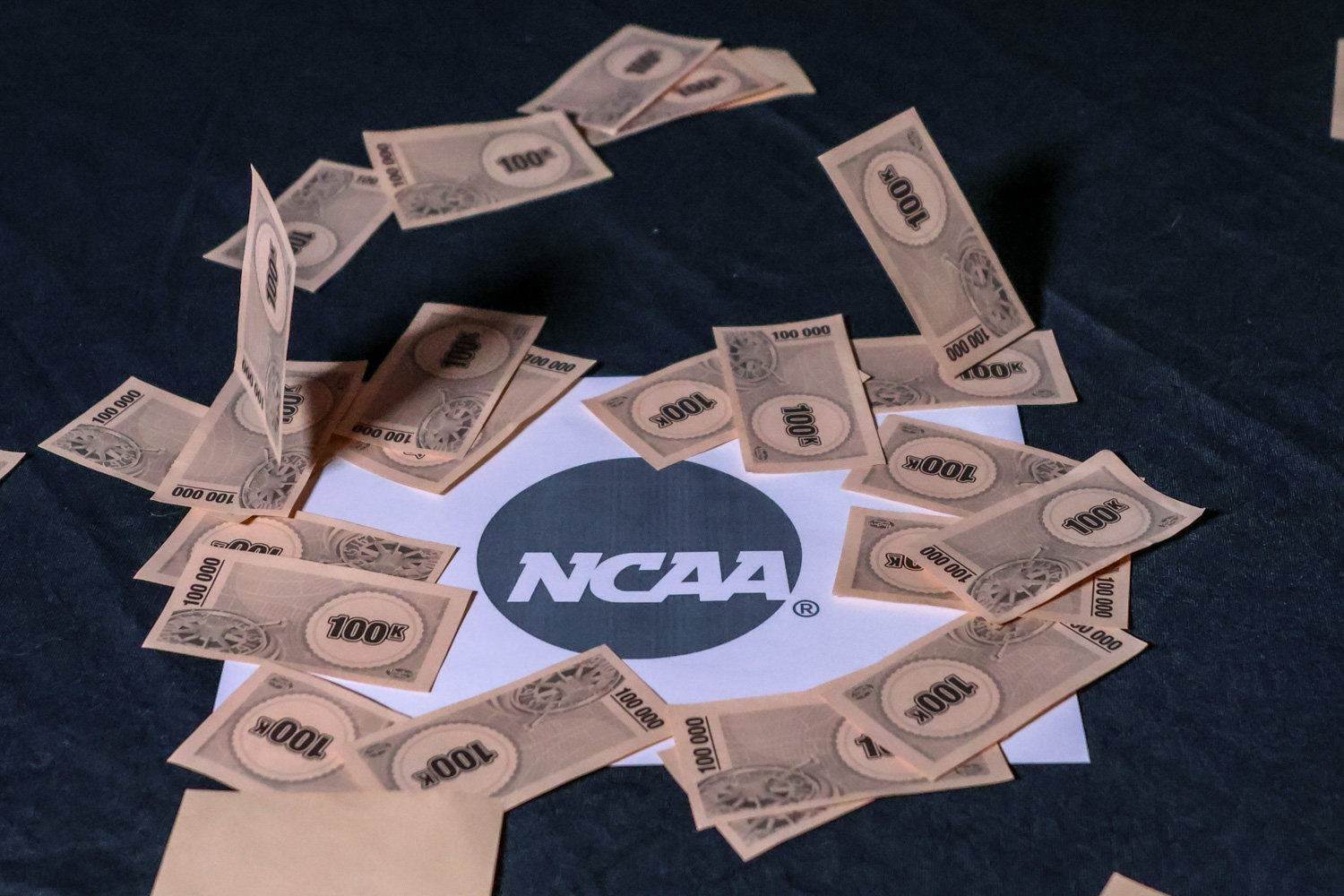
Name, Image and Likeness (NIL) is ruining college sports.
NIL has drastically changed the landscape of college sports in its brief existence. Since its introduction in 2021, the NIL market has reached an insane $1.7 billion projected evaluation in 2024-25, which is up drastically from when it was first introduced. The landscape is still growing with the total NIL market projected to reach close to $2.5 billion in the 25-26 year.
It’s clear that NIL can be an amazing tool for athletes, and it’s exciting to see athletes capitalizing on their name, image and likeness. NIL provides athletes the ability to earn money on the side and learn valuable business and communication skills while still playing collegiate sports. However, there is a fine line between NIL being used as a beneficial tool for athletes, and NIL being used by big schools with deep donor pockets to create an unfair advantage.
The quick and dramatic rise of NIL has led to the landscape of college sports changing drastically. Recruiting has become a game of “Who’s got more money?” and the transfer portal has grown out of hand. It has led to coaches stepping down after decades on the job because they can’t navigate recruiting and team building anymore. It leads to situations where teams are left with no players returning — a situation that happened with the University of Baylor’s men’s basketball team this past year.
Players are more prone to leave if they feel they can secure a better opportunity elsewhere and profit more from a different school. This has destroyed programs’ abilities to be able to build a team and a cohesive environment. If they lose a majority of their players year after year, there is no continuous culture to build upon, no leaders able to shape the young players and no way to build a competitive team year after year — unless they have money for it.
It was seen in March Madness this year, as the death of the mid-major schools and Cinderella stories were put on display for the nation to see. Top programs from big conferences dominated the tournament, and there were hardly any upsets. It eventually led to four No.1 seeded teams making the Final Four — only the second time in history that has happened — and NIL played a huge role.
Recruiting has changed as well, with high school athletes now eligible to profit off of NIL in the majority of states, and colleges throwing big numbers and perks at top recruits. The severity of these offers is mind-boggling. One of the prime examples of this is the insane offer Michigan recruit Bryce Underwood received after he signed a $10.5 million deal with the university. That deal is strictly a contract with the university and doesn’t include the money he can potentially make from brand deals, which proves how insane the NIL landscape is becoming. Top universities’ ability to throw astronomical amounts of money toward top recruits is ruining college sports.
The major problem with the way things are run now is universities have too much spending. The bias in the distribution of money is stark with 53.1% of all NIL deals signed to football or men’s college basketball athletes. Part of this is due to the fact that they are the most popular of the college sports, and there are considerably more players on a football team’s roster than any other sport, but the numbers don’t lie: there is a clear discrepancy between male and female sports with corresponding NIL numbers. Women’s sports continue to rise in popularity, and the numbers may shift, but that still leaves a big gap between the pay of male and female athletes at the collegiate level.
College sports are turning into a professional setting with the influence of NIL. The introduction of exorbitant amounts of money being thrown at young college athletes has destroyed the college landscape. The concept of loyalty to a school, program and fans has changed, and it is now a selfish environment being created. Athletes aren’t the ones to blame, but rather the nature of how the money is being handled and distributed. Thankfully, there is already something being done. In the 2025-26 year, there is a bill in circulation that would allow schools to share their athletic departments revenue with the athletes. This is both good and bad; a salary cap introduction may help lessen the blow to smaller schools who don’t have the same resources as bigger programs. In contrast, smaller programs that don’t generate as much revenue as bigger schools will still be at a massive disadvantage, even with a cap.
NIL is still a huge uncertainty and a puzzle that remains unsolved. There are certainly ways to improve the system further, and there is hope that the system will improve with time. The NCAA could fully eliminate schools from the equation and make it so money doesn’t play a factor in recruiting, but there are some downsides to that, mainly for the schools still retaining 100% of the profits off of athletes. NIL is an enigma, standing as both a massive positive for college sports and athletes around the country, but also as a huge negative for the landscape of college sports.
One thing is certain, if colleges and athletes don’t change and adapt to the new way of things in the era of NIL, then college sports will never be the same.


Florida quarterback DJ Lagway finished the 2025 season with 2,264 passing yards, 16 touchdowns and 14 interceptions, while adding 136 rushing yards, a 63.2% completion rate and a 127.0 passer rating.
His year featured flashes of high-end upside, including a three-touchdown season opener against Long Island and multiple 250-yard passing performances, but was also marked by turnover-heavy outings, most notably a five-interception game against LSU.
The Gators finished 4–8 (2–6 SEC) in 2025, underperforming under head coach Billy Napier, who was fired on October 19 following a 3–4 start. Florida hired Jon Sumrall as his successor on November 30.
That instability, combined with reportedly awkward early meetings between Lagway and the new staff, preceded his decision to explore other options, which he announced his plans to enter the transfer portal on December 15.
A 2024 five-star recruit out of Willis (Texas) High, Lagway arrived at Florida as a high-profile prospect — a Mr. Texas honoree, Elite 11 participant and the nation’s No. 1 quarterback in the 247Sports rankings.
He started as a true freshman in 2024, completing 59.9% of his passes for 1,915 yards, 12 touchdowns and nine interceptions, then showed modest improvement in 2025, with his elite prep pedigree keeping him among the top quarterbacks in the transfer portal.
On Tuesday, transfer-market analyst Chris Hummer relayed updated reporting that growing interest in Lagway has come from Stanford and Florida State, alongside previously noted links to Baylor and Louisville.

Stanford finished 4–8 in 2025, in a season that exposed offensive struggles and significant turnover, including the loss of head coach Troy Taylor before the year and multiple key offensive players entering the portal, such as running back Cole Tabb, offensive tackle Jack Layrer, and wide receivers Jason Thompson and Myles Libman.
With senior starter Ben Gulbranson set to move on, several outlets have projected Stanford to pursue a portal quarterback, making a veteran, NFL-style, pro-concept passer like Lagway an appealing immediate option.
Florida State reshaped its quarterback room in 2025 by adding former Boston College quarterback Tommy Castellanos through the portal, but his subsequent declaration for the 2026 NFL Draft has reopened a clear need at the position.
Given the Seminoles’ offensive profile and proximity to Gainesville, Florida State would represent another logical landing spot for Lagway.
Lagway’s NIL valuation is also among the highest in college football, with On3’s NIL tracker listing it at $2 million, driven by deals with brands such as Gatorade, Jordan Brand, Nintendo and Red Bull.
That financial profile can enhance his appeal to programs capable of supporting or expanding his brand, making NIL infrastructure a meaningful factor in both team interest and his ultimate decision.
Read More at College Football HQ
- Major college football programs linked to underrated transfer portal prospect
- No. 1 transfer portal QB clearly linked to two major college football programs
- College football’s leading passer linked to two programs in transfer portal
- First-team All-Conference college football starter enters transfer portal
NIL
Ty Gregorak on the state of college football + MSU heading to national championship – Skyline Sports
The NCAA transfer portal officially opens on Friday for all college football players searching for new schools to compete for in 2026. It will remain open for the next two weeks.
In the weeks following the conclusion of the 2025 regular season, thousands of college football players made the decision to play for another program next season. While quarterbacks have been a more dominant topic of conversation with the portal, there are plenty of other significant offensive skill players on the move.
One marquee name in the 2026 portal cycle is former Auburn wide receiver Cam Coleman. He will enter the portal with two seasons of eligibility remaining at his second school.
Hugh Freeze recruited Coleman to Auburn as one of the highest-rated wide receiver prospects in the 2024 class. He is projected by all recruiting services as the No. 1 overall recruit in the NCAA transfer portal for the 2026 offseason.
Coleman appeared in 10 of Auburn’s 12 games in 2024. He caught 37 passes for 598 yards and eight touchdowns his freshman season. He was named to the All-SEC Freshman Team that season.
Auburn featured Coleman in every game of the 2025 season. He grabbed 56 receptions for a team-high 708 yards and five touchdowns.

With such high prospects, Coleman is expected to attract attention from major college football programs across the country. The offers for Coleman are expected to hover around $2 million from any potential buyers.
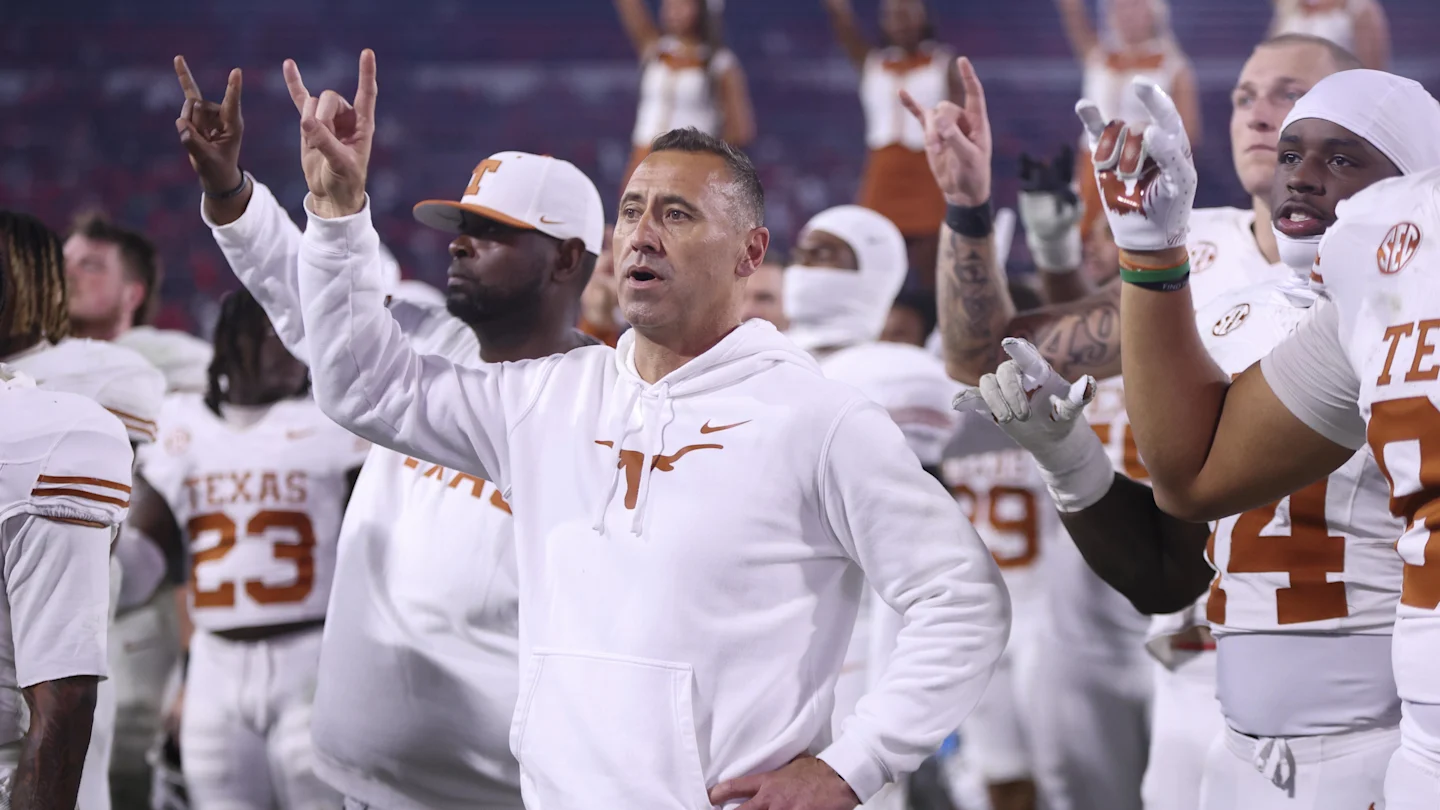
One school that has worked its way into the mix to land Coleman in the 2026 offseason is Texas. Mike Golic Jr. mentioned the idea of the Longhorns jockeying for Coleman on a recent edition of Bleacher Report’s “College Football Show.”
“Steve Sarkisian is great at getting wide receivers the touches they want to look good for the NFL. Arch Manning, after being left for dead after the early portion of the season, looked like one of the best quarterbacks in college football the back half of the year,” Golic said. “I think you combine the quarterback with the offensive playcaller, I think you have a good setup there.”
As Golic mentioned, Sarkisian has a strong track record with wide receivers as an offensive mind. DeVonta Smith won a Heisman Trophy at Alabama with Sarkisian as the Crimson Tide’s offensive coordinator. That offense featured another future NFL talent at wide receiver in Jaylen Waddle.
Wide receivers have gone to the NFL throughout Sarkisian’s tenure at Texas. AD Mitchell, Xavier Worthy, Matthew Golden and Isaiah Bond are among the Longhorns’ wide receivers who have reached NFL rosters in Sarkisian’s tenure in Austin.
NIL
Nick Saban declares Miami ‘the real deal’ after College Football Playoff win over Ohio State in Cotton Bowl

Although it entered the game as the biggest underdog of the College Football Quarterfinal round, No. 10 Miami shocked the world and downed defending National Champion No. 2 Ohio State 24-14 in Wednesday night’s Goodyear Cotton Bowl.
The Hurricanes are now two wins away from their first National Championship since 2001. They will face the winner of No. 3 Georgia/No. 6 Ole Miss in the Vrbo Fiesta Bowl on Jan. 8, with a spot in the national title game on the line.
Following Wednesday night’s big win for ‘The U,’ legendary head coach Nick Saban labeled Miami as ‘the real deal’ heading into the College Football Playoff Semifinals. Clearly, Saban is all-in on his former assistant, Mario Cristobal.
“The thing that impressed me the most was how relentless Miami competes in a game,” Saban said on Thursday morning’s edition of ‘College GameDay‘. “When Ohio State came out and answered the bell in the second half, Miami just kept playing. They drove through the smoke and made the plays they had to make when they had to make them. A couple of third down conversions on that last drive, which was critical.
“These guys are the real deal, and they’re peaking at the right time. They’re playing their best ball of the season right now, which is attributed to the coaching staff and players’ commitment to a standard, which they’re playing to.”
No. 10 Miami never trailed in 24-14 win over No. 2 Ohio State
Miami never trailed in the game, as it jumped out to a 7-0 lead early in the second quarter thanks to a nine-yard touchdown pass from quarterback Carson Beck to star running back Mark Fletcher Jr. Ohio State drove the length of the field and looked to tie the game, but Buckeye quarterback Julian Sayin was picked off by Miami DB Keionte Scott. Scott returned the interception 72 yards for a pick-six, propelling the ‘Canes to a 14-0 advantage.
A one-yard touchdown run from Ohio State running back Bo Jackson cut into the deficit, but a Miami field goal drew it back out to 17-7. It appeared the Buckeyes had all the momentum following a Jeremiah Smith 14-yard receiving touchdown, but a CharMar Brown five-yard touchdown run with just under a minute remaining dashed all hope of an Ohio State comeback.
“You’ve seen how we work and how we practice,” head coach Mario Cristobal said postgame. “They got tired of hearing from everybody. We’re focused on us.”
Cristobal was heavily criticized during the early years of his Miami head coaching tenure, as the Hurricanes suffered losses to programs such as Middle Tennessee State, Rutgers, and Syracuse (which practically kept them out of the 2024 CFP). He, however, has stuck it out, and has his alma mater closer to a National Championship than they’ve been in 25 years.
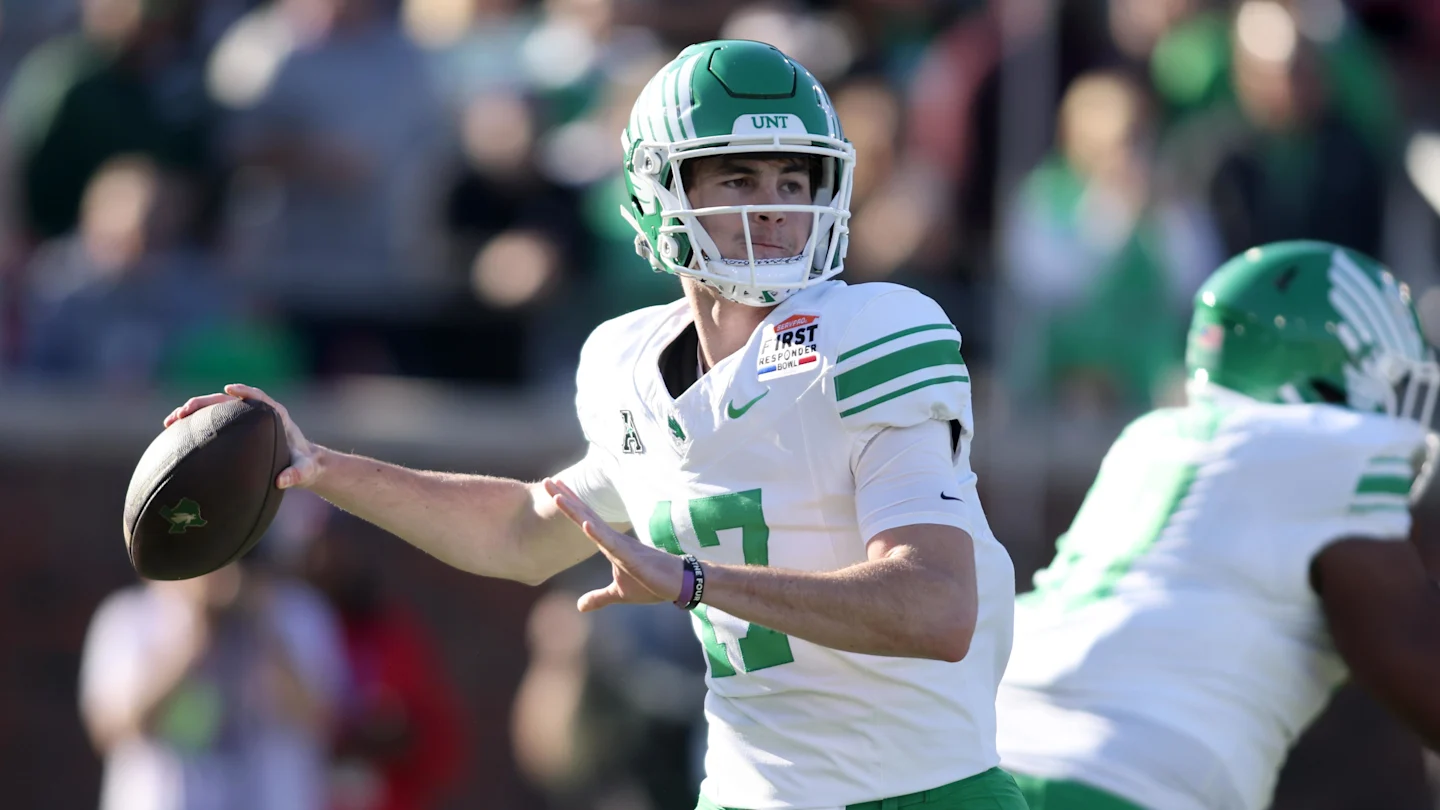
North Texas posted a school-record 12-win season in 2025 behind a high-octane offense led by redshirt freshman quarterback Drew Mestemaker, who finished the year as the nation’s leading passer.
The Mean Green advanced to the American Conference championship game, lost to College Football Playoff participant Tulane, and capped the season with a 49-47 New Mexico Bowl win over San Diego State.
North Texas led FBS in scoring (45.1 points per game) and total offense (512.4 yards per game), operating one of the country’s most prolific attacks under head coach Eric Morris.
However, shortly after the Mean Green’s season came to an end, Mestemaker announced he will enter the NCAA transfer portal when it opens, placing one of college football’s most productive quarterbacks on the market.
On Wednesday, On3’s J.D. PicKell specifically named Oklahoma State, where Mestemaker’s former head coach at North Texas, Eric Morris, is now the head coach, and Miami, whose desire for a passer who can stretch the field aligns with Mestemaker’s skill set.
“If I’m making a prediction, I would tell you Drew Mestemaker is following his head coach, Eric Morris, from North Texas to Oklahoma State. That’s my prediction,” PicKell said. “That’s not this segment. This segment is where’s the best fit for Drew Mestemaker. I think Miami’s the best fit for Mestemaker.”
“He fits exactly who I believe Miami wants to be offensively. Like, Miami and Shannon Dawson, what do they want to do? Spin the freaking rock, push the ball down the field, have vertical shot plays, score points, spread you out.”
“Yes, they still want to run the football, they still want to stay true to the Mario Cristobal genes of being an offensive linemen-driven program, but at the same time, I think they want to air it out and score a lot of points in the process.”
“Think more of what you saw from Cam Ward his year there than what you’ve seen this year with Carson Beck,” PicKell added.

Mestemaker, a 6-4, 211-lb redshirt freshman and former walk-on, finished 2025 as the FBS passing leader with 4,379 passing yards, 34 passing touchdowns, nine interceptions, and a 68.9% completion rate over 14 games.
He also earned first-team All-American honors, was named The American Offensive Player of the Year, and won the Burlsworth Trophy, now entering the portal with three years of eligibility remaining.
Morris was hired as Oklahoma State’s head coach following the 2025 season, and he previously coached Mestemaker while rebuilding North Texas’ offense, creating a clear path to immediate continuity in Stillwater.
Miami also makes sense stylistically, as offensive coordinator Shannon Dawson’s system emphasizes spacing, vertical shots, and tempo; traits that align with Mestemaker’s accuracy and downfield passing ability.
Mestemaker is set to enter the transfer portal when the early January window opens on Friday, at which point Power Four programs can contact him unless he applies a no-contact tag.
Read More at College Football HQ
- First-team All-Conference college football starter enters transfer portal
- All-Conference WR enters college football transfer portal after breakout season
- No. 1 college football team linked to underrated prospect in transfer portal
- College football program loses 16 starters to transfer portal
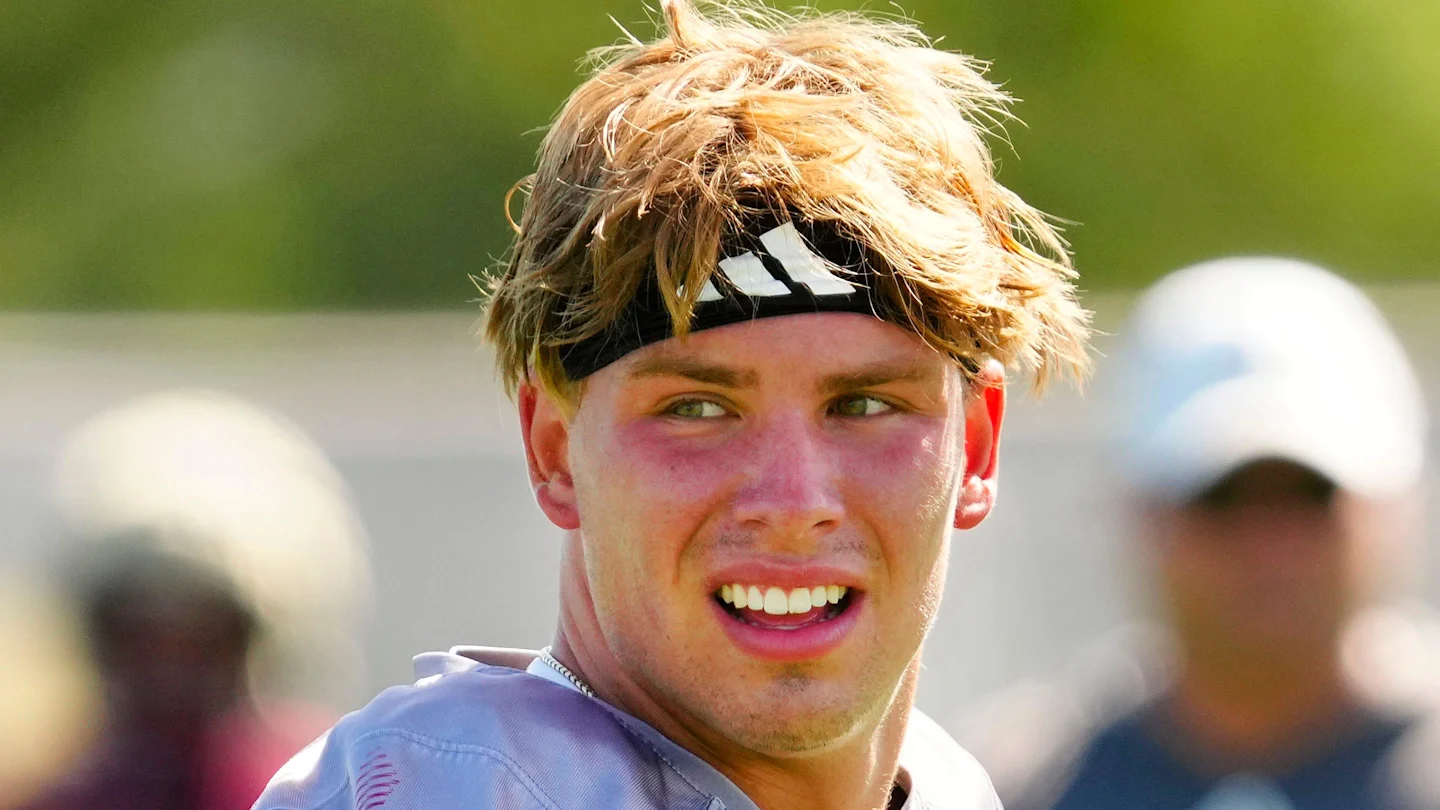
The financial landscape of college football has shifted dramatically as teams navigate the first full cycle under new revenue-sharing models. General managers and talent evaluators initially expected a spending downturn at the quarterback position due to these caps, but the market has reacted in the opposite direction.
Programs are now finding creative ways to structure contracts that exceed revenue-share limits, often using marketing deals to bridge the gap for high-profile talent.
This aggressive spending surge has established a new price tier for the sport’s most valuable position, according to CBS Sports reporting from Chris Hummer and John Talty. The top quarterbacks in the transfer portal are now expected to command annual salaries exceeding $3.5 million, a figure that mirrors the NFL salary cap allocation for starting quarterbacks relative to total roster spending.
One ACC general manager noted that just six weeks ago, such numbers seemed impossible, but schools have since found ways to combine multiple deals to meet the $4 million threshold.
A specific veteran signal-caller has emerged as the primary beneficiary of this market explosion following a standout season and a surprising entry into the portal. This player brings a proven track record, including a playoff berth and extensive experience, making him an immediate upgrade for rosters across the country. His availability has triggered a bidding war among powerhouse programs desperate to secure a proven leader who can navigate the complexities of modern college offenses.
Quarterbacks commanding larger NIL deals
Arizona State Sun Devils quarterback Sam Leavitt has officially entered the transfer portal and is expected to command a salary that reflects the new market reality.
High-end transfer quarterbacks like Leavitt, along with Brendan Sorsby from the Cincinnati Bearcats and Josh Hoover from the TCU Horned Frogs, are now valued at more than $3.5 million annually. This contradicts earlier assumptions that revenue-sharing caps would depress player wages.

General managers are discovering that the demand for quality passing requires ignoring previous budget constraints. An ACC executive explained that programs are constructing contracts that consist of up to 15 separate deals to reach the $4 million mark. This strategy allows schools to technically adhere to revenue-sharing limits while still paying market rates for top talent.
The willingness to spend such a large percentage of the cap is a matter of intense debate among front-office personnel. A Big Ten general manager questioned whether it is prudent to allocate 20 percent of a program’s resources to a single player.

The executive warned that unless a quarterback performs at an elite level, the heavy investment could prove detrimental to the overall roster construction.
Prices for mid-tier options have also seen a significant increase. Quality starters who previously cost in the high six figures are now commanding between $1.5 million and $2.5 million. Even unproven backups with high upside are requesting salaries near the $2 million mark as the market resets.
Read more on College Football HQ

Two unexpected college football teams emerge as contenders for $2 million QB

Iola outside hitter takes top honor on Texas 2A all-state volleyball team | APG State News

Joey Logano sends touching message to Denny Hamlin after NASCAR tragedy – Motorsport – Sports

Ty Gregorak on the state of college football + MSU heading to national championship – Skyline Sports

Kenny Wallace sends plea to NASCAR boss over growing issue – Motorsport – Sports

Tritons Set for Preseason North American Challenge

Major college football program joins sweepstakes for No. 1 transfer portal player

Statement from Racing America on the Passing of Michael Printup

Long Beach State Men’s Volleyball Hosts The North American Challenge

IHRA Adds Rockingham Speedway To Track Portfolio

Pitt volleyball | Panthers add Kentucky MB Jordyn Dailey

Kyle Busch mindblown by ‘crazy’ twist of fate with son Brexton – Motorsport – Sports

Trump administration terminates lease for DC’s public golf courses, threatening renovations and youth programs

Nick Saban declares Miami ‘the real deal’ after College Football Playoff win over Ohio State in Cotton Bowl

Kats sign six to 2026 roster

SoundGear Named Entitlement Sponsor of Spears CARS Tour Southwest Opener

Donny Schatz finds new home for 2026, inks full-time deal with CJB Motorsports – InForum

Black Bear Revises Recording Policies After Rulebook Language Surfaces via Lever

David Blitzer, Harris Blitzer Sports & Entertainment

How Donald Trump became FIFA’s ‘soccer president’ long before World Cup draw

DeSantis Talks College Football, Calls for Reforms to NIL and Transfer Portal · The Floridian
Elliot and Thuotte Highlight Men’s Indoor Track and Field Season Opener

Rick Ware Racing switching to Chevrolet for 2026

JR Motorsports Confirms Death Of NASCAR Veteran Michael Annett At Age 39

#11 Volleyball Practices, Then Meets Media Prior to #2 Kentucky Match

Colleges ponying up in support of football coaches, programs

Nascar legal saga ends as 23XI, Front Row secure settlement

Temple Begins Indoor Track & Field Season at UPenn This Weekend
West Fargo volleyball coach Kelsey Titus resigns after four seasons – InForum

Sunoco to sponsor No. 8 Ganassi Honda IndyCar in multi-year deal






-
 Sports3 weeks ago
#11 Volleyball Practices, Then Meets Media Prior to #2 Kentucky Match
-
 Motorsports3 weeks ago
Nascar legal saga ends as 23XI, Front Row secure settlement
-
 Motorsports3 weeks ago
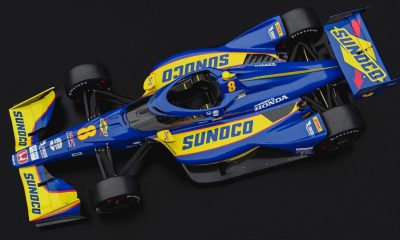
Sunoco to sponsor No. 8 Ganassi Honda IndyCar in multi-year deal
-
 Sports3 weeks ago
Maine wraps up Fall Semester with a win in Black Bear Invitational
-

 Motorsports2 weeks ago
Ross Brawn to receive Autosport Gold Medal Award at 2026 Autosport Awards, Honouring a Lifetime Shaping Modern F1
-

 Motorsports3 weeks ago
Rick Hendrick comments after the NASCAR lawsuit settlement
-

 NIL3 weeks ago
Nike Signs 10 LSU Athletes to NIL deals
-
NIL3 weeks ago
Georgia football’s Dontrell Glover, Bo Walker arrested for shoplifting
-

 Rec Sports2 weeks ago
Stempien to seek opening for Branch County Circuit Court Judge | WTVB | 1590 AM · 95.5 FM
-
Sports3 weeks ago
Wisconsin defeats Stanford in NCAA regional semifinals: Updates, recap