
NIL
Another Thompson (Alabama) high school football player turns down NIL deal



For the second time in the last year, a player at Thompson High School, one of the top high school football programs in Alabama has turned down a large Name, Image and Likeness (NIL) deal. Earlier this week, 5 Star Football Recruiting was the first to report that EDGE rusher Cameron Pritchett rejected a $750,000 NIL offer that would have required him to transfer to an out-of-state school.
🚨BREAKING — Rivals 4⭐️ and Alabama’s #1 2027 Recruit Cam Pritchett turns down a $750,000 Transfer Offer to Stay at Thompson HS.
In a move that’s making waves across the high school football world, 2027 4-star defensive end Cam, the top-ranked player in Alabama, has officially… pic.twitter.com/vMrWSJlpwA
— 5 Star Football Recruiting (@5StarFBRecruits) April 17, 2025
Pritchett is a junior-to-be for the Warriors, the reigning Alabama 7A champs. His trainer Isaac Hadac told the Associated Press, “He believes that by the grace of God, he’s going to go far in the game of football, and all of the material things will come down the road. It means a lot to him to be able to stay and use his faith in the process to help him make that decision.”
High school student-athletes are currently not allowed to sign NIL deals. Since July 2021, 30 state athletic associations, plus the District of Columbia allowed high school athletes to monetize their name, image and likeness.
“First of all, I am so blessed and grateful to even be considered in that way. It’s really an honor and privilege that I do not take lightly or for granted,” Pritchett told 5 Star Football Recruiting. “Having said that, I truly believe that God has a plan for my career and for my life as long as I allow Him to guide my path. It’s important to me that my legacy is built on integrity, hard work, passion, and faith. I want to do that at Thompson.“
Last season, Pritchett, who has 20 college scholarship offers, according to 247Sports, recorded 78 total tackles, 15 tackles for loss, and 6.5 sacks in 14 games last season. His performance has drawn interest from top college programs like national champion Ohio State, Georgia, LSU and Notre Dame.
Thompson has won five of the last six Class 7A Alabama high school football championships under head coach Mark Freeman. The Warriors finished No. 39 in the High School Football America 300 national rankings, powered by NFL Play Football. It was the eighth straight season that the program finished in our national rankings.
Pritchett’s decision isn’t the first of its kind at Thompson. Quarterback Trent Seaborn, a three-time HSFA Academic All-American, reportedly turned down a seven-figure NIL deal from a trading card company in 2024.
Hadac credits both decisions to Coach Freeman, who has won 11 overall Alabama high school football championships at Thompson, Spanish Fort and Bessemer Academy.
“Coach Freeman is a legacy coach. He wants to leave a legacy with Thompson,” Hadac said. “These kids know that if they buy into the process, all of these things will come one way or another.”
The rise of NIL deals has transformed high school and college sports, with donor-backed collectives brokering lucrative agreements to attract top talent. However, Alabama’s lack of NIL legislation for high school athletes makes Pritchett’s offer—and his rejection of it—all the more significant.
Critics of the NIL system argue that it places undue pressure on young athletes, forcing them to make life-altering decisions before they’re ready.










-

Dan Murphy
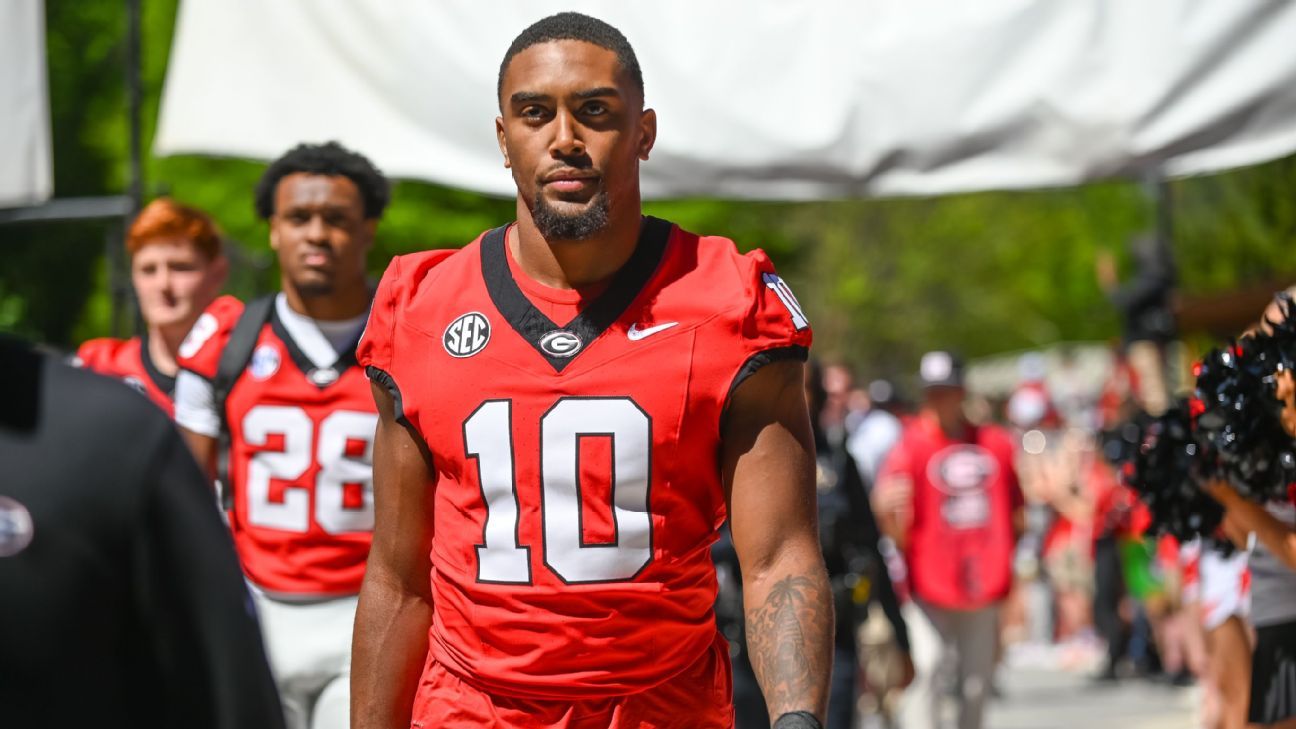
Georgia’s athletic department is headed to court to try to obtain $390,000 in damages from a former standout defensive end who transferred from the school after his sophomore season in a potentially precedent-setting case.
The Bulldogs have asked a judge to force former defensive end Damon Wilson, currently the top pass rusher on Missouri’s defensive line, to enter into arbitration to settle a clause in his former contract that serves effectively as a buyout fee for exiting his deal early. Wilson played for Georgia as a freshman and sophomore before transferring to Missouri in January, two weeks after signing a new deal with Georgia’s Classic City Collective.
Many schools and collectives have started to include “liquidated-damages” clauses in their contracts with athletes to protect their investment in players and deter transfers. Georgia is one of the first programs to publicly try to enforce the clause by filing suit against a player.
“When the University of Georgia Athletic Association enters binding agreements with student-athletes, we honor our commitments and expect student-athletes to do the same,” athletics spokesman Steven Drummond said in a statement to ESPN on Friday.
Multiple attempts to reach Wilson for comment through family members Friday were unsuccessful. Wilson was served last week in Missouri with a summons to appear in court, according to legal documents.
The Bulldogs paid Wilson a total of $30,000 from the disputed contract. Because of the way the deal was crafted, Georgia says Wilson owed it $390,000 in a lump sum within 30 days of his decision to leave the team. Drummond declined to comment when asked why the damages being sought are much higher than the amount Wilson was paid.
Wilson signed a term sheet with Classic City Collective in December 2024, shortly before Georgia lost in a quarterfinal playoff game to Notre Dame to end his sophomore season. The 14-month contract — which was attached to Georgia’s legal filing — was worth $500,000 to be distributed in monthly payments of $30,000 with two additional $40,000 bonus payments that would be paid shortly after the NCAA transfer portal windows closed.
The deal states that if Wilson withdrew from the Georgia team or entered the transfer portal he would owe the collective a lump-sum payment equal to the rest of the money he’d have received had he stayed for the length of the contract. (The two bonus payments apparently were not included in the damages calculation.) Classic City signed over the rights to those damages to Georgia’s athletic department July 1 when many schools took over player payments from their collectives.
Georgia’s filing claims Wilson received his first $30,000 payment Dec. 24, 2024. Less than two weeks later, he declared his plans to transfer.
Legal experts say Georgia’s attorneys will have to convince an arbitrator that $390,000 in damages is a reasonable assessment of the harm the athletic department suffered due to Wilson’s departure. Liquidated damages are not legally allowed to be used as punishment or primarily as an incentive to keep someone from breaking a contract.
In one of the only other examples of a school trying to enforce a similar clause, Arkansas’ NIL collective filed a complaint in the spring against quarterback Madden Iamaleava and wide receiver Dazmin James after both players transferred out of the program. It’s not clear if the Iamaleava case has been resolved. James’ attorney, Darren Heitner, told ESPN that the wide receiver “stood his ground” and that Arkansas has not moved forward to date with further attempts to collect damages.
“To me, [these clauses] are clearly penalty provisions masquerading as liquidated damages,” Heitner said.
Several attorneys who have reviewed athlete NIL contracts for ESPN in the past say they believe schools and their collectives are using liquidated-damages clauses in bad faith to punish players who break their contract early.
Schools and collectives have not used the negotiated buyout clauses that typically appear in coaching contracts for athletes because the teams aren’t technically paying them to play their sport. Instead, the school pays players for the right to use their name, image and likeness in promotional material. Paying for play could make it more likely that courts deem athletes to be employees, which almost all college sports leaders want to avoid.
Wilson’s case could help set a precedent on whether liquidated-damages clauses will serve as an effective, defensible substitute for more traditional buyout fees.
NIL
When it comes to college football recruiting, Black mothers might just determine the future of the sport
It’s early December and ‘tis the season for college recruiters to lay their football mack all the way down.
The NCAA early signing period, when many high school athletes commit to where they’ll play at the next level, ends today, and it’ll soon be followed by a contact period. That’s when college coaches and staff can reach out directly to athletes and their families urging, cajoling, perhaps even promising riches to young prospects, trying to convince them to bring their ball-playing talents to their college or university.
And to win at that game, recruiters often single one person out for concentrated attention: Black mothers.
It’s a tacitly understood feature of student-athlete recruitment that’s crucial to the process but rarely acknowledged, studied or celebrated publicly. While the role of every mom in recruitment decisions is intuitively important, it’s Black mothers specifically who the entire game of football might just hinge on, said Tracie Canada, whose book Tackling the Everyday: Race and Nation in Big-Time College Football has a chapter that examines the centrality of Black mothers to the sport.
“I think plenty of people write about coaches. I think plenty of people write about fathers. I think plenty of people write about the men that surround football because that is the expectation,” said Canada, a professor of cultural anthropology, gender and sexuality, and feminist studies at Duke University.
“And so I also think that it is important to say that it is not only men that are allowing this sport to continue. Mothers not only give bodies to the sport, they’re giving birth to these players. They are also caring for them in a way that is different from the other people around them.”
Black mothers perform a type of specialized labor when it comes to their football-playing sons, giving them outsized influence on decisions about football and life. That labor involves care and kinship around “their holistic lives rather than just their lives as football players,” Canada said. It includes helping them navigate a world beyond the football field in large Black and brown bodies that are often reflexively feared and historically politicized.
Upwards of 40 percent of all NCAA college football players are Black, so the numbers alone make Black women at least partial gatekeepers of the sport. And from concerns about CTE (chronic traumatic encephalopathy) to NIL (name, image, and likeness) to the backlashes over DEI (diversity, equity, and inclusion), Black moms are taking notes.
For the third installment of our Recruiting While Black series, Canada spoke with Andscape about the centrality of Black mothers in football recruitment and their broader impact on the sport.
This interview has been edited for length and clarity.
In Tackling the Everyday, you’ve said your chapter on Black mothers has really found an audience and resonated deeply with people. Talk about what led you to that chapter and that line of inquiry.
The fact that this is the chapter in my book that people ask me about the most, to me, is a sign I’m picking up on something that people are so aware of, but they don’t often see it. It’s not in literature. It’s not usually given space. I’m specifically interested in Black football players, and the players themselves are consistently referencing their moms, when there’s no reason to talk about them. This is referencing how outsized they are in their lives, just how big these figures are to them in the decisions that they’re making in their daily behaviors, in their interactions with people around them, and it has always been clear to me that mothers are an important part of this story.
Because I’m a Black woman anthropologist, and an ethnographer doing this work, and because I am a Black feminist, I’m attuned to particular relationships. I’m attuned thinking about Black women and how their care and kinship align in a particular space, and these aren’t usually the analytics that we think about in football.
So in what specific or outsized ways did you notice that care showing up?
If you go to a football game, you can always tell whose kid belongs to who because the moms are very loud, they’re supportive of their son in a particular way, even if they’re supportive of the entire team. There might be a nickname that they yell out. They might be saying, “That’s my son!” They’re the ones that are wearing the T-shirts that might have his face on it, that might have his number on it. They bring the signs, they have the cowbells in college. They’re the ones who organize who’s going to the game this week. They’re the ones doing that labor.
Then as I’m spending time with these Black players, their moms were always brought up, and this was not something that I was asking about. There were players who called their mom every day. There was a player who was super proud that his mom bought all of his clothes because she knew what he liked to wear, but also knew where she could shop for him, given his size. In my book, the chapter title, “The Year My Mom Was Born,” came from an offhand comment that somebody made about his jersey number making him feel close to his mom. So I’m seeing this physical presence in their son’s lives alongside a constant reference from players.
The other thing that I think is relevant is that people assume that the players I was spending time with were from single-parent homes. These are mothers who have been married for a long time, often to the fathers of their children and I always have to say, “These are not single moms that have to do everything on their own.” These sons have very present fathers in their lives, too. But I was noticing there’s a different relationship that comes from moms of football players than fathers of football players. Fathers seemed to be very invested in the football player himself — of how well he did, of how he can improve, of what’s physically going on during a game. Players will often reference their dads as the reason that they started playing in the first place.
The relationship to football often comes through their dads, but I think that they are sustained by their moms. The moms are the ones who are doing a certain type of labor so that the player feels supported. And the moms also seem to be invested in them as people. There’s something in how they are asking about their holistic lives rather than just their lives as football players.
I think that that’s important across the board. But the reason why the focus is specifically on Black moms is because demographically Black players are overrepresented in football. Especially if we look at a college campus versus a college football team, Black men are severely overrepresented. So for a lot of these guys, the women that are around are going to be Black women.
You referenced the quote,”If 10 percent of mothers in this country would begin to perceive football as a dangerous sport, that is the end of football,” attributed to an unnamed NFL doctor in response to the work of Dr. Bennet Omalu (a forensic pathologist whose discovery of Chronic Traumatic Encephalopathy caused wholesale changes in concussion protocols).
How should we think of that quote in terms of the ways Black women guide and care for their football-playing sons?
The way that I write about it, if I’m taking that quote seriously, is that if moms didn’t buy into the sport, the sport would go away. So that means Black women are playing a significant and really important role here.
There are the ones who say, “I will not allow my son to play at this school, to play for this coach, to be in this division if I don’t feel OK with where he is. Even if he wants to. If I don’t feel it, you cannot go there. I will not allow that to happen.” And I think that these moms recognize something about how important it is that these are young Black men who live in particular bodies. It’s a body that’s usually big and strong, visibly so, in a way that is transgressive and is often outside of the norm. And so these moms are also [thinking]: My son is in danger on this field, but my son is also in danger in the real world outside of it because of the body that he lives in, given this anti-Black world that we exist in.
The way that I analyze it is that moms are the ones that clock all of these angles for their Black sons in a way that doesn’t seem to be taken into account as obviously by other people.
Have football programs, institutions and administrations responded to or shown that they recognize the role of mothers and Black mothers, specifically? And if so, what are some examples of that?
I remember one of the first, very early on conversations I had with one of the coaches. It was camp time, the semester hadn’t started yet, and one of the things he said was about how they recruit moms, and how if they recruit a player, the mom can be a great spokesperson for the program. She can attract other moms to get on board, and they can use networks of moms to attract players.
At the time I was doing research, all of these NFL safety clinics were also happening, and these were different NFL teams inviting moms of young players. Not college, high school and lower. It wasn’t a parents’ clinic, it wasn’t even just an NFL clinic, it was specifically the NFL Moms Safety Clinic. What happens in football, but probably across sports, is that the professional league is making certain decisions and things usually trickle down to the lower levels. The NFL affects college, which is going to affect high school, which is going to affect Pee Wee, so I thought it was really interesting that the NFL was specifically marketing to moms and kind of putting its brand name behind the importance of this particular group of people.
These weren’t small events. For the two that I went to, you’ve got like 200 moms there and most of them are Black women.
So my question is, with all the structural changes going on in college football, like NIL and divisive political issues facing the nation, do you think we’ll see a significant recruiting impact from Black mothers’ advice and influence and if so, when?
Sports as an arena is notorious for attempting to claim that it is not political. Fans come from all different backgrounds and all different walks of life, but they come together to support a team. The assumption is the same for the players and the coaches. It’s this idea that the team, and what we’re doing here, is the most important thing right now, and we don’t care about all the other stuff that’s going on. That the playing field is completely divorced from the real world outside of it. As I’m sure you can tell, I don’t agree with that. I’m someone who talks about how race actually matters in this space.
One part of me would say 2025 is actually not all that different because these concerns have always been there for Black people. We are seeing things that are familiar because these things happen over and over again. What does it mean to walk through the world in a particular body? What does it mean to be an athlete who is stereotyped as someone who is only useful for what their body can do. These things are happening now, but they have also happened before, and will probably happen in the future.
If you’re talking about recruiting, what I imagine might be going on in this particular moment is probably part of the conversation that families are having. When you’re playing the sport of football, there is always calculus, an algorithm that is not specified, but there are a lot of factors at play here and how am I going to make the best educated, safe, hope-for-success decision, right? Football is already a dangerous sport, so part of the risk assessment is like should I play or should I not? What is my risk if I do it and what is my risk if I don’t? Do I play in this state? Do I play for this coach? Do I push for this position?
Part of that conversation could be that this state as a whole is doing X, Y, and Z [politically], but I have a good chance of going pro if I’m with this coach, at this university, with these other people there. Or it might be that because of the state that this university is located in, is it actually riskier for me to be there because of who I am, and because my options outside of sport are much more limited?
I’m very curious about how this moment is going to play out over the next five years, given everything that has happened politically, socially, culturally in this country in the past five years. The landscape of college sports has changed dramatically in the last five years when coaches and institutions thought it was important to take [performative] stands on issues. Taking a stand is always a recruiting and retention tactic to convince players to stay, to convince players to come.
What are Black mothers talking about in terms of their sons’ safety, on and off the field, and how do you think the impact of these conversations will be felt, especially on the rosters of schools in states where college football is most revered?
I’m spending time with high school moms right now, so it is interesting to see that what they are saying is not much different than all the things college moms had top of mind. It is about injuries. It’s about is my kid going to be taken care of? It’s about what kind of man is that coach and what kind of man is he going to encourage my son to be, right?
Black mothers are still going to be central to those decisions. Black moms are still paying attention. They’re taking notes. They are remembering these offhand comments that were made. They’re watching the news. They’re aware, but they’re also aware of what’s happening at their kids’ high school. They’re aware of what’s happening at the colleges that they’re looking at. They’re aware of what’s happening with the coaches at both of these places and what’s happening in the states where these schools are located, and how far away their kids are going to be away from them. These dynamics are always being taken into account by moms as they’re supporting their sons as they make these decisions about their future.
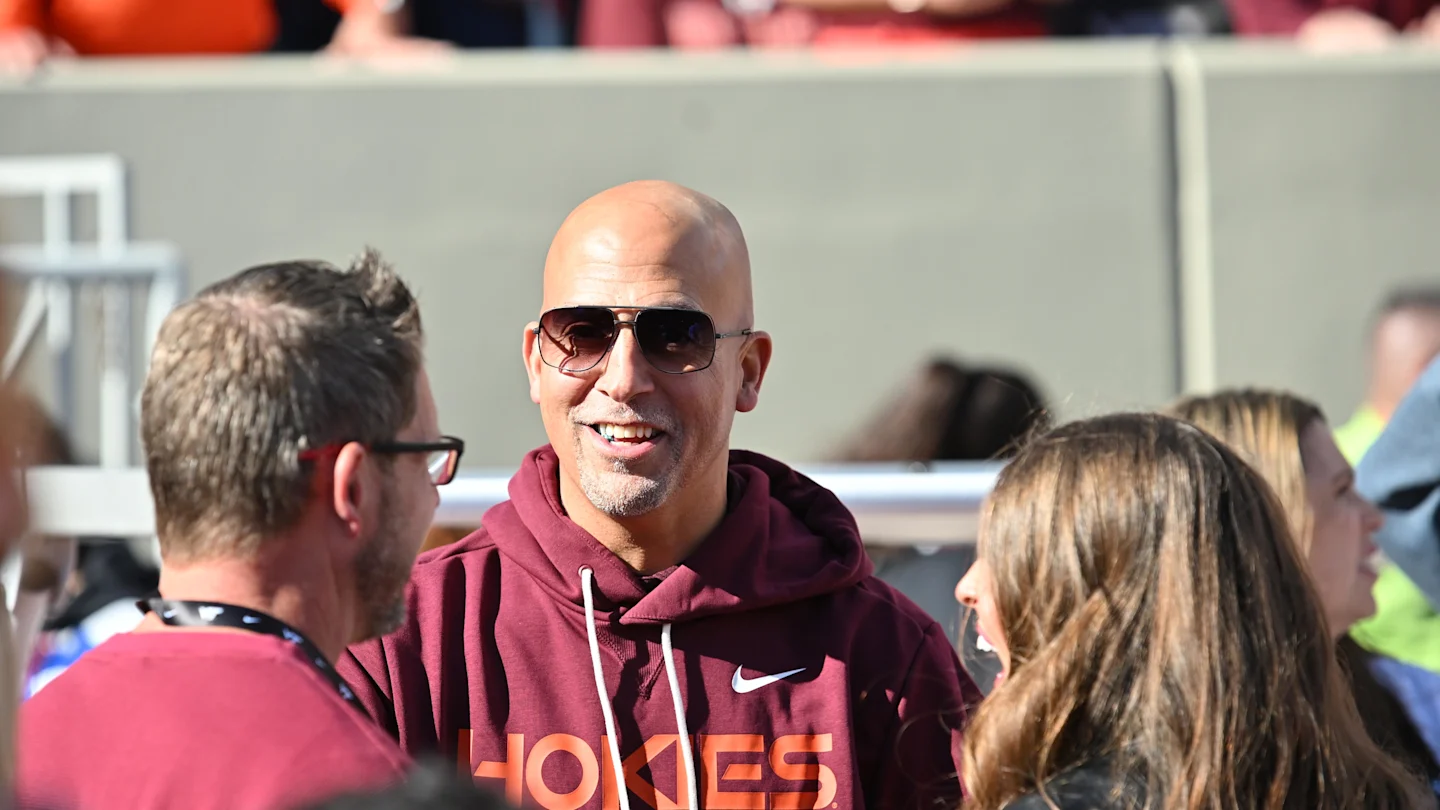
Blacksburg’s recruiting thermometer spiked within days of James Franklin’s arrival.
The former Penn State coach was introduced by Virginia Tech on November 17 after a 12-season run with the Nittany Lions that saw him win a Big Ten title, appear in the 2024 College Football Playoff semifinal, and leave with a 128-60 overall record.
In just over two weeks since taking the Hokies job, Franklin has already translated relationships and urgency into rapid sign-and-flip activity that dramatically improved the program’s industry rankings.
Industry trackers pegged Virginia Tech outside the top 100 (No. 121) on November 25; by Tuesday, the program had climbed up 96 spots to No. 25 after a string of commitments and flips, several of them former Penn State pledges.
Over a short window, Franklin and his staff flipped multiple four-star prospects, adding playmakers on both lines and at skill positions.
Some of the biggest moves include flipping six four-star recruits — LB Terry Wiggins, QB Troy Huhn, TE Pierce Petersohn, WR Davion Brown, OT Marlen Bright, and RB Messiah Mickens — all of whom decommitted from Penn State after Franklin’s firing.
That volume, not just a single headline recruit, is what pushed the Hokies up industry leaderboards.

Franklin’s early, unceremonious exit at 3-3 hasn’t disrupted his recruiting relationships.
For Virginia Tech, after a 3-9 season and a mid-season coaching change, the immediate priority was reestablishing connections and winning back recruits.
Franklin’s staff accomplished that quickly, which gives athletic directors, donors, and fans visible proof the program can compete for top regional talent again.
Virginia Tech’s 2026 schedule features home games against VMI, Old Dominion, and James Madison, along with a road test at Maryland before an ACC slate that features Clemson, Miami, NC State, Georgia Tech, Pittsburgh, Boston College, California, and Virginia.
If victories don’t come early, the recruiting spike risks fading before Franklin’s rebuild fully takes shape.
Read More at College Football HQ
- Nick Saban sends strong message on major SEC college football coach after taking new job
- $11.2 million college football coach signs extension amid departure rumors
- $29.6 million college football coach reportedly retires after seven seasons
- Major college football program set to make 29th straight bowl game appearance
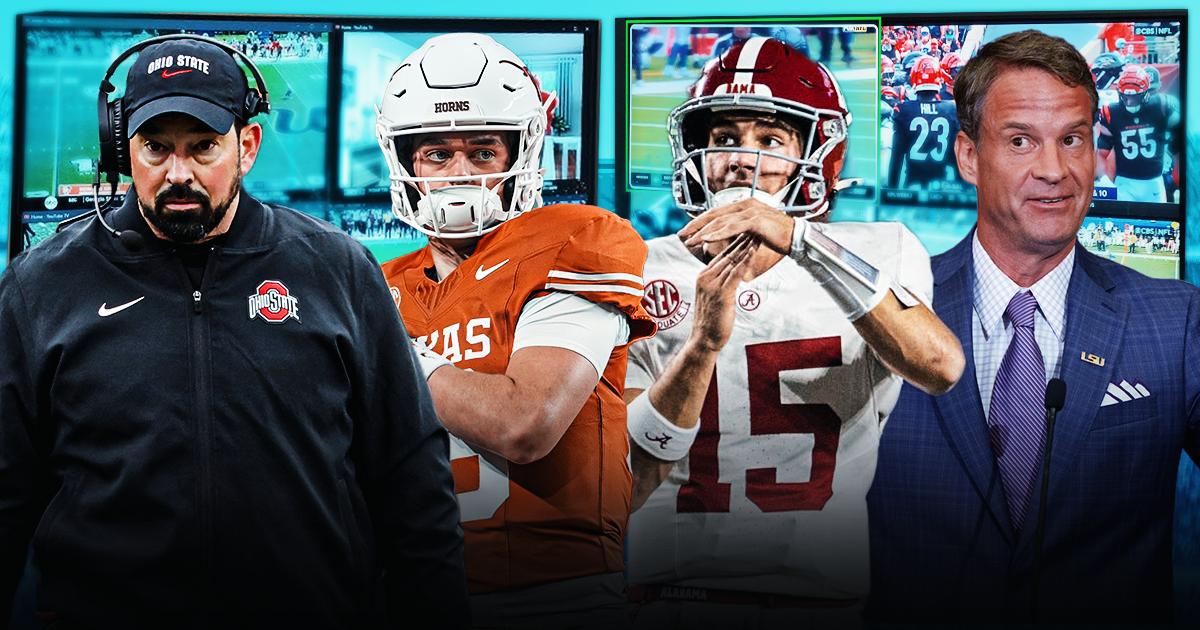
The final week of the regular season delivered plenty of rivalry flare. It was also an opportunity for networks to score more TV ratings wins to close out the college football campaign, and On3 is breaking down the most-watched games of Week 14.
The Week 14 slate began on Thanksgiving with Navy vs. Memphis before a jam-packed Black Friday slate of SEC rivalry games. From there, Saturday had more marquee matchups, headlined by Michigan vs. Ohio State in the early window, which became the most-watched college football game of the 2025 season.
SUBSCRIBE to the On3 NIL and Sports Business Newsletter
On3 obtained Nielsen Big Data + Panel ratings data for the most-watched rivalry games of Week 14. Here is the full breakdown of the week’s college football TV ratings.
Note: SEC Network, ACC Network and CBS Sports Network do not pay for Nielsen to measure viewership.
Michigan vs. Ohio State
Date/Time: Nov. 29, Noon ET
Channel: FOX
Viewers: 18.4 million
The Game was once again a big draw in Week 14 and became the most-watched game of the season. Ohio State’s victory over Michigan averaged 18.4 million viewers on FOX to lead the charge as the Buckeyes ended their losing streak against the Wolverines.
Texas vs. Texas A&M
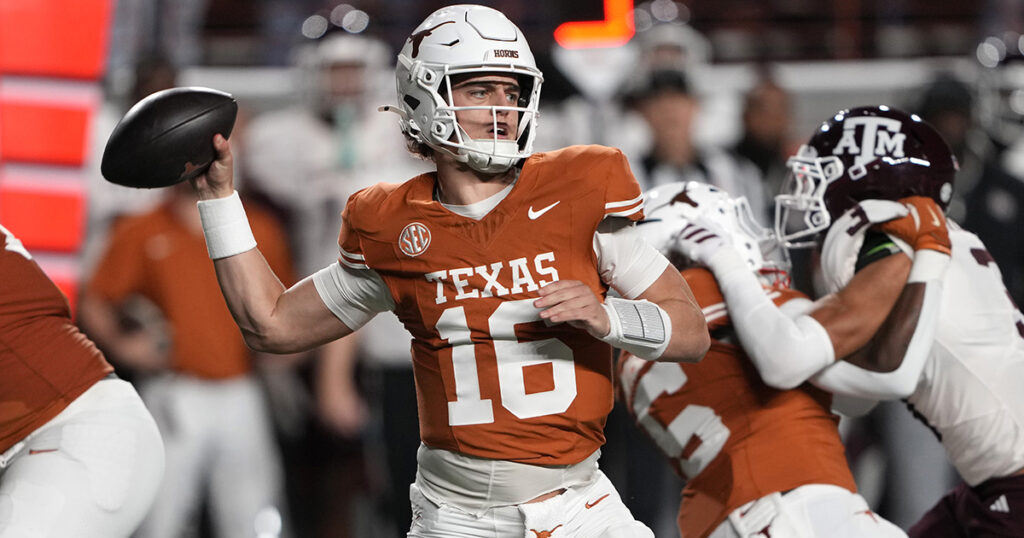
Date/Time: Nov. 28, 7:30 p.m. ET
Channel: ABC
Viewers: 13.0 million
The Lone Star Showdown had plenty at stake as Texas A&M headed to Texas. The Longhorns came away victorious, though, pulling off the upset in primetime on Black Friday in front of 13 million viewers on ABC.
Alabama vs. Auburn
Date/Time: Nov. 29, 7:30 p.m. ET
Channel: ABC
Viewers: 11.3 million
One of college football’s most storied rivalries returned to Jordan-Hare Stadium and it lived up to the billing. Alabama nearly saw a commanding lead disappear before eventually fighting off Auburn in the Iron Bowl, which drew 11.3 million viewers for ABC’s Saturday night game.
Georgia vs. Georgia Tech
Date/Time: Nov. 28, 3:30 p.m. ET
Channel: ABC
Viewers: 8.7 million
The Clean, Old Fashioned Hate game saw two top teams in their respective conferences square off. Ultimately, Georgia rose to the occasion in a big way, handling Georgia Tech with ease at Mercedes-Benz Stadium in the rivalry affair.
LSU vs. Oklahoma
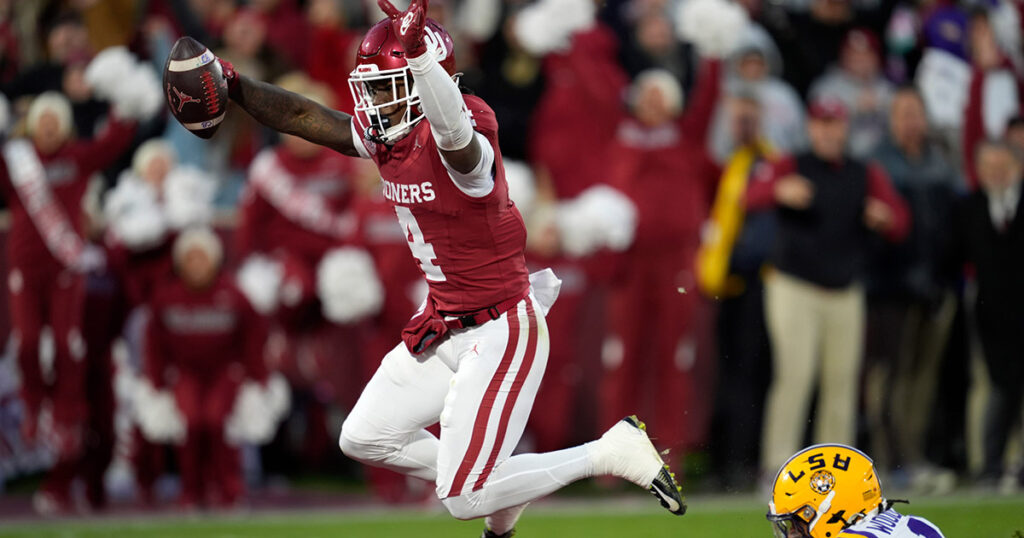
Date/Time: Nov. 29, 3:30 p.m. ET
Channel: ABC
Viewers: 6.4 million
Needing a win to continue its quest for a College Football Playoff berth, Oklahoma did just that in the late-afternoon window in Week 14. The Sooners took down LSU in Norman to put themselves in strong position in the 12-team bracket.
Ole Miss vs. Mississippi State
Date/Time: Nov. 28, Noon ET
Channel: ABC
Viewers: 5.2 million
All eyes were on the Egg Bowl as the Black Friday slate began as Ole Miss took down Mississippi State. It turned out to be the last game for Lane Kiffin as the Rebels’ head coach, and 5.2 million viewers were dialed in to watch.
Oregon vs. Washington
Date/Time: Nov. 29, 3:30 p.m. ET
Channel: CBS
Viewers: 4.3 million
In an old Pac-12 showdown, Oregon headed to Seattle for a late-afternoon matchup against Washington. The Ducks continued their strong season, taking down the Huskies in CBS’ Big Ten game – and the regular-season finale for analyst Gary Danielson.
Vanderbilt vs. Tennessee
Date/Time: Nov. 29, 3:30 p.m. ET
Channel: ESPN
Viewers: 4.0 million
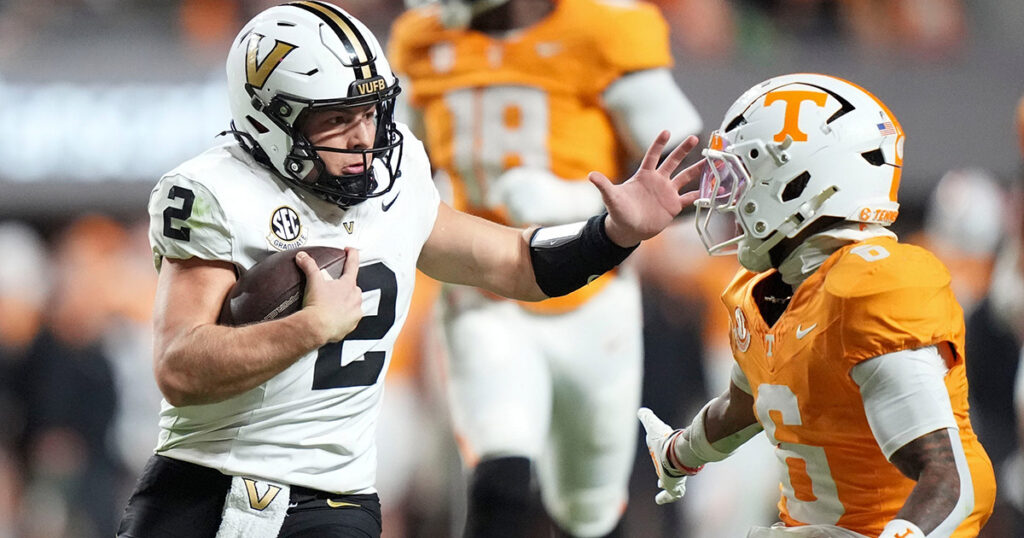
The Diego Pavia Show arrived on Rocky Top as Vanderbilt took down Tennessee. The electrifying Commodores quarterback continued to make his case for the Heisman Trophy and did so on the big stage with 4.0 million people tuned to ESPN.
Iowa vs. Nebraska
Date/Time: Nov. 28, 3:30 p.m. ET
Channel: CBS
Viewers: 3.8 million
A top Big Ten rivalry looked a bit different this year as both Iowa and Nebraska’s offenses showed out early. But the Hawkeyes kept their foot to the floor, taking down the Huskers 40-16 in one of the Top 10 most-watched games of Week 14.
Cincinnati vs. TCU
Date/Time: Nov. 29, 3:30 p.m. ET
Channel: FOX
Viewers: 2.74 million
Immediately following Michigan-Ohio State, TCU vs. Cincinnati also drew strong numbers for FOX. The Horned Frogs handed the Bearcats a fourth straight loss to end the season and get to the 8-win mark for the 2025 season.
- Indiana vs. Purdue (Nov. 28, 7:30 p.m. ET, NBC) – 2.69 million
- USC vs. UCLA (Nov. 29, 7:30 p.m. ET, NBC) – 2.2 million
With 11 games topping 10 million viewers this year, college football put together a huge year for TV ratings. Three of the Top 10 most-watched games of the regular season came in Week 14, and it’s now on to conference championships.
NIL
SEC Commissioner Greg Sankey calls for changes to college football calendar after Lane Kiffin split with Ole Miss for LSU
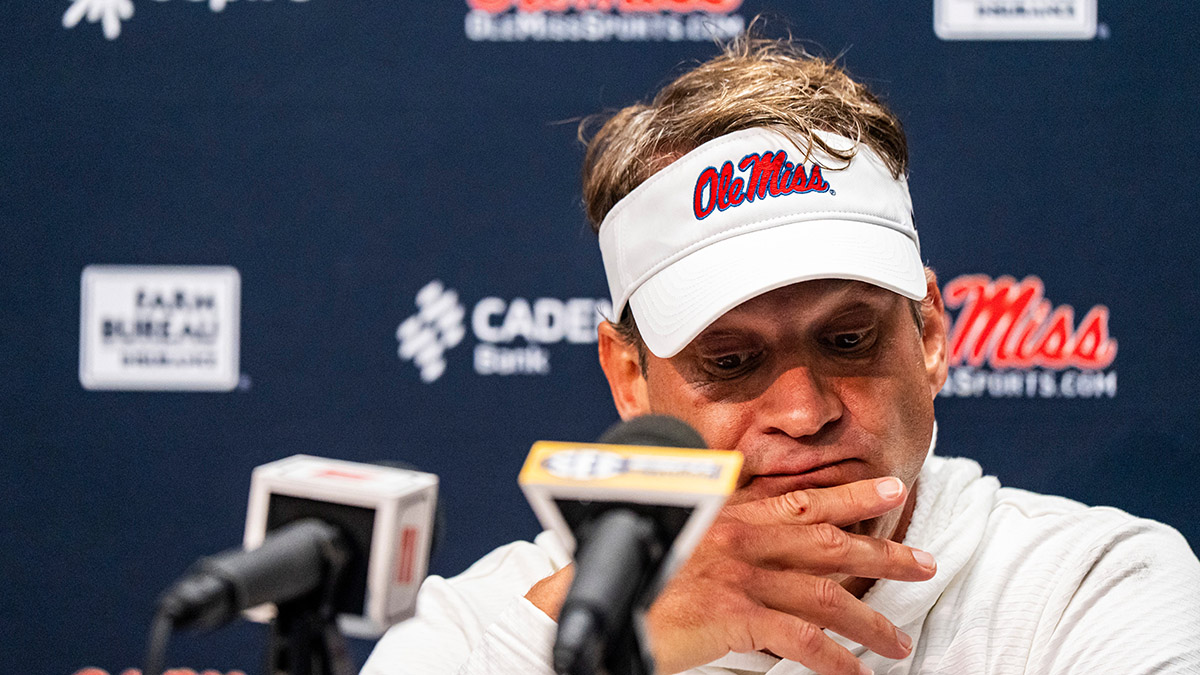
If the Lane Kiffin to LSU saga exposed one thing, it was that the current college football calendar is really not conducive to major coaching changes. There are simply too many variables involved.
SEC commissioner Greg Sankey was asked if the league could put into place some kind of rule that would prevent one program from pulling another program’s coach before the end of a season. Realistically, it cannot.
“You have to go back a number of years, we had a rule about responsibility for outreach if you were going to contact another coach,” Sankey explained. “Our outside legal counsel suggested for anti-trust reasons that it be eliminated, which it was years and years ago. I think that’s an example of the difficulty just legislating at a conference level.”
In fact, Sankey essentially predicted some of the chaos that unfolded with the Lane Kiffin saga. He knew having so many things packed into one area of the calendar was going to create some unintended consequences.
“You can go find my quotes where I warned that an early signing period added in December would change the calendar and the timing of coach changes,” Sankey said. “I think now there are more factors involved. But, in fact, going back to the moment where we added the December signing period, you saw earlier terminations of coaches during the season, and then the need to rapidly hire a coach in late November and early December.”
That’s exactly what happened this offseason. Both Florida and LSU fired their coaches to go with weeks remaining in the season, kicking off the Lane Kiffin sweepstakes.
LSU eventually got the upper hand, but even then, the hiring was messy. There were reportedly ultimatums given to staffers looking to join Kiffin, though those claims were later disputed. All of this in the middle of a playoff run for Ole Miss.
Regardless, the Lane Kiffin ordeal clarified for many people that change is needed. Sankey offered a few avenues.
“There are opportunities for adjustments to the calendar that, at least in my view, probably won’t solve everything but could provide a healthier environment,” he said. “And where there are solutions, so that you’re not disrupting a team’s season, I think those should be pursued.
“Unfortunately the environment we’re in doesn’t allow and hasn’t resulted in some of the changes that even the basic change like removing that early signing period from kind of compelling people to make change rapidly has taken place. Can changes be made? Absolutely. Is it just the recruiting calendar? Likely not.”
What other solutions could there be? How can a Lane Kiffin 2.0 be averted?
“Perhaps it’s the competitive calendar that can be explored,” Sankey said. “But those are multi-level issues where people have different opinions. We’ve added a transfer portal on top of that signing period that adds to the complexity.
“But I think everyone would agree, and forget particular circumstances, you take a step back and whether it’s a roster or a coaching staff, looking at something other than maybe a medical emergency, we should be able to have competition through the year with those rosters and coaching staffs intact. And we ought to figure out how we can adjust collectively on a national basis to make that happen.”

Track & Field Prepares for Sharon Colyear-Danville Season Opener

Michael Jordan and Joe Gibbs’ daughter-in-law expected to testify Friday in NASCAR antitrust case

‘Horrible location:’ Proposed Eagle Costco sparks heated backlash and traffic concerns in a neighborhood meeting

GEAR FOR GOOD INITIATIVE NAMES FIVE YOUTH SOCCER PROGRAM BENEFICIARIES TO HELP GROW THE GAME IN 2026

Georgia seeks $390K from DE Damon Wilson for transfer damages

Women’s Track & Field Travels to Chicago State for Season Opener

Long Beach State Men’s Volleyball Announces 2025 Wall of Honor Class

Denny Hamlin was advised by his lawyers not to tweet; He did anyway
Michael Jordan and Joe Gibbs’ daughter-in-law expected to testify Friday in NASCAR antitrust case
NIL in prep sports another threat to childhood

New Martinsville Christmas in the Ville Returns | News, Sports, Jobs

UT Arlington Track & Field Announces 2026 Indoor Schedule

Assistant Soccer Coach (Goalkeepers) in Lake Charles, LA for McNeese State University

Jeff Rudolf, Jim Halsey Walk Away From Top-End Crash at Snowbird Outlaw Nationals

How Donald Trump became FIFA’s ‘soccer president’ long before World Cup draw

First Tee Winter Registration is open

Fargo girl, 13, dies after collapsing during school basketball game – Grand Forks Herald

CPG Brands Like Allegra Are Betting on F1 for the First Time

Volleyball Recaps – November 18

F1 Las Vegas: Verstappen win, Norris and Piastri DQ tighten 2025 title fight

Two Pro Volleyball Leagues Serve Up Plans for Minnesota Teams

Utah State Announces 2025-26 Indoor Track & Field Schedule

Sycamores unveil 2026 track and field schedule

Texas volleyball vs Kentucky game score: Live SEC tournament updates

Bowl Projections: ESPN predicts 12-team College Football Playoff bracket, full bowl slate after Week 14

Redemption Means First Pro Stock World Championship for Dallas Glenn

Pohlman admits ‘there might be some spats’ as he pushes to get Kyle Busch winning again

Indiana’s rapid ascent and its impact across college football

How this startup (and a KC sports icon) turned young players into card-carrying legends overnight

Troy Football Need to Know; Gameday at The Vet — Georgia State Game

 Why a rising mid-major power with an NCAA Tournament team opted out of revenue-sharing — and advertised it
 NBA Legend Michael Jordan to Join NBC Sports as Special Contributor
 Falcons mailbag
 Portal Update – Basketball and Gymnastics Take Hits
 has always dreamed in Mercurial. Now his initials are on the boots.
The new Kyl…
has always dreamed in Mercurial. Now his initials are on the boots.
The new Kyl…
-
 Rec Sports2 weeks ago
First Tee Winter Registration is open
-
 Rec Sports1 week ago
Fargo girl, 13, dies after collapsing during school basketball game – Grand Forks Herald
-
 Motorsports1 week ago
CPG Brands Like Allegra Are Betting on F1 for the First Time
-
 Sports2 weeks ago
Volleyball Recaps – November 18
-
 Motorsports2 weeks ago
F1 Las Vegas: Verstappen win, Norris and Piastri DQ tighten 2025 title fight
-
 Sports1 week ago
Two Pro Volleyball Leagues Serve Up Plans for Minnesota Teams
-
 Sports1 week ago
Utah State Announces 2025-26 Indoor Track & Field Schedule
-
 Sports1 week ago
Sycamores unveil 2026 track and field schedule
-
 Sports1 week ago
Texas volleyball vs Kentucky game score: Live SEC tournament updates
-
 NIL5 days ago
Bowl Projections: ESPN predicts 12-team College Football Playoff bracket, full bowl slate after Week 14