
Sports
Antitrust Labor Markets


A federal judge for the U.S. District Court for the Northern District of California recently approved a groundbreaking, nearly $2.8 billion settlement that promises to reshape college athletics by allowing schools to share revenue directly with college athletes. The settlement stems from antitrust litigation—focused on the labor market of college athletes—that alleged National Collegiate Athletic Association (NCAA) rules restricting or prohibiting athletes from being paid for use of their names, images, and likenesses (NIL) are unlawful restraints on trade that suppressed the labor market for college athletes.
Quick Hits
- A federal judge approved a historic $2.8 billion settlement allowing college athletes to receive direct revenue sharing from their schools, fundamentally changing the landscape of college athletics.
- The settlement requires the NCAA and Power Five Conferences to pay over $2.5 billion to athletes for prior use of their NIL, while also permitting direct revenue sharing with athletes moving forward.
- While the settlement does not constitute a judgment on the competitive impact of the challenged conduct, it represents a significant victory for antitrust enforcement in college sports.
- Other labor issues were not addressed or resolved in the settlement agreement.
On June 6, 2025, U.S. District Judge Claudia Wilken granted final approval to the settlement agreement in In Re: College Athlete NIL Litigation, consolidated litigation brought by a class of nearly 400,000 current and former NCAA Division I college athletes against the NCAA and the biggest college athletics conferences, the so-called Power Five Conferences.
The consolidated litigation addressed claims that NCAA rules restricting or prohibiting compensation for using athletes’ NIL, compensation for athletic services, and scholarship limits violated antitrust law. Essentially, the suits alleged that NCAA rules denied athletes the chance to be compensated for endorsements and media appearances.
Under the settlement agreement, the NCAA and Power Five Conferences will pay college athletes more than $2.5 billion for use of their NIL going back to 2016, and the NCAA will allow schools to start sharing $20 million in revenue directly with college athletes beginning in the 2025-26 school year.
The NCAA’s NIL policies have been a contentious issue for years, with numerous lawsuits challenging the restrictions on athletes’ ability to profit from their own likeness. This settlement marks a pivotal moment in the ongoing debate over athletes’ rights and compensation.
However, payments are on hold as the settlement is facing two appeals that the back payment distributions violate Title IX of the Education Amendments, which prohibits sex-based discrimination in education programs. The appeals reportedly will not impact the revenue-sharing portion.
While the settlement does not constitute a judgment on the competitive impact of the challenged conduct, it represents a significant victory for antitrust enforcement in college sports. Here, we delve into the details of the settlement and its far-reaching implications for antitrust restraint of trade claims that focus on labor markets (as distinguished from product markets).
Key Terms of the Settlement
The settlement stems from three lawsuits: the consolidated House v. National Collegiate Athletic Association and Oliver v. National Collegiate Athletic Association lawsuits, which challenged rules that restricted athletes from being compensated for the use of their NIL and prohibited conferences and schools from sharing revenue received from third-parties for commercial use of the athletes’ NIL; Carter v. National Collegiate Athletic Association, which alleged the NCAA’s rules prohibiting pay-for-play violated antitrust law; and Hubbard v. National Collegiate Athletic Association, which raised claims related to athletes receiving allowed academic achievement awards.
Damages
Under the settlement agreement, the NCAA and the Power Five Conferences will contribute $2.576 billion to a settlement fund over the next ten years to pay former college athletes for the past use of their NIL going back to 2016. The NCAA and Power Five Conferences also agreed to pay $200 million into a settlement fund for class members who competed between 2019 and 2022 to settle the Hubbard claims.
The agreement calls for a $1.976 billion settlement fund for NIL-related injuries, including NIL in broadcasts for certain college football and men’s and women’s basketball players. The settlement agreement also calls for establishing a $600 million fund for class members with pay-for-play claims.
Injunctive Relief
In addition, the NCAA agreed to modify existing rules to allow schools to provide direct benefits and compensation to college athletes worth up to 22 percent of the Power Five schools’ average athletic revenues each year, starting at more than $20 million per school in 2025-26 and growing to $32.9 million per school in 2034-35.
The settlement requires eliminating NCAA scholarship limits, potentially resulting in more than 115,000 additional scholarships annually. However, the NCAA will be permitted to adopt roster limits for Division I sports. Class members who may have roster spots taken away due to the implementation of the settlement will be exempted from the limits and not counted toward their schools’ roster limits for the remainder of their college athletics careers.
Under the settlement agreement, the NCAA will modify rules to allow NIL payments from third parties, except that the NCAA will be allowed to restrict NIL payments from certain third parties associated with schools (i.e., “boosters”).
Finally, the settlement agreement requires that disputes arising from the enforcement of third-party NIL restrictions be resolved via neutral arbitration, changing the current system in which the NCAA makes enforcement decisions and resolves disputes concerning third-party NIL pay prohibitions.
Antitrust Claims
The plaintiffs brought claims under Section 1 of the Sherman Act for unreasonable restraint of trade, alleging that the NCAA’s rules constituted a horizontal agreement that caused anticompetitive effects in the labor market for college athletes. Specifically, they alleged that the rules unlawfully deprived college athletes of compensation for the use of their NIL and “artificially limited supply and depressed compensation” paid to college athletes for their NIL and their athletic service.
The settlement marks a significant shift in how college sports are governed and how athletes are compensated. Most significantly, it allows college athletes to share in the revenue generated by college athletics, allows colleges to offer more athletic scholarships, and prohibits restrictions on NIL pay from unaffiliated third parties.
The elimination of scholarship limits is particularly noteworthy. Under the previous rules, the NCAA capped the number of scholarships schools could offer. By removing these caps, the settlement allows schools to provide more scholarships, thereby increasing access to higher education for many athletes. However, the NCAA will still be able to set roster limits for sports, potentially reducing slots for walk-on (nonscholarship) athletes.
In its seventy-six page opinion approving the settlement, the court repeatedly found that approving the class action settlement had a positive benefit when it comes to contributing to securing a more competitive market for the labor of Division I athletes.
Labor Market Impact
The settlement agreement comes after years of upheaval in college sports amid a barrage of antitrust lawsuits challenging the NCAA’s “amateurism” rules, culminating in the 2021 Supreme Court of the United States ruling in Alston v. National Collegiate Athletic Association, in which the Court held that regulations that limited education-related pay and benefits are unlawful under federal antitrust law. Additionally, several lawsuits have challenged NCAA transfer restrictions with differing outcomes.
This latest litigation challenged rules restricting athletes from being paid for using their NIL. The NCAA has already relaxed such rules and has reached a separate settlement in litigation over rules restricting schools from using NIL compensation as a recruiting tool. The change has allowed current college athletes to sign endorsement deals with third parties and sparked the creation of organized groups of boosters affiliated with individual schools, known as collectives, to pool NIL money and distribute it to athletes at the school.
Under the new settlement, much of that money could be replaced with direct revenue sharing from the schools themselves. Further, the new settlement leaves room for the NCAA to seek to limit the influence of boosters by allowing restrictions on payments from associated third parties.
Still, the settlement will have profound implications for labor markets in college sports. By allowing NCAA college athletes to receive compensation for their NIL and eliminating scholarship limits, the settlement effectively recognizes college athletes’ economic contributions to the college sports industry. This recognition could lead to broader questions about college athletes’ employment status.
Labor Issues Not Addressed by the Settlement
While approving the settlement, the court specifically noted it does not address other labor rights of NCAA college athletes. For example, the settlement does not prohibit college athletes from attempting to unionize, from pursuing wage and hour claims under the Fair Labor Standards Act, or any other federal labor laws or analogous state labor laws.
Potential Future Legislation
The settlement may prompt federal lawmakers to consider new legislation that addresses the employment status of NCAA college athletes and provides the NCAA with clearer guidelines on NIL compensation. The outcome of these legislative efforts could further reshape the landscape of college athletics.
The NCAA has also been pushing the U.S. Congress to pass legislation that would prevent college athletes from being deemed to be employees of schools and to provide the NCAA with an antitrust exemption or immunity to allow it to enforce rules related to transfers and other potential compensation guardrails. The likelihood of such legislation passing remains uncertain.
Next Steps
The settlement is a landmark decision that will have lasting effects on antitrust and labor markets in college sports. Still, further legal questions remain, including regarding the influence of boosters, the lawfulness of certain transfer restrictions, and whether college athletes could be considered employees. Additional litigation over these issues is possible, as is federal legislation addressing college athletes and potential antitrust protection for the NCAA.

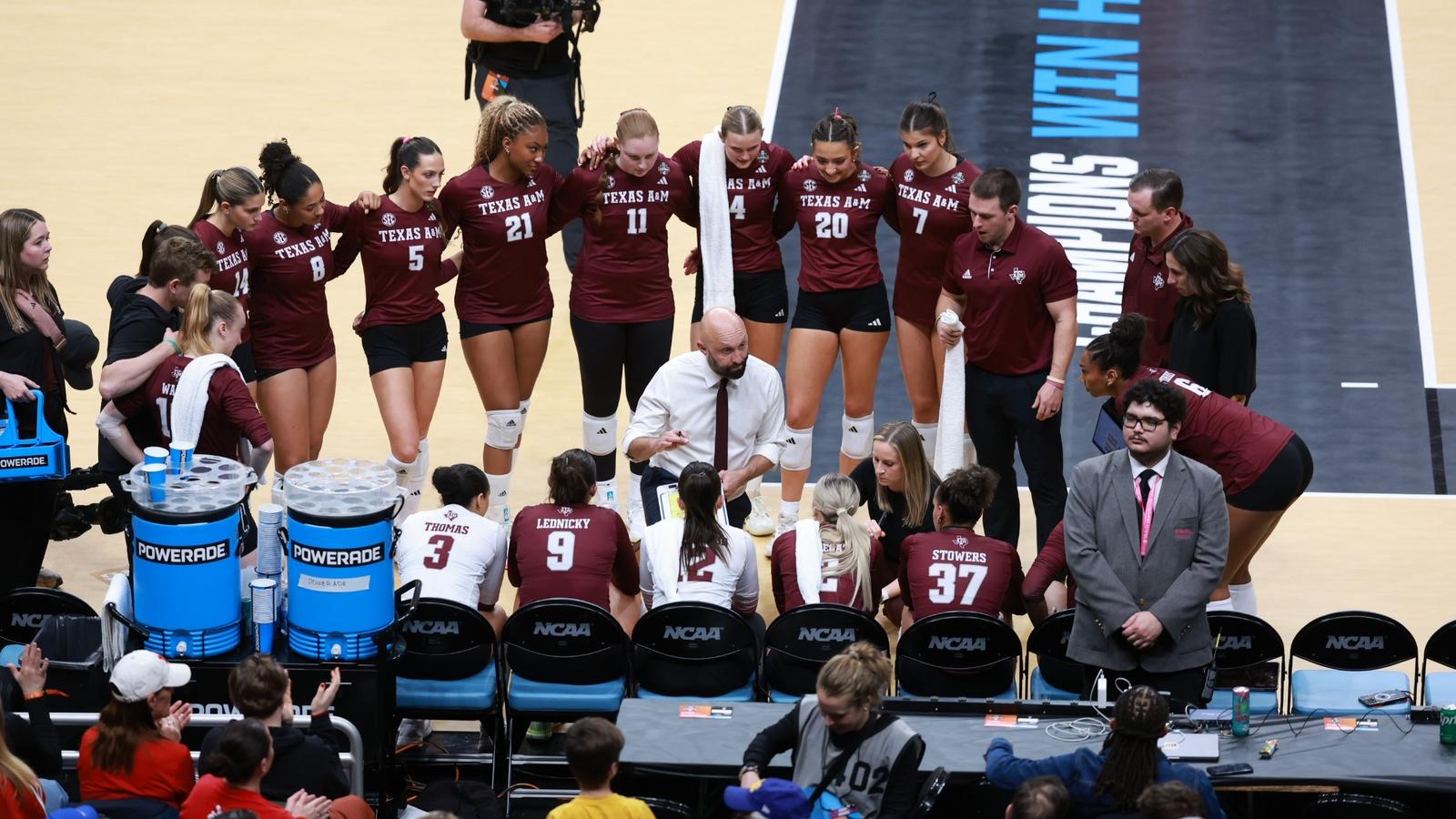
The Aggies kept their historic campaign alive after downing their second-straight No. 1 seed in the Pitt Panthers to book their spot in the program’s first national final. The Maroon & White battled into extras to take the opener (29-27), then followed on with a dominant showing in sets two (25-21) and three (25-20) to secure their 17th sweep of the year.
Texas A&M’s offense fired on all cylinders thanks to the direction of Maddie Waak. The setter dished 48 assists in the contest which was a postseason program record in a three-set match during the rally-scoring era. Waak’s pins delivered the blows as Kyndal Stowers and Logan Lednicky accounted for 30 kills with 16 and 14, respectively. The team’s efficiency stood out on the box score, as the group hit at .382 which marked the 13th time over .300 this season.
On the defensive end the nation’s premier middle blocker, Ifenna Cos-Okpalla, continued to be a force at the net, recording five blocks in the contest which marked her fifth-straight game with five or more and 19th this season.
The Matchup
Sunday’s contest between Texas A&M and Kentucky will be the first the 28th all-time meeting between the teams. The Wildcats hold a 17-10 advantage in the series, however the Maroon & White are 2-0 when the team’s meet on a neutral court.
Kentucky has claimed the last four battles between the teams, including a four-set affair in Reed Arena this season which was the Aggies’ only conference loss on the year.
Looking at the stat sheet, the Maroon & White lead Kentucky in four of the seven team statistical categories including hitting percentage, opponent hitting percentage, aces per set and blocks per set, while the Wildcats have the advantage in kills per set, assists per set and digs per set.
Tracks and Trends
Logan Lednicky has recorded double-digit kills in her last 22 matches and passed Hollann Hans for the rally-scoring kills record and ranks third overall in career kills at Texas A&M.
Ifenna Cos-Okpalla has logged five or more blocks in her last six games and is one blocks away from tying the program record for career blocks of 562. She is also five blocks from reaching 200 on the year.
Texas A&M became just the third No. 3 seed in NCAA Tournament history to dispatch two No. 1 seeds, joining UCLA in 2011 and Nebraska in 2021.
Streaming & Stats
Fans can watch the match on the ABC and follow stats on 12thman.com.
Follow the Aggies
Visit 12thMan.com for more information on Texas A&M volleyball. Fans can keep up to date with the A&M volleyball team on Facebook, Instagram and on Twitter by following @AggieVolleyball.
It’s been a crazy three days for the Wisconsin Badgers. On Thursday, they had a heartbreaking loss to the Kentucky Wildcats in the NCAA National Semifinal. On Friday, they lost five players to the transfer portal.
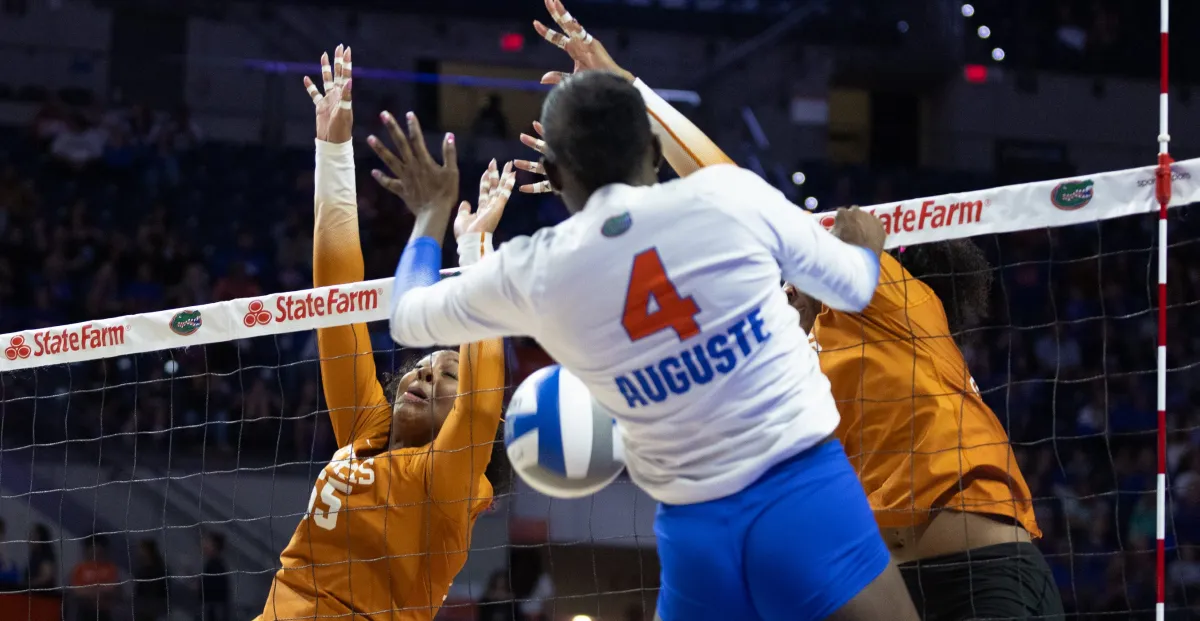
Well, on Saturday, amid all the portal craziness, Wisconsin landed a commitment from Florida Gators transfer middle blocker Jaela Auguste, she announced.
Auguste, a sophomore this past season, had a great season, earning the following accolades after the season: AVCA Third Team All-American, AVCA Southeast Region First Team, All-SEC First Team, and SEC Preseason All-SEC Team.
She averaged 2.69 kills and 0.98 blocks per set for the Gators in 2025.
Wisconsin was likely to make an addition at middle blocker, as they’re losing starters Carter Booth and Alicia Andrew to eligibility, creating a hole in the middle. Additionally, redshirt freshman Tosia Serafinowska is entering the transfer portal, taking away some depth at the position.
With a loaded freshman class, it’s unclear how busy the Badgers will be in the transfer portal after a strong class last year, as they have Grace Lopez returning from injury. But, they quickly moved to get a big commitment from Auguste.

Dec. 20, 2025, 6:30 a.m. CT
A pair of Nebraska volleyball players received top positional awards on Friday. Bergen Reilly and Andi Jackson received the honors at the AVCA Awards Banquet in Kansas City. Reilly was named the Setter of the Year and Jackson was named Middle Blocker of the Year. The AVCA positional awards are new this season.
Reilly averaged 10.47 assists per set and 2.70 digs per set. She also totaled 73 kills, 67 blocks and 19 aces. The setter was named Big Ten Player of the Year, Big Ten Setter of the Year and a first-team AVCA All-American. She was also a finalist for AVCA Player of the Year.
Jackson averaged 2.74 kills per set on .467 hitting with 1.12 blocks per set and 16 aces. Her .467 hitting percentage led the nation. The middle blocker was an AVCA All-American and All-Big for the second straight season. She was also an AVCA Player of the Year Semifinalist.
Pitt’s Olivia Babock was named the AVCA Player of the Year for the second straight season. She was also named Opposite of the Year. Wisconsin’s Mimi Colyer won Outside Hitter of the Year and Iowa State libero Rachel Van Gorp was named Libero of the Year.
Contact/Follow us @CornhuskersWire on X (formerly Twitter) and like our page on Facebook to follow ongoing coverage of Nebraska news, notes and opinions.
Sports
Craig Skinner Says Kentucky Volleyball is at the ‘Pinnacle of Our Sport’ Ahead of Texas A&M National Championship Matchup
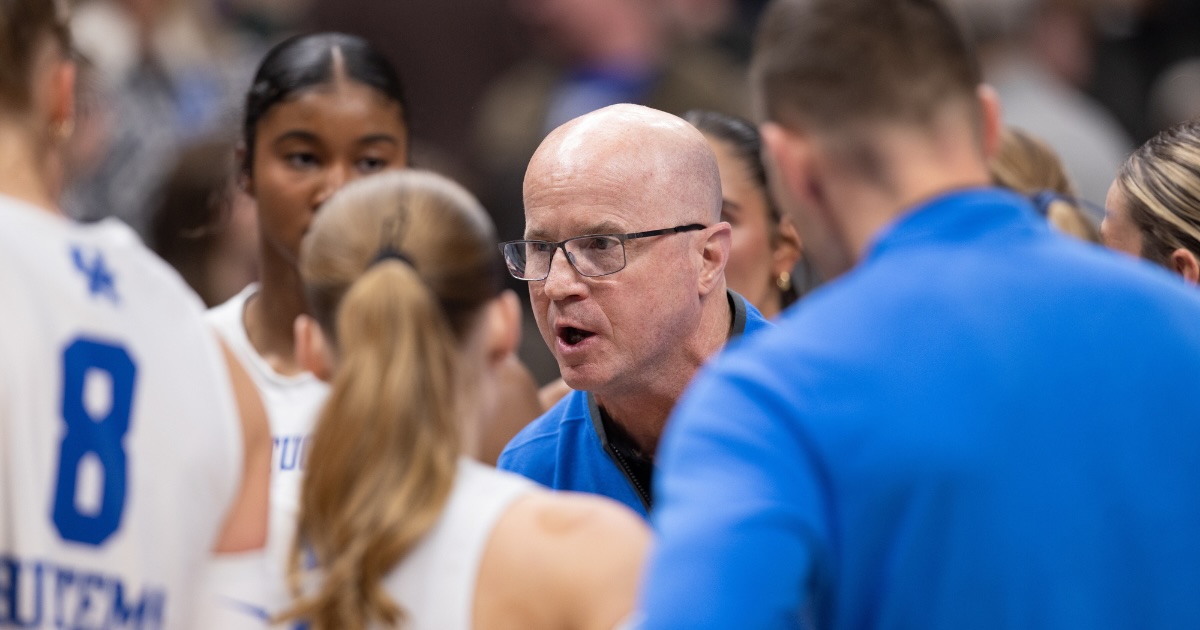
Kentucky, under the leadership of head coach Craig Skinner, has become an elite program in college volleyball. On Sunday, the team will have the chance to reach the highest of heights when they play for the National Championship versus Texas A&M.
“We are at the pinnacle of our sport, and it’s a great opportunity for Kentucky volleyball and our fans to be in this moment,” Skinner said.
After Kentucky escaped in a thrilling game against Wisconsin on Thursday night, the Cats and Aggies will be part of a historic title game. It’ll be the first time two SEC teams will be facing each other in the national championship.
“Couldn’t be more proud of our team and how we pulled that match out against Wisconsin,” Skinner said. “All the respect to Texas A&M. Congrats to the SEC for being an elite in volleyball.”
Creating an Environment Bigger than Themselves
When Kentucky lost the first set to Wisconsin in the Final Four matchup on Thursday night, the team was anything but smiles. However, as the team started to come back, the confidence was regained. Kentucky volleyball started to look happy.
Being happy on the court isn’t unique for a team like Kentucky. The team has a fun tradition of drawing smiley faces on their hands before each game.
“The beginning of the season, we gave them a picture of them playing volleyball as little girls,” Skinner said. “Those little girls played it because they love it. It creates an environment where you are playing for something bigger than yourself.”
That tradition has powered Kentucky to historic heights in 2025. Now, they’ll have an opportunity for a perfect ending.
“It becomes way bigger than that,” Skinner said. “It’s a great reminder because we play the sport because it’s fun.”
So much of Kentucky’s focus has been joy. Skinner said that his staff gave his players pictures of themselves playing volleyball at an early point in their career.
“It’s a collective effort to understand why we play the game,” Skinner said. “Why did that little athlete play volleyball? They loved it; they had fun.”
The NCAA Volleyball National Championship game will take place on Sunday at 3:30 p.m. ET. The game will be televised on ABC from T-Mobile Arena in Kansas City.
Dec. 20, 2025, 10:20 a.m. CT
- Five Wisconsin players, none of whom were regular starters, have entered the NCAA transfer portal. Kelly Sheffield is ‘extremely supportive’ of them.
- Sheffield expressed frustration with the timing of the NCAA’s transfer portal window, which overlaps with the tournament.
- The Badgers are looking to add players from the portal, including a setter and a libero/defensive specialist.
MADISON – Two days after losing in the Final Four and one day after getting back from Kansas City, Kelly Sheffield was spending his Saturday morning in his Kellner Hall office.
“It used to be a time that I was on vacation by now,” said Sheffield, who recently wrapped up his 13th season as Wisconsin’s head volleyball coach. “And that’s certainly not the case right now.”
That is a necessity as Wisconsin volleyball quickly pivots from an inspiring postseason run to a rapid roster-reconstructing phase with transfer portal activity at full tilt.
Five Wisconsin players have announced their intention to enter the transfer portal – setter Addy Horner, outside hitter Trinity Shadd-Ceres, middle blocker Tosia Serafinowska and liberos/defensive specialists Aniya Warren and Maile Chan. Aside from when Horner stepped up during Charlie Fuerbringer’s injury, none of the five had starting roles in 2025.
“Them leaving is not an indictment on them or the program,” Sheffield said in a phone call with the Journal Sentinel. “I care deeply about them and their families, and I would venture to say they loved and appreciated and enjoyed their experiences here. But you could also want more, and I’m good on that.”

Sheffield, who would be surprised by any additional portal departures, views the current reality of transfer portal decisions as “almost a rewiring” of how transfer decisions may have been previously perceived.
“When people transferred even just a handful of years ago – what is wrong?” Sheffield said. “There’s either something wrong with the program, or there’s something wrong with the players, or they’re selfish. And sometimes those things happen.”
But in the case of the five players who departed in the wake of the Final Four loss, Sheffield is unequivocal in saying it’s “not how we have usually thought about transferring.”
“I’ve heard from multiple players since they got in the portal that have said they’ve heard from school X and school Y,” Sheffield said. “What are my thoughts on that? So it’s more collaborative than it’s ever been.”

Sheffield and his staff “totally understand them wanting to get the next phase figured out as quickly as possible.” He does take issue with the NCAA putting the transfer portal window from Dec. 7 to Jan. 5, however, as it overlaps with the second and third weekends of the NCAA tournament.
“What it is an indictment on is the timing of our current portal window,” Sheffield said. “And that’s what kind of makes this an unfortunate situation is the portal has been open for two weeks. … If you’re going to make a move, then things have to happen pretty darn quick. It feels weird that within 24 hours of a Final Four, that people are in the portal. I think everybody wishes that there could be a moment of pause and reflection, but it just doesn’t allow that.”
Wisconsin’s 2025 portal additions worked quite well for the Badgers, as Mimi Colyer was a finalist for AVCA national player of the year while Grace Egan and Alicia Andrew also stepped into starting roles.
As Sheffield and the Wisconsin staff go shopping in the transfer portal ahead of the 2026 season, the Badgers have several positional needs.
Middle blocker already appeared to be a position of need as Carter Booth and Andrew have exhausted their college eligibility. Setter and libero/defensive specialist have also become positions where the Badgers are in need of more depth.
“We’d like to pick up another setter,” Sheffield said. “And Kristen (Simon) is our only backcourt player, as of right now. I would say those would be two, and we’ll certainly have our eyes open for some others.”
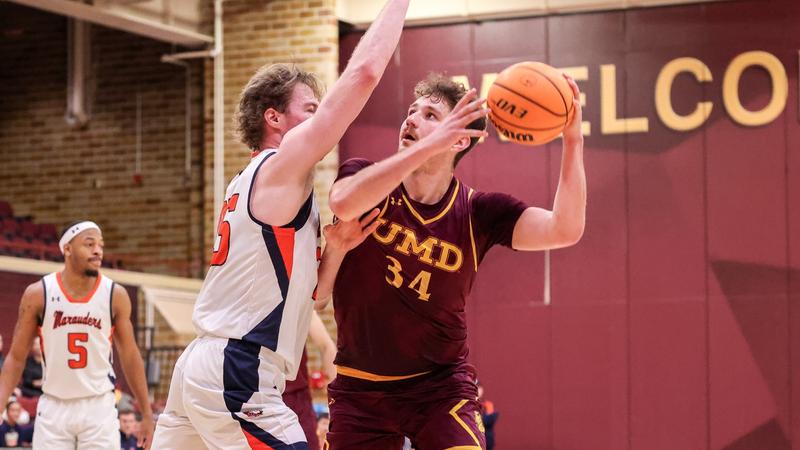
The University of Minnesota Duluth men’s basketball team improved to a 5-2 record in Northern Sun Intercollegiate Conference (NSIC) competition before the holiday break after securing an 80-65 win over the University of Mary inside Romano Gymnasium.
Leading the charge for the Bulldogs was Noah Paulson with his second 20-point game of the season. He led the way, shooting 10-14 (71.4%) from the field, collecting seven rebounds (two offensive), one assist, one block, and one steal. Following close behind was Jackson Fowlkes with 18 points and shooting 54.5% (6-11) from the field with a 50% (2-4) in three-pointers. He also collected the team’s season high in individual assists with five.
Entering the first half, Mattie Thompson, Paulson, and Nick Katona led an 11-2 scoring effort for the team’s first lead of the game in under three minutes. The Marauders then flipped the effort in the next four minutes on a 10-2 run to set the Bulldog lead to 13-12. Right after a three-pointer by Jackson Ware overcame a set of free throws from Katona to tie the game up at 15-15 with 12:22 to go.
By the seven-minute mark, UMD had lifted a colossal 20-9 scoring effort with eight points by Daniel Molhoek and seven from Fowlkes to jump out ahead 35-24. For the remainder of the half, the Bulldogs held firm to hold a 44-32 lead into the halftime break.
The Bulldogs kept the pace up as the first ten minutes of the second half saw Caleb Siwek, Fowlkes, and Paulson combine for a 21-16 scoring run to push a 65-48 lead. The Marauders narrowly outscored the Bulldogs in the following five minutes with 10 points to cut the lead by one to 74-58. UMD held on to the lead in the final minutes to seal an 80-65 win.
Overall, the team shot 51.7% (31-60) from the field, 37.5% (6-16) beyond the arc, and 70.6% (12-17) from the free throw line. The team outscored the Marauders in points in the paint, 46 to 16, while out-rebounding them 41 to 33. Leading the rebounding effort for UMD was Katona with eight total rebounds (one offensive).
The Bulldogs return after the holidays with their first matchup of 2026 on January 3rd on the road against Bemidji State University. Tipoff is set for 1:30 p.m. inside BSU Gymnasium.

College Football Transfer Quarterback Market Could Reach $5 Million This Offseason

No. 3 Aggies Face No. 1 Kentucky in National Championship – Texas A&M Athletics

Shadows in the F1 Dyno Rooms: The 2026 Compression Whisper

Harlingen working to revive lake at local park

Badgers news: Wisconsin lands top middle blocker in the transfer portal

Two Nebraska volleyball players win AVCA positional awards

Wisconsin’s new $104.5 million Under Armour deal could help launch athletics into NIL-era

Craig Skinner Says Kentucky Volleyball is at the ‘Pinnacle of Our Sport’ Ahead of Texas A&M National Championship Matchup
Kelly Sheffield is ‘extremely supportive’ of 5 Badgers in portal

No. 1 transfer portal quarterback predicted to join major college football program

Epic Boat Rentals & Motorsports Repair Expands Jet Ski Rental

Paulson Leads UMD Men’s Basketball in 80-65 Victory Over UMary

Toyota GR Corolla Rally Car Will Take on American Rally Championship in 2026

Legacy of Portland youth basketball coach lives on

This college football team is creatively approaching NIL like NFL free agency

First Tee Winter Registration is open

Fargo girl, 13, dies after collapsing during school basketball game – Grand Forks Herald

CPG Brands Like Allegra Are Betting on F1 for the First Time

F1 Las Vegas: Verstappen win, Norris and Piastri DQ tighten 2025 title fight

Sycamores unveil 2026 track and field schedule

Two Pro Volleyball Leagues Serve Up Plans for Minnesota Teams

Utah State Announces 2025-26 Indoor Track & Field Schedule

SoundGear Named Entitlement Sponsor of Spears CARS Tour Southwest Opener

Redemption Means First Pro Stock World Championship for Dallas Glenn

Jo Shimoda Undergoes Back Surgery

Bowl Projections: ESPN predicts 12-team College Football Playoff bracket, full bowl slate after Week 14

Texas volleyball vs Kentucky game score: Live SEC tournament updates

Robert “Bobby” Lewis Hardin, 56

How this startup (and a KC sports icon) turned young players into card-carrying legends overnight

Indiana’s rapid ascent and its impact across college football




-
 Motorsports1 week ago
SoundGear Named Entitlement Sponsor of Spears CARS Tour Southwest Opener
-

 Motorsports2 weeks ago
Donny Schatz finds new home for 2026, inks full-time deal with CJB Motorsports – InForum
-
 Rec Sports2 weeks ago
How Donald Trump became FIFA’s ‘soccer president’ long before World Cup draw
-
 Sports3 weeks ago
Men’s and Women’s Track and Field Release 2026 Indoor Schedule with Opener Slated for December 6 at Home
-
 Rec Sports2 weeks ago
Black Bear Revises Recording Policies After Rulebook Language Surfaces via Lever
-

 Motorsports3 weeks ago
Michael Jordan’s fight against NASCAR heads to court, could shake up motorsports
-
 Rec Sports2 weeks ago
David Blitzer, Harris Blitzer Sports & Entertainment
-

 Motorsports2 weeks ago
JR Motorsports Confirms Death Of NASCAR Veteran Michael Annett At Age 39
-
 Motorsports2 weeks ago
Rick Ware Racing switching to Chevrolet for 2026
-
Sports2 weeks ago
West Fargo volleyball coach Kelsey Titus resigns after four seasons – InForum