
NIL
Behind the Wisconsin v. Miami tampering lawsuit over transfer DB Xavier Lucas that was …

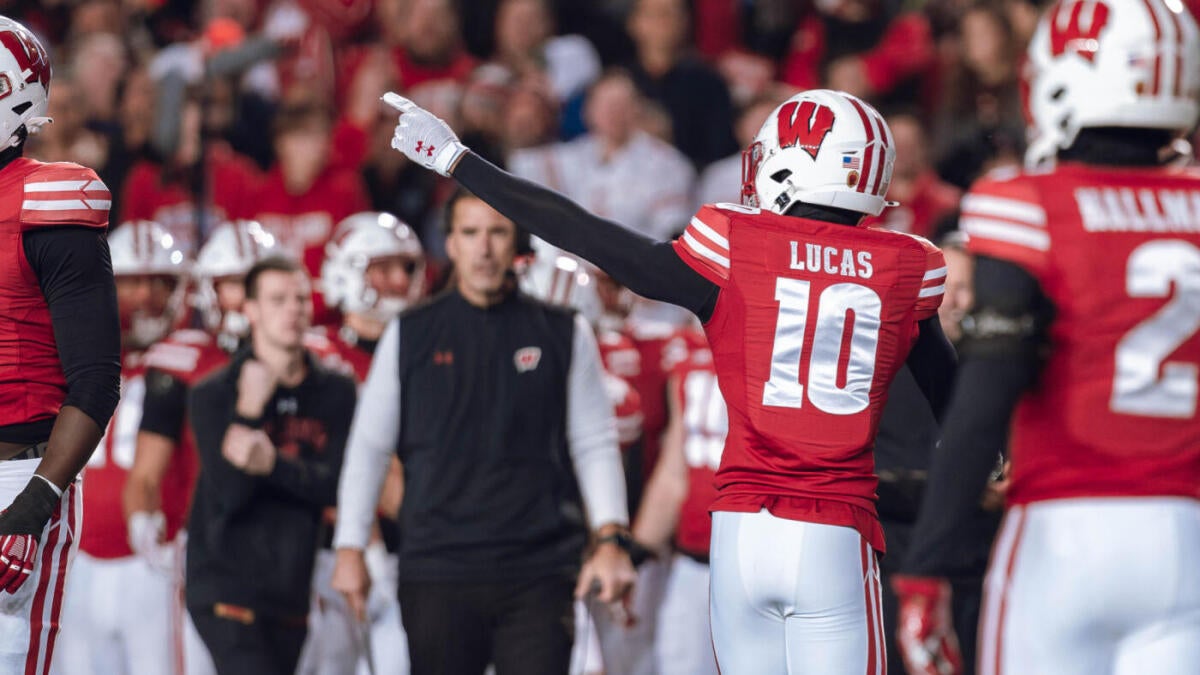
The legal enforceability of a revenue share agreement between a football player and institution is at the crux of a landmark legal case between two Power Four schools that could have wide-ranging implications.
The University of Wisconsin sued the University of Miami on Friday over alleged tampering and tortious interference of a two-year agreement with defensive back Xavier Lucas, a member of the Badgers’ 2024 team. Lucas is not mentioned by name in the lawsuit — only referred to as Student-Athlete A — but all of the details line up after he left Wisconsin in January to join Miami’s football program as the No. 1 cornerback in the transfer portal.
Wisconsin alleges that Miami intentionally interfered and tampered with Lucas’ deal with the Badgers not long after he received a substantial payment following the deal’s execution.
“Miami’s interference caused Student-Athlete A to breach the university contract, resulting in great harm to UW-Madison,” the complaint alleges. “Such harm includes, without limitations, loss of a student-athlete with valuable NIL rights who plaintiff UW-Madison anticipated having in UW-Madison’s program for the 2025 football season and beyond. Further harms include the loss of financial benefits UW-Madison stood to receive from Student-Athlete A’s continued participation in its football program.”
Wisconsin wants compensation for the financial and reputational harm it and collective VC Connect suffered in losing Lucas, but what it really wants is to set a precedent. If successful, Wisconsin’s lawsuit could have a significant impact in decreasing tampering and increasing roster stability in what has been years’ worth of unregulated free agency in college athletics. Its decision to bring a lawsuit at all is noteworthy — and months in the making.
The buildup to the lawsuit
Dec. 17, 2024, could prove to be one of the more important days in college football history.
That was the day Lucas informed his Wisconsin position coach he intended to enter the transfer portal, despite signing a two-year revenue share agreement with the school on Dec. 2. That request came as a complete surprise to Wisconsin coaches, especially because earlier that day Lucas had texted a Wisconsin coach about the jersey number he wanted for the 2025 season.
Wisconsin, after giving Lucas one of the largest revenue share deals on the team, had no interest in letting the defensive back leave. It believed the agreement was binding and was confused why Lucas wanted to leave after all his actions and words to that point indicated he was happy and excited to be a Badger moving forward.
While Lucas, a Florida native, relayed a family-related reason for wanting to transfer — Yahoo Sports reported that his father had a “serious, life-threatening illness,” according to his attorney — Wisconsin believed the true reason emerged Dec. 18 when one of Lucas’ family members said that Lucas had hosted a Miami coach and a prominent Miami alumnus at his home earlier that month.
(Darren Heitner, Lucas’ attorney, told CBS Sports of that allegation “This is false” and declined to comment further on the lawsuit).
Wisconsin informed Lucas and his family on Dec. 21 that it would not enter him into the transfer portal, believing there was a “reasonable expectation” that Lucas would continue “as a member of its football program until at least the conclusion of the university contract,” according to the lawsuit.
After Wisconsin refused to budge on entering Lucas into the portal, he hired Heitner on Jan. 7 to try to negotiate a resolution. Heitner threatened to file an antitrust lawsuit over Wisconsin allegedly violating NCAA rules in its refusal to enter Lucas and sent over a notice to terminate the revenue share agreement.
Eventually, after the two sides couldn’t come to an amicable resolution, Lucas withdrew from Wisconsin on Jan. 17 and enrolled at Miami, believed to be the first time a player navigated around the transfer portal in that fashion. Miami allegedly offered Lucas a more lucrative contract than the one Wisconsin offered, according to the complaint.
Wisconsin and the Big Ten both issued strong statements the next day that signaled to many a lawsuit would be coming soon.
Wisconsin said it would “evaluate all options going forward to determine the appropriate course of action” while the Big Ten said, in part, “As student-athletes become active participants in revenue sharing, it is critical that agreed-to obligations be respected, honored, and enforced.”
And yet, nothing happened. For months.
As Wisconsin opted to work in the shadows, some wondered whether the statements were just strong talk and no action.
Heitner told CBS Sports in a late-April interview that Wisconsin was making a smart decision to not sue his client.
“There was a lot of sword waving, a lot of threats made to me and to the University of Miami, which is completely separate, because of what they call tampering,” Heitner said. “But they claimed they were going to enforce the agreement, that they hired local counsel down in Miami but it never amounted to anything. Maybe they still decide that they want to bring an action, but it’s been complete silence for months now.”
The issue, in Heitner’s estimation at the time, was the perception of suing an athlete.
“You can win the battle and lose the war,” he said. “If you’re suing an athlete who committed and attended your institution, number one, you didn’t even follow the NCAA rules in putting him in the transfer portal within 48 hours that you’re obligated to do so. You already were anti-athlete in a strong sense, and now you’re going to sue the athlete? Do recruits then want to go to Wisconsin when there are numerous other comparable options?”
That was a consideration, according to a source familiar with the situation, but the opportunity to set a precedent outweighed the potential negative optics. Wisconsin had used a standard revenue share agreement drafted by the Big Ten that focused on Name, Image and Likeness rights, and if no one was willing to actually enforce it, it threatened to significantly diminish its value. Those involved believe it demanded a shifting of mindset from treating student-athletes like kids to acknowledging there was significant money now at stake.
“They’re being paid hundreds of thousands of dollars and now they’re not allowing their picture to be used on the billboard or they’re not honoring their obligations or they’re not doing what they’re supposed to be doing,” said one source with direct knowledge of the situation. “It’s a different dynamic when there’s dollars involved.”
The Big Ten left it up to Wisconsin (and any subsequent university) to do what it wanted but it supported the school strenuously defending the integrity of the contract.
“We believe the contract itself is enforceable,” according to one high-ranking Big Ten source with direct knowledge of the situation.
That source added that “confidence is pretty high that it can” hold up to a legal challenge.
“No one can tell me why a contract shouldn’t be enforceable between an adult and an institution,” the Big Ten source told CBS Sports. “Contracts are enforceable in every other aspect of the commercial regulatory enterprise.”
Wisconsin ultimately opted not to include Lucas in its lawsuit, instead focusing on Miami’s alleged transgressions of tampering and tortious interference. In a statement to CBS Sports, the school said, in part, “While we reluctantly bring this case, we stand by our position that respecting and enforcing contractual obligations is essential to maintaining a level playing field.”
The stakes of the lawsuit
Talk to any college football coach and it’s a good bet he’ll have a strong distaste for tampering. Too many coaches and personnel directors to count have described to CBS Sports blatant and rampant tampering throughout college football that despite being against NCAA rules has gone unchecked because of nonexistent enforcement. The workarounds are so easy that it feels like a herculean task to police, let alone fix. It works as simply as this in many scenarios:
- A school calls a personal trainer connected to a player they’re interested in.
- The trainer calls the player
- The courtship begins
TCU coach Sonny Dykes summed it up well to us in a previous interview.
“There needs to be severe repercussions for it, but at the same time, you can’t prove any of this stuff. You can’t subpoena phone records,” Dykes said. “I’m a big believer in don’t have speed limits if you’re not going to write tickets. Let’s not have a bunch of rules if they aren’t going to be enforced. All that does is cheapen the game and our profession, quite frankly. You better have someone to write tickets to enforce those rules and right now there’s nobody doing that.”
If Wisconsin can successfully prove Miami tampered — and there are real ramifications for violating those rules — it could have a big impact on an industry seemingly crying out for help.
“I think a lawsuit of this magnitude certainly puts people on guard that the possibility of being sued or being a part of a lawsuit is a real thing,” Mitch Gilfillan, an attorney for Quinn Johnston and former Division I college basketball coach, told CBS Sports.
The key component will be the enforcement, whether in the court system in this case or within the new College Sports Commission which will police NIL and revenue share issues moving forward. In the NFL, the Miami Dolphins lost a first-round draft pick, were fined $1.5 million and owner Stephen Ross was suspended for being found guilty of tampering with quarterback Tom Brady. A penalty of that magnitude naturally serves as a deterrent against other bad behavior, though professional leagues have different protections, negotiated through collective bargaining, than currently available within college athletics.
“There need to be tighter parameters around what and what is not considered interference of someone’s trade,” Gilfillan said. “The NBA and the collective bargaining agreement has specific tampering restrictions for a reason that you are not allowed to do various things because it interferes with somebody’s contract they are under. When you’re under contract with a university it’s a fine line of employer-employee relationship, should somebody be allowed to poach you or tamper with you knowing you’re under contract?”
To Gilfillan’s point, it didn’t take long after Wisconsin filed its lawsuit for there to be online speculation from lawyers and sports industry folks that it could raise athlete employment issues.
The Big Ten revenue share template that Wisconsin used states that it is for NIL rights and not pay-for-play, though the lawsuit also claims that Lucas agreed to not play for another school for the duration of the two-year contract. Additionally, it claimed the revenue share agreement granted it “exclusive license” to Lucas’ NIL rights for those two years and that he could not grant them to any other institution during that time period.
The potential risks don’t stop there, however.
If a judge rules that the revenue share agreements aren’t binding and enforceable, it could open up the floodgates. Prominent football coaches such as Georgia’s Kirby Smart have recently advocated for reducing the transfer portal to only one winter window. But if withdrawing and enrolling elsewhere, despite having signed a contract, as Lucas did is a viable strategy with no negative ramifications, what’s stopping other players from leaving whenever they want without having to enter the portal as NCAA rules demand? If Miami wins, it could signal to some that tampering is fair game, too.
This all has the potential to turn a sport that has already frequently been described as the Wild West into an even bigger free-for-all right when leaders believed long-awaited solutions were finally coming with the House settlement approved. In the future under the new CSC rules, a school like Miami would pay a buyout that would count against its $20.5 million cap to acquire a player who entered the transfer portal still under contract. That and much more could be in question if the courts rule the contracts aren’t binding.
Lawsuits have besieged college athletics for years now, dramatically reshaping core components of a multi-billion dollar ecosystem. Wisconsin v. Miami, the first in what could be multiple lawsuits over athlete revenue share agreements, has the potential to do the same.

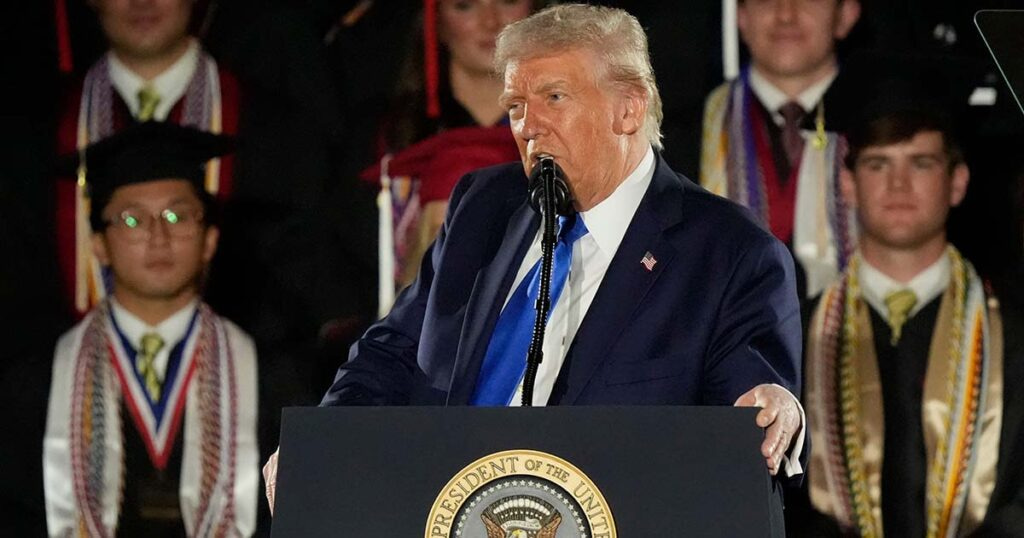
Speaking from the Oval Office on Friday while honoring the “Miracle on Ice” 1980 U.S. men’s hockey team, President Donald Trump called NIL a “disaster” in college sports. He also further signaled his willingness to get involved.
Trump has been vocal about settling the landscape in college athletics. He signed an executive order earlier this year called “Save College Sports” to prohibit third-party, pay-for-play payments and directs the Secretary of Labor and the National Labor Relations Board to clarify that athletes are amateurs and not employees.
Advertisement
SUBSCRIBE to the On3 NIL and Sports Business Newsletter
But as dollars continue to fly through NIL and revenue-sharing, Trump called for a “strong salary cap” and said colleges are putting themselves in tough financial shape as a result. He stressed the need for action and reiterated he’d step in, if necessary.
“You’re going to have these colleges wipe themselves out, and something ought to be done,” Trump said. “And I’m willing to put the federal government behind it. But if it’s not done fast, you’re going to wipe out colleges. They’re going to get wiped out, including ones that do well in football.
Advertisement
“They can’t pay $12 million, $14 million, $10 million, $6 million for players. They won’t be able to stop. There’ll always be that one player, they only have that player, they’re going to win the national championship. And they’ll have 100 colleges thinking the same thing. Colleges cannot afford to play this game. It’s a very bad thing that’s happening.”
Donald Trump: Schools ‘putting too much money into football’
President Donald Trump’s assessment of college athletics centers around Olympics sports, which he has said multiple times are caught in the middle of the current landscape. He said Friday schools have been cutting those non-revenue sports, calling them “training grounds” for the Olympics. For example, UTEP dropped women’s tennis while Grand Canyon cut men’s volleyball ahead of the House settlement.
As things currently stand, Trump argued schools are starting to divert more dollars toward football. As a result, other sports could be impacted.
Advertisement
“I think that it’s a disaster for college sports,” Trump said of NIL. “I think it’s a disaster for the Olympics. We’re losing a lot of teams. Colleges are cutting their, they would call them, sort of the lesser sports. They’re losing them at numbers nobody can believe. And they were really training grounds, beautiful training grounds. Hard-working, wonderful young people. They were training grounds for the Olympics, and a lot of these sports that were training so well would win gold medals because of it. Those sports don’t exist because they’re putting all that money into football.
“And, by the way, they’re putting too much money into football because colleges don’t make – even the most successful universities don’t make that much money. … I think the NIL is a disaster for sports. It’s horrible for the Olympics. I think it’s actually horrible for the players. And you’re losing all of these great sports. They’re not college football.”

At least in Utah, going to bowl games remains a very big deal.
The college football bowl season is undergoing an assault, with plenty of teams opting out of invitations to play in the postseason. The reasons vary, but the movement is tracking and threatening the bowl business.
But locally, the bowl train is heading down the track. The bowl thoughts are positive, and events remain as anticipated fun, a reward and an opportunity to shine.
It’s carnival time. Break out the travel plans.
Utah, BYU, and Utah State are locked in. It’s game time, show time, a rally point in December.
The 10-2 Utes can’t get enough of this season after the 2024 funk. The offense is rolling, Kyle Whittingham must be celebrated and this is his final game in Uteville.
For the Crimson faithful, this is a season that needs milking. Las Vegas is just a few Maverick and 7-Eleven stops away, and Dec. 31 is plenty of time to plan. Plus, Utah will kick Nebraska from Allegiant Stadium back to the corn fields.
In Logan, Bronco Mendenhall has the Aggies playing in the Famous Idaho Potato Bowl in Boise Dec. 22. This is a celebration of Mendenhall’s remarkable, gutsy entry back into Utah and a team that made impressive strides.
How can players, coaches and fans not want to see their Aggies take on future Pac-12 opponent and 6-6 Washington State and give this season one more run?
In Provo, Kalani Sitake got his contract extended. This means more support for his assistants, continuity for returning players and a time to salute their “player’s coach.”
It’s also a chance to get 12 wins and shoulder that chip after the College Football Playoff snub. They see this as Alamo Bowl and Colorado Part 2.
The biggest opt-out is Notre Dame. Shunned by the CFP committee, the Fighting Irish made a very public statement by refusing to play BYU in the Pop-Tarts Bowl in Orlando. It was a shot at ESPN, essentially telling the network “We’re not letting you make money (an estimated $50 million) off our brand when you snubbed our royal keisters.”
Big 12 brothers Iowa State (8-4) and Kansas State (7-5) are eligible for bowls, but declined. ISU lost head coach Matt Campbell to Penn State and players voted for health and safe practice reasons to decline. Similarly, K-State just had head coach Chris Klieman retire and uncertainty with staff, recruiting and health led the program to decline.
Both teams will be fined $500,000 for this decision.
Teams with 5-7 records were approached to go bowling, but many declined, including Baylor, UCF and Kansas.
That makes five Big 12 teams that turned away bowl invitations.
This places a cloud over the entire bowl industry when teams refuse to come and party in your cities, accept your gifts and use the event as a positive experience for the team and fans.
It’s a commentary more on the possible gloom settling around many teams in December because of the transfer portal, players bound for the NFL opting out and NIL money simply making the risk of injury or bad performance not worth it.
Players have their coin. They don’t need another PlayStation or Xbox.
NIL hasn’t caused a complete collapse (the delayed 2026 portal window helped stabilize many rosters), but it amplifies devaluation in the expanded CFP era.
Non-playoff bowls are increasingly seen as optional, with opt-outs rising from individual players to entire teams. If unchecked, this threatens the bowl system’s long-term viability, especially for mid-tier games.
In the future, we may see many NIL/revenue share deals that include contracts requiring bowl participation. Bowl organizers have discussed NIL incentives including direct payments to players to boost appeal, but most lower-tier bowls lack the budget to do that.
Critics argue NIL erodes tradition, turning bowls into “glorified scrimmages,” while supporters say it empowers players in a monetized sport.
Locally, Whittingham, Sitake and Mendenhall have all spoken in the past how important the extra practices for a bowl are for a team. They provide an extra period of time to develop players and foster competition.
Bowls also provide an event that many seniors deserve because some, if not most, will never play football again. It is also a chance to win another game and add to the momentum gained during the season as programs head into offseason workouts, the weight room and recruiting.
It would seem defections to the portal loom as a legitimate threat for many teams as they see their rosters depleted and their priority is loading up not with players directly out of high school but seasoned Division I athletes who have been through training programs and the next level and can step in and fill the gaps.
This, sadly, is the state of college football today. Bowl games, outside the CFP, are becoming endangered events.
Big 12 participating bowl teams (Texas Tech will play either Oregon or James Madison in the Orange Bowl on January 1 as part of the CFP):
Dec. 27 — Pop Tarts Bowl, BYU vs. Georgia Tech
Dec. 27 — Texas Bowl, Houston vs. LSU
Dec. 30 — Alamo Bowl, TCU vs. USC
Dec. 31 — Sun Bowl, Arizona State vs. Duke
Dec. 31 — Las Vegas Bowl, Utah vs. Nebraska
Jan. 2 — Holiday Bowl, Arizona vs. SMU
Jan. 2 — Liberty Bowl, Cincinnati vs. Navy

During an interview on UK’s radio network, Kentucky athletic director Mitch Barnhart stressed that his department is on solid footing in the ever-changing college sports landscape.
“We will have to continue to make sure that we’re within the framework that we can be effective, and that we’re giving our coaches and our student-athletes the best opportunity,” Barnhart said in a taped interview with Kentucky radio broadcaster Tom Leach. “We are incentivized at a high level, because there’s no one (who) wants to win more than our coaches, no one wants to win more than our student-athletes and our fans. Why in the world would we do anything but give ourselves the best chance to do that?”
Barnhart’s comments — which came prior to the men’s basketball game against Indiana in Rupp Arena — came amidst continued discourse about how UK is positioned in the current college sports landscape.
Barnhart, who has been the athletic director in Lexington since 2002, has been the subject of fan angst on numerous fronts. This includes Kentucky’s investment in name, image and likeness resources, the revenue-sharing budget and the school’s multimedia-rights partnership with JMI Sports, which is set to run through 2040. Kentucky and JMI Sports agreed to a new partnership deal over the summer.
“There’s other schools doing it very similar to what we’re doing,” Barnhart said. “Whether that is through their multimedia rights partner, they’re bringing some of their collectives in house, absolutely they are. There is no one size fits all. I think that’s what everyone wants to assume, is there’s only one way. There is not only one way. There’s multiple ways to do this thing, and we think this is effective for us.”
Barnhart added that he believes UK has the ability to adapt to the current landscape based on its partnership with JMI.
“It also gave us an ability to be flexible in terms of the BBNIL as we go forward in that suite of opportunities for our young people,” Barnhart said. “So they’ve got real time opportunities that they came in, JMI came in, and said ‘Here’s some revenues on top of what we generally create. And these will be specific for our student athletes to be able to access those in the NIL world.’”
These criticisms have come while major changes have occurred to UK’s football program and as the men’s basketball team has floundered to begin its season.
On Dec. 1, UK fired former football coach Mark Stoops after 13 seasons. The Wildcats moved swiftly to replace him, hiring Oregon offensive coordinator Will Stein — a former quarterback at Louisville who grew up a Kentucky fan — later that same day.
On the basketball front, second-year head coach Mark Pope is off to a 6-4 start this season, with an 0-4 record against high-major opponents. Kentucky isn’t included in this week’s Associated Press Top 25 rankings for the first time under Pope’s leadership. Earlier this year, the Herald-Leader reported that the payroll number for the UK basketball team is around $22 million.
Following Stein’s introductory press conference Dec. 3, Barnhart was asked by the Herald-Leader about the football program’s revenue-sharing budget.
“We’re confident in what we’re doing,” Barnhart said in an animated response. “People have asked that question 19 different ways, from all the stuff that’s been going on, and it’s exhausting. Enough. Enough about, ‘Have we got enough?’ We’ve got enough. We’re working at it just like everyone else is working at it. We’re no different.”
Kentucky hasn’t disclosed how it’s splitting the $20.5 million it’s allowed to distribute to athletes between football, men’s basketball and other non-revenue sports. This has led to speculation about what those monetary breakdowns are.
Additionally, Kentucky’s multimedia rights partnership with JMI sports has come under fan scrutiny this week. JMI Sports is responsible for negotiating name, image and likeness endorsement deals for UK athletes, among other duties.
This aspect, specifically, has been a talking point due to Pope’s lack of recruiting results with top high school players. Kentucky basketball doesn’t have a commitment from the 2026 recruiting class. A pair of five-star high school seniors — small forward Tyran Stokes and power forward Christian Collins — were thought to be on the doorstep of committing to the Wildcats prior to the November early signing period.
Both players remain uncommitted. Pope’s program is one of only two SEC schools, along with Georgia, yet to land a commitment from the 2026 high school class.
Near the end of his weekly press conference Friday afternoon, Pope turned a question about his thoughts on adding a “general manager” position to his staff into a defense of the JMI deal.
“We have this incredible partnership with JMI that’s enabled us to do so much. They’re doing incredible work for us,” Pope said. “The way Mitch has kind of worked this and led this… I have a whole team of people that are working contracts, working possibilities.”
“One of the complicated things right now is that there’s not a clear interpretation of exactly what the rules are,” Pope added. “… We’ll make sure that we always air on the side of doing this legal. Which is a guessing game, because nobody knows exactly what’s legal right now. There’s just a million different parts of this.”
Barnhart was on the NCAA committee tasked with implementing the components that a federal judge approved in the House Settlement, which allowed schools to directly pay athletes. This included the creation of a clearinghouse to approve NIL deals and ensure they met fair market value and were for legitimate business purposes.
Barnhart acknowledged that, sometimes, UK student-athletes aren’t able to use UK’s logos and other marks in outside NIL deals. But he also pointed to national NIL opportunities that have come the way of student-athletes during major events like March Madness. An example of this was earlier this year when former UK basketball player Amari Williams struck up a deal with Weetabix, a British breakfast food.
“I think it shows our ability to move where we need to move, and adapt when we need to adapt,” Barnhart said. “I think there’s a lot of programs out there who would have loved to have the opportunity to do what we have done.”
Barnhart also addressed the thinking that Kentucky’s NIL opportunities are restrictive to student-athletes.
“Are there things that when they come to the University of Kentucky — and they take opportunity, they take revenues from the revenue share or from the NIL — yes, there are some responsibilities they have to us, and that’s part of this deal. That’s that’s no different here than it is anywhere else in the country,” Barnhart said. “But at the end of the day, yeah, we are going to try and have people work with our folks first, if we can, and if that’s something that doesn’t work, and they want to go do some other things, they have the opportunity to do that.”
Pope also used his lengthy response Friday to praise JMI Sports president Paul Archey and Kim Shelton, who is the senior vice president of NIL Strategy and the executive director of UK NIL for JMI Sports.
Shelton — a former UK soccer player who recently served as the CEO of Lexington Sporting Club — also previously spent nearly a decade at JMI Sports in roles such as vice president of sponsorship sales, chief revenue officer and president of UK Sports and Campus Marketing.
“We’ve got great people that have done an amazing job in the JMI world of providing us resources for our program, and they are concerned,” Barnhart said. “It doesn’t benefit them to restrict us or to hurt our program or not give us the best chance to put the best roster we can on the court or on the field or wherever that happens to be.”

Cameron Drummond
Lexington Herald-Leader

Nick Saban might be done patrolling a sideline, but he isn’t done challenging the sport he helped define.
Now an analyst on ESPN’s College GameDay, the seven-time national champion is pushing a simple, sweeping idea: college football needs a real boss. Not a committee, not a loose alliance of conferences—a single commissioner with authority over the entire sport, backed by a competition committee that can standardize how the game is run.
‘We don’t have that right now’
In Saban’s view, the mix of NIL money, constant transfers and conference realignment has pushed college football into a gray area where everyone has power and no one has control. He argues that without a centralized voice setting rules and expectations, the sport drifts.
Saban contrasted the current setup with an earlier era in which scholarship agreements spelled out academic standards, transfer expectations and long-term commitments between players and schools. Those guardrails, he believes, have been eroded to the point that the sport is flirting with chaos. If you’re not backing stronger structure, Saban suggested, you’re effectively siding with “a little bit of anarchy.”
The focus and money surrounding the College Football Playoff, in his mind, have only masked deeper structural problems.
Is Saban the obvious choice?
Saban isn’t alone in calling for a commissioner. Last year, James Franklin—then at Penn State and now at Virginia Tech—publicly argued for exactly that role and even floated Saban as the ideal candidate, saying college football needs someone who wakes up and goes to bed thinking only about what’s best for the sport.
Whether the job ever exists, and whether Saban would actually want it, remains an open question. But his message is blunt: college football is at a crossroads. For the former Alabama coach, the next era can’t just be about bigger TV deals and a larger playoff. It has to start with someone finally grabbing the wheel.

The College Football Playoffs begin this week, and Dr. Pick’ Em–my favorite pigskin prognosticator, whose 83% success rate is as frightening as it is accurate–sent a postcard from the Caribbean to mark the occasion. On the front, a pristine beach. On the back, his verdict on the real winners scrawled in black Sharpie: “The Rich and Powerful.”
The bracket reveal is engineered to feel like the season’s crescendo, a pure celebration of merit. But Dr. Pick ‘Em, whose analytical precision is matched only by a cynicism grand enough to fill a stadium, sees the final rankings for what they are: the financial scaffolding of a system designed to protect two conferences, six high-rent bowls, and the owner’s box–the broadcast networks.
In the age of Name, Image, and Likeness (NIL) and the open transfer portal, college football finally has the ingredients for its own version of a magical tournament. Any ambitious program is now one phenomenal class of transfers away from being a true Cinderella, much like the teams that make March Madness so captivating. The overnight success of teams like Tulane, Vanderbilt, and Indiana demonstrates that NIL brings us closer to NFL parity, where a year-to-year talent infusion can spark a rapid ascent.
Yet, the CFP selection committee does its level best to discourage these potential Cinderellas. Instead of rewarding the magic, we have a system that awards a county fair’s blue ribbon based on the pig’s grandfather’s pedigree rather than the quality of its bacon. The committee favors the brand over the product, the résumé over the reality on the field.
The bowls, the networks, and the established power conferences act as the evil stepmother, using their structural power–television slots, scheduling prestige, and the subjective final vote–to ensure their favorites get the spotlight. The CFP, as currently constructed, discourages the glass slipper moment.
The transfer market and the conference shield
The inclusion of Indiana as a top seed is the perfect, living example of an NIL-fueled Cinderella story, but it comes with a massive asterisk that the committee ignores.
For decades, Indiana was the quintessential “potato cellar” program. When Coach Curt Cignetti was hired, he utilized the one-year blitz. He built a gritty foundation with over 30 transfers in his first season, then proved the model sustainable by reloading in year two with difference-makers like quarterback Fernando Mendoza. He and defensive anchors Mikail Kamara and Aiden Fisher transformed a perennial Big Ten bottom-feeder into a powerhouse.
But let’s be honest: Indiana’s Cinderella story only has a happy ending because of the logo on its jersey.
If this same scrappy, transfer-fueled squad were in the SEC – take Vanderbilt as a prime example – it would have faced Georgia, Texas, Alabama, and LSU. Instead of a pristine record and a No. 1 seed, the Hoosiers would be sitting at 8-4 or 9-3, likely watching the playoffs from home. A mid-major with the same talent would be fighting for the single “Group of Five” crumb left on the table. Indiana got the invite not just because it is good, but because the Big Ten provided a path protected by brand bias.
The Big Ten’s mirage vs. the SEC meat grinder
This year’s bracket has reignited the sport’s oldest feud, with arguments echoing from Columbus barbershops to Tuscaloosa BBQ joints. Big Ten fans point to the top of the board: their conference secured two of the top four seeds. It looks like dominance. But the illusion shatters upon inspection. The Big Ten placed only one other team, Penn State, in the 12-team field – a stark lack of depth.
Contrast that with the SEC, which placed five teams in the bracket but saw three more top-25 teams excluded. This isn’t about conference pride; it’s about the brutal physics of the schedule. Metrics like SP+, which measure dominance, show the SEC’s top tier dwarfing the Big Ten’s. For an SEC contender, a “break” means facing a Kentucky team full of future NFL draft picks. The bruises are cumulative.
The committee, in a rare nod to reality, tacitly admitted that surviving the SEC gauntlet with two losses is a more impressive feat than navigating a top-heavy Big Ten schedule unscathed, ranking a 10-2 Texas A&M ahead of an 11-1 champion from a weaker conference.
The Aggie anomaly: earning the slipper
Which brings us to the Texas A&M Aggies (11-1, No. 7 seed), the team Dr. Pick ‘Em believes is currently playing the best football in America. By any measure, the Aggies are surging. Their defense is suffocating, and their offense has found a ruthless rhythm. Their body of work was forged in the SEC’s fiercest fires.
Their single blemish came not in a sleepy September game, but in the final week against a desperate Texas Longhorns squad fighting for its playoff life. In the cold calculus of evaluation, A&M was penalized for the difficulty of its environment and denied a first-round bye, a classic case of the system favoring the “clean” résumé over the “hard” one.
Meanwhile, contenders like Notre Dame built cases on “Soft Landings.” The Irish touted a win over a dysfunctional Arkansas as proof of grit, while padding their schedule with scheduled convalescences against the likes of Stanford and Virginia. By excluding the Irish, the committee sent a powerful message: a glossy win total built on cupcakes is a liability.
Cathedrals, chapels, and a ray of hope
The current two-tiered ecosystem is patently unfair. The big winners are the Cathedrals of Revenue – the major bowls and networks. The dozens of other bowl games became Sidelined Chapels.
However, there is a sliver of hope. An expanded playoff system might actually rescue the very bowl ecosystem it appears to be decimating. By moving the first four CFP games to campus sites, the quarterfinal and semifinal rounds are now exclusively hosted by the New Year’s Six bowls. That guarantees those premier games remain significant and hugely profitable.
If the CFP were to expand again to 16 teams, more bowls would be absorbed into the playoff structure, providing guaranteed relevance and financial survival for more of the postseason. In this way, the CFP’s growth could offer a lifeline to the institutions it previously left floundering.
For now, though, the system implicitly tells fans of “Chapel” schools that their passion is secondary. Notre Dame’s reaction–a public sulk with players sprinting for the portal–taught us that for many, only the Cathedral matters.
Prediction: the gauntlet’s payoff
Despite the bias, Dr. Pick ‘Em is betting on the one asset the system can’t purchase: Momentum. He sees this bracket breaking for the battle-tested.
First Round: Oklahoma survives a slugfest against Alabama, while Texas A&M smothers Miami in College Station.
The Run: A&M’s physicality breaks the will of Texas Tech’s high-flying offense, followed by a defensive masterpiece against Georgia.
The Championship: The moneyed favorite, Ohio State, against the fire-forged Texas A&M.
Final Prediction: Texas A&M 31, Ohio State 27
The rich usually get richer in this sport. But this January, Dr. Pick ‘Em is wagering that a team forged in fire will prove that a champion can still be crowned by the scoreboard, not by pedigree.
But don’t hold your breath for a total revolution. The system makes sure the stepsisters get to the dance while the Cinderellas stay home.
Updated Dec. 13, 2025, 8:16 p.m. ET
Fernando Mendoza balked at entertaining the Heisman Trophy ceremony as an assured outcome Friday, even as he arrived in New York a comfortable betting favorite to win the award.
As of an afternoon press session, Mendoza hadn’t even finished his speech.
Yet even as he artfully sidestepped suggestions the award was already won, Mendoza did have a firm answer for where the 45-pound bronze trophy should live, if he is selected as its winner Saturday night.

Women’s Basketball Hits Century Mark in 119-35 Win Over Bob Jones

VB Preview: Regional Final vs. #6 Texas A&M – University of Nebraska

“I Just Remember Walking Into the Shower One Time”: Dan Orlovsky Calls Calvin Johnson the Most Physically Gifted Athlete of All Time

Metropolitan State University of Denver wins first NCAA Volleyball Division II National Championship

MSU Denver wins 2025 DII women’s volleyball championship
Purdue volleyball proves it can win in NIL era of college athletics

Creighton volleyball falls to Kentucky in Elite Eight

President Donald Trump calls NIL ‘disaster,’ reiterates willingness to get involved

Nebraska Volleyball ready for NCAA Regional Final versus Texas A&M

Pitt Advances to Fifth-Straight NCAA Volleyball Semifinal

Why NASCAR Sponsors Spread Their Brand Across Multiple Drivers and Sometimes Races

Volleyball Ends Season With Elite Eight Loss

Bowl games are under stress. Thank goodness for BYU, Utah and Utah State – Deseret News

Time, TV for Nebraska volleyball vs. Texas A&M in Elite Eight

Nebraska volleyball is playing like a champion but know nothing is guaranteed

First Tee Winter Registration is open

Fargo girl, 13, dies after collapsing during school basketball game – Grand Forks Herald

CPG Brands Like Allegra Are Betting on F1 for the First Time

Volleyball Recaps – November 18

F1 Las Vegas: Verstappen win, Norris and Piastri DQ tighten 2025 title fight

Two Pro Volleyball Leagues Serve Up Plans for Minnesota Teams

Sycamores unveil 2026 track and field schedule

Utah State Announces 2025-26 Indoor Track & Field Schedule

Jo Shimoda Undergoes Back Surgery

Redemption Means First Pro Stock World Championship for Dallas Glenn

Texas volleyball vs Kentucky game score: Live SEC tournament updates

Robert “Bobby” Lewis Hardin, 56

How this startup (and a KC sports icon) turned young players into card-carrying legends overnight

Bowl Projections: ESPN predicts 12-team College Football Playoff bracket, full bowl slate after Week 14

Pohlman admits ‘there might be some spats’ as he pushes to get Kyle Busch winning again

 NBA Legend Michael Jordan to Join NBC Sports as Special Contributor
 Why a rising mid-major power with an NCAA Tournament team opted out of revenue-sharing — and advertised it
 Falcons mailbag
 Portal Update – Basketball and Gymnastics Take Hits
 has always dreamed in Mercurial. Now his initials are on the boots.
The new Kyl…
has always dreamed in Mercurial. Now his initials are on the boots.
The new Kyl…
-
 Rec Sports3 weeks ago
Fargo girl, 13, dies after collapsing during school basketball game – Grand Forks Herald
-
 Motorsports3 weeks ago
CPG Brands Like Allegra Are Betting on F1 for the First Time
-
 Sports3 weeks ago
Two Pro Volleyball Leagues Serve Up Plans for Minnesota Teams
-
 Sports3 weeks ago
Sycamores unveil 2026 track and field schedule
-
 Sports3 weeks ago
Utah State Announces 2025-26 Indoor Track & Field Schedule
-
 Motorsports2 weeks ago
Redemption Means First Pro Stock World Championship for Dallas Glenn
-
 Motorsports2 weeks ago
Jo Shimoda Undergoes Back Surgery
-
 Sports3 weeks ago
Texas volleyball vs Kentucky game score: Live SEC tournament updates
-
 Rec Sports2 weeks ago
Robert “Bobby” Lewis Hardin, 56
-
 Rec Sports2 weeks ago
How this startup (and a KC sports icon) turned young players into card-carrying legends overnight