
NIL
Bill Connelly's book looks at college football's future


-

Bill Connelly
Editor’s note: On Sept. 2, ESPN writer Bill Connelly’s book “Forward Progress: The Definitive Guide to the Future of College Football” will be released. This edited excerpt looks at whether the sport needs central leadership like professional leagues.
In 1920, professional baseball was in crisis. The Black Sox scandal, in which eight members of the Chicago White Sox — star outfielder “Shoeless Joe” Jackson; co-aces Eddie Cicotte and Lefty Williams; four other starters (first baseman Chick Gandil, shortstop Swede Risberg, third baseman Buck Weaver, and outfielder Happy Felsch); and a key backup infielder (Fred McMullin) — were indicted and accused of throwing the 1919 World Series, had, along with allegations of other fixed games, shaken the sport to its core. Baseball had been governed by a National Commission consisting of three parties with extreme self-interest: National League president John Heydler, American League president Ban Johnson, and Garry Herrmann, president of the Cincinnati Reds team that had beaten the White Sox in the World Series. Its leadership proved lacking in this moment, and its questionable independence severely damaged perceptions. Herrmann resigned from the commission in 1920, and the commissioners couldn’t agree on a new third member.
In early October 1920, days before the start of that season’s World Series between the Brooklyn Robins and Cleveland Indians, leaders of the Chicago Cubs, Chicago White Sox, New York Giants, and Pittsburgh Pirates proposed a tribunal of, in the words of the New York Times, “three of America’s biggest men, with absolute power over both major and minor leagues.” A letter sent to every major and minor baseball club said, “If baseball is to continue to exist as our national game (and it will) it must be with the recognition on the part of club owners and players that the game itself belongs to the American people, and not to either owners or players.”
The letter stated that “the present deplorable condition in baseball has been brought about by the lack of complete supervisory control of professional baseball,” that “the only cure for such condition is by having at the head of baseball men in no wise connected with baseball who are so prominent and representative among the American people that not a breath of suspicion could be ever reflected.” It concluded, “The practical operation of this agreement would be the selection of three men of such unquestionable reputation and standing in fields other than baseball that the mere knowledge of their control of baseball, in itself, would insure that the public interests would first be served, and that, therefore, as a natural sequence, all existing evils would disappear.” This tribunal would have the power to punish players, strip owners of their franchises, “establish a proper relationship between minor leagues and major leagues,” you name it.
This proposal, first discussed by Cubs shareholder A.D. Lasker, became known as the Lasker Plan. Perhaps unsurprisingly, a number of clubs — particularly, those in the American League still loyal to the strong-willed Johnson — initially balked at the idea, to the point where the National League considered beginning an entirely new league with a few insurrectionist AL clubs, including the New York Yankees and Boston Red Sox. But all necessary parties eventually came to the table, and figures as grand as former president William Howard Taft, General John J. Pershing and former treasury secretary William G. McAdoo were under discussion for the tribunal.
The search pretty quickly began to revolve around a single figure: Judge Kenesaw Mountain Landis. A known baseball fan and an occasional showman on the bench, the 54-year-old Landis was known primarily for his antitrust judgment against Standard Oil, issuing the corporation a $29.2 million fine in 1907, equivalent to almost $1 billion today. (The U.S. Court of Appeals would eventually strike down the verdict.) He was regarded as tough but thoughtful, a grand figure but a supporter of the everyman. He would go on to serve as the sport’s first commissioner, a one-man tribunal, until his death in 1944.
The 1919 “Black Sox” scandal brought a commissioner and change to baseball. Bettman/Getty ImagesLandis proved ruthless and uncompromising when he felt he needed to be. Despite all of the indicted “Black Sox” being acquitted in a criminal trial, Landis still banned them from baseball for life, stating, “Regardless of the verdict of juries, no player that throws a ball game; no player that undertakes or promises to throw a ball game; no player that sits in a conference with a bunch of crooked players and gamblers where the ways and means of throwing ball games are planned and discussed and does not promptly tell his club about it, will ever play professional baseball.” For better or worse, he stuck to that decision through the years despite both legal and emotional appeals.Landis wasn’t a ruthless traditionalist, however. The All-Star Game was created under his watch in the early 1930s and proved to be a big hit, and while he didn’t seem to approve of the development of farm systems, in which minor league clubs developed affiliations with major league clubs to develop and promote their talent through the ranks, he also didn’t stop it, choosing only to step in on a case-by-case basis. He was far from infallible — you can certainly find inconsistency in some of his decisions, and Lord knows baseball didn’t exactly speed toward integration under his watch. (Jackie Robinson’s major league debut came two and a half years after Landis’ death. He might not have stopped that from happening had he still been in charge, but he certainly wasn’t pushing owners to become more progressive in this regard.) But he provided as steady a hand as possible, and both the trust in and popularity of baseball grew under his watch.Absolute power? A dictatorial hand over the sport you’ve loved since childhood? Man, sign me up. That sounds amazing. Sure, I’ve never issued a billion-dollar fine to anyone, and my strongest bona fides regarding my general incorruptibility probably stem from the time I went on “The Paul Finebaum Show” and proclaimed that Cincinnati should have ranked higher than the SEC’s Texas A&M in the 2020 College Football Playoff rankings. But that qualifies as speaking truth to power, right?
In 2017, while at SB Nation, I indeed decided to run for college football commissioner. Granted, there was no such election and no such position, but it felt like a good use of time all the same. “College football needs someone to make long-term decisions,” I wrote. “College football needs someone who can reflect the interest of programs at every level: Alabama, Alabama-Birmingham, North Alabama, and all.”
There was an explosion of commish talk in 2016, thanks to a number of issues like College Football Playoff selections, conference schedules (mainly that some conferences play eight conference games and others play nine), and high school satellite camps, an issue that was all the rage for a few months and then vanished from consciousness altogether, to the point where I don’t even feel the need to define it here. “There needs to be somebody that looks out for what’s best for the game,” Alabama‘s Nick Saban said at the time, “not what’s best for the Big Ten or what’s best for the SEC or what’s best for Jim Harbaugh, but what’s best for the game of college football — the integrity of the game, the coaches, the players, and the people that play it. That’s bigger than all of this.” (Harbaugh was at the center of the satellite camp issue that I’m still not going to explain further.) But even with Saban’s high-visibility comments, nothing came of it. Nothing ever comes of it.
Through the decades the only thing everyone has seemingly agreed on in this sport is the need for a commissioner figure.
“Charley Trippi, one of the all-time greats in college and professional football … said college football today needs a national commissioner to direct the game on a national basis. Trippi … charged that the National Collegiate Athletic Association is ‘controlled by the Big Ten.’ He said he felt no conference in the nation should have any kind of monopoly in the game.” — Macon News, 1958
“You don’t think we need a commissioner and a set of rules to make things even? We’re the only sport in America that doesn’t have the same set of rules for everybody that plays … Everybody goes to their own neighborhood and makes their own little rules.” — Florida State head coach Jimbo Fisher, 2016
“I think there’s a perception with the public that perhaps college football doesn’t have its act together because there are so many different entities pulling in different directions.” — former Baylor head coach Grant Teaff, 1994
“… If you’re biased by a specific conference or if you’re impacted by making all your decisions based on revenue and earnings, then we’re never going to get to a good place.” — Penn State head coach James Franklin, 2024
“What this business needs is a commissioner who has the best interest of the game in mind. There needs to be somebody who creates a structure in which people just don’t cannibalize each other. … The NCAA president doesn’t have any legal authority to do much, in his defense, because they’ve given away that authority over the course of the last 60 years.” — West Virginia athletic director Oliver Luck, 2011
“I think we need to have a … commissioner. I think football should be separate from the other sports. Just because our school is leaving to go to the Big Ten in football … our softball team should be playing Arizona in softball. Our basketball team should be playing Arizona in basketball. … And they’ll say, well, how do you do that? Well, Notre Dame’s independent in football, and they’re in a conference in everything else. I think we should all be independent in football. You can have a 64-team conference that’s in the Power 5, and you can have a 64-team conference that’s in the Group of 5, and we separate, and we play each other. You can have the West Coast teams, and every year we play seven games against the West Coast teams and then we play the East — we play Syracuse, Boston College, Pitt, West Virginia, Virginia — and then the next year you play against the South while you still play your seven teams. You play a seven-game schedule, you play four against another conference opponent, division opponent, and you can always play against one Mountain West team every year so we can still keep those rivalries going. … But I think if you went together collectively, as a group, and said there’s 132 teams and we all share the same TV contract, so that the Mountain West doesn’t have one and the Sun Belt doesn’t have another and the SEC another, that we all go together, that’s a lot of games, and there’s a lot of people in the TV world that would go through it. … But I think if we still do the same and take all that money … that money now needs to be shared with the student-athletes, and there needs to be revenue sharing, and the players should get paid, and you get rid of [NIL], and the schools should be paying the players because the players are what the product is. And the fact that they don’t get paid is really the biggest travesty. Not that I’ve thought about it.” — UCLA head coach Chip Kelly, 2023
Kelly’s spiel, spoken at a pace faster than his fastest old Oregon offense at a press conference before UCLA’s LA Bowl appearance, made waves. In a way, he was basically calling for a College Football Association of sorts, an all-of-FBS league that could negotiate a huge television contract to be divvied out in a fair manner. In a perfect world, maybe that’s what would exist. But as with any other “In a perfect world …” construct, the real world prevailed instead.
The waves continued after Kelly’s comments. In January 2024, Nick Saban retired in part because he was frustrated with all the different demands of the NIL era. In February, Saban told ESPN’s Chris Low, “If my voice can bring about some meaningful change, I want to help any way I can, because I love the players, and I love college football. What we have now is not college football — not college football as we know it. You hear somebody use the word ‘student-athlete.’ That doesn’t exist.” A company man until the end, Saban suggested that either SEC commissioner Greg Sankey or Alabama athletic director Greg Byrne might make a good commissioner for the sport. (“They would be more qualified than I am. They’re in it every day and know all the issues.”) In December 2024, Penn State head coach James Franklin expressed frustration with the state of the college football calendar and the fact that his backup quarterback, Beau Pribula, felt he needed to hop into the transfer portal before the Nittany Lions’ College Football Playoff journey began to make sure he had a solid home for the winter semester. His solution? “Let’s get a commissioner of college football that is waking up every single morning and going to bed every single night making decisions that’s in the best interest of college football. I think Nick Saban would be the obvious choice if we made that decision.”
Did anything come of that? Of course not. But that just means I’m still a candidate, right?
Back in 2017, my campaign platform consisted of nine pillars intended to maximize both the athlete’s experience and the fan’s enjoyment of the sport:
-
A student-athlete bill of rights to ensure proper health care options, guaranteed undergraduate scholarships, and freer transfer rules.
-
A modernized definition of amateurism that allowed players to profit off of their name, image, and likeness.
-
The return of the EA Sports video game. (Hey, you have to throw some red meat to the base, right?)
-
A fairer recruiting landscape that allowed players easier releases from their letters of intent if a coach left and explored changes to signing periods and regulations surrounding official visits and other recruiting rules.
-
A system of promotion and relegation that incorporates actual merit into the sport’s power structure. (This one’s always on my mind.)
-
An expanded playoff.
-
Ditching unequal conference divisions in favor of a system of permanent rivalries and a larger rotation of opponents.
-
Increasing creativity and flexibility in nonconference scheduling. (One idea: a “BracketBuster Saturday” in November in which everyone in FBS gets paired off based on in-season results.)
-
Changes in clock rules that stemmed the recent increases in average game times, which had reached nearly three and a half hours per game.
It’s been about eight years since I put that list together, and damned if I haven’t gotten a lot of what I wanted: We’ve seen either partial or complete success for items No. 1, 2, 3, 4, 6, 7, and 9. That’s a hell of a success rate, especially considering how hard it is to actually institute change in this sport at times. But it feels like a lot of the forces I was responding to at the time — mainly, massive disorganization within the sport and an ever-increasing imbalance between haves and have-nots — have only gotten worse since 2017. Why? BECAUSE WE STILL HAVE NO COMMISSIONER! Any change that could have produced progressive outcomes only made the imbalance worse because when no one’s in charge, that really means that the most powerful and self-interested figures in the sport are in charge. And their only goal is to reinforce the power structure.
Bill Connelly’s book “Forward Progress: The Definitive Guide to the Future of College Football” will be released Sept. 2. Triumph Books”I can’t tell you how many times I heard [former Big Ten commissioner] Jim Delany say two things,” former Mountain West commissioner Craig Thompson said. “One: ‘You didn’t bring the Rose Bowl, or the Orange Bowl, or the Sugar Bowl, or the Fiesta Bowl, so [you get] whatever we decide you are worthy of.’ He also used to say, ‘The world cares more about 6-6 Michigan than 12-0 Utah, and until you realize and understand that and accept that …’ and I got it. But we always seemed to find a way to work together for the good of the cause, the good of the overall enterprise. Great, you started the Rose Bowl, but was it all bad that TCU beat Wisconsin in the Rose Bowl [in 2011]? That Utah beat Alabama in the Sugar Bowl [in 2009]? Did the enterprise come crumbling down? No. We’re trying to look at the good of the cause and what’s best for the second most popular sport out there, and what I always had in the back of my mind trying to protect was how we could make sure that people give a damn about college football.”
For somewhere between 10 and 30 years, Delany was the sport’s most powerful figure. He kick-started multiple runs of conference realignment, and the Big Ten’s creation of the Big Ten Network turned out to be a game-changer. But college football’s most powerful figure was also doing everything he could to keep other conferences’ ambitions in check, to almost limit the sport’s potential growth in other areas of the country.
“When people talk about wanting a commissioner, what they’re really asking for is someone whose job it is to look out for the betterment of the sport as a whole,” said NBC Sports’ Nicole Auerbach. “I know it sounds really pollyannaish and idealistic, but you don’t have someone whose job it is to look out for the greater good. So you have competing interests. You have an NCAA president who has certain motivations and goals — and major college football is not even under their purview. And then you have all these different commissioners, and it makes a lot of sense that we ended up in a position where conferences started hiring outside of college sports. They hired businesspeople, they hired media executives, and then those people believe that their goal is to advance the interest only of their conference because that’s how those jobs work.”
“Lately, it seems like we’ve morphed into, ‘I’ve gotta feed the beast,'” said Thompson. “‘I’ve got 18 schools, 16 schools …’ In 2023, there were five autonomous conferences with an average membership of 13 schools each. Now we’ve got four autonomous conferences with an average membership of 17. We’ve gone to that consolidation, and a commissioner is paid to protect his 14, 16, 18 school interests. But, man, it just doesn’t seem like we care as much about how we just keep this thing going, how we keep 80,000 people, 50,000 people, hell, even 30,000 people coming to games.”
Now, professional sports have proven rather definitively that you can be disorganized and inequality-friendly with a commissioner atop the organizational chart. Just look at the last 35 years for most of Europe’s biggest soccer leagues or large swaths of Major League Baseball’s history — baseball had all the inequality a fan of capitalism could possibly crave, especially in the 1990s. And, hey, having an occasional tyrant like David Stern in charge didn’t stop the NBA from basically being ruled by three teams for decades — from 1980 to 2002, the Los Angeles Lakers, Boston Celtics, and Chicago Bulls won 17 of 23 titles. Even in the NFL, all the parity measures in the world couldn’t stop the teams that employed either Tom Brady (New England, then Tampa Bay) or Patrick Mahomes (Kansas City) from winning 10 of 24 Super Bowls from 2001 to 2024.
It’s also not hard to see how a dictatorial figure like the Landis-style commissioner I dream of becoming could get corrupted. (I wouldn’t, of course — you can trust me — but others might.)
You can obviously manage things quite poorly with a commissioner in charge. But the only thing worse might be not having one. Professional organizations have commissioners, and at its highest level college football is now a professional organization of sorts. But a quote from Notre Dame president Father John J. Cavanaugh from the late 1940s still rings impressively true: “The type of reformers I refer to are those who play with the question for public consumption, who seem to say that an indefinable something has to be done in a way nobody knows how, at a time nobody knows when, in places nobody knows where, to accomplish nobody knows what. I wonder if there are not grounds to suspect that the reformers … protest too much, that their zeal may be an excuse for their own negligence in reforming themselves.”
Of course, there’s no place for a commissioner in college football’s structure. There’s no National College Football Office for him or her to occupy. England has spent the last few years working toward an “independent football regulator” (IFR) to oversee soccer as a whole in the country — in a lot of the same ways we’re talking about here — and it might create an intriguing model to follow. Or it might prove to totally lack independence from either partisan government or financial influence. We’ll see.
The creation of the College Football Playoff as an entity might have produced an opportunity for a leadership structure of sorts — imagine a situation in which schools must opt in to CFP membership (which features a set of rules and protocols you must follow) to compete for the CFP title — but it doesn’t appear we’re anywhere close to that at the moment. Among other things, expanding the CFP’s governance potential would again require a vote from Sankey and Petitti to strip themselves of power. “It could come through the CFP,” Auerbach said. “They already have a governance structure. In theory, they could build that out and add all of the bureaucratic pieces they would need to truly govern the sport. But you would need the people who are powerful now to be willing to give up some of that power for the collective good of the sport — you would need to have a willingness from the SEC and Big Ten commissioners, or those schools in their leagues, to give up power to have a collective, centralized, powerful figure. … It’s just hard to imagine that that would happen.”
“I think any governance system probably has to shift power away from the presidents,” said Extra Points’ Matt Brown, “… That could be a centralized commissioner. That could be a different board.” Right now, however, it’s nothing. And without anyone atop the pyramid, any change that could be good for the sport just exacerbates the haves-versus-have-nots divide that already exists.
Writing about the possibility of interleague play in Major League Baseball in the early 1970s, Roger Angell wrote, “The plan is startling and perhaps imperfect, but it is surely worth hopeful scrutiny at the top levels of baseball. I am convinced, however, that traditionalists need have no fear that it will be adopted. Any amalgamation would require all the owners to subdue their differences, to delegate real authority, to accept change, and to admit that they share an equal responsibility for everything that happens to their game. And that, to judge by their past record and by their performance in the strike, is exactly what they will never do.” He was right and wrong: it did come into existence, but it took 25 years to do so. We’ve been talking about a college football commissioner for far longer than that, and there doesn’t yet appear to be much of an appetite for subduing differences or delegating real authority. And it’s hard to imagine that changing without some sort of Black Sox-level emergency.
Then again, we can only envision what we know to envision. “Our imagination is bound by our experiences,” The Athletic’s Ralph Russo said. “And that’s making it hard to see where all this could possibly go. I feel like there’s a conclusion here that nothing in our collective experience could have brought us to. There’s just something, some other event, that is going to influence college football, probably an outside event. I say that because the history of college football is riddled with outside events totally influencing the power structure. It’s demographic movement — where the population goes within the United States. It’s wars. It’s segregation and desegregation. All of these things. So is the next thing something that completely disrupts the university system? Is it something that disrupts the U.S. government?”
At best, a commissioner figure could for the first time give the sport a vision to follow and a steadying hand for guidance. At worst, he or she would reinforce the divides and inequality that have already been established, furrowing his or her brow and talking about how great and deep college football is and how hard it is to satisfy everyone before simply giving the SEC and Big Ten whatever they want.
Regardless, I’m keeping my hat in the ring. CONNELLY 2025 (or 2036, or 2048, whatever it ends up being).

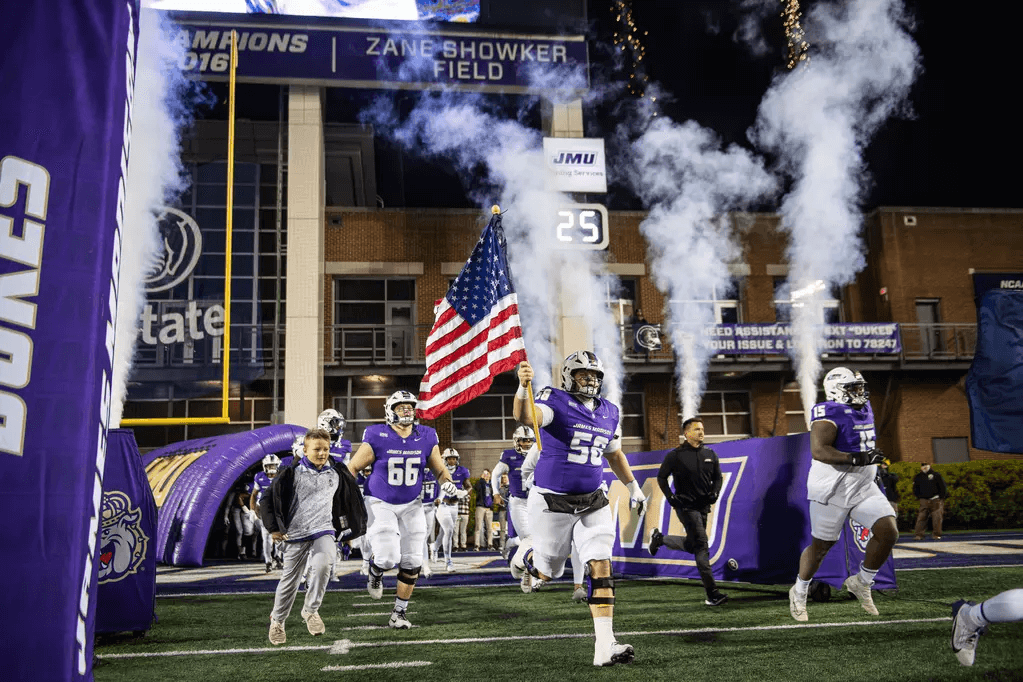
Transfer portal season is underway, although FCS and FBS players have yet to “officially” enter the portal. The portal window for official entrances begins on Jan. 2 and lasts two weeks. Starting on Friday, JMU can officially try to bring in FCS and FBS guys via the portal.
The Dukes have currently offered a host of standout D2 players. Several of them plan on visiting the Dukes in January, including these players:
JT Hooten — A standout LB from West Alabama (6’2 and 215 lbs) with three years of eligibility remaining, Hooten had 69 tackles in nine games in 2025. He has a ton of potential, and he’ll visit JMU this coming weekend, he tells us. He’s received a lot of G5 interest and would be a major addition.
Courage Osawe Jr. — A JUCO DT from Butte College, Osawe is just 19 years old with two years of eligibility left. He posted 20 tackles and two sacks in 2025. The 6’4 and 295-pound prospect also received notable offers from North Texas and UTSA. He’ll visit JMU on Jan. 9 and 10th, he tells us.
Trevell Jones — A LB from Barton College, the 6’3 and 220-pound prospect had 111 tackles in 2025. He’ll visit JMU on Jan. 9, he says. App State, Troy, and Delaware also offered Jones. He’s a stud with one year of eligibility left.
Parker Knutson — 247Sports is reporting that Knutson has visits set with both JMU and Minnesota. He’s a standout CB from Southwest Minnesota State, posting 13 interceptions over the past two seasons. The defensive back would be a massive pickup, although the Minnesota native will be hard to keep away from the Golden Gophers. He has two years of eligibility left.
Other notes
– We’ve heard from a few sources that JMU worked hard to retain current players. Those who plan to enter the portal could still potentially return as they test the portal waters and look for lucrative NIL deals. If the offers don’t meet their expectations, JMU’s increasing NIL budget could sway some guys to return.
– Florida has at least 20 guys expected to enter the portal, according to On3. Some of them saw minimal playing time for the Gators or they had inconsistent performance. It’s possible the Dukes bring in a few former Gators who enjoyed playing for Napier.
– The portal officially opens on Jan. 2 for FCS and FBS players. Players from those levels will start posting official offers, visits, and commitments soon after the portal opens.
– JMU needs help at every position, but quarterback has promise. Quarterbacks Camden Coleman and JC Evans have not announced plans to leave. Keeping those two would be significant.
– Possible returning players likely to step into larger roles in 2026 include Coleman, DB KJ Flowe, DB Chase Regan, LB Trashon Dye, WR Michael Scott, and OL Deacon Rawls, among others. The Dukes have significant returning talent that saw minimal action in 2025.
Photo courtesy of JMU Athletics Communications
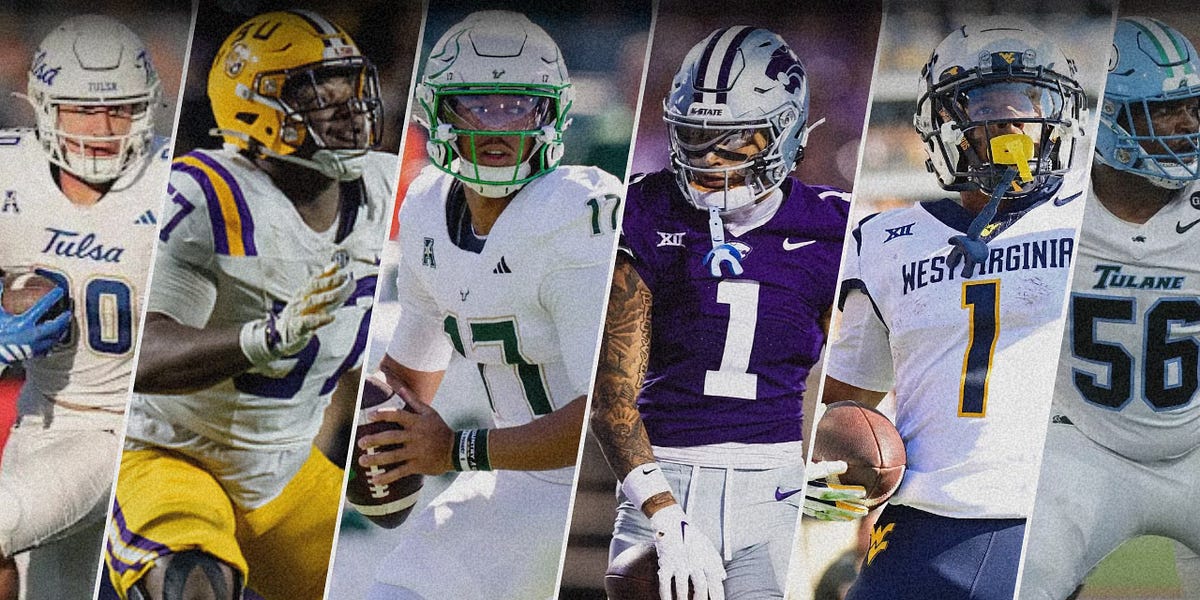
Today’s Observer newsletter is from a new contributor: The artist known as AUNerd, who some of you may remember from his blogging days at College & Magnolia. Nerd is excellent at breaking down Auburn football, especially recruiting, roster management and Xs and Os.
I (Justin) am in a group chat with Nerd, and I saw him starting to put together an incredibly detailed big board of potential targets for Auburn football in what will be a massive transfer portal window for new head coach Alex Golesh and his staff. I loved the idea so much that I wanted Nerd to publish it on The Observer.

Christmas has passed, but the real gift-opening season in college football is just getting started. Every year, the transfer portal seems to operate on a new set of timelines, and this cycle is no different.
This year features a single portal window, running from Friday, January 2 through Friday, January 16. Players on active College Football Playoff teams receive an additional five-day window (January 20–24), while players on teams that hire a new head coach after January 2 are granted a separate 15-day window.
Gone are the old fall and spring cycles. By the end of January, we’ll have a much clearer picture of what 2026 college football rosters will look like.
It’s also worth noting that players don’t have to commit during this window — it’s simply the only period in which they can enter the portal. That said, spring semester enrollment deadlines at most universities mean many of these decisions will happen quickly.
For Auburn, this portal cycle is critical.
When John Cohen hired Alex Golesh, he emphasized roster retention. Wanting to retain players and actually retaining them, however, are two very different things.
Auburn currently leads the SEC in players entering the portal, with more expected in the coming days. All told, the Tigers may need to add 35-40 new players over the next two weeks.
That number is staggering, but it’s also the reality of modern college football.
What follows is an attempt to identify potential offensive-side portal targets for Auburn. This list is built from a mix of reported intel from Auburn On3 and Auburn247 insiders, along with educated guesswork rooted in prior staff relationships. In today’s portal era, those connections matter more than ever. We saw that last season with Xavier Atkins, who followed a strong relationship with DJ Durkin to the Plains.
One quick note on methodology: you’ll see frequent references to Pro Football Focus (PFF) grades below. PFF is far from a perfect evaluation tool, but without the time — or expertise — to grind full tape on every portal entrant, it serves as a useful proxy for understanding where a player generally stacks up. This is especially true along the offensive line.
Finally, a disclaimer: parts of this list will almost certainly be wrong. A lot will change in a very short window. Think of this as a starting point, both for who Auburn might target and the types of players this staff is likely prioritizing at each position. Everything is subject to change the moment the portal officially opens.
Let’s dive in.


The NCAA transfer portal officially opens for all college football players on Friday. It will remain open for the two weeks that follow.
Thousands of players across all levels of college football have decided to enter the transfer portal in the weeks following the end of the regular season. Quarterbacks are receiving the most attention of the portal entries, but there are other significant names to watch in the portal.
One of those significant names in the portal is former Auburn wide receiver Cam Coleman. He enters the portal with two seasons of eligibility remaining at his second school.
Hugh Freeze recruited him out of high school as a five-star prospect from Theodore, Alabama. He currently ranks as the No. 1 overall prospect in the NCAA transfer portal.
Coleman appeared in 10 of Auburn’s 12 games in 2024. He grabbed 37 receptions for 598 yards and eight touchdowns in his freshman season.
The Tigers depended heavily on Coleman to facilitate their passing game in 2025. He was their leading receiver with 56 catches, 708 yards and five touchdown receptions.

The schools in the mix for Coleman are prepared to pay significant amounts of money. Pete Nakos of On3 reported that Coleman is expected to command around $2 million in NIL compensation from his next school.
For reference, many quarterbacks across college football are going for around $2 million out of the portal.
With Coleman held in such high regard upon entering the transfer portal, the number of possibilities for where he may land is vast.
Outside of the SEC, Oregon, Miami, and Texas Tech figure to be in the race for Coleman. All three programs have made significant acquisitions in the portal due to their high NIL budgets, particularly the former two at quarterback.
In the SEC, Texas A&M is a program to watch as a potential landing spot for Coleman. He was committed to the Aggies for five months before flipping to the Tigers on Early Signing Day.
An additional reason the Aggies may find themselves in the mix is their success with wide receivers acquired from the portal in the 2025 offseason. KC Concepcion and Mario Craver were acquired from NC State and Mississippi State and both proceeded finish with over 900 receiving yards for the Aggies in 2025.
Texas and Alabama have both been floated as additional candidates for Coleman in the SEC. Both programs have had a successful track record with wide receivers under their current head coaches.
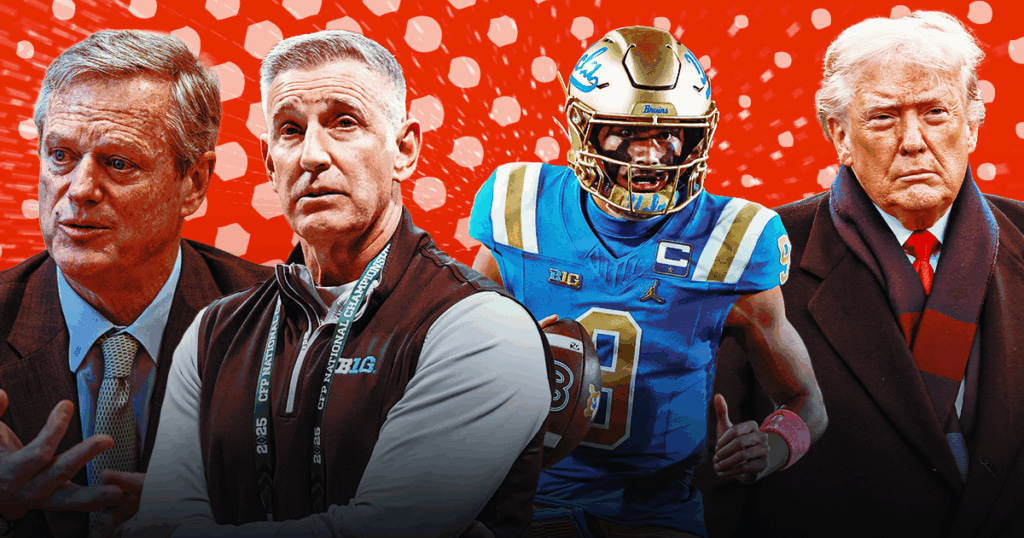
In 2025, college sports underwent another major transformation as revenue-sharing arrived. But that was just one of the top storylines in the NIL and sports business space.
The House v. NCAA settlement became the top story from this calendar year, but private equity is also sure to be part of the conversation into 2026. Those talks took place throughout 2025, with the Big Ten and Big 12 at the forefront.
Advertisement
SUBSCRIBE to the On3 NIL and Sports Business Newsletter
Of course, there was also a high-profile NIL dispute and a major step in the NCAA’s quest for federal legislation to help settle the landscape. Here is On3’s 2025 year in review, breaking down the Top 10 storylines in NIL and sports business.
House settlement ushers in rev-share era
After receiving preliminary approval in 2024, the quest for final approval of the House settlement ended in June 2025. That’s when Judge Claudia Wilken approved the landmark agreement, paving the way for schools to directly share up to $20.5 million with athletes. It also brought about the College Sports Commission as a new enforcement entity, led by CEO Bryan Seeley.
Advertisement
The CSC launched to enforce key terms of the 10-year settlement, including the NIL Go clearinghouse, which received a slew of criticism after its initial debut. NIL Go has cleared $87.5 million in deals as of the last update Nov. 6. However, the CSC’s participation agreements are also generating skepticism as 2025 winds down.
Private equity, capital talks swirl
As schools prepared for rev-share, the idea of private equity and private capital came about in college sports, with the Big Ten and Big 12 front-and-center. The Big Ten has explored a more than $2 billion private capital deal, but it generated pushback from some member schools.
Additionally, Ross Dellenger reported the Big 12 is nearing a private capital deal of its own which would infuse millions to member schools. A Big 12 school also announced a first-of-its-kind equity deal in December. Utah announced a deal with Otro Capital, which would infuse up to nine figures in cash and create a for-profit entity, Utah Brands and Entertainment.
Advertisement
Nico Iamaleava transfers amid NIL dispute
Late in the spring college football transfer portal window in 2025, On3’s Pete Nakos reported Tennessee and quarterback Nico Iamaleava were in active negotiations about a new deal. However, the situation took multiple turns, and Iamaleava later entered the portal.
Iamaleava missed a practice before the Vols’ spring game, Volquest reported, and Tennessee ultimately decided to move on from him. He later committed to UCLA, but the reaction poured in from across the college football world after the NIL dispute. At Big Ten Media Days, Iamaleava told reporters his departure was not due to NIL, but rather a desire to play closer to family.
College football coaches’ buyouts skyrocket
One of the biggest storylines of the 2025 college football season was the amount of money schools paid in coaching buyouts. Multiple high-profile firings led to more than $228 million in buyout money handed out, flying past the previous record of $132 set in 2023 – fueled by Jimbo Fisher’s $77 million figure.
Advertisement
LSU coach Brian Kelly received the highest buyout of the cycle at $53 million, and James Franklin’s $49 million buyout at Penn State dropped to $9 million after he took the Virginia Tech job and triggered his duty to mitigate clause. Kelly’s buyout is the second-largest in history behind Fisher’s, and Billy Napier received the third-largest from Florida at $21 million.
Wisconsin sues Miami after Xavier Lucas transfer
One of the biggest transfer stories of 2025 didn’t involve the portal at all. Wisconsin DB Xavier Lucas withdrew from the university and enrolled at Miami. The University of Wisconsin then sued the University of Miami and its NIL collective for alleged tortious interference.
The suit marked an unprecedented moment in college athletics as one university sued another over financial damages. Miami later filed a motion to dismiss the suit, On3’s Pete Nakos and Brett McMurphy reported, which is still being worked through.
Advertisement
ACC settles lawsuit with Florida State, Clemson
One of the ACC’s top priorities in 2025 was to settle lawsuits brought by Florida State and Clemson, challenging the conference’s grant of rights. Both boards approved settlement terms in March, ending the legal battles on all fronts.
As part of the agreement, the ACC will have a new exit fee structure and revenue distribution model. It will now be based on a five-year rolling average of TV ratings, with a majority share of the base media rights placed into a viewership pool for distribution.
Former NBA Draftee James Nnaji deemed eligible
Amid multiple eligibility questions the NCAA faced in 2025, one of the biggest decisions came in December. James Nnaji, a former NBA Draft pick, signed with Baylor after receiving four years of eligibility. That decision brought plenty of reaction across college basketball.
Advertisement
Though the Detroit Pistons drafted Nnaji – and his draft rights were part of the Karl-Anthony Towns trade to the New York Knicks – he never played in an NBA or NBA G-League game. Instead, he played professionally in Europe. The NCAA granted Nnaji four years of immediate eligibility, meaning he can join Baylor for the rest of the 2025-26 season.
NCAA’s quest for federal legislation stalls
Since the NIL era began, the NCAA has been searching for federal legislation to help settle the landscape. Those efforts ramped up in 2025, and the SCORE Act was on track for a vote on the floor of the U.S. House of Representatives at one point. However, the vote was removed from the schedule that day, and Senate Democrats criticized the legislation.
The SCORE Act was one of a handful of college sports-focused bills announced. The COACH Act was introduced in October to cap college football coaches’ salaries and buyouts, and the “Restore College Sports Act” was introduced in March. That bill would create an entity to replace the NCAA.
Advertisement
President Donald Trump wants to get involved
Amid the NCAA’s pursuit of a federal bill, President Donald J. Trump also made it clear he was willing to step in to help settle things down. He took multiple steps toward that goal, notably signing an executive order in July to crack down on pay-for-play, third-party NIL deals.
Trump was also putting together a presidential commission with Texas Tech booster Cody Campbell and former Alabama head coach Nick Saban as co-chairs. Plans for the commission were paused, but Trump remained vocal about NIL in college athletics.
College football TV ratings surge
Throughout the 2025 college football season, TV ratings surged. Regular-season viewership increased by 9% from a year ago, and ABC emerged as the biggest winner.
Advertisement
ABC aired 17 of the Top 20 most-watched games of the year, led by Texas vs. Texas A&M in their Week 14 rivalry game. FOX, however, had the top two games of the season: Ohio State’s Week 14 win over Michigan (18.4 million) and the Buckeyes’ Week 1 victory over Texas (16.6 million) led the way.
College athletics saw plenty of changes throughout 2025 as the NIL and rev-share eras are officially underway. Heading into 2026, though, there are still plenty more storylines to track in the ever-changing space.

Getty
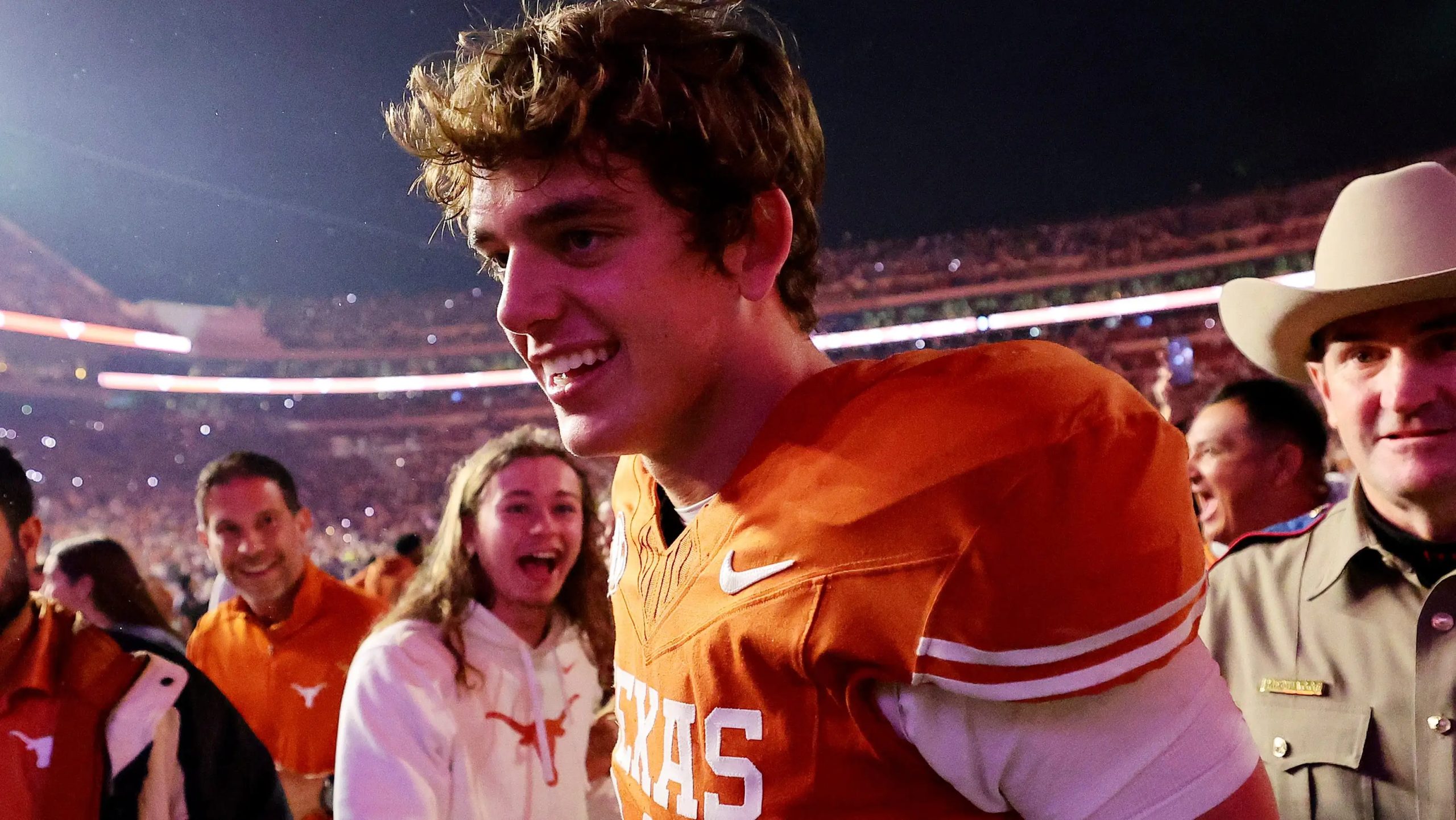
Texas quarterback Arch Manning is not declaring for the 2026 NFL draft.
After a college football offseason full of hype, it has been a challenging year for Texas quarterback Arch Manning, complicating his potential NFL draft future. Additionally, Manning’s NIL projections took a hit amid his inconsistent production. The good news for Manning is that the star bounced back after a slow start to the season.
Manning will get another college football season to bolster his NFL draft stock. The Longhorns signal-caller made it clear that he plans to return to Texas for 2026 instead of declaring for the NFL draft.
Manning was once projected to be the No. 1 pick in the 2026 NFL draft, but the signal-caller could have found it challenging to get selected in the first round if he turned pro.
“I felt like I developed a lot this year, especially towards the back half, and I want to keep it going,” Manning told reporters on December 28, 2025, per Inside Texas’ Evan Vieth.
“There’s no reason to leave. I feel like I got a lot more football left to play, and excited to still be a part of this team.”
Here’s what you need to know about Manning’s NFL draft stock and NIL deals.
Texas QB Arch Manning’s NIL Value Dropped From $6.8 Million to $5.3 Million
Manning’s NIL valuation has also taken a hit with the quarterback’s projected earnings dropping $1.5 million since the beginning of the college football season. The Texas star entered the season with an NIL projection of $6.8 million, per On3.
Manning’s latest NIL projections are $5.3 million, but it is safe to say that the quarterback still remains one of the most marketable college football players. These projections still leave Manning with the highest NIL value of any college athlete.
It is worth noting that NIL deals are rarely made public. While these projections may fluctuate week-to-week based on a player’s performance, this is not typically how NIL contracts work. Manning likely signed NIL deals for a specific amount which would not rise or fall after one week’s performance.
The star’s NIL deals include Uber, Warby Parker, Vuori, Raising Cane’s, Red Bull and EA Sports among others.
Arch Manning Is Projected To Be a Top Prospect in the 2027 NFL Draft
Not everyone is sold on the idea that Manning’s NFL draft stock has taken a massive hit. One NFL scout told Fox Sports that Manning would have a chance to be the No. 1 pick if the quarterback entered the 2026 NFL draft.
“He might still go No. 1,” one NFL scout told Fox Sports’ Ralph Vacchiano for a December 10, feature story titled, “NFL Confidential: Scouts Say Arch Manning Would Be No. 1 QB in 2026 Draft.” “All the tools are there, even if the performance was erratic. He might need a little time to grow into himself as a player. But he’s got the size (6-foot-4, 219 pounds), the arm, the intangibles, and the kid had some great games.
“I think I’d still feel better about his future than anyone else in this year’s class.”
With the 2026 NFL draft still taking shape, it is even more challenging to project the top prospects for 2027. Walter Football’s Charlie Campbell released an early look at a mock for the 2027 NFL draft.
The mock draft projects the Cleveland Browns take Manning with the No. 4 overall pick in 2027. Manning still has plenty of time to improve his draft stock.
Jonathan Adams is a veteran sports contributor covering the NFL, NBA and golf for Heavy.com. His work has been prominently featured on NFL.com, Yahoo Sports, Pro Football Talk, CBS Sports, Bleacher Report and Sports Illustrated. More about Jonathan Adams
More Heavy on Texas
Loading more stories

The college football offseason has evolved into a high-stakes marketplace where the most valuable commodity is a proven quarterback. When a top-tier signal-caller becomes available, the ripple effects can alter the trajectory of multiple powerhouse programs instantly.
A new name currently sits atop the rankings for available passers, and his decision will likely dominate the news cycle in the coming weeks as teams scramble to secure their future under center.
This prospect brings a proven track record and extensive experience, making him an immediate upgrade for any roster in the country. Recruiting analysts have already identified two major programs as the primary suitors for his services.
The connection to one school involves a potential homecoming for the athlete, while the other offers a chance to compete in the nation’s toughest conference under an offensive-minded head coach.
However, the timing of this move presents a unique challenge for both the athlete and the coaching staffs involved in the pursuit. Roster uncertainty at the potential destinations could force a waiting game that neither side truly wants to navigate. As the postseason approaches, the first major domino needs to fall before the rest of the transfer market can truly take shape.
Sam Leavitt reportedly linked to Oregon Ducks and LSU Tigers
Arizona State Sun Devils quarterback Sam Leavitt is the player commanding all the attention. According to On3 analyst J.D. PicKell, the veteran passer is heavily focusing on the Oregon Ducks and LSU Tigers. PicKell identified the two programs as the “schools to watch” as the process unfolds.
The connection to Eugene makes sense given Leavitt’s background. He is a native of the state, and a return to the Pacific Northwest would allow him to be “close to Mom’s home cooking,” according to PicKell. There is a complication regarding the current roster. Oregon Ducks quarterback Dante Moore has not yet announced his plans for next season.
“Sam Leavitt is not going to go wait a year behind Dante Moore to play college football,” PicKell said.

Uncertainty also surrounds the coaching staff. PicKell noted that Oregon Ducks offensive coordinator Will Stein is set to become the head coach of the Kentucky Wildcats. Despite the potential turnover, Oregon Ducks head coach Dan Lanning has earned trust through his previous hiring decisions.
The interest in the LSU Tigers centers on professional development. PicKell highlighted the presence of new head coach Lane Kiffin.
PicKell described Kiffin as a “portal quarterback whisperer” based on his previous work with Trinidad Chambliss and Jaxson Dart. The opportunity to play in the SEC allows a quarterback to put game film up against NFL-caliber talent. This level of competition serves as a crucial filter for players eyeing the next level.

The timeline for a decision likely hinges on the upcoming schedule. Leavitt may have to wait for the conclusion of the postseason to gauge the depth chart at his preferred schools.
“You’re kind of sitting there twiddling your thumbs if you’re Sam Leavitt,” PicKell said regarding the wait for Moore’s decision.
Leavitt enters the market after a foot injury cut his season short. He threw for 1,628 yards and 10 touchdowns in seven games. Arizona State Sun Devils head coach Kenny Dillingham addressed the departure on social media.
“Going to succeed wherever he goes,” Dillingham wrote.
Read more on College Football HQ

Nebraska volleyball recruits to compete in 2026 Under Armour All-America Match

MHS names new track and softball head coaches

‘I’ve Got to Try’: Rick Hendrick Tried to Recruit Dale Earnhardt In the Initial Days of Hendrick Motorsports

NASCAR legend and Biffle’s friend shares theory on crash – Motorsport – Sports

No. 1 Long Beach State Men’s Volleyball Wins NCAA National Championship – The562.org

USAC MRA Sprint Cars Set for Inaugural Season in 2026 – Speedway Digest

Fall 2025: Varsity volleyball – Grosse Pointe News

Kyle Larson gives verdict on son and daughter’s racing abilities – Motorsport – Sports

JMU Football Transfer Portal Intel (Dec. 31 update)

Aneta Kucerova Represents Asheville at International Road Race

UNA announces National Girls and Women in Sports Day Clinic for January 31

Monster Trucks are Heading Back To Bossier!

Former Obama estate was priciest home sold in Mass. in 2025

Plattsburgh YMCA highlights free youth sports program

IHRA announces purchase of Rockingham Speedway

SoundGear Named Entitlement Sponsor of Spears CARS Tour Southwest Opener

Donny Schatz finds new home for 2026, inks full-time deal with CJB Motorsports – InForum

Black Bear Revises Recording Policies After Rulebook Language Surfaces via Lever

Men’s and Women’s Track and Field Release 2026 Indoor Schedule with Opener Slated for December 6 at Home

How Donald Trump became FIFA’s ‘soccer president’ long before World Cup draw

David Blitzer, Harris Blitzer Sports & Entertainment

DeSantis Talks College Football, Calls for Reforms to NIL and Transfer Portal · The Floridian
Elliot and Thuotte Highlight Men’s Indoor Track and Field Season Opener

JR Motorsports Confirms Death Of NASCAR Veteran Michael Annett At Age 39

Rick Ware Racing switching to Chevrolet for 2026

#11 Volleyball Practices, Then Meets Media Prior to #2 Kentucky Match

23 عاما من الفضائح السياسية والجنسية منذ انقلاب حمد بن خليفة.. استغلال الفتيات الصغيرات في الدعارة.. ضبط ابنة رئيس وزراء قطر خلال ممارستها لجنس الجماعي.. ملامح الحكم تتخبط بين المنفي وتدخلات النساء

Colleges ponying up in support of football coaches, programs

Nascar legal saga ends as 23XI, Front Row secure settlement
West Fargo volleyball coach Kelsey Titus resigns after four seasons – InForum





-
 Sports3 weeks ago
#11 Volleyball Practices, Then Meets Media Prior to #2 Kentucky Match
-
 Motorsports3 weeks ago
Nascar legal saga ends as 23XI, Front Row secure settlement
-

 Motorsports3 weeks ago
Sunoco to sponsor No. 8 Ganassi Honda IndyCar in multi-year deal
-
 Sports3 weeks ago
Maine wraps up Fall Semester with a win in Black Bear Invitational
-

 Motorsports2 weeks ago
Ross Brawn to receive Autosport Gold Medal Award at 2026 Autosport Awards, Honouring a Lifetime Shaping Modern F1
-
 Rec Sports3 weeks ago
WNBA’s Caitlin Clark, Angel Reese and Paige Bueckers in NC, making debut for national team at USA camp at Duke
-
Motorsports3 weeks ago
NASCAR, 23XI Racing, Front Row Motorsports announce settlement of US monopoly suit | MLex
-

 NIL3 weeks ago
Nike Signs 10 LSU Athletes to NIL deals
-

 Motorsports3 weeks ago
Rick Hendrick comments after the NASCAR lawsuit settlement
-
Sports3 weeks ago
Wisconsin defeats Stanford in NCAA regional semifinals: Updates, recap