
Sports
Cade Horton's Spin is Like a Magnet, But His Movement Covers the Whole Compass



Cubs Video
The moment when Cade Horton‘s potential first jumped up a level came last year with Triple-A Iowa, when he first began to find the changeup he now sports in the majors. Even by his own reckoning, though, the pivotal moment for him came when he found that he could trust that pitch against big-league bats, last month in Miami.
“I thought it was in a good place in Triple A, and then got here, and it was really the Miami start where I got a good feel for it,” Horton said earlier this month, during the Cubs’ trip to Minnesota. “From there, it’s just kind of taken off, to where I’m able to repeat that pitch. It’s been huge for me.”
Since then, that pitch has been a staple in Horton’s arsenal to lefties, and it hasn’t stopped dominating opposing batters. On the contrary: an eye-popping 59.6% of swings at the pitch have come up empty. The changeup was virtually non-existent when the Cubs drafted Horton in the first round of the 2022 MLB Draft, but now, it’s a vital weapon. Did that change how he has to think about himself as a pitcher, and how he operates?
“Not necessarily. I think it’s more, I just use the changeup more to lefties,” he said. Indeed, 112 of the 116 he’s thrown in the majors have been to left-handed batters; he’s not (yet) the type of hurler who will go to the changeup right-on-right. “So that’s been the big key, is being able to have that pitch that runs away from them. That opens up fastballs in and fastballs away. The slider’s more for righties, and that’s why I’ve been working on the sinker and trying to set up the pitch away from them.”
In other words, Horton prefers to use his fledgling sinker to attack righties inside, setting up the slider. The changeup, coming from his high three-quarters slot and with his natural tendency to supinate (the direction of forearm movement that better facilitates breaking balls, rather than arm-side movement), has more run than tumble, which makes it the type of change that’s harder to throw with conviction to same-handed batters.

As Horton alluded to, his slider (Statcast, as shown above, labels most of those as sweepers, but the ones labeled sweeper and slider are both what Horton calls his slider) is the go-to pitch against righties. However, he’s not kidding around when it comes to making the sinker a meaningful part of his arsenal to them. In two starts this month, the sinker has emerged as a key third pitch to righties, with his fastball becoming less predominant.

He’s had to do that, of course, because his fastball isn’t a traditional four-seamer at all. It’s much closer to being a power cutter—and indeed, some classification systems call it one. Horton didn’t set out to create this type of heater, but now that he has one, he understands the value of steering the sinker in on righties to set up both the fastball and the slider away.
“I think it just naturally happened,” Horton said of his change in fastball shape, which happened after the Cubs selected and signed him but isn’t the product of conscious pitch design. “Just getting around the ball more and creating that cut action—which I don’t think is a bad thing. I think it plays against lefties, and then it runs off the barrel to righties.”
The fascinating thing is that, now that he has the changeup (and his curveball, which stands in for the slider against lefties), he offers three different looks to hitters of each type—but they all come from one basic spin axis. Horton’s changeup, sinker and slider each rely on considerable seam-shifted wake. They start on similar spin-based movement paths as his four-seamer and curve, but are deflected based on the orientation of the seams and the action of the air on the ball.

The chart above shows, on the left, initial spin direction, meaning what the pitcher actually imparts on the ball. Bars at the top of the clock graphic indicate the frequency of pitches thrown with backspin, which will “rise” (drop less than gravity would normally dictate) en route to the plate. Bars at the bottom show the frequency of pitches with topspin, like a true overhand curveball. Bars on the nine o’clock side show the frequency of pitches whose spin would push them toward the first-base side of the plate, away from a righty batter; bars on the three o’clock side show the frequency of those with spin pushing them toward a righty batter.
On the right, instead of spin direction, we see the actual movement direction of pitches. The difference between the two is explained by seam effects. Notice how, on the left, Horton’s pitches cluster mostly around the 12:30 and 7:30 parts of the clock. That means that it’s relatively hard for hitters to distinguish even between, say, his four-seamer and his slider, because they enjoy “spin mirroring”—the ball is spinning along very close to the same axis, so even though the directions of spin on the two offerings are opposites, it’s hard to see the difference. A change in spin axis can make a visual difference for a batter, but telling which direction a ball is spinning along a similar axis is very hard.
Compounding that difficulty, though, is that Horton also has pitches that diverge from each other in ways spin can’t explain. Thus, even for a lefty batter (who rarely sees the slider and only needs to worry about the curve), there are mutliple layers of trouble. He could be throwing the fastball or the curve, and spin mirroring would make it hard to tell which. He could also be throwing the changeup, and because it has a similar spin axis to the fastball (and a near-identical arm angle; Horton has worked hard to match release points on those two offerings) and the two pitches veer opposite directions due to release angle and seam effects, they end up in very different spots. That’s how you miss bats with your changeup almost 60% of the time, without elite movement on the pitch.
The slider is an especially nasty version of the same problem, because for a righty, it’s like dealing with the curveball problem and the changeup problem for lefties, rolled into one pitch. It’s shielded by spin mirroring, especially now that he has the sinker working, but it also has the seam-effect sweep that mirrors the changeup’s run. Unlike the changeup or the fastball shape, the slider has been like this since Horton was an amateur.
“It’s kind of always been that way,” he said. “I don’t think too much about metrics. I think more about executing a pitch. I know where my slider works, and it’s down and away, so it’s just about executing to that spot.”
That’s really what it comes down to, for him. He’s only gotten hurt in the majors when he’s made mistakes over the heart of the plate. With that blooming movement spread from such a tricky set of spin orientations, he’s one of the game’s more deceptive hurlers, and he also happens to throw 96-98 with life on the fastball.
“It’s just all about executing: Where are my misses? The hits I’m giving up, where are the fastballs?” he said. To him, the next step is simply to eliminate those, and to continue honing his feel for putting batters away with the heater. “Just execution. Two-strike execution is big, maybe getting to the top of the zone, making quality pitches.”
Over time, if he can sharpen his command a bit, Horton could jump another level and become an ace by learning to use all of his pitches to both left- and right-handed batters in certain situations. For now, though, if he can avoid the worst of the missed locations he’s had over his first two and a half months in the majors, he can be a solid mid-rotation starter on a playoff-bound Cubs team. For a rookie, that’s plenty.

Sports
Cooke, King, Relay Squad Set School Records, Boucher Wins Event, Multiple Eagles Place in Top Five School Marks
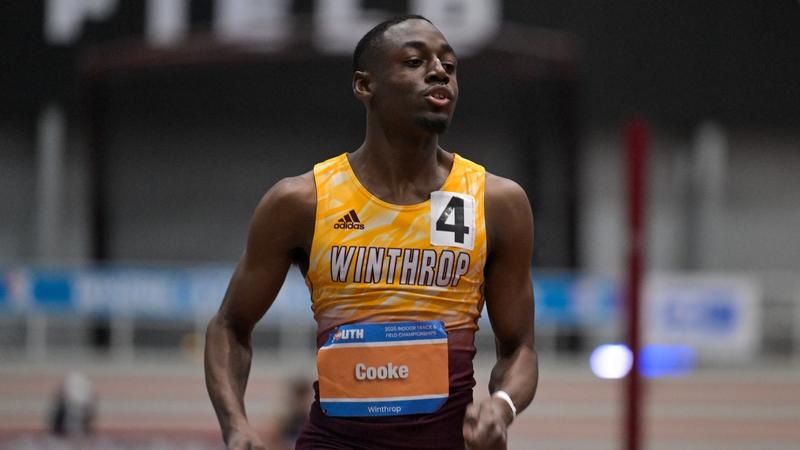
WINSTON-SALEM, N.C. — The Eagles opened the indoor season in emphatic fashion as three school records and seven all-time top five marks powered Winthrop at Sunday’s JDL Early Bird Invitational.
Meet Information
Dec. 7 | JDL Fast Track | Final Results
IN THE FIELD
- Freshman Carina Fiorucci delivered one of the day’s highlights with a 3.30m clearance in the women’s pole vault, moving her to fourth all-time in program history.
- Senior Faith Wood added another top performance in the women’s triple jump, finishing with an 11.62m mark that ranks fifth all-time for the Eagles.
- On the men’s side, senior Timothy Speaks broke into the Winthrop top five in the weight throw, placing fifth overall with a 16.24m toss that now stands fifth all-time.
ON THE TRACK
- The men ignited the afternoon with a sweep of school records on the track. Junior Shane King opened the run with a 21.85 performance in the 200m, securing the win and breaking the long-standing indoor school record of 21.89 set in 2007. Teammate Michael Boucher also climbed the charts, posting a 22.09 claiming the #4 all-time spot.
- The momentum continued in the 600m, where junior Kendale Cooke stormed to a 1:23.11 finish to take the event to win and shatter the program record. Juniors Jurnii Lucas (1:24.01) and Darrell Price (1:24.58) followed close behind, slotting into #2 and #3 all-time, respectively.
- Winthrop closed the meet by rewriting another record, as Price, King, Lucas, and Cooke combined to win the men’s 4x400m relay in 3:18.06, breaking the previous school mark.
- On the women’s side, junior Jordan Bailem turned in a strong showing in the 60m hurdles, running 8.85 to earn fourth all-time in program history.
NEXT UP
The Eagles will return to the track in the new year for the Gamecock Opener on Jan. 10.
FOLLOW US ON SOCIAL MEDIA
To keep up with the latest news on the Winthrop track & field programs, follow the Eagles on Twitter | Instagram | Facebook
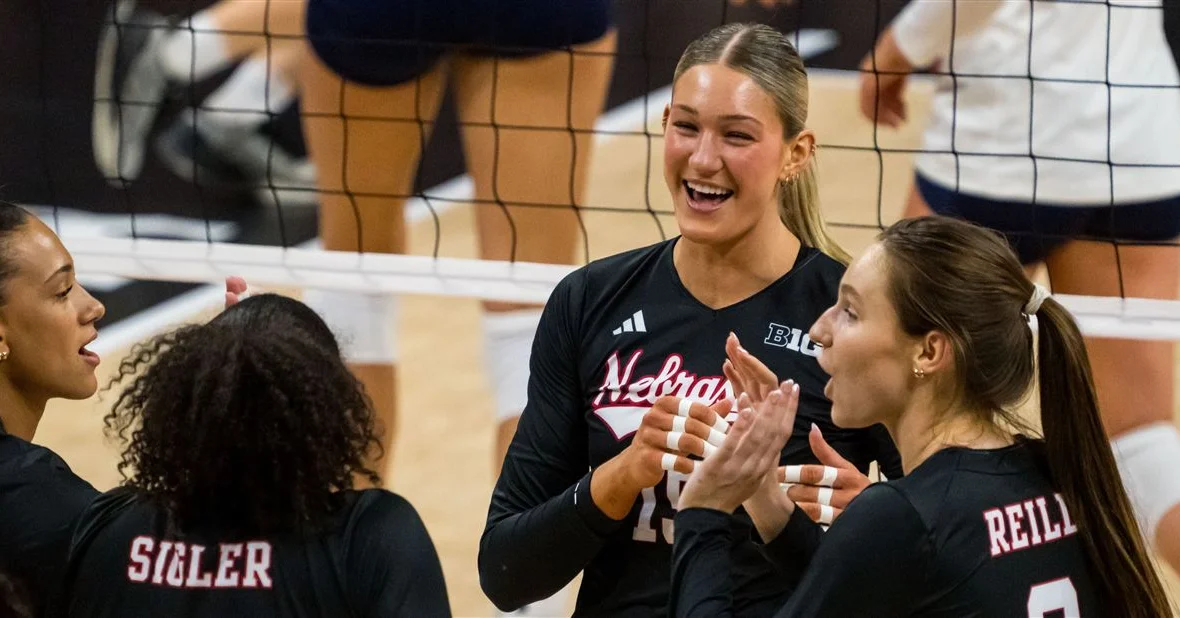
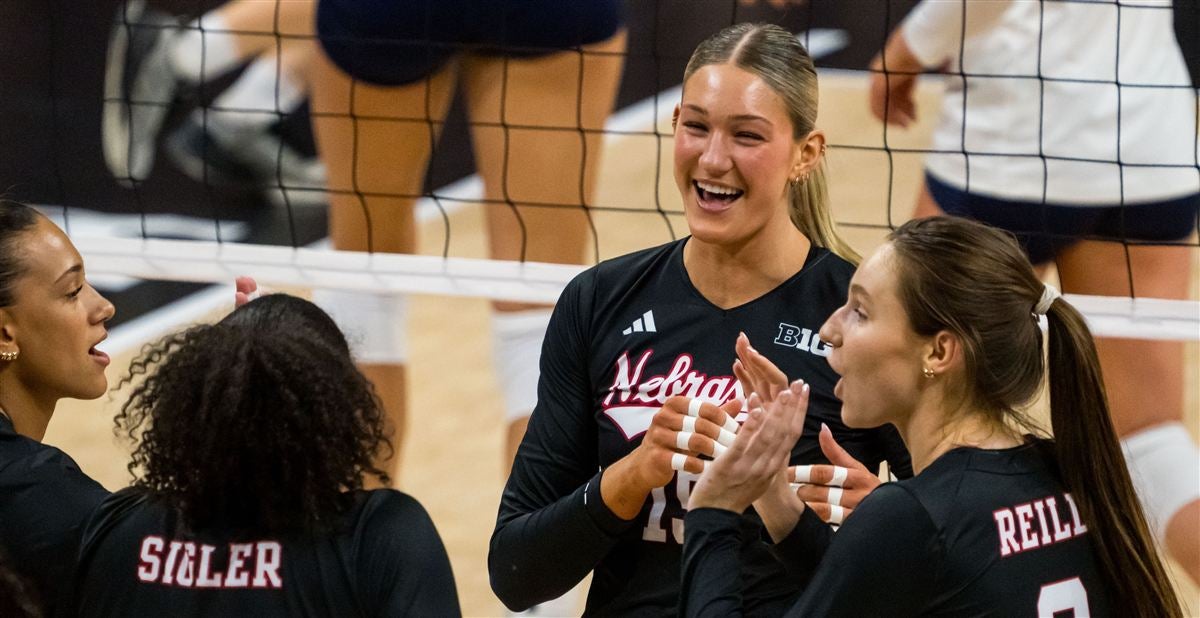
The No. 1 Nebraska volleyball team rolled into the next round of the NCAA Tournament on Saturday night, dispatching K-State 25-17, 25-21, 25-16 to advance to a Sweet 16 matchup against Kansas.
All-American Andi Jackson led Nebraska with 10 kills, hitting .533 in the match, while Harper Murray also added 10 kills and the Huskers hit .253 as a team in the match.
Nebraska held Kansas State to a .118 attack percentage, the seventh straight match the Huskers out-hit their opponent by at least .100. Nebraska had a 43-27 advantage in kills and a 48-32 edge in digs, while the Wildcats out-blocked the Huskers, 8-5.
Jackson hit .533 in the match, producing her 10 kills on just 15 swings. Taylor Landfair (8 kills), Virginia Adriano (7) and Rebekah Allick (6) all had more than five kills, as Bergen Reilly dished out 34 assists. Defensively, Olivia Mauch had 13 digs and Laney Choboy added 12 digs.
K-State made Nebraska work in both sets one and two of Saturday night’s match, but in set one, the Huskers had a pair of 5-0 runs that kept them in front. Nebraska hit .457 as a team in set one and had 16 kills.
In set two, Nebraska spotted K-State a 4-1 lead, before taking a 6-5 lead. K-State eventually cut Nebraska’s lead to 22-21 with a 4-0 run before Allie Sczech posted a key sideout kill, and K-State hit wide for set point. Murray and Jackson ended the set with a block.
An 8-1 in set three helped Nebraska take a decisive 16-10 lead. A 5-0 run late in the set helped the Huskers roll to a sweep and punch their ticket to the regional. Nebraska has won 28 consecutive home matches in the NCAA Tournament, a school record.
The Huskers advance to play the No. 16 Jayhawks next weekend in a regional semifinal at 8:30 p.m. (CT). Also set to come to Lincoln is Louisville, the former team of Nebraska head coach Dani Busboom Kelly, who outlasted Marquette on Saturday in five sets to advance in the tournament. No. 6 Texas A&M and No. 9 Louisville will play at 6 p.m. (CT) on Friday. The regional final will be played on Sunday with the time to be determined on Friday night.
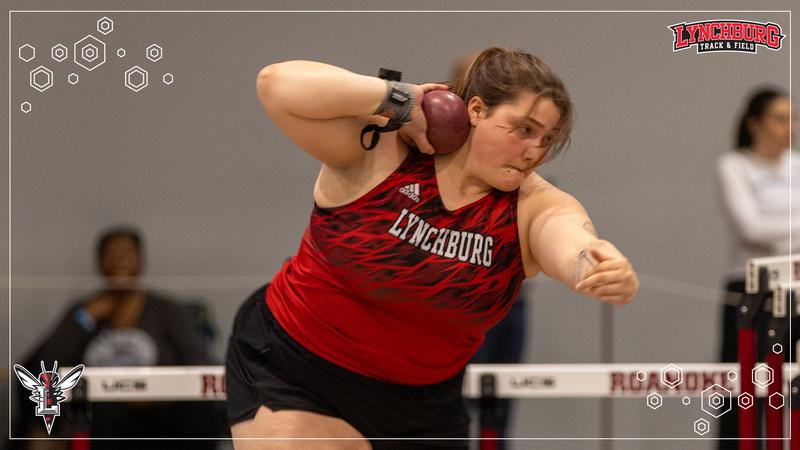
Winchester, Va. – The Lynchburg indoor men’s and women’s track & field team’s young talent impressed at the Shenandoah Holiday Kickoff as 11 newcomers posted top-10 results in the team’s final competition before winter break.
While first-year athletes delivered dominant performances on the sprints side, junior thrower Kenzie Swicegood bolstered her resume with two first-place finishes in throwing events. In the women’s weight throw, Swicegood posted a 55′ 1″ (16.79m) personal-best performance to dominate the field and come within two feet of Logan Babbs’ 56′ 11″ (17.35m) school record.
Swicegood also secured the victory in the women’s shot put with a 38′ 3¼” (11.67m) throw for first place.
In each throwing event, five Hornets submitted top-eight results.. In the women’s weight throw, Kya Rucker claimed third place with a 45′ 10¾” (13.99m) performance, while Dajanaeia Johnson clinched third in the women’s shot put by setting a 33′ 10½” (10.33m) mark.
Haylee Smith, Alyssa McGregor and Kaylee Maxfield also emerged into scoring positions during their Hornet debuts for the throws team.
Lynchburg also placed a pair of sprinters in the 60m dash finals following stellar displays in prelims.
Michael Coley advanced with a 7.08m result in his opening race, clocking 7.07 for fifth in the 60m dash final. First-year Brianna Taylor registered an 8.07 women’s 60m dash prelim result to qualify for finals, crossing the line in 8.06 for fourth place in her second race.
Coley also competed in the men’s long jump, leaping 21′ 5″ (6.53m) for fourth place in the field. Taylor doubled with the 200m dash, finishing fifth with a 27.41 showing.
In the 60m hurdles, Ardarian Diamond posted 8.74 in his Hornets debut to finish second overall. First-year Audrey Lacombe finished seventh on the women’s side, clocking 10.49 in prelims and 10.73 in finals. In the women’s triple jump, Lacombe occupied fourth place with a leap of 33′ 2¾” (10.13m).
Ayeshia Watson headlined an impressive showing from Lynchburg’s jumpers, placing second in the women’s triple jump with a 35′ 7¾” (10.87m) performance. In the long jump, Watson posted 15′ 1″ (4.60m) for sixth in the field. In high jump, Catalina Puglisi opened her sophomore campaign with a second-place finish, clearing the 4′ 7¾” (1.42m) bar.
Chris Watkins earned two top-10 finishes for the men’s team, posting 6′ 0″ (1.83m) in the men’s high jump for fourth place and 18′ 6¼” (5.65m) in the men’s long jump for 10th. Sean O’Loughlin cleared 12′ 5½” (3.80m) in the men’s pole vault for second.
To round out Lynchburg’s top-five performers, Noah Glenn secured fifth in the men’s weight throw with a 41′ 5½” (12.64m) toss for fourth, and the men’s 4x400m relay team crossed the line in 3:38.08 for fifth.
The Hornets concluded action for the 2025 calendar year and will return to action on Friday, Jan. 9 when they host the Burg Open at the Liberty Indoor Track Complex.
For full results from Sunday’s competition, click here.
Visit Lynchburg athletics’ home online, LynchburgSports.com, anytime for up-to-the-minute news on all Hornets sports and coverage from the Lynchburg Hornets Sports Network.
Sign up here to receive Lynchburg Sports news in your email inbox.
Give Lynchburg Sports a like on Facebook, and follow Lynchburg athletics on Instagram, Threads, and X.
–LYN–
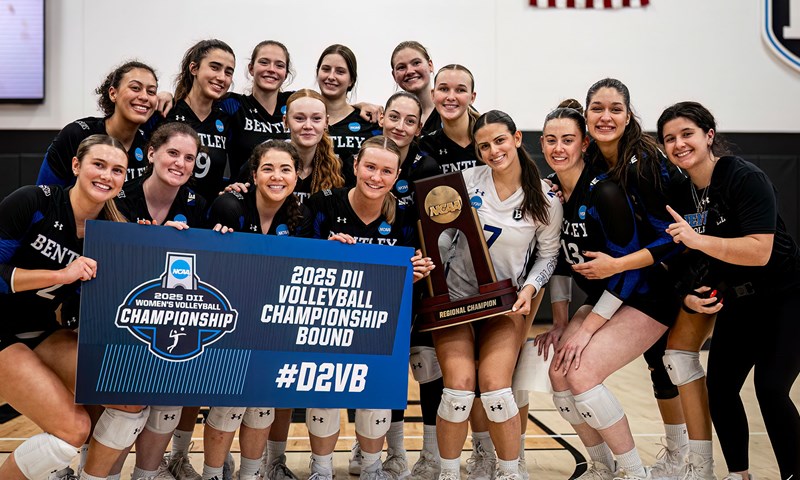
WALTHAM, Mass. – Call it a three-peat! The Bentley volleyball team swept Mercy (25-20, 25-20, 25-12) in the NCAA DII East Regional Championship match Saturday night, as the Falcons captured their third consecutive NCAA DII East Regional title. Prior to 2023, the Bentley program had never won the regional championship.
Bentley makes a return to Sioux Falls, South Dakota this coming week as one of the eight remaining teams in the NCAA Championship. It is the same site as the 2024 NCAA Championship in which the Falcons reached the final four.
Bentley attacked at a .324 clip in the Regional Championship against Mercy, marking the team’s best hitting percentage since a late October match against Southern New Hampshire.
Sophia Poehlein had a match-high 14 kills, while Elena Coban and Elizabeth Blinn both added nine. Blinn and Tory Vitko both finished with four blocks, and Erica Borzone joined the defensive efforts by leading all players in digs with 12.
Vitko had 38 assists against Mercy, bringing her total to 112 assists through 11 sets in the NCAA DII East Region Tournament.
Bentley is the first program from the region to win three consecutive regional titles since Dowling did it 2005-07.
More details will follow in the coming days about Bentley’s 2025 NCAA Championship run.
Recap provided by Bentley athletics.
ABOUT THE NE10
The NE10 is an association of 10 diverse institutions serving student-athletes across 24 NCAA Division II sports. Together we build brilliant futures by embracing the journey of every student-athlete.
Each year, 4,500 of those student-athletes compete in conference championships in 24 sports, making the NE10 the largest DII conference in the country in terms of sport sponsorship. Leading the way in the classroom, on the field and within the community, the NE10 is proud of its comprehensive program and the experience it provides student-athletes.
Fans can subscribe via this link to follow NE10 NOW on FloSports this season. The partnership between the NE10 and FloSports works to provide funds back to the athletic departments of the Northeast-10 Conference in support of student-athletes while promoting the league on a national platform.
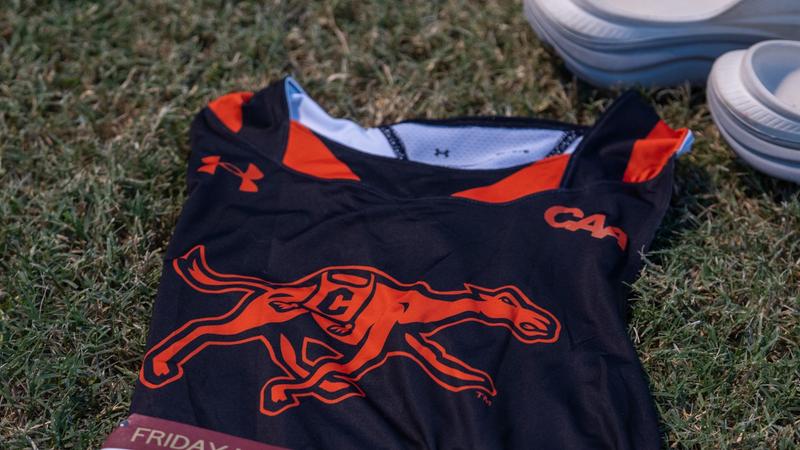
WINSTON-SALEM, N.C. — Campbell track & field competed at the Sharon Colyear-Danville Season Opener and the JDL Early Bird Invitational to open its 2026 indoor campaign.
ON THE TRACK
Emily Pierce got things started as the lone Camel to travel to Boston to the Sharon Colyear-Danville Season Opener. Pierce moved into fourth all-time in the 3000m with a new personal record time of 9:53.32.
In her Campbell debut, Ty’Nasia Emory took first place in the 60m with a time of 7.58 to move into seventh all-time in program history. Amanda Ballard took third in the event with a personal best time of 7.63. Emory also took first in the 200m with a time of 25.14 and in front of Janelle Calderia who finished with a time of 25.98 to take 14th place.
Daniel Griffith took fourth place in the 400m with a time of 50.21 followed by Andrew Goetz who finished 12th with a time of 51.83.
Timayah Brown finished 16th in the 400m with a time of 1:04.72 and 18th in the 200m with a time of 26.13 to open her season.
Sebastian Calderon finished 14th in the 200m with a time of 22.69 and Seth Nelson finished in 22nd with a time of 23.00.
Timothy Salicco took eighth in the 1000m posting a 2:43.25 and setting a new personal record.
IN THE FIELD
Jacob Carroll secured sixth place in the pole vault with a mark of 4.20m just in front of 12th place finisher Aeden Sampey with a personal record mark 3.75.
Ballard finished 17th in the long jump with a mark of 5.11m. Zoie Hembree finished 12th in the pole vault with a mark of 3.30 and Isabella Bernard finished 15th with a 3.15m mark.
UP NEXT
The Camels return to the track on Jan. 17 at the Mondo College Invitational in Winston-Salem.
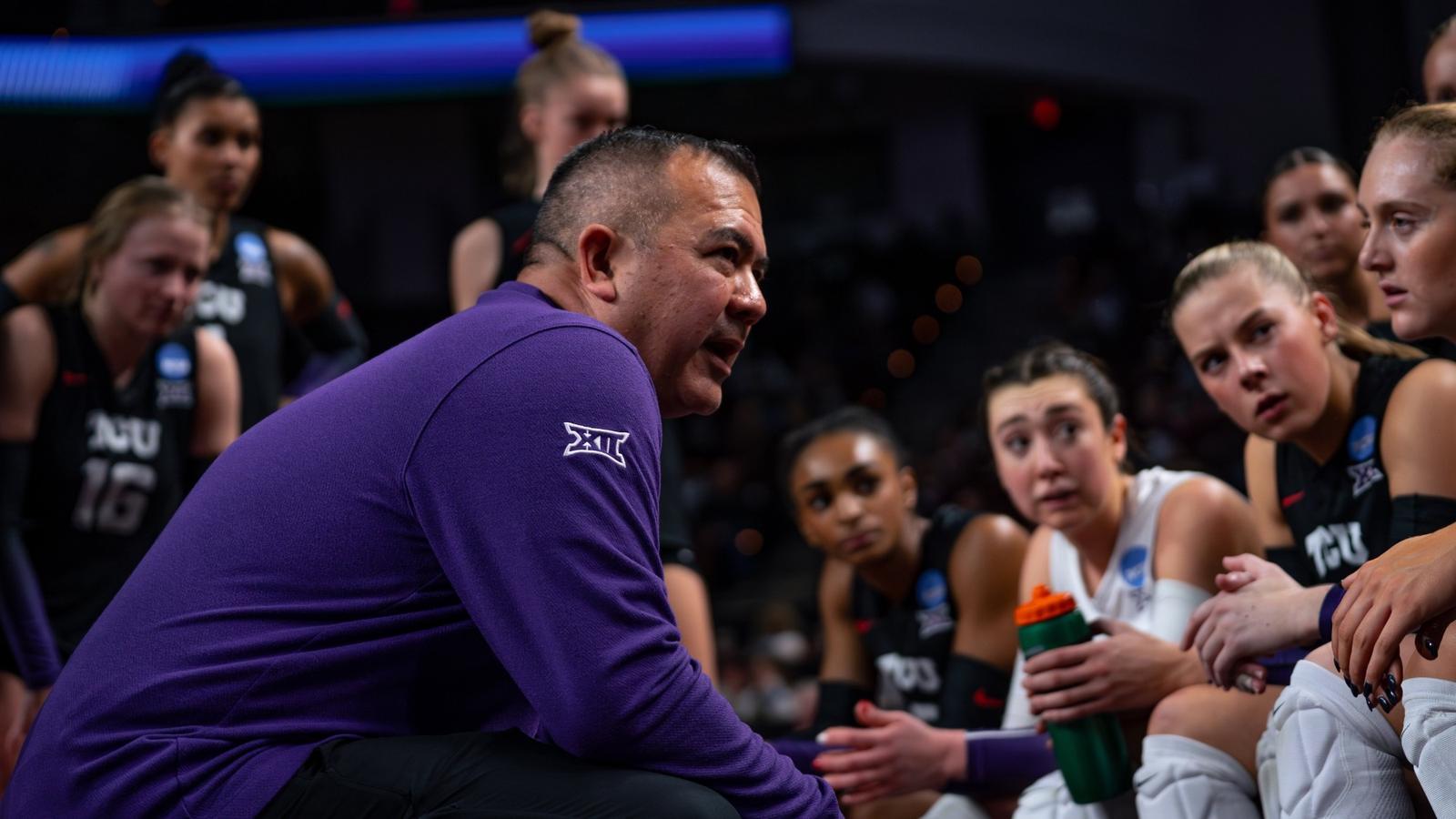
The Horned Frogs (21-11, 10-8 Big 12) put up quite the fight, leaving it all out on the court for the final time in 2025. A rematch of September’s five-set thriller, TCU nearly forced a fifth set again against Texas A&M (25-4, 14-1 SEC), this time in a hostile environment of over 5,000 Aggie fans.
“We showed up knowing it was going to be a battle,” said head coach Jason Williams, who has led TCU to the Second Round of the NCAA Tournament in all four of his seasons with the program. “Everyone saw a pretty good battle out there. Obviously disappointed with the loss because we felt as if we gave it away at the end. I wish we were still playing right now, but A&M figured out a way to win, but we’ll use this as a fire for next year.”
Evan Hendrix continued to shine in the postseason. She lit up the Aggies, going off for 26 kills on a .323 clip and added nine digs and three blocks. The sophomore finished her season as one of the most prolific scorers in TCU volleyball history, with 592.0 points and 543 kills, the second and third most all-time in their respective categories for a single season. Further, Hendrix’s 543 kills this year rank eighth nationally.
TCU also got a major offensive spark from junior Lauren Murphy. She finished with 13 kills, matching her total from the Frogs’ previous meeting with Texas A&M earlier this season. Murphy also tallied five blocks and a pair of aces. Becca Kelley rounded out the top scorers with her 24th 10-plus kill match of the year.
Defensively, the Frogs out-blocked the Aggies 14-11. Senior captain Sarah Sylvester played a large role in that, finishing with seven stuffs, giving her 153.0 on the year, the fourth most in a single season in program history. One of the most prolific blockers to ever wear a TCU uniform, Sylvester ended her career with 482.0 blocks, the second most all-time. Alice Volpe tallied 14 digs, and her teammate Jaylen Clark finished with a career-high 11 digs.
Also playing in the final match of her career that spanned five years over the course of TCU and Marquette was setter Ella Foti. She guided the offense to a .260 hitting percentage while recording 31 assists and 10 digs for a double-double.
Texas A&M came out aggressive, serving up a pair of aces in the first five points to secure an early lead. The Frogs, however, settled and silenced the crowd with a 7-1 run to take an 11-8 lead. Hendrix helped TCU carry the three-point advantage into the media timeout, but out of the break, the Aggies used runs of their own to tie the set back up at 23 all. Unfazed, Hendrix put down another kill to give the Frogs set point, and Foti sealed the opening set 25-23 with a block to put TCU up 1-0 in the match.
The Frogs fell behind 3-10 to start the second set. They slowly chipped away at the deficit, pulling within one point at 19-20, but ran out of steam, as Texas A&M evened the match with a 25-22 set victory.
Tied at one set apiece, the third set was pivotal. Both teams battled back and forth, trading points as the set featured 11 ties and eight lead changes. A 3-0 stretch put the Aggies ahead 15-13, but moments later, TCU flipped the script on them with a 3-0 run to take a 19-17 lead. Down the stretch, a pair of miscues helped A&M tie the set at 22 and close it out with three unanswered points to win 25-23.
Needing to win the fourth set to keep their season alive, the Frogs took a commanding 9-3 lead with Murphy at the service line. The Aggie crowd helped pump energy back into the team as Texas A&M capitalized on a 4-0 and 5-0 stretch to take a 14-13 lead. TCU stayed focused, responding with a stretch of six unanswered points, including five in a row from Hendrix, to take back the lead.
On the verge of forcing a fifth set, the Aggies fended off five TCU set points to stay alive and spoiled TCU’s chances of extending the match with a 29-27 set win.
For all the latest TCU volleyball news, follow the Frogs on Twitter at @TCUVolleyball, on Instagram at @tcuvolleyball and on Facebook at TCU Volleyball.

Bobcats boys basketball returns experience from state tournament team

Cooke, King, Relay Squad Set School Records, Boucher Wins Event, Multiple Eagles Place in Top Five School Marks

No. 1 Nebraska volleyball sweeps K-State to advance in NCAA Tournament

Noah Barker leads El Dorado past La Habra for championship of Gary Raya Classic –

Newcomers Excel, Swicegood Shines at Shenandoah Holiday Kickoff

Three-Peat! Bentley Volleyball Wins the East Regional

Camels set personal records, open indoor season

Volleyball’s Season Comes to a Close in NCAA Second Round

Kirk Herbstreit calls for major change after College Football Playoff bracket set

Titans Are Champions: Women’s Volleyball Completes First Flawless NCAA Championship Run Since 2004

EXCLUSIVE: Sierra Canyon Basketball Adopts AI-Powered Instant Highlight System From KlutchShots

Rocket City Mom Events – Family Fun in Huntsville & North Alabama

Miami volleyball season ends, falling to Kansas in the second round 3-1

Betty Wold Johnson Foundation, Jets help launch flag football league | Philanthropy news

Texas vs Indiana in Sweet 16

First Tee Winter Registration is open

Fargo girl, 13, dies after collapsing during school basketball game – Grand Forks Herald

CPG Brands Like Allegra Are Betting on F1 for the First Time

Volleyball Recaps – November 18

F1 Las Vegas: Verstappen win, Norris and Piastri DQ tighten 2025 title fight

Two Pro Volleyball Leagues Serve Up Plans for Minnesota Teams

Utah State Announces 2025-26 Indoor Track & Field Schedule

Sycamores unveil 2026 track and field schedule

Redemption Means First Pro Stock World Championship for Dallas Glenn

Bowl Projections: ESPN predicts 12-team College Football Playoff bracket, full bowl slate after Week 14

Texas volleyball vs Kentucky game score: Live SEC tournament updates

How this startup (and a KC sports icon) turned young players into card-carrying legends overnight

Indiana’s rapid ascent and its impact across college football

Pohlman admits ‘there might be some spats’ as he pushes to get Kyle Busch winning again

Robert “Bobby” Lewis Hardin, 56

 Why a rising mid-major power with an NCAA Tournament team opted out of revenue-sharing — and advertised it
 NBA Legend Michael Jordan to Join NBC Sports as Special Contributor
 Falcons mailbag
 Portal Update – Basketball and Gymnastics Take Hits
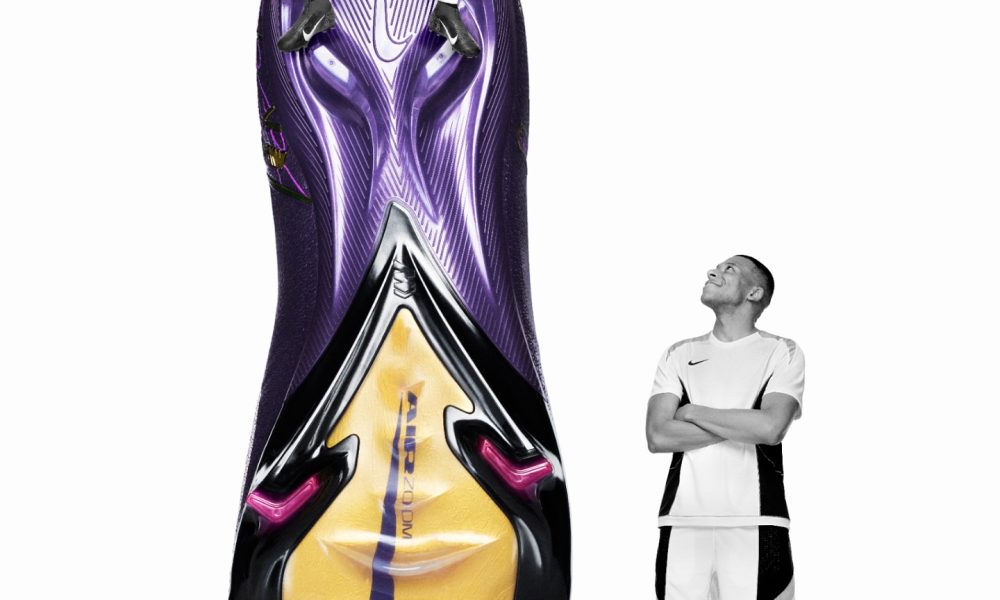 has always dreamed in Mercurial. Now his initials are on the boots.
The new Kyl…
has always dreamed in Mercurial. Now his initials are on the boots.
The new Kyl…
-
 Rec Sports2 weeks ago
First Tee Winter Registration is open
-
 Rec Sports2 weeks ago
Fargo girl, 13, dies after collapsing during school basketball game – Grand Forks Herald
-
 Motorsports2 weeks ago
CPG Brands Like Allegra Are Betting on F1 for the First Time
-
 Sports3 weeks ago
Volleyball Recaps – November 18
-
 Motorsports2 weeks ago
F1 Las Vegas: Verstappen win, Norris and Piastri DQ tighten 2025 title fight
-
 Sports2 weeks ago
Two Pro Volleyball Leagues Serve Up Plans for Minnesota Teams
-
 Sports2 weeks ago
Utah State Announces 2025-26 Indoor Track & Field Schedule
-
 Sports2 weeks ago
Sycamores unveil 2026 track and field schedule
-
 Motorsports2 weeks ago
Redemption Means First Pro Stock World Championship for Dallas Glenn
-
 NIL1 week ago
Bowl Projections: ESPN predicts 12-team College Football Playoff bracket, full bowl slate after Week 14