
NIL
Can NIL Buy a National Championship?

SAN ANGELO, TX — In the high-stakes world of college football, where talent is the ultimate currency, the introduction of Name, Image, and Likeness (NIL) deals in 2021 has transformed recruiting and roster-building into a financial arms race.
As the 2025 season winds down with the College Football Playoff (CFP) quarterfinals looming, one question echoes across the Lone Star State: Can pouring millions into NIL truly buy a national championship?
Texas (the entire state, not the university) provides a compelling case study, with four powerhouse programs—the University of Texas Longhorns (UT), Texas A&M Aggies (A&M), Texas Tech Red Raiders (TTU), and Southern Methodist University Mustangs (SMU)—each wielding significant NIL war chests but yielding varied results. From booster-fueled spending sprees to community-driven collectives, their approaches highlight the promise and pitfalls of this pay-to-play era.
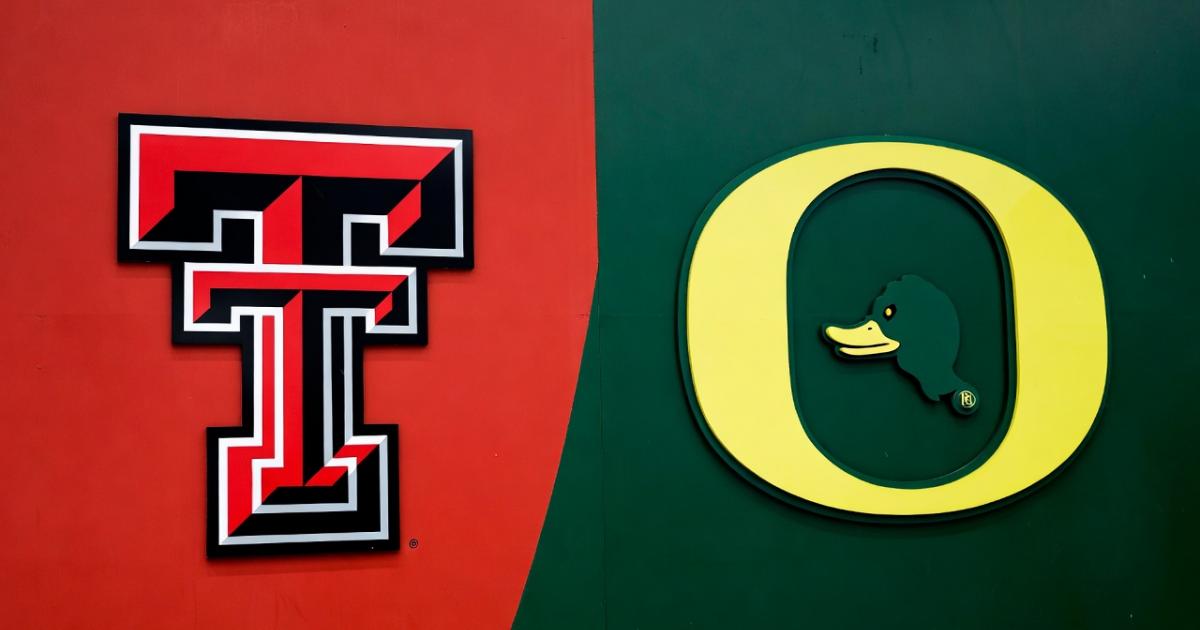
As of today, the Texas Tech Red Raiders remain in contention for the national title, set to face the Oregon Ducks in the Orange Bowl CFB quarterfinals at 11 a.m. Central Time on January 1.
NIL is a Billion-Dollar Game Changer
Since the NCAA greenlit NIL, the market has exploded, projected to hit $1.7 billion for the 2024-2025 season, with over $1.1 billion funneled into football alone. Proponents argue it levels the playing field by compensating athletes fairly, while critics decry it as a system where deep-pocketed boosters “buy” rosters, eroding the amateur spirit.
Adding fuel to this evolution is NIL revenue sharing, stemming from the landmark House v. NCAA settlement approved in June 2025. Effective July 1, 2025, this system allows Division I schools to directly distribute a portion of their athletic department revenues—up to a cap of $20.5 million for the 2025-26 academic year—to student-athletes across sports. This cap is expected to increase by 4% annually, with potential exceptions, and is designed to compensate athletes more like professionals while maintaining some regulatory oversight through the new College Sports Commission.
Unlike traditional NIL deals, which involve third-party endorsements and sponsorships from brands or collectives, revenue sharing comes straight from school funds (e.g., ticket sales, media rights, and sponsorships), functioning more like a salary pool.
Schools opting in (most Power Four programs have) must report third-party NIL payments to ensure transparency, but the system coexists with NIL, allowing total athlete compensation to exceed the cap through combined efforts.
This has led to “payrolls” where revenue sharing covers base pay, and NIL handles bonuses or incentives, though critics argue it exacerbates inequities between resource-rich and smaller programs. In Texas, oil money and alumni networks have propelled programs to the forefront, yet success isn’t solely about the dollar amount—it’s about strategy, coaching, and execution.
Comparing the NIL Approach of Four Texas Teams
Texas’s college football landscape illustrates diverse strategies in blending revenue sharing with NIL. All four programs have opted into the settlement, leveraging the $20.5 million cap to boost recruiting and retention amid the expanded CFP.Team
This table compares the NIL approach of Texas athletic programs (it’s responsive, so use your mouse or finger to scroll right and left)
| Team | Revenue Sharing Cap Utilization | Key Approach Details | Integration with NIL | 2025 Impact Highlights |
|---|---|---|---|---|
| UT Longhorns | Full $20.5M, part of $35-40M total football payroll | Phasing out NIL collectives in favor of direct revenue sharing; focuses on structured contracts for efficiency. | Combined with Longhorn Sports Agency (launched June 2025) for brand deals and content creation; alumni/tech boosters fund extras. | Enabled 10-2 record and CFP berth; high-profile deals like Arch Manning’s $3.5M+ NIL boosted talent influx, though playoff exit showed limits. |
| A&M Aggies | Full $20.5M, with min. $2.5M to women’s sports; spread across six programs | Community-driven distribution tied to performance/academics; uses Teamworks for streamlined payments. | $39.1M in NIL support FY24-25 via Aggie NIL and Playfly; focuses on guaranteed contracts and retention. | Fueled 11-2 season and playoff spot; tripled NIL from prior year, but late losses highlighted distribution inefficiencies. |
| TTU Red Raiders | Full $20.5M integrated into $55M planned NIL + sharing for 2026 | Booster-led (e.g., Cody Campbell’s influence); one-year contracts for 97 football players; new corporate unit for growth. | Merged Matador Club into Red Raider Club; smashed NIL records with $28M football spend in 2025. | Powered 12-1 record, Big 12 title, and CFP quarterfinal; rapid escalation transformed program, though donor dependency raises sustainability questions. |
| SMU Mustangs | Full $20.5M via Student-Athlete Benefit Fund | Integrated revenue/NIL/brand unit; focuses on holistic athlete support and corporate partnerships. | Boulevard Collective and Mustang Partners (launched Dec. 2025) for deals; Scout platform streamlines earnings and education. | Boosted ACC debut with 10-2 record, playoff berth; historic revenue jumps (157% football tickets), portal success, but chaos concerns from NIL/portal dynamics. |
The Longhorns’ Corporate NIL Powerhouse
The Longhorns, now in their second SEC season, boast what many consider the nation’s top NIL budget: an estimated $35-40 million dedicated to their football roster for 2025.
Through the Texas One Fund and a partnership with Learfield’s Longhorn Sports Agency (launched in June 2025), UT has adopted a professionalized model, emphasizing brand-building, financial literacy, and high-profile endorsements. Star quarterback Arch Manning’s deals alone reportedly exceed $3.5 million annually, drawing transfers and blue-chip recruits.
This investment paid dividends with a 10-2 regular season, an SEC Championship Game appearance, and a CFP berth. However, playoff shortcomings—including a first-round exit—raise questions about ROI. A high-ranking UT source disputed the $35-40 million figure earlier this year, calling it “irresponsible reporting,” but insiders maintain it’s the benchmark for SEC elites.
“Texas is built for the long haul,” said one analyst. “NIL keeps them competitive, but championships require more than money—ask the Yankees in baseball.”
The Aggies’ “12th Man” Community Approach to NIL
About 100 miles east of Austin, in College Station, the Aggies have taken a more diversified tack via Texas Aggies United, amassing $51.4 million in total NIL revenue from July 2024 to June 2025—nearly tripling the previous year’s haul. An overwhelming 96% ($49-50 million) flowed to men’s sports, with football claiming the lion’s share through guaranteed contracts tied to performance and academics.
This “retain at all costs” philosophy, bolstered by alumni and corporate sponsors, has secured talents like quarterback Marcel Reed and wide receiver Mario Craver.
The result? An 11-2 campaign, a playoff spot, and early-season dominance, only to falter with late losses to rivals Texas and in the CFP first round.
Critics point to gender disparities (minimal funding for women’s sports) and question if the broad distribution dilutes football’s edge in the brutal SEC. Still, A&M’s model emphasizes sustainability, positioning them as a top-5 NIL spender nationally.
“It’s not just about the check—it’s about building a culture,” an Aggies booster noted, echoing the program’s “12th Man” ethos.
All of the Oil Money Funding Texas Tech’s NIL Program
In Lubbock, the Red Raiders represent the underdog story of NIL efficiency. Led by billionaire alum Cody Campbell’s $25 million donation to The Matador Club, TTU shelled out over $28 million on its football roster in 2025, with plans for $55 million in combined NIL and revenue sharing next year. This aggressive, booster-centric approach—often dubbed “buying the roster”—focused on portal acquisitions and defensive reinforcements, transforming a mid-tier Big 12 team into contenders.
The payoff was undeniable: a 12-1 record, Big 12 Championship dominance (34-7 over BYU), and a CFP quarterfinal berth against Oregon in the Orange Bowl on January 1. While detractors label it “money over culture” and warn of donor dependency, Tech’s rise suggests targeted spending can yield outsized results in a less stacked conference.
“We’ve proven NIL can accelerate success,” said head coach Joey McGuire post-title. “But it’s the relationships that seal it.”
With the Orange Bowl looming, TTU could prove NIL’s championship potential taking on another NIL powerhouse for a slot in the National Championships semi-finals in January.
Oregon Ducks: The Nike-Backed Contender
As Texas Tech prepares to clash with the Oregon Ducks in CFB Quarterfinal game at the Orange Bowl, it’s worth examining Oregon’s robust NIL framework, which has positioned them as a formidable CFP opponent. Backed by Nike co-founder Phil Knight, Oregon’s primary NIL collective, Division Street, was established in 2021 and has evolved into one of college football’s most efficient operations.
This booster-led model emphasizes innovative marketing and brand partnerships, leveraging Knight’s influence and Nike’s resources to attract top talent. In 2025, Oregon ranked fourth nationally in NIL spending for roster building, per an On3 survey of industry stakeholders, trailing only Texas, Texas Tech, and Ohio State.
Oregon has fully embraced revenue sharing under the House settlement, distributing the maximum $20.5 million cap while integrating third-party NIL deals to exceed it, potentially reaching $30 million or more in total athlete compensation.
Enhancements include adding a NIL partnerships manager and content producer in October 2025, partnering with Learfield Impact for technology and marketing support.
Key players like quarterback Dante Moore boast NIL valuations over $2.3 million, reflecting the program’s appeal.
This strategy has fueled Oregon’s undefeated regular season and top seeding in the CFP, but as offensive coordinator Will Stein noted, misconceptions about their NIL dominance overlook the program’s culture and coaching.
Facing TTU’s NIL-fueled surge, the Ducks’ approach tests whether corporate-backed innovation can outpace oil money in pursuit of a title.
SMU Mustangs: The Rising Contender Fueled by NIL
NIL has been a game-changer for the SMU Mustangs, particularly in their 2025 transition to the ACC after a strong Group of Five run. The program’s aggressive adoption—via the Boulevard Collective and new Mustang Partners initiative—has driven record revenues, with football season tickets doubling and overall income surging 157% in their inaugural ACC year. This financial boost enabled high-profile portal acquisitions and retention, contributing to a 10-2 record, ACC contention, and a CFP berth—their first as a Power Four member. Partnerships like Scout NIL provide tools for earnings management and life skills, empowering athletes beyond the field. However, NIL’s double-edged sword has sparked debates: While it fueled opportunity and structured pay via revenue sharing, it also introduced “chaos” through the transfer portal, with rapid roster turnover challenging team cohesion. Overall, NIL has elevated SMU from mid-major to contender, proving smaller programs can compete with strategic spending in the revenue-sharing era.
Does the Money Translate to Championships?
Comparing the quartet: UT’s $35-40 million bought SEC relevance but no hardware; A&M’s $51.4 million (heavily football-skewed) delivered consistency but exposed vulnerabilities; TTU’s $28 million-plus propelled them furthest, claiming a conference crown and deeper playoff run; SMU’s strategic NIL surge secured a playoff spot in their ACC debut. Halfway through 2025, fans throughout the state of Texas got their “money’s worth” with four in-state teams vying for glory, but NIL’s role sparks debate. As one Reddit user pondered in a hypothetical DIII scenario, “How much NIL would it take to build a champion?”—the answer seems: Enough to attract talent, but not without coaching alchemy.
NIL made college football mirror pro sports: Money helps, but doesn’t guarantee titles—look at MLB or the NBA. With the state of Texas’ new NIL rules looming for 2026 and the transfer portal opening January 2, the experiment continues. For now, NIL can buy contention, but championships? We’ll gain another clue on New Year’s Day at the #4 Texas Tech vs. #5 Oregon semi-final in the Orange Bowl at 11 a.m.

College football free agency does not officially kick off until the transfer portal opens on Jan. 2, but planning for the eventful two-week period is well underway. Players are announcing their intentions as coaching staffs prepare a plan of attack. It’s a busy time for every college football program, but the intensity is amplified even more for first-year head coaches, like Kentucky’s Will Stein.
With every coaching change, there is significant roster turnover. You can expect some schools to change more than half of their roster as a coach tells the old players to kick rocks as he brings in new ones from the transfer portal.
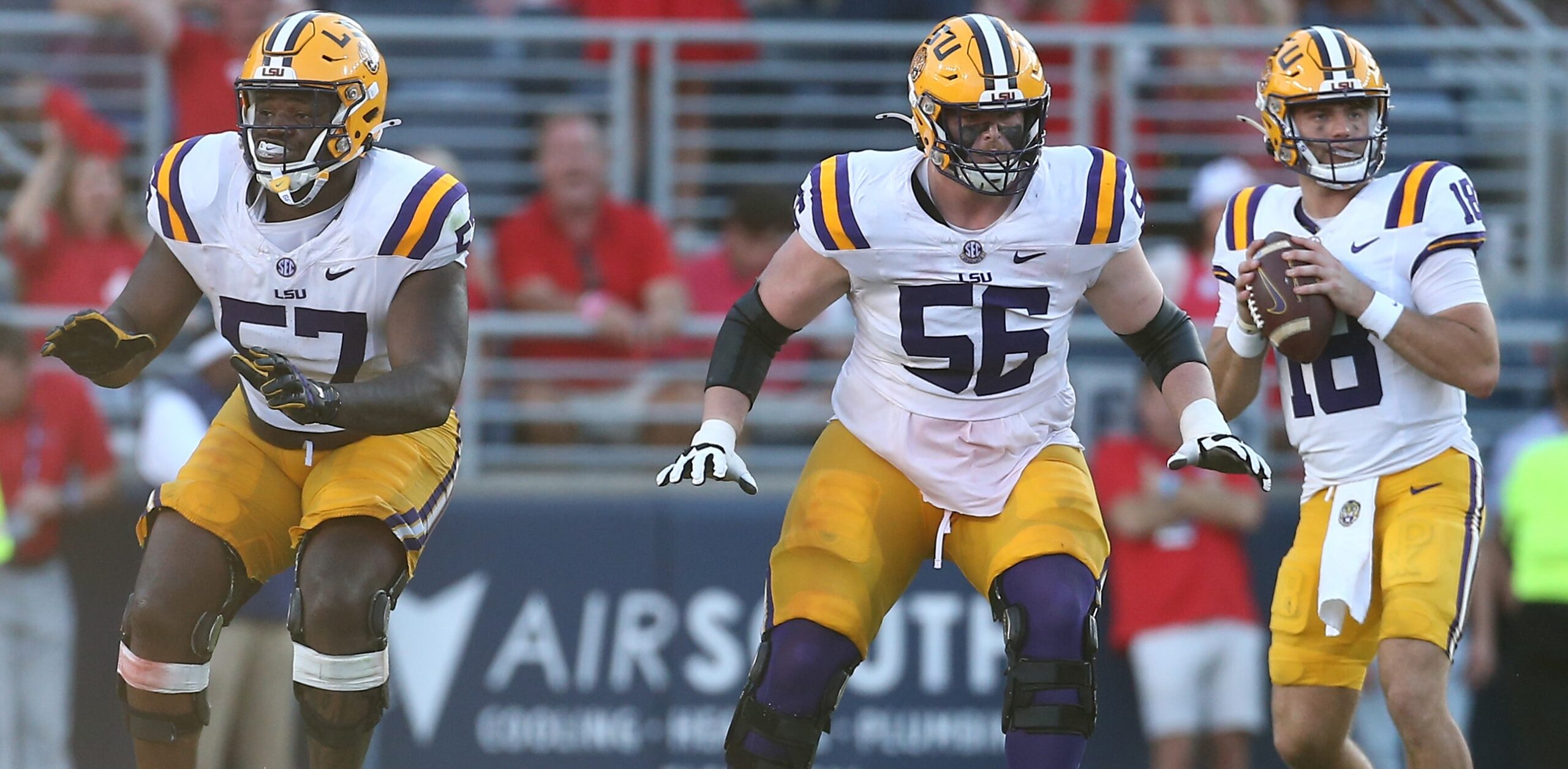
Lane Kiffin was called the “Portal King” during his time at Ole Miss. The man has frequent flyer miles in college football free agency. One of his first hires in Baton Rouge was Eric Wolford. The former Kentucky assistant coach did not fix the Wildcats’ high school recruiting woes on the offensive line, but his intense style actually might help Kentucky this offseason.
You have to be a certain type of person to play for Eric Wolford. Not every LSU offensive lineman is gonna sign up for that. Kentucky needs offensive linemen. You know who is well acquainted with those LSU players who need a new home? Joe Sloan.
Kentucky needs five new starters on the offensive line. There are a few reserves from last year’s squad that may be ready to emerge as starters, but the Cats need players in the trenches. Plenty of Joe Sloan’s former LSU players will be available in free agency.
Lock in for a pivotal Kentucky Football offseason KSR Plus! We’re giving you behind-the-scenes intel you won’t find anywhere else. Join now for 50% off an annual subscription.
LSU Offensive Linemen hitting the Transfer Portal
OT Carius Curne — A top 15 overall talent in the 2025 recruiting class who was evaluated as a guard, the Arkansas native started five games as a true freshman, splitting time at both left and right tackle. He showed plenty of potential and will be a hot commodity in the transfer portal. He has three years of eligibility remaining.
OT Tyree Adams — Adams earned a starting role at left tackle ahead of the 2025 season before an injury forced him to undergo season-ending surgery in November. The New Orleans native has two years of eligibility remaining.
IOL Coen Echols — Started the last eight games at left guard and played the third-most snaps on the offense. The former Texas A&M commit will be a true junior with two years of eligibility remaining.
C DJ Chester — LSU’s starting center in 2024 led the team in snaps, but was replaced by a Virginia Tech transfer this fall. He enters the transfer portal with two years of eligibility remaining.
OT Ory Williams — The redshirt freshman earned two starts at left tackle at the end of the season. He appeared in four games total and logged 150 snaps.
The LSU offensive line was far from a juggernaut for Sloan last fall. PFF gave the Tigers the worst run-blocking grade in the SEC after finishing at the bottom of the league in rushing yards per game (104). Even though the unit had plenty of imperfections, there are still players with plenty of upside and SEC experience who could find a second wind by following their old offensive coordinator to Kentucky via the transfer portal.

Texas Tech will begin its first full day in South Florida on Tuesday with a morning practice followed by College Football Playoff quarterfinal media day at Hard Rock Stadium, site of Thursday’s game against Oregon.
No. 4 Texas Tech (12-1, 8-1 Big 12) meets No. 5 Oregon (12-1, 8-1 Big Ten) at noon ET on New Year’s Day. ESPN will televise the game, with Joe Tessitore and Jesse Palmer in the booth and Stormy Buonantony and Katie George on the sidelines.
This will be the first time the programs have met in the Capital One Orange Bowl and the fourth meeting overall dating to 1991. It is also the first College Football Playoff quarterfinal in Orange Bowl history.
– TECH –
This isn’t isolated to mid-tier teams like Iowa State. Even former powerhouses are reeling from portal raids. USC, under Lincoln Riley, hemorrhaged 15 players after a disappointing 2025 season, including backups and starters seeking better NIL opportunities elsewhere. The Trojans’ losses exacerbate roster instability in a program once synonymous with West Coast dominance. Similarly, Florida State shed 25 athletes, UNC lost 15, and over 10 programs nationwide saw 20 or more departures, highlighting how NIL bidding wars amplify turnover at underperforming or underfunded schools. These exits often follow coaching changes or subpar seasons, with athletes prioritizing financial incentives over rebuilding efforts.
The fallout extends beyond regular-season rosters, contributing to a palpable lack of interest in the multitude of bowl games not tied to the College Football Playoff (CFP). With the transfer portal overlapping bowl season and NIL deals luring players away, non-playoff bowls have become exhibitions of depleted teams, rife with opt-outs and makeshift lineups. Players, now professionalized through NIL earnings, increasingly skip these games to avoid injury risks ahead of the NFL draft or to chase better opportunities via the portal, rendering many matchups unwatchable and irrelevant. This year alone, several 5-7 teams declined bowl invitations outright, including Iowa State and Notre Dame that also had a 10-2 winning record in 2025, signaling diminished prestige, while opt-outs have turned storied bowls into shadow versions of themselves. Viewership for non-playoff bowls remains robust in aggregate—Disney’s 33 such games averaged 2.7 million viewers last season, up from prior years—but fan sentiment and expert analysis point to growing apathy, with complaints that NIL and the portal have “demolished bowl season” by eroding competitive integrity. As one observer noted, these games hold “no interest” for teams anymore, fueling calls for reforms like paying players to participate or shifting the portal window post-bowls.
As the 2025 calendar winds down, the NCAA’s revamped transfer portal is poised to swing open on January 2, 2026, ushering in a condensed 15-day frenzy that closes on January 16, 2026, for most football programs. This single-window structure, a shift from previous dual periods to curb ongoing tampering and streamline chaos, includes extensions: Players from teams in the College Football Playoff national championship (set for January 19, 2026) get an extra five days from January 20-24, while coaching changes trigger separate 15-day windows starting five days after a new hire. Amid NIL’s financial allure, this upcoming portal period could accelerate roster volatility, with programs like Iowa State still reeling from pre-window announcements and others bracing for bidding wars.
Yet, in Texas—the epicenter of NIL spending—some programs thrive amid the chaos, leveraging deep-pocketed boosters to build fortresses against portal losses. The University of Texas (UT) boasts the nation’s top football NIL budget at $35-40 million for 2025, enabling net gains like edge rusher Colin Simmons from LSU and wideout Isaiah Bond from Alabama while minimizing outflows. Texas A&M follows closely with $51.4 million in total NIL revenue (football-dominant), adding 12 transfers like quarterback Marcel Reed despite some exits tied to NIL dissatisfaction. Texas Tech, spending nearly $30 million, turned the portal into a weapon with 15 additions, including quarterback Brendan Sorsby on a rumored $4 million deal, fueling a playoff push. SMU, raising $65 million for all sports via its Mustang Club, focused on retention bonuses to limit departures to just five, adding talents like edge Braden Carter and earning ACC buzz.
Contrast this with in-state rivals Baylor, TCU, and the University of Houston, where modest NIL resources expose vulnerabilities. Baylor ramped up to $15 million in NIL spending, adding 24 transfers to flip its roster, but still suffered heavy losses post-2025, prompting coach Dave Aranda to fight for key retentions like four critical players amid portal risks. TCU, also allocating around $15 million to football under Big 12 revenue sharing, balanced gains (e.g., experienced quarterbacks) with lumps from departures, reflecting the portal’s double-edged sword in a new era of $20.5 million caps. Houston, with unspecified but lower NIL figures, bolstered its roster with 15 transfers and 30 overall additions, yet faces ongoing portal needs after a 4-8 season, lacking the financial firepower to consistently outbid elites.
This Texas divide underscores NIL’s inequality: Wealthy programs like UT and A&M buy stability and stars, while others like Baylor and TCU scramble to plug holes, often becoming feeder systems. As the transfer portal window in 2026 looms, college football’s soul hangs in the balance and talk of reform is already in the air.
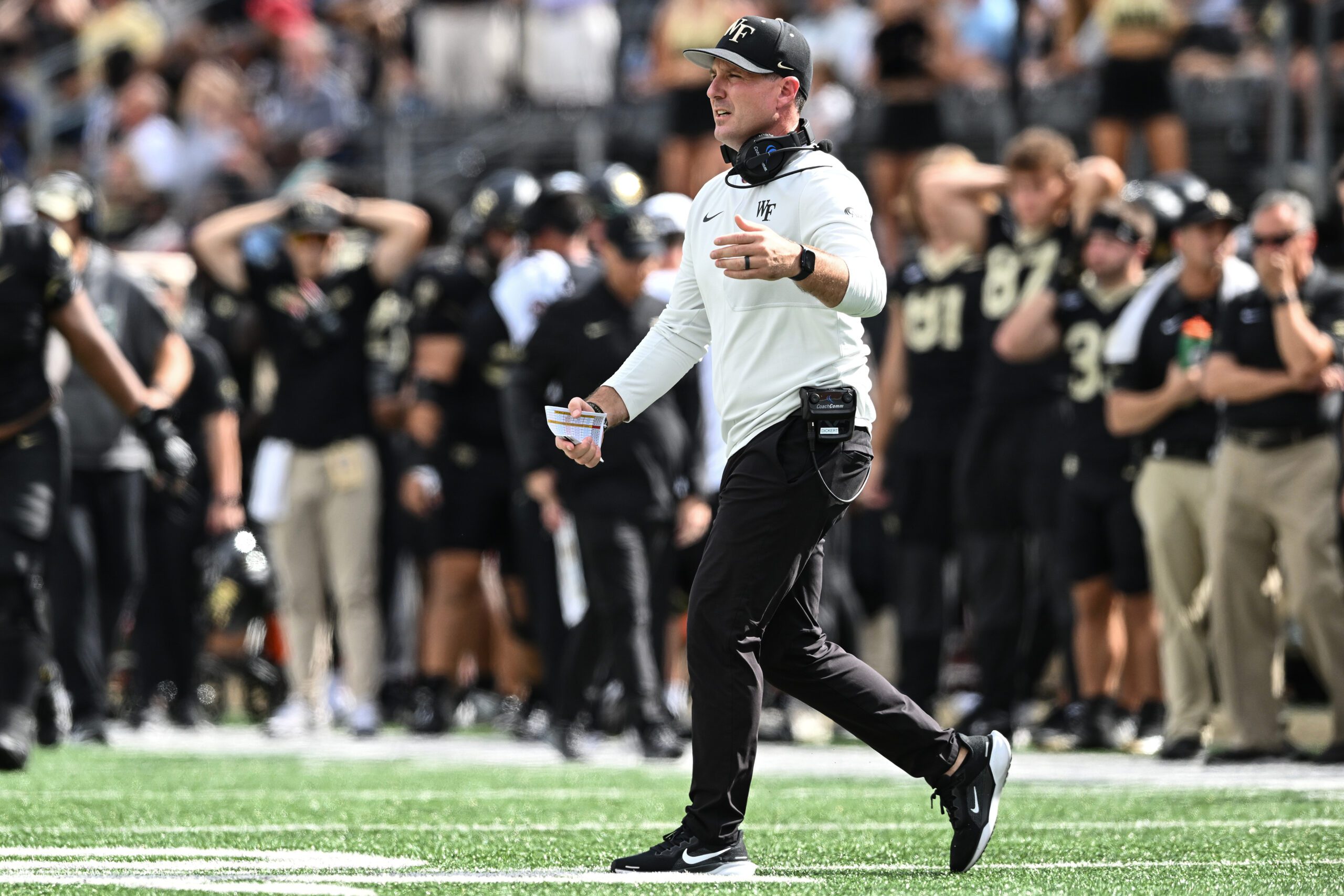
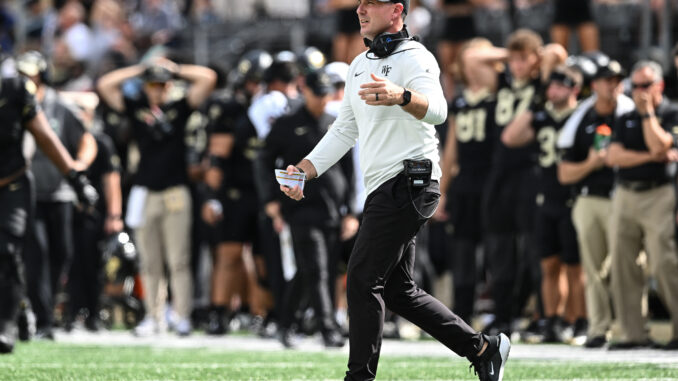
For over a decade, Dave Clawson built Wake Forest into one of the steadiest football programs in the Atlantic Coast Conference, crafting a developmental model that produced seven consecutive bowl appearances.
Clawson’s approach to making the Demon Deacons a fixture in North Carolina’s college football landscape was deliberate: recruit under-the-radar prospects, develop them patiently for two or three seasons, then rely on experienced upperclassmen to carry the program.
As the transfer portal and NIL opportunities reshaped college football, that model became harder to sustain. After back-to-back 4-8 seasons, Clawson resigned, citing a rapidly changing landscape and acknowledging he could no longer give the job everything it required.
Wake Forest suddenly faced a reset as a coaching change, roster turnover and evolving expectations left the program searching for direction. When Jake Dickert, former coach at Washington State, arrived in Winston-Salem ahead of the 2025 season, optimism was cautious at best.
What followed was one of the ACC’s most striking turnarounds.
In his first season, Dickert — the North State Journal’s 2025 Coach of the Year — restored stability and belief, guiding Wake to an 8-4 record and a return to bowl eligibility.
Capping off Dickert’s debut season, the Demon Deacons (8-4) will face SEC representative Mississippi State Bulldogs (5-7) in the Duke’s Mayo Bowl on Jan. 2 at Bank of America Stadium in Charlotte.
In their 2025 campaign, the Deacs tied for the most victories among all FBS programs in the Carolinas, underscoring the program’s rapid rebound. Wake Forest defeated two teams ranked at the time, including a road victory at Virginia (the Cavaliers’ only home loss of the season) and a home win that snapped SMU’s 20-game regular-season conference winning streak.
After back-to-back losses in September, Wake responded by winning six of seven games before closing the regular season with a loss at Duke; the Deacs finished 4-4 in ACC play.
On the field, Dickert leaned on a blend of experience and toughness. Graduate transfer quarterback Robby Ashford brought leadership to an offense that had struggled for consistency in recent seasons, while senior running back Demond Claiborne anchored the ground game and emerged as a physical focal point in key moments.
Defense again proved to be the program’s backbone. The Demon Deacons ranked sixth in the ACC and 38th nationally in scoring defense, finished top five in the league in total and passing defense, and did not allow a touchdown against either Virginia or North Carolina.
Dickert’s impact extended well beyond Saturdays.
Before the season, he overhauled Wake Forest’s recruiting and scouting infrastructure, assembling a 10-person staff dedicated to identifying talent and building depth in a new era of college football. The early returns have been promising.
During the recent National Signing Day, Wake Forest announced a 30-player 2026 recruiting class — the highest-ranked in program history — currently inside the national top 50. The class includes one four-star and 29 three-star recruits, signaling a shift toward broader talent acquisition and immediate competitiveness.
Dickert’s efforts were rewarded following the regular season. On Dec. 2, Wake Forest Vice President and Athletics Director John Currie announced that Dickert had signed a long-term contract extension.
“Jake Dickert has proven himself to be one of college football’s rising head coaches and one of the truly special leaders in the ACC,” Currie said. “He has galvanized our locker room, our campus, and our community. Coach Dickert is exactly the type of leader who inspires players, and he and his family fit seamlessly into the Wake Forest and Winston-Salem community.”
Dickert echoed that sentiment, pointing to long-term investment as central to Wake Forest’s direction.
“Our family could not be more grateful to call Wake Forest and Winston-Salem home,” he said. “Over the last 11-plus months, our staff and student-athletes have embraced a new process of being ‘Built in the Dark.’ When John approached me a few weeks ago about the university’s desire to further invest in our program, I was both humbled and energized.”
“This commitment ensures that our staff has the stability, resources and support necessary to continue elevating Wake Forest football,” Dickert added. “I’m proud of this team, our staff and our seniors who built the foundation for this new era, and excited for what’s ahead. There has never been a better time to be a Demon Deacon.”
While roster turnover remains a reality, Wake Forest’s trajectory is still heading upward. With a retooled staff, a revamped recruiting approach and renewed confidence throughout the program, Dickert has revived the Demon Deacons and positioned them for sustained relevance for years to come.
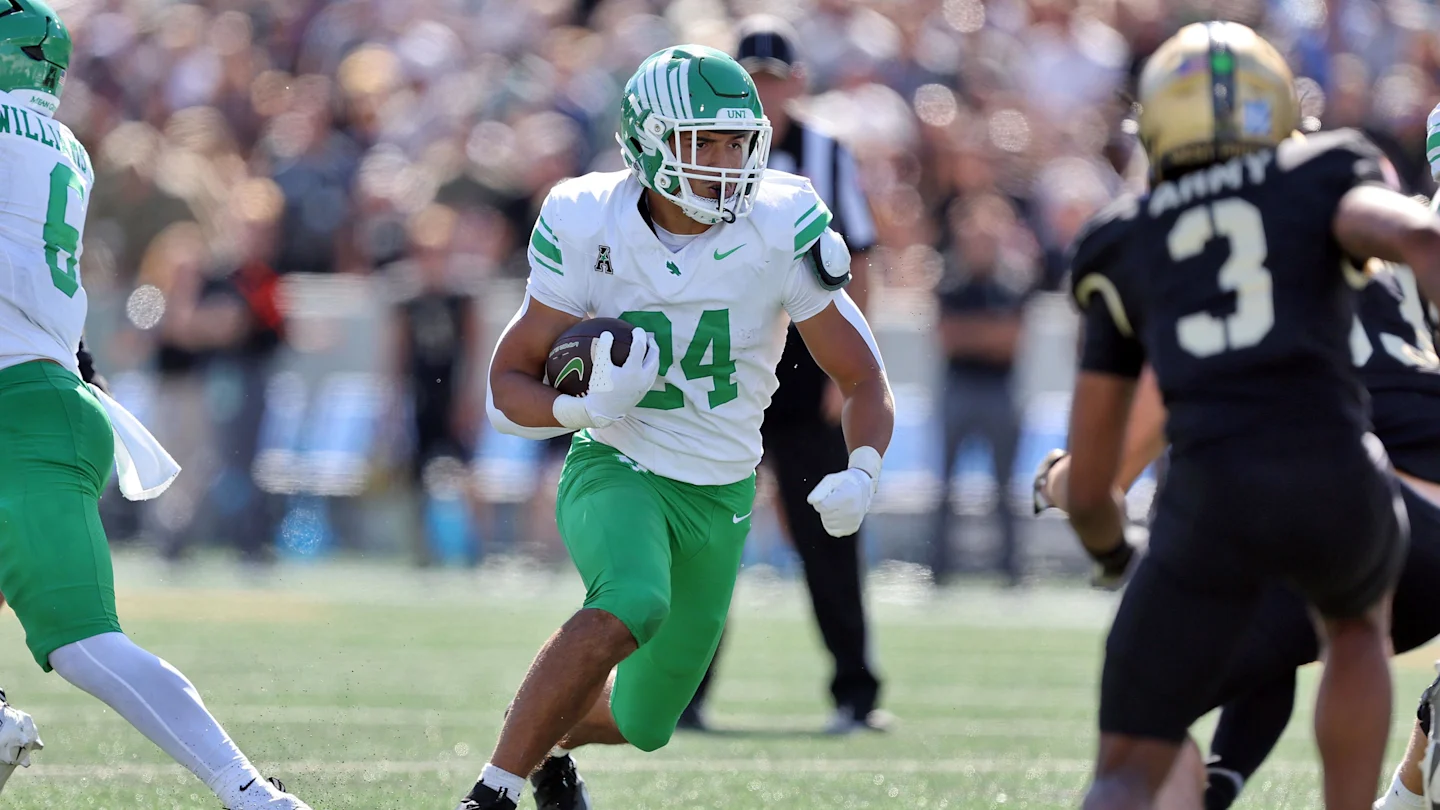
North Texas enjoyed a historic 2025 season, finishing 12–2 overall (7–1 in the American Conference) and cracking the AP Top 25.
The Mean Green posted the nation’s top offense (45.1 points per game), reached the AAC Championship Game, and capped the year with a thrilling 49–47 New Mexico Bowl win over San Diego State, the most wins in program history.
A key driver behind that success was true freshman running back Caleb Hawkins, who posted 1,434 rushing yards on 230 carries (6.2 yards per carry) with 25 rushing touchdowns, plus 32 catches for 370 receiving yards and four receiving TDs, 1,804 scrimmage yards and 29 total touchdowns.
He earned All-America and All-Conference freshman honors, national freshman awards recognition, and MVP honors in North Texas’ bowl victory.
However, shortly after, he announced his decision to enter the NCAA transfer portal, positioning himself as one of the highest-profile running backs available when the portal opens Friday.
On Monday, On3’s Pete Nakos specifically listed Hawkins among portal names being tracked and identified Texas as one of the programs showing early interest or appearing as a logical landing spot in that early intel.

Hawkins was a lightly-recruited three-star prospect out of North Rock Creek High School (Shawnee, Oklahoma) who signed with North Texas over offers from Emporia State and Central Oklahoma.
Texas finished the 2025 season ranked No. 13 in the final AP poll but failed to reach the College Football Playoff despite entering the year as the preseason No. 1 team in the AP Top 25.
Sophomore quarterback Arch Manning has publicly confirmed he will return to Texas for 2026, but the Longhorns face significant attrition at running back, with Quintrevion Wisner, Jerrick Gibson, and CJ Baxter all set to enter the transfer portal.
Texas has a clear need at running back, Hawkins’ proximity to Austin, and the program’s proven history of developing NFL-level backs, such as Bijan Robinson, Jonathan Brooks, Roschon Johnson, and Jaydon Blue, all point to Texas as a logical landing spot for Hawkins.
Read More at College Football HQ
- $2.6 million QB ranked as No. 1 transfer in college football
- 25-touchdown RB shares farewell note after entering college football transfer portal
- College Football Playoff team loses All-Conference player to transfer portal
- College football team loses three All-Americans to transfer portal

Saint Peter’s Peacocks (5-5, 2-0 MAAC) at Fairfield Stags (8-5, 0-2 MAAC)
Fairfield, Connecticut; Monday, 7 p.m. EST
BETMGM SPORTSBOOK LINE: Stags -3.5; over/under is 138.5
BOTTOM LINE: Fairfield hosts Saint Peter’s after Braden Sparks scored 26 points in Fairfield’s 121-58 win over the City Tech Beavers.
The Stags have gone 5-1 in home games. Fairfield ranks second in the MAAC with 24.6 defensive rebounds per game led by Brandon Benjamin averaging 5.7.
The Peacocks are 2-0 in MAAC play. Saint Peter’s is fourth in the MAAC with 10.6 offensive rebounds per game led by Jahki Gupton averaging 1.8.
Fairfield averages 8.6 made 3-pointers per game, 1.7 more made shots than the 6.9 per game Saint Peter’s gives up. Saint Peter’s averages 8.7 made 3-pointers per game this season, 1.6 more made shots on average than the 7.1 per game Fairfield gives up.
The Stags and Peacocks meet Monday for the first time in conference play this season.
TOP PERFORMERS: Benjamin is averaging 12.8 points, 9.7 rebounds and 1.6 blocks for the Stags. Sparks is averaging 17.7 points over the last 10 games.
Brent Bland averages 3.4 made 3-pointers per game for the Peacocks, scoring 16.0 points while shooting 40.0% from beyond the arc. TJ Robinson is averaging 12.3 points and 3.2 assists.
___
The Associated Press created this story using technology provided by Data Skrive and data from Sportradar.

Mass Exodus at LSU could be big opportunity for Kentucky

Red Raiders arrive for CFP Quarterfinal at the Orange Bowl

Marblehead sports moments of 2025

NIL’s Mercenary March of College Football Athletes

Nevada youth rank last in sports participation. Will rising costs make it worse?

Nevada youth rank last in sports participation

Victims scammed by people posing as members of youth sports team at West Town Mall: KPD

Shoot 360 Franchisees Take Over Two Dallas-Fort Worth Units

Families weigh costs and benefits as year-round youth sports industry grows in Wisconsin

Wake Forest’s Jake Dickert revives the Demon Deacons in debut season

Major college football program linked to 1,800 yard RB in transfer portal

Saint Peter’s visits Fairfield after Sparks’ 26-point game

Spencer McLachlin Named Head Coach at UC San Diego

Defending Big West Regular Season And National Champion Long Beach State Chosen As 2026 Preseason Coaches’ Poll Favorite

Marcus Johnson’s 40 points lead Garfield Heights win; Lutheran East avenges loss to Warrensville at NEO Youth Elite Christmas showcase

SoundGear Named Entitlement Sponsor of Spears CARS Tour Southwest Opener

Donny Schatz finds new home for 2026, inks full-time deal with CJB Motorsports – InForum

Black Bear Revises Recording Policies After Rulebook Language Surfaces via Lever

Bowl Projections: ESPN predicts 12-team College Football Playoff bracket, full bowl slate after Week 14

Men’s and Women’s Track and Field Release 2026 Indoor Schedule with Opener Slated for December 6 at Home

David Blitzer, Harris Blitzer Sports & Entertainment

How Donald Trump became FIFA’s ‘soccer president’ long before World Cup draw

Michael Jordan’s fight against NASCAR heads to court, could shake up motorsports

DeSantis Talks College Football, Calls for Reforms to NIL and Transfer Portal · The Floridian
Elliot and Thuotte Highlight Men’s Indoor Track and Field Season Opener

Rick Ware Racing switching to Chevrolet for 2026

JR Motorsports Confirms Death Of NASCAR Veteran Michael Annett At Age 39

#11 Volleyball Practices, Then Meets Media Prior to #2 Kentucky Match

Colleges ponying up in support of football coaches, programs

23 عاما من الفضائح السياسية والجنسية منذ انقلاب حمد بن خليفة.. استغلال الفتيات الصغيرات في الدعارة.. ضبط ابنة رئيس وزراء قطر خلال ممارستها لجنس الجماعي.. ملامح الحكم تتخبط بين المنفي وتدخلات النساء





-
 Motorsports3 weeks ago
SoundGear Named Entitlement Sponsor of Spears CARS Tour Southwest Opener
-
 NIL3 weeks ago
DeSantis Talks College Football, Calls for Reforms to NIL and Transfer Portal · The Floridian
-
 Sports2 weeks ago
#11 Volleyball Practices, Then Meets Media Prior to #2 Kentucky Match
-
 Motorsports2 weeks ago
Sunoco to sponsor No. 8 Ganassi Honda IndyCar in multi-year deal
-
 Motorsports2 weeks ago
Nascar legal saga ends as 23XI, Front Row secure settlement
-

 Motorsports3 weeks ago
Accelerating Inclusion: Breaking Barriers in Motorsport
-
 Sports2 weeks ago
Maine wraps up Fall Semester with a win in Black Bear Invitational
-
 Rec Sports2 weeks ago
WNBA’s Caitlin Clark, Angel Reese and Paige Bueckers in NC, making debut for national team at USA camp at Duke
-
 NIL3 weeks ago
Ed Orgeron: Paying players via NIL would only require a ‘minor adjustment’
-
Motorsports3 weeks ago
NASCAR, 23XI Racing, Front Row Motorsports announce settlement of US monopoly suit | MLex