
NIL
Can Trump save college sports?


Last month, President Donald Trump finally waded into the college sports landscape with yet another executive order. Boldly titled “Saving College Sports,” the order comes after months of signaling his administration was going to fight on one more university battleground. Much like his other executive orders regarding colleges and universities, this one includes some good, some bad, and a lot of confusing open ends. Its highest usefulness, perhaps, is how it encapsulates most of the fault lines and growing pains plaguing college sports’ transition from school-sanctioned “amateurism” to something similar yet fundamentally different as student athletes are finally more fully compensated for their labors.
Back in May, Trump created a presidential commission on college sports, which included former Alabama and LSU head coach Nick Saban and billionaire and Texas Tech booster Cody Campbell. Saban lauded the executive order, having raised many of the complaints included in it over the past several years.
The order follows a landmark settlement in June between the NCAA, the nation’s largest sports conferences, and lawyers representing all Division I athletes that, for the first time, permits schools to pay student-athletes directly. The ruling in Grant House and Sedona Prince v. National Collegiate Athletic Association is the next major break from the old system that began in 2021 with the allowance that college athletes could receive compensation for their name, image, and likeness, colloquially known as NIL deals.

As ESPN’s Dan Murphy explains, since 2021, “college athletes have been allowed to make money from third parties via name, image and likeness deals. Boosters quickly organized groups called collectives that used NIL money as de facto salaries for their teams, in some cases paying millions of dollars mostly to top-rated basketball and football players. Now, that money will come straight from the athletic departments.” The settlement ended three separate federal antitrust lawsuits, which argued, correctly, in my opinion, that the NCAA was illegally limiting the earning power of college athletes. Furthermore, “The NCAA will pay nearly $2.8 billion in back damages over the next 10 years to athletes who competed in college at any time from 2016 through present day. Moving forward, each school can pay its athletes up to a certain limit. The annual cap is expected to start at roughly $20.5 million per school in 2025-26 and increase every year during the decade-long deal. These new payments are in addition to scholarships and other benefits the athletes already receive.”
In addition, the settlement stipulated that beginning July 1, any endorsement deal between athletes and third-party vendors and boosters will be vetted by the recently formed College Sports Commission to determine if it is for a “valid business purpose.” It is into this morass that Trump’s “Saving College Sports” order waded less than a month later.
The order touches on several key areas that are worth going over, not to find clarity — there is none, nor shall there be for the foreseeable future, unfortunately — but to better comprehend the thorniest briars at play in the landscape of college sports and to determine what direction Congress and other executive agencies might go in the future.
In perhaps its most confusing section, the order prohibits “third-party, pay-for-play payments to collegiate athletes.” According to its fact sheet, “This does not apply to legitimate, fair-market-value compensation that a third party provides to an athlete, such as for a brand endorsement.” Crucially, pay-for-play payments are already barred under NCAA rules and have been since the NIL allowances were put in place. For example, a Texas oil billionaire can’t give his alma mater’s star wide receiver $1 million simply because he’s a very good wide receiver who plays for his team. Instead, what we have is what was explained above, endorsement deals by third-party vendors or boosters to pay players for their name, image, or likeness. This hypothetical Texas booster cannot pay for on-the-field performance, but Pete’s Tires And Also Oil could pay that same player for appearances at their store or in their commercials. This is, of course, the same thing with just more steps, and the order offers no clarity or differentiation from the status quo. Indeed, it does not aid in the definition of terms or delineation of what is a legitimate business purpose as required by the College Sports Commission and the House v. NCAA settlement. This is one of the major litigation and regulation hurdles for college sports, determining where these lines are.

As the great Andy Staples points out, this commission enforcement arm has already had to retract some of its rulings dictating which third-party payment businesses were considered legitimate. It originally barred businesses charging for the opportunity to meet players, but it was forced to revoke that stricture once players’ lawyers argued that it is, quite obviously, a legitimate business model in any other context, such as the service Cameo or any number of celebrity meet-and-greet models.
There remains a further lack of clarity, as well, whether these collectives are viewed as an arm of the schools or if they stand alone as third-party actors or somewhere in between. This is particularly important as it pertains to the $20.5 million revenue-share cap imposed by the House ruling: If collectives are beneath the school umbrella, what amount are they permitted to funnel to specific sports, and through what method? If they remain outside, then any direct-to-athlete or direct-to-recruit endorsement payments continue to elide that cap, as is the case now, with countless headline-grabbing million-dollar payouts to star transfers.
Speaking of million-dollar payouts to star players, the order also includes the frankly baffling concept of monitoring a “fair-market value” for these payments. Firstly, what is fair-market value? Excepting bumbling governmental intervention, fair-market value is simply what people will pay. As Jake Crain of the Crain & Company show put it, this idea is “frankly un-American.” Furthermore, the idea of the College Sports Commission being tasked with this adjudication is laughable. The notion that, whether by algorithm or convention, they must determine every single payment over $600 to a student athlete to ensure it is not only for “a valid business purpose” but that it also meets some nebulous concept of “fair-market value.” Are deals weighted by geography and regional capital? Are positions — quarterback, running back, shooting guard, libero, coxswain — all weighted differently in compensation allowances? What about brand name, conference pedigree, or team quality? Arch Manning, Texas’s star quarterback of Manning family fame, undoubtedly has a higher Q Score than Taylen Green, my quarterback at the University of Arkansas. Manning has also won fewer games than Green, but he plays on a better team. One is reportedly receiving more than $6 million in NIL deals, the other only around $2 million. Is this difference representative of the fair-market value range? Is it “fair” that one receives three times the other while both receive 10-15 times more than offensive linemen on their teams? Who knows? Definitely not the government, I can tell you that, and probably not the College Sports Commission either.
On one of the thorniest issues for college sports, the executive order punts. And wisely so, I might add. “The Order directs the Secretary of Labor and the National Labor Relations Board to clarify the status of student-athletes in order to preserve non-revenue sports and the irreplaceable educational and developmental opportunities that college sports provide.” This direction is regarding whether student athletes should be legally, financially, and contractually considered as employees, contractors, the vaguely defined “amateurs,” or some fourth thing somewhere in between.

Calling student athletes “amateurs” was the NCAA’s decadeslong dead horse it’d lovingly trot out to beat any time it would receive correct pushback about not paying players any portion of the billions of dollars its collective efforts garnered every year. It still holds sway among many fans and lawmakers, and it is fairly clear — if not from the order, then from Trump, Saban, and the brain trust around his college sports policy team — this part of the order wishes the NLRB to define athletes’ status closer to the amateur designation than employee one. Nevertheless, not attempting to unilaterally define what is one of the crux issues at play in how and how much athletes are compensated is a wise decision from Trump and his team, as whatever answer we arrive at eventually will be one undoubtedly won in a courtroom.
The order also notes, but does not address in any detail, several additional considerations that often are overlooked in conversations about college football and basketball NIL deals and television rights. These include “the preservation and, where possible, expansion of opportunities for scholarships and collegiate athletic competition in women’s and non-revenue sports” and a directive to the “Assistant to the President for Domestic Policy and the Director of the White House Office of Public Liaison to consult with the U.S. Olympic and Paralympic Teams and other organizations to protect the role of college athletics in developing world-class American athletes.” There is a real fear, and potential, unfortunately, that the increased domination of the two major college sports and the coalescing of all major Division I schools into “super conferences” will crowd out the funding, considerations, and attention of other sports such as track, hockey, gymnastics, swimming, volleyball, and so on. This also relates to the development of U.S. Olympic athletes, the vast majority of whom participate in collegiate athletics.
While offering, quite bluntly, very little new to the conversation, the executive order at least makes clear the Trump administration’s priorities — largely aimed at preserving what remains of the old college sports status quo while providing regulated allowances to paying student athletes. As I have made clear, I have both functional and intellectual qualms with the design of some of these priorities.
But I want to acknowledge that I do agree with the purpose of them. Trump, Saban, and company are correct that the current system is untenable and could rupture into something unrecognizable from the college sports landscape that we all grew up with and fans such as myself have loved, pain and all, for as long as I can remember. Paying players is right and good, and much of this will, when the dust settles, shake out into something I expect to be far better than the worst-case scenario. But that reality does require some messy policy making and court battles: managerial due diligence that the NCAA and its feckless nanny-staters and hangers-on simply ran away from when they opened the doors to the wild west back in 2021 without a plan. Indeed, it’s quite clear their plan was Pontius Pilate’s: wash their hands of the whole enterprise and leave it to the government.
TRUMP SHOULD BREAK THE COLLEGE PIPELINE
As Trump’s order notes, there are 30 different state-level NIL laws and countless lawsuits working their way through various courts. Things are, in a word, messy, and will remain so for the time being until a more cohesive way forward is made. Congress is trying its hand with various salves, the most prominent college sports bill being the bipartisan SCORE Act. Sadly, it’s not a very good bill and is likely to face heavy resistance in the Senate — it is already being opposed by several states’ attorneys general, led by Tennessee’s Jonathan Skrmetti.
That’s not to say the sky is falling, though. The tumult of NIL and conference realignment will continue for some time before settling, but the sports themselves will stay at least as long as the television deals and generational rivalries do. Once we get some decent reins on this thing, it’ll run just fine.

Colorado finished a disappointing 2025 campaign after the program’s 2024 surge, falling to 3–9 (1–8 Big 12) one year after a 9–4 season and No. 23 final AP ranking under third-year head coach Deion Sanders.
Adding insult to injury, the Buffaloes are now set to lose numerous players, with 24 players expected to enter the transfer portal when the window opens on Friday.
The most surprising name on the list, however, is true freshman cornerback Noah King, who entered the transfer portal earlier this month.
King was a four-star prospect from Hamilton, Ohio, with 247Sports ranking him as the No. 26 cornerback in the 2025 class.
He arrived at Colorado in April 2025 after a brief enrollment at Kansas State, transferring just months after signing with the Wildcats on December 4, 2024.
Prior to his commitment to Kansas State, King held more than a dozen Power Four offers, including Kentucky, Nebraska, West Virginia, Marshall, and Oregon State.
With King set to test the market, multiple outlets have mentioned Indiana as a program monitoring his situation or viewed as a logical fit.

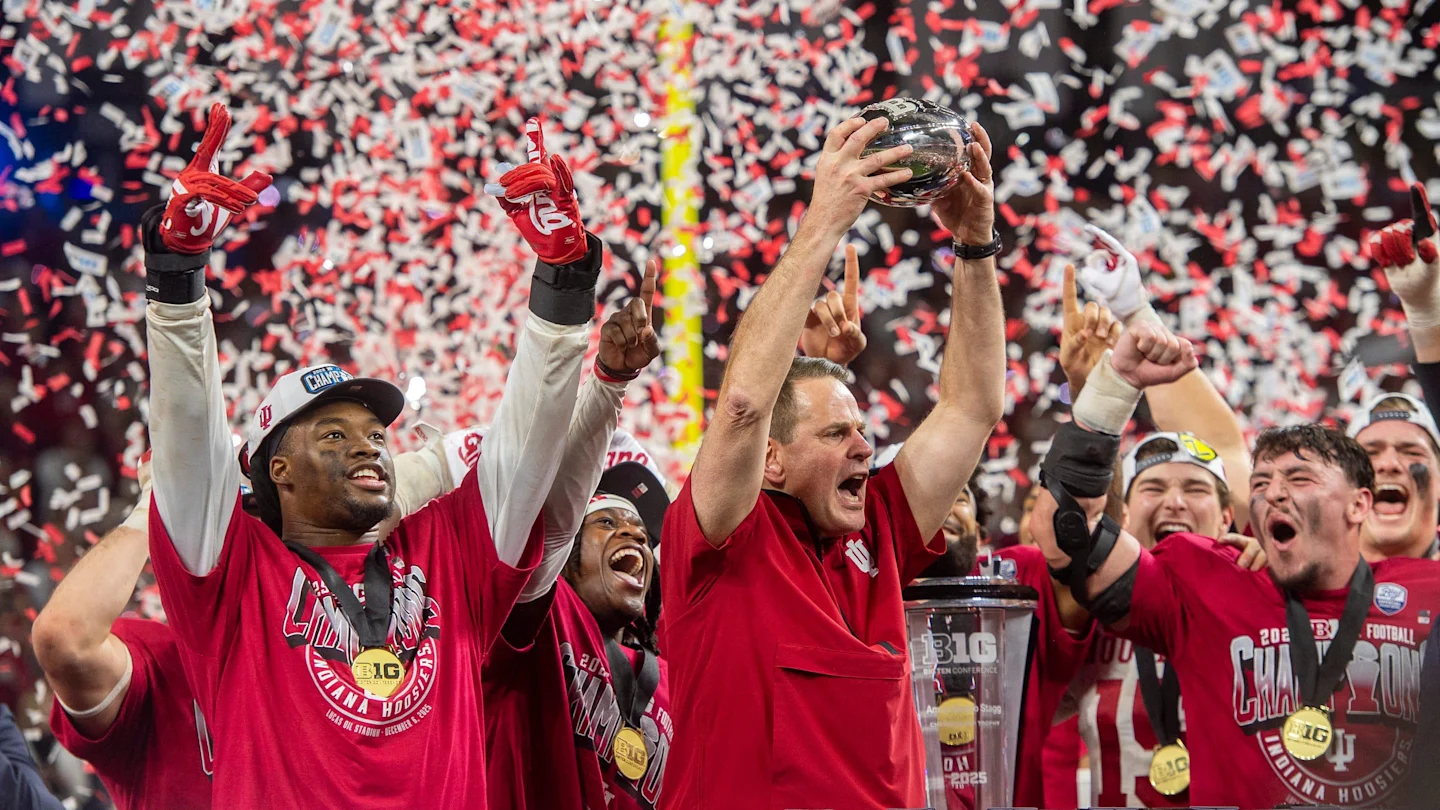
Head coach Curt Cignetti has rapidly transformed Indiana since his hire on November 30, 2023.
In 2024, he engineered one of the program’s quickest turnarounds, delivering a then-program-record 11-win season, Indiana’s first College Football Playoff berth, and national coach-of-the-year recognition.
Building on that momentum, the Hoosiers completed an undefeated 13–0 regular season in 2025, captured the Big Ten title, and entered the College Football Playoff as the No. 1 seed — a rise fueled by targeted transfer additions, improved recruiting, and a physical, high-tempo identity Cignetti installed.
One of those transfer additions was Heisman-winning quarterback Fernando Mendoza, who completed 71.5% of his passes for 2,980 yards, 33 touchdowns, and six interceptions.
Under Cignetti and Mendoza, Indiana now has a legitimate chance to compete for a national title, with a CFP quarterfinal matchup set for Thursday against No. 9 Alabama in the Rose Bowl (4:00 p.m. ET on ESPN).
If the Hoosiers advance, they would face the winner of the No. 4 Texas Tech–No. 5 Oregon matchup in the CFP semifinals, with a potential national championship game on January 19 looming.
As an Ohio native, Bloomington represents a logical fit for King due to the Midwest pull, and after redshirting his first year at Colorado, he would have a clearer path to playing time.
Indiana’s recent success, defensive back development, and growing NFL attention make it an attractive landing spot for a young, highly recruited cornerback seeking to develop and compete for championships.
Read More at College Football HQ
- College football program loses 16 starters to transfer portal
- $2 million college football QB predicted to have ‘untapped potential’ after entering transfer portal
- College football’s leading passer announces transfer portal departure in farewell note
- Major college football program linked to 1,800 yard RB in transfer portal
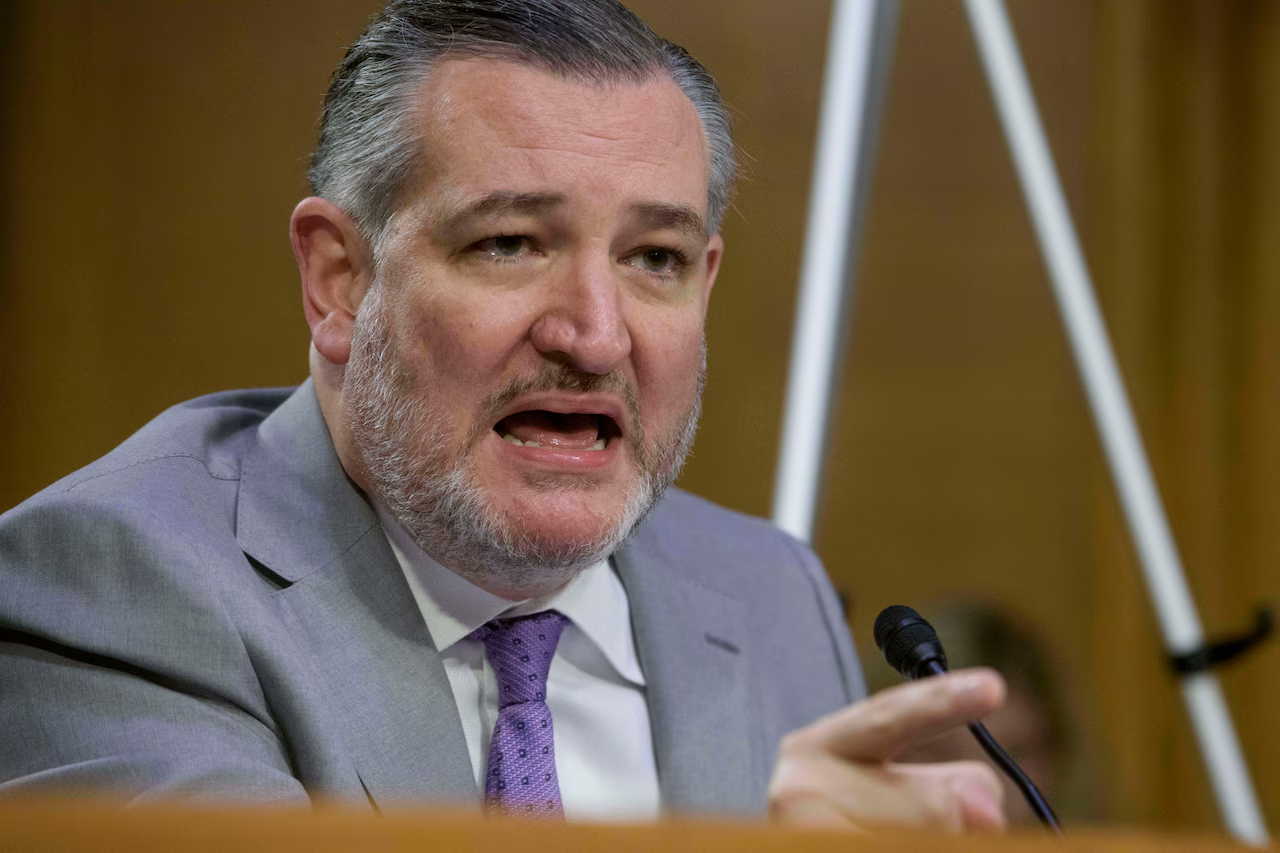
Senator Ted Cruz is taking a break from the usual political discourse to sound the alarm on college football.
On Tuesday, he quote-tweeted a college football account, highlighting the massive roster challenges Iowa State is facing. According to the post, the team has only 17 players remaining for next season with just one returning starter after a coaching change.
“An absolute crisis. Congress NEEDS to act,” Cruz wrote on X/Twitter. “For months, I’ve been working night (and) day to try to bring Republicans and Democrats together to save college sports. If we fail to do so, it will be an utter tragedy. And it’s happening right before our eyes.”
Iowa State is trying to steady itself after Matt Campbell, the winningest coach in school history, left for Penn State. This has set off a chain reaction that has unraveled the roster.
Campbell’s departure has resulted in at least 36 players leaving, according to College Sports Network, including quarterback Rocco Becht and leading tackler Marcus Neal. The losses have left Iowa State focused less on postseason ambitions and more on simply staying afloat.
Now the job of rebuilding falls to Jimmy Rogers, hired away from Washington State on Dec. 5. Rogers is in the process of re-recruiting players and assembling a new staff.
Iowa State’s situation is becoming more common in today’s college football. The rise of NIL (Name, Image, and Likeness) and constant coaching changes have made the sport unstable, with rosters changing almost overnight.
NIL refers to the ability of college athletes to earn money from endorsements, sponsorships, appearances, and other commercial uses of their personal brand.
Adopted nationwide in 2021, NIL allows athletes to profit without being paid directly by their schools for performance. While supporters see it as a long-overdue correction to amateurism, critics argue it has created an uneven, lightly regulated marketplace that has upended recruiting and competitive balance in college sports.
Constructing a college football roster is wildly different now than it was even three years ago, as the transfer portal, NIL and revenue sharing completely reshaped the way coaches and programs must operate.
There are plenty of teams that use the ability to (legally) pay players and the portal to their advantage, but the newness of everything related paying players and the lack of regulations in college football, due to the ever-weakening NCAA, created a number of challenges.
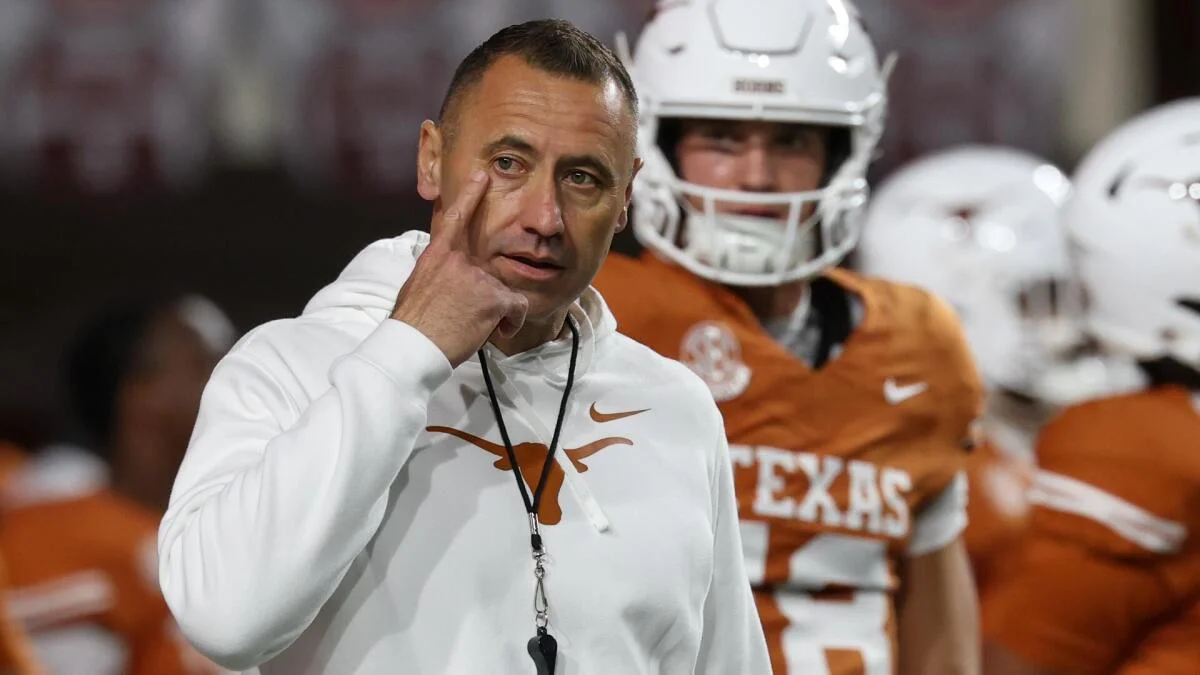
Texas coach Steve Sarkisian detailed one major problem he hopes to see addressed after a reporter asked about how he approaches building through the portal. Texas doesn’t have much issue with investment or resources, but Sarkisian explained that the lack of a certification process for agents can lead to some absurd situations.
“I think it’s all so strategic, right? It’s one about need. It’s two about money and the cost and where’s the market and which agent you’re dealing with,” Sarkisian said. “There are some agents that are rational, and there are some agents that this is the first time ever being an agent — I don’t know if they are even licensed to be agents, but all of a sudden they get to be agents because we have no certification process in college football. In the NFL, you have to be certified. In college football, it may be their college roommate their freshman year who’s their agent right now, and this guy is throwing numbers at you and it’s like, we can’t even deal with this. Like, you just move on. It’s unfortunate. And we’ll get there in college football, but right now it’s a tough situation.”
Coaches complaining about NIL and the portal often amount to sour grapes, but Sarkisian’s point about the challenge of dealing with agents which have no previous experience or understanding of the market is a legitimate one.
That said, you have to wonder if this is fresh in Sarkisian’s mind due to any of Texas’ opt-outs, as they have 13 players who announced intentions to enter the transfer portal and won’t play in the Citrus Bowl. Among them are the Longhorns top three running backs, headlined by Tre Wisner, and their second-leading receiver, DeAndre Moore Jr.
Eventually one would think some governing body will emerge that can provide some form of regulations on that sort of thing and require certification to help everyone out — as players would be better served being represented by more professional agents. However, it’s not clear when that will happen as the fear of anti-trust litigation led the NCAA to await congressional action, which has yet to materialize in any meaningful way.
In the meantime, coaches and GMs will have to deal with the occasional green agent who asks the world, which even a program with seemingly endless resources like Texas has to laugh off.

The college football transfer portal window opens soon with a flurry of high-profile movement expected across the country.
One of the most significant announcements comes from a veteran quarterback, with a reported $1.4 million valuation by On3, who declared his intention to seek a new home for his final senior campaign. This signal-caller brings a wealth of experience and production to the open market as teams look to solidify their rosters for 2026.
This prospect stands out as the most experienced returning starter in the Power 4 conferences with 39 career starts under his belt. He has accumulated 26 victories over the last three years and boasts 83 total touchdowns during his collegiate career. His decision to move on follows a challenging 2025 season where he battled through a partially torn labrum and an AC sprain while leading his team.
Speculation immediately centers on a reunion with his former head coach who recently departed for a prominent job in the Big Ten Conference. The two share a close relationship that could facilitate a quick transition to the new program in State College.
Analysts believe this connection makes the Nittany Lions a logical landing spot for the seasoned passer as he explores his options in a lucrative marketplace.
Quarterback Rocco Becht leaves Iowa State Cyclones to pursue new opportunities
Rocco Becht officially announced his decision to enter the NCAA transfer portal on Dec. 20 through a social media post. The Iowa State Cyclones standout thanked the fanbase and the program before stating his desire to find a new destination for his final year of eligibility. Becht leaves Ames as one of the most productive players in school history and as the coach who guided the team to its first 11-win season in 2024.
His entry into the portal comes shortly after Iowa State Cyclones head coach Matt Campbell accepted the head coaching position with the Penn State Nittany Lions. Campbell and Becht developed a strong bond during their time together in the Big 12 Conference.

Reports from ESPN’s Max Olson suggest Becht is a strong candidate to follow Campbell to Pennsylvania. However, the redshirt junior is expected to consider offers from other schools before finalizing his decision.
The market for experienced quarterbacks has grown expensive with top passers commanding deals in the $3 million to $4 million range. Becht offers a proven track record despite a statistically down year in 2025 caused by multiple injuries. He underwent surgery on his non-throwing shoulder recently to address a labrum issue that plagued him throughout the fall.
The 6-foot-1 quarterback threw for 2,584 yards and 24 touchdowns this past season while managing the physical setbacks. He ends his time at Iowa State with 9,274 passing yards and 64 passing touchdowns.
The NCAA transfer portal window will open for all players on Jan. 2.
Read more on College Football HQ
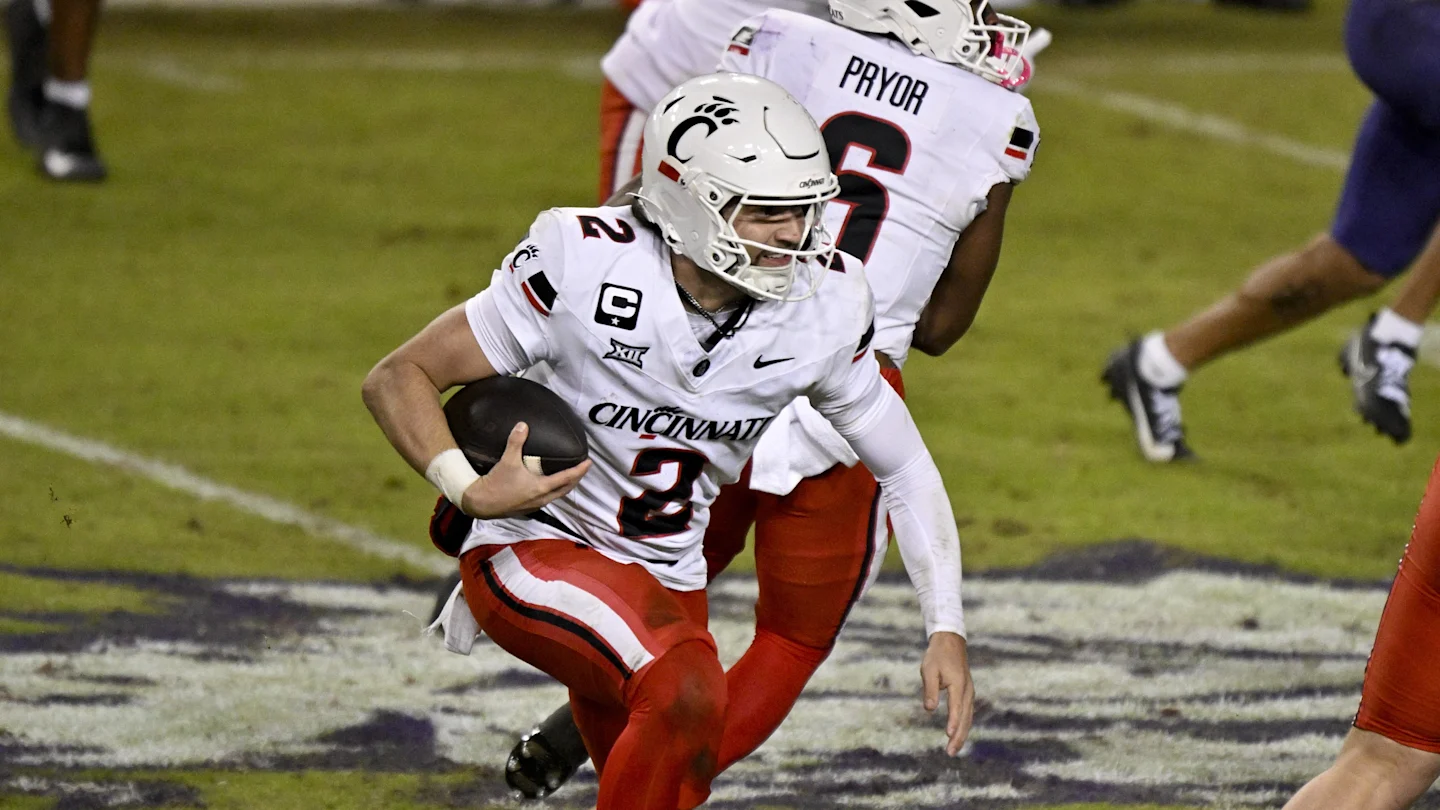
The NCAA transfer portal officially opens on Friday for all college football players seeking new programs to play for in 2026. The portal will stay open for the following two weeks.
Among the vast number of players who have entered the transfer portal, quarterbacks have received the most attention in recent weeks. No less than seven Power Four starters from the 2025 season are on the move, and there are a number of starters from the Group of Five ranks looking to move into the Power Four.
One Power Four starter on the move is Cincinnati quarterback Brendan Sorsby. He will have one season of eligibility remaining at his third school.
While Sorsby is an attractive starter candidate from the transfer portal, one of the strongest contenders lies within the Big 12.
The Athletic recently unveiled projections for each quarterback’s potential destination out of the transfer portal. One of the projections listed Sorsby transferring to Texas Tech in the 2026 offseason.
The Red Raiders are some of the most aggressive NIL spenders in college football, but they have seldom used the portal for a quarterback. Tyler Shough is the only quarterback Texas Tech has started from the portal under Joey McGuire, and he transferred to Louisville after suffering an injury and losing the job to Behren Morton.
Sorsby began his college football career at Indiana under Tom Allen in 2022. He redshirted that season, finishing 3-of-6 passing for eight yards and an interception in a blowout loss to Penn State.
The Hoosiers featured Sorsby in 10 games during the 2023 season. He passed for 1,587 yards, 15 touchdowns and five interceptions and rushed for 112 yards and four touchdowns. Allen was fired by Indiana that offseason, so Sorsby transferred to Cincinnati.

Scott Satterfield immediately named Sorsby as the Bearcats’ starter in 2024. He compiled 2,813 pass yards, 18 touchdowns and seven interceptions to go along with 447 rush yards and nine rush touchdowns. Cincinnati finished the year 5-7, losing each of its last five games.
Sorsby accumulated 2,800 passing yards, 27 touchdown passes and nine interceptions to go along with 580 yards and nine touchdowns on the ground. The 36 total touchdowns are the most in Cincinnati program history.
Since the portal opens on Jan. 2, Sorsby will not play in Cincinnati’s bowl game. The Bearcats (7-5, 5-4) will face Navy (10-2, 7-1) in the AutoZone Liberty Bowl (4:30 p.m. EST, ESPN).

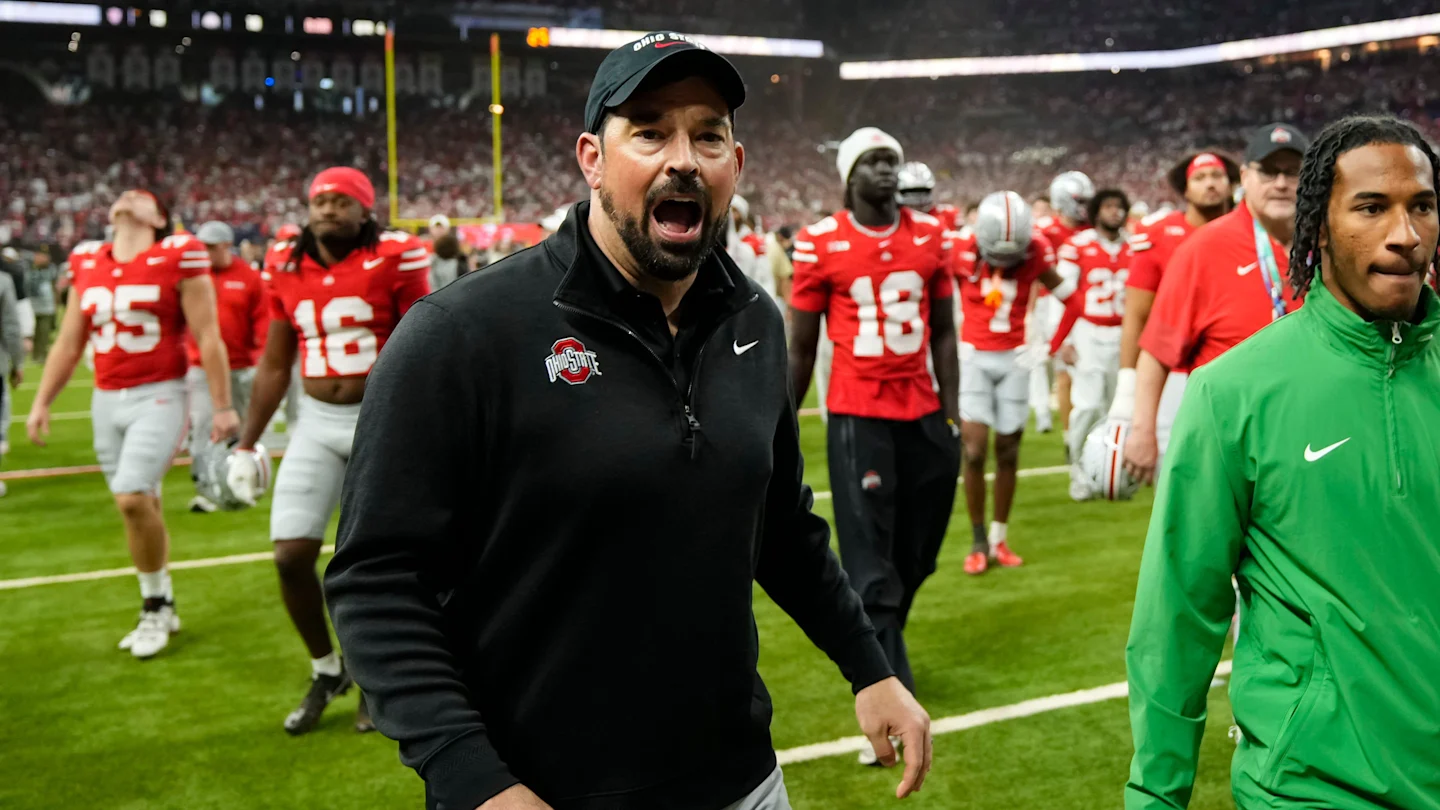
After entering the year ranked No. 2 in the AP Top 25 preseason poll, Penn State endured a turbulent 2025 season that included the firing of long-time head coach James Franklin, a disappointing 3–6 Big Ten conference record, and a late rebound capped by a 22–10 Pinstripe Bowl win over Clemson to finish 7–6.
Chaz Coleman, Penn State’s true freshman defensive end, emerged as one of the program’s more promising underclass pass-rush prospects in 2025, recording eight total tackles, three tackles for loss, one sack, one forced fumble, and two fumble recoveries across five appearances.
However, Coleman announced his decision to enter the transfer portal on December 18 and has since emerged as the No. 1-ranked player in the portal according to 247Sports.
Soon after, reports surfaced regarding Ohio State’s interest in portal edge talent, with On3’s Pete Nakos specifically naming Coleman and listing the Buckeyes among the programs already connected to him.
On Monday, Nakos again linked Coleman to Ohio State, noting significant mutual interest and that the two sides appear close to coming together.

Coleman is a Warren, Ohio, product who arrived at Penn State as a highly regarded high school prospect.
He was listed by On3 as a four-star recruit, the No. 25-ranked edge rusher nationally, and the No. 8-ranked prospect in Ohio, holding more than a dozen offers before choosing the Nittany Lions over Kentucky, Florida State, Illinois, Michigan State, Missouri, and Ohio State.
Ohio State compiled a 12–1 regular-season record in 2025, finished undefeated in Big Ten play before falling to Indiana in the conference title game, and entered the College Football Playoff as the No. 2 seed, drawing a quarterfinal matchup against Miami in the Goodyear Cotton Bowl Classic on Wednesday.
Coleman’s Ohio roots, size (6’4″, 240 pounds), and Ohio State’s recent success developing portal and transfer edge defenders into NFL-caliber players make the Buckeyes a logical fit.
Read More at College Football HQ
- $2.6 million QB ranked as No. 1 transfer in college football
- 25-touchdown RB shares farewell note after entering college football transfer portal
- College Football Playoff team loses All-Conference player to transfer portal
- College football team loses three All-Americans to transfer portal

Wisconsin Volleyball Trinity Shadd-Ceres Creighton transfer commitment

No. 1 college football team linked to underrated prospect in transfer portal

Letter: Kids’ sports too serious for the wrong reasons

Head Volleyball Coach in Wise, VA for University of Virginia’s College at Wise

Josh Hart to Sell Mopar Car Collection During January Kissimmee Mecum Auction

EP 14U softball, MHR football power youth sports in area | Sports

Ted Cruz warns of ‘utter tragedy’ if Congress fails to act on college football

SPORTS: Astoria’s volleyball team is seeing double

IHRA announces vision to restore Heartland Motorsports Park
Wisconsin should have more Winter Olympians. How can we make it happen?

Philippine Star – A DREAM SIX YEARS IN THE MAKING 🥇…

Heartland Motorsports Park Acquired by IHRA

Toxic Legacy: How Lead in Schools Is Silently Harming Black Kids

Sponsorship Opportunities Open for Marquee Events at Oxford Plains…

SCVNews.com | New Year, New You: Why Not Volunteer?

SoundGear Named Entitlement Sponsor of Spears CARS Tour Southwest Opener

Donny Schatz finds new home for 2026, inks full-time deal with CJB Motorsports – InForum

Black Bear Revises Recording Policies After Rulebook Language Surfaces via Lever

Bowl Projections: ESPN predicts 12-team College Football Playoff bracket, full bowl slate after Week 14

Men’s and Women’s Track and Field Release 2026 Indoor Schedule with Opener Slated for December 6 at Home

David Blitzer, Harris Blitzer Sports & Entertainment

How Donald Trump became FIFA’s ‘soccer president’ long before World Cup draw

Michael Jordan’s fight against NASCAR heads to court, could shake up motorsports

DeSantis Talks College Football, Calls for Reforms to NIL and Transfer Portal · The Floridian

Rick Ware Racing switching to Chevrolet for 2026
Elliot and Thuotte Highlight Men’s Indoor Track and Field Season Opener

JR Motorsports Confirms Death Of NASCAR Veteran Michael Annett At Age 39

23 عاما من الفضائح السياسية والجنسية منذ انقلاب حمد بن خليفة.. استغلال الفتيات الصغيرات في الدعارة.. ضبط ابنة رئيس وزراء قطر خلال ممارستها لجنس الجماعي.. ملامح الحكم تتخبط بين المنفي وتدخلات النساء

Colleges ponying up in support of football coaches, programs

#11 Volleyball Practices, Then Meets Media Prior to #2 Kentucky Match





-
 NIL3 weeks ago
DeSantis Talks College Football, Calls for Reforms to NIL and Transfer Portal · The Floridian
-
 Sports3 weeks ago
#11 Volleyball Practices, Then Meets Media Prior to #2 Kentucky Match
-
 Motorsports3 weeks ago
Nascar legal saga ends as 23XI, Front Row secure settlement
-

 Motorsports3 weeks ago
Sunoco to sponsor No. 8 Ganassi Honda IndyCar in multi-year deal
-
 Sports2 weeks ago
Maine wraps up Fall Semester with a win in Black Bear Invitational
-
 Rec Sports3 weeks ago
WNBA’s Caitlin Clark, Angel Reese and Paige Bueckers in NC, making debut for national team at USA camp at Duke
-

 Motorsports2 weeks ago
Ross Brawn to receive Autosport Gold Medal Award at 2026 Autosport Awards, Honouring a Lifetime Shaping Modern F1
-
Motorsports3 weeks ago
NASCAR, 23XI Racing, Front Row Motorsports announce settlement of US monopoly suit | MLex
-

 Motorsports3 weeks ago
Rick Hendrick comments after the NASCAR lawsuit settlement
-

 Sports3 weeks ago
Hope College Tops MIAA Commissioner’s Cup Fall Update