
NIL
Can Trump save college sports?


Last month, President Donald Trump finally waded into the college sports landscape with yet another executive order. Boldly titled “Saving College Sports,” the order comes after months of signaling his administration was going to fight on one more university battleground. Much like his other executive orders regarding colleges and universities, this one includes some good, some bad, and a lot of confusing open ends. Its highest usefulness, perhaps, is how it encapsulates most of the fault lines and growing pains plaguing college sports’ transition from school-sanctioned “amateurism” to something similar yet fundamentally different as student athletes are finally more fully compensated for their labors.
Back in May, Trump created a presidential commission on college sports, which included former Alabama and LSU head coach Nick Saban and billionaire and Texas Tech booster Cody Campbell. Saban lauded the executive order, having raised many of the complaints included in it over the past several years.
The order follows a landmark settlement in June between the NCAA, the nation’s largest sports conferences, and lawyers representing all Division I athletes that, for the first time, permits schools to pay student-athletes directly. The ruling in Grant House and Sedona Prince v. National Collegiate Athletic Association is the next major break from the old system that began in 2021 with the allowance that college athletes could receive compensation for their name, image, and likeness, colloquially known as NIL deals.

As ESPN’s Dan Murphy explains, since 2021, “college athletes have been allowed to make money from third parties via name, image and likeness deals. Boosters quickly organized groups called collectives that used NIL money as de facto salaries for their teams, in some cases paying millions of dollars mostly to top-rated basketball and football players. Now, that money will come straight from the athletic departments.” The settlement ended three separate federal antitrust lawsuits, which argued, correctly, in my opinion, that the NCAA was illegally limiting the earning power of college athletes. Furthermore, “The NCAA will pay nearly $2.8 billion in back damages over the next 10 years to athletes who competed in college at any time from 2016 through present day. Moving forward, each school can pay its athletes up to a certain limit. The annual cap is expected to start at roughly $20.5 million per school in 2025-26 and increase every year during the decade-long deal. These new payments are in addition to scholarships and other benefits the athletes already receive.”
In addition, the settlement stipulated that beginning July 1, any endorsement deal between athletes and third-party vendors and boosters will be vetted by the recently formed College Sports Commission to determine if it is for a “valid business purpose.” It is into this morass that Trump’s “Saving College Sports” order waded less than a month later.
The order touches on several key areas that are worth going over, not to find clarity — there is none, nor shall there be for the foreseeable future, unfortunately — but to better comprehend the thorniest briars at play in the landscape of college sports and to determine what direction Congress and other executive agencies might go in the future.
In perhaps its most confusing section, the order prohibits “third-party, pay-for-play payments to collegiate athletes.” According to its fact sheet, “This does not apply to legitimate, fair-market-value compensation that a third party provides to an athlete, such as for a brand endorsement.” Crucially, pay-for-play payments are already barred under NCAA rules and have been since the NIL allowances were put in place. For example, a Texas oil billionaire can’t give his alma mater’s star wide receiver $1 million simply because he’s a very good wide receiver who plays for his team. Instead, what we have is what was explained above, endorsement deals by third-party vendors or boosters to pay players for their name, image, or likeness. This hypothetical Texas booster cannot pay for on-the-field performance, but Pete’s Tires And Also Oil could pay that same player for appearances at their store or in their commercials. This is, of course, the same thing with just more steps, and the order offers no clarity or differentiation from the status quo. Indeed, it does not aid in the definition of terms or delineation of what is a legitimate business purpose as required by the College Sports Commission and the House v. NCAA settlement. This is one of the major litigation and regulation hurdles for college sports, determining where these lines are.

As the great Andy Staples points out, this commission enforcement arm has already had to retract some of its rulings dictating which third-party payment businesses were considered legitimate. It originally barred businesses charging for the opportunity to meet players, but it was forced to revoke that stricture once players’ lawyers argued that it is, quite obviously, a legitimate business model in any other context, such as the service Cameo or any number of celebrity meet-and-greet models.
There remains a further lack of clarity, as well, whether these collectives are viewed as an arm of the schools or if they stand alone as third-party actors or somewhere in between. This is particularly important as it pertains to the $20.5 million revenue-share cap imposed by the House ruling: If collectives are beneath the school umbrella, what amount are they permitted to funnel to specific sports, and through what method? If they remain outside, then any direct-to-athlete or direct-to-recruit endorsement payments continue to elide that cap, as is the case now, with countless headline-grabbing million-dollar payouts to star transfers.
Speaking of million-dollar payouts to star players, the order also includes the frankly baffling concept of monitoring a “fair-market value” for these payments. Firstly, what is fair-market value? Excepting bumbling governmental intervention, fair-market value is simply what people will pay. As Jake Crain of the Crain & Company show put it, this idea is “frankly un-American.” Furthermore, the idea of the College Sports Commission being tasked with this adjudication is laughable. The notion that, whether by algorithm or convention, they must determine every single payment over $600 to a student athlete to ensure it is not only for “a valid business purpose” but that it also meets some nebulous concept of “fair-market value.” Are deals weighted by geography and regional capital? Are positions — quarterback, running back, shooting guard, libero, coxswain — all weighted differently in compensation allowances? What about brand name, conference pedigree, or team quality? Arch Manning, Texas’s star quarterback of Manning family fame, undoubtedly has a higher Q Score than Taylen Green, my quarterback at the University of Arkansas. Manning has also won fewer games than Green, but he plays on a better team. One is reportedly receiving more than $6 million in NIL deals, the other only around $2 million. Is this difference representative of the fair-market value range? Is it “fair” that one receives three times the other while both receive 10-15 times more than offensive linemen on their teams? Who knows? Definitely not the government, I can tell you that, and probably not the College Sports Commission either.
On one of the thorniest issues for college sports, the executive order punts. And wisely so, I might add. “The Order directs the Secretary of Labor and the National Labor Relations Board to clarify the status of student-athletes in order to preserve non-revenue sports and the irreplaceable educational and developmental opportunities that college sports provide.” This direction is regarding whether student athletes should be legally, financially, and contractually considered as employees, contractors, the vaguely defined “amateurs,” or some fourth thing somewhere in between.

Calling student athletes “amateurs” was the NCAA’s decadeslong dead horse it’d lovingly trot out to beat any time it would receive correct pushback about not paying players any portion of the billions of dollars its collective efforts garnered every year. It still holds sway among many fans and lawmakers, and it is fairly clear — if not from the order, then from Trump, Saban, and the brain trust around his college sports policy team — this part of the order wishes the NLRB to define athletes’ status closer to the amateur designation than employee one. Nevertheless, not attempting to unilaterally define what is one of the crux issues at play in how and how much athletes are compensated is a wise decision from Trump and his team, as whatever answer we arrive at eventually will be one undoubtedly won in a courtroom.
The order also notes, but does not address in any detail, several additional considerations that often are overlooked in conversations about college football and basketball NIL deals and television rights. These include “the preservation and, where possible, expansion of opportunities for scholarships and collegiate athletic competition in women’s and non-revenue sports” and a directive to the “Assistant to the President for Domestic Policy and the Director of the White House Office of Public Liaison to consult with the U.S. Olympic and Paralympic Teams and other organizations to protect the role of college athletics in developing world-class American athletes.” There is a real fear, and potential, unfortunately, that the increased domination of the two major college sports and the coalescing of all major Division I schools into “super conferences” will crowd out the funding, considerations, and attention of other sports such as track, hockey, gymnastics, swimming, volleyball, and so on. This also relates to the development of U.S. Olympic athletes, the vast majority of whom participate in collegiate athletics.
While offering, quite bluntly, very little new to the conversation, the executive order at least makes clear the Trump administration’s priorities — largely aimed at preserving what remains of the old college sports status quo while providing regulated allowances to paying student athletes. As I have made clear, I have both functional and intellectual qualms with the design of some of these priorities.
But I want to acknowledge that I do agree with the purpose of them. Trump, Saban, and company are correct that the current system is untenable and could rupture into something unrecognizable from the college sports landscape that we all grew up with and fans such as myself have loved, pain and all, for as long as I can remember. Paying players is right and good, and much of this will, when the dust settles, shake out into something I expect to be far better than the worst-case scenario. But that reality does require some messy policy making and court battles: managerial due diligence that the NCAA and its feckless nanny-staters and hangers-on simply ran away from when they opened the doors to the wild west back in 2021 without a plan. Indeed, it’s quite clear their plan was Pontius Pilate’s: wash their hands of the whole enterprise and leave it to the government.
TRUMP SHOULD BREAK THE COLLEGE PIPELINE
As Trump’s order notes, there are 30 different state-level NIL laws and countless lawsuits working their way through various courts. Things are, in a word, messy, and will remain so for the time being until a more cohesive way forward is made. Congress is trying its hand with various salves, the most prominent college sports bill being the bipartisan SCORE Act. Sadly, it’s not a very good bill and is likely to face heavy resistance in the Senate — it is already being opposed by several states’ attorneys general, led by Tennessee’s Jonathan Skrmetti.
That’s not to say the sky is falling, though. The tumult of NIL and conference realignment will continue for some time before settling, but the sports themselves will stay at least as long as the television deals and generational rivalries do. Once we get some decent reins on this thing, it’ll run just fine.


Arizona State finished the 2025 season 8–5 (6–3 Big 12) and closed with a narrow 42–39 Sun Bowl loss to Duke, capping a year that followed the program’s breakthrough 2024 run, which included an 11–3 finish and a College Football Playoff appearance.
Head coach Kenny Dillingham returned an offense built around quarterback Sam Leavitt, who appeared in just seven games before a lingering foot/leg injury required season-ending surgery on October 31, abruptly ending his second season in Tempe.
Through those seven games, he completed 145-of-239 passes (60.7%) for 1,628 passing yards, 10 TDs, and three INTs (129.2 passer rating) and added 73 rushes for 306 yards and five rushing TDs.
Leavitt originally committed to Michigan State in 2023 as a four-star prospect and the No. 21 quarterback in the 2023 class per the 247Sports Composite, spending one season with the Spartans before transferring to Arizona State ahead of the 2024 campaign.
He quickly established himself as the Sun Devils’ starter, throwing for 2,885 yards with 24 touchdowns and six interceptions during his first full season in 2024, adding 443 rushing yards and five rushing scores.
However, Leavitt informed Arizona State of his intention to enter the transfer portal on December 15 and is widely viewed as the top quarterback expected to hit the market when the window opens, classified as a redshirt sophomore with two seasons of eligibility remaining.
On Wednesday, On3 analyst J.D. PicKell identified Oregon and LSU as the two programs generating the most “buzz” around Leavitt, framing the decision as a balance between a homecoming and scheme fit at Oregon and an SEC, development-first opportunity under Lane Kiffin at LSU.
“The intel from Pete Nakos is pointing to two horses being in the race for Sam Leavitt right now, and that’s Oregon and LSU… I personally am under the belief that Dante Moore will go back to Oregon for another season, which then points to Sam Leavitt ending up at LSU. That to me makes the most sense from a fit perspective.”
“He (Leavitt) thrived in an RPO offense at Arizona State. You don’t need to reinvent the wheel. You don’t need to go prove something drastically different and go seek out an NFL offense. Just go play against better competition in the SEC. Go play for a guy in Lane Kiffin who has specialized in bringing in transfer players and elevating them at a really high level.”
“If I’m Lane Kiffin, this is my number one guy. I am calling him as soon as the transfer portal opens for business,” PicKell added.

Leavitt is an Oregon native and would be returning to a program that runs a high-tempo, RPO/shot-yardage offense that can incorporate his dual-threat skillset, though uncertainty surrounding Dante Moore clouds an immediate starting opportunity.
Meanwhile, at LSU, Lane Kiffin has a proven track record of maximizing transfer quarterbacks, most notably Ole Miss’ Trinidad Chambliss and current NFL QB Jaxson Dart, while consistently producing pro-level film against elite SEC competition, an appealing path for Leavitt as he returns from injury seeking development and exposure.
LSU also presents a clear roster need: starter Garrett Nussmeier is expected to depart after five seasons in the program, and backup Michael Van Buren Jr. has limited game experience, creating an immediate starting opportunity for Leavitt.
As the process unfolds, Leavitt’s decision is shaping up to be a choice between immediate SEC exposure and an opportunity at LSU, or a regional and schematic fit at Oregon that could offer greater continuity.
The transfer portal window opens Friday and runs through January 16, with Leavitt rumored to command up to $5 million in NIL compensation, a valuation that would rank among the highest in college football.
Read More at College Football HQ
- College football’s leading passer linked to two programs in transfer portal
- First-team All-Conference college football starter enters transfer portal
- All-Conference WR enters college football transfer portal after breakout season
- No. 1 college football team linked to underrated prospect in transfer portal

The finances of the transfer portal are constantly shifting and adjusting. Before the institution of the revenue sharing cap, some massive numbers circulated: Darian Mensah’s $4 million per year deal at Duke was one of the more notable deals. But even in the current portal cycle, there are potential game changers.
A pair of CBS Sports writers, Chris Hummer and John Talty, surveyed the portal world and tried to define the financial grind of acquiring new players. While Hummer and Talty ultimately defined the wide receiver position, one of the higher priced groups, at a high end value of $1 million to $2 million for a top player, they did not include one potential contingency.
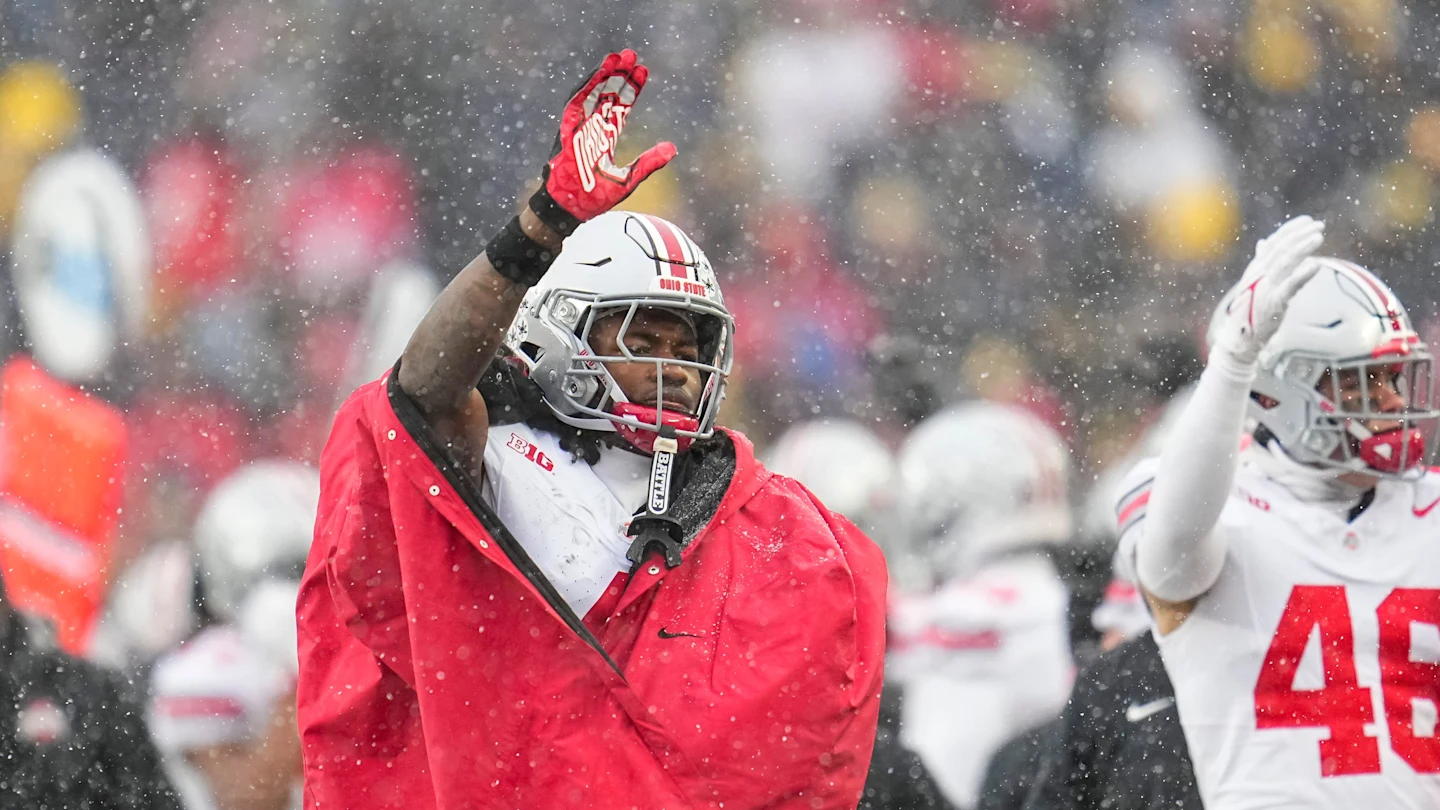
Ohio State star Jeremiah Smith is widely considered the top player in college football heading into the 2026 season. For that matter, Smith was arguably the best player in 2025. Hummer and Talty spoke with one Big Ten general manager who said that Smith, were he in the portal, “could command up to $4 million for one year of his services should he transfer.”
Before any Buckeye backers lose sanity, Hummer and Talty were careful to note that the issue is hypothetical– there has been no indication that Smith is even considering entering the portal. The writers noted that the gap of approximately $2 million between Smith and the top value for a portal receiver (at this point, Auburn transfer Cam Coleman). “Smith is a cut above the rest of the sport,” they wrote.
Even in CFP defeat to Miami, Smith was indeed standing alone atop college football. After a brilliant 2024 season as a freshman, he ends 2025 with 87 receptions for 1,243 yards and 12 touchdowns. He finished the year with his sixth 100+ yard game, with a season-best 157 yards on seven catches. He will likely finish re-writing the Ohio State record book in 2026.
On3Sports ranks Smith third in college sports with a $4.2 million estimated NIL valuation. That’s more than $1 million ahead of fourth-place Carson Beck (the two players ahead of Smith are Texas QB Arch Manning and college hoops star AJ Dybantsa). On3 ranks Cam Coleman as the second-leading wide receiver in its valuation rankings at $1.8 million.
Among the massive entities that Smith has NIL deals with are Nintendo, adidas, American Eagle, and 7-Eleven. He would likely be the projected top pick in the 2026 NFL Draft, but he’s still a year young to be able to enter the Draft. Accordingly, he’s the presumptive 2027 top pick and will have a banner NIL year in college– although perhaps not as big of a year as he might have on the open market as the potential biggest transfer star ever.
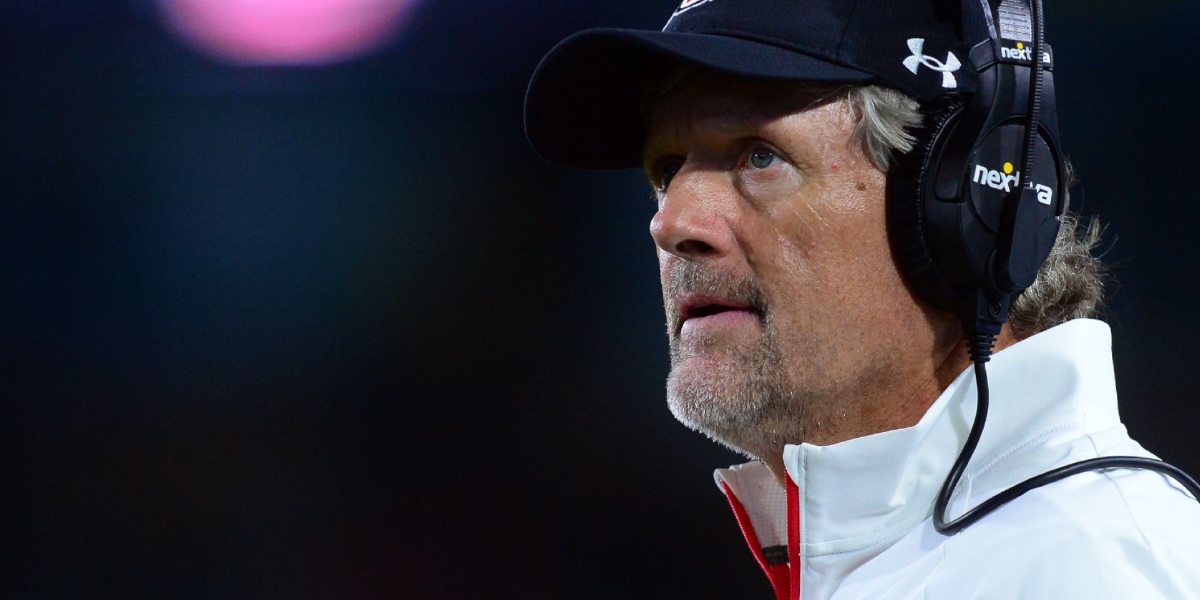
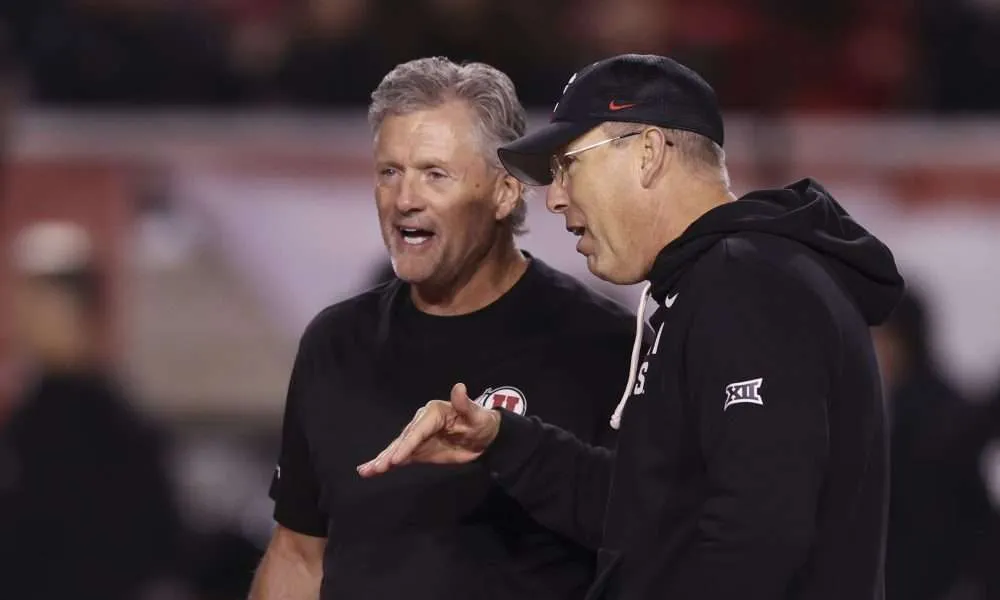
FOX analyst Joel Klatt admitted the hiring of Kyle Whittingham by Michigan caught even the most plugged-in voices in college football by surprise. Still, he believes it may ultimately prove to be a program-defining move.
Speaking on The Joel Klatt Show, Klatt described the hire as both unexpected and masterful. He credited Michigan athletic director Warde Manuel for keeping the process quiet during a turbulent stretch for the program.
“This was massive, and I got to tell you, a little bit out of left field,” Klatt said. “I had not heard his name. It was very quiet. It was below the surface. Give Warde Manuel a lot of credit on this one.”
Alas, Michigan moved quickly after firing Sherrone Moore earlier this month following an investigation into an inappropriate relationship with a staff member. In Whittingham, the Wolverines landed one of the most respected and stable figures in the sport after a coaching search that came with significant challenges.
Klatt made it clear his enthusiasm for the hire goes beyond Whittingham’s on-field résumé: “I love this hire not just because I’m very fond of Kyle Whittingham and his style of coaching,” Klatt added. “But because of what Michigan was facing in this entire ordeal. There were many challenges.”
Moreover, Whittingham spent 22 seasons at Utah, becoming one of the longest-tenured head coaches in college football. Many assumed his resignation signaled retirement, but instead, he opted for a new challenge in Ann Arbor. Now, he’ll be stepping into a program just two years removed from a national championship in 2023.
Continuing, Klatt repeatedly emphasized Whittingham’s integrity and player-first approach, offering perhaps the highest praise a coach can receive: “My highest compliment that I can ever repay is that I would love my sons, if they ever played college football, to go play for Kyle Whittingham,” Klatt explained. “He’s a winner. He’s going to go to the Hall of Fame.”
At Utah, Whittingham compiled a 177–88 record, won two Pac-12 championships, posted eight double-digit win seasons and famously went 13–0 in 2008, capped by a Sugar Bowl victory over Alabama. His teams were defined by physicality, discipline and consistency. Those are traits Michigan is eager to restore.
Now, with Big Ten resources, elite recruiting infrastructure and a roster still stocked with high-level talent, Whittingham views Michigan as more than a late-career stop: “He looks at this as an opportunity to actually go out there and compete for a national championship,” Klatt concluded.
After weeks of uncertainty, Michigan found exactly what it needed, hiring a proven winner, a steady hand and a coach capable of restoring trust. All while keeping the Wolverines firmly in the national title conversation.
NIL
FSU football announces new operations model, hires John Garrett as Deputy Athletics Director and General Manager of Player Personnel
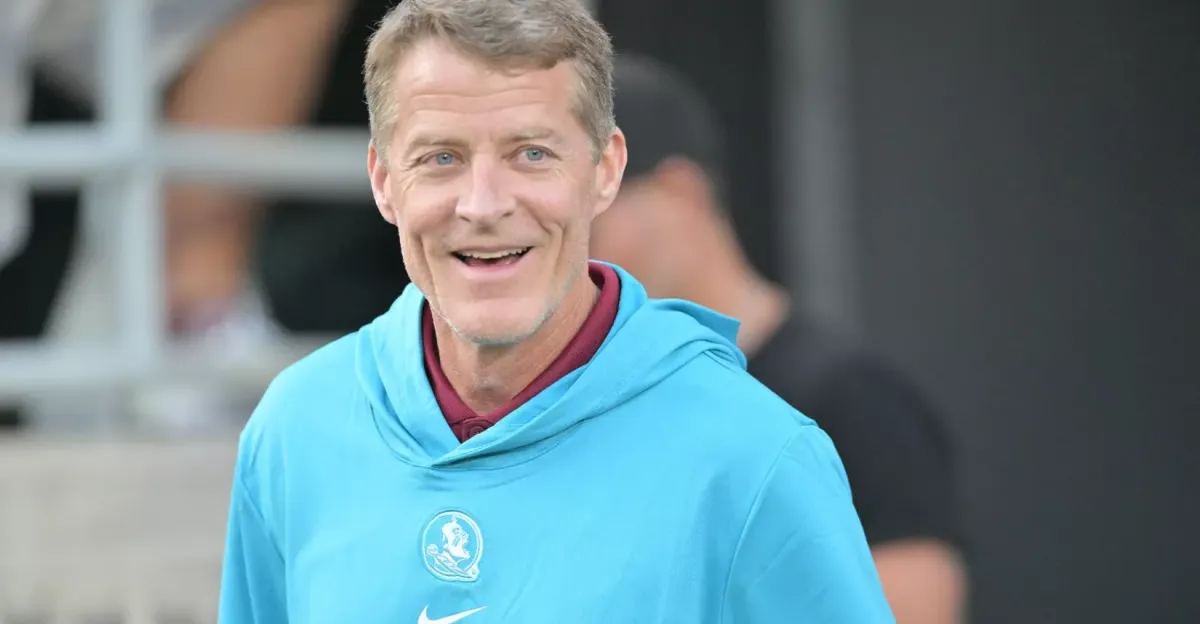
Florida State University Vice President and Director of Athletics Michael Alford announced the hiring of John Garrett as Deputy Athletics Director and General Manager of Player Personnel, a newly created position that will oversee all football roster construction, player evaluation, recruiting operations, and NIL integration. Garrett joins Florida State from Duke University, where he served as General Manager of Player Personnel.
Garrett will report directly to Alford and work in close partnership with head football coach Mike Norvell, aligning Florida State’s football program with an NFL-style operational model designed to maximize competitive success in the evolving college football landscape.
Garrett brings extensive experience across college football operations, player personnel, and strategic planning. He spent the last two seasons at Duke, where he helped build rosters that won 17 games and the 2025 ACC championship. He played a key role in roster management, recruiting coordination, and the integration of analytics and evaluation processes into football decision-making.
“This is a transformational step for Florida State Football,” Alford said. “The college game has fundamentally changed, and elite programs must operate with the same discipline, structure, and clarity of roles as professional organizations. John Garrett brings a proven background in roster management, player evaluation, and operational leadership that will allow our coaches to focus on coaching while ensuring we are building our roster in a smart, sustainable, and competitive way.”
Prior to his stint at Duke, Garrett played a pivotal role in FSU’s return to prominence while serving as director of scouting for offense during the 2022 and 2023 seasons at a critical moment when roster building in college football was rapidly changing. He helped bring an NFL-style evaluation approach to FSU, focusing on disciplined film study, transfer-portal assessment, and roster analysis to support smarter personnel decisions. During his first stint at FSU, the Seminoles posted a 23-4 overall record, including a perfect 13-0 regular season in 2023 that culminated in the program’s first ACC championship since 2014.
Garrett’s work emphasized identifying players who could contribute immediately, understanding positional needs and depth, and reducing risk in an increasingly competitive NIL and portal environment. Garrett’s role strengthened how the program evaluated talent and laid important groundwork for the front-office model now used across major college football programs.
Garrett was the head coach at Lafayette College from 2017-21 and also has collegiate coaching experience as the offensive coordinator at Oregon State and Richmond and wide receivers coach at Virginia. He has 18 years of experience in the NFL, spending six seasons with the Dallas Cowboys, including his last two seasons as passing game coordinator, as well as with the Cincinnati Bengals, Arizona Cardinals and Tampa Bay Buccaneers.
Garrett earned his bachelor’s degree in history from Princeton in 1988. He and his wife, Honor, have four children, John Jr., Honor, Olivia and Caroline. His brother, Jason, was head coach of the Dallas Cowboys from 2010-19, and their father, Jim, spent 38 years in the NFL as a scout and assistant coach.
FSU’s New Football Operations Model
Under the new structure, Florida State Football will operate with a clear division of responsibilities between on-field coaching and off-field football operations:
• The Deputy AD/GM of Player Personnel will lead all aspects of roster construction alongside Coach Norvell, including high school recruiting strategy, transfer portal acquisition and retention, scholarship allocation, and long-term personnel planning.
• The Head Coach and coaching staff will maintain full authority over player development, game preparation, culture, and on-field performance.
• Football NIL, player evaluation, and recruiting analytics will be centralized and integrated into a single operational framework to ensure alignment, compliance, and competitive efficiency.
“John and I share a vision for building a championship program in today’s collegiate athletics structure,” Norvell said. “He was a valuable part of our staff when he was here previously, and I’m excited he will be leading this restructuring of our player personnel efforts. This new model shows our investment and will make us more efficient while enhancing player development, scouting and retention in a collaborative environment.”
Garrett is widely respected for his ability to balance competitive ambition with long-term program health.
“I am excited to return to Florida State University and to work closely with Michael Alford, Coach Norvell and the rest of the Florida State football staff,” Garrett said. “We will lead a collaborative effort to build a football team with the right kind of student-athletes that will consistently compete for championships. We will build a team that will make everyone associated with Florida State University proud to be a Seminole. Go Noles!”
The enhancement of the Deputy AD/GM of Player Personnel role and the restructuring of football operations reflect Florida State’s commitment to adapting proactively to ongoing changes in college athletics, including NIL, the transfer portal, and the increasing complexity of roster management.
“This is about putting Florida State Football in position to win, now and in the future,” Alford said. “We are investing in people, processes, and structure that give our student-athletes and coaches every opportunity to succeed.”
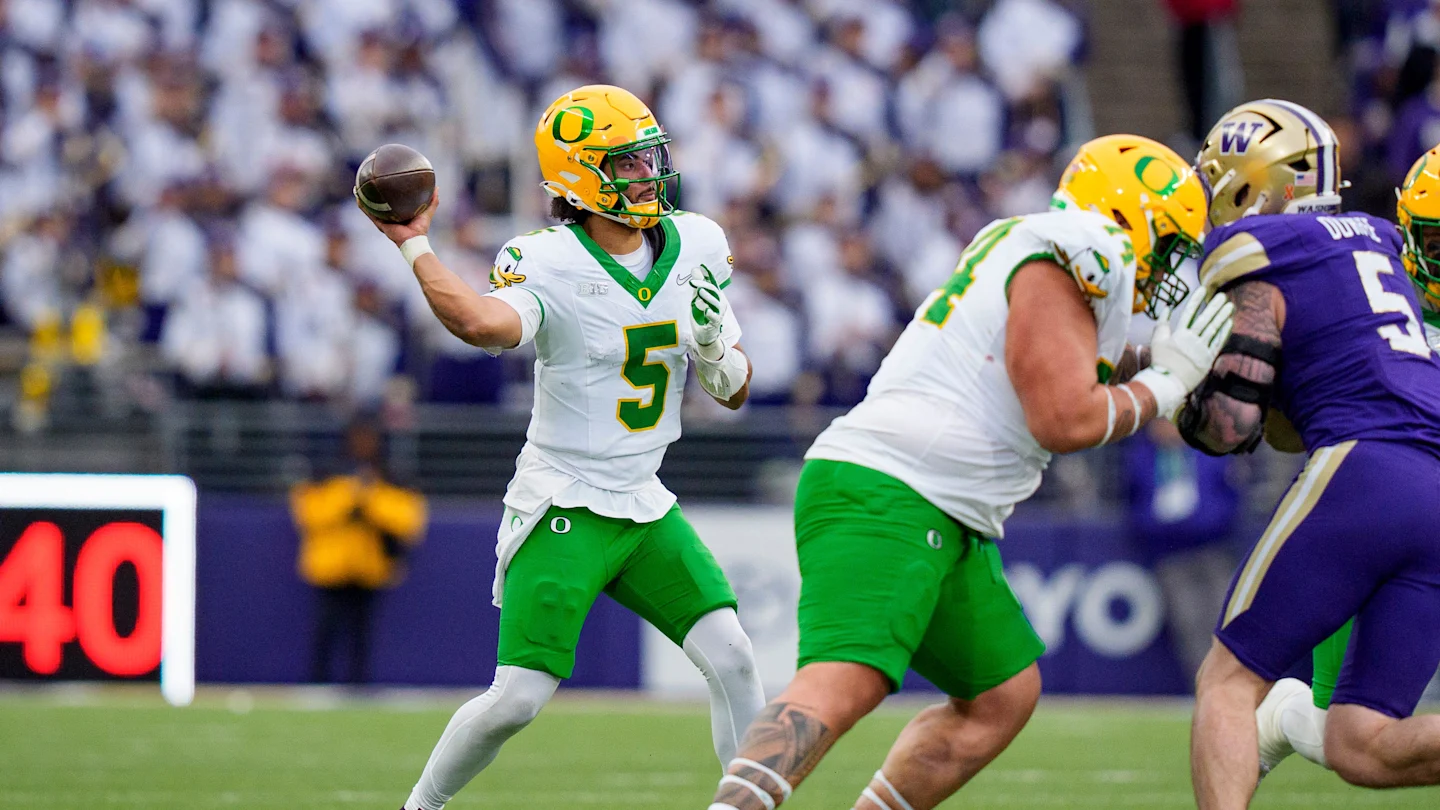
The 2026 NFL draft officially opens on April 23 in the shadows of Acrisure Stadium in Pittsburgh, Pennsylvania.
A prominent discussion around the draft is about the organizations in need of quarterbacks and which quarterbacks are expected to be selected in the first round.
Drafts like 2018 and 2021 have featured five quarterback selections in the first round. The 2022 NFL draft only featured one quarterback (Kenny Pickett) in its first round.
The 2026 NFL draft figures to split the difference. While there are franchises that need new quarterbacks, the number is limited to the ones drafting at the very top of the first round.
As for the quarterbacks who will be selected in the first round, Fernando Mendoza of Indiana and Dante Moore of Oregon are the two who have been connected with the very top of the order. Ty Simpson of Alabama has also been floated as a first-round choice, but his position is less well-known than Mendoza and Moore.
The Athletic compiled a projection of how each NFL team missing the playoffs is expected to approach the draft. The projection linked Moore with the Las Vegas Raiders.

Currently, the Raiders hold the worst record in the NFL at 2-14, putting them in line for the No. 1 overall pick. However, one week remains in the 2025 NFL regular season, and with a handful of teams at 3-13, the draft order can change if the Raiders win their regular-season finale.
Unless the season has produced one of the worst records in the league, a starting quarterback is not a position NFL teams look to draft in the first round.
The last multi-year starting quarterback the Raiders drafted was Derek Carr in the 2014 NFL draft, but that was in the second round. JaMarcus Russell is the last quarterback the Raiders selected in the first round, all the way back in 2007. Before Russell, the last quarterback the Raiders drafted in the first round was Todd Marinovich in 1991.
While the trend of the Raiders drafting first-round quarterbacks is few and far between, Oregon is no stranger to having its quarterbacks selected in the first rounds of NFL drafts. Dating back to 2015, Marcus Mariota, Justin Herbert and Bo Nix have all been selected by NFL franchises in the first round of the NFL draft.
Moore began his college football journey at UCLA in 2023. He played nine games for the Bruins and passed for 1,610 yards, 11 touchdowns and nine interceptions.
When Chip Kelly left UCLA to become Ohio State’s offensive coordinator that offseason, he transferred to Oregon.
After redshirting in 2024, he became the Ducks’ starter in 2025. Ahead of the College Football Playoff quarterfinals, Moore has thrown for 3,046 yards, 28 touchdowns and eight interceptions while rushing for 196 yards and two touchdowns.

NASCAR star Kyle Larson makes bold ‘best racetrack’ claim – Motorsport – Sports

No. 1 transfer portal QB clearly linked to two major college football programs

Blum outside hitter takes top honor on Texas 1A all-state volleyball team | Associated Press

BangShift.com IHRA Acquires Heartland Motorsports Park In A Move To Resurrect Yet Another Abandoned Race Track!

Philippine Star – WELCOME TO UBE NATION! 💜 Professional…

Experts say NASCAR likely settled lawsuit for millions

Blum outside hitter takes top honor on Texas 1A all-state volleyball team | Sports

Jeff Gordon reflects on 2025 NASCAR championship, looks to 2026: ‘I’m incredibly optimistic’

Belmont Student-Athletes Have Another Impressive Semester in the Classroom

College Football GMs Became Must-Have in 2025

Rev Your Engines for 2026
Great season for Italian women’s volleyball crowned with the world title – FIVB

Flores Or The Field, Who Has The Edge At 10th Allentown Indoor Series Opener – Speedway Digest

OBITUARY: Judith Lee (Goodwin) O’Leary

Boys Track Small but Mighty at Recent Meet

SoundGear Named Entitlement Sponsor of Spears CARS Tour Southwest Opener

Donny Schatz finds new home for 2026, inks full-time deal with CJB Motorsports – InForum

Black Bear Revises Recording Policies After Rulebook Language Surfaces via Lever

David Blitzer, Harris Blitzer Sports & Entertainment

How Donald Trump became FIFA’s ‘soccer president’ long before World Cup draw

DeSantis Talks College Football, Calls for Reforms to NIL and Transfer Portal · The Floridian
Elliot and Thuotte Highlight Men’s Indoor Track and Field Season Opener

JR Motorsports Confirms Death Of NASCAR Veteran Michael Annett At Age 39

Rick Ware Racing switching to Chevrolet for 2026

#11 Volleyball Practices, Then Meets Media Prior to #2 Kentucky Match

Colleges ponying up in support of football coaches, programs

23 عاما من الفضائح السياسية والجنسية منذ انقلاب حمد بن خليفة.. استغلال الفتيات الصغيرات في الدعارة.. ضبط ابنة رئيس وزراء قطر خلال ممارستها لجنس الجماعي.. ملامح الحكم تتخبط بين المنفي وتدخلات النساء

Nascar legal saga ends as 23XI, Front Row secure settlement
West Fargo volleyball coach Kelsey Titus resigns after four seasons – InForum

23 عاما من الفضائح السياسية والجنسية منذ انقلاب حمد بن خليفة.. استغلال الفتيات الصغيرات في الدعارة.. ضبط ابنة رئيس وزراء قطر خلال ممارستها لجنس الجماعي.. ملامح الحكم تتخبط بين المنفي وتدخلات النساء





-
 Sports3 weeks ago
#11 Volleyball Practices, Then Meets Media Prior to #2 Kentucky Match
-
 Motorsports3 weeks ago
Nascar legal saga ends as 23XI, Front Row secure settlement
-
 Motorsports3 weeks ago
Sunoco to sponsor No. 8 Ganassi Honda IndyCar in multi-year deal
-
 Sports3 weeks ago
Maine wraps up Fall Semester with a win in Black Bear Invitational
-

 Motorsports2 weeks ago
Ross Brawn to receive Autosport Gold Medal Award at 2026 Autosport Awards, Honouring a Lifetime Shaping Modern F1
-
 Rec Sports3 weeks ago
WNBA’s Caitlin Clark, Angel Reese and Paige Bueckers in NC, making debut for national team at USA camp at Duke
-

 Motorsports3 weeks ago
Rick Hendrick comments after the NASCAR lawsuit settlement
-

 NIL3 weeks ago
Nike Signs 10 LSU Athletes to NIL deals
-

 Rec Sports2 weeks ago
Stempien to seek opening for Branch County Circuit Court Judge | WTVB | 1590 AM · 95.5 FM
-
Sports3 weeks ago
Wisconsin defeats Stanford in NCAA regional semifinals: Updates, recap