Since the transfer portal opened last week, there has been plenty of wheeling and dealing between teams and agents.
Now that schools can pay players directly, as a result of the House v. NCAA settlement, general managers work feverishly to manage eight-figure payrolls (in the Power 4, or seven-figure roster budgets at most Group of 5 schools) to construct winning teams. That usually means spending significant money on transfers, who can provide a more immediate impact than a high school recruit. Look at the 2025 Heisman Trophy winner, Indiana quarterback Fernando Mendoza — a transfer from Cal — as a perfect example of why programs mine the portal.
Third-party name, image and likeness (NIL) deals, which were the primary method of compensating players from 2021 through mid-2025, still play a role, especially as the most well-resourced schools push the envelope and send roster budgets skyward, above the $20.5 million cap that was initially established last summer.
But what do transfers cost? Exact compensation numbers are hard to come by because of confidentiality agreements in contracts and schools’ desires to keep them close to the vest for a competitive advantage. To get an idea of what this year’s portal market looks like, The Athletic surveyed industry experts, including general managers, personnel staffers and agents, on the ranges of compensation that transfers receive. All subjects were granted anonymity for their candor.
General managers stress that transfers are more expensive than traditionally recruited and developed players because of the immediate impact they provide. High school recruits typically receive much less compensation, according to a recent survey by The Athletic, and front office staffers say retention is often more cost-effective than going into the portal.
The ranges below represent what teams expect to pay for what they consider good, solid Power 4 starters in the transfer market, but values vary depending on a team’s roster budget, the player’s role, the scarcity of the position in the market and how a team values positions. And there are always outliers on both ends of the spectrum.
Here’s what we learned.
QBs still get the most, and the market may be going up
- QB range: $1 million to $4 million, but potentially higher for the top players
For the most part, Power 4 starting quarterbacks were the highest-paid players on a roster in 2025. In the previous portal cycle, the floor for a Power 4 starter was around $750,000, while the top of the market reached as much as $3.5 million annually, for quarterbacks like Duke’s Darian Mensah and Miami’s Carson Beck. But most of the known 2025 quarterback contract figures ranged from the high six figures to around $2 million. Basically, for $1 million or a little bit more, a team could sign a good, solid Power 4 starting quarterback.
This portal cycle, it appears prices are going up. The floor for a Power 4 starter, in most cases, is $1 million. “If you don’t spend a million, you ain’t getting ’em,” one Power 4 GM said. There will be some exceptions, especially for mid-tier Power 4 programs that don’t go over the cap and sign G5 or FCS transfers. Those players are likely to get upper six figures.
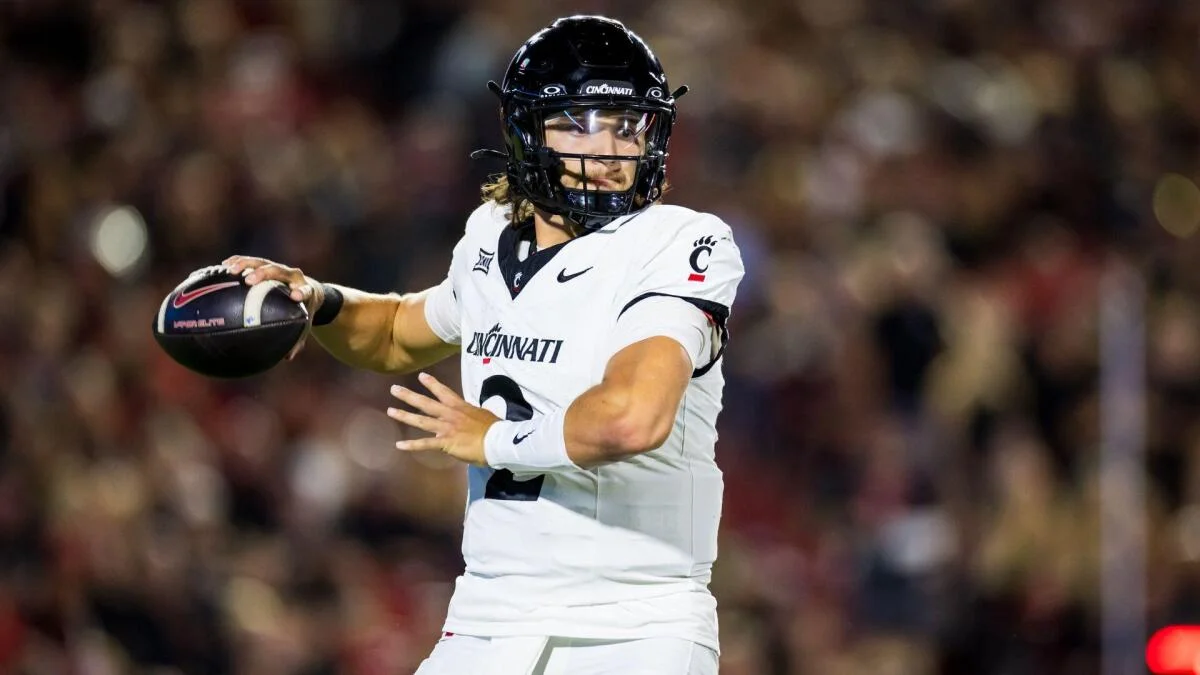
But the top end of the market is growing. The most desirable QBs in the portal, like Cincinnati’s Brendan Sorsby and Arizona State’s Sam Leavitt, are expected to draw offers of $4 million or more. A second Power 4 GM said he suspects offers could reach $5 million for those two. One Power 4 personnel director called the top end of the QB market “insane.”
Drew Mestemaker, the North Texas transfer who led the FBS in passing yardage and committed to Oklahoma State Saturday, is receiving a two-year, $7.5 million contract, according to the Tulsa World. Mestemaker is expected to make $3.5 million in 2026 and $4 million in 2027, according to that report.
Beyond the top five or six quarterbacks in the portal, the next tier figures to fall into a range anywhere from $1.5 million to around $3 million.

Drew Mestemaker committed to Oklahoma State on Sunday and will earn a reported $3.5 million next season. (Danny Wild / Imagn Images)
Offensive tackles and defensive linemen also cost a premium
- OT range: $600,000 to $1.3 million
- Edge rushers: $500,000 to $2 million
- Interior DL: $500,000 to $1.5 million
The positions that protect and affect the quarterback are in the next tier of costs, just like in the NFL.
The men who protect the quarterback are highly valued and their numbers are also going up this portal cycle. A Power 4 GM who is in the market for tackles said that it’s difficult to get a good one for $500,000 and placed the floor around $600,000 to $650,000.
“Good offensive tackles, you’re looking at a minimum of $750,000,” said a Power 4 front office staffer. The top-tier tackles are likely to clear seven figures and approach $1.2 or $1.3 million.
Transfer edge rushers can get pricey, too. Good starting pass rushers usually range anywhere between $500,000 and $1.5 million, though there have been a few outliers who have been higher than that. Texas Tech edge rusher David Bailey, who led the FBS in pressures this year, was believed to have received more than $2 million in 2025.
South Carolina edge rusher Dylan Stewart decided to return to the Gamecocks, but had he entered the portal, it’s believed he could have drawn offers of $2 million or more. A general manager at a school who is losing a top-tier pass rusher expects that his departing star will get above $2 million from his next school.
There are starting defensive ends who could go for as low as $250,000, though those are typically going to be more for starters in name only who rotate frequently and don’t play the volume of snaps that some of the top pass rushers do.
Solid interior defensive linemen typically start around half a million and can quickly get into the upper six figures, “but the elite guys can get around $1.5 (million),” an agent said, citing two top defensive tackles who received $1.6 million in 2025.
Offensive skill positions vary widely
- RB range: $400,000 to $900,000
- WR range: $500,000 to $1 million
- TE range: $300,000 to $900,000
NFL teams typically spend less on running backs than on any other non-specialist position group, but that’s not the case in college football. Teams value running backs more, and it appears the ceiling for running backs is rising in this portal cycle. Some of the top backs who intend to enter the portal, like NC State’s Hollywood Smothers or North Texas’ Caleb Hawkins, are expected to receive high six-figure offers.
“There’s 136 FBS teams, and if everyone is using two backs regularly, that means people are trying to find 272 good running backs,” a Group of 5 GM said. “I’m not sure there are as many good backs as teams are looking for, so schools are willing to pay more.”
Starting backs who rotate more cost less and can even be below $400,000
Receivers are the most expensive of a quarterback’s skill-position supporting cast, but compensation varies depending on role. A transfer expected to be a team’s No. 1 receiver is likely to get high six figures. Elite transfer receivers can get seven-figure offers.
Auburn’s Cam Coleman, the top receiver in the portal and arguably the best available player regardless of position, could get expensive quickly, especially since the teams hosting him for official visits — Texas, Texas A&M, Texas Tech and USC — are all deep-pocketed programs. The Power 4 front office staffer suggested Coleman’s baseline offers may start at $2 million and go up from there based on the teams involved.
A transfer expected to be a team’s No. 2 receiver who has proven production is likely to get paid closer to $500,000.
Tight ends have largely remained consistent with the range of the previous cycle. Many will cost under $500,000, and some P4 teams were able to get solid ones last year for less than $200,000. How a tight end is utilized, and their importance in the offense, play a role in how teams value them. Some teams would rather not spend a ton for one if they can justify it. But TEs who are athletic, dynamic pass catchers and are attractive draft prospects can get above $700,000 and push close to seven figures.
Defensive backs have similar floors but varying ceilings
- Cornerbacks: $250,000 to $1 million
- Safeties: $250,000 to $900,000
The compensation ranges for defensive backs can vary quite a bit because of how differently they can be used in defensive schemes. Across the board, top-tier boundary cornerbacks (who line up against outside receivers) are highly valued and, in this portal cycle, are seeing numbers as high as the upper six figures. “The really good ones will get $1 million, but the majority will fall in the $300,000 to $800,000 range,” a Power 4 GM said.
A good quality starter can get mid-six figures. From there, it can vary. “It’s a pretty wide range for corners just because of how many teams use it,” a player agent said.
Is your nickel back more of a true third cornerback or a hybrid safety/outside linebacker who plays on the edge of the box? That factors into what a team will spend on the position. Nickel backs are considered more affordable and are on the low end of the cornerback range. A hybrid safety/outside linebacker, if he’s a true impact player, can get high six figures.
Safety is a place where some front offices spend less, unless it’s an elite top-end player. There are a few top safeties whose deals surpassed $800,000 this year, but for the most part, teams have looked to spend a little less than what they have for corners.
Linebackers and interior offensive linemen tend to be the most affordable
- Linebackers: $200,000 to $750,000
- Interior OL: $200,000 to $700,000
In last year’s cycle, linebackers were the most affordable position to obtain a starter in the portal, with the floor being around $150,000 and the ceiling usually falling just below $500,000.
Those rates have ticked up going into this year’s cycle. The floor is closer to $200,000 or $250,000. The ceiling varies. One Power 4 GM said a linebacker “has to be elite to get more than $500,000,” while another GM said some are going for as high as $700,000. Having a pair of starting linebackers between $300,000 and $500,000 isn’t unusual.
The baseline for starting interior offensive linemen is usually between $200,000 and $300,000, with the higher end usually topping out at around $500,000 or $600,000. Scheme plays a role here, too. If it’s a run-heavy team that asks a lot of its guards, that could push the value up into the $700,000 or $800,000 range for top-end players. And the ceiling for centers is considered to be around $600,000 or $650,000.
What are Group of 5 programs paying transfers?
The rates for transfers who sign with Group of 5 schools are much lower because roster budgets are much smaller than at their Power 4 counterparts. While Power 4 programs’ football roster budgets can range from $13 million up to $30 million, G5 schools mostly ranged between $1 million and $10 million in 2025.
The vast majority of Group of 5 schools have roster budgets below $5 million, with a few exceptions. The top spending schools in the American, like USF, Memphis and Tulane, are believed to be above that.
Because of those budgets, you won’t find seven-figure players at G5 schools. Quarterbacks get the most, usually topping out around $500,000 or $600,000. One Group of 5 GM, whose school will have roughly a $3 million roster budget, said he expects to pay between $300,000 and $400,000 for his top quarterback transfer target this cycle.
Typical starting running backs and tight ends will top out around $200,000 to $250,000. High-end receivers can be a little bit more, around $300,000. The top going rate for G5 offensive tackles is around $300,000 to $400,000.
The ceiling for defensive linemen is around $250,000 to $300,000. For linebackers and defensive backs, the ceiling tops out around $150,000 to $200,000.
While those are high-end rates, the floor for most players in the Group of 5 is in the five figures.
It’s harder to find a consensus because Group of 5 roster budgets vary so much. Teams in the American usually have bigger budgets than those in Conference USA or the MAC, where five-figure player compensation rates are more the norm.
And though most Power 4 players receive some form of revenue sharing or NIL money, that’s not the case at the Group of 5 level, where some are paying extra — above and beyond a scholarship — to only a portion of their roster.