China players line up before the game – Water Polo – World Aquatics Championships – Men – Group D – Greece v China – OCBC Aquatic Centre, Singapore – July 14, 2025. – REUTERS/Tingshu Wang
HONG KONG: Chinese swimmers took more anti-doping tests this year than swimmers from any other country ahead of the World Aquatics Championships in Singapore this month, the Aquatics Integrity Unit said in a report.
From January 1, Chinese swimmers had an average of 8.8 anti-doping tests versus those from the U.S. who were tested 4.1 times and those from Britain who were tested 2.2 times, the report showed.
Swimmers competing as neutrals – mainly those with Russian nationality – were tested 8.2 times on average.
In total the Aquatics Integrity Unit conducted 4,018 anti-doping tests on athletes participating in the Singapore event scheduled for July 11-22.
“The report underscores World Aquatics unwavering commitment to fair competition and the highest standards of integrity in aquatic sport,” it said.
The China Swimming Association did not immediately respond to a request for comment.
China’s swimming team has faced heightened scrutiny since revelations in April that 23 swimmers had tested positive for a banned heart medication in 2021 but were permitted to compete in the Tokyo Olympics that year.The World Anti-Doping Agency accepted the findings of a Chinese investigation that the results were due to contamination from a hotel kitchen. An independent review backed WADA’s handling of the case.
Testing will remain in force until the end of the event, with 830 samples to be collected during 24 days of competition, the Aquatics Integrity Unit said.
China’s male freestyle sprinter Wang Haoyu was tested 13 times, while 200 metre breaststroke world record holder Qin Haiyang was tested 12 times, the report showed.
Your gateway to global news, insights, and stories that matter.
Joined ESPN The Magazine after graduating from Penn State University.
Covers college football and college basketball.
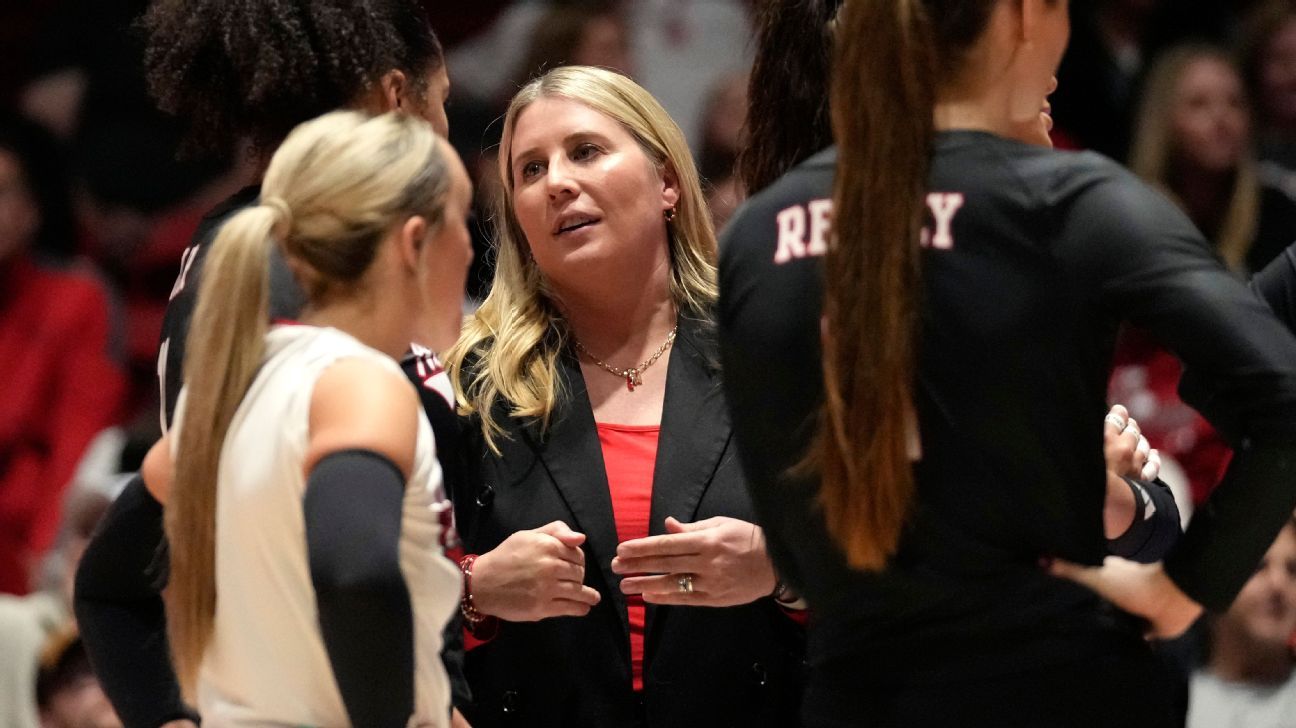
DANI BUSBOOM KELLY started wearing blazers for her biggest volleyball matches long before she took over as coach of the best program in the country.
Back in 2019, years prior to her return home to Nebraska, Busboom Kelly, in her third year as Louisville head coach, laid out an array of Cardinal red jackets for her mother’s input.
Bonnie Busboom ticked off her approval until she disapproved. I don’t know what I think about that one.
She surveyed the red sequin blazer in front of her. It struck her as audacious, brash. Her daughter’s team at that time was fine but unremarkable. Certainly not accustomed to splashy wins or deep tournament runs. Should the coach be peacocking around in sequins?
I like it. But I don’t know about wearing it.
Busboom Kelly seemed on board with her mother’s logic. She told her team she wouldn’t break it out for a big match because she couldn’t tolerate losing in sequins. Until No. 2-seeded Texas came along in the third round of the NCAA tournament.
“Then she walked out with that red sequin blazer on,” Bonnie says. “And I just thought, ‘Dani Busboom, what are you doing?'”
Here’s what: She was putting Louisville — and her own head coaching bona fides — on the map.
The Longhorns were riding a 13-year run of reaching the regional finals; the Cardinals had never made the Elite Eight. Louisville put an end to both streaks that day, winning in five sets, and Bonnie tried to imagine what must’ve gone through Texas coach Jerritt Elliott’s head when he caught sight of that blazer. “He probably thought, ‘You little s—,'” she says.
That blazer meant something, is Bonnie’s point. The blazer was the point.
“It said, ‘I’m not afraid of you. I’m not afraid of nothin’.'”
HERE ARE SOME things that Dani Busboom Kelly, by all rights, could be afraid of:
Taking over for a living legend: John Cook spent 25 years coaching volleyball in Lincoln, Nebraska, and much of that quarter century winning at historic rates — including four national championships — by the time he called it a career in January.
Taking over for a living legend at Nebraska: This volleyball program steeps itself in mystique and glory, and the relentless churn of expectations that come with both.
Taking over for a living legend at Nebraska in Nebraska: Busboom Kelly was born and raised in this place, just like her parents and their parents before them. And so on and so on. This was not a job relocation. This was a homecoming.
Dani Busboom Kelly, what are you doing?
IT’S THE EARLY days of November, and Busboom Kelly sits in her still-pretty-new office in the Devaney Center, contemplating why, exactly, these realities of hers are unique. Complex, even. But not, to her, all that daunting.
Over her right shoulder, a framed picture shows her in that sequin blazer, fist-pumping on the sideline in her Louisville days. Over her left shoulder, floor-to-ceiling windows overlook Nebraska’s home court. John Baylor, who has called play-by-play for Nebraska volleyball for three decades, calls that court the “Greatest Show on Taraflex,” and these days, it’s housed in the recently-christened John Cook Arena.
Busboom Kelly coaches under the bright lights of Cook’s name, which glow fluorescent above the Jumbotron, and a few hundred feet from his bronze likeness, thanks to the statue that was dedicated outside the arena in September. Sometimes she finds herself face-to-face with the man himself. Cook is now a Big Ten Network analyst, and he occasionally winds up interviewing his former — and Busboom Kelly’s current — players.
She works in his literal shadow. But she does not feel overshadowed.
For starters, if Cook is sacred here, then she is one of his most faithful acolytes.
“I lived this place firsthand my whole life,” she says. “I understand what he was doing every single day for our sport, for Nebraska. So it’s like, ‘Yeah, he deserves it.'”
Helping Busboom Kelly’s cause, of course, is that she has spent her first year back in Lincoln under a kind of reverse Murphy’s Law, where everything that can go right has gone ridiculously right. Her team is undefeated and sits unanimously ranked at No. 1; the Huskers didn’t drop a set for two months beginning in mid-September, a 48-set win streak that ended only a few weeks ago against UCLA. They’ve swept their way through the first two rounds of the NCAA tournament. Now they’ll take on Kansas in the Sweet Sixteen on Friday and, just maybe, face off against her old team, Louisville, in the Elite Eight.
But even short of the near-perfection Busboom Kelly has helped steer in Nebraska — and all the goodwill that engenders — she has a hard time seeing herself being cowed by Cook.
“I know him,” she says. “I’ve worked with him, and talked with him. For years.”
It’s awfully hard to feel intimidated by someone, or the shadow of someone, you know like that. Especially someone you once told to shove off.
The well-tread story goes like this: Ahead of Busboom Kelly’s senior season at Nebraska, Cook — in his sixth year as head coach — asked her to switch positions. The Huskers were fresh off losing a national title in 2005, were also losing their defensive specialist at libero, and had a young, talented setter named Rachel Holloway waiting in the wings. Holloway had been a starting setter and captain for the USA Youth National Team before committing to Nebraska; it made sense to Cook, then, for Busboom Kelly, a three-year starter at setter, to transition to the open spot. Busboom Kelly had zero warmth for the idea.
“Dani got pretty heated in the meeting and left, and I didn’t see her for three days,” Cook says. “She basically flipped me off and left my office. I thought she was gonna quit.”
Bonnie Busboom swears Cook is revising a little history here. He didn’t see Busboom Kelly for three days because it was winter break, she points out. He probably didn’t see anyone for three days. But she does offer, with a smile, that the two had a propensity for butting heads. Cook pushed Busboom Kelly, and she’d push him right back. She was a bit rebellious; he didn’t appreciate freelancing one little bit. The combination could be combustible.
“The whole thing was pride,” Bonnie says. “It was just getting beat out. Because, truthfully, Dani Busboom had never been beat out in anything.”
Busboom Kelly internalized the move to libero as a slight, which morphed into a dare. She decided she would be an elite libero — a position she had never played — and in about six months, she was. The Huskers won the NCAA championship in 2006 with Busboom Kelly anchoring their defense.
After graduation, she found a 9-to-5 office job in insurance didn’t quite take, so she decided she would be an elite volleyball coach. Busboom Kelly was so single-minded in her pursuit that she failed to mention to Lane Kelly — her husband now and longtime boyfriend then — that she had applied for an assistant coaching job at Tennessee, at least until she made the final cut. She went to Knoxville to interview and about a week later, when Lane came home from work, she told him she got the job and was heading south. “You can come if you want,” she said.
They went, and she found herself taping lines on the court and ushering feral cats out of the practice arena the team shared with ROTC. It was far from glamorous, even further from the trappings of Nebraska, but she knew she could do this and be good at it. Anywhere.
“It was about doing something on my own,” she says. “Without the Nebraska name, without that behind me.”
Assistant at Tennessee begat assistant at Louisville begat assistant at Nebraska begat head coach at Louisville, which turned into an eight-year clinic on how to author a program’s glow-up. She won 82% of her games in those eight years, nearly 90% in the last four. “When we came here in 2021 at Louisville and swept Nebraska, that wasn’t when I felt like, ‘Oh, I should be the next head coach at Nebraska’,” she says. “But it did create a bit of confidence. Like, ‘I can do this at a high level.'”
Cook watched all this unfold from afar, though never all that far. He hired Busboom Kelly as an assistant, then tried to hire her as associate head coach, once she departed for her second stint in Louisville. But long before he coached with her, then against her, Cook caught glimpses of the coach Busboom Kelly would become.
The first time Cook visited her in high school, on the farm where she grew up, 25 miles south of Lincoln, Busboom Kelly showed him the motivational quotes she had scribbled in marker along her bedroom’s cinderblock walls. “She was having big dreams, even back then,” Cook says. “She didn’t know it at the time, but she was already starting to get ready to coach.”
Their clash over shifting to libero? “That was part of her forming into what it means to be a coach,” he says. “Understanding sometimes you have to make tough decisions.”
Cook had long seen Busboom Kelly as a coach. Then he saw her as the only coach he wanted to take over Nebraska.
By last winter, Louisville had been pushing for Busboom Kelly to sign a new contract with a prohibitive buyout clause. (The contract she had in place had a buyout, but carved out an exception for one school: Nebraska.) He knew that she was expecting her second child, that the roots she had planted in Louisville were growing deeper. Cook had already begun pondering retirement and then, suddenly and urgently, the timing felt right for him. In part because of her.
Busboom Kelly was back in Nebraska for a professional volleyball tournament in January, and Cook facilitated a meeting between her and Nebraska’s athletic director, Troy Dannen. Within an hour of that meet-up, Dannen told Cook what Cook already knew: “She’s the one.”
THE DRILL, AS far as Rebekah Allick can tell, makes no sense.
Nebraska’s senior middle blocker doesn’t know where to go during a November practice, her teammates don’t either. A Huskers’ assistant coach resorts to yelling out the names of players and where they should be, but confusion abounds. Busboom Kelly, standing next to Allick, attempts to clarify.
Busboom Kelly: “Offense, you switch every five. Defense, every 10.”
Allick: “Wait a minute. You just told me the opposite.”
Busboom Kelly, embracing the absurdity of the moment, rests her head on Allick’s shoulder, and laughs. “Just give me a minute,” she says.
Dani Busboom Kelly, what are you doing?
It’s a minor bout of turbulence during an otherwise idyllic year in Nebraska volleyball. But with her coach’s head on her shoulder, Allick thinks to herself: “Dani’s human.”
“It’s an appreciation honestly,” she says. “Like, ‘Thank you for showing your humanness.’ I just feel like we can all breathe.”
The volleyball team has been so good for so long, so unyielding in its dominance, that it commands more than attention. It compels worship.
A sampling: Nebraska’s home sell-out streak dates to 2001, which makes it the longest streak in NCAA women’s sports history. This year, the Huskers lead the NCAA in average attendance (8,575); the second-highest average attendance in the nation belongs to … Nebraska, when it plays outside of Lincoln (8,151). Two years ago, they traded Devaney for Memorial Stadium for one night, and 92,003 people — a world record for a women’s sporting event — filled the football stadium for a volleyball match. In the 2022 fiscal year, there were 522 women’s athletics programs in the ACC, Big East, Big Ten, Big 12, SEC and Pac-12, but according to the Lincoln Journal Star, only one that turned a profit: Nebraska volleyball.
The devotion to the program has been rewarded: five national championships; the most wins in NCAA Division I history; the only program to be ranked in every Top 25 American Volleyball Coaches Association rankings since the weekly poll’s introduction in 1982.
Nebraska volleyball is inevitable, a forever kind of greatness. Except Nebraskans have heard that story before.
“Ultimately, what I did not want to have happen to Nebraska volleyball,” Cook says, “is what happened to Nebraska football.”
The Huskers once had a football team with that forever kind of greatness. Then forever ended. As kind as this century has been to Nebraska volleyball, it has dispensed cruelty to Nebraska football, introducing something worse than mediocrity: irrelevance.
Busboom Kelly carries the weight of shepherding Nebraska away from that scourge of ordinariness. And she’s doing it in ways that feel strange, unorthodox. With lightness.
By the end of her time in Louisville, the Cardinals were dominating at a Huskers-like pace, but winning — at least at historic clips — was still a novelty, each victory merited a celebration. Here, at Nebraska, “I go into the locker room and it’s like” — her voice goes limp, her arms droop in a lifeless wave — “‘yay, we won.’ I want to make sure we’re still enjoying the journey.”
Lane, who played football at Nebraska, once attended a Southern Cal practice while visiting an old teammate back in the Pete Carroll days. Snoop Dogg was standing on the sideline, music blared — it felt like a party. It felt light. When Lane thinks of Dani Busboom Kelly the coach, he thinks of that day with the Trojans. Nebraska’s practices have their own flavor, but it’s light there too. Busboom Kelly has been known to show up with under-eye masks still on, the little half-moons stuck firmly in place.
“I would say playing for her feels very … free,” says Harper Murray, Nebraska’s star outside hitter.
Murray didn’t take to Busboom Kelly right away, which she says had everything to do with her attachment to Cook. The two were so connected that before Cook delivered the news of his retirement to the team in January, he called Murray into his office to tell her first. Murray couldn’t wrap her head around pouring herself into a new person the way she had with Cook. But glimpses of who Busboom Kelly was — and the big and paradigm-shifting ways she was different from Cook — chipped away at Murray’s resistance.
Cook was a CEO; at times he could be rigid and unrelenting. Though Busboom Kelly is Cook’s disciple, she is not his mirror image. She doesn’t view this enterprise with grave severity and self-seriousness, and that frees her to be joyful in the process, to allow laughter to creep into practice, even when mistakes are made. She’s open to taking risks, say, when she flouts conventional wisdom with a slew of player substitutions in any match, at any point. She can be emotionally vulnerable, like when she gave the Huskers the starting lineup for the first time and confessed that it was hard, that she wished she could put everyone out there. Murray remembers thinking then that she had only seen Cook cry once, at his retirement, and it was a strange but wonderful thing to be let in this way now.
That doesn’t mean Busboom Kelly doesn’t press them sometimes, or royally annoy them at other times, or doesn’t bring her own specific brand of urgency.
The daylight between those two demands has left her players unburdened. Because as much as they extol the privileges of playing this sport in this place, there’s a cost to it too.
“I want our team to feel the weight of the team,” Busboom Kelly says. “I don’t want our team to feel the weight of the state.”
BONNIE BUSBOOM PICKED up a phone call from her daughter in January.
“I’m doing it,” she said. “We’re coming home.”
News of Nebraska’s coaching earthquake — Cook’s surprise retirement; Busboom Kelly’s insta-hiring — had yet to go public, so Bonnie was sworn to secrecy. She called only her husband, Gene, who was 15 miles away working the family farm.
“Dani’s coming home,” she told him. (Gene, in a bit of Midwestern flair, responded: “Oh. Great.”)
A few days later, with the news set to break, Bonnie told a close circle of family and friends. She phoned Busboom Kelly’s childhood friend, Jenny Lempka. “She’s coming home.” She called another lifelong friend, Laura Francke. “She’s coming home.”
By the time the Huskers officially introduced Busboom Kelly as their new coach — only its fourth in program history — at a press conference in the first week of February, a healthy share of Nebraskans had worked themselves into a lather. That day, she was welcomed back to Lincoln in front of university brass and media and what, Nebraskans swear, must’ve been the whole of Gage County, where Busboom Kelly was born and raised.
The university helped her old K-12 school, Freeman, charter a pair of buses to the event; the school had to charter one more to meet demand. Andrew Havelka, the superintendent, made the trip and estimates the Freeman section was 500 strong — though he heard rumors of as many as 600 or 700. (A figure, it’s worth noting, that exceeds the 604-person population of Adams, Nebraska, the town that’s home to Freeman.)
The joke went that it would be a good day to rob the Adams Bank, though that would’ve been a real shame for Lempka, whose family has owned the bank that anchors Main Street in Adams for five generations. That’s how it works here. Everyone knows everyone else. Everyone knows Dani Busboom Kelly, or at least feels like they do.
“There’s not very many acquaintances,” she says. “It’s more like you kinda consider everybody family.”
Lempka left Adams for a stretch and joked that by the time she moved back, she could tell years had passed because she knew who drove which cars, and they were all driving new ones. Now she lives two doors down from Bonnie and Gene, who traded their house on the family farm in nearby Cortland, where Busboom Kelly grew up, for “city life” in Adams about a year ago. Havelka lives about five houses away. Gene used to coach softball at Freeman; Busboom Kelly’s sister-in-law teaches there now. Sheila Day oversees the Cortland Museum, stationed in a 142-year-old white clapboard house, and she’s family too. Day’s sister is married to Busboom Kelly’s uncle.
Day takes care to note the Busbooms’ long footprint in this town, which is preserved in the museum. There’s the museum’s new Busboom Kelly display, complete with a biography and photos of her Nebraska athletics lineage. Gerald, Gene’s father, is there too, palming a basketball in a black-and-white photograph of the 1951 Beatrice Times Dream Team.
Cortland is tiny, a village that was originally laid out in a corn field back in the 1880s and has the feel that not all that much has changed in the intervening centuries.
And so Busboom Kelly was a farm kid, like nearly all Cortland kids. Her family farm sits off State Highway 41, a mile-and-half down a dirt road, and a quarter-mile in any direction from their closest neighbor. The Busbooms farm corn and beans, and raise cattle too.
Busboom Kelly loved so much about that farm. The plot of land where she and her younger brother would play softball with Gene when he took a break from farming — if the ball landed in the hog lot, it was a home run. The pond on her grandmother’s land a few miles down the road where she’d take Lane and their friends for camping trips in college, breathers from Lincoln and what it meant to be an athlete there.
After Bonnie and Gene moved out, their son Ryan moved in, and a new generation of Busbooms will now grow to live and love the land. Busboom Kelly’s nephews are in her old room, where motivational quotes were once plastered on the walls. Her son, Boone, visits and likes to think the bulls on the property are his own.
In a post-match radio show this season, Cook took a brief break from volleyball to talk farming and combining. He may not be from Nebraska, but he earned his stripes in 25 years. Busboom Kelly chimed in to say her father had just wrapped up his harvest. Baylor, the play-by-play man, listened to their conversation and weighed in, “That’s the first post-match coach’s interview in the history of the sport where the head coach said, ‘My dad has the harvest in.'”
“It’s just … it’s moving,” he says. “If you grew up here, it moves you. You’re tied to the land.”
Busboom Kelly is not the first Nebraskan called back to this land. Scott Frost had his own homecoming here eight years ago. He, too, grew up in small-town Nebraska, went on to be a Husker, won a championship, then came back to lead his former team. He didn’t survive his fifth season as head football coach before being fired.
Busboom Kelly is not Frost, and the volleyball program she inherited is not the football program he did. About this is much, Cook is adamant: Frost simply did not come armed with the program-building experience that Busboom Kelly did. And by the time Frost returned home, Nebraska’s football team was in free fall. Busboom Kelly, on the other hand, was given the “keys to a Ferrari,” Cook says. That much was by design. He needed to set her up for success because he couldn’t abide a Nebraska football-like implosion; he couldn’t stomach another homecoming going up in smoke.
To be sure, it’s working out just fine so far for Busboom Kelly. But the specter of other homecomings gone wrong does not plague her.
“I feel like I am maybe a little bit different than a lotta Nebraskans,” she says. “I really could see myself being happy in a lot of places.”
She has roots here but doesn’t feel the need to be rooted here. And so coaching in Nebraska is not her burden. It’s her gift.
She and Lane loved their years in Louisville, enough that, after the whirlwind of coming home to Nebraska settled, she felt a twinge of something strange and unexpected: reverse homesickness.
“It was a weird feeling to process,” she says. “I’m home but I’m feeling homesick for someplace else.”
And yet, there never really could be someplace else, at least not now, and not without giving this Nebraska experiment a true run.
“If I didn’t do this,” she says, “it’d be the biggest regret of my life.”
On the family farm, there’s a rock formation in front of her childhood house. Etched onto the stone: “THE BUSBOOMS.”
She is tied to the land.
NOT FAR FROM that rock, back when the house was still Bonnie’s and Gene’s, a trampoline sat outside. Busboom Kelly would be out on the trampoline a lot, lying down, looking up at the stars at night. She couldn’t camp out on the grass because too many bugs would get her, so she’d take refuge on the trampoline, look up and think.
“Just appreciating what’s around her,” Bonnie surmises. “But thinking about whatever’s going on too.”
The trampoline is long gone, and Busboom Kelly hardly has any time for quiet reflection these days. She’s managing the No. 1 team in the country, and she has two boys at home — Boone, her toddler, and Jett, who was born just a few months after they came back to Nebraska.
“I think it’d be different if I was single, or even if I was just married without kids,” she says. “There’d be more time to sit and stew and overthink.”
Back when John Cook was hired 25 years ago, he heard from a slew of people who told him not to take the Nebraska job. What was he going to be able to do that Nebraska volleyball had not done already? He kicked off his tenure by going undefeated and winning a national championship in his first season, then added several more titles and historic dominance to their ledger along the way. So now, all these years later, that same question could be rightfully asked of Busboom Kelly. What could she possibly do?
“Maybe win back-to-back,” she says. “That hasn’t been done here. And there hasn’t been a dynasty.”
In all the decades Nebraska has been at the pinnacle of collegiate volleyball, there’s always been a handful of years between each championship. A moment, however brief, when this place that lionizes volleyball couldn’t lay claim to its crown.
“So I think that’s maybe something I could do.”
There’s no trampoline, no vast Nebraska night sky overhead. But she’s still appreciating what’s around her, still thinking about what’s going on and what is yet to come.
Dani Busboom Kelly, what are you going to do next?
LEXINGTON, Ky. (WOWT) – NCAA volleyball is down to its “Sweet 16.”
Thursday afternoon’s Lexington Regional Semifinal games get started with No. 3 Creighton Bluejays and No. 2 Arizona State at noon Central on ESPN2.
Creighton volleyball made its way to the regional semifinals for the third-straight season — and fifth time overall — after defeating Northern Iowa in four sets (25-18, 23-25, 25-22, 25-21) on Friday night.
The winner will go on to play either Kentucky or Cal Poly in the regional final.
—
This is a developing story. Stay with Sports On 6 for updates.
TYLER –The Russell-Tyler-Ruthton school board voted not to approve Daynica Brown’s return as the RTR head volleyball coach at its monthly board meeting on Wednesday. The 5-2 vote to let Brown go came despite superintendent David Marlette and activities director Darren Baartman both recommending Brown.
Wednesday’s vote comes in the wake of volleyball parents Dan Ellefson and Shallyn Dybdahl, as well as RTR volleyball alumnus Janel Peterson, voicing concerns at the October board meeting about the culture Brown fostered with the volleyball team. They alleged that Brown curated a toxic environment for the athletes and that favoritism played a heavy role in team dynamics.
For Brown’s part, she said at Wednesday’s meeting that she believes her actions in the public eye spoke volumes to the positive culture of the team, and that the team’s success this season wouldn’t have been possible if she had not actively worked to create a positive environment.
Seven stakeholders had voiced concerns about the state of the RTR volleyball program since the end of the 2024 season, Marlette said.
Marlette added that he felt that any issues in the program could potentially have been fixed earlier had they been followed proper chain of command policy by being brought to Brown or Baartman, but recommended that Brown be given another year as head coach with a Plan of Assistance in place wherein specific items and corrective actions are identified before the start of the season. While he did not specify the items in need of correction, he said that they were all small issues that could be quickly corrected.
A replacement candidate for Brown is yet to be named.
Ted Kern was also approved by a 7-0 vote to return as football head coach at the meeting, as well as a unanimous approval for Sandy Carpenter as the head cheerleading coach. No candidate was presented for the RTR cross country coaching vacancy.
TYLER —The Russell-Tyler-Ruthton school board voted not to approve Daynica Brown’s return as the RTR head …
Minneota 66, RTR 34
TYLER — A trio of scorers in double figures propelled the Minneota girls basketball team to …
WASECA — The Marshall girls hockey team was firing on all cylinders, powered by Elsie Deutz and Brooklyn …
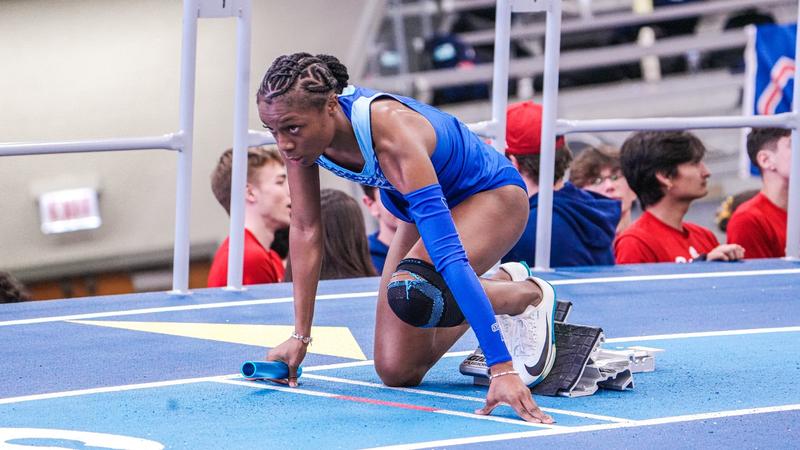
TERRE HAUTE, Ind. – Indiana State track and field begins its 2025-26 indoor campaign Friday and Saturday, as the Sycamores play host to the John Gartland Invitational inside the Indoor Track and Field Facility.
Friday’s proceedings begin at 4:50 p.m., while Saturday’s first event starts at 11 a.m.
The Dynasty
Indiana State’s sweep of the 2025 MVC Outdoor Championships gave the Sycamores 50 conference titles between the cross country, indoor track and outdoor track programs. Since the start of the 2021-22 season, Indiana State has won 12 MVC Championships between indoor and outdoor track and field.
Indiana State has swept the last two MVC Outdoor Championships, while the Sycamore women have also won the last two MVC Indoor Championships.
Back For More
Indiana State returned nearly all of its 2025 individual indoor conference champions, with throwers Noah Bolt and Wyatt Puff being the only departures among the Sycamores’ first-place finishers at Gately Park last season.
The Sycamores’ returning indoor conference champions from last season are Casey Hood Jr. (60m and 200m), Rachel Mehringer (60m hurdles), Janiya Bowman (long jump), Jahnel Bowman (triple jump) and Niesha Anderson (weight throw).
Hood Jr. was a Second Team All-American during the 2025 indoor season, while Mehringer was a Second Team All-American during the 2025 outdoor season.
Top-Tier Trees
Indiana State’s 2025 indoor season was a story of depth, as the Sycamores finished the season with the top-ranked athlete in eight different events. Casey Hood Jr. (60m and 200m), Rachel Mehringer (60m hurdles), Will Staggs (pole vault), Brooklyn Pfaff (pole vault), Jahnel Bowman (triple jump), Noah Bolt (weight throw) and Niesha Anderson (weight throw) all recorded the top mark in the MVC in their respective events last year.
Half of those top-ranked marks came from athletes who are back in the fold for the Blue and White for the 2025-26 campaign (Hood Jr., Mehringer, Bowman and Anderson).
Strength In Numbers
Indiana State has taken pride in its overall depth, as the Sycamores earned 22 all-conference honors at the 2025 MVC Indoor Championships and followed that with 29 all-conference accolades as part of their 2025 MVC Outdoor Championship sweep.
The vast majority of those all-conference honors came from returning athletes, as the Sycamores return 14 indoor all-conference and 24 outdoor all-conference honorees. Every event discipline is represented by multiple returning all-conference accolades for the 2025-26 campaign.
The Namesake
Now in his 37th season on the staff at Indiana State, John Gartland is one of the most decorated coaches in Missouri Valley Conference history. He served as the women’s head cross country coach from 1988-2014 and the head women’s track & field coach from 1988-2010 before handing over the reins to his former pupil and current director of the cross country and track and field programs, Angela Martin. Although he officially retired in 2015, Gartland has remained on staff as an assistant, focusing on the high jumpers.
Gartland is one of only 11 coaches in the Missouri Valley Conference to be named to the league’s track and field All-Centennial Team. The veteran women’s head coach joins John McNichols on the list to form the only coaching tandem in the league on the all-time list. His teams won 12 conference titles and have finished in the top-10 at the NCAA Championships three times, including a fifth-place finish at the 1993 NCAA Indoor Championship and a sixth-place finish at the 1994 NCAA Outdoor Championships.
As a head coach, Gartland coached 11 NCAA Champions, six NCAA runners-up, 50 All-Americans, 88 NCAA qualifiers, 200 MVC individual champions and 212 MVC Scholar-Athletes. He has been named the Conference Coach of the Year 10 times and the NCAA District V Coach of the Year four times (indoor track & field and outdoor track & field in both 1993 and 1994). Gartland was inducted into the Indiana State Athletics Hall of Fame in January 2025.
Up Next
Indiana State’s next meet comes after the calendar turns to 2026, as the Sycamores face longtime rival Illinois State for the annual Coughlan-Malloy Cup dual meet January 17 inside the Indoor Track and Field Facility.
Follow the Sycamores
For the latest information on the Sycamore Track & Field and Cross Country teams, make sure to check out GoSycamores.com. You can also find the team on social media including Facebook and Twitter. Fans can also receive updates on Sycamore Athletics by downloading the March On App from the both the App Store and the Google Play Store.
The Nevada volleyball team’s season ended Nov. 22 with a 3-0 loss to Utah State. At the conclusion of the year for each Nevada sport, we will offer a final report card. Here is that report card for Wolf Pack volleyball.
Nevada volleyball
Preseason expectations: The Wolf Pack finished 10th out of 11 teams in the Mountain West in 2024, which was coach Shannon Wyckoff-McNeal’s debut season, and the team then lost three key players (Gabby McLaughlin, Tehya Maeva, McKenna Dressel) to Power 4 schools via transfer. In this year’s preseason poll, Nevada was picked to finish 10th out of 12 schools (Grand Canyon was added to the league), so outside expectations were limited entering Wyckoff-McNeal’s second season.
Final record: 8-20 overall, 4-14 Mountain West (11th out of 12 schools)
Player of the year: Haylee Brown — The Wolf Pack added three Division I transfers last offseason in Brown (George Washington), Jess Walkenhorst (Miami-Ohio) and Ceren Sert (Idaho) who were expected to be impact players. Brown played that part, leading Nevada in kills (351) and points (374) while adding 36 blocks. Brown was named All-MW honorable mention for the Wolf Pack but has hit the transfer portal again this offseason with the expectation she will leave Nevada after just one year.
Stat to note: 17 — Nevada won only 17 sets in 18 MW matches, showing how far the Wolf Pack was from being competitive in league. Of Nevada’s 14 MW losses, eight were 3-0 sweeps and the other six were 3-1 defeats. Nevada was swept in 13 of its 28 matches.
Best win: Beat Wyoming, 3-2, on Oct. 16 — Nevada won four matches in non-league, topping Southern Utah (3-21), Eastern Washington (3-25), Pacific (8-21) and Montana State (13-15). It followed that with league victories over Fresno State (7-22, twice), Air Force (15-15) and Wyoming (17-13). That means Nevada beat one team with a winning record, that being Wyoming, which was third in the MW at 13-5. One of those losses came to Nevada in a match the Wolf Pack won 15-13 in the fifth set. Brown had 21 kills in the win. That loss dropped Wyoming to 8-10 before the Cowgirls won nine of their final 11 regular-season contests to finish 99th in RPI.
Season in short: Nevada began the season 4-5 with two of those losses to Power 4 schools (NC State and Kansas State), so it was a solid enough start before things turned sour when MW play began. The MW is a strong volleyball league with five top-100 RPI teams, including No. 29 Utah State, which advanced to the second round of the NCAA Tournament. Nevada was unable to navigate league play with much success, being dominated in most MW matches. Nevada lost its first five matches of MW play before back-to-back wins over Fresno State and Wyoming in mid-October. But the Wolf Pack stumbled to losses in seven of its final eight matches, including five sweeps.
Final grade: D — Nevada finished second-to-last in the MW but was bottom of the league in RPI at 274 out of 348 Division I teams. That was a step back from 2023 and 2024 when the Wolf Pack was 245th in RPI. This year, Nevada won just 17 sets in MW play while losing 45. The year prior, it won 26 sets in league while losing 42. That margin went from minus-16 to minus-28 with Nevada being swept in almost half its overall matches (46.4 percent). After making five NCAA Tournament berths from 1998-2005, Nevada has posted a winning record in just three of the last 20 seasons (2007, 2016 and 2019). This program has been in a rut for a while that Wyckoff-McNeal is tasked with digging the Wolf Pack out. While the MW’s top-three teams this year — Utah State, Colorado State, Boise State — will be in the Pac-12 in 2026, additions UTEP (16th in RPI) and UC Davis (48th) were elite this year with Hawaii (161st) historically great. Things aren’t going to get much easier, plus Nevada has already lost three of its best players to the transfer portal (Brown, Audrey Jensen and Kinsley Singleton).
Sports columnist Chris Murray provides insight on Northern Nevada sports. Contact him at crmurray@sbgtv.com or follow him on Twitter @ByChrisMurray.
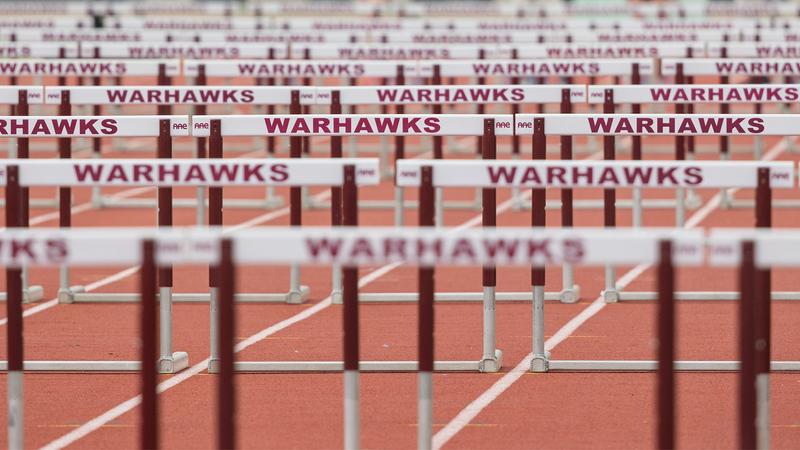
MONROE, La. – The 2026 ULM track and field schedule has been announced and features five indoor and 11 outdoor meets, not including the NCAA Prelims or Championships.
The Warhawks start indoor season with two back-to-back meets in Baton Rouge at the LSU Purple Tiger on Jan. 16 and the LSU Bayou Bengal on Jan. 23. They then travel two states east to Birmingham, Ala., for the UAB Green and Gold Invite.
ULM makes its trip to Nashville at a later date compared to 2025, with the Vanderbilt Music City Challenge taking place from Feb. 13-14. The team will make its way back to Birmingham for the Sun Belt Indoor Championships from Feb. 23-24. The NCAA Indoor Championships take place on Mar. 13-14 in Fayetteville, Ark.
Outdoor competition begins on the same weekend at the McNeese Cowboy Relays in Lake Charles before heading east the Baton Rouge to compete in the LSU Opener. The Warhawks then start their three-meet Texas road trip with the Clyde Hart Classic in Waco from Mar. 27-28. The next weekend, the team competes in two meets, with the Texas Relays from Apr. 1-4 in Austin, and the Bobcat Invitational from Apr. 2-4 in San Marcos. The one-state slate ends on Apr. 10-11 in College Station at the Texas A&M 44 farms Team Invitational
ULM has another double-meet weekend with the Wake Forest Invitational from Thursday, Apr. 16, through Friday, Apr. 17, and the Jim Mize Invitational on Saturday, Apr. 18 in Ruston. The team then goes back to Baton Rouge for the LSU Alumni Gold on Apr. 25.
From May 1-2, the Warhawks will host their annual meet with the Warhawk Classic at Brown Stadium. They then travel to Mobile, Ala., for the Sun Belt Outdoor Championships hosted by South Alabama from May 14-16.
The NCAA Prelims – East will be held from May 27-30 in Lexington, Ky., and the NCAA Outdoor Championships are from June 10-13 in Eugene, Ore.
The full 2026 ULM Track and Field schedule is below:
Indoor
Jan. 16 | LSU Purple Tiger
Jan. 23 | LSU Bayou Bengal
Feb. 6 | UAB Green and Gold Invite
Feb. 13-14 | Vanderbilt Music City Challenge
Feb. 23-24 | Sun Belt Indoor Championships
Mar. 13-14 | NCAA Indoor Championships
Outdoor
Mar. 13-14 | McNeese Cowboy Relays
Mar. 21 | LSU Opener
Mar. 27-28 | Clyde Hart Classic
Apr. 1-4 | Texas Relays
Apr. 2-4 | Bobcat Invitational
Apr. 10-11 | Texas A&M 44 Farms Team Invitational
Apr. 16-17 | Wake Forest Invitational
Apr. 18 | Jim Mize Relays
Apr. 25 | LSU Alumni Gold
May 1-2 | Warhawk Classic
May 14-16 | Sun Belt Outdoor Championships
May 27-30 | NCAA Prelims – East
June 10-13 | NCAA Outdoor Championships