Connect with us
https://yoursportsnation.com/wp-content/uploads/2025/07/call-to-1.png

Sports

Client Alert

Published

on

Client Alert

The approval of the House v. NCAA settlement marks a watershed moment in college athletics. In addition to $2.8 billion in back damages to former athletes unable to capitalize on the sale of their name, image, and likeness (“NIL”), the settlement allows institutions to directly compensate student-athletes, fundamentally altering the traditional model of amateurism in college sports. It also requires athletes to report NIL deals to a third-party clearinghouse run by Deloitte, and sets roster limits across sports, while grandfathering current athletes who might otherwise lose their spots. While much of the public discourse has focused on the employment and cultural ramifications of the case, the settlement also introduces (and fails to clarify) a host of complex tax issues that could affect college athletes nationwide. For a comprehensive breakdown of the House settlement in full, please see Whiteford’s recent client alert.

The settlement’s structure raises immediate questions about how these payments will be taxed, how athletes should report their income, and what new compliance burdens they may face. This alert first discusses the tax implications raised by the settlement agreement, with respect to potential audit risks that student-athletes may face in this new environment. Next, it walks through possible tax consequences related to college athlete employment status—an issue left undecided by the settlement. Lastly, it provides insight into how Whiteford’s tax expertise can help athletes, their advisors, brands, and institutions navigate these challenging issues.

  1. Potential Audit Risks for College Athletes to Consider

With the House v. NCAA settlement approved, the new compensation model creates a host of potential audit risks and tax complexities for college athletes. Many are now navigating a tax environment rivaling that of professional entertainers and athletes, with several income streams, cross-border issues, and heightened scrutiny from multiple tax authorities. Below are a few key audit risks that college athletes should consider.

Multi-State Tax Filing Obligations and Duty Day Rules

One of the most significant audit risks arises from the potential need to file income tax returns and pay income taxes in multiple states. College athletes receiving NIL income from brands across different states may have previously considered their potential multi-state tax-filing requirements,[1] but House’s direct revenue-sharing payments could trigger different cross-state filing obligations according to the “duty day” methodology, similar to professional sports. Generally, states that use a “duty day” methodology[2] will impose income tax on non-resident professional athletes based on the proportion of the number of days spent in the state playing games, practicing, or training compared to the athlete’s total number of duty days. Before House, college athlete compensation was not tied to their performance on the field, but rather to any nexus their NIL income had to particular states. Because House offers direct payments from universities, the performance element could open the door to new income tax filing obligations, particularly where state “duty day” statutes and regulations are ambiguous as to whether they apply to student-athletes.

A few states have proposed legislation to exempt NIL earnings from state income taxes (up to certain thresholds), but so far, only Arkansas has specifically addressed taxes related to revenue-sharing income in H.B. 1917 (amendments to the Student-Athlete Publicity Rights Act). Other states may follow suit, but until then, the complexity of multi-state filings increases the risk of errors, underreporting, and missed filing obligations, all of which can trigger audits and penalties. This is especially true if schools do not withhold income on behalf of the players. Athletes should maintain detailed travel logs and records to accurately allocate income and comply with state tax laws.

In-Kind Compensation and Valuation Challenges

Athletes are increasingly receiving in-kind benefits as part of their NIL deals, such as apparel and equipment, use of vehicles, and travel and lodging for family members, among others. The IRS generally treats the fair market value of these benefits as taxable income. However, determining the correct value can be challenging, especially for unique items.

To avoid issues down the road and meet their income tax filing and payment obligations, athletes should obtain documentation of the value of each in-kind benefit, report the value as income on their tax returns, and retain records in case of an audit. The failure to properly report in-kind compensation is a common audit trigger, and discrepancies between reported values and actual market prices can lead to additional tax assessments and penalties.

Estimated Tax Payments and Withholding Issues

Athletes classified as independent contractors may be required to make quarterly estimated tax payments to the IRS and, in many cases, to state tax authorities. Failure to make timely payments can result in underpayment penalties and interest charges. Even athletes classified as employees may face withholding issues if their schools do not accurately calculate tax obligations.

Athletes should calculate estimated tax payments based on projected income, monitor payments throughout the year to avoid shortfalls, and potentially adjust payments as income fluctuates, especially with variable NIL and in-kind compensation.

Related-Party Transactions Across Entities

As athletes become more sophisticated in managing multiple streams of income, some may establish business entities (such as LLCs or S corporations) to organize their affairs. While this can provide tax planning opportunities, it also introduces new audit risks. For example, the IRS may scrutinize related-party transactions for compliance with tax rules. The improper use of entity structures can result in disallowed deductions or reclassification of income. College athletes should consult with appropriate professional advisors, including attorneys and CPAs, to ensure that entities are properly formed, maintained, and operated in accordance with state and federal law.

Given the high-profile nature of the House v. NCAA settlement, the significant sums involved across college athletics, and the need to close governmental budget shortfalls, the IRS and state taxing authorities may be inclined to increase enforcement efforts targeting college athletes, their institutions, and even the third-party brands signing endorsement deals. Athletes must be proactive in their tax compliance to minimize the risk of audits and penalties.

  1. Employee v. Independent Contractor: Unsettled Status and Tax Implications

The House v. NCAA settlement failed to provide a definitive answer on athlete employment status. Whether college athletes are considered employees or independent contractors is a pivotal issue, as it fundamentally shapes their ability to collectively bargain. Moreover, it also affects the tax obligations, rights, and compliance responsibilities of both athletes and institutions.

The question of whether college athletes are employees or independent contractors is currently the subject of ongoing litigation, regulatory scrutiny, and legislative debate. The National Labor Relations Board previously signaled that certain college athletes may be considered employees under federal labor law.[3] And athletes at Dartmouth and Northwestern have sought to earn employee status through the creation of unionized teams. Yet many factors make earning employee status challenging, such as determining the degree of control universities have over athletes, the athlete’s economic independence from institutions, and definitional variations across states.

Tax Implications of Independent Contractor Classification

If athletes are treated as independent contractors, the following tax obligations, among others, apply:

  • Self-Employment Tax: Athletes must pay both the employer and employee portions of Social Security and Medicare taxes (currently totaling 15.3%) on their net earnings, in addition to federal and state income taxes.
  • Estimated Tax Payments: Without employer withholding, athletes may be responsible for making quarterly estimated tax payments to avoid underpayment penalties.
  • Business Expense Deductions: Independent contractors may deduct ordinary and necessary business expenses, which could reduce their taxable income.
  • Recordkeeping Requirements: The burden of maintaining detailed records falls on the athlete, who must substantiate all deductions in the event of an audit.

Tax Implications of Employee Classification

If athletes are classified as employees, then the tax implications change dramatically and include:

  • Withholding and Reporting: Universities would be required to withhold federal and state income taxes, as well as FICA taxes (Social Security and Medicare), from athlete compensation. Athletes would receive a Form W-2 at year-end.
  • Payroll Tax Compliance: The institution bears the responsibility for payroll tax compliance, reducing the risk of underpayment penalties for athletes but increasing administrative burdens on schools.
  • Limited Deductions: Employees generally cannot deduct unreimbursed business expenses, such as training, travel, or equipment, due to the suspension of miscellaneous itemized deductions under the Tax Cuts and Jobs Act. Only expenses reimbursed by the school would be tax-free. That is, as independent contractors, athletes have more flexibility to deduct business expenses.
  • Other Considerations: Other aspects of the relationship between a university and its student-athletes may be implicated if a student is also an employee. For example, if an athlete lives in university housing, is that value includable in the athlete’s gross income under IRC § 119? How would scholarships to student-athletes who are also employees be viewed with respect to the university’s tax-exempt status and prohibition on self-dealing?

Given the unsettled nature of the law, athletes and their advisors must monitor developments closely and be prepared to adapt their tax planning and compliance strategies as the landscape evolves.

III. How Whiteford Can Help: Navigating the New Tax Landscape

The House v. NCAA settlement ushers in a new era of opportunity—and complexity—for college athletes. Whiteford has extensive experience working with the IRS and state tax authorities to navigate multi-jurisdictional filing and residency issues, tax reporting problems, and any related penalties.

As the tax landscape for college athletes continues to evolve, proactive planning and expert guidance are essential. Our firm is committed to helping college athletes, their advisors, brands, and institutions minimize tax risks and compliance burdens.

Continue Reading
Click to comment

Leave a Reply

Your email address will not be published. Required fields are marked *

Sports

Tomashek named GLIAC Offensive Player of the Week

Published

on


HOUGHTON, Mich. – Michigan Tech men’s basketball senior Marcus Tomashek has been named the GLIAC Offensive Player of the Week for week six, the league office announced on Monday.

The honor marks the ninth of his career and the first of his senior season.

Tomashek, a standout from Green Bay, Wisconsin, averaged 30.5 points, 5.5 assists and 2.5 rebounds to lead the No. 9 nationally-ranked Huskies to win over Florida Tech (64-52) before blitzing the high-flying offense of the Lynn Fighting Knights (105-67) at the Florida Tech Christmas Classic over the weekend to wrap non-conference play with a 11-1 record overall.

In the largest scoring game against a Division II opponent in over 15 years, Tomashek netted a season-high 39 points in the 105-67 win on 14-21 from the field and 11-17 from 3-point land, breaking the school record for single-game 3-point field goals made, surpassing fellow Husky All-Americans Kyle Monroe and Ben Stelzer. He also added four assists that helped the Huskies break the team record for most 3-point field goals made with 23.

Tomashek finished the weekend shooting 54.1 percent from the field (20-37), 50 percent from long range (14-28) and a perfect 7-7 from the charity stripe.

The Huskies resume GLIAC play next weekend, hosting Grand Valley State Thursday and Davenport on Saturday.


Link

Continue Reading

Sports

SCAC Announces 2025 Fall All-Sportsmanship Teams

Published

on


SUWANEE, Ga. — The Southern Collegiate Athletic Conference (SCAC) today announced its 18th annual fall All-Sportsmanship teams. A total of 63 student-athletes – the most since 2011-12 – were selected to the 2025 squad in the sports of men’s cross country, women’s cross country, football, men’s soccer, women’s soccer and volleyball.

Since the inaugural All-Sportsmanship teams were honored in the fall of 2008, the SCAC has recognized over 2,500 student-athletes who each, in his or her own way, has displayed the league’s core belief in the value of honorable conduct.

For this year’s selections, each conference head coach was asked to elect one member from his or her team who displayed good sportsmanship throughout the season. 

The 2025 SCAC All-Sportsmanship honorees for the fall sports season are listed below:

2025 All-Sportsmanship Men’s Cross Country Team
Centenary College – Zack Wroten, Fy., Benton, Louisiana
Colorado College – Luc Santos, Sr., Exeter, New Hampshire 
Concordia University (Texas) – Gerardo Leal, Fy., Dallas, Texas
University of Dallas – Martin Lane, So., Hot Springs, South Dakota
Hendrix College – Davin Barragan, Fy., Hot Springs, Arkansas
LeTourneau University – Austin Jett, Jr., Magnolia, Texas
McMurry University – Roman Perez, Sr., Big Spring, Texas
University of the Ozarks – Daniel Sanderson, Sr., Clarksville, Arkansas
Schreiner University – Sean Dansby, Jr., Pasadena, Texas
University of St. Thomas – Mason McFeeters, Jr., Lake Jackson, Texas
Texas Lutheran University – Peyton Bristow, Fy., Round Rock, Texas

2025 All-Sportsmanship Women’s Cross Country
Centenary College – Grayson Shugart, So., McKinney, Texas
Colorado College – Brooktie Frogge, Sr., Nashville, Tennessee
Concordia University (Texas) – Camille McWhorter, Jr., Humble, Texas
University of Dallas – Teresa Chshen, Jr., River Ridge, Louisiana
Hendrix College – Pippy Newell, Fy., Owasso, Oklahoma
LeTourneau University – Alayna Galloway, Sr., Montgomery, Texas 
McMurry University – Madison Soultanova, Sr., Jacksonville, Texas
University of the Ozarks – Chloe Weathers, Sr., Clarksville, Arkansas
Schreiner University – Piper Hoeke, So., Boerne, Texas
University of St. Thomas – Alejandra Ramon, Jr., Klein, Texas
Texas Lutheran University – Audrey Malbrough, So., Selma, Texas

2025 All-Sportsmanship Football
Austin College – Evan Dennis, Sr., McKinney, Texas
Centenary College – Gideon Bowman, So., Destrehan, Louisiana
Hendrix College – Auvic White, Sr., Munford, Tennessee
Lyon College – Grayson Johnson, Jr., Anniston, Alabama
McMurry University – Kimani Smith, Sr., Austin, Texas
Texas Lutheran University – Anthony Ortegon, Jr., Houston, Texas

2025 All-Sportsmanship Men’s Soccer
Austin College – Justin Ajdukovich, Sr., Frisco, Texas
Centenary College – Joshua Mensah, So., Baton Rouge, Louisiana
Colorado College – Will Jones, So., Colorado Springs, Colorado
Concordia University (Texas) – Steven Dolan, Jr., Bellevue, Washington
University of Dallas – Josh Longlois, So., Houston, Texas
Hendrix College – Charlie Mata, Sr., Houston, Texas
LeTourneau University – Nate Bransford, Sr., Kijabe, Kenya
McMurry University – Abel Gonzalez, Fy., Dallas, Texas
University of the Ozarks – Hunter Robert, Sr., Montgomery, Texas
Schreiner University – Derek Toney, Fy., San Antonio, Texas
University of St. Thomas – Elijah Flores, Sr., Missouri City, Texas
Texas Lutheran University – Preston Huff, Sr., Houston, Texas               

2025 All-Sportsmanship Women’s Soccer
Austin College – Lynna Martin, Fy., Paris, Texas
Centenary College – Anna Hobart, Fy., Natchitoches, Louisiana
Concordia University (Texas) – Lilianna Cherry, Jr., Kingwood, Texas
University of Dallas – Kit Gibbons, Sr., Tomball, Texas
Hendrix College – Ella Kelly, Sr., Webster Groves, Missouri
LeTourneau University – Clarissa Martinez, Sr., Richwood, Texas
McMurry University – Alexandria Flores, Jr., San Angelo, Texas
University of the Ozarks – Jayden Vazquez, So., Dardanelle, Arkansas
Schreiner University – Aspen Ulibarri, So., Clovis, New Mexico
University of St. Thomas – Bre Medina, Fy., Pearland, Texas
Texas Lutheran University – Alysa Marquez, Jr., Miami, Florida

2025 All-Sportsmanship Volleyball
Austin College – Selah Coleman, Sr., Houston, Texas
Centenary College – Hannah Dimmel, Jr., Navasota, Texas
Colorado College – Meghan Gannon, Jr., Cleveland, Ohio
Concordia University (Texas) – Camryn Parker, Sr., Garland, Texas
University of Dallas – Breana Timms, Fy., Mansfield, Texas
Hendrix College – Lily Meyer, Sr., Omaha, Nebraska
LeTourneau University – Emma Smith, Sr., San Antonio, Texas
McMurry University – Jalie Miller, So., Rockwall, Texas
University of the Ozarks – Claire Zeiler, Fy., Paris, Arkansas
Schreiner University – Emma Frye, Jr., Tigard, Oregon
University of St. Thomas – Madi Baker, Jr., Rancho Cucamonga, California
Texas Lutheran University – Ryann Ely, Sr., Montgomery, Texas

To view an archive of past All-Sportsmanship teams, click here.



Link

Continue Reading

Sports

RICHARDSON NAMED TO ACADEMIC ALL-LEAGUE TEAM

Published

on


SIOUX FALLS, S.D. – South Dakota State junior Joslyn Richardson was one of four repeat honorees on the 2025 Summit League Volleyball Academic All-League Team released by conference officials Monday. A total of seven volleyball athletes league-wide were named to the team that was voted on by the membership’s faculty athletic representatives and sports information directors.
 
Richardson, a two-time Summit League Scholar of the Championship presented by JLG Architects, collected the second all-academic honor of her career. 

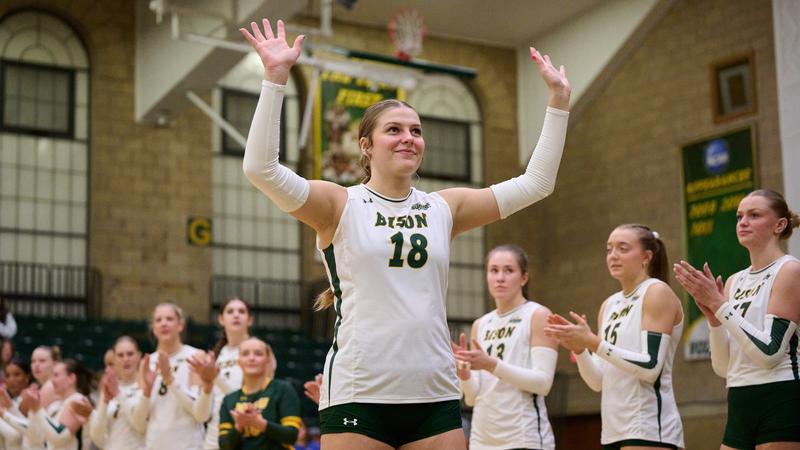
Richardson played every match as the Jackrabbits’ libero in 2025 and led the team in digs per set with 3.31. She also set a new program record with 41 ace serves this year. 


To be eligible for the Academic All-League team, a student-athlete must have a cumulative grade point average of at least 3.30 (on a 4.0 scale), completed at least one full academic year at the current institution and participated in 50 percent of their team’s competitions.


Nominations are brought forth by sports information directors from the league’s ten institutions and voting is conducted by both the SIDs and facility athletic representatives (FARs). The team is made up of the seven student-athletes receiving the most votes with all ties standing.

2025 Summit League Volleyball Academic All-League Team


 Name  School  Yr.  Pos.  GPA  Major
 Ally Barth  NDSU  Sr.  MB  3.94 Management Communication
 Kamryn Farris  South Dakota  Sr.  DS  3.75 Business
 Avery Van Hook**  South Dakota  Jr.  S  3.87 Kinesiology & Sport Management
 Kali Jurgensmeier**  Omaha  Sr.  OH  3.82 Biology
 Amanda Loschen  South Dakota   Jr.  MB  3.86 Medical Biology
 Lauren Perugini**  North Dakota  Jr.  OH  4.00 Dietetics
 Joslyn Richardson**  SDSU  Jr.  DS  4.00 Construction Management

 *Career Academic All-League honors

-GoJacks.com-


Link

Continue Reading

Sports

Una Vajagic becomes first Badger Volleyball starter to transfer after national semifinal run | Sports

Published

on


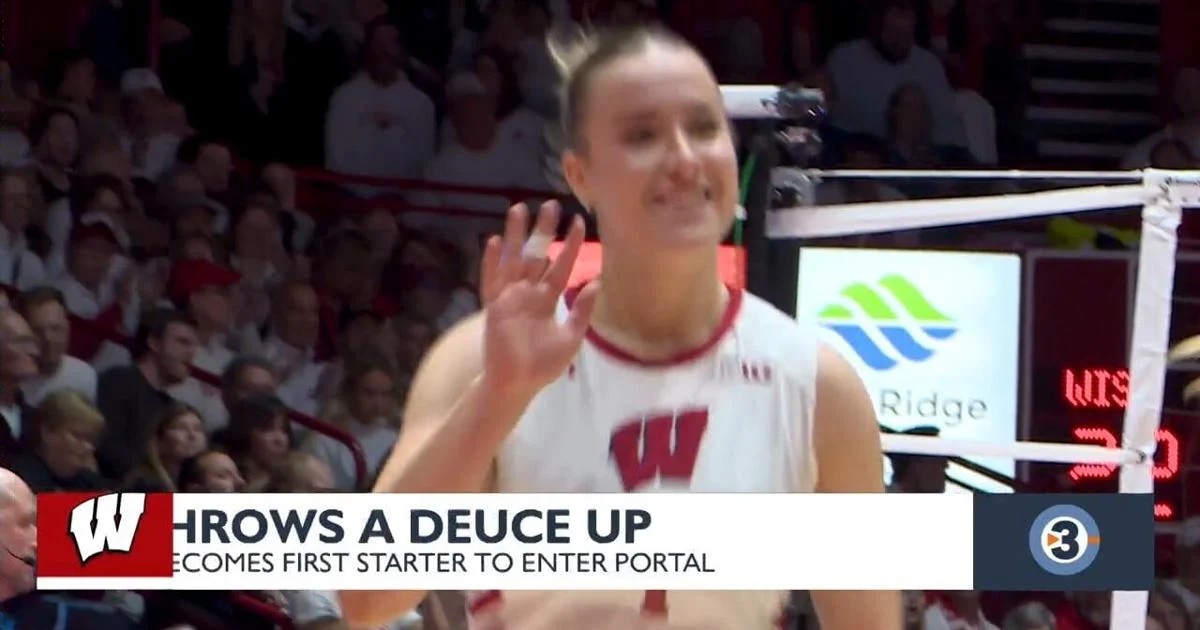
MADISON, Wis. — In a surprising move on the volleyball court, Una Vajagic has announced that she is entering the transfer portal. This news is a stunner for Badger fans, as the sophomore ranked second on the team in kills and becomes the first Badger starter to leave since their national semifinal run.

Vajagic was expected to take on a larger role next season with the graduation of Mimi Colyer and Carter Booth. However, head coach Kelly Sheffield is already taking steps to replenish the roster, bringing in Florida’s Jaela Auguste, a Middle Blocker, and Eva Travis, an Outside Hitter from UC-Santa Barbara.

Looking ahead, there is promising news for Wisconsin volleyball. According to PrepDig, Wisconsin boasts the #1 recruiting class in the nation, incoming in 2026. This signals a bright future for the program despite the unexpected departure of Vajagic.

​COPYRIGHT 2025 BY CHANNEL 3000. ALL RIGHTS RESERVED. THIS MATERIAL MAY NOT BE PUBLISHED, BROADCAST, REWRITTEN OR REDISTRIBUTED.


Link

Continue Reading

Sports

Tigers Picked Fourth in EIVA Preseason Poll

Published

on


PRINCETON, N.J. – The Tigers were picked to finish fourth in the EIVA preseason poll, announced Monday. Mason Rice and Ryan Vena were named EIVA preseason players to watch. 

With 26 points, Princeton is fourth in the rankings behind Penn State, which was unanimously selected first, NJIT, and George Mason. 

Vena and Rice were named players to watch by the EIVA coaches. Vena, a senior middle blocker, was a First Team All-EIVA honoree in 2025. Rice, a sophomore pin, was named to the Second Team All-EIVA after a breakout freshman season. 

In 2025, the Tigers went 15-11 overall and 10-2 in the EIVA, winning the EIVA regular season championship before falling to Penn State in the EIVA tournament finals. 

The Tigers will kick off the 2026 season on January 3rd as they take on Toronto Metropolitan on the road in Canada. First serve is set for 8 p.m.

2026 EIVA Preseason Coaches’ Poll


Rank

Team (First-place votes)

Points

2025 Record

1

Penn State (7)

49

15-16, 8-4

2

NJIT

34

14-13, 8-4

3

George Mason

32

16-13, 6-6

4

Princeton

26

15-11, 10-2

T-5

Charleston

22

12-17, 5-7

T-5

Harvard

22

9-15, 5-7

7

Sacred Heart

11

6-17, 0-12


Link

Continue Reading

Sports

Barth Named to Summit League Volleyball All-Academic Team

Published

on


SIOUX FALLS, S.D. – Senior middle blocker Ally Barth has been named to the Summit League Volleyball All-Academic Team for the first time in her career, the league office announced on Monday afternoon.

Barth boasts a 3.94 GPA in Management Communication and was one of seven players in the Summit League to earn a spot on the Academic All-League Team. The Verona, Wis., native was also named to the CSC Academic All-District Team for the third time in her career earlier this month.

To be eligible for the Academic All-League team, a student-athlete must have a cumulative grade point average (GPA) of at least 3.30 (on a 4.0 scale), completed at least one full academic year at the current institution and participated in 50 percent of their team’s competitions, except pitchers who must have participated in 20 percent of their team’s total contests.

Nominations are brought forth by sports information directors from the league’s participating members, and voting is conducted by both SIDs and FARs.

The full Summit League release can be viewed here.


Link

Continue Reading

Most Viewed Posts

Trending