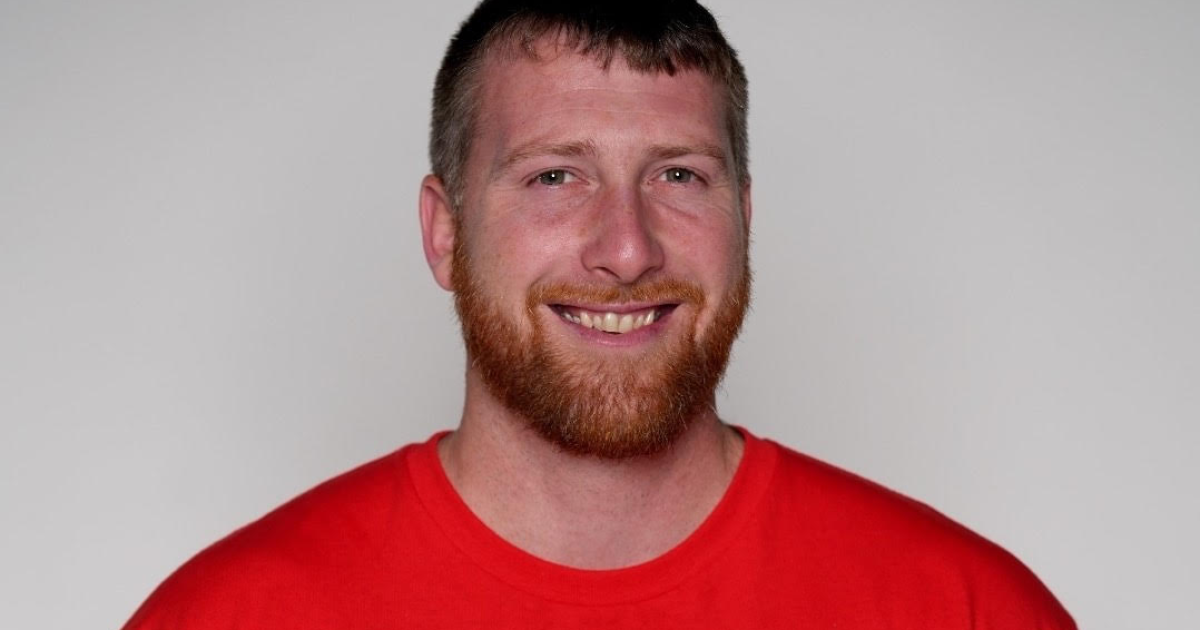
COLERAIN TOWNSHIP, Ohio — Colerain High School named Evan Heitman as its boys basketball coach on Friday, pending board of education approval.
Heitman succeeds Brett Kostoff, who decided to step down from the position in late April after two seasons. Kostoff has since joined the St. Xavier coaching staff as an assistant coach.
Heitman, a 2011 Colerain graduate, has coached high school basketball for 10 years. He began his coaching career at his alma mater as an assistant for two years.
“We are excited to introduce Evan Heitman as our new coach,” Colerain athletic director Matt Stoinoff said in a statement. “A Colerain native with experience in several successful programs, he understands the unique challenges involved. We believe Coach Heitman will develop a K-12 program that enables our kids to stay in the district where they belong. Also, we are looking forward to the staff Evan is assembling and the expertise they will contribute.”
After Heitman’s first stint at Colerain, he spent four years as the North College Hill head freshman coach and varsity assistant. He helped to lead the Trojans to a 22-3 record and a district title in 2017-18.
Heitman was the junior varsity head coach and varsity assistant at La Salle for three seasons. He played a significant role in leading La Salle to a Greater Catholic League South division co-championship in the 2022-23 season.
Last season, Heitman was the Finneytown varsity assistant, working with Wildcats head coach Brandon Robinson whom he coaches Amateur Athletic Union (AAU) basketball with through the Shining Star program. Heitman has been involved with that program for the past four years.
Heitman was born and raised in the Colerain Township community. He currently resides in White Oak with his fiancée, Sara, and his two dogs. Heitman’s sister, Brittney, his mom Sonya, and his brother-in-law all graduated from Colerain as well.
“First and foremost, I want to thank Matt (Stoinoff) and all of the people of Colerain for believing in me and giving me this opportunity,” Heitman said in a statement. “It’s such a full-circle moment, having walked these hallways, started my coaching career, and now having the opportunity to be the head coach. Next, I want to thank all the amazing coaches I’ve had the opportunity to work with and learn from, which got me here today.”
Heitman is looking forward to contributing to the community, school and basketball program.
“Living here and growing up going to games, I know all about the top-notch culture here at Colerain, which will be a priority for me to expand on,” Heitman said. “It’s a tight-knit community and a great school, and I just feel so privileged to be back, with the chance to build the basketball program.”
Colerain had a 2-21 record this past season, including 0-16 in the Greater Miami Conference.
Norwood names new coach
Norwood named Brian Callahan as its boys basketball coach Friday, according to Norwood athletic director Chuck Richardson.
Callahan, a former Lynchburg-Clay High School head coach, succeeds Ty Gibert in the Norwood coaching position.
Callahan grew up in the Norwood community and was on the coaching staff in the mid-2000s.
“He said during the interview process that Norwood is his dream job and I hope to see him turn his dream into a reality,” Richardson said. “I could sense that he was a gym rat, grinder, student of the game and well organized, which is something I’m always looking to see during the interview process. We are looking forward to see how things turn out with his vision and direction moving forward.”
Callahan has 29 years of high school basketball experience. He also coached on the AAU level with Shining Star and has his own program, Ohio Crossover.
“We were looking for a Head Coach/Program Manager that had prior head coaching experience, Richardson said. “Someone that we felt that would grow program numbers and would emphasize growth and development in the entire program. Coach Callahan has had multiple stops in reputable programs in the area as a freshman and JV head coach as well as a lead varsity assistant. As of recent he was the head coach at Lynchburg-Clay where he led them to double digit wins the last two seasons.”
Norwood had a 4-19 record including 0-12 in the Miami Valley Conference this past season.
Clark Montessori to begin interviews
Clark Montessori is scheduled to start interviews Friday for its boys basketball coaching position, according to Clark Montessori athletic director Derek Williams. The school received 20 applicants for the position. Former Clark Montessori coach Cashmere Wright, a former University of Cincinnati basketball player, was named the Walnut Hills coach April 28.
SIGN UP: Subscribe to our high school sports newsletter
(Bloomberg) — US Treasuries wrapped up the first weekly gain since the end of November after unexpectedly cool inflation numbers and a jump in the jobless rate cemented expectations that the Federal Reserve will cut rates at least twice next year.
While yields edged up on Friday, the 10-year Treasury rate declined four basis points in the week, while the policy-sensitive two-year yield fell by a similar amount as markets priced in a more dovish 2026 path.
Prediction Market powered by
Most Read from Bloomberg
Although markets had already been optimistic about further rate moves after last week’s Fed cut, the rally deepened after data showed the US unemployment rate hit a four-year high and core inflation came in at the slowest annual pace since early 2021.
“The direction of the surprises made sense,” Kelsey Berro, a fixed-income portfolio manager at JPMorgan Asset Management, told Bloomberg Television Friday. “Along the Treasury curve, we’ve been hanging out in the belly of the curve, the five- to 10-year point.”
Money markets now imply two full quarter-point cuts next year, with a 40% chance of a third. The move to price in more easing widened the gap between two-year yields and their 10-year peers to 67 basis points earlier this week, the most since January 2022 on a closing basis.
Still, comments Friday from Federal Reserve Bank of New York President John Williams, who said he sees no urgency to further adjust interest rates, weighed on Treasuries early in New York trading.
With the next major data releases not scheduled until January, investors are now taking a cautious approach heading into the new year. The ICE BofA MOVE Index, a gauge of expected bond-market volatility, is the lowest since 2021.
“The lack of clarity on the data will keep investors on their toes, but we see downside risks to rates as labor market worries persist,” US interest-rate strategists at TD Securities led by Gennadiy Goldberg wrote Friday. “Investors are likely to remain uncertain heading into year-end.”
–With assistance from Carter Johnson.
(Updates with latest prices, TD Securities commentary.)
The greybeards — yes, including Roy Keane — will be nodding after Ruben Amorim explained what he called a problem of entitlement amongst players following a social scene caused by academy players Harry Amass and Chido Obi.
MORE — Villa vs Man Utd preview
Amorim made comments last week about the struggles of Amass and Obi of late and the players responded on social media by posting images showing good times away from United’s first team. — Amass posted a Player of the Month award won while on loan to Sheffield Wednesday while Obi used a shot of him scoring for United’s U21s.
MORE — Premier League festive fixtures list, storylines
Amorim was asked about the images on Friday and defended his initial comments, saying that players often don’t realize how special the club is until they aren’t involved in it and doubling down on the ‘E’ word.
“I think it is the feeling of entitlement that we have in our club,” he said. “Sometimes strong words is not bad words, sometimes difficult moments is not the bad things for the kids.”
Ruben Amorim on ‘entitlement’ of youth players
To be fair, Amorim was more critical of the players’ responses than their feelings.
The Manchester United boss says the players are welcome to speak with him after hearing his words last week, and implies the problem is with Internet bravery over personal conviction and confidence.
“I think it’s something in our club, and we talk about the players sometimes forget about what it means to play for Manchester United. We as a club sometimes forget who we are and that’s that’s the feeling that I have. I understand everything is the environment, is the moment of the players, the kids they feel entitled.
These are all fair thoughts. Sure they will stick in the craws of Amass and Obi as well as some teammates but they will also send a message to all of the expectations of better attitudes.
Given that Amorim spent most of last season lamenting mentality problems around United and then used the summer to flip his squad, it feels like an okay fight for him.
Amass, 18, has made seven first team appearances for United at his tender age and has gone 90 minutes for struggling Wednesday in all but two Championship matches since arriving on loan in early September.
Obi, who turned 18 last month, has five goals and two assists in 15 matches across all competitions for United’s reserves. The Danish forward made seven appearances for Amorim in the second half of last season but has yet to be selected for a Premier League 18 this season.
Linda Martindale wasn’t brave, at least she didn’t think she was after she had been hired as a varsity boys basketball coach.
“Once the game started, I was fine,” says Martindale, now in her sixth season leading Lincoln-Sudbury (MA), “but walking into the gym and people thinking I’m the scorekeeper or whatever, I had to sort of overcome this feeling of, ‘Do I belong in the gym?’ ”
She made the three words her mantra, and she convinced herself she was brave. You need to be as an athlete, or a coach, in today’s world of youth sports.
“I have fond memories of my athletic career, but I also know there was a lot of heartache and it was very difficult,” says Martindale, who played Division II basketball at Alaska-Anchorage and in the old Pac-10 at Arizona in the late 1980s and early 1990s. “But nowadays, it’s totally different. Your whole career is splashed all over social media.”
Martindale’s father devoted his life to coaching baseball and football, driving her and her three siblings to be punctual and polite. He was hard on them, she says, but led with love.
“If I had a bad game, the people in the stands knew and my parents knew, and that was it,” Martindale tells USA TODAY Sports. “You’d come home and your parents would say, ‘How did the game go?’ You could self-report that. Easy to deal with.
“My oldest son would literally get DMs from strangers that say horrible things if he missed a free throw in the clutch. The landscape is very different. And it obviously trickles down to youth.”
Martindale got certified as a mental fitness coach to help ease the pressure on her three sons and one daughter (all of them have played college sports) but also other young athletes.
She works with sports teams at Division I Holy Cross and D-III Curry College, as well as individual athletes. She says there’s a secret beyond the physical component to playing sports in college.
We offer 10 ways, through consultation with Martindale, for parents to help athletes get there.
YOUTH SPORTS SURVIVAL GUIDE: Pre-order Coach Steve’s upcoming book for young athletes and their parents
1. Develop the coach in your head: It’s the best one you’ll ever have
When Martindale walked into the gym feeling the male eyes on her, she felt she needed an inner coach.
Your coach on the court or field will tell you what to do but, Martindale says, the one in your head will kick you in the butt to help get you where you need to go.
Jenny Levy, who has won four national titles as North Carolina’s women’s lacrosse coach, believes so strongly in an inner coach she likes when her players form their own mantras.
“Confidence looks good on you,” she heard her players say to each other in 2013, the year they broke through.
“A lot of coaches will say, ‘This is our saying,’ ” Levy told Martindale on Martindale’s ‘Game Changers’ podcast. “And I think that’s fine – to each his own – but I actually let our team organically come up with their own little things. This is the team having a good time together.”
The inner voice tells you it doesn’t matter what anyone else thinks, only what you do.
Go for it.
This is my time.
This is where I belong.
To come up with your own mantra, Martindale says, ask yourself why you play a sport? Look for performance cues to grind that thought into you.
“It’s not fun to lose, but it’s still really fun to compete and to play,” Martindale says. “OK, good, let’s start with that. So at least you can say it’s not fun to lose, but it’s really fun to prepare for the game. We’ve now established that the majority of the time is fun. Now we can get through the parts that aren’t fun.”
Was that ‘fun’? How Coco Gauff’s tough US Open embodies what the word means
2. We can learn how to handle the hard
Kids respond to the truth. We don’t need to always sugarcoat it.
Instead of saying, “It’s not so hard,” acknowledge that something is.
Maybe you’re afraid that you might lose or you’re going to make a fool of yourself in front of everybody.
“I’m happy that you can articulate a fear,” Martindale might tell an athlete. “Now, let’s squash it. What are you really afraid of? Is it really embarrassing to lose, or is it embarrassing not to play at all?
“It would be embarrassing if you threw yourself on the floor and screamed and cried in the middle of the game. But nobody thinks it’s embarrassing that you sat on the bench, cheered on your team, and then fought another day to try to get some minutes.”
3. Teach your kid how to build resilience to meet challenges head on
A current role doesn’t mean an ultimate role. Martindale goes back to Tom Brady.
He was once buried deep on Michigan’s depth chart. But he focused on nailing reps he got in practice. He was at game speed when he found himself starting.
“As parents, we say, ‘I don’t think you should have to be the backup quarterback,’ ” Martindale says. “ ‘I think you should be the quarterback.’ This is not helping. What you need to do is crush being the backup. And then your time comes and you’re ready instead of spending so much time worrying that you don’t have the role that you want (and) you’re not ready for it.”
Another of her podcast guests, Luke Avdalovic, a former walk-on basketball player at Northern Arizona University, told her: “I had a teammate named JoJo Anderson and he told me, ‘If you want to find a role into this team, find one thing that you’re really good at. Make sure you’re head and shoulders better than every single other person on the team. Then they can’t take you off the floor.’ ”
Avdalovic became a top sharpshooter who rose to the NBA G-League.
4. ‘You can’t be a shooter if you can’t miss’
Avdalovic has shot so much over the years he feels he’s never really in a slump. Some days he shoots better than others, but that is just the law of averages.
“You can’t be a pitcher if you can’t pitch poorly,” Martindale says. “You can’t be a shooter if you can’t miss. It’s just not possible (to) be perfect. So what do you do when you’re imperfect?”
The next time your son or daughter has a bad game, ask them, “Did you compete hard?”
You don’t want them to lose or fail but they need to know how to do both. As parents, and as coaches, our best support can come out of struggles.
5. We can only get the ‘yips’ if we vocalize them
You know the term if you’re a baseball fan. Suddenly, Steve Sax or Chuck Knoblauch can’t make a routine throw from second to first base, or Rick Ankiel can’t throw a strike.
“Yips is not a real thing,” Martindale says.
Struggles come alive, she says, when we say them out loud. Instead, if you’re a parent or a coach, tell your athlete: “I really believe in you. Just keep throwing, you’ll get it back, you’ll find a rhythm.”
When kids feel deep-rooted support, they have more confidence in themselves.
6. We don’t have to be good at everything
Martindale says today’s world for young athletes is like taking the SATs while your score is being put on a scoreboard.
Sometimes, it seems, we expect our kids to be good at everything. Martindale asks the ones with whom she works, “What class are you good at?”
She doesn’t necessarily mean classes in which they have an “A,” but the ones they enjoy most.
Sometimes it takes looking at things through a less critical lens. We have an “A” in science, but we enjoy the challenge of English Lit, in which we have a B-, which energizes us to try and bring up the grade.
7. ‘It’s not your family’: Parents are the ultimate artery of support
Eugene Glisky, Martindale’s father, had his ashes buried on the field where he coached near Toronto. She suspects he changed the lives of many young men.
But she stops short of calling a team a family.
“When a coach says to a parent, ‘I’m gonna treat your son or daughter like my own,’ I want to say, ‘No, thank you. I don’t need you to treat my son like he’s your own,’ ” Martindale says. “He has a great father. What I really want you to do is treat him like a player and a human being.
“It’s a team, which is amazing and I love my kid being part of a team. But it’s not a family. Why? Because what happens when your family cuts you?”
There are times when we need to be Coach, and times when we need to be Mom or Dad. Martindale had to be Coach when Judson, her oldest who now plays basketball for Manchester Basketball Club in the United Kingdom, came out of a game when he was younger and looked at her like, “Why are you pulling me?
He threw his water bottle, and she turned and said: “You can take your sneakers off. You’re done.”
The same coach, though, drove him home from a different game, criticizing him for what he didn’t do while failing to realize he was sick.
“So many examples of total failure by me,” she says. “What kind of mother would be talking to their kid about some offensive set when clearly they needed a mother?”
8. ‘Your influence is not neutral, parents’; don’t disrupt a happy kid
Levy, North Carolina’s women’s lacrosse coach, does parent Zoom calls. Before the first one, she asked her players what they wanted her to tell them.
“They said, ‘We don’t want to talk about the game at the tailgate after,’ ” Levy told Martindale. “ ‘We don’t want any parent to have this sad conversation after the wins because their kid didn’t play. We want the parents to sit together. We want them to be positive on the sideline.’ ”
Levy says the players gave her a Letterman top 10 of parent no-no’s, which she shared on the Zoom.
“I think they were pretty shocked,” says Levy, who coaches her daughter, Kate, on the team. “Our kids were like, ‘Last year was not OK. This is what we want and this is what we need this year.’
“And then if we saw it, I had permission from our players to call the parent and say, ‘Hey, you’re at the tailgate and your behavior was below the line for our program.’
“What if I acted like that as a parent? What if I did that in the middle of a tailgate?”
Levy’s point: A kid could be completely happy but if the parent is unhappy with their role, then the kid’s unhappy. And if the parent isn’t feeling like their kid is getting a fair shake, or they’re being really negative toward coaches or teammates, the kid internalizes the feeling.
“Your influence is not neutral, parents,” Levy says.
9. We can use even a little bit of winning to fuel us
During a clip Martindale shared of her speaking to athletes, she says, “There has to be wins in there. Otherwise, you can’t go an entire season and be like, ‘If we don’t win a game, this whole season is a waste.’ ”
She is not necessarily talking about checks in the “W” column as much as what we perceive as personal wins. Maybe you tell a teammate you loved the way he blocked a punt or moved into position on defense. If we don’t have wins, even within losses, you don’t learn how to win.
Youth sports ‘crisis’: Congress addresses big business in youth sports. Can we fix it?
10. So what’s the secret sauce?
Martindale believes there are five pillars of mental fitness: 1. Staying in the moment; 2. Controlling the controllables; 3. Seeing mistakes as opportunities; 4. Not judging yourself (or others) too harshly and 5. Comparison (positively).
She says she was once a failure at all of them. Has she since learned a special ingredient we need to have to play college sports?
Martindale thinks Angela Duckworth, director of the Penn-Wharton Behavior Change for Good Initiative, said it best.
“It’s grit,” Martindale has said. “I’m obsessed with grit, because we know it’s a single defining characteristic of successful people.
“Can you get up after you get knocked down? The athletes who are successful at every level of college, I think, have this kind of dog mentality that is about grit. And of course, you have to be skilled and you have to be athletic but when we really look at who performs best when it counts, it’s people who have failed. Over and over and over. And then now they succeed.”
We can’t beat our kids up over mistakes. Let them hear the voice in their head that gives them the grace to move forward from them.
Then, as Martindale says: “Watch them fail and then watch what they do after they fail.”
Borelli, aka Coach Steve, has been an editor and writer with USA TODAY since 1999. He spent 10 years coaching his two sons’ baseball and basketball teams. He and his wife, Colleen, are now sports parents for two high schoolers. His Coach Steve column is posted weekly.For his past columns, click here.
Got a question for Coach Steve you want answered in a column? Email him at sborelli@usatoday.com
Coaches at Oceanside, John Bapst, and Brewer high schools have resigned, with some citing pressure from parents as a key factor in their decisions.
MAINE, USA — High school sports are competitive—and the pressure to win often falls on the shoulders of the coaches. But when expectations become too much, some are deciding to walk away.
Oceanside High School in Rockland is the latest school to see its varsity boys’ basketball coach suddenly resign. Larry Reed joins two others—Chris Bryant from John Bapst and Carl Parker from Brewer High School—who have also recently stepped down.
“The first word that comes to my mind is probably shock,” Jim Seavey, Westbrook High School’s boys’ basketball coach, said.
Seavey has been coaching basketball in Maine since the 1990s and says he’s crossed paths with all three coaches many times over the years.
“It’s just too bad because they all have the same passion for the game and the kids,” he said. “It must’ve been tough to make that decision.”
At least two of the coaches pointed to pressure from parents as a major factor.
Chris Bryant posted a statement on social media, writing in part:
“As a coach, I have always prioritized the well-being and development of my players, and I stand by my coaching methods. However, it has become clear that I no longer have the support of parents and administration necessary to continue in this role.”
While many were surprised by his resignation, some say it was necessary. One parent specifically claimed on social media that her son received disparaging text messages from Bryant while playing basketball for him at John Bapst.
“It’s a lose-lose situation for everyone involved,” President of the Maine Association of Basketball Coaches Peter Murray said. “And at the people that’re going to lose the most are going to be the kids.”
Murray and Seavey say the increased competitiveness in youth sports created by a culture of year-round playing—and the rise of social media—are driving a wedge between parents and coaches.
“They can watch highlights of different schools, colleges, [and] professional athletes play, and think they’re recreating the game of basketball,” Seavey said. “That’s tough when you’ve got that competition.”
“A lot of parents want to see a return on their investment,” Murray added, who says many parents are investing much more time and money in their kids’ sports than ever before. “Their expectations are through the roof and that creates a problem.”
Both coaches agree that the path forward lies in better communication between parents and coaching staff.
“There’s going to be questions and concerns,” Murray said. “There has to be an avenue to ask those questions and voice those concerns.”
Conversations that school administrative members, like Westbrook High School Athletic Director Will Campbell, say they need to be helping facilitate.
“If the kid goes in and has a conversation with the coach and they don’t feel like they were heard or seen we can elevate that to a coach, kid, parent conversation and then up to a coach, kid, parent, athletic director conversation,” Campbell explained.
And if things don’t change, the coaches fear there could be fewer opportunities for young Maine athletes in the future.
“People were lining up at the door to coach some of these teams, but if this is the environment, people are a little hesitant to get involved,” Murray said.
Staff from Oceanside, John Bapst, and Brewer have confirmed that new coaches have been appointed to replace those who resigned.
For more local stories continue with us on our NEWS CENTER Maine+ streaming app.
For the latest breaking news, weather, and traffic alerts, download the NEWS CENTER Maine mobile app.
This is the time of year when people take stock of their lives. Maybe there is a new direction awaiting you in 2026?
If new year’s resolutions are your thing, will you be vowing to feel better, look better?
The Press would like to introduce readers to a local student, who by the ripe old age of 18, (as of October) had established OptiCro, LLC and is charting a course based on realizations that many of us don’t ever comprehend, let alone while still in high school.
Christian Petersen was 250 pounds on a five foot eight frame when he was 14 years old, and was not enjoying himself. He was being bullied and felt like an outcast.
To lose weight, he went down the path of fad diets and unsustainable nutrition without much results. Fast forward two or so years, and he had educated himself through the Nutrition Coaching Institution, after musing on the negatives of what he had been doing. His workouts evolved into building awareness of the preventative and corrective physical aspects of fitness.
He put the pieces together to lose – and keep off – about 60 pounds gruonded in a lifestyle he could maintain.
His first ‘customers’ were developed through Complete Performance, a gym in Blaine, where he has connected with some fellow travellers.
Upon enrolling in Trio Wolf Creek Charter School, in Chisago City, his schedule became flexible enough so he could finish school and also immerse himself in nutrition and conditioning methods tailored to young clients.
Long term he will attend Illinois State for advanced athletic training.
The wise always advise — do what you know — and Petersen knows what a seventh or eighth grader with body issues confronts. He is a walking, talking example of what can come out the other side of dedication, as he exudes confidence and energy and is quick to laugh.
His focus is on young people and connecting with them and their parents. The difficult part has been the initial introductions. In today’s world, a stranger does not just walk up to someone and tell them their kid would benefit from working out, so Peterson started a Facebook page, and you can find it at Christian Petersen.
He has successfully developed a program with some family and their friends and enjoys working as part of a team.
Petersen knows there are few services being provided for youth who are going through what he did. “I understand what they are feeling because I have lived it, “ he said over coffee. Any teen who has dipped their toes into fitness programs but quit because they felt misunderstood, Petersen gets that.
At the age of 16 he earned whatever certifications he could prior to legal adulthood. He has gained confidence in developing plans for physical training and prefers utilizing public spaces and equipment at parks, to the high priced elite facilities.
He is open to sharing “the triangle of awareness,” or performance, agility and longevity routines, with youth and parents.
He has experience with clients ages 11 to 18, as well as his mom. (She shed 70 pounds by the way.) He is open to working with anybody within an hour drive from Chisago.
The business is titled OptiCro as a combination of optimum and macro. He is not selling products in his program, but rather a niche connection, understanding and support. The program needs about eight weeks to get you on track.
So, why not just get into youth athletics and team sports and pursue conditioning that way, you wonder? Petersen shares that not everybody wants a trophy or looks forward to a competitive rivalry. He will, however, make you feel like you are with a winning team.
Funding approved for juvenile correctional facility
FITCHBURG, Wis. (WKOW) — A new youth prison has been approved and will be built near the Fitchburg–Oregon border, close to the Grow Academy site, to replace the aging Lincoln Hills correctional center in Irma.
The new juvenile correctional facility will partially replace Lincoln Hills.
“The kids that are there will be closer to their families and have more regular interaction,” said Fitchburg Alder Gabriella Gerhardt of District 2.
The proposal met city requirements and passed unanimously, with Gerhardt noting the design’s unique aspects.
“The design really looked more like a school than what I would have imagined,” Gerhardt said. “They also did something where they created a really curvy driveway to County Highway… to actually preserve as much of the agricultural land as they could in the area, and also to preserve existing high-quality trees, so they didn’t have to remove the trees. So that was a nice element as well.”
The facility will feature a garden, orchard, chicken coop, and greenhouse. It will employ 100 staff members and accommodate 32 male and eight female juveniles.
Fitchburg District 1 Alder David Herbst expressed uncertainty about the placement of the 122 young people currently at Lincoln Hills but believed the facility’s size would be advantageous.
“I don’t know that. But that was another thing. Thank you for raising that the size of this, you know, is a reasonable size, and I think the smaller size facilitates, you know, the mission,” Herbst said.
Efforts to reach the Wisconsin Department of Corrections for more details on cost and construction timelines were unsuccessful at this time.
If the project continues to progress, the facility is expected to be completed by late 2028.