Week 1 of the 2025 college football season provided no shortage of excitement, providing seismic upsets, statement victories and battles between top-ranked teams. Four top-10 team lost this past weekend, shaking up what could be an interesting regular season.
Those upsets included No. 3 Ohio State defeating No. 1 Texas 14-7, No. 9 LSU over No. 4 Clemson 17-10, No. 10 Miami over No. 6 Notre Dame — and perhaps the most surprising — unranked Florida State defeating No. 8 Alabama in Tallahassee. Each of these teams could find themselves in the College Football Playoff hunt by the end of the year, and their Week 1 performance has set the stage for the rest of the season.
With that being said, CBS Sports has ranked the 12-team playoff field, including first-round and quarterfinal matchups as well as the full bowl slate throughout the country. Here’s how its shakes up after the first week of the new college football season.
Projection: No. 12 Tulane at No. 5 Notre Dame
Tulane has been one of the strongest Group of Five programs in the country for several years now, but can they take the next step under head coach Jon Sumrall and make the playoff as the fifth-highest ranked conference champion in college football? Meanwhile, Notre Dame has its sights set on another run to the CFP despite a Week 1 setback against Miami on the road.
The Irish were unable to drive the length of the field on its final possession trailing by three. This came after Notre Dame erased a 10-point deficit to tie the game, but in the end it wasn’t enough. Tulane handled its own business in Week 1 with a 23-3 victory over Northwestern at home.
A matchup between two teams in the preseason top 10 who were a part of the initial 12-team College Football Playoff in 2024. Additionally, neither of these teams have ever faced each other on the gridiron.
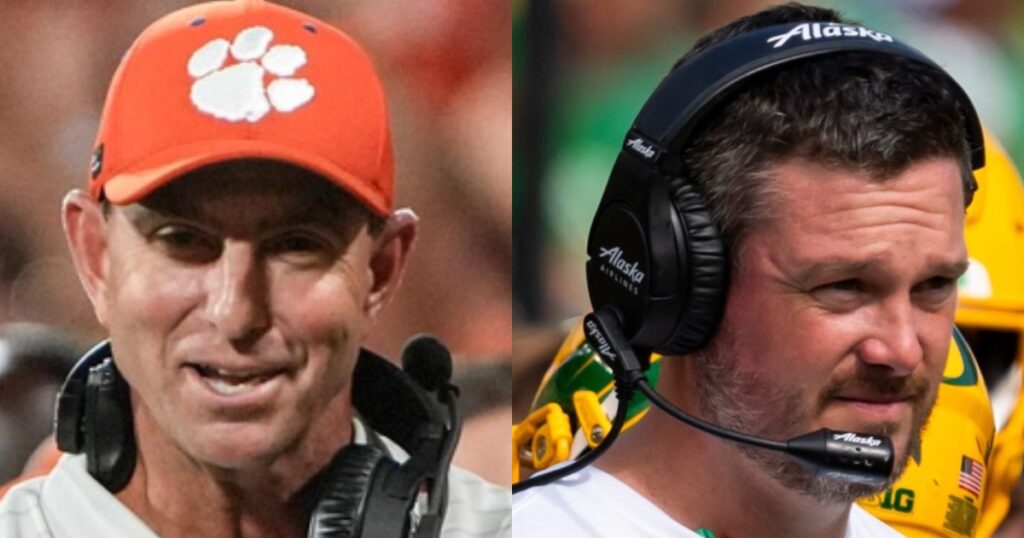
The Tigers kicked off their season with a home loss to LSU. A disappointing start to the season, but Clemson still expects a strong finish to the season. Oregon routed Montana State 59-13 in their opener and will face its first Power Four opponent in Oklahoma State (Big 12) this weekend before opening Big Ten play against Northwestern on Sept. 13.
Projection: No. 11 Georgia at No. 6 Florida
An SEC vs. SEC matchup in the first round is sure to bring a raucous environment to whichever program hosts this matchup. In this scenario, it’s the Florida Gators. Notably, the Gators also host Georgia during the regular season (Nov. 1).
This would be the first appearance in the College Football Playoff for Florida, while Georgia is looking to secure its third national championship in five seasons. Both SEC programs had a swift start to their regular season with the Gators shutting out Long Island 55-0 and the Bulldogs disposed of Marshall 45-7.
Projection: No. 10 Texas Tech at No. 7 Texas
Texas’ performance in Week 1, namely that of quarterback Arch Manning, has been the subject of discussion around the college football world since the 14-7 loss to Ohio State. He didn’t perform as expected, and the Longhorns are now expected to be a No. 7 seed in CBS Sports’ latest projections.
Texas Tech is slotted in at the 10-seed, as the Red Raiders hold claim to the top transfer portal class and have not been shy about their NIL pitches. In turn, Texas Tech could be a major player in the Big 12 moving forward.
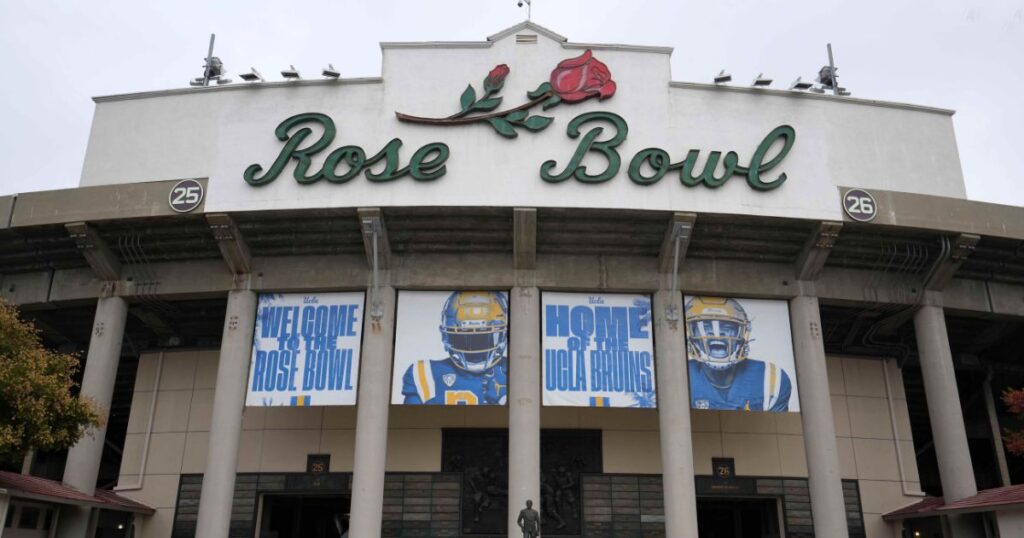
This scenario would see top-seeded LSU take on either Oregon or Clemson in the quarterfinal at the Rose Bowl. LSU defeated Clemson 17-10 on the road to open the season at Saturday.
The Tigers started the season 1-0 for the first time under Brian Kelly, and is a huge confidence boost heading into a SEC schedule that features six preseason top-25 teams. They’ll take on Louisiana Tech during Week 2 before opening conference action at home against Florida.
CFP Quarterfinal at Sugar Bowl
Projection: No. 2 Ohio State vs. (7/10 winner)
The reigning national champions kicked off the season on a high note with their victory over top-ranked Texas to begin the season. It was the second time in their last three games they defeated the Longhorns, doing so in the Cotton Bowl in last year’s CFP semifinal.
This scenario has the Buckeyes playing in the Sugar Bowl against either No. 7 seed Texas — a storyling that writes itself — or against No. 10 seed Texas Tech. Either way, the Buckeyes aren’t looking to be one and done this postseason.
CFP Quarterfinal at Orange Bowl
Projection: No. 3 Miami vs. (6/11 winner)
The Hurricanes led by as many as 10 points in the fourth quarter and despite the Irish’s best efforts, Miami held on to defeat Notre Dame 27-24 on Sunday night. However, Miami still has several key matchups on the horizon with Florida, Florida State and Louisville all in consecutive matchups to end September and begin October.
Based on seeding, they’d either face Florida or Georgia in the first round — a matchup that has major intrigue for everyone involved. Miami and Florida will meet by the end of the month, and the in-state rivals would make for an exciting atmosphere. Meanwhile, Georgia is the team of new Miami QB Carson Beck.
Penn State fell just short of the national championship last season, and have one of the best rosters in the country on paper. But is this the year the Nittany Lions push past their glass ceiling? Week 1’s 46-11 win over Nevada was a the first taste fans were able to get of this year’s teams.
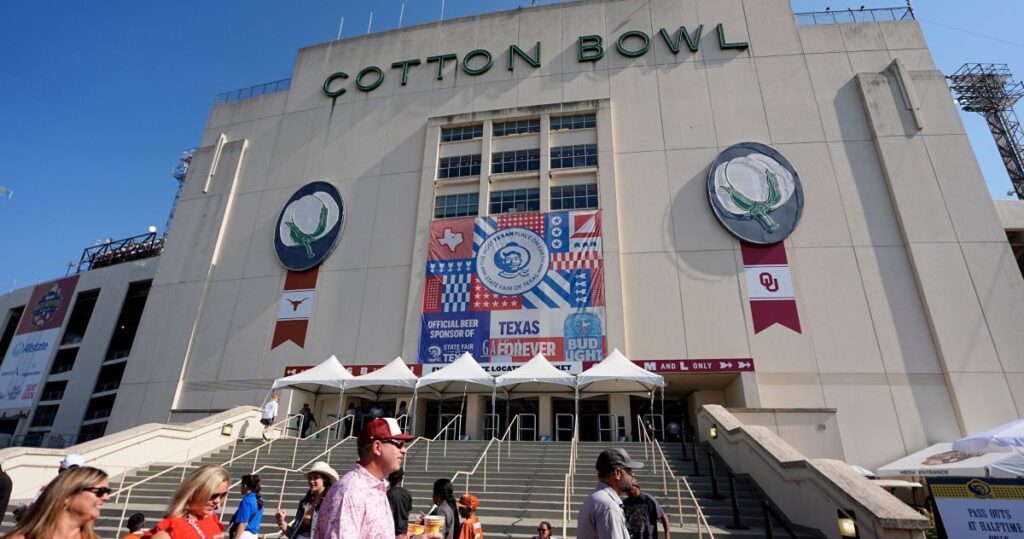
They’d either take on Notre Dame or Tulane in the Cotton Bowl. Again, the rematch between the Nittany Lions and Fighting Irish makes for an interesting rematch in the postseason. If Tulane can pull off the upset, the Nittany Lions will likely be heavily favored in the quarterfinals.
CBS Bowl projections after Week 1
All dates and times TBA
Hawaii Bowl Projection:Hawaii vs. UTSA
Boca Raton Bowl Projection:USF vs. Liberty
Cure Bowl Projection:Louisiana Tech vs. South Alabama
Arizona Bowl Projection:UNLV vs. Toledo
Birmingham Bowl Projection:NC State vs. Ole Miss
Pinstripe Bowl Projection:Virginia Tech vs. Iowa
Liberty Bowl Projection:Houston vs. Missouri
Los Angeles Bowl Projection:Boise State vs. Washington
68 Ventures Bowl Projection:Miami (OH) vs. Georgia Southern
New MexicoBowl Projection:San Jose State vs. UTEP
Salute to Veterans Bowl Projection:Northern Illinois vs. Texas State
Military Bowl Projection:Pitt vs. Memphis
GameAbove Sports Bowl Projection:Old Dominion vs. Buffalo
Independence Bowl Projection:TCU vs. Sam Houston
New Orleans Bowl Projection:Western Kentucky vs Louisiana
Idaho Potato Bowl Projection:Ohio vs. Colorado State
Guaranteed Rate Bowl Projection:Kansas State vs. Minnesota
Fenway Bowl Projection:Georgia Tech vs. ECU
Myrtle Beach Bowl Projection:James Madison vs. Navy
Armed Forces Bowl Projection:Air Force vs. Kansas
Las Vegas Bowl Projection:Illinois vs. Arizona State
Frisco Bowl Projection:Fresno State vs. North Texas
First Responder Bowl Projection:Army vs. Connecticut
Gasparilla Bowl Projection: Jacksonville State vs. Southern Miss
Texas Bowl Projection:Baylor vs. Texas A&M
Music City Bowl Projection:Nebraska vs. South Carolina
Duke’s Mayo Bowl Projection:North Carolina vs. Tennessee
A
transfer portal
spiraling out of control prompted the new regulatory body for college sports to issue a memo to athletic directors Friday night saying it has “serious concerns” about some of the multimillion-dollar contracts being offered to players.
The “reminder” from the College Sports Commission came out about an hour before kickoff of the semifinal between
Indiana and Oregon in a College Football Playoff
that has shared headlines with news of players signing seven-figure deals to move or, in some cases, stay where they are.
The CSC reminded the ADs that, according to the rules, third-party deals to use players’ name, image and likeness “are evaluated at the time of entry in NIL Go, not before, and each deal is evaluated on its own merits.”
“Without prejudging any particular deal, the CSC has serious concerns about some of the deal terms being contemplated and the consequences of those deals for the parties involved,” the memo said.
Under terms of the House settlement that dictated the rules for NIL payments, schools can share revenue with their players directly from a pool of $20.5 million. Third-party deals, often arranged by businesses created to back the schools, are being used as workarounds this so-called salary cap.
The CSC, through its NIL Go portal, is supposed to evaluate those deals to make sure they are for a valid business purpose and fall within a fair range of compensation for the services being provided.
The CSC did not list examples of unapproved contracts, but college football has seen its share of seven-figure deals luring players to new schools since the transfer portal opened on Jan. 2.
One high-profile case involved
Washington quarterback Demond Williams Jr.,
who initially sought to enter the transfer portal and turn his back on a reported deal worth $4 million with the Huskies. Legal threats ensued and Williams changed course and stayed at Washington.
“Making promises of third-party NIL money now and figuring out how to honor those promises later leaves student-athletes vulnerable to deals not being cleared, promises not being able to be kept, and eligibility being placed at risk,” the CSC letter said.
The commission listed two rules about contracts it evaluates, some of which have been termed “agency agreement” or “services agreement” in what look like attempts to bypass the rules.
—”The label on the contract does not change the analysis; if an entity is agreeing to pay a student-athlete for their NIL, the agreement must be reported to NIL Go within the reporting deadline.”
—”An NIL agreement or payment with an associated entity or individual … must include direct activation of the student-athlete’s NIL rights.” This is a reference to the practice of “warehousing” NIL rights by paying first, then deciding how to use them later.
___
Get poll alerts and updates on the AP Top 25 throughout the season. Sign up
here
and
here
(AP News mobile app). AP college football:
https://apnews.com/hub/ap-top-25-college-football-poll
and
https://apnews.com/hub/college-football
A transfer portal spiraling out of control prompted the new regulatory body for college sports to issue a memo to athletic directors saying it has “serious concerns” about some of the multimillion-dollar contracts being offered to players.
By EDDIE PELLSAP National Writer
A transfer portal spiraling out of control prompted the new regulatory body for college sports to issue a memo to athletic directors Friday night saying it has “serious concerns” about some of the multimillion-dollar contracts being offered to players.
The “reminder” from the College Sports Commission came out about an hour before kickoff of the semifinal between Indiana and Oregon in a College Football Playoff that has shared headlines with news of players signing seven-figure deals to move or, in some cases, stay where they are.
The CSC reminded the ADs that, according to the rules, third-party deals to use players’ name, image and likeness “are evaluated at the time of entry in NIL Go, not before, and each deal is evaluated on its own merits.”
“Without prejudging any particular deal, the CSC has serious concerns about some of the deal terms being contemplated and the consequences of those deals for the parties involved,” the memo said.
Under terms of the House settlement that dictated the rules for NIL payments, schools can share revenue with their players directly from a pool of $20.5 million. Third-party deals, often arranged by businesses created to back the schools, are being used as workarounds this so-called salary cap.
The CSC, through its NIL Go portal, is supposed to evaluate those deals to make sure they are for a valid business purpose and fall within a fair range of compensation for the services being provided.
The CSC did not list examples of unapproved contracts, but college football has seen its share of seven-figure deals luring players to new schools since the transfer portal opened on Jan. 2.
One high-profile case involved Washington quarterback Demond Williams Jr., who initially sought to enter the transfer portal and turn his back on a reported deal worth $4 million with the Huskies. Legal threats ensued and Williams changed course and stayed at Washington.
“Making promises of third-party NIL money now and figuring out how to honor those promises later leaves student-athletes vulnerable to deals not being cleared, promises not being able to be kept, and eligibility being placed at risk,” the CSC letter said.
The commission listed two rules about contracts it evaluates, some of which have been termed “agency agreement” or “services agreement” in what look like attempts to bypass the rules.
—”The label on the contract does not change the analysis; if an entity is agreeing to pay a student-athlete for their NIL, the agreement must be reported to NIL Go within the reporting deadline.”
—”An NIL agreement or payment with an associated entity or individual … must include direct activation of the student-athlete’s NIL rights.” This is a reference to the practice of “warehousing” NIL rights by paying first, then deciding how to use them later.
Copyright 2026 The Associated Press. All rights reserved. This material may not be published, broadcast, rewritten or redistributed without permission.
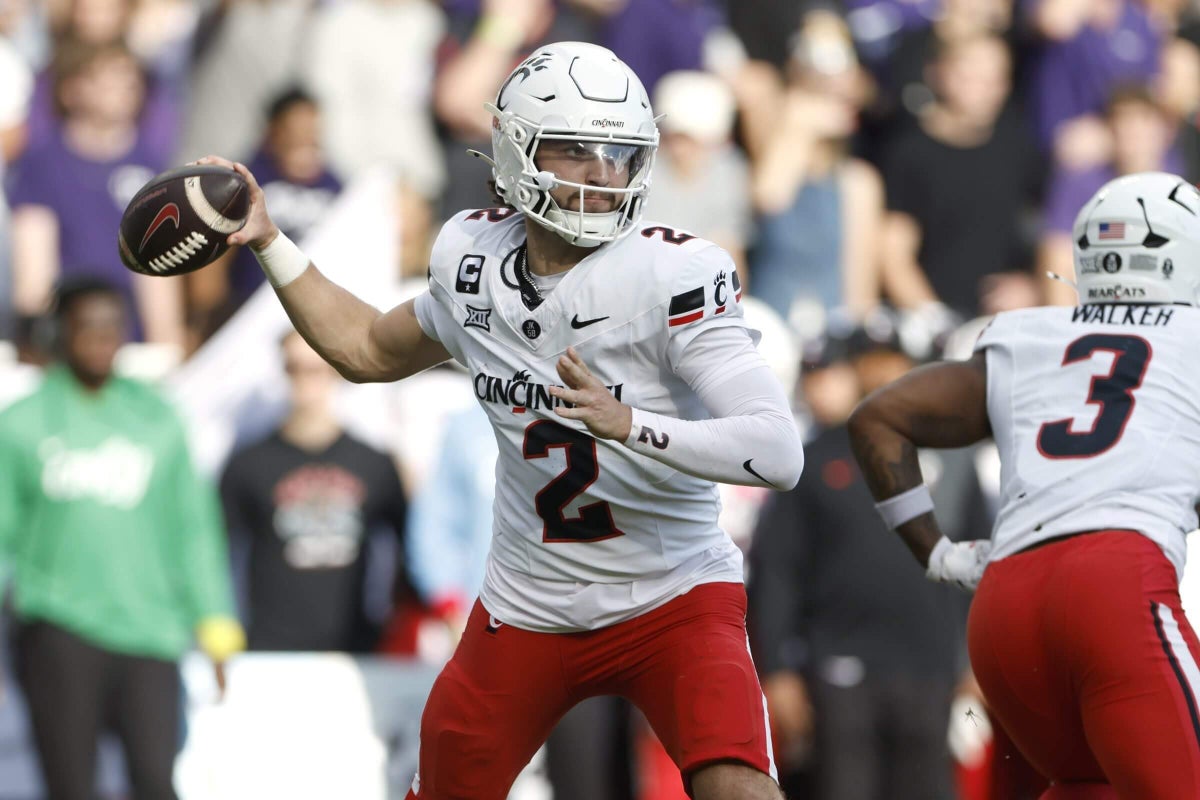
Brendan Sorsby, ranked No. 1 in The Athletic’s transfer quarterback rankings, transferred to Texas Tech earlier this week with one season remaining on a multi-year revenue sharing agreement with Cincinnati that includes a $1 million buyout clause, multiple people briefed on the deal told The Athletic. They were granted anonymity because they were not authorized to speak publicly about the terms of the deal.
The buyout payment is due to Cincinnati within 30 days of Sorsby’s transfer. It is not immediately clear how Sorsby’s buyout will be resolved.
Texas Tech was aware of Sorsby’s buyout, according to sources briefed on the transfer process, and factored it into his recruitment, as well as Tech’s own revenue sharing budget.
Ron Slavin, Sorsby’s agent with Lift Sports Management, declined comment.
Spokespersons for both Texas Tech and Cincinnati declined comment.
There have been questions about how revenue sharing contract terms might hold up under legal scrutiny, in part because college athletes are not employees and their rev share contracts are not typical employment agreements.
The full details of Sorsby’s agreement with the Red Raiders are not public, but the one-year deal is expected to pay him more than $4 million, according to people briefed on the terms. His signing was officially announced Tuesday by Texas Tech.
A redshirt junior with one year of eligibility remaining, Sorsby elected to enter the transfer portal and ultimately sign with Texas Tech rather than declare for the 2026 NFL Draft, where he is projected as a potential Day 2 pick.
Sorsby’s buyout is indicative of the new era of direct revenue sharing between schools and athletes under the House v. NCAA settlement, which was instituted last summer. Many schools have included buyout clauses in their rev share agreements that obligate athletes to redeem money to their previous school if they leave before the end of the agreement.
According to enforcement guidelines from the College Sports Commission, the organization that oversees revenue sharing, Sorsby’s $1 million buyout must be accounted for by Texas Tech within the school’s $20.5 million revenue sharing cap for fiscal year 2025-26. Texas Tech is not required to directly pay Cincinnati to cover the buyout costs.
Multiple power conference general managers told The Athletic they have either signed players who had buyouts with their previous schools or lost players with buyouts to other teams. The player or their representative will often handle paying the buyout to the previous institution, whether in full or at a negotiated rate.
“(Player buyouts are) happening this year. It’s not prevalent, but it’s happening,” said Darren Heitner, who specializes in sports law. “Typically there is a negotiation where a school starts at a specific number and then negotiates down, if the player has good counsel.”
Sorsby initially transferred from Indiana to Cincinnati as a redshirt sophomore, ahead of the 2024 season, signing an NIL agreement before revenue sharing began in July 2025. Last offseason, Sorsby signed a new two-year deal with Cincinnati’s NIL collective, a third-party group affiliated with the school, that later transitioned to a rev share contract with the university. The $1 million buyout was agreed to in both the multi-year collective deal and revenue sharing agreements. Sorsby earned roughly $1.5 million in 2025 from Cincinnati, according to people briefed on the previous terms.
There have been relatively few public disputes of NIL or rev share contracts between players, schools or third parties since college athletes could begin earning NIL compensation in 2021.
Earlier this week, Washington quarterback Demond Williams Jr. announced intentions to enter the transfer portal just days after signing a new contract with the Huskies that’s expected to pay him more than $4 million. The buyout would have likely factored into any protracted legal battle between player and school, but Williams never actually entered the portal and announced on Thursday that he will remain with Washington.
Late last year, the University of Georgia took former defensive end Damon Wilson II to court, with Georgia seeking arbitration and $390,000 in damages after the university claimed Wilson broke an agreement with Georgia’s NIL collective by entering the transfer portal in January 2025, prior to the onset of revenue sharing. Wilson, who transferred to Missouri for the 2025 season, later sued Georgia’s athletic association seeking his own damages for what the suit described as a “civil conspiracy” to interfere with Wilson’s business endeavors. It’s believed to be the first time a player and school have taken each other to court over an NIL dispute. Both proceedings are still ongoing. Wilson recently re-entered the portal.
Last summer, the University of Wisconsin and its NIL collective filed a lawsuit against the University of Miami for tampering with defensive back Xavier Lucas, who Wisconsin claimed had an agreement with their NIL collective and another “binding agreement” with the university that was contingent on revenue sharing being approved. The next hearing in this case is scheduled for March 2026.
In April 2025, a contract holdout by former Tennessee quarterback Nico Iamaleava ended with Iamaleava transferring to UCLA, but no legal action was taken.
Former Florida signee Jaden Rashada has a pending lawsuit filed against various parties, including former Gators coach Billy Napier, that stems from a 2022 NIL deal.
One Power 4 coach who spoke on the condition of anonymity, said that in some instances, unfulfilled buyout terms or the player attached might not be worth the time and effort to spark a legal battle, and some universities might be hesitant to pursue litigation against a college athlete.
“It’s less of a legal challenge and more of an optics challenge for institutions at this point,” said lawyer Paia LaPalombara, a former college athletics administrator who advises colleges, conferences and athletes on revenue sharing.
A 6-foot-3, 235-pound dual-threat quarterback, Sorsby averaged better than 2,800 yards passing and 500 rushing yards in his two seasons with the Bearcats, including 36 combined touchdowns passing and rushing in 2025, third-most in the FBS, with only five interceptions. He led Cincinnati to a 7-5 regular season record in 2025 and a spot in the Liberty Bowl, the program’s first bowl bid since 2022.
Sorsby opted out of the bowl game, announcing on Dec. 15 that he planned to enter the transfer portal. The native of Denton, Texas, was quickly linked to Texas Tech as a potential destination. He made recruiting visits to Tech and LSU.
The Red Raiders recently completed a 12-2 season in 2025, winning the Big 12 championship and earning a first-round bye in the College Football Playoff, where they lost to Oregon 23-0 in the quarterfinals on New Year’s Day. Starting quarterback Behren Morton has exhausted his college eligibility, and sophomore backup Will Hammond suffered an ACL injury in October. After making headlines for its portal additions last offseason, Tech has again been active early in this year’s transfer window.
A transfer climate spiraling out of control prompted the new regulatory body for college sports to issue a memo to athletic directors Friday night saying it has “serious concerns” about some of the multimillion-dollar contracts being offered to players.
The “reminder” from the College Sports Commission came out about an hour before kickoff of the Peach Bowl semifinal between Indiana and Oregon in a College Football Playoff that has shared headlines with news of players signing seven-figure deals to move or, in some cases, stay where they are.
The CSC reminded the athletic directors that, according to the rules, third-party deals to use players’ name, image and likeness “are evaluated at the time of entry in NIL Go, not before, and each deal is evaluated on its own merits.”
“Without prejudging any particular deal, the CSC has serious concerns about some of the deal terms being contemplated and the consequences of those deals for the parties involved,” the memo read.
Under terms of the House v. NCAA antitrust lawsuit settlement that dictated the rules for NIL payments, schools can share revenue with their players directly from a pool of $20.5 million. Third-party deals, often arranged by businesses created to back the schools, are being used as workarounds to this de facto salary cap.
The CSC, through its NIL Go portal, is supposed to evaluate those deals to make sure they are for a valid business purpose and fall within a fair range of compensation for the services being provided.
The CSC did not list examples of unapproved contracts, but college football has experienced its share of seven-figure deals luring players to new schools since the NCAA transfer portal opened on Jan. 2.
One high-profile case involved Washington quarterback Demond Williams Jr., who initially sought to enter the portal and turn his back on a reported deal worth $4 million with the Huskies. Legal threats ensued, and Williams changed course and stayed at Washington, a decision the quarterback announced Thursday night.
“Making promises of third-party NIL money now and figuring out how to honor those promises later leaves student-athletes vulnerable to deals not being cleared, promises not being able to be kept, and eligibility being placed at risk,” the CSC letter read.
The commission listed two rules about contracts it evaluates, some of which have been termed “agency agreement” or “services agreement” in what look like attempts to bypass the rules.
First, “The label on the contract does not change the analysis; if an entity is agreeing to pay a student-athlete for their NIL, the agreement must be reported to NIL Go within the reporting deadline.”
Second, “An NIL agreement or payment with an associated entity or individual … must include direct activation of the student-athlete’s NIL rights.” This is a reference to the practice of “warehousing” NIL rights by paying first, then deciding how to use them later.
A transfer portal spiraling out of control prompted the new regulatory body for college sports to issue a memo to athletic directors saying it has “serious…
A transfer portal spiraling out of control prompted the new regulatory body for college sports to issue a memo to athletic directors Friday night saying it has “serious concerns” about some of the multimillion-dollar contracts being offered to players.
The “reminder” from the College Sports Commission came out about an hour before kickoff of the semifinal between Indiana and Oregon in a College Football Playoff that has shared headlines with news of players signing seven-figure deals to move or, in some cases, stay where they are.
The CSC reminded the ADs that, according to the rules, third-party deals to use players’ name, image and likeness “are evaluated at the time of entry in NIL Go, not before, and each deal is evaluated on its own merits.”
“Without prejudging any particular deal, the CSC has serious concerns about some of the deal terms being contemplated and the consequences of those deals for the parties involved,” the memo said.
Under terms of the House settlement that dictated the rules for NIL payments, schools can share revenue with their players directly from a pool of $20.5 million. Third-party deals, often arranged by businesses created to back the schools, are being used as workarounds this so-called salary cap.
The CSC, through its NIL Go portal, is supposed to evaluate those deals to make sure they are for a valid business purpose and fall within a fair range of compensation for the services being provided.
The CSC did not list examples of unapproved contracts, but college football has seen its share of seven-figure deals luring players to new schools since the transfer portal opened on Jan. 2.
One high-profile case involved Washington quarterback Demond Williams Jr., who initially sought to enter the transfer portal and turn his back on a reported deal worth $4 million with the Huskies. Legal threats ensued and Williams changed course and stayed at Washington.
“Making promises of third-party NIL money now and figuring out how to honor those promises later leaves student-athletes vulnerable to deals not being cleared, promises not being able to be kept, and eligibility being placed at risk,” the CSC letter said.
The commission listed two rules about contracts it evaluates, some of which have been termed “agency agreement” or “services agreement” in what look like attempts to bypass the rules.
—”The label on the contract does not change the analysis; if an entity is agreeing to pay a student-athlete for their NIL, the agreement must be reported to NIL Go within the reporting deadline.”
—”An NIL agreement or payment with an associated entity or individual … must include direct activation of the student-athlete’s NIL rights.” This is a reference to the practice of “warehousing” NIL rights by paying first, then deciding how to use them later.
Get poll alerts and updates on the AP Top 25 throughout the season. Sign up here and here (AP News mobile app). AP college football: https://apnews.com/hub/ap-top-25-college-football-poll and https://apnews.com/hub/college-football
The first step toward addressing a problem, as the saying goes, is admitting you have one. Good news for concerned SEC football fans: It does seem the conference admits it has a problem.
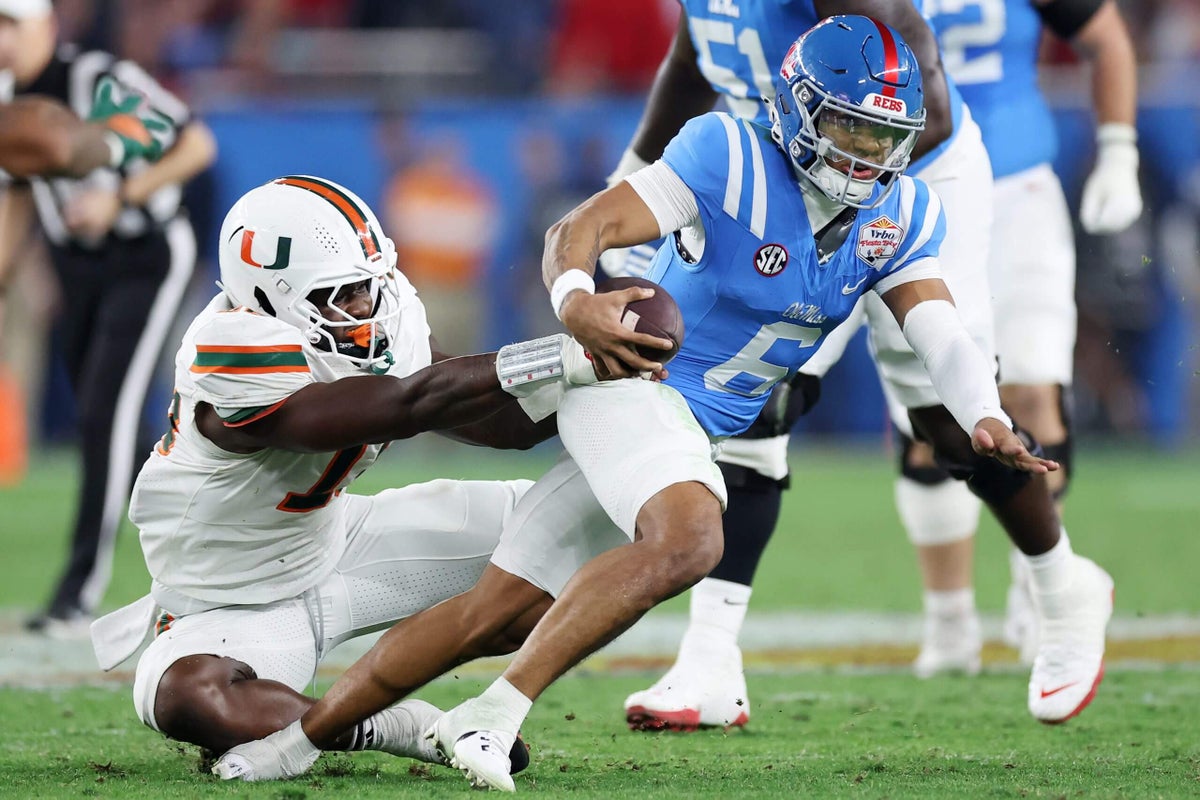
That was true even before Ole Miss lost to Miami on Thursday night, meaning the SEC was shut out of the national championship game for a third straight year. Ole Miss acquitted itself well, played a great game and almost got there. It deserves its flowers.
In fact, Ole Miss being the last SEC team standing was perfect symbolism. The rest of the conference should take heed.
As it is, the reality of the SEC’s situation set in this week among the conference’s defenders and within the league itself.
There was Paul Finebaum, voice of the SEC Network and basically the SEC, saying there was no defense for the conference’s 2-7 bowl record, including Alabama’s loss to Indiana in the College Football Playoff.
“There’s no way to defend the SEC. It’s been terrible,” Finebaum said on ESPN’s “First Take” on Tuesday.
There was Steve Spurrier, legendary former coach of Florida and South Carolina, not quite calling out his conference but also not downplaying things: “We got slapped in the face during the bowl season.”
And in my own conversations with people around the league, granted anonymity in order to be candid, there was none of the “everything is fine” meme.
“There’s no getting around the bowl results,” one conference source said, noting that SEC teams lost games they were favored to win. As elite teams faltered in the CFP, the SEC’s argument has been that it was still a deeper conference; Missouri losing to Virginia, Tennessee losing to Illinois, Vanderbilt losing to Iowa … not good.
Another SEC official maintained that the SEC is still the best league — as the NFL Draft has shown for years — but acknowledged that parity is here.
So will the SEC shrug and accept that? We all know the answer lies in a four-word slogan. The only question now is what the conference collectively will do about it.
To quote another saying: The answer to all your questions is money.
And a humbled SEC may become a desperate but smarter SEC. Because if the conference is going to get its mojo back, it will just need to mean more again. As in more money towards players.
Normally you could say the SEC was just due for a dip, this was cyclical, nothing to waste a column on. But the dip coincides with the other changes in the sport. The world is flat now, and too many SEC teams were slow to react.
Alabama and Georgia have been operating the past few years as if they got a discount because of their status. And that is the case for some recruits. But it isn’t for others, and that’s been enough to knock their talent down a notch.
Kirby Smart spent the early years of his tenure working donors for facility money, and it worked. When collectives became the focus, Smart did some lobbying, but perhaps with some restraint on the assumption they’d get that NFL Draft discount. Now that the difference appears to be third-party NIL deals, Smart may need to ratchet it up: There are big-money people working all around the Southeast who are Georgia fans and can probably arrange deals that will be approved by the authorities.
Or if not … well, anyway.
Georgia actually looks like it should be very good next year. Texas may be too. Alabama, on the other hand, has questions. Other teams are in transition, and then you have Ole Miss, the SEC program that most took advantage of the new rules. (Or lack of rules.) The other was Texas A&M a few years ago, but that was geared around traditional recruiting, not the portal. The programs that otherwise were the face of the era — programs desperate to win and willing to pay big to do it — tended to be outside the conference: Texas Tech, Miami and Ohio State.
That’s not to say SEC programs weren’t spending too; they were, which was part of the problem. SEC teams were picking off each other, whether it was top teams like Texas poaching Georgia and Alabama players or teams in the middle like Missouri. The SEC has been eating itself.
At the high school level, the SEC has still dominated recruiting:
• Last year, SEC teams signed 55 of the top 100 players, per the 247Sports Composite, including a remarkable 16 of the top 25.
• This year, it was only nine of the top 25, but still 53 of the top 100.
But while in the past it was the Georgias, Alabamas and LSUs signing most of those players, it’s now much more widely dispersed:
• Last year, 11 different SEC teams signed at least one top 100 player, and seven signed at least one top 25 player.
• This year, 13 different SEC teams signed at least one top 100 player, and five different teams signed at least one top 25 player. Vanderbilt, of all teams, swooped in and flipped the top-ranked recruit, quarterback Jared Curtis, from Georgia.
In the last year of the pre-NIL era, the 2021 recruiting cycle, teams that are now in the SEC signed a combined 18 of the top 35 players, but Alabama and Georgia signed 11 of them.
And of course, once you get players on campus, it’s harder to hoard the talent. Unlimited transfers provide a way for players to leave for immediate playing time rather than be stowed away on the bench, as Saban and Kirby Smart could do in the old days.
The world is flat. Parity is here. And throw in the CFP, which appears to be college sports joining the rest of the sports world with a postseason that’s a crapshoot. The best team doesn’t always win.
That is, if the SEC has the best team. Which it’s hard to say it has lately.
There can’t be any dismissing of the past: The SEC deserved the accolades it got for more than a decade leading up to 2023. The conference did win 13 national championships in 17 seasons, did have both teams in the national championship game three times in 12 years, did whip the Big Ten and other conferences in head-to-head matchups.
The SEC dominance was not a media creation.
But for the SEC industrial complex — media, administrators, whoever — to ignore the reality of the last three years would be foolish.
LSU is acting like a desperate program, committing the GDP of a small country not only to lure Lane Kiffin but to give him the resources to recruit. Texas, after a disappointing season, is also acting seriously about making amends. Even on the lower rung, Kentucky decided to pay coach Mark Stoops’ buyout, showing it wasn’t resigned to staying on that lower rung.
The signs are indeed there the SEC gets it. There’s a sense of urgency now. That doesn’t mean the old days will return: They’re probably gone, with super teams giving way to parity. That’s the new world.