Demond Williams Jr. finds Denzel Boston for a 23-yard TD


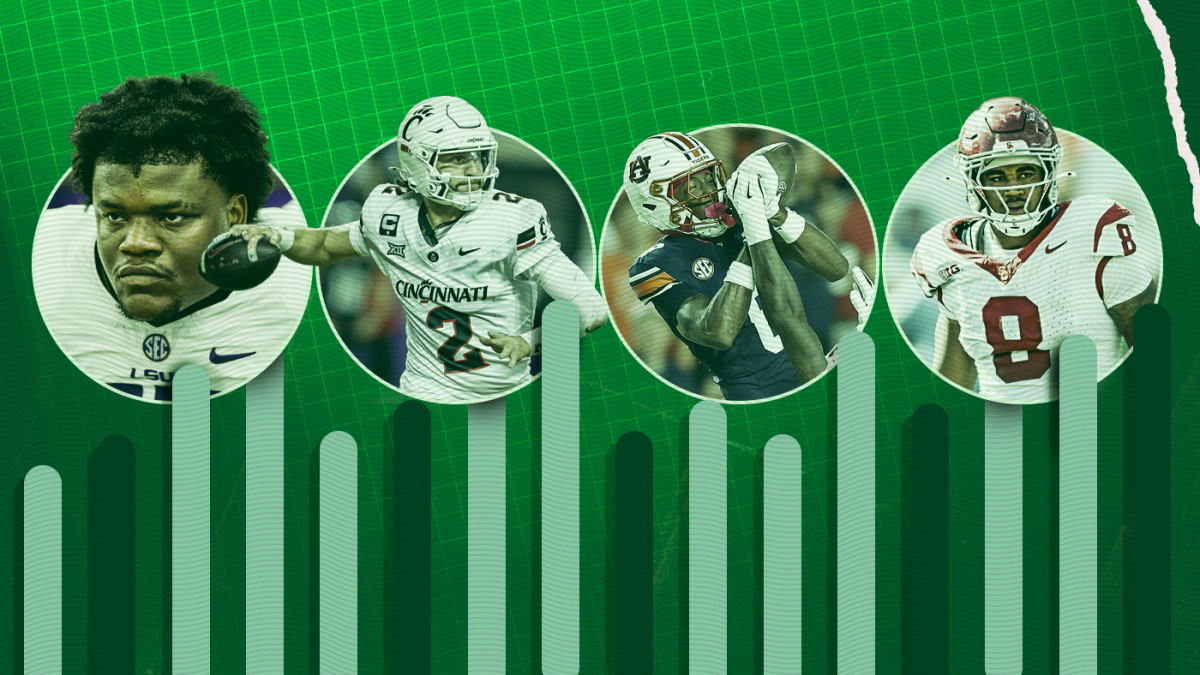
The college football transfer portal will officially open Jan. 2 and with it should come a flurry of activity, big-money deals and roster transformations.
There is more pressure than ever this time around with the spring portal period disbanded in favor of a sole winter period that runs from Jan. 2 through Jan. 16. It’s why this year’s winter portal could resemble what we see with NFL free agency with many of the best options coming off the board quickly for big money deals.
“People are going to spend out of the gate — like immediately — your top guys, your best guys, are going to go quick,” said a Big Ten general manager. “Then it’s the rest of them that are asking for money, but at some point they’re going to come down a little bit because the money has already been spent.”
There was a belief a year ago that with the passing of the House settlement and introduction of the College Sports Commission as an enforcement arm that last year may have been the Golden Age for big paydays. With a $20.5 million revenue share cap and a promise for stricter enforcement of NIL deals, the idea was that prices would come down this cycle as teams could no longer double dip between unlimited collective money and the rev share. For a variety of reasons, however, that hasn’t proven to be the case.
In some cases, even, prices have doubled.
“I feel like the average starter this cycle, the sort of line you have to hit, is $600,000,” said one SEC general manager. “I feel like last year starters’ in our conference were $300,000. Now it feels like starters are more like $600,000.”
What does that look like for the entire market? CBS Sports talked to dozens of sources from agents to general managers to collective leaders to put together value ranges for each position ahead of this window’s official opening.
High End: > $3.5 million
Average: $1.5 million to $2.5 million
Low End: $750,000 to $1 million
Just like in the NFL where the top quarterbacks account for around 20% of a team’s cap, the best portal quarterbacks this cycle are expected to command a hefty chunk of the pie.
Top-ranked arms like Brendan Sorsby (from Cincinnati), Josh Hoover (from TCU) and Sam Leavitt (from Arizona State) are expected to reach — and possibly pass — the $3.5 million mark.
It’s well-documented last cycle’s double dip (teams spending freely before rev-share caps were put into place over the summer) allowed teams to go gangbusters in transfer portal spending, including at QB where Duke made the little-known Darian Mensah famous for a $4 million annual salary. General managers thought there would be a downturn in spending at the position this cycle because of rev-share caps, but that sentiment has changed in recent weeks.
Schools are figuring out creative ways to exceed the rev-share cap, usually through marketing deals the school can find for their high-profile QB1.
“Six weeks I would have said no way,” an ACC GM said. “In the last six weeks people have figured out ways to construct a contract. You can put 15 deals together to get to $4 million.”
What 20% of a team’s cap looks like depends on the school. Some Power Four programs will only be at the full revenue sharing max, around $14-18 million for each Power Four football programs. Other big spenders will be at $25 million-plus due to the outside name, image and likeness deals the program manages to generate.
As for whether it makes sense to pay a quarterback that much, it’s a matter of debate for the general managers we spoke with.
“Even if you’re at $25 million, are you really going to put 20 percent of your resources into one player?” a Big Ten GM said. “You better hope he’s good. You better hope he’s Fernando Mendoza or Diego Pavia – he has to be or that’s a bad investment.”
Beyond the upper end of the market, the number required for a quality starter in the portal continues to creep up. Last year, quality-starting QBs could be found in the upper 600s and low million-dollar range. Now the same level of player costs $1.5 to $2.5 million.
Even high-upside backups who haven’t started are making that sort of ask.
“I don’t know in the portal if you’re going to get a guy experienced and proven (for) less than $2 million,” a SEC GM said.
As for the low end of the market, there are some Power Four teams who could choose to go the discount route for a starter, be it a player jumping up from the FCS or Group of Five ranks — there are starters who’ve played a lot of snaps who can be found at that price — or betting on a player who’s shown flashes in short bursts on the Power Four level.
High End: > $1 million
Average: $400,000 to $700,000
Low End: $250,000
Similar to the NFL, at the running back spot you’ll see some college teams really prioritize it and others shy away from spending big money. There are multiple running backs this cycle who could command seven figures if they enter the portal such as Louisville’s Isaac Brown and Florida’s Jaden Baugh. The idea of a $1-million plus running back prompted strong reactions.
“If you’re spending a million dollars on a running back, you need a new GM,” said one agent.
Said a Big Ten general manager: “The running back numbers have been absolutely stupid. They don’t make any sense.”
Still, there are those willing to invest major resources in a top running back just like the Philadelphia Eagles did in plucking Saquon Barkley away from the New York Giants or the Atlanta Falcons drafting Bijan Robinson 8th overall in the 2023 NFL Draft.
“I’m a bigger fan of running backs than the whole trend 10-15 years ago,” said an ACC general manager. “‘Oh don’t ever draft a running back in the first round’. Well, look at all the best ones that ever played. They were all drafted in the first round.”
Once you get past the top-end running backs, most agree that you can get a good back in the $300,000-$500,000 range.
High End: $1 million to $2 million
Average: $500,000 to $800,000
Low End: $300,000 to $500,000
If you want a top receiver out of the transfer portal, be prepared to spend big. Auburn’s Cam Coleman could be in the $2 million range, predicted one Big Ten general manager. Coleman is ranked as the No. 1 overall transfer in Cooper Petagna’s 247Sports transfer portal rankings.
Auburn star WR Cam Coleman to enter transfer portal: 7 potential destinations for No. 1 player in 2026 cycle
Cody Nagel
With receivers, it can depend on whether the player is viewed as a true No. 1 receiver or more of a No. 2. If you’re a true No. 1 with legitimate NFL talent, you’ll command $1 million and upward, especially the big-bodied outside plays. A Big Ten general manager, throwing out a hypothetical, said Ohio State’s Jeremiah Smith could command up to $4 million for one year of his services should he transfer. Smith is a cut above the rest of the sport, though. The hypothetical gap between him and Coleman could be $2 million — though a bidding war could also push Coleman’s number above $2 million — while the gap between Coleman can be hundreds of thousands of dollars.
As one Big 12 general manager explained: “$1 million for elite receivers, $1.5 million to $2 million for freak receivers and $400,000-$750,000 for everyone else.”
A No. 2 starting receiver could be more in the $300,000-$600,000 range. What determines the price range for those? Some of it is based on production, some of it is based on traits and some of it is simply physical attributes.
“Bigger, taller WRs, even without production, can be in that $600,000-$700,000 range,” said an agent. “Smaller guys/third guy is $200,000-$300,000. Decent guy is $400,000-$600,000 at No. 2. Tall guys get an extra $100,000.”
In last year’s cycle, there were multiple receivers who were in the seven-figure range including Auburn’s Eric Singleton and Texas A&M’s KC Concepcion. Multiple receivers will hit that range again.
High End: $600,000 to $800,000
Average: $300,000 to $500,000
Low End: $200,000 to $300,000
Tight end is an eye-of-the-beholder position. Some schools don’t use them much in their offense. Others require two on the field at a time. The best ones can be game changers at receiver like Tanner Koziol was for Houston this year (727 yards, 6 TDs) for a 10-win team. Interestingly, Koziol transferred to Wisconsin first, didn’t mesh and reentered the portal in the spring to emerge as a difference maker for the Cougars.
That’s why the range for tight ends is so varied.
Value is there to be found on the lower range — with at least one all-conference player this year making $200,000 this year — but mostly it’s the block-first tight ends who fit in the lower range. Most starters will be between $300,000 to 500,000 while the elite players of the cycle, like Iowa State’s Benjamin Brahmer and Tulsa’s Brody Foley, will sit between $600,000-800,000.
High End: > $1 million
Average: $500,000 to $1 million
Low End: $300,000 to $500,000
Outside of quarterbacks, offensive tackle is the position that traditionally commanded the highest average premium. Even some non-proven tackles last cycle — think 300 or fewer snaps coming from a high-end Power Four program — commanded well into the seven-figure range last year.
That seems to have shifted, or at least plateaued, this cycle.
“That’s the one position that oddly feels like it’s the same market as last year,” the SEC GM said.
As one agent with several high-level tackles — those located in the top 15 of the 247Sports rankings — put it: “Last year it seemed like if you were pretty good you could get a million. This year it seems like teams are shying away from a million. I’ve seen a lot of $700,000 to $900,000 offers for the tackles. The minute you ask for a million they clam up.”
Regardless, elite tackles will still command a million-plus. There just aren’t that many of them with those like Auburn’s Xavier Chaplin and LSU’s Carius Curne fronting the market as currently constructed — and a few big names are floating out there still as hot rumors.
Teams still have to pay up even for the solid starters. The average in the Power Four for that level of player will still sit between $500,000 and a million. Some teams will try to find value between $300,000 to $500,000 at tackle, but those players will either be FCS players jumping up or unproven Power Four players teams are taking a chance on.
High End: $600,000 to $800,000
Average: $300,000 to $500,000
Low End: $200,000 to $300,000
Opinions on guard can vary depending on a team’s priorities. Seeing them as critical interior anchors and a huge piece of the run game, some high-profile programs are willing to shell out up to $800,000 for an elite guard. Other schools, even the high-profile ones, consider them the most replaceable pieces on offense and allot around $400,000 on the high end.
Thus, the salary range can be extreme.
“A large-bodied guard could warrant $700-800K plus for a guy who could be drafted,” said one agent who represents a blue-chip guard. The agent noted there would only be a handful of those types this cycle.
Center is a more specialized position generally than guard, so the better ones tend to be a bit more expensive. A good center with experience will be in the $500,000 range, a little higher than the average on the inside.
High End: $1 million to $1.7 million
Average: $600,000 to $1 million
Low End: $300,000 to $500,000
After quarterback and offensive tackle, edge-rusher is the premium position where you’ll see considerable resources dedicated for many programs. If you have a game-wrecker at this position, it can open so much for you defensively and it’s why so many programs want a great one.
With high demand comes hefty prices. If a player like South Carolina’s Dylan Stewart, who recently re-upped with the Gamecocks, had instead hit the portal, he would have garnered in the $2 million range, according to a Big Ten personnel executive. If you want anyone even in the neighborhood of Stewart’s caliber, you’ll be spending seven figures this cycle. One general manager known for shopping in the expensive portal aisles said “the really good ones are between $1-$1.5 million.”
Penn State edge-rusher Chazz Coleman is the top-rated edge transfer, according to 247Sports, and No. 2 overall transfer.
Even just an average starting edge-rusher can command in the $700,000 range, according to a different Big Ten general manager.
“I don’t know if it’s desperation or scarcity,” the GM said, “but guys without a whole lot of production or proven impact are commanding eye-brow raising money.”
High End: $800,000 to > $1.5 million
Average: $500,000 to $700,000
Low End: $250,000 to $500,000
The scarcity of talented defensive tackles has made this a position of high value if you’re going shopping out of the transfer portal. The gem of this year’s class is Wake Forest’s Mateen Igirogba (No. 5 in 247Sports’ rankings) who could command in that range of $1.5 million or a little more. USC transfer Devin Thompkins, No. 11 in the rankings, is another expected to be in the seven-figure range.
For a top interior defensive linemen, according to a Big Ten general manager, “to get you in the conversation it has to be at least $800,000.” An SEC GM summed it up well, “Decent DT for $400,000-$500,000, really good ones $700,000-plus. Great ones $1 million-plus.”
High end: > $700,000
Average: $250,000 to $500,000
Low end: $150,000 to $250,000
The general consensus is this is the cheapest starting position outside of the specialists. Multiple people we talked to believed you could get a good starter around $300,000. If you wanted an all-conference type, it’d be in the $600,000 range. While the linebacker position isn’t where programs like to spend up, Jacob Rodriguez, who finished fifth in Heisman Trophy voting, proved this year at Texas Tech just how potent having a top linebacker can be.
‘It’s like euphoria’: How Texas Tech All-American LB Jacob Rodriguez mastered the art of the punch-out fumble
Chris Hummer
High end: $800,000 to > $1 million
Average: $400,000 to $700,000
Low end: $150,000 to $350,000
In part because programs need so many cornerbacks, this position has one of the widest ranges in salary, according to one agent who represents multiple top options. Some programs really value the position while others prefer quantity over well-paid quality.
Elite cornerbacks, especially in the Big Ten and SEC, can command $1 million and up. Another agent, who represents cornerbacks, says SEC and Big Ten schools will pay $700,000 to $800,000 for those 6-foot-1, 195-pound cornerback types that Nick Saban loved. Meanwhile ACC and Big 12 programs, excluding Texas Tech, might be more willing to accept a 5-foot-10 fast DB, and spend only $400,000.
A viable starting cornerback is usually going to cost you $300,000 and up. If you want more of a higher end option, that number is more in the $400,000-$600,000 range. But a Power Four nickel back could be more in the $150,000 neighborhood.
“That’s a position I feel you can get a good player for a reasonable number,” said the SEC GM. “It’s hard to get a proven player for a reasonable number. There are good players out there for less than $400,000.”
High end: $700,000 to $1 million
Average: $350,000 to $500,000
Low end: $200,000 to $350,000
Once again similar to how NFL teams see the position in the draft, there are a few programs that really value this position but the majority are going to see an opportunity to invest elsewhere. One GM even said it wasn’t an impact position. For those that really value it and want their version of a Caleb Downs-type, as if they grow on trees, that could cost up to $1 million.
But, by and large, there is value to be found in the $350,000-$500,000 range. One agent even said that multiple schools told them that their budget was $350,000 for a starting safety.
“It’s just a position where there’s a lot of them,” the agent said. “If you’re not elite they fall into a different bucket.”
General range: $50,000 to $200,000
Specialists make money, too! It’s not often discussed in portal season, but there’s a healthy market for specialists, especially the really good ones. Solid starters will be in the $50,000 to $100,000 range. But the best kickers and punters, especially in the Big Ten and SEC, can push between $100,000 and $200,000.

Trent Dilfer is back to coaching high school football after his failed foray into the college game. After being fired as UAB’s head coach last October, the former Super Bowl winner has returned to Lipscomb Academy, where he will oversee a program he previously led to a pair of Tennessee state titles.
Hours after news of Dilfer’s new job was announced on Thursday, OutKick’s Jonathan Hutton released part of an interview he had with the head coach, reflecting on his time with UAB.
Dilfer was fired midway through his third season in Birmingham. During that time, he led the Blazers to a 9-21 record, including a 2-4 mark through six games last year.
“I’ve got some scars, I really do,” Dilfer said when addressing his return to Libscomb from UAB. “I’m a much better man than I was when I left. I think I got truly broken by college football in a great way. Everybody goes, ‘Why would you say that?’ Well, because that’s part of growth. I mean, you’ve got to be broken and reshaped and molded.
“College football broke me. Just the losing, developing players. Like we had 14 players that we recruited, I recruited, we developed … you play them, and then they go to Ole Miss and Arkansas and Alabama and everywhere else.”
Dilfer failed to retain several of his stars at UAB due to the transfer portal, including the three departures he alluded to in his interview — offensive lineman Delano Townsend (Ole Miss), wide receiver Kam Shanks (Arkansas) and safety Jalen Key (Alabama).
During his time in charge of the Blazers spoke out on the inequities UAB dealt with in terms of NIL deals, referring to the program’s resources as “chicken scratch.”
“In our conference … we have two teams that will go to our roster and sign double or triple what these guys can make on our roster and make them backups on their roster so that we can’t have them,” Dilfer said during an interview with “McElroy and Cubelic in the Morning” on Birmingham’s WJOX-FM 94.5 last year. “That’s happening in our conference.”
During the interview released on Thursday, Dilfer reflected on the difficulties he had retaining his roster at UAB while also questioning the program’s emphasis on remaining competitive.
“It was so hard to maintain the relationships working with people that didn’t see winning like I did,” Dilfer said. “You know the one thing that’s great about Lipscomb is that they care about winning as much as I do. They are invested. I cannot say that about the last place that I was at. It was just really hard.”
Alex Mortensen will serve as UAB’s next head coach after leading the Blazers to a 2-4 record while filling in as the interim coach following Dilfer’s firing last season. Mortensen has expressed optimism about the UAB administration’s willingness to extend more resources to the football program moving forward.
“I can just tell you that the institution, the administration, the university, they want to make a commitment to help as much as they can, to adapt in this era,” Mortensen said during an appearance on WBRC’s Good Day Alabama last month. “And then also you have people in the community that want to donate to our Excellence Fund and help that grow so we can go compete.”

The Athletic has live coverage of Miami vs. Ole Miss in the College Football Playoff Fiesta Bowl game.
For all the angst caused by the tumultuous evolution of college football into something that is not quite professional sports but definitely not what it used to be, the effects on what happens on the field have been all kinds of fun.
The new rules — or maybe the lack of rules — permitting players to be paid and leaving them free to move from team to team have produced a final four like never before.
This week’s College Football Playoff semifinals matching Ole Miss against Miami and Oregon against Indiana provide a fitting conclusion to what can comfortably be described as the most unpredictable season of the Playoff era. For the first time, the final four includes no recent national title winners and no preseason top-five teams.
The main criticism of the CFP’s four-team era was that the national title race had become too predictable. By expanding the field to 12, the hope was to bring some new blood beyond just the blue bloods into the spotlight.
Two years in, mission accomplished. In last week’s quarterfinals, Ohio State, Georgia and Alabama — combined 11 national titles since 2002 — were all eliminated.
The bigger field, though, is not so much the reason for the power shift as the vehicle for showcasing how much name, image and likeness compensation and unrestricted transfers have flattened the talent curve.
“Teams are built differently today than they were five years ago,” former Big 12 commissioner Bob Bowlsby said. “There’s no question about that. I don’t know if it’s leveled the playing field, but it’s moved talent around, following money.”
The margins between top teams have shrunk, intangibles such as fit, culture and identity are more impactful than ever and the number of teams that can aspire to win a national championship seems to have expanded, fortuitously, along with the CFP.
“Well, it is the new normal,” said former Notre Dame athletic director Jack Swarbrick, who along with Bowlsby was one of the architects of the 12-team format. “Indiana, they are a new powerhouse. I would argue that some traditional powerhouses aren’t flourishing as much. You’re changing out who’s in that position but are there really more (national title contenders)? I don’t know?
“It feels like there are more teams with an opportunity to be in the top echelon.”
This newfound unpredictability comes on the heels of maybe the most predictable period in modern college football history as it relates to the national championship race: the super-team era, dominated by Nick Saban’s Alabama dynasty and a small group of challengers.
Preseason rankings of CFP semifinalists
| Season | Champion | Runner-up | Semifinalist | Semifinalist |
|---|---|---|---|---|
|
2014 |
Oregon (3) |
Alabama (2) |
Florida State (1) |
|
|
2015 |
Clemson (12) |
Michigan State (5) |
Oklahoma (19) |
|
|
2016 |
Alabama (1) |
Ohio State (6) |
Washington (14) |
|
|
2017 |
Georgia (15) |
Clemson (5) |
Oklahoma (7) |
|
|
2018 |
Alabama (1) |
Notre Dame (12) |
Oklahoma (7) |
|
|
2019 |
Clemson (1) |
Ohio State (2) |
Oklahoma (4) |
|
|
2020 |
Ohio State (2) |
Clemson (1) |
Notre Dame (10) |
|
|
2021 |
Alabama (1) |
Michigan (NR) |
Cincinnati (8) |
|
|
2022 |
TCU (NR) |
Michigan (8) |
Ohio State (2) |
|
|
2023 |
Washington (10) |
Texas (11) |
Alabama (4) |
|
|
2024 |
Notre Dame (7) |
Texas (4) |
Penn State (8) |
|
|
Semifinalists |
||||
|
2025 |
Oregon (7) |
Ole Miss (21) |
Miami (10) |
From 2009 to 2022, the Crimson Tide won six national titles and lost three championship games in the Bowl Championship Series and the four-team CFP. Clemson broke up Bama’s run by winning two CFP championships. There was a streak of four consecutive seasons in which Dabo Swinney’s Tigers and Saban’s Tide played in the CFP (they split those games). Kirby Smart and Georgia finally displaced Alabama and won two straight titles in 2021 and ‘22.
Sprinkle in titles for loaded Florida State (2013), Ohio State (2014) and LSU (2019), and the only national champion that could be viewed as legitimately surprising during Saban’s 17 seasons at Alabama was Auburn in 2010. The Tigers were ranked No. 22 in the AP poll to start the season and went undefeated behind the force of nature that was Heisman Trophy winner Cam Newton.
Since the CFP started in 2014, the lowest preseason ranking of any national champion is No. 6 by LSU and Joe Burrow in 2019.
Every previous CFP semifinal has had at least two preseason top-five teams. All but one CFP semifinal (2015) had at least three preseason top-10 teams. Last year, the 12-team CFP debuted with four preseason top-10 teams in the semifinals.
This year’s CFP final four has no team that was ranked better than No. 7 (Oregon) in the preseason AP poll. Miami started 10th; Indiana was No. 20 and Ole Miss was No. 21. Meanwhile, three of the preseason AP top five (Texas, Penn State and Clemson) did not even make the CFP. The Tigers and Nittany Lions will finish the season unranked.
The combined average ranking of the semifinal teams is 12.6, the second-highest of any final four — with a caveat.
TCU in 2022 was one of two teams during the four-team CFP to make the field after starting the season unranked, along with Michigan in 2021. The Horned Frogs were not even among the others receiving votes in the preseason poll, so counting their ranking as 49th (48 teams received votes) skews the number for a group that otherwise included three preseason top-eight teams.
Every previous CFP semifinal has also included at least three teams that claim at least one national title from a major poll (AP or coaches), BCS or CFP. Miami is the only program among the four still remaining that has even one of those. The Hurricanes stacked five titles from 1983 to 2001 but haven’t sniffed one since.
It has been well-established that the very best teams now are not as good as the juggernauts that typically won national titles during the four-team CFP. The difference is especially noticeable in the SEC, which could be looking at three straight seasons without a team in the title game if Ole Miss loses.
In lieu of stacked teams that overwhelm opponents with talent, and with rosters turning over quicker than ever, everything else that helps determine success is amplified.
“Vibes is probably as good a way to go about describing it as any,” ESPN analyst and former Georgia Tech running back Roddy Jones said. “What’s the motivation? What’s the culture? How well coached are you?”
Stacking highly ranked high school recruiting classes remains the best way to get good and stay good in college football, but it is no longer the only way to compete for a national championship.
All of the remaining CFP teams have a starting lineup of at least 42 percent transfers. The four CFP teams with the most homegrown starters (Georgia, Ohio State, Oklahoma and Alabama) were knocked out in the first two rounds.
An Indiana-Ole Miss national title game would match the teams in the field with the highest percentage of transfer starters. The Hoosiers check in at 65.4 percent, and the Rebels lead the pack at 66.3 percent.
“If you look at the four teams that are remaining, they all know exactly who they are,” ESPN analyst Greg McElroy said. “That’s really helpful, and they all know how to recruit exactly to what they need. So I think that it allows them to be hyper-focused on the players in the portal that can help them win.”
Players getting paid can also affect locker room chemistry and become another variable to be managed.
“I think it is all of the intangible things that become more important,” Jones said. “That’s not to say one school just because they have it one year will have it the next. I think it is so team dependent. Leadership dependent. It is circumstance dependent.”
So this is a good thing for college football, right?
Prepare for TV ratings to possibly say otherwise. The lack of traditional powers in this year’s semifinals — unlike last year, when Texas played Ohio State and Penn State played Notre Dame — might not draw in as many casual fans.
“I think it’s always helpful to have, like, the Death Star,” said McElroy, who was the quarterback of Saban’s first championship Alabama team in 2009. “It’s always helpful to have the team that everybody hates for just the sport’s consumability.”
Still, it might be a trade-off worth making in the long run.
“The engagement of fan bases and believing that they have a legitimate shot to win a championship is greater than ever,” Jones said.
Of course, Indiana’s meteoric and unprecedented rise under coach Curt Cignetti might just lead to more frustration among fans as schools unsuccessfully chase a Hoosier-esque turnaround.
“I think the trend is that there will be more schools among the willing to throw money at NIL, and in doing so, attract good players,” Bowlsby said. “And if you can more broadly distribute the best players, you will have more upsets and more of the (previously) downtrodden playing deep into the tournament.”
On the flip side, many schools are likely to get priced out as the ante to get in the game goes up. And the current administration and oversight of college football has never been more discombobulated. The current structure is tenuous, and the future is uncertain.
“It’s a little crazy right now, but you know, the college football fan that wants to watch whatever’s on and be dazzled by what happens in the end of the game, I don’t know that it could be any better than it is right now,” Bowlsby said.
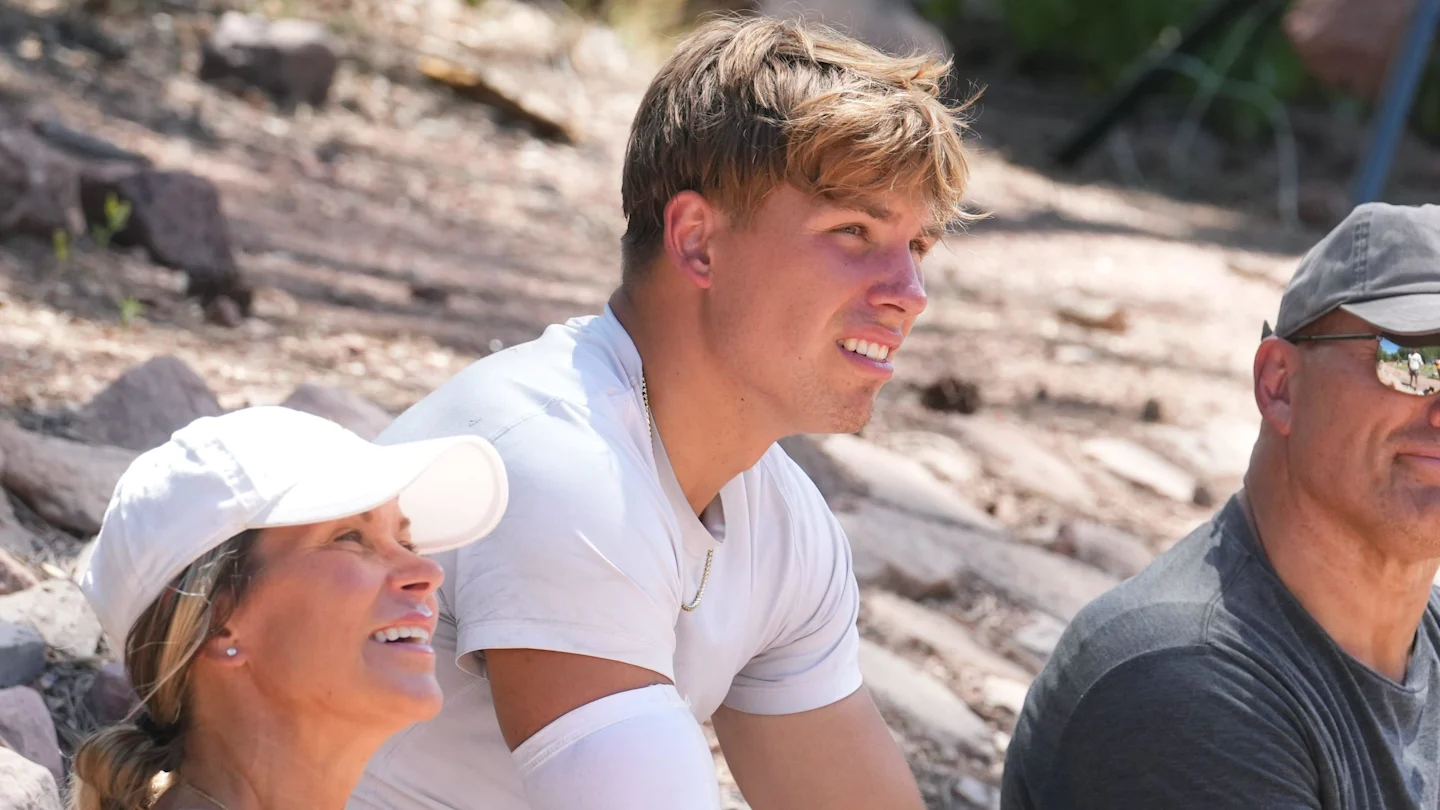
The modern landscape of college football often focuses on Name, Image and Likeness valuations or immediate playing time when top prospects enter the transfer portal. Yet for the nation’s highest-ranked available quarterback, the recruitment process has taken a clinical turn, prioritizing long-term health over immediate impact. Programs chasing the most coveted arm on the market are pausing to ensure his physical durability matches his statistical production.
Recruiting visits typically revolve around photo shoots, steak dinners and campus tours designed to woo elite talent. In this specific high-stakes recruitment, however, the itinerary includes mandatory stops with team physicians and athletic trainers.
Coaching staffs are exercising caution as they attempt to secure a commitment from a player who could redefine their offense if he can stay on the field.
A new report indicates that every university hosting this prospect is conducting thorough physicals to gauge a recovery timeline. The concern centers on availability for spring practice, a crucial period for any transfer trying to learn a new playbook and build chemistry with receivers. While the talent is undeniable, the medical reality has added a layer of complexity to a frenzied race for his signature.
Sam Leavitt, the former Arizona State standout and the top-ranked quarterback in the transfer portal according to On3, is undergoing medical evaluations at each of his campus visits. The scrutiny stems from a foot injury that ended his 2025 season prematurely.
During an appearance on the Crain & Company Podcast, Pete Nakos of On3 emphasized the uncertainty surrounding the timeline, stating that “every school that’s bringing him in on a visit is doing a medical evaluation to understand what his timeline looks like for recovery.”

The timeline for Leavitt remains murky following surgery for a Lisfranc ligament tear he suffered in October. While schools are eager to sign the talented passer, Nakos added that “it is unclear if he’d be available for spring football” after missing the back half of the season. It is currently unclear if Leavitt will be ready to take snaps when spring camps open across the country.
This medical uncertainty hovered over his recent trip to Baton Rouge. Leavitt visited LSU earlier this week and was spotted at a basketball game with head coach Lane Kiffin.

Despite the hospitality, the Tigers’ medical staff likely spent significant time assessing his surgically repaired right foot. The evaluation process is standard protocol, but carries greater weight given the severity of Lisfranc injuries.
The rigorous testing continues as Leavitt heads to Knoxville. Tennessee is the latest program to host the quarterback, hoping to add his experience to its roster. The Volunteers are in the market for a proven starter, but, like LSU, they must weigh his rehabilitation schedule against their need for immediate competition at quarterback. Kentucky also shared a visit with Leavitt.
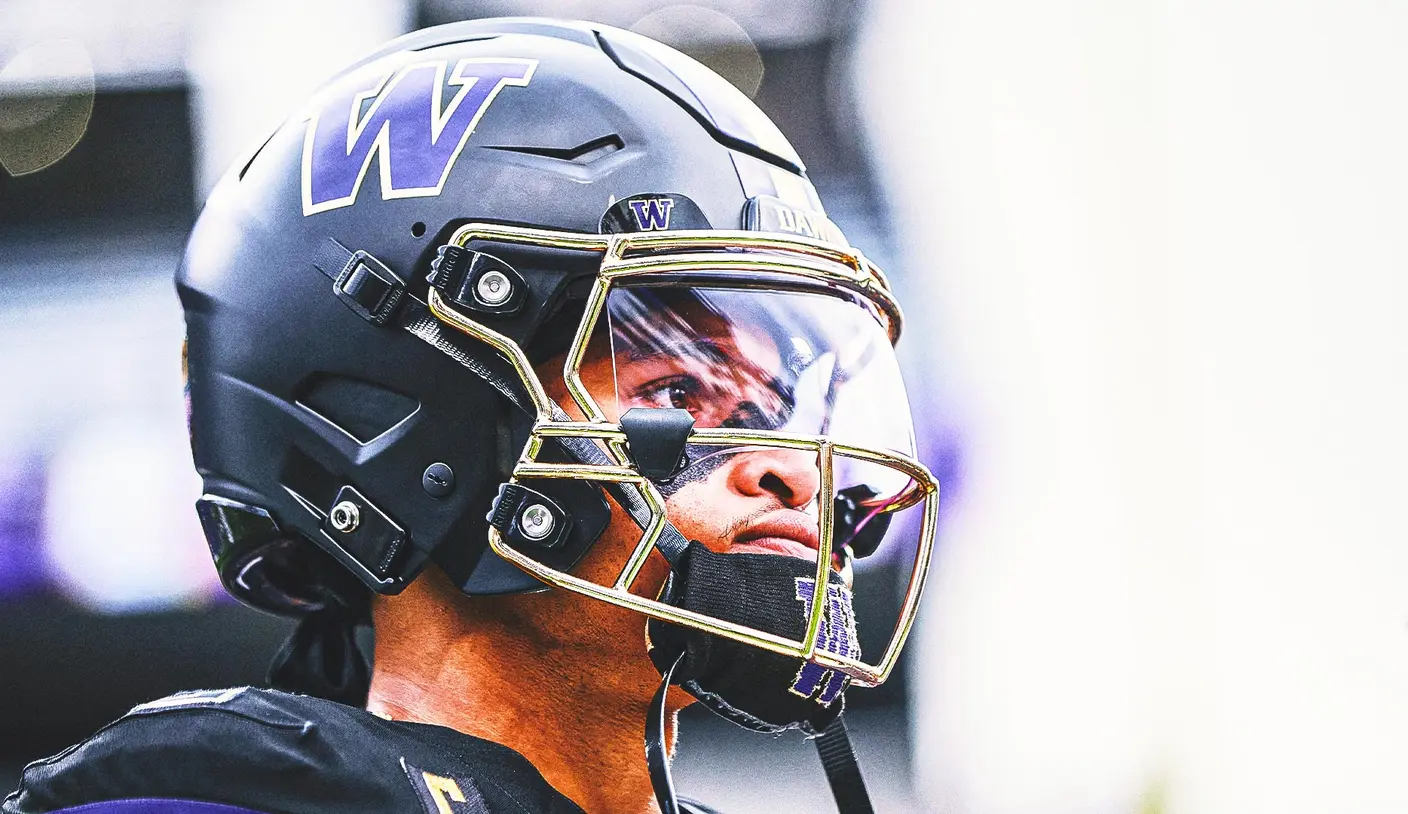
After a hectic 48 hours, quarterback Demond Williams Jr. is staying put at Washington.
Williams announced Tuesday that he intended to enter the transfer portal, but reversed course Thursday night, revealing on social media that he will remain with the Huskies.
“After thoughtful reflection with my family, I am excited to announce that I will continue my football journey at the University of Washington,” Williams wrote. “I am fully committed and focused on contributing to what we are building.”
The standout quarterback became the latest face of the debate surrounding name, image and likeness (NIL) and its enforcement when he announced that he was entering the transfer portal. Williams’ announcement came just four days after he signed an NIL deal to remain at Washington that was reportedly worth $4 million for one season.
It was reported shortly after that Washington planned to pursue legal action against Williams for breach of contract. Williams’ agent, Doug Hendrickson, dropped him as a client on Thursday.
“I have made the decision to end my representation of Demond Williams Jr. effective immediately due to philosophical differences,” Hendrickson wrote in a social media post. “Demond is an incredible talent and we wish him and his family the best in their future endeavors.”
Hendrickson is also the agent for Washington head coach Jedd Fisch.
Williams just completed his sophomore season at Washington, which was his first as the Huskies’ full-time starter. He helped Washington go 9-4, completing 69.5% of his passes for 3,065 yards, 25 touchdowns and eight interceptions. He also proved to be one of the top dual-threat quarterbacks in the country, rushing for 611 yards and six touchdowns.
Following a strong first season as a starter, Williams has been viewed as a potential Heisman candidate for the 2026 season. FOX Sports lead college football analyst Joel Klatt placed Williams fifth in his initial Heisman rankings for next season.
Want great stories delivered right to your inbox? Create or log in to your FOX Sports account, follow leagues, teams and players to receive a personalized newsletter daily!

Washington quarterback Demond Williams shook the college football world on Tuesday night, as ESPN’s Pete Thamel reported that the dynamic dual-threat quarterback was set to enter the transfer portal just a week after signing a lucrative NIL agreement to remain at Washington. Now, after days of controversy surrounding his next career move, Williams will remain with the Huskies after all.
Williams announced his return via social media, just minutes after a report by ESPN’s Pete Thamel that he was leaning towards remaining at the school.
“After thoughtful reflection with my family, I am excited to announce that I will continue my football journey at the University of Washington,” Williams wrote. “I am deeply grateful to my coaches, teammates, and everyone in the program for fostering an environment where I can thrive both as an athlete and as an individual.
“I am full committed and focused on contributing to what we are building.”
In his statement, Williams also apologized for the timing of Tuesday’s decision to enter the transfer portal, which took place while much of the football team was attending a celebration of life for Huskies soccer player Mia Hamant, who died from a rare form of kidney cancer in November.
Forde: Lane Kiffin Once Again Pushes Boundaries in Demond Williams Jr. Saga
“Over the last few days, Demond and I have engaged in very honest and heartfelt conversations about his present and future,” Washington coach Jedd Fisch said in a statement. “We both agree that the University of Washington is the best place for him to continue his academic, athletic and social development.”
Williams’s agreement with the Huskies is reportedly worth around $4.5 million, and Washington was reportedly prepared to pursue legal recourse if he did not honor the deal. Lane Kiffin’s LSU program was the program most frequently attached to Williams, but now will look elsewhere to fill its quarterback position for 2026.
The decision comes hours after Williams was dropped by his agent, Doug Hendrickson of Wasserman Football. He also retained lawyer Darren Heitner, who has become a regular figure in college athletics eligibility cases during the NIL and transfer portal era.
GameDay host Rece Davis mentioned that there will have to be some fences mended between Williams and Washington. Before Williams’s ultimate decision to return, Matt Zenitz of CBS Sports reported that the program “would still welcome Demond Williams back to the team and is still hoping for him to remain with the program.”
FREE. SI College Football Newsletter. Get SI’s College Football Newsletter. dark
Williams committed to play for Fisch at his home-state program Arizona, transferring to Washington when Fisch took the job following the departure of Kalen DeBoer. He played in 13 games as a freshman, accounting for 1,226 total yards and 11 touchdowns before taking over as full-time starter in 2025.
Williams totaled over 3,600 yards and 31 touchdowns as a sophomore under Fisch.
|
Season |
Comp % |
Pass Yards |
YPA |
TD |
Int |
Rush Yards |
TD |
|---|---|---|---|---|---|---|---|
|
2024 |
78.1 |
944 |
9.0 |
8 |
1 |
282 |
2 |
|
2025 |
69.5 |
3,065 |
8.7 |
25 |
8 |
611 |
6 |
Williams was an honorable mention All-Big Ten selection behind Indiana’s Fernando Mendoza, Ohio State’s Julian Sayin and USC’s Jayden Maiava in a conference stocked with passing talent.
Now, he will be back for a third Big Ten season rather than make a controversial jump to LSU or another program.
Listen to SI’s new college sports podcast, Others Receiving Votes, below or on Apple and Spotify. Watch the show on SI’s YouTube channel.

If you’re a sports fan, you may be unaware of a very important fact: the College Football Playoff semifinals start tonight.
There are several reasons for why the actual CFP has fallen off the radar for sports fans. Week 18 of the NFL season and the first week of the NFL playoffs always present huge storylines, let alone the coaching carousel that is already underway. Then there’s the fact that the College Football Playoff had the spotlight to itself around the New Year’s Day holiday, which has historically been dedicated to the sport. Even the NBA has snuck into the headlines with the first blockbuster trade of the season, with Trae Young being dealt from the Hawks to the Wizards.
Miami and Ole Miss square off on Thursday night at the Fiesta Bowl while Indiana will play Oregon in an all-Big Ten affair at the Peach Bowl. But unless you’ve been following each program closely, you likely haven’t heard too much in the way of actual previews or analysis about the games.
Perhaps the biggest reason as to why the College Football Playoff semifinals have gone missing from our collective consciousness? Transfer portal and NIL drama are sucking up all the oxygen in and around college football.
Much of the consternation in college football over the current calendar is related to the timing of the transfer portal opening in early January. It’s why Lane Kiffin felt the need to controversially bail on Ole Miss and move to LSU with his team still very much alive in the national championship hunt. It’s why players on playoff teams are entering the portal before their season is done. And it’s why so many headlines and social media chatter is being dedicated to what will happen next season before this season is done.
The top ranked Indiana Hoosiers are a perfect example. Perhaps after their Rose Bowl thumping of Alabama, everyone has assumed that their job is done even though they have two more games to win before they can claim a national championship. But the focus right now is at least being shared between what Indiana is doing in the transfer portal for next season and Mark Cuban stepping up to fund NIL efforts and finishing the job for this season.
“Indiana is cleaning up in the transfer portal right now, even while they’re preparing for a National Semifinal.”
More from @joelklatt on how Curt Cignetti is reloading with @IndianaFootball. pic.twitter.com/CjFz9PnSaG
— The Joel Klatt Show: A College Football on FOX Pod (@JoelKlattShow) January 6, 2026
NEW: Billionaire Indiana alumnus Mark Cuban is donating to the Hoosiers 2026 transfer portal class, @FOS reports💰
“Let’s just say they are happier this year than last year.”https://t.co/mXEX3QniMt pic.twitter.com/u5QgP3DQkC
— On3 (@On3sports) January 7, 2026
Of course, that’s nothing compared to the drama at Ole Miss, where the transfer portal isn’t just about Rebels players but coaches. The shadowy figure of Lane Kiffin is still looming large over the Ole Miss playoff run. And as Jimbo Fisher pointed out in a scathing condemnation of Kiffin’s behavior, the drama around which assistants will and won’t coach Ole Miss in the semifinals is likely because Kiffin thought his former team would lose to Georgia and be done with their season. On top of that, the future of star quarterback Trinidad Chambliss was a huge question mark before he finally “agreed a new deal” with Ole Miss if he is granted eligibility to play next season.
Look around college football and so many headlines and social media conversations are geared towards what is happening in the transfer portal and not whether Oregon can avenge their loss to Indiana or whether Miami can physically dominate Ole Miss the way they did Ohio State.
Washington quarterback Demond Williams has caused a firestorm for breaking an agreement with his current school to potentially take more money from elsewhere.
Ohio State has lost several former four and five star recruits to the portal after their surprising quarterfinal exit to the Hurricanes.
Texas Tech landed top portal quarterback Brendan Sorsby with a $5 million offer.
New Penn State coach Matt Campbell has taken a huge chunk of his former Iowa State team with him to Happy Valley.
All of this transfer portal news is a boom for recruiting sites and others that make player movement part of the core of their coverage. But mainstream outlets are also forced to balance out their CFP output with daily updates, portal trackers, and headlines.
With the transfer portal only open from January 2-16, the college football world has no choice but to try to spin all the plates at once and keep track of all the news. Not only is it insane for the schools and programs to try to balance, especially those still competing for a title, but it’s insane for the health of the overall sport and keeping the focus where it should be.
The transfer portal will open and shut entirely within the College Football Playoff. Could you imagine a universe where NFL free agency kicks off the day after the Divisional Round and shuts down a few days before the Super Bowl? Could you imagine the NBA holding its draft during the middle of the NBA Finals? It would be ludicrous decision making that no sane person would ever sign off on — not just because it’s a nonsensical way to run a sport, but because it would take the attention off of its actual championship.
We are human beings. We are naturally inclined to be sucked in by drama. And the transfer portal fulfills all of our primal needs. The flips, the mysteries, the betrayals, the shocks, the surprises. It fulfills our natural thirst for intrigue and excitement in a way that breaking down Miami’s pass rush against the Ole Miss OL simply can’t. And the fact that it’s a true wild west experience with no rules, guardrails, or boundaries makes it all the more tantalizing.
College football has never been more popular as a sport across the nation in spite of so many unforced errors and own goals. Nobody in their right mind would want to divert attention away from crowning a champion during what should be the pinnacle of the sport and the entire reason for its existence. And yet, that’s exactly how college football is currently operating.
The simple fix, as suggested by Oregon coach Dan Lanning, is to move the College Football Playoff earlier so that it ends on New Year’s Day and the portal can be a true offseason activity. That way, the hearts and minds of the college football universe don’t have to be so divided and we can actually celebrate a national champion for one season before actually moving on to the next. Of course, since that seems like the right and easy thing to do, don’t hold your breath waiting on it to actually happen.


Badgers news: Wisconsin lands 2nd commitment from transfer portal


Five Youth Sports Trends We’re Watching in 2026


Is women’s volleyball the SEC’s next big sport? How Kentucky, Texas A&M broke through


NBA, Global Basketball Community Unite for World Basketball Day Celebration

Kentucky VB adds an All-American honorable mention, loses Brooke Bultema to portal


BangShift.com IHRA Acquires Historic Memphis Motorsports Park In Millington Tennessee. Big Race Weekend’s Planned For 2026!


NASCAR, IndyCar, and F1 Share These Race Days in 2026

$2.1 million transfer portal QB predicted to join College Football Playoff team


Dr. Patrick Staropoli Lands Full-Time O’Reilly Ride with Big Machine Racing


Summit Racing Equipment | Error 410: Resource Gone