
NIL
College Sports Changes: House Settlement, NIL, Revenue Sharing

*Most of this is based on ongoing litigation, so there’s a small chance some of these won’t be implemented. I’ll do my best to have this as up-to-date as possible
College sports has been experiencing a massive amount of change in the past five years, to the point where it’s almost unrecognizable. The NCAA has gone from being the judge, jury, and executioner on all matters to now being overruled by actual judges. They’re losing court cases left and right, to the point where they’re now hesitant to act.
If you haven’t been following the ‘boring’ side of sports, a lawsuit was filed about five years ago regarding compensation for student-athletes (House vs NCAA). This was separate from NIL, but the two are very much tied together.
With all the recent changes, I thought it might be helpful to have this all in one place. I’ve done the best I can to summarize it all, since there’s a lot of “lawyer talk”.
First, why is all of this happening now? Why not 20 years ago?
It was rare to hear of court ruling about the NCAA up until about 10 years ago regarding student athlete compensation, and now we’ve had at least three major ones since 2020. In my opinion, a lot of that was because there wasn’t as much money involved. Students originally played athletics as an extracurricular activity, similar to joining a club. Universities would charge admission or make TV deals to help with the cost of operation, and offered scholarships so the athletes wouldn’t have to decide between working or playing sports.
As those media deals became more valuable, especially in the late 2000s, the amount of revenue coming in exploded. Since 100% of the revenue wasn’t necessary to keep the athletic department afloat, this led to the legitimate question of what to do with all of this money. However, the NCAA had a policy that those funds remained with the university. Had athletes been making these arguments back in the day, they would have been arguing about what to do over a few hundred dollars; not worth getting lawyers involved. But when universities are now regularly pulling in $50 million a year from sports, that old policy definitely became worth challenging.
On top of that, the full cost of attending school wasn’t always a guarantee for student-athletes, and was even limited until as recently as the 1980s. Over time those costs have skyrocketed; according to the Education Data Initiative, the inflation adjusted annual cost of tuition has gone up from about $2,800 in 1980 to $9,000 in 2023. That doesn’t account for living expenses, which have also gone up in the past 40 years, though not as much as tuition.
So from an athlete’s perspective, their costs have gone up while the universities revenue has gone up even more. The athlete has a reasonable argument to be able to negotiate to earn some of that revenue since they reasonably contributed to it.
Pre 2021
Up until 2021, the only compensation student-athletes could receive were directly related to the cost of attending school; scholarships, living expenses, textbooks, and in some cases stipends, if other benefits did not cover the full cost of attending university. This was based on NCAA policy. The hot topic that caused the most debates was the NCAA not allowing athletes access to other types of financial opportunities available to other students. Schools could offer assistance in attending school, but the athlete couldn’t get anything else. There were even limits on part time jobs. There have been debates about the NCAA’s authority for years, but it largely wasn’t worth fighting until recently.
NIL Era
In 2021 that all changed when a court case made its way to the Supreme Court (link to Harvard’s summary, if you want a deep dive). Not only was the Court unanimous in its opinion, but it also bluntly stated the NCAA violated anti-trust laws with these policies. Reading between the lines, it sounded the Court was daring the NCAA to impose further limits. However, the Court didn’t specify NIL; they just said that the NCAA couldn’t impose limits or deny opportunities that were available to other students. For example, some college students will start businesses while still in school, like Mark Zuckerburg with Facebook. If Zuckerburg was an athlete he would have been violating old NCAA policy, but because he was a “normal” student there was no issue.
In response to this, the NCAA changed its policy, opening opportunities previously denied to athletes. That doesn’t mean everyone started making businesses; most student-athletes don’t have the time or resources to do so. But they could now do endorsement deals or be paid to appear at events. Thus began the NIL era, where student-athletes could now appear in Dr. Pepper commercials or sell autographed trading cards.
To help with this, alumni and fans started to organize NIL collective funds, which were separate (but affiliated) organizations with universities. Some operated as limited liability companies (LLCs), others operate as non-profits (501c3s, but the IRS is cracking down on those so they’ll likely change their structure). However, they are legally separate from the university whose athletes they would collect NIL funds for. Donors would contribute to this collective, who work with the community or businesses to find opportunities for these athletes, such as appearances at schools or public events. But individual parties still had the chance to arrange deals directly with the athletes themselves. In many cases student-athletes had agents to help with this, much like professional athletes do when making marketing deals.
One of the major rules that the NCAA has is that those NIL funds could not be tied to the athlete’s performance or have conditions (no quid-pro-quo or “pay for play”). Yes, I know what you’re thinking; no one follows those rules. It’s very hazy how much authority the NCAA has right now with NIL. The NCAA already tried saying athletes can’t negotiate deals before enrolling in schools, but the court got involved again and they rescinded that policy, though it’s still being reviewed. There’s been a few attempts at passing federal law but none have gained traction. Some states outright prohibit those types of deals, but when the deals go across states it gets messy.
The reason NIL seems so chaotic is because it isn’t clear what policies the NCAA, or even the universities themselves, can impose. Because NIL money does not legally go through the university, the NCAA likely cannot impose any controls, and implementing any will likely bring further lawsuits. While I’m not a lawyer (any actual lawyers are free to correct me, I’m just a humble statistician), the Supreme Court basically said the NCAA cannot impose any rules or regulations about income generated outside of athletics. An individual having a sandwich named after them at a local restaurant and getting a share of the profits is not an athletic event, even if the individual happens to be a college athlete. The question right now isn’t what should or shouldn’t be done, or what’s good or bad for athletics, but whether or not the NCAA or universities have the legal authority to impose any rules.
Transfer Portal
If you are reading this, you likely already know about how most of this works. Prior to 2021 an athlete could transfer between schools, but they would have to sit out a year that still counted towards their eligibility (four years). They could get waivers or special exceptions, such as being a graduate student, but for the most part athletes avoided transferring so they wouldn’t waste a year of eligibility. It initially had some limits, such as allowing a student to transfer once without sitting out a year, but most have been removed. Now you enter an online portal, where other schools can see who is available, though there are windows to do this that go in line with school semesters. Athletes can transfer as many times as they like.
Between the transfer portal and NIL changing around the same time, the world of college sports resembled free agency with few limits. In pro leagues there are rules prohibiting contacting players under contracts, when you can speak with players, and some limits on financial promises made in advance. It isn’t clear what limits the NCAA can impose, and right now it’s running more on the honor system than anything. If they do impose hard rules, I wouldn’t be surprised if we see more lawsuits. “Normal” students can transfer as they please without consequences, and athletes could challenge that if they aren’t given the same privileges.
JUCO Ruling
A quiet change this year came from another lawsuit from Diego Pavia.
Pavia started his college career in Junior College at the New Mexico Military Institute. He eventually made his way to Vanderbilt, but argued in court that his year playing in Junior College (JUCO) shouldn’t count towards his eligibility. Currently the NCAA limits athletes to four years to complete, with a few exceptions if a player doesn’t play for a year (such as medical exemptions or redshirts). Pavia’s argument was that since he couldn’t make any NIL money at the JUCO level, the NCAA was limiting how much NIL money he could potentially earn by not allowing him a full 4 years of eligibility at the Division I level. The courts ruled in Pavia’s favor, and while the NCAA is appealing this, for now players who played at the JUCO level were granted an extra year of eligibility. Recently the NCAA has yet to win any of these types of cases so it wouldn’t be surprising if this is a permanent ruling going forward.
This is a quieter change, but does have an impact on recruiting. Typically Division I schools would recruit high school students more than JUCO athletes, because the high school student had 4 years of eligibility. Now if they find a JUCO athlete they feel will be just as good, they don’t have to worry about them not staying as long as the high school recruit.
House Vs NCAA
So now to the big one that prompted this piece. If you thought NIL changed the game, just wait. This case is all about what funds athletes are entitled to that universities directly receive. This lawsuit was filed in 2020 (House vs NCAA). Last year the NCAA saw what was coming and is deciding to settle, rather than let it go farther in court and make themselves look worse. So as with any legal settlement there are conditions both sides got, but the athletes largely came out on top. In short, it’s all about how universities now can share with athletes revenue gained from various media deals.
Any site you go through will group the effects of the settlement into three areas. I’ve done my best to simplify them, since there is a lot of lawyer talk going on. Before I get to those, the settlement for now is a 10 year agreement, so this isn’t indefinitely set in stone. If unforeseen issues come up for either side, they can be addressed without further lawsuits or lengthy court processes.
Past compensation
The deal the NCAA agreed to includes paying back athletes who competed from 2016 to 2024. Since universities will be paying athletes going forward, it was decided it is fair to pay athletes who missed the opportunity because of timing. The exact amount varies by source, but the payment range looks to be $2.75-$3 billion. If that sounds like a lot, some estimate that had it gone to court that amount would have ballooned to $20 billion. The exact amount each former/current athlete receives is based on their situation. Football players from bigger conferences might get a few hundred thousand, swimmers at smaller schools may get a few hundred. It looks like universities will determine the exact amounts and athletes to pay, but there are conditions on how much has to be paid each year.
New Pay Method
Past athletes aren’t the only ones getting paid, universities can now directly pay athletes going forward (remember, the universities themselves weren’t paying NIL, the associated collectives were). The money that can be shared is revenue gained from media deals, sponsorships, or ticket revenue (for clarity I’m calling funds received through those “Media Revenue”). There are limits though; they can share up to 22% of total annual Media Revenue, with a limit of $20.5 million, subject to annual change. This essentially acts as a salary cap that professional leagues have. The revenue sharing will apply to the entire athletic department. The universities themselves will determine how much to allocate to each player and sport.
One of the agreements of the settlement was roster size limits. Right now there are only scholarship limits by sport. Part of the settlement is that the NCAA will instead have a limit on the number of players a team can have, regardless of what compensation there may be. Those roster limits were based on current roster sizes, regardless of how many scholarship players there are. For example, football is limited to 85 scholarships, but most teams have around 90-100 players, and the proposed roster limit is 105 football players. Those extra players came from offering partial scholarships or having someone play without a scholarship (walk-ons). However, there are disagreements about the exact limit, some wanting them to be higher, and also how to approach teams that are currently above the limits. The judge overseeing the deal suggested they get grandfathered in, but it doesn’t look like anyone has agreed to that yet. So far this seems to be the biggest source of consternation.
Another part of the settlement is more regulation on NIL. The NCAA is finding their power getting smaller and smaller, and it showed with NIL. Right now it’s the Wild West, where we all know teams are contacting other team’s players and offering NIL deals to transfer. The NCAA had little to no authority to investigate these. Part of the settlement was NIL payments over $600 are subject to review, specifically to see if they violate the NCAA policy of no incentives tied to NIL deals (currently no one is challenging this process). They will be reviewed by a third party clearinghouse, currently rumored to be the financial giant Deloitte, to see if there were any conditions about the NIL payment that violates NCAA policy. So if a player gets a $100,000 NIL deal, this third party will look into it to see if there were any conditions tied to it, such as a “transfer here and we’ll get you’ll $100,000 NIL deal” arrangement. This offers some control, as some schools could have potentially used NIL funds to skirt the revenue sharing limit. However, this would only address schools offering other players NIL deals; it doesn’t look like there are any repercussions to teams calling other players and offering deals from their revenue sharing pool, as long as they don’t exceed the cap limit.
There was a brief window where not all schools had to participate in the settlement, only those specified as defendants were included (mainly those from the power conferences). But the NCAA proposed some rule changes to go in line with the settlement.
Thoughts
Oh boy, this is a lot. I’ll do some more research on the implications, but here are my initial thoughts:
NIL will change…. maybe
We’ll see how thorough and honest the third party clearinghouse is, but if it goes the way the NCAA intends, schools won’t be able to make large NIL offers in advance any more. Players can still get those funds, but most deals will be reviewed to ensure no incentives were tied to them. Any promised funds will have to come from the limited Media Revenue pool. It doesn’t look like there are any limits to how much in NIL a player can receive, since legally those funds don’t go through the university. I wouldn’t be surprised if we see the NIL deals decrease a little, only because they aren’t the sole source of income anymore for athletes. States will continue to implement or modify laws about NIL, which will supersede anything the NCAA implements.
Amateurism is all but gone.
College athletics is increasingly resembling professional leagues. Universities are now having full fledged business departments managing funds, such as Andrew Luck being named the General Manager for Stanford’s football team. The 10 year settlement deal resembles the collective bargaining agreement (CBA) that owners of professional teams have with player’s unions. There will be rules about spending, possible exceptions, guaranteed money, and provisions for third parties. If an athlete is injured in fall camp and has to miss the season, do they still get paid? Would that count towards the spending cap? All of those questions will almost have to be addressed in contracts, since both universities and athletes will want to be financially protected.
Transfer portal doesn’t officially change
Nothing in the settlement addresses the transfer portal, but that wasn’t part of the lawsuit to begin with, and it would have been out of place to include any new changes. It appears the NCAA still can control some aspects of the portal, though it likely will be based on consensus opinion among schools.
So is all of this a win for big schools? Small schools?
There’s a lot to unpack here, and I’d prefer to do more research before making a definitive opinion. The cap limit helps balance it a little, but you have to have the money in the first place. I see it being similar to pro baseball where teams in bigger markets have more money to work with than the teams in smaller ones. The smaller schools will never be able to spend as much, but at least they can spend now.
It Ain’t over
We’ll see more court rulings and lawyer talk. The NCAA still says it has the authority to impose some limits on NIL, but as of now no one has challenged that. I’m guessing student-athletes will want to continue their hot streak in court and question any new controls the NCAA implements. The NCAA likely won’t dare to put limits on total NIL earnings, but they may attempt to regulate promised deals more.
One aspect that still hasn’t been addressed is Title IX. Title IX, as it relates to college sports, establishes equality among male and female athletes. It includes regulating the amount of scholarships a university can offer between the two, but it isn’t clear how much of this revenue sharing falls under this law. Some schools were planning to share up to 90% of their available funds on football and men’s basketball players, since those are typically the major money makers, but that might violate Title IX. One side is arguing that the revenue has to be split 50% between male and female sports, regardless of who generated the revenue. I anticipate it being largely a political debate.
Closing
These next few years are going to be interesting. While the NCAA, student-athletes, and universities will have an idea of what to expect, until we actually see all these changes in effect, no one will know for sure what it will all look like.

Continue Reading
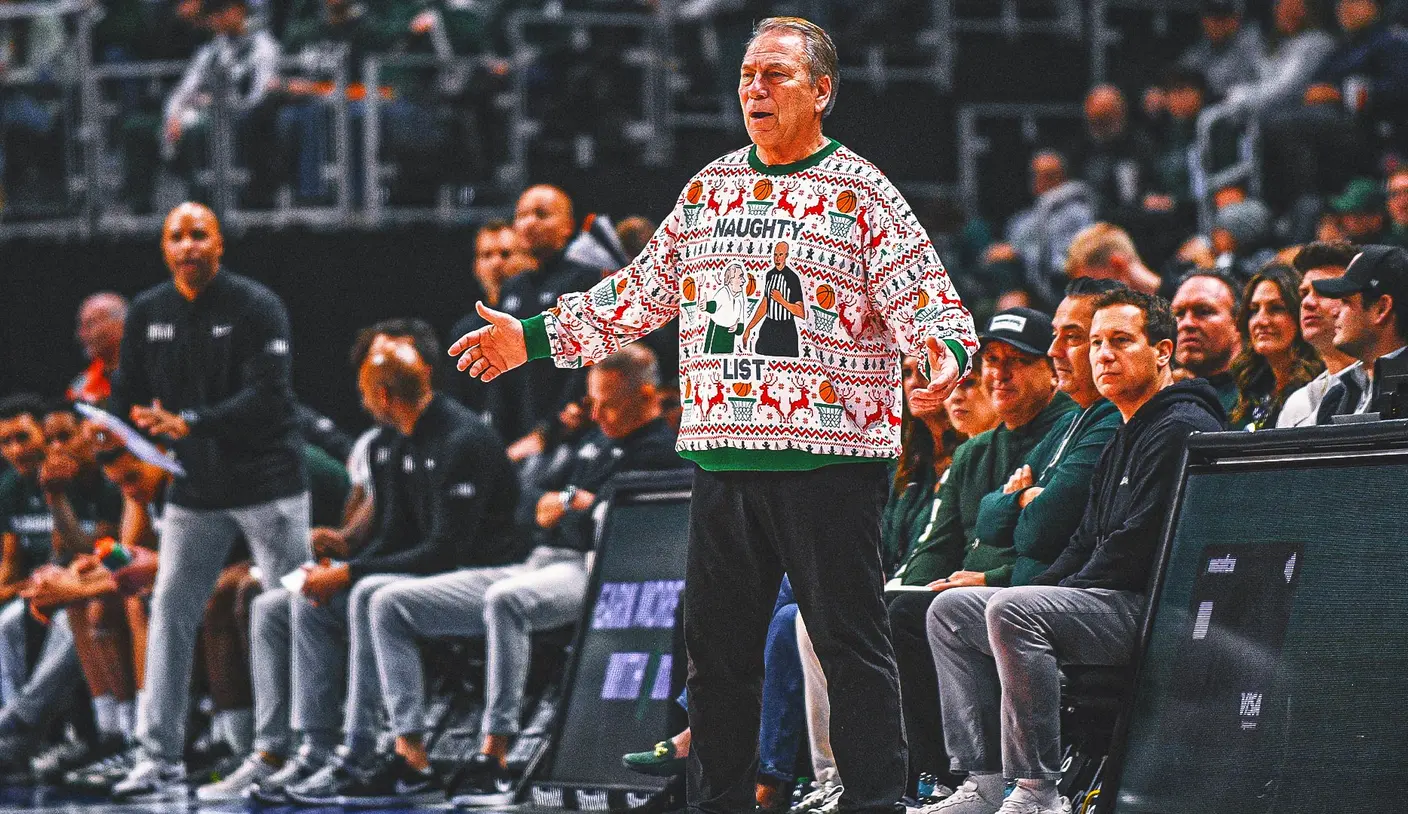
Longtime Michigan State coach Tom Izzo isn’t mincing words when it comes to the recent surge of former NBA G League players and international pros getting the green light to play college basketball around the country.
On Christmas Eve, Baylor received a commitment from James Nnaji, the 31st overall pick in the 2023 NBA Draft. The 21-year-old Nnaji, a 7-foot center from Nigeria, was granted immediate eligibility as a midseason addition and will have four years of eligibility remaining, according to USA Today.
“I thought I’d seen the worst — then Christmas came,” Izzo said, per USA Today. “What happened just topped it. … Now we’re taking guys that were drafted in the NBA and everything? … If that’s what we’re going to, shame on the NCAA. Shame on the coaches, too, but shame on the NCAA because coaches are gonna do what they gotta do, I guess, but the NCAA is the one.
“Those people on those committees that are making those decisions to allow something so ridiculous. … I just don’t agree with it.”
Nnaji never actually played in the NBA or the G League, but he did appear in five NBA Summer League Games for the New York Knicks in July and played professionally overseas last season in Spain and Türkiye.
This isn’t the first time a situation like Nnaji’s has presented itself. In October, the NCAA ruled to allow guard London Johnson, 21, to join Louisville next year with two seasons of eligibility despite him having played three years in the G League.
Izzo revealed that he received a text from “a very famous, great coach” that criticized these fluid eligibility rules. “What we’ve done in the NCAA has been an absolute travesty to me,” the message read, according to USA Today.
Izzo went on to predict that, if polled, “maybe 5-10%” of D-I coaches would agree with these changes.
“If that’s the way it is, and if I have to make those adjustments, then let’s make them,” he added. “Let’s go pro if that’s the way it is, but let’s not be half you-know-what.
“Because there’s no such thing as being half that.”
Want great stories delivered right to your inbox? Create or log in to your FOX Sports account, and follow leagues, teams and players to receive a personalized newsletter daily!
FOLLOW Follow your favorites to personalize your FOX Sports experience
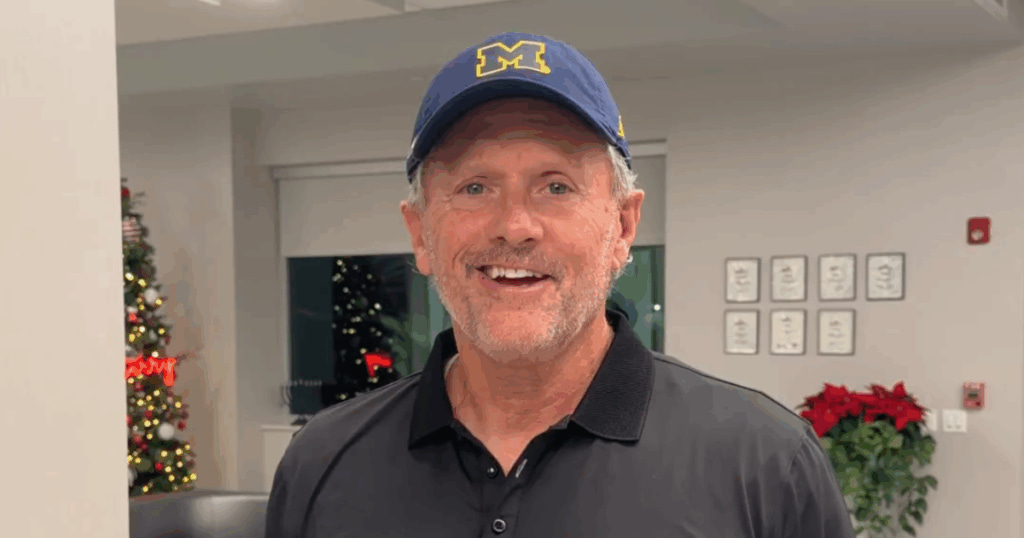
The coaching search is over, but the work is just beginning. Michigan Wolverines football has a new leader in Kyle Whittingham, the 22nd head coach in program history, and he’s already hard at work in Orlando as the Maize and Blue prepare for the Dec. 31 Citrus Bowl against Texas.
Michigan’s official NIL collective, Champions Circle, has launched its ‘Membership 2.0,’ an opportunity for fans to receive “new benefits, new opportunities to engage with players and coaches and new ways to support those who wear the Maize and Blue.”
Advertisement
“As Coach Whittingham takes the helm to lead the next chapter in Michigan football history, one thing is clear: success in today’s college football landscape requires support from each and every fan,” the collective shared in a press release.
By becoming a Champions Circle member, Michigan fans are “directly supporting NIL opportunities that help:
• Empower our new coach to establish the next great era of Michigan Football
• Build championship-level depth at every position
• Prevent rivals from poaching our top talent
The First 100 New Yearly Victors & Valiant Members will receive a football signed by Whittingham and freshman quarterback Bryce Underwood AND an invitation to a first-of-its-kind “Meet Coach Whittingham” webinar in 2026.
Advertisement
Here are details on membership tiers for Champions Circle:

The 66-year-old Whittingham is already in Orlando connecting with Michigan staff, players and their families. The Wolverines have one game remaining but are also focused on next season.
Whittingham was introduced to Michigan fans on social media Saturday evening and will hold his introductory press conference Sunday morning at 11 o’clock from the team hotel.
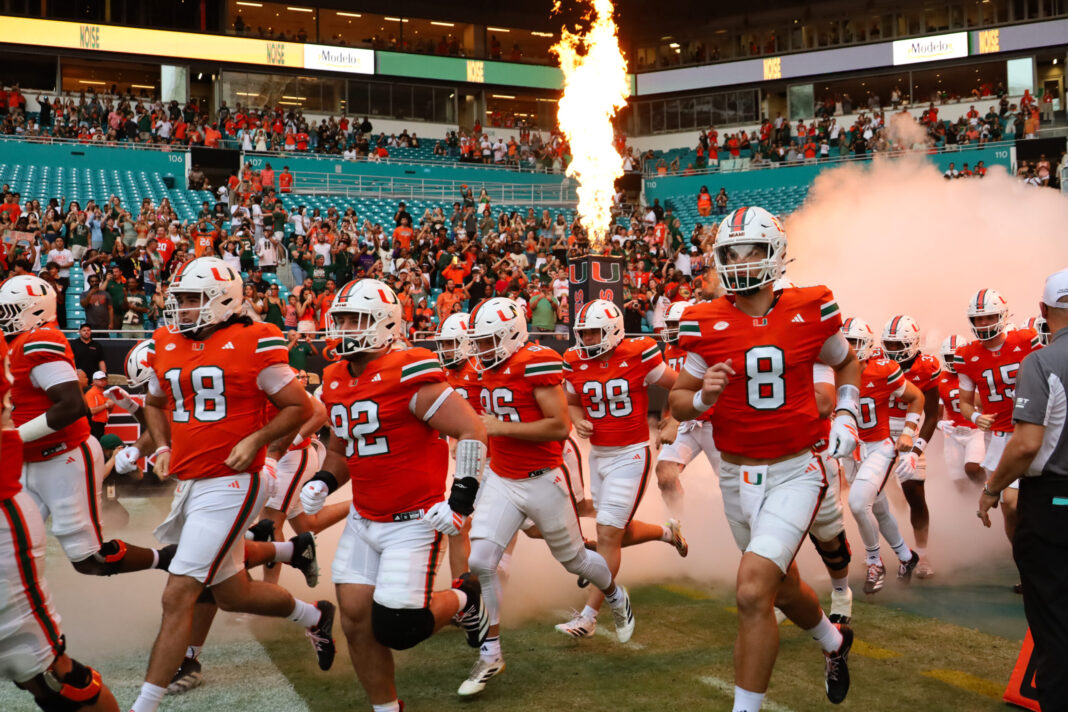
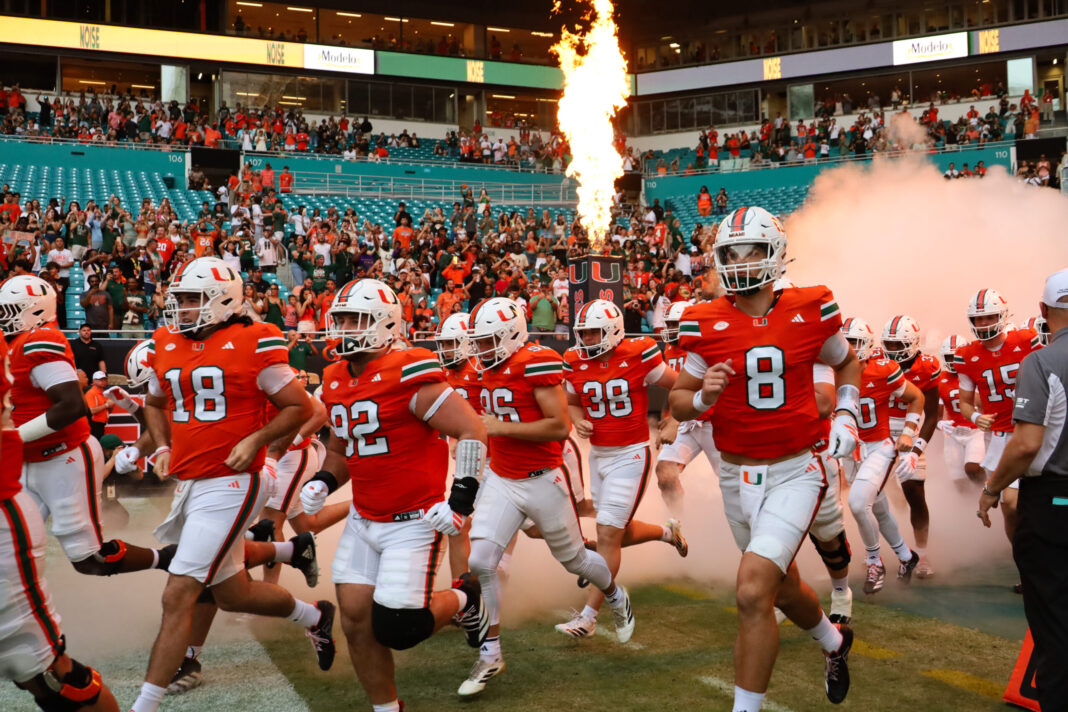
The dawn of NIL has forced a realignment of college conferences, putting pressure on the structure of conference championships. When you look at the Power Four football conferences (ACC, Big 10, Big 12, and SEC), each have expanded somewhere between 16 and 18 members.
The past two seasons have demonstrated that the current conference championship format is not equipped to corral the super-sized power conferences. Deciding the top teams in the country is left to too many qualitative metrics (strength of schedule, head to head, and common opponents).
Something needs to change.
Texas A&M’s path to CFP
Looking at the SEC, Texas A&M had a historic 11-1 regular season, good for one of the best records in the nation. However it featured in-conference wins against seven out of the nine worst teams in the SEC; and every team they beat had a conference win percentage of .500 or worse.
The Aggies season would end in disappointing fashion as they lost twice in a row, against in-state rival the Texas Longhorns 27-17 and in the first round of the College Football Playoff against the Miami Hurricanes 10-3.
A&M arguably only faced three impressive teams all season (Miami, Notre Dame, Texas), and its only win of the three came in the form of a controversial one-point victory over ND in Week 2.
TAMU is one of multiple glaring examples of how massive conferences allow teams to waltz unscathed through their conferences thanks to scheduling issues.
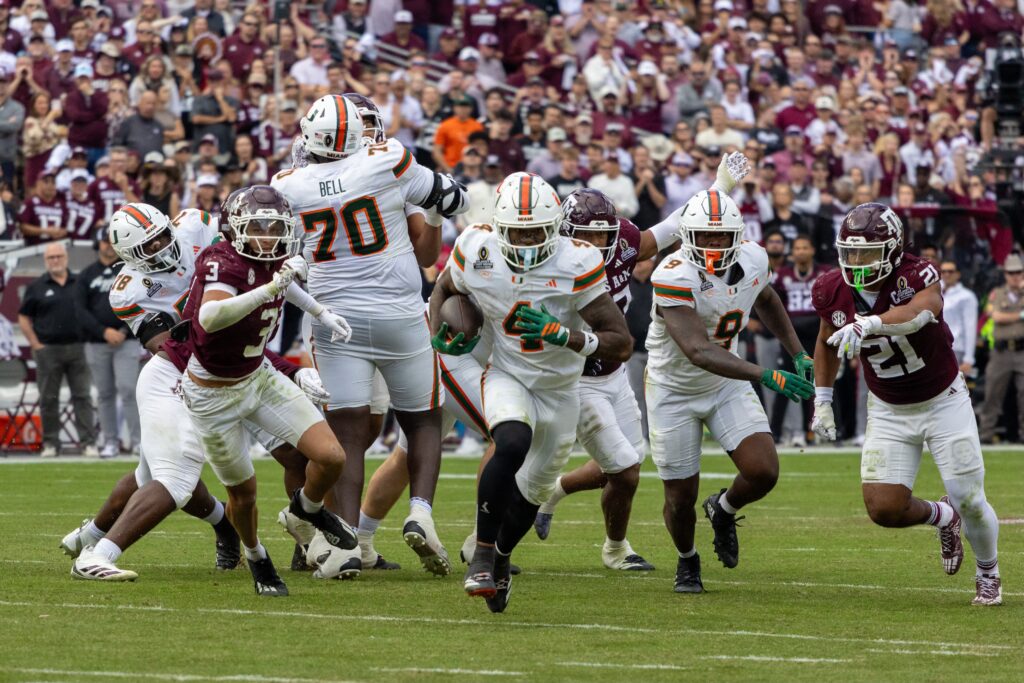
Is a return to Divisions the solution?
It would seem creating divisions within the conferences should be closely considered. This would stoke more fierce rivalries among inter-division opponents, ensuring more even matchups and a clearer cut conference championship.
Looking to the past, all of the Power Four conferences had divisions but were eliminated across the last decade — a division format made less sense with smaller membership.
In 2024, the Big 12 (with 16 members) had a four-way tie at the top of the conference between Arizona State, Iowa State, BYU, and Colorado, who all finished with a 7-2 record. By the end Arizona State and Iowa State faced off due to tiebreakers, but many thought that BYU was more deserving than Iowa State.
This season in the ACC (with 17 members), Virginia guaranteed their spot after a 7-1 conference record, but there was a 5-way tie for second place between Duke, Miami, Georgia Tech, SMU, and Pitt. As Miami fans well know, the unranked 7-5 Duke Blue Devils were awarded the second spot over a 10-2 Miami team ranked No. 12 in the country at the time.
Applying the Divisions to the ACC
When looking at the ACC, the conference has 17 members, which forces teams to play more or less games than one another. All of this would be solved if another team joined the conference.
But let’s concentrate on how the current structure of the ACC would address this issue. There would be three main things taken into consideration: rivalries, location, and talent. It might look something like this:
ACC North: Syracuse, BC, Pitt, Louisville, VT, Virginia, Clemson and Georgia Tech
ACC South: Miami, FSU, SMU, Cal, Stanford, Duke, UNC, NC State and Wake Forest
For the divisions, it would be fair to re-evaluate every five years whether the two divisions are evenly split. Currently the competition would be tight; each division would be well balanced.
The proposed system would also allow scheduling and travel to be much simpler; every division team plays one another, the north would have 7 conference games while the south would have 8. At the end of the season, the two representatives from each division would face-off for the championship.
As some guidelines here are the five hypothetical tiebreaker rules:
1 – Conference Record
Conference records always take importance over every guideline but would have more weight as every team faces each other.
2 – Head to Head
Due to everyone facing off this should solve for tiebreakers except for three (or more) way ties.
3 – Overall Record
In the case of Miami – Duke the tiebreaker was Win Percentage of Conference opponents. In the context of a 7-5 record, the overall record should have more weight.
4 – National Ranking (AP poll / CFP)
Ideally the conference championship should be settled by this point but if it goes this far National Ranking should be considered in ensuring that the best teams compete for the conference championship.
Will realignment fix everything?
Fans want more entertaining matches and teams want ease of scheduling and travel.
The answer is simple — either return to smaller conferences or implement divisions to make conferences matter.
In the end, no matter the solution, it won’t be perfect. Sports fanatics will always say that there will be a better format, but the least we can do is learn from past mistakes.
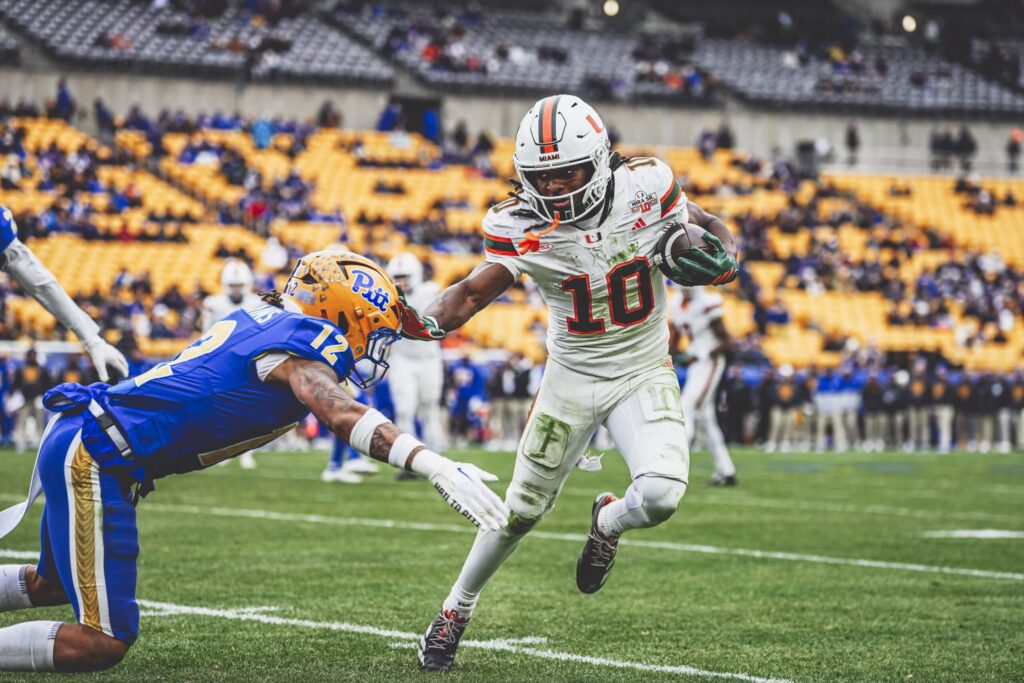

North Texas capped a program-best 12–2 season with a New Mexico Bowl win, but quickly faced major roster turnover as quarterback Drew Mestemaker, running back Caleb Hawkins, and wide receiver Wyatt Young all entered the NCAA transfer portal.
Mestemaker broke out as a redshirt freshman in 2025, leading the FBS with 4,379 passing yards and 34 touchdowns following Saturday’s 49–47 victory over San Diego State.
He began his North Texas career as a walk-on and earned conference offensive honors and national attention before deciding to test the portal.
Hawkins, the Mean Green’s freshman back, finished 2025 as one of the nation’s most productive rushers, totaling 1,434 rushing yards and leading the FBS with 25 rushing touchdowns, highlighted by a 198-yard, three-touchdown bowl performance to cap the year.
Young, meanwhile, paced UNT’s receiving corps with 1,264 yards and 10 touchdowns (ranking among the top three nationally) and earned first-team All-American and All-Conference honors.
Losing the nation’s top passer, the FBS’s most productive freshman runner, and a top-three WR in one offseason represents an immediate top-to-bottom offensive reset for North Texas.

For the transfer market, all three are premium, high-demand assets — Mestemaker as a starting QB target for Power-Five teams, Hawkins as a feature back with breakout tape, and Young as a proven perimeter threat.
Mestemaker has already been linked to Oklahoma State (connection via coach Eric Morris), Indiana, Texas Tech, and Oregon, while Hawkins and Young are expected to draw attention from both Group-of-Five and Power-Five programs.
Hawkins, a three-star recruit from North Rock Creek High School (Shawnee, Oklahoma) in the 2025 class, also held offers from Emporia State and Central Oklahoma before committing to North Texas in September 2024.
Young, a three-star prospect from Katy Tompkins High School (Katy, Texas) in the 2024 class, signed with the Mean Green over offers from Rice, Arizona, Memphis, Air Force, and others.
Three top underclass producers hitting the transfer portal at once underscores how quickly the transfer era can reshape a program, leaving Group of Five teams that develop stars grappling with retention issues and the financial pressures of NIL.
Read More at College Football HQ
- No. 1 college football team linked to 1,700-yard RB in transfer portal
- Top 3 transfer portal landing spots for 4,000-yard quarterback Drew Mestemaker
- College football team loses starting QB to NCAA transfer portal
- Major college football program surges as candidate for 4,000-yard QB
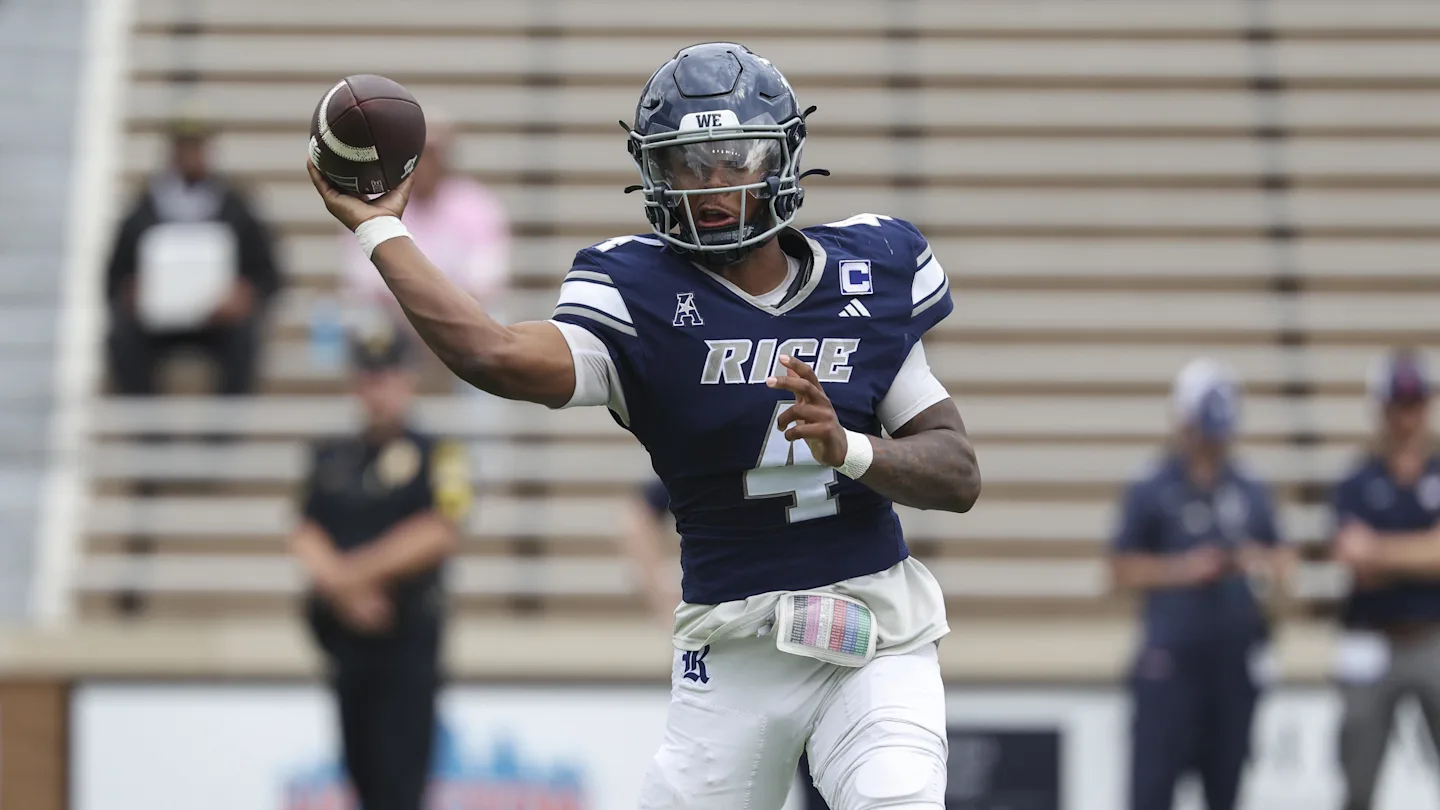
In its first year under head coach Scott Abell, Rice finished the 2025 season 5–7 overall (2–6 in the American Conference) but still earned an Armed Forces Bowl invite, where it will face Texas State (6–6) on January 2 in Fort Worth, Texas.
Across 12 games in 2025, Jenkins completed 119 of 172 passes (69.2%) for 1,025 yards with nine touchdowns against two interceptions, while also carrying the ball 151 times for 531 yards and five scores.
That momentum may be short-lived, however, as Rivals’ Hayes Fawcett reported on Saturday that Jenkins plans to enter the NCAA transfer portal, adding another domino to an already loaded quarterback transfer market.
A Houston, Texas product who signed with Rice in February 2023, Jenkins worked his way into the program as a multi-role quarterback/athlete, appearing in limited action early in his career before being named the 2025 starter.
In his first full year as the starting quarterback, Jenkins earned American Conference All-Academic recognition.
Prior to signing with Rice, he starred at Alief Taylor (Houston), where he threw for 4,735 yards and 46 touchdowns against just six interceptions in 22 varsity games and earned All-District 23-6A honors as a junior.
Jenkins was 247Sports’ No. 93 quarterback in the 2023 class, committing to Rice over offers from Alcorn State, East Texas A&M, Jackson State, and Lamar.

With a 69.1% career completion rate and proven mobility, Jenkins profiles as a strong fit for spread-option or run-oriented Group-of-Five offenses that prioritize efficiency and quarterback movement.
He could appeal to programs seeking an experienced starter while also offering value as depth at the Power-Five level, with his Texas roots strengthening his regional appeal.
Some notable programs that have reportedly shown interest in adding a quarterback through the transfer portal include Florida State, Clemson, North Texas, TCU, Virginia Tech, and Cincinnati.
Read More at College Football HQ
- $2.4 million QB emerges as transfer portal candidate for SEC program
- Major college football program ‘expected to hire’ 66-year-old head coach
- College Football Playoff team loses player to transfer portal
- College Football Playoff team loses starting QB to transfer portal

Cincinnati closed the 2025 season at 7–5 (5–4 Big 12) and will face Navy in the AutoZone Liberty Bowl on January 2, marking the Bearcats’ first bowl appearance since joining the Big 12 and since head coach Scott Satterfield took over in 2023.
Cincinnati rattled off seven straight wins midseason but dropped its final four games to close the regular slate before receiving the bowl invitation.
Quarterback Brendan Sorsby started 12 games for Cincinnati in 2025 and finished with 2,800 passing yards, 27 passing TDs, and five interceptions (61.6% completion, 155.15 passer rating), adding 100 carries for 580 rushing yards and nine rushing touchdowns.
A Denton/Lake Dallas (Texas) product, Sorsby was a three-star recruit who signed with Indiana (redshirted 2022, started in 2023) before transferring to Cincinnati in 2024.
However, Sorsby notified Cincinnati and publicly confirmed on December 15 that he will test the transfer portal while awaiting an NFL draft grade.
Since then, multiple programs have reportedly shown interest, with some NIL offers rumored to approach $5 million, a figure that would rank among the highest in college football.
On3’s NIL tracker currently values Sorsby at approximately $2.4 million, placing him among the higher-valued quarterbacks in the college game.
On Friday, Fox Sports’ Laken Litman included Oregon among the programs expected to pursue a quarterback through the transfer portal and identified Sorsby as a “top quarterback from the portal,” along with Texas Tech, Indiana, and Oklahoma.

Oregon’s starter, Dante Moore, is widely regarded as a likely high NFL Draft selection and has not publicly committed to returning, stating that he has yet to make a final decision.
With a young and largely unproven group of quarterbacks behind him on the depth chart, speculation has been that Dan Lanning and his staff could pursue a transfer portal quarterback should Moore declare.
If Moore declares for the draft, Oregon would likely seek an experienced, pro-ready signal-caller capable of operating a tempo-based offense while sustaining recruiting and NIL momentum.
Sorsby’s size (6’3″, 235 pounds), proven starter experience, marketplace value, and dual-threat rushing ability, a trait Oregon has used successfully, would make him an immediate candidate.
Read More at College Football HQ
- No. 1 college football team linked to 1,700-yard RB in transfer portal
- Top 3 transfer portal landing spots for 4,000-yard quarterback Drew Mestemaker
- College football team loses starting QB to NCAA transfer portal
- Major college football program surges as candidate for 4,000-yard QB

NIL3 minutes ago
Tom Izzo on Pro Players Getting College Eligibility: ‘Shame’ on NCAA, Coaches

NIL56 minutes ago
Michigan NIL collective Champions Circle hits ground running after Kyle Whittingham hire

Sports2 hours ago
Texas A&M star Ifenna Cos‑Okpalla signs with League One Volleyball

NIL2 hours ago
Super-sized conferences are breaking college football

Sports2 hours ago
Deaf volleyball coach speaks volumes (video)

Sports2 hours ago
Cos-Okpalla Inks Professional Contract with LOVB Salt Lake – Texas A&M Athletics

NIL3 hours ago
College football team loses three All-Americans to transfer portal

NIL4 hours ago
College football team loses starting QB to NCAA transfer portal

Rec Sports4 hours ago
Spring sports registration opens Jan. 1

Rec Sports4 hours ago
Young Sharks continue to display maturity in win vs. Canucks – NBC Sports Bay Area & California

Rec Sports4 hours ago
No. 11 Long Beach Poly’s Ki’ele Ho-Ching Wins Gold with USA Softball – The562.org

NIL4 hours ago
$2.4 million QB connected to major college football program in transfer portal

Sports5 hours ago
South Carolina Gamecocks Defensive Back Plans to Enter the Transfer Portal

Rec Sports5 hours ago
Staten Island’s Finest AAU Travel Basketball Organization hosts 4th Annual Holiday Classic (90 action-packed photos)

Rec Sports5 hours ago
In Austin and across Texas, youth boxing thrives out of the spotlight

Motorsports3 weeks ago
SoundGear Named Entitlement Sponsor of Spears CARS Tour Southwest Opener

Motorsports3 weeks ago
Donny Schatz finds new home for 2026, inks full-time deal with CJB Motorsports – InForum

Rec Sports3 weeks ago
Black Bear Revises Recording Policies After Rulebook Language Surfaces via Lever

Motorsports4 weeks ago
Jo Shimoda Undergoes Back Surgery

NIL4 weeks ago
Bowl Projections: ESPN predicts 12-team College Football Playoff bracket, full bowl slate after Week 14

Rec Sports4 weeks ago
Robert “Bobby” Lewis Hardin, 56

Rec Sports4 weeks ago
How this startup (and a KC sports icon) turned young players into card-carrying legends overnight

Sports4 weeks ago
Men’s and Women’s Track and Field Release 2026 Indoor Schedule with Opener Slated for December 6 at Home

Rec Sports3 weeks ago
David Blitzer, Harris Blitzer Sports & Entertainment

Rec Sports3 weeks ago
How Donald Trump became FIFA’s ‘soccer president’ long before World Cup draw

Motorsports4 weeks ago
Michael Jordan’s fight against NASCAR heads to court, could shake up motorsports
Sports4 weeks ago
Wisconsin volleyball sweeps Minnesota with ease in ranked rivalry win

Motorsports3 weeks ago
JR Motorsports Confirms Death Of NASCAR Veteran Michael Annett At Age 39

Motorsports4 weeks ago
Increased Purses, 19 Different Tracks Highlight 2026 Great Lakes Super Sprints Schedule – Speedway Digest
Sports3 weeks ago
Elliot and Thuotte Highlight Men’s Indoor Track and Field Season Opener






-
 Motorsports3 weeks ago
SoundGear Named Entitlement Sponsor of Spears CARS Tour Southwest Opener
-
 Motorsports3 weeks ago
Donny Schatz finds new home for 2026, inks full-time deal with CJB Motorsports – InForum
-
 Motorsports3 weeks ago
Rick Ware Racing switching to Chevrolet for 2026
-

 NIL3 weeks ago
DeSantis Talks College Football, Calls for Reforms to NIL and Transfer Portal · The Floridian
-
 Sports2 weeks ago
#11 Volleyball Practices, Then Meets Media Prior to #2 Kentucky Match
-

 Motorsports2 weeks ago
Sunoco to sponsor No. 8 Ganassi Honda IndyCar in multi-year deal
-
 Motorsports3 weeks ago
NASCAR owes $364.7M to teams in antitrust case
-
 Motorsports2 weeks ago
Nascar legal saga ends as 23XI, Front Row secure settlement
-
 Rec Sports3 weeks ago
Why the Texas Sport for Healing Fund Should Return – The Daily Texan
-
 Sports2 weeks ago
Maine wraps up Fall Semester with a win in Black Bear Invitational