Cougars on the air
Pop-Tarts Bowl
No. 12 BYU (11-2) vs. No. 22 Georgia Tech (9-3)
- Saturday, Dec. 27, 1:30 p.m. MST
- Orlando, Florida
- TV: ABC
- Radio: 102.7 FM/1160 AM



College sports has another before and after date.
Before July 1, 2025 – this Tuesday – athletes could make money off their name, image and likeness (NIL) but not be paid directly by their schools. And after July 1, that has changed, making college sports look and feel even more like the pros.
Some of the long-standing differences and caveats still apply. College athletes are not considered employees. Therefore, unlike athletes in the NFL, the NBA, the WNBA, the NHL and MLB, their pay and working conditions were not established through a collective bargaining process. But at least one major change will be familiar to any fan of those professional leagues.
College sports has a (soft) salary cap now. Let’s unpack.
At the most practical level, the soft salary cap (or revenue sharing cap) is part of the massive legal settlement approved in early June. Commonly referred to as the House settlement, it consolidated three antitrust cases, all of them challenging past restrictions of college athlete compensation. And in that process, the defendants – the NCAA and the power conferences – agreed to allow schools to share revenue with (or pay) athletes directly for the first time. That officially started Tuesday.
Lawyers for the defendants and plaintiffs settled on an initial annual cap of $20.5 million per school. That is for athletes across sports, though a bulk of the money will go to salaries for football and men’s basketball players. Not every school will spend to the cap, though many power conference programs will. More than 300 Division I schools have opted into the new economic model, meaning they can pay athletes – up to that cap – but also have to abide by new roster limits in each sport. Schools that chose not to opt in are not allowed to pay athletes through revenue sharing. For now, this cap explainer is not relevant to them.
The starting cap was calculated by taking 22 percent of the average athletic revenue for power conference schools. In this case, the figures were from the 2023 and 2024 fiscal years. Importantly, only a specific set of revenue streams was considered, which has the attention of the plaintiffs’ attorneys for House. Each year, the settlement will require the NCAA to share the data used to calculate the cap with the plaintiffs’ attorneys. From there, the settlement permits the attorneys to “reasonably audit” the data – and this week, Steve Berman, one of the lead attorneys, told USA Today they are doing just that. In question is whether certain revenue streams were not counted and should be, which could increase the initial number.
Berman told USA Today that he is fine with going ahead with $20.5 million for 2025-26. But if the number were recalculated in an auditing process …
Great question. Perfect time to ask.
The settlement is a 10-year agreement. The cap will rise and recalculate throughout that span. There will be a 4 percent bump before the second, third, fifth, sixth, eighth and ninth years. There will be a recalculation, using that same 22 percent formula, before the fourth, seventh and 10th years. So if the baseline changed because of an immediate audit of the $20.5 million figure, there could be a trickle-down (or trickle-up?) effect on the initial annual increases.
What counts as spending toward the cap?
Three streams: revenue-sharing money paid to athletes, which will essentially function as salaries; scholarship spending above previous NCAA limits; and other education-related payments, known as Alston money.
Alston money can account for up to $2.5 million per year toward the cap. Same with scholarship spending, though that part is a bit trickier to explain. The settlement permits schools to pay an uncapped amount of scholarship money to a fixed number of athletes across sports. Or in other words: Previous limits on scholarship spending have been replaced by new roster limits, meaning more money distributed to fewer athletes. A football team, for example, can carry a maximum of 105 players and offer 105 full scholarships, if it so chooses. But as far as the $20.5 million cap is concerned, only scholarship money spent above previous NCAA limits – and only up to $2.5 million per year – will count toward it. Confused? Welcome to the life of a longtime college compliance staffer.
Another great question.
Until this point – before July 1, 2025 – boosters funded five-, six- and seven-figure salaries in football, men’s basketball and, to a lesser extent, women’s basketball and other sports. With rules established by the settlement, the NCAA and the power conferences hope to change that. Any NIL deal that exceeds $600 will have to go through a clearinghouse, which will trigger a review of who is paying and what services they will receive from the athlete, among other factors. The hope, for the leaders of college sports, is to eliminate situations in which an athlete receives $500,000 for a few social media posts.
At the highest levels of the biggest sports, those deals have fueled the NIL economy for the past four years. Donor groups, known as NIL collectives, typically have brokered them. Many legal experts are skeptical that the enforcement efforts would hold up against more antitrust suits.
And throughout the history of college sports, there’s at least one certainty: Motivated rich people will find a way to help their teams win. For that reason – that donors and NIL collectives will help schools spend above the $20.5 million barrier – it feels most responsible to call it a soft cap. The whole system could put at least some athlete payments back under the table, such as when they used to be delivered in McDonald’s bags before the NCAA changed its NIL rules in 2021. Plus, beyond donor money, schools and collectives can still help athletes land brand deals to enhance their income.
At the top of college football and basketball, spending from the revenue-sharing pool will be viewed as a baseline. It will, as ever, take a lot more money to thrive.

Ahead of the College Football Playoff opener, Malachi Toney added a notable NIL deal. The Miami wide receiver has inked a partnership with apparel company Hellstar.
Toney is Hellstar’s first NIL athlete, the Los Angeles-based brand said in an Instagram post. He became a crucial part of the Hurricanes’ offense during the regular season, helping lead the program to a College Football Playoff appearance as the last team in the field.
SUBSCRIBE to the On3 NIL and Sports Business Newsletter
It was part of a decorated freshman year for Toney, who’s emerging as one of the top young stars in the sport. Repped by NETWORK, he has a $878,000 On3 NIL Valuation.
“We are so proud to announce our first Hellstar Sports College Athlete NIL signing – Malachi Toney,” Hellstar wrote in its announcement. “We had the privilege to coach @malitoney10 while he was apart of our high school 7 on 7 program, so now seeing him shine on the collegiate level we couldn’t be more proud.
“We will continue to do our part to help these young athletes stay on the right path, and shine their light to the rest of the world. From Liberty City to the stars!”
It’s the latest notable NIL deal for Toney amid his freshman season. He also secured a partnership with Leaf Trading Cards in October.
Through his freshman year at Miami, Malachi Toney emerged as a top target for Carson Beck. He led the Hurricanes with 84 receptions for 970 yards, and his seven touchdown catches put him atop the ACC. Toney also added 89 rushing yards this year, as well as a rushing touchdown against Louisville.
Those numbers helped Toney become an On3 True Freshman All-American this year. In addition, he was a central figure in Miami’s run to the College Football Playoff.
“Toney’s quickness and playmaking instincts make him dangerous after the catch. He accounted for 350 yards after the catch with an average depth of target of 6.6, according to Pro Football Focus,” On3 | Rivals’ Charles Power wrote. “Whether working out of the slot or moving around the formation, the South Florida native has proven nearly impossible to contain. His playmaking ability was pivotal to Miami’s playoff push as he became the focal point of the Hurricanes’ passing attack.
“Given his play as a true freshman, it’s safe to say the Fort Lauderdale American Heritage product will enter next season as one of college football’s premier wide receivers. Toney’s performance as a true freshman is even more impressive considering that he should still be in high school, having reclassified into the 2025 cycle late in the recruiting process.”
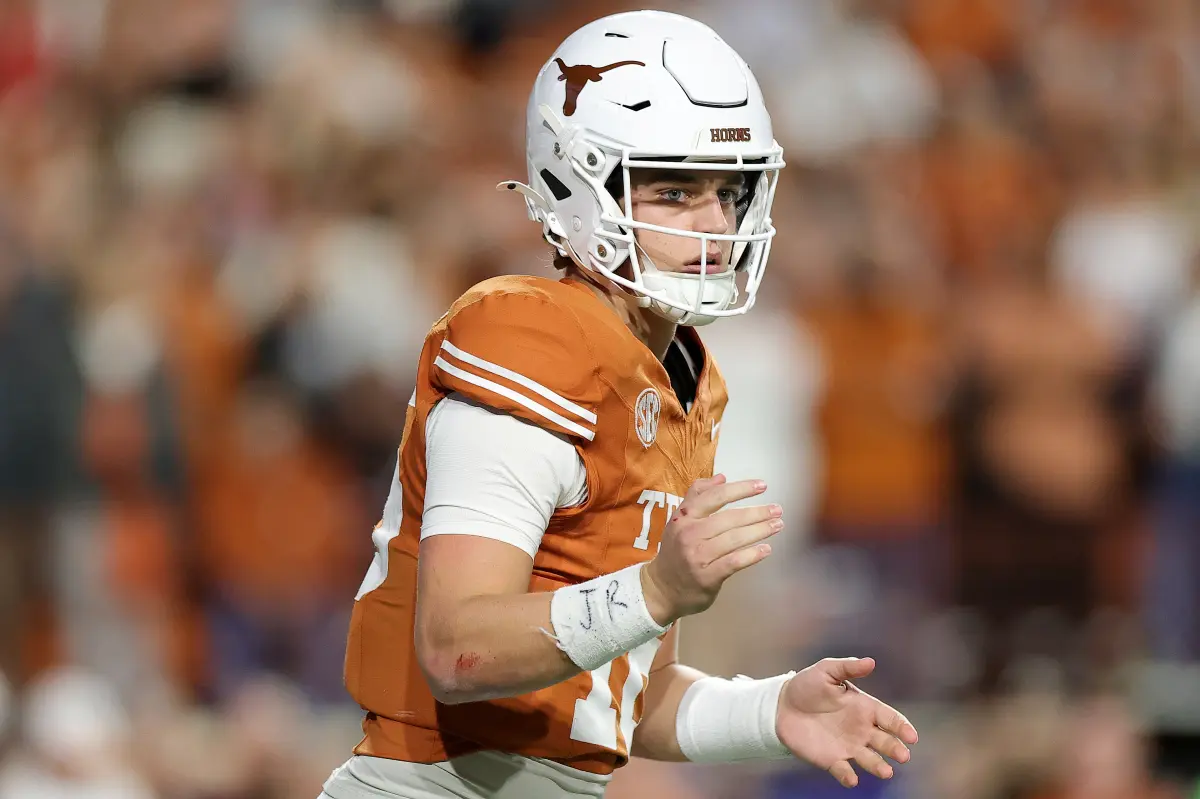
Arch Manning is taking a pay cut.
The Texas quarterback agreed to take a reduced share of the team’s revenue-sharing pool “as part of an effort to help the Longhorn football program do whatever it takes to support a 2026 championship run,” according to On3’s Justin Wells.
The savings “could be used on transfer portal talent or as part of retention efforts” for the Longhorns, per Wells.
This season, athletic programs were capped at $20.5 million in revenue-sharing, although that number is likely to increase next season and beyond.

Manning, the nephew of NFL icons Peyton and Eli Manning and the grandson of legendary quarterback Archie, is one of the most marketable athletes in college sports.
On3 currently gives Manning an NIL valuation of $5.3 million, which leads all student-athletes.
Although he is getting less money from Texas, Manning still holds NIL deals with brands like Red Bull, Uber and EA Sports, among others.
However, Manning sometimes struggled in a season that started with Heisman hype and the Longhorns ranked No. 1 in the nation.
Texas finished the season 9-3 and out of the College Football Playoff, a disappointing midseason loss against a poor Florida team all but ended their chances of being in the 12-team field.
Manning’s season was underwhelming as well, throwing for 2,942 yards with 24 touchdowns and seven interceptions.
The news comes after Manning’s father, Cooper Manning, told ESPN earlier this week that his son would return to the Longhorns in 2026 for his junior season despite previously mulling entering the 2026 NFL Draft.
“Arch is playing football at Texas next year,” Cooper said.
Texas finished No. 13 in the end of season rankings and will be on the sidelines for the College Football Playoff, which kicks off on Friday.

Defensive tackle Keanu Tanuvasa and offensive tackle Andrew Gentry made the biggest splashes in the offseason when they transferred to BYU from Utah and Michigan, respectively, but perhaps the greatest contribution from a transfer not named Bear Bachmeier was made by tight end Carsen Ryan in 2025.
The former American Fork and Timpview star, who began his college career at UCLA before transferring to Utah in 2024 and then BYU in 2025, filled a huge hole at the tight end position and was a big reason why the Cougars’ offense performed so well against all of its opponents except Texas Tech this season.
“Carsen has been everything we expected him to be,” offensive coordinator Aaron Roderick said a few weeks ago. “He’s been great.”
Of course, the 6-foot-4, 250-pound Ryan will get at least one more chance to do his thing when the No. 12 Cougars (11-2) meet No. 22 Georgia Tech (9-3) in the Pop-Tarts Bowl on Dec. 27 at Camping World Stadium in Orlando, Florida. While some seniors and juniors seemingly headed to the NFL are opting out of bowl games, Ryan said the thought has never crossed his mind.
“I am not in the position to do that, but even if I was, I feel like I would still want to play in this game,” he told the Deseret News on Wednesday. “You never know. Any game could be your last game playing football.
“You are never going to experience playing college football again, most likely. … It’s been such a special time for me in my life. I would be upset with myself if I didn’t play in this game and give myself one more chance to have one more game with my brothers and have fun.”
— BYU tight end Carsen Ryan
“You are never going to experience playing college football again, most likely,” he continued. “I’m never gonna experience that again. It’s been such a special time for me in my life. I would be upset with myself if I didn’t play in this game and give myself one more chance to have one more game with my brothers and have fun.”
Ryan is listed as a redshirt senior on BYU’s roster, but the truth is he is just a senior and has played only four years of college football. Because he played in only five games at UCLA his freshman year (2022) before sustaining a season-ending injury, he has applied for a waiver with the NCAA to get that year of eligibility back.
But he’s not holding his breath, having heard through various channels that the waiver is not likely to be granted.
“I have applied, but I am treating this season like I am training to go full-go to the (NFL) right now.
“That’s the goal right now,” he said. “I don’t know what the outcome of that’s going to be. I haven’t heard a lot of good news about it. I am treating everything like I am going to the league next year.”
Ryan has selected agent Carter Chow — Norm Chow’s son — of Red Envelope Sports to represent him in NIL and NFL draft negotiations and would like nothing more than to put up another outstanding game in Orlando next week.
While some college players have language in their NIL contracts with schools that stipulate they must play in bowl games, Ryan said his contract does not include that. Not that it would matter.
“I have been at places where that is in the (NIL) contract,” he said. “I haven’t heard about that being a thing here at BYU. However, I don’t have any negative thoughts about playing in the bowl game, either. I’m really looking forward to it.”
Ryan said that sentiment applies to all of his teammates; as of Friday, it appeared that BYU would have no bowl game opt-outs, aside from the handful of backups who have announced their intentions to enter the transfer portal when it opens on Jan. 2.
“Everyone is excited, still. We still bring the same energy, same intensity to practice,” he said. “It is not a vacation or a week off for us. It is another serious game that we want to go out there and win.”
Ryan said getting a victory against the ACC foe won’t be easy. Georgia Tech is coming off a close loss — 16-9 — to No. 3 Georgia in Atlanta and has the ACC’s Quarterback of the Year, Haynes King.
“They are a good team. They are good defensively. They have a lot of really good players on that team. They all work together. Everyone does their job. So it’s gonna be a tough game,” he said. “They only lost three games this year, and those losses were to really good teams (North Carolina State, Pitt and Georgia).”
Meanwhile, Ryan turned out to be just what the doctor ordered for BYU, after tight ends Keanu Hill (12), Mata’ava Ta’ase (9) and Ryner Swanson (10) combined for just 31 catches in 2024, for 290 yards.
Ryan is BYU’s third-leading pass-catcher, with 37 receptions for 500 yards and three touchdowns. He’s often wondered what might have been if he had considered BYU two years ago when he was leaving UCLA.
“I have loved it here. Every second I have been here has been fun,” he said. “There have been ups and downs. With football, it has been a good year for me, and the relationships I’ve made with the coaches and players will last forever.
“I wish I could have had more time at this place. I wish I got here sooner,” he continued. “But everything happened for a reason, and I’m grateful for my journey and how I’ve gotten here, and that Kalani and his staff found a place for me here.”
Part of that journey included meeting his fiancee, Jayne Basso, at UCLA. She is finishing up her degree at UCLA this winter. The couple plans to wed in June.
“We are excited to start this whole new chapter of our lives together,” Ryan said.

Updated Dec. 19, 2025, 6:24 p.m. CT
The Texas Tech football team will once again try to load up on talent through the transfer portal after the Red Raiders’ highly successful run through the 2025 college football season.
Last year saw the Red Raiders go hard at top-tier players in the portal, which brought in the likes of David Bailey, Lee Hunter, Terrance Carter Jr. and Brice Pollock. The moves made by head coach Joey McGuire and the NIL funds provided by Cody Campbell pushed Texas Tech to the Big 12 Conference championship and an appearance in the College Football Playoff for the first time in program history.
This year’s transfer portal is down to just one window for players to join new teams or leave their current squads. It opens on Jan. 2 and closes again Jan. 16. Players have until Jan. 16 to enter the portal and can pick their new teams at any time after submitting their names.
Keep tabs on all of Texas Tech’s transfer portal activity right here.
This section will be updated when player commitments are announced on social media, by Tech athletics or reported elsewhere.
The final addition of last year’s winter transfer portal cycle was the first to announce his departure on Dec. 11. Upton Bellenfant joined Texas Tech out of Buffalo last year but lost the starting kicker job to Stone Harrington midway through the year. Bellenfant was 6-for-6 on field goals and 14-of-16 on point-after kicks.
On3 reported on Dec. 19 that Dylan Spencer will enter the transfer portal. He is no longer on the Texas Tech roster for the 2025 season after he appeared in just three games, registering a pair of tackles. Showed potential as a true freshman in the 2023 season before he suffered a season-ending knee injury in the first preseason practice ahead of the 2024 season.

Alabama and Oklahoma are about to kick off the College Football Playoff on Friday evening and ahead of the big match-up, one notable player shared some NIL news. With Tide coach Kalen DeBoer facing a particularly big game, stakes are high for Friday’s battle. But at least one player has already had a productive Friday.
Alabama wide receiver Ryan Williams announced an NIL endorsement deal on social media on Friday afternoon. Williams, who has been tagged with a $1.6 million NIL value by On3, added another corporate endorsement to his already crowded NIL roster. With the eyes of college football heading to Alabama’s battle with Oklahoma, Williams had a timely component in his statement.
Williams’ new NIL deal is with Eat Just, Inc. which develops and markets plant-based alternatives to eggs and meats. Williams’ Instagram post depicts the talented wide receiver apparently chowing down on what appears to be a chicken alternative from Eat Just.
Among Williams’ other NIL deals include EA Sports (for whom he was a cover athlete for EA’s College Football 26 game), Uber Eats, Beats by Dre, New Era, and clothier Hollister.
On the field, the 6′ wide receiver continues to show flashes of the massive talent that earned him a starting spot as a 17-year old for the Tide in 2024. But he has struggled with consistency. Last season, Williams finished with 48 receptions for 865 yards and eight receiving scores, with two more rushing touchdowns. In 2025, he has 42 catches for 631 yards and four touchdowns.
Wiliams will not be eligible for the 2026 NFL Draft, but figures to be a significant Draft prospect based on his speed and ball skills.
Alabama is facing a fourth loss in consecutive seasons. During Nick Saban’s nearly two decades, he did not have a four-loss season after his initial 2006 campaign. With rumors of Kalen DeBoer being a strong candidate for the Michigan coaching job, there’s plenty on the line during Friday’s game.
Alabama is a slight underdog in Friday’s College Football Playoff first-round battle. WIlliams could provide a key to the game. In Alabama’s three losses this year, Williams has not exceeded 45 yards receiving or caught a touchdown. So it’s safe to say that Tide fans, as well as Eat Just, hope that Williams eats well on Friday evening.

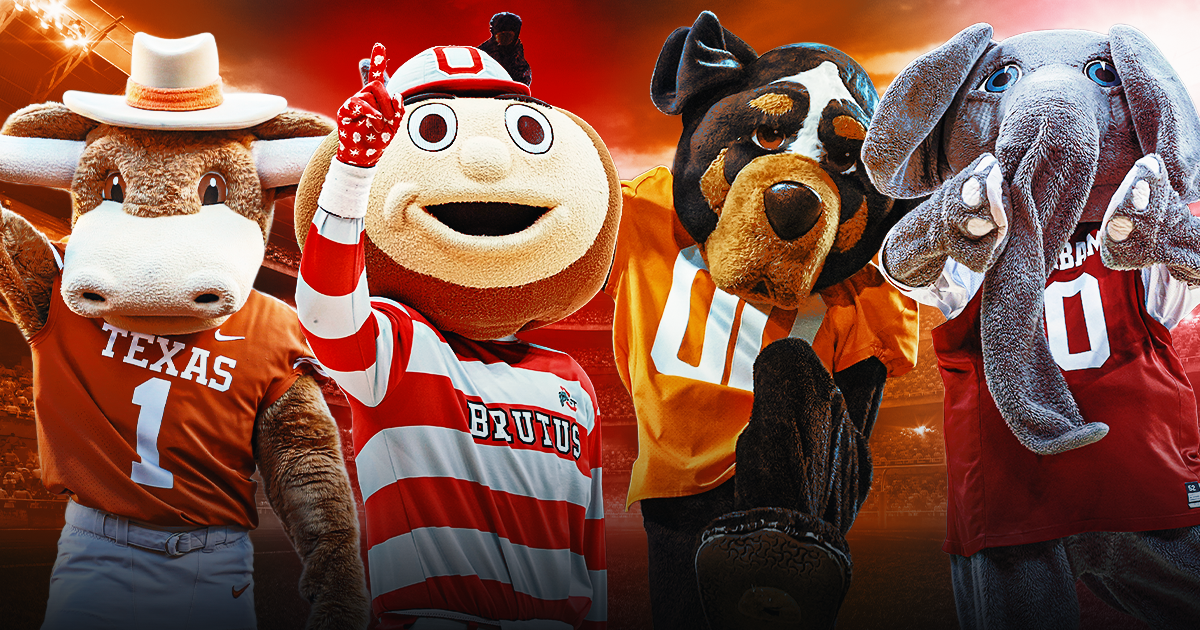
As the 2025 calendar year rounds out, CNBC has ranked the top-25 college athletic programs by valuation. Texas has skyrocketed to the No. 1 spot, worth $1.48 billion. This number is 16% more than it was last year ($1.28 billion). Ohio State‘s valuation grew by 2%, but it still fell from No. 1 to No. 2.
Per CNBC, “the 75 most valuable athletic programs for 2025 are worth a combined $51.22 billion, 13% more than the value of the top 75 in last year’s rankings”. With more money poured into programs by the day with an emphasis on NIL, this isn’t quite a surprise.
SUBSCRIBE to the On3 NIL and Sports Business Newsletter
The entire list is below. Of note, it includes five programs from the SEC, including two valued at more than $1.3 billion, per CNBC.
The University of Texas comes in at No. 1 in the rankings, worth $1.48 billion. The athletic program brought in $332 million worth of revenue in 2024, helping usher in a 16% YOY (year-over-year) value change. Last year, the program was ranked No. 2 (+1).
It shouldn’t be a surprise that Texas sits atop all programs, as starting quarterback Arch Manning ranks No. 1 in On3’s NIL Valuations ($5.3 million). Manning, in his first season as the Longhorns’ starting quarterback, passed for 2,942 yards and 24 touchdowns with seven interceptions this season. Manning is one of two Texas athletes ranked inside the Top-100, alongside EDGE Colin Simmons.
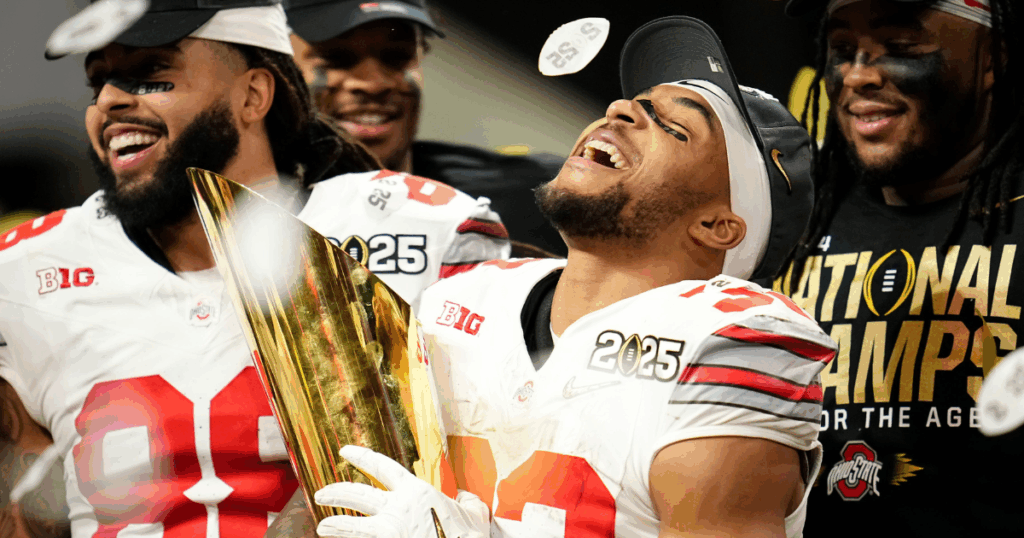
THE Ohio State University comes in at No. 2 in the rankings, worth $1.35 billion. The athletic program brought in $255 million worth of revenue in 2024, helping usher in a 2% YOY value change. Last year, the program was ranked No. 1 (-1).
Although the program slipped one spot, Ohio State is still a juggernaut. Star wide receiver Jeremiah Smith ranks No. 3 in On3’s NIL Valuations ($4.2 million) and is one of three Ohio State football players ranked inside the top-13. Quarterback Julian Sayin sits at No. 10 ($2.5 million) and defensive back Caleb Downs sits at No. 13 ($2.4 million).
Texas A&M University comes in at No. 3 in the rankings, worth $1.32 billion. The athletic program brought in $266 million worth of revenue in 2024, helping usher in a 5% YOY value change. Last year, the program was also ranked No. 3.
With the football program heading to the College Football Playoff for the first time ever, Texas A&M remained the third most profitable athletics program in the country. Quarterback Marcel Reed ranks No. 19 on On3’s NIL Valuations ($2.1 million) and Paul Hornung Award winning receiver K.C. Conepcion ranks No. 52.
The University of Georgia comes in at No. 4 in the rankings, worth $1.16 billion. The athletic program brought in $242 million worth of revenue in 2024, helping usher in a 22% YOY value change. Last year, the program was also ranked No. 7 (+3).
Georgia jumped three spots after bringing in $242 million worth of revenue in 2024. This was massive in hauling in USC transfer receiver Zachariah Branch, who has been a massive contributor for the Bulldogs’ College Football Playoff team. Branch, who ranks No. 85 On3’s NIL Valuations, hauled in 73 catches for 744 yards and five scores this year.
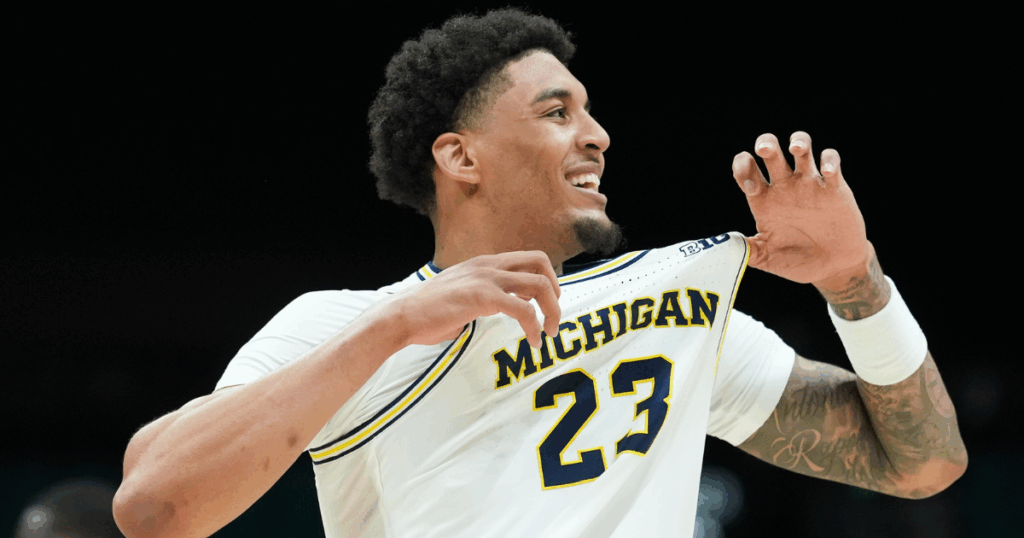
The University of Michigan comes in at No. 5 in the rankings, worth $1.16 billion. The athletic program brought in $239 million worth of revenue in 2024, helping usher in a 9% YOY value change. Last year, the program was ranked No. 4 (-1).
Although Michigan fell one spot from last year’s valuation, it still ranks second among Big Ten programs. Star forward Yaxel Lendeborg, who ranks No. 17 On3’s NIL Valuations ($2.3 million), has been a superstar for the Wolverines on the basketball court. Lendeborg is averaging 16.4 points and 7.2 rebounds for an undefeated squad under head coach Dusty May.
The University of Notre Dame comes in at No. 6 in the rankings, worth $1.13 billion. The athletic program brought in $235 million worth of revenue in 2024, helping usher in a 17% YOY value change. Last year, the program was ranked No. 6.
Feelings are still hurt around the Notre Dame football program after being snubbed from the College Football Playoff, but that’s nothing a little cash can’t fix. The ND athletics program hauled in $235 million worth of revenue last season, but it remained at No. 6. Heisman Trophy finalist running back Jeremiyah Love was Notre Dame‘s highest ranked player in On3’s NIL Valuations ($1.6 million).
The University of Tennessee comes in at No. 7 in the rankings, worth $1.12 billion. The athletic program brought in $234 million worth of revenue in 2024, helping usher in a 19% YOY value change. Last year, the program was ranked No. 9 (+2).
Tennessee‘s athletics program is evaluated at $1.12 billion, good for fourth most in the Southeastern Conference. Freshman forward Nate Ament is the highest earning player in the athletics program, ranking No. 64 in On3’s NIL Valuations.

The University of Southern California comes in at No. 8 in the rankings, worth $1.10 billion. The athletic program brought in $242 million worth of revenue in 2024, helping usher in a 19% YOY value change. Last year, the program was ranked No. 12 (+4).
USC jumped four spots after a massive 2024 calendar year, which brought in $242 million worth of revenue. This ushered in a 19% YOY value change, one of the biggest of all the teams in the rankings. Quarterback Jayden Maiava was the program’s highest earning player, ranking No. 21 in On3’s NIL Valuations ($2.1 million)
The University of Alabama comes in at No. 9 in the rankings, worth $1.09 billion. The athletic program brought in $235 million worth of revenue in 2024, helping usher in a 11% YOY value change. Last year, the program was ranked No. 5 (-4).
In what could maybe be called the Nick Saban effect, Alabama dropped four spots in this year’s rankings. Quarterback Ty Simpson, who passed for 3,268 yards and 26 touchdowns this season, ranks No. 14 in On3’s NIL Valuations ($2.3 million).
The University of Nebraska comes in at No. 10 in the rankings, worth $1.06 billion. The athletic program brought in $221 million worth of revenue in 2024, helping usher in a 12% YOY value change. Last year, the program was ranked No. 8 (-2).
Finally, the Cornhuskers come in ranked No. 10 with a $1.06 billion valuation. Although it ushered in $221 million, they fell two spots to No. 8. Former quarterback Dylan Raiola, who just entered the Transfer Portal, was the program’s highest-earning player this season. He ranked No. 9 in On3’s NIL Valuations ($2.5 million).
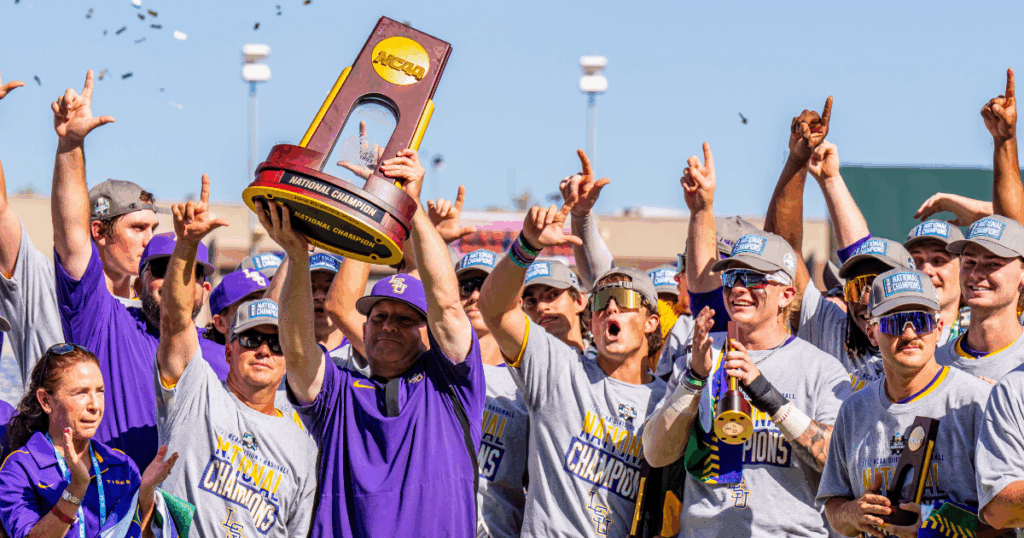
11. Penn State University ($1.06 billion)
12. Louisiana State University ($1.05 billion)
13. University of Oklahoma ($1.01 billion)
14. University of Florida ($975 million)
15. University of Kentucky ($910 million)
16. University of Oregon ($880 million)
17. University of Wisconsin ($875 million)
18. Clemson University ($860 million)
19. University of Iowa ($835 million)
20. University of Illinois ($815 million)
21. University of South Carolina ($812 million)
22. Auburn University ($810 million)
23. Stanford University ($805 million)
24. University of Arkansas ($800 million)
25. University of Washington ($795 million)



SoundGear Named Entitlement Sponsor of Spears CARS Tour Southwest Opener
Bowl Projections: ESPN predicts 12-team College Football Playoff bracket, full bowl slate after Week 14

Robert “Bobby” Lewis Hardin, 56
Wisconsin volleyball sweeps Minnesota with ease in ranked rivalry win


Donny Schatz finds new home for 2026, inks full-time deal with CJB Motorsports – InForum


How Donald Trump became FIFA’s ‘soccer president’ long before World Cup draw

Men’s and Women’s Track and Field Release 2026 Indoor Schedule with Opener Slated for December 6 at Home


Black Bear Revises Recording Policies After Rulebook Language Surfaces via Lever


Michael Jordan’s fight against NASCAR heads to court, could shake up motorsports

David Blitzer, Harris Blitzer Sports & Entertainment