
NIL
Colleges consider unusual ideas to address NIL, transfer portal chaos

By MAURA CAREY, AP Sports Writer
As the amateur model of college athletics disintegrates, a handful of unusual ideas have been floated as ways to reign in some of the chaos surrounding the explosion in name, image and likeness compensation and a transfer portal that sees thousands of athletes changing schools every season.
Whether any of the ideas end up being implemented is unknown and every school is awaiting a decision from a federal judge on whether a $2.8 billion antitrust settlement against the NCAA and the five largest conferences will take effect as early as July 1. If it does, that opens the floodgates for schools to share millions in revenue directly with their athletes amid a host of other changes.
Here is a look at some of the topics:
Athlete contracts
A formal agreement between an athlete and a school is not a new concept, but with the uptick of NIL deals the thought of pro-style contracts is becoming increasingly more common.
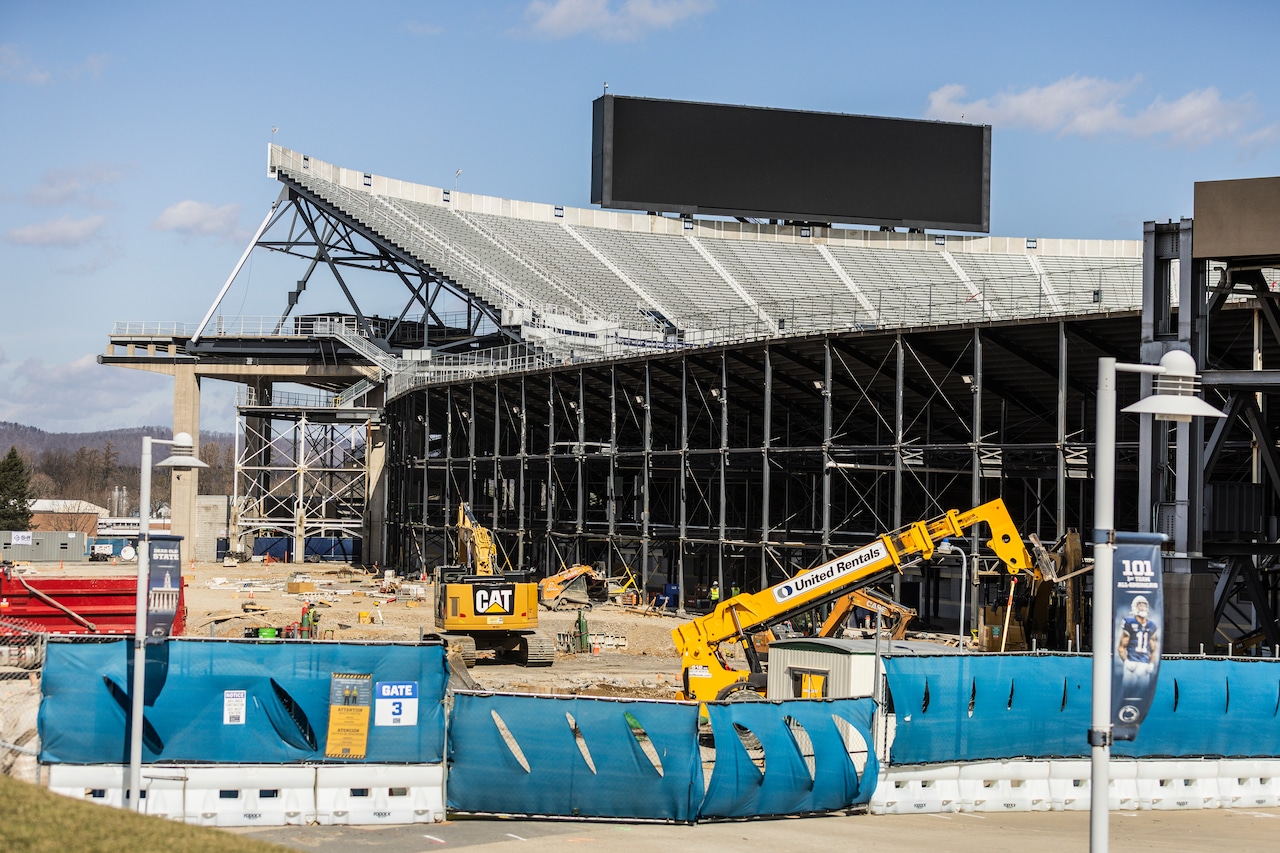
There are plenty of ways to get creative with contracts. Rich Stankewicz, operations director for Penn State’s NIL collective Happy Valley United, said he favors an incentive-based approach — essentially adding money for athletes who not only perform but stick around.
“I personally really like the idea of incentivizing performance in school, those kinds of things that would only be occurring in the season while they’re playing,” Stankewicz said. “If more money is paid out in those time frames, then that gives the incentive for the player to stay and see those dollars from their contract, rather than potentially collect up front and then decide the grass is greener somewhere else three months later, barely doing any school, you know, without playing at all.”
Transfers and buyouts
This topic is red hot at the moment. Entering the transfer portal comes with the risk of not landing in a better spot — or any spot — but athletes have shown every single season over the past few years that they are comfortable going anyway. Athletic departments are beginning to fight back.
Arkansas athletic director Hunter Yurachek recently encouraged the school’s NIL collective to pursue legal action after quarterback Madden Iamaleava departed for UCLA after just five months in Fayetteville. Iamaleava allegedly collected significant money upfront and cited homesickness as his reason for following his brother to California.
This is a scenario Penn State hopes to avoid. And the importance of contract details is clear.
“Commonly, there’s nothing binding students in certain instances to the institution they’re with for the entirety of the contract,” Stankewicz said. “We’ve definitely looked into having measures in place to discourage transfers during the time of the contract. There are a bunch of different ways to do that, from buyouts to how you load the contract.”
Athletes as employees
Groundbreaking shifts in the landscape have sparked conversations about athletes becoming official employees of their universities.
It’s a controversial subject to say the least. Universities would become responsible for paying wages, benefits, and workers’ compensation and schools and conferences have insisted they will fight any such move in court (some already have).
Complexities go beyond the concept. While private institutions fall under the National Labor Relations Board, public universities must follow labor laws that vary from state to state and it’s worth noting that virtually every state in the South has “right to work” laws that present challenges for unions.
There is also a new administration in power now, said Michael LeRoy, a labor and employment professor at Illinois who has studied the NCAA and athlete rights.
“With the election of Donald Trump, and what that would mean for a new National Labor Relations Board, what that would mean for repopulating the courts with judges who are likely not congenial to that view, I no longer have much hope that we’ll get a ruling in the next 5-10 years that these are employees,” LeRoy said.
Despite the lack of employment status, LeRoy said, athletes should advocate for themselves and use the entertainment industry as a model. He said athletes currently are offered “take-it-or-leave-it” NIL contracts when a broader approach might have benefits.
“I think athletes should start to look at Hollywood and Broadway contracting arrangements that deal with publicity rights,” he said. “I think there’s a way to frame this collectively. The framework of collective bargaining and employment, I would say, the entertainment industry generally offers a blueprint for success.”
Playing for another school
Things are so chaotic right now that the very lines of who an athlete is playing for could get blurred.
Saying he was inspired by the NBA’s G League, University of Albany basketball coach Dwayne Killings is proposing a two-way contract for college players. Albany would welcome transfers from top-tier programs who need more seasoning and help them develop — with plenty of game time vs. sitting on the bench — before sending them back to their original program, where they’d be ready to compete.
“The best development happens on the floor, not necessarily on the scout team, given the new 15-man scholarship limits,” Killings told CBS Sports.
And then there is Division III, which recently approved an unusual pilot program: Athletes would play for one school but do their coursework at another school that does not sponsor varsity athletics.
The NCAA said the program, which would run during the next academic year, “will offer expanded pathways for student-athletes to pursue their academic objectives and complete their participation opportunity.”
“This program intends to address the changing, dynamic higher education environment we find ourselves in right now,” said Jim Troha, president of Juniata and chairman of the DIII President’s Council. “It recognizes existing academic programs and provides flexibility to expand participation opportunities for student-athletes.”
The program will be assessed before any decisions on whether to make it permanent or expand it.

A transfer portal spiraling out of control prompted the new regulatory body for college sports to issue a memo to athletic directors Friday night saying it has “serious concerns” about some of the multimillion-dollar contracts being offered to players.
The “reminder” from the College Sports Commission came out about an hour before kickoff of the semifinal between Indiana and Oregon in a College Football Playoff that has shared headlines with news of players signing seven-figure deals to move or, in some cases, stay where they are.
The CSC reminded the ADs that, according to the rules, third-party deals to use players’ name, image and likeness “are evaluated at the time of entry in NIL Go, not before, and each deal is evaluated on its own merits.”
“Without prejudging any particular deal, the CSC has serious concerns about some of the deal terms being contemplated and the consequences of those deals for the parties involved,” the memo said.
Under terms of the House settlement that dictated the rules for NIL payments, schools can share revenue with their players directly from a pool of $20.5 million. Third-party deals, often arranged by businesses created to back the schools, are being used as workarounds this so-called salary cap.
The CSC, through its NIL Go portal, is supposed to evaluate those deals to make sure they are for a valid business purpose and fall within a fair range of compensation for the services being provided.
The CSC did not list examples of unapproved contracts, but college football has seen its share of seven-figure deals luring players to new schools since the transfer portal opened on Jan. 2.
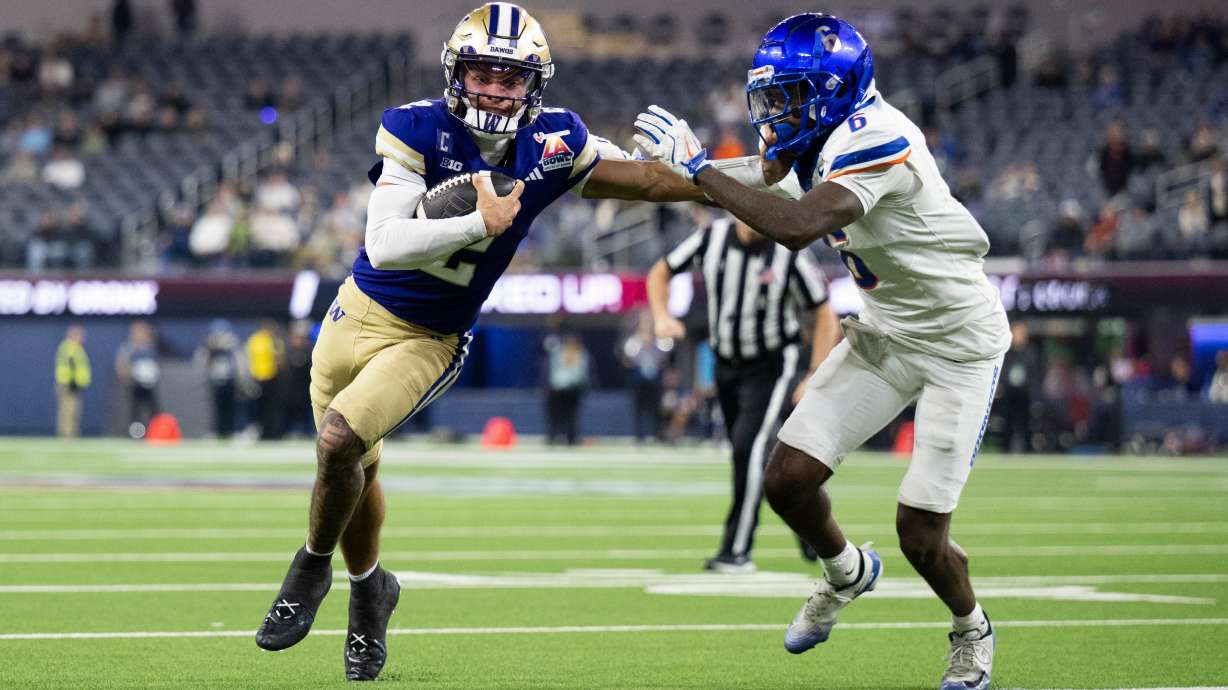
One high-profile case involved Washington quarterback Demond Williams Jr., who initially sought to enter the transfer portal and turn his back on a reported deal worth $4 million with the Huskies. Legal threats ensued and Williams changed course and stayed at Washington.
“Making promises of third-party NIL money now and figuring out how to honor those promises later leaves student-athletes vulnerable to deals not being cleared, promises not being able to be kept, and eligibility being placed at risk,” the CSC letter said.
The commission listed two rules about contracts it evaluates, some of which have been termed “agency agreement” or “services agreement” in what look like attempts to bypass the rules.
—”The label on the contract does not change the analysis; if an entity is agreeing to pay a student-athlete for their NIL, the agreement must be reported to NIL Go within the reporting deadline.”
—”An NIL agreement or payment with an associated entity or individual … must include direct activation of the student-athlete’s NIL rights.” This is a reference to the practice of “warehousing” NIL rights by paying first, then deciding how to use them later.
___
Get poll alerts and updates on the AP Top 25 throughout the season. Sign up here and here (AP News mobile app). AP college football: https://apnews.com/hub/ap-top-25-college-football-poll and https://apnews.com/hub/college-football

A prominent college quarterback faced a difficult reality check during a lopsided College Football Playoff semifinal defeat on Friday night.
The signal-caller struggled with turnovers and the pace of play throughout the contest while his team fell well short of reaching the national championship stage. The performance raised immediate questions about whether the young passer is truly prepared to make the jump to the professional ranks.
The Ringer’s Todd McShay offered a blunt assessment of the prospect’s readiness following the game. The analyst argued that the quarterback lacks the requisite experience to succeed immediately in the NFL and pointed to the low number of career starts as a major red flag. McShay emphasized that rushing the development process often leads to failure for talented but raw players.
McShay suggested that history provides a clear warning for quarterbacks who enter the draft without enough collegiate repetitions. He believes the player would benefit significantly from returning to school to accumulate more game action. The analyst relied on data and trends to support his claim that the passer is not yet equipped to handle the complexities of the next level.
Historical trends suggest Dante Moore needs more time at Oregon
Todd McShay specifically identified Oregon Ducks quarterback Dante Moore as the player who needs to return to school during his The McShay Report podcast. McShay used a long list of successful quarterbacks to illustrate the value of collegiate experience. He noted that players like Bo Nix and Jayden Daniels benefited immensely from staying in school longer.
“Bo Nix: 60+ starts. 50+starts are: Cam Ward, Jayden Daniels. 40+: Baker, Purdy, Penix, Herbert, Hurts, Dart,” McShay stated. “30+: Cousins, Geno, Goff, Daniel Jones, Trevor, Stafford, Lamar, Dak, Caleb, Love.”
McShay contrasted this list with Moore, who has made only 20 starts. He argued that the few quarterbacks who succeeded with fewer starts are rare outliers.

“The two guys that are sub-30 but still had 25 or 29, in Mahomes and Josh Allen respectively, are superhuman,” McShay explained. “And Mahomes sat a year with Alex Smith, teaching him in the quarterback room, and Andy Reid, one of the great developers. Everyone seems to forget Josh Allen really struggled as a rookie.”
The analyst pointed to specific struggles Moore had during the 56-22 loss to Indiana. He highlighted how the speed of the game seemed to affect the sophomore’s processing.
“I’m looking at Dante Moore in his 20th start, and he looks like a guy, and yeah, the running back on the RPO shouldn’t have hit his elbow to throw,” McShay observed. “But the strip sack and several other plays. I’m watching the quarterback. Yes, there were, your receivers are covered up, but we got to speed up that clock, man. I don’t think Dante Moore’s ready.”
McShay warned that ignoring historical trends often results in drafting busts. He listed several quarterbacks who struggled after entering the league with questions about their readiness.

“Knowing the history, and knowing all the problems, and knowing the Trubiskys and the Haskins and the Mark Sanchezes and the Anthony Richardsons,” McShay said. “Hearing that list I just gave you, and watching him then tonight, are you comfortable taking him at one overall?”
The analyst concluded that one more season would put Moore in a much safer category for NFL evaluators.
“He can come back next year, play 12, 13, 15 more games. And now he’s in the range we’re talking about with Stafford, Lamar, Dak, Caleb, Love,” McShay said. “I feel a lot more comfortable then.”
Read more on College Football HQ

Fernando Mendoza rejected Miami’s NIL payday — now he’s one win from a national title originally appeared on The Sporting News. Add The Sporting News as a Preferred Source by clicking here.
Fernando Mendoza bet on himself last winter by turning down a richer NIL payday at Miami in favor of a chance he believed would better define his future. One win from a national championship, the wager is nearly complete at Indiana
Advertisement
Fernando Mendoza has led one of the most remarkable seasons in college football history. The Indiana Hoosiers won their first Big Ten title since 1967 and Mendoza earned the school’s first Heisman Trophy.
The California transfer has thrown for 3,349 yards, 41 touchdowns and six interceptions, transforming Indiana into the No. 1 team entering the College Football Playoff. They haven’t let up off the gas since.
The decision almost never happened. According to former agent Ben Dogra, Mendoza turned down a more lucrative NIL offer from the Miami Hurricanes, his hometown school. He said Indiana’s deal paid roughly $2.3 million, while Miami’s offer exceeded $3 million, a difference that led the Hurricanes to pursue Carson Beck instead.
Mendoza prioritized development over a homecoming or money. At Indiana, he joined coach Curt Cignetti’s system to play alongside his brother, Alberto, and believed he had a clearer path to becoming an NFL quarterback.
Advertisement
“That’s coaching,” Dogra said. “He thought he’d have a better chance to grow and get ready for the next level.”
Mendoza’s plan worked. He has surged up draft boards and is now viewed as the No. 1 overall pick. One more win would turn a calculated gamble into a championship legacy as the Hoosiers chase history.
More college football news:
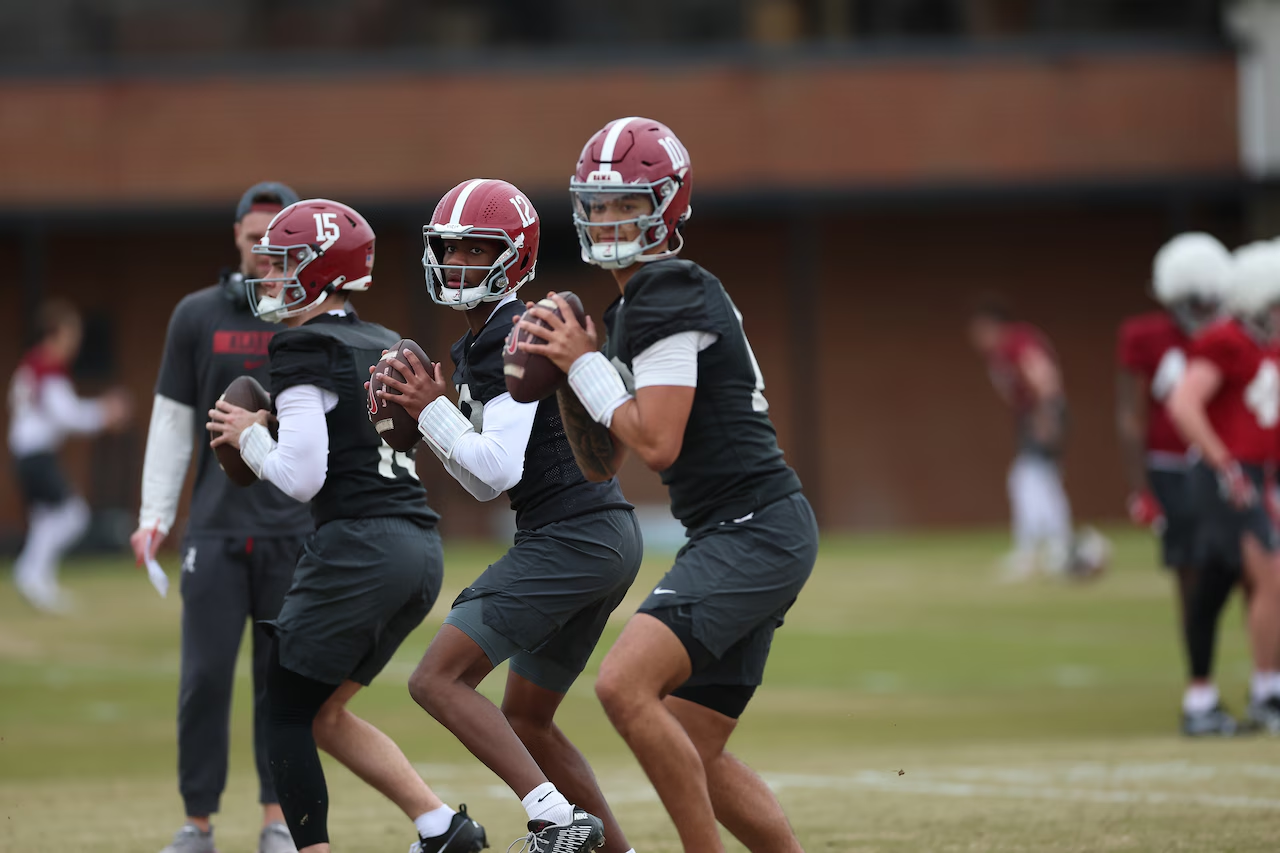
Alabama officially has a quarterback competition for 2026.
Austin Mack and Keelon Russell have both re-signed for another season with the Crimson Tide, Alabama’s NIL collective announced Friday.
Mack is heading into his fourth season of college football and fourth working under coach Kalen DeBoer. Meanwhile, Russell is set to enter his second season with Alabama.
The two will compete to replace Ty Simpson as Alabama’s starting quarterback. Simpson announced Wednesday he will enter the NFL Draft.
The re-signings are noteworthy because teams across college football are searching for quarterbacks, and it’s no secret quarterback-needy teams find ways to make known to quarterbacks through third parties what their opportunities might be if they enter the transfer portal.
But Alabama managed to secure both Mack and Russell, indicating both are willing to compete for the starting job.
What was a given not even half a decade ago is no longer a foregone conclusion. Roster retention is just as important, if not more important, than roster additions in this era of revenue sharing, NIL and paying players directly.
Mack is the lone quarterback of the two who has played significant snaps so far. When Simpson left the Rose Bowl early in the second half with a cracked rib, Mack replaced him and finished out the game. He completed 11 of 16 passes for 103 yards.
Over four games of action in 2025, primarily as Simpson’s backup, Mack completed 24 of 32 passes for 228 yards, two touchdowns and one rushing touchdown.
Russell was the third quarterback on the depth chart during his freshman season, completing 11 of 15 passes for 143 yards and two touchdowns. Russell is a former five-star quarterback, ranked as the No. 2 quarterback and No. 2 prospect in the 2025 recruiting class, per 247Sports.
The transfer portal is scheduled to remain open through Jan. 16.

FARGO — There is one week left in the NCAA transfer portal and then the national FCS head coach nightmare will be over. Or at least let’s hope so.
It’s been eight days since the last North Dakota State player announced he was going into the portal, perhaps a sign that the bleeding has stopped. Bison players who receive funds from the Green and Gold Fund, the collective that pays players directly from the athletic department, sign contracts that in theory commit them to the school.
But in NCAA football, what’s a contract these days?
Maybe there’s hope on the horizon.
ESPN earlier this week reported quarterback Demond Williams Jr. signed an NIL deal to remain at the University of Washington, but then announced he was leaving to pursue another school. Imagine that happening in the NFL. It doesn’t, at least it’s not that simple.
But back to the college game and Williams Jr., the university didn’t take too kindly to that, as it shouldn’t, and there were reports Washington was prepared to fight back. This is not a $10,000 check maybe a Bison football player would receive.
This is about millions of dollars.
Guess what? Williams Jr. on Thursday put on Instagram that he was “fully committed” and is returning to Washington. Imagine that. Perhaps somebody got to him with the following logic: Demond, do you want to hire a lawyer for a lot of money with no guarantee you’ll win just to transfer to, say, LSU? It’s a reminder of the famous “Seinfeld” line when Jerry was at an airport car rental desk. His vehicle wasn’t immediately available and that didn’t sit well with him. “You can take the reservation but you can’t hold the reservation.”
The point being holding, honoring a contract, is the most important part.
Maybe, just maybe, the players finally met their match. On that note, the NCAA denied a waiver request for another year of eligibility of Ole’ Miss quarterback Trinidad Chambliss. I never thought I would see the NCAA deny any sort of waiver again.
NIL contracts? Before Williams Jr. reversed course, they held about as much water as Death Valley in California. The agent who represented Williams Jr., who is also the agent for Washington head coach Jedd Fisch, put on social media he ended his representation with the quarterback because of “philosophical differences.”
NDSU players signing NIL contracts with the Green and Gold Fund are important, with both parties. With the school, the hope is the players honor the deal. For the player, it’s a guarantee they’ll get paid.
There are stories that Bison players who transferred to a bigger school in the past didn’t receive what they were promised. A contract is a security blanket, because it’s doubtful a school would want a reputation of reneging on NIL deals.
It’s all part of the mishmash of the modern world of college football that is screwed up on so many levels, including the calendar of events of the transfer portal and coaches leaving for other schools.
Nick Saban has a point, when on an ESPN “College GameDay” pregame show, the former Alabama head coach suggested taking on more of an NFL model with the calendar. He advocated to move signing day to summer, start the season earlier, move the portal to the end of the school year and then change spring football from March or April to after the portal dates to summer, like the NFL teams do with their Organized Team Activity (OTAs) after the draft.
It would avoid coaches leaving their current school for another during a playoff run, like the Lane Kiffin fiasco from Mississippi to LSU. NDSU went through it to a degree, but Craig Bohl stayed through the 2013 national title game before leaving for Wyoming and Chris Klieman stayed through the ‘18 championship game before heading to Kansas State.
That’s laughable now. But there is this: Maybe the pendulum has reached its peak and will swing the other way.
Let’s hope so.

Jeff Kolpack, the son of a reporter and an English teacher, and the brother of a reporter, worked at the Jamestown Sun, Bismarck Tribune and since 1990 The Forum, where he’s covered North Dakota State athletics since 1995. He has covered all 10 of NDSU’s Division I FCS national football titles and has written four books: “Horns Up,” “North Dakota Tough,” “Covid Kids” and “They Caught Them Sleeping: How Dot Reinvented the Pretzel.” He is also the radio host of “The Golf Show with Jeff Kolpack” April through August.
By ANDREW DESTIN and TERESA WALKER
Associated Press
A quarterback reportedly reneging on a lucrative deal to hit the transfer portal, only to return to his original school. Another starting QB, this one in the College Football Playoff, awaiting approval from the NCAA to play next season, an expensive NIL deal apparently hanging in the balance. A defensive star, sued by his former school after transferring, filing a lawsuit of his own.
It is easy to see why many observers say things are a mess in college football even amid a highly compelling postseason.
“It gets crazier and crazier. It really, really does,” said Sam Ehrlich, a Boise State legal studies professor who tracks litigation against the NCAA. He said he might have to add a new section for litigation against the NCAA stemming just from transfer portal issues.
“I think a guy signing a contract and then immediately deciding he wants to go to another school, that’s a kind of a new thing,” he said. “Not new kind of historically when you think about all the contract jumping that was going on in the ’60s and ’70s with the NBA. But it’s a new thing for college sports, that’s for sure.”
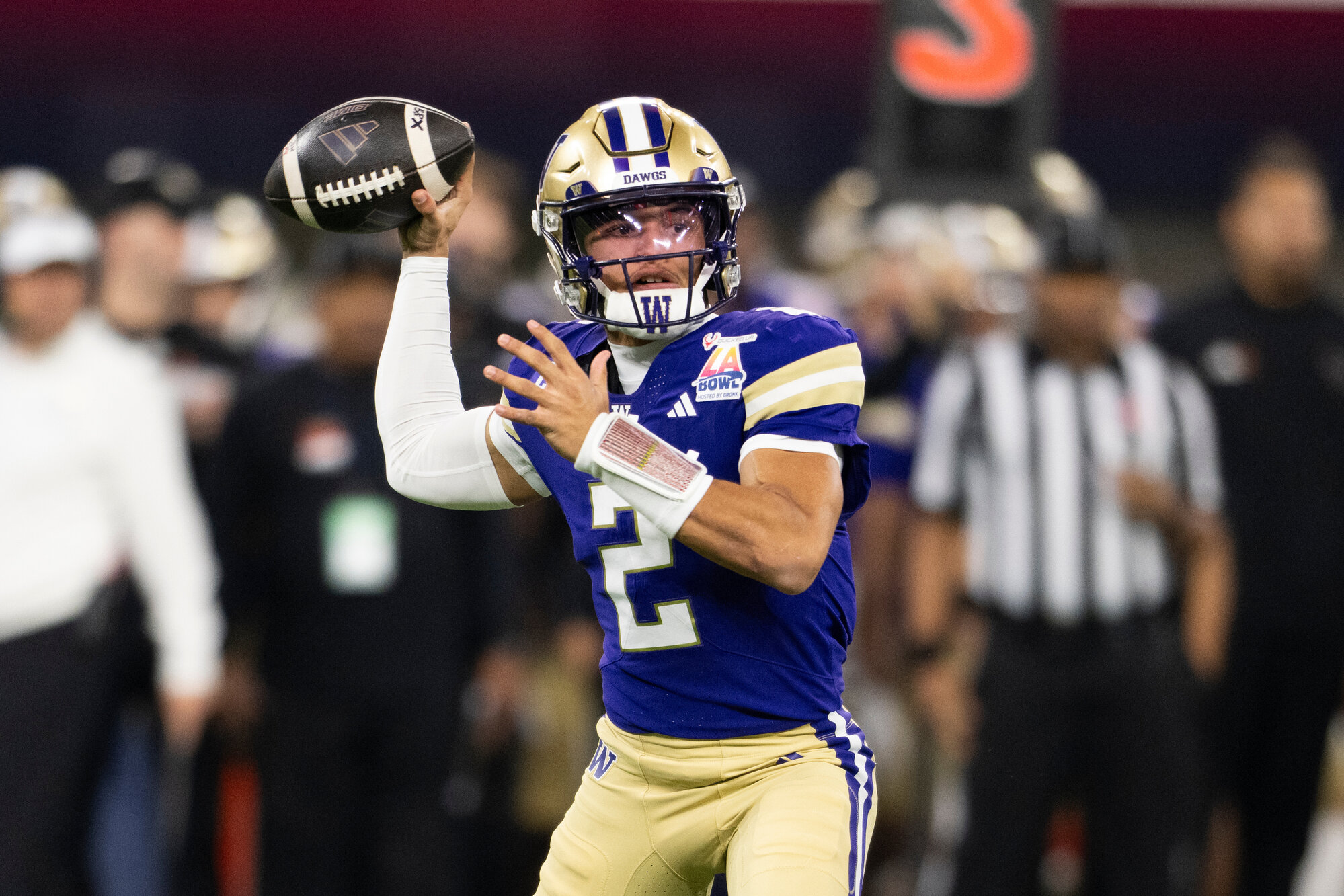
Washington quarterback Demond Williams Jr. said late Thursday he will return to school for the 2026 season rather than enter the transfer portal, avoiding a potentially messy dispute amid reports the Huskers were prepared to pursue legal options to enforce Williams’ name, image and likeness contract.
Edge rusher Damon Wilson is looking to transfer after one season at Missouri, having been sued for damages by Georgia over his decision to leave the Bulldogs. He has countersued.
Then there is Ole Miss quarterback Trinidad Chambliss, who reportedly has a new NIL deal signed but is awaiting an NCAA waiver allowing him to play another season as he and the Rebels played Thursday night’s Collge Football Playoff semifinal against Miami. On the Hurricanes roster: Defensive back Xavier Lucas, whose transfer from Wisconsin led to a lawsuit against the Hurricanes last year with the Badgers claiming he was improperly lured by NIL money. Lucas has played all season for Miami. The case is pending.
What to do?
Court rulings have favored athletes of late, winning them not just millions in compensation but the ability to play immediately after transferring rather than have to sit out a year as once was the case. They can also discuss specific NIL compensation with schools and boosters before enrolling and current court battles include players seeking to play longer without lower-college seasons counting against their eligibility and ability to land NIL money while doing it.
Ehrlich compared the situation to the labor upheaval professional leagues went through before finally settling on collective bargaining, which has been looked at as a potential solution by some in college sports over the past year. Athletes.org, a players association for college athletes, recently offered a 38-page proposal of what a labor deal could look like.
“I think NCAA is concerned, and rightfully so, that anything they try to do to tamp down this on their end is going to get shut down,” Ehrlich said. “Which is why really the only two solutions at this point are an act of Congress, which feels like an act of God at this point, or potentially collective bargaining, which has its own major, major challenges and roadblocks.”
The NCAA has been lobbying for years for limited antitrust protection to keep some kind of control over the new landscape – and to avoid more crippling lawsuits – but bills have gone nowhere in Congress.
Collective bargaining is complicated and universities have long balked at the idea that their athletes are employees in some way. Schools would become responsible for paying wages, benefits, and workers’ compensation. And while private institutions fall under the National Labor Relations Board, public universities must follow labor laws that vary from state to state; virtually every state in the South has “right to work” laws that present challenges for unions.
Ehrlich noted the short careers for college athletes and wondered whether a union for collective bargaining is even possible.
A harder look at contracts
To sports attorney Mit Winter, employment contracts may be the simplest solution.
“This isn’t something that’s novel to college sports,” said Winter, a former college basketball player who is now a sports attorney with Kennyhertz Perry. “Employment contracts are a huge part of college sports, it’s just novel for the athletes.”
Employment contracts for players could be written like those for coaches, he suggested, which would offer buyouts and prevent players from using the portal as a revolving door.
“The contracts that schools are entering into with athletes now, they can be enforced, but they cannot keep an athlete out of school because they’re not signing employment contracts where the school is getting the right to have the athlete play football for their school or basketball or whatever sport it is,” Winter said. “They’re just acquiring the right to be able to use the athlete’s NIL rights in various ways. So, a NIL agreement is not going to stop an athlete from transferring or going to play whatever sport it is that he or she plays at another school.”
There are challenges here, too, of course: Should all college athletes be treated as employees or just those in revenue-producing sports? Can all injured athletes seek workers’ compensation and insurance protection? Could states start taxing athlete NIL earnings?
Winter noted a pending federal case against the NCAA could allow for athletes to be treated as employees more than they currently are.
“What’s going on in college athletics now is trying to create this new novel system where the athletes are basically treated like employees, look like employees, but we don’t want to call them employees,” Winter said. “We want to call them something else and say they’re not being paid for athletic services. They’re being paid for use of their NIL. So, then it creates new legal issues that have to be hashed out and addressed, which results in a bumpy and chaotic system when you’re trying to kind of create it from scratch.”
He said employment contracts would allow for uniform rules, including how many schools an athlete can go to or if the athlete can go to another school when the deal is up. That could also lead to the need for collective bargaining.
“If the goal is to keep someone at a school for a certain defined period of time, it’s got to be employment contracts,” Winter said.

Audrey Flanagan decides to join Wisconsin volleyball early

Ram Launches Innovative Reality Competition Series: Race For The Seat — A New Path to NASCAR – Speedway Digest

College enforcement group voices ‘serious concerns’ with spiraling transfer portal

Michael McDowell announces rare non-Cup appearance ahead of Daytona – Motorsport – Sports

Andretti Formula E Collaborates with Universidad Anáhuac Querétaro to Inspire Future Motorsport Professionals in Mexico City

Incoming Volleyball Freshman Brooke Baldwin Named State Gatorade Player of the Year

Todd McShay believes 3,500-yard college football QB is not ready for NFL

Cubettes snap district losing streak with road win over A&M Consolidated | Sports

Volunteer Opportunity: Flag Sorting | Nashville.gov

Long Beach State Sweeps Lindenwood In Season Opener

Greater Grand Forks sees rise in faith-based education – Grand Forks Herald

BYU men’s volleyball season preview: Transfers boost Cougars for 2026 | News, Sports, Jobs

Trae Young has a fresh start in Washington. His first order of business is getting healthy

Riverside Church Trial:Two Ex-Players Testify to Being Sexually Abused

No. 5 USC Men’s Volleyball Opens 2026 Against Spartans

#11 Volleyball Practices, Then Meets Media Prior to #2 Kentucky Match

Stempien to seek opening for Branch County Circuit Court Judge | WTVB | 1590 AM · 95.5 FM

Ross Brawn to receive Autosport Gold Medal Award at 2026 Autosport Awards, Honouring a Lifetime Shaping Modern F1

Maine wraps up Fall Semester with a win in Black Bear Invitational

Nascar legal saga ends as 23XI, Front Row secure settlement

Princeton Area Community Foundation awards more than $1.3 million to 40 local nonprofits ⋆ Princeton, NJ local news %

Downtown Athletic Club of Hawaiʻi gives $300K to Boost the ’Bows NIL fund

Sunoco to sponsor No. 8 Ganassi Honda IndyCar in multi-year deal

WNBA’s Caitlin Clark, Angel Reese and Paige Bueckers in NC, making debut for national team at USA camp at Duke
NASCAR, 23XI Racing, Front Row Motorsports announce settlement of US monopoly suit | MLex

Badgers news: Wisconsin lands 2nd commitment from transfer portal

Nike Signs 10 LSU Athletes to NIL deals

Rock sending small group to Akron Friday night

Three Clarkson Volleyball Players Named to CSC Academic All-District List

Five Youth Sports Trends We’re Watching in 2026





-
 Sports3 weeks ago
Badgers news: Wisconsin lands 2nd commitment from transfer portal
-
 Rec Sports1 week ago
Five Youth Sports Trends We’re Watching in 2026
-
 Sports2 weeks ago
Kentucky VB adds an All-American honorable mention, loses Brooke Bultema to portal
-

 Motorsports3 weeks ago
Dr. Patrick Staropoli Lands Full-Time O’Reilly Ride with Big Machine Racing
-

 Rec Sports3 weeks ago
NBA, Global Basketball Community Unite for World Basketball Day Celebration
-
 Sports2 weeks ago
2025 Volleyball Player of the Year: Witherow makes big impact on Central program | Nvdaily
-

 Motorsports2 weeks ago
BangShift.com IHRA Acquires Historic Memphis Motorsports Park In Millington Tennessee. Big Race Weekend’s Planned For 2026!
-

 NIL3 weeks ago
Insider Reveals Biggest Reason Behind Colorado’s Transfer Portal Mass Exodus
-
 Sports2 weeks ago
Colorado volleyball poised to repeat success
-

 Sports2 weeks ago
Texas A&M volleyball’s sweep of Kentucky attracts record viewership