
NIL
Colorado athletic director Rick George backs NIL changes after landmark house ruling


- College athletes can now be compensated directly by universities for their name, image, and likeness (NIL) rights, with a cap of $20.5 million per school.
- Colorado plans to distribute NIL compensation based on the revenue generated by each sport, favoring high-revenue sports like football and men’s basketball.
- This ruling allows schools to share revenue with student-athletes while also permitting athletes to pursue personal NIL deals, subject to review.
- Colorado is well-positioned for this change due to increased interest and revenue generated under football coach Deion Sanders.
The college athletic landscape drastically changed Friday evening when a United States district judge approved a house settlement that will allow universities to directly compensate student-athletes for their name, image and likeness (NIL) rights.
To increase parity across college athletics, each school’s total student-athlete compensation will be capped at $20.5 million per year. In a message to Colorado fans, Colorado athletic director Rick George announced that the department’s entire allotment would be used to “remain competitive” in recruiting. He also shared that CU will adopt a “revenue-share budget that is proportional to the revenue that sport generates.”
In short, athletes in high-revenue sports like football and men’s basketball will receive higher payouts than those in non-revenue sports.
The ruling does not affect athletes’ ability to earn money through personal NIL deals. However, those deals will be subject to review by a national clearinghouse.
“For the first time ever, we will be able to share our revenue with student-athletes for their name, image and likeness rights to a cap of $20.5 million,” George said in a video posted to the athletic department X account. “In the next month, we’ll also be announcing some exciting new opportunities for student-athletes’ NIL engagement. This will be an incredible opportunity for businesses to work directly with student-athletes to enhance their brand.”
Colorado is significantly more prepared for the changing era of college athletics, with Deion Sanders leading the football program. Under Sanders, interest in Colorado athletics, beyond just football, has grown as more people attend games, generating revenue. With the new ruling, revenue can be distributed across all athletic programs, allowing student-athletes to be compensated, even if most of the revenue and engagement is driven by football.
Follow Charlie Strella on X, Threads and Instagram.
Contact/Follow us @BuffaloesWire on X (formerly Twitter) and like our page on Facebook for ongoing coverage of Colorado news, notes and opinions.

NIL
Curt Cignetti contract clause takes effect after Indiana’s College Football Playoff semifinal berth
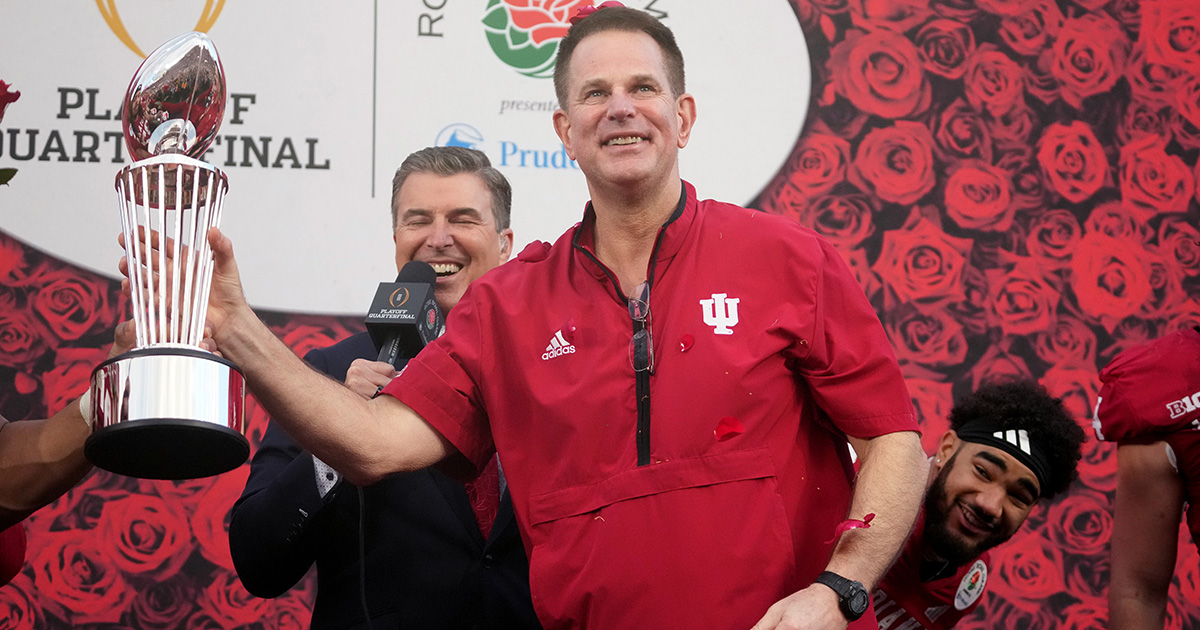
With Indiana’s resounding victory over Alabama in the Rose Bowl, Curt Cignetti triggered a bonus in his contract. But there’s another clause that took effect as the Hoosiers head to the College Football Playoff semifinals.
Cignetti’s new eight-year, $93 million deal at Indiana – which the two sides announced in October 2025 – includes a Good Faith Market Review clause. It states if IU makes the CFP semifinal, the school must discuss a renegotiated contract with Cignetti that would bring his annual compensation to nothing less than the third-highest paid coach in college football.
SUBSCRIBE to the On3 NIL and Sports Business Newsletter
For reference, Cignetti’s salary went up to $11.6 million when he signed his new contract at Indiana. That currently puts him at No. 4 among the nation’s highest-paid coaches after Lane Kiffin agreed to a deal that will pay him $13 million at LSU. Kiffin’s salary is just behind Georgia coach Kirby Smart, who’s the highest-paid coach in the country at $13.3 million, and ahead of Ohio State’s Ryan Day at $12.6 million.
According to the contract, Cignetti and Indiana have 120 days after the CFP semifinal to agree to the good faith review and negotiation. If the two sides don’t come to terms on a deal to make Cignetti no less than the third-highest paid coach in the country, “the University agrees to waive for the remaining Term of this Agreement any liquidated damages which would be due from Coach to the University should he subsequently terminate his employment at the University.”
In short, if the two sides don’t agree to those terms, Cignetti would not owe Indiana anything if he chose to leave for another job. For reference, he would owe $15 million if he was to resign to take a different coaching job before May 2026.
Curt Cignetti triggers bonus with Rose Bowl win
As part of the new deal, which took effect Dec. 1, Curt Cignetti also triggered multiple bonuses through Indiana’s College Football Playoff run. The Hoosiers’ sixth Big Ten victory secured a $150,000 bonus and he earned $1 million for winning the conference championship in addition to the $50,000 for becoming the league’s Coach of the Year.
Cignetti also had CFP bonuses in the deal, though they are not cumulative. With Thursday’s win against Alabama, he is set to earn $700,000 for making the semifinal round, and that figure would increase to $1 million if Indiana appears in the national championship. A victory in the title game would net Cignetti a $2 million bonus.
Indiana’s victory over Alabama continued Cignetti’s historic turnaround in Bloomington. The Hoosiers are now 14-0 this season and 25-2 under his watch as they get ready to take on Oregon.
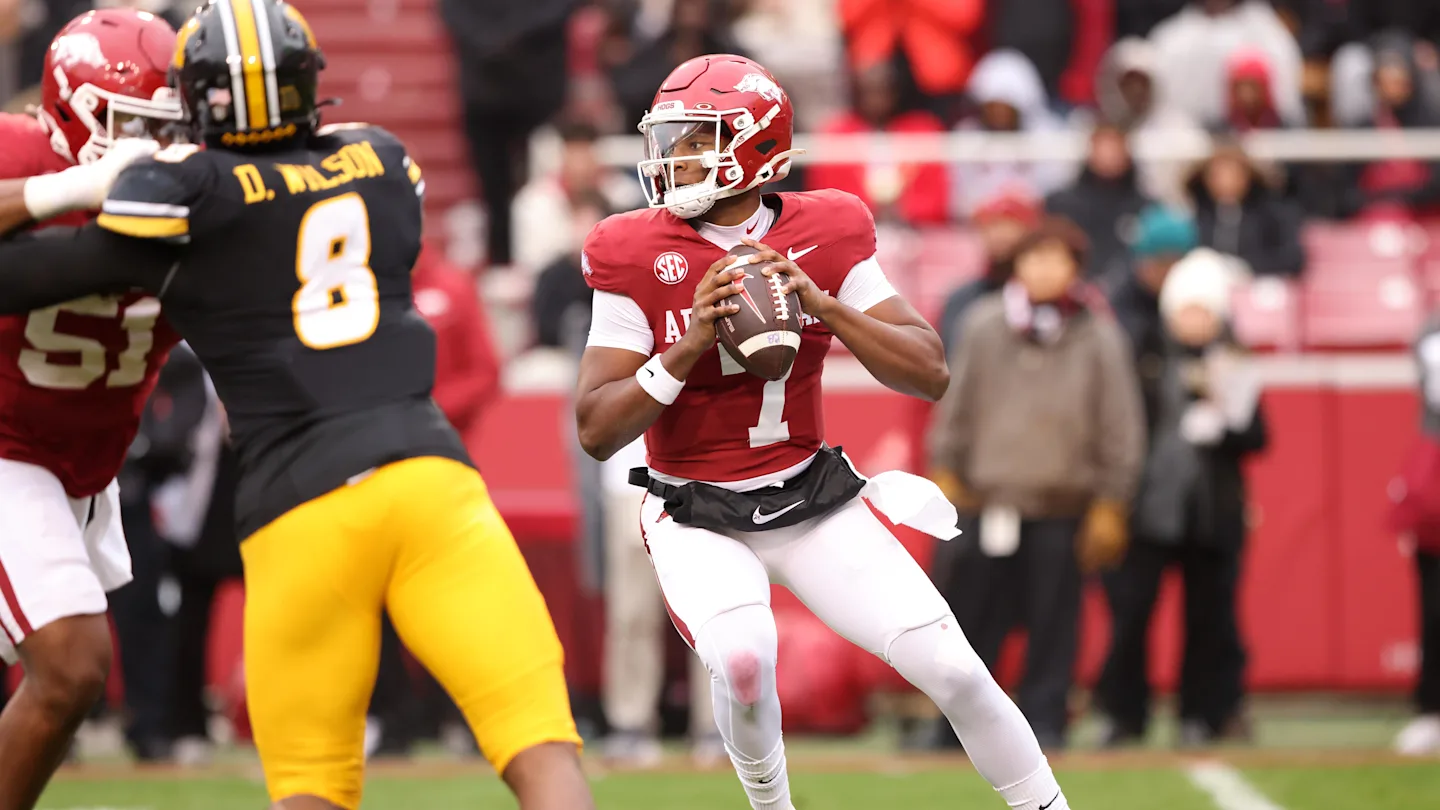
Few people in college football personnel can say they’ve experienced the sport from nearly every possible angle. Arkansas ‘ new general manager Gaizka Crowley is one of them.
Gaizka Crowley’s Journey
Crowley’s journey to the SEC is a testament to adaptability, persistence, and a deep-rooted passion for roster construction. A Florida State graduate, Crowley began his football career coaching high school football in Florida before working for the scouting and analytics service XOS Digital (now Catapult). From there, his path wound through the FCS ranks at Southern Illinois, Group of Five programs in the Mountain West at UNLV and the MAC at Western Michigan, the Power 4 level in the Big 12 at Arizona, and now to the SEC as the newly appointed general manager for the Arkansas Razorbacks under first-year head coach Ryan Silverfield.
In an era where college football personnel roles have rapidly evolved, Crowley has quietly become one of the most respected names in the profession. Roster construction has been his passion since his early days, where he was known as a detail-obsessed, X’s-and-O’s guy who loved fitting pieces together like a jig-saw puzzle and making everything sync together almost like being the operator for a symphony. In todays age, those puzzle pieces come with price tags, NIL valuations, and salary-cap-style allocation decisions that raise the stakes considerably.
What separates Crowley is how seamlessly he has adapted. He didn’t just understand schemes and player fit; he learned how to balance those football instincts with financial strategy in the modern era. Managing resources, allocating money, and maintaining roster flexibility are now as critical as identifying talent, and Crowley has shown he can thrive in both worlds.
That adaptability was on full display during his time at Arizona. While running personnel for the Wildcats, Crowley helped construct one of the nation’s most dramatic turnarounds in 2025. Arizona jumped from a 4–8 record in 2024 to 9–3 the following season, a transformation fueled by smart roster decisions and efficient talent evaluation. When head coach Jedd Fisch departed for the Washington job, Crowley didn’t dwell on uncertainty or excuses. He went straight to work, adjusting to the coaching change, identifying the right pieces, and empowering the staff to succeed. This sounds very similar to the situation he’s presented himself with in Fayetteville.
Despite the growing administrative demands of his role, Crowley has remained grounded in the habits that got him there. His days are filled with constant communication, problem-solving, and long-term planning, but he still carves out time, early mornings or late nights, to shut his office door and grind film just because he loves doing it.
““It’s important, no matter what your role is — but especially as you get to a more senior level — to not forget what got you there,” Crowley said. “Make sure you carve out the time to watch the tape.””
Gaizka Crowley
How Crowley Fits in with Arkansas Football
That blend of old-school film study, modern roster economics, and humility defines Crowley’s approach. Now, he brings that mindset to Arkansas, a program hungry for sustained success after years of instability. Since Bobby Petrino’s first tenure, the Razorbacks have cycled through coaches and directions, never quite recapturing consistent national relevance.
Crowley’s task is clear but demanding: help Ryan Silverfield rebuild Arkansas football with purpose, patience, and precision. If his track record is any indication, he won’t waste time. With his ability to evolve alongside the sport, manage the new financial realities, and stay grounded in the fundamentals of evaluation, Crowley is well-equipped for the challenge. Can lightning strike twice and can he replicate the same instant results he did during his time with Arizona? Hogs fans sure hope so.
From the FCS grind to the SEC spotlight, Gaizka Crowley’s rise reflects college football’s new era and Arkansas is betting that his unique perspective can help bring Razorbacks football all the way back.
Lisa Desjardins:
New Year’s Day has long been synonymous with college football. This year, that includes championship playoff games.
But it’s also a key week for the future of those teams. Starting tomorrow, the window opens for players to transfer to other schools through the so-called portal. It’s part of what some have called a Wild West in college sports, where universities can now pay players millions of dollars through a system abbreviated as NIL.
To help us understand this reshaping of college sports and what it means for athletics, I spoke recently with Stewart Mandel, editor in chief of college football coverage for “The Athletic.”
Stewart Mandel, thank you for joining us.
Two things are happening right now, the name, image and likeness changes, which mean that colleges can pay athletes in some cases millions of dollars, but also the opening of the transfer portal, which is later this week. Do we know how these two things are going to play out?
Stewart Mandel, The Athletic:
Well, this is the first cycle since the NCAA v. House settlement that allows schools to directly pay their athletes up to $20.5 million.
And so the way it’s supposed to work when the portal opens is those deals don’t need to be approved by anybody. But if you’re going to offer a player an NIL deal from a third party, that is supposed to require approval from this new organization called the College Sports Commission. But a lot of people are skeptical that that will actually work.
Lisa Desjardins:
So it seems like there’s a real Wild West here. There’s a question of if these rules can be broken, who will find loopholes around these rules. And there’s also for coaches a lot of frustration.
I want to play a recent rant from the Arkansas basketball coach, John Calipari. He’s talking about all the transferring happening by these students who may transfer from school to school to school. He uses a Northeastern word that means essentially a sham. And here’s what he said.
John Calipari, Arkansas Head Basketball Coach:
It’s fugazi, fugazi,because they’re getting 400, 500, 800, a million, and they’re not pros. So now they have to go get a job after four stops. No college degree.
Lisa Desjardins:
Fugazi, he says. What do you see as the ups and downs for star college players from this system?
Stewart Mandel:
I get why coaches are frustrated. They have to reset their roster every single year. They don’t know which guys they will be able to hold on to, which guys will go in the portal.
But I think coaches are consumed by basketball. They’re not necessarily following court cases. Everything that has happened here in the last five years in terms of not just players being allowed to be paid, but players being allowed to transfer freely, has been the result of an unfavorable court decision against the NCAA.
So I get it. I don’t think it’s ideal for anybody, including, as Coach Calipari mentions, the players and their education, to be able to transfer to four or five different schools over the course of their career. But one judge in West Virginia a couple of years ago ruled that restricting the players’ movement is an antitrust violation.
And so the NCAA is pretty much powerless right now to put any of those kind of rules in place.
Lisa Desjardins:
Now, one example that’s been getting a lot of attention this week is Iowa State and their football team. It does look like they’re going to have a lot of players transferring and that they will be left with a smaller team at its core.
Someone who has paid attention to this is Texas Senator Ted Cruz, who posted on X that this was, in his words, a crisis. And he also said that Congress needs to act. What could be Congress’ role here exactly? I know there’s been a lot of debate this year.
Stewart Mandel:
Well, first of all, Senator Cruz neglected to mention that Iowa State’s coach left for Penn State. So that’s why a lot of players are leaving.
There is a bill that’s been sitting in the House for most of this year called the SCORE Act that would give the NCAA an antitrust exemption to put in the kind of rules that these coaches want. But it’s unclear if it’s ever going to come to vote. It’s been stalled several times.
If it does come to vote and it passes, obviously, it would still need to be passed in the Senate. And I think that’s where Senator Cruz comes in, because he might take the reins. He’s been very interested in this issue for a couple of years and would probably be one of the leaders to try to get it through the Senate. Right now, it’s unclear if or when it’s ever going to even come up for vote in the House.
Lisa Desjardins:
The mechanics of all of this are incredibly complicated, and that’s why it’s a bit of a Wild West, as you’re saying. But it may be a big picture question for you.
These athletes are now potentially making millions of dollars. That’s just a few of them that are hitting that mount. But it’s not clear. But are they really professionals now? What’s the difference between these college athletes and professionals?
Stewart Mandel:
Well, if you’re basing it just on the amount of money they’re making, yes, a lot of them are professionals.
But the big difference is, they do still need to go to class. They do need to be enrolled at a school. There are certain requirements you need to hit to be eligible to play. And then the hot-button issue that’s been going on for years is the issue of whether they should be considered employees.
They are not considered employees. They are — the term you always hear as student athletes. But there is certainly pressure. In fact, that’s one of the reasons for that congressional act is to try to prevent what might be the logical next step, where the athletes become employees, they can collectively bargain.
Then, yes, it would start to very closely resemble professional athletics.
Lisa Desjardins:
How significant is this time right now for college sports?
Stewart Mandel:
Since 2021, when NIL first came into existence, these past four years, there’s been more change, more fundamental change in college athletics than in the past 50 or 60 years before that.
And the scary thing is, it’s still not all resolved. There’s still going to be many years ahead of kind of litigating these issues and what the future of college sports should look like. So it’s very much a national pastime in flux, right down to some of the most basic rules?
So, yes, it’s a very pivotal time, especially for the commissioners and the athletic directors and the presidents, who are really — have been really kind of putting all their eggs in Congress to bail them out of this situation.
Lisa Desjardins:
Stewart Mandel, thanks for trying to help us get our bearings. We appreciate it.
Stewart Mandel:
Thank you.
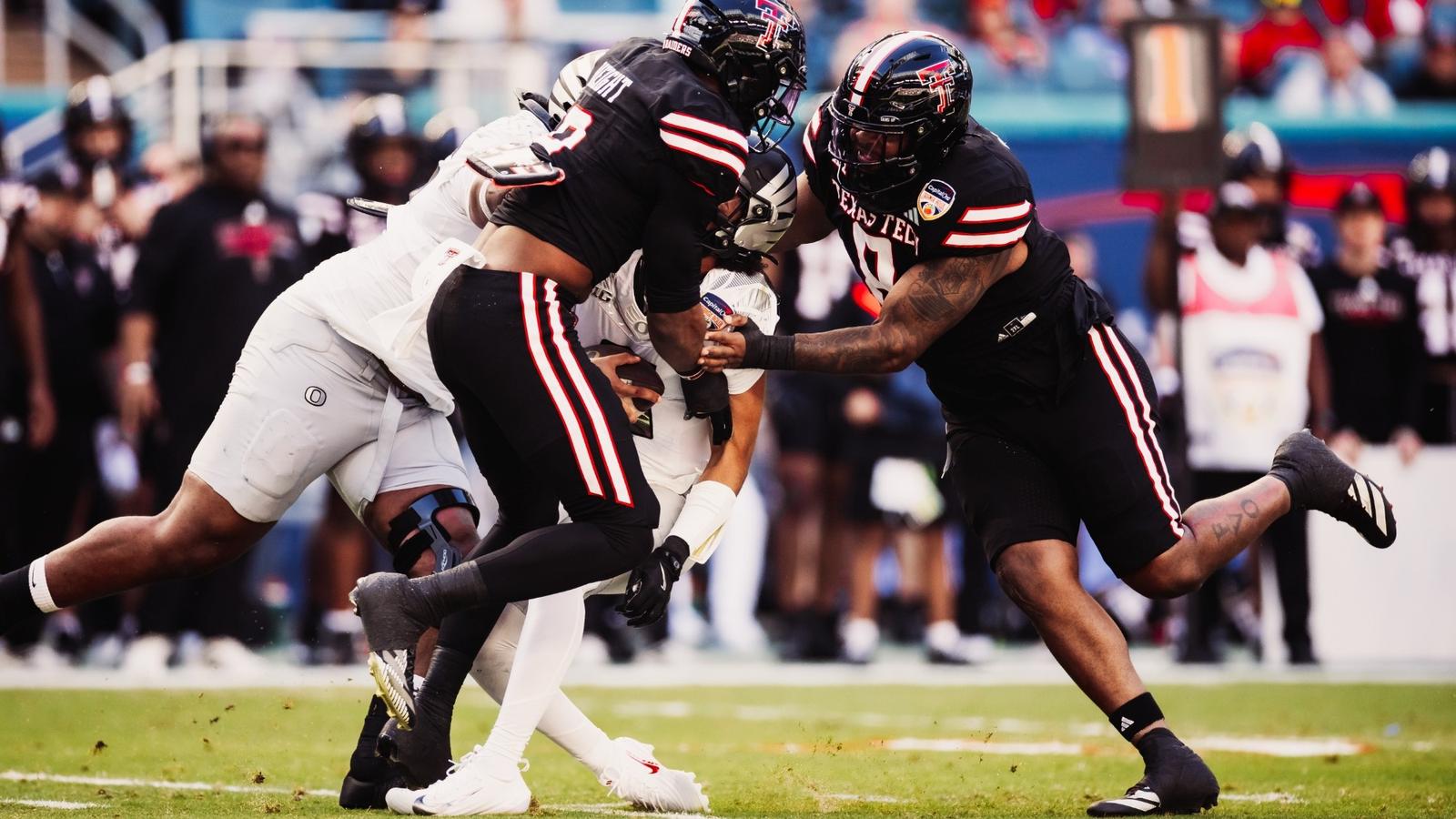
Dante Moore threw for 234 yards and Atticus Sappington kicked three field goals for Oregon (13-1), which will play either No. 1 Indiana or No. 9 Alabama in the Peach Bowl — a CFP semifinal — on Jan. 9.
The Peach Bowl winner will be back in Miami Gardens for the national title game on Jan. 19.
Texas Tech — which finished at 12-2 — came into the day second nationally in points per game (42.5) and fifth nationally in yards per game (480.3) but got nothing going. The Red Raiders turned the ball over four times, were stopped on fourth downs three other times and had four three-and-outs.
Tech quarterback Behren Morton — who finished 18 of 32 passing for just 137 yards — was stripped by Uiagalelei early in the third quarter in Red Raiders territory. Uiagalelei rumbled deep into the red zone and Davison scored one play later to make it 13-0.
Morton threw a red-zone interception early in the fourth quarter and a fourth-down stop from their own 30 midway through the fourth quarter doomed whatever comeback chances existed for the Red Raiders. Davison plunged in from the 1 with 16 seconds left to cap the scoring.
It was the sixth quarterfinal under this 12-team tournament format that started last year — there were two others coming later Thursday — and the sixth time that the team coming off an extended break lost to a team that played a first-round game.
In 2024, Boise State (against Penn State), Arizona State (against Texas), Georgia (against Notre Dame) and Oregon (against Ohio State) all went out in the quarterfinals after first-round byes. Miami added to that list Wednesday night, beating Ohio State in a quarterfinal at the Cotton Bowl. In those six games, including Thursday, the team with the bye has held the lead for less than five minutes — combined — of regulation.

Florida quarterback DJ Lagway finished the 2025 season with 2,264 passing yards, 16 touchdowns and 14 interceptions, while adding 136 rushing yards, a 63.2% completion rate and a 127.0 passer rating.
His year featured flashes of high-end upside, including a three-touchdown season opener against Long Island and multiple 250-yard passing performances, but was also marked by turnover-heavy outings, most notably a five-interception game against LSU.
The Gators finished 4–8 (2–6 SEC) in 2025, underperforming under head coach Billy Napier, who was fired on October 19 following a 3–4 start. Florida hired Jon Sumrall as his successor on November 30.
That instability, combined with reportedly awkward early meetings between Lagway and the new staff, preceded his decision to explore other options, which he announced his plans to enter the transfer portal on December 15.
A 2024 five-star recruit out of Willis (Texas) High, Lagway arrived at Florida as a high-profile prospect — a Mr. Texas honoree, Elite 11 participant and the nation’s No. 1 quarterback in the 247Sports rankings.
He started as a true freshman in 2024, completing 59.9% of his passes for 1,915 yards, 12 touchdowns and nine interceptions, then showed modest improvement in 2025, with his elite prep pedigree keeping him among the top quarterbacks in the transfer portal.
On Tuesday, transfer-market analyst Chris Hummer relayed updated reporting that growing interest in Lagway has come from Stanford and Florida State, alongside previously noted links to Baylor and Louisville.

Stanford finished 4–8 in 2025, in a season that exposed offensive struggles and significant turnover, including the loss of head coach Troy Taylor before the year and multiple key offensive players entering the portal, such as running back Cole Tabb, offensive tackle Jack Layrer, and wide receivers Jason Thompson and Myles Libman.
With senior starter Ben Gulbranson set to move on, several outlets have projected Stanford to pursue a portal quarterback, making a veteran, NFL-style, pro-concept passer like Lagway an appealing immediate option.
Florida State reshaped its quarterback room in 2025 by adding former Boston College quarterback Tommy Castellanos through the portal, but his subsequent declaration for the 2026 NFL Draft has reopened a clear need at the position.
Given the Seminoles’ offensive profile and proximity to Gainesville, Florida State would represent another logical landing spot for Lagway.
Lagway’s NIL valuation is also among the highest in college football, with On3’s NIL tracker listing it at $2 million, driven by deals with brands such as Gatorade, Jordan Brand, Nintendo and Red Bull.
That financial profile can enhance his appeal to programs capable of supporting or expanding his brand, making NIL infrastructure a meaningful factor in both team interest and his ultimate decision.
Read More at College Football HQ
- Major college football programs linked to underrated transfer portal prospect
- No. 1 transfer portal QB clearly linked to two major college football programs
- College football’s leading passer linked to two programs in transfer portal
- First-team All-Conference college football starter enters transfer portal
NIL
Ty Gregorak on the state of college football + MSU heading to national championship – Skyline Sports

Curt Cignetti contract clause takes effect after Indiana’s College Football Playoff semifinal berth

Short on starters, Nets lean on youth in 120-96 loss to Rockets | Nba

Yamaha awards six outdoor adventure grants to local teams | Sports

Ricky Thornton Jr. Racing For Adam Family At Wild West Shootout

New Arkansas football GMs rise up the ranks in College Football’s new era

Emerald Acres Volleyball Tournament | MyRadioLink.com

NASCAR legend set strict rule before daughter’s Tulsa Shootout debut – Motorsport – Sports

Former Illini basketball sharpshooter Luke Goode engaged to Illinois volleyball star Kayla Burbage

Watkins Glen International Statement on the Passing of Michael Printup – Speedway Digest

Hawkeyes Knock Down Nebraska – Iowa Hawkeyes Athletics

Player pay and transfer portal put college sports in new territory

No. 4 Tech falls to No. 5 Oregon in the Orange Bowl

NASCAR predicted to have paid big to end antitrust lawsuit – Motorsport – Sports

Dallas Pulse set to make history in season opener at Comerica Center

Looking back at top local sports moments of 2025

SoundGear Named Entitlement Sponsor of Spears CARS Tour Southwest Opener

Donny Schatz finds new home for 2026, inks full-time deal with CJB Motorsports – InForum

Black Bear Revises Recording Policies After Rulebook Language Surfaces via Lever

David Blitzer, Harris Blitzer Sports & Entertainment

How Donald Trump became FIFA’s ‘soccer president’ long before World Cup draw

DeSantis Talks College Football, Calls for Reforms to NIL and Transfer Portal · The Floridian
Elliot and Thuotte Highlight Men’s Indoor Track and Field Season Opener

Rick Ware Racing switching to Chevrolet for 2026

JR Motorsports Confirms Death Of NASCAR Veteran Michael Annett At Age 39

#11 Volleyball Practices, Then Meets Media Prior to #2 Kentucky Match

Colleges ponying up in support of football coaches, programs

Nascar legal saga ends as 23XI, Front Row secure settlement
West Fargo volleyball coach Kelsey Titus resigns after four seasons – InForum

Maine wraps up Fall Semester with a win in Black Bear Invitational

Temple Begins Indoor Track & Field Season at UPenn This Weekend





-
 Sports3 weeks ago
Maine wraps up Fall Semester with a win in Black Bear Invitational
-

 Motorsports2 weeks ago
Ross Brawn to receive Autosport Gold Medal Award at 2026 Autosport Awards, Honouring a Lifetime Shaping Modern F1
-

 NIL3 weeks ago
Nike Signs 10 LSU Athletes to NIL deals
-
NIL3 weeks ago
Georgia football’s Dontrell Glover, Bo Walker arrested for shoplifting
-

 Rec Sports2 weeks ago
Stempien to seek opening for Branch County Circuit Court Judge | WTVB | 1590 AM · 95.5 FM
-

 Rec Sports2 weeks ago
Princeton Area Community Foundation awards more than $1.3 million to 40 local nonprofits ⋆ Princeton, NJ local news %
-

 Rec Sports3 weeks ago
Hillsborough Democrats announce 2026 committee slate
-

 NIL3 weeks ago
Meet The Two Oregon Freshmen Ready To Make Ducks History Under Dan Lanning
-

 Motorsports2 weeks ago
PRI Show revs through Indy, sets tone for 2026 racing season
-
 Sports2 weeks ago
Young People Are Driving a Surge in Triathlon Sign-Ups