
We’ve entered the top five of the mid-season 2025 Purple Row Prospects (PuRPs) list. Previously we had PuRPs 30-26, 25-21, 20-16, 15-11, and 10-6. As a reminder, in this edition of the PuRPs poll, 23 ballots were cast, with 30 points granted for a first place vote, 29 for second, etc.
Sports
Colorado Rockies prospect rankings, mid


For each player on the PuRPs list, I’ll include a link to individual stats and contract status (via Baseball-Reference), PuRPs voting stats, a note on the 2025 season to date, and a scouting report from a national prospect writer where possible. I’ll also include where I put each player on my personal ballot. All ages are as of the date the article is posted.
5. Brody Brecht (577 points, 23 ballots) — Preseason Ranking: 6 — High Ballot 1 (1), Mode Ballot 2
How did he enter the organization?
2024 Compensation Round A, University of Iowa
Why did he make the PuRPs list?
The statuesque Brecht, a 6’4”, 235-pound, 22-year-old right-hander has taken on the mantle of becoming the Rockies’ highest-ranked (and highest-ceiling) pitching prospect. Brecht could have been an early draft pick coming out of high school in 2021, but he wanted to play college football as a receiver at Iowa. When that didn’t work out as hoped (due in part to concussions), Brecht concentrated on baseball full-time starting as a sophomore. He showed enough promise on the mound to earn an over-slot (by $250k) $2.7 million bonus from the Rockies as the 38th-overall pick of the 2024 draft. What kind of promise? How about a high-80s slider that most scouts consider to be plus-plus and a fastball that touches triple digits? The rub of course is below average control of the fastball in particular.
In his sophomore year at Iowa, Brecht struck out 109 batters (nearly a third of those he faced) but walked 61 (7.1 BB/9). Though there was some improvement in his draft year (5.6 BB/9 rate), it’s a major reason the Rockies were able to get Brecht with pick 38 rather than the top 10. Speaking of that draft year: Brecht again struck out a bunch of hitters — 128 in 78 1⁄3 innings pitched, which is 37% of batters faced and a 14.7 K/9 rate — while compiling a respectable 3.33 ERA.
In his first professional season, the Rockies sent Brecht to Low-A Fresno, where he is about league-average age. The Rockies are keeping Brecht on a pitch count (he hasn’t eclipsed 72 in a start this year), so it’s of no surprise that he also hasn’t gone deeper than five innings into any of his 13 starts with Fresno. Those 13 starts were split into two periods by an injured list stint that kept Brecht away from the California League for over two months, though he made four brief rehab appearances with the complex league team.
When he has been on the mound for Fresno, Brecht has shown the bat-missing stuff that got him picked in the top 40 of the draft. In 42 2/3 innings with Fresno, Brecht has a 3.16 ERA (3.01 xFIP), 1.36 WHIP, 14.6 K/9 rate, and 4.9 BB/9 rate. Basically, 50% of plate appearances against Brecht this year have ended up as a strikeout (37%) or a walk (12%). Brecht’s August 16th start was his deepest foray into a game yet, as he threw five innings while allowing an unearned run on three hits and two walks while striking out four in 66 pitches.
Here’s Brecht in action for his second professional start this spring in Fresno (game action starts at the five minute mark, side views of his delivery are at the 14 minute mark, and slo mo shots begin at the 16 minute mark):
What do the scouts say?
Eric Longenhagen of FanGraphs ranks Brecht 3rd in the system as a 45+ FV player after ranking him 13th overall among draft prospects, complete with an 80 future grade on the slider (70 present), a 60 future fastball grade, and a 55 future splitter grade:
Walks have been an enormous problem for Brecht. He had more walks than inning pitched as a freshman, and 135 walks in 178 career innings for the Hawkeyes. He also had among the best stuff in the 2024 draft class, and has a rare combination of physicality and athleticism.
Brecht will sit 96 (he was 95-98 during instructs) and has touched 101. He has a relatively short stride down the mound for someone as big and athletic as he is, and his generic three-quarters slot has a negative impact on his fastball’s shape and movement. It plays well below an average pitch even though it has plus-plus velocity. Whatever can be done to help Brecht command his fastball or improve its movement will ideally be implemented without altering his slider, which is an 80-grade SOB that evokes Dinelson Lamet‘s upper-80s power breaker. Brecht also has a goofy low-90s changeup with big tail and fade. His secondary pitches diverge in such a way that makes it hard to stay on both of them at the same time.
Built like a marble statue at 6-foot-4 and 235 pounds, Brecht hasn’t been focused on baseball for very long and also hasn’t yet been in a developmental environment that can max him out, though that might still be true because Colorado’s developmental track record for arms isn’t great. The gap between where he is as a pitcher right now and what he could be is very large. There is precedent for teams solving issues like Brecht’s (Carlos Rodón’s command was a mess, too, though maybe not this bad), and he has enormous upside if someone can. Those right tail outcomes are absolutely baked into his FV grade, as is Brecht’s risk. At worst, Brecht looks like a potential late-inning reliever who works off of his secondary pitches more than his fastball. He could be a three-pitch mid-rotation stalwart if he and Colorado can find better control.
Brecht was ranked 21st overall in the 2024 draft by MLB Pipeline and they rank him 5th in the system as a 50 FV player with plus-plus (70) grades on both the fastball and slider (and a 50 grade on the splitter):
Brecht’s fastball and slider combination are downright nasty when he’s locked in. His fastball sits in the 96-99 mph range and he touches triple digits. It can have good running action to it, though he struggles to locate it and it can straighten out. His slider is virtually unhittable, thrown up to 91 mph with a lot of horizontal and vertical action, eliciting a 56 percent miss rate last year. He doesn’t throw his low-90s splitter very often and he doesn’t have great feel for it.
The biggest hurdle for Brecht to clear will be his command and control, as he left Iowa with a career 6.8 BB/9 mark. The cause for optimism on that front — fueling the belief that he can develop into being a mid-rotation starter — is that he’s a premium athlete and is committed to being more than just a pure thrower. There’s reliever risk for sure, but he could also take a huge step forward with more insightful instruction.
Jeffrey Paternostro of Baseball Prospectus ranked Brecht 9th in their January system ranking with a 50 OFP grade:
Brecht can show you absolutely dominant stuff at times: triple-digit heat, a plus-plus slider, a developing split for a platoon neutralizing option. Yeah, even that description sounds a little relieverish—although the delivery is fine for a starter even in a more traditionalist framework of starting pitching mechanics —but you don’t have to squint hard to see a top-of-the-rotation arm…at times. At other times the fastball isn’t close to the zone, the slider is being shaped too much arm-side (or isn’t close to the zone) and the split is just too firm. Brecht walked almost six per nine in the Big Ten year, and that was a career best mark. I’m probably the high person on staff when it comes to Brecht, because he doesn’t need that much more command to make this work in the middle of a rotation or the ninth innings. You’d like to tweak the fastball shape some too, but 98 mph is 98 mph, and when he is locating it up, it’s effective. The Rockies have even gotten some pitching development gains lately, so this is a better landing spot for Brecht than it might have been 5-10 years ago (Coors Field aside), but the club also probably see him through the lens of scouting from that time period, which means they might just see a future ace. I can squint as hard as I want and not see that right now though.
Brecht is just a grade (or two) of command away from being a really good pitching prospect. Throw in another grade of fastball shape and he’d be one of the top ones in the draft class. But there’s more of those types or arms nowadays than there used to be, and a vanishingly small percentage of them ever get either of them.
Keith Law of the Athletic ranked Brecht 16th among 2024 draft prospects and earlier this month placed him 9th in the system:
Brecht was Colorado’s second pick in the 2024 draft (the No. 38 pick), a great selection given how good his pure stuff is, even if he’s still raw as a pitcher. Brecht played baseball and football at Iowa, only giving up the sport with the concussions after his sophomore year so he could concentrate on pitching, but he’s still a work in progress on the mound. He runs it up to 99-100 as a starter, sitting 97ish with ease, and his slider is plus. Of course, there’s a “but” coming — he doesn’t repeat his arm action and as a result he has always had high walk totals, including 14.2 percent in his draft year for the Hawkeyes. He did improve down the stretch in that area; in five of his last six starts, he went seven-plus innings and walked only two or three per start, which is big progress. He also needs to develop a third pitch, trying a split-change near the end of the season. He’s like a high school pitcher in a giant, 22-year-old body, and you can dream on a No. 2 starter outcome, a high-leverage reliever, or — well, this isn’t a good dream — a guy who never makes it because he can’t stop walking batters.
When’s he going to get to the Rockies and how good will he be once he’s there?
In terms of pure stuff and ceiling, Brecht is by far the best Rockies pitching prospect. His slider is probably the filthiest pitch in the system and his fastball is likely the best in the org as well. Of course, to reach that top of rotation ceiling, he’ll need to demonstrate sufficient command to get upper minors hitters out and go deep into games regularly. If he isn’t able to do that, Brecht’s stuff still works in a high leverage relief role as a fallback.
It’s an exciting profile to be sure, though of course the risk is high that Brecht busts to some degree. After all, he’s still in Low-A, walking nearly five batters per nine innings, and has yet to hold a starter’s workload over a full year. Still, I ranked Brecht third on my list as a 50 FV player as a raw high upside starting pitcher or late inning reliever. Brecht should move up to High-A next year, where perhaps some of those questions about the profile will be addressed. An arm like this is worth a little extra time to bake, so I’d estimate a 2-3 year timeline from now for Brecht to the big leagues (if he’s a starter).
4. Kyle Karros (579 points, 23 ballots) — Preseason Ranking: 12 — High Ballot 3, Mode Ballot 7
How did he enter the organization?
2023 Fifth Round, UCLA
Why did he make the PuRPs list?
Just over two years after being drafted in the fifth round (signing for a slot bonus of $433.5k) and being known only as the son of noted Rockies-killer Eric (career line .320/.380/.619 against Colorado), Karros seems very likely to be Colorado’s Opening Day third baseman next year after succeeding at every level the Rockies have sent him to. That very much includes Major League Baseball so far, to the point that I don’t think the 23-year-old 6’5” righty-hitting third baseman will be eligible for the pre-season 2026 PuRPs list.
While Karros didn’t exactly come out of nowhere in 2024, his performance in High-A Spokane that year, where he was 1.5 years younger than league average, very much put his name on national prospect radars. Karros was a star offensively from the start, getting named the Northwest League player of the month in April — and that wasn’t even his best month by OPS (he had a .973 OPS in April, a 1.054 OPS in July, and a 1.033 OPS in September). Karros led the Northwest League in all of the BA/OBP/SLG categories as well as RBI, hits, extra-base hits, total bases, and doubles.
That was certainly enough to win Karros the Northwest League MVP award. Beyond that, Karros was stellar on defense, earning a Gold Glove when evaluated against all other minor league third basemen. He even drove in the walk-off championship game winning run for Spokane (though it was a HBP). As for the stats that won those awards, Karros hit .311/.390/.485 with 15 HR and 35 other XBH (33 doubles) with 12 steals in 17 attempts in 539 plate appearances, good for a 145 wRC+. Those 15 homers bested the entire output Karros had in his three-year college career. He walked in 10% of his PA and struck out in 23%. In 116 games at third, Karros committed 10 errors but obviously impressed with his defense. In February, Purple Row’s Joelle Milholm wrote about the magical season Karros had in 2024 and why the Rockies kept him at the level all season.
This year, Karros was a non-roster invitee to big league Spring Training and was sent to Double-A Hartford, where he was 1.5 years younger than league average. In 234 plate appearances with Hartford (interrupted by a monthlong IL stint that cost Karros most of May), Karros continued to smack the ball against upper minors pitching, hitting .294/.399/.462 with four homers among his 23 extra-base hits with seven steals (150 wRC+). That was enough for the Rockies to promote Karros in mid-July to Triple-A Albuquerque, where he was 4.8 years younger than league average.
Karros didn’t waste time in Albuquerque, hitting .306/.368/.500 with two homers among his seven extra-base hits in 68 plate appearances across 16 games (105 wRC+). First the Ryan McMahon trade in late July and then injuries to Thairo Estrada and Orlando Arcia in early August opened up regular reps at the hot corner for the Rockies, so Karros got a call to the Show on August 8th. In 12 games with the Rockies, Karros has looked like he belongs in MLB, hitting .270/.386/.432 (120 wRC+) in 44 plate appearances with a home run (hit with his dad in the stands) and three doubles while playing strong defense. In fact, Karros has produced 0.4 rWAR already, which ranks him 12th on the team this season.
Despite his success so far as a professional, there’s a dearth of scouting video on Karros, so please enjoy him hitting two homers, including a walk-off, in a game for Hartford:
What do the scouts say?
If Keith Law of the Athletic were a PuRPs voter, he’d have been tied for the high ballot on Karros, ranking him 3rd in the system as a player who just missed the top 100 overall in February:
[Karros’s] average, OBP, and slugging for Spokane in 2024 were all better than any single-season result he had at UCLA. Part of the change is that he started driving the ball the other way more often, going with the pitch rather than trying to pull pitches on the outer half or third. He also became more aggressive as a hitter, swinging more often, trading more whiffs for more extra-base hits; he hit eight doubles in 44 games as a college junior, then hit 33 doubles in 123 games last year in Spokane.
He led the Northwest League in all three triple-slash stats, and could have gone to Double-A Hartford by midsummer, although the Rockies wanted him to stick with Spokane as they pushed for the league title. He’s a plus defender at third with great instincts on both sides of the ball. His OBP does mask some of his pitch recognition issues — he doesn’t chase a ton, but when he does, he almost never connects, especially with offspeed stuff, and getting him to understand what pitches he can and can’t reach with his long arms is going to be his main developmental challenge. He could be an above-average regular if he does, given the defense and the potential for 40-50 doubles with double-digit homers.
Karros is graded by MLB Pipeline as a 45 FV player and ranks 10th in Colorado’s system, highlighted by a plus grade on his throwing arm:
Karros had made some adjustments in his setup at the plate with the Bruins before he got hurt and they’ve transferred well thus far. He absolutely punishes fastballs and has shown an ability to make hard contact to all fields. He’ll have to improve his ability to do damage against breaking stuff, but overall kept his strikeouts in check and drew a healthy amount of walks. It’s more extra-base thump than home run juice right now, but he can hit the ball out more to his pull side and has shown some ability to backspin the ball the other way.
Karros’ defense at third base for Spokane was good enough to earn him a Minor League Gold Glove Award, with a plus arm and solid agility, especially given his 6-foot-5 frame. The instincts of someone who grew up around the game stand out, and a little more strength to provide more impact could make him a regular at the hot corner in the future.
John Trupin of Baseball Prospectus ranked Karros 14th in January:
A swing adjustment for the 6-foot-5, 225 Karros could not have had a much more resonant endorsement than going .311/.390/.485 for a 131 DRC+ with quite pleasing strikeout and walk rates in the Northwest League at age 21. With a shortened, simplified swing, the son of former Dodgers standout Eric is now accessing his power more consistently by, at least to the eye, focusing slightly more on contact over bat speed. While this is counterintuitive to some degree, for a player like Karros whose raw power is prodigious thanks to his physicality, a max-effort swing is not essential. That’s not to say Karros cannot whip his bat through the zone, however by shortening his path to the ball, his other skills have shone through. His leggy, loping gait looks at times like a giraffe testing its legs for the second or third time, however it is effective. Karros’ strong arm and athletic movements helped him put together an extremely impressive defensive showcase at the hot corner.
As a counter-balance to the above reports, Karros is just a 40 FV player for Eric Longenhagen at FanGraphs, ranking 16th in the system with a plus grade on his arm and a future plus grade on fielding:
[Karros] hit .311/.390/.485 in his first full season, another of the Rockies’ recent college draftees who put up monster numbers at hitter-friendly Spokane in 2024. Karros is very likely not that good a hitter. He’s a stiff-legged athlete whose upright manner of swinging leaves him very vulnerable to secondary stuff at the bottom of the zone. Karros’ carrying tool is his third base defense. He’s not explosive or rangy, but he’s incredibly smooth and capable of making great throws from all kinds of odd platforms. It’s important for Karros to add strength to his 6-foot-5 frame, as he needs to develop power to counter a below-average contact projection. That and the introduction of other corner positions on defense are key developmental variables to watch as Karros treks toward a four corners bench role.
When’s he going to get to the Rockies and how good will he be once he’s there?
Though nothing is certain, Karros sure looks like the present and the near future at least for the Rockies at the hot corner. He’s a polished defender, an accomplished hitter who has walked 16% of the time so far in the majors, and though he doesn’t have cartoonish power, he has been able to consistently do damage to advanced pitching. National scouts don’t have Karros higher in their evaluations because they don’t see a star projection with Karros. Even if he doesn’t have that extra gear, a good all-around player like Karros profiles to be would be a major win for the Rockies at a position in the system that is low on PuRPs. I ranked him sixth on my ballot as a 45 FV player, which equates to a second division regular role.
3. Robert Calaz (589 points, 23 ballots) — Preseason Ranking: 5 — High Ballot 2, Mode Ballot 4
How did he enter the organization?
2023 International Free Agent, Dominican Republic
Why did he make the PuRPs list?
Calaz seemed at the end of 2024 to be on a rocket ship toward the big leagues after a season in which he was named the MVP of the Arizona Complex League and tore up the Low-A California league in a small sample. Instead, this season has seen the 6’2” toolsy right-handed 19-year-old Dominican outfielder repeat in the California league and perform at an above average (but not elite) level as one of the youngest players in the league. Calaz, who was 24th on MLB.com’s international amateur free agent prospect rankings for 2023, received Colorado’s top international signing bonus in the 2023 January period at $1.7 million, which is similar to what fellow PuRP Sean Sullivan received as a second-round pick in the 2023 MLB Draft.
Calaz began his professional career with a bang in the Dominican Summer League, producing a 149 wRC+ and playing center field with a bit of right field mixed in. In 2024, Calaz came stateside to play with the Arizona Complex League and flat-out murdered the ball. In 210 PA with the ACL team, Calaz hit ten homers among his 27 extra-base hits with 12 steals in 13 attempts en route to a monster .349/.462/.651 line, good for a 172 wRC+. He led the ACL in several major offensive categories (AVG/OBP/SLG/OPS/HR/RBI/TB) en route to a well-deserved league MVP award. The Rockies promoted Calaz to Low-A Fresno after the ACL season in early August, where he was 3.1 years younger than league average. That didn’t stop Calaz — he hit .327/.386/.571 with two homers, two triples, two doubles, and three steals in 57 plate appearances (147 wRC+).
This year, the Rockies chose to send Calaz back to Fresno for a longer run, where he is still 2.3 years younger than league average. The season started inauspiciously, as Calaz suffered an injury in the first game of the season that knocked him out for three weeks. In 364 plate appearances, Calaz is hitting .270/.339/.413 with nine homers among his 26 extra-base hits. Calaz has performed above average offensively (108 wRC+), but not nearly as high as Rockies fans were expecting considering his performance in 2024 at the same level.
Additionally, Calaz is striking out in 28% of plate appearances (8% walks), which is pretty high for low minors pitching (he has improved his contact % from 66% to 70% this year). It is of course important to remember that Calaz has only faced a younger pitcher than him in 6% of plate appearances so far, but at some point Calaz will need to figure out how to beat upper minors pitching that can execute a scouting report. In the field, Calaz has split time between right field (58 games, four assists, 7 errors) and center (24 games, two errors).
Here is a look at Calaz from 2024 in Fresno, including some slow-mo looks at his swing:
What do the scouts say?
Baseball Prospectus put Calaz 49th on their pre-season top 101 prospects list in January. That ranked third in the system, where Calaz was given a 60 OFP grade by Jeffrey Paternostro:
Calaz seemed a pretty easy scout last year, but nevertheless we underranked him. He hit the ball incredibly hard for a 17-year-old, but his contact rate in the DSL suggested better pitching would really undo his swing. Well, he came stateside and hit the ball incredibly hard for an 18-year-old, but made more contact than we expected in the process, making it all the way to full-season ball by the end of the 2024 season. It’s a pretty simple setup with a high back elbow creating a steep swing path that can really do damage in the air when he barrels one in the zone, but while Calaz’s ‘A’ swing is impressive, there’s really no ‘B’ swing a lot of the time, which can lead to in-zone whiff if the pitch isn’t where he expects, or topped/mishit contact even when he tracks it all right.
The thing is, even Calaz’s mishits sound loud, and there just aren’t a lot of teenaged prospects with this combination of damage potential and minor league production, even if it’s come only in the complex and Cal League. I think there is more in the tank here, too. Calaz has already reshaped his body some from last season—not really a surprise for a 17-year-old getting his first couple seasons of professional S+C work—and I’m more confident he will add even more strength and stick on the grass than I was at this time last year. It’s far more likely to be right field than center—he split time at both in 2024—but that’s better than first base or DH, and while the contact rate is still concerning, if he can maintain even this for another year at a higher level, Calaz will be one of the premier outfield prospects in baseball.
Calaz continues to show impressive power for his age, now we just need to see if he can hit upper-minors pitching in a year or two. That’s not that hard, tell ‘em Wash.
MLB Pipeline ranks Calaz 4th in the system as a 50 Future Value player, highlighted by a 55 power grade and 50 grades on every other tool:
[Calaz] managed to win the ACL Triple Crown without really having an idea of what he’s doing at the plate yet. Already strong and physical, Calaz hits the ball about as hard as anyone in the system, posting elite-level exit velocities, with tremendous raw power he’s still learning to tap into. He draws walks but still needs to tone down his swing tendencies as he is susceptible to breaking stuff away and out of the zone in particular.
The Rockies feel like Calaz is starting to show the makings of being a five-tool player and he’ll continue to get reps in center field. Most feel that his 6-foot-2 frame will continue to fill out and he’ll slow down more, necessitating a full-time move to right field, where his power production should profile perfectly.
Keith Law of the Athletic ranked Calaz 6th in the system in February:
Calaz is a five-tool player who led the Arizona Complex League in batting average, OBP, and slugging, as well as homers and something called RBI, I don’t really know what that stands for or why we would care about it. Anyway, he’s incredibly talented physically but his baseball acumen lags behind his tools, as he didn’t come into pro ball with much experience, which shows up on things like reads in center or running the bases. He’s a physical kid with broad shoulders and is going to end up really strong, while he’s already showing power the other way and will at least take some pitches. He did steal 15 bases in 16 attempts last year in 62 games between the complex and Low A, but he runs closer to average than plus, with a lot of effort to the way he does it, a sign he’ll probably end up just a 50 runner. He is in center now and should stay there as long as he’s able; the 30-homer upside is too good to pass up.
Eric Longenhagen of FanGraphs ranks Calaz as a 40+ FV player (8th in the system), highlighted by a plus-plus future grade on his raw power, a plus arm, and even a plus future fielding grade:
Calaz had among the best present raw power in the 2023 international signing class and he has reinforced that assessment so far in pro ball, as he has 19 homers in 105 career games and has posted peak exit velocities (113 mph max, 109 EV90) that would be plus on the big league scale, let alone for a teenage hitter. He clubbed his way off the complex in 2024, spending the final three weeks of the season at Low-A Fresno, and is now a career .336/.436/.603 hitter with 54 extra-base hits in 105 mostly rookie-level games.
The power aspect of Calaz’s profile is for real. Perhaps what is most absurd is how much thump he can generate without a leg kick — he starts with a very wide stance and uses just a little toe tap to get going. A very loose athlete, Calaz rotates with verve and ferocity, but in order to do so, his hips often clear very early, leaving him vulnerable to sliders away from him. This is a pretty serious issue already. Calaz ran a paltry 66% contact rate in 2024, worse than all but one qualified big leaguer (Zack Gelof). There are a handful of very toolsy whiff-prone power hitters in that contact rate area, including Christopher Morel and Logan O’Hoppe, both of whom are sound build/frame comps for Calaz. And Calaz projects to have raw power similar to other players in that group, like Brent Rooker and Adolis García. There’s 35-homer ceiling here, but there’s also a lot of bust risk because of how many rookie-level strikeouts we’re talking about.
When’s he going to get to the Rockies and how good will he be once he’s there?
Calaz has that five-tool juice and he has displayed them through Low-A. Calaz is settling more into a right-field role than center and has some big contact rate questions. At the end of the day, plus right-handed power is tough to come by, and the big signing bonus Calaz got is proof positive of its market value.
Calaz is clearly a high ceiling player who is a few years away (my bet is a late 2028 debut at age 22) — we’ll see how his plate approach develops as the opposition improves. Yanquiel Fernandez has some similar traits and in multiple cases took steps forward in repeat assignments. Calaz will likely spend 2026 in High-A Spokane as a 20-year-old. I ranked Calaz fifth on my list as a 45 FV player because of the performance, signing bonus, and his ability to stick in the outfield, though I am leery of the contact rate struggles.
Check back on Monday to see how the top two shook out!

Continue Reading
The survey has been distributed today (27th December) to club administrators, with spot prizes of two balls given out at key milestones.
The survey takes just 15 to 20 minutes to complete, and, by participating, your club is helping to shape the future direction of the sport in this country.
To complete the survey, check your club’s admin email inbox for the relevant link.
“The information gleaned from the Club Survey remains invaluable in shaping Volleyball England’s future planning and delivery,” said Oliver Hudson, Volleyball England’s Project lead for Data and Insights.
“The more clubs who are able to give their thoughts and opinions, the easier it is for us as the national governing body to respond to the needs of the sport, so we’re always extremely grateful to those clubs that fill out the survey.”
The survey will remain open until 31st January 2026, after which the data will be anaylsed and key findings communicated across the organisation and its sub-groups before a summary of findings will be released to clubs.
If you have any questions or need assistance with the Club Survey, please email o.hudson@volleyballengland.org.
Sports
College track: Mount Pleasant’s Gabe Feldmann running with a purpose | The Hawk Eye – Burlington, Iowa
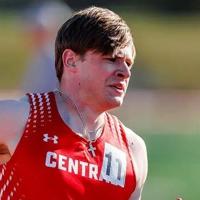
PELLA — Central College track and field junior Gabe Feldmann of Mount Pleasant hasn’t let cystic fibrosis slow him down on the track or his generosity off the track to raise support for the Cystic Fibrosis Foundation.
An inherited genetic disease, cystic fibrosis impacts the lungs, digestive system and other organs in the body. A build-up of thick, sticky mucus can lead to breathing problems, infections and digestive issues by blocking ducts and airways.
Depending on the weekend, Feldmann typically competes in races that range from the 200-meter dash all the way up to the 800-meter run. His focus is on the 400 meters, an event he has completed 13 times in his first two years at Central.
Breathing is an important part of all running events, but especially the 400.
“You breathe hard in a 400,” he said. “You feel it right in the chest.”
He completed the lap around the track in 51.62 seconds at the American Rivers Outdoor Championships in 2025, placing 22nd. He also was on the fifth-place 4×400-meter relay squad at that same meet.
Feldmann was approached by the Cystic Fibrosis Foundation about using his college athletic experience as a platform to raise money. Starting earlier this fall and running through the end of the Dutch season in early May, Feldmann is posting content on his Instagram account (@gabetracksdowncf) and thanking supporters who have donated to the foundation.
“It was the option that really stuck out to me,” he said. “I work out every day no matter what for track, but I’m still raising money doing what I do normally.”
He’s working towards clocking in at 48 seconds in the 400 this year.
“My goal is to run a 48 this year,” he said. “If I’m able to do that, I’ll be able to tell everybody who supported me in this that they were there with me.”
Raising money for the foundation is not new to the Feldmann family, who ran fundraising events in Mount Pleasant from 2016-2023.
Money isn’t the only motivation for Feldmann, who also wants to inspire other people with cystic fibrosis to chase big goals.
“I said I was never going to let being born with cystic fibrosis limit me.” he said. “I’ve been an athlete my whole life. If I could show any other kid that having cystic fibrosis doesn’t have to hold them back, that would be super cool. It’s the entire goal.”
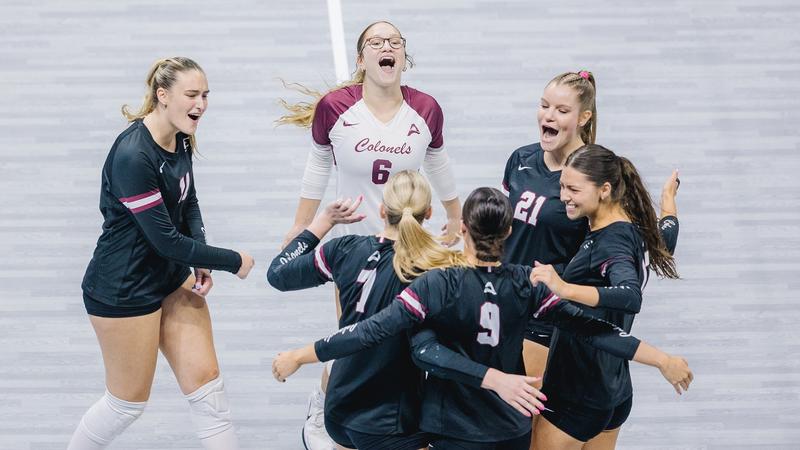
RICHMOND, Ky. – Eastern Kentucky University’s volleyball team has added two transfers for the 2026 season – Audrey Hudson, an outside hitter transferring from Wright State University, and Alexis Bull, a middle blocker/right side transferring from the University of Texas at Arlington.
“I’m so excited to add Audrey and Alexis to our program,” EKU Head Coach Johnna Bazzani said. “They both come from championship programs. That alone is going to help elevate and raise the standard in our gym!”
The 5-foot-10 Hudson will be a junior in 2026. In her first season at Wright State, she played in five matches before suffering a season-ending injury. In 2025, Hudson played in 18 matches and started three times. She averaged 0.83 kills and 1.62 digs per set.
Hudson, a Fort Wayne, Indiana native, played high school volleyball at Bishop Dwenger and club volleyball for Munciana. She helped Bishop Dwenger capture a 3A State Championship in 2020. She was a second team all-state pick in 2022 and a first team all-conference selection as a senior in 2023.
Bull will be a senior in 2026. She played in 42 matches over three seasons at UT Arlington. As a junior this past season, Bull averaged 1.03 kills and 0.66 blocks in 19 matches. She led the Western Athletic Conference (WAC) with an average of 0.41 aces per set. Bull had a season-best six blocks at Louisiana and a season-high seven kills against Jackson State.
The 6-foot-2 Magnolia, Texas native was a 4-year member of the AVCA Phenom Watch List during her high school career at Oak Ridge and Magnolia. She recorded 878 kills, 280 blocks and 123 aces during her prep career. Bull was chosen as First Team All-Montgomery County and as the District 19-5A Offensive Player of the Year in 2022.
EKU tied for second in the Atlantic Sun Conference standings this season and advanced to the ASUN Tournament championship match. The Colonels have won 20 or more matches in three straight seasons, the first time the program has accomplished that since 2003-05.
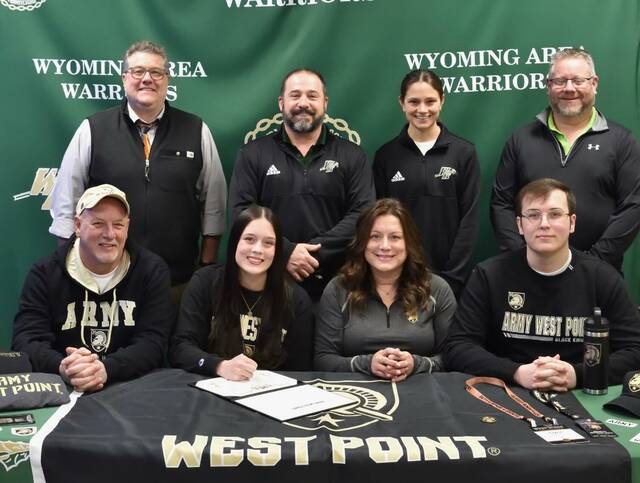
Taylor Gashi just needed to find the sport that gave her the best chance at achieving the goals for her future.
High-level youth gymnastics competition gave way to years of work on the volleyball court that continued even after a development in Gashi’s freshman year at Wyoming Area pointed her on the right path.
“With track and field, I kind of knew a few years back,” said Gashi, who on Dec. 15 formalized her commitment to attend the U.S. Military Academy at West Point and compete in the sport. “Volleyball has been a part of my life longer than track and field. Freshman year, I placed second in district for triple jump so that was kind of a wake-up call for my coaches and my family that this could probably go somewhere far.”
Gashi expects to concentrate on the long jump and triple jump while competing at Army West Point, but her overall athletic ability means she could potentially help the team in the heptathlon, a combination of events she tested and did well at with a Lehigh Valley club team last summer. As a junior at Wyoming Area, Gashi finished 20th in the state in Class 3A in the triple jump after taking silver medals in District 2 in the triple jump and discus and a bronze in the long jump.
Once Gashi realized track and field was her best option for a college sport, the rest fell into place.
“That same year, I also got to experience going to West Point for a football game,” she said. “One of my good friends brought me there. Both of my parents had been in the military, so the military was never something I was opposed to doing.”
Gashi learned more about the athletic program’s status on the National Collegiate Athletic Association Division I level, leading to her verbal commitment in September.
“It was kind of everything I had been looking for and track and field was something that could get me there,” she said.
Gashi will report to West Point for plebe summer, beginning her military duties before academics start next fall. Accepting her nomination to the academy means a five-year military commitment after she is done with school.
While at Wyoming Area, Gashi has kept busy not just in multiple events in track and field, but in multiple sports.
In volleyball, Gashi was a four-year starter, earning first-team, all-star status from Wyoming Valley Conference coaches this fall after previously receiving honorable mention.
After taking last year off, Gashi is back on the swim team this winter, specializing as freestyle sprinter.
Unsure of a major, Gashi has interest in looking into military intelligence and aviation.
“Those are the two that really strike interest for me,” she said.

He claimed victory in 19 of his 28 races, won multiple conference titles, and twice finished second at the NCAA Championships. He also ran a blazing fast time of 2:12 at the California International Marathon earlier this month, which earned him a spot in the 2028 Olympic Trials with one of the fastest times in D-III history. His goal is to win a national title. It is within reach.
However, the soon-to-be second-semester senior will not be eligible for his final season of competition.
The Augsburg track and field star is banned by the NCAA.
Mohammed Bati announced on Christmas Eve that he will not be allowed to finish out his career. He was deemed ineligible to compete during his final indoor and outdoor seasons with Augsburg.
The ruling stems from financial assistance.
Bati is a nursing major. He struggled to make ends meet while working overnight shifts at an assisted living facility. His options were to not pay his tuition and drop out of school or ask for help. He chose the latter.
The local community raised $6,000 for Bati to pay his tuition. That allowed him to continue at Agsburg but it also ended his track and field career.
“I don’t think some NCAA rules are fair to everyone. I want to share something real today.
Last semester I was struggling a lot with money. I didn’t want to drop out or stop going to school, and the community around me came together to support me. People helped me with around $6000 so I could pay for that semester. I’m still grateful for that it was love, it was support, not anything big or business or something bad. Just people helping someone who needed it.
But the NCAA saw that support and said it was a violation. Because of that, I can’t run indoor or outdoor this year. They said someone paying for my school breaks the rule. I understand that’s their rule, but I don’t think they look at the story behind it. Sometimes people get help because life is hard. Not everyone has money. Sometimes it’s just one moment, one time, trying to survive and move forward.
It feels sad that instead of seeing support as community love, it’s seen as something wrong. I didn’t get paid. I didn’t get something crazy. Just help to stay in school. And because of that, I’m not allowed to run. That part is not easy to accept. I worked hard. I love running. I wanted to run this season with my teammates, make memories in my last year.
But even with all this, I’m still grateful. I’m thankful for everyone who helped me, who believed in me. I’ve been through a lot in life, and this is just another challenge. It will not break me. I’m not disappearing, I’m still here, still training, still smiling, still fighting for my dreams.
Sometimes rules don’t see the human behind the story. But I hope one day, things like helping someone won’t be a reason to stop them from doing what they love.
Thank you to my community, thank you to everyone who supports me. I will keep going.”
— Mohammed Bati on Strava
There is one key detail to note here. Division-III athletes are allowed to earn money through NIL.
Athletes at any level can be paid for endorsements, sponsored posts on social media, appearances, etc. Everything goes as long as the compensation is tied to the commercial use of the athlete’s name or image.
Athletes cannot receive outside financial assistance that functions as tuition support or additional athletic benefit unless it fits within the specific financial aid structure or NIL guidelines set by the NCAA. Mohammed Bati’s $6,000 gift did not qualify. It was more like emergency financial support.
As a result, he will not be allowed to finish out his college track and field career.
The NCAA guidelines on NIL are supposed to to prevent a pay-for-play system, even though it has been abused to the fullest extend on the Division-I level. Especially for football and basketball. Some athletes are making seven-figure salaries through “NIL” agreements. Bati’s money was not tied to this kind of agreement so it was technically illegal.
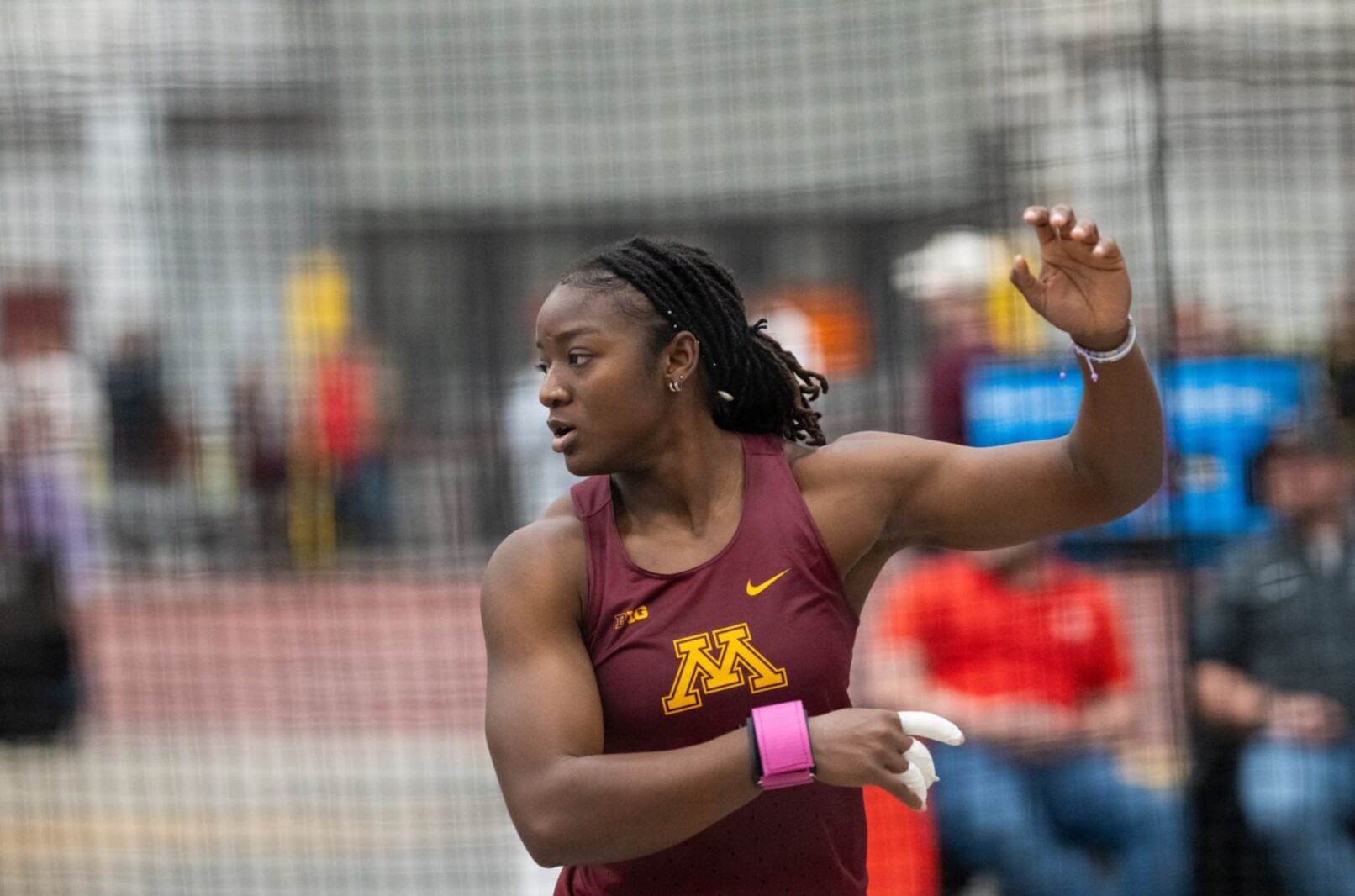
JAMESTOWN — If you know anything about Annie Nabwe, you know she is never satisfied.
Last May, Nabwe completed the University of Minnesota’s hammer throw sweep at the BIG 10 Championships. Nabwe, a Jamestown High School Class of 2022 grad, set a BIG 10 Championships meet record with a lifetime best throw of 69.85 meters (229 feet, 2 inches), which also goes down as a new Minnesota program record.
Prior to that, Nabwe earned her second-straight conference title in the women’s weight throw at the 2025 BIG 10 Indoor Track and Field Championships. Nabwe’s championship throw measured 24.22 meters (79 feet, 5 inches) — a personal best for the former Blue Jay. With the win, Nabwe became the fifth BIG 10 women’s weight thrower to defend her conference title and the first to do so since 2016 when two-time Olympian Kelsey Card of the University of Wisconsin went back-to-back.
Nabwe owns the NCAA No. 21 mark all-time in the weight throw and also holds the second-best indoor shot put mark all-time at the University of Minnesota at 56 feet, 6 1/2 inches.
Still — the former Blue Jay would categorize her second season with the Gophers as a “learning experience.”
“I had a lot of highs but also challenges both mentally and physically,” Nabwe said. “I didn’t finish exactly where I wanted, but that helped me grow more as a person and an athlete.”
What she’s growing into should scare her competition.
At the university’s M City Classic on Dec. 5, Nabwe secured wins in the weight throw and the shot put. Both of Nabwe’s winning marks in the shot put and weight throw were school records. Nabwe launched the shot 16.40 meters (53 feet, 9 3/4 inches) and the weight 23.74 meters or 77 feet, 10 3/4 inches.

Contributed / Annie Nabwe
“People should know that I am motivated, focused, committed and overall having fun,” Nabwe said. “I am thankful for the support that I have gotten from loved ones, teammates, coaches, and everyone who has supported me. I am grateful and excited to keep growing and to see what the future holds.”
Nabwe’s season-opening weight throw mark is more than 4 feet farther than her 2024 opening weight throw of 73-8. Nabwe’s mark in shot was also an improvement from last year’s opening indoor competition by nearly 2 feet.
On Dec. 9, the Big Ten tabbed Nabwe as the conference’s indoor track and field athlete to watch.
“People should know that I am ready, working hard, and I don’t give up easily,” Nabwe said. “They should know that every time I show up, I give my best.”
Her “best” is honed daily by the University of Minnesota’s training program.
Since the season officially began, Nabwe and her teammates weight lift on Mondays, Wednesdays and Fridays for four hours. On Tuesdays and Thursdays, team members lift for anywhere between 1 hour, 45 minutes, and 2 hours. On Saturdays, the team practices or lifts for about 90 minutes.
“A typical training session is based on my class schedule,” Nabwe said. “A normal, let’s say, Monday, I have practice at 8:30 (a.m.) so I wake up at 7, get ready and eat breakfast. Then I scooter over to practice, warm up with my teammates and have practice.
“After, I go home and if I have time to eat and shower, I do, then I have class from 11:15 a.m. to 12:30 p.m.,” she said. “I try to eat in between or after that class, because my next class is at 1 to 2:15 and after that class I have lift at 3. … After lift, I go to the trainer’s to get worked on and after that it’s about 5 o’clock. I go to the dining hall to eat dinner and then go home around 6-7 (p.m.) and do school work or if I do not have any I try to relax.”
The next competition on the docket for Nabwe is the Minnesota Open at the University of Minnesota on Jan. 10. The indoor season will conclude with the BIG 10 Indoor Track and Field Championships on March 13-14.
“My goals for this year are being more confident, being mentally tough and starting off competitively instead of laid back, breaking some records and winning titles,” Nabwe said. “These are all achievable because I have worked hard and I am in the position to do it. All I have to do is connect the pieces.”

Contributed / Annie Nabwe

Katie Ringer is a sports reporter for the Jamestown Sun. Katie joined the Sun staff in the summer of 2019 after graduating from the University of Wisconsin Eau Claire with a degree in journalism. She can be reached by email at kringer@jamestownsun.com or by phone at 701-952-8460.

Motorsports2 minutes ago
Penske celebrating 60 years in motorsports | Highlands News-Sun

Motorsports18 minutes ago
Kuwait Motor Sports Club achieves outstanding results

Rec Sports20 minutes ago
Shorthanded Orange drops Holiday Classic opening game to Incline, Nev. –

Rec Sports28 minutes ago
After Lennart Karl success, Bayern Munich CEO intends to lean heavily on youth talent

Sports32 minutes ago
Win Mikasa balls by filling in the 2025-26 Club Survey!

NIL33 minutes ago
Damon Wilson II vs. Georgia football battle could set NIL contract precedent

Rec Sports37 minutes ago
Holland named ASWA Finalists for 4A Lineman of the Year | Sports

Sports48 minutes ago
College track: Mount Pleasant’s Gabe Feldmann running with a purpose | The Hawk Eye – Burlington, Iowa

Sports49 minutes ago
EKU Volleyball Adds Two Transfers For 2026 Season

Sports1 hour ago
Wyoming Area’s Taylor Gashi commits to Army for track and field

Motorsports1 hour ago
Mini Bike Challenges Sport Bike to a Race – Drag Bike News

Rec Sports1 hour ago
One Month at a Time: Christmas is what you make it |

Sports1 hour ago
Minnesota Track Star Banned For Accepting $6,000 To Pay Tuition

Rec Sports1 hour ago
Rosenberg National Little League registration underway for 2026 season

NIL1 hour ago
Surprising List of Oregon Ducks’ Biggest NIL Valuations

Motorsports2 weeks ago
SoundGear Named Entitlement Sponsor of Spears CARS Tour Southwest Opener

Motorsports4 weeks ago
Jo Shimoda Undergoes Back Surgery

Rec Sports3 weeks ago
Black Bear Revises Recording Policies After Rulebook Language Surfaces via Lever

Motorsports3 weeks ago
Donny Schatz finds new home for 2026, inks full-time deal with CJB Motorsports – InForum

NIL4 weeks ago
Bowl Projections: ESPN predicts 12-team College Football Playoff bracket, full bowl slate after Week 14

Rec Sports4 weeks ago
Robert “Bobby” Lewis Hardin, 56

Rec Sports4 weeks ago
How this startup (and a KC sports icon) turned young players into card-carrying legends overnight

Rec Sports3 weeks ago
How Donald Trump became FIFA’s ‘soccer president’ long before World Cup draw

NIL4 weeks ago
Indiana’s rapid ascent and its impact across college football

Sports4 weeks ago
Men’s and Women’s Track and Field Release 2026 Indoor Schedule with Opener Slated for December 6 at Home

Rec Sports3 weeks ago
David Blitzer, Harris Blitzer Sports & Entertainment

Motorsports4 weeks ago
Michael Jordan’s fight against NASCAR heads to court, could shake up motorsports
Sports4 weeks ago
Wisconsin volleyball sweeps Minnesota with ease in ranked rivalry win

Motorsports4 weeks ago
Pohlman admits ‘there might be some spats’ as he pushes to get Kyle Busch winning again

Motorsports3 weeks ago
JR Motorsports Confirms Death Of NASCAR Veteran Michael Annett At Age 39






-
 Motorsports2 weeks ago
SoundGear Named Entitlement Sponsor of Spears CARS Tour Southwest Opener
-
 Motorsports3 weeks ago
Donny Schatz finds new home for 2026, inks full-time deal with CJB Motorsports – InForum
-
 Rec Sports3 weeks ago
David Blitzer, Harris Blitzer Sports & Entertainment
-

 NIL2 weeks ago
DeSantis Talks College Football, Calls for Reforms to NIL and Transfer Portal · The Floridian
-

 Motorsports3 weeks ago
Rick Ware Racing switching to Chevrolet for 2026
-
 Sports2 weeks ago
#11 Volleyball Practices, Then Meets Media Prior to #2 Kentucky Match
-

 Technology3 weeks ago
Wearable Gaming Accessories Market Growth Outlook
-

 Sports3 weeks ago
Women’s track and field athletes win three events at Utica Holiday Classic
-
 Motorsports2 weeks ago
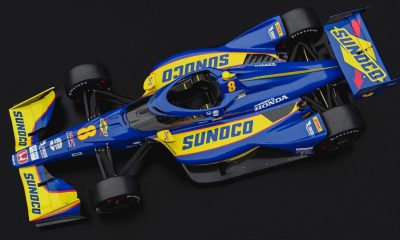
Sunoco to sponsor No. 8 Ganassi Honda IndyCar in multi-year deal
-

 Motorsports3 weeks ago
NASCAR owes $364.7M to teams in antitrust case