


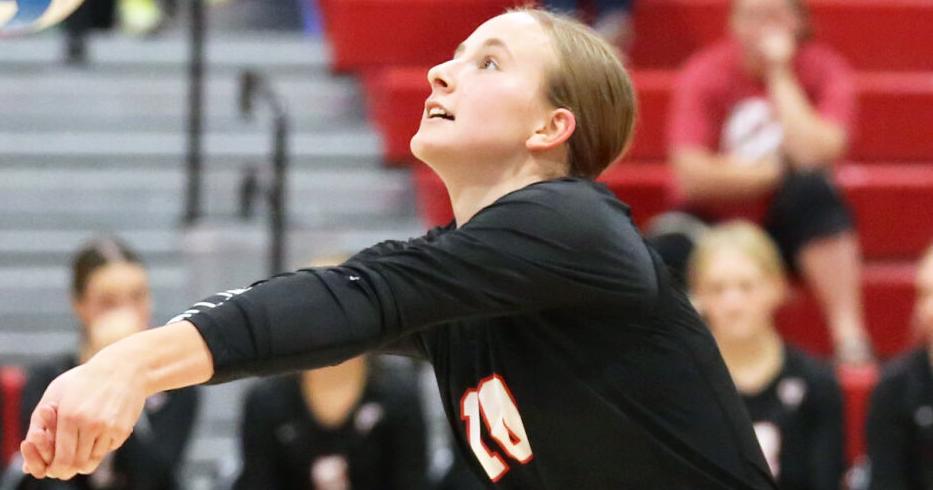
Introducing the All-Area volleyball teams from the Cannon Falls Beacon and Republican Eagle.
Alec Hamilton, community editor for the Beacon, and Martin Schlegel, sports editor for the Eagle, cooperated to put together two teams from their respective schools: Cannon Falls, Randolph, Red Wing, Goodhue and Lake City.
The head coaches were able to nominate up to three players for Player of the Year in addition to their nominations for all-area. Statistics and accomplishments were taken into account when forming all-area teams. Coaches’ votes and overall honors were used in naming a Player of the Year.
(Listed in alphabetical order)
Izzy Guetzlaff (Senior, Red Wing, middle blocker)
Big 9 All-Conference, MSHSL Academic Award.
2025 Stats: 201 kills, 71 digs, 15 ace serves, 65 blocks.
From head coach Sydney Boutelle: “Izzy Guetzlaff is a steady force and presence the Wingers rely on. Her consistent level of play with her kills and blocks spark momentum during their games. She is a player you look to when you need a side-out through moments of adversity and someone who carries the team effortlessly.”
Claire Meyers (Sophomore, Cannon Falls, outside hitter)
HVL All-Conference.
2025 Stats: 275 kills (led the team), 3.2 kills per set, 35.4% kill, 275 digs, 304 receptions (3.5 per set), 46 ace serves, 90.3% serving, 17 blocks.
From head coach Melissa Huseth: “Claire is a gifted, athletic player who embraced a major new challenge this season and made an immediate impact. In her first two years on varsity she played as a middle attacker with limited back-row responsibility. This year, we moved her to the outside and into a middle-back defensive role. She welcomed the transition and quickly became a force at the net and a gritty, reliable defender in the backcourt. Claire stays calm under pressure and gives her best at all times.”


Senior Izzie Reynolds. Alec Hamilton / Cannon Falls Beacon
Annie Reinitz (Senior, Red Wing, setter)
Republican Eagle/Cannon Falls Beacon Player of the Year, Big 9 All-Conference, MSHSL Academic Award, two-year team captain.
2025 Stats: 804 assists, 60 kills, 201 digs, 11 ace serves, 2 blocks.
Career Stats: 1,698 assists, 166 kills, 495 digs, 38 ace serves.
From head coach Sydney Boutelle: “For the past couple years, Annie Reinitz has been the floor general of Winger Volleyball. With grit, intelligence, and unwavering confidence, she has led her team through every moment — leaving a legacy of leadership, maturity, and excellence.”
Izzie Reynolds (Senior, Randolph, left side outside hitter/right side setter)
Gopher All-Conference.
2025 Stats: 161 kills, 219 assists, 179 digs, 43 ace serves.
From head coach Karli O’Reilly: “Izzie is a student of the game. She is always watching film and looking for ways to grow as an athlete. She loves the game and she is very competitive.”


Sophomore Libby Sampson. Alec Hamilton / Cannon Falls Beacon
Libby Sampson (Sophomore, Cannon Falls, setter)
HVL All-Conference, surpassed 1,000 career assists (currently at 1,149), team captain.
2025 Stats: 653 assists, 74 kills (0.9 per set), 227 digs, 46 ace serves, 95.5% serving, 29 blocks.
From head coach Melissa Huseth: “Libby embodies everything you want in a setter. She is knowledgeable, consistent and a calm, confident leader with beautifully skilled hands. She worked hard to build strong connections with all of her hitters so she could meet their individual needs and put them in the best position to score. Libby plays hard for her teammates, is always striving to improve and brings a smile to the court every time she steps on it.”
Katie Tipton (Junior, Cannon Falls, libero)
HVL All-Conference, 1,000+ career digs, sixth in the state in digs last season according to MaxPreps, team captain.
2025 Stats: 508 digs (5.8 digs per set), 42 assists, 617 receptions (7.4 per set), 2.14 pass rating, 22 ace serves, 93.9% serving.
From head coach Melissa Huseth: “Katie was arguably one of the strongest liberos in the state. She was instrumental in sustaining long rallies, covering a tremendous amount of court with confidence and consistency. Katie brings excellent ball control, an unwavering work ethic and a big heart to everything she does. She continues to sharpen her game and elevate her leadership—not only through her skills, but through her communication and defensive direction. Katie is someone you can always depend on.”


Junior Katie Tipton. Alec Hamilton / Cannon Falls Beacon
Shelby Vogel (Senior, Goodhue, middle blocker)
HVL All-Conference, team MVP, team captain.
2025 Stats: 292 kills, 41 assists, 311 digs, 39 ace serves, 57 blocks.
From head coach Amber Lohman: “Shelby is a great leader on and off the court. She not only led the team in kills, but also on digs and this is what makes her a great six-position player. She will be greatly missed next season.”
(Listed in alphabetical order)
Ashlee Barton (Junior, Goodhue, outside hitter)
HVL All-Conference Honorable Mention.
2025 Stats: 118 kills, 252 digs, 6 assists, 27 ace serves, 13 blocks.
From head coach Amber Lohman: “Ashlee showed great strength on the outside this year and has a great read on playing defense in the back row. I look forward to seeing her leadership out on the court next season.”
Hadley Cooreman (Senior, Randolph, middle front/right front)


Senior Hadley Cooreman. Alec Hamilton / Cannon Falls Beacon
Gopher All-Conference, Gopher Conference Sportsmanship Award, team captain.
2025 Stats: 122 kills, 25 digs, 44 blocks.
From head coach Karli O’Reilly: “Hadley leads her teammates with kindness and perseverance. She stands out for her attacks and blocks in the front row. She is loved by everyone and absolutely shined as a varsity captain.”
Alexa Guetzlaff (Junior, Red Wing, outside hitter)
Big 9 All-Conference.
2025 Stats: 239 kills, 251 digs, 20 ace serves, 3 blocks.
From head coach Sydney Boutelle: “Alexa Guetzlaff has proven herself as a true six-rotation weapon — explosive at the net and in the backrow. Her competitiveness fueled the Wingers’ determination all season long. Alexa stepped into a leadership role with confidence as a returner. As we look ahead, we know she will continue to lead with the same drive and excellence as the seniors this year.”


Senior Falon Hepola. Alec Hamilton / Cannon Falls Beacon
Alli Helmin (Senior, Lake City, middle blocker)
HVL All-Conference Honorable Mention.
2025 Stats: 198 kills, 27 blocks.
From head coach Katlyn Bade: “A dominant senior middle blocker whose presence at the net changed every match played.”
Falon Hepola (Senior, Cannon Falls, setter/opposite)
HVL All-Conference, Academic All-State, team captain.
2025 Stats: Injured most of the season. 138 assists (3.7 per set), 68 kills (1.8 per set), 79 digs, 24 ace serves, 92.9% serving.
From head coach Melissa Huseth: “This young lady is a true game changer. Her leadership, energy and talent propelled the Bombers through four successful seasons, including a state championship her freshman year. More importantly, she helped her teammates find confidence in themselves. I have genuinely enjoyed coaching Falon and watching her grow into a talented, fun, and caring young athlete. She has left a lasting, positive impact on Cannon Falls High School that extends far beyond her time on the volleyball court.”
Mackenzie Murray (Junior, Randolph, libero)


Junior Mackenzie Murray. Alec Hamilton / Cannon Falls Beacon
Gopher All-Conference Honorable Mention.
2025 Stats: 44 assists and 218 digs.
From head coach Karli O’Reilly: “Mackenzie is hardworking and coachable. She is quick on her feet and dependable in the back row. She is responsible, reliable and well-liked by her teammates.”
Hazel Volkmann (Junior, Goodhue, setter)
2025 Stats: 477 assists, 5 kills, 191 digs, 39 ace serves.
From head coach Amber Lohman: “Hazel stepped up with confidence this year as one of the setters in our 6-2 offence. She worked hard at making plays happen and led the team in set assists. I look forward to her confidence and leadership on the court next season.”