
NIL
Deputy Tobin Bolter's wife disavows new nonprofit for late husband












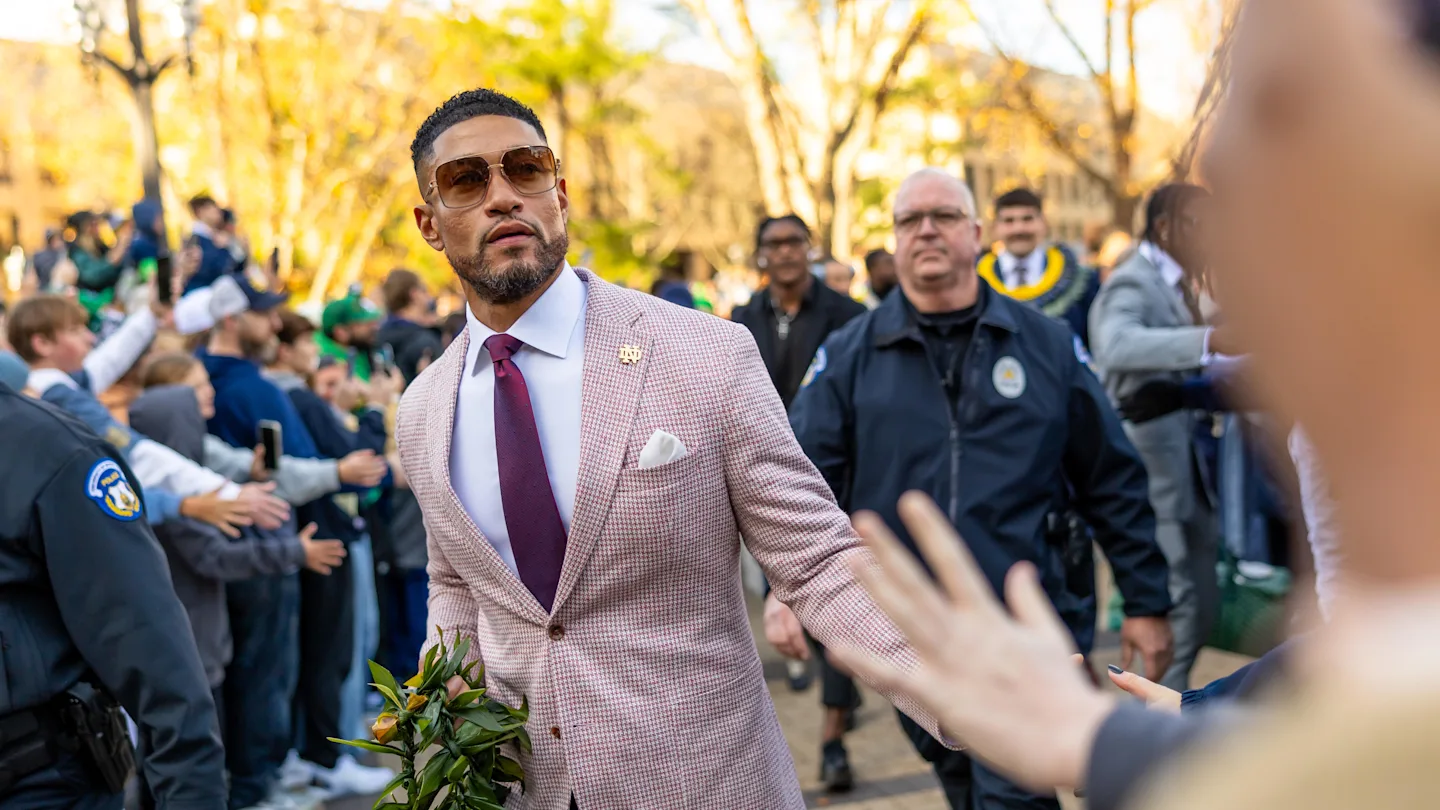
The Notre Dame Fighting Irish closed the regular season at 10-2, riding a 10-game winning streak and a dominant late surge that many felt would secure a playoff slot.
Instead, the College Football Playoff committee left Notre Dame out of the 12-team field, and the Irish finished No. 11. The program immediately announced it would decline further bowl consideration amid widespread frustration.
In the fallout, athletic director Pete Bevacqua publicly praised head coach Marcus Freeman and signaled that Notre Dame will move to keep him firmly in the sport’s financial elite.
Bevacqua reportedly told Notre Dame beat writer Pete Sampson that he wants Freeman “at the top, top, top tier” of college-coach compensation, a line that amounts to a clear warning shot to NFL teams and other suitors monitoring Freeman’s rapid ascent.
Pete Bevacqua on the possibility of Marcus Freeman departing for the NFL and matching other contract offers.
Said Notre Dame will make sure Freeman is at the “Top, top, top tier of college football coaches when it comes to compensation for college football coaches.”
— Pete Sampson (@PeteSampson_) December 9, 2025
Elevated to the head job in December 2021, Freeman guided Notre Dame to the 2025 national title game following a 2024 campaign that produced the program’s highest win total in modern history.
In five seasons, he has compiled an overall record of 43-12 through the 2025 regular season, a .782 winning percentage that ranks him among the top active coaches nationally.
That success explains why NFL outlets and front offices have repeatedly listed his name when vacancies appear.

Freeman’s scheduled 2025 pay is roughly $7.4 million, with the Irish coach set to earn up to $54 million by 2030.
By contrast, elite head coaches at some Power-5 programs are reporting compensation packages in the $10-$13 million annual range.
To truly land Freeman in “top-tier” territory, Notre Dame would need to craft a contract that meaningfully closes that gap. Higher base pay, performance bonuses, strong buyout protections, and NIL/incentive tie-ins could all be part of the offer.
For Freeman, the choice becomes remaining at a historic program promising increased resources and visibility, or testing the NFL pipeline that has been knocking for months.
Read More at College Football HQ
- All-conference OT enters college football transfer portal after head coaching change
- $2.3 million quarterback predicted to return to college football powerhouse
- Lane Kiffin sends clear message after Nick Saban’s comments on career move
- Jon Gruden rips College Football Playoff committee following controversial decisions
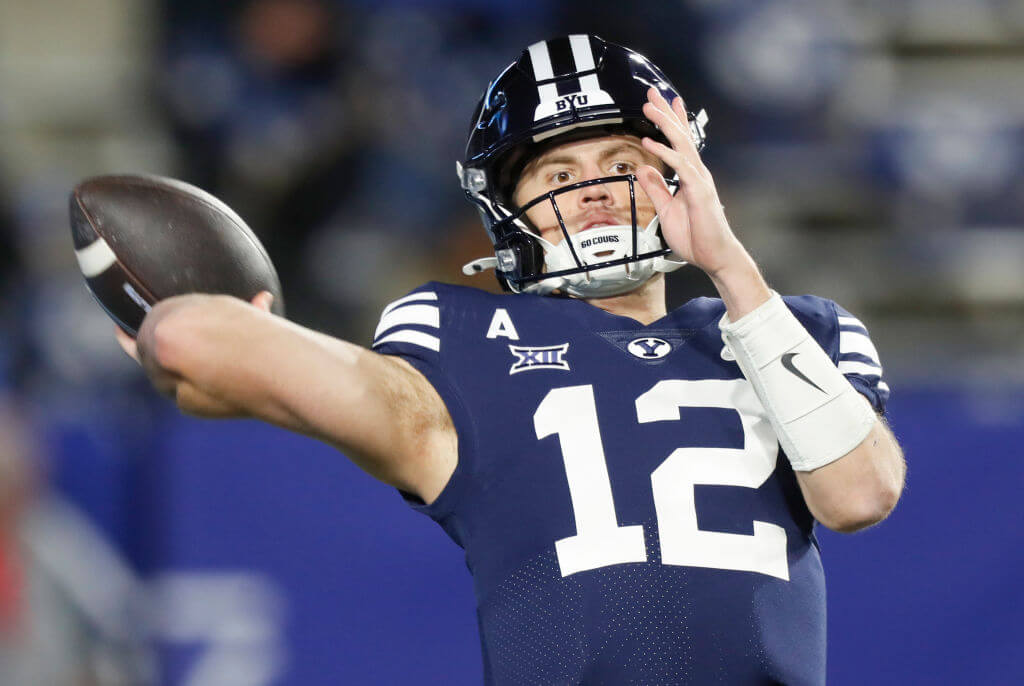
Jake Retzlaff, the BY-Jew Photo by Chris Gardner/Getty Images

By Noah Hirsch-Rechter
December 9, 2025
My favorite joke in the 1980 comedy Airplane! is, by the standards of a movie featuring a glue-inhaling Lloyd Bridges and an inflatable toy autopilot, one of its subtler gags. A passenger asks a flight attendant for some light reading; in return, she receives a pocket-sized leaflet of “famous Jewish sports legends”.
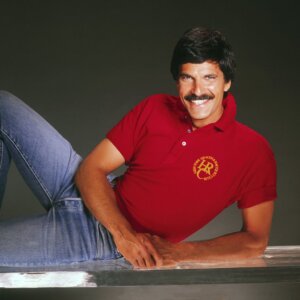
The vicious canard (just kidding, we’ve been called worse) that the so-called people of the book are ill-at-ease on the court or the gridiron contains a kernel of truth, of course. There’s a reason nearly all Jews know the names Koufax and Spitz — there are few other Jewish sports stars to choose from.
But the rapid growth of the country’s first Jewish NIL initiative, Tribe NIL, would suggest that, in the collegiate ranks at least, such stereotypes are baseless; in barely a year, it has accumulated a roster of nearly 200 athletes.
NIL, which stands for name, image and likeness, allows student-athletes to profit off of their fame and success, most often via endorsement deals requiring commercials, public appearances, paid social media posts and the like. (Here’s Arch Manning, star University of Texas quarterback, flinging a football downfield while wearing *checks notes* Warby Parker glasses.)
Until 2022, however, college athletes were barred from receiving any form of compensation for their services. So NIL initiatives — organizations that help connect students with funding opportunities — are a relatively new phenomenon. Most of the organizations bring together student-athletes with a particular unifying characteristic, usually a connection to a school or region; for instance, the University of Alabama, a college football behemoth, has two NIL initiatives, Yea Alabama and The Tuscaloosa Connection.
But Tribe is unusual in that it is not organized around geography, but around culture.
So co-founders Moses and Eitan Levine lean on a different kind of network: The Jewish professional one. “There are inherent advantages that the Jewish community has,” Moses told me over a Zoom call.
“I always joke that Jewish nepotism is a good thing,” he added.
Virtually none of Tribe’s athletes are able to command lucrative sponsorship deals, which, under the NIL system, are reserved for the very best Division I athletes in the so-called “revenue sports” — football and basketball. A good number of Tribe’s roster, by contrast, are Division III athletes, and few are in football or basketball. They’re still better at their chosen sport than nearly all other human beings, yet not good enough to be recompensed financially.
“That’s a problem,” said Moses. “A D-III field hockey player who doesn’t have inherent NIL value is still working a full-time job. It’s crazy they don’t get any compensation.”
With Tribe, then, Moses imagined other kinds of compensation. “The question we’re asking,” he said, “is how can our athletes use their name, image and likeness to get where they want to be in five or 10 years from now?”
Tribe’s answer is to cultivate closer ties with a myriad of institutions, and with their Jewish stakeholders in particular, in hopes of securing sponsorships, internships and jobs for its growing list of charges.
“Say I’m a big Jewish law firm,” Moses told me, “and I want to show that I support Jewish athletes. What if I hired a bunch of Jewish athletes for my summer internships, and then give them each an extra $1000 to allow us to advertise them on our Instagram?”
Moses and Levine pocket a fee for each deal, on top of whatever the athlete receives. Take the law firm example: In such a scenario, both men would be paid, by the firm, for giving that office access to the athletes — for “making the introductions,” Moses said.
The simple fact these athletes are Jewish is not the sole reason firms would hire them, Moses emphasized. “Like, they have a degree, and a full-time job as a basketball player on top of that, right? They’ve shown a level of commitment.” But Jewishness, Moses believes, can provide the proverbial foot-in-the-door. And he wants Tribe to be the intermediary.
“I wouldn’t ever tell a kid like they should only rely on the Jewish community to network,” he said. “But it’s a silver platter right there for you, and I promise you, it’ll work out for you if you lean in.”
For the tribe, by the tribe
Tribe is the brainchild of comedy writers Jeremy Moses and Eitan Levine. The pair met while working on Amazon’s short-lived sports TV show, “Game Breakers,” where they created a segment called “This Week in Jews.”
The duo, Moses said, quickly bonded over their shared cultural and sporting interests. Moses had a Conservative rabbi for a father and used to work for the site My Jewish Learning. Levine has a sizable social media presence as a comedian, which he often used to highlight Jewish sporting achievements in ways both heartwarming and acerbic.
In 2024, almost by accident, Levine helped broker the most significant Jewish NIL deal yet: A partnership between Manischewitz, of Matzoh fame, and Jake Retzlaff, Jewish quarterback at Brigham Young University. (Retzlaff was dubbed, entirely appropriately, B-Y-Jew.) Levine had worked with Manischewitz on his webseries, When Can We Eat, while Retzlaff had been the subject of one of Levine’s Instagram videos; he played matchmaker and made the shidduch to introduce the brand to the athlete.
Naturally, the photographs of a smiling Retzlaff holding up Manischewitz’s Potato Latke mix did not escape the attention of other Jewish student-athletes. Levine was soon inundated with requests for further kosher NIL deals, Moses told me.
This took both men by surprise; after all, they too had always subscribed to the notion that Jewish athletes were hard to come by.
“Our first thought was, ‘How many Jewish college athletes are there?’” said Moses. He decided to carry out a survey of sorts. “I went on the UCLA Athletics website — because I needed a school with a large population, a large Jewish population, and tons of sports programs — and looked at last names. If I was 75% sure they were Jewish, I counted it.”
His survey was unscientific, to be sure — Moses was a Jewish studies major, not a statistician — but it was effective: He counted 25 names.
“I was like, ‘Wait, that’s just at one school!” he said.
Moses realized that Jewish student athletes, far from being under-represented, were punching above their weight relative to the overall population. Thus was born Tribe NIL.
Schmoozing to success
Tribe’s yichus-heavy approach is premised on what Moses sees as one of American Judaism’s most enduring traditions: Rooting for Jews in sports just because they’re members of the tribe, whether they’re on your favorite team or not.
Moses offered up a choice example about Max Fried, the Yankees’ excellent pitcher. “Maybe you’re not rooting for the Yankees to win, but you’re still proud that the starting pitcher for the other team is a Jew.”
He acknowledged, however, that such an approach could limit Tribe’s appeal. It would be harder to pull off a paid appearance at a local synagogue, say, or a Q&A with Jewish partners at a business — with a view to potential employment down the road — if the athlete in question doesn’t feel especially Jewish.
So the collective is aimed squarely, and solely, at “proud” Jews, Moses said. “If they’re not comfortable talking about being Jewish out loud, then this is not the organization for them.”
Both Moses and Levine are holding out hope that Tribe will be spared the debates over Israel’s conduct in Gaza, and over competing definitions of antisemitism and Zionism, that have roiled so many Jewish-American institutions. “We really strive to be an apolitical organization,” Moses said. “Because the one time Republicans and Democrats sit together is at a college football game.”
Still, the fairly well-established pathway from U.S. college sports to the Israeli professional ranks is one Moses hopes to exploit, and he’s not afraid of upsetting anyone. “We want to help American Jews play in Israel,” he said. “If this is a political statement, then it’s a political statement. But I don’t think it should be.”
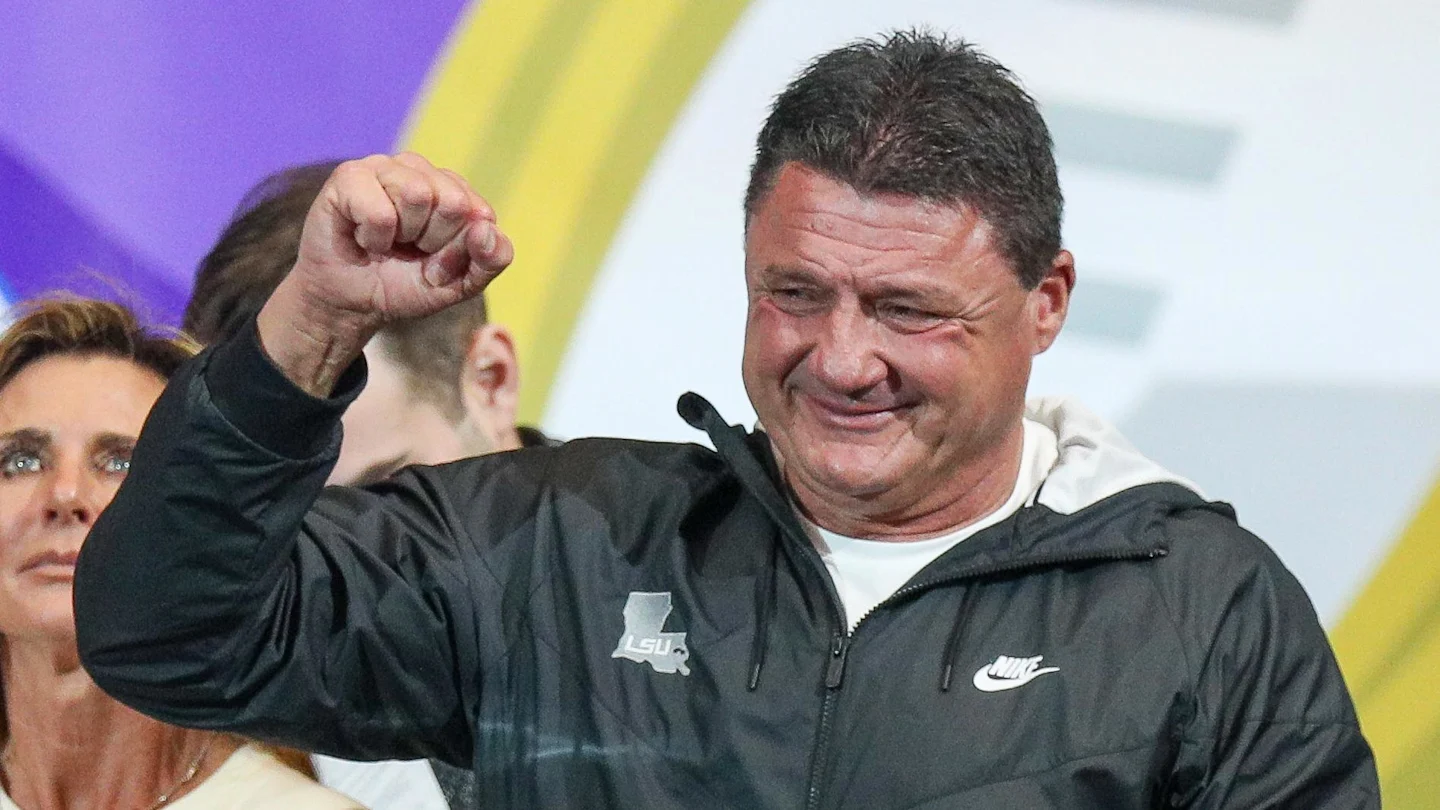
Former LSU national champion head coach Ed Orgeron has been in the news quite a bit lately.
First, it was Orgeron stating that he had interest in rejoining LSU as an assistant under good friend Lane Kiffin. On Tuesday, it was an entirely different topic—NIL in college athletics.
Orgeron joined the Bussin’ with the Boys podcast to discuss a host of topics, one of which included paying players before NIL. Podcast hosts Taylor Lewan and Will Compton joked that the SEC paid players before it was legal, and Orgeron chuckled before giving a classic response.
“Hey, you know… it’s all good. They say, ‘Hey Coach, you know, you’ve been out of coaching for a while. How are you going to adjust to NIL?’ I said, ‘Well, it’s a minor adjustment. … Back then, we used to walk through the back door with the cash. Now we just gotta walk through the front door with the cash!'”
Everyone knows the SEC was paying players before paying players was legal
Coach O with an incredible response on @BussinWTB 😂😂 pic.twitter.com/PvHvQK3Bdp
— Will Compton (@_willcompton) December 9, 2025
Nobody will ever admit that players were paid under the table prior to NIL, even though it was always considered one of college football’s worst-kept secrets. But it sounds like Orgeron is ready to embrace the NIL era if he ever gets an opportunity to return to the sidelines.
More College Football on Sports Illustrated
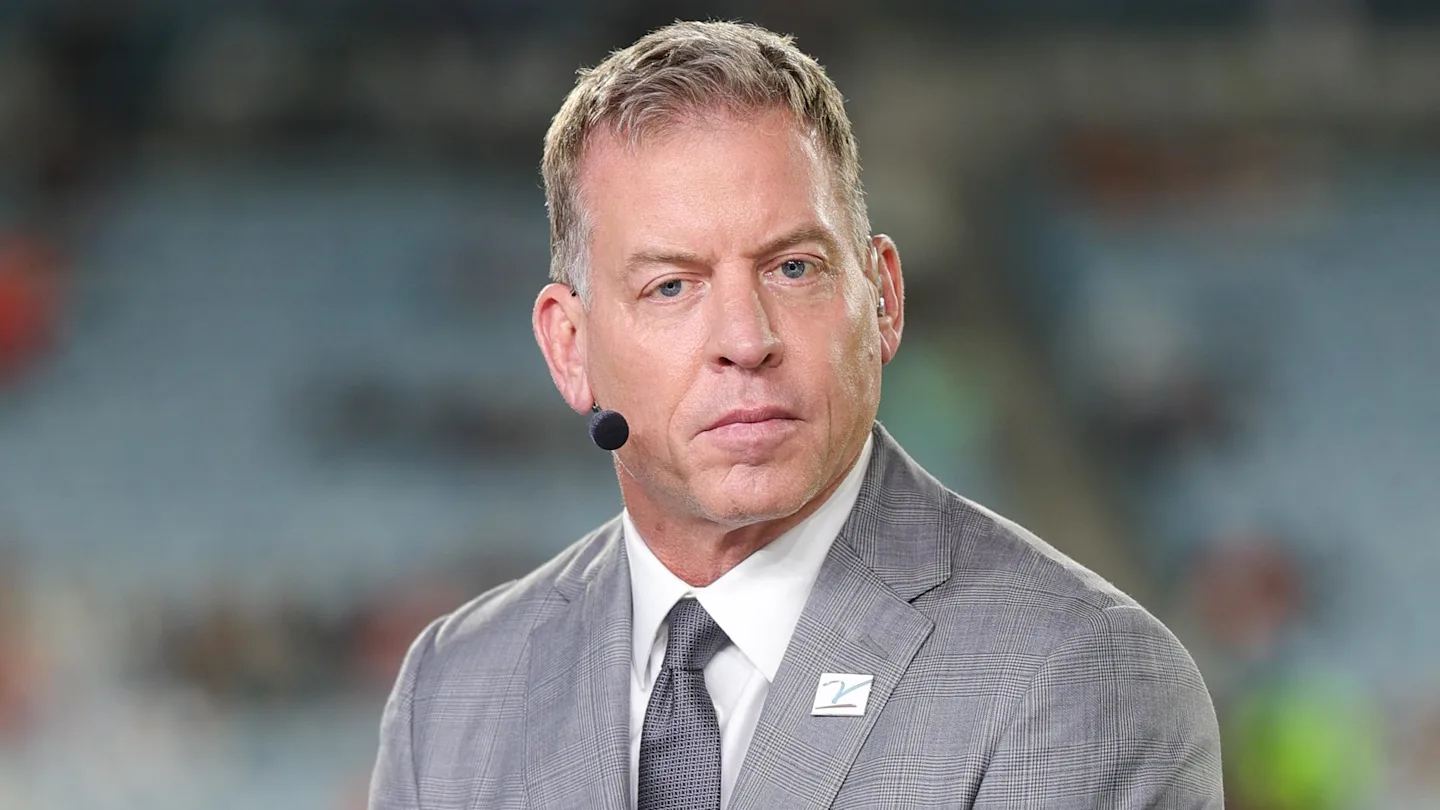
The 1989 NFL Draft’s No. 1 pick, a three-time Super Bowl champion and Hall of Fame quarterback named Troy Aikman, recently kicked up a fuss over the current age of college football with the NIL changes. After hearing his first-hand tale of woe, you might even agree with him.
According to Awful Announcing, Aikman was on a podcast this week where he shared that he actually did give money, and for a specific player, at UCLA. As can be the case in the modern college sports landscape, he claims that said player accepted the check, hardly offered a thanks, and then kindly decided he wanted to enter the transfer portal and go accept another deal from a new school. You can see why a UCLA alum like Troy Aikman was so upset.
“I gave money to a kid, I won’t mention who,” said Aikman. “I’ve done it one time at UCLA, never met the young man. He was there a year, he left after the year. I wrote a sizable check, and he went to another school. I didn’t even get so much as a thank-you note.”
As much as he loves his school, Aikman is through with paying players who can leave right away.

“So, it’s one of those deals to where I’m done with NIL,” he added. “I want to see UCLA be successful, but I’m done with it.” That may be the case for Aikman until certain changes and rules are made to corral this sort of chaos a little more.
“There’s gotta be some leadership at the very top that kind of cleans all of this up, starting with players that accept money.” Aikman pleaded. “There’s gotta be some accountability and responsibility on their behalf, to have to stick to a program.”
As Aikman mentioned, he wrote a “sizable” check to a single player for his UCLA Bruins, the gold and blue that he represented strong in the mid to late 1980s. To see the player he sponsonored to come to the program turn around and not even thank Aikman for the money and then split town like a travelin’ brand looking for their next gig — that’s got to be infuriating. By his quotes, Aikman appears rather upset, going as far as to say he’s done as a UCLA NIL donor for the time being.
More on College Football HQ

Former LSU football HC Ed Orgeron ‘jokes’ NIL existed in SEC before it was legal appeared first on ClutchPoints. Add ClutchPoints as a Preferred Source by clicking here.
College football has changed a lot over the last few seasons due to the widespread transfer portal and NIL, but mainly because of NIL. Especially with former players being paid a lot of money in back pay. The ability for players to get paid was a long time in the making. However, there was always an undercurrent of players getting paid in some fashion, and former LSU football head coach Ed Orgeron even joked recently that NIL existed in the SEC before it was legal.
Advertisement
On a recent episode of “Bussin’ With the Boys,” former LSU football head coach Ed Orgeron was on for a long-ranging interview. He talked about NIL and joked about how in the SEC, the only difference is that you can walk in through the front door with the money now, compared to the old way of doing it secretly.
Orgeron said, “They say, ‘Hey coach, you know, you’ve been out of coaching for a while and how are you going to adjust to NIL?’ I said, ‘Well, it’s a minor adjustment.’ and they said, ‘What do you mean?’ I said, ‘Back then we used to walk through the back door with the cash, and now we just got to walk through the front door with the cash.’ A joke obviously.”
Taylor Lewan also asked Orgeron if there was an unwritten rule that an SEC team wouldn’t offer more money to an in-state player than that in-state school could offer. Orgeron said there was, but they were always broken.
“Rules are meant to be broken,” Orgeron said. “Because that s—t didn’t go down. They might’ve had an unwritten rule, but they were broken all the time.”
Advertisement
Orgeron has had two coaching jobs in the SEC, with his first at Ole Miss and his second at LSU. He has had a reputation throughout his time in college football as an elite recruiter, so Orgeron would have extensive knowledge of past dealings involving money.
When Orgeron was at Ole Miss, his most notable recruits were Michael Oher, Dexter McCluster, and Mike Wallace. Then, at LSU, he recruited Ja’Marr Chase, Joe Burrow (Transfer), Derek Stingley, Kayshon Boutte, and Clyde Edwards-Helaire.
The ability to recruit players is more coveted than ever due to the NIL era, and it’s only a matter of time before Orgeron ends up back in coaching, whether that’s on Lane Kiffin’s staff at LSU or somewhere else.
Related: Ed Orgeron planning coaching return with very specific demands
Related: AD accuses ACC of 3-week attack on Notre Dame football amid CFP drama
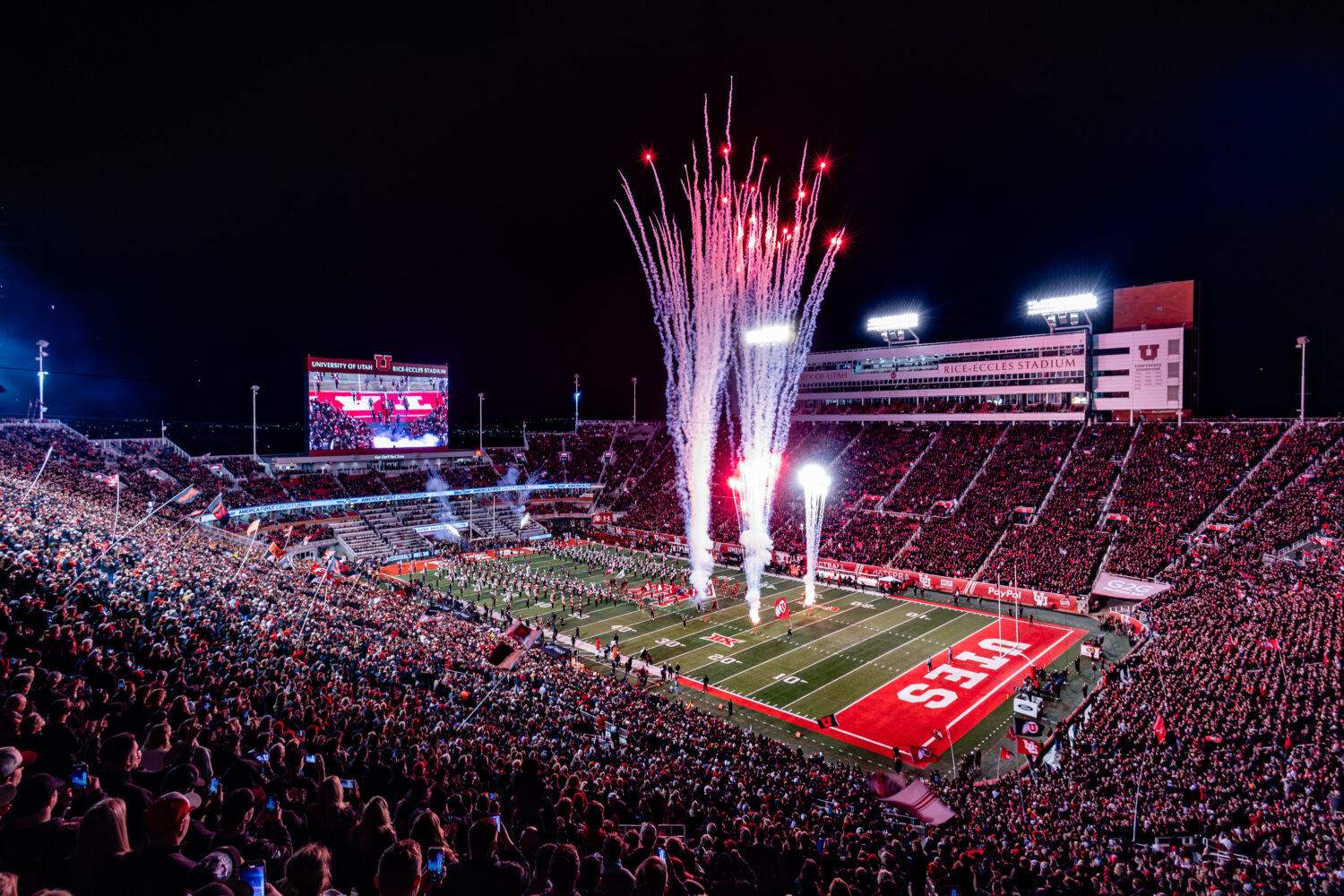
SALT LAKE CITY — With an eye on remaining one of the nation’s top athletic programs in the rapidly evolving world of college sports, Utah Athletics is moving forward with a groundbreaking private equity partnership and corporate restructuring that could fundamentally reshape how the Utes fund and operate their athletics enterprise.
The news, broken first by Yahoo Sports’s Ross Dellenger Tuesday morning, specified that the entire Utah Athletics Department will be reorganized into a newly created for-profit holding company, Utah Brands & Entertainment LLC, co-owned with New York-based private equity firm Otro Capital.
The deal — believed to be the first of its kind in collegiate athletics — is expected to generate up to $500 million in new capital for Utah’s athletic department through a combination of the equity infusion and donor commitments. The university retains majority ownership and decision-making of Utah Brands & Entertainment.
Utah Brands & Entertainment LLC
“First of all, want to thank our University’s Board of Trustees for the intense scrutiny that they have given to this new and innovative way to fund University of Utah athletics,” President Taylor Randall shared of the venture.
He continued, “we are excited about this new innovation in University of Utah athletics, this will give our institution, particularly our athletic institution, the upside it needs to thrive in the new revenue sharing and NIL era.”
This corporate offshoot will assume responsibility for major commercial operations historically housed within the athletic department, including ticket sales, media and broadcast ventures, stadium events, concessions, licensing and trademark management, corporate sponsorships, and other revenue streams.
Under the agreement approved by the NCAA and the University of Utah Board of Trustees, the university will retain majority ownership and decision-making authority within the new company, while Otro Capital will hold a minority stake and receive a share of annual revenue based on performance.
The structure includes an exit strategy after five to seven years, during which the university has the right to repurchase Otro’s ownership stake.
Athletics Director Mark Harlan is slated to chair the board of Utah Brands & Entertainment, which will elect an external president to oversee day-to-day operations. Traditional fundraising and coaching functions will continue to operate under the university’s umbrella, while the new entity focuses on commercial expansion and revenue growth. Enlarging the donor base with equity participation options also allows Utah supporters to purchase a stake in the venture — a novel approach not yet seen at peer institutions.
“We’re going to use this to find excellence in Utah Athletics,” President Randall shared.
This process has been underway for over a calendar year. Utah was focused on finding the best cultural fit and landed on Otro Capital. Multiple firms were vetted.
— Steve Bartle (@BartleKSLsports) December 9, 2025
Leadership and operations will be staffed jointly by university and athletics officials, as well industry professionals is intended to unlock new income opportunities with greater agility than a traditional university structure typically allows.
What does this mean for Utah NIL?
Many will be wondering what this means for Utah’s NIL. With this, Mark Harlan believes that this will have a significant impact on Utah’s NIL opportunities.
“We’re bringing in folks that have been involved in NIL in the professional space for years,” Harlan said. “I’ve been real proud of our efforts and how we’ve handled NIL. You don’t retain the kind of players that we’ve had in many sports if we don’t have a very robust program. But this allows us— in our recruiting process and retainment process, to really show what we are now surrounding our student athletes with appropriate and authentic NIL going forward.”
So, this does not directly fund Utah’s NIL opportunities, but it provide the platform and the professional understanding and know-how to generate more true 3rd-party NIL deals.
Harlan continued on about the importance of abiding by the rules and adhering to compliance of NIL. However, he also feels this will be important in providing Utah student athletes the best opportunities.
“Having the best platform for these student athletes that have worked on their brand through their hard work, and very best opportunities to work with pros, that have been doing this forever to enhance that brand and to include them in the deals that were out in the marketplace that is now legal, so we can do all those things that have changed and maximize those opportunities.”
The Bottom Line
The partnership is a bold strategy to navigate the financial realities of the post-House v. NCAA revenue-sharing era, in which schools will have faced increased cost burdens for athlete compensation and broader program sustainability.
In contrast to traditional holding company proposals occasionally floated by other universities, Utah’s deal pairs private capital with institutional control to balance innovation with governance.
University leaders believe this new model will help protect long-term stability, support upgrades across, strengthen competitiveness in the Big 12, and provide a funding foundation adaptable to future changes in college athletics.
If successful, Utah’s approach could serve as a blueprint for other programs exploring private capital solutions in a landscape where traditional revenue sources and rising expenses continue to challenge athletic departments nationwide.
Steve Bartle is the Utah insider for KSL Sports. He hosts The Utah Blockcast (SUBSCRIBE) and appears on KSL Sports Zone to break down the Utes. You can follow him on X for the latest Utah updates and game analysis.
Take us with you, wherever you go. Download the new & improved KSL Sports app from Utah’s sports leader. You can stream live radio, video and stay up to date on all of your favorite teams.

Frantzich and Nemecek land MIAC Athlete of the Week accolades

No. 3 Volleyball lands four on AVCA Southwest Region Team

Tigers Host Pitt On Sunday Afternoon For Youth Day – Clemson Tigers Official Athletics Site

The ethics of sports gambling: Geoff’s Journal

Opinion: Resurgence of public participation a plus

ACC Announces Week 1 Indoor Track & Field Performers of the Week

Men’s Volleyball Announces Signing of Three Players

Nick Sanchez Shows Why Teams Need To Start Funding Themselves

Adrian and Allen Named Big Ten Indoor Track & Field Athletes to Watch

Thread

Major college football AD responds to potential departure of $54 million head coach

Sjöberg Named ACC Women’s Track Performer Of The Week

Blue Devils Celebrate 2025 Season at Annual Awards Banquet

Jake blasts Seattle Parks for Little League field conditions

LA84 Foundation Opens Large Grant Cycle as Recent $1.78M Award Reaches 19 Southern California Youth Sports Programs

First Tee Winter Registration is open

Fargo girl, 13, dies after collapsing during school basketball game – Grand Forks Herald

CPG Brands Like Allegra Are Betting on F1 for the First Time

Volleyball Recaps – November 18

F1 Las Vegas: Verstappen win, Norris and Piastri DQ tighten 2025 title fight

Two Pro Volleyball Leagues Serve Up Plans for Minnesota Teams

Utah State Announces 2025-26 Indoor Track & Field Schedule

Sycamores unveil 2026 track and field schedule

Redemption Means First Pro Stock World Championship for Dallas Glenn

Bowl Projections: ESPN predicts 12-team College Football Playoff bracket, full bowl slate after Week 14

Texas volleyball vs Kentucky game score: Live SEC tournament updates

How this startup (and a KC sports icon) turned young players into card-carrying legends overnight

Indiana’s rapid ascent and its impact across college football

Jo Shimoda Undergoes Back Surgery

Pohlman admits ‘there might be some spats’ as he pushes to get Kyle Busch winning again

 Why a rising mid-major power with an NCAA Tournament team opted out of revenue-sharing — and advertised it
 NBA Legend Michael Jordan to Join NBC Sports as Special Contributor
 Falcons mailbag
 Portal Update – Basketball and Gymnastics Take Hits
 has always dreamed in Mercurial. Now his initials are on the boots.
The new Kyl…
has always dreamed in Mercurial. Now his initials are on the boots.
The new Kyl…
-
 Rec Sports2 weeks ago
First Tee Winter Registration is open
-
 Rec Sports2 weeks ago
Fargo girl, 13, dies after collapsing during school basketball game – Grand Forks Herald
-
 Motorsports2 weeks ago
CPG Brands Like Allegra Are Betting on F1 for the First Time
-
 Motorsports2 weeks ago
F1 Las Vegas: Verstappen win, Norris and Piastri DQ tighten 2025 title fight
-
 Sports2 weeks ago
Two Pro Volleyball Leagues Serve Up Plans for Minnesota Teams
-
 Sports2 weeks ago
Sycamores unveil 2026 track and field schedule
-
 Sports2 weeks ago
Utah State Announces 2025-26 Indoor Track & Field Schedule
-
 Motorsports2 weeks ago
Redemption Means First Pro Stock World Championship for Dallas Glenn
-
 Sports2 weeks ago
Texas volleyball vs Kentucky game score: Live SEC tournament updates
-
 NIL1 week ago
Bowl Projections: ESPN predicts 12-team College Football Playoff bracket, full bowl slate after Week 14