
NIL
DeSantis Talks College Football, Calls for Reforms to NIL and Transfer Portal · The Floridian


Gov. Ron DeSantis criticized the current structure of college football’s name, image, and likeness (NIL) policies and players’ use of the transfer portal to move to different schools in an exclusive interview with The Floridian publisher Javier Manjarres.
“This whole NIL and transfer portal has got to be worked out a little bit,” DeSantis said. “If they’re selling your jersey with your name on the back, you should get money for it if they are using your name, image, and likeness.”
Gov. DeSantis signed a bill allowing college athletes to profit from their name, image, and likeness back in 2020. It was later amended to allow schools, coaches, and athletic departments to assist athletes in the NIL process so Florida could stay on an even playing field with other states that had adopted similar policies.
While the governor has advocated for more player rights, he critcized the use of college football’s transfer portal, which has arguably overrun the sport with player transformers and fans wondering who stayed at their flagship school from year to year.
According to a report from NBC Sports, the number of FBS [Football Bowl Subdivision] transfers increased from 1,561 in 2018-19 to over 3,700 in last year’s cycle. FBS transfers from scholarship players also significantly rose over the past several years.
“To then say, I played three games, coach, I need more NIL money, or I’m going to transfer to another school, that’s almost like they have more rights than pro athletes do,” DeSantis commented. “I think there needs to be some reform of that.”
Gov. Ron DeSantis is a big sports fan. His son, Mason, is also a big fan of the Florida State Seminoles, with the governor often sharing predictions from his son on the outcome of the Noles’ football games on social media.
However, the governor played it fair when speaking about one of Florida State’s chief rivals, the University of Miami, and their rightful spot in the College Football Playoff (CFP).
“The Hurricanes should be in the college football playoff,” DeSantis suggested.
At the time, the governor argued that the team’s strength of schedule, their head-to-head win against the University of Notre Dame, which had been ahead of Miami in the rankings for months despite the team’s win, along with each school’s scoring margin against common opponents, was enough to lift the Canes into the final rankings.
Miami beat Notre Dame 27-24 in Week 1 of the season. In addition, the Hurricanes defeated three common opponents (NC State, Pittsburgh, Stanford) by a larger margin than the Irish.
Both teams also played Syracuse, with the Irish winning by 63 points, while the Hurricanes won by 28.
The governor was right. Miami was selected to be in the CFP last Sunday. The 10th-seed Hurricanes will play the 7th-seed Texas A&M Aggies in the first round of the playoff in College Station on Dec. 20.
DeSantis also advocated for the Fighting Irish to get in, but they were not selected in the final rankings.


 Listen to this article
A few years ago, I wrote a piece about Name, Image, and Likeness earnings (NIL earnings) which had just become a thing for college athletes. It was a very interesting topic of conversation as the first of my kids was preparing to head off to college. Now a few years later, I have more than one in college and the financial implications for college athletes in major NCAA Division I sports have changed significantly again.
Earlier this year, the House vs NCAA settlement became reality. This decision made it possible for college athletes to receive pay directly from the university at which they attend and compete. The University of Oklahoma reported that they would share the maximum amount allowed to student athletes who play football, men’s and women’s basketball, women’s gymnastics, softball and baseball.
What these students also need to understand and plan for, along with their parents or guardians, are the tax obligations that will also be a part of that potential financial windfall for these athletes. NIL earnings are subject to self-employment tax and income tax. Since NIL payments are not directly from the universities, the student athlete needs to expect to save an appropriate amount to cover the tax for those earnings. These earnings could be from things like social media, advertising, even goods in exchange for the NIL deal. Goods could be a vehicle, clothing, or ownership in a business, and all these things could be considered taxable income.
With the House vs NCAA settlement, schools are now allowed to share revenue they receive with their student athletes. Currently, the environment indicates these payments will be reported as non-employee compensation, which would subject a student athlete to self-employment and income tax on those earnings. Putting the full tax burden of the income on the student.
This begs the question, what potential deductions could a student use to reduce their tax burden from this income. Do they have agent fees, advisor fees, are they creating their own brand that contracts with the school for their services and if so, are they doing this through an advanced tax structure?
These aren’t the only questions the changing environment has created. As these students are now being paid directly by the university they attend to play a sport, there is much talk about whether student athletes should be considered employees of the university they attend.
There are many questions that still need to be answered to determine if they should be, and if they are what are the questions that should be asked next. Will they organize like professional athletes do in their respective sports? Will schools have to provide benefits? Will NCAA athletes be pushed to sign multi-year contracts with a school which could slow down the transfer portal?
It isn’t very often we get to see new business models built in today’s day and age, but college athletics is in the process of trying to figure it out and it will be a very interesting journey.
Josh Mullins, CPA, is a partner at Arledge, the largest locally owned accounting firm in the Oklahoma City metropolitan area.

On December 9, 2025, the University of Utah, in what appears to be the first such deal of its kind, announced plans to partner with Otro Capital in a private equity arrangement. The deal is projected to generate approximately $500 million in capital for the university’s athletic programs.[i] Otro Capital is a New York-based firm that invests in sports teams and leagues.[ii]
Under NCAA rules, the university must retain decision-making authority over Utah Brands & Entertainment LLC, the entity created to participate in the partnership with Otro Capital. Utah’s president, Taylor Randall, and athletic director, Mark Harlan, will continue to make major decisions impacting the athletic department at Utah. Meanwhile, Otro Capital will receive a percentage of Utah Brands & Entertainment’s revenues while serving as a strategic partner for the university. The university also retains the right to purchase Otro Capital’s ownership stake in Utah Brands & Entertainment at any time. Certain athletic department responsibilities will be managed by the newly formed company.
Reports this fall indicated that the Big Ten has been exploring a $2 billion private equity deal for the power conference that would include an extension on the conference’s grant of rights.[iii] The structure reportedly under consideration for the Big Ten resembles what has been outlined for Utah: the university (or conference) would continue to oversee core personnel and operational decisions, while the private equity-backed entity would focus on business development and share in revenues.
At Utah, Utah Brands & Entertainment is expected to oversee functions such as corporate sponsorships, ticketing, trademarks, and licensing. Randall and Harlan were adamant that the university will retain control over all administrative matters for its athletic departments. A majority of the new entity’s board members will be appointed by the university, and the athletic director will serve as the chair of the board.
Although private equity has been circling college sports for months, Utah is the first university or conference to finalize such a deal.[iv] While several other universities already operate private, revenue-generating entities outside their athletic departments, those entities do not involve private equity partnerships.[v]
[i] https://www.cbssports.com/college-football/news/utah-college-athetics-football-basketball-private-equity/
[ii] https://otrocapital.com/portfolio/
[iii] https://bleacherreport.com/articles/25255101-big-ten-reportedly-discussing-2b-private-capital-deal-nothing-imminenthing ‘Imminent’
[iv] https://www.espn.com/college-football/story/_/id/47263084/utah-aims-boost-athletic-revenue-private-equity-deal
[v] https://www.sportsbusinessjournal.com/Articles/2025/12/09/report-univ-of-utah-nears-college-sports-first-private-equity-deal/
In a decision issued on November 25, 2025, the United States Court of Appeals for the Third Circuit vacated a preliminary injunction that had allowed Rutgers University football player Jett Elad to participate in the 2025-2026 season despite an eligibility restriction imposed by the National Collegiate Athletic Association (NCAA). Elad previously competed one season at Ohio University, one season at Garden City Community College, and two seasons at the University of Nevada. Under the NCAA’s “Five-Year Rule,” any season played at a junior college counts toward an athlete’s maximum of four permissible seasons of competition within a five-year period. Although Elad participated in only three seasons at the Division I level, his participation at the junior college (JUCO) level rendered him ineligible according to the NCAA.
Last December, a Tennessee district court in Tennessee granted Vanderbilt University quarterback Diego Pavia’s request for a preliminary injunction, ruling in Pavia v. National Collegiate Athletic Association that he had demonstrated a likelihood of success on the merits in establishing that application of the Five-Year Rule to JUCO athletes violated federal antitrust law. On October 1, 2025, the Sixth Circuit dismissed the NCAA’s appeal of that ruling, noting that the NCAA’s subsequent grant of Pavia’s waiver application to participate in the 2025-26 college football season deprived the court of jurisdiction on mootness grounds.
Following the 2024 season, Elad entered the national transfer portal, ultimately committing to Rutgers in January 2025. In doing so, Elad secured an approximately $500,000 name, image, and likeness (NIL) agreement with a New Jersey advertising company. When the NCAA denied Elad’s waiver request to participate in the 2025 season, Elad filed suit in the United States District Court for the District of New Jersey, alleging, like Pavia, that application of the Five-Year Rule unlawfully restrained trade in violation of Section 1 of the Sherman Antitrust Act by limiting his ability to compete and participate in the evolving economic marketplace surrounding Division I football.
On April 25, 2025, the New Jersey district court granted Elad’s request for a preliminary injunction, enabling Elad to participate in all 12 of Rutgers’ games during the 2025 football season. On appeal, however, the Third Circuit held the injunction could not stand because the district court failed to define the relevant market adequately as required for a “Rule-of-Reason” antitrust analysis. Specifically, the Third Circuit noted that the plaintiff’s expert offered a broad market definition encompassing all cities in which college football was played, provided no economic analysis, and relied primarily on case law predating the rapidly changing conditions ushered in by the Supreme Court’s decision in NCAA v. Alston. In reaching its decision, the court further underscored that NIL compensation, the transfer portal, and university-facilitated commercial opportunities fundamentally have altered the economic landscape of college athletics, making reliance on older assumptions insufficient.
However, the Third Circuit also declined to treat the NCAA’s eligibility bylaws as categorically noncommercial, observing that rules that impact an athlete’s ability to compete and earn compensation may have commercial consequences that justify Section 1 of the Sherman Act scrutiny. Nevertheless, because the district court accepted Elad’s proposed market definition without independent factual findings or supporting data, the court concluded that Elad had not demonstrated a likelihood of success on the merits. Accordingly, the preliminary injunction was vacated, and the matter remanded for further proceedings, including a complete and evidence-supported market-definition inquiry.
For the public — including student athletes, parents and institutions — this ruling reinforces that, while courts are paying close attention to the economic realities of modern college sports, plaintiffs are still required to present data-supported analyses in seeking to challenge current eligibility rules. Recent decisions across the country, including Pavia, the class-wide settlement in House v. NCAA, and the market-definition guidance in Fourqurean v. NCAA, reflect increasing willingness by courts to scrutinize NCAA regulations under antitrust law. At the same time, the Third Circuit’s decision in Elad confirms that not every challenge necessarily will succeed, particularly those lacking an adequate factual foundation. The ruling signals that, when evaluating these challenges, courts will expect to be presented with careful economic analysis before granting immediate or emergent relief that disrupts NCAA governance.
As this and other eligibility issues continue to develop, Buchanan offers a comprehensive suite of services, providing guidance tailored to institutions, collectives, and businesses involved in the NIL space and other activities related to student athletes to ensure compliance and support at every stage.
The 2025 college football regular season is officially in the books.
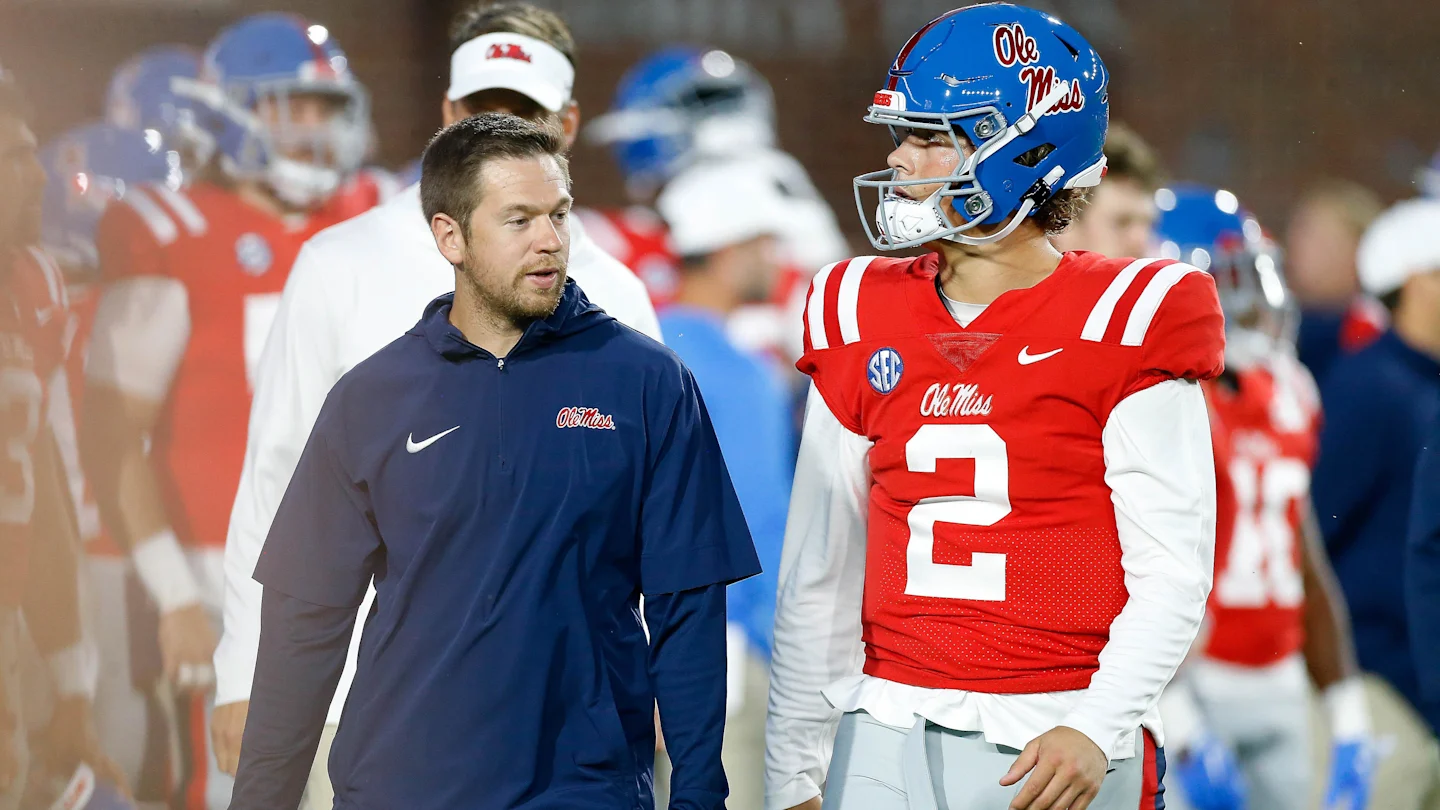
Twelve college football programs were selected for the 2025 College Football Playoff field on Sunday. Among those programs is No. 6 Ole Miss (11-1, 7-1), which will host No. 11 Tulane (11-2, 7-1) at Vaught-Hemingway Stadium in Oxford, Mississippi, for the first round of the 2025 College Football Playoffs (3:30 p.m. EST, TNT).
Despite the Rebels’ success in 2025, they will enter the College Football Playoff without head coach Lane Kiffin, who left Ole Miss to take the LSU head coaching vacancy on Nov. 30.
Kiffin is bringing a handful of staffers to Baton Rouge, including offensive coordinator Charlie Weis Jr. The Tigers have agreed to pay Weis $7.5 million over three years, making him the highest-paid offensive coordinator in the SEC.
NEW: Charlie Weis Jr to be highest paid SEC OC with new $7.5 million deal
Weis and LSU agreed to a three year deal 💰🐯🏈
Full Story 🔗 https://t.co/qeOdrcNR6E pic.twitter.com/iSOOr3GYw8
— 104.5 ESPN (@1045espn) December 10, 2025
Weis is the son of former college football head coach Charlie Weis Sr, who was the head coach at Notre Dame from 2005-09 and Kansas from 2012-14. He was an offensive quality control his father at Florida in 2011 before becoming a team manager for the following three seasons at Kansas.
Weis joined Nick Saban’s staff for the following two seasons at Alabama as an offensive analyst. Alabama was the first of four different stops Weis has worked for Lane Kiffin.
Steve Sarkisian was the Crimson Tide’s offensive coordinator for the 2016 College Football Playoff. Weis followed Sarkisian to the Atlanta Falcons in 2017 for another offensive analyst position.
Weis reunited with Kiffin in 2018, a year after Kiffin took the head coaching vacancy at Florida Atlantic. It was the first of Weis’ four stops as an offensive coordinator and quarterbacks coach.
When Kiffin left to take the head coaching vacancy at Ole Miss in the 2020 offseason, Weis left to join Jeff Scott’s first staff at USF as the offensive coordinator and quarterbacks coach. The Bulls were 4-26 under Scott, and Weis left after the second of the three seasons.
Weis once again found himself working under Lane Kiffin at Ole Miss in 2022 as an offensive coordinator. The Rebels finished 8-5 in 2022 with a 42-25 Texas Bowl loss to Texas Tech.
In the past three seasons, Ole Miss has compiled a 32-6 overall record. Weis’ offenses have finished No. 13, No. 2 and No. 3 nationally in yards per game in that time frame.
While Weis is joining LSU’s staff in 2026, Ole Miss is permitting him to coach its football team throughout the 2025 College Football Playoff.


Oregon star freshman Dakorien Moore has inked an NIL deal with Red Bull. He announced the news via Instagram.
Moore is just the latest college sports star to sign an NIL deal with the iconic drink brand. He now joins BYU men’s basketball’s AJ Dybantsa, South Carolina women’s basketball’s MiLaysia Fulwiley, Notre Dame women’s basketball’s Hannah Hidalgo, Texas football’s Arch Manning, and Ohio State football’s Jeremiah Smith as the latest Red Bull athlete.
SUBSCRIBE to the On3 NIL and Sports Business Newsletter
In his first season of collegiate football, Moore has hauled in 28 receptions for 443 yards and three touchdowns. Heading into Oregon‘s second consecutive College Football Playoff appearance, Moore is the Ducks’ third leading receiver. He, however, missed the final four games of the season with what is believed to be a knee injury. His status for the CFP is currently unknown.
Dakorien Moore would be huge boost to Oregon’s National Championship hopes
Moore, alongside teammate cornerback Brandon Finney Jr., was named an On3 True Freshman All-American. Due to his strong performance as a freshman, Moore has racked up the NIL deals this season. It was announced in Oct. 21 that he and his quarterback, Dante Moore, had signed a deal with Nike.
“Dakorien Moore was one of the most explosive and dangerous true freshmen in the country on a per-game basis, showcasing the elite speed and high-end ball skills that made him a Five-Star Plus+ prospect and the No. 1 wide receiver in the 2025 class,” Rivals‘ Charles Power wrote in his On3 True Freshman All-American selections. “The Duncanville (Texas) High product gave Oregon an instant vertical threat and quickly became a focal point of the Ducks’ offense, finishing the regular season with 28 receptions for 443 yards and three touchdowns, along with 49 rushing yards and another score.”
“Moore was Oregon’s leading receiver before sustaining a knee injury in practice that sidelined him for the final four games of the regular season. The injury was not considered season-ending, leaving open the possibility of a return for the Ducks in the College Football Playoff. The electric freshman was one of several standout newcomers on Oregon’s offense, joining running backs Jordon Davison and Dierre Hill as impact freshmen.”
No. 5 seed Oregon will face off against No. 12 seed James Madison in the First Round of the College Football Playoff on Dec. 20. The game is slated for a 7:30 p.m. ET kick on TNT, TruTV and HBO Max.
Betting on bowl games is a unique animal and has always required different tools than those used for the regular season. However, college football’s landscape has changed, and its recent evolution is forcing bettors and bookmakers to adjust on the fly and develop new skills.
The current state of the sport, which includes the transfer portal, NIL and a nonstop coaching carousel, significantly impacts programs in December, disrupting the football calendar and complicating the entire bowl season. In turn, that domino effect jolts the betting market.
“Bowl game handicapping is certainly a different exercise today than it was 10 years ago,” professional bettor Paul Stone told The Athletic. “Previously, my bowl process primarily focused on motivational edges, current form, strength of schedule and some of the typical metrics. Today, it’s not so much about getting the best number but rather the best information.”
Nowadays, each bowl season seems to produce unprecedented situations. With Lane Kiffin headed to LSU, Ole Miss enters the playoff without its head coach, but Kiffin’s assistants are allowed to coach the Rebels until their postseason ends.
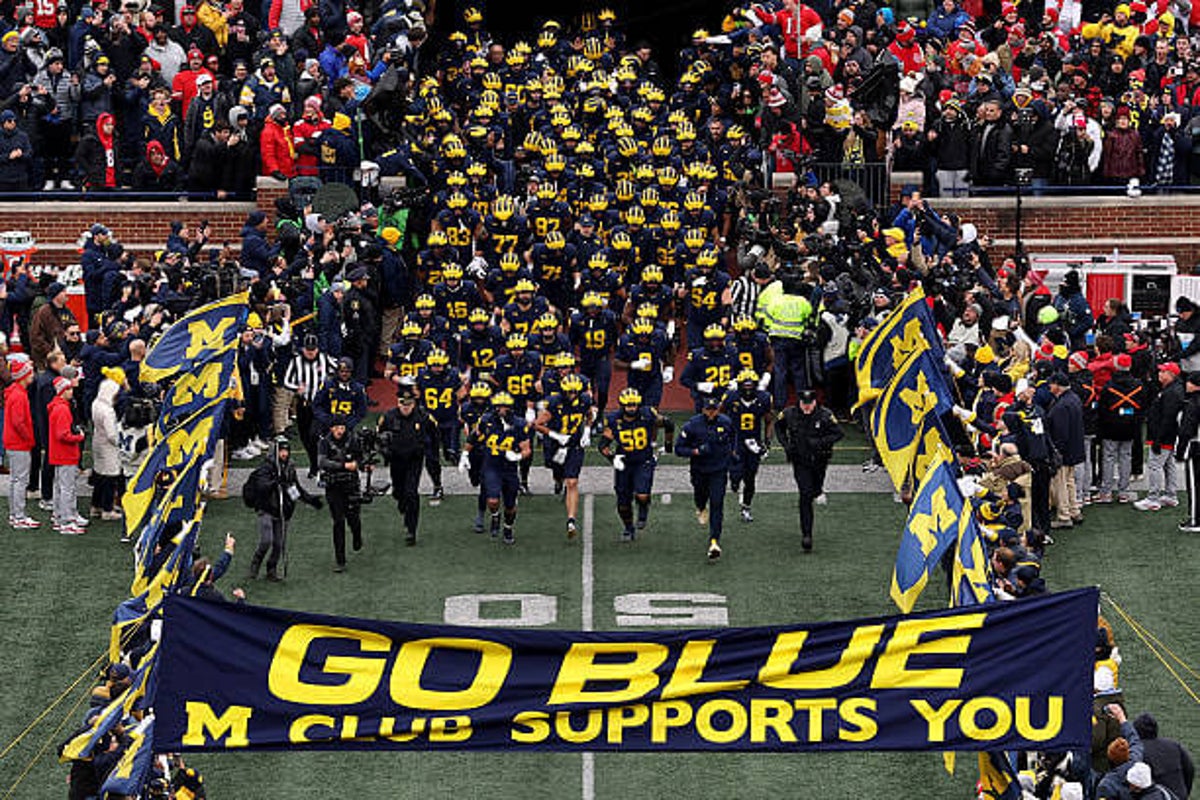
Elsewhere, Michigan fired Sherrone Moore this week for what the school labeled “an inappropriate relationship with a staff member.” The Wolverines named associate head coach Biff Poggi as the interim coach for the Citrus Bowl on New Year’s Eve against Texas.
As the Moore news surfaced on Wednesday, the Longhorns went from a 5.5-point favorite to a 6.5-point favorite. All sportsbooks basically reacted in unison, given that the news seemingly came out of nowhere. However, kernels of information that fly under the radar are where experienced bettors find opportunity.
“Chances are someone has news before you,” Thomas Gable, Borgata director of race and sports, said in explaining why respected bettors can cause drastic shifts in the odds. “With the opt-outs and coaching changes, it’s definitely more challenging now to book these bowl games, and the line movement is much greater than before.”
The transfer timeline has a clear window. However, teams often withhold certain information regarding injuries or opt-outs. If their opponent game-plans for specific players who end up skipping the bowl game, the competitive advantage could shift.
“You read as much as possible to try to get ahead of information leaks and line moves to get the best of the number — and this is when you are betting the numbers and not necessarily the teams,” veteran Las Vegas handicapper and VSiN betting analyst Matt Youmans said. “It’s almost uncharted territory, so proceed with caution.”
Kiffin’s departure from a playoff team is not a complete outlier. Fellow CFP participants Tulane (Jon Sumrall) and James Madison (Bob Chesney) have seen their coaches agree to take head coaching positions at Florida and UCLA, respectively. However, unlike Kiffin, they will remain with their teams until they are eliminated.
“Kiffin is more than just the offense. He is the identity of their program, and I think that will ultimately become an issue,” professional bettor Jay Romano said, adding that he expects the Rebels to win only their playoff opener against Tulane on Dec. 20. “I don’t downgrade [either of Tulane or James Madison] much for the coaching change. History has shown that the Group of Five teams are more built to sustain things, and their morale should be intact.”
Aside from those unique coaching situations, bettors haven’t had to wonder about player motivation or opt-outs in the playoffs (not yet, at least). However, it’s a much more uncertain situation with the non-playoff bowl games, which can create reluctance.
“Obviously, a sportsbook would want all the recreational money you can get on a bowl game, but that just isn’t the reality anymore for some of these games,” Gable said.
While those giant unknowns may understandably intimidate casual bettors, experienced ones see fiscal opportunity in new spaces. They understand the variables facing them also face their competitors, which can occasionally cause double-digit line movements.
One instance of this that comes to mind was a notable line move last year at the Holiday Bowl. Syracuse opened as a 7.5-point favorite, but that spread moved as high as 20 points when news of Washington State departures surfaced. Quarterback John Mateer was among 20+ players who entered the transfer portal. Plus, the Cougars were also without head coach Jake Dickert, both coordinators and the quarterbacks and running backs coaches.
Syracuse won by 17 points (52-35), so bettors who timed their wagers properly were rewarded.
“Chaos and unpredictability are usually better for the bookmakers, but that can go both ways. I always believe the best handicappers find ways to pick more winners no matter the circumstances,” Youmans said.
Said Stone: “While the hours have become even longer, I believe the bowls present a solid betting opportunity for the hard-working handicapper. You can still beat the bowls, if you’re willing to put in the time and effort.”

K-State Track Announces 2026 Season with Four Home Meets

Summit Racing Equipment | Error 410: Resource Gone

Indiana volleyball falls to Texas in regional semifinals, ends NCAA Tournament run

NHRA unveils 2026 NHRA Hot Rod Heritage Series schedule

Mullins: College athletics – paid to play and the tax considerations to plan for

FACTORY MOTOR PARTS NAMED TITLE SPONSOR OF FMP NHRA ARIZONA NATIONALS PRESENTED BY NGK SPARK PLUGS

No. 3 Volleyball sweeps No. 15 Indiana to move on to Regional Final in NCAA Tournament

Plethora of youth has Indians excited for present and future | Sports

Sunoco makes full-time IndyCar return as primary partner for Ganassi in 2026

Saline Craft Show Opens Youth Applications

Utah Starts the Private Equity NIL Race | Troutman Pepper Locke
ASU volleyball’s NCAA tournament run ends in Sweet 16

Young Cardinals team aims for an even better season | News, Sports, Jobs

Spire Motorsports Sets 2026 Crew Chief Lineup for Cup, Truck Programs

1 injured, 1 arrested after shooting at youth football tournament in Naples | Collier County

First Tee Winter Registration is open

Fargo girl, 13, dies after collapsing during school basketball game – Grand Forks Herald

CPG Brands Like Allegra Are Betting on F1 for the First Time

Volleyball Recaps – November 18

F1 Las Vegas: Verstappen win, Norris and Piastri DQ tighten 2025 title fight

Two Pro Volleyball Leagues Serve Up Plans for Minnesota Teams

Utah State Announces 2025-26 Indoor Track & Field Schedule

Sycamores unveil 2026 track and field schedule

Redemption Means First Pro Stock World Championship for Dallas Glenn

Jo Shimoda Undergoes Back Surgery

Texas volleyball vs Kentucky game score: Live SEC tournament updates

Bowl Projections: ESPN predicts 12-team College Football Playoff bracket, full bowl slate after Week 14

How this startup (and a KC sports icon) turned young players into card-carrying legends overnight

Robert “Bobby” Lewis Hardin, 56
Wisconsin volleyball sweeps Minnesota with ease in ranked rivalry win

 NBA Legend Michael Jordan to Join NBC Sports as Special Contributor
 Why a rising mid-major power with an NCAA Tournament team opted out of revenue-sharing — and advertised it
 Falcons mailbag
 Portal Update – Basketball and Gymnastics Take Hits
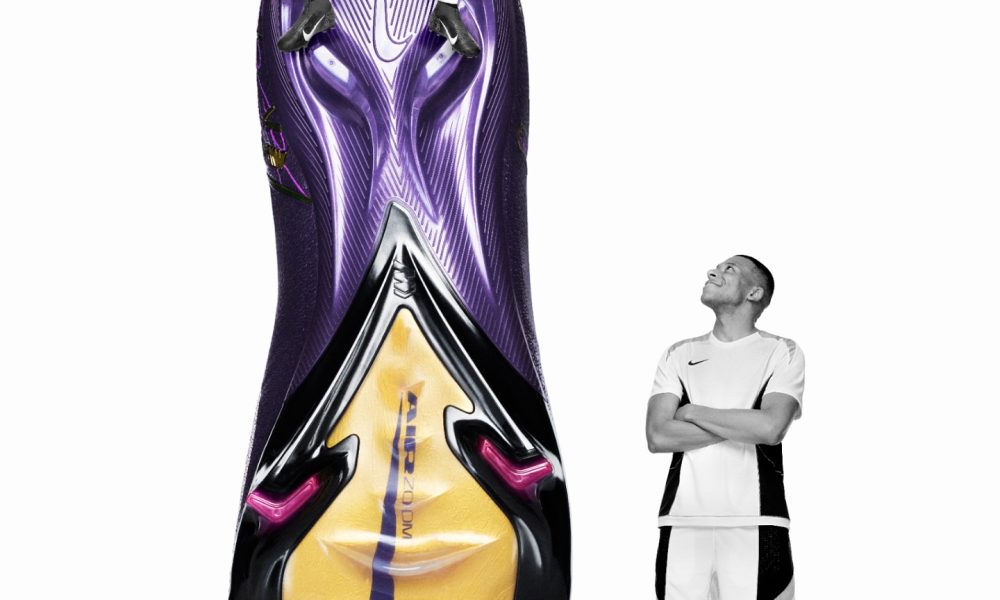 has always dreamed in Mercurial. Now his initials are on the boots.
The new Kyl…
has always dreamed in Mercurial. Now his initials are on the boots.
The new Kyl…
-
 Rec Sports3 weeks ago
First Tee Winter Registration is open
-
 Rec Sports2 weeks ago
Fargo girl, 13, dies after collapsing during school basketball game – Grand Forks Herald
-
 Motorsports2 weeks ago
CPG Brands Like Allegra Are Betting on F1 for the First Time
-
 Motorsports3 weeks ago
F1 Las Vegas: Verstappen win, Norris and Piastri DQ tighten 2025 title fight
-
 Sports2 weeks ago
Two Pro Volleyball Leagues Serve Up Plans for Minnesota Teams
-
 Sports2 weeks ago
Utah State Announces 2025-26 Indoor Track & Field Schedule
-
 Sports2 weeks ago
Sycamores unveil 2026 track and field schedule
-
 Motorsports2 weeks ago
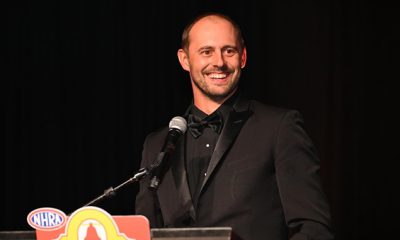
Redemption Means First Pro Stock World Championship for Dallas Glenn
-
 Motorsports2 weeks ago
Jo Shimoda Undergoes Back Surgery
-
 Sports2 weeks ago
Texas volleyball vs Kentucky game score: Live SEC tournament updates